Choosing Light Bulbs: Lumens and Color Temperature Explained
Watts used to tell you how bright a bulb was. With LEDs, that job belongs to lumens, and color temperature decides whether the light feels warm or cool. Here is how to use both when you shop.
By Home Crane Editors. . 3 min read.
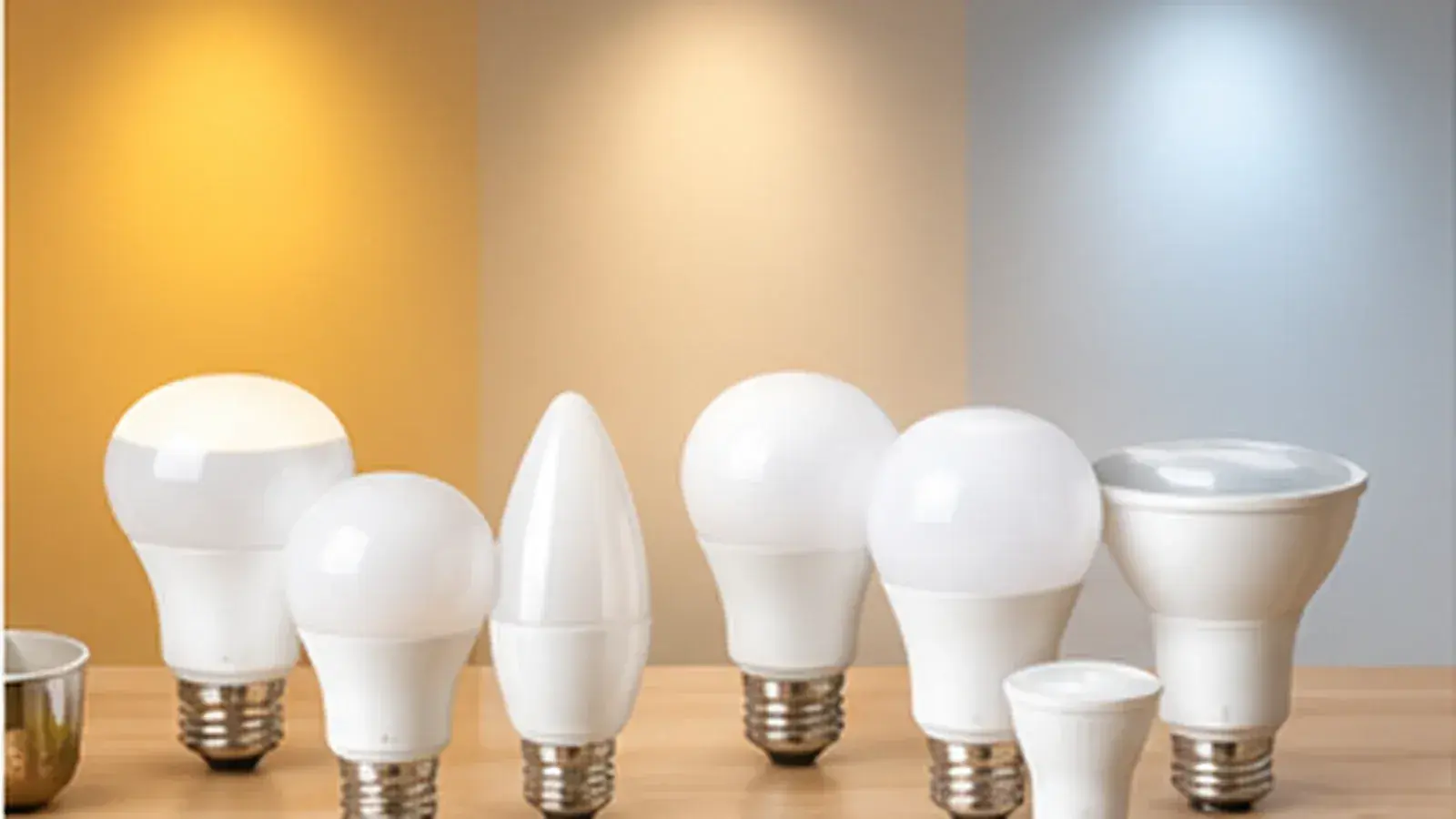
Conceptual illustration of comparing bulb labels.
Shop by lumens, not watts. Watts measure the electricity a bulb uses, and lumens measure the light it actually produces. Since LED bulbs use far less electricity than incandescent bulbs to make the same amount of light, an LED's wattage number tells you almost nothing about how bright it is. The U.S. Department of Energy defines efficacy as the ratio of light produced to energy consumed, measured as lumens per watt, which is the whole reason watts stopped being a useful brightness guide once LEDs took over.
Converting your old bulbs to lumens
If you are replacing incandescent bulbs and want a similar brightness, the Department of Energy's guidance gives lumen targets for common wattages:
| Feature | Look for about | |
|---|---|---|
| 100-watt incandescent | 1,600 lumens | |
| 75-watt incandescent | 1,100 lumens | |
| 60-watt incandescent | 800 lumens | |
| 40-watt incandescent | 450 lumens |
These are approximate matches for overall brightness, not a technical conversion formula. If a room feels dim with a straight swap, more lumens fix that regardless of what the old bulb's wattage was.
How much light a room actually needs
Lumens tell you total output, but how much illumination lands on a surface is measured differently. The Department of Energy describes a footcandle as the illumination produced by one lumen spread over one square foot, and gives rough targets: 30 to 50 footcandles is generally sufficient for most home and office tasks, 200 footcandles or more helps with detailed work and reduces eyestrain, and 5 to 20 footcandles is enough just for finding your way around at night. That explains why a kitchen counter where you chop vegetables wants more light than a hallway you only walk through.
Color temperature: the other number on the box
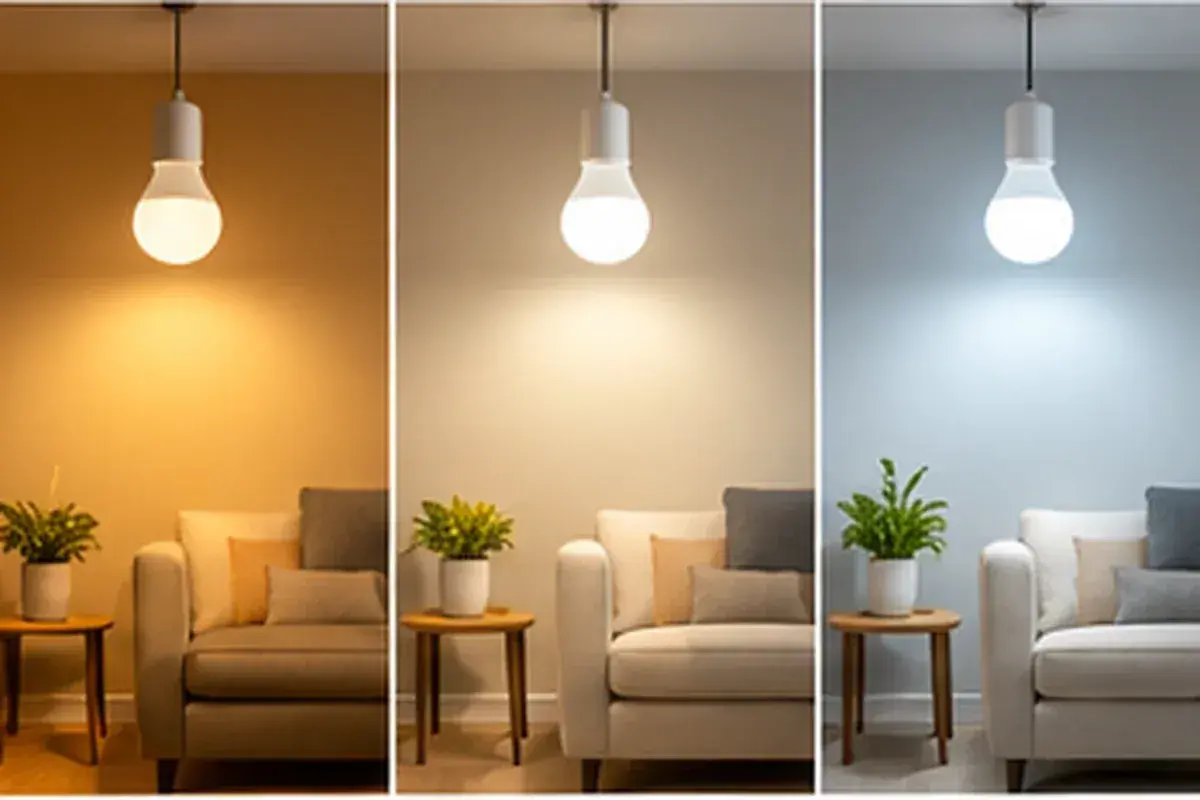
Color temperature describes whether a light looks warm and yellowish or cool and bluish, and it is measured in Kelvin (K), printed on most bulb packaging. It is independent of brightness: two bulbs can both produce 800 lumens and look completely different in color depending on their Kelvin rating. A consumer credit union's guide to choosing LED bulbs, drawing on Department of Energy figures, notes that a candle's warm light is about 1,900K and direct sunlight is about 4,800K, which gives a sense of the range.
| Feature | Feel | Common use |
|---|---|---|
| 2,700K to 3,000K | Warm white, cozy | Living rooms, bedrooms |
| 3,500K to 4,000K | Neutral to cool white | Kitchens, bathrooms, home offices |
| 5,000K and up | Daylight, bright white | Garages, workshops, task lighting |
These ranges and use cases are general conventions repeated across lighting industry guidance rather than a single official standard, so treat them as a starting point. Manufacturer terms like 'soft white' or 'daylight' are not standardized across brands, so the Kelvin number on the label is more reliable than the marketing name.
Color rendering: the number most labels skip
Brightness and warmth are not the whole picture. A bulb's Color Rendering Index (CRI) describes how accurately it reveals the true colors of objects compared with natural light, on a scale up to 100. Many household LED bulbs fall in the 80s, which is fine for general living spaces, but a kitchen, closet or home office where color accuracy matters, such as choosing paint or matching clothing, benefits from a bulb rated 90 or above. Not every package lists CRI, so if it matters for a specific room, look for a bulb that states the number rather than assuming.
Matching light to the room
- Living rooms and bedrooms usually feel more comfortable with warmer light, in the 2,700K to 3,000K range, especially in fixtures used in the evening.
- Kitchens and bathrooms often work well with a neutral to cool white light, since tasks like food prep and grooming benefit from clearer color rendering.
- Home offices and reading areas benefit from higher lumens focused on the work surface, since the Department of Energy's footcandle guidance points to 200 or more for detailed tasks.
- Outdoor and security lighting is often at the cooler, higher end of the Kelvin scale, prioritizing visibility over ambiance.
A simple way to shop
Bring two numbers with you: the lumens you want for the room's purpose, using the table above as a starting point, and the Kelvin range that fits the room's mood. Ignore the watt number on an LED box except as a rough cost-to-run comparison, since it tells you what the bulb consumes, not how bright it is.
If you are updating a whole room's lighting plan, or replacing fixtures alongside other work, our energy cost calculator can estimate what a lighting change is worth in yearly running cost, using your own wattage and hours of use.
Your takeaway: next time you shop for bulbs, check lumens first for brightness and Kelvin second for warmth, and use the wattage only to compare running costs between two options you have already matched on those two numbers.
Frequently asked questions
Is a higher wattage LED always brighter?
Not reliably. Because LEDs vary in efficacy, two bulbs with different wattages can produce the same lumens, or even have the higher-wattage bulb be less bright. Compare lumens, not watts.
What Kelvin is closest to a traditional incandescent bulb?
Most incandescent bulbs sit around 2,700K, which is why that value is commonly labeled 'soft white' or 'warm white' on LED packaging.
Sources
- Lighting Terminology, U.S. Department of Energy. Checked September 24, 2026
- Choosing the right LED light, Consumers Credit Union. Checked September 24, 2026
Share this article
Get new guides by email
Practical home articles and free resources. No spam, and you can unsubscribe at any time.