Smoke and Carbon Monoxide Alarms: Where They Go and When to Replace Them
Where to place smoke and carbon monoxide alarms, how often to test them, and when a working-looking alarm still needs replacing, based on NFPA, U.S. Fire Administration and CPSC guidance.
By Home Crane Editors. . 3 min read.
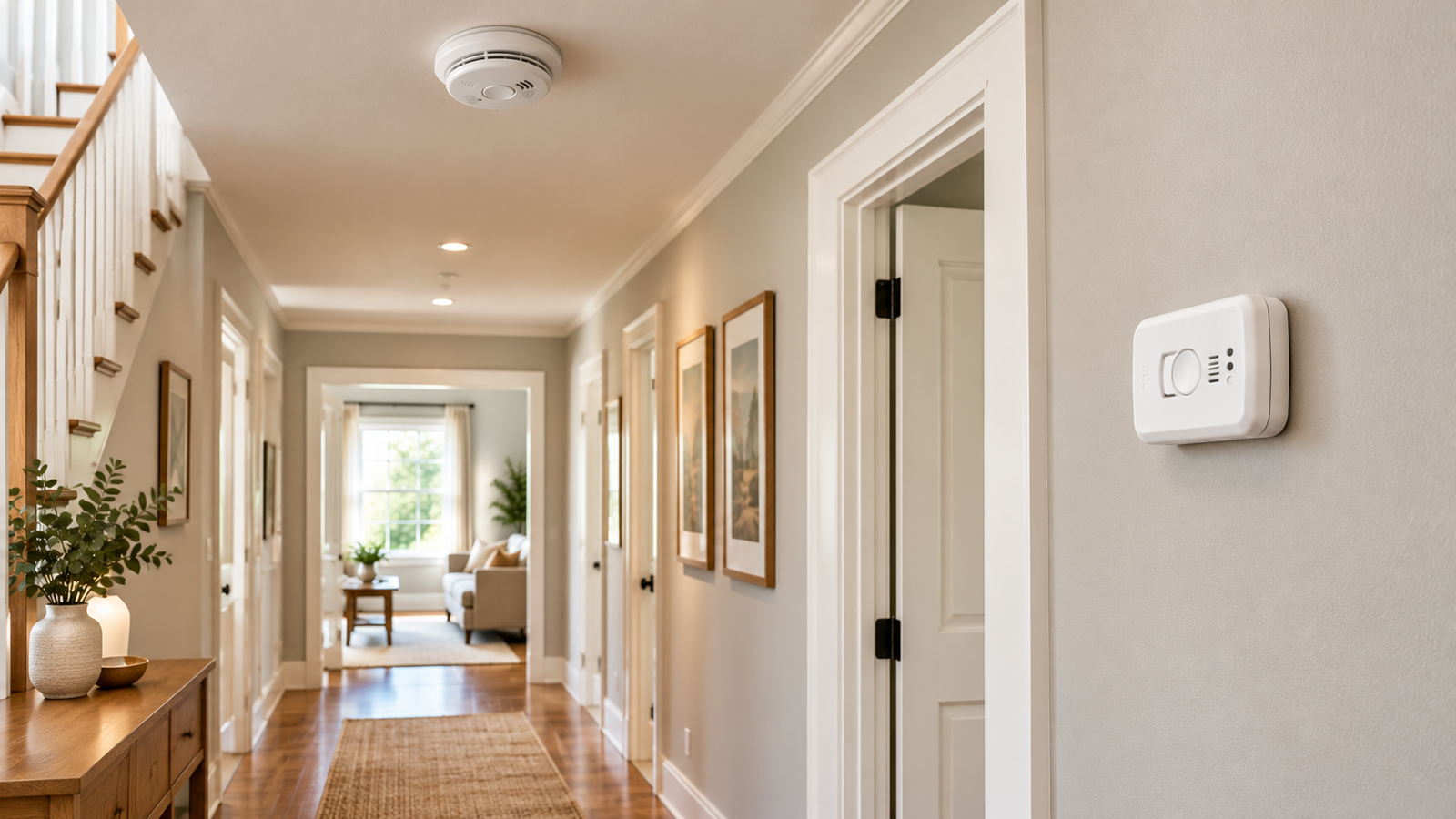
Conceptual illustration of an alarm placed in the hallway outside sleeping areas.
Put smoke alarms inside every bedroom, outside each sleeping area and on every level of the home, including the basement. Put carbon monoxide (CO) alarms on every level and outside sleeping areas. Test both monthly, and replace smoke alarms 10 years after the manufacture date, even if they still seem fine. That summary comes from the National Fire Protection Association (NFPA) and the Consumer Product Safety Commission (CPSC). The details below help you apply it to your own layout.
Where smoke alarms go
NFPA says a fire can leave you as little as two minutes to get out, which is why coverage matters more than the total count. Its placement guidance:
- Inside every bedroom and sleeping area.
- Outside sleeping areas, such as a hallway.
- On each level of the home, including the basement.
- On the ceiling or high on a wall.
- Not in kitchens or bathrooms, and at least 10 feet from the stove to reduce false alarms.
The U.S. Fire Administration adds that larger homes may need more alarms and that interconnected alarms are best, because when one sounds they all sound.
Where carbon monoxide alarms go
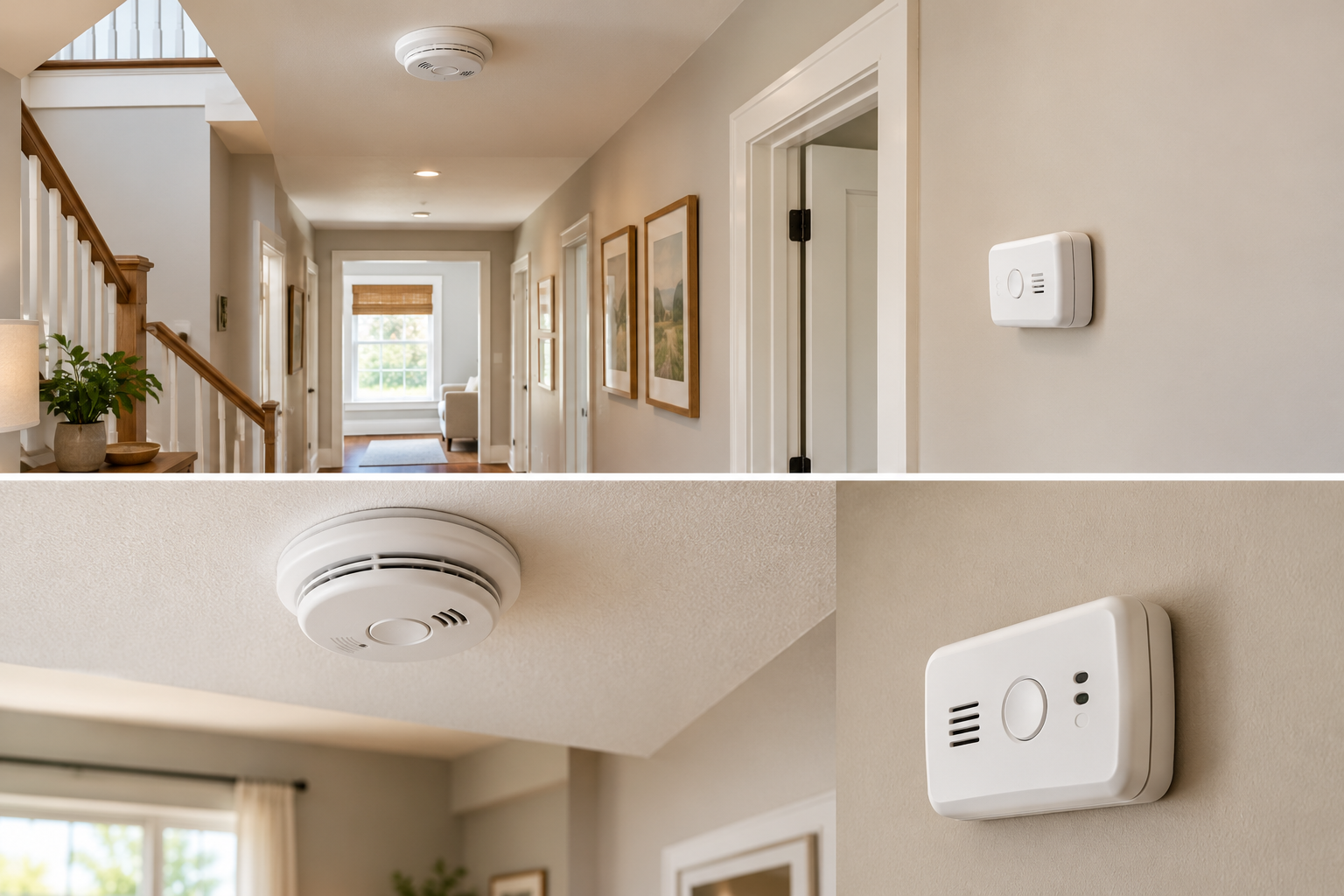
CO is colorless and odorless, so an alarm is the only warning. The CPSC fact sheet recommends alarms on every level of the home and outside sleeping areas, and says interconnected alarms are best. It also recommends choosing an alarm that meets the current UL 2034 safety standard.
- Follow the manufacturer's instructions for the exact spot and height. The CPSC says alarms may go in a plug-in receptacle or high on the wall.
- Keep them away from heating vents, and make sure furniture or curtains cannot cover them.
- Avoid kitchens and the space directly above fuel-burning appliances.
An alarm is a backup, not a fix. The CPSC stresses that it is no substitute for proper use and upkeep of appliances that can produce CO. It also says never to burn charcoal indoors, never to run a car in an attached garage even with the door open, and never to heat a home with a gas range or oven.
Count what your own home needs
Here is a hypothetical home to show how the rules combine: three bedrooms off one upstairs hallway, a main floor and a finished basement. Applying the placement guidance above:
| Feature | Smoke alarms | CO alarms |
|---|---|---|
| Each bedroom | 3 | 0 (CPSC guidance is per level and sleeping area) |
| Upstairs hallway outside the bedrooms | 1 | 1 |
| Main floor | 1 | 1 |
| Basement | 1 | 1 |
| Total | 6 | 3 |
This is a starting point, not a code calculation. Local building and fire codes set the legal minimums and they vary, so check with your local fire marshal or building department, particularly when you renovate or add a bedroom. Hardwired alarms should be installed by a qualified electrician.
Know which kind of alarm you own
The maintenance routine depends on how your alarm is powered. The U.S. Fire Administration's smoke alarm guidance separates three cases, and the differences are easy to miss:
| Feature | Power source | Battery care | Whole-unit replacement |
|---|---|---|---|
| Standard 9-volt battery | Replace the battery at least once a year | Every 10 years | |
| Sealed 10-year lithium battery | No separate battery change. Follow the manufacturer's instructions | According to the manufacturer's instructions, and no later than 10 years from manufacture | |
| Hardwired into household power | Replace the backup battery at least once a year | Every 10 years |
All three types still need the monthly test. A hardwired alarm is not maintenance-free, because the backup battery is what protects you during a power outage.
If an alarm sounds: a short plan
Decide the response before you need it. The U.S. Fire Administration's guidance is to get outside and stay outside, go to a meeting place you have agreed on in advance, and call the fire department from a cellphone or a neighbor's phone. Stay outside until the fire department says it is safe to go back in. For CO, the CPSC gives the same core advice: move to fresh air at once and call emergency services.
Two practical steps make that plan work. Make sure everyone in the household knows two ways out of each bedroom, and practice the meeting place once. It takes minutes and it is the part of fire safety that no device can do for you.
Testing, batteries and end of life
Alarms only help if they work. Combine the NFPA, USFA and CPSC guidance and the routine is short:
| Feature | What to do | |
|---|---|---|
| Monthly | Press the test button on every smoke and CO alarm. | |
| Every year | Replace batteries in alarms without sealed 10-year batteries. For hardwired smoke alarms, replace the backup battery. | |
| Every 10 years | Replace the entire smoke alarm, counted from its manufacture date, not the day you installed it. |
Sounds carry meaning. NFPA says three loud beeps in a row means smoke or fire: get out, call 9-1-1 and stay out. A single chirp every 30 or 60 seconds means a low battery. Chirping that continues after a new battery means the alarm has reached the end of its life and the whole unit must be replaced.
CO alarms wear out too, but their lifespan depends on the model. Check the manufacturer's instructions for your unit's replacement date, and replace it when it signals end of life. If a CO alarm sounds, the CPSC says to go outside to fresh air immediately and call emergency services rather than hunting for the source.
Your takeaway: this month, press every test button, check the manufacture date on each smoke alarm, and count whether each level and sleeping area is covered. If anything is missing or expired, fixing it is one of the cheapest safety upgrades in a home. To budget for it, see how to plan for home maintenance costs.
Frequently asked questions
Can I put a smoke alarm in the kitchen?
NFPA advises keeping smoke alarms out of kitchens and bathrooms and at least 10 feet from the stove, since cooking and steam cause false alarms.
Do CO alarms go in every bedroom?
CPSC guidance calls for CO alarms on every level of the home and outside sleeping areas. Some manufacturers and local codes differ, so follow your product instructions and local requirements.
Sources
- Smoke alarms, National Fire Protection Association. Checked September 24, 2026
- Smoke Alarms, U.S. Fire Administration, FEMA. Checked September 24, 2026
- Don't Wait: Check the Date, Replace Smoke Alarms Every 10 Years, U.S. Fire Administration, FEMA. Checked September 24, 2026
- Carbon Monoxide Fact Sheet, U.S. Consumer Product Safety Commission. Checked September 24, 2026
- When Turning Clocks Back, Replace Batteries in Smoke and Carbon Monoxide Alarms, U.S. Consumer Product Safety Commission. Checked September 24, 2026
Share this article
Get new guides by email
Practical home articles and free resources. No spam, and you can unsubscribe at any time.