10 DIY Terracotta Clay Pot Tower Garden Ideas
Discover 10 DIY terracotta clay pot tower garden ideas, with practical planting, drainage, stability, and care tips for patios, balconies, and small gardens.
By Home Crane Editors. . 9 min read.
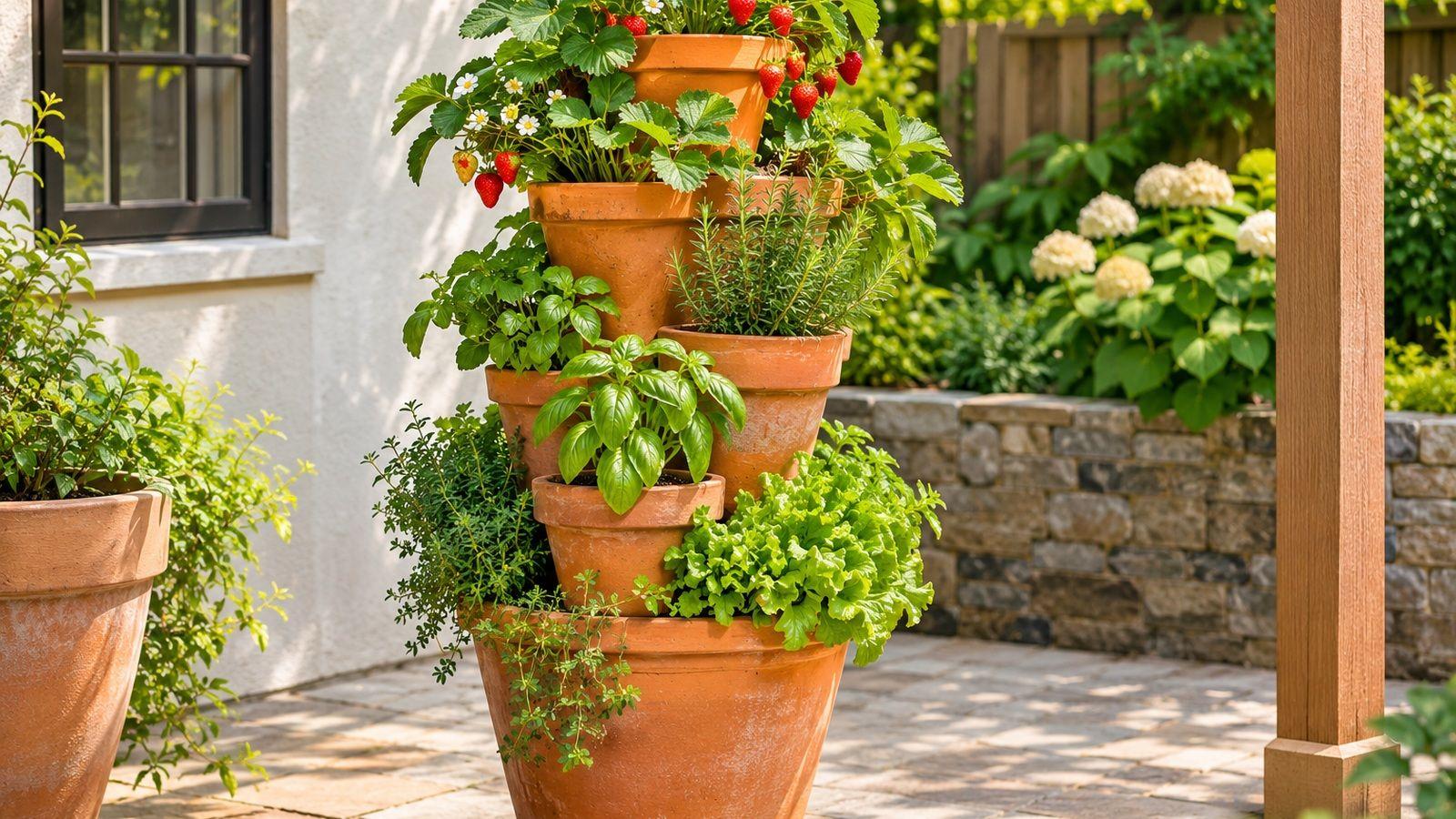
A terracotta clay pot tower garden is a practical way to add vertical planting when a patio, balcony, courtyard, or small backyard has limited ground space. By stacking or grouping pots at different heights, you can create a colorful focal point and grow flowers, herbs, strawberries, leafy greens, or compact foliage in a relatively small footprint. The warm, earthy color of terracotta also pairs naturally with greenery and outdoor materials such as timber, stone, and gravel.
The key to a successful tower is not simply stacking as many pots as possible. Each pot needs drainage, the structure must remain stable, and the plants should have compatible needs for sunlight and moisture. Terracotta is porous, which helps air move through the pot walls but also means the growing mix can dry faster than it would in plastic or glazed containers. The ideas below explain different ways to build and plant a tower, along with practical considerations for keeping it attractive and healthy.
1. The Classic Stacked Flower Tower
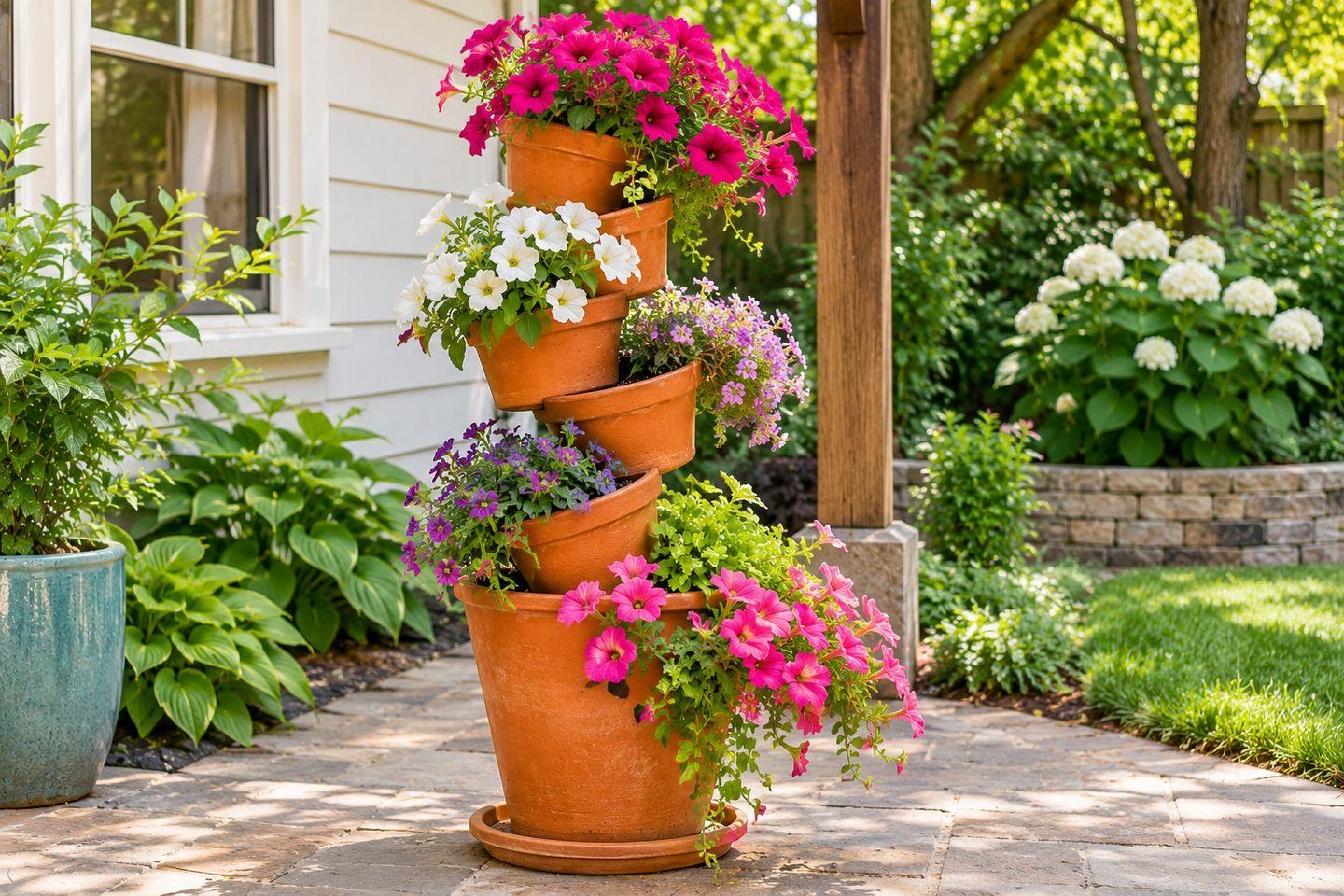
Build a simple vertical display from three or four terracotta pots in graduated sizes. Set the largest pot on a level, firm surface, fill it with a free-draining potting mix, and position the next pot above it using a stable central support or a purpose-made stacking arrangement.
Repeat with smaller pots, checking that the tower remains upright as you work. Choose compact flowers with similar light and water needs, such as dwarf marigolds, alyssum, and trailing lobelia. Plant the largest, lowest pot with fuller growth and reserve the upper pots for smaller varieties.
The result is a familiar cottage-garden look that uses very little ground space. Keep the tower away from doorways and busy paths, and do not make it taller than you can safely maintain. Water slowly from the top and check lower tiers because the upper pots can dry sooner.
2. The Strawberry Pot Tower
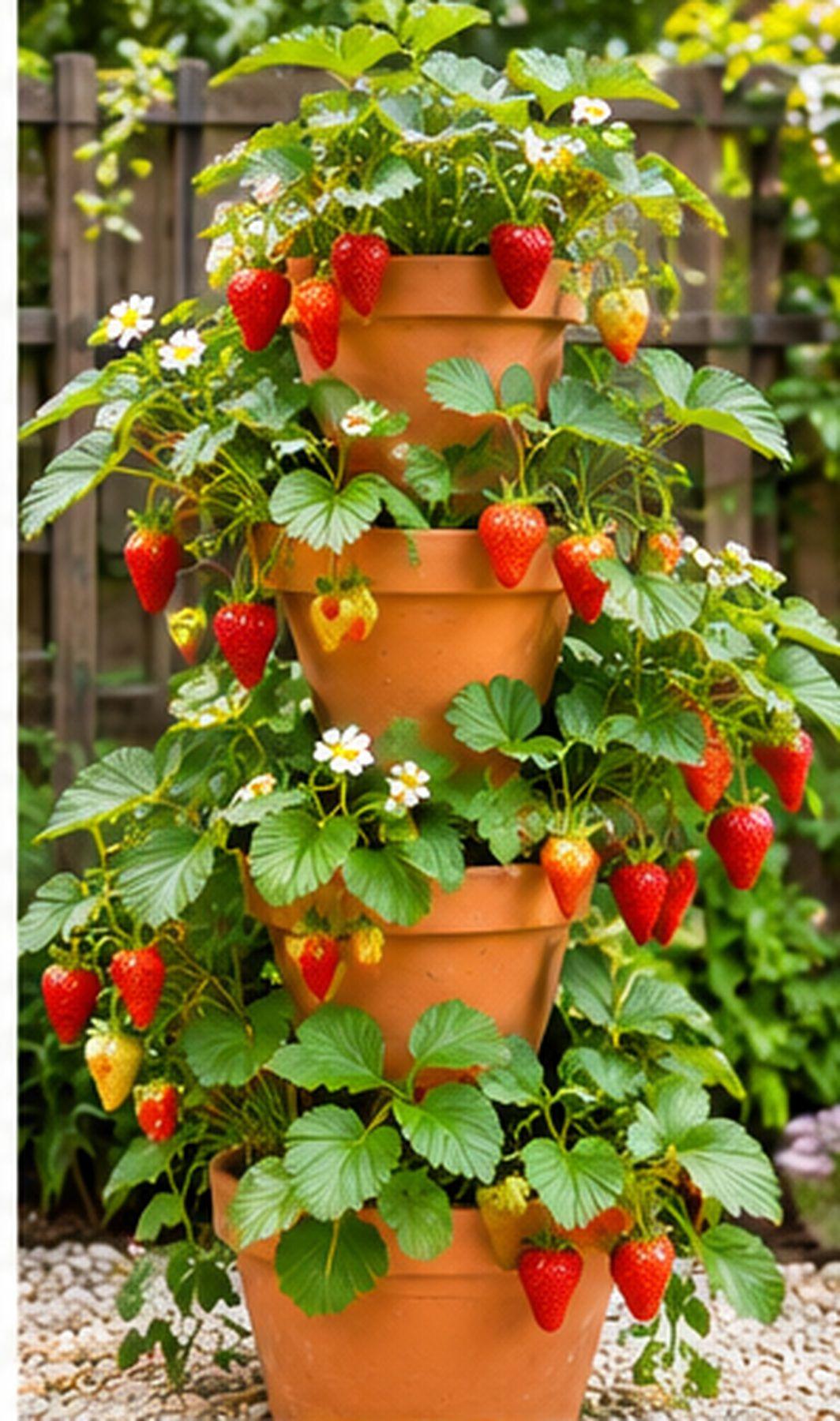
Use a purpose-made terracotta strawberry pot with side pockets, or adapt a carefully planned stack of pots to grow strawberries vertically. The side openings allow runners and leaves to spill outward while fruit stays visible and easier to pick.
Choose compact or day-neutral strawberry varieties suited to your climate. Fill the container in stages, gently guiding roots into each pocket and keeping the crown at soil level. Avoid burying the crown, which can encourage rot. A narrow watering tube with holes can help distribute water through the center, but test it before planting so water reaches the lower pockets. Place the tower where plants receive the sunlight recommended for your variety, often around six or more hours daily. Check moisture frequently in warm weather; terracotta loses water through its porous walls and small pockets have limited soil volume.
3. The Herb Tower Beside the Kitchen Door
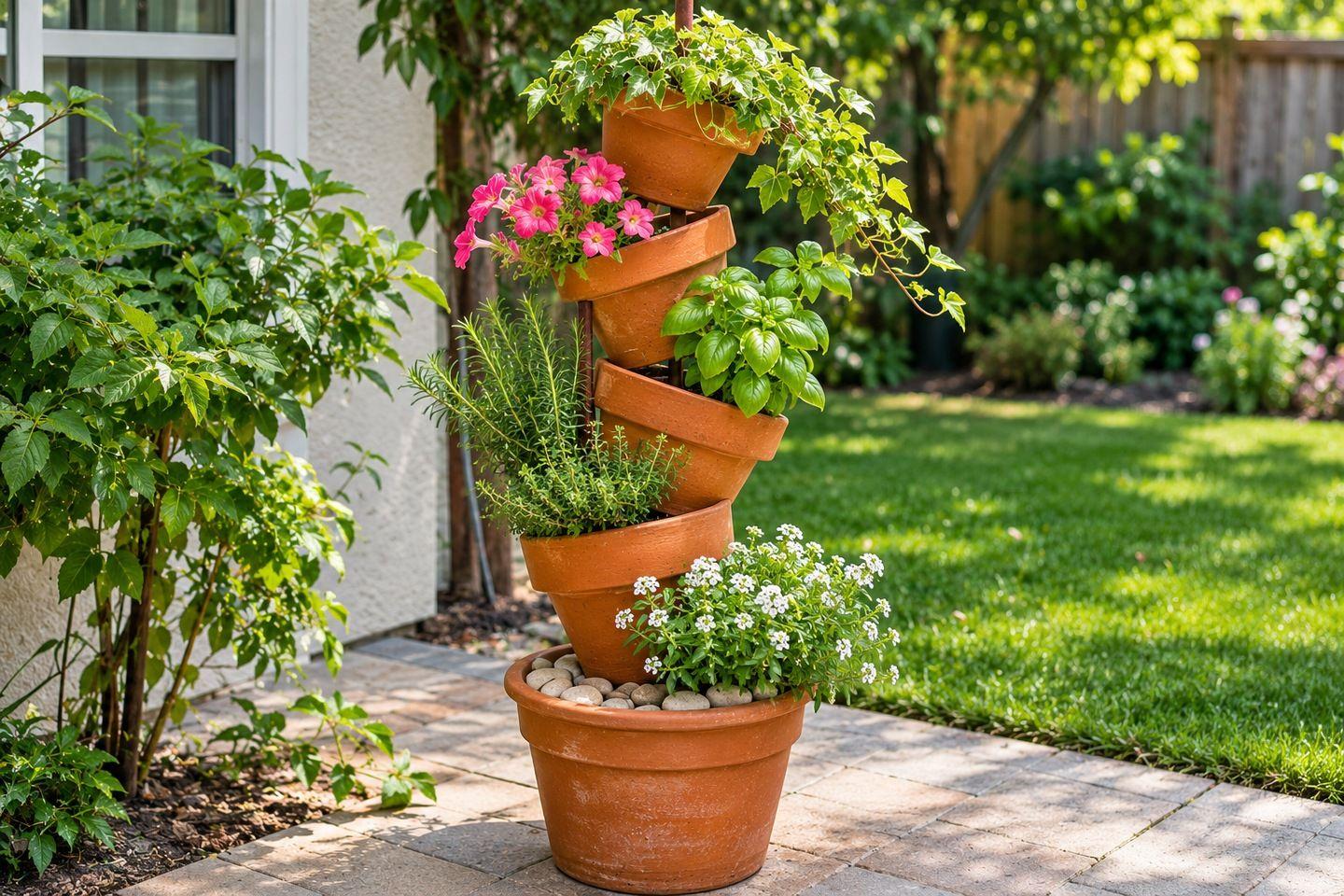
Create a useful herb station with three or four pots, placing culinary herbs where you can reach them while cooking. Mediterranean herbs such as thyme, oregano, rosemary, and sage generally prefer a sunny position and sharply drained mix.
Mint and parsley usually appreciate more consistent moisture, so give them separate containers rather than forcing every herb into the same tower. Group plants with similar watering needs on the same level. Label each pot with a discreet garden marker if several herbs look alike, and harvest lightly so plants keep producing.
A tower near the kitchen door makes small harvests convenient, but ensure the location receives adequate light and is not exposed to hot reflected heat from walls. Rotate the tower occasionally if growth leans toward the sun.
4. The Cascading Petunia Color Tower
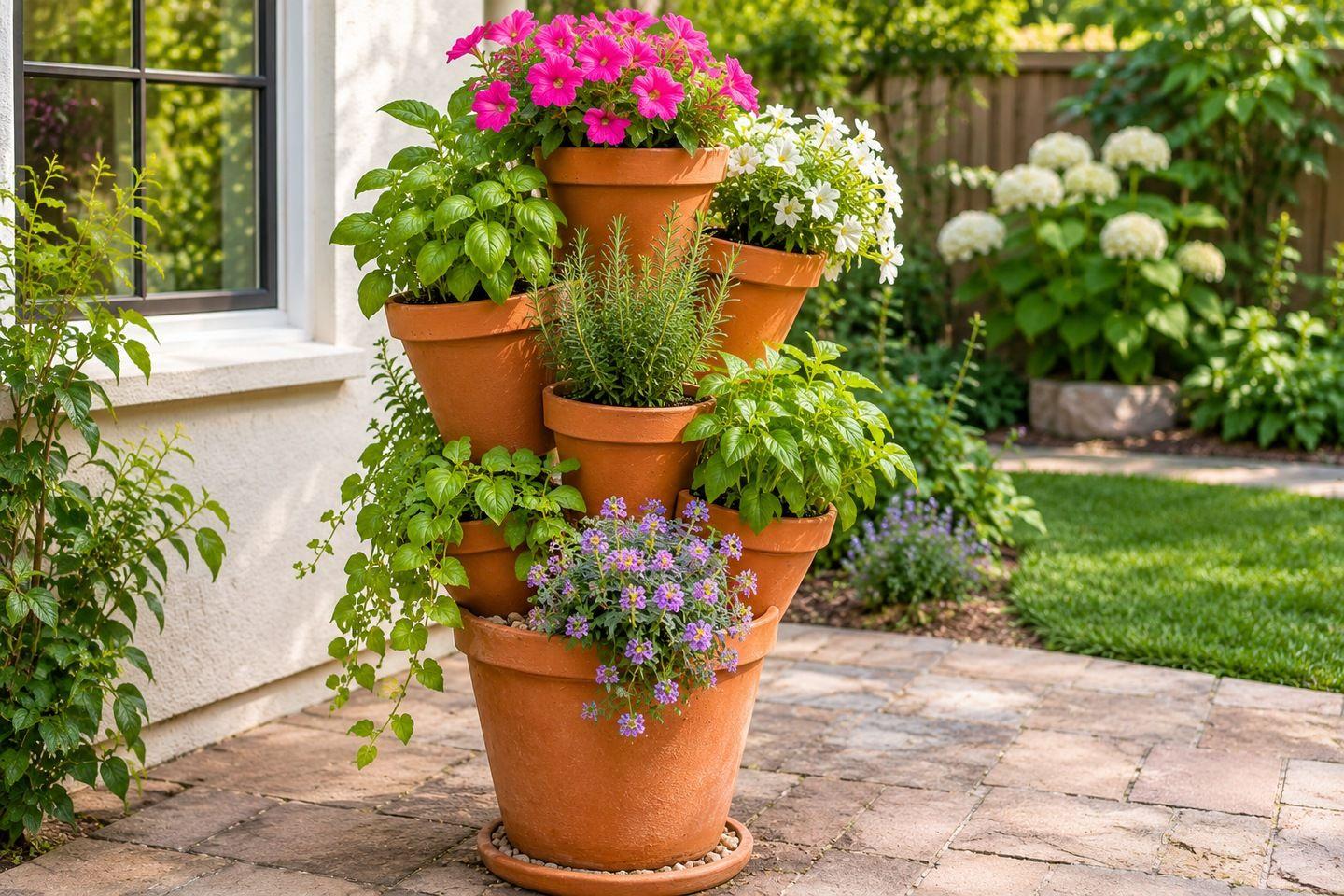
For a bright seasonal feature, combine upright flowering plants near the top with trailing petunias or other suitable cascading annuals in lower side openings. Select varieties with compatible sunlight and watering requirements, and use a container mix designed for flowering pots.
The visual effect comes from layering: a compact central plant gives height, while trailing stems soften the terracotta edges. Leave enough space between plants for airflow and avoid packing every opening tightly at planting time. Feed according to the product label because flowering annuals in containers use nutrients quickly. Trim as needed to keep the display tidy. In very hot climates, afternoon shade may help reduce stress, especially where the tower sits against paving that reflects heat.
5. The Succulent and Sedum Tower
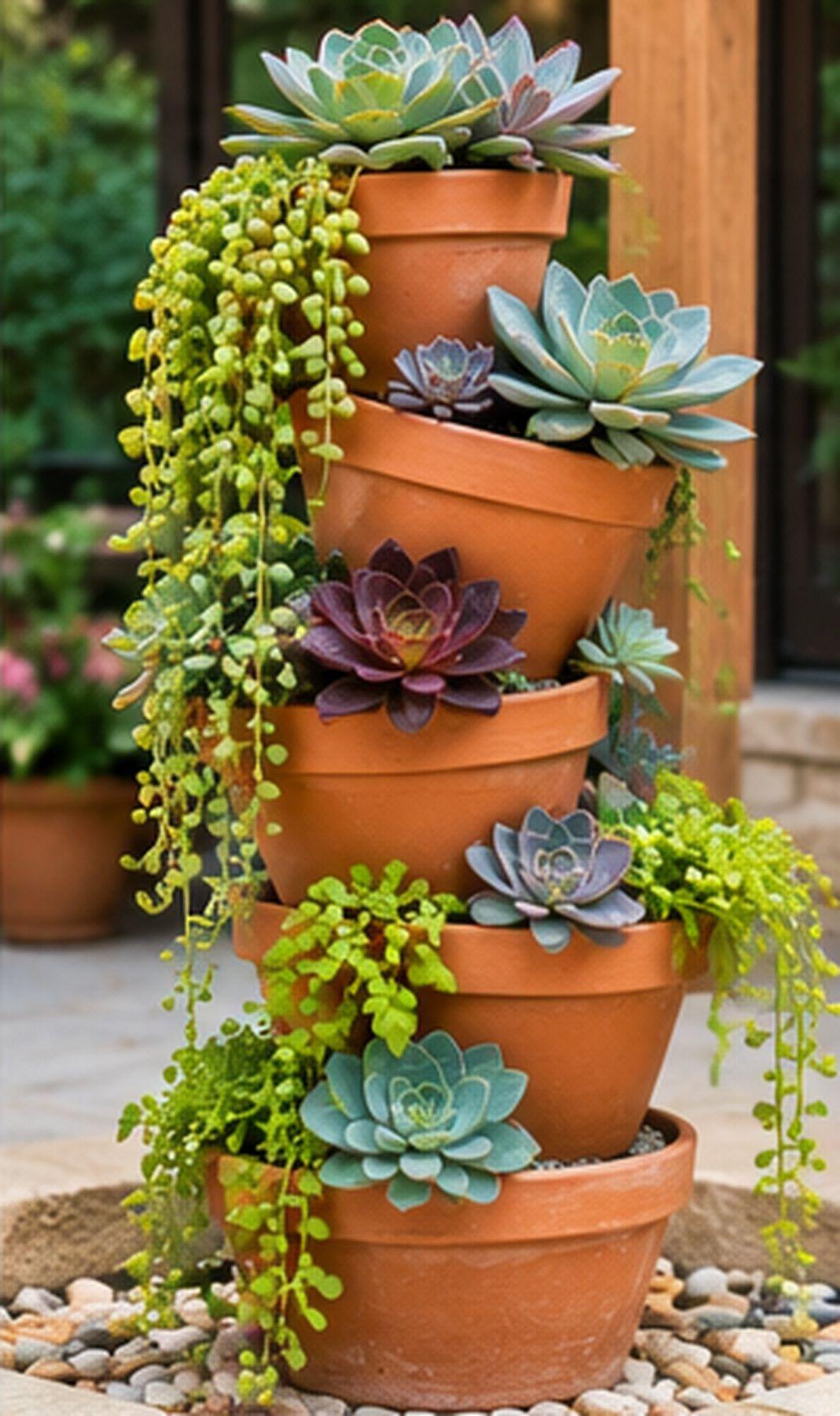
A succulent tower is a good option for a sunny, relatively dry spot, provided every level drains freely. Use a gritty cactus and succulent mix rather than dense garden soil.
Choose small, shallow-rooted varieties such as selected sedums, echeverias, or other locally suitable succulents, checking mature size before planting. Keep rosette crowns above the soil and leave room for growth. Do not combine thirsty annual flowers with drought-tolerant succulents in the same tower; their watering needs conflict. Water thoroughly, then allow the mix to dry to the level appropriate for the species before watering again.
Terracotta helps the mix dry, but it can also make small pots dry very quickly in direct sun. Protect frost-sensitive varieties where winter temperatures require it.
6. The Edible Greens Tower
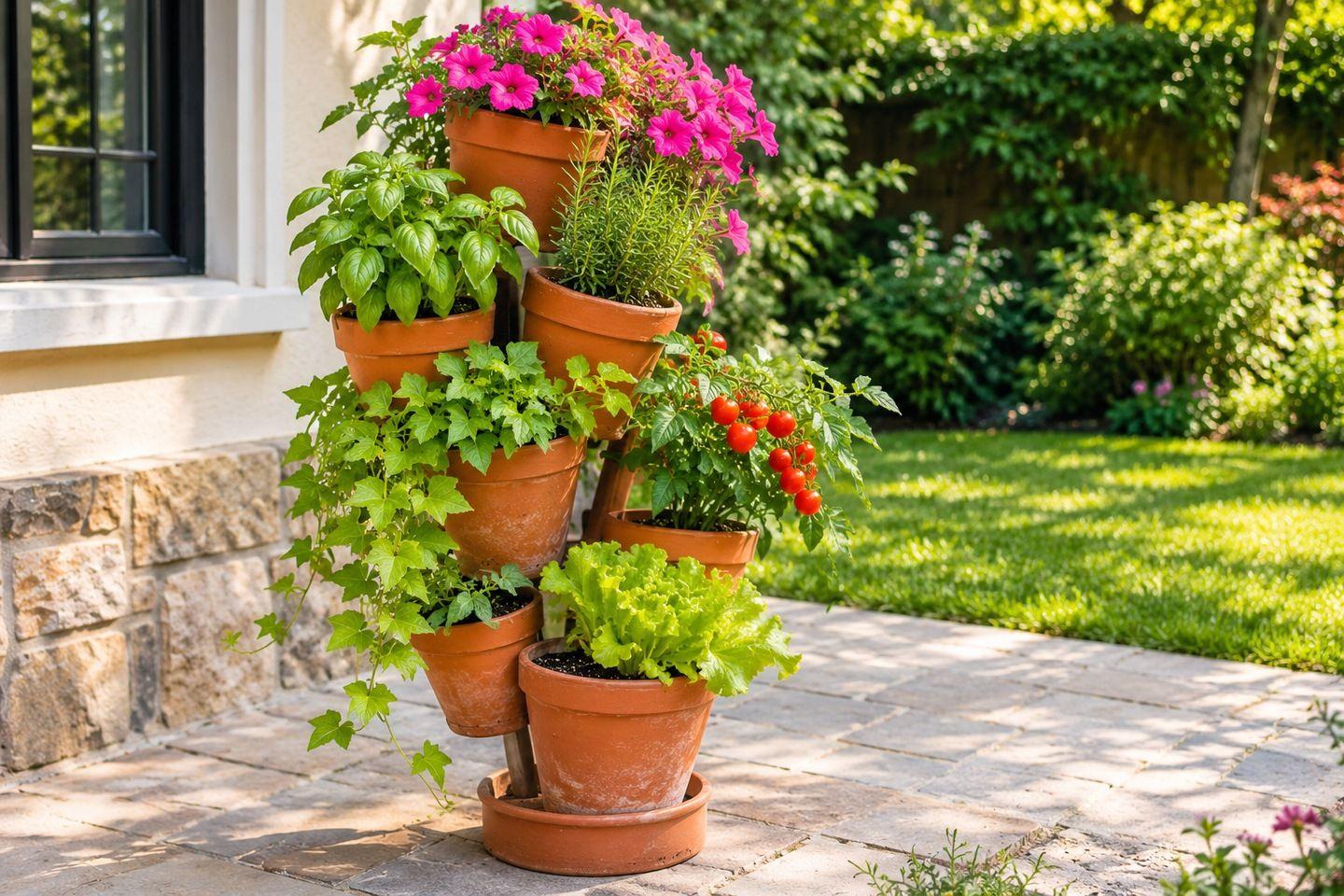
Grow loose-leaf lettuce, baby spinach, or compact Asian greens in a tower of broad, relatively shallow pots during the cooler part of the growing season.
Choose varieties recommended for containers and harvest outer leaves regularly to extend production. Because leafy greens prefer more even moisture than many ornamental plants, use a quality container mix with good water-holding capacity while retaining drainage. Place the tower where it receives the light and temperature conditions suitable for the crop; in hot weather, partial shade can reduce bolting and leaf bitterness.
Avoid overcrowding the pockets, as dense foliage restricts airflow and makes harvesting difficult. Sow small batches at intervals rather than planting every tier at once, so the tower produces leaves over a longer period.
7. The Pollinator-Friendly Flower Tower
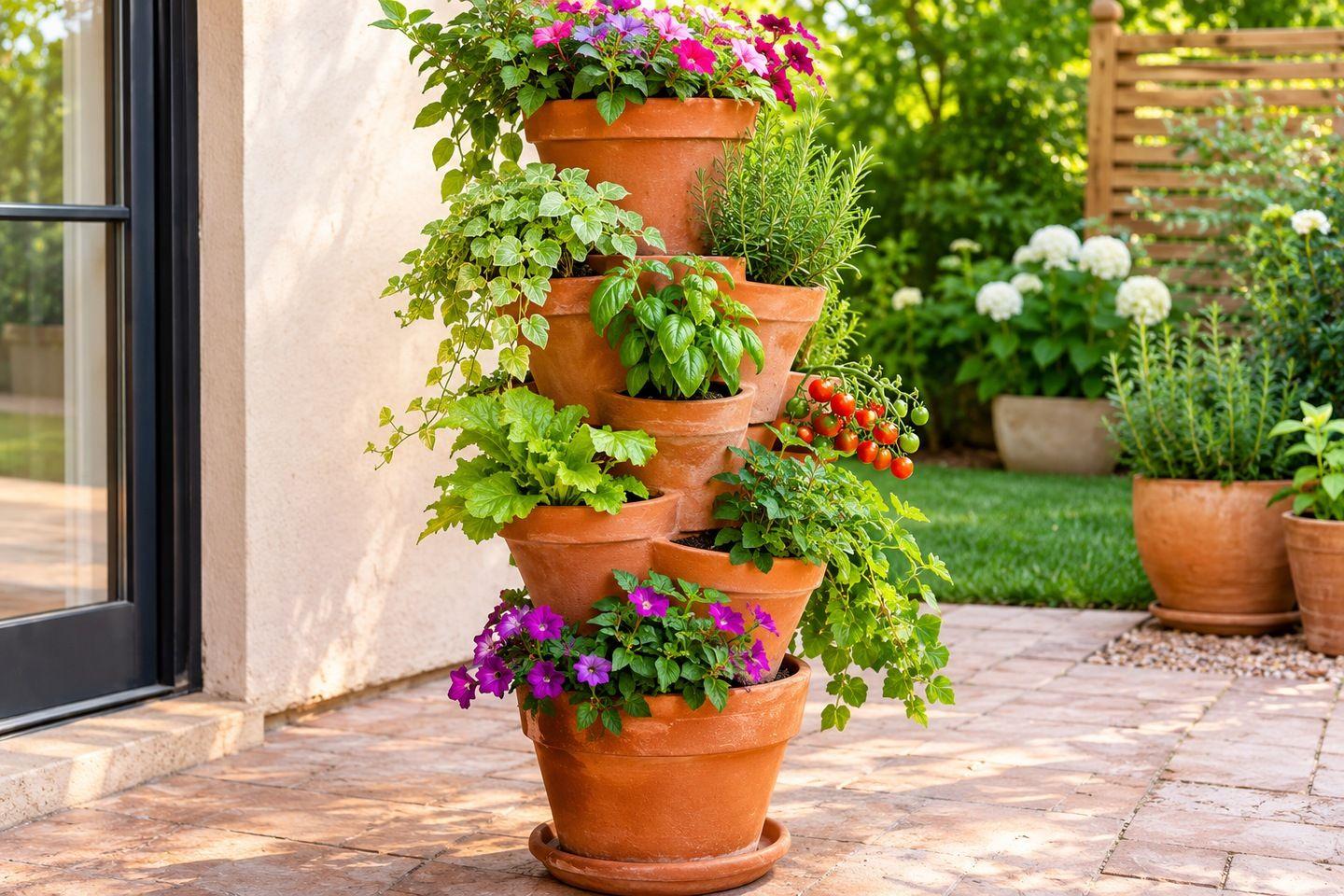
Turn a small patio corner into a nectar stop by planting a mix of compact, locally appropriate flowering plants that bloom at different times. Choose species that suit your region and avoid invasive plants. Small salvias, compact zinnias, alyssum, and other pollinator-friendly options may work depending on climate and available sun. Aim for a sequence of blooms rather than choosing only by color. Keep pesticide use to a minimum and follow label directions if any treatment is necessary.
A shallow dish of clean water with stones nearby can provide a safe landing place, but keep it clean and do not allow standing water to become a mosquito-breeding site. Place the tower where people can enjoy visiting insects without blocking the main walkway.
8. The Shaded Patio Foliage Tower
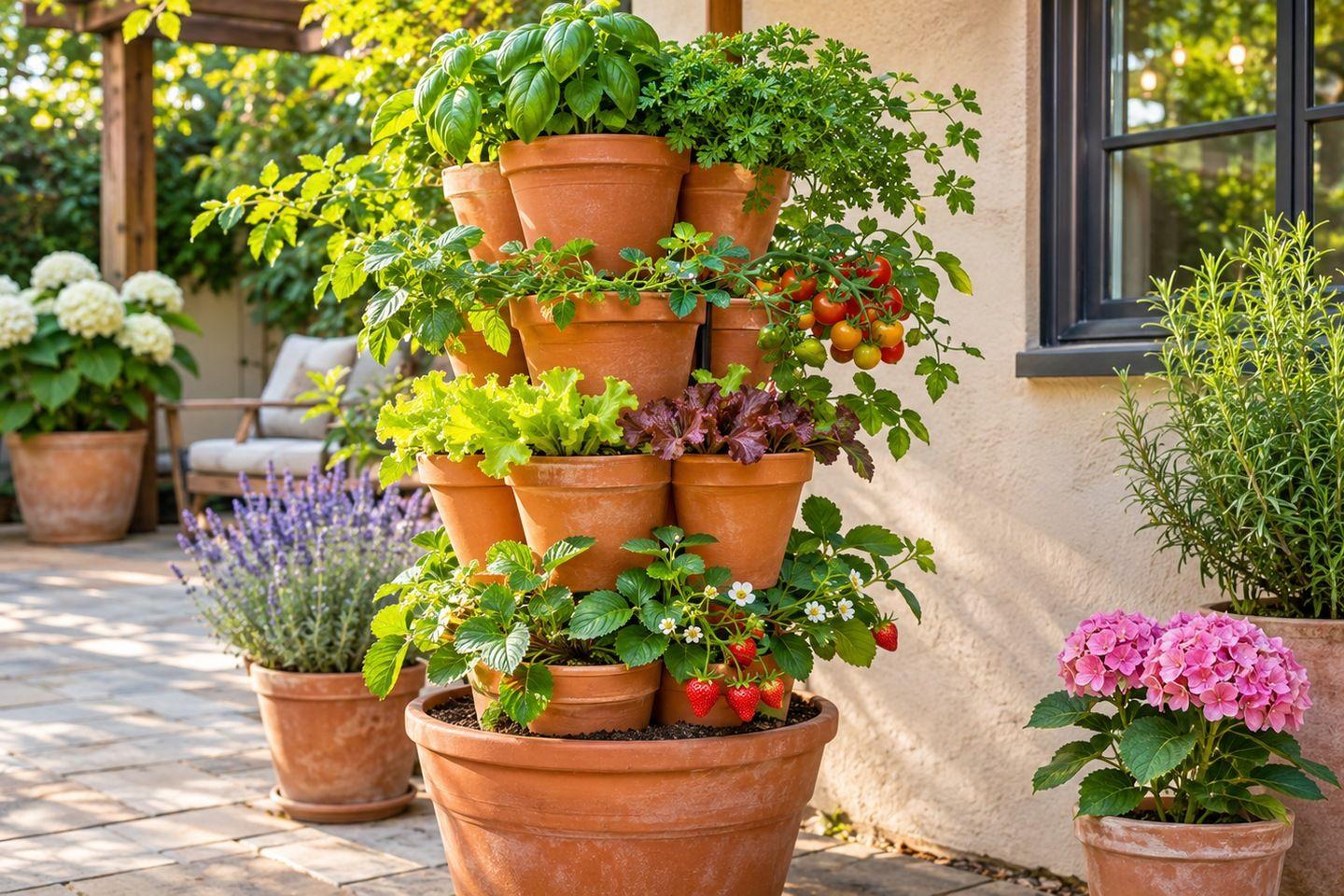
Not every tower needs full-sun flowers. For a bright-shade patio, build a lower, wider stack and plant shade-tolerant foliage such as compact ferns or locally suitable begonias. Confirm the needs of each plant before combining them; some begonias prefer more light than others, and fern species differ in moisture requirements. Use a moisture-retentive but free-draining container mix, and check the tower regularly because sheltered corners can stay damp while terracotta still dries at the edges. Avoid placing the tower in a dark corner simply because the plants are described as shade tolerant. Most still need suitable indirect light. A lower tower is easier to water and less likely to become unstable in a breezy location.
9. The Painted-and-Sealed Decorative Tower
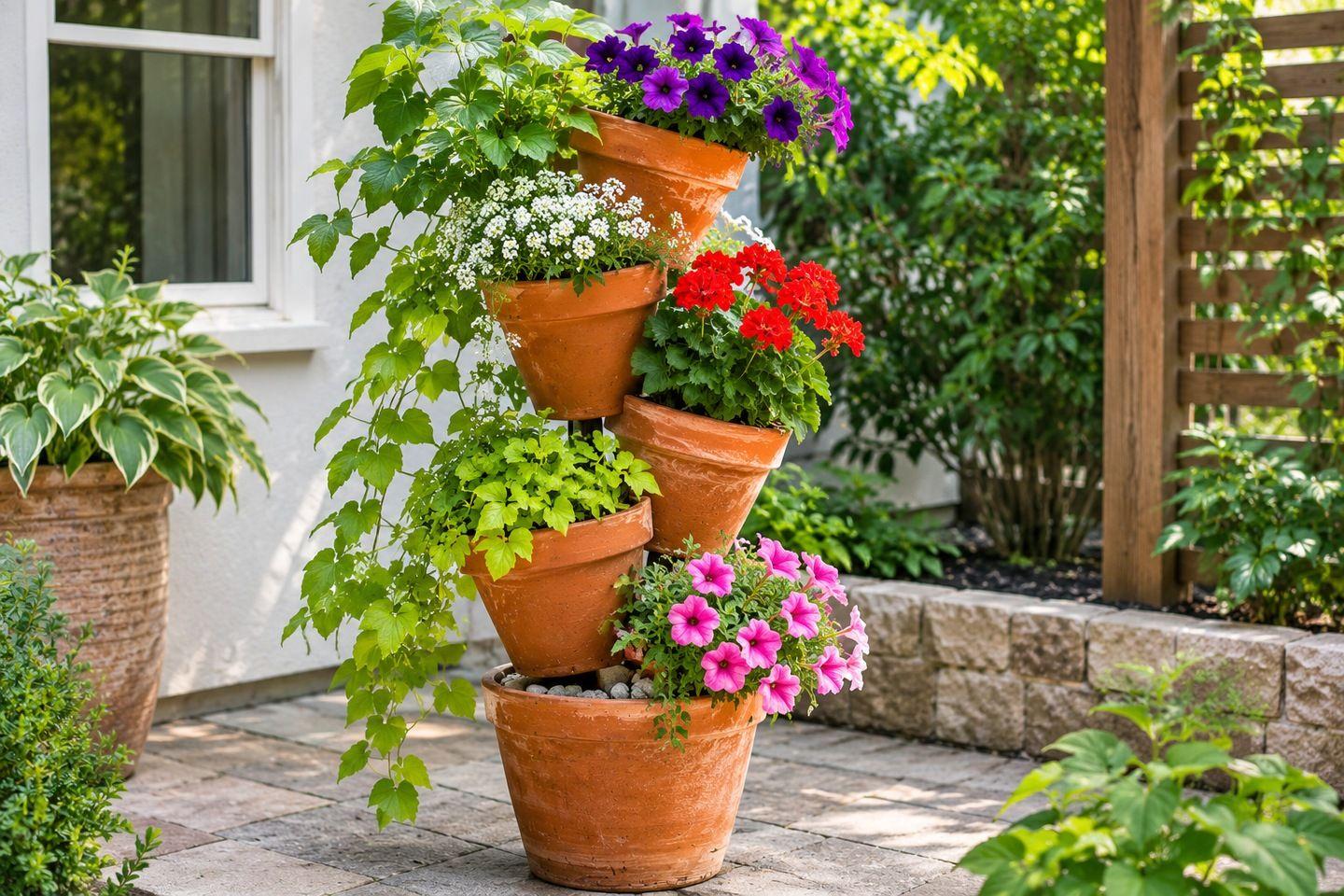
Give plain terracotta a coordinated look with a simple color treatment while keeping the planting practical. Clean the pots and allow them to dry completely before applying a product intended for exterior terracotta. Paint only the outer surfaces where possible, and follow the coating manufacturer’s directions for curing and outdoor use. Avoid coating the inside of pots unless the product is specifically rated for that purpose, since an unsuitable finish may interfere with the pot’s natural moisture exchange. Neutral cream, muted sage, or a warm clay-on-clay finish can complement flowers without competing with them. Use saucers only where needed to protect the surface, and empty standing water after watering. Decorative treatment does not replace drainage holes or a stable base.
10. The Compact Balcony Corner Tower
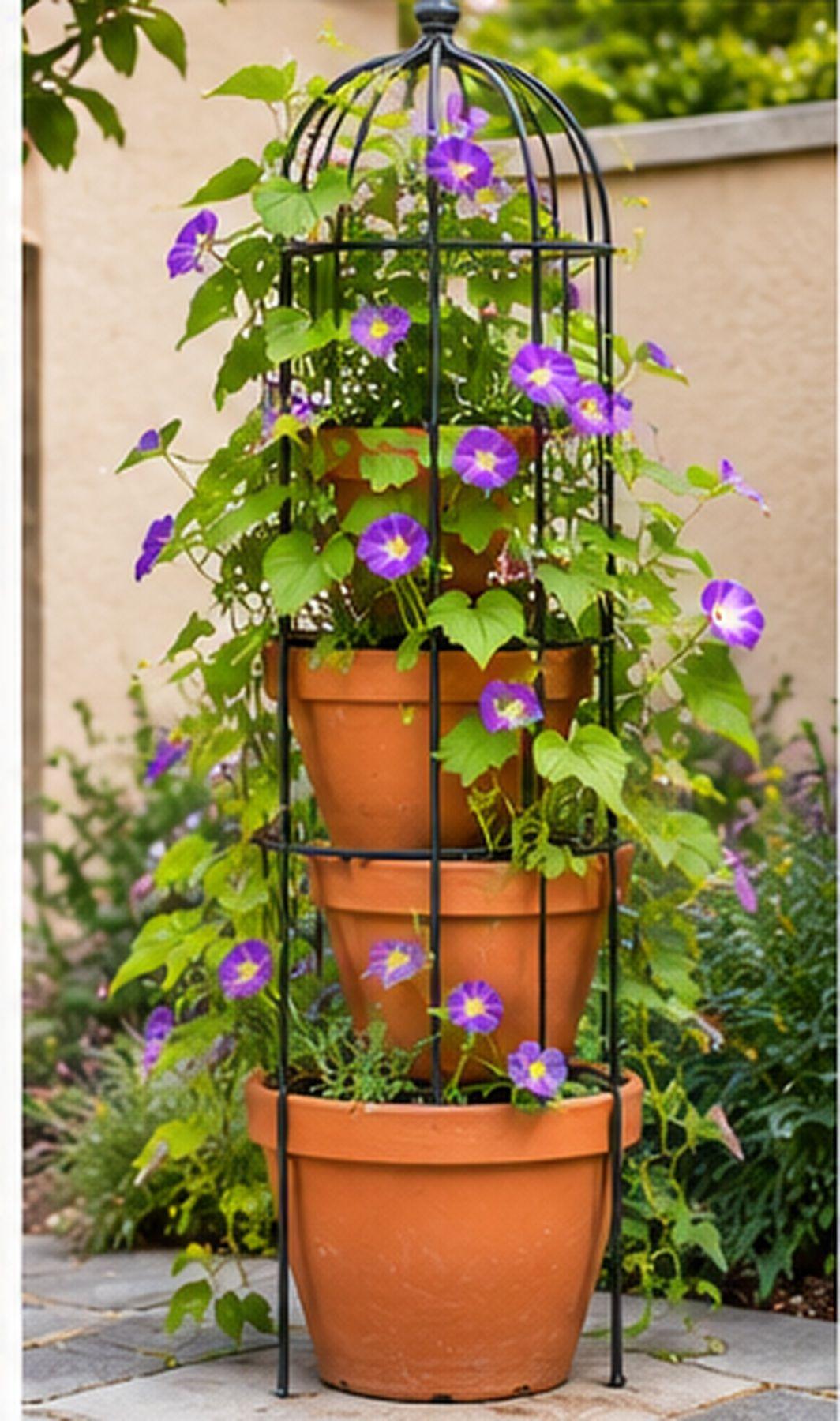
For a balcony, prioritize a short, broad, secure tower rather than maximum height. Check the balcony’s load limits and building rules before adding heavy wet soil and pots. Choose a location sheltered from strong gusts but not so enclosed that plants lack light or airflow. A non-slip base or low, stable plant stand can help protect the floor, while a tray catches drips where permitted. Select plants according to the balcony’s sun exposure: herbs and sun-loving annuals for brighter spaces, or suitable foliage plants for shade. Keep the tower clear of railings, exits, and drainage channels. Water carefully so runoff does not affect neighbors below. A small arrangement that is easy to maintain is usually more successful than an elaborate tower that is difficult to reach.
How to build a terracotta pot tower that lasts
Choose the right pots and support
Use sound pots without cracks, and make sure every planting container has an unobstructed drainage hole. A tower can be built with a central support rod, a purpose-made stacking insert, or a stable arrangement designed for the particular pot shapes. Do not assume that a narrow stack will remain safe simply because the empty pots balance. Wet growing mix adds substantial weight, and wind can catch foliage. Assemble the arrangement on a level, firm surface and test its stability before planting. Keep taller towers away from play areas, entrances, and exposed edges.
Prepare drainage and growing mix
Covering a drainage hole with a small piece of mesh can help retain mix without sealing the opening. Avoid filling the bottom with a thick layer of stones as a substitute for drainage; what matters is a functioning hole and a suitable container mix. Use a mix appropriate to the plants: a general-purpose potting mix for many annuals, a grittier blend for succulents, and a moisture-retentive but free-draining mix for leafy greens. Do not use heavy garden soil in containers because it can compact and restrict drainage.
Match plants by light and water needs
Place the tower where its plants receive the amount of light they require. Sun-loving herbs and flowering annuals may thrive in a bright location, while some ferns and foliage plants prefer filtered light. Avoid mixing plants that need frequent watering with plants that prefer the mix to dry between waterings. Consider mature plant size, root space, and airflow. Small starter plants can grow quickly and crowd narrow pockets.
Water each level carefully
Water slowly so the mix absorbs moisture instead of running straight through the stack. Check the upper and lower tiers separately because exposure, pot size, and plant growth can make them dry at different rates. In hot or windy weather, inspect containers more often. Water according to the plants and the moisture in the mix rather than following a rigid calendar. Empty saucers and trays after watering where standing water could attract mosquitoes.
Maintain and protect the tower
Remove dead leaves, trim trailing growth that blocks access, and feed plants only as recommended for the chosen species and product. Rotate the tower when practical to encourage even growth. In cold climates, protect or move plants that cannot tolerate frost. On balconies, verify weight limits and building rules, secure the arrangement against wind, and prevent runoff from dripping onto neighboring spaces. Replace cracked pots promptly and never climb or lean on the tower to reach upper plants.
Frequently asked questions
Do terracotta pot towers need a drainage hole in every pot?
Yes. Each planted pot should drain freely. Blocked drainage can leave roots sitting in saturated mix and increase the risk of root problems.
How many pots should I stack?
There is no universal number. Start with a low, stable arrangement and consider pot diameter, support, total wet weight, wind exposure, and how easily you can water and maintain it.
What plants grow best in a terracotta tower?
Compact herbs, suitable flowering annuals, strawberries in purpose-made pockets, leafy greens in season, and drought-tolerant succulents can work. Match plants by light, water, and root-space needs.
How often should I water a terracotta pot tower?
Check the growing mix regularly and water when the plants and mix need it. Terracotta dries faster than many nonporous containers, so warm, windy weather may require more frequent checks.
Can I use a pot tower on an apartment balcony?
Often, but check balcony load limits, building rules, wind exposure, drainage, and the effect of runoff on neighbors before installing a heavy planted tower.
Share this article
Get new guides by email
Practical home articles and free resources. No spam, and you can unsubscribe at any time.
Keep reading
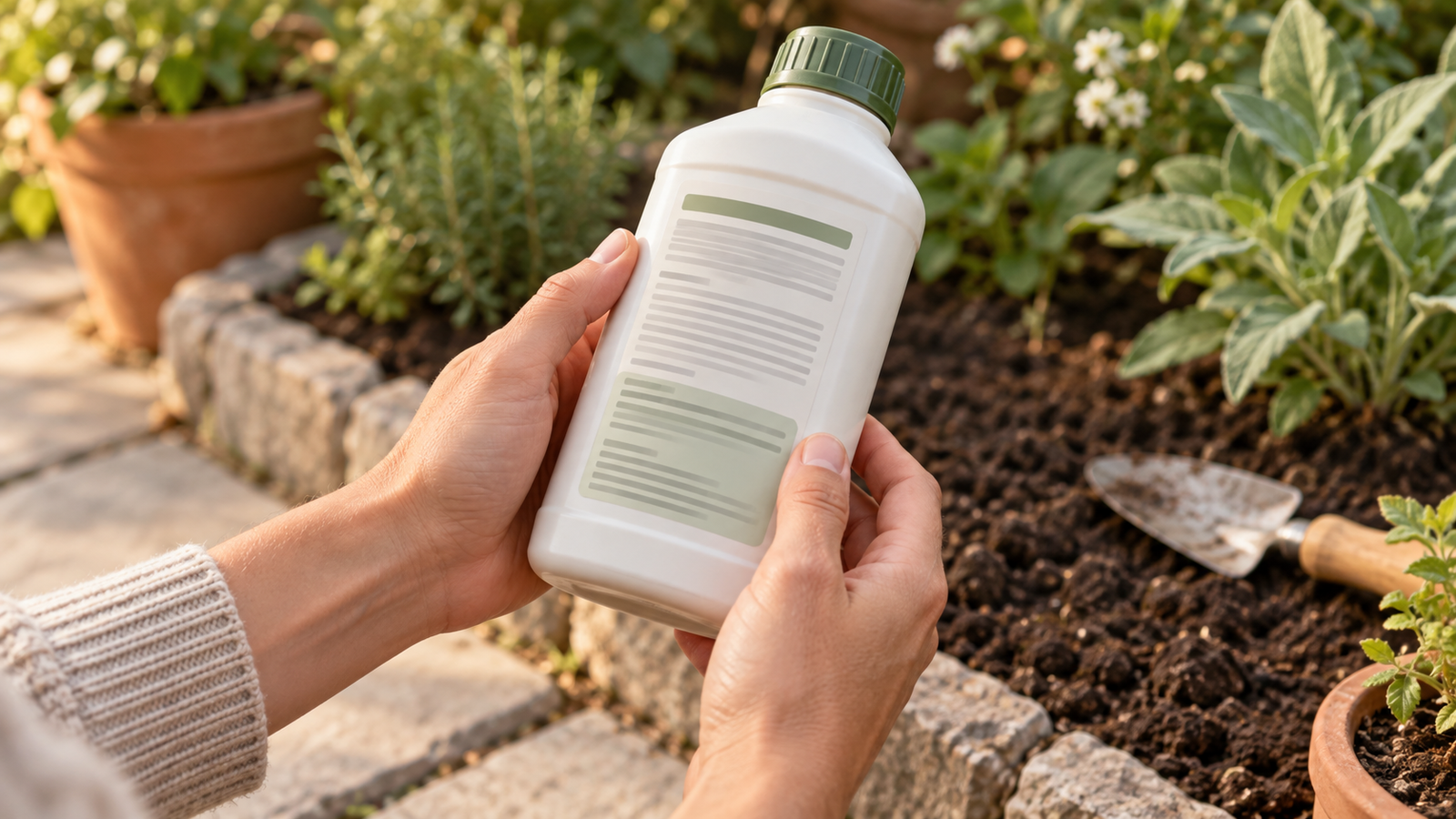
Reading a Pesticide or Fertilizer Label Before You Use It
The label on a lawn or garden product is a legal document, not a suggestion, and it contains the exact information that keeps a product from harming people, pets or nearby water. Here is how to read one.
September 2026, 3 min read