10 Best Low-Maintenance Alternatives to Grass in the Backyard
Explore ten illustrated backyard lawn alternatives, from gravel and paving to groundcovers and mixed garden zones, with realistic maintenance needs.
By Home Crane Editors. . 5 min read.
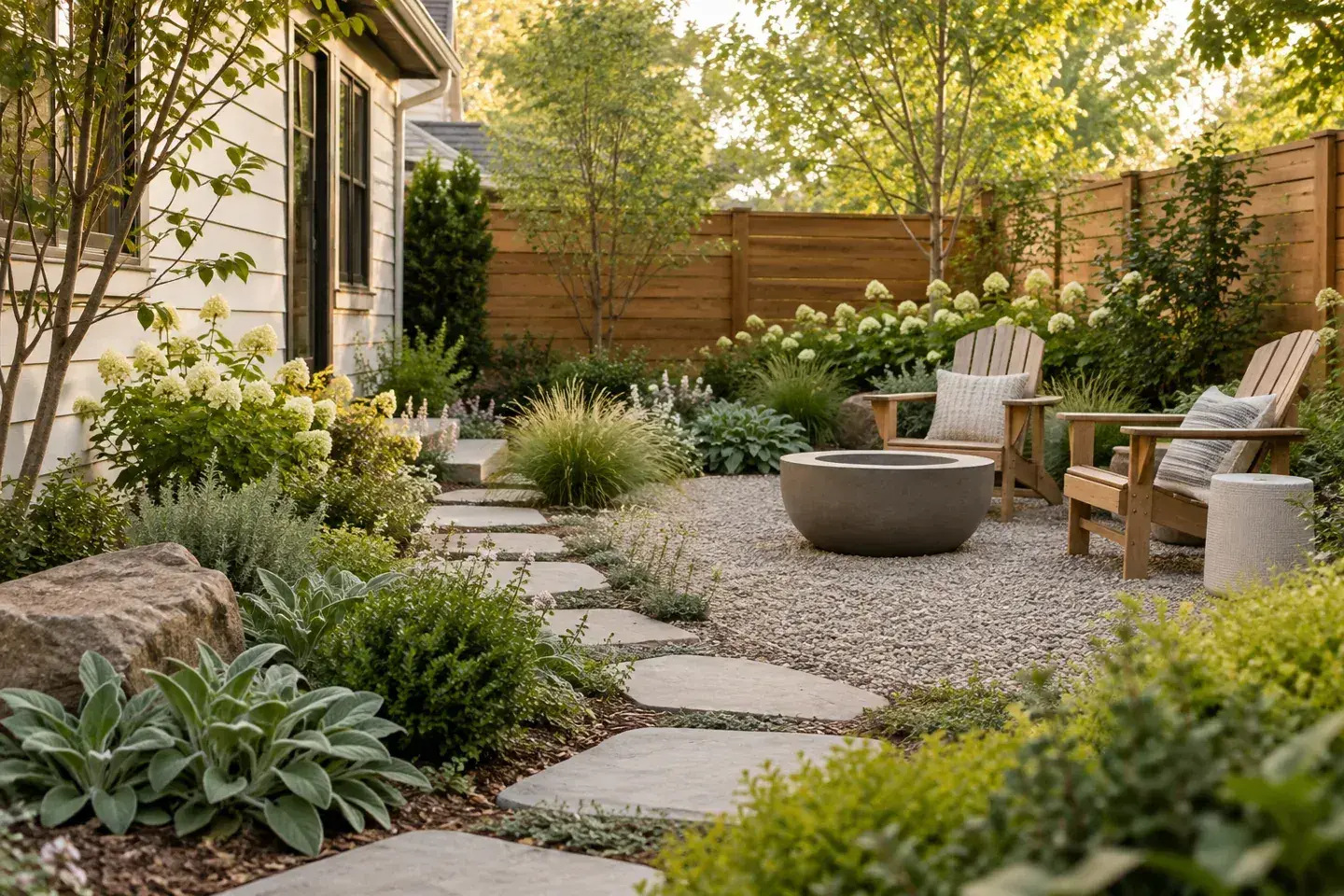
The best lawn replacement depends on what you want the yard to do. Use durable surfaces for frequent walking and seating, and site-matched plants where you want a living landscape. Replacing every blade of grass with one material rarely produces the most comfortable or manageable yard.
Low maintenance does not mean no maintenance. Plants need establishment care; gravel collects leaves and weeds; paved areas need drainage and occasional repairs. Start with the parts of the lawn that are difficult to mow, rarely used, or poorly suited to grass.
The University of Maryland Extension's lawn-alternative guidance illustrates several ways to reduce turf. Its plant context is regional, so use your own extension service to select species appropriate to your climate, soil, and invasive-plant rules. The images here show layout concepts, not verified plant identifications.
1. Compacted gravel for a relaxed sitting area
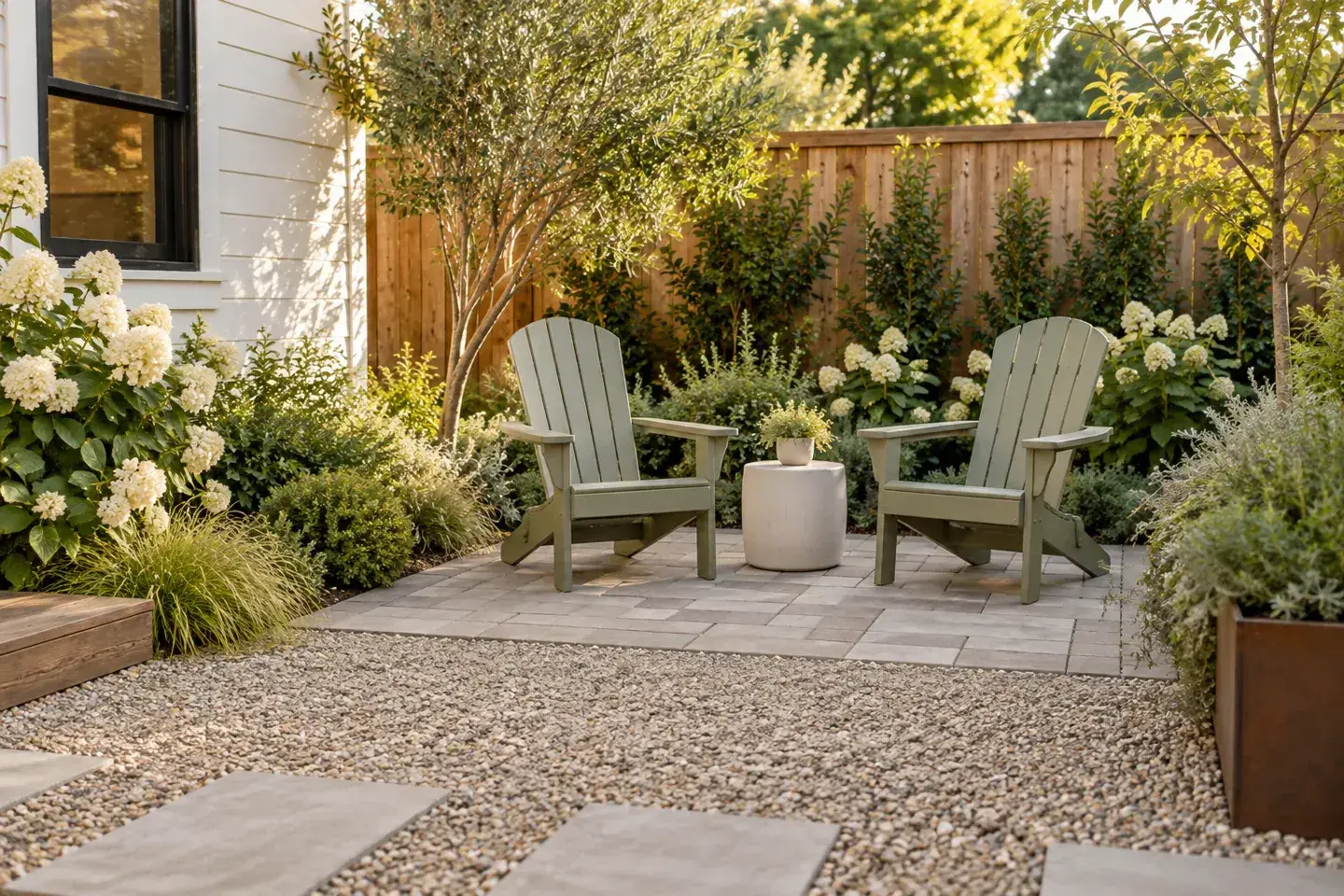
A small gravel sitting zone can replace an awkward patch of lawn beside a patio or garden bed. Choose an aggregate and installation appropriate to the use. Loose rounded stones can move under chair legs, while a suitable compacted surface may feel more stable.
Plan containment and drainage before spreading material. Keep a comfortable route to the house and consider whether wheelchairs, walkers, or strollers need a firmer surface. Maintenance includes removing debris, controlling weeds, and topping up displaced material. Gravel is not a cure for a persistently muddy site without preparation.
2. Permeable pavers for a frequently used route
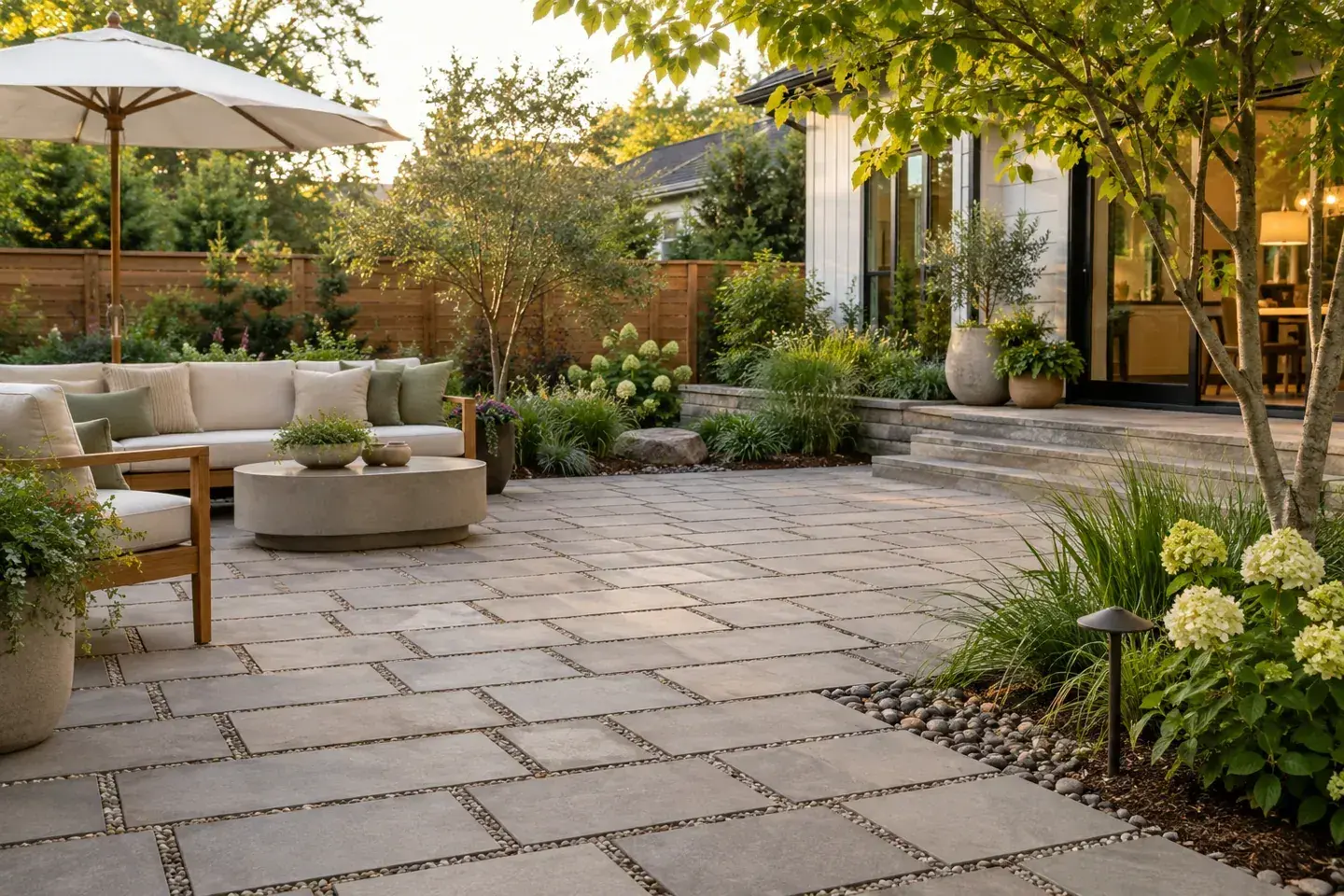
An appropriately designed permeable paving system can provide a defined surface while managing some rainfall through the assembly. It needs more than ordinary pavers placed with wide gaps. The base, joint material, soil conditions, and overflow route determine performance.
Use it for a sitting area or path where stable footing matters. Ask the installer how the system will be maintained and whether sediment must be removed periodically. Avoid directing runoff toward the house. Check local requirements before changing drainage or increasing hardscape coverage.
3. A modest concrete patio instead of an oversized lawn
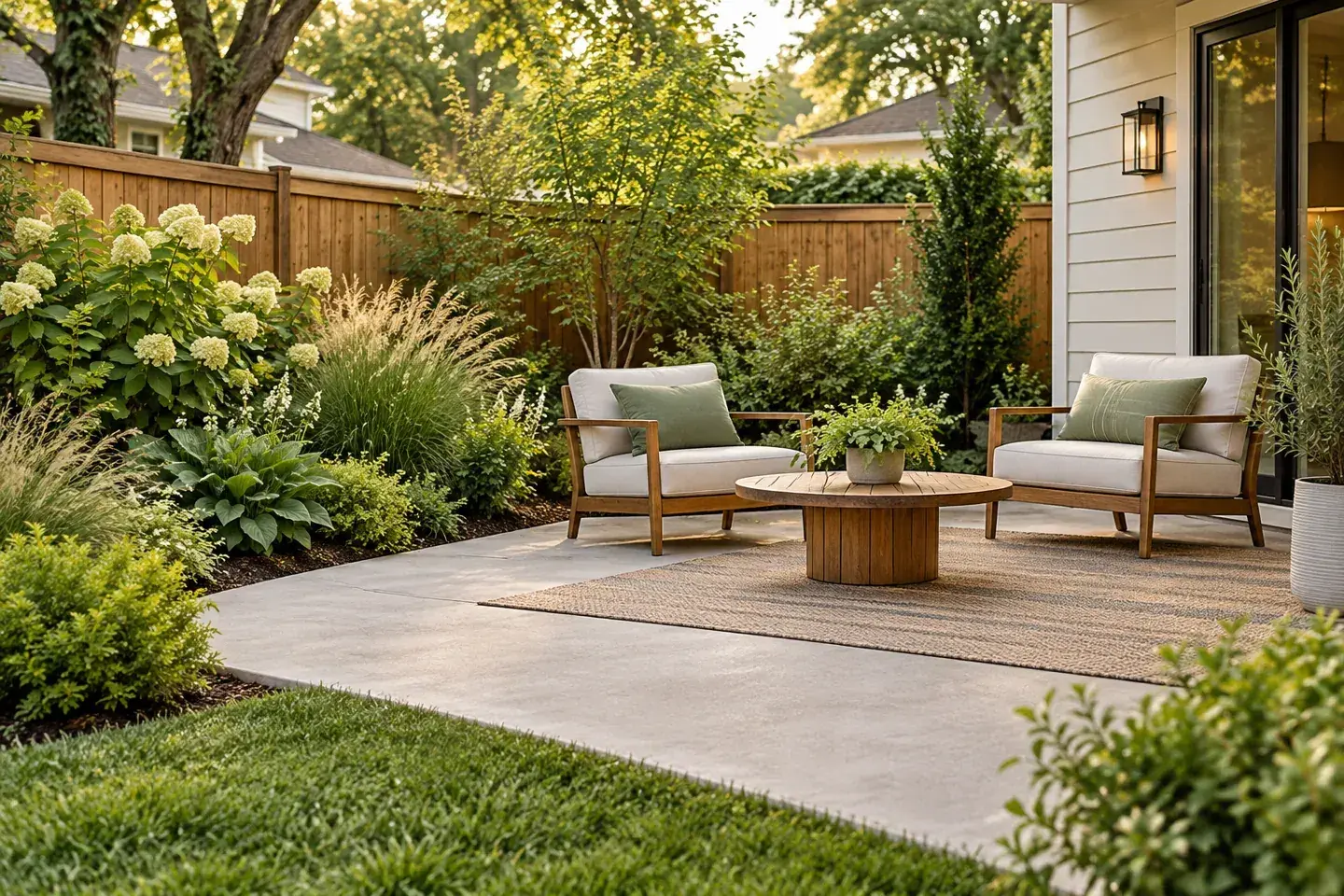
A simple patio can serve dining, seating, and everyday access with less mowing. Keep it sized to actual use rather than paving the whole backyard by default. A smaller well-placed surface leaves room for planting and reduces the area that collects heat.
Discuss slope, joints, finish, and drainage with the contractor. Concrete can crack, and a smooth decorative finish may be slippery when wet. Its maintenance may include cleaning and caring for any specified treatment. Compare the installed total, not just the cost of the concrete itself.
4. Wood-chip paths and mulched planting beds
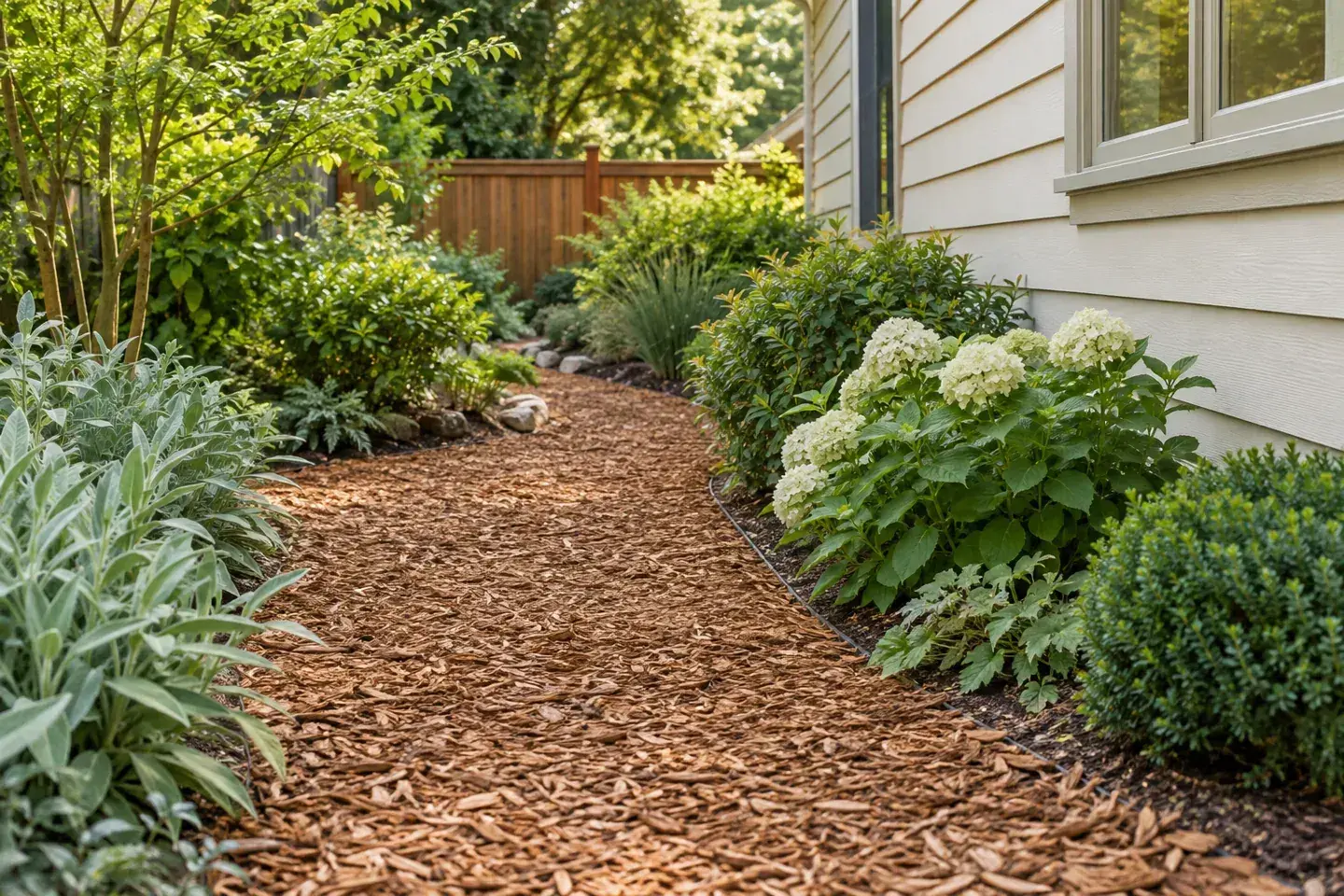
Mulch is useful where grass performs poorly or mowing is awkward. It can define garden paths and simplify care around established planting. Keep it away from siding and tree trunks, and follow appropriate depth and local fire-conscious landscape guidance.
Expect periodic replenishment as organic material breaks down. Remove persistent weeds before they become established. A mulched path can be comfortable for light garden use, but it is less suitable where a stable accessible route or heavy traffic is required. Avoid covering exposed structural or drainage features simply for appearance.
5. Locally suitable groundcovers for lightly used spaces
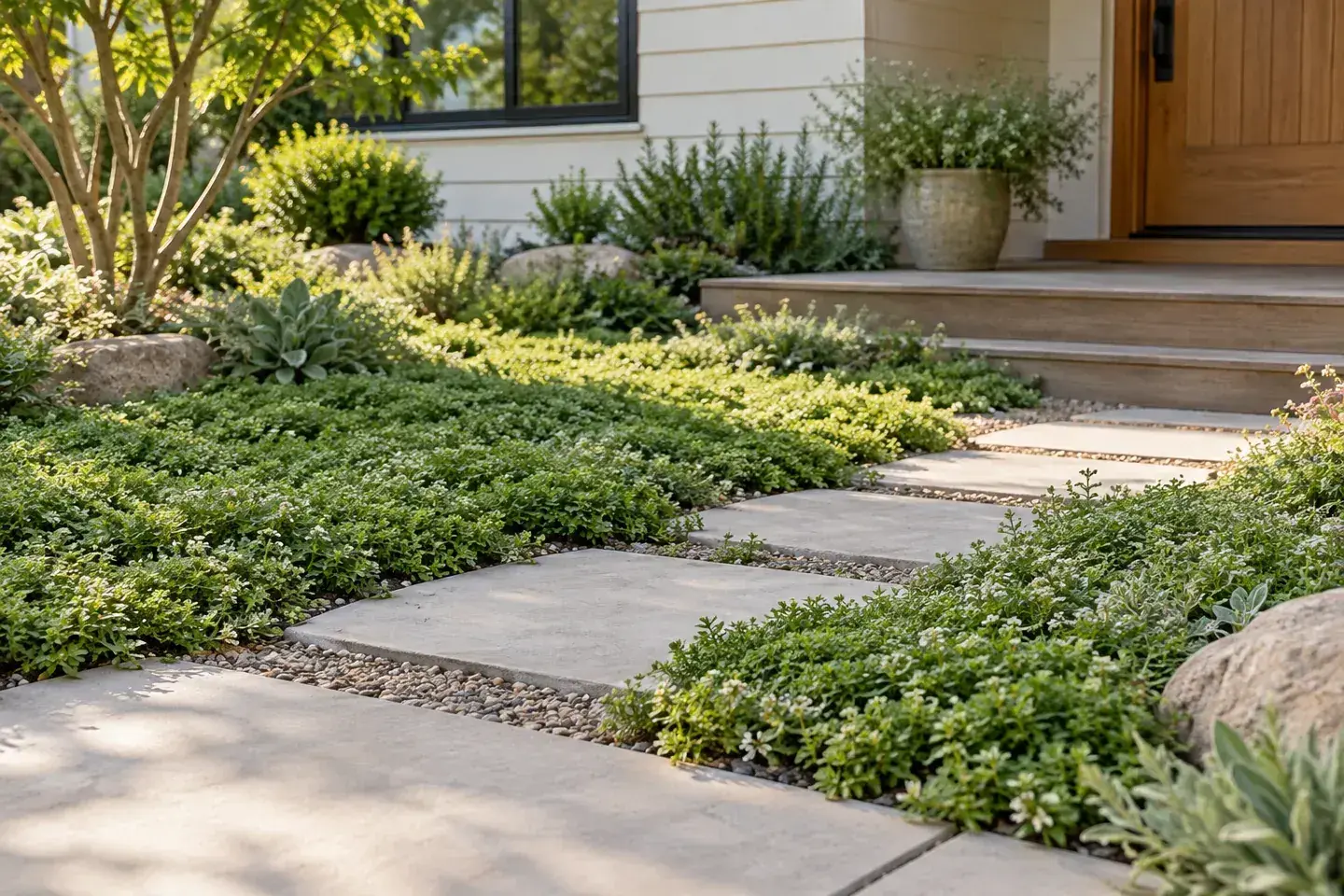
Low-growing plants can provide a green surface without conventional lawn mowing. Select by light, soil moisture, mature spread, and regional suitability. A plant sold as a groundcover may still be invasive locally or unable to tolerate foot traffic.
Maryland Extension's groundcover guidance emphasizes matching plants to conditions and providing paths where walking would damage them. Use that principle with locally appropriate species. Plan establishment watering and early weed control, then allow enough space for the mature planting rather than crowding it for instant coverage.
6. Drought-adapted perennial beds in sunny areas
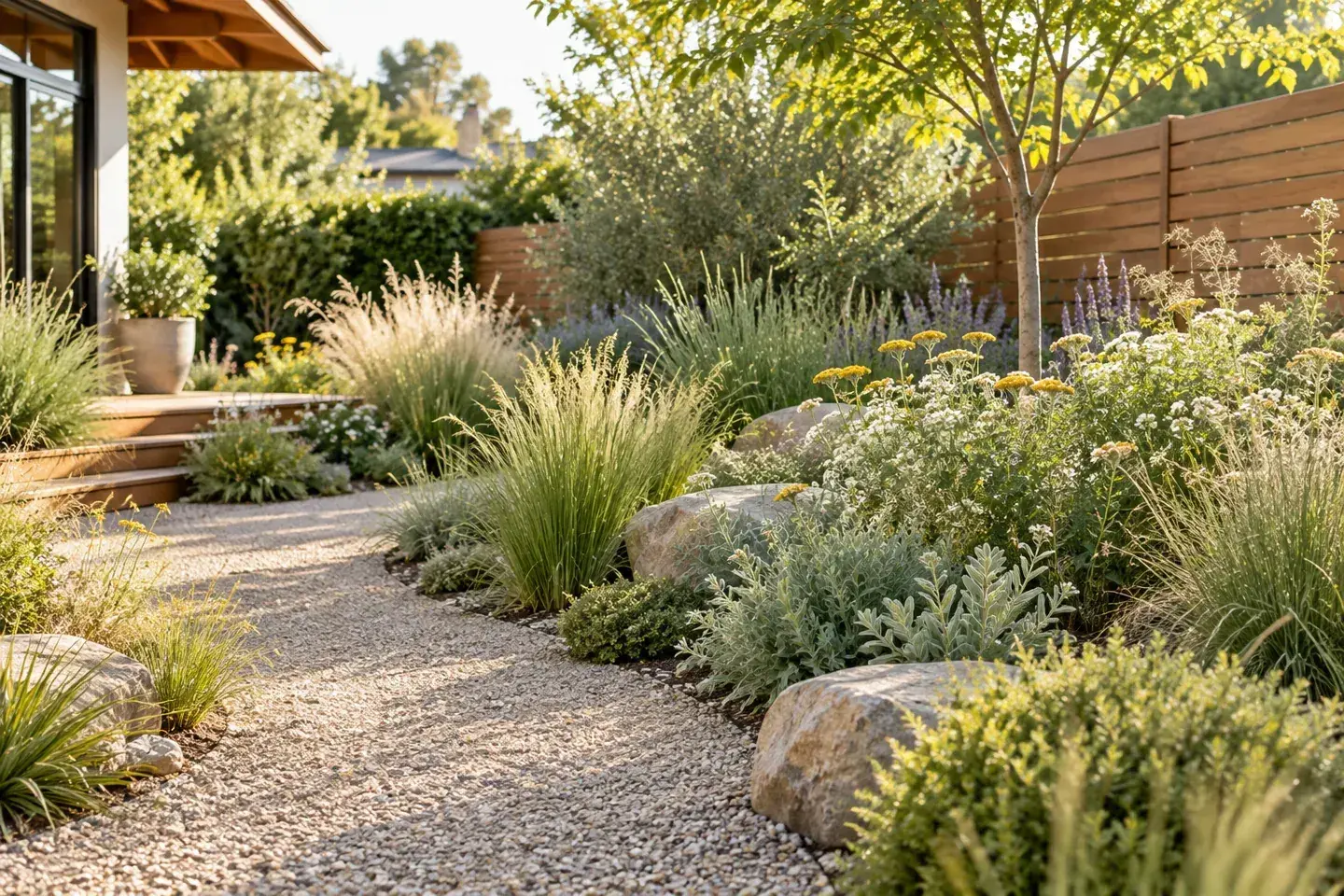
Group plants with similar water and sun needs instead of scattering isolated specimens across a former lawn. Repeating a few locally suitable choices can make the bed easier to care for and visually calmer. Drought tolerance after establishment does not mean new plants need no water.
Include access for pruning and maintenance. Check mature dimensions near fences, windows, and paths. A densely planted bed can reduce exposed soil, but it still needs seasonal attention. Choose a realistic plant palette rather than collecting many species with different care schedules.
7. A shade garden beneath established trees
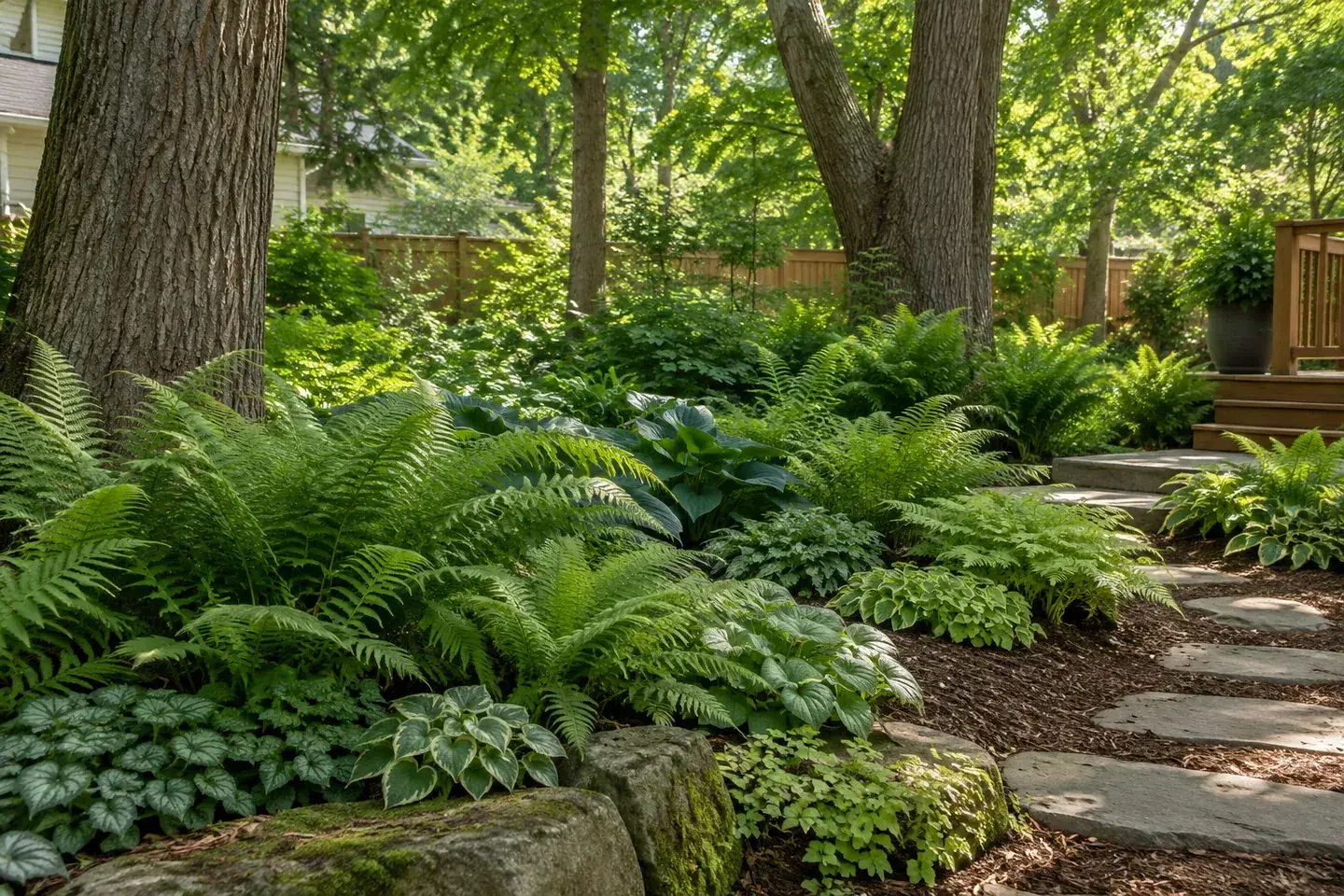
Where tree shade and root competition make lawn difficult, a compatible shade planting can be more sensible than repeated reseeding. Select locally suitable plants and avoid damaging major roots during installation. A tree-care professional can advise where excavation is risky.
Leave room around trunks and do not raise soil levels indiscriminately over roots. Plan a path around sensitive areas rather than encouraging constant trampling. Leaf litter management depends on the plants and site; the goal is a healthy planting, not necessarily bare soil under every tree.
8. A small meadow-style patch with clear edges
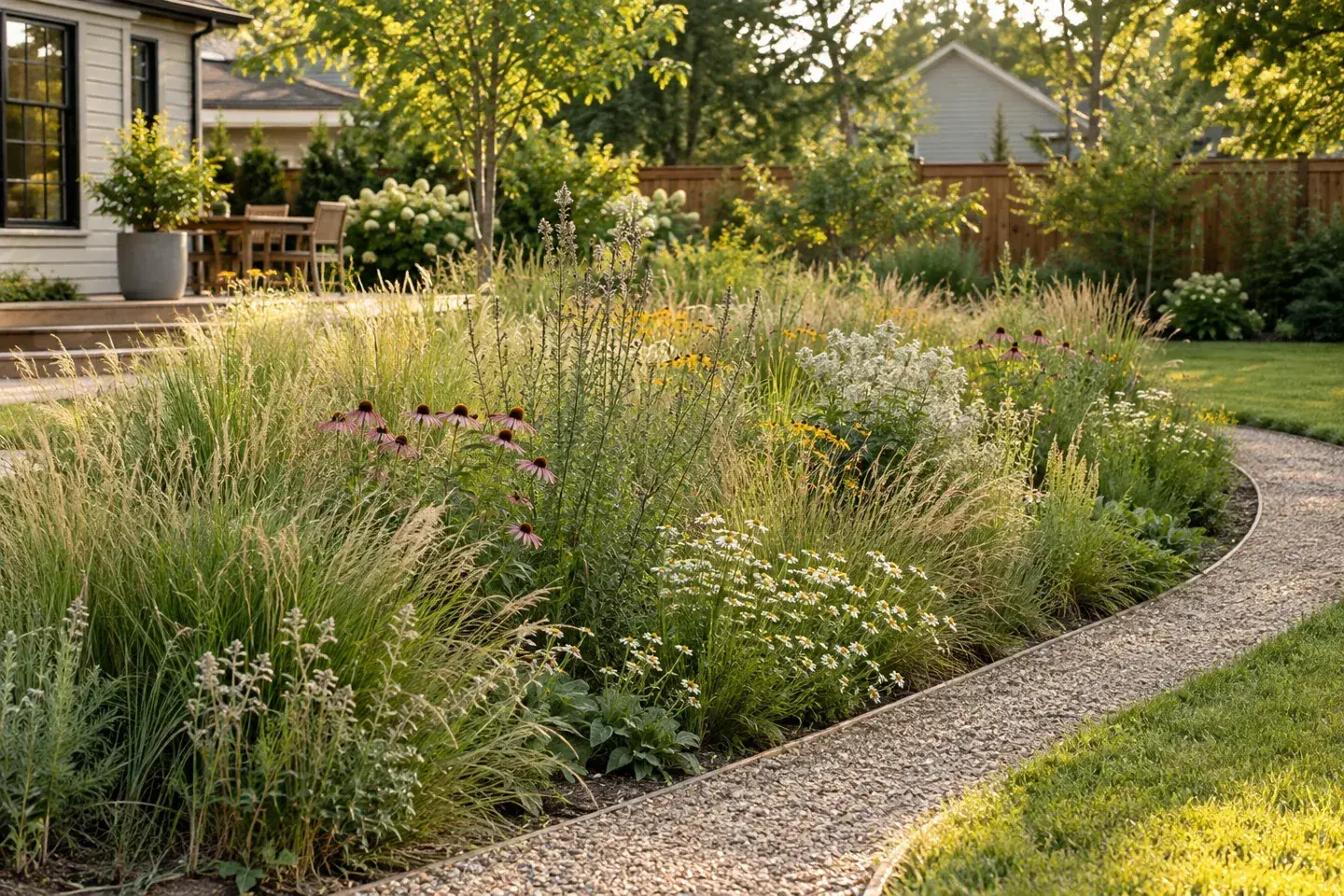
A meadow can replace a low-use sunny area with seasonal texture, but establishment is a real project. Start small, use locally suitable material, and learn to distinguish desired seedlings from weeds. It is not simply a bag of flowers scattered over existing lawn.
Maryland Extension's meadow guide highlights establishment challenges and recommends a manageable local approach. Adapt the principles with your regional extension service. A neat path or maintained border can make the area look intentional. Check neighborhood vegetation rules before committing to tall seasonal growth.
9. Raised beds with simple access paths
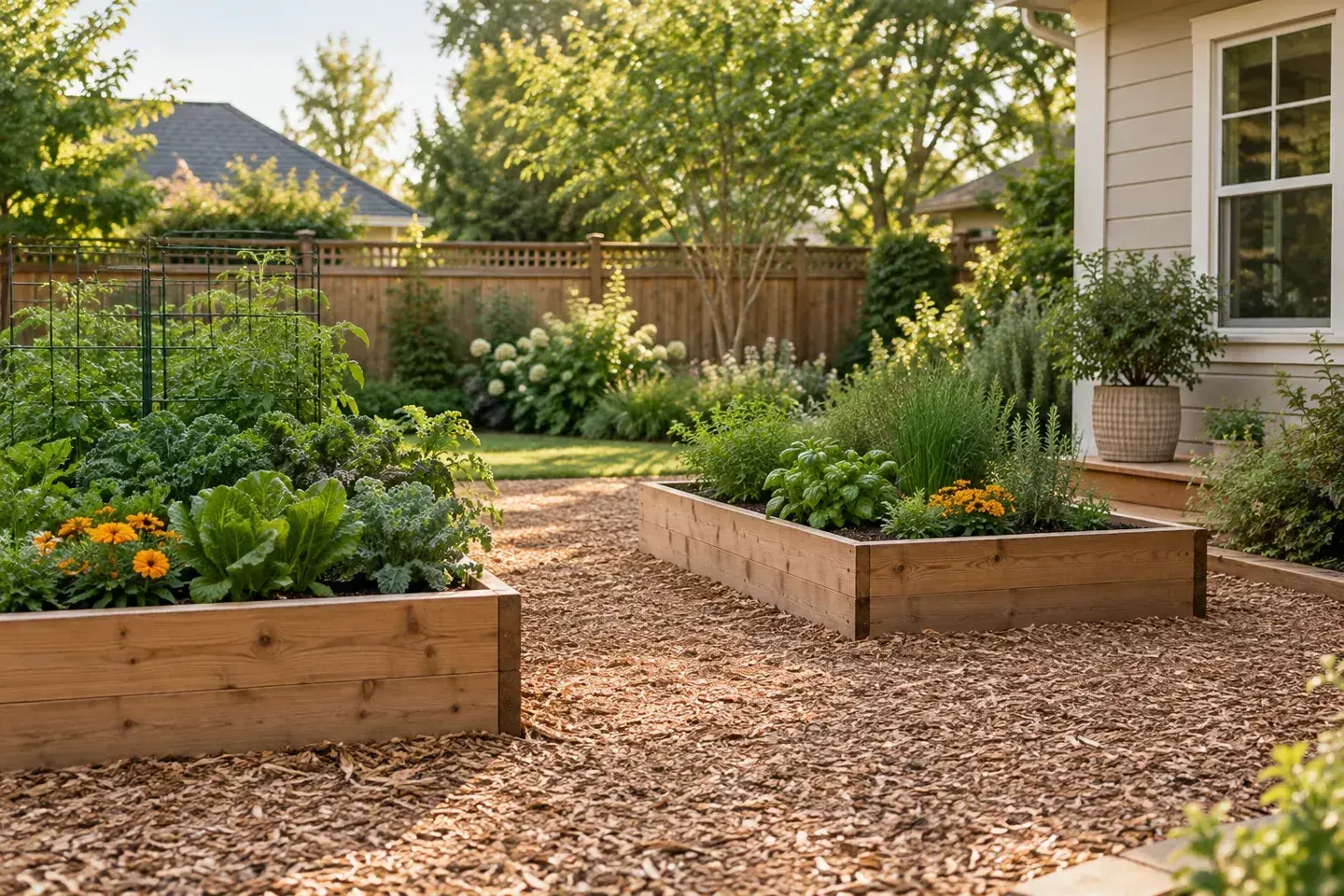
A few raised beds can replace a small lawn area while giving the space a defined purpose. Keep the number of beds proportional to the time you want to spend. Food growing requires regular work, so this is a lawn alternative rather than an automatic labor-saving choice.
Use broad paths and a layout that allows comfortable reach without stepping into the soil. Plan water access, drainage, and suitable bed materials. Start with one or two beds and expand only if the care fits your routine. Empty or neglected beds can become more work than the lawn they replaced.
10. A mixed yard with each surface doing one job
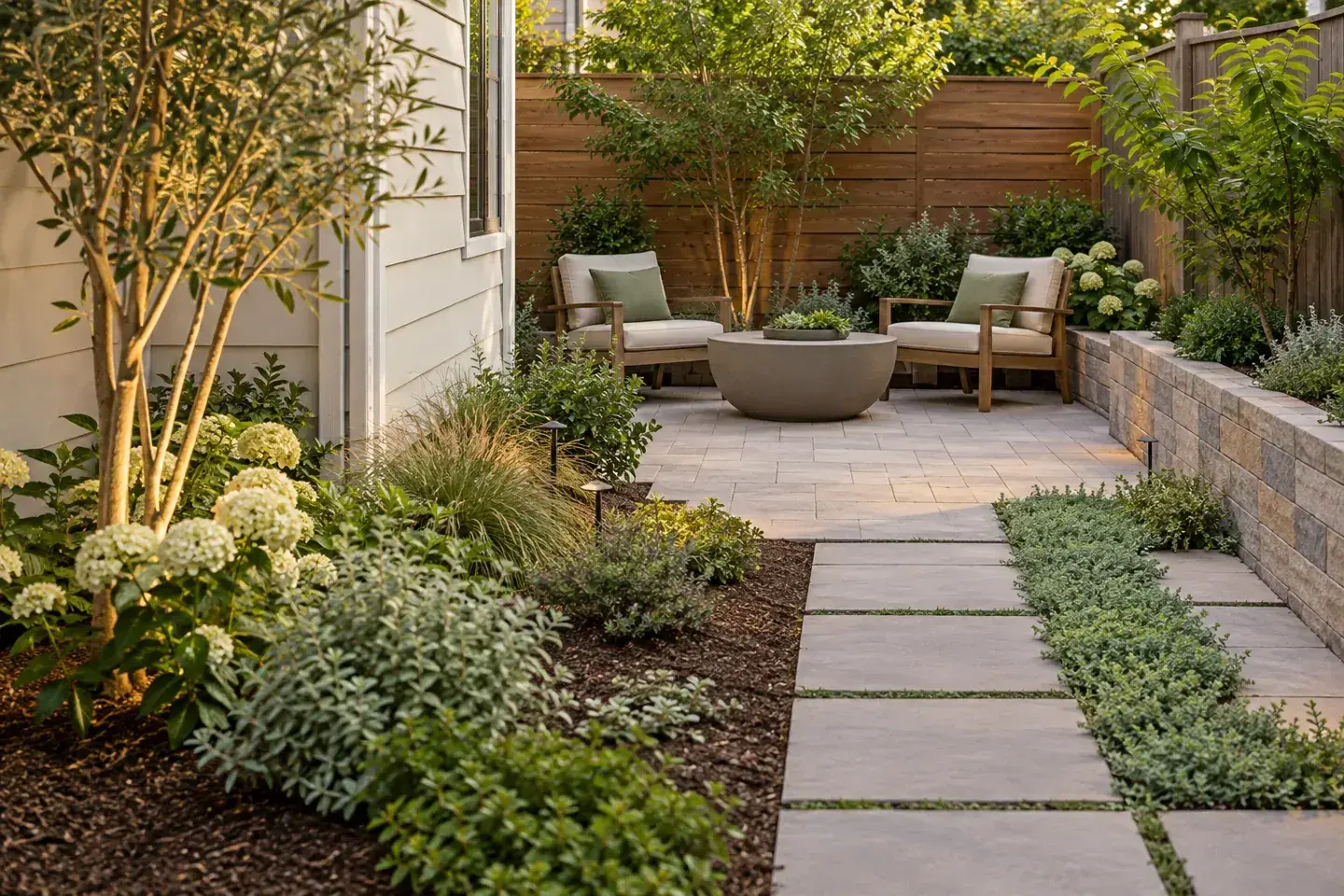
A modest paved sitting area, a clear path, and a few planted zones can outperform a single all-over replacement. Put the firm surface where people gather, planting where it will thrive, and a manageable green area where it is genuinely useful.
Draw the routes people already use before designing decorative shapes. Reduce awkward corners that require hand trimming. Keep drainage, service access, and maintenance storage in the plan. This approach lets you improve the yard in stages without committing the entire space to one material.
Choose by use, then by maintenance
| Feature | Useful starting options | |
|---|---|---|
| Stable seating or frequent access | Suitable paving or concrete | |
| Casual low-traffic garden area | Gravel or mulch | |
| Living green cover | Site-matched groundcovers | |
| Sunny low-use habitat planting | Locally designed perennial or meadow planting | |
| Several different uses | Mixed zones |
What about artificial turf?
It is another option, but it still requires cleaning, drainage, and eventual replacement, and it can become hot in sun. It is not included here as a universally low-maintenance or environmentally equivalent substitute for living plants.
Which option should I try first?
Convert one inconvenient or unsuccessful patch. Track the time, water, and upkeep through a season before expanding the design.
Sources
- University of Maryland Extension's lawn-alternative guidance. Checked October 11, 2026
- Maryland Extension's groundcover guidance. Checked October 11, 2026
- Maryland Extension's meadow guide. Checked October 11, 2026
Share this article
Get new guides by email
Practical home articles and free resources. No spam, and you can unsubscribe at any time.
Keep reading
15 Beautiful Xeriscaping Ideas for Colorado Front Yards
Explore 15 illustrated xeriscaping ideas for Colorado front yards, with grasses, flowers, shade, paths, useful lawn, and winter structure.
October 2026, 5 min read
The Best Grass Seed for North Carolina Lawns: Choose by Site
Choose North Carolina grass seed by region, sun, traffic, and upkeep. Compare tall fescue, Bermuda, centipedegrass, zoysia, and actual seed labels.
October 2026, 5 min read
Artificial Turf Cost in Arizona: Installation and Materials
Compare Arizona artificial turf materials and installation costs using an attributed Phoenix benchmark, clear exclusions, heat concerns, and a sample budget.
October 2026, 5 min read