The Best Grass Seed for North Carolina Lawns: Choose by Site
Choose North Carolina grass seed by region, sun, traffic, and upkeep. Compare tall fescue, Bermuda, centipedegrass, zoysia, and actual seed labels.
By Home Crane Editors. . 5 min read.
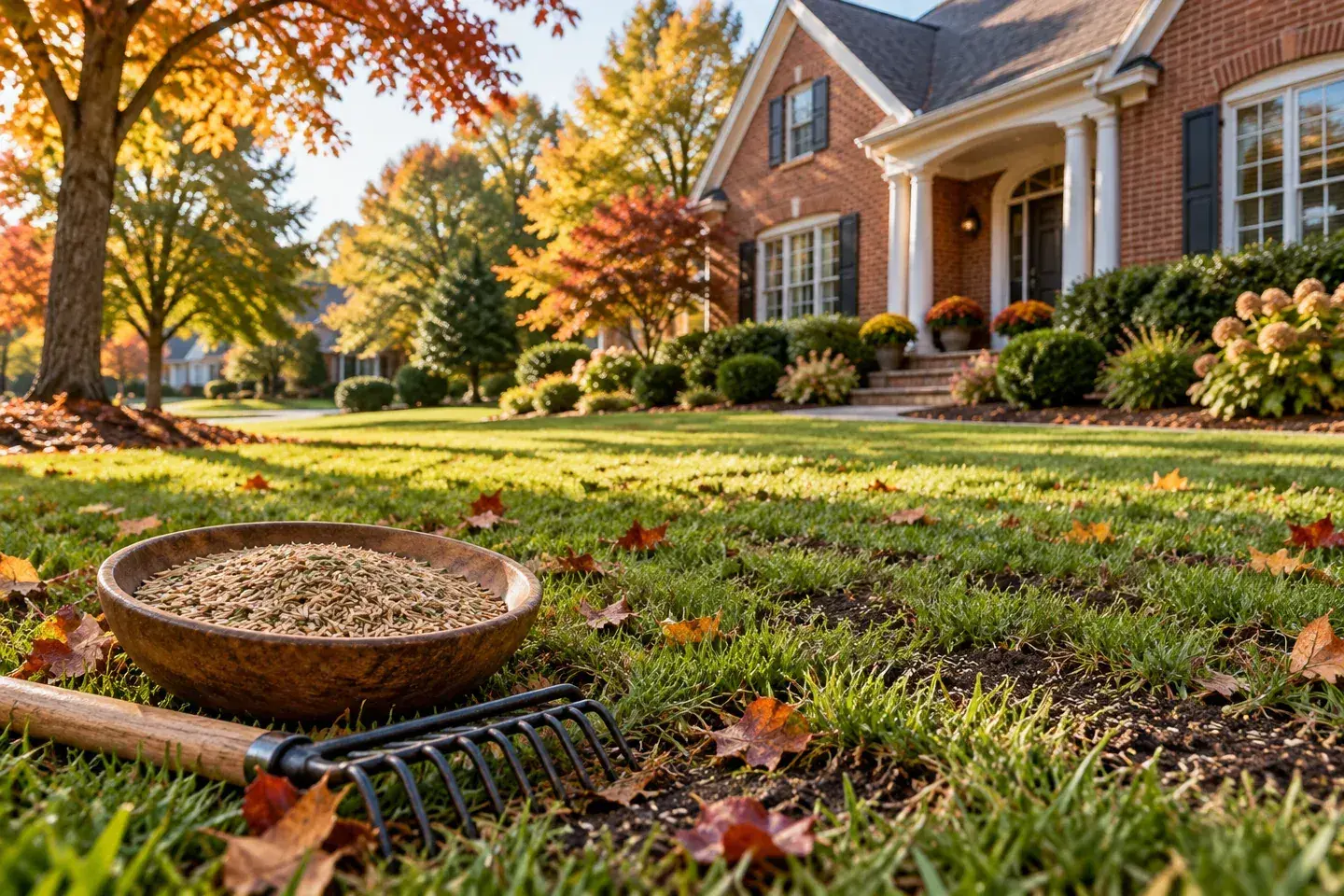
For much of North Carolina's Piedmont and mountain region, an improved turf-type tall fescue blend is a strong starting choice for a seeded home lawn. Sunny, frequently used lawns farther east may suit seeded Bermuda better. Centipedegrass and selected seeded zoysias fit other conditions. There is no “absolute best” seed for every North Carolina yard.
Choose the species for your climate, light, traffic, and maintenance capacity first. Then compare the cultivar names and seed quality. A bag's front label is less useful than the detailed analysis label on its side or back.
1. Tall fescue for much of the Piedmont and mountains
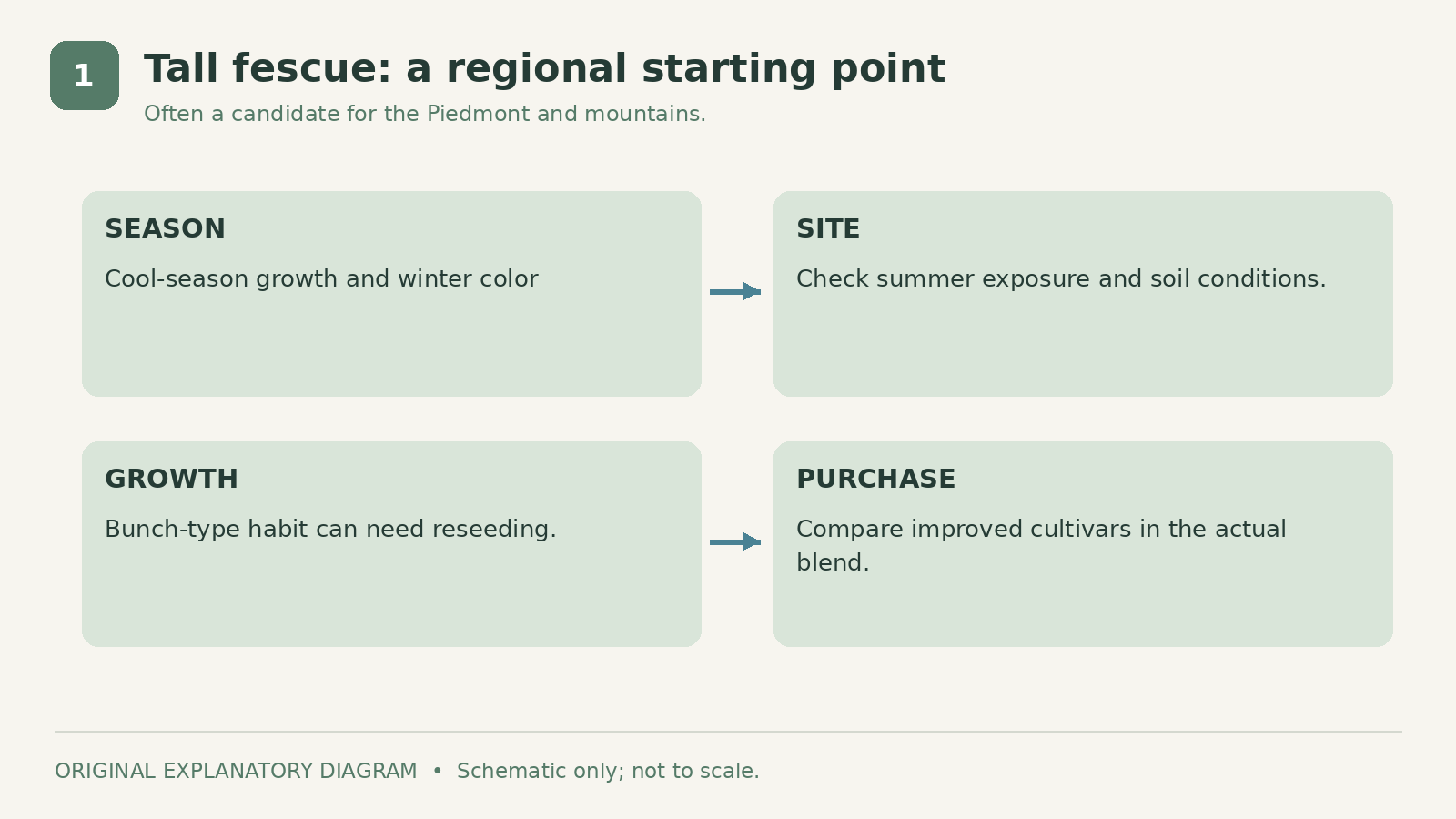
NC State's Carolina Lawns guide identifies tall fescue as particularly well adapted to the mountains and Piedmont. It can provide green color through much of the cooler part of the year, but summer stress remains a consideration. It is not the automatic answer for hot, sandy, fully exposed coastal sites.
An improved turf-type blend is worth comparing with older, coarser pasture-type selections when appearance matters. A blend combines cultivars within a species; a mixture combines different grass species. Read which one you are buying rather than assuming those words mean the same thing.
NC State's tall fescue profile explains its bunch-type growth and the possible need to reseed areas thinned by summer stress. Consider whether fall repair work fits your schedule before choosing it for a heavily worn route.
For a front lawn with moderate use and suitable light, tall fescue may be a practical compromise. For a narrow shortcut crossed repeatedly, changing the route or adding a path may solve more than buying a different seed blend.
Record where previous turf failed and why. The same seed can behave differently under an expanding tree canopy than it did when that tree was young.
2. Seeded Bermuda for sunny, active warm-season lawns
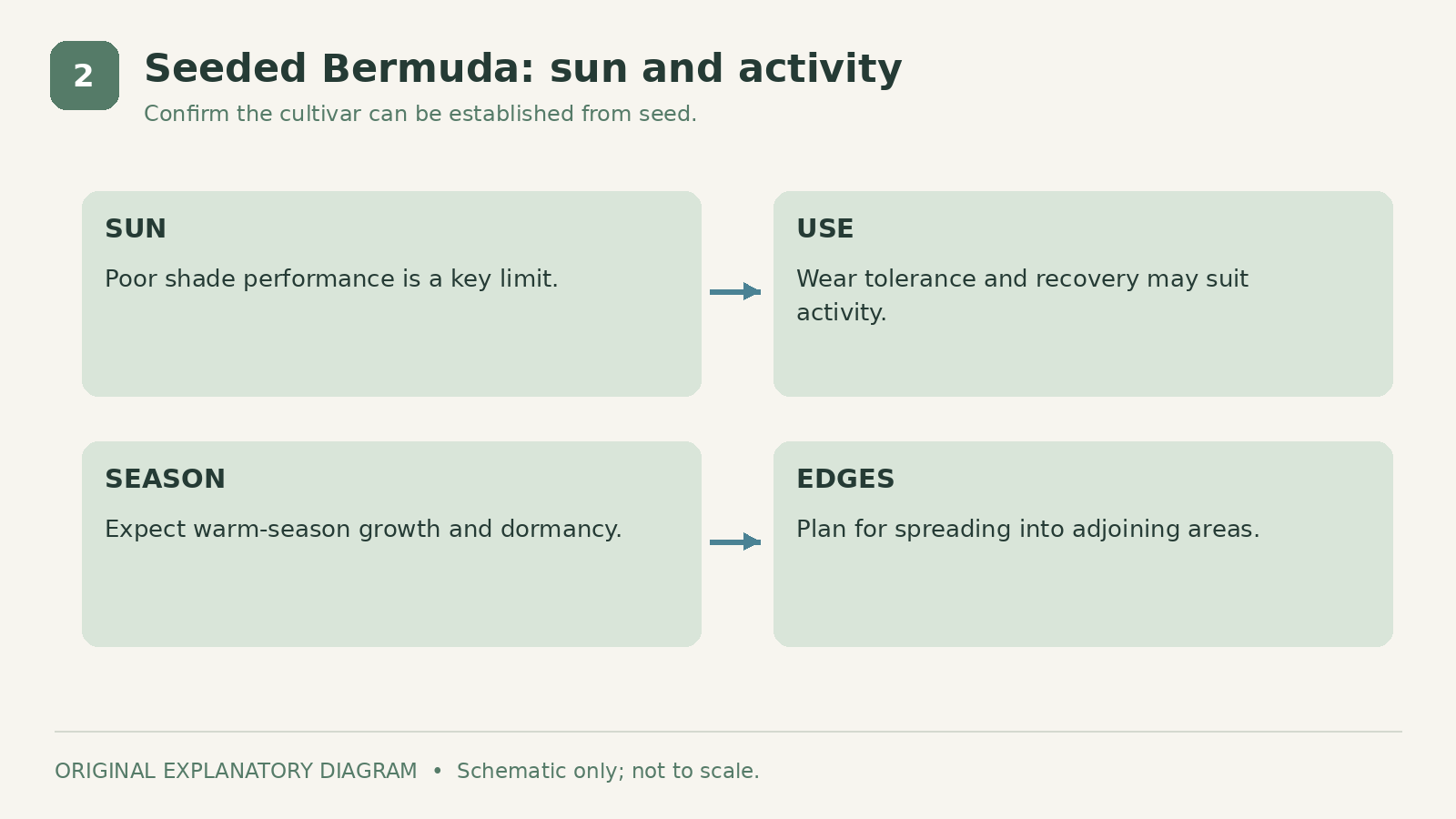
Bermuda deserves consideration when the lawn receives strong sun and needs to recover from regular use. NC State's Bermuda profile describes strong heat and wear tolerance, rapid recovery, and poor shade performance. Its spreading growth also means keeping it out of adjoining beds can require attention.
Choose a cultivar sold for establishment from seed. Do not assume that a named hybrid lawn seen at another property can be reproduced with an ordinary bag of Bermuda seed. Some desired cultivars require vegetative planting material rather than seed.
Decide whether winter dormancy is acceptable. A warm-season lawn's seasonal brown color is different from failure. If a green winter lawn is essential to your expectations, discuss the implications before purchasing rather than adding another grass later without a maintenance plan.
Bermuda is not a low-effort solution for a shaded yard simply because it is described as tough. Walk the site at several times of day and note shade from the house and trees. Also consider mowing frequency, edging, and the equipment you are willing to use.
A good candidate site is a sunny active lawn with clearly defined borders and an owner prepared for its growth habits.
3. Centipedegrass for suitable low-input sites
Centipedegrass can fit certain lower-maintenance lawns, especially where its regional and soil requirements are appropriate. That does not mean it tolerates neglect, repeated traffic, or every coastal condition.
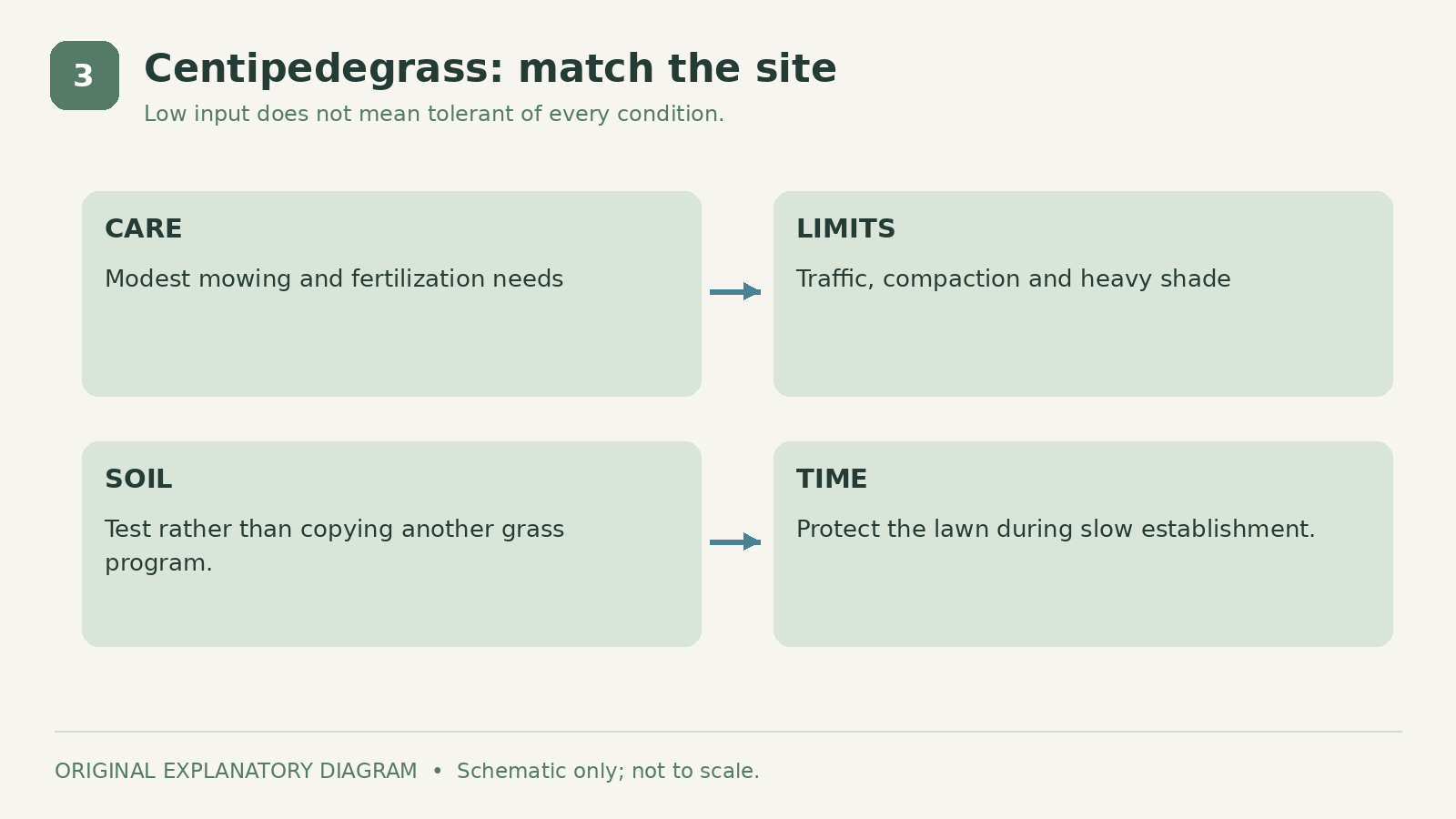
NC State's centipedegrass profile describes slow growth and relatively modest mowing and fertilization requirements, while identifying limitations including traffic, compaction, high soil pH, drought, and heavy shade. Those limitations should be checked before its maintenance appeal wins the decision.
Ask for a soil test before applying lime or copying a fertilizer program intended for another grass. A lawn species adapted to one soil condition can be poorly served by an automatic treatment routine.
Allow for establishment rather than expecting immediate dense coverage. Keep foot traffic away from the developing lawn and arrange an appropriate watering plan. If rapid coverage is essential, compare suitable planting methods with a local turf professional instead of increasing the seed rate arbitrarily.
This grass is a more convincing candidate for a lightly used lawn with compatible soil than for a busy play route. Sketch the areas of real use first. Reducing turf in unsuitable corners can make the remaining lawn easier to manage than changing the species across the entire property.
4. Seeded zoysia when its trade-offs fit
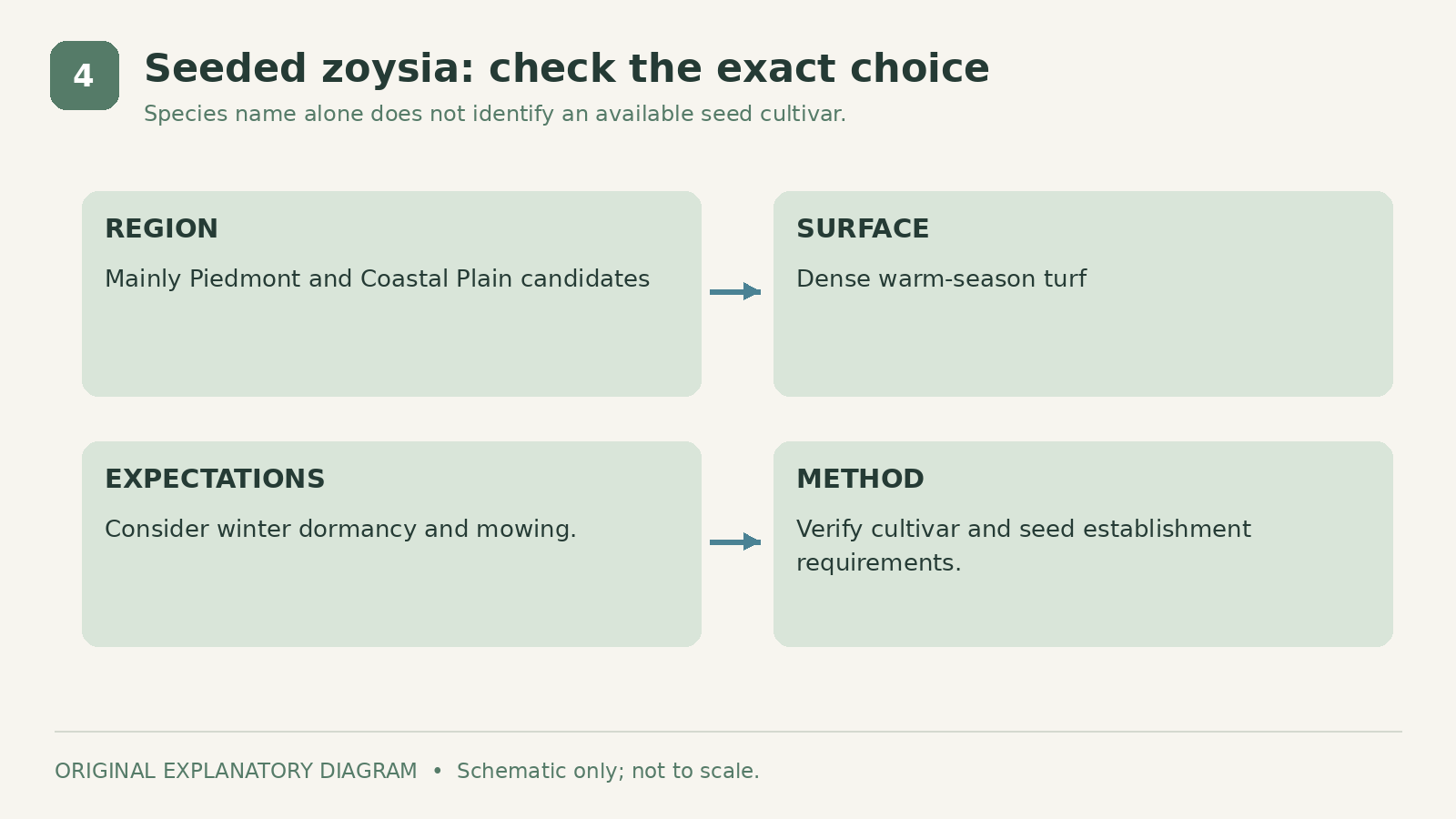
Zoysia is another warm-season option, but cultivar and establishment method matter. NC State describes zoysiagrass as dense and wear resistant, with its main North Carolina adaptation in the Piedmont and Coastal Plain. Some cold-tolerant cultivars extend the possibilities westward.
For a seed purchase, verify that the exact cultivar is available and suitable for seeding. Do not equate every zoysia lawn with the contents of every zoysia seed bag. Ask what established texture, mowing needs, and establishment expectations apply to the selection you can actually buy.
Compare the practical trade-offs against Bermuda and tall fescue. Do you value summer density more than winter color? Can you protect a newly established area from traffic? Are you prepared to maintain the lawn at its recommended height with suitable equipment?
NC State's regional lawn table separates grass species and planting methods. Use it with local advice and the seed directions rather than interpreting all warm-season products as interchangeable.
If the lawn is deeply shaded or persistently wet, pause the seed comparison. A site problem may call for drainage assessment, a different landscape use, or a suitable planting bed rather than another premium grass purchase.
5. Read the seed label before buying
The 2026 NC State cultivar recommendations are more useful than a fixed national brand ranking. The publication explains that blends sold under an unchanged brand name can contain different cultivars over time. It recommends looking for at least half the blend's content from its recommended cultivars when an all-listed blend is unavailable.
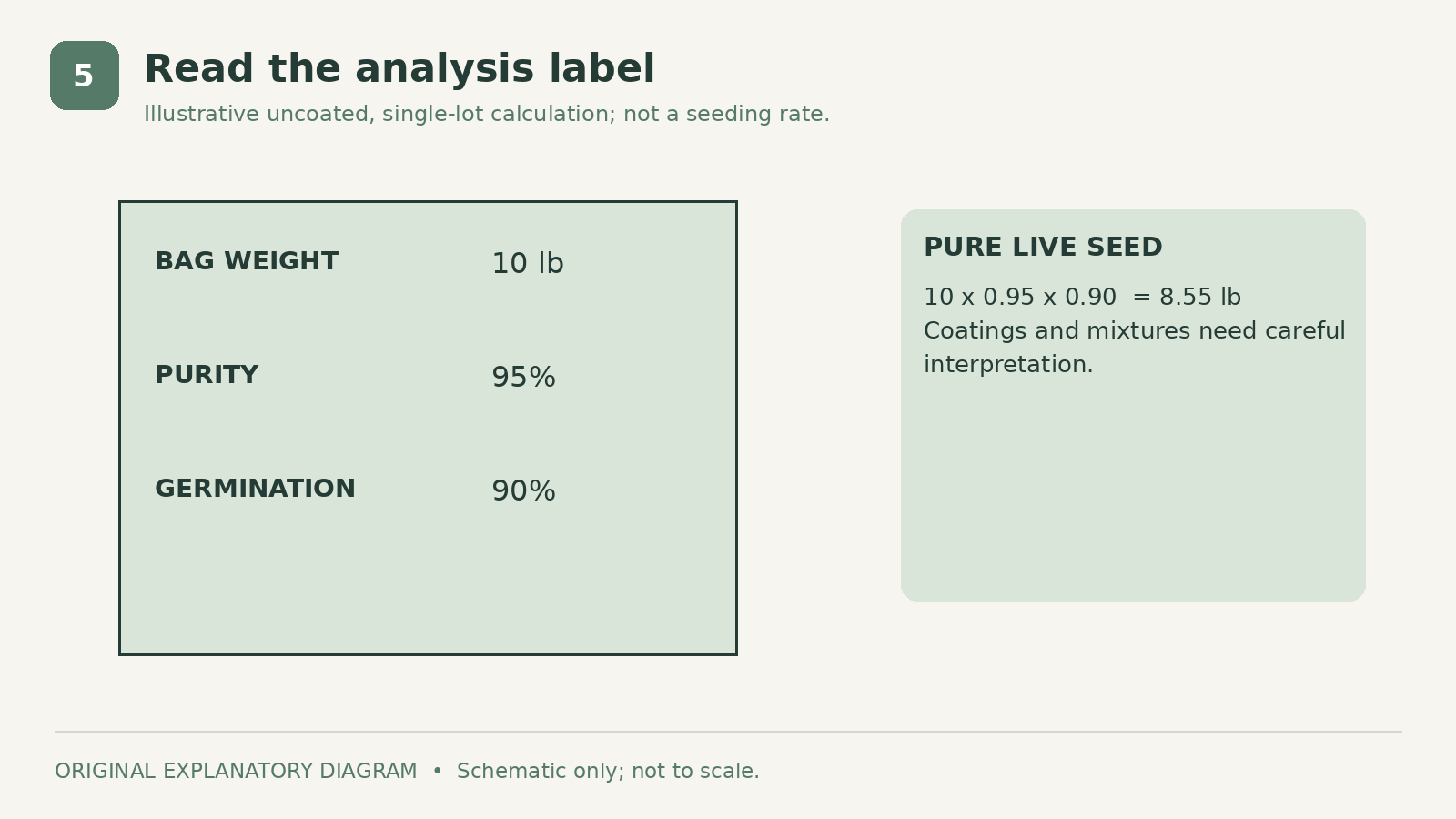
Photograph the actual bag label. Check named varieties, percentages, germination, test date, other crop seed, weed seed, and any coating. Compare equivalent quantities rather than treating a heavier bag as automatically better value.
As an illustrative calculation, 10 pounds of a single uncoated seed lot at 95% purity and 90% germination represents 8.55 pounds of pure live seed: 10 × 0.95 × 0.90. Coated products and multi-species mixtures require more careful interpretation. The example is not a suggested seeding rate.
| Feature | Starting shortlist | |
|---|---|---|
| Cooler region and winter color | Improved turf-type tall fescue blend | |
| Sunny, active warm-season lawn | Appropriate seeded Bermuda | |
| Compatible soil and light use | Centipedegrass | |
| Dense warm-season surface | Suitable seeded zoysia cultivar |
Before checkout, match the bag to your site notes and planting window. Buy enough for the measured area at the specified rate, then plan establishment care. The best seed is a suitable living plant with a workable maintenance plan, not simply the most persuasive package.
Sources
- NC State's Carolina Lawns guide. Checked October 6, 2026
- NC State's tall fescue profile. Checked October 6, 2026
- NC State's Bermuda profile. Checked October 6, 2026
- NC State's centipedegrass profile. Checked October 6, 2026
- NC State describes zoysiagrass. Checked October 6, 2026
- NC State's regional lawn table. Checked October 6, 2026
- 2026 NC State cultivar recommendations. Checked October 6, 2026
Share this article
Get new guides by email
Practical home articles and free resources. No spam, and you can unsubscribe at any time.
Keep reading
15 Beautiful Xeriscaping Ideas for Colorado Front Yards
Explore 15 illustrated xeriscaping ideas for Colorado front yards, with grasses, flowers, shade, paths, useful lawn, and winter structure.
October 2026, 5 min read
Artificial Turf Cost in Arizona: Installation and Materials
Compare Arizona artificial turf materials and installation costs using an attributed Phoenix benchmark, clear exclusions, heat concerns, and a sample budget.
October 2026, 5 min read
25 Stunning Drought-Tolerant Landscaping Ideas for California
Explore 25 illustrated drought-tolerant landscaping ideas for California, including native planting, paths, shade, containers, and water-wise planning.
October 2026, 5 min read