Artificial Turf Cost in Arizona: Installation and Materials
Compare Arizona artificial turf materials and installation costs using an attributed Phoenix benchmark, clear exclusions, heat concerns, and a sample budget.
By Home Crane Editors. . 5 min read.
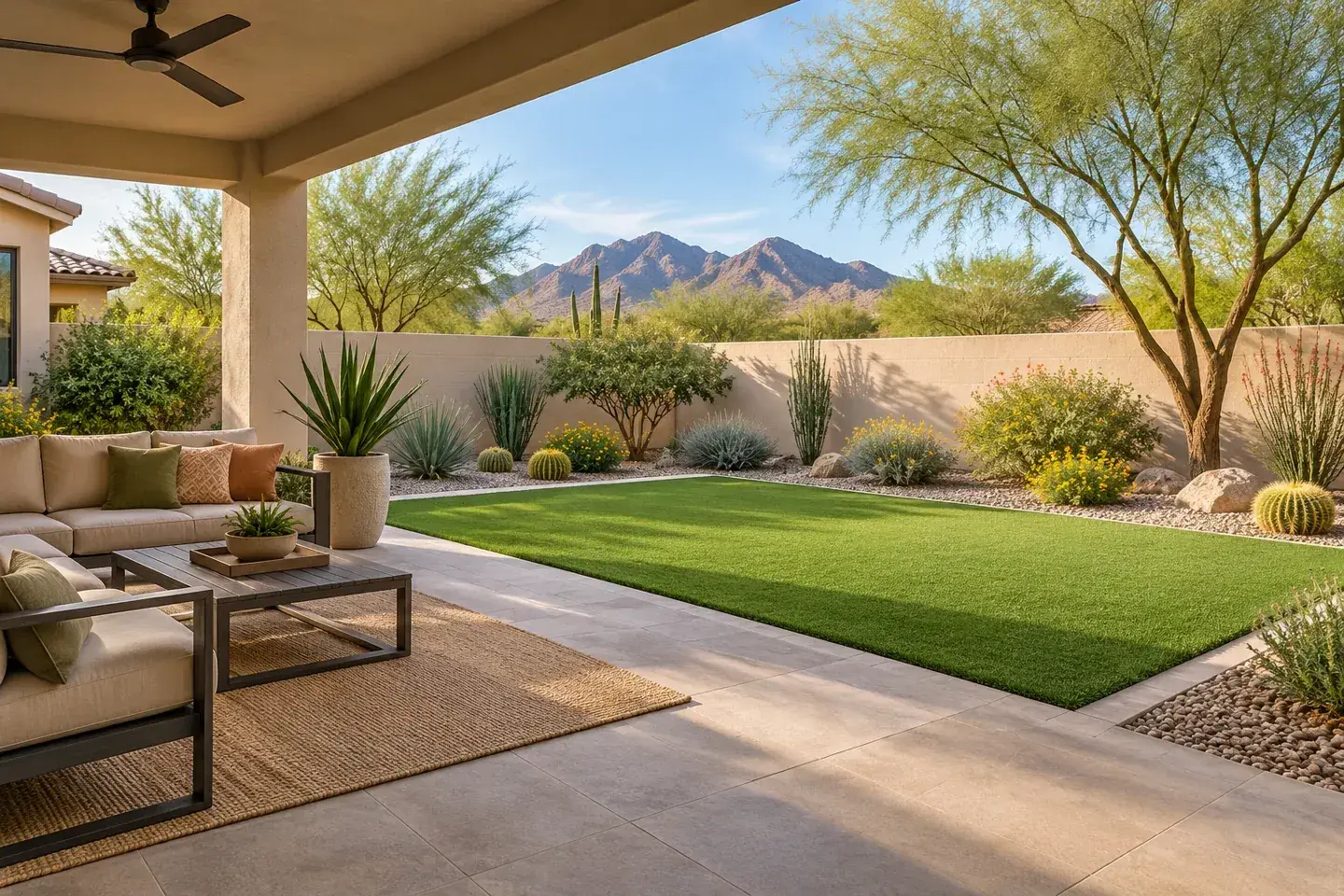
For a Phoenix artificial lawn installed over a new compacted base, one local contractor publishes a planning range of $8 to $14 per square foot. At that rate, a 500-square-foot lawn represents $4,000 to $7,000 before separately priced extras. This is an attributed contractor range, not a verified Phoenix-wide or Arizona-wide average. Tucson, Flagstaff, and other Arizona locations need local quotes; the Phoenix benchmark below should not be transferred unchanged across the state.
The turf roll is only part of the project. The useful comparison is the complete installed surface, including removal, preparation, drainage, edging, seams, infill, and cleanup. A cheap material price does not tell you what a finished yard will cost or how it will behave in Arizona heat.
1. Measure the area and understand the price
Norem Contracting's Phoenix guide publishes the $8-to-$14 installed range for a lawn over a new base. It states that grass removal is included in that lawn rate while concrete demolition is separate. Its turf-material-only range is $2 to $7 per square foot.
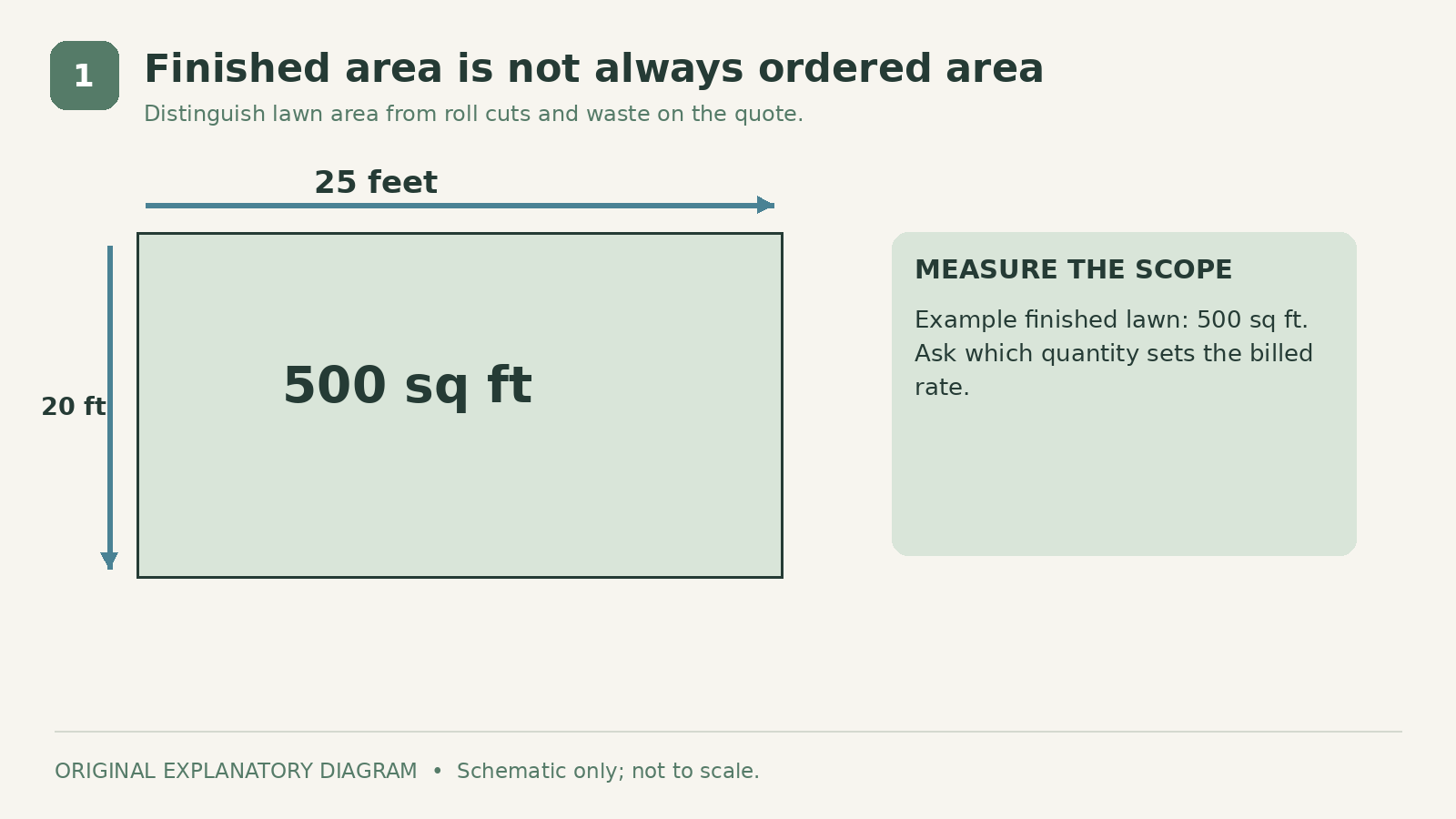
Ask what area the contractor multiplies by the quoted rate. The visible finished lawn and the material ordered from full rolls can differ because of cuts, curves, and seams. Either measurement can be explained, but you need to know which one appears on your bill.
Measure rectangles separately and add them together for a preliminary layout. A 20-by-25-foot rectangle contains 500 square feet. For irregular areas, use your sketch to start the conversation and let the installer produce a documented takeoff.
Keep planting beds and hardscape outside the turf area on the drawing. If you change the layout later, update both the finished area and the material takeoff. Otherwise, an old quantity can survive into a revised proposal and make comparison unnecessarily confusing.
2. Separate the turf from preparation
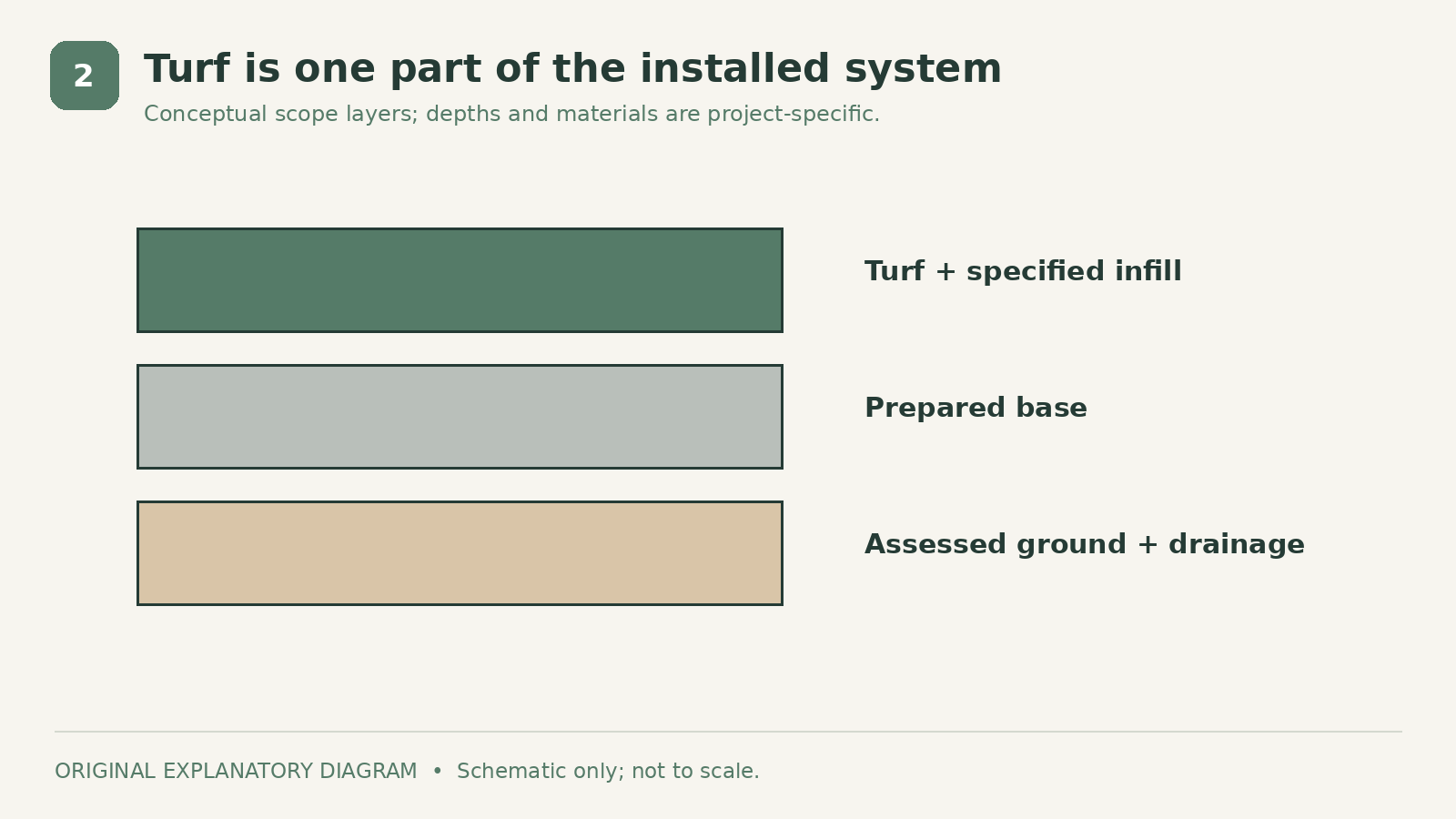
Request the exact turf product, backing, infill, and installation method in writing. Then ask for the preparation scope that supports that product. “Premium turf” and “standard base” are not detailed specifications.
The price should explain who removes the existing lawn, handles disposal, prepares the ground, and addresses unsuitable conditions discovered during excavation. Avoid comparing a supply-only roll with an installed system that includes those services.
For a yard with existing trees, ask how roots and future irrigation will be protected. University of Arizona Extension's discussion of turf replacement notes that excavation and compaction associated with artificial turf can damage nearby woody-plant roots. Tree protection deserves attention before the lawn is removed.
Ask the installer to describe how finished levels will meet patios, walkways, and planting beds. This is a practical way to uncover an incomplete scope without trying to prescribe a universal base thickness from an online article.
If the existing surface has settled or held water, make that history part of the proposal. Covering a problem with a new finish is not the same as resolving it.
3. Add edges, drainage, and removals
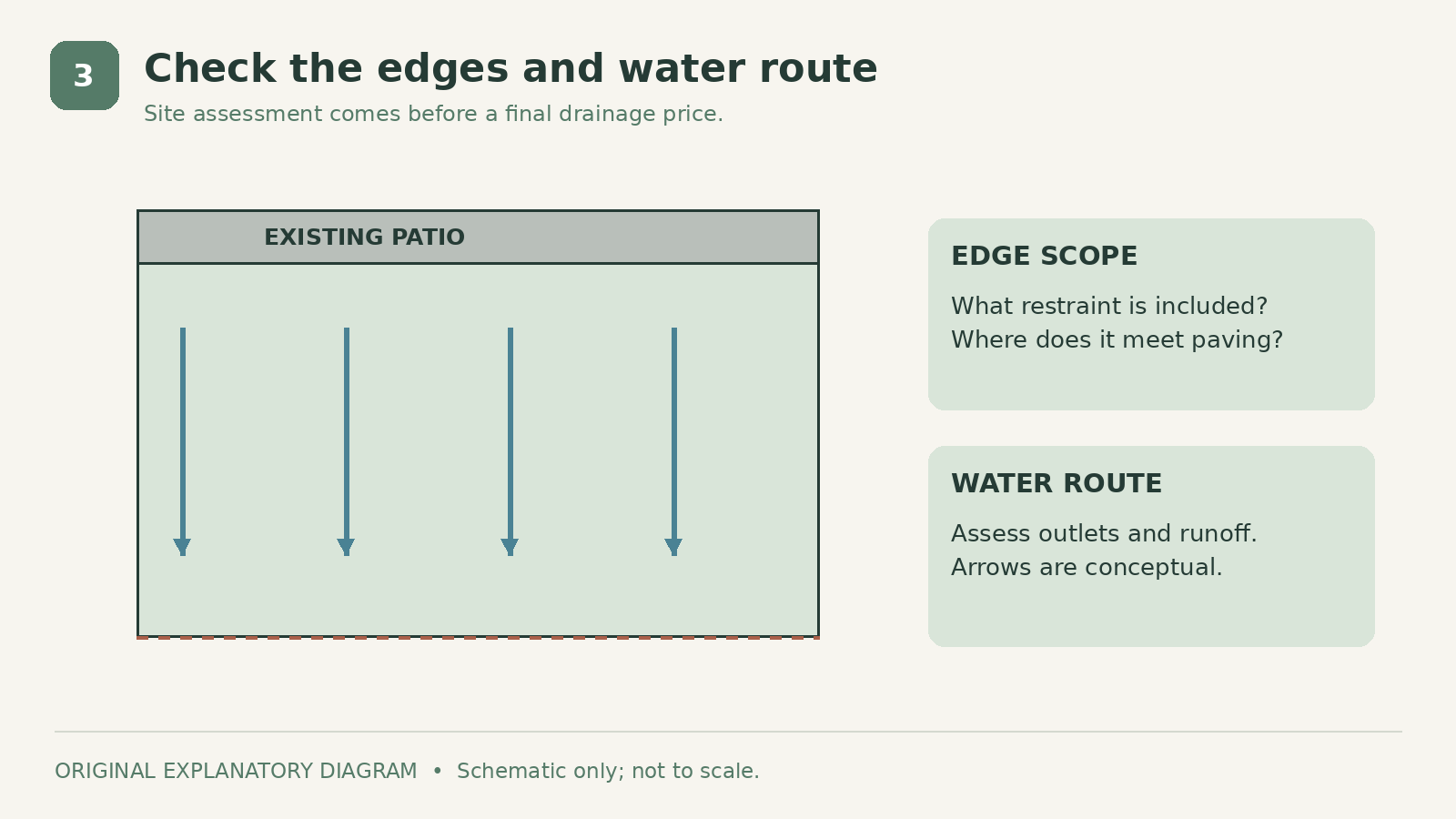
Walk the perimeter with the contractor. Identify which edges already have suitable restraint and which need new work. Note narrow access gates, steps, existing concrete, and obstacles that affect removal or material handling.
Keep drainage work explicit. Ask where rain and cleaning water will go, what happens at the lowest point, and whether the proposed system changes runoff toward a building or neighboring property. An installer should assess the full surface and its outlet conditions rather than relying only on the turf backing's advertised permeability.
Request separate prices for optional layout changes. A simpler outline may reduce cutting and seam complexity, but ask for an actual alternative quote instead of assuming a particular savings percentage.
Avoid double-counting removal. If the installed lawn price already includes grass removal, a second removal allowance needs a clear explanation. Concrete demolition, unusual haul-off, or unrelated landscaping may reasonably be additional, but the proposal should identify them.
Keep a short list of owner-supplied work as well. If you agree to remove furniture or provide access, record that responsibility so the project does not begin with a disagreement about preparation.
4. Calculate a 500-square-foot example
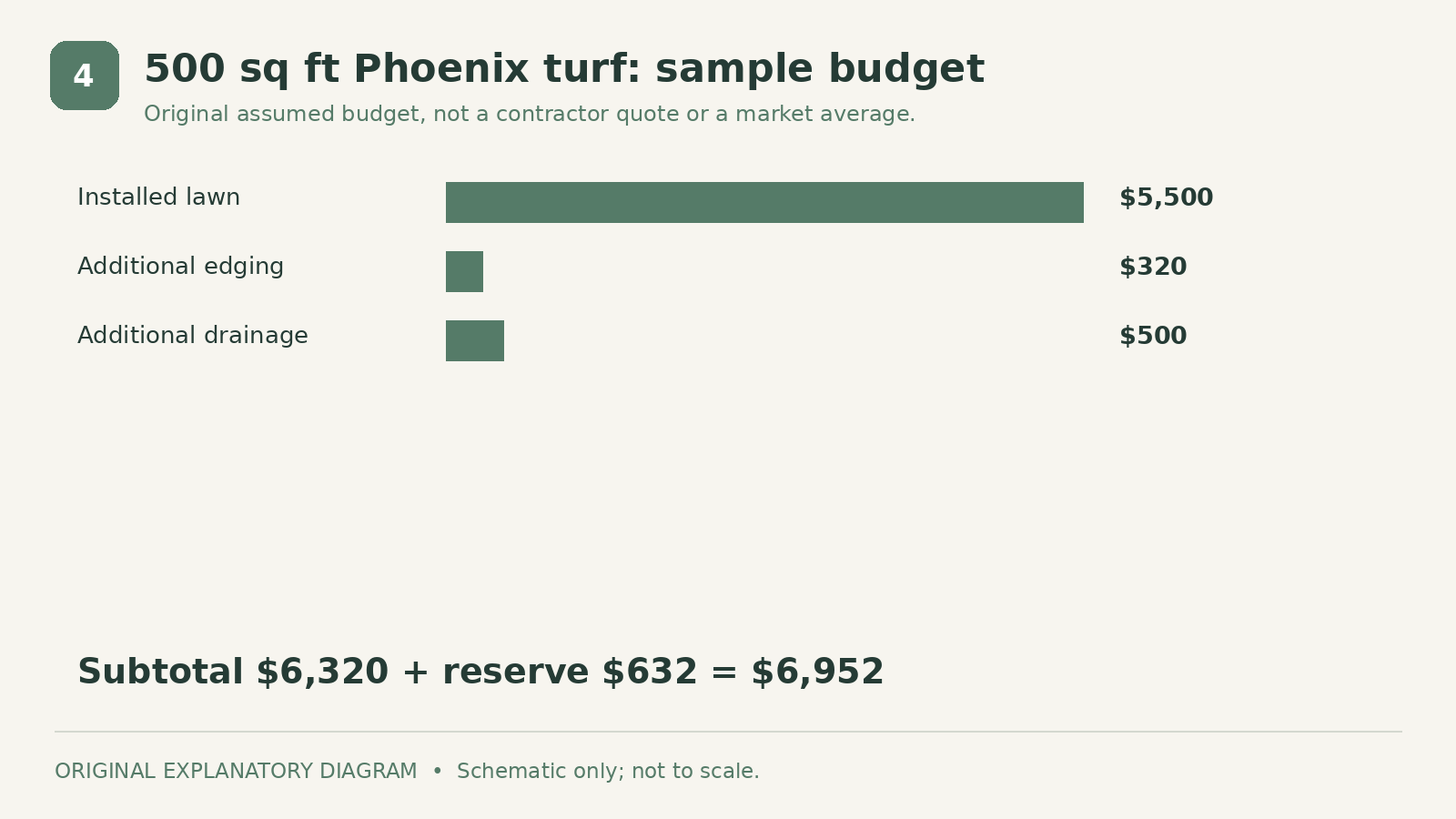
This original assumed budget uses a 20-by-25-foot finished lawn and an assumed installed rate of $11 per square foot. It illustrates how extras change a headline rate; it is not a site quote.
| Feature | Assumption | Amount |
|---|---|---|
| Installed lawn with included grass removal | 500 sq ft x $11 | $5,500 |
| Additional edging outside base scope | 80 linear ft x $4 | $320 |
| Additional drainage work | Assumed allowance | $500 |
| Subtotal | $6,320 | |
| Owner reserve | 10% | $632 |
| Planning total | **$6,952** |
The complete planning total is about $13.90 per finished square foot. The $11 installation rate and $13.90 total rate are both mathematically valid, but they describe different scopes.
For this exercise, the allowances represent complete installed amounts with applicable charges included. Concrete demolition, a putting green, new shade structures, extensive tree work, and financing are excluded. If the real base quote already includes the edging or drainage shown here, remove those additional lines.
Before signing, replace every allowance with either a firm price or a written method for determining it. Keep the owner reserve separate from the contractor's approved contract amount.
5. Compare heat, maintenance, and warranties
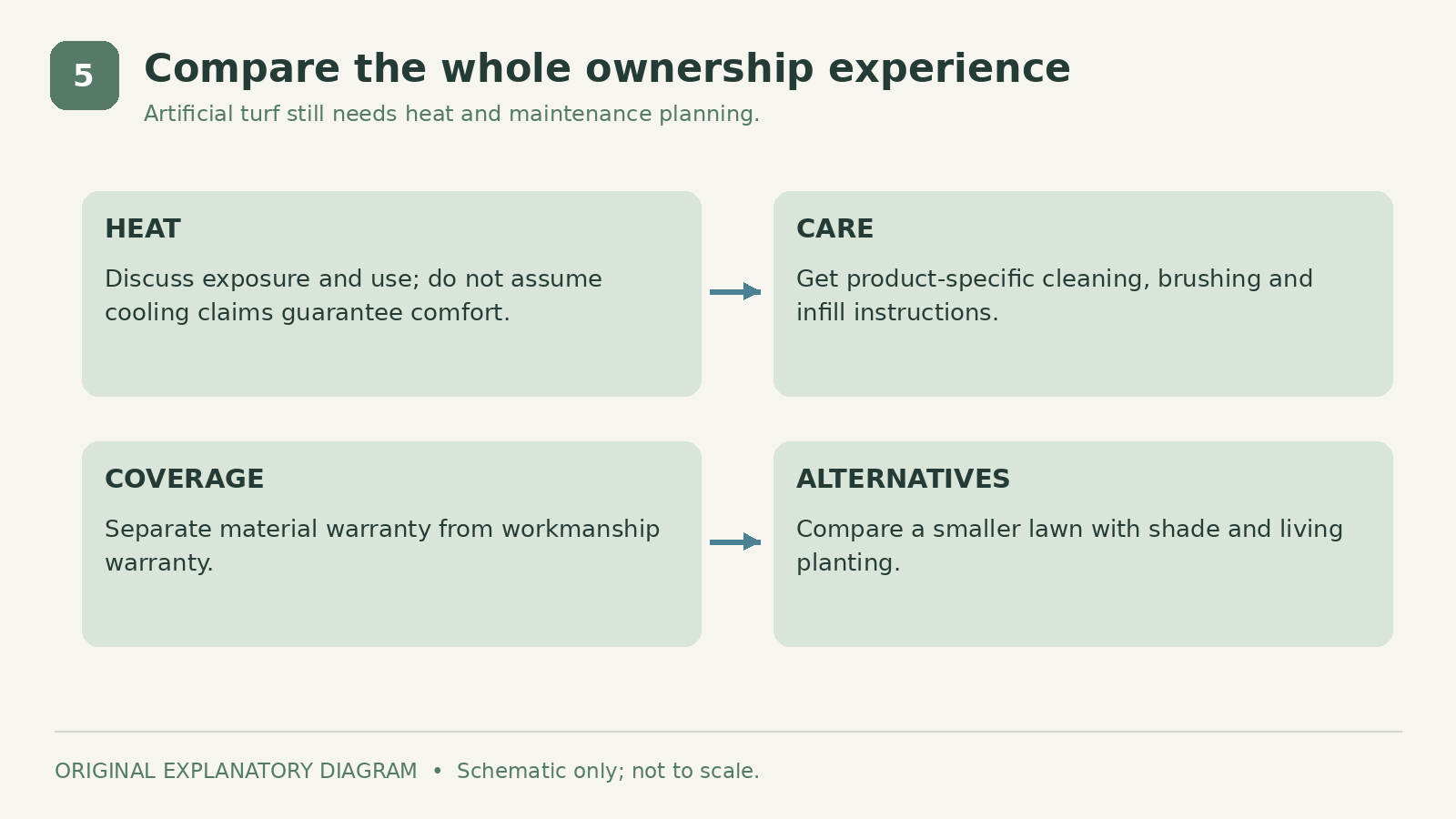
Phoenix heat belongs in the purchase decision. University of Arizona Extension identifies substantial heat retention as a concern with artificial lawns. Do not treat “cooling” marketing as proof that a surface will be comfortable or safe for bare skin during hot weather.
Ask to see the proposed material outdoors and discuss the intended use and exposure. A surface that looks attractive from indoors may be less useful for daytime activities than you expected. Compare a smaller turf area with shaded hardscape and living low-water planting before committing the entire yard.
Artificial turf still needs maintenance. Ask for written cleaning, brushing, debris-removal, and infill-care instructions for the specific product. Include those tasks in your comparison with other landscape options rather than assuming ongoing care disappears.
Review the product warranty and installation warranty separately. Ask who handles seam problems, movement, drainage complaints, and exclusions related to reflected heat or improper care. A long warranty term is not useful if the issue you care about is excluded.
What to collect with each proposal
Keep a measured plan, product identification, preparation scope, drainage explanation, included removals, extras, and warranty documents together. Ask about any local approval or rebate before beginning work; eligibility and preapproval rules can change.
The most useful Phoenix turf quote is a complete explanation of what will be installed and maintained. Once that is clear, the per-square-foot number becomes a meaningful comparison instead of a headline that hides most of the project.
Sources
- Norem Contracting's Phoenix guide. Checked October 6, 2026
- University of Arizona Extension's discussion of turf replacement. Checked October 6, 2026
Share this article
Get new guides by email
Practical home articles and free resources. No spam, and you can unsubscribe at any time.
Keep reading
15 Beautiful Xeriscaping Ideas for Colorado Front Yards
Explore 15 illustrated xeriscaping ideas for Colorado front yards, with grasses, flowers, shade, paths, useful lawn, and winter structure.
October 2026, 5 min read
The Best Grass Seed for North Carolina Lawns: Choose by Site
Choose North Carolina grass seed by region, sun, traffic, and upkeep. Compare tall fescue, Bermuda, centipedegrass, zoysia, and actual seed labels.
October 2026, 5 min read
25 Stunning Drought-Tolerant Landscaping Ideas for California
Explore 25 illustrated drought-tolerant landscaping ideas for California, including native planting, paths, shade, containers, and water-wise planning.
October 2026, 5 min read