12 Native Rain Garden Plants for the Pacific Northwest
Explore 12 native rain garden plants for western Washington and Oregon, with an illustration for each plant and guidance for different moisture zones.
By Home Crane Editors. . 5 min read.
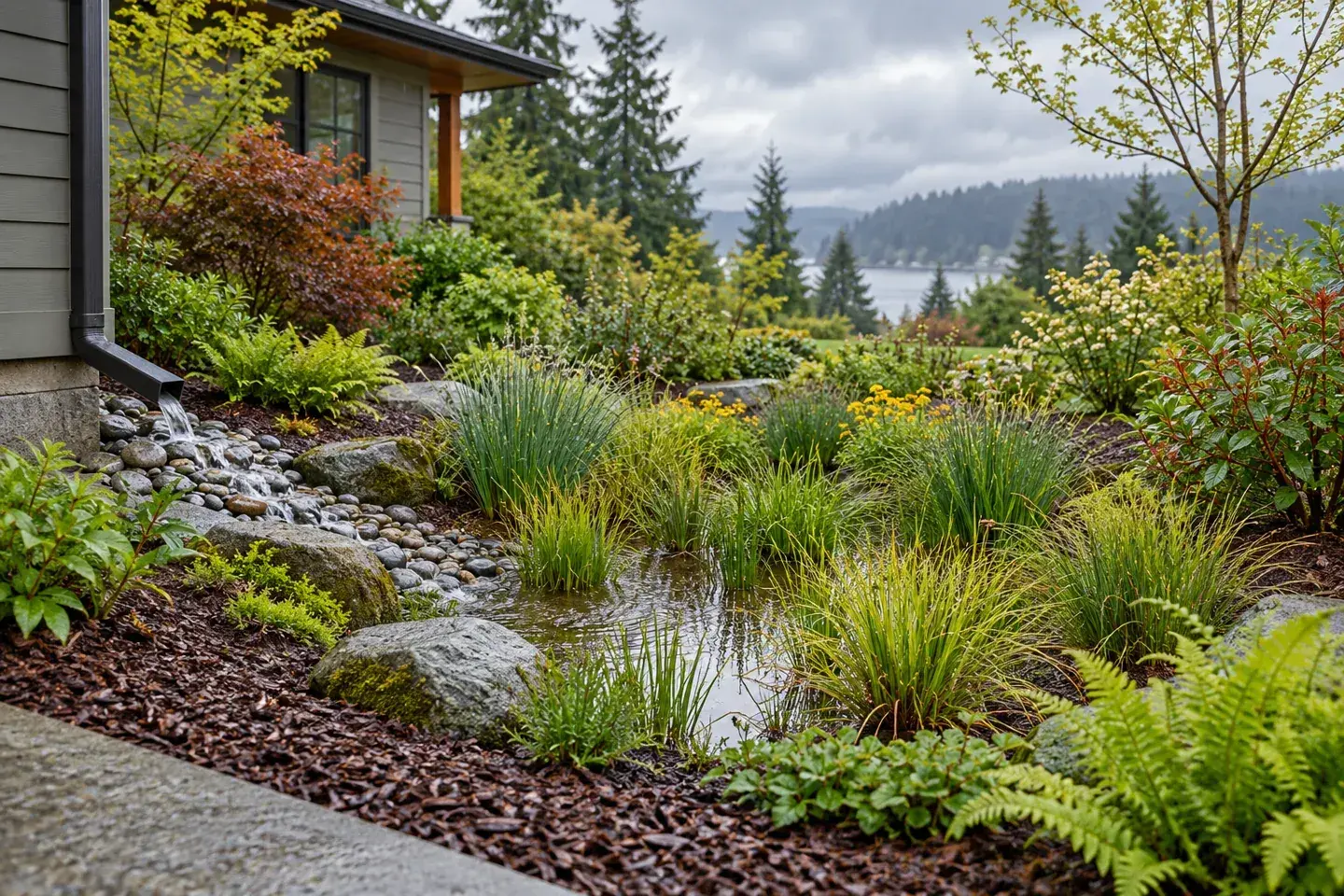
The best native rain-garden planting combines moisture-tolerant plants in the basin with different plants on the slopes and drier rim. These twelve choices suit many gardens west of the Cascades in Washington and Oregon. They are not a universal list for the entire Pacific Northwest, including its colder or drier interior.
Oregon State University explains that rain gardens collect runoff temporarily and require appropriate drainage. They are not permanent ponds or a cure for every already-waterlogged site. Establish the garden's location, infiltration, overflow, and relationship to buildings before selecting plants.
Use the illustrations for design inspiration, not botanical identification. Buy nursery-propagated plants by scientific name and confirm local provenance, mature size, and placement with a regional native-plant nursery or Extension specialist.
1. Slough sedge
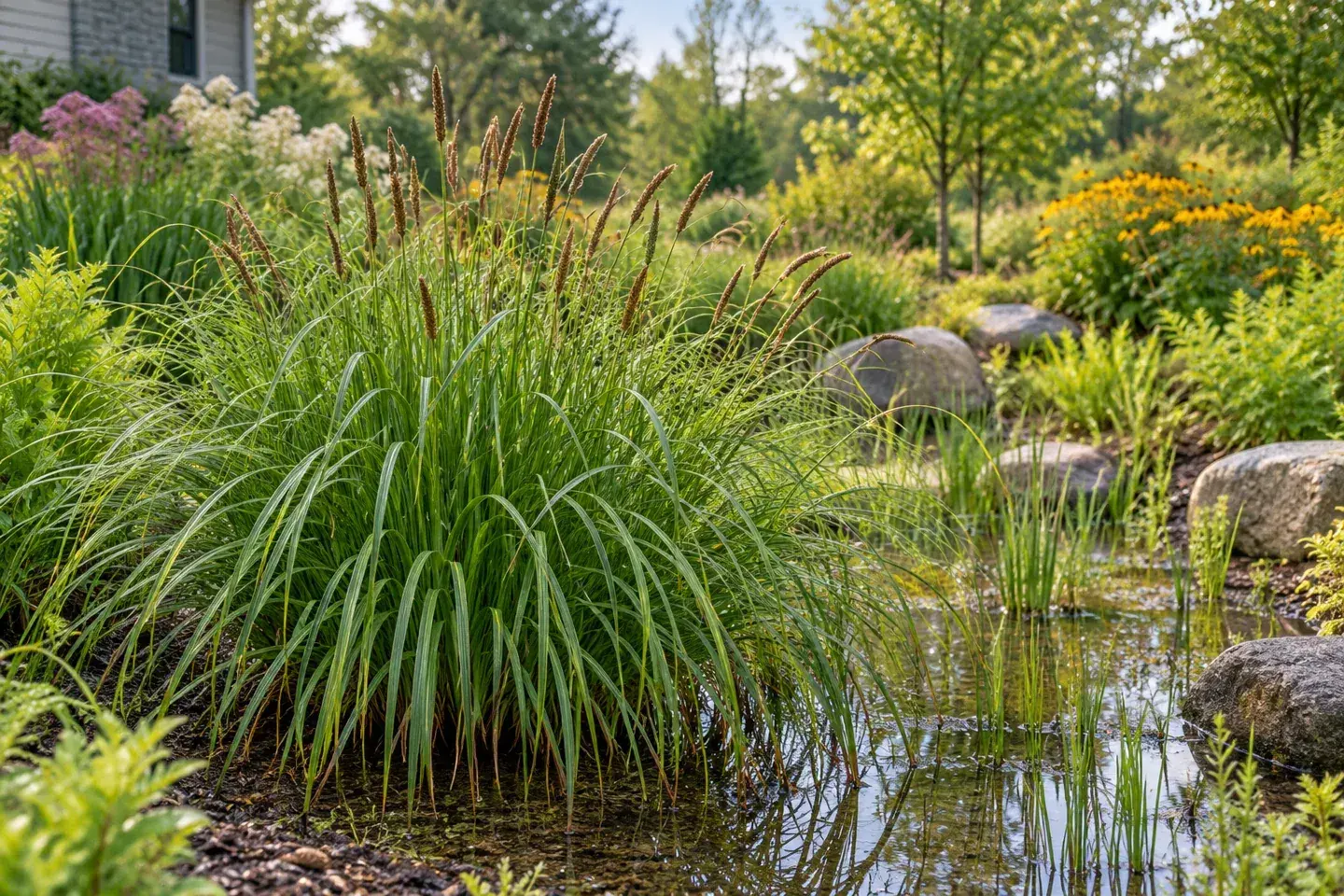
Carex obnupta provides long, arching green foliage for the wetter part of the garden. WSU's rain-garden demonstration includes it in the bottom planting zone.
Try a repeated group rather than scattering isolated plants through the entire basin. That creates a readable band of texture around flowering accents. Leave access to the inlet and outlet so maintenance does not require walking through the planting. This is a candidate for a moisture-tolerant matrix, not a substitute for confirming that the basin drains properly.
2. Dagger-leaf rush
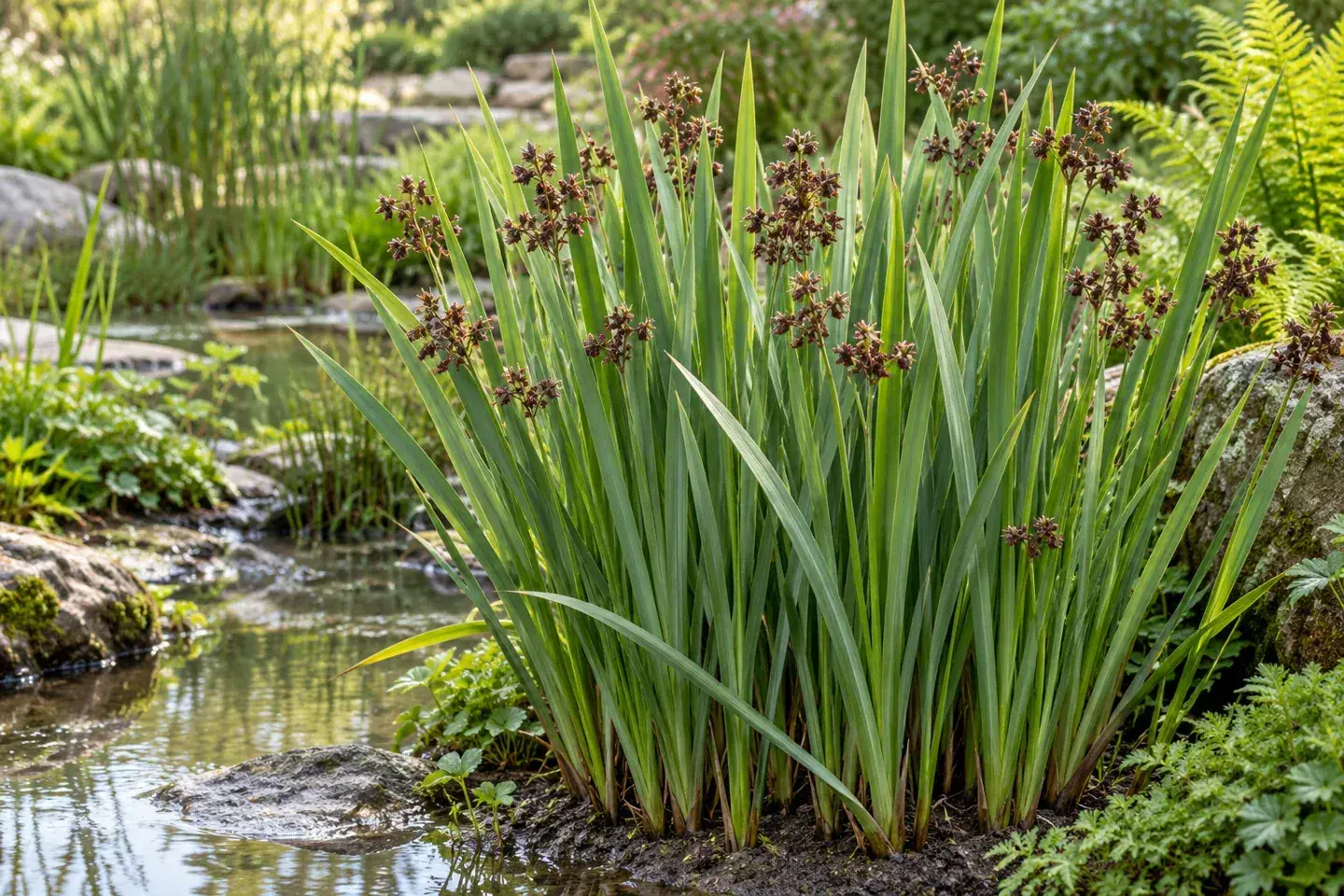
Juncus ensifolius has flattened leaves and small dark flower clusters that introduce a finer upright rhythm. Bothell's native rain-garden list includes this rush among plants for shady situations.
Consider it for a moist lower pocket where its form can be seen against broader leaves. Grouping it near a viewing path makes the smaller details easier to appreciate. Confirm the site's light and wetness with your supplier instead of assuming that every rush tolerates identical conditions or grows to the same size.
3. Tufted hairgrass
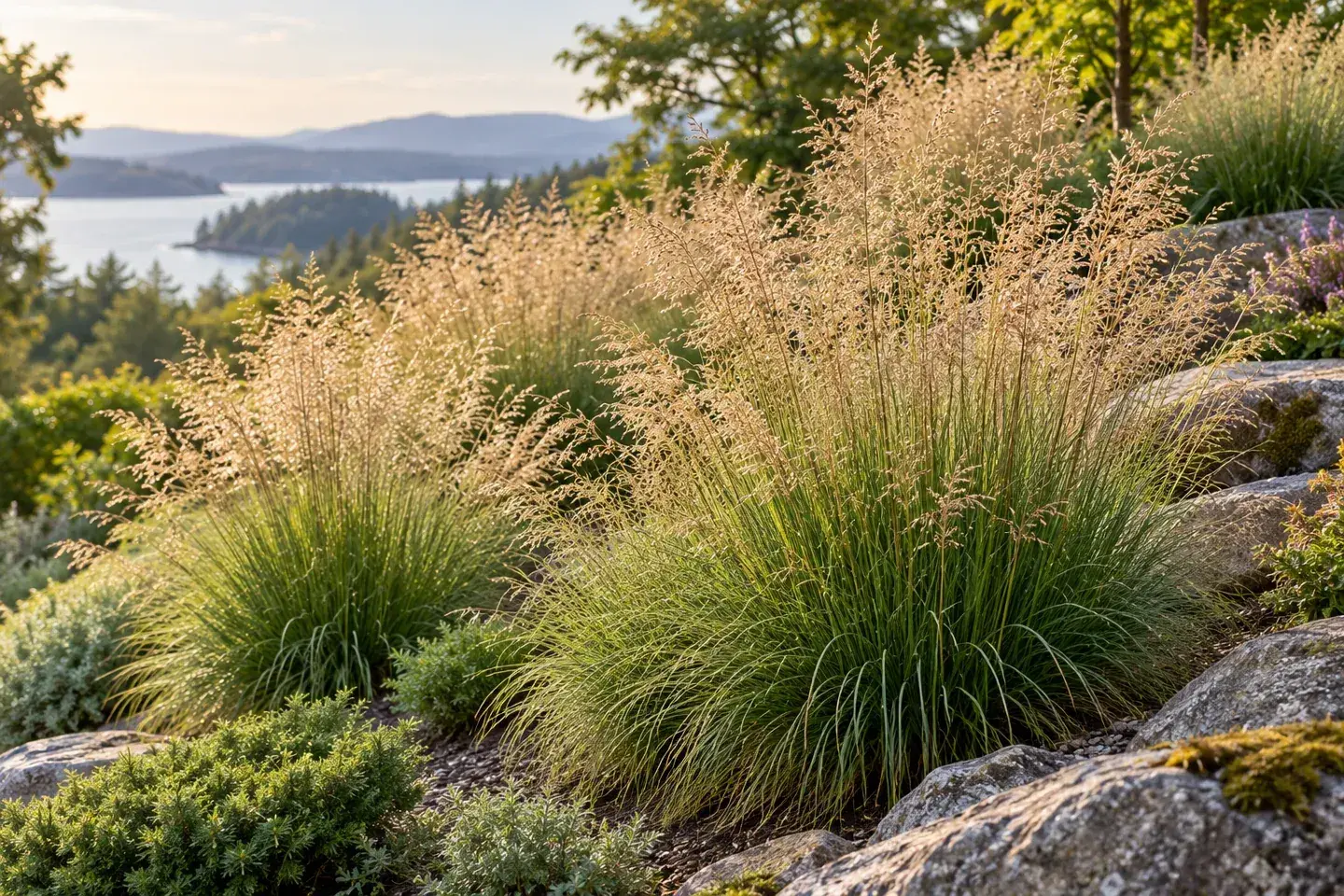
Deschampsia cespitosa adds airy flower and seed stems above a mound of foliage. WSU places it in the middle zone of its demonstration garden, which makes it a useful candidate to discuss for a moist slope.
Repeat it between more solid-looking shrubs to soften the transition from basin to border. A small cluster near an open section of the garden allows the stems to catch the light. Leave enough room for the mature clump so the intended delicate effect does not become a crowded edge.
4. Common camas
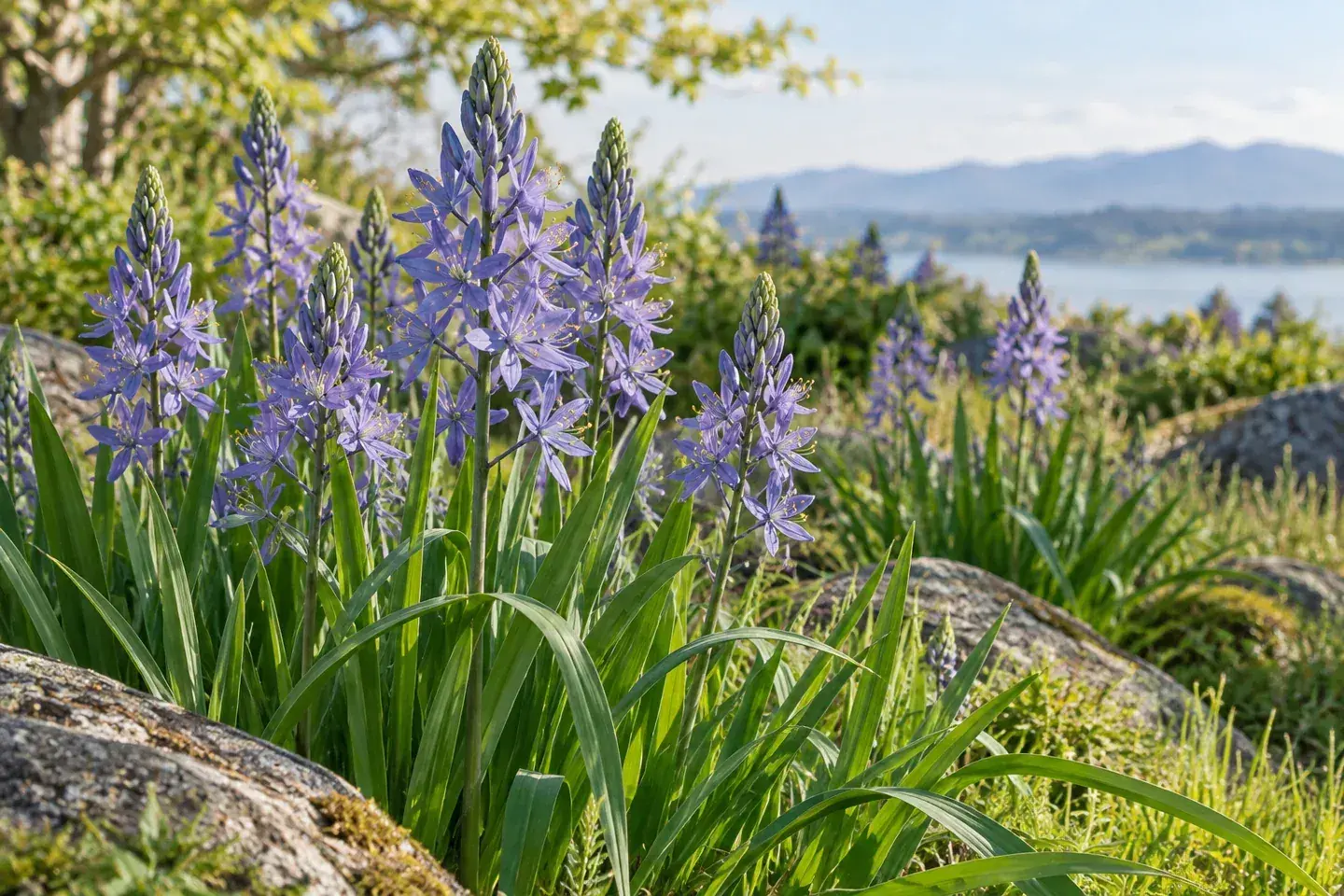
Camassia quamash brings blue-purple spring flowers. King County's native-plant profile lists sun to partial shade and dry-to-moist conditions, with examples in moist and wet sunny plantings.
Use it as a spring accent within a compatible planting rather than relying on it for the entire year's structure. A repeated ribbon on a seasonally moist slope can look intentional even in a small garden. Match the exact planting position to local drainage guidance; “rain-garden plant” does not mean the bulb belongs in permanently saturated soil.
5. Western columbine
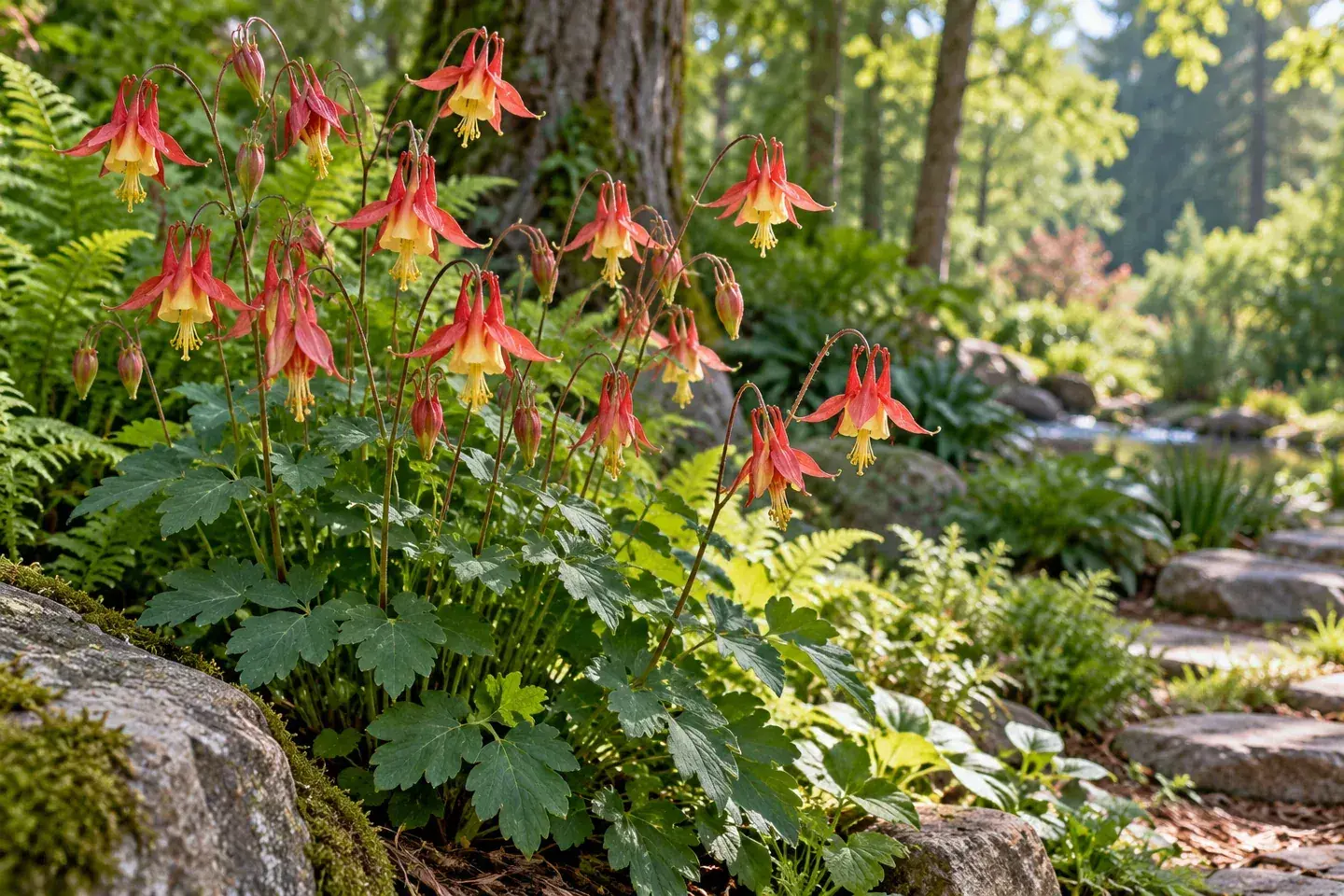
Aquilegia formosa offers delicate red-and-yellow flowers above lobed leaves. King County describes it as a moisture-loving plant for sun to partial shade, especially suited to coastal conditions.
Place a small group where you can see the hanging flowers from a path or window. A moist slope or transition near taller planting can be more suitable than the deepest ponding area. Keep the surrounding composition simple so the flowers remain visible instead of disappearing among several equally intricate textures.
6. Western bleeding heart
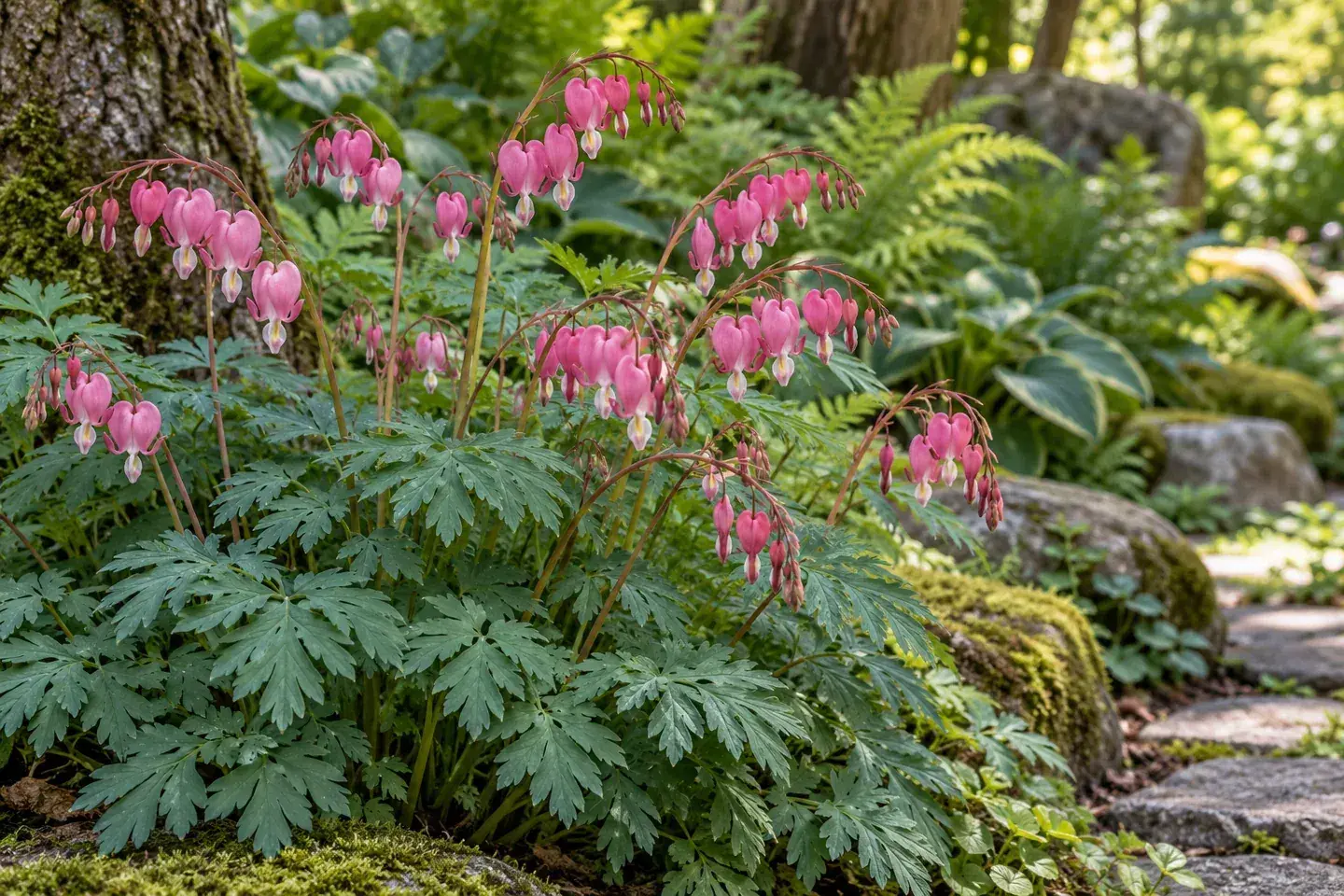
Dicentra formosa combines pink heart-shaped flowers with finely divided foliage. Its King County profile favors partial shade to shade and damp conditions without persistent sogginess. It may fade back during hot summer weather.
Use it on a shaded transition or upper edge that matches those conditions. Pair its seasonal presence with a compatible plant that maintains structure later in the year. Mark its location on your garden plan so a summer gap is not automatically mistaken for an empty planting space.
7. Douglas aster
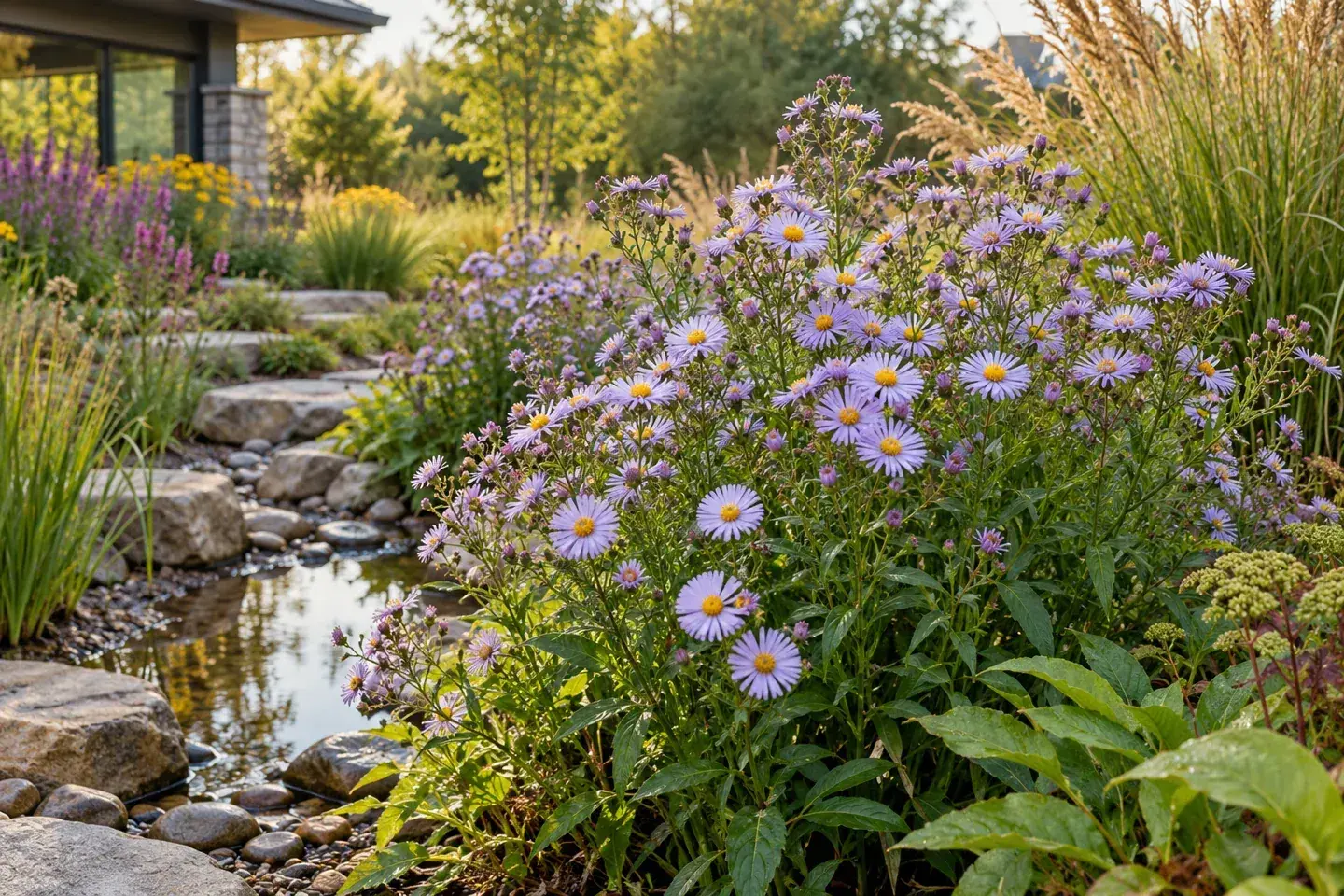
Symphyotrichum subspicatum, also listed under the older name Aster subspicatus, supplies a lavender-flowered option. Bothell includes Douglas aster among its sunny rain-garden choices.
Use a distinct group toward the sunny side of the composition and confirm its moisture zone with the nursery. Repeating the same flower color in two locations can tie a long garden together without buying many different species. Reserve enough space for the mature planting, and keep taller growth from hiding a low inlet or a path junction.
8. Large-leaved avens
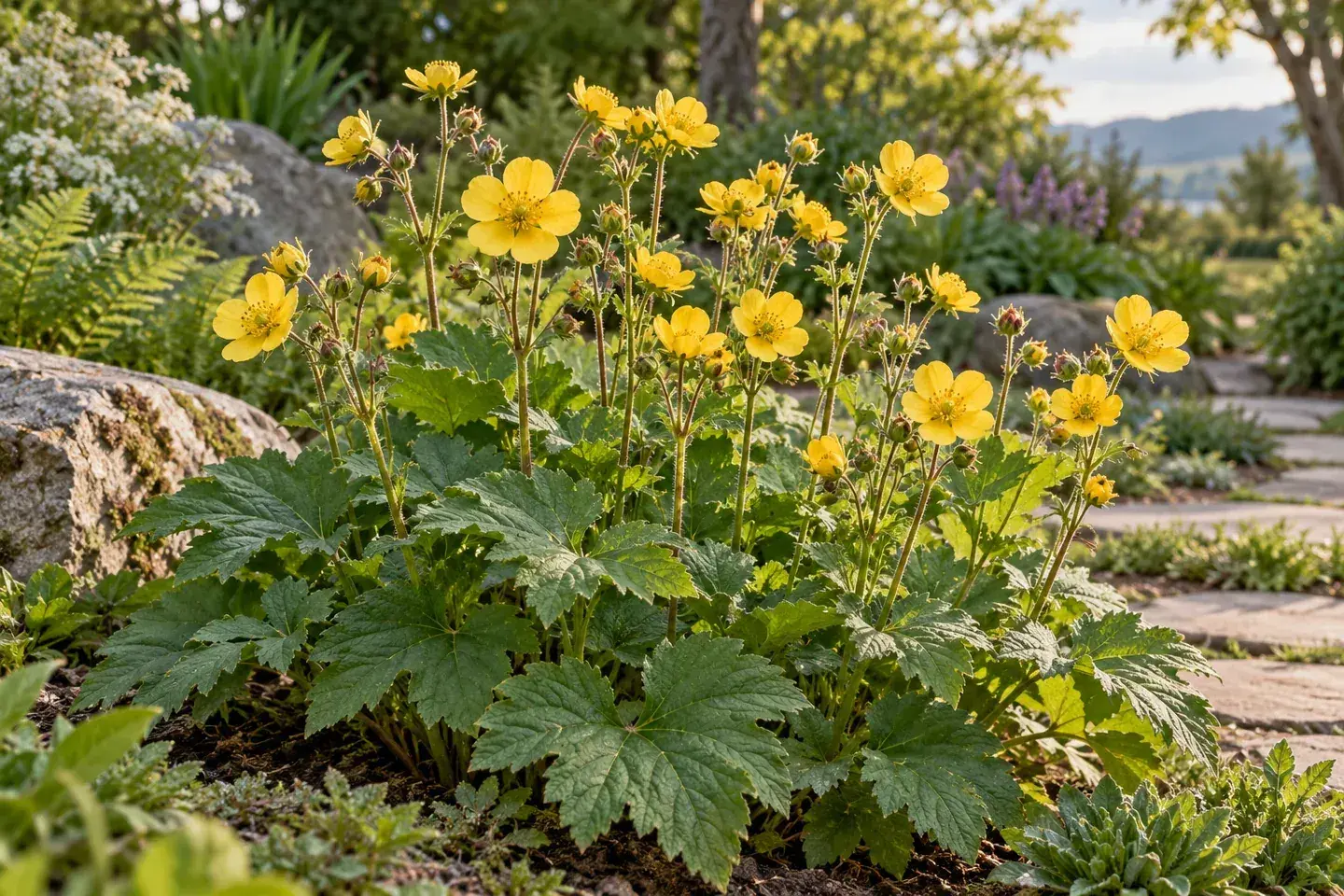
Geum macrophyllum provides broad basal foliage and small yellow flowers. The University of Washington Burke Herbarium offers a botanical reference for confirming the species; Bothell also lists it for shady rain gardens.
Consider it where a broad-leaved texture would balance rushes and grasses in a moist, partially shaded transition. Use the scientific name when ordering, since a display of ornamental garden geums is not necessarily this regional native. A few repeated plants can create continuity without making every part of the bed look identical.
9. Red-osier dogwood
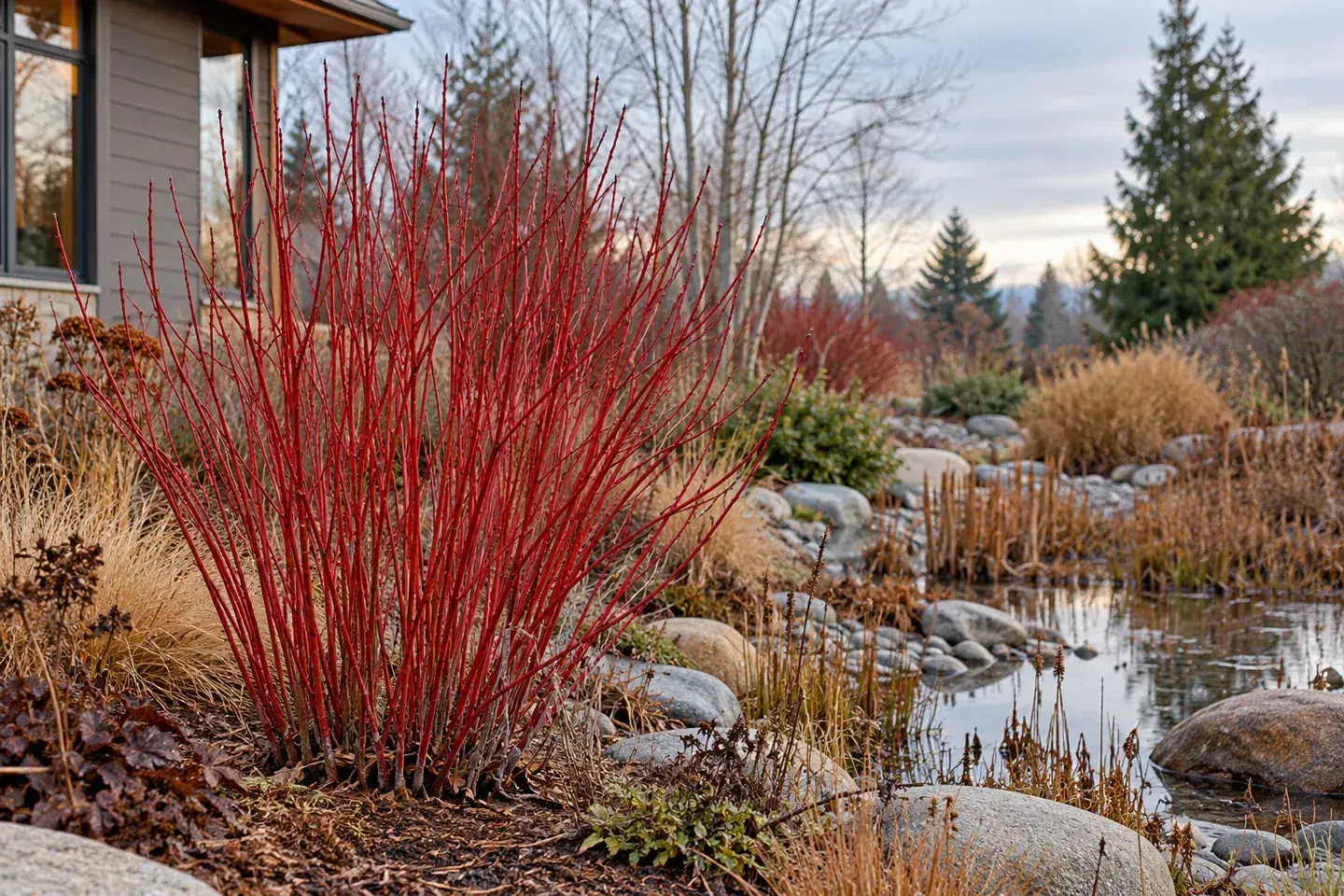
Cornus sericea adds a woody framework and red winter stems. Swansons Nursery's regional selection guide identifies it as a native option for the wettest zone.
Give it a position with room for its mature spread rather than squeezing it between a sidewalk and a small basin. It can serve as a backdrop to finer-textured planting. Plan how you will reach it for pruning and inspection. A shrub selected for winter structure still needs a manageable relationship with nearby paths and structures.
10. Pacific ninebark
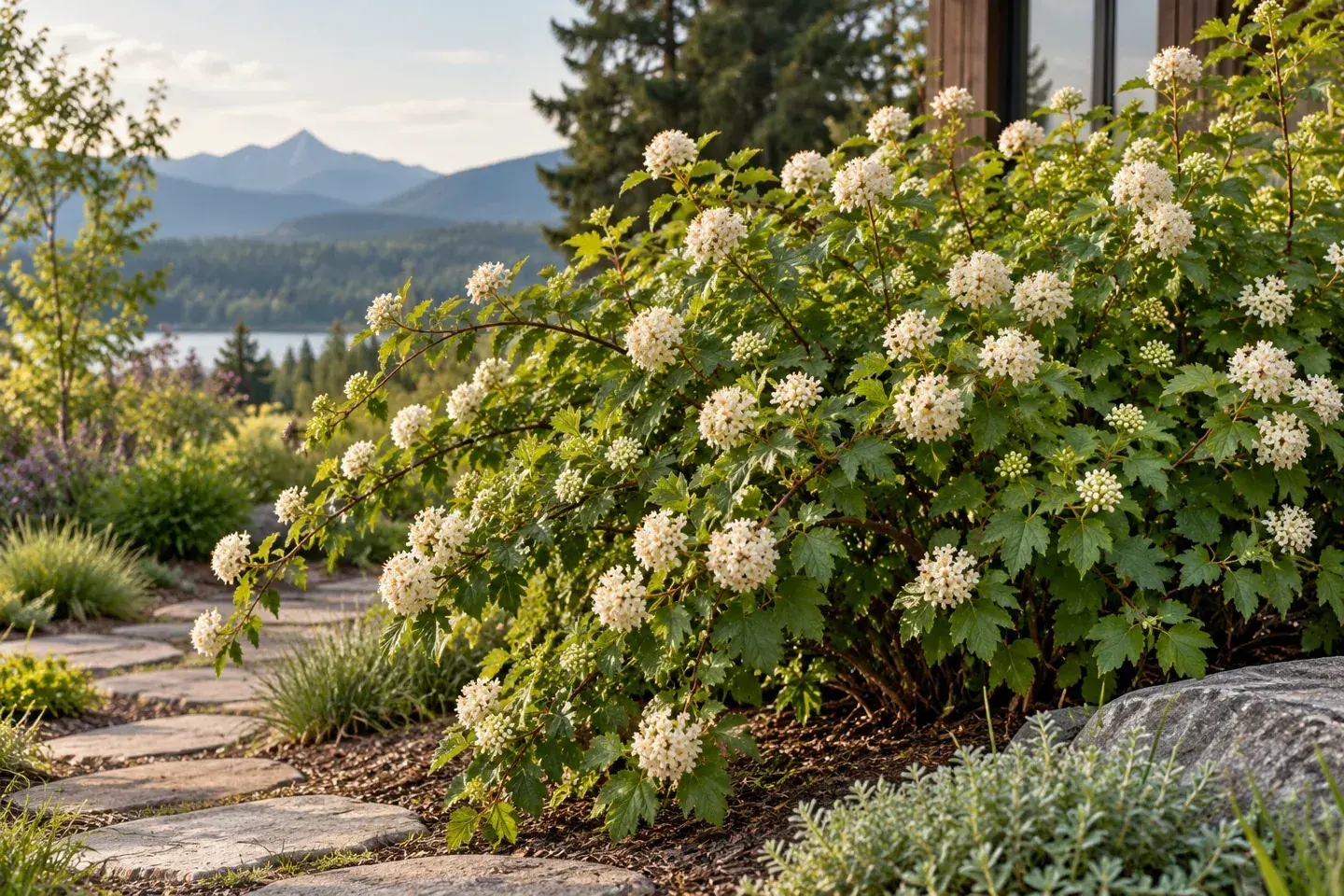
Physocarpus capitatus has white flower clusters and a substantial shrub form. King County lists moist-to-wet conditions and a mature height around thirteen feet, so this is a choice for a generous space.
Use it as a background anchor in a larger garden. Check the botanical name carefully: common ornamental ninebark cultivars are not automatically Pacific ninebark. If the available bed cannot accommodate a large shrub, choose another plant rather than assuming repeated hard pruning will solve the mismatch.
11. Red-flowering currant
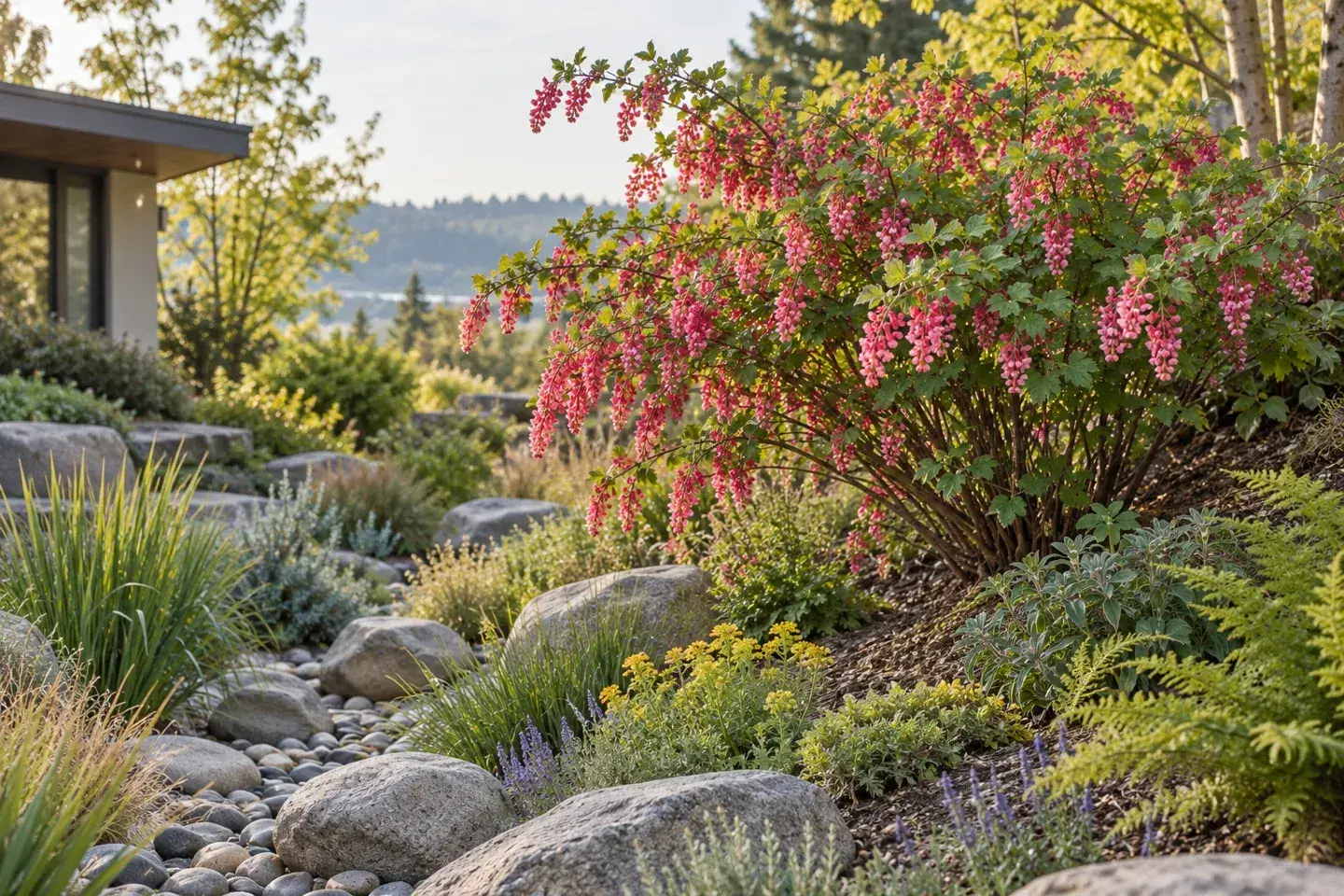
Ribes sanguineum adds hanging pink flower clusters to the drier perimeter. Swansons places this native shrub in its upper, least-saturated zone.
Position it where spring flowers can frame a view without blocking the garden's maintenance route. This is a useful reminder that a successful rain garden includes dry-edge planting, not only wet-soil species. Keep it out of the lowest pocket unless a local professional has confirmed that the specific conditions are appropriate. Sketch its mature outline before deciding how many to buy.
12. Evergreen huckleberry
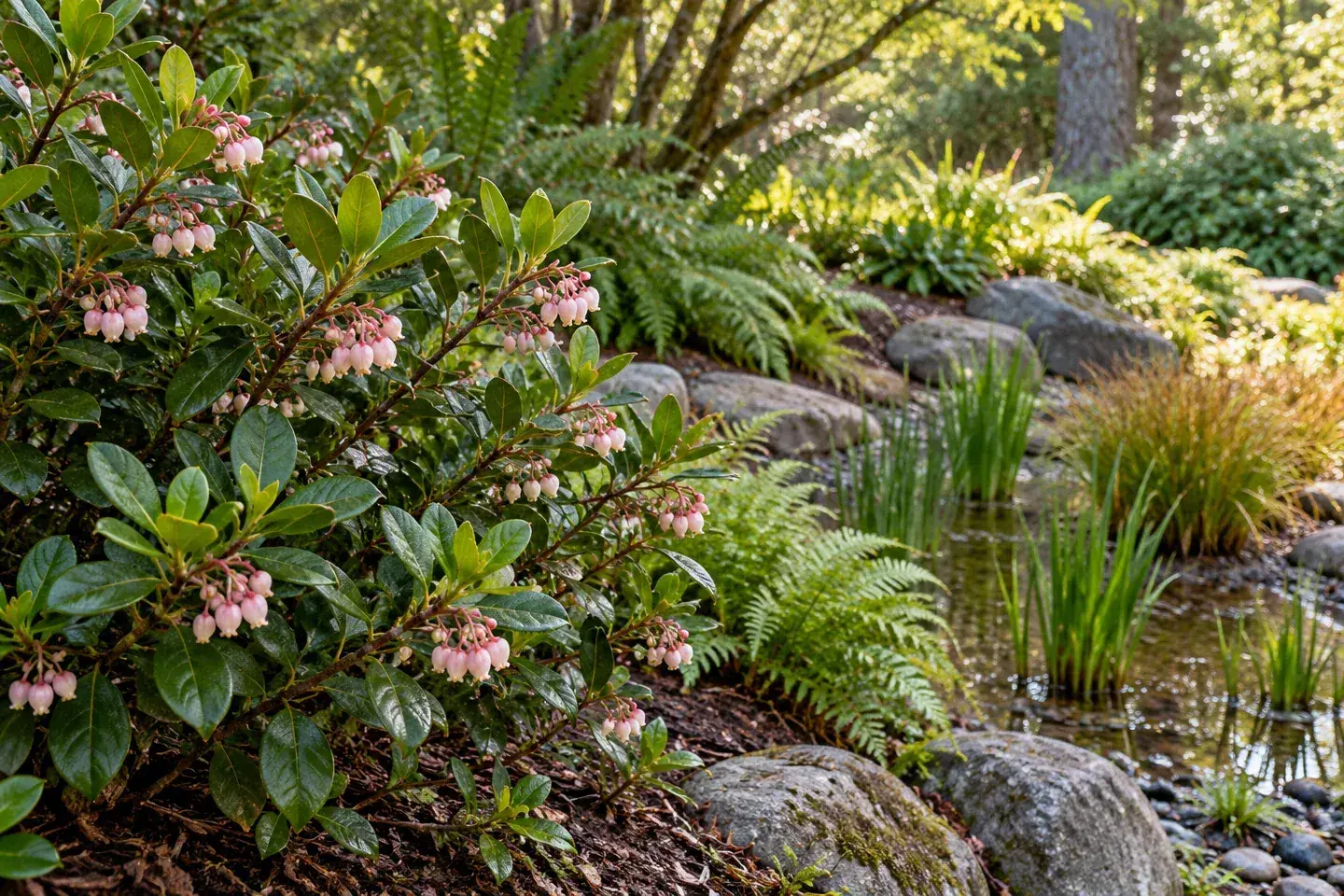
Vaccinium ovatum offers small glossy leaves and year-round structure. King County's profile lists partial shade to shade and dry-to-moist soil.
Consider it for a compatible shaded upper border rather than a regularly ponded basin. It can give the garden a visually steady edge when seasonal perennials are less prominent. Confirm soil suitability with the nursery, and buy an appropriately sized young plant instead of assuming a large transplanted specimen will establish as easily.
Turn the list into a planting plan
Choose a few compatible species and repeat them; you do not need all twelve. Label the wet basin, middle slopes, and upper rim on your sketch, then add sunlight and mature plant sizes. OSU's rain-garden fact sheet provides a broader starting point for design considerations.
Plan establishment watering, weed removal, and access to the inlet and overflow. Native plants still need care while establishing. Review the garden after substantial rain and during summer dry weather so the planting plan responds to the actual site.
Sources
- Oregon State University Extension: Home Rain Gardens Treat Stormwater Reduce Flooding. Checked October 6, 2026
- Washington State University: Rain Garden. Checked October 6, 2026
- City of Bothell: Native Plants for Rain Gardens. Checked October 6, 2026
- King County: Gonative Plant. Checked October 6, 2026
- King County: Gonative Plant. Checked October 6, 2026
- King County: Gonative Plant. Checked October 6, 2026
- University of Washington Burke Herbarium: Imagecollection Taxon. Checked October 6, 2026
- Swansons Nursery: Rain Garden Plant Selection. Checked October 6, 2026
- King County: Gonative Plant. Checked October 6, 2026
- King County: Gonative Plant. Checked October 6, 2026
- Oregon State University Extension: Em 9207 Rain Gardens Low Impact Development Fact Sheet. Checked October 6, 2026
Share this article
Get new guides by email
Practical home articles and free resources. No spam, and you can unsubscribe at any time.
Keep reading
15 Beautiful Xeriscaping Ideas for Colorado Front Yards
Explore 15 illustrated xeriscaping ideas for Colorado front yards, with grasses, flowers, shade, paths, useful lawn, and winter structure.
October 2026, 5 min read
The Best Grass Seed for North Carolina Lawns: Choose by Site
Choose North Carolina grass seed by region, sun, traffic, and upkeep. Compare tall fescue, Bermuda, centipedegrass, zoysia, and actual seed labels.
October 2026, 5 min read
Artificial Turf Cost in Arizona: Installation and Materials
Compare Arizona artificial turf materials and installation costs using an attributed Phoenix benchmark, clear exclusions, heat concerns, and a sample budget.
October 2026, 5 min read