13 Best Vintage Countertop Toaster Oven Aesthetic Looks
Explore vintage countertop toaster oven aesthetic with practical design ideas, planning advice, safe installation notes, and helpful tips for your US home.
By Home Crane Editors. . 10 min read.
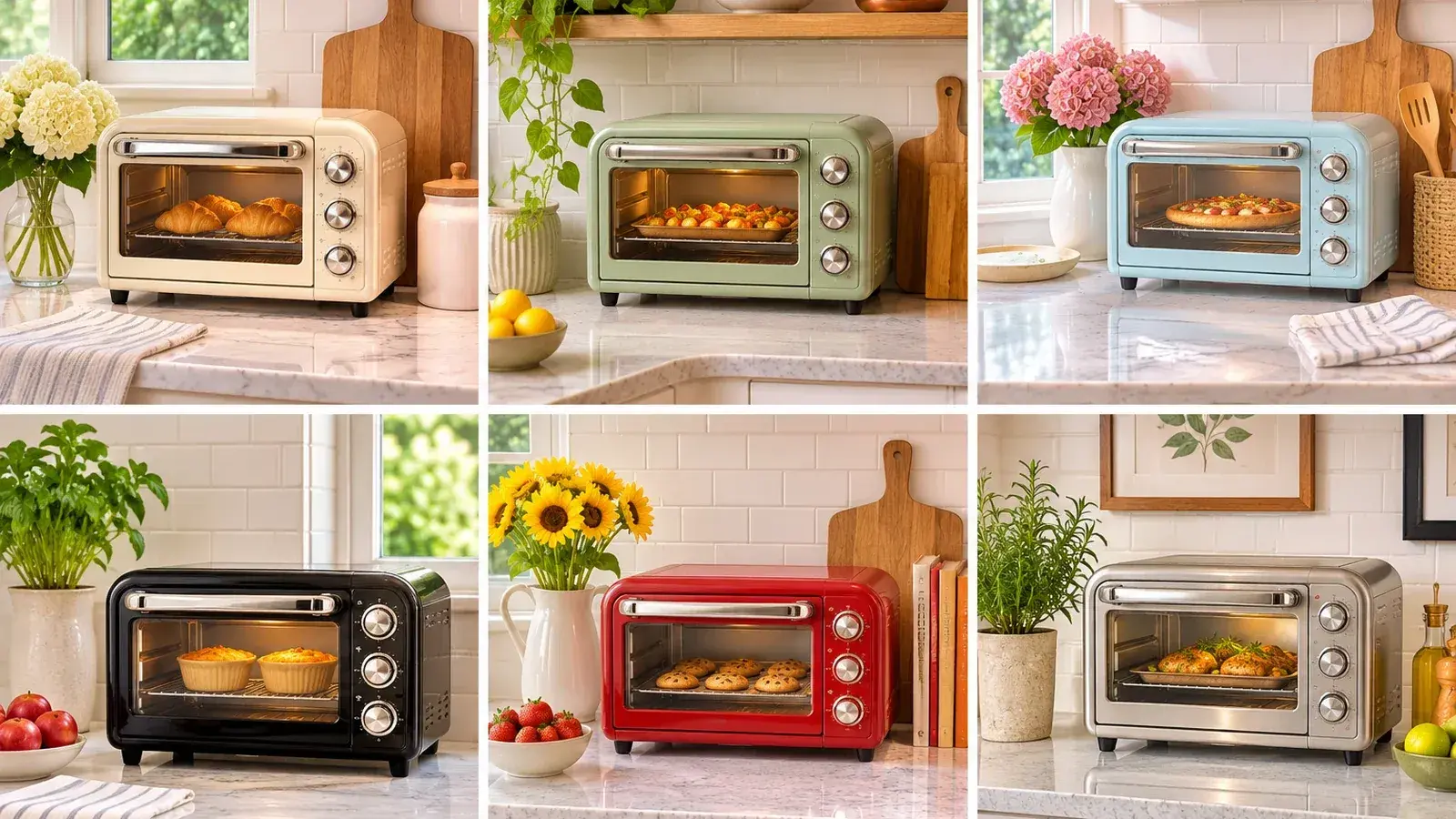
A vintage-style countertop toaster oven can bring color and personality to a kitchen without requiring a full remodel. Rounded corners, simple dials, chrome accents, and enamel-like finishes recall mid-century appliances, while modern interiors can keep the look fresh with quieter cabinetry and natural materials. The most successful setups treat the oven as a useful appliance first and a design feature second. Counter space, ventilation, heat clearance, outlet position, and cleaning access all need to work before the styling details are added.
Before you start
Measure the countertop and the oven’s full operating footprint, including the door opening and the clearance listed in its manual. A compact oven can still require open space above and around the case. Panasonic and Breville publish different clearance guidance for their countertop ovens, so do not copy a dimension from another brand or model. Place the oven on a flat, stable, heat-resistant surface approved by the manufacturer, away from curtains, paper, cabinets, and water splashes. Keep the cord in good condition and use an appropriate wall outlet. [1] [2] [3]
If you love the vintage look, a new retro-inspired model is usually a more practical choice than relying on an old collectible appliance for everyday cooking. Older units may have worn cords, damaged insulation, missing parts, or no current safety documentation. A decorative antique can be displayed only if it is stable and kept separate from food preparation; it should not be assumed safe to operate. Choose a modern model that meets the needs of the household and follow its current instructions.
Decorating ideas
1. Cream enamel with warm wood shelves
A cream oven gives a kitchen a soft vintage note without dominating the counter. Pair it with a light oak shelf, white tile, and a small ceramic bowl to create a calm breakfast area. The warm wood keeps the pale appliance from feeling clinical, while the simple backdrop makes the rounded case and metal dials stand out. Use only accessories that remain outside the oven’s required clearances.
Make it work: Do not place wood shelves or decorative objects directly above the oven unless the manufacturer’s manual confirms the clearance and materials are suitable.
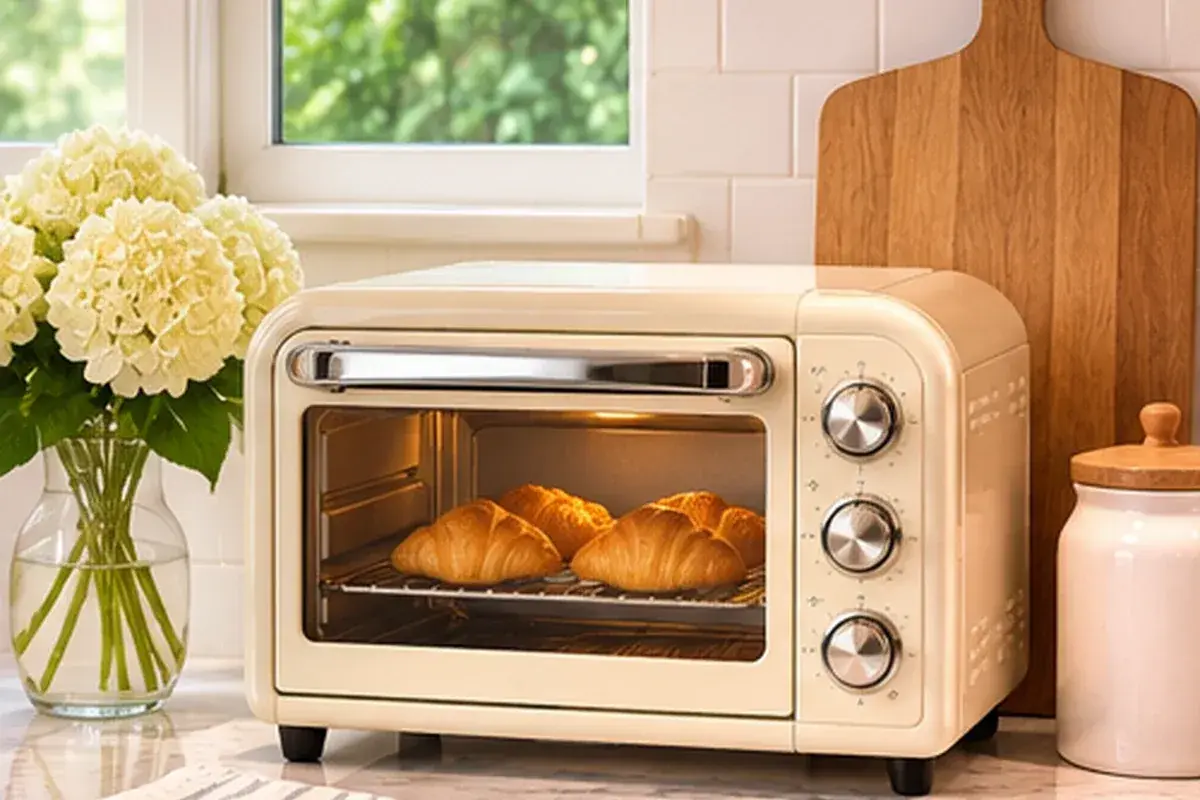
Cream retro toaster oven on a pale stone counter.
2. Mint green with a white tile backsplash
Mint looks especially at home beside white subway tile, pale stone, and a few green plants placed well away from heat. A matching tea tin or dish towel can repeat the color without turning the whole kitchen into a theme. Keep the rest of the countertop light and functional so the oven reads as a single vintage-inspired accent.
Make it work: Keep plants, leaves, and fabric away from the hot case and ventilation openings. Natural décor should not sit where it can dry out or be exposed to heat.
3. Powder blue with chrome accents
A pale blue toaster oven creates a cheerful retro look when paired with chrome hardware, a brushed-metal faucet, or a simple metal rail. A white countertop and neutral cabinetry prevent the color from feeling too sweet. This combination also suits kitchens with cool gray tile or stainless appliances elsewhere, because the chrome detail ties old and new together.
Make it work: Avoid placing the oven next to a sink where splashes could reach the electrical connection. Keep enough working counter on both sides for safe food handling.
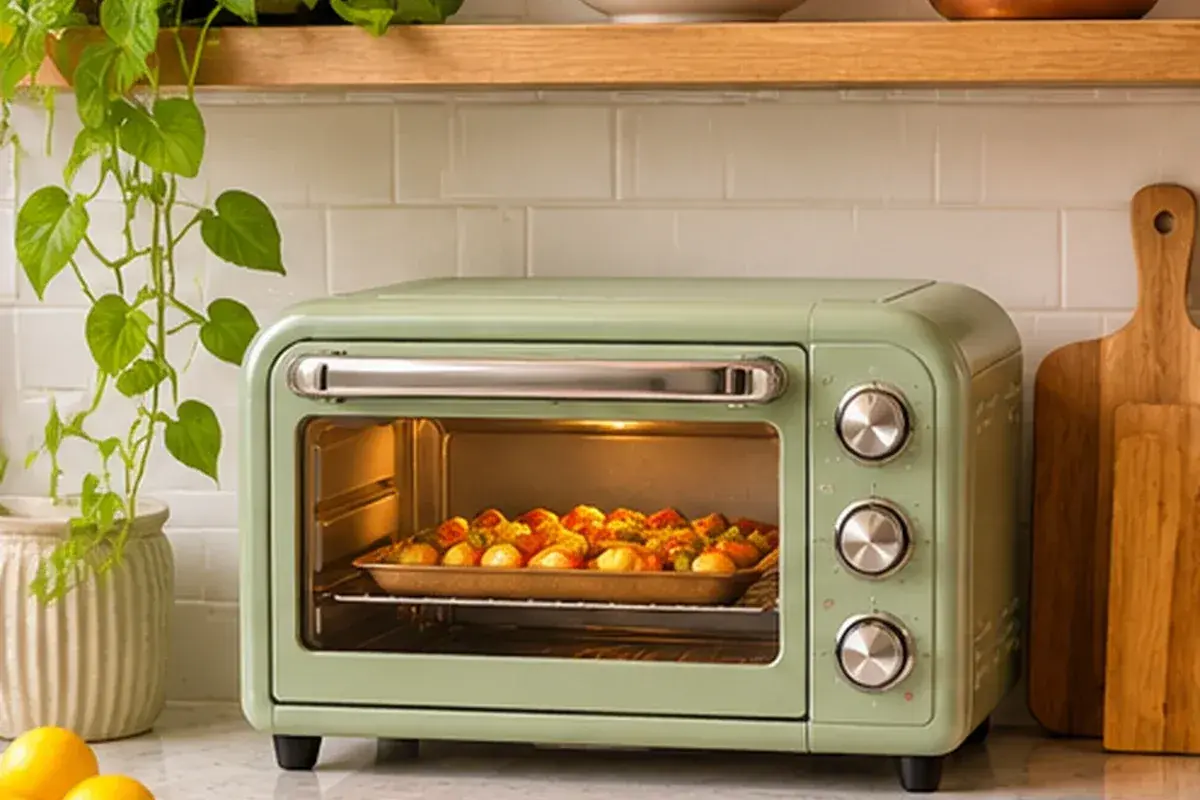
Mint toaster oven in a bright vintage-inspired kitchen.
4. Cherry red as a single statement piece
A glossy red oven can become the focal point in a white, charcoal, or warm wood kitchen. Repeat the color in one small item, such as a utensil crock or a framed print, but avoid matching every accessory. A single vivid appliance looks more considered than a collection of unrelated bright gadgets competing for attention.
Make it work: The red finish is a styling choice, not a reason to push the oven into a tight corner. Preserve all required clearances even when the counter is limited.
5. Matte black with a mid-century silhouette
A black retro-style oven works in a more restrained kitchen where dark window frames, cabinet pulls, or pendant lighting already establish a strong line. Choose a model with rounded corners and simple controls to keep the vintage reference visible. Pair it with pale stone and natural wood so the appliance does not disappear into a dark backsplash.
Make it work: Check that the oven door can open fully without hitting a wall or another appliance. A clear landing area helps prevent hot trays from being handled over clutter.
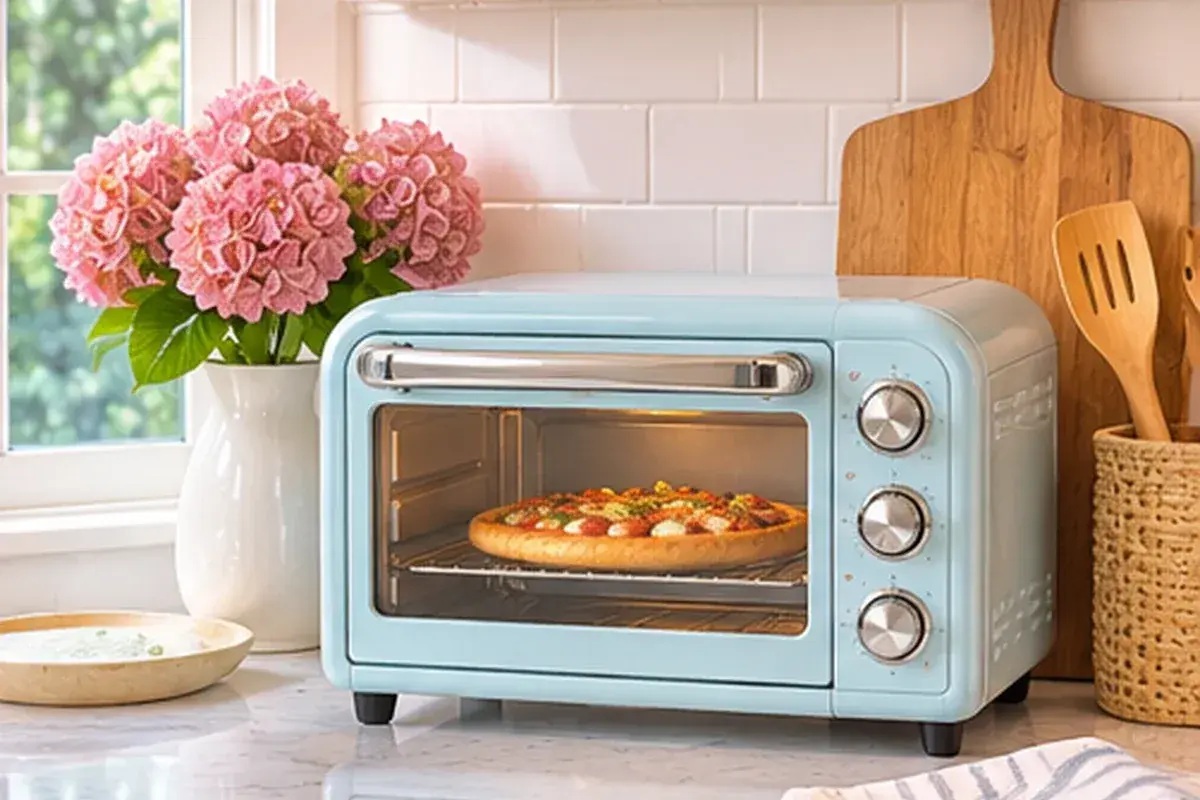
Pale blue toaster oven with simple chrome details.
6. Stainless steel with vintage-inspired accessories
A stainless oven can still feel nostalgic when its shape is rounded and the controls are simple. Add a small wood cutting board, a ceramic canister, and a classic-looking kitchen clock on a separate wall. This approach suits homeowners who want a retro mood without committing to a strong appliance color or matching multiple finishes.
Make it work: Keep the cutting board away from the hot oven and do not store it on top unless the model has an explicitly approved compatible accessory.
7. A breakfast station with coordinated ceramics
Set the oven within a defined breakfast zone and use a matching ceramic mug rack or a small plate stack nearby. Keep the styling functional: items should be easy to reach and easy to clean. A small tray can hold tea bags or coffee filters, but it should not sit underneath the oven if the manufacturer requires the appliance to rest directly on the counter.
Make it work: Keep food, paper packaging, and dish towels away from hot surfaces. Do not operate the appliance while it is surrounded by loose clutter.
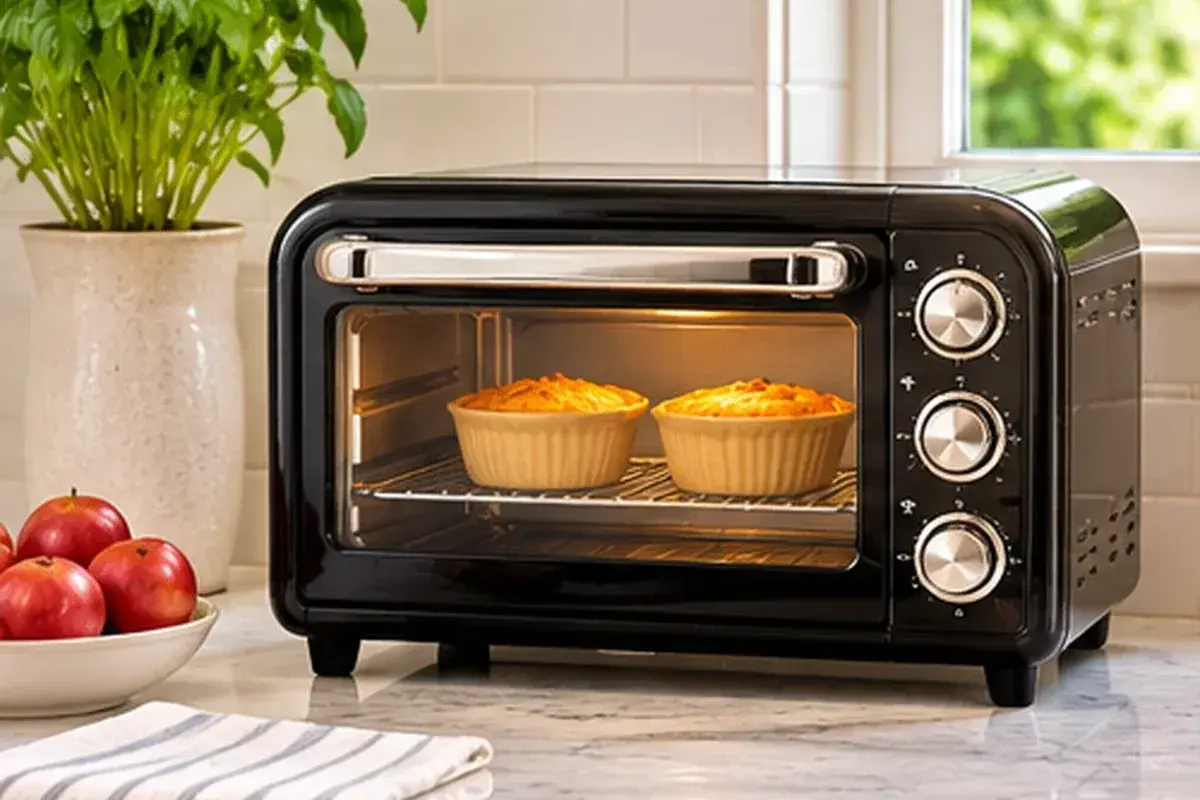
Matte black retro toaster oven in a clean kitchen.
8. A warm farmhouse counter with butcher-block details
A warm butcher-block counter can complement a cream, sage, or black retro oven. Keep the surrounding materials simple and use a narrow backsplash ledge for decorative objects only if they remain outside the oven’s heat zone. The result feels collected and homey rather than like a showroom display.
Make it work: Wood surfaces and nearby finishes must be suitable for the appliance’s operating temperature and clearances. Follow the manual rather than relying on appearance.
9. A tile niche that frames the oven
A backsplash color or tile pattern can define a toaster-oven station without building an enclosed cubby. Use a short area of contrasting tile behind the appliance and keep the sides and top open. This creates a visual frame while preserving the ventilation and heat-dissipation space that a countertop oven may require.
Make it work: A decorative niche should remain open on the sides and top unless the manufacturer specifically approves a built-in installation. A countertop oven is not automatically designed for cabinet installation.
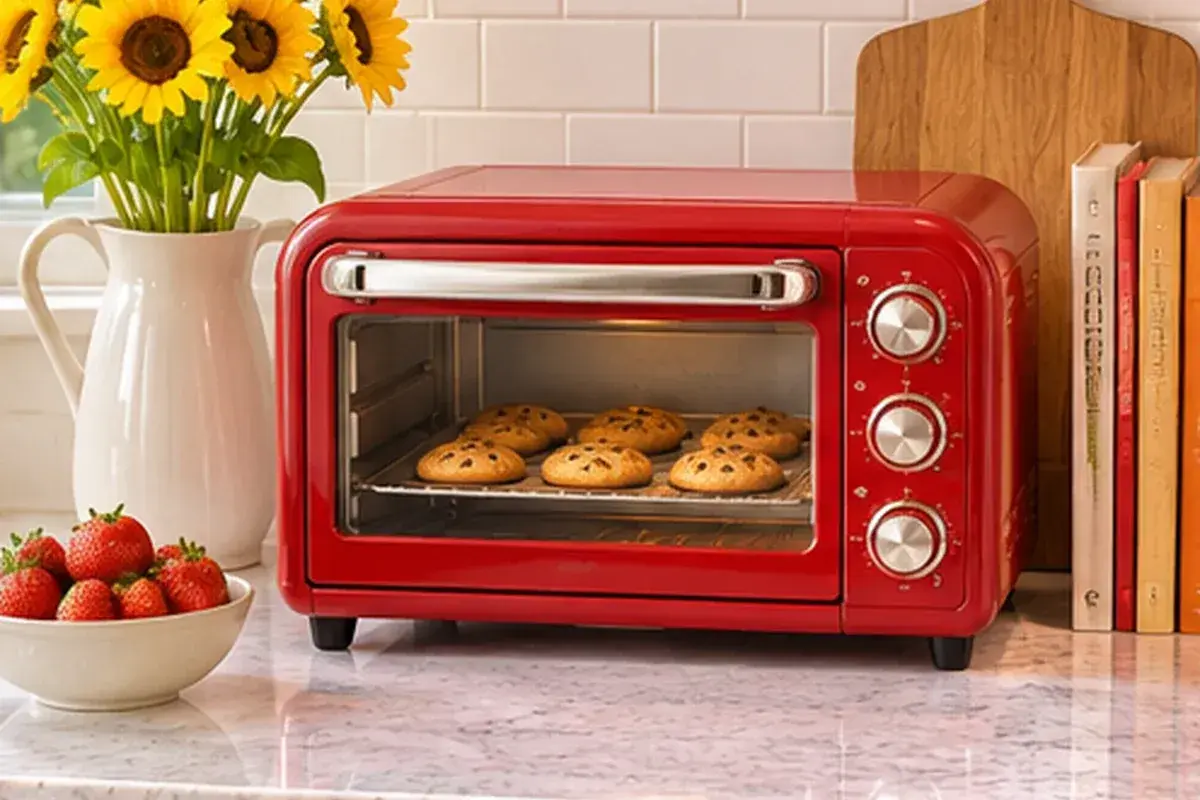
Cherry red toaster oven as a colorful focal point.
10. A cottage kitchen with soft sage cabinetry
Sage cabinets, cream walls, and a warm wood counter create a gentle backdrop for a cream or pale blue oven. Introduce a single patterned tea towel and a simple framed botanical print to bring character. The appliance can be the nostalgic detail in a kitchen that otherwise uses modern storage and updated lighting.
Make it work: Do not hang textiles over the oven handle or place them near the exhaust area. Keep a clear zone around the machine during operation.
11. A color-blocked retro corner
Use one wall color, one counter material, and one appliance color to build a small color-blocked composition. For example, a pale butter-yellow wall can sit behind a cream or mint oven, while the lower cabinets remain white. The visual change is inexpensive compared with replacing cabinetry and gives the kitchen a personalized focal point.
Make it work: Before painting walls or adding panels, make sure the finish is washable and not exposed to heat beyond its rating. Do not install a decorative backboard that blocks oven ventilation.
12. A modern minimal kitchen with one vintage appliance
A retro oven can soften a highly modern kitchen with flat-front cabinets, pale counters, and concealed hardware. Keep the rest of the counter clear and let the oven’s shape provide the decorative interest. A simple wood bowl or plant can sit on the opposite side of the counter, balancing the appliance without crowding it.
Make it work: A clear counter is useful for safe handling. Leave space to set down hot cookware and keep children away from the operating zone.
13. A vintage baking station with visible accessories
Arrange a few frequently used baking items near the oven: a heat-safe mitt, a small utensil jar, and a lidded container for measuring spoons. Keep the group compact so the oven remains the main object and the work surface stays practical. Choose accessories in wood, cream, and brushed metal to connect the appliance to the rest of the kitchen.
Make it work: Do not store mitts, paper, or plastic beside the oven’s vents. Use heat protection only when handling cookware and place it away from the active appliance between uses.
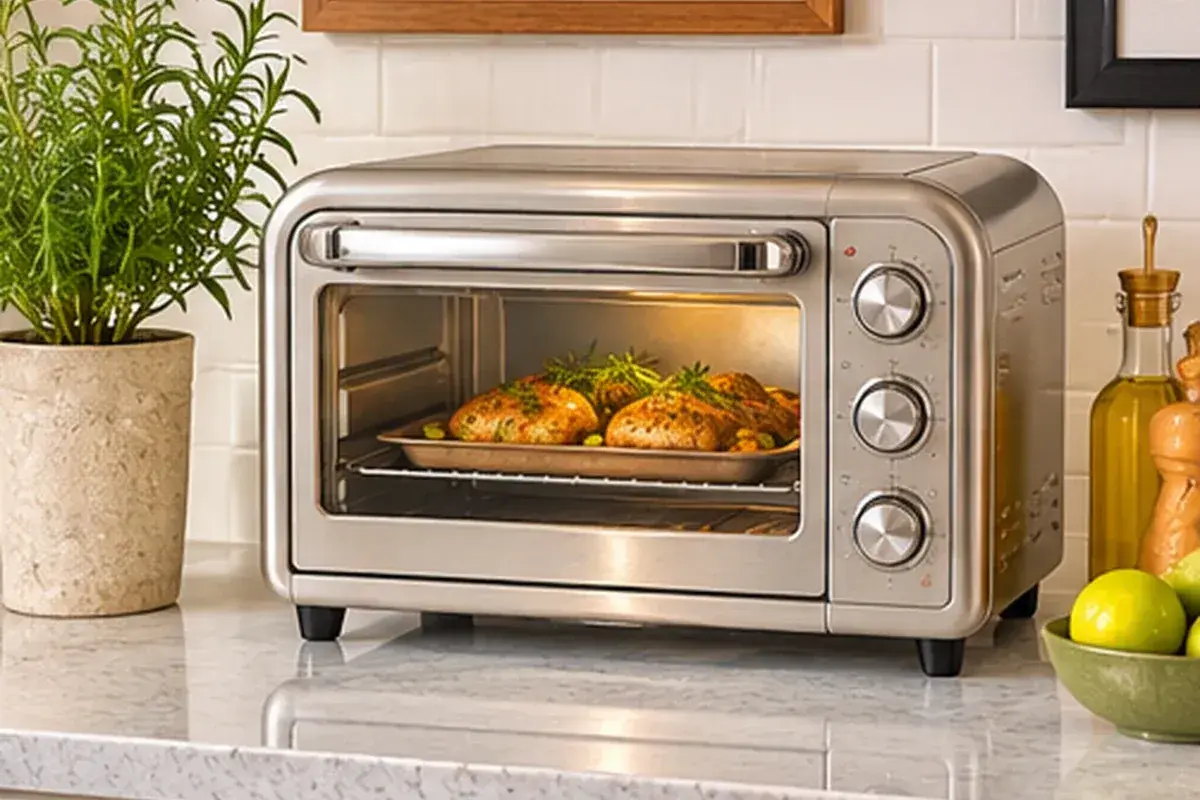
Stainless toaster oven with natural kitchen accessories.
How to make a retro oven look intentional on a modern counter
Start with the counter material and cabinet color. A cream or pale blue oven looks softer against warm white and oak, while black or stainless suits darker hardware and cooler stone. Keep the number of colors limited and let one object provide the main accent. The oven should have a dedicated position rather than being moved from one crowded spot to another every time it is used.
Use accessories to support the look, not to decorate the appliance itself. A framed print, ceramic jar, or small bowl on a nearby shelf can establish the vintage mood without covering controls, vents, or the case. Leave the door swing and a clear landing area in front of the oven so that the design still works when a hot tray comes out.
Countertop oven safety matters more than the styling
Countertop ovens can release concentrated heat and steam. Manufacturer instructions set the safe surface, side clearance, rear clearance, and overhead clearance for each model. Panasonic’s model-specific guidance and Breville’s support documentation show that clearances differ between products. The safest answer is not to copy a measurement from a design blog, but to read the installation and use guide supplied with the oven. [1] [2]
Keep paper towels, curtains, wooden accessories, plastic containers, and loose packaging away from the hot zone. Do not operate an oven inside a closed appliance garage or under a shelf that violates the specified overhead distance. The U.S. Fire Administration recommends unplugging small appliances when they are not in use and keeping electrical outlets and cords in sound condition. Clean the crumb tray as directed so accumulated food and grease do not become a source of smoke. [3]
Should you buy a true vintage toaster oven?
A vintage appliance can be charming, but a collectible item should not be treated as a ready-to-use kitchen appliance just because the exterior looks intact. Age can hide damaged insulation, an unreliable thermostat, deteriorated wiring, or missing safety features. Unless a qualified appliance technician has inspected and approved it, use a true vintage unit as a display object only and choose a current, safety-certified model for cooking.
A new retro-inspired oven offers the shape and color that make the look appealing while providing current product documentation, replacement parts, and a manual that explains clearances and cleaning. Compare capacity, wattage, door design, temperature controls, and available service support rather than selecting on color alone.
A short buying checklist for a retro-style oven
Look at capacity before color. The interior should fit the pans and portions the household actually needs, and the door should open without striking a backsplash, kettle, or wall. Compare the controls and temperature functions, the ease of cleaning the crumb tray, and whether replacement parts or customer support are available. A beautiful appliance that is awkward to clean or too small for everyday use can become counter clutter very quickly.
Check the electrical specifications and the product’s safety documentation before purchase. Use the model’s own installation and operating guide to determine clearances, approved surfaces, and any restrictions on accessories. Do not assume a generic countertop oven can be built into a cabinet or placed below a shelf simply because another model is designed for that use.
Once the appliance is in place, give it a dedicated working zone. Store pans and mitts nearby but outside the hot area, keep the crumb tray clean, and leave enough open counter to handle food safely. A retro design should make the kitchen more enjoyable, not harder to use.
Frequently asked questions
Can a countertop toaster oven go under a cabinet?
Only when the model’s manual permits the location and the required clearances are maintained. Many countertop ovens need substantial open space above and around the case.
What color looks most vintage for a toaster oven?
Cream, mint, pale blue, cherry red, and rounded black or stainless models all create retro associations. The best choice is the one that works with the kitchen’s existing palette.
Can I use an antique toaster oven for everyday cooking?
Do not assume an old appliance is safe to operate. Have it inspected by a qualified appliance technician, or use a current model designed for regular household cooking.
How do I style a toaster oven without cluttering the counter?
Use one defined station, limit accessories to a few useful pieces, and keep a clear area for hot cookware and food preparation.
Can a toaster oven sit inside an appliance garage?
It should not be operated in a closed garage unless the appliance and cabinet manufacturers specifically approve that arrangement. Open storage is not the same as a safe operating location.
Sources and further reading
[1] Panasonic: Toaster Oven Cabinet Installation and Safety Guidance
[2] Breville Support: Countertop Oven Clearances and Smoke Prevention
[3] U.S. Fire Administration: Appliance and Electrical Fire Safety
Sources
- Panasonic: Toaster Oven Cabinet Installation and Safety Guidance. Checked November 4, 2026
- Breville Support: Countertop Oven Clearances and Smoke Prevention. Checked November 4, 2026
- U.S. Fire Administration: Appliance and Electrical Fire Safety. Checked November 4, 2026
Share this article
Get new guides by email
Practical home articles and free resources. No spam, and you can unsubscribe at any time.
Keep reading
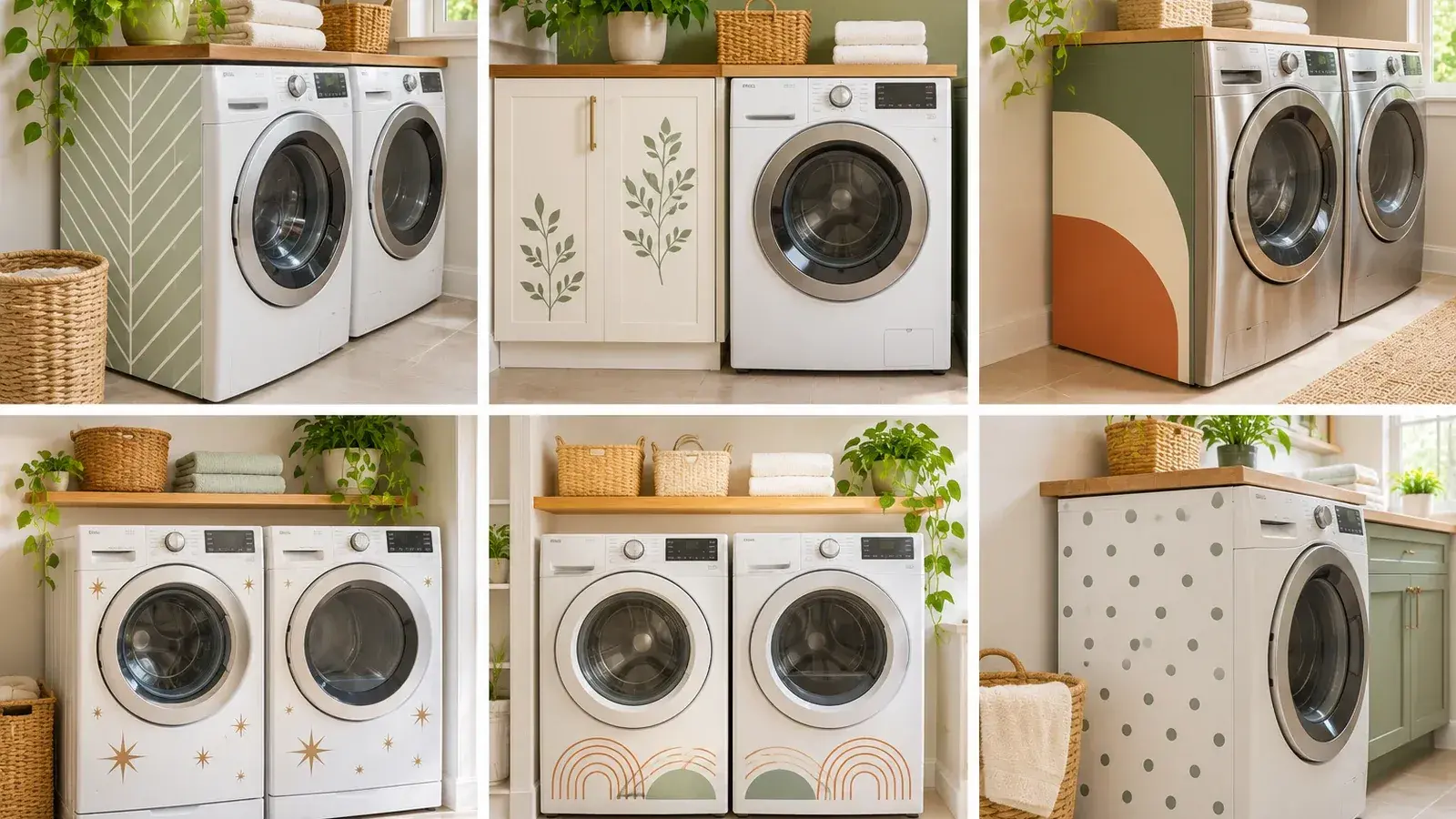
9 Easy DIY Washer and Dryer Decal Makeover Ideas
Explore DIY washer and dryer decal makeover ideas with practical design ideas, planning advice, safe installation notes, and helpful tips for your US home.
November 2026, 10 min read
10 Clever Ways to Hide Small Kitchen Appliances on the Counter
Explore ways to hide small kitchen appliances on counter with practical design ideas, planning advice, safe installation notes, and helpful tips for your US home.
November 2026, 10 min read
15 Retro Mini Fridge Decor Ideas for a Bedroom Setup
Explore retro mini fridge decor ideas bedroom setup with practical design ideas, planning advice, safe installation notes, and helpful tips for your US home.
November 2026, 11 min read