13 Clever Rental Friendly Decor Hacks for Apartments
Explore rental friendly decor hacks for apartments with practical US-focused advice, planning checks, and clear steps for a more comfortable, well-maintained home.
By Home Crane Editors. . 13 min read.
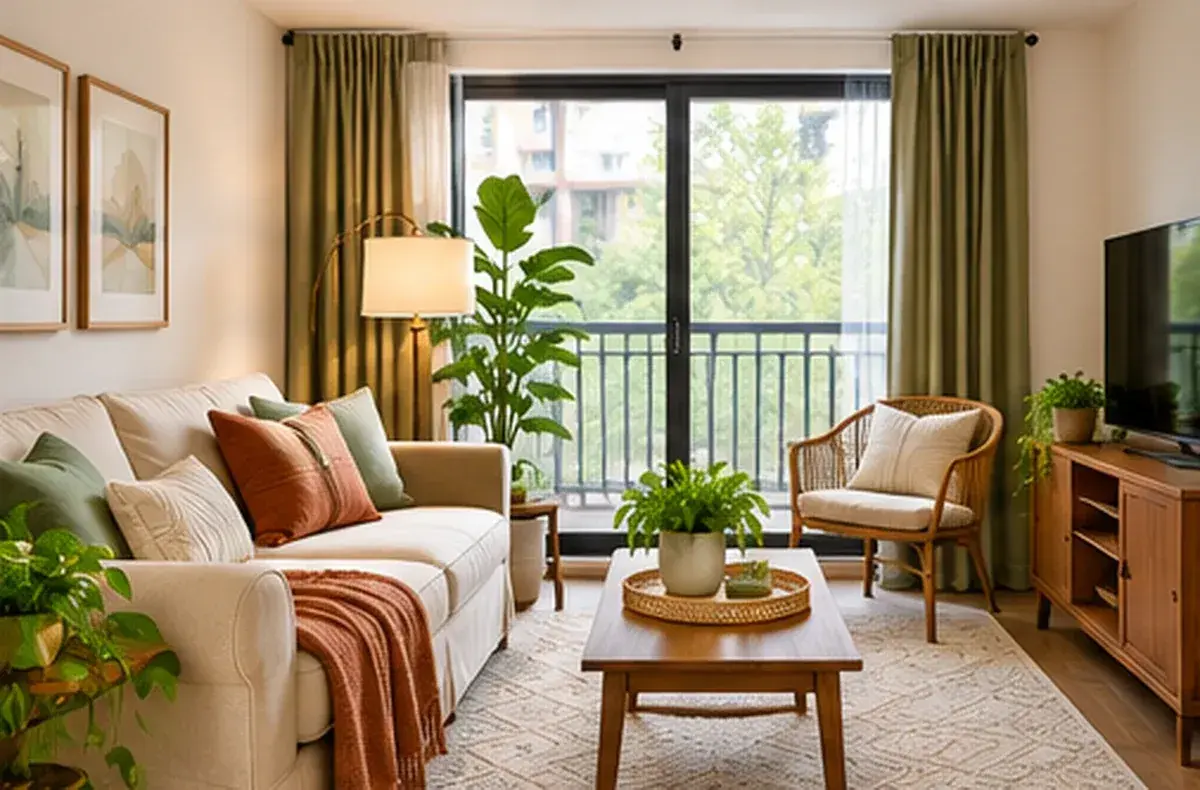
A rental apartment can feel personal without repainting every wall, drilling into tile, or committing to changes that may complicate move-out. The most useful rental-friendly decor hacks rely on freestanding furniture, textiles, removable products, lighting that plugs into existing outlets, and careful use of manufacturer-approved hanging systems. The ideas below are designed for ordinary US apartments, but lease terms, wall finishes, building rules, and product instructions vary. Treat every adhesive as a surface-specific product, test it before committing, and keep original fixtures and hardware safely stored.
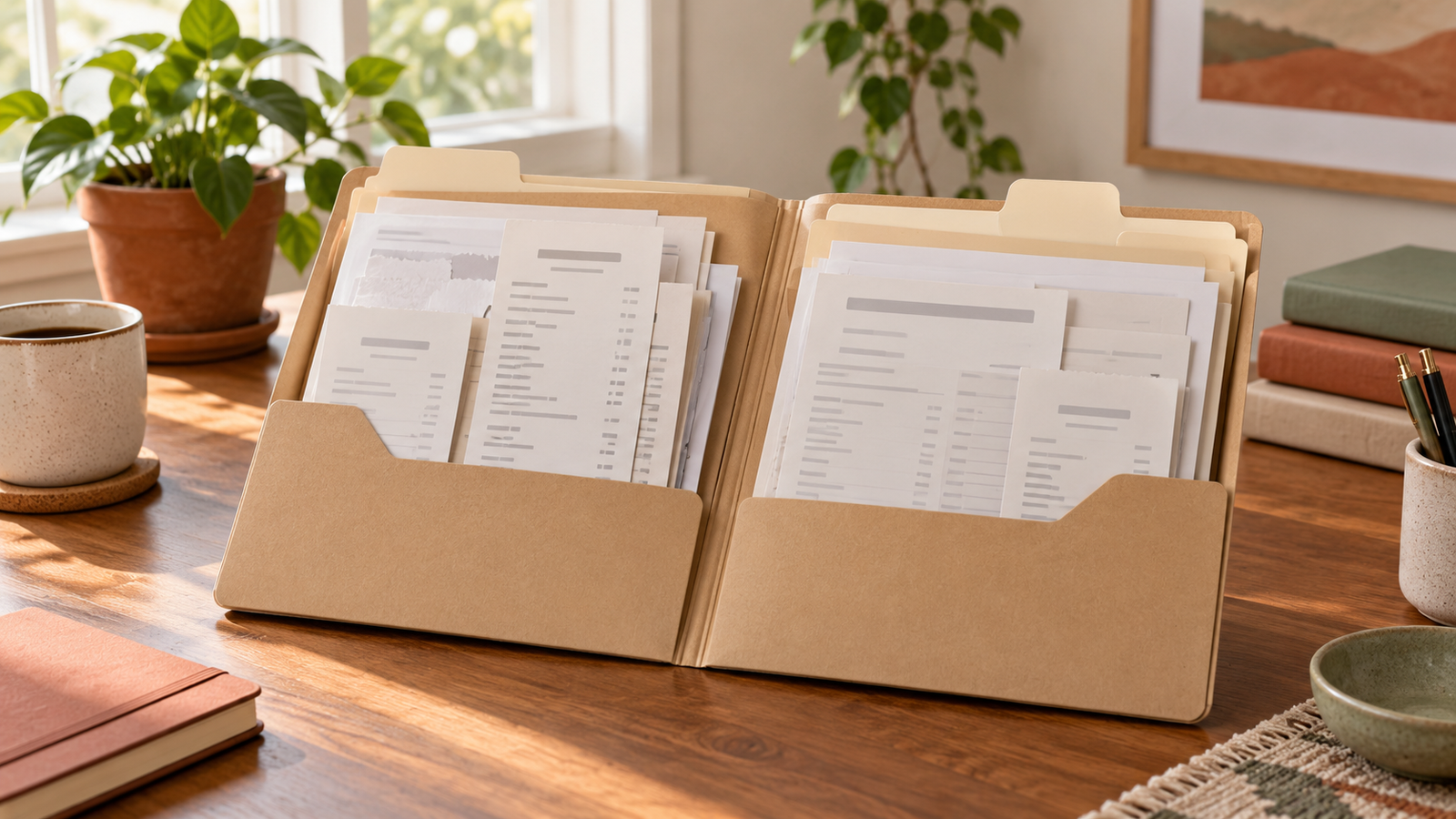
AI-generated editorial concept image. Individual details are illustrative; confirm product, lease, and safety requirements before making changes.
Before you decorate: protect the deposit and the apartment
Start by reading the lease and any move-in condition report. Some landlords permit picture hooks but prohibit peel-and-stick wall coverings; others require written permission for any wall treatment. Photograph existing marks, chips, uneven paint, and damaged trim before decorating. A dated record helps distinguish pre-existing wear from a new change when you leave.
Identify the wall surface before choosing a product. Smooth painted drywall, textured drywall, wallpaper, plaster, tile, and freshly painted surfaces behave differently. Adhesive products are not universally damage-free. Follow the exact product weight rating, temperature range, surface preparation, wait time, and removal method. Test an inconspicuous area first, and avoid applying removable adhesives to peeling, chalky, damp, or poorly bonded paint.
Plan for reversibility from the beginning. Use furniture, rugs, lamps, and fabric to create the visual change before buying wall products. Keep packaging and spare hardware, avoid blocking exits and vents, and do not cover smoke alarms, sprinklers, electrical outlets, or appliance ventilation openings. A beautiful room should still be easy to clean, safe to move through, and simple to restore.
Explore the ideas
- Build a lightweight gallery wall with approved picture strips
- Create one removable wallpaper accent panel
- Use a tension-rod curtain to soften an awkward opening
- Divide a studio with an open-backed bookcase
- Layer area rugs to define separate zones
- Refresh a dated sofa with a washable slipcover
- Add plug-in lighting instead of changing hardwired fixtures
- Make a window garden with a freestanding plant shelf
- Use a folding screen as a flexible privacy wall
- Try removable floor accents in a small, low-traffic area
- Add a rolling kitchen cart for flexible counter space
- Use an over-door organizer for a cluttered entry
- Lean framed art on a console instead of hanging it
1. Build a lightweight gallery wall with approved picture strips
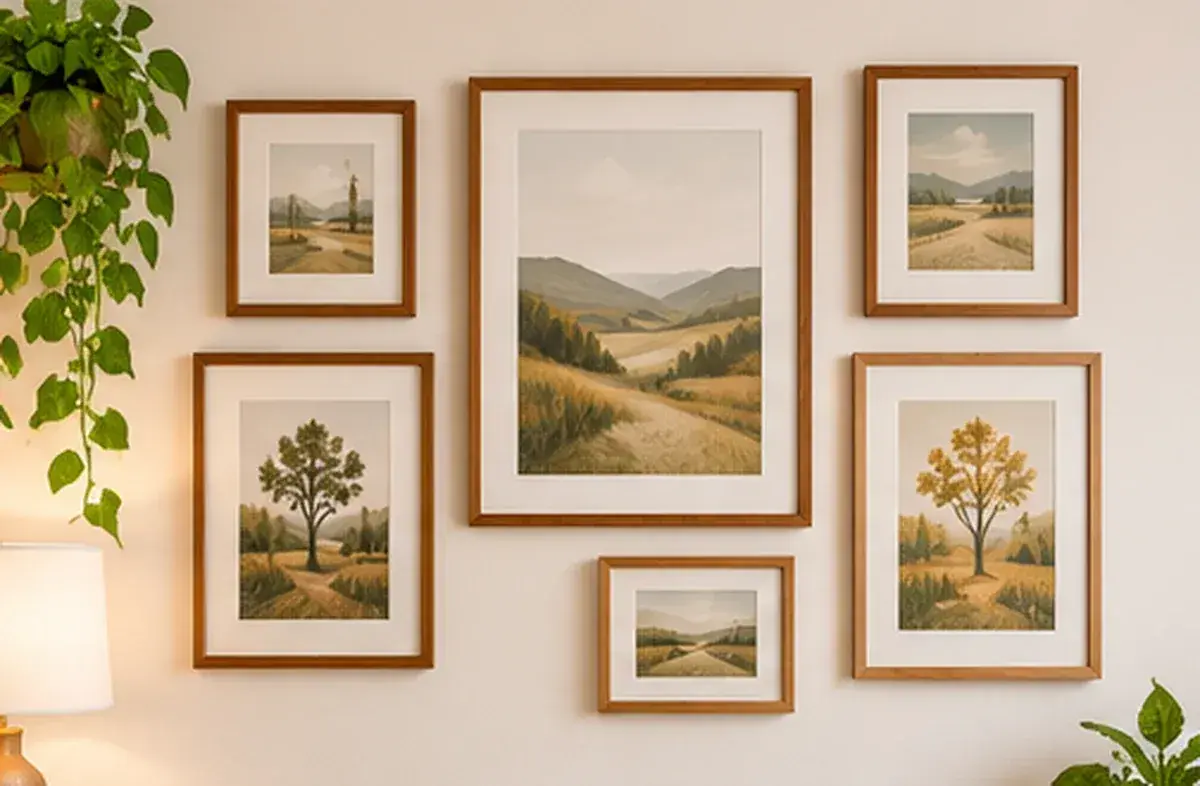
Build a lightweight gallery wall with approved picture strips. A small gallery wall gives a blank living-room or bedroom wall a focal point without requiring a row of drilled holes. Choose light frames with flat backs, keep the arrangement compact, and use a paper template on the floor before placing anything.
A small gallery wall gives a blank living-room or bedroom wall a focal point without requiring a row of drilled holes. Choose light frames with flat backs, keep the arrangement compact, and use a paper template on the floor before placing anything.
Check the hanging product’s stated weight limit for the complete frame, not just the glass or artwork. Clean the wall only as directed, press for the recommended time, and respect the required waiting period before loading. Use a separate support method for heavy mirrors or oversized frames.
Check before you do it: Do not assume every painted wall is compatible. Avoid textured, dusty, damp, or recently painted surfaces unless the manufacturer specifically approves them.
2. Create one removable wallpaper accent panel
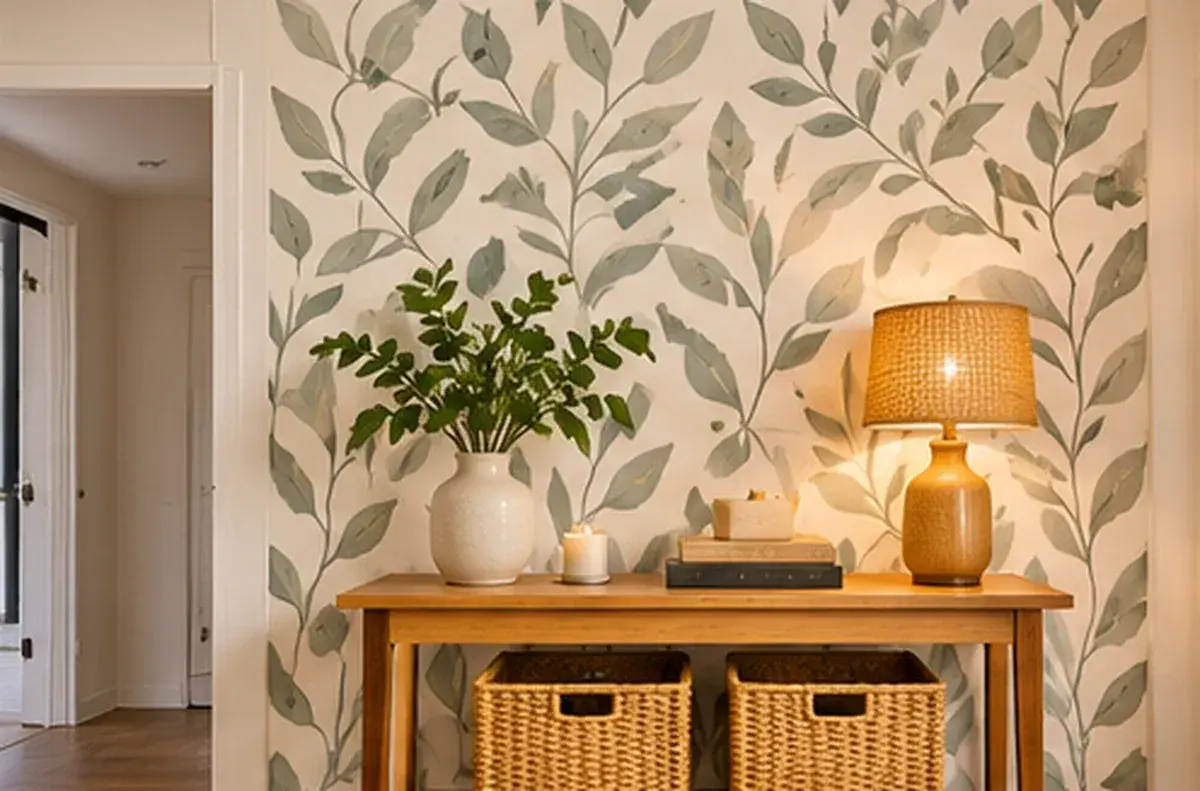
Create one removable wallpaper accent panel. A defined wallpaper panel behind a desk, sofa, or bed can make a rental look considered without covering the whole apartment. A narrow panel is easier to align and remove than a full room of pattern. Botanical, linen-look, and small-scale geometric designs are easier to combine with existing furniture.
A defined wallpaper panel behind a desk, sofa, or bed can make a rental look considered without covering the whole apartment. A narrow panel is easier to align and remove than a full room of pattern. Botanical, linen-look, and small-scale geometric designs are easier to combine with existing furniture.
Measure the panel twice, plan the top and bottom edges, and order enough material from the same production batch. Try a sample on the actual wall for several days, then inspect the edges and paint before committing to a larger area.
Check before you do it: Removable wallpaper can still lift paint or leave adhesive. Confirm the wall finish and removal instructions with the product maker and get landlord approval when the lease requires it.
3. Use a tension-rod curtain to soften an awkward opening
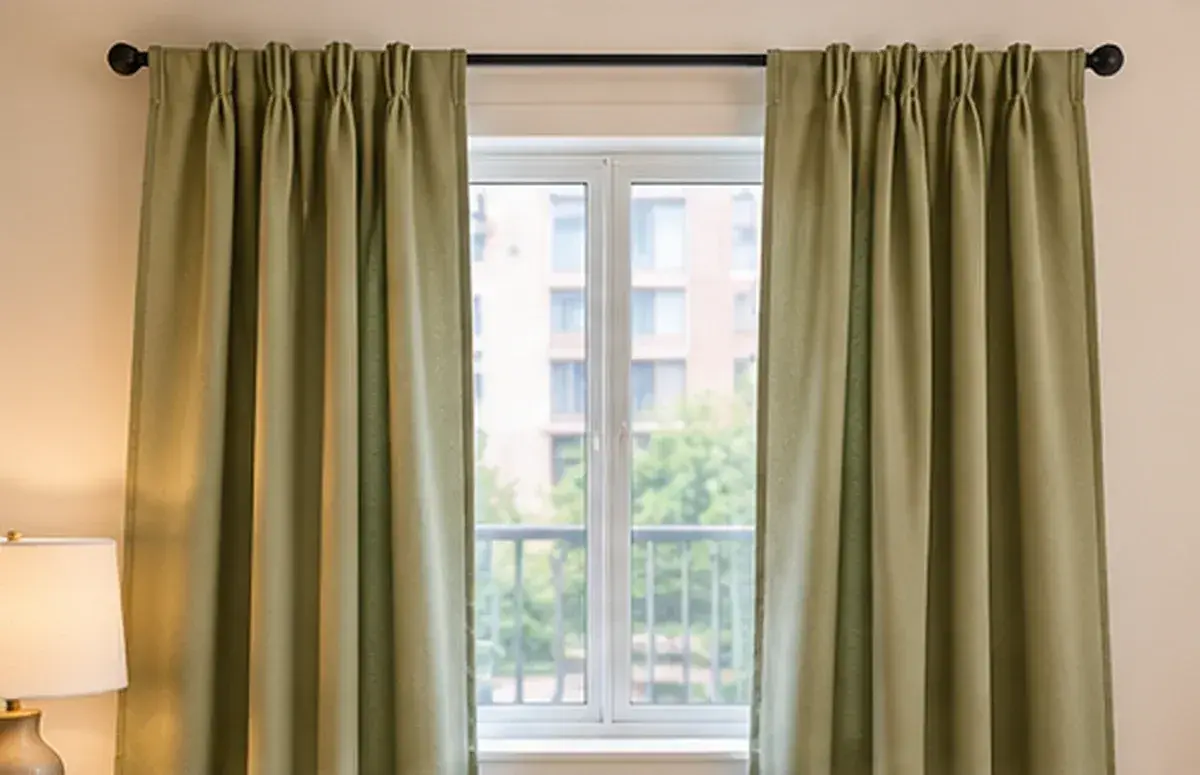
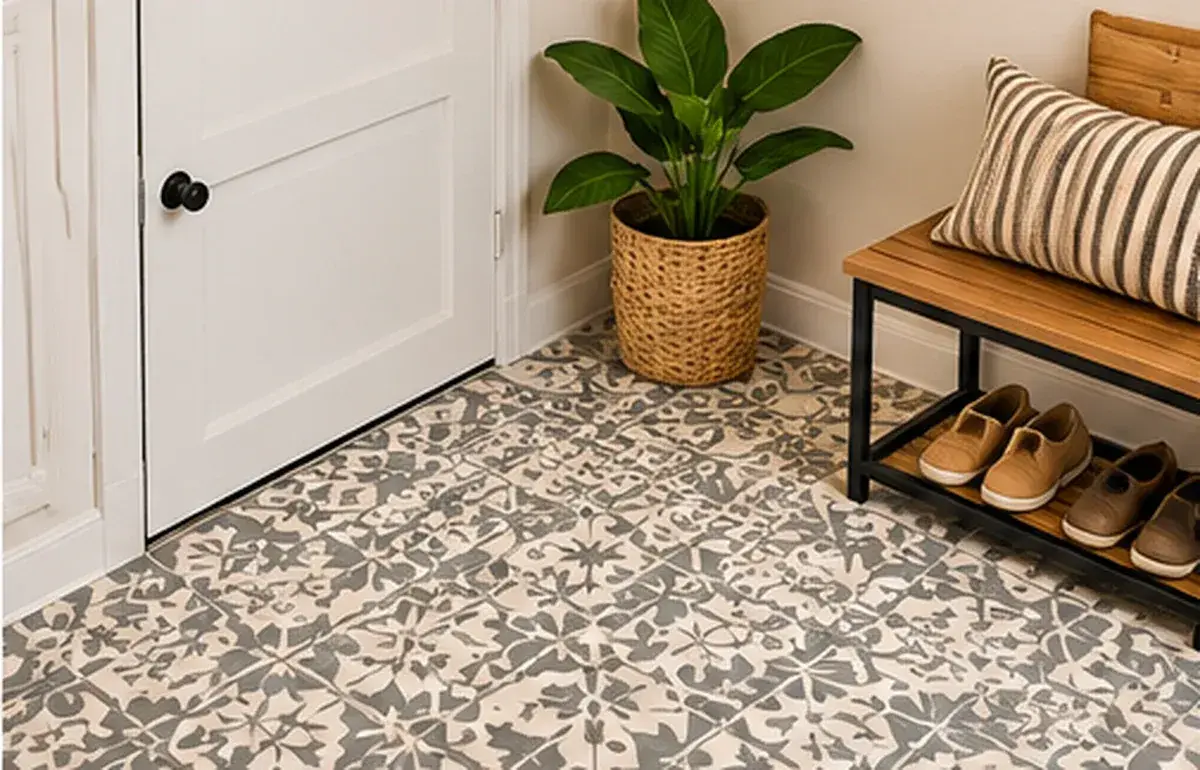
Use a tension-rod curtain to soften an awkward opening. A spring tension rod can add a fabric screen to a closet opening, shallow alcove, or open shelving area where a permanent track is not allowed. A linen-look panel can hide stored items and make an open corner feel calmer.
A spring tension rod can add a fabric screen to a closet opening, shallow alcove, or open shelving area where a permanent track is not allowed. A linen-look panel can hide stored items and make an open corner feel calmer.
Select a rod rated for the opening width and the curtain weight. Install it only between sound, parallel surfaces, and check that it cannot slip when the curtain moves. Choose fabric that can be washed and does not drag across a heater or block a doorway.
Check before you do it: Do not use a tension rod as a safety barrier, grab bar, or support for a heavy load. Avoid installing it where a fall could create a hazard.
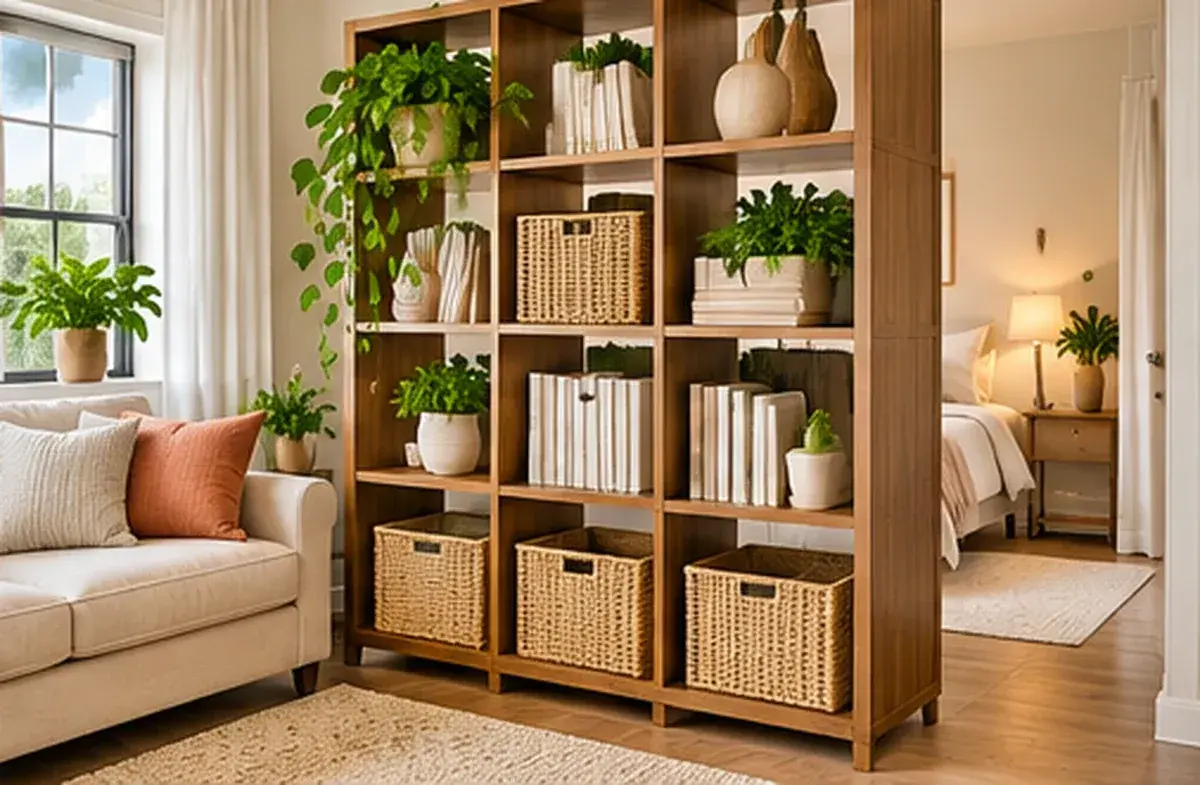
4. Divide a studio with an open-backed bookcase
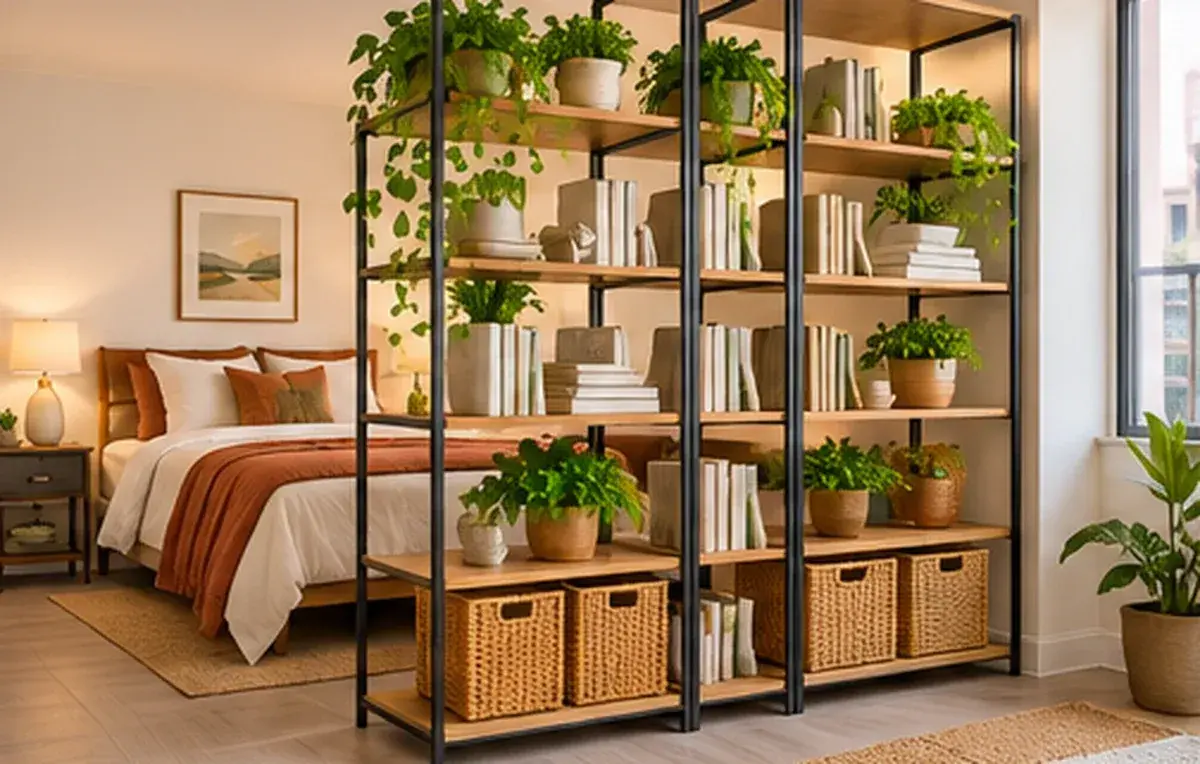
Divide a studio with an open-backed bookcase. A freestanding bookcase creates a visual boundary between sleeping and living zones while storing books, baskets, and folded linens. Open-backed shelving lets daylight pass through, which is especially helpful in compact studios.
A freestanding bookcase creates a visual boundary between sleeping and living zones while storing books, baskets, and folded linens. Open-backed shelving lets daylight pass through, which is especially helpful in compact studios.
Choose a stable unit with a broad base and a height that suits the room. Keep heavier objects low, avoid overloading one side, and arrange the shelves so the room still has a clear walking route. Use baskets to make storage look orderly from both sides.
Check before you do it: Tall furniture can tip. Follow the manufacturer’s anchoring instructions and get permission for any wall connection. Where anchoring is not possible, select a lower, stable divider instead.
5. Layer area rugs to define separate zones
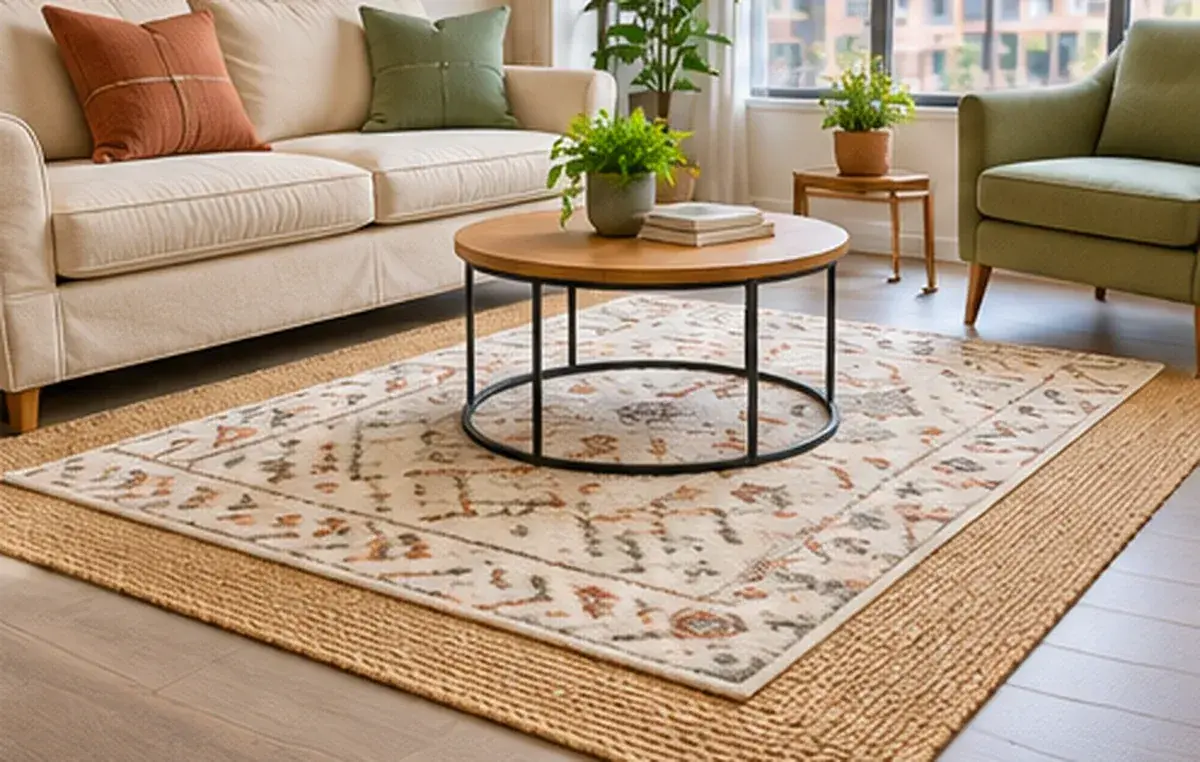
Layer area rugs to define separate zones. A large neutral rug can anchor the seating area while a smaller flat-weave rug marks a reading corner or bedside path. Layering gives a rental room a sense of layout even when the flooring cannot be changed.
A large neutral rug can anchor the seating area while a smaller flat-weave rug marks a reading corner or bedside path. Layering gives a rental room a sense of layout even when the flooring cannot be changed.
Keep the bottom rug large enough for the front legs of the main furniture, then use a smaller contrasting texture as an accent. Add an appropriate non-slip pad on hard flooring and make sure doors can open freely over the rug edges.
Check before you do it: Avoid curled corners and thick layers in circulation paths. Use rug pads compatible with the floor finish so the backing does not discolor or stick.
6. Refresh a dated sofa with a washable slipcover
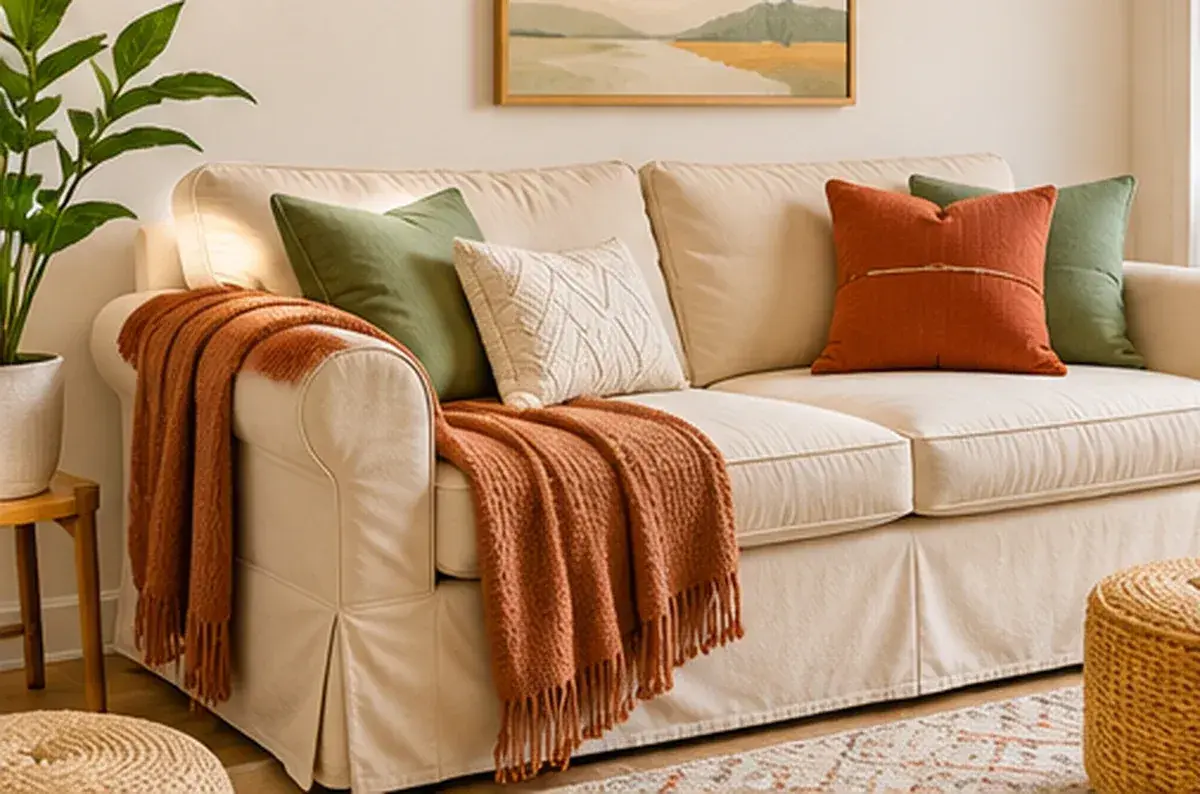
Refresh a dated sofa with a washable slipcover. A fitted or semi-fitted slipcover changes the dominant color in a living room without replacing the landlord’s furniture or buying a new sofa. Pair it with two or three cushion covers rather than a large collection of small accessories.
A fitted or semi-fitted slipcover changes the dominant color in a living room without replacing the landlord’s furniture or buying a new sofa. Pair it with two or three cushion covers rather than a large collection of small accessories.
Measure the sofa carefully, including arms and seat depth. Choose a washable fabric that suits the household’s use, tuck excess material securely, and keep the original upholstery clean underneath. A neutral cover can be warmed with rust, olive, or muted blue cushions.
Check before you do it: Check the furniture owner’s rules before covering supplied furniture, and make sure the fabric does not hide damage that should be reported.
7. Add plug-in lighting instead of changing hardwired fixtures
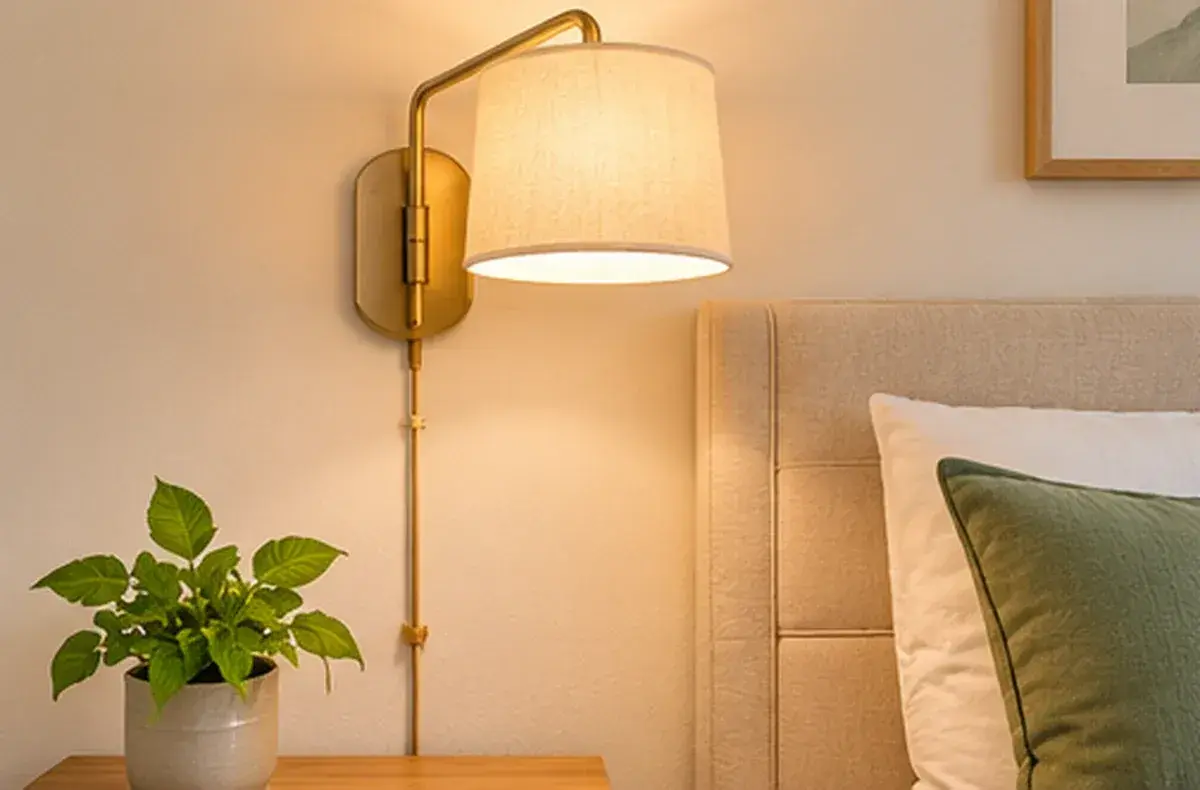
Add plug-in lighting instead of changing hardwired fixtures. A plug-in wall sconce, floor lamp, or table lamp can make a dark apartment feel more layered without changing wiring. A reading light near a sofa or bed creates useful task lighting, while a warm floor lamp can soften a bare corner.
A plug-in wall sconce, floor lamp, or table lamp can make a dark apartment feel more layered without changing wiring. A reading light near a sofa or bed creates useful task lighting, while a warm floor lamp can soften a bare corner.
Choose a fixture with a stable base or a manufacturer-approved hanging system. Route cords along the wall with products designed for that purpose, keep plugs accessible, and use bulbs within the fixture’s stated wattage and type.
Check before you do it: Do not run cords beneath rugs, through doorways, or across wet areas. Never alter hardwired fixtures or electrical wiring as a decorating project.
8. Make a window garden with a freestanding plant shelf
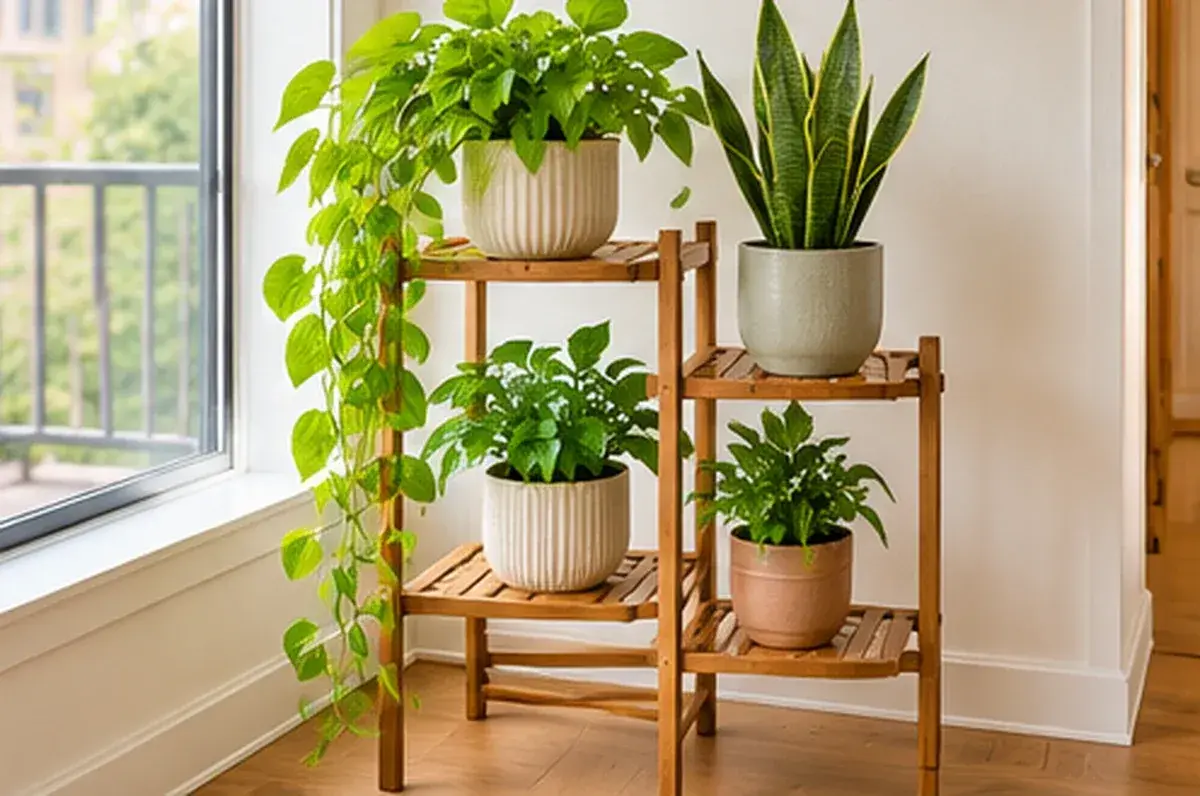
Make a window garden with a freestanding plant shelf. A narrow shelf beside a bright window adds height and greenery without attaching planters to the wall. Group plants by light and watering needs, and vary pot heights to keep the display from looking like a row of identical containers.
A narrow shelf beside a bright window adds height and greenery without attaching planters to the wall. Group plants by light and watering needs, and vary pot heights to keep the display from looking like a row of identical containers.
Use trays beneath pots, choose containers with stable bases, and leave room for curtains and window operation. If the window gets intense afternoon sun, select plants suited to that exposure rather than placing shade plants in direct heat.
Check before you do it: Check the shelf’s load rating and prevent water from reaching sills, floors, or neighboring units. Avoid hanging heavy planters from rental ceilings.
9. Use a folding screen as a flexible privacy wall
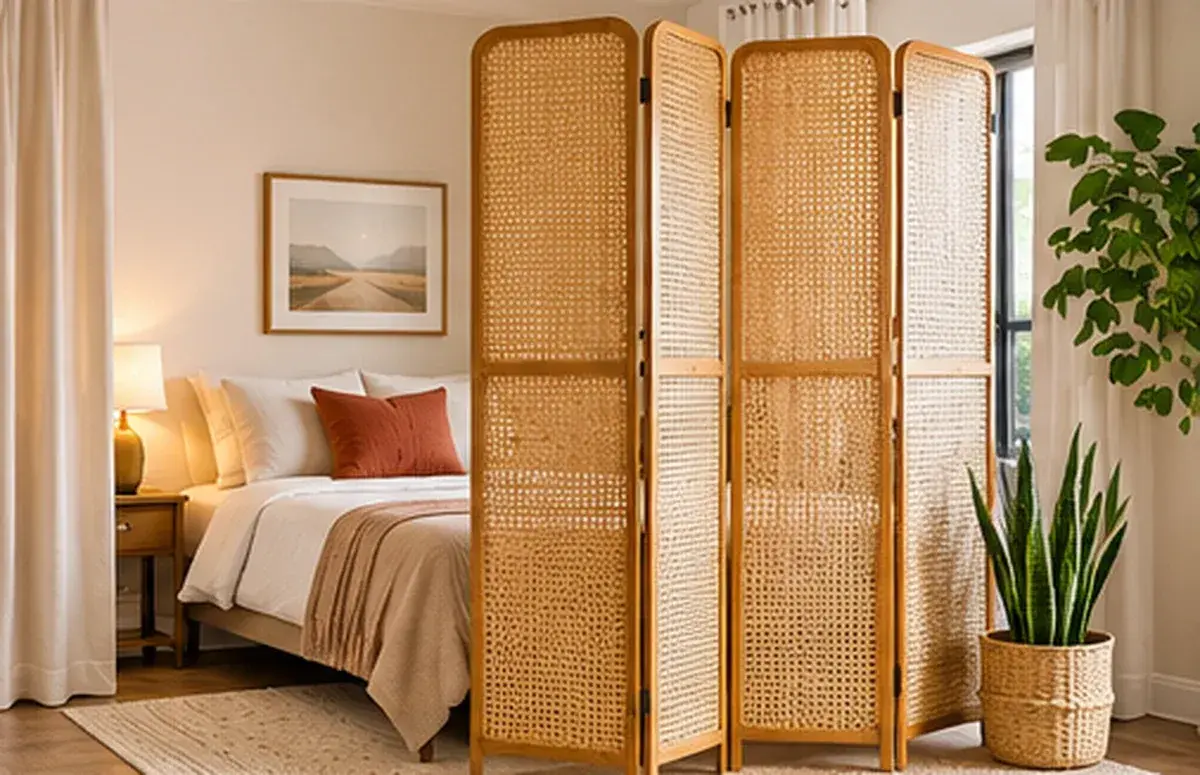
Use a folding screen as a flexible privacy wall. A folding screen can hide a desk, laundry area, or bedside corner without permanent installation. Rattan, fabric, and slatted wood styles introduce texture while remaining easy to reposition when the apartment layout changes.
A folding screen can hide a desk, laundry area, or bedside corner without permanent installation. Rattan, fabric, and slatted wood styles introduce texture while remaining easy to reposition when the apartment layout changes.
Choose a screen wide enough to cover the sightline but narrow enough to fold and store. Place it on a level floor, open the panels fully, and keep it away from heaters, cooking areas, and door swings.
Check before you do it: Screens are not soundproof partitions or fall barriers. Secure the room layout so the screen cannot obstruct an exit.
10. Try removable floor accents in a small, low-traffic area
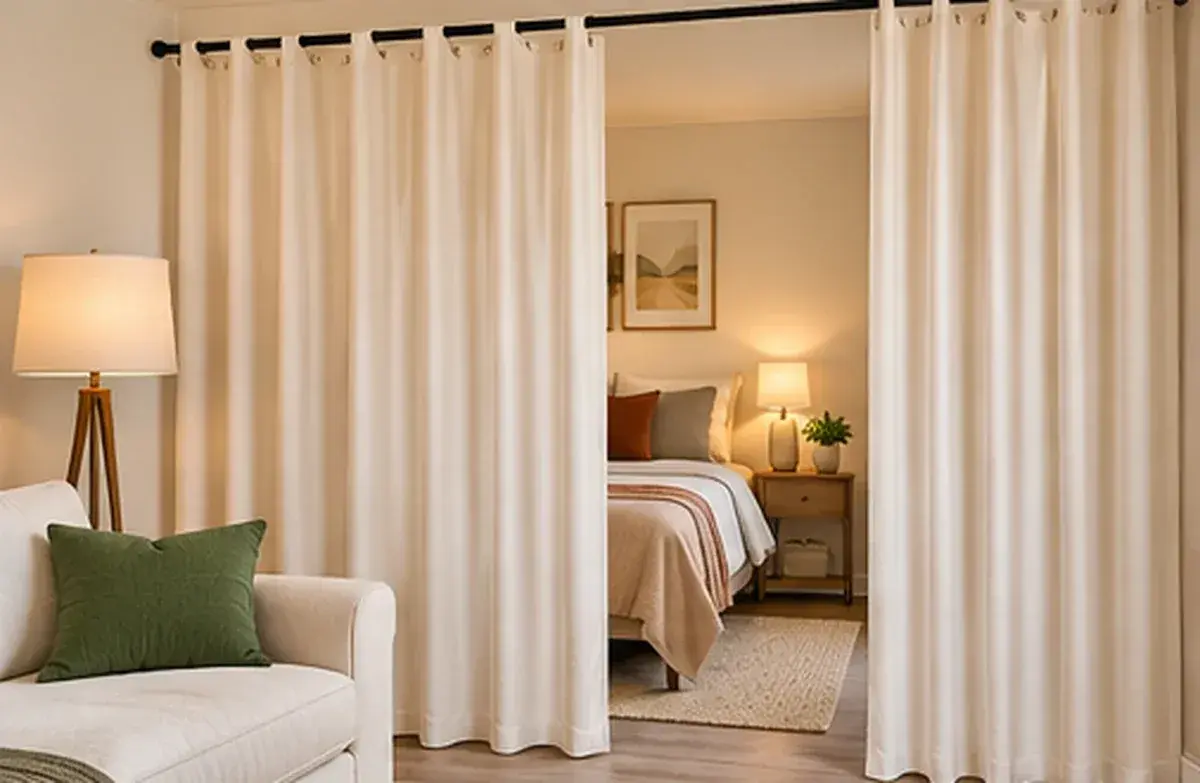
Try removable floor accents in a small, low-traffic area. Peel-and-stick floor tiles or a washable floor mat can visually refresh a small entry or laundry nook when the lease and product instructions permit it. A contained area is easier to test and restore than a full-room installation.
Peel-and-stick floor tiles or a washable floor mat can visually refresh a small entry or laundry nook when the lease and product instructions permit it. A contained area is easier to test and restore than a full-room installation.
Check the existing floor material, condition, and moisture exposure. Test one sample, inspect for residue after the manufacturer’s recommended period, and make sure seams do not create a raised edge. A large washable mat may be the safer option when compatibility is uncertain.
Check before you do it: Do not cover damaged flooring, trap moisture, or install adhesive tiles where the manufacturer excludes the surface. Ask the property manager before applying any floor adhesive.
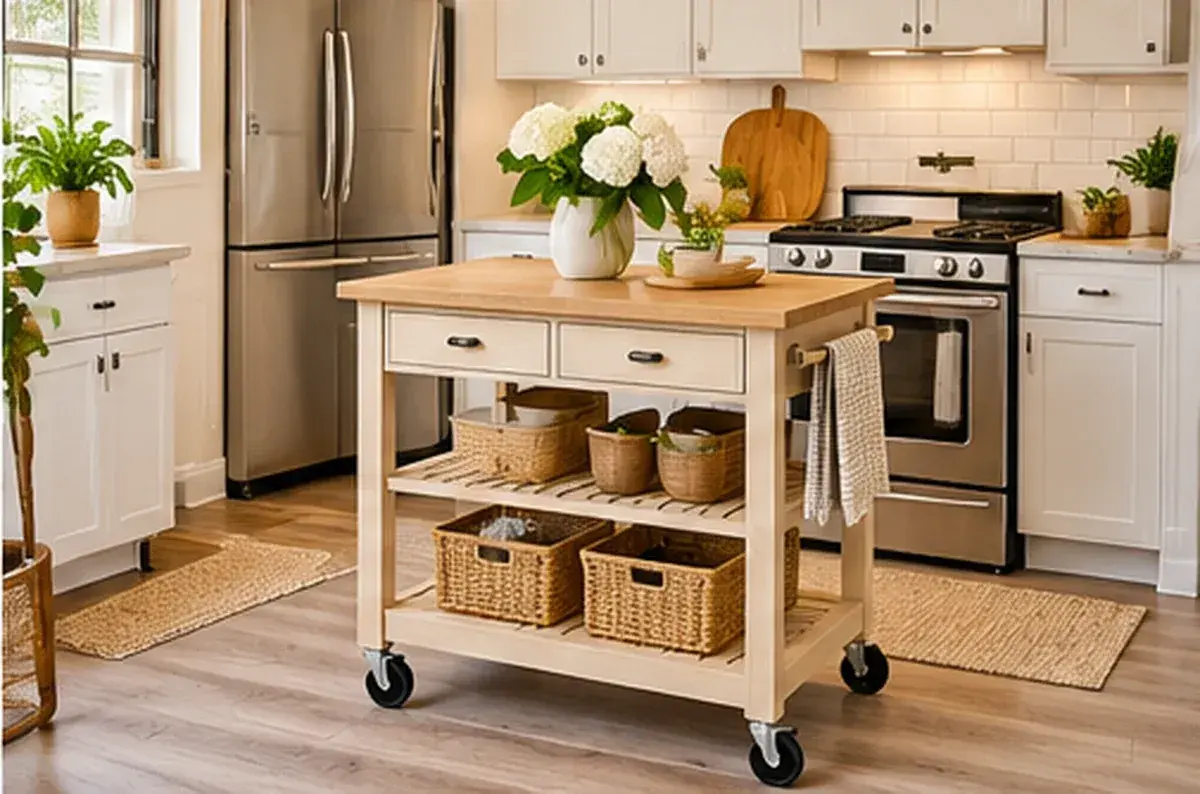
11. Add a rolling kitchen cart for flexible counter space
Add a rolling kitchen cart for flexible counter space. A compact rolling cart can act as a coffee station, prep surface, or extra storage without attaching cabinets or shelves. It works especially well in a rental kitchen with limited counter space.
A compact rolling cart can act as a coffee station, prep surface, or extra storage without attaching cabinets or shelves. It works especially well in a rental kitchen with limited counter space.
Measure the aisle and door openings first. Choose a cart with locking casters, a wipeable top, and shelves that fit the items you actually use. Keep appliances on the cart only when their electrical cords, heat clearance, and ventilation requirements remain satisfied.
Check before you do it: Do not place a hot appliance against a wall or inside an enclosed cart. Keep heavy items low and lock the wheels before using the worktop.
12. Use an over-door organizer for a cluttered entry
Use an over-door organizer for a cluttered entry. An over-door rack can hold lightweight bags, scarves, hats, or cleaning cloths without screws. In a small entry, it can replace a bulky console and keep frequently used items close to the door.
An over-door rack can hold lightweight bags, scarves, hats, or cleaning cloths without screws. In a small entry, it can replace a bulky console and keep frequently used items close to the door.
Measure the door thickness and the gap at the top, then choose a rack designed for that door type. Use soft protective pads where the manufacturer allows them and distribute items evenly across the hooks.
Check before you do it: Confirm that the rack does not interfere with latching, weatherstripping, or fire-door operation. Avoid heavy objects that could cause the rack to shift.
13. Lean framed art on a console instead of hanging it
Lean framed art on a console instead of hanging it. Large art can create a strong focal point when it rests on a stable console or shelf. Layer a smaller frame in front, add a plant at one side, and keep the arrangement low enough to feel intentional rather than temporary.
Large art can create a strong focal point when it rests on a stable console or shelf. Layer a smaller frame in front, add a plant at one side, and keep the arrangement low enough to feel intentional rather than temporary.
Use frames with protective backing, position them away from edges, and place non-slip pads beneath the frame if the surface is slick. This approach is easy to rearrange when you move or change the room.
Check before you do it: Do not lean heavy glass frames where children, pets, or passing traffic could knock them over. Use a secure support for anything unstable.
How to test a removable product before using it across a room
Choose a hidden section of the same wall or floor and apply a small sample exactly as the manufacturer directs. Photograph the surface before application, record the date, and inspect the sample after the product’s recommended dwell time. Remove it using the stated method, not by pulling quickly or substituting a solvent. If paint lifts, the surface becomes glossy, or adhesive remains, stop and choose a different decorating method. A patch test reduces uncertainty, but it does not guarantee that a larger installation will behave identically across every area of a wall.
A simple rental-friendly color and texture plan
Start with one neutral base already present in the apartment, such as warm white, beige, gray, or natural wood. Add one secondary color through cushions or curtains and one accent through art or a small decorative object. Repeat the accent in two or three places so the apartment feels connected. Texture can do more work than extra color: a woven basket, linen curtain, wool-look rug, and matte ceramic planter give a room depth while remaining easy to pack. Repeating a limited palette also makes it easier to reuse pieces in a future home.
What to remove before the final inspection
At move-out, follow the lease and the written product directions for removing temporary decor. Remove adhesive slowly and at the recommended angle, clean residue only with an approved method, and avoid scraping paint or tile. Reinstall saved hardware, return furniture to its original position, and photograph each wall and floor after the room is cleared. If a product causes damage, document it and discuss the repair with the property manager rather than hiding it under furniture or paint.
Frequently asked questions
What is the safest rental-friendly way to decorate apartment walls?
Start with leaning art, freestanding shelves, and textiles. If you use adhesive hooks or strips, verify surface compatibility and weight limits, test a small area, and follow the exact removal directions.
Can peel-and-stick wallpaper damage rental walls?
Yes. It can lift paint or leave residue on some surfaces. The outcome depends on paint condition, wall texture, product adhesive, installation time, and removal technique. Get approval when required.
Are tension rods safe for apartment room dividers?
They can support lightweight curtains between sound, parallel surfaces when used within the product rating. They are not safety barriers and should not carry heavy loads.
How can I decorate without drilling holes?
Use rugs, slipcovers, freestanding bookcases, folding screens, lamps, plant stands, rolling carts, and art that leans securely on furniture.
Sources and further reading
[1] HGTV: Renter-Friendly Decorating Ideas. https://www.hgtv.com/decorating/design-ideas/totally-removable-diys-for-your-rental-pictures
[2] Command: How to Use Picture Hanging Strips. https://www.command.com/3M/en_US/command/how-to-use/picture-hanging-strips/
[3] Command: Product FAQs, Surface Compatibility, and Weight Limits. https://www.command.com/3M/en_US/command/contact-us/faqs/
[4] WallPops: How to Install Peel-and-Stick Backsplash. https://www.wallpops.com/pages/how-to-install-peel-stick-backsplash
Sources
- HGTV: Renter-Friendly Decorating Ideas. Checked November 5, 2026
- Command: How to Use Picture Hanging Strips. Checked November 5, 2026
- Command: Product FAQs, Surface Compatibility, and Weight Limits. Checked November 5, 2026
- WallPops: How to Install Peel-and-Stick Backsplash. Checked November 5, 2026
Share this article
Get new guides by email
Practical home articles and free resources. No spam, and you can unsubscribe at any time.
Keep reading
11 Ways How To Decorate An Airbnb Bedroom for Cheap
Explore decorate an Airbnb bedroom for cheap with practical US-focused advice, planning checks, and clear steps for a more comfortable, well-maintained home.
November 2026, 8 min read
15 Damage Free Wall Decor Ideas for Renters
Explore damage free wall decor ideas for renters with practical US-focused advice, planning checks, and clear steps for a more comfortable, well-maintained home.
November 2026, 11 min read
Repairs vs. Improvements on a Rental Property: Why the Distinction Matters
The IRS treats a repair and an improvement very differently, and the distinction affects your recordkeeping regardless of how you file. Here is how the two are commonly defined, for informational purposes only.
September 2026, 3 min read