15 Damage Free Wall Decor Ideas for Renters
Explore damage free wall decor ideas for renters with practical US-focused advice, planning checks, and clear steps for a more comfortable, well-maintained home.
By Home Crane Editors. . 11 min read.
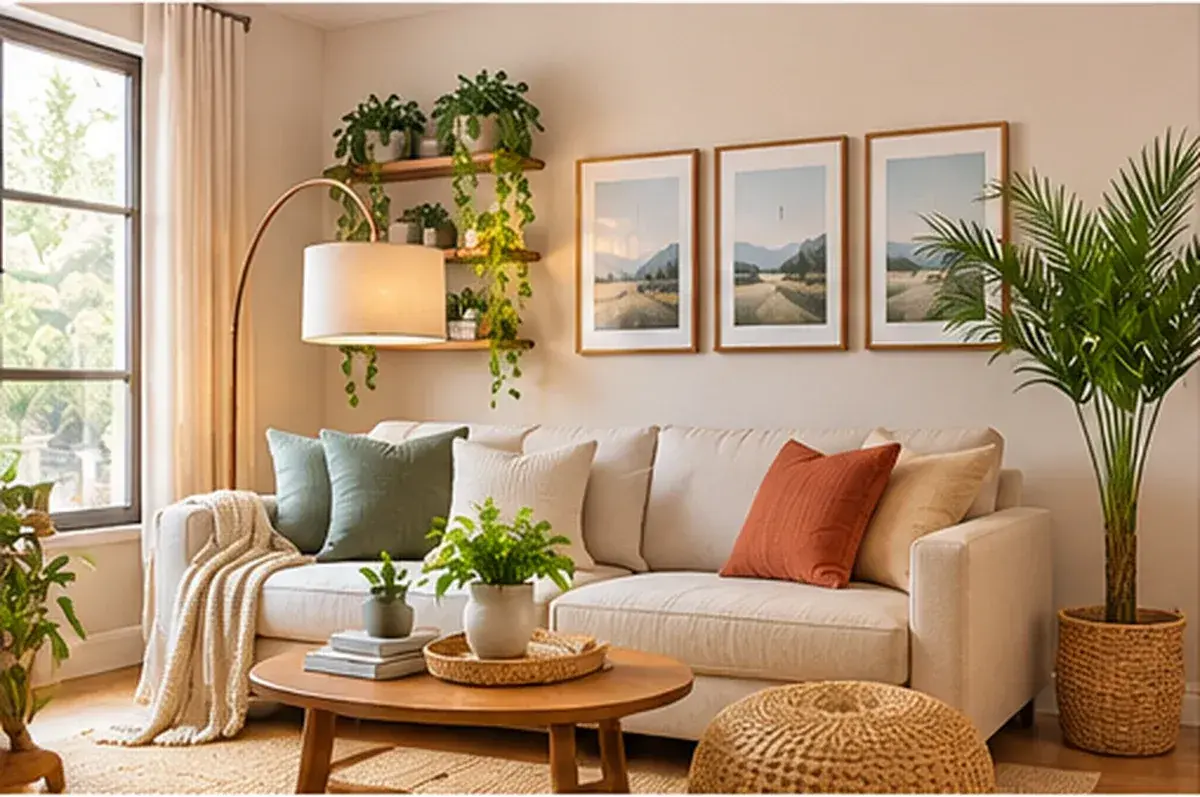
Blank walls can make an apartment feel unfinished, but renters do not need to drill into every surface to create a home that feels personal. The most reliable approach is to mix freestanding displays, leaning art, textiles, and carefully tested removable hanging products. No adhesive is guaranteed to be damage-free on every paint, wallpaper, or plaster surface. These ideas show how to create visual height, color, and texture while keeping the original wall in good condition and making move-out easier.
AI-generated editorial concept image. Individual details are illustrative; confirm product, lease, and safety requirements before making changes.
Start with the wall surface, the weight, and the lease
Before selecting a hanging system, identify the surface. Smooth painted drywall, textured drywall, wallpaper, plaster, tile, and wood paneling each behave differently. Check the product’s approved surfaces and maximum load. The rating often assumes a specific frame shape, mounting method, and installation procedure, so it should not be treated as a general guarantee for every item.
Use the lightest possible artwork and keep a record of what you install. A small frame is easier to support than a large glass mirror. Keep any adhesive packaging, test one item first, and avoid hanging above beds, seating, or high-traffic paths when a failure could cause injury. Heavy mirrors and large framed pieces deserve a stable freestanding or professionally installed solution.
A damage-free wall can still look layered. Combine one larger focal element with smaller pieces on furniture or shelves. Give the arrangement breathing room, align it to the furniture below, and avoid spreading tiny frames across every available inch. The room will feel intentional without requiring a large number of wall attachments.
Explore the ideas
- Use manufacturer-rated picture hanging strips for lightweight frames
- Display art on a freestanding picture ledge
- Hang a fabric tapestry from a freestanding support
- Create a poster rail with wooden magnetic hangers
- Style a macramé or woven wall piece on a display stand
- Lean one large canvas on a sturdy console
- Layer framed art on a bookcase or cabinet
- Apply a small removable wall decal after a surface test
- Create a removable wallpaper panel behind a console
- Display woven baskets on a freestanding rack
- Use a full-length mirror that leans securely
- Add a ladder shelf for rotating prints and plants
- Display a textile banner from a freestanding garment rail
- Use a freestanding pegboard easel for small objects
- Make a photo line with a freestanding rail
1. Use manufacturer-rated picture hanging strips for lightweight frames
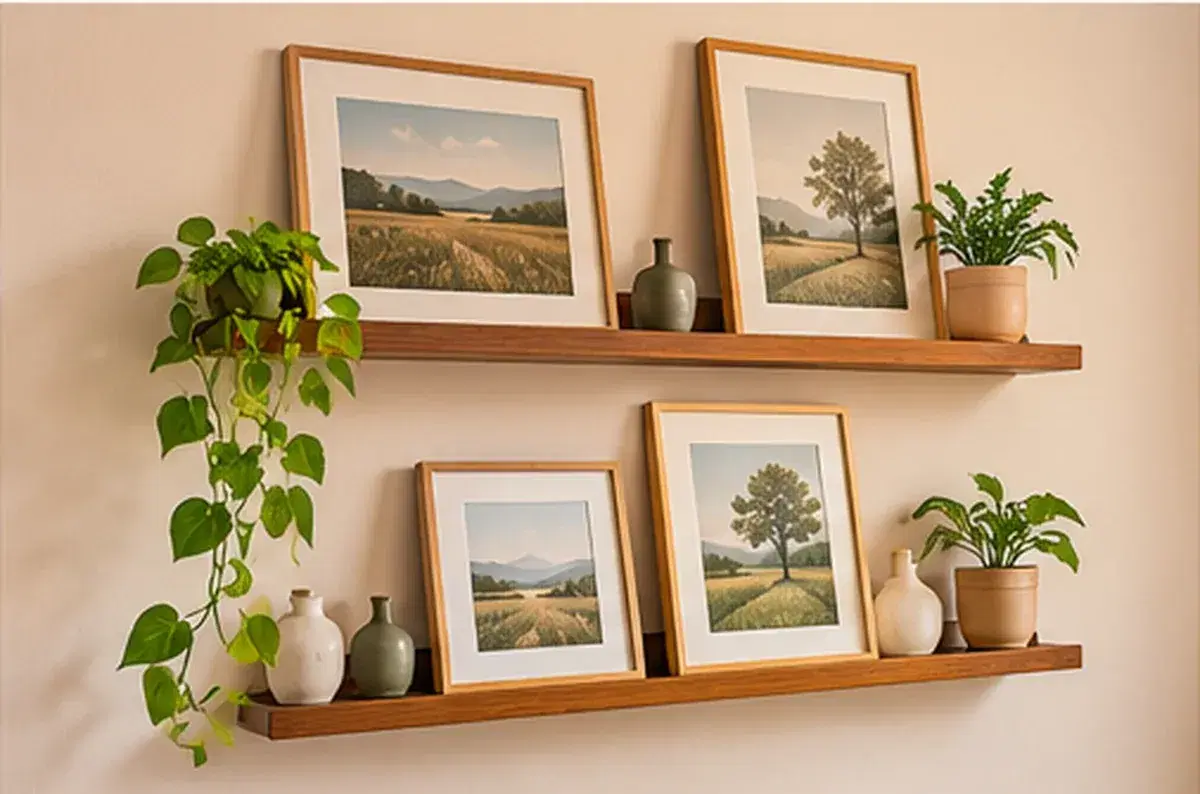
Use manufacturer-rated picture hanging strips for lightweight frames.
A small group of lightweight framed prints can create a tidy gallery without conventional nails. Select frames with flat backs and compatible hanging points, then plan the arrangement before installing the first strip.
Follow surface preparation, load rating, pairing, pressure, and waiting-time instructions exactly. Use a level and paper templates to keep spacing consistent. If the manufacturer gives a maximum frame dimension or weight, stay comfortably below it.
Check before you do it: Do not use strips on surfaces excluded by the manufacturer or for heavy mirrors, fragile glass, or valuable objects.
2. Display art on a freestanding picture ledge
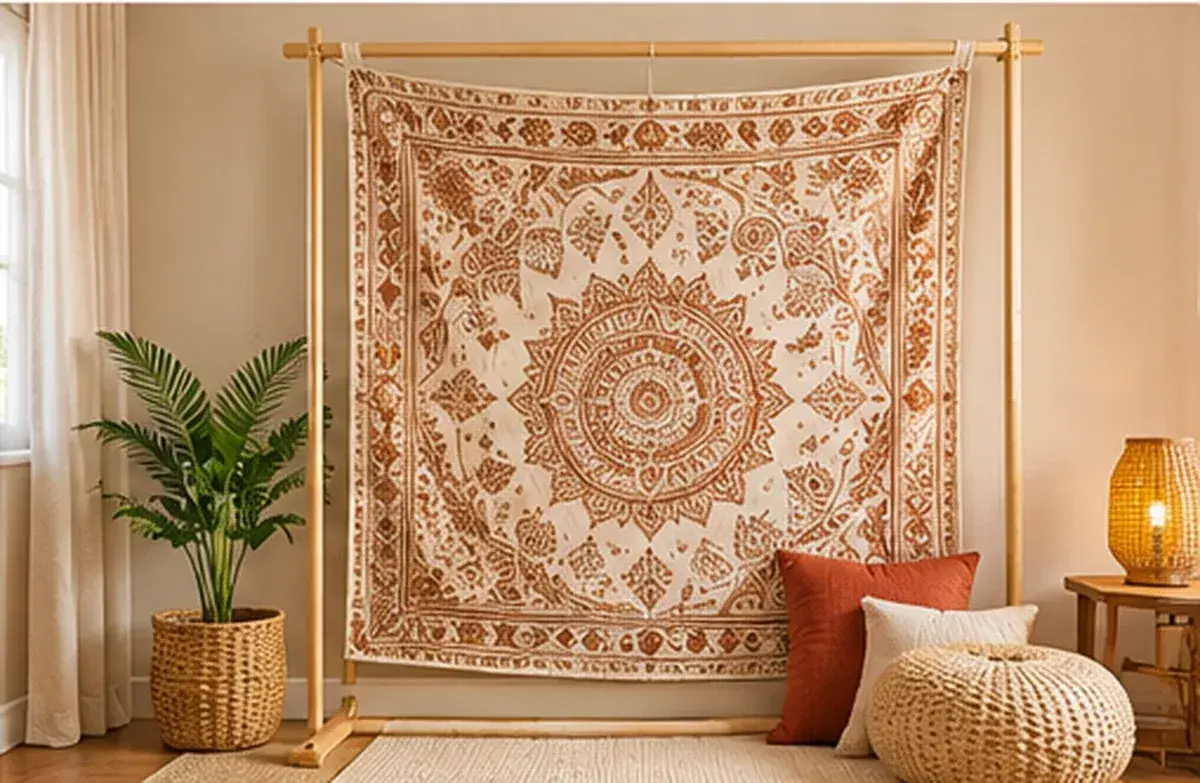
Display art on a freestanding picture ledge.
A slim ledge on a console, bookcase, or low cabinet provides the look of a picture shelf without attaching anything to the wall. It is easy to refresh when seasons or colors change.
Choose a ledge with a deep enough surface and a stable base. Layer frames from largest at the back to smallest at the front, and use non-slip pads if the shelf surface is slick. Keep the display away from doors and narrow walkways.
Check before you do it: A freestanding ledge must not be overloaded or placed where frames can fall. Secure the furniture itself if it is tall or unstable.
3. Hang a fabric tapestry from a freestanding support
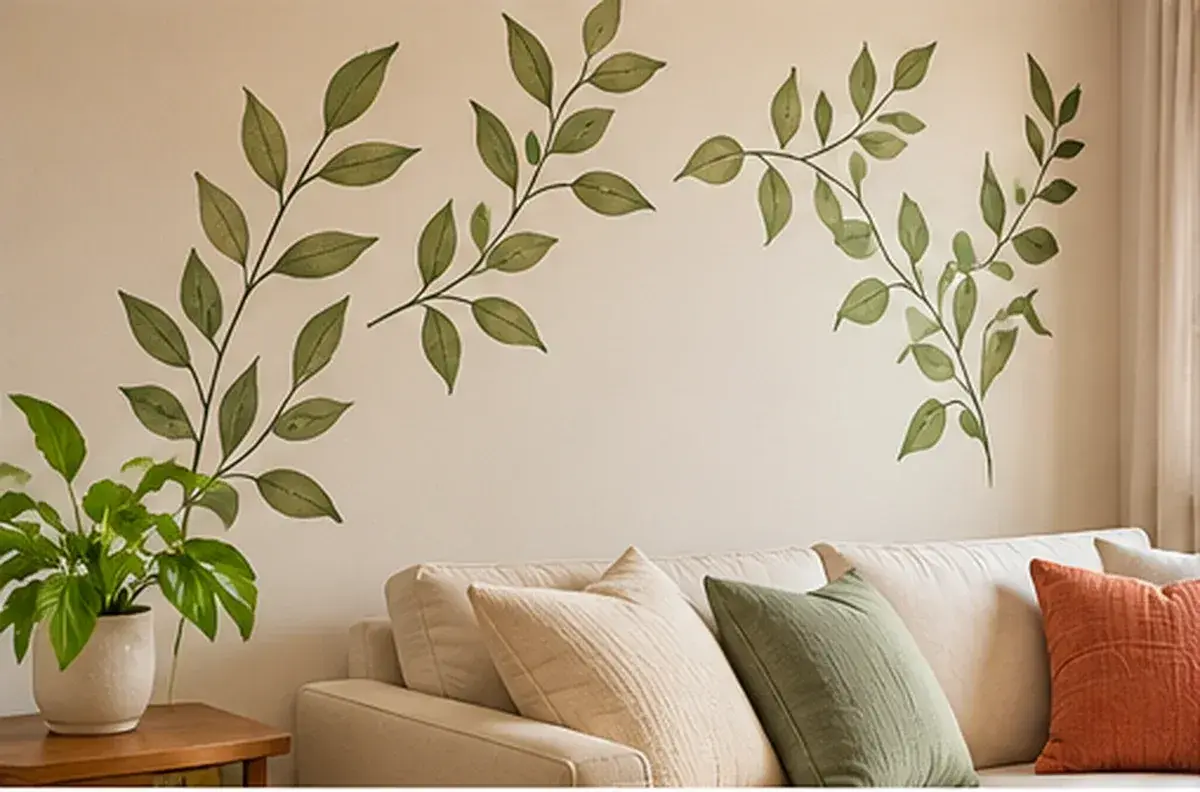
Hang a fabric tapestry from a freestanding support.
A large textile can soften a blank wall and introduce color without requiring adhesive across the wall surface. A simple garment rail or freestanding textile stand can support a light tapestry in a living room or bedroom.
Choose a fabric with a finished top edge or sleeve, keep it clear of heaters, and make sure the support has a wide stable base. A neutral textile works with layered rugs and cushions; a patterned textile can be the room’s main accent.
Check before you do it: Do not hang fabric over heaters, cooking equipment, sprinklers, or electrical fixtures. Avoid supports that can tip when the fabric moves.
4. Create a poster rail with wooden magnetic hangers
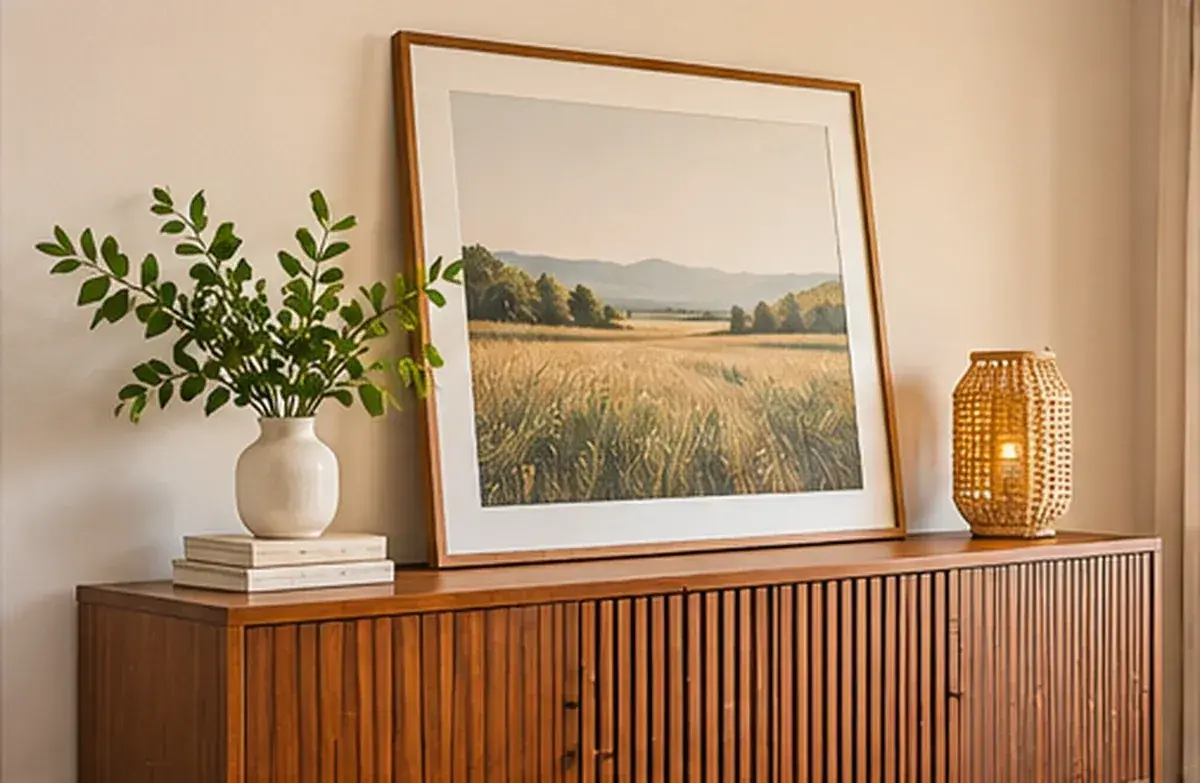
Create a poster rail with wooden magnetic hangers.
A wooden poster hanger gives lightweight art a finished look and avoids a frame full of glass. The top rail can be displayed on a compatible removable hook or placed on a freestanding easel.
Select a rail sized for the poster, check the cord or hanging system, and avoid paper that curls at the corners. It works well with botanical prints, maps, and simple graphic art that can be rolled for moving.
Check before you do it: Only use an adhesive hanger when the wall and load are approved. Keep the rail away from damp windows and direct heat.
5. Style a macramé or woven wall piece on a display stand
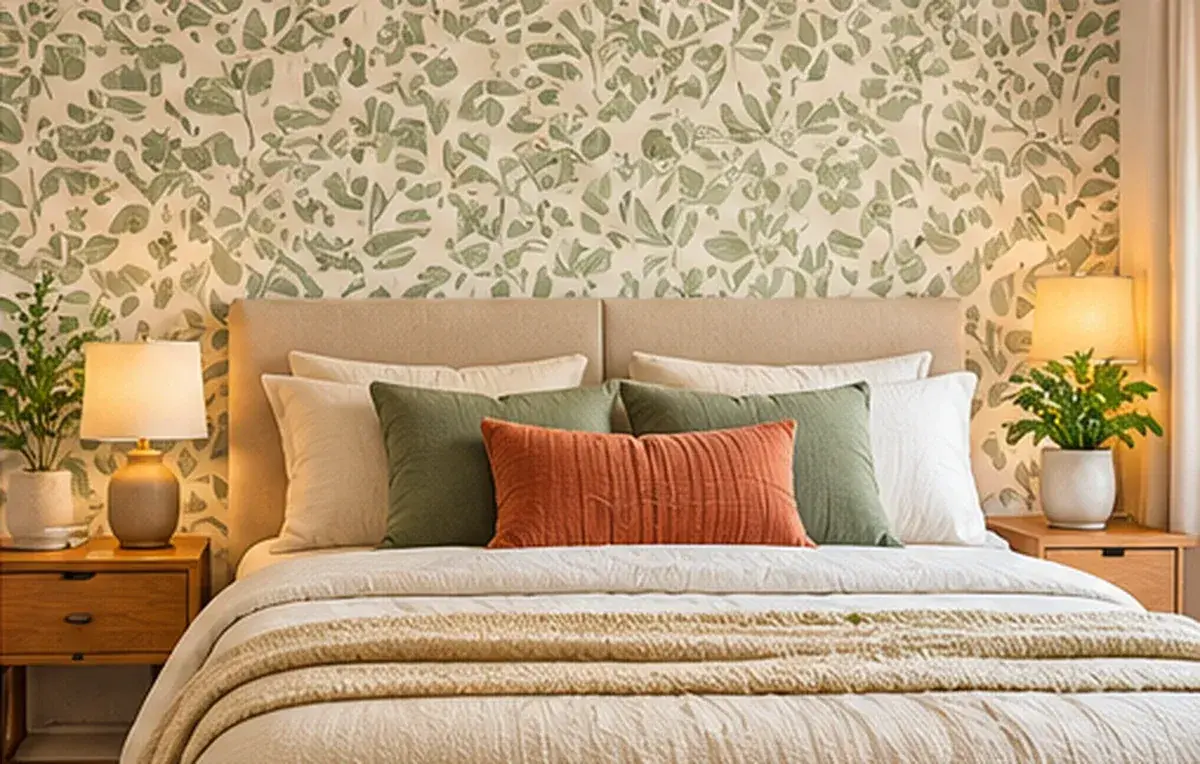
Style a macramé or woven wall piece on a display stand.
Macramé, woven panels, and lightweight textile art can add texture to a room without a traditional frame. A freestanding garment rack or decorative stand lets the piece become a movable focal point.
Choose a stand that is stable and proportionate to the textile. Keep the fringe clear of pets, floor-cleaning equipment, and doors. Pair a neutral fiber piece with a plant or warm lamp rather than adding several competing patterns.
Check before you do it: Do not suspend a heavy textile from a ceiling hook without permission and a suitable attachment. A freestanding stand is the more reversible option.
6. Lean one large canvas on a sturdy console
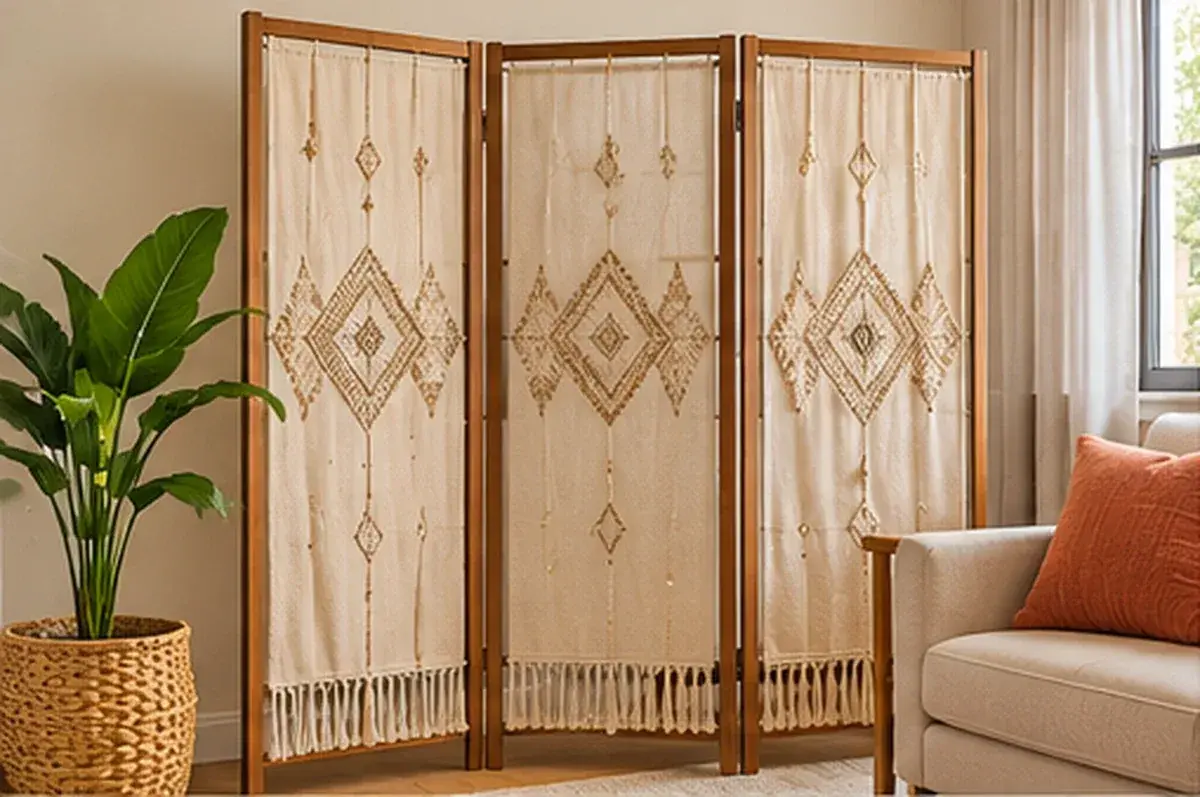
Lean one large canvas on a sturdy console.
A large canvas resting on a console makes a blank wall feel finished with no hanging hardware. This works especially well behind a sofa or in a wide entry where there is enough depth for the furniture.
Choose a canvas with a stable lower edge and a console deep enough to support it. Use non-slip pads if appropriate, keep the canvas away from the edge, and layer a small object in front without crowding the artwork.
Check before you do it: Avoid leaning large, heavy, or glass-fronted pieces in a place where they can topple. Keep the arrangement out of narrow paths.
7. Layer framed art on a bookcase or cabinet
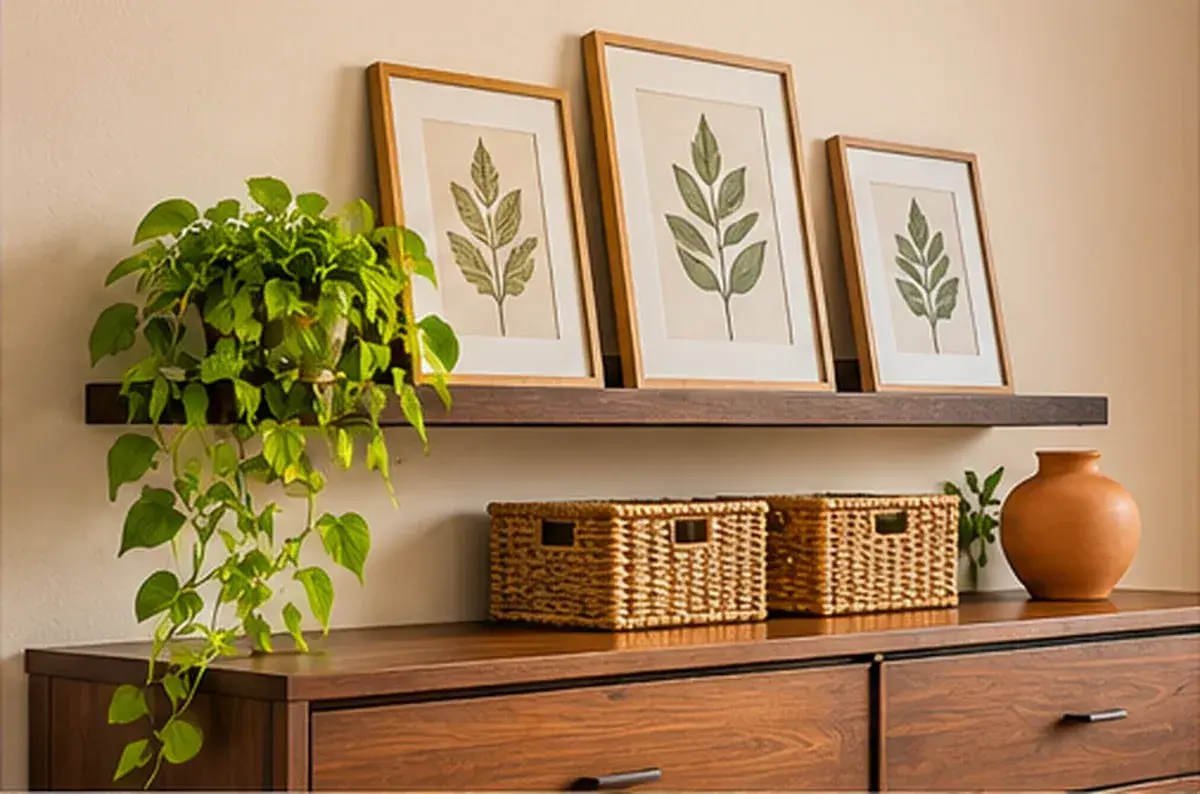
Layer framed art on a bookcase or cabinet.
Bookshelves offer several display heights, making them useful for small prints, framed photos, and artwork. A few frames mixed with books and baskets can create a collected look without a wall installation.
Vary frame size but repeat one finish, such as light oak or black. Leave some shelf space open and place heavier frames on lower shelves. A small ledge can stop a frame from sliding forward.
Check before you do it: Do not stack unstable frames or place heavy items above a bed or seating area. Keep shelves within the manufacturer’s load rating.
8. Apply a small removable wall decal after a surface test
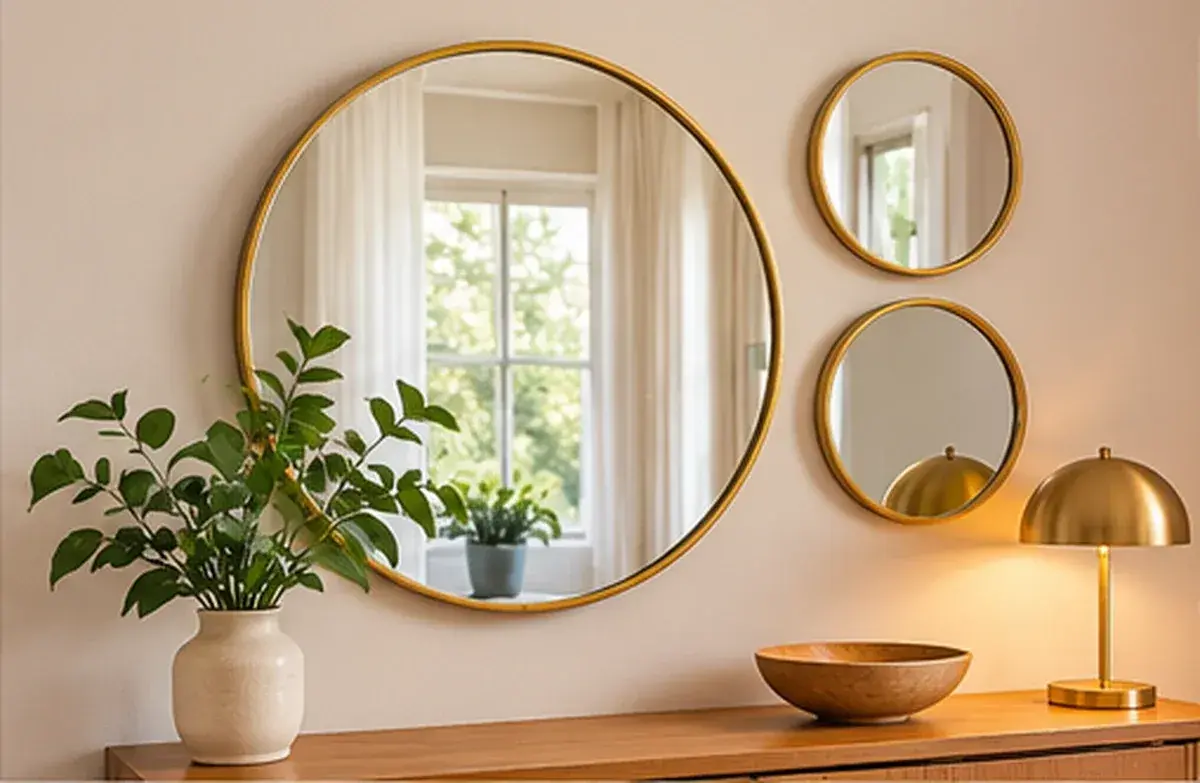
Apply a small removable wall decal after a surface test.
Removable botanical shapes, simple line art, or small geometric decals can add color to a narrow wall or child-free reading corner. A restrained pattern often looks more polished than covering an entire wall.
Test a sample on the actual surface, wait for the period specified by the manufacturer, and inspect it in daylight. Align the first piece carefully and work outward so the design does not drift.
Check before you do it: Decals can lift paint or leave residue. Avoid textured, damp, dusty, or freshly painted surfaces unless the manufacturer specifically allows them.
9. Create a removable wallpaper panel behind a console
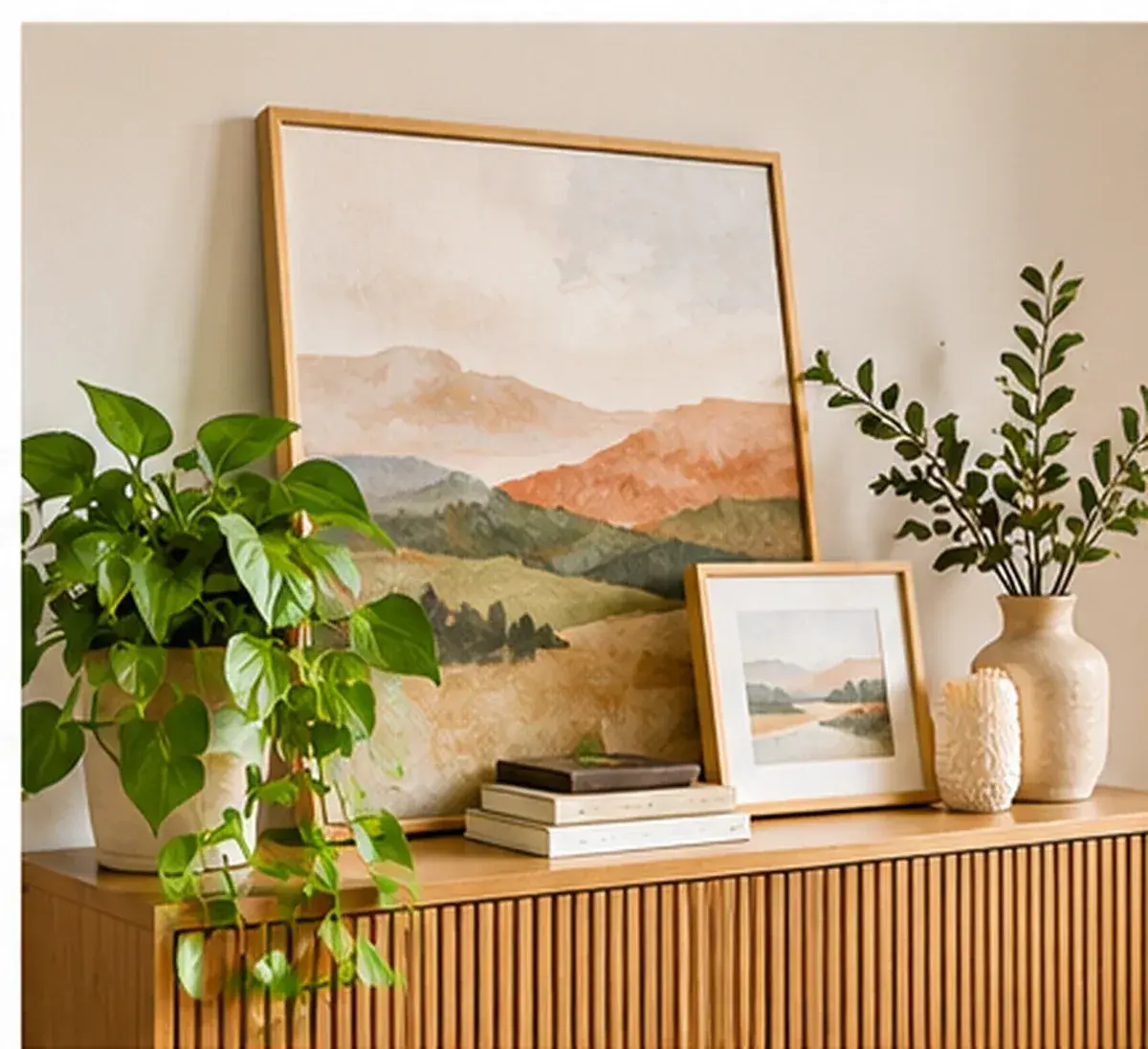
Create a removable wallpaper panel behind a console.
A narrow wallpaper panel gives a console, dresser, or desk a designed backdrop without covering the whole room. Use a simple pattern so furniture and accessories remain the focus.
Measure the width of the furniture and create a panel slightly narrower than the piece below. Sample the material first and confirm the wall finish is suitable. Keep seams away from corners and outlets.
Check before you do it: Do not assume removable wallpaper will peel off cleanly. Check the lease, get permission where needed, and follow the manufacturer’s removal process.
10. Display woven baskets on a freestanding rack
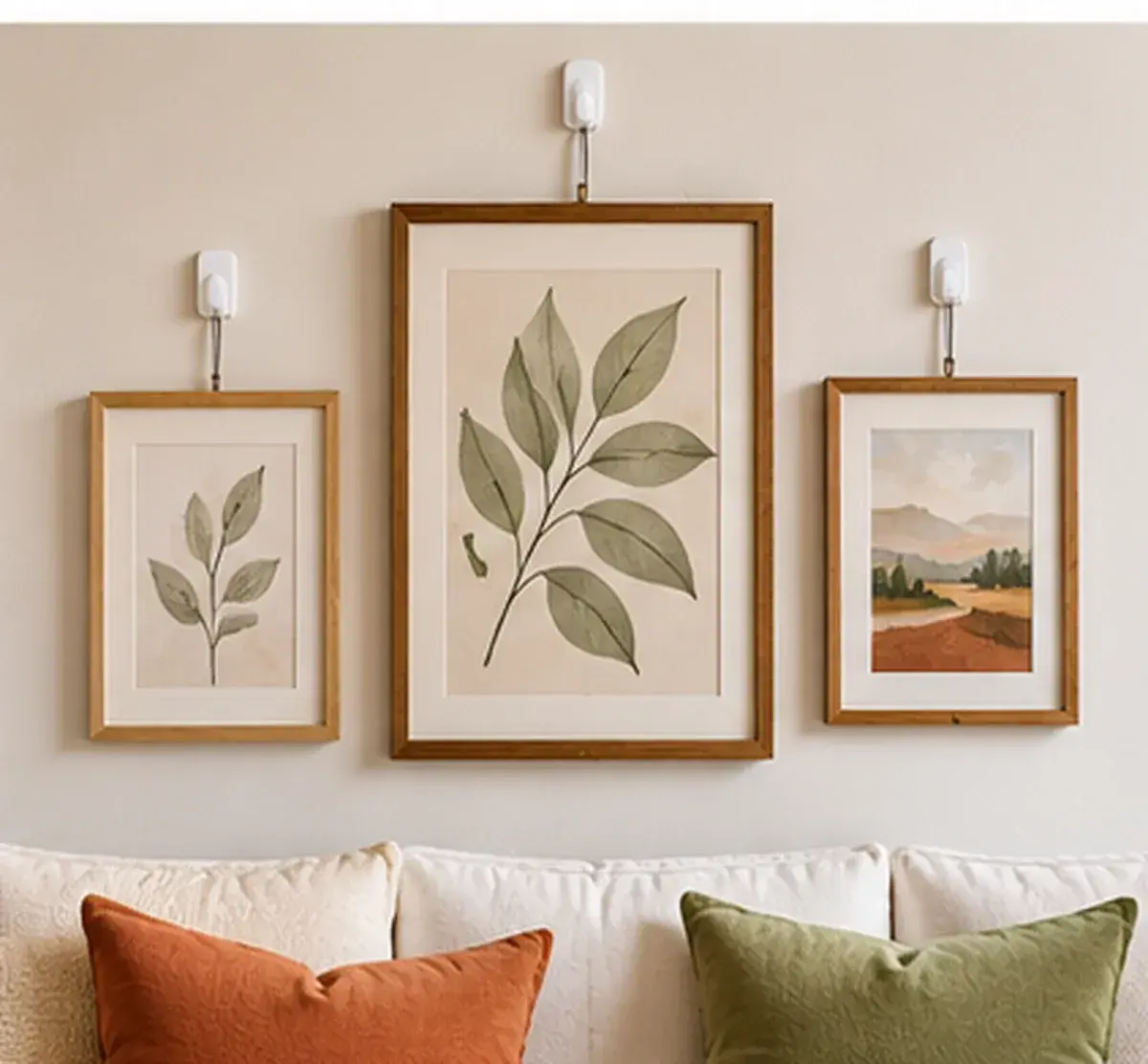
Display woven baskets on a freestanding rack. Decorative baskets add three-dimensional texture and can be displayed on a freestanding ladder rack or shelf. A mix of sizes creates a relaxed focal point in a living room or bedroom.
Decorative baskets add three-dimensional texture and can be displayed on a freestanding ladder rack or shelf. A mix of sizes creates a relaxed focal point in a living room or bedroom.
Choose baskets with similar natural tones and vary their weave rather than their color. Keep the heavier baskets low and avoid placing them where they catch on clothing or door handles.
Check before you do it: A freestanding rack needs a stable base. Do not suspend heavy baskets from a weak adhesive hook.
11. Use a full-length mirror that leans securely
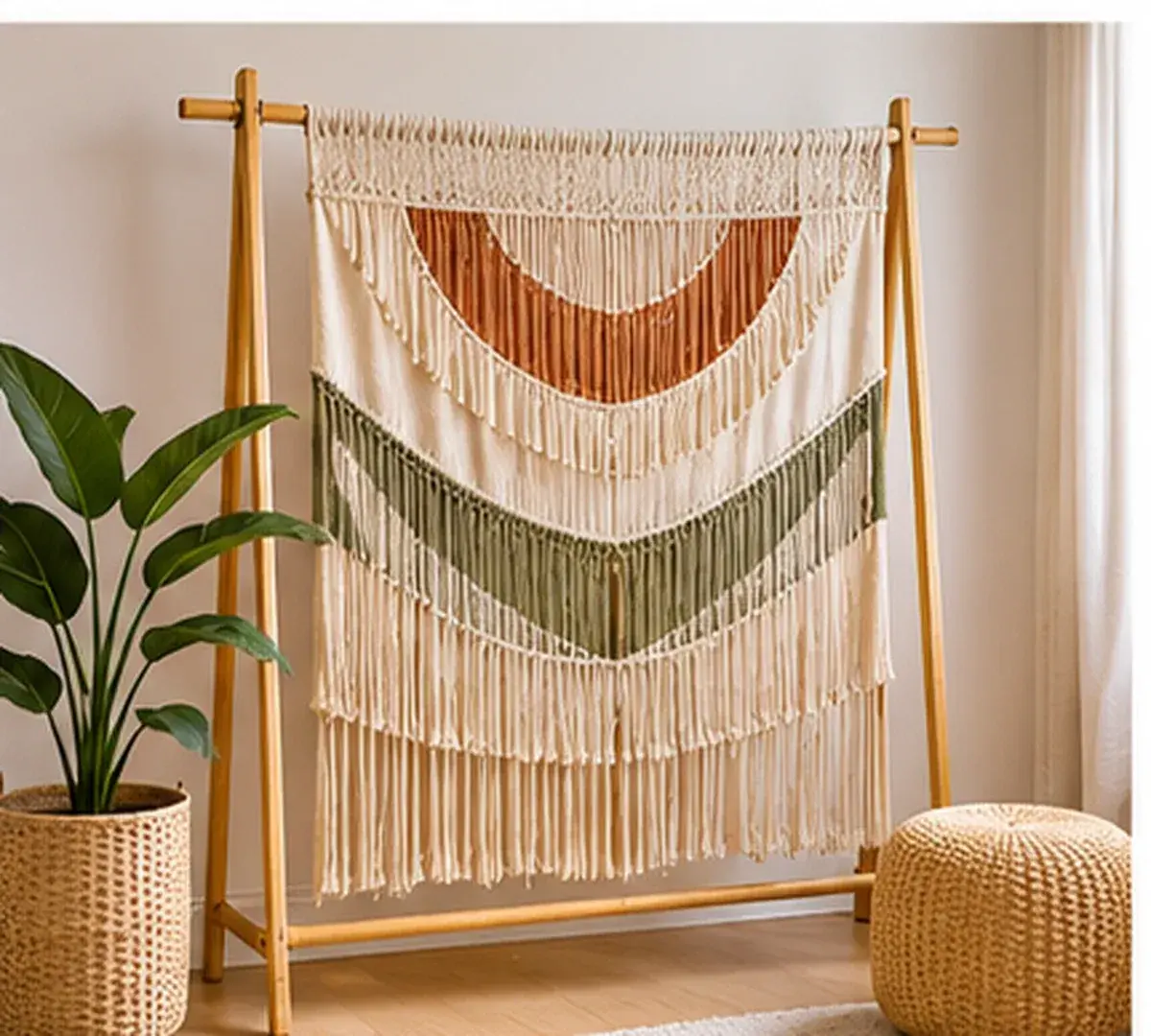
Use a full-length mirror that leans securely.
A full-length mirror can make a small room feel brighter and more open when it reflects daylight. A leaning style avoids a large wall installation, but it still needs a stable, safe location.
Choose a mirror with a designed lean angle and a base that rests securely on the floor. Position it against a firm wall, use the supplied safety hardware when required, and keep the area clear of traffic.
Check before you do it: Large mirrors can tip. Follow the manufacturer’s anti-tip instructions and do not leave an unsecured mirror where it can be bumped.
12. Add a ladder shelf for rotating prints and plants
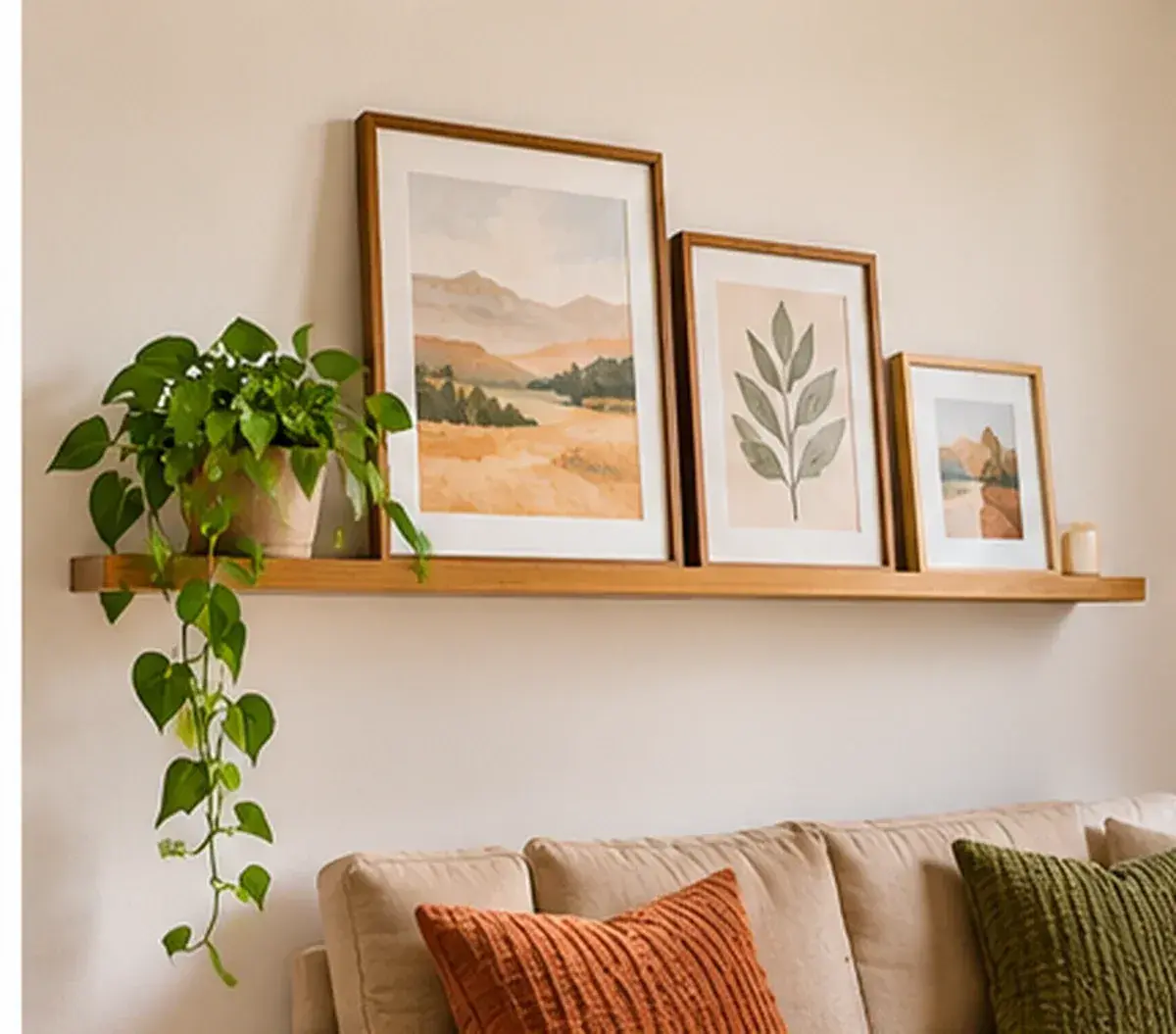
Add a ladder shelf for rotating prints and plants.
A narrow ladder shelf adds vertical display space without attaching shelves to the wall. It is useful for plants, framed prints, books, and small objects in an apartment with limited floor area.
Select a shelf with a stable footprint and a sensible height for the room. Put heavier items on the lowest shelves, use trays for plants, and keep the top shelf lightly styled.
Check before you do it: Follow the product’s assembly and anti-tip guidance. Keep water away from flooring and electrical items.
13. Display a textile banner from a freestanding garment rail
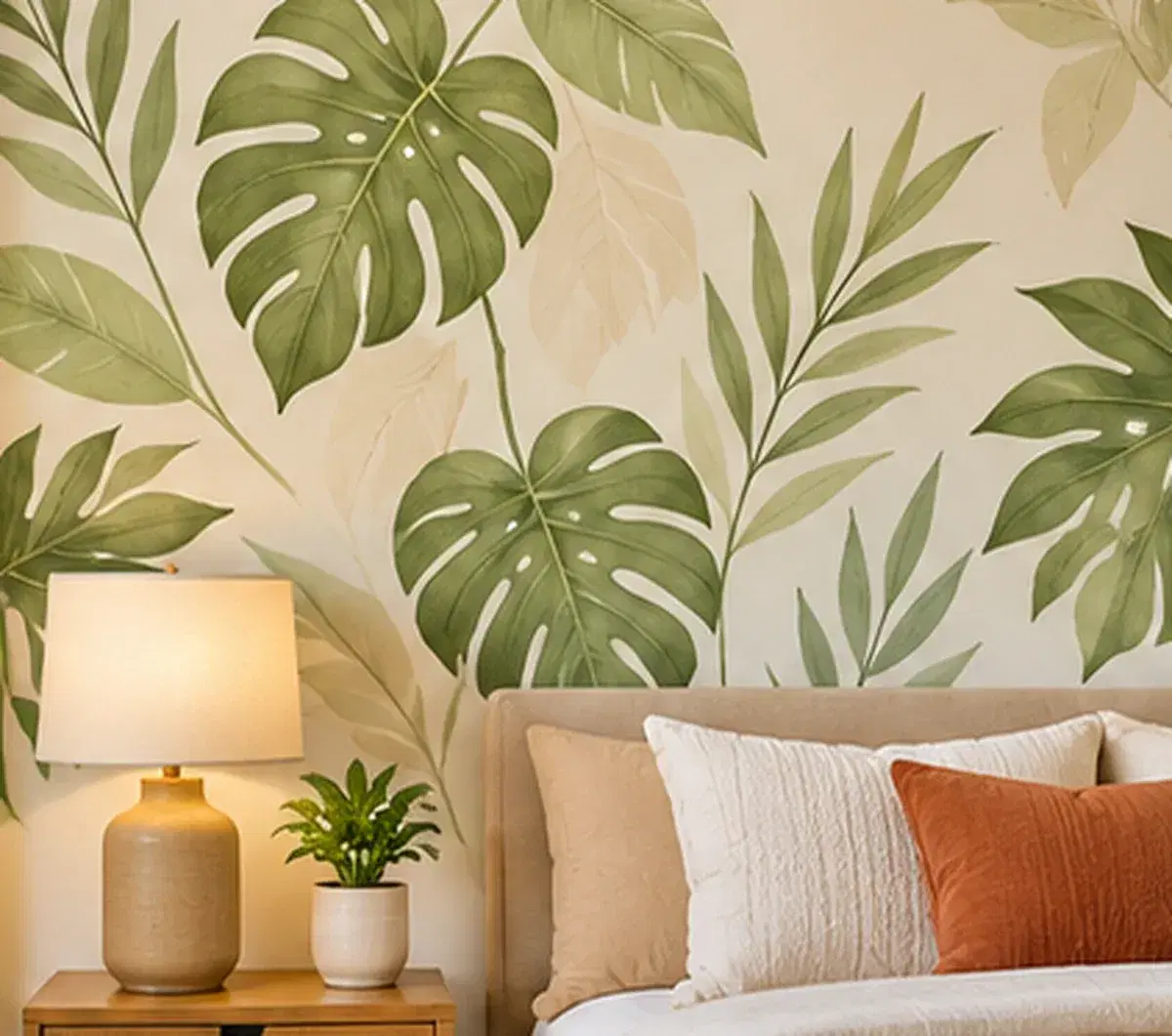
Display a textile banner from a freestanding garment rail.
A simple textile banner, quilt panel, or fabric flag can add color and soften an empty wall when displayed on a rack rather than attached to the surface. It is easy to remove and fold.
Choose a fabric that hangs evenly and a rail that fits the width. Add a weighted lower hem if the textile is designed for it, and keep the piece away from cooking or heating equipment.
Check before you do it: Avoid loose fabric near open flames, hot surfaces, heaters, and sprinklers.
14. Use a freestanding pegboard easel for small objects
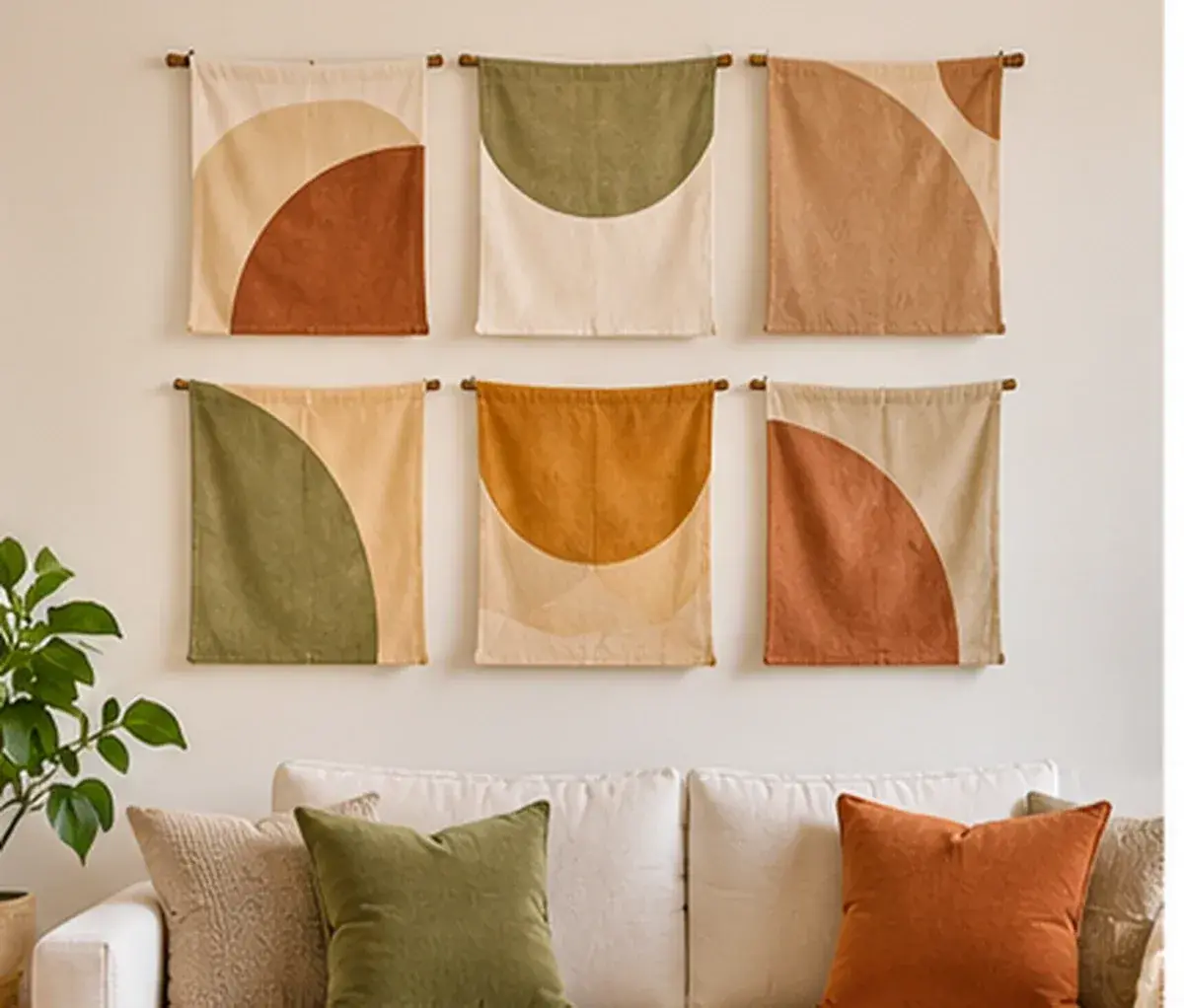
Use a freestanding pegboard easel for small objects.
A pegboard panel on a stable easel can organize postcards, small baskets, and lightweight accessories. It provides the visual rhythm of a display wall while remaining movable.
Keep the panel compact, use only compatible hooks, and distribute weight evenly. It can work beside a desk or craft table, but should not become a heavy storage wall.
Check before you do it: Do not overload the easel or use it to support heavy tools, mirrors, or objects above a seating area.
15. Make a photo line with a freestanding rail
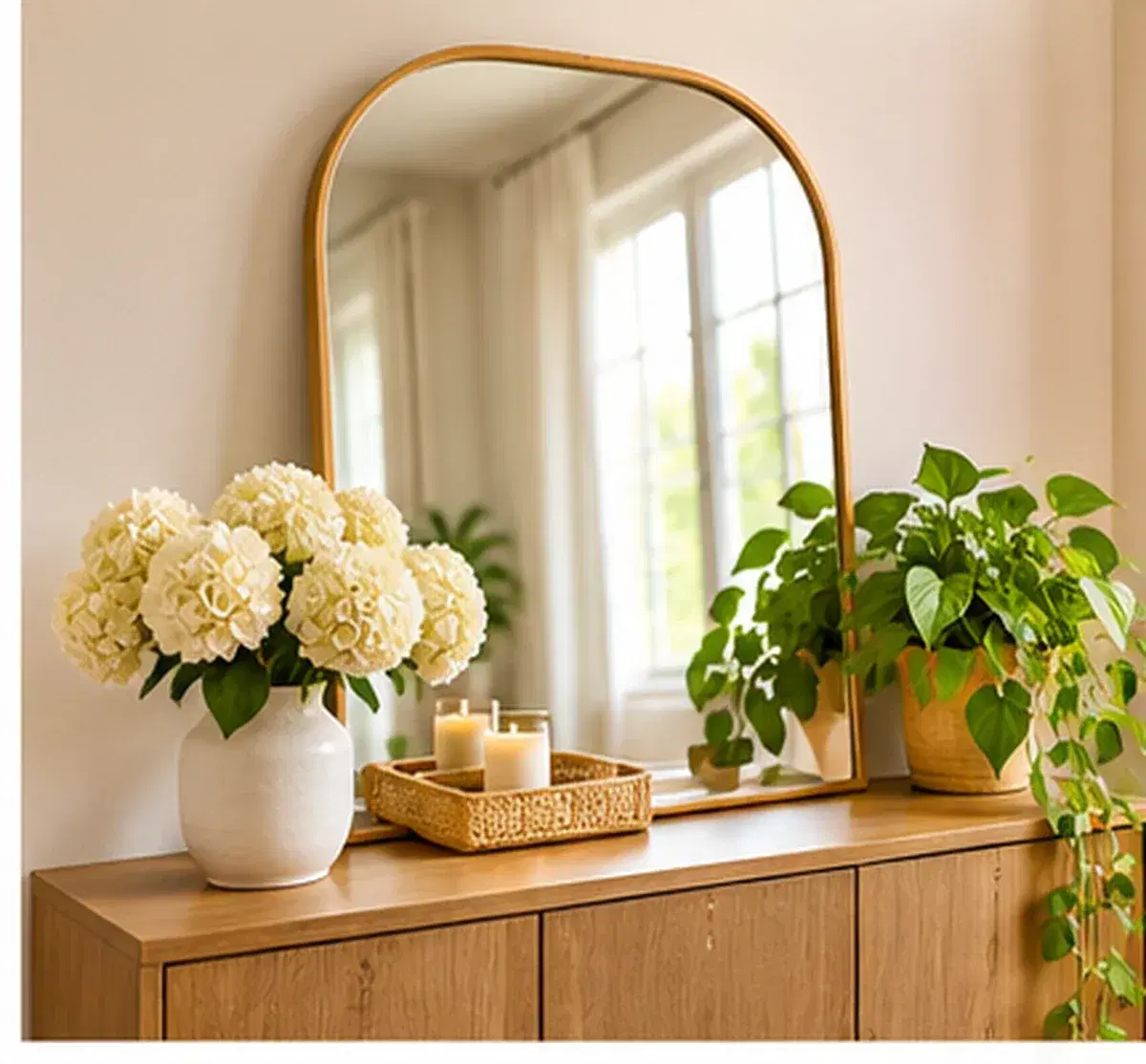
Make a photo line with a freestanding rail.
A simple photo line can display postcards, snapshots, or lightweight prints using clips on a freestanding rail or shelf. It adds a personal touch and can be updated without making new wall holes.
Use lightweight paper and small clips, keep the line taut, and place the rail on a stable console or bookcase. Mix a few photos with a small amount of negative space so the display does not look crowded.
Check before you do it: Do not string a line across a doorway or walkway, and do not use adhesive hooks beyond their rating.
How to build a balanced renter-friendly gallery
Lay the frames on the floor before moving anything to the wall. Start with the largest piece, then place smaller frames around it while keeping a consistent gap. Align the overall group with the furniture below rather than the center of the wall. A compact rectangle or gentle asymmetrical arrangement usually feels calmer than scattering pieces across the entire wall. Take a photograph of the layout so you can reproduce it later.
Why surface testing matters more than the product label
A package may describe a product as removable, but the result depends on wall paint, age, texture, humidity, installation pressure, and how long the product stays in place. A test patch is not a guarantee, but it can reveal obvious incompatibility before a large section is covered. If the sample changes the sheen, pulls paint, or leaves sticky residue, stop and choose a freestanding option instead.
Move-out routine for wall decor
Remove display pieces in a planned order. Take down fragile items first, then work through removable adhesives using the exact tab direction and method supplied by the manufacturer. Do not pry against painted drywall or substitute heat and solvents unless specifically instructed. Photograph the cleared wall and note any existing imperfections that were documented at move-in. Return removable fixtures and saved hardware according to the lease.
Frequently asked questions
Can any adhesive strip be called damage-free?
No. Results depend on the surface, paint condition, weight, installation method, humidity, and removal technique. Follow the exact product guidance and test an inconspicuous area.
What is a good no-drill alternative to wall art?
Use a picture ledge on furniture, a large canvas on a stable console, a ladder shelf, a freestanding screen, or a garment rail for textiles.
Can renters use removable wallpaper?
Sometimes, but not on every wall or under every lease. Check the wall finish, product instructions, test a sample, and seek written approval when required.
How can I hang a heavy mirror without drilling?
A heavy mirror is better supported by a stable freestanding floor mirror designed to lean securely. Do not improvise with adhesive strips.
Sources and further reading
[1] HGTV: Renter-Friendly Decorating Ideas. https://www.hgtv.com/decorating/design-ideas/totally-removable-diys-for-your-rental-pictures
[2] Command: How to Use Picture Hanging Strips. https://www.command.com/3M/en_US/command/how-to-use/picture-hanging-strips/
[3] Command: Product FAQs, Surface Compatibility, and Weight Limits. https://www.command.com/3M/en_US/command/contact-us/faqs/
[4] WallPops: How to Install Peel-and-Stick Backsplash. https://www.wallpops.com/pages/how-to-install-peel-stick-backsplash
Sources
- HGTV: Renter-Friendly Decorating Ideas. Checked November 5, 2026
- Command: How to Use Picture Hanging Strips. Checked November 5, 2026
- Command: Product FAQs, Surface Compatibility, and Weight Limits. Checked November 5, 2026
- WallPops: How to Install Peel-and-Stick Backsplash. Checked November 5, 2026
Share this article
Get new guides by email
Practical home articles and free resources. No spam, and you can unsubscribe at any time.
Keep reading
11 Ways How To Decorate An Airbnb Bedroom for Cheap
Explore decorate an Airbnb bedroom for cheap with practical US-focused advice, planning checks, and clear steps for a more comfortable, well-maintained home.
November 2026, 8 min read
13 Clever Rental Friendly Decor Hacks for Apartments
Explore rental friendly decor hacks for apartments with practical US-focused advice, planning checks, and clear steps for a more comfortable, well-maintained home.
November 2026, 13 min read
Repairs vs. Improvements on a Rental Property: Why the Distinction Matters
The IRS treats a repair and an improvement very differently, and the distinction affects your recordkeeping regardless of how you file. Here is how the two are commonly defined, for informational purposes only.
September 2026, 3 min read