20 Low-Maintenance Desert Landscaping Ideas for Las Vegas
Explore 20 illustrated low-maintenance Las Vegas landscaping ideas, including desert planting, gravel, paths, shade, containers, and manageable garden zones.
By Home Crane Editors. . 6 min read.
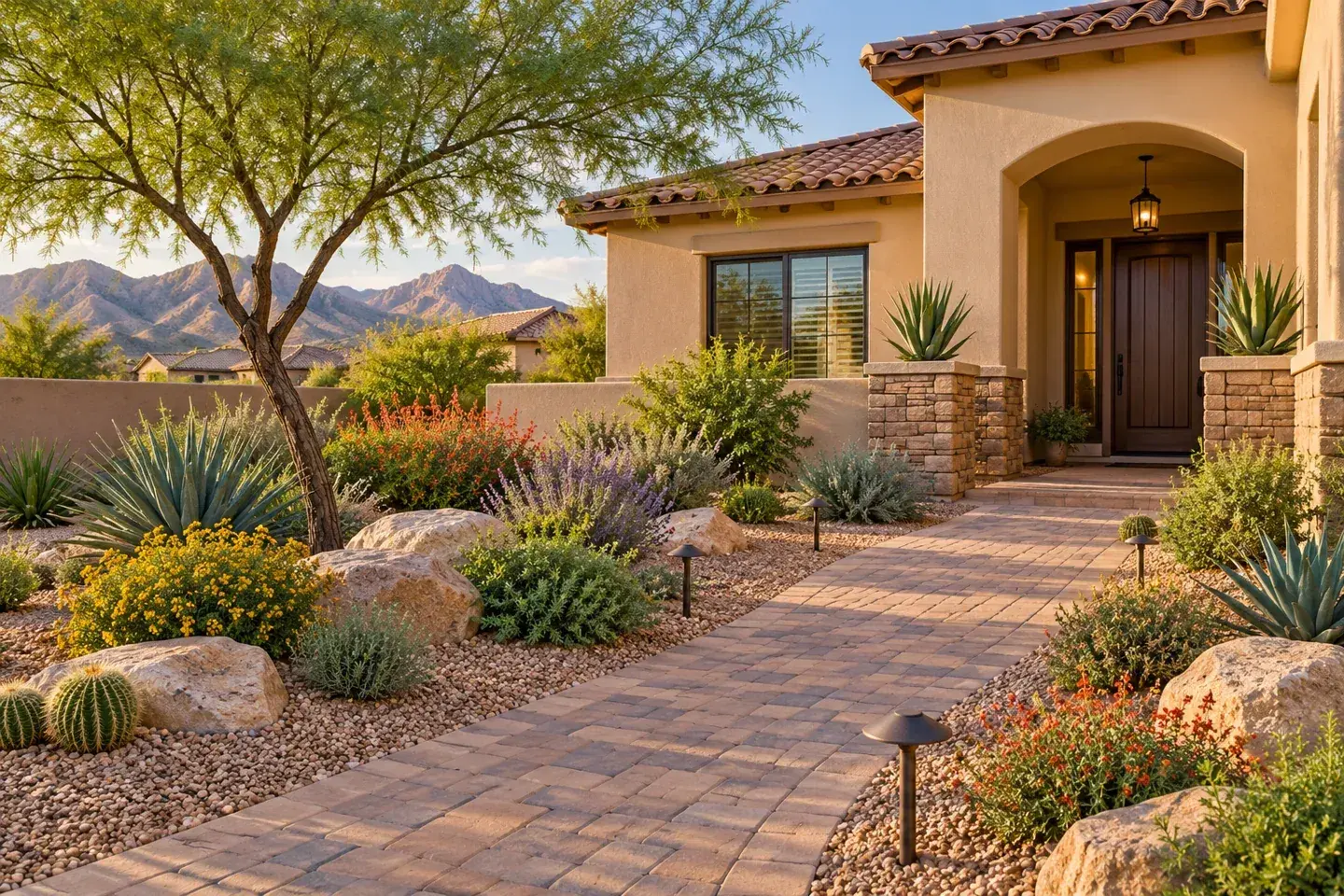
A low-maintenance Las Vegas yard needs more than gravel and a few tough plants. The most useful designs leave plants room to mature, keep walking routes clear, and match watering to the actual planting. “Low maintenance” still includes establishment care, irrigation checks, selective pruning, and occasional cleanup.
Use the Southern Nevada Water Authority's landscape planning resources as a local starting point. The ideas below are design choices, not a species prescription for every site. Check sun, soil, mature size, and current local requirements before buying plants or changing irrigation.
1. Repeat a small group of climate-matched shrubs
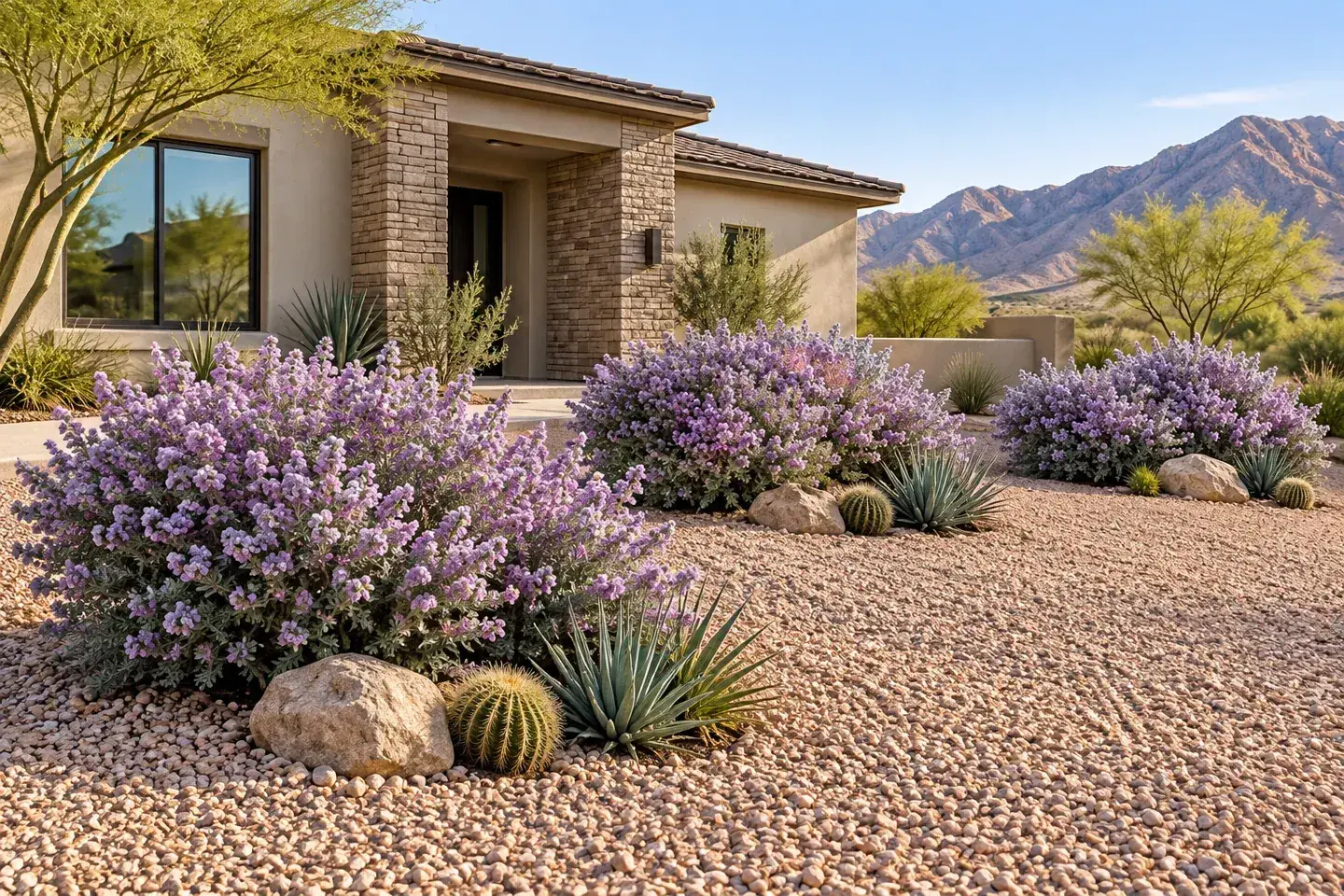
Choose a limited selection of suitable shrubs and repeat them in visible groups. Repetition makes a small yard feel organized without requiring many different care routines. Confirm mature dimensions through a local plant resource, then leave the space those plants will need. Avoid filling every temporary gap with another shrub.
2. Choose one well-placed shade tree
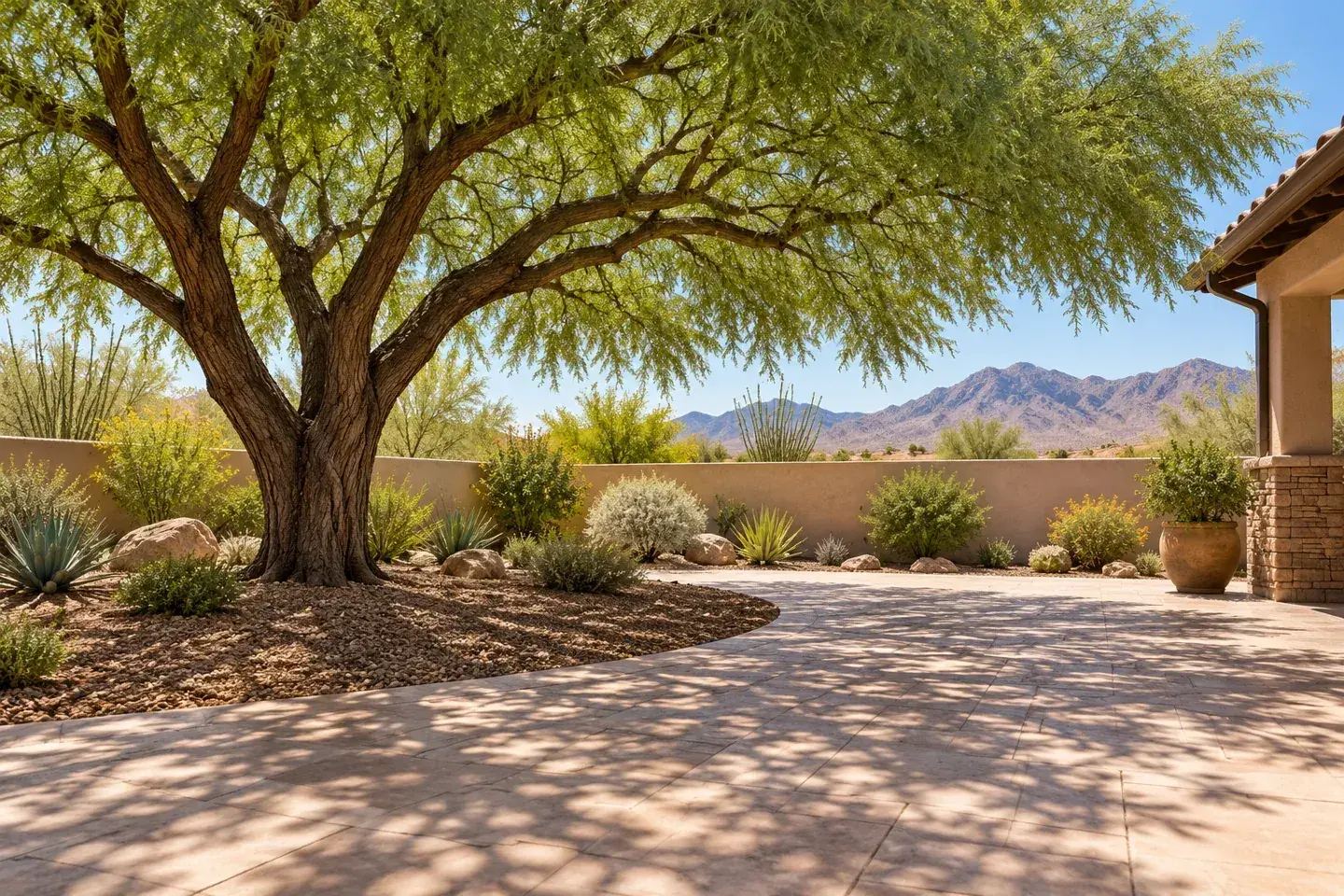
A carefully located tree can give the garden structure and shade a useful sitting area. Select for the available root and canopy space, not just nursery size. Use SNWA's plant-selection resources to investigate suitable options. Allow for establishment watering, future inspection, and responsible pruning.
3. Use gravel as a quiet background
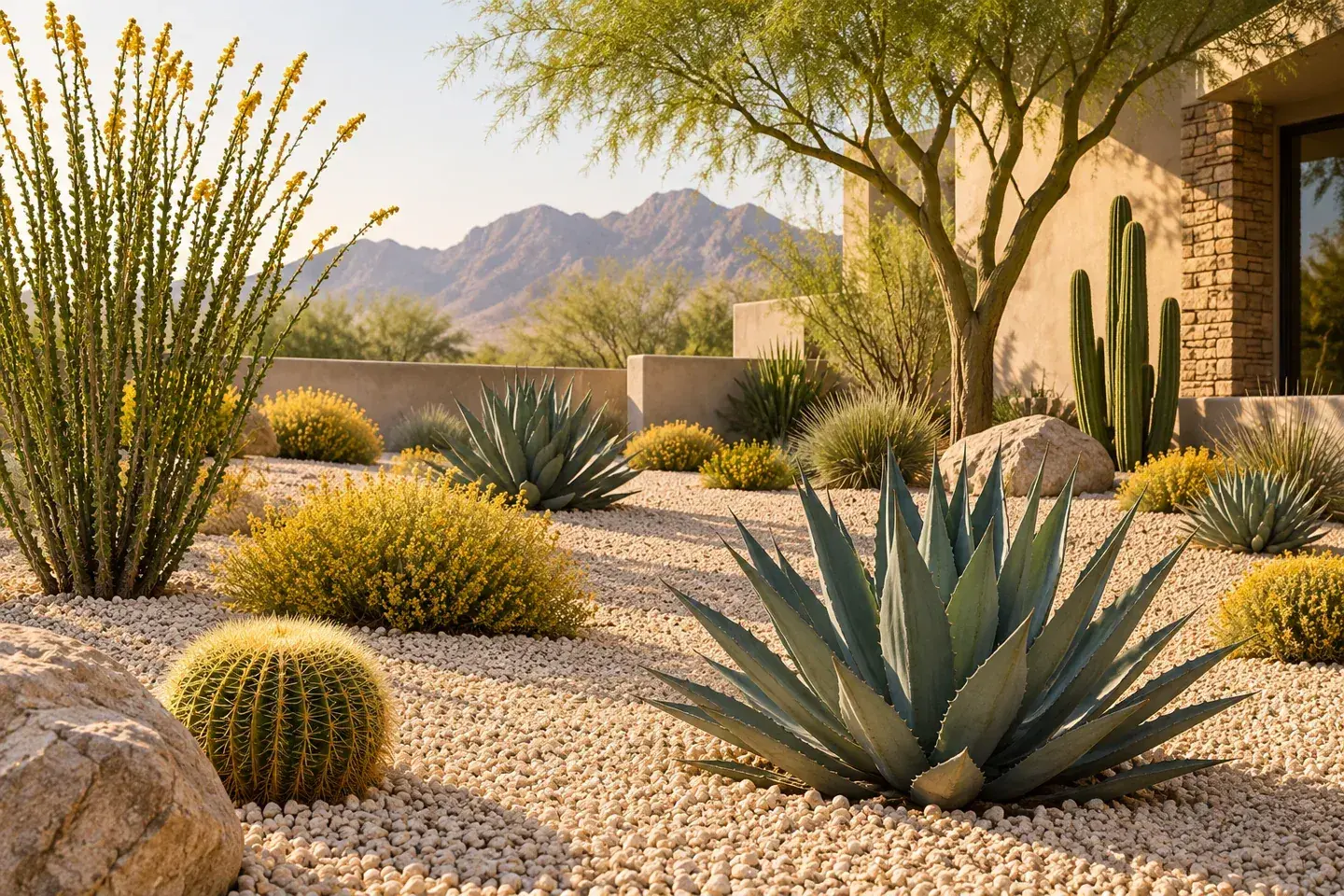
Choose a restrained gravel color that works with the house and paving. Let it support the planting rather than compete through elaborate stripes and patterns. Keep the surface separate from the main walking route, and plan access for leaf removal. Gravel does not eliminate weeds or make every planting condition suitable.
4. Keep sculptural plants away from walking routes
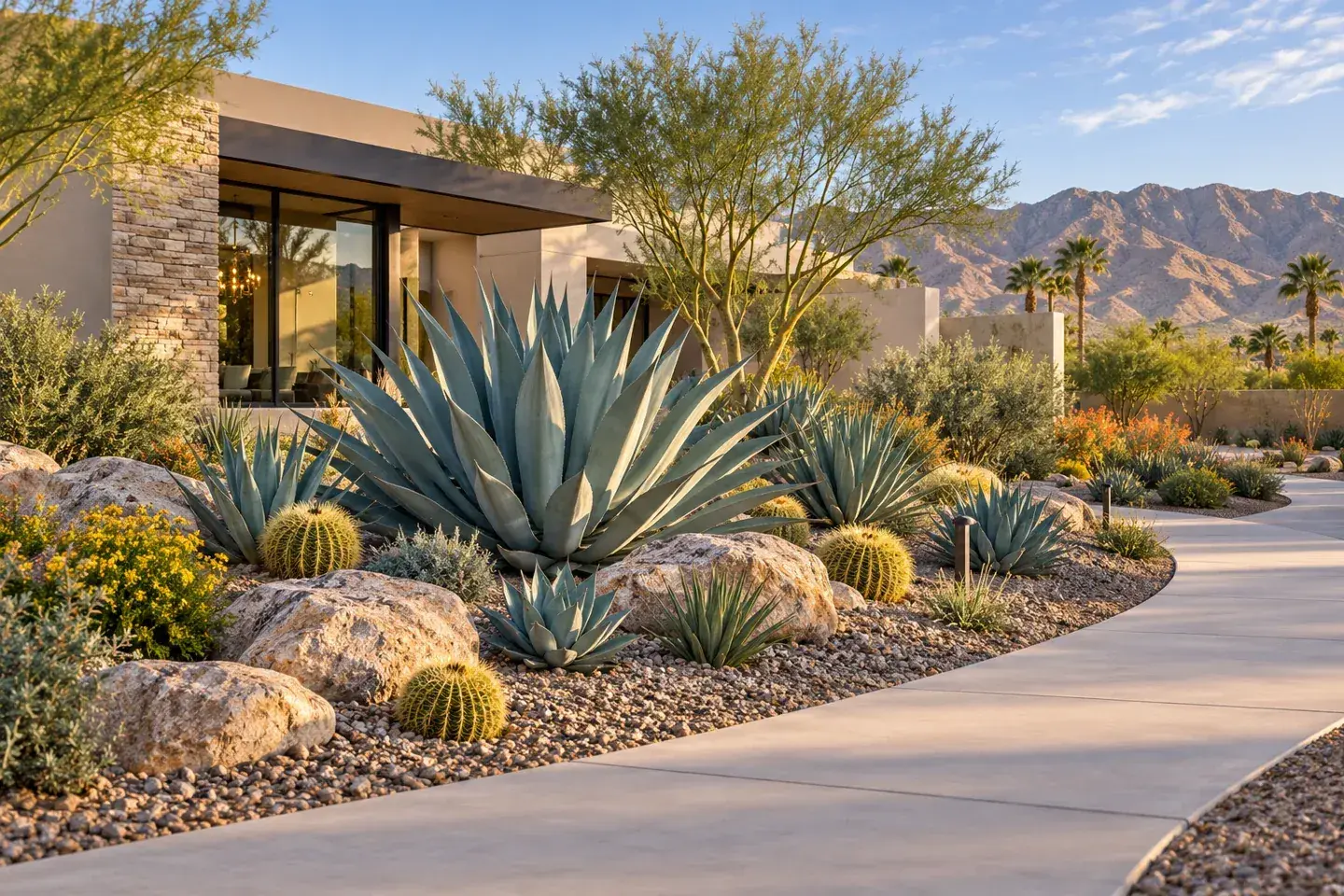
An agave-like form can make a strong focal point with very little visual clutter. Place spiny or sharp-leaved plants well away from doors, seating, and circulation. Check the actual species' mature size and maintenance needs. A dramatic nursery specimen should not become an obstacle as it grows wider.
5. Replace an awkward lawn strip
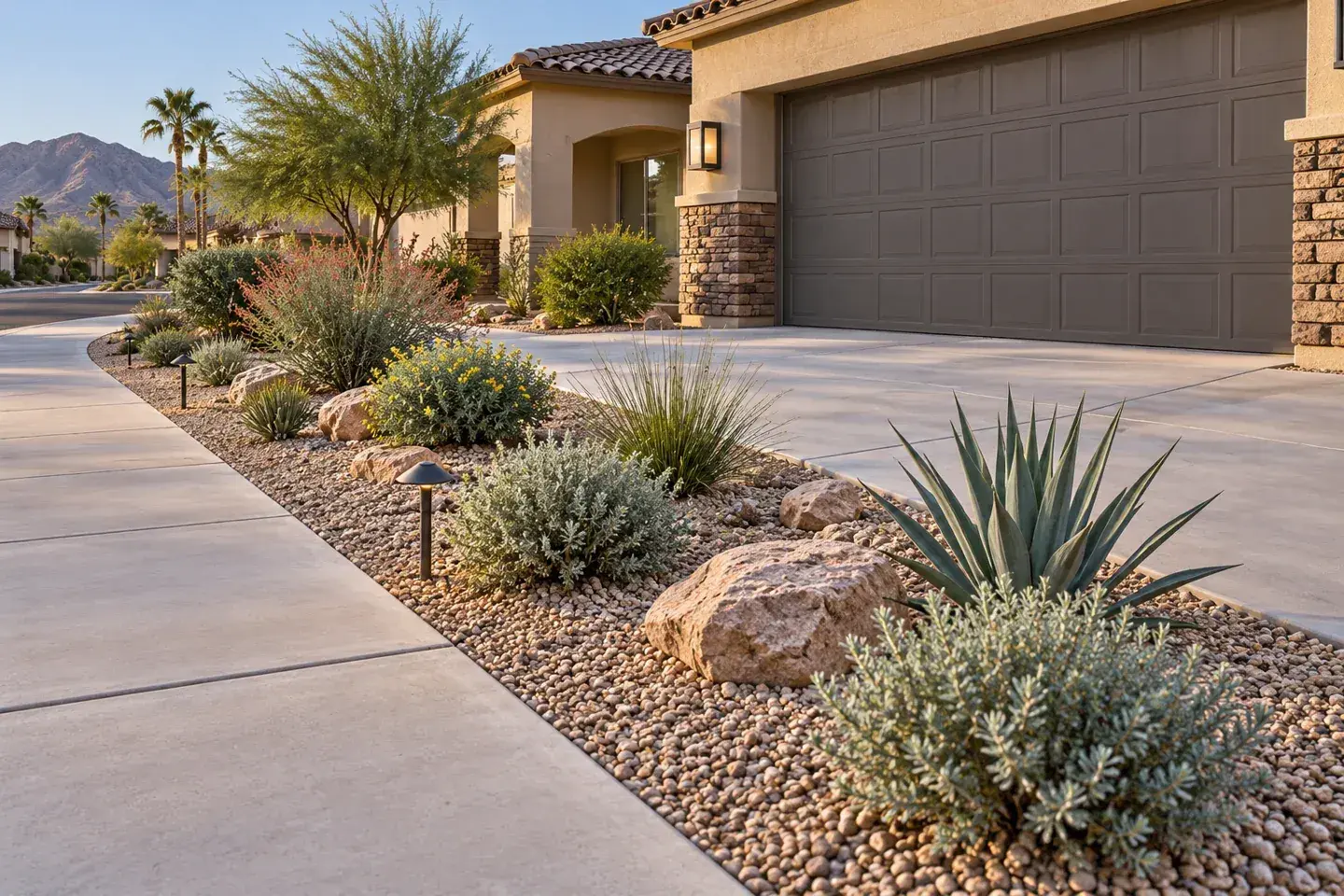
A narrow strip beside a driveway can be difficult to mow and irrigate efficiently. Consider a simple planted border that stays clear of the vehicle route. Before removing turf, check utility guidance and any applicable conversion requirements. Redesign the irrigation deliberately instead of leaving the old spray arrangement running over gravel.
6. Group plants by watering needs
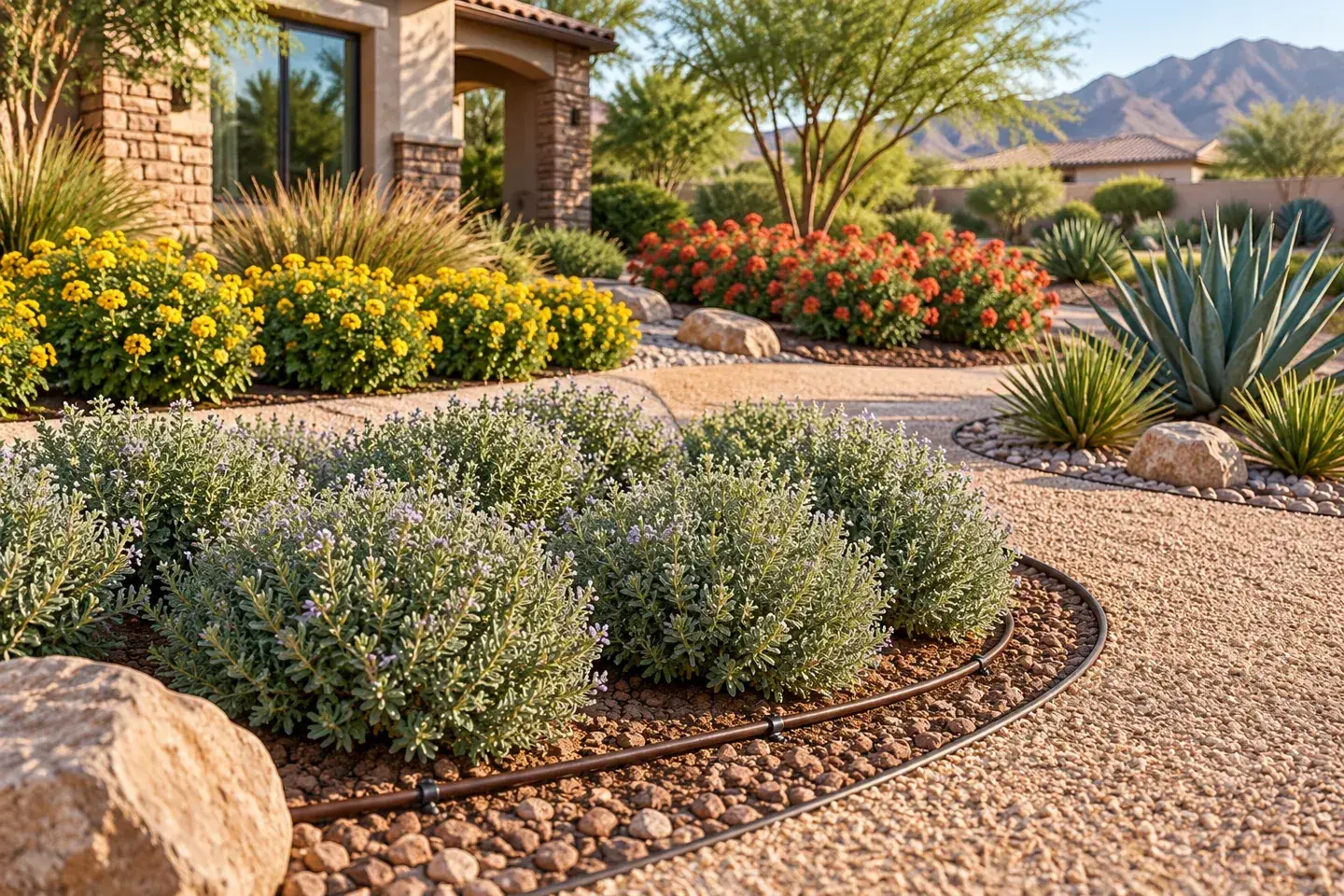
Keep plants with compatible water needs together in contiguous beds. This makes the irrigation layout easier to understand and adjust. SNWA's watering guidance stresses the importance of appropriate schedules and system operation. There is no single drip runtime that suits every emitter, soil, season, and plant.
7. Make a compact paver sitting area
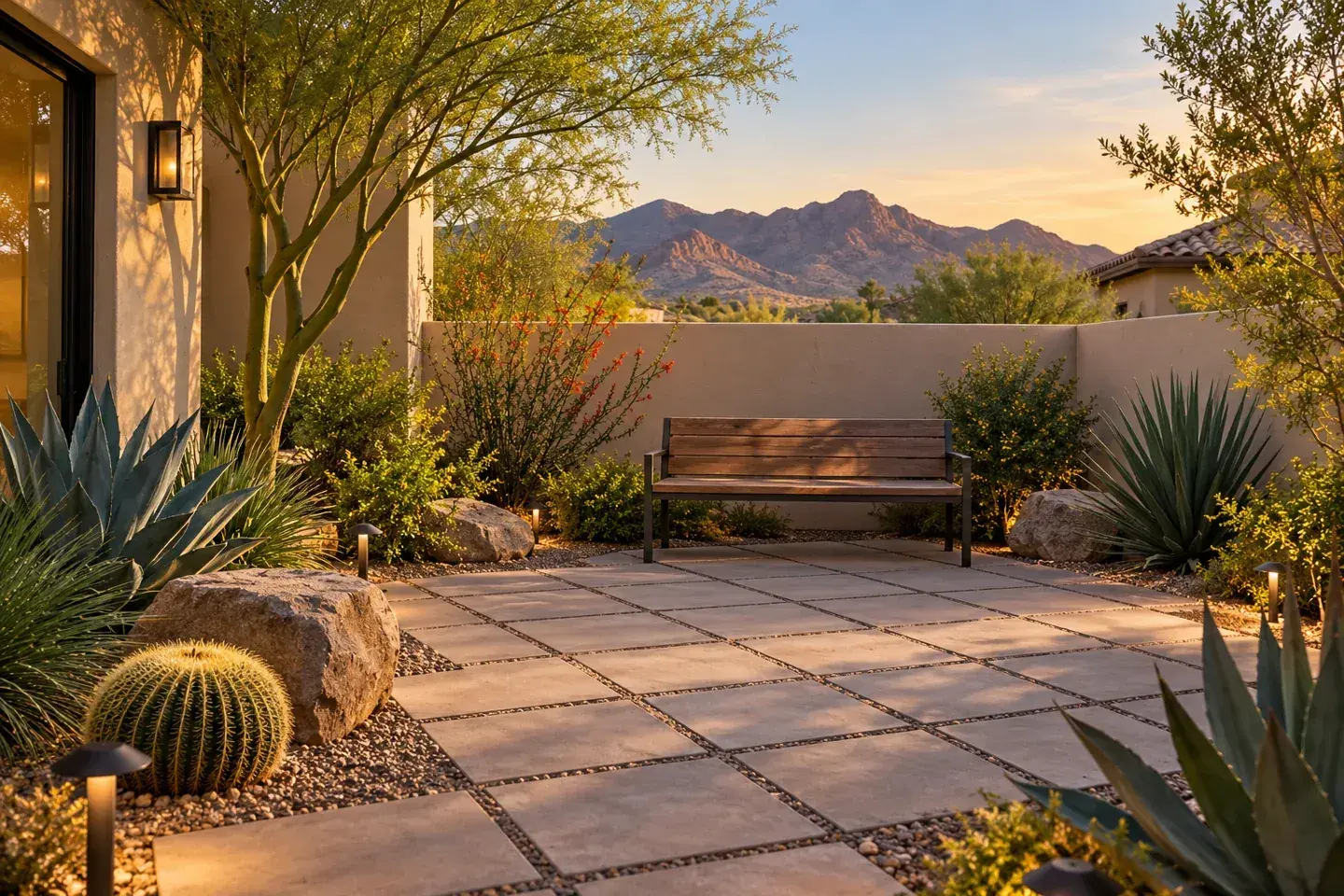
Use enough paving for the furniture you will actually use, with room to move around it. A small, well-positioned terrace can be more practical than a large empty paved expanse. Test the afternoon shade and exposure before choosing the location. Keep planting far enough back to avoid constant trimming around chairs.
8. Use a durable and direct entry path
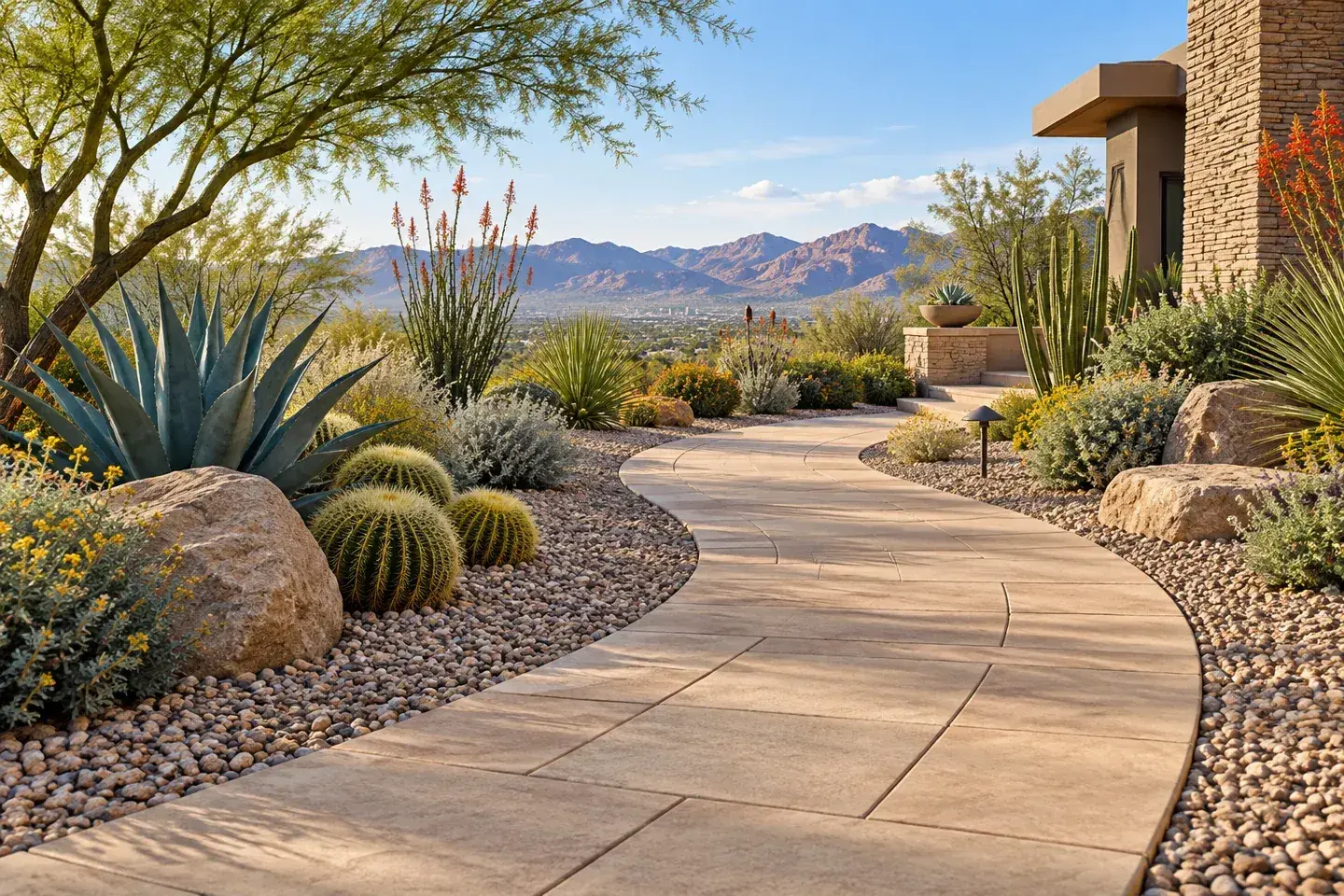
A clear route from the sidewalk or driveway to the door helps the garden feel welcoming. Choose a suitable walking surface and have its base, transitions, and drainage planned properly. Avoid making visitors step through loose decorative stone when a straightforward paved route would serve the entrance better every day.
9. Concentrate seasonal color near the entrance
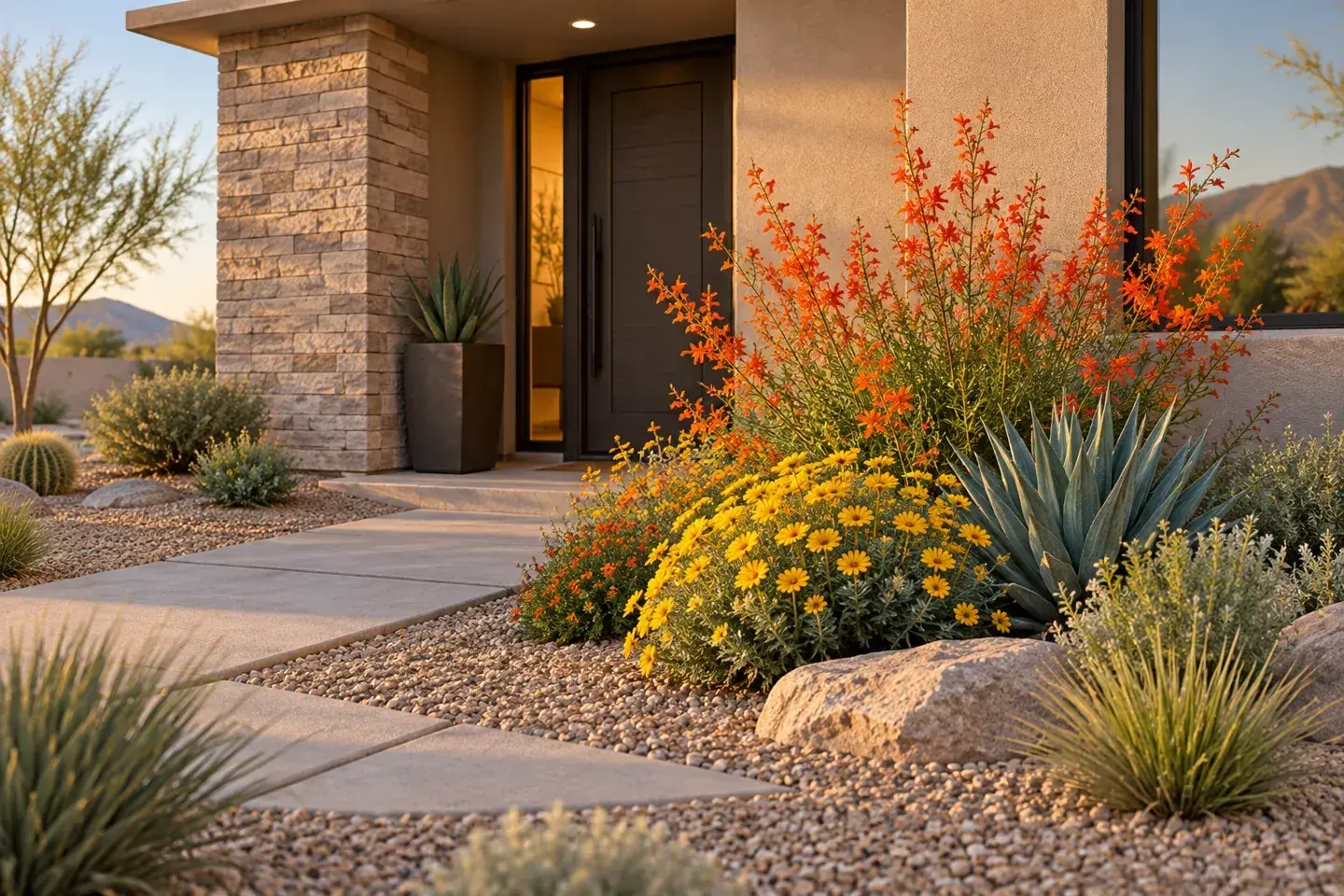
Put a manageable patch of flowering plants where you will notice it often. Let the rest of the yard use a quieter palette. This approach can simplify replacement and seasonal attention. Match the plants to the actual exposure beside the door, which may differ from the open front yard.
10. Let shrubs keep their natural shapes
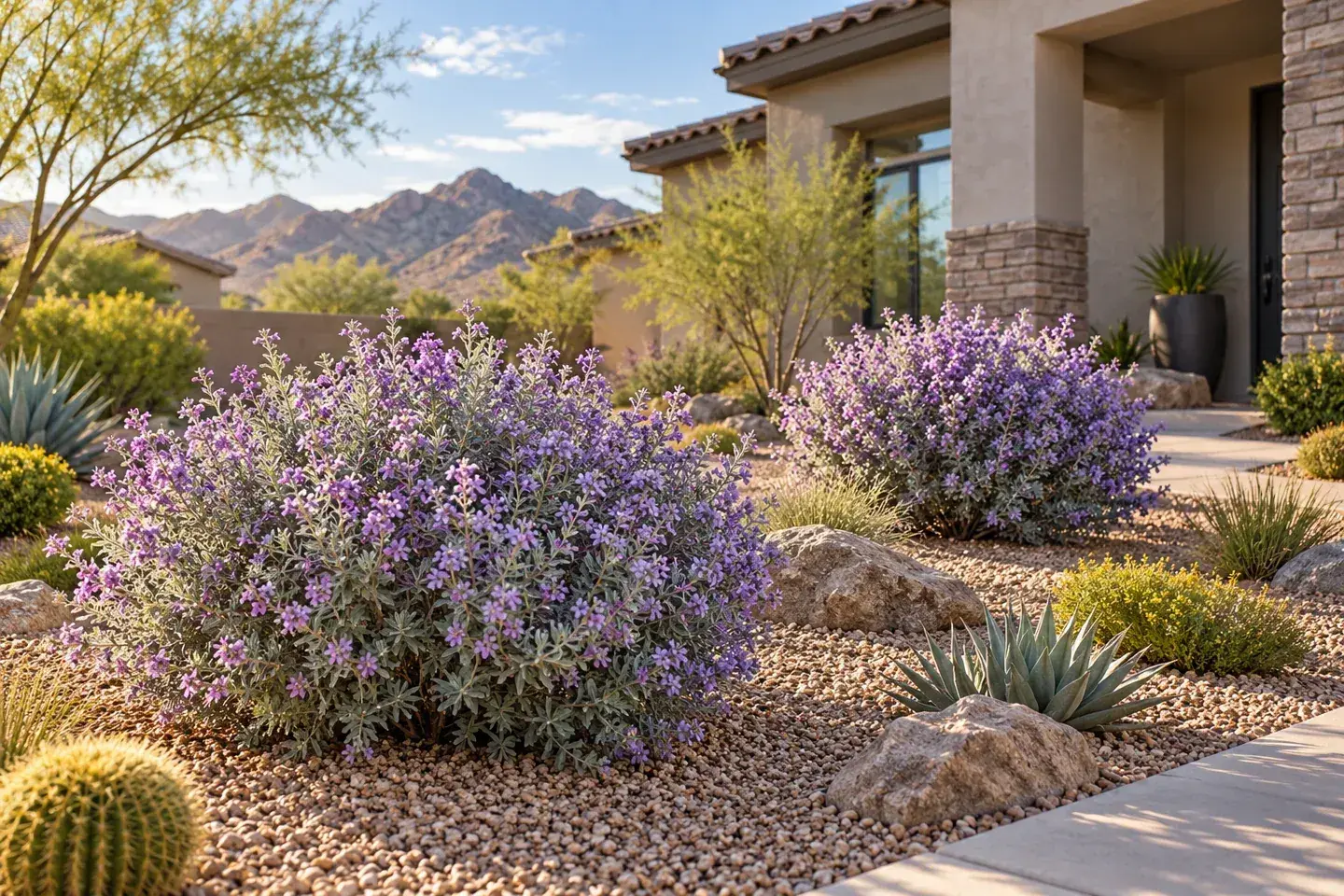
Select shrubs whose mature form fits the available space without repeated cutting into tight boxes. A loose, rounded habit can work well against simple architecture. Leave access between plants for maintenance. If a shrub requires constant reduction to avoid the path, reconsider its location or size rather than accepting endless trimming.
11. Choose two generous containers
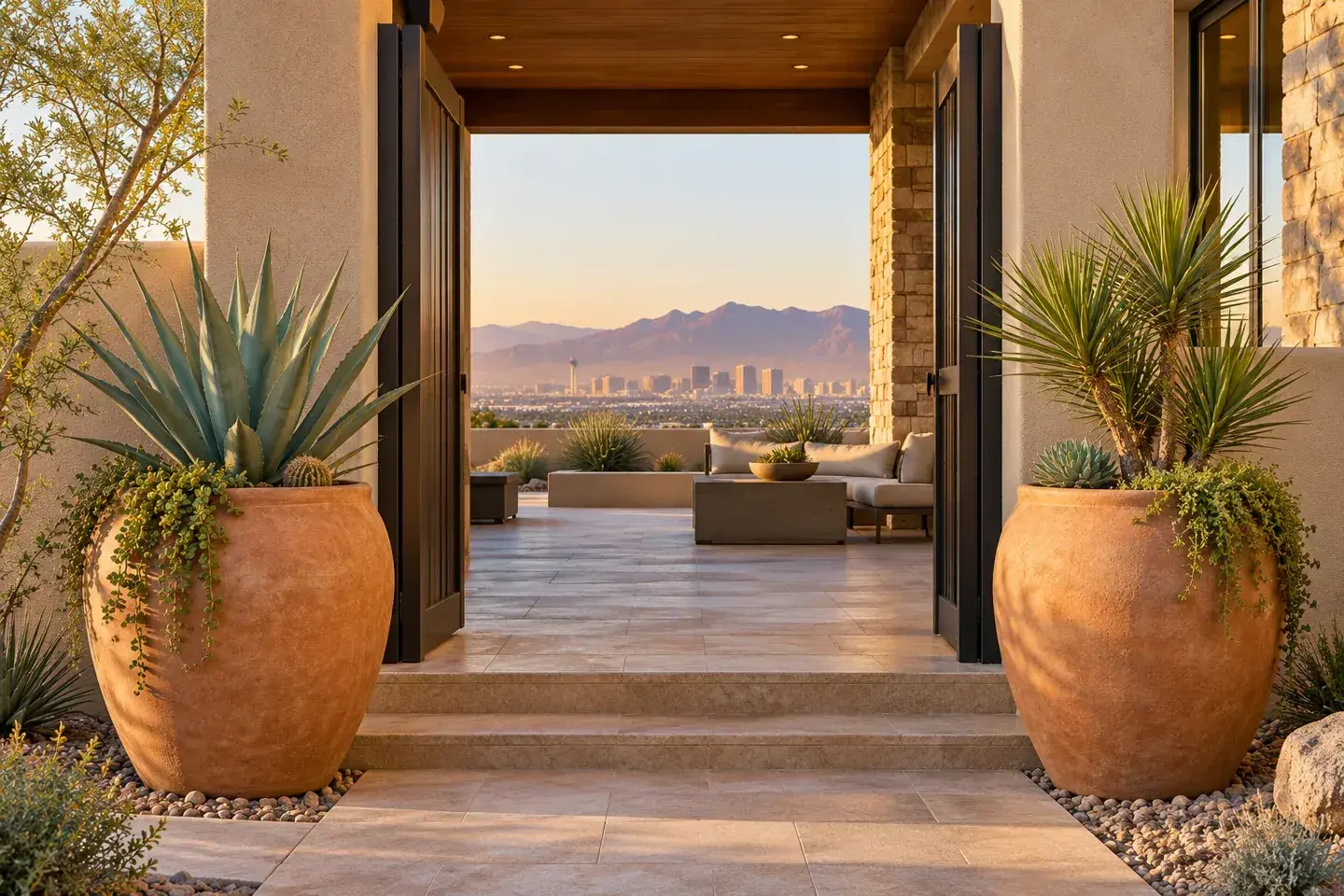
A pair of substantial containers can frame an entrance without filling the entire yard with small pots. Confirm drainage, stability, and the plant's suitability for container conditions. Give them a specific watering plan and an accessible location. Containers are useful accents, but they are not automatically lower maintenance than ground planting.
12. Preserve a clear service route
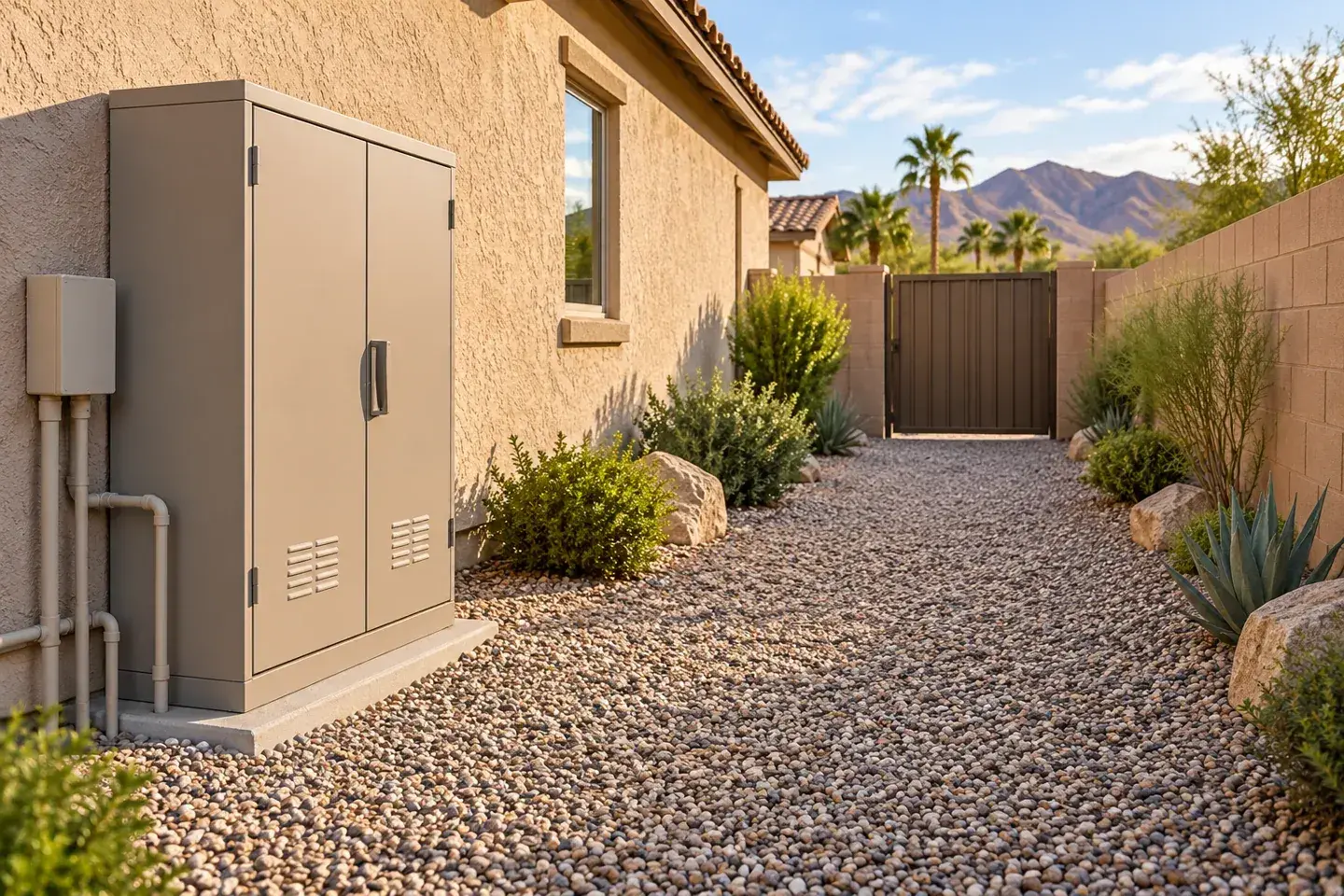
Keep a practical route to gates, irrigation controls, and utility equipment. Maintain required equipment clearances and avoid placing heavy containers where a technician may need access. A garden that looks good from the street should also let you carry tools, check irrigation, and reach the side yard without pushing through plants.
13. Light only the route you use
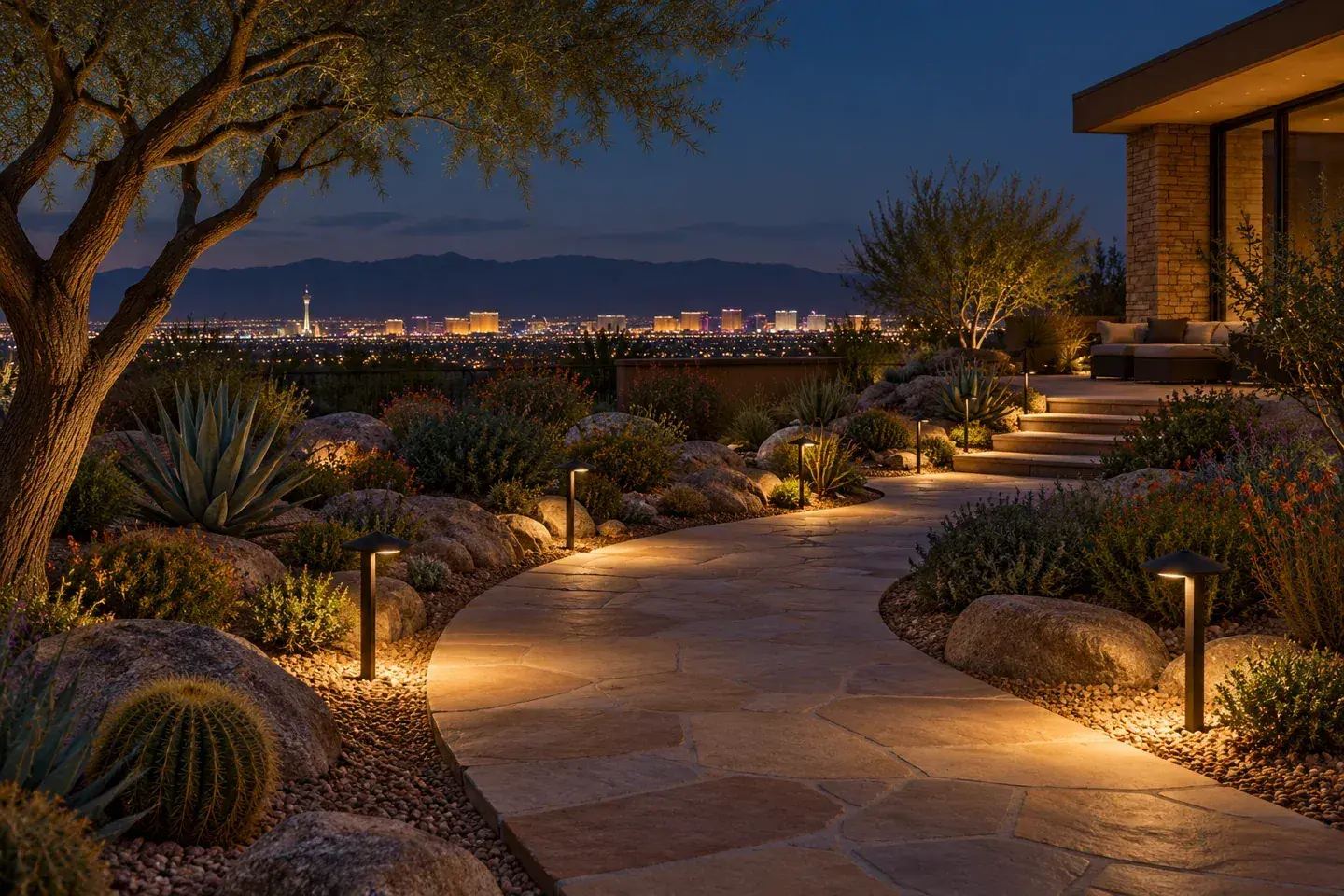
A few appropriately placed downward-facing lights can make the entry easier to navigate after dark. Focus on changes in direction and level instead of lighting every specimen. Have electrical work handled appropriately and consider glare from neighboring viewpoints. Keep fixtures reachable so cleaning and replacement do not become awkward jobs.
14. Renovate one manageable zone first
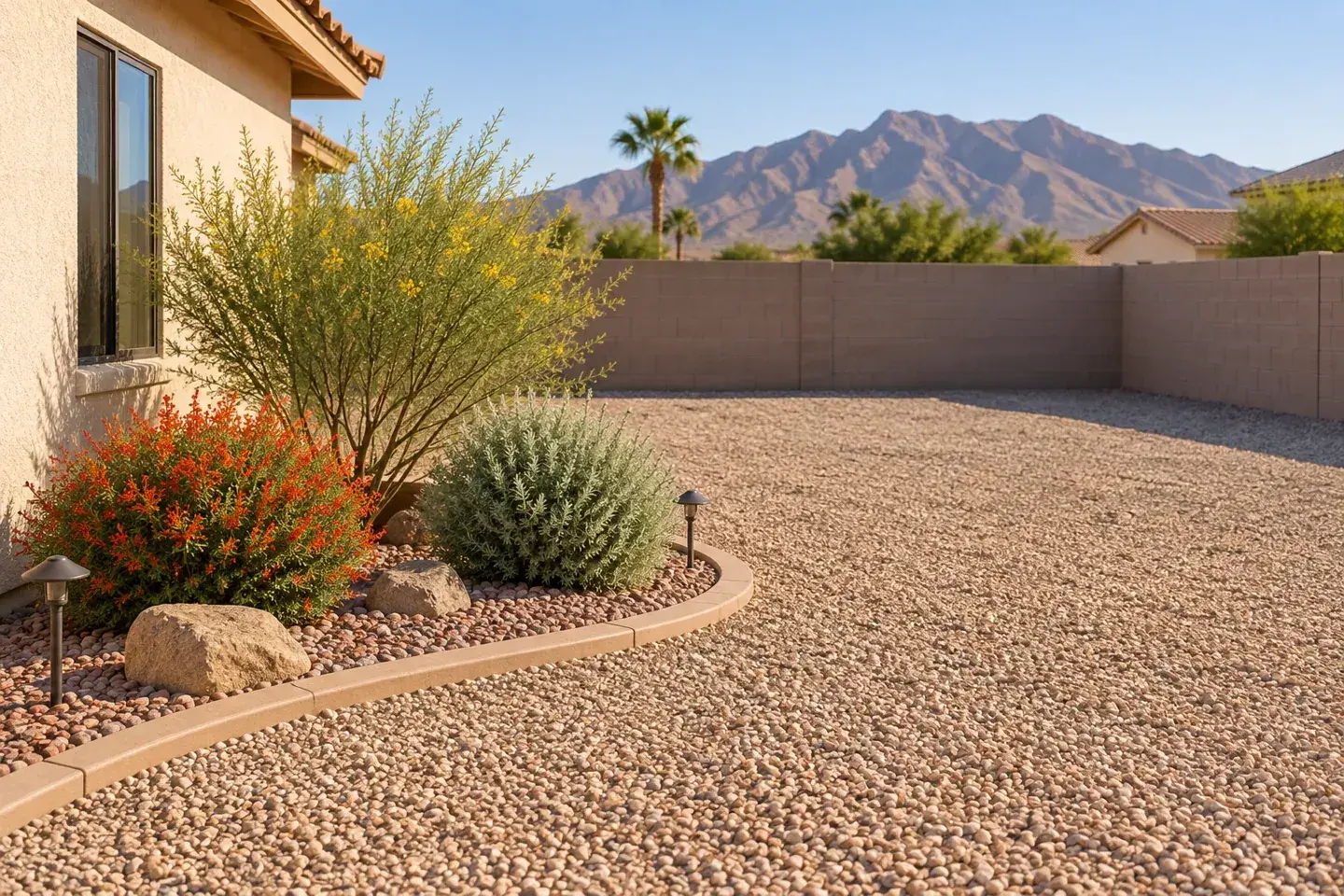
Complete a visible corner or border before taking on the entire property. Resolve the irrigation and maintenance plan for that zone, then observe it through changing conditions. This makes adjustments easier and spreads purchasing decisions over time. A small finished area can teach you more than a large unfinished layout.
15. Frame a view with a few boulders
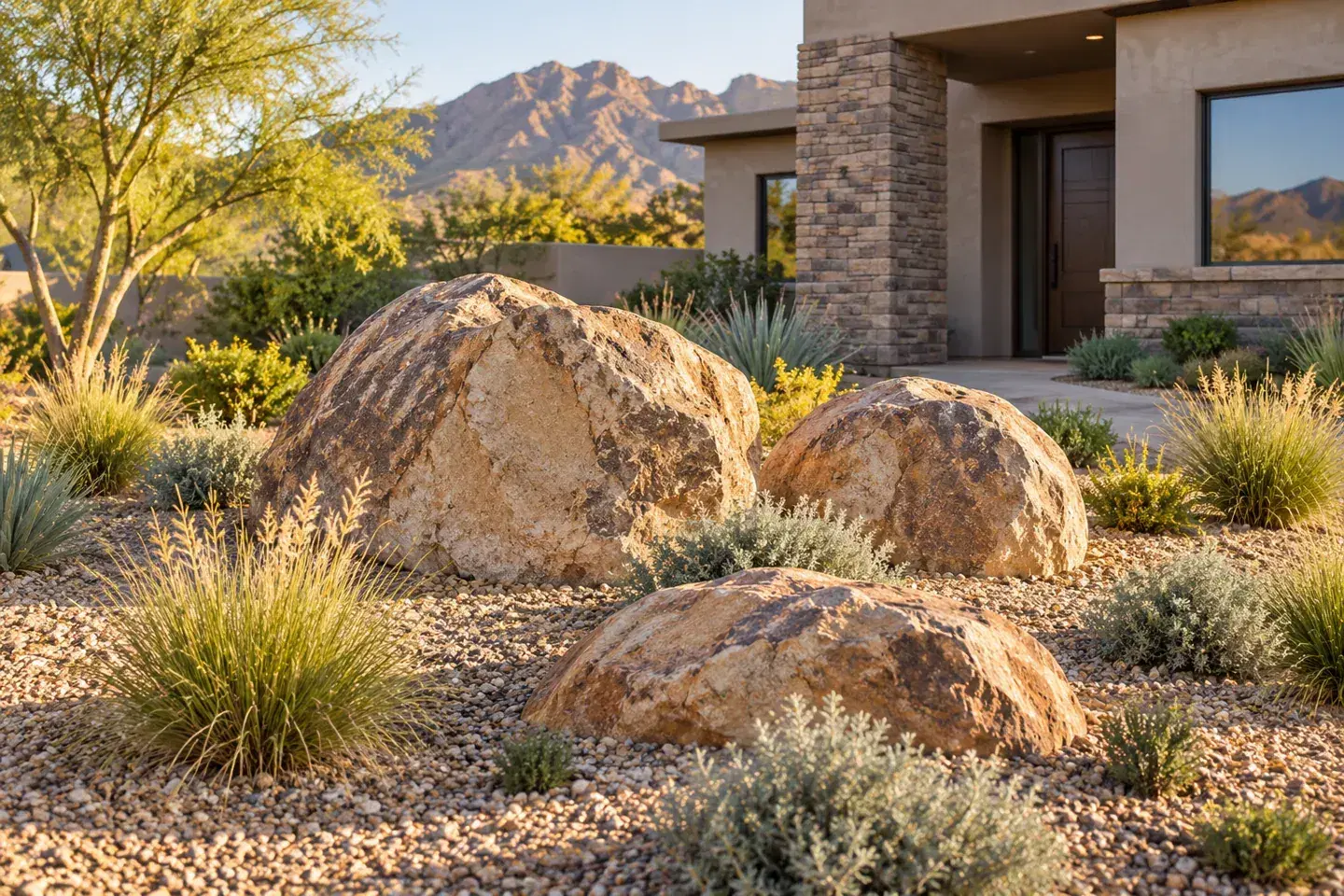
Use a small group of substantial stones as an accent rather than scattering many unrelated rocks. Plan their placement before surrounding plants mature, and arrange suitable delivery and handling. Keep access, drainage, and underground services in mind. Boulders are visual elements, not substitutes for engineered retaining structures or drainage solutions.
16. Use a restrained mineral color palette
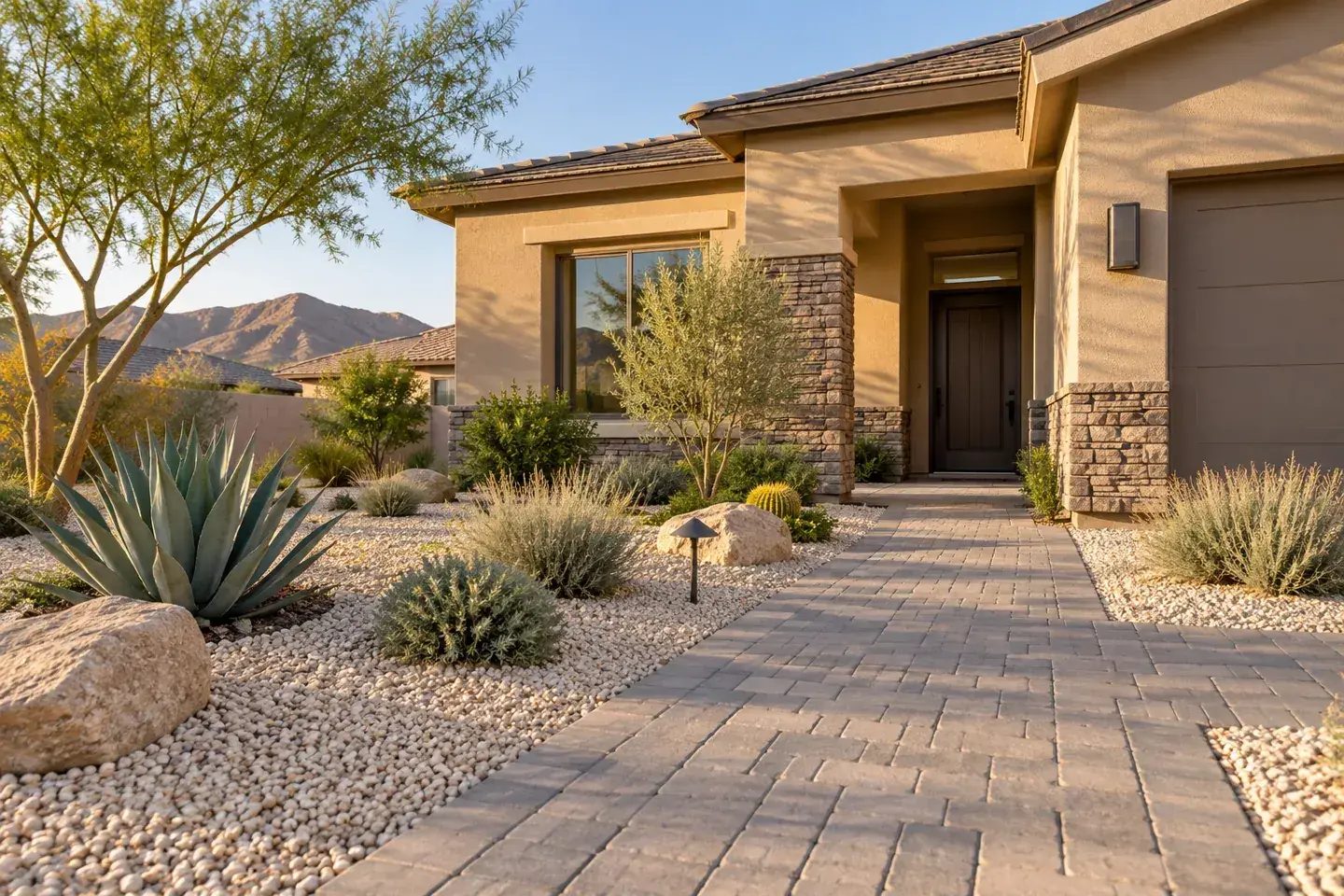
Coordinate paving, gravel, and stone around two or three compatible tones. A calm background lets plants provide texture and seasonal change. View samples outside against the house before ordering a large quantity. Avoid choosing only from a catalog image, where light and photography can make the color look quite different.
17. Layer planting by mature height
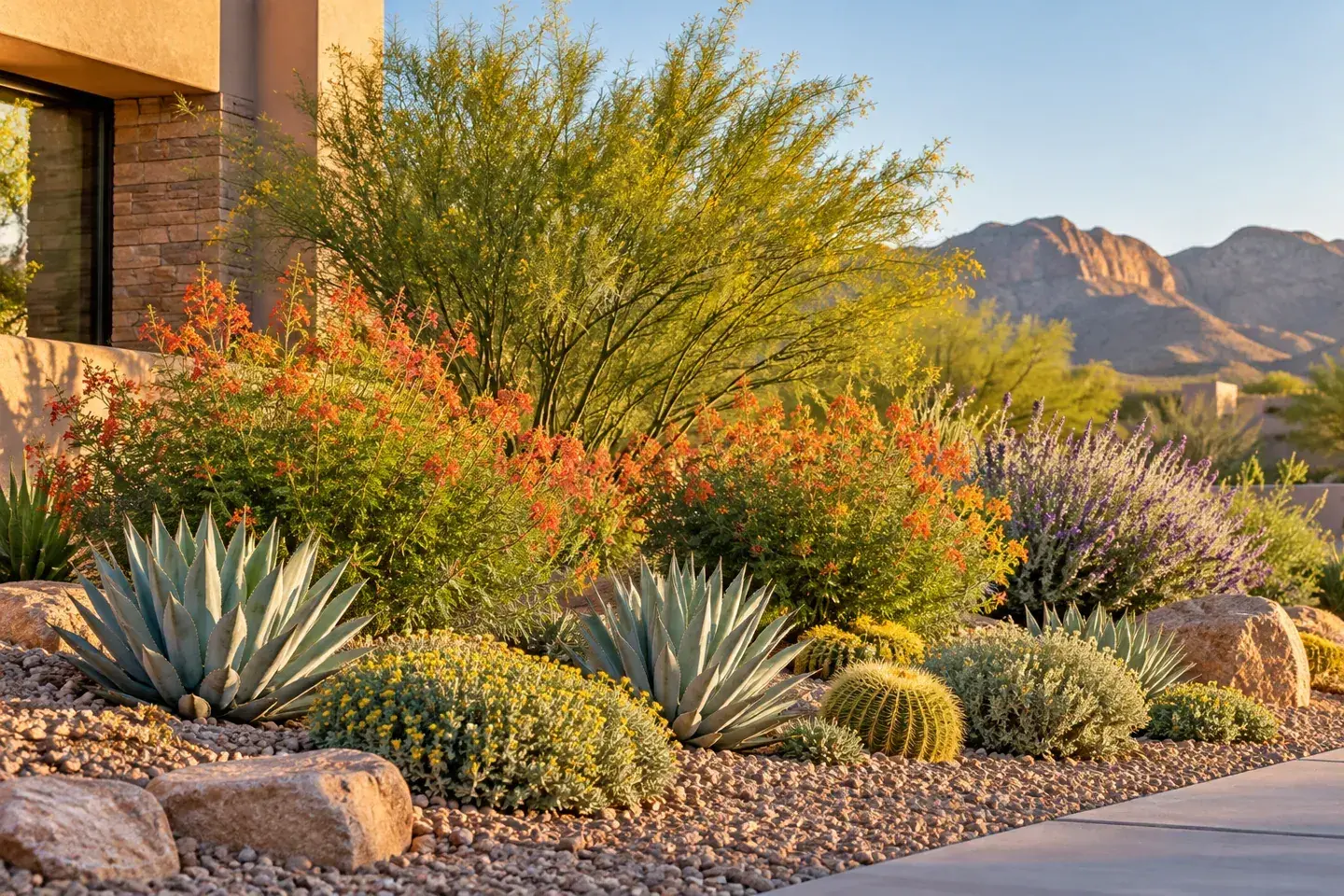
Place lower plants where they preserve views and circulation, then use taller forms farther back where space allows. Think about the eventual silhouette instead of creating instant density. A few clear layers are easier to read and maintain than a crowded mixture whose plants continually need cutting back from one another.
18. Make the front door a simple focal point
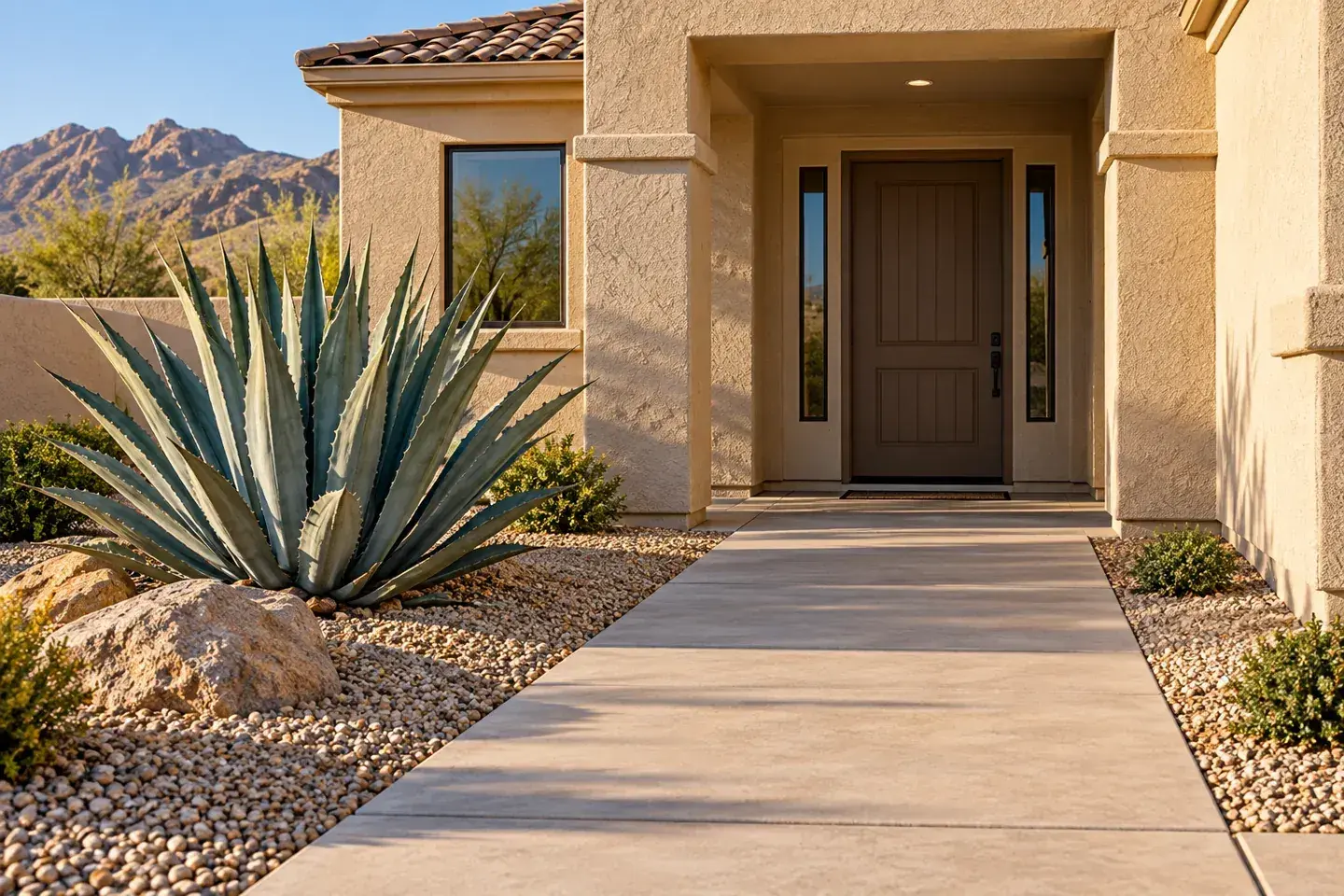
Give the entrance a clear visual route and one or two strong accents. Leave enough open space around the doorway for daily use, deliveries, and maintenance. Keep sharp foliage out of reach of the path. A simple composition often stays attractive with less rearranging than many small decorative objects and pots.
19. Soften a boundary with spaced planting
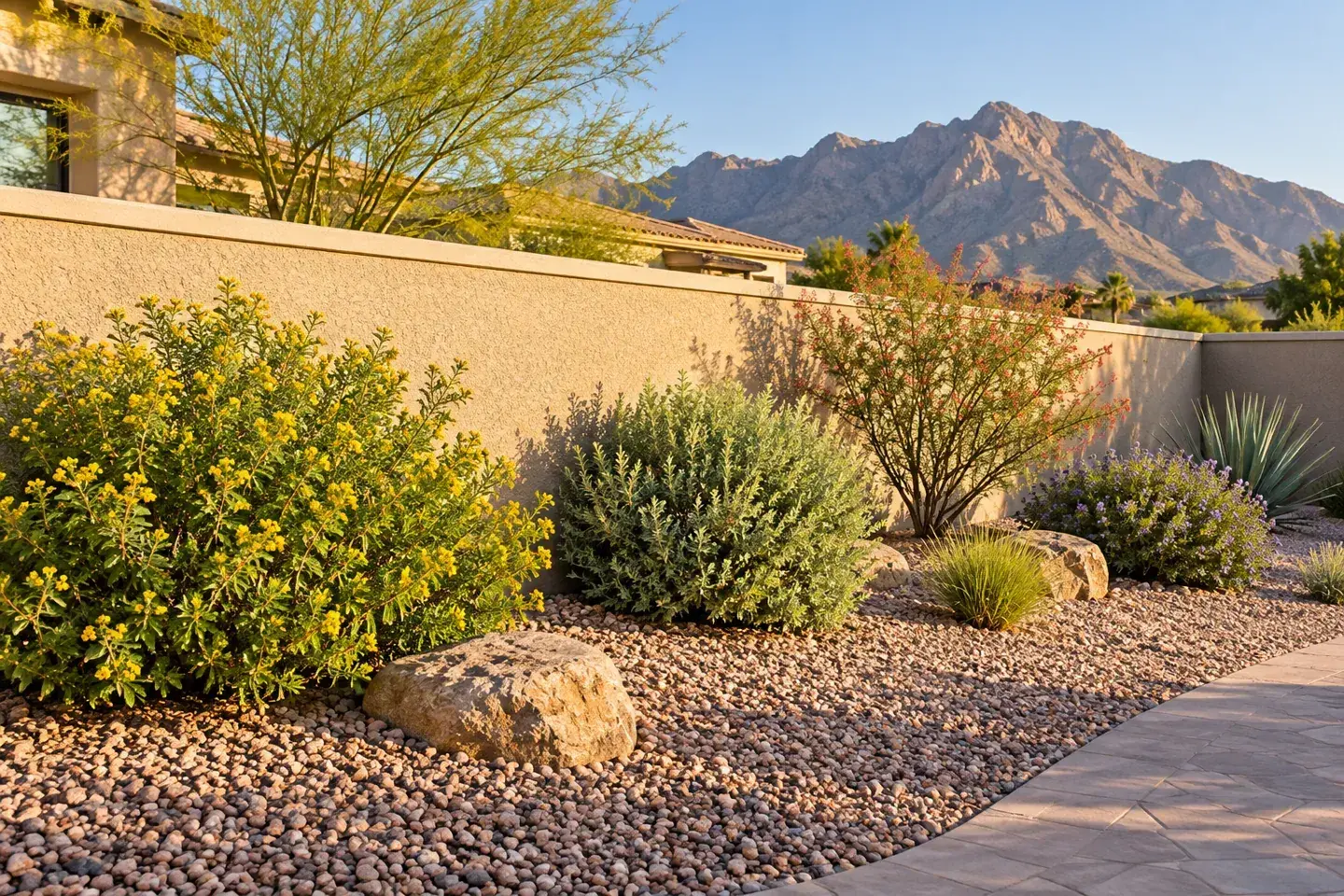
Use individual shrubs or small groups to soften a wall without creating a tightly packed hedge. Allow gaps that show the background and give maintenance access. Select mature heights for the view you want to screen, and avoid assuming a plant will remain at the convenient size it has when purchased.
20. Repeat a low border along paving
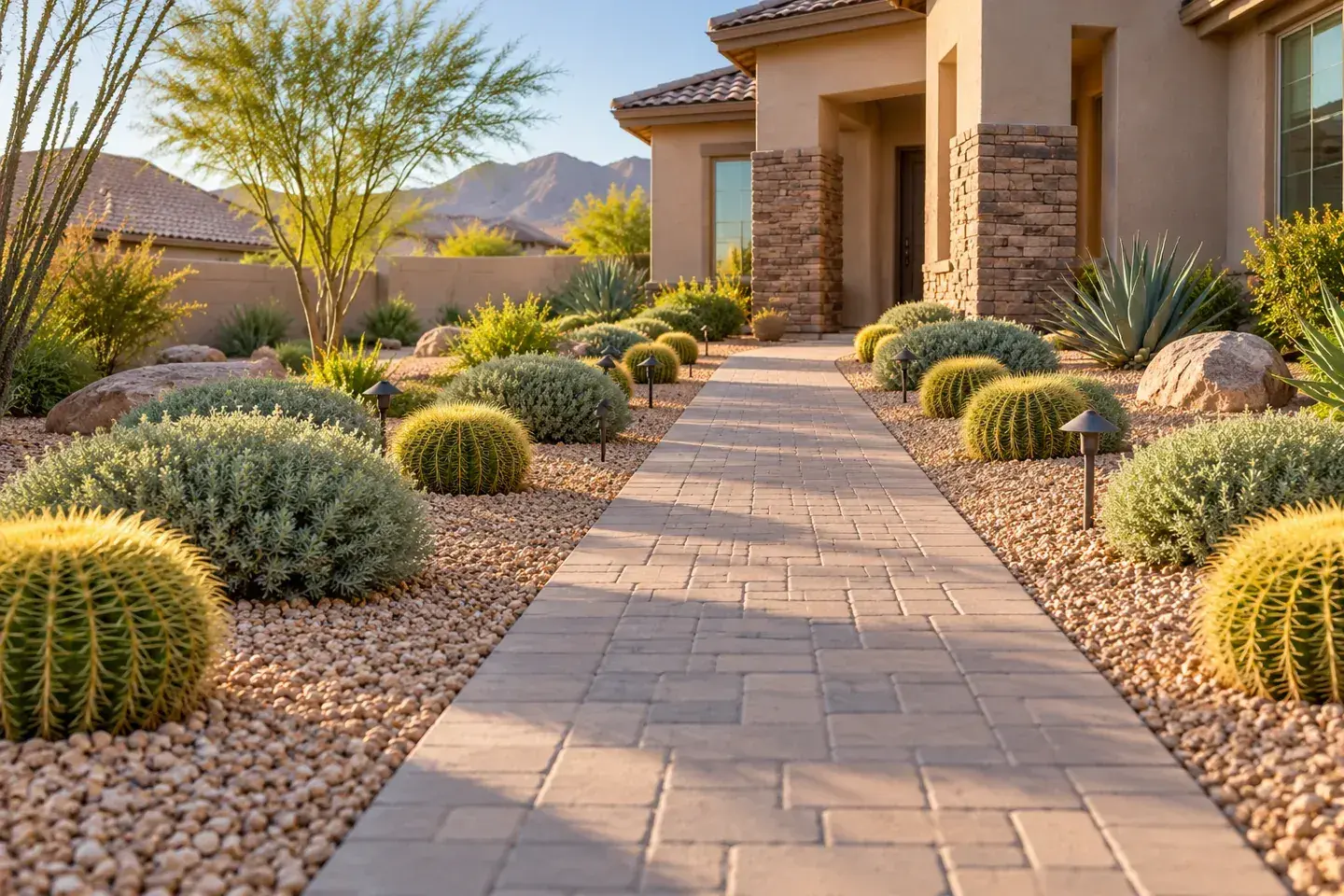
A low repeating plant form can give a path a clear edge without hiding it. Choose the actual species for mature spread, exposure, and care needs, and set it back accordingly. The illustration shows a design rhythm; it is not a species-identification guide. Keep sharp forms farther from pedestrian contact.
Build the maintenance plan with the design
Before ordering, use SNWA's installation resources to identify practical preparation questions. Write down who will check emitters, adjust watering, remove debris, and care for new planting. Choose three compatible ideas first, draw their mature footprints, and price a complete zone. The result should be a yard you can comfortably look after, not a collection of individually attractive features that compete for space and attention.
Sources
- Southern Nevada Water Authority's landscape planning resources. Checked October 7, 2026
- SNWA's plant-selection resources. Checked October 7, 2026
- SNWA's watering guidance. Checked October 7, 2026
- SNWA's installation resources. Checked October 7, 2026
Share this article
Get new guides by email
Practical home articles and free resources. No spam, and you can unsubscribe at any time.
Keep reading
15 Beautiful Xeriscaping Ideas for Colorado Front Yards
Explore 15 illustrated xeriscaping ideas for Colorado front yards, with grasses, flowers, shade, paths, useful lawn, and winter structure.
October 2026, 5 min read
The Best Grass Seed for North Carolina Lawns: Choose by Site
Choose North Carolina grass seed by region, sun, traffic, and upkeep. Compare tall fescue, Bermuda, centipedegrass, zoysia, and actual seed labels.
October 2026, 5 min read
Artificial Turf Cost in Arizona: Installation and Materials
Compare Arizona artificial turf materials and installation costs using an attributed Phoenix benchmark, clear exclusions, heat concerns, and a sample budget.
October 2026, 5 min read