How to Appeal Your Property Tax Assessment
You can generally appeal the assessed value behind your property tax bill, not the tax rate itself. Here is the typical process, the evidence that carries weight, and the deadlines that make or break an appeal.
By Home Crane Editors. . 3 min read.
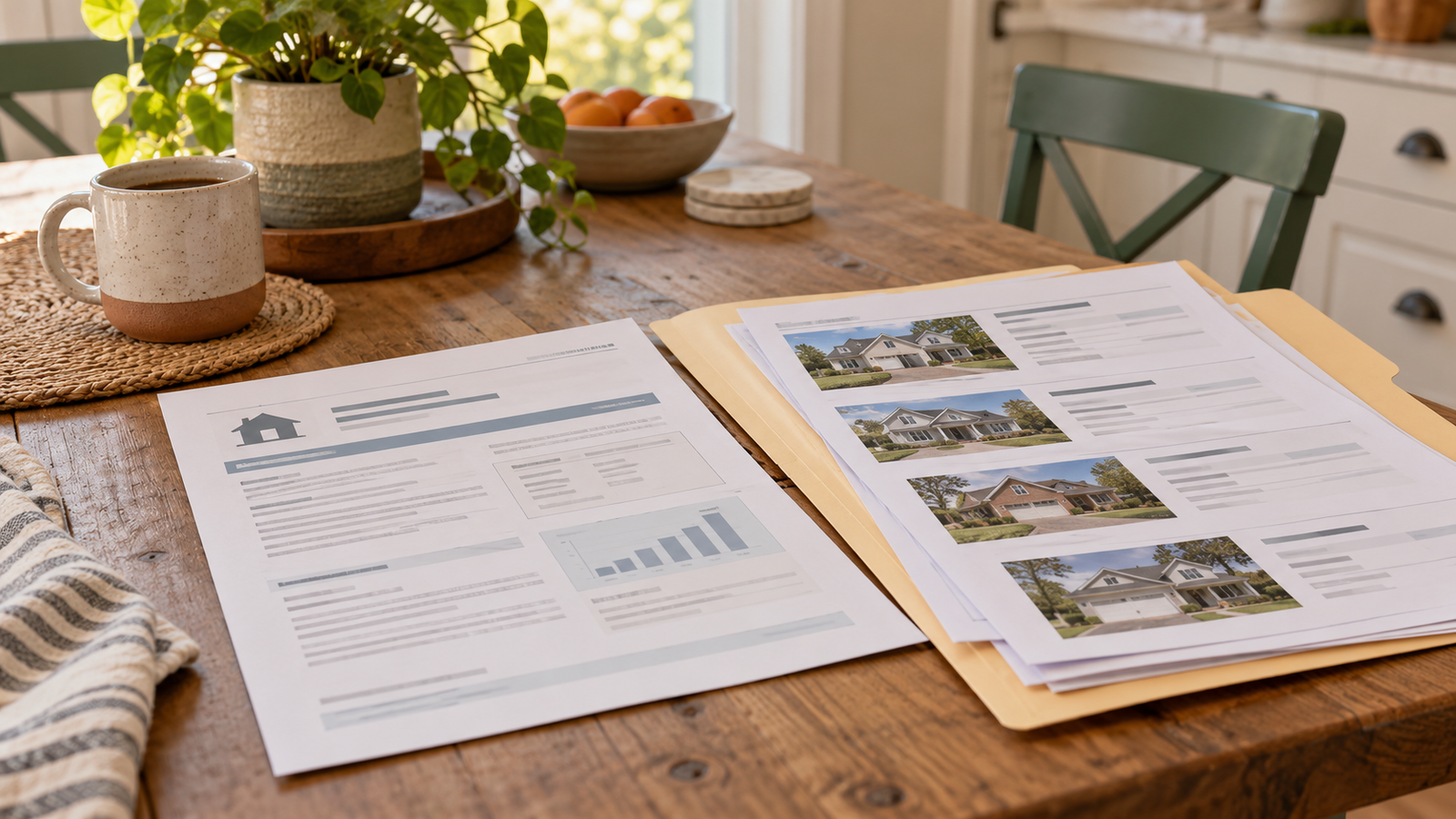
Conceptual illustration of preparing a property tax appeal.
A property tax bill has two parts: the assessed value of your property and the tax rate applied to it. In most places, you can appeal the assessed value if you believe it is wrong, but you generally cannot appeal the tax rate, which local governments set separately. The process below is the common pattern across U.S. counties, illustrated with two counties' own published guides, but the deadlines, forms and appeal levels are set locally, so confirm the specifics with your own county assessor.
Step 1: Read your assessment notice carefully
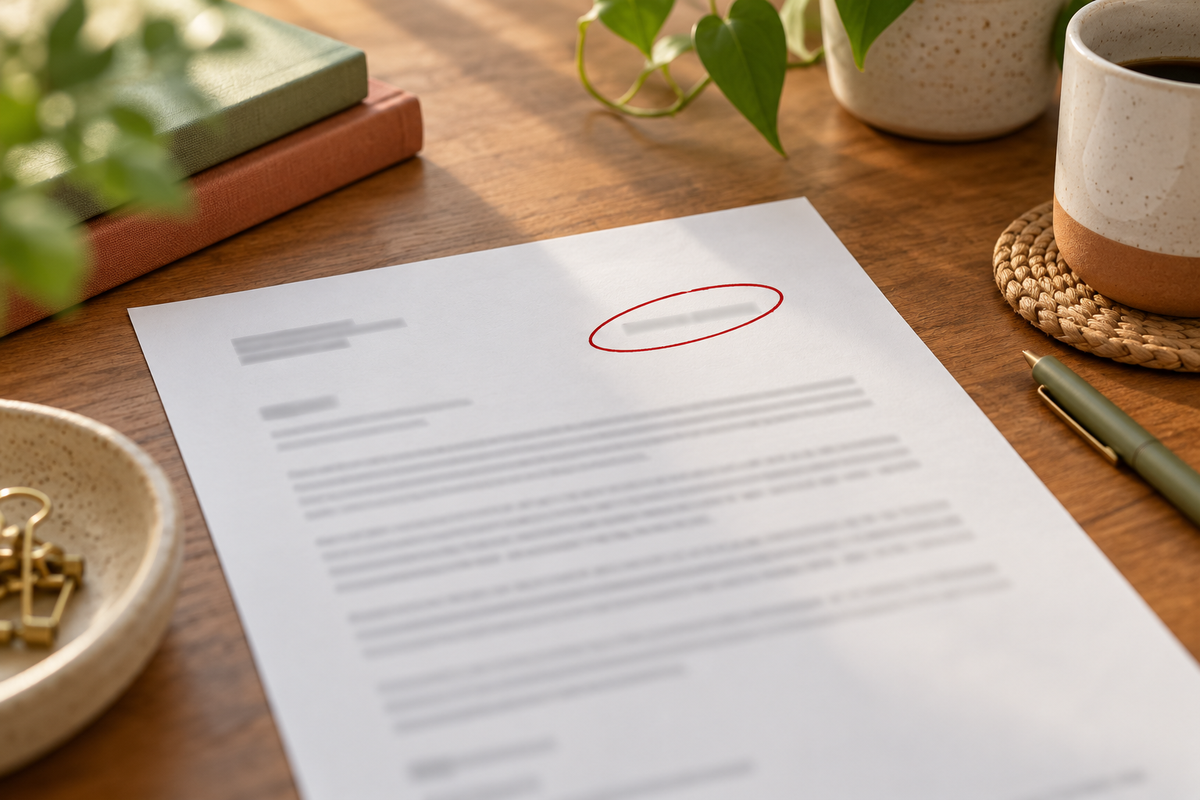
Idaho's Bonneville County explains that the assessment notice tells you what information the county has about your property, and that it is not a bill and does not tell you what your bill will be. Its guidance is direct: if changes need to be made, you must contact the assessor's office before the deadline printed on the notice, because by the time the tax bill arrives, it is too late to change the assessment. That timing detail catches many homeowners off guard, since the assessment notice often looks less urgent than a bill.
Step 2: Check your property's record
Your county keeps a record of the details used to calculate your assessment, commonly called a property record card, including square footage, room counts, lot size and year built. Illinois's Will County Board of Review guidance for its appeal process advises reviewing this card and checking it against reality, since a factual error, such as an incorrect square footage, is often the most straightforward basis for correction. Will County's guide notes that copies of the original property record card must be used as evidence when submitting an appeal.
Step 3: Gather comparable sales
The core of most appeals is comparable sales evidence: recent sale prices of similar homes near yours. Will County's guide describes the assessor's process as determining market value from valid sales in the area, excluding foreclosures and short sales, and then applying that method to figure out your assessed value. Bonneville County describes the assessor's office as defending values using current sales information of comparable properties, adjusting for differences between your home and the comparables. Turning that around: your own comparable sales, adjusted honestly for differences, are what an appeal is built on.
| Feature | Why it matters | |
|---|---|---|
| Your assessment notice | States the current assessed value and the appeal deadline | |
| Your property record card | Reveals factual errors in square footage, room counts or other details | |
| Recent comparable sales nearby | The core evidence for arguing the assessed value is too high | |
| Photos of condition issues | Supports an argument that your home's condition was not accounted for |
Step 4: Talk to the assessor first
Both counties' guidance points toward starting with a conversation rather than jumping straight to a formal hearing. Will County's guide suggests that simply talking with your local assessor will often clear up issues, and notes that assessors are usually very busy right after notices are published, so it is worth reaching out promptly rather than waiting. This informal step can resolve a straightforward factual error without a hearing.
Step 5: File before the deadline
Deadlines are strict and vary by jurisdiction. Will County's guide gives an example of 30 calendar days from the date of the assessment notice to file with the county Board of Review, and states plainly that failing to file within that window forfeits the right to appeal for that cycle. Treat any deadline printed on your own notice as final, and do not assume an informal conversation with the assessor extends it unless your county explicitly says so.
If the informal step does not resolve it
Most counties provide a formal path beyond the informal review, typically a Board of Review or Board of Equalization hearing, and in some states a further appeal to a state tax commission or the courts. Each level generally requires more formal evidence than the last, so an owner who prepares strong comparable sales for the earliest, informal stage often resolves the matter without ever reaching a hearing.
How this connects to your budget
A successful appeal lowers your assessed value and, with it, your property tax bill going forward, which is one line in the broader picture of homeownership costs. See our guide to budgeting for home maintenance for how property taxes fit alongside other recurring costs, and our property tax calculator to see how a change in assessed value or rate affects your estimated bill.
Your takeaway: check your assessment notice for the deadline the moment it arrives, pull your property record card to check for factual errors, gather a handful of genuinely comparable recent sales, and call your assessor's office before you file anything formal.
Frequently asked questions
Can I appeal because my taxes are too high?
Generally, you can appeal the assessed value of your property, not the tax rate or the resulting bill directly. An appeal needs to show the assessed value itself is inaccurate, using evidence such as comparable sales or a factual error in your property record.
Do I need a lawyer or appraiser to appeal?
Not necessarily for an informal review or a first-level formal appeal in most counties, which are often designed for homeowners to use directly. More complex cases or higher appeal levels may benefit from professional help, but check your own county's process.
Sources
- Property Assessment Appeal, Bonneville County, Idaho. Checked September 24, 2026
- Guide to Filing Appeal, Will County Board of Review, Illinois. Checked September 24, 2026
Share this article
Get new guides by email
Practical home articles and free resources. No spam, and you can unsubscribe at any time.
Keep reading

How to Organize Property Tax Documents at Home: 10 Filing Ideas That Keep Everything Easy to Find
Organize property tax bills, receipts, assessment notices and escrow records with 10 practical home filing ideas, digital folders and a simple tracker.
November 2026, 8 min read

How to Factor Property Taxes Into Your First Home Wishlist
When you start searching for your first home, it is easy to focus on the listing price, the number of bedrooms, the kitchen, and the neighborhood. But...
November 2026, 9 min read

Cheapest States to Buy a House With Low Property Taxes
Compare affordable U.S. states with low property taxes, approximate home prices, annual tax examples, insurance considerations, and tips for choosing where to buy.
November 2026, 9 min read