How to Organize Property Tax Documents at Home: 10 Filing Ideas That Keep Everything Easy to Find
Organize property tax bills, receipts, assessment notices and escrow records with 10 practical home filing ideas, digital folders and a simple tracker.
By Home Crane Editors. . 8 min read.

Property tax paperwork can quickly become a confusing pile: annual bills, payment receipts, assessment notices, exemption letters, mortgage escrow statements, and correspondence from local offices. A practical home filing system makes it easier to find a document, confirm whether a bill was paid, and respond when a tax office or mortgage servicer asks a question.
The ideas below are written for U.S. homeowners. Property tax procedures, document names, deadlines, and retention rules vary by state and locality, so use the labels and dates provided by your own taxing authority.
1. Start With One Dedicated Property Tax Binder

A three-ring binder is a simple way to keep frequently used paperwork together. Choose a sturdy binder, add tab dividers, and use clear sheet protectors for originals that should not be hole-punched. Put the current tax bill and latest payment confirmation in the front pocket.
Suggested sections include:
- Current tax year
- Previous tax years
- Assessment and valuation notices
- Exemptions and appeals
- Payment confirmations
- Mortgage escrow statements
- County or assessor correspondence
- Ownership and closing records
Keep the newest year at the front. A binder works best when you review it once or twice a year and remove duplicate inserts.
2. Use an Accordion File for a Compact System
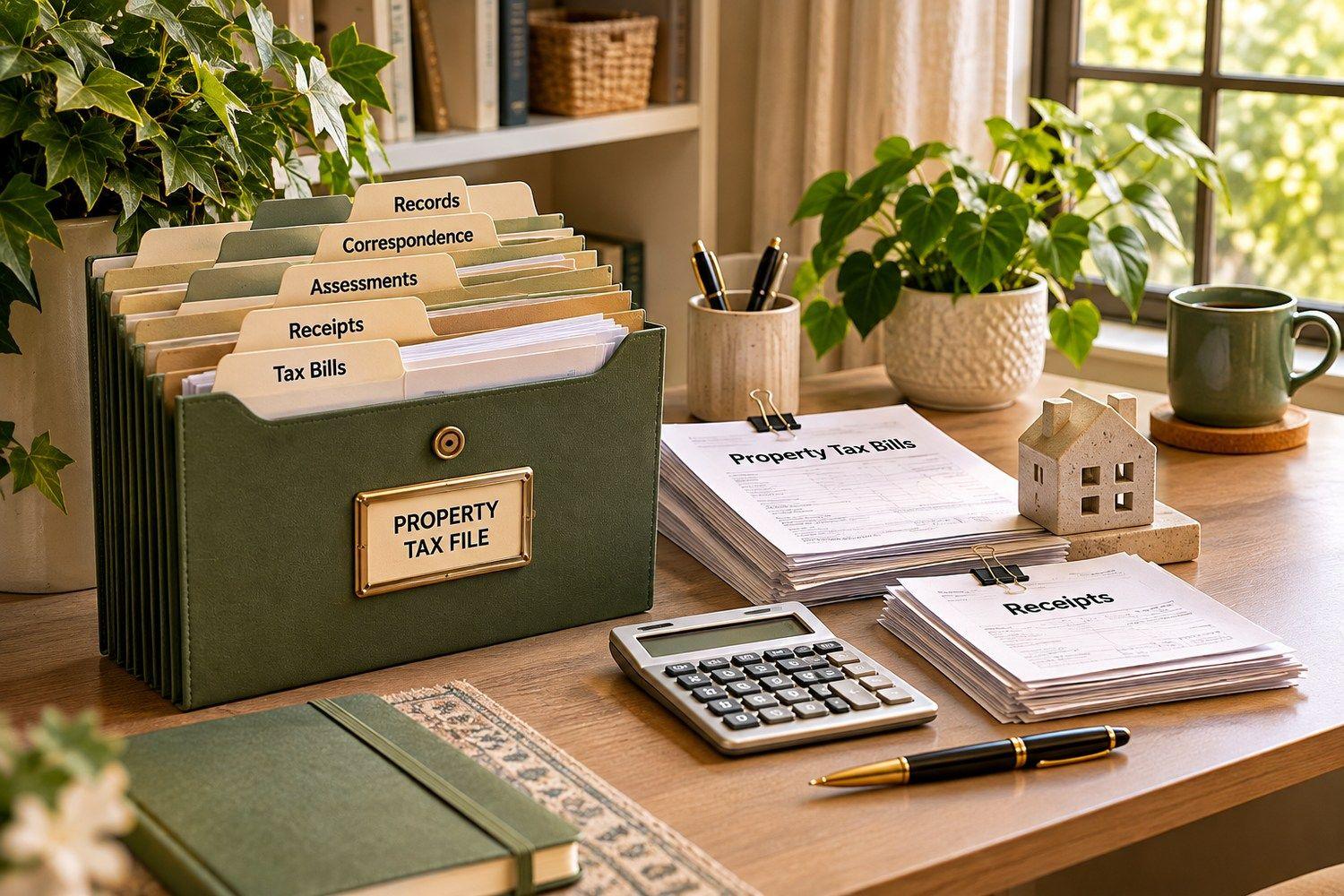
An accordion file is useful when you want a portable, inexpensive filing solution. Label pockets by tax year, then reserve separate sections for permanent ownership records, exemptions, and unresolved issues. If you own multiple properties, use a separate file for each address or clearly divide a larger expanding file by property.
The advantage is that papers can be filed quickly without punching holes. The drawback is that thick pockets become difficult to search, so avoid stuffing them with duplicate envelopes and promotional material.
3. Create a Separate Folder for Every Tax Year
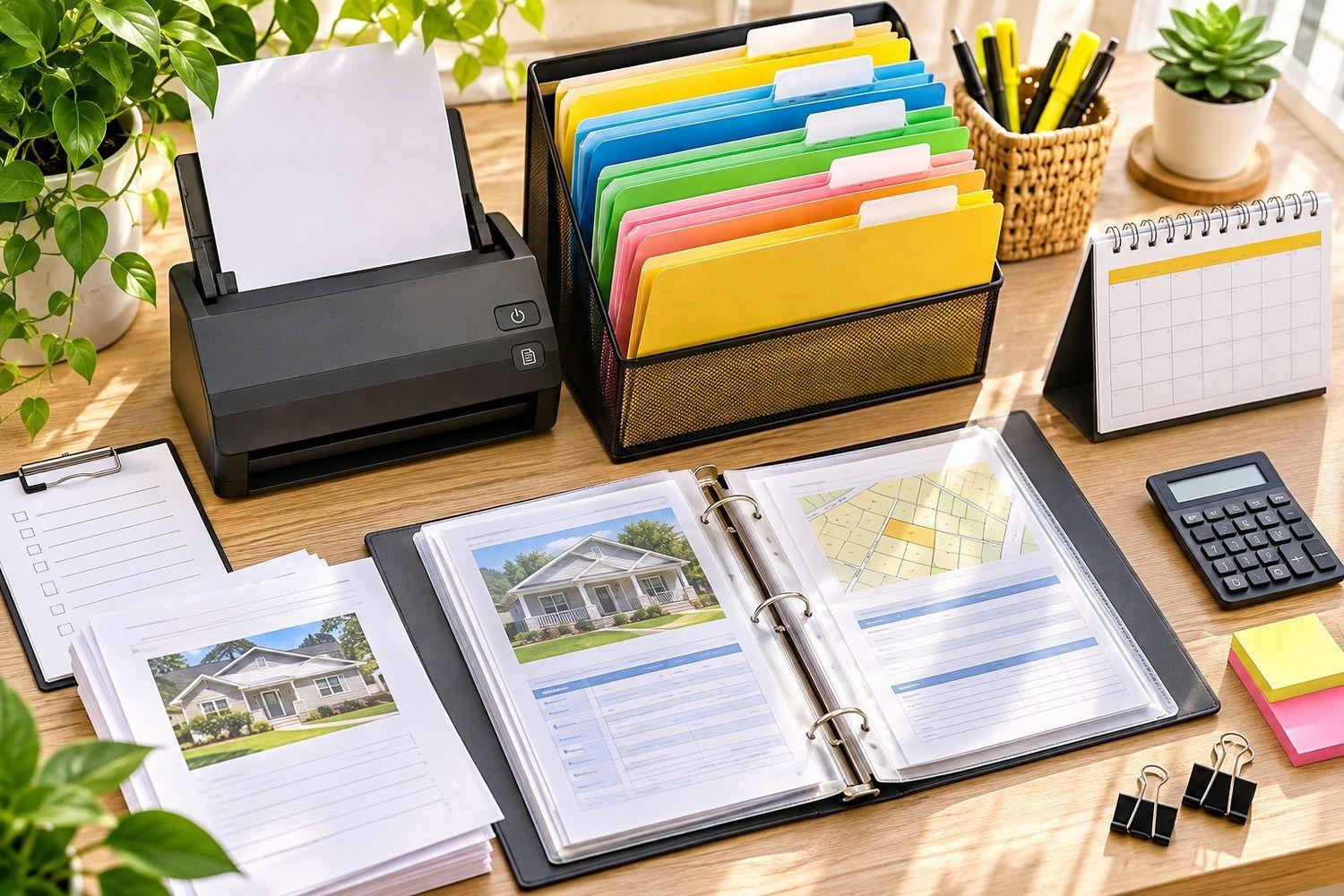
A year-by-year filing system makes it easier to compare bills and check payment history. Use hanging folders, file wallets, or a small document box. Label each folder with both the property address and tax year, such as `Oak Street - 2026`.
Within every annual folder, arrange documents in the same order:
- Assessment or valuation notice
- Final tax bill and installment notices
- Payment receipts or bank confirmations
- Escrow disbursement evidence, if applicable
- Appeals, adjustments, refunds, or exemption decisions
- Related letters and emails
A consistent order means you will not have to remember a new filing method every year.
4. Keep Bills and Proof of Payment Together
A tax bill shows what the taxing authority says is due. It does not, by itself, prove that the amount was paid. Keep the bill with the payment receipt, canceled check, bank confirmation, or online transaction record.
For each installment, check that the proof identifies the property or parcel, payment date, amount, and transaction status. If you pay through a county portal, download the receipt as a PDF and save it with the bill.
If your mortgage servicer pays taxes from an escrow account, save the annual escrow statement and verify the tax disbursement with the servicer or local tax office. The Consumer Financial Protection Bureau explains that escrow accounts collect money with mortgage payments and disburse funds for expenses such as property taxes and insurance.
5. Separate Assessment Notices and Appeal Documents
Assessment records show how the local assessor valued your property. Keep annual valuation notices, property characteristic records, comparable-sales information you relied on, appeal applications, hearing notices, decisions, and revised assessments in a folder labeled Assessments & Appeals.
Put the papers in date order. Add a note to the front listing the assessment year, appeal deadline, submission date, and outcome. Do not discard an older assessment simply because a newer one arrived; prior notices can help explain changes in assessed value.
Appeal procedures and deadlines differ by jurisdiction. Follow the instructions from your local assessor or board of review.
6. Make a Dedicated Exemptions and Relief Folder
Some homeowners may qualify for homestead exemptions, senior or disability relief, veteran-related exemptions, credits, freezes, or other local programs. Eligibility and renewal rules vary widely.
Store applications, supporting documents, approval or denial letters, renewal notices, and correspondence together. Record when an exemption was approved and whether it must be renewed. If you move, transfer ownership, or experience a change in eligibility, check with the local tax office about whether the benefit continues.
Keep sensitive supporting documents in secure storage rather than an open desktop tray.
7. Mirror Your Paper System With Digital Folders

Digital copies make documents easier to search and provide a backup if paper is lost or damaged. Use a reputable secure cloud service or encrypted local drive, enable multifactor authentication where available, and restrict access to trusted household members.
A practical structure looks like this:
```text Home Records/ 123 Oak Street/ Property Taxes/ 2026/ 2025/ Assessments and Appeals/ Exemptions/ Escrow Statements/ Ownership and Closing/ Improvements and Repairs/ ```
Name files consistently. For example: `2026-04-15_Oak-Street_Property-Tax-Payment-Receipt.pdf`. Put the date first in YYYY-MM-DD format so files sort chronologically. Scan both sides if the reverse contains instructions or endorsements, and check that every scan is readable before disposing of a duplicate.
Keep at least one backup separate from your everyday computer or phone. Periodically test that you can open it.
8. Protect Important Originals in Secure Storage
A lockable or fire-resistant document box can help protect records that would be difficult to replace. Consider storing deeds, closing statements, title documents, surveys, and other important ownership records securely. Keep routine annual bills and duplicate receipts in your regular filing cabinet.
A fire-resistant box is not automatically waterproof or theft-proof. Follow the manufacturer's ratings and storage instructions. Keep the box away from damp areas, direct sunlight, and places where pipes may leak. For especially important originals, consider whether a bank safe-deposit box or another secure arrangement is more suitable, while retaining accessible copies at home.
9. Add a Tax Calendar and One-Page Tracker
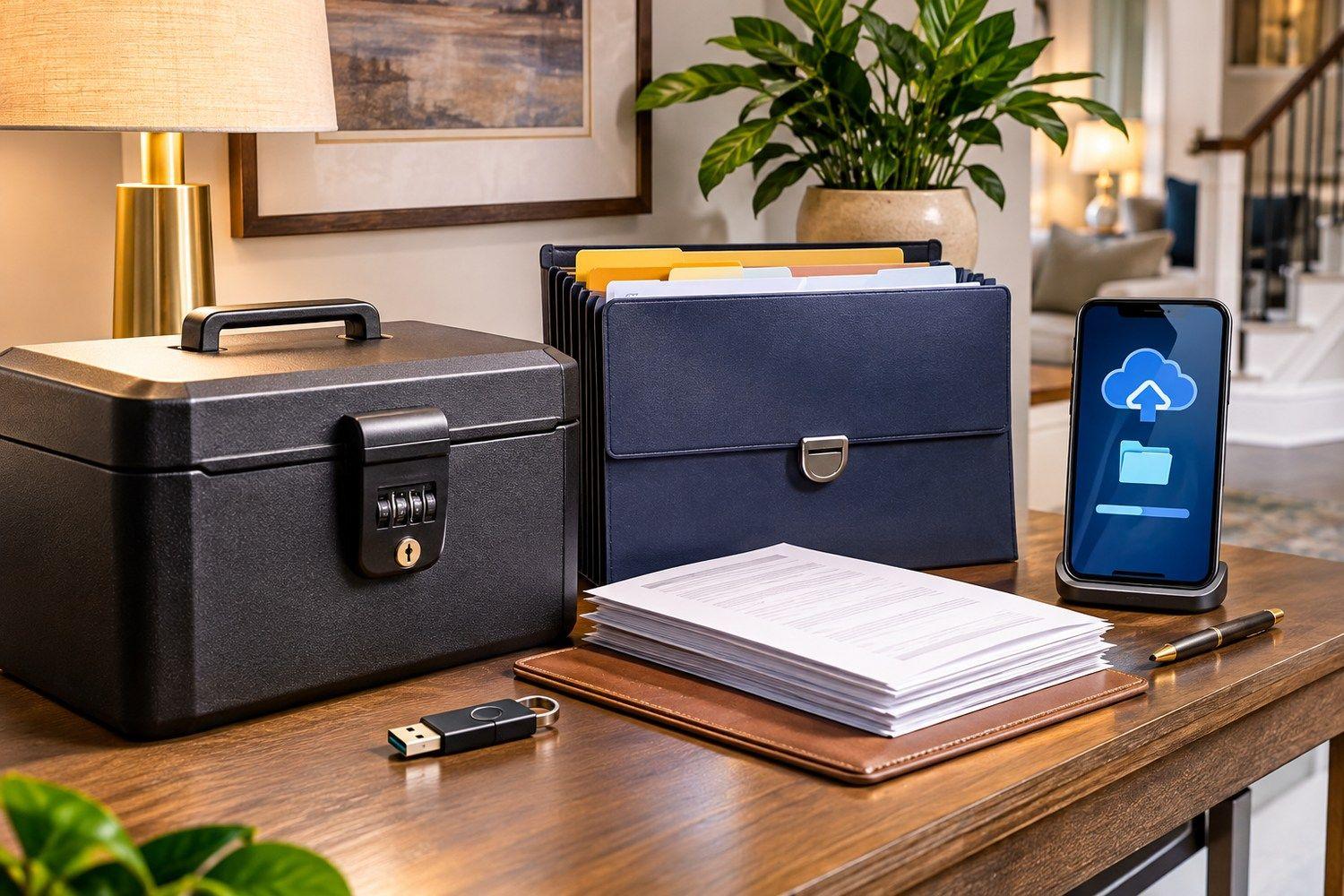
A filing system should help you act before deadlines. Put installment due dates, assessment review dates, exemption renewal dates, and appeal deadlines on a household calendar. Set reminders several weeks ahead.
Use a simple tracker:
| Feature | Bill amount | Due date(s) | Payment method | Paid date | Proof saved? |
|---|---|---|---|---|---|
| 2026 | $- | Local schedule | Escrow / direct | - | Yes / No |
| 2025 | $- | Local schedule | Escrow / direct | - | Yes / No |
This is a blank organizer, not a statement of actual tax amounts or deadlines. Use the dates printed by your local tax collector. If bills are paid in installments, create a separate row for each installment.
10. Set Up a Small Incoming-Mail Station
Prevent new notices from landing in random places by using a tray or wall-mounted file with three sections: To Review, To Pay or Respond, and Ready to File.
Open tax-related mail promptly. Check the property address, parcel number, tax year, amount, and deadline. If action is required, add it to your calendar and move the document to the action section. Once paid or resolved, attach proof and file the complete set in the correct year folder.
Do not leave documents containing personal or financial information in an open tray longer than necessary.
What Property Tax Documents Should You Keep?
Keep copies of these records when they apply to your property:
- Annual property tax bills and installment notices
- Payment receipts, canceled checks, and bank confirmations
- Assessment and valuation notices
- Property record cards and parcel details
- Appeal applications, evidence, hearing notices, and decisions
- Exemption applications and approval letters
- Refund, credit, correction, and delinquency notices
- Mortgage escrow statements and tax disbursement records
- Closing disclosure, settlement statement, and purchase records
- Deed, title, and ownership documents
- Receipts for major improvements that may affect the home's tax basis
- Relevant letters and emails from the assessor, tax collector, or mortgage servicer
The IRS advises homeowners to retain records that support the basis of a home, including purchase and settlement papers and receipts for improvements. Some property records may need to be kept for as long as they remain relevant to calculating basis, including after a sale. This differs from the general retention period for many ordinary tax-return records.
How Long Should You Keep Property Tax Records?
There is no single retention period for every document. The right period depends on the record, the tax issue, state and local requirements, and whether the document is needed to establish property basis or resolve a dispute.
A practical approach is to keep annual bills, payment proof, assessment notices, and exemption decisions for as long as you own the property, then review them before disposal. Keep purchase, ownership, and major-improvement records longer because they may be relevant to basis when you sell. The IRS says records relating to property generally should be kept until the period of limitations expires for the year in which the property is disposed of.
Do not apply the commonly cited three-year federal tax-record rule to every property document. That general period concerns many federal income tax records and has exceptions. State rules, pending appeals, audits, mortgage disputes, or other legal requirements may call for longer retention. When uncertain, keep the record and seek qualified advice before destroying it.
A Simple 30-Minute Property Tax Filing Reset
If your documents are already scattered, use this quick reset:
- Gather every property tax bill, receipt, assessment notice, exemption letter, and escrow statement.
- Separate documents by property address.
- Sort each property's documents by tax year.
- Match each bill with proof of payment or a note explaining why it remains unpaid.
- Put appeals and exemption documents in their own sections.
- Scan important documents and use consistent file names.
- Add upcoming due dates and appeal deadlines to your calendar.
- Store ownership originals securely and shred unnecessary duplicates safely.
You do not have to organize every historical document in one sitting. Prioritize the current year and any unresolved issue first, then work backward.
Frequently Asked Questions
What is the best way to organize property tax documents at home?
A year-by-year folder system is usually easiest to maintain. Keep each year's bill, payment proof, assessment notice, and correspondence together. Use a binder or accordion file for quick access, and mirror the same categories in secure digital storage.
Should I keep property tax bills after they are paid?
Yes. Keep the bill with its receipt or other proof of payment. This can help resolve a posting error, confirm an escrow disbursement, or answer a future question about the account.
Should property tax records be stored with mortgage documents?
They can sit within the same overall home-records system, but use separate labeled sections. This distinguishes the local tax bill from the mortgage servicer's escrow statement and helps you verify what was paid.
Are digital copies enough?
Digital copies are useful backups, but requirements vary. Keep important originals when they are difficult to replace or when a government office, lender, insurer, or legal process may require them. Make sure scans are readable and securely backed up.
What if I cannot find a property tax payment receipt?
Check the taxing authority's online payment history, bank or card statement, and confirmation email. If a mortgage servicer handles the payment, review the escrow statement and contact the servicer or tax office to confirm the disbursement. Save any replacement confirmation with the bill.
How should I organize documents for more than one property?
Create a separate main folder or binder for each property, identified by street address or parcel number. Within each, use the same annual and subject categories. Avoid mixing different properties in one year folder.
Final Thoughts
The best property tax filing system is the one you can maintain. A labeled binder, accordion file, or small filing cabinet can work well when every document has a clear home and every payment is matched with proof. Add a secure digital backup and a calendar for important dates, and you will spend less time searching when a bill, appeal, refinance, or home sale requires paperwork.
Sources
- IRS Publication 530: Tax Information for Homeowners. Checked November 7, 2026
- IRS: How Long Should I Keep Records?. Checked November 7, 2026
- Consumer Financial Protection Bureau: What Is an Escrow or Impound Account?. Checked November 7, 2026
- CFPB Regulation X, 12 CFR § 1024.17: Escrow Accounts. Checked November 7, 2026
Share this article
Get new guides by email
Practical home articles and free resources. No spam, and you can unsubscribe at any time.
Keep reading

How to Factor Property Taxes Into Your First Home Wishlist
When you start searching for your first home, it is easy to focus on the listing price, the number of bedrooms, the kitchen, and the neighborhood. But...
November 2026, 9 min read

Cheapest States to Buy a House With Low Property Taxes
Compare affordable U.S. states with low property taxes, approximate home prices, annual tax examples, insurance considerations, and tips for choosing where to buy.
November 2026, 9 min read
How to Appeal Your Property Tax Assessment
You can generally appeal the assessed value behind your property tax bill, not the tax rate itself. Here is the typical process, the evidence that carries weight, and the deadlines that make or break an appeal.
September 2026, 3 min read