8 Best Aesthetic Indoor Herb Garden Planters To Buy
Shop stylish indoor herb garden planters, from ceramic pots and self-watering herb keepers to windowsill troughs and countertop gardens with grow lights.
By Home Crane Editors. . 11 min read.
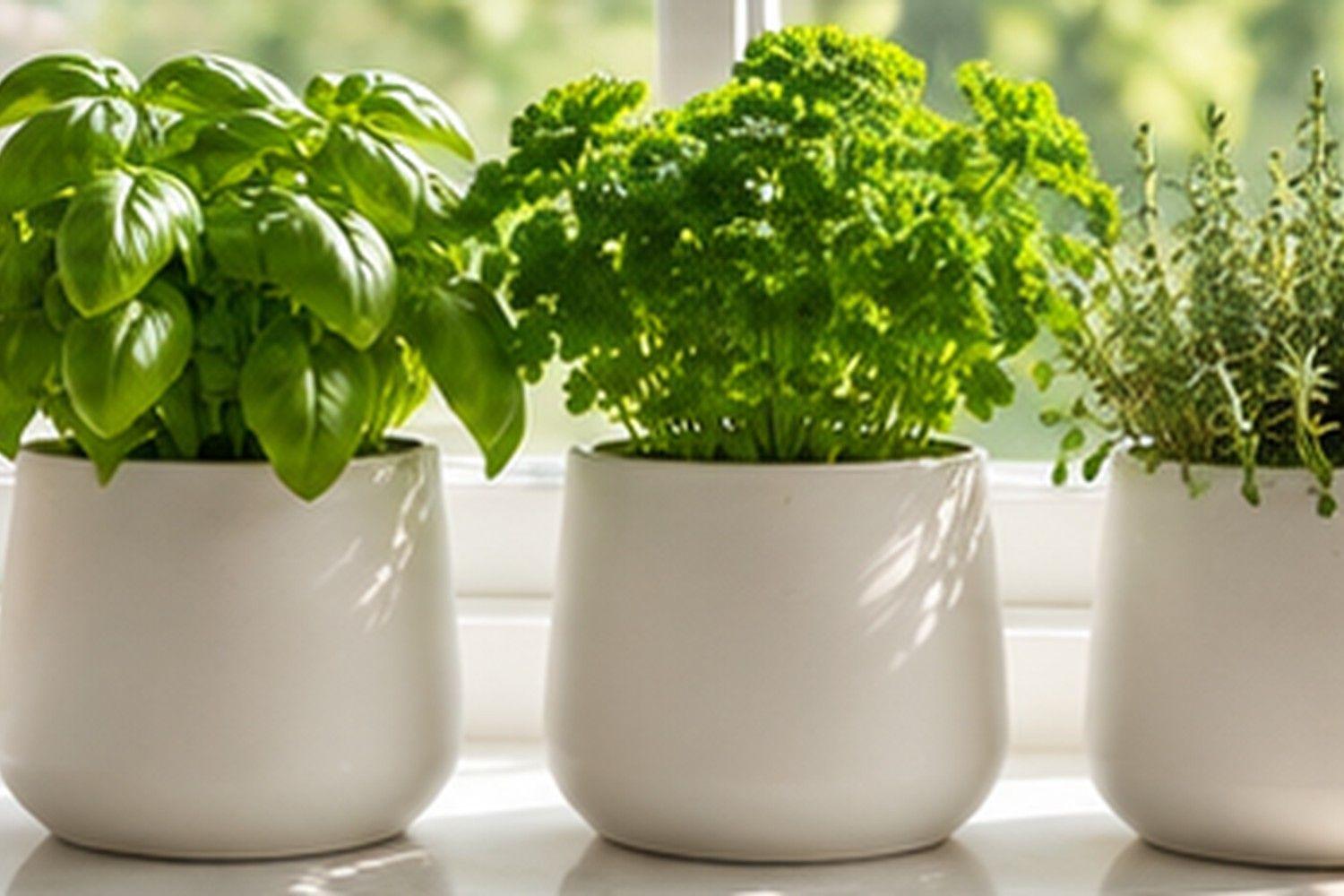
An indoor herb garden can make a kitchen feel warmer, add a little greenery to a windowsill, and keep fresh basil, mint, parsley, or thyme close at hand. The right planter does more than look good. It needs enough room for roots, a sensible way to manage water, and a position where the herbs can receive the light they need.
The best choice depends on whether you want a decorative set of pots, a compact self-watering container, a long windowsill trough, or a countertop garden with its own grow light. Below are eight attractive options and planter styles worth considering, from simple ceramic pots to more automated indoor growing systems.
This guide is written for U.S. shoppers. Product availability, colors, dimensions, and prices change, so check current retailer listings and the manufacturer's specifications before ordering. The selections are based on design, useful features, and product options covered by established home and gardening publications, not on a new hands-on test of every item.
At a Glance: Which Indoor Herb Planter Should You Choose?
| Feature | Best for | Style |
|---|---|---|
| Le Creuset Herb Planter | A polished single-herb accent | Colorful, classic ceramic |
| Cole & Mason Self-Watering Herb Keeper | A compact countertop herb | Minimal and practical |
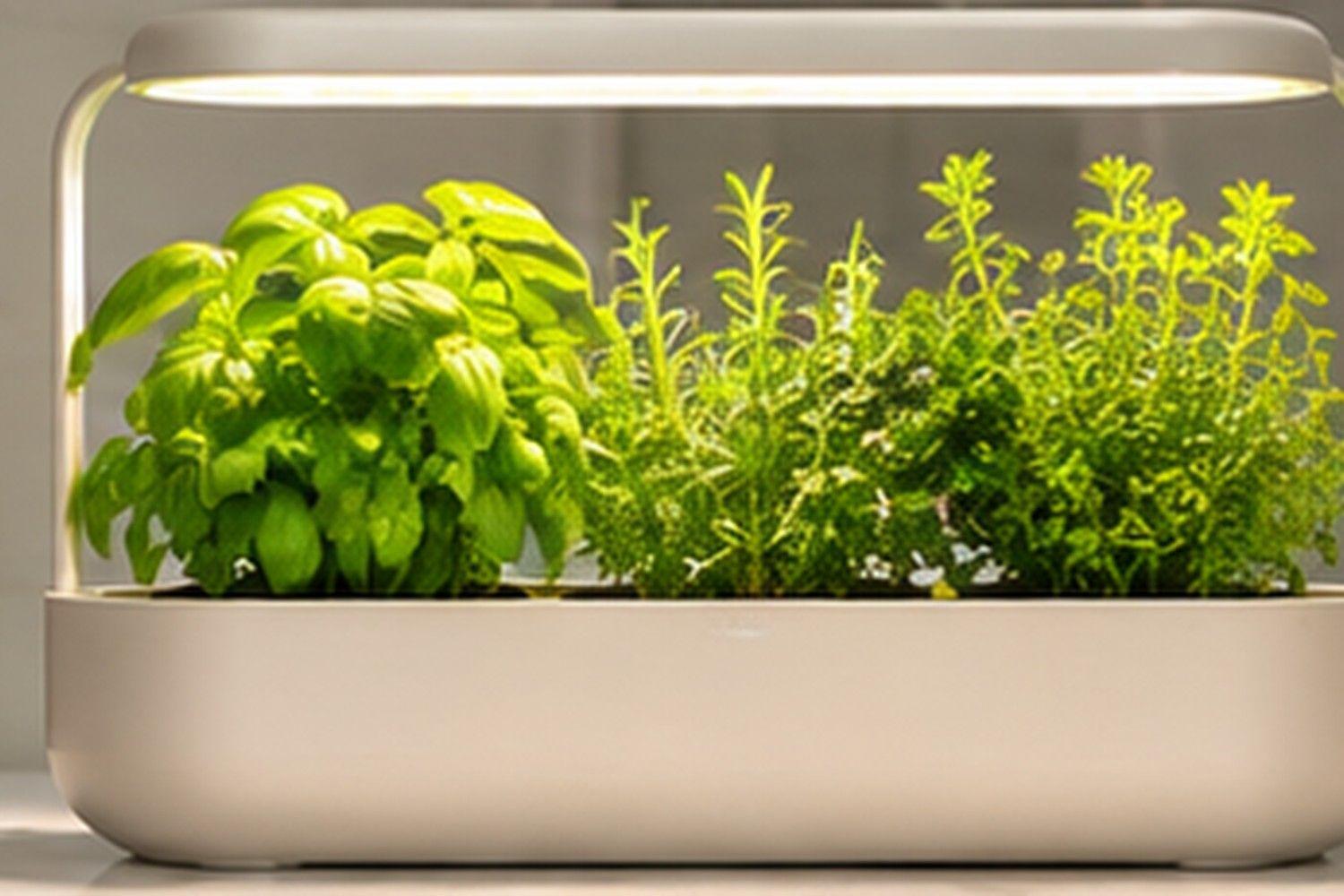
| Click & Grow Smart Garden 3 | A tidy, low-fuss growing system | Modern technology |
| AeroGarden Harvest Elite | Herbs with built-in grow lighting | Contemporary countertop |
| Barnyard Designs Herb Planter Set | A coordinated multi-pot display | Farmhouse metal |
| Terracotta Herb Pot Set | Breathable, simple individual pots | Natural and rustic |
| Ceramic Windowsill Trough | Several herbs in one neat row | Clean and minimalist |
| Wall-Mounted Herb Planter | Small kitchens and vertical space | Space-saving and decorative |
1. Le Creuset Herb Planter: Best for a Colorful Ceramic Accent
If you want a planter that looks like part of the kitchen décor rather than gardening equipment, the Le Creuset Herb Planter is an attractive option. Its compact ceramic form and recognizable range of colors make it easy to coordinate with cookware, serving pieces, or a bright kitchen palette.
The small footprint suits a single store-bought herb or a compact plant such as thyme. Place it near a bright window, on a counter with suitable light, or on a shelf where it can be reached easily when cooking. The Kitchn has included the Le Creuset 5.5-inch Herb Planter in its indoor planter roundup, noting its compact size and range of colors.
Why it stands out
- Decorative ceramic finish that can complement a coordinated kitchen.
- Compact size for a single herb.
- A good choice when appearance matters as much as function.
What to check before buying: Confirm the exact dimensions and whether the version you choose has a drainage hole. If it is a decorative cachepot without drainage, keep the herb in its nursery pot or use a removable inner pot, and never let excess water sit unnoticed at the bottom.
2. Cole & Mason Self-Watering Herb Keeper: Best for a Small Countertop
The Cole & Mason Self-Watering Potted Herb Keeper is designed for people who want to keep a small supermarket herb pot fresh and accessible. Its compact, understated look works well on a kitchen counter or windowsill without taking up the space needed for meal preparation.
The self-watering design uses an absorbent hydro pad in the base to draw water toward the plant. That can make moisture management easier than watering a small pot from above every day. The Kitchn's guide describes it as a petite option for a single potted herb and notes that the reservoir needs periodic refilling.
Why it stands out
- Small footprint for kitchens with limited counter space.
- Reservoir-based watering helps maintain moisture.
- Particularly convenient for keeping one frequently used herb within reach.
What to check before buying: Confirm that your herb's nursery pot fits the holder and that the wick or hydro pad is included and replaceable. Self-watering is not maintenance-free; inspect the reservoir and plant regularly, and avoid leaving roots constantly waterlogged.
3. Click & Grow Smart Garden 3: Best Smart Planter for a Modern Kitchen
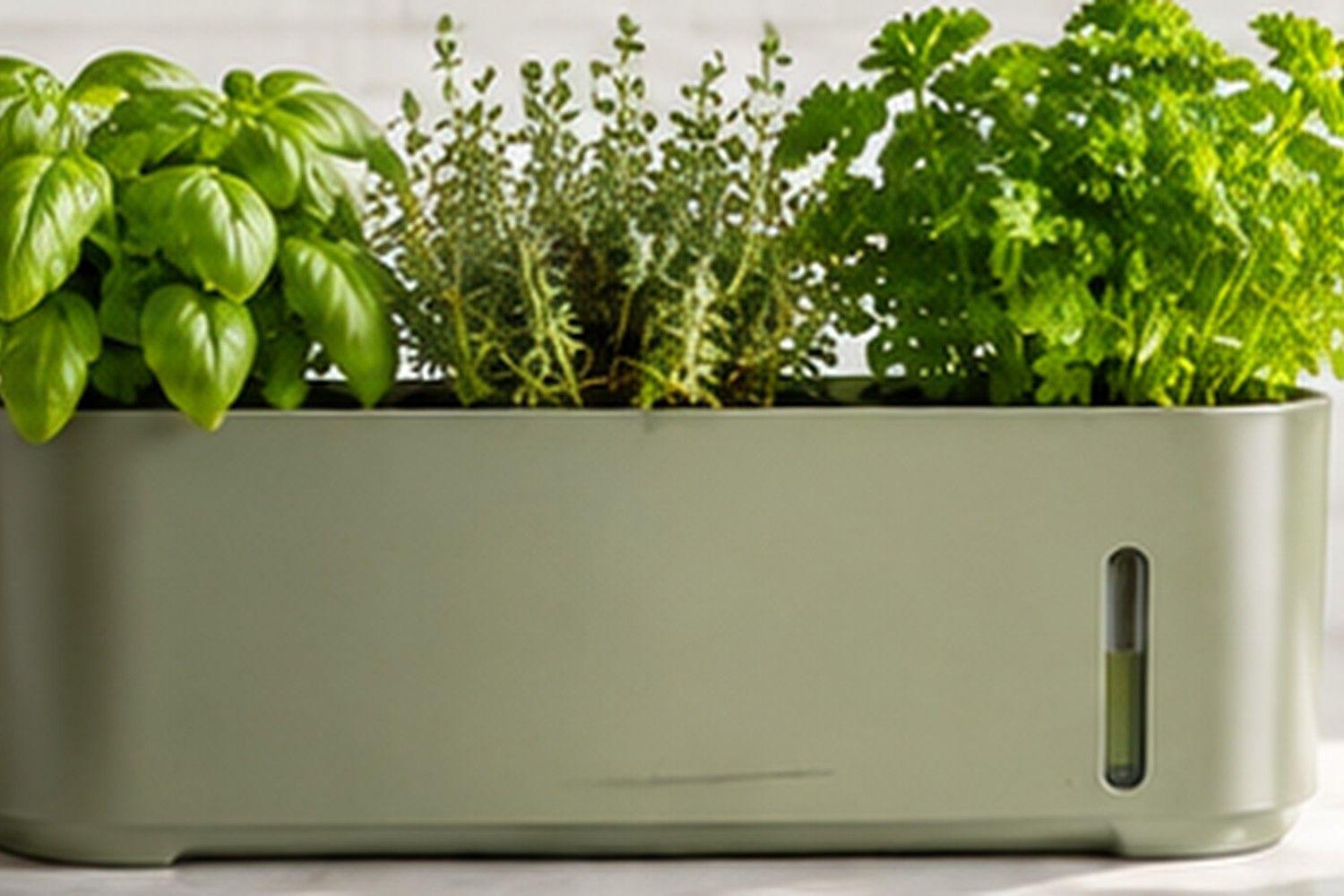
The Click & Grow Smart Garden 3 is a compact indoor growing system with space for three plant pods and an integrated LED grow light. It is a good fit if your kitchen does not have a bright windowsill or if you prefer a coordinated unit rather than a collection of separate pots.
The system uses pre-seeded plant capsules and a water reservoir. Its grow light is designed to provide supplemental light on a schedule, while the reservoir reduces the need for frequent manual watering. The Kitchn and Popular Mechanics have both featured the Smart Garden 3 in indoor herb garden roundups.
Why it stands out
- Three growing spaces in one compact unit.
- Built-in LED lighting for locations with limited natural light.
- A neat, contemporary appearance that keeps the growing area contained.
What to check before buying: Check the current capsule range, refill costs, and whether the herbs you want are available. Some systems rely on proprietary pods, although refillable options may be offered. Allow room above the unit for the light arm and mature plants.
4. AeroGarden Harvest Elite: Best for Built-In Grow Lighting
The AeroGarden Harvest Elite is a countertop hydroponic garden designed for growing several plants under an integrated LED light. It is worth considering if you want an indoor herb setup that is less dependent on the direction of your windows or the amount of daylight your kitchen receives.
Good Housekeeping's 2026 indoor herb garden coverage identified the AeroGarden Harvest Elite as a top-tested compact hydroponic option. Its review highlighted fast herb growth and reminders for water and nutrients, while also noting that plants need regular trimming.
Why it stands out
- Integrated grow light for indoor growing.
- A self-contained reservoir-based growing system.
- Suitable for people who want several herbs grouped in one appliance-like planter.
What to check before buying: Verify current model availability, pod compatibility, replacement parts, and ongoing nutrient costs. Hydroponic systems need routine cleaning and nutrient management. The grow light also needs clearance above the plants as they mature.
5. Barnyard Designs Indoor Herb Planter Set: Best Farmhouse-Style Display
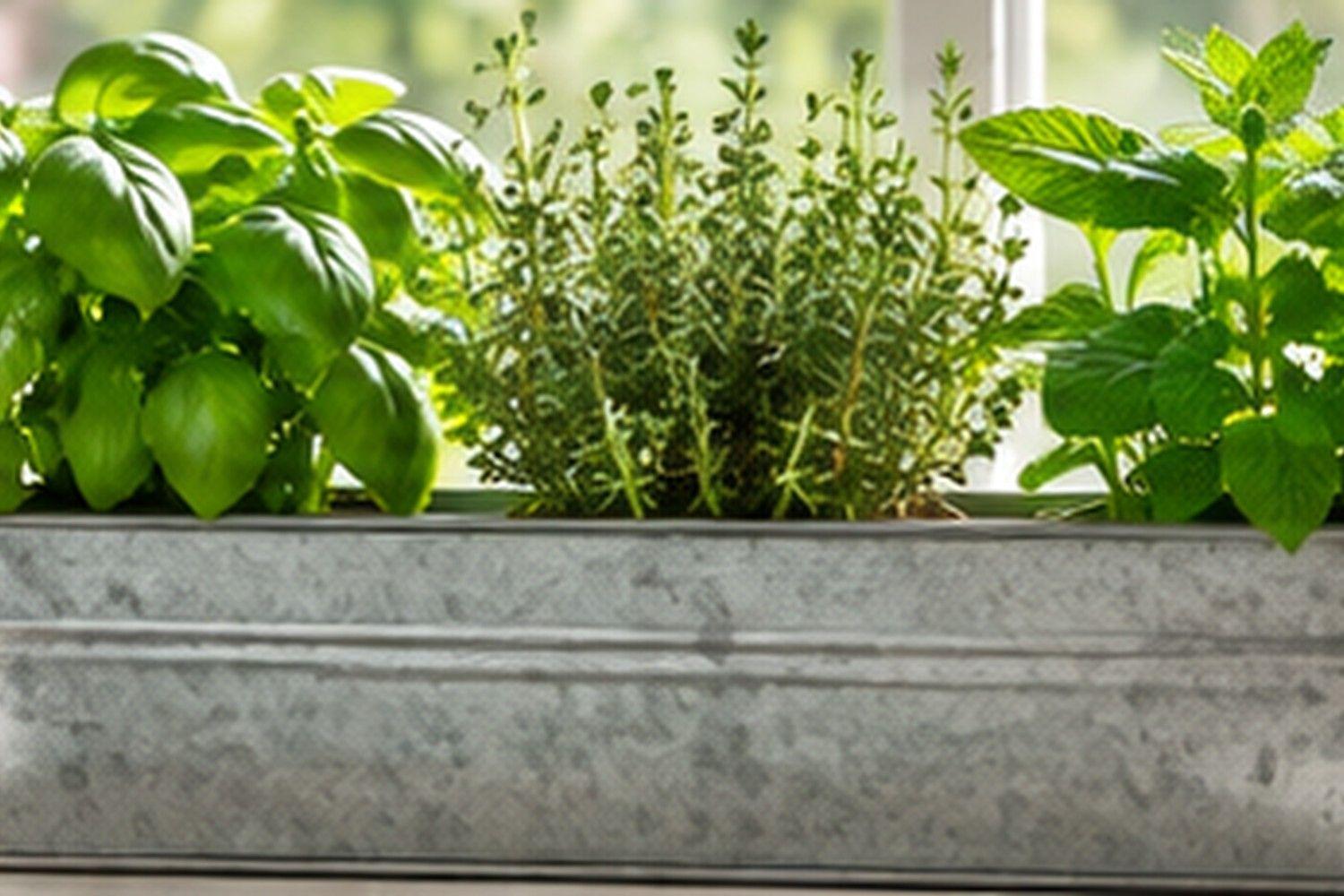
A coordinated set of metal herb pots can give a kitchen a relaxed farmhouse look. Barnyard Designs' indoor herb planter sets have been featured in indoor herb planter roundups as a decorative option for displaying several small plants together.
This style works especially well on a wide windowsill, open shelf, or kitchen counter where the pots can sit in a row. The matching tray helps create a unified display and can catch small drips, depending on the exact set design.
Why it stands out
- Coordinated containers create a tidy group display.
- Metal finish suits farmhouse, cottage, and rustic kitchens.
- Separate pots make it easier to move one herb to the sink or a brighter spot.
What to check before buying: Confirm that the individual pots have drainage holes and that the tray is water-resistant. If the containers are metal without a liner, use a nursery pot inside or a suitable waterproof insert to protect the finish and nearby surfaces.
6. Terracotta Herb Pot Set: Best Natural and Timeless Look
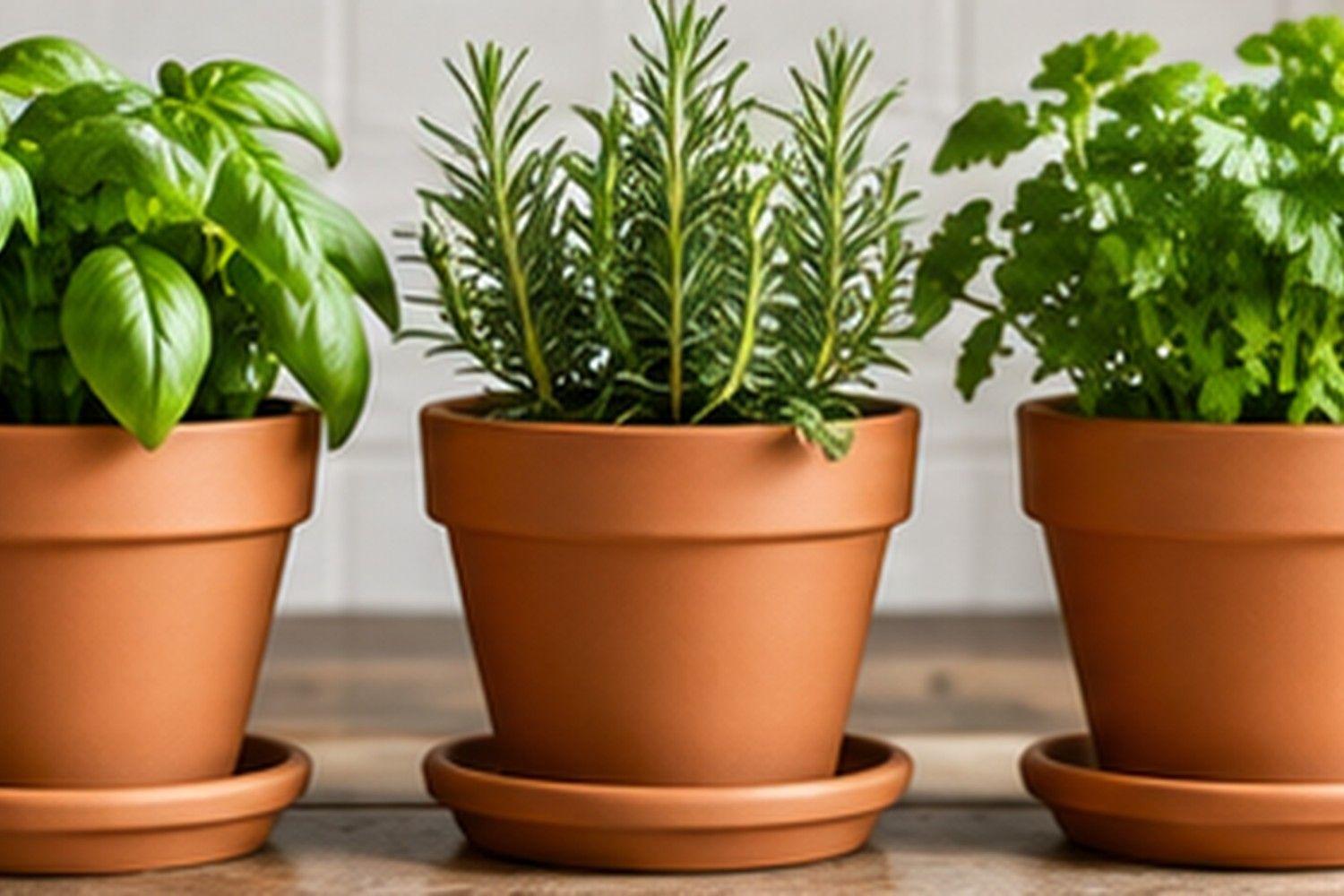
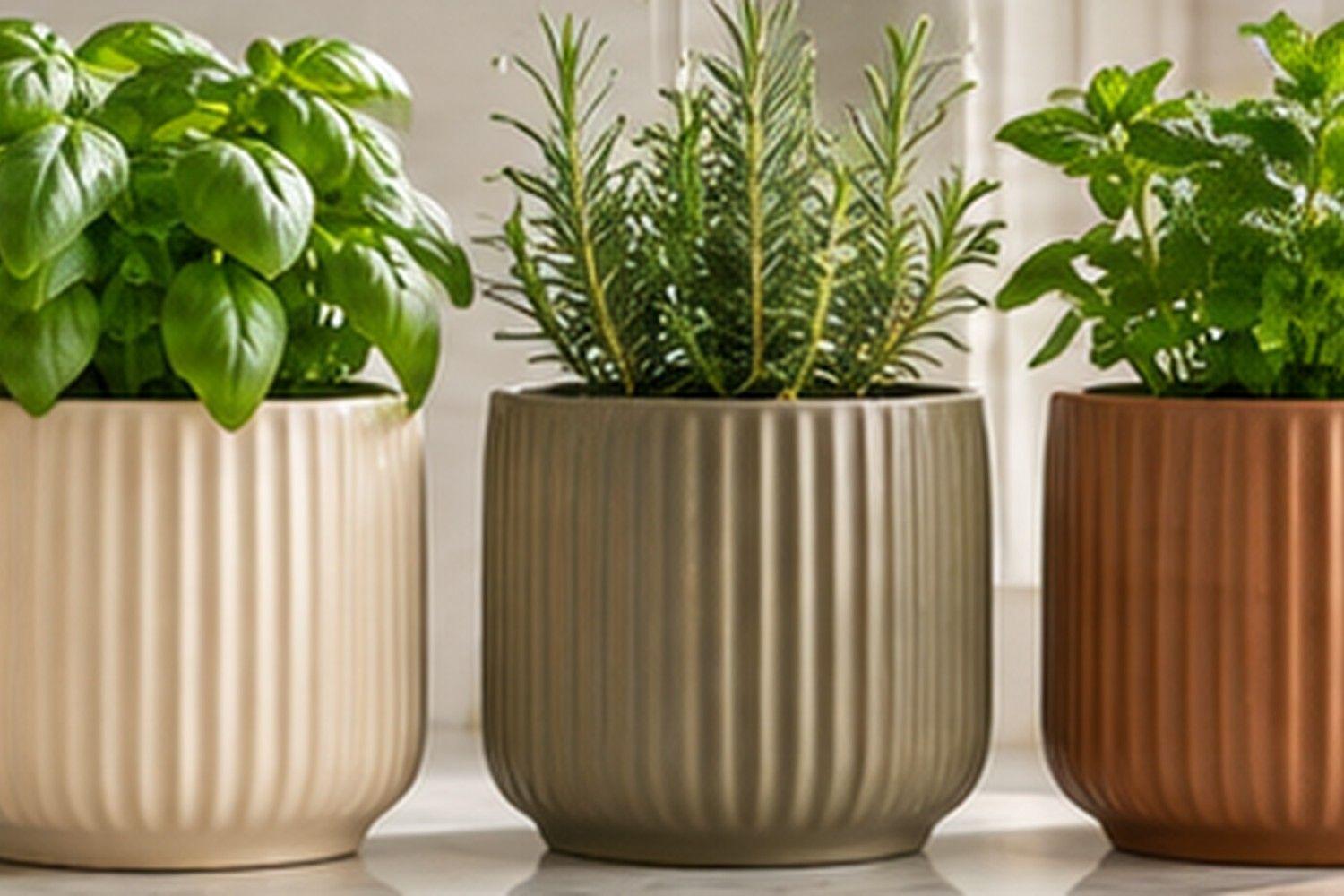
Terracotta is a classic choice for growing herbs because the unglazed clay is porous. It allows air and moisture to move through the pot walls, which can help the growing mix dry more evenly. A set of small terracotta pots looks especially attractive with rosemary, thyme, oregano, and other Mediterranean herbs.
Choose pots with drainage holes and matching saucers. The natural orange-brown finish pairs easily with wood, stone, white tile, and neutral kitchen décor. You can also use a simple row of identical pots for a more intentional look.
Why it stands out
- Warm, natural material with a timeless appearance.
- Porous walls can help reduce the risk of persistently wet potting mix.
- Individual pots allow different herbs to have their own watering routine.
What to check before buying: Terracotta dries out faster than many glazed or plastic containers, so check soil moisture more often. Choose a size that gives roots room to grow, and use saucers to protect the counter. Do not let water collect in the saucer for long periods.
7. Ceramic Windowsill Trough: Best for a Neat Row of Herbs
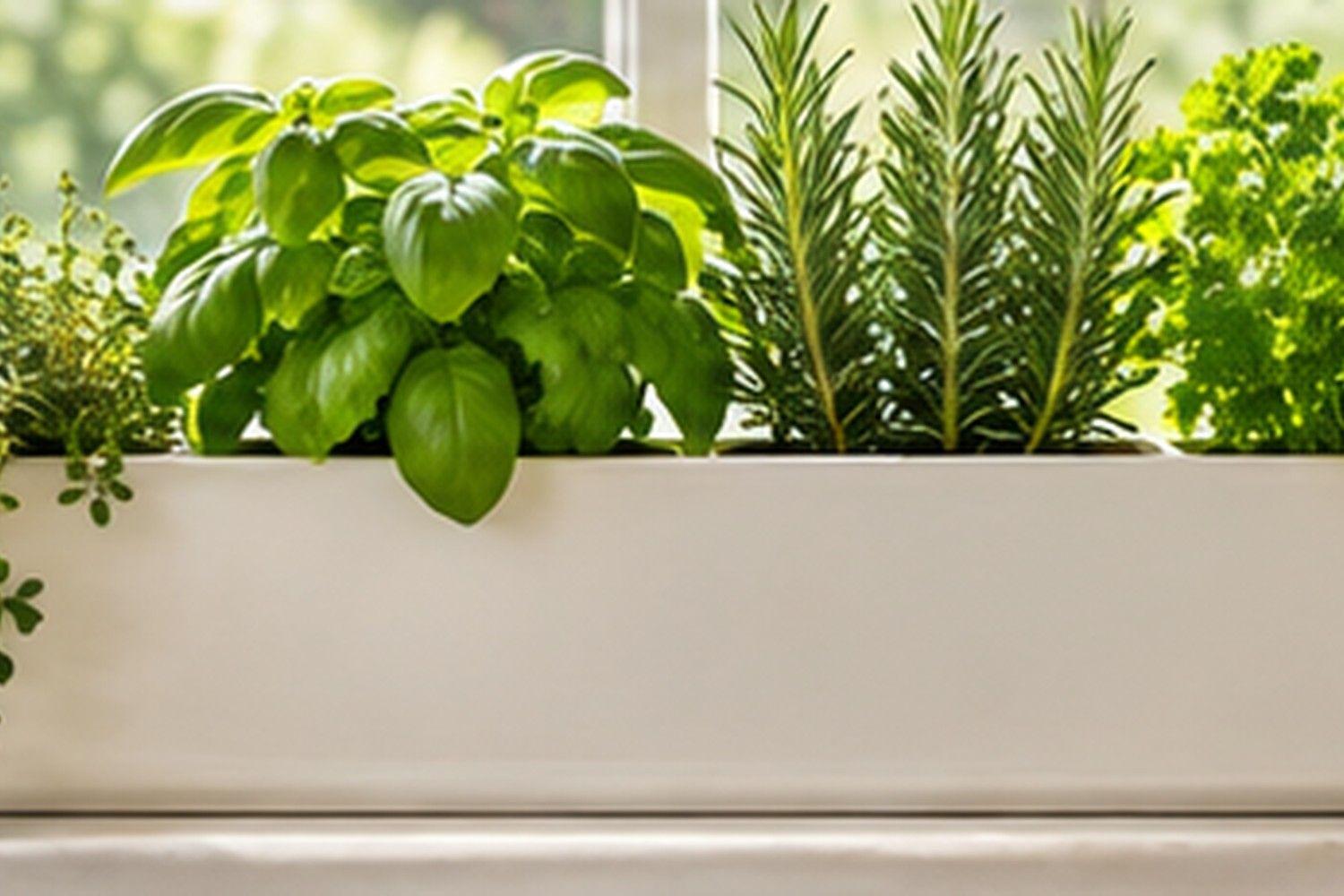
A long ceramic trough is an elegant way to display several herbs in one place. Its horizontal shape makes it suitable for a broad windowsill or a narrow counter against a bright window. A white, cream, or soft neutral finish can make the greenery stand out without competing with the rest of the kitchen.
Plant herbs in separate nursery pots and arrange them inside the trough if you want easy replacement and different watering routines. Alternatively, choose a trough with drainage and plant directly into it, using an appropriate potting mix and leaving enough room between plants.
Why it stands out
- Holds several small herb plants in one coordinated display.
- Makes good use of a long windowsill.
- Neutral ceramic suits modern, Scandinavian, and cottage-inspired interiors.
What to check before buying: Measure the sill depth and length before ordering. Look for drainage holes and a matching saucer, or confirm that the trough is designed as an outer cachepot. Avoid crowding mature herbs together; airflow and room for growth matter.
8. Wall-Mounted Herb Planter: Best for Small Kitchens
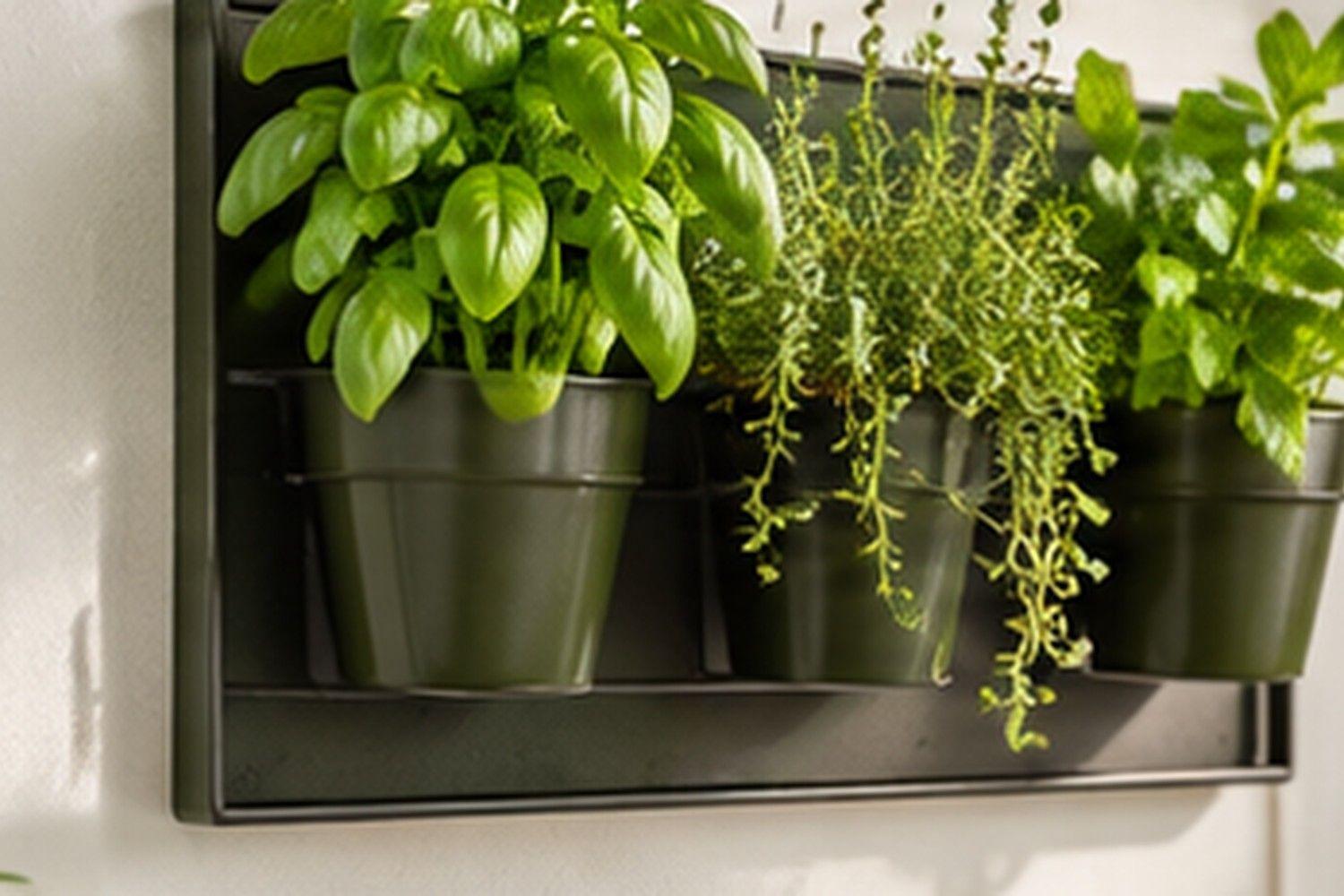
When counter space is limited, a wall-mounted planter can turn an unused vertical area into a compact herb display. Choose a design with removable pots or pockets so that plants can be taken down for watering, pruning, and cleaning.
A wall planter can look especially effective above a prep counter or near a bright kitchen window. It also creates a layered green feature that feels more decorative than a row of ordinary pots. The Glowpear wall planter has been featured in The Kitchn's indoor planter roundup as a way to grow several herbs vertically.
Why it stands out
- Frees up valuable counter space.
- Creates a living feature on an otherwise empty wall.
- Can hold several herbs in a compact footprint.
What to check before buying: Confirm the mounting hardware, loaded weight, wall type, and watering arrangement. Install into suitable wall framing or anchors according to the manufacturer's instructions. Protect the wall from leaks and choose a position with enough light for the herbs you plan to grow.
How to Choose the Right Indoor Herb Planter
A beautiful planter is only a good buy if it supports healthy growth. Before choosing a style, consider these practical details.
1. Check Drainage First
Most culinary herbs do not thrive when their roots remain in soggy soil. Drainage holes allow excess water to escape, while a saucer or waterproof tray protects the surface underneath. If you fall in love with a pot that has no drainage, use it as an outer cover for a smaller nursery pot with holes.
Self-watering planters are a special case: follow the manufacturer's setup instructions, use the recommended growing medium, and monitor the reservoir. A water reservoir should not be treated as permission to keep the soil permanently saturated.
2. Match the Planter to the Herb
Different herbs have different moisture preferences. Basil and parsley generally prefer more consistent moisture, while rosemary, thyme, and oregano prefer a well-drained mix and should not sit wet. Mint grows vigorously and often does best in its own container.
For that reason, separate pots are often more flexible than planting every herb into one large box. If you choose a trough, group herbs with similar watering needs.
3. Measure Your Space
Measure the width and depth of your windowsill or counter before ordering. Check the full height of a planter with its grow light, not just the container. Leave enough space to reach the reservoir, lift out inner pots, and trim the plants.
Also consider the weight of a filled ceramic or terracotta container. A long row of wet soil can be surprisingly heavy on a narrow shelf.
4. Think About Light
Most culinary herbs need several hours of bright light each day. A sunny south- or west-facing window may work in some homes, while other rooms may need supplemental lighting. A built-in grow-light planter can help where natural light is inadequate, but follow the product's recommended distance and schedule.
5. Choose Materials That Fit Your Routine
- Ceramic: Decorative and available in many finishes; check drainage and weight.
- Terracotta: Breathable and classic, but dries faster and may need more frequent watering.
- Metal: Stylish and durable, but use a liner or inner pot if needed to prevent corrosion and protect surfaces.
- Wood: Warm and natural; ensure the interior is properly lined and water cannot seep through joints.
- Plastic or resin: Lightweight and often practical for reservoirs, but choose a stable design that suits your décor.
Styling Tips for an Aesthetic Indoor Herb Garden
- Repeat one or two finishes, such as matte white ceramic and natural wood, to make mixed pots look coordinated.
- Use a tray to group small containers and catch drips.
- Place taller rosemary or basil behind lower thyme or oregano so every plant remains visible.
- Add simple plant labels if you grow several similar-looking herbs.
- Keep the arrangement close enough to the kitchen work area to be useful, but not so close to a hot stove that leaves are exposed to heat.
- Leave space between pots for airflow and easy pruning.
Frequently Asked Questions
What is the best planter for an indoor herb garden?
For a simple decorative setup, choose individual pots with drainage and saucers. For a compact self-watering option, consider the Cole & Mason herb keeper. If your kitchen lacks bright natural light, a system such as Click & Grow Smart Garden 3 or AeroGarden Harvest Elite offers integrated grow lighting.
Do indoor herb planters need drainage holes?
Drainage is strongly recommended for most soil-filled herb pots because it allows excess water to escape. If a decorative container has no hole, keep the plant in a removable nursery pot and empty any water collected in the outer pot.
Are self-watering planters good for herbs?
They can be useful for herbs that prefer more consistent moisture, such as basil and parsley. They are not ideal for every herb or every watering style. Rosemary, thyme, and oregano prefer good drainage and should not remain in constantly wet soil.
Can I grow basil, mint, and rosemary in the same planter?
It is usually easier to grow them in separate pots. Mint spreads vigorously, basil generally prefers more consistent moisture, and rosemary prefers a drier, well-drained root zone. Separate containers let you manage each plant's needs.
How much light do indoor herbs need?
Many culinary herbs need several hours of bright light daily. A sunny window may be enough, but growth can become weak in dim rooms. Consider a suitable grow light if natural light is limited, and follow the manufacturer's placement and timing guidance.
How often should I water indoor herbs?
There is no universal schedule. Check the growing mix with your finger and water according to the plant's needs, pot size, temperature, and light. Water thoroughly when needed, then allow excess water to drain. Do not rely only on a calendar reminder.
Final Thoughts
The best aesthetic indoor herb garden planter balances good looks with the needs of the plants. A colorful ceramic pot makes a lovely single-herb accent, a self-watering keeper is convenient for a small countertop, and a hydroponic garden can be useful when natural light is limited. For a classic arrangement, terracotta pots or a ceramic windowsill trough are simple choices that can suit almost any kitchen.
Measure your space, check drainage, and choose herbs with similar care needs before buying. With the right setup, a small indoor herb garden can be both a practical cooking resource and a beautiful part of your home.
Sources
- The Kitchn: 10 Planters That Will Help You Grow a Thriving Indoor Herb Garden. Checked November 7, 2026
- Popular Mechanics: The 9 Best Indoor Herb Gardens. Checked November 7, 2026
- Good Housekeeping: Best Indoor Herb Gardens. Checked November 7, 2026
- Bob Vila: The Best Self-Watering Planters of 2026. Checked November 7, 2026
Share this article
Get new guides by email
Practical home articles and free resources. No spam, and you can unsubscribe at any time.
Keep reading
10 DIY Terracotta Clay Pot Tower Garden Ideas
Discover 10 DIY terracotta clay pot tower garden ideas, with practical planting, drainage, stability, and care tips for patios, balconies, and small gardens.
November 2026, 9 min read
Reading a Pesticide or Fertilizer Label Before You Use It
The label on a lawn or garden product is a legal document, not a suggestion, and it contains the exact information that keeps a product from harming people, pets or nearby water. Here is how to read one.
September 2026, 3 min read