Best Grass Seed for Ohio Spring Planting
Choose grass seed for Ohio spring planting by sun, shade, wear, and maintenance, with five illustrated options and a clear explanation of seasonal timing.
By Home Crane Editors. . 5 min read.

For many sunny Ohio lawns, turf-type tall fescue is a useful first seed category to investigate. Kentucky bluegrass, perennial ryegrass, fine fescues, and carefully labeled mixtures can be better matches for different shade, wear, appearance, and maintenance needs. There is no single bag that is best for every yard.
Spring seeding is possible, but it gives new grass less time before summer stress and creates competition with spring weeds. Ohio State's spring-seeding advice treats it as the second-choice season. Its establishment guidance generally favors August 15 through September 30, with an earlier window in northern Ohio.
If bare soil needs attention now, select seed for the site and plan establishment care. If you can wait, consider preparing for the stronger late-summer opportunity instead of repeatedly buying seed for the wrong conditions.
1. Turf-type tall fescue for many sunny lawns
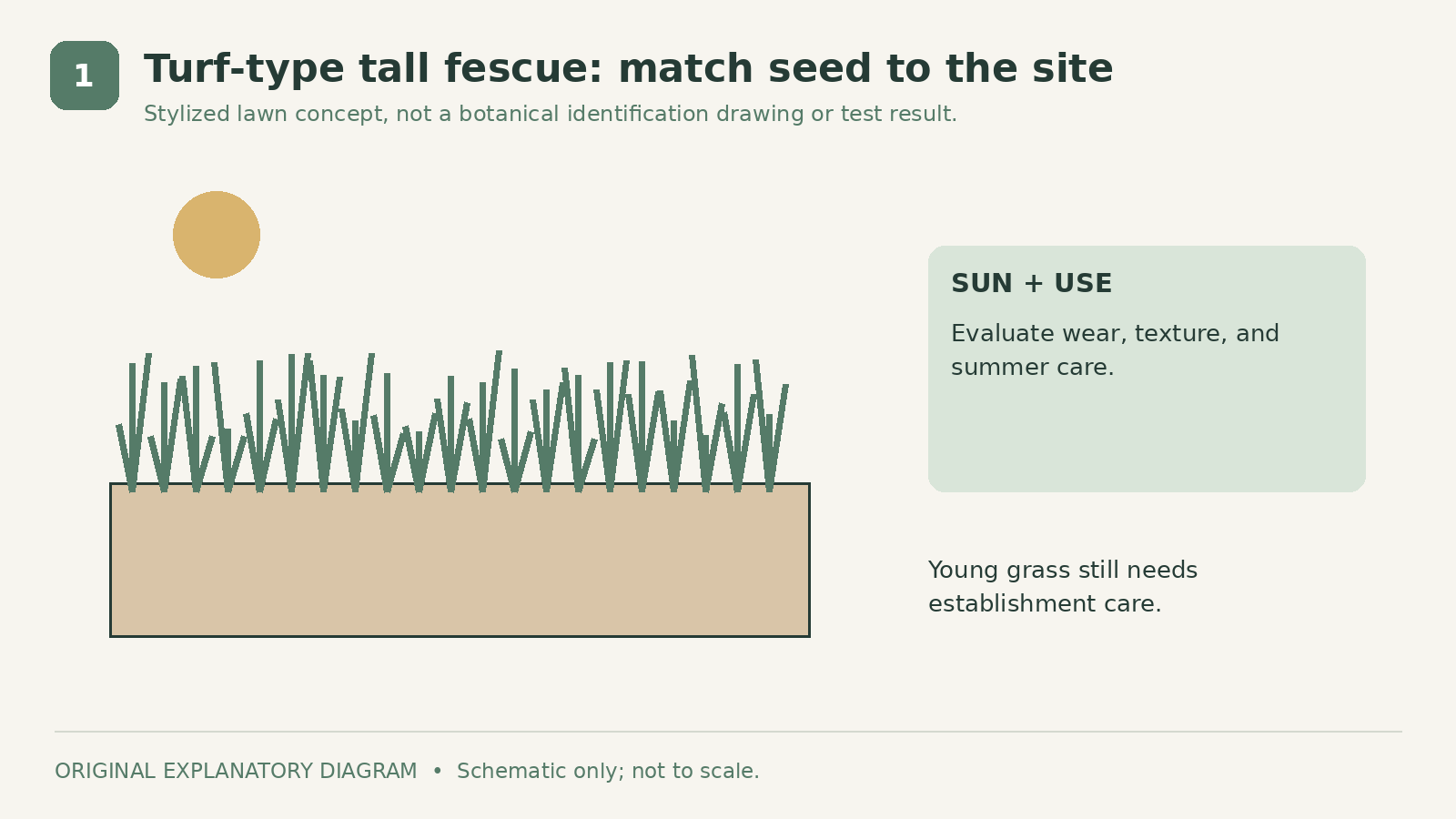
Turf-type tall fescue is worth considering for sunny lawns where you want a durable cool-season grass and some drought tolerance after establishment. Buy a lawn-oriented blend of suitable cultivars rather than assuming every tall-fescue product produces the same appearance.
Ohio Extension's grass-selection discussion notes the drought-related appeal of turf-type tall fescue and links regional cultivar information. That does not make young seedlings drought-proof. Spring establishment still needs reliable moisture and a plan for the first summer.
Look at the existing lawn before overseeding. A different texture or growth habit may be noticeable, especially when repairs are concentrated in isolated patches. Ask a local supplier to identify the existing grass if matching appearance matters. Choose a blend for its documented contents and regional suitability, not a front-of-bag phrase such as extreme or professional.
2. Kentucky bluegrass where recovery matters
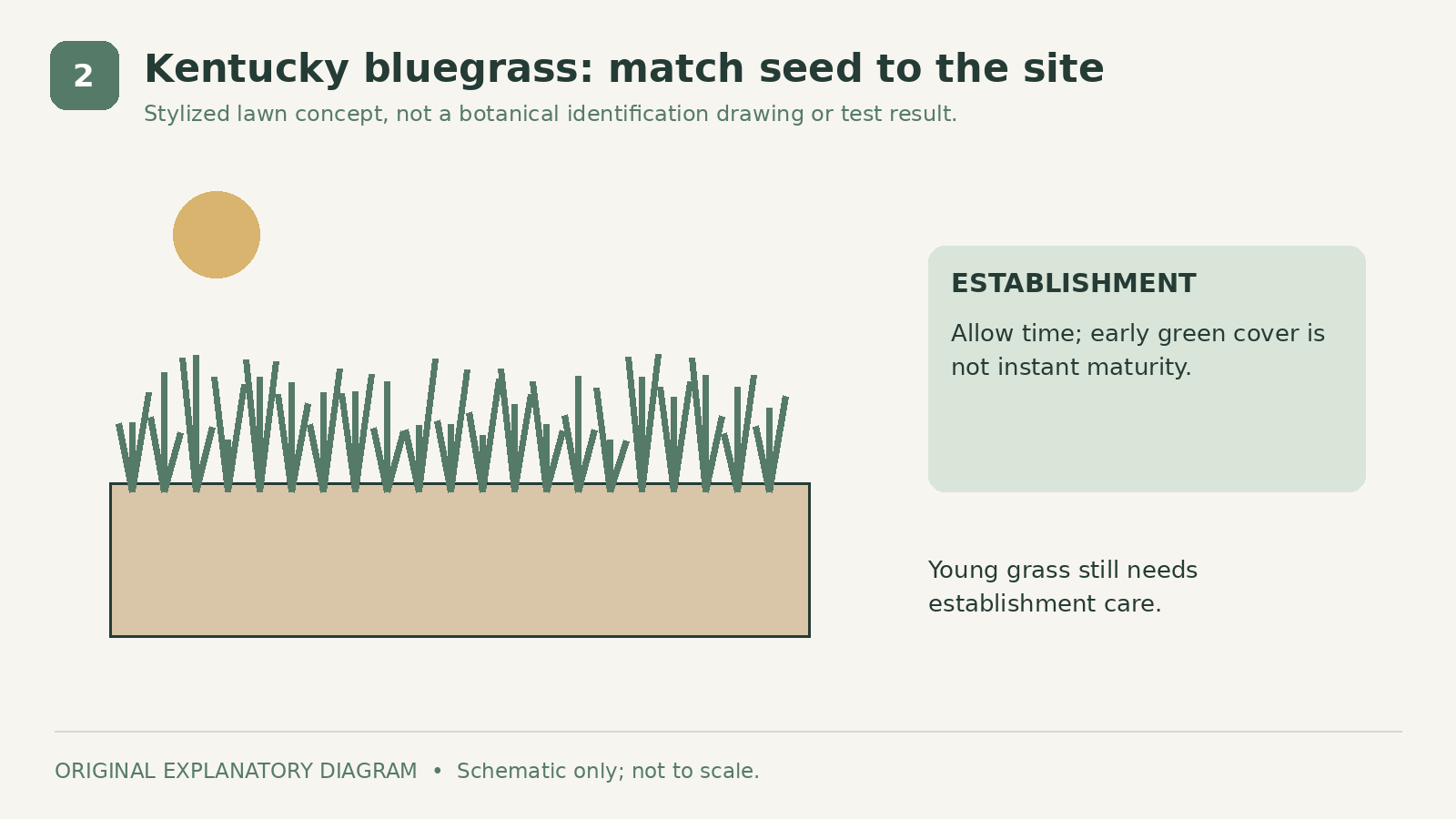
Kentucky bluegrass can suit an Ohio lawn where a dense appearance and recovery through spreading growth are priorities. Its slower establishment makes timing and early care particularly important. It may be a less convenient answer when you need rapid cover immediately before hot weather.
Purdue's spring-seeding guidance illustrates the comparatively long germination period associated with Kentucky bluegrass under its stated conditions. Actual emergence varies with soil temperature, moisture, and seed quality, so do not treat a package's shortest advertised time as a deadline.
For a repair, compare the seed with the surrounding grass and ask whether a mixture is appropriate. If the area sees heavy use, you still need to keep traffic off new seedlings. Recovery traits of an established lawn do not protect a newly seeded path from repeated foot traffic.
3. Perennial ryegrass for faster establishment
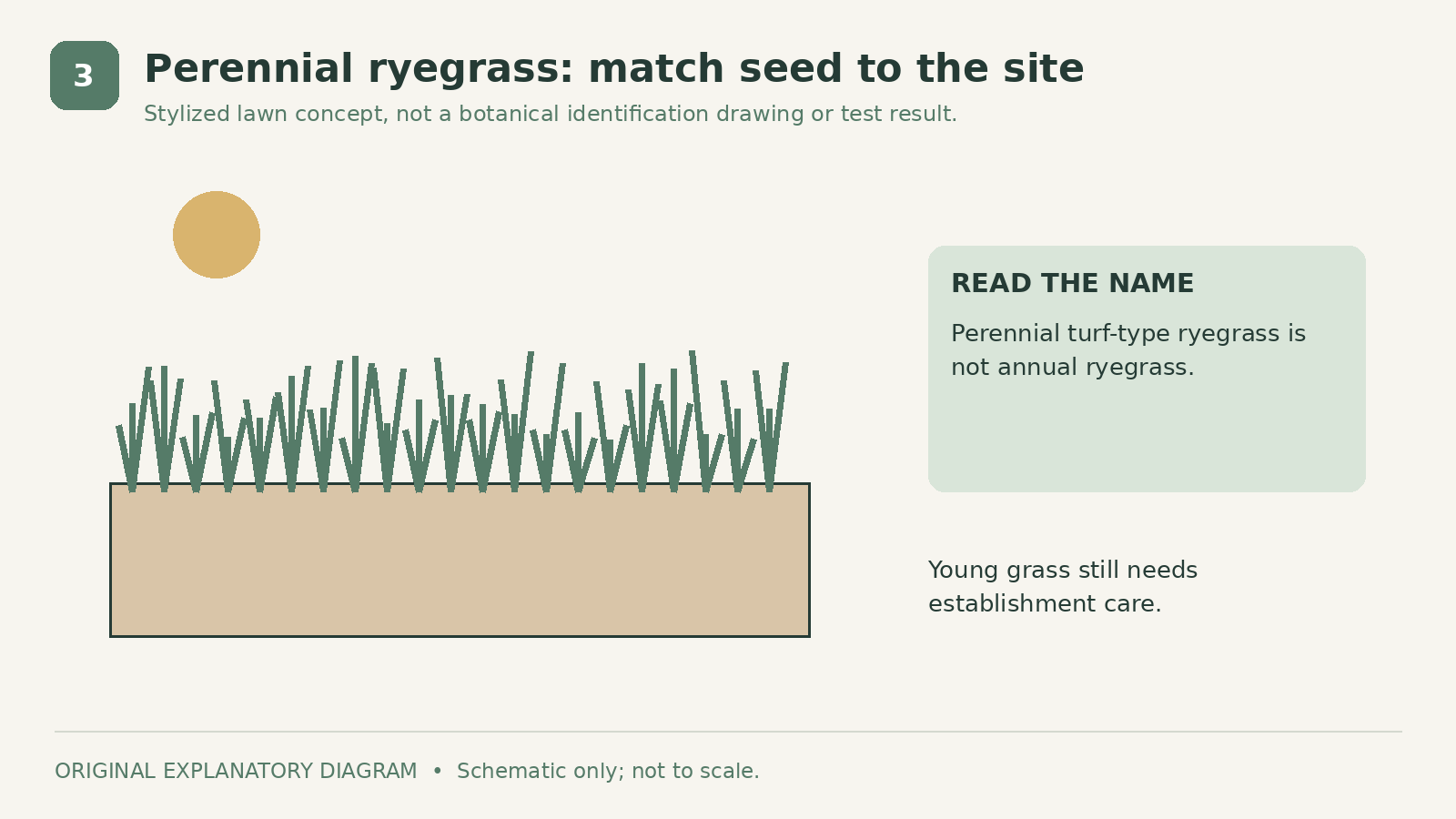
Perennial ryegrass is often considered when faster establishment matters. Distinguish perennial turf-type ryegrass from annual ryegrass used for temporary cover. The similar names can lead to a purchase that does not match your long-term lawn goal.
Faster emergence alone is not enough to choose the seed. Assess sun, maintenance, and compatibility with existing grass. A quick green appearance can be disappointing if the selected species is poorly suited to the site after the first month.
For mixtures, read the actual percentages and cultivar names rather than relying on the largest words on the package. Ask why ryegrass is included and what it contributes to that blend. If a seller recommends it solely because it sprouts quickly, follow up with questions about summer conditions and the finished lawn. Early cover and long-term performance are separate decisions.
4. Fine fescues for suitable shade and lower-input areas
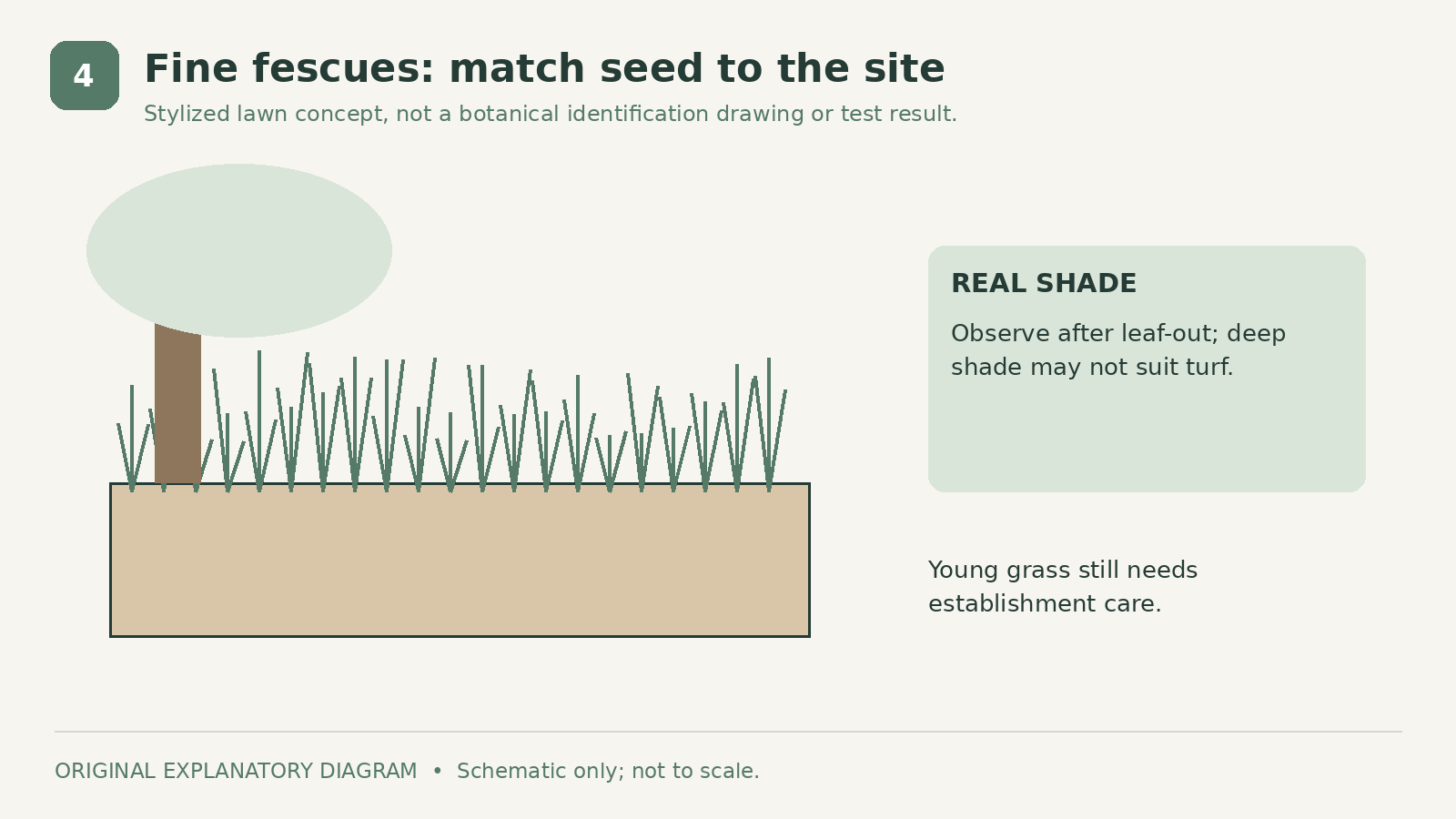
Fine fescues can suit some shaded or lower-input areas. The group includes several grasses with different characteristics, so a shade label should lead you to the ingredient list rather than end the comparison.
University of Minnesota Extension's lawn-selection guidance distinguishes fine-fescue mixtures for suitable shade and lower-input situations. Use that as cool-season-grass context, then confirm the blend with an Ohio source or local supplier.
Deep shade, compacted soil, and heavy traffic can make any lawn difficult. Observe the area after trees leaf out, not only on a sunny early-spring day. If grass repeatedly fails under a dense canopy, a suitable non-lawn surface or planting may be more practical than another shade-seed purchase. Avoid disturbing major tree roots to create an idealized seedbed.
5. A labeled mixture matched to the lawn
A mixture combines grass species, while a blend can combine cultivars within a species. Either can be useful when its contents fit the lawn. The label is more informative than an attractive photograph of perfectly uniform turf.
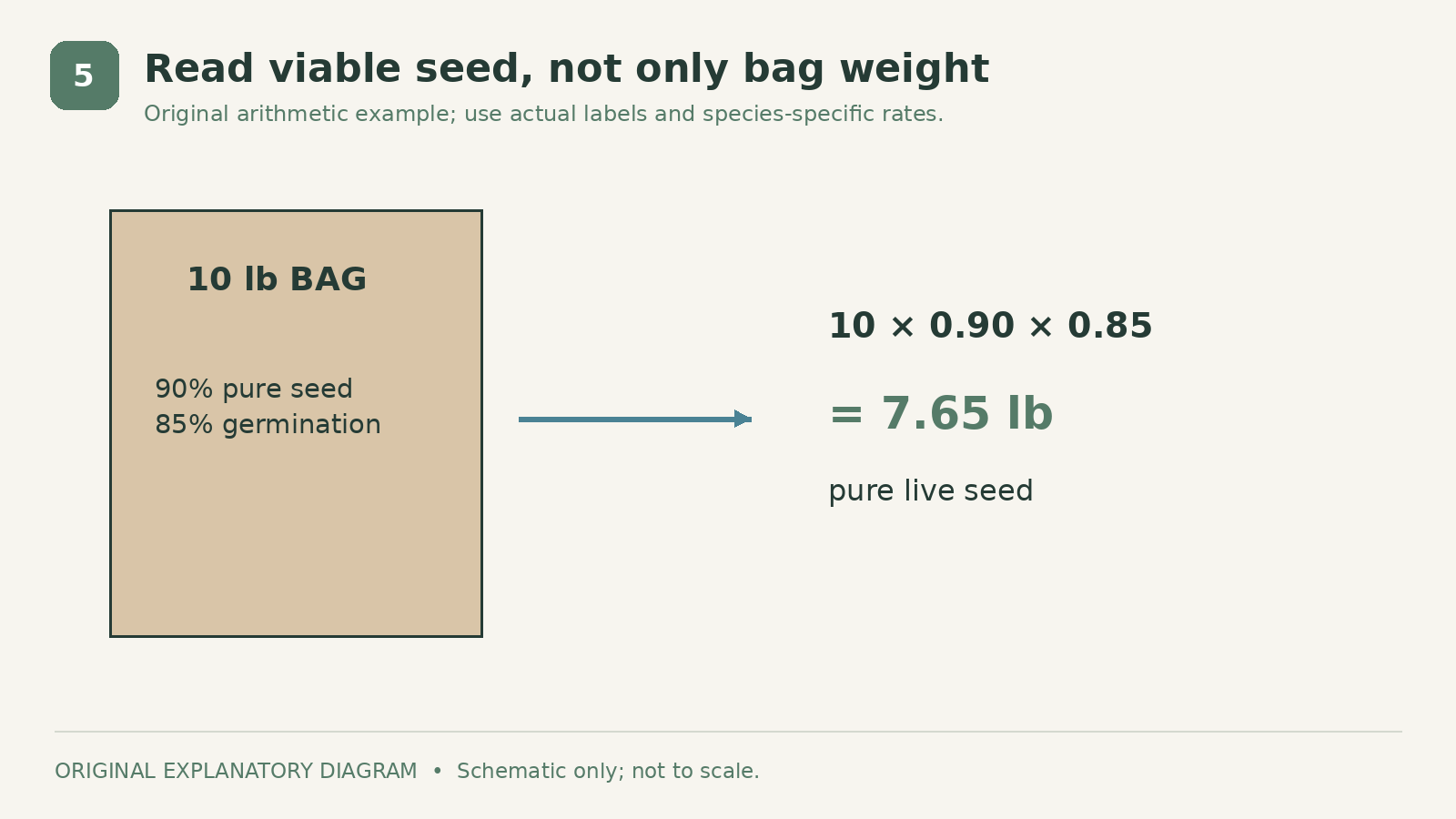
Compare pure-seed percentages, germination information, cultivar names, weed-seed information, and any coating or other material. Package weight alone does not tell you how much viable seed you are buying. Check the labeled seeding rate for a new lawn versus overseeding, because those are different applications.
As an original arithmetic example, 10 pounds of product at 90% pure seed and 85% germination represents 7.65 pounds of pure live seed: 10 × 0.90 × 0.85. This simplified calculation illustrates why two equally heavy bags may differ. Use the actual label and appropriate species rates when buying; do not apply one universal coverage figure to all mixtures.
Make spring seeding worth the effort
Identify why the patch is bare before selecting seed. Shade, drainage, traffic, compaction, or an unresolved soil problem can defeat the replacement just as they defeated the original grass. A soil test and local extension advice can help where the cause is unclear.
Prepare for seed-to-soil contact using a method suited to the existing lawn and site. Follow the selected seed's rate and extension guidance rather than burying it beneath an arbitrary thick layer. Water to maintain the needed seedbed moisture, adjusting for rainfall and conditions; a fixed number of minutes is not reliable across different sprinklers and soils.
Check any recent lawn-treatment labels before seeding. Some weed-control products interfere with establishment. Use the product's instructions and labeled waiting periods, rather than combining a spring weed treatment and new seed on the assumption that both are routine lawn care.
Buy for the lawn you actually have
Bring a photo, sun observations, approximate area, and a description of the existing grass to a knowledgeable local supplier. Explain whether this is a full renovation or patch repair and whether irrigation is available through establishment.
Choose a suitable species or mixture first, then compare current labeled products. If the site and timing are poor, scheduling a late-summer project may be the most effective purchase decision. Spring success depends on preparation and follow-through as much as the seed name.
Sources
- Ohio State University Extension: Spring Lawn Seeding Tips. Checked October 6, 2026
- Ohio State University Extension: Introducing the Turfgrass Establishment Series. Checked October 6, 2026
- Ask Extension: Kb FAQ. Checked October 6, 2026
- Purdue University Extension: Ay 20 W. Checked October 6, 2026
- University of Minnesota Extension: Renovating a Lawn for Quality and Sustainability. Checked October 6, 2026
Share this article
Get new guides by email
Practical home articles and free resources. No spam, and you can unsubscribe at any time.
Keep reading

15 Beautiful Xeriscaping Ideas for Colorado Front Yards
Explore 15 illustrated xeriscaping ideas for Colorado front yards, with grasses, flowers, shade, paths, useful lawn, and winter structure.
October 2026, 5 min read
The Best Grass Seed for North Carolina Lawns: Choose by Site
Choose North Carolina grass seed by region, sun, traffic, and upkeep. Compare tall fescue, Bermuda, centipedegrass, zoysia, and actual seed labels.
October 2026, 5 min read

Artificial Turf Cost in Arizona: Installation and Materials
Compare Arizona artificial turf materials and installation costs using an attributed Phoenix benchmark, clear exclusions, heat concerns, and a sample budget.
October 2026, 5 min read