Best Hanging Plants for a Low-Ceiling Porch
Discover the best hanging plants for a low-ceiling porch, plus compact basket ideas, shade-friendly choices, safe hanging tips, and easy care advice.
By Home Crane Editors. . 11 min read.
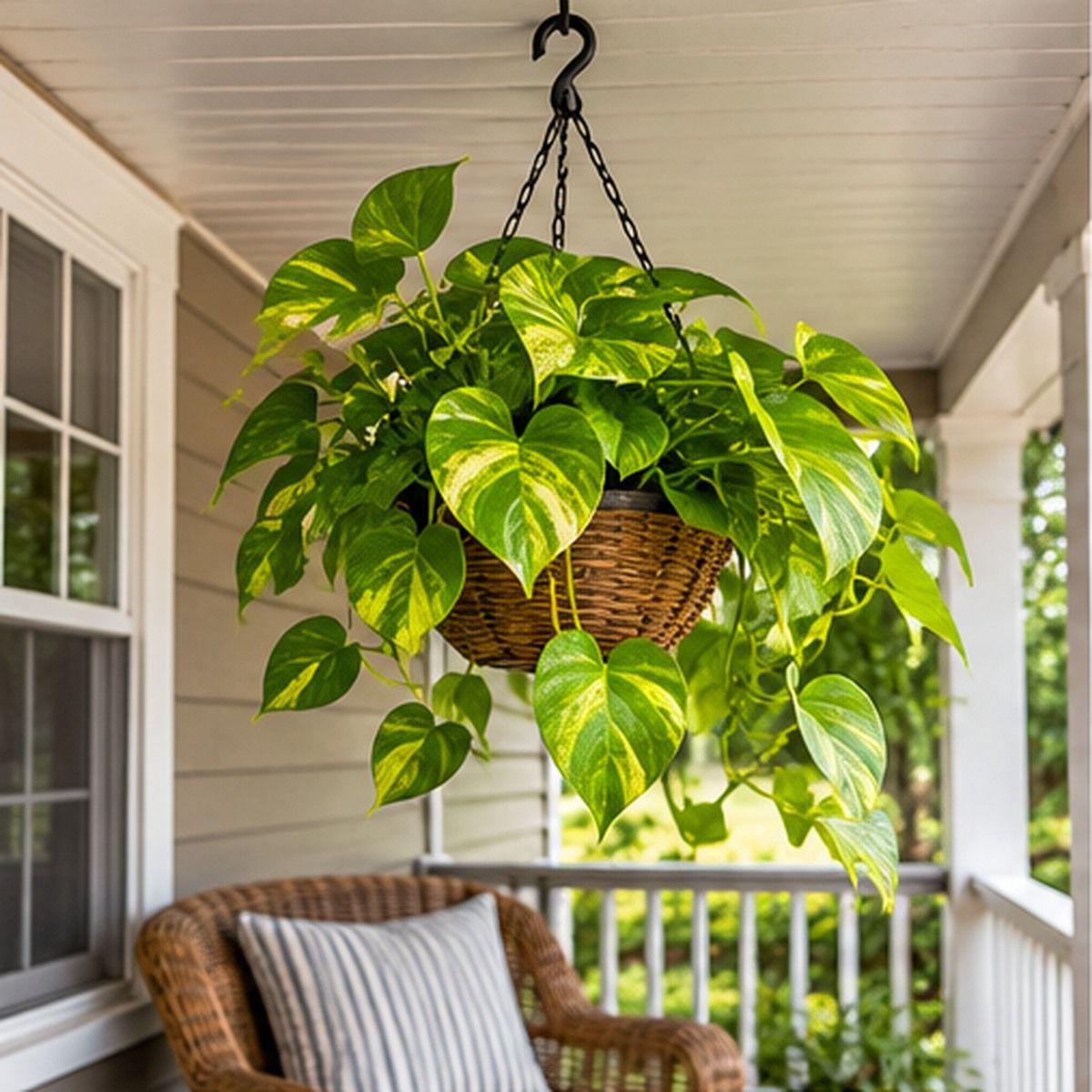
A low-ceiling porch can still feel lush, welcoming, and full of greenery. The trick is choosing hanging plants that look attractive without taking over the limited space above your head. Compact baskets, naturally trailing foliage, and plants that tolerate the porch’s actual light conditions are usually better choices than oversized planters with long, uncontrolled vines.
The best hanging plants for a low-ceiling porch bring visual interest without creating an obstacle. Pothos, spider plants, compact ferns, begonias, English ivy, and impatiens can all work when their light, watering, and temperature needs match the location. The right choice depends on whether your porch is bright, shaded, hot, humid, or exposed to wind.
This guide explains which plants to consider, how to keep them proportionate, and how to hang them safely when ceiling height is limited.
What Makes a Hanging Plant Suitable for a Low Porch Ceiling?
A plant can be beautiful and still be wrong for a low porch. Before buying a basket, consider four practical details.
A controlled growth habit
Look for plants that can be pruned easily or naturally form a compact mound. Short, arching leaves or a modest cascade often look better than a vine that quickly reaches head height. Pothos and ivy can be trimmed to a chosen length, while spider plants have a graceful arching shape that can be kept relatively compact.
A lightweight container
The container matters as much as the plant. A small plastic or resin pot, lightweight hanging basket, or modest wire basket with a liner is generally easier to manage than a large ceramic planter. Remember that wet potting mix weighs more than dry mix. Choose hardware rated for the complete wet load, not just the empty pot.
The right light tolerance
A covered porch may receive bright indirect light, a few hours of morning sun, or almost no direct sun. These are different growing conditions. Shade-tolerant plants still need daylight; a very dark porch may require a different location or supplemental lighting. Observe the space at different times of day before choosing.
A safe amount of clearance
Do not position a basket where it blocks a doorway, walkway, stair, or the normal path of someone carrying groceries. A low ceiling may make a ceiling-mounted basket impractical. A wall-mounted bracket, railing planter, or tall freestanding plant stand can create the same leafy effect without hanging a pot overhead.
1. Pothos: Best for an Easy, Adjustable Green Cascade
Pothos (*Epipremnum aureum*) is one of the most adaptable choices for a sheltered porch with indirect light. Its heart-shaped leaves and trailing stems create a relaxed, leafy look, and the vines can be trimmed whenever they become too long.
For a low-ceiling porch, choose a smaller basket and prune the longest stems before they reach head level. Solid-green varieties are often a practical choice in lower-light locations; highly variegated types generally show their strongest pattern in brighter indirect light.
Light: Bright, indirect light is ideal; it can tolerate lower light, although growth may slow.
Water: Let the upper portion of the potting mix dry before watering. Do not leave the roots sitting in water.
Best placement: A wall bracket near a bright window or a corner that receives filtered daylight.
Low-ceiling tip: Keep vines clipped to a short, deliberate outline rather than allowing them to hang into the walking area.
Important: Pothos is toxic if chewed by pets, so choose another plant if curious cats or dogs can reach it.
2. Spider Plant: Best for a Light, Airy Shape
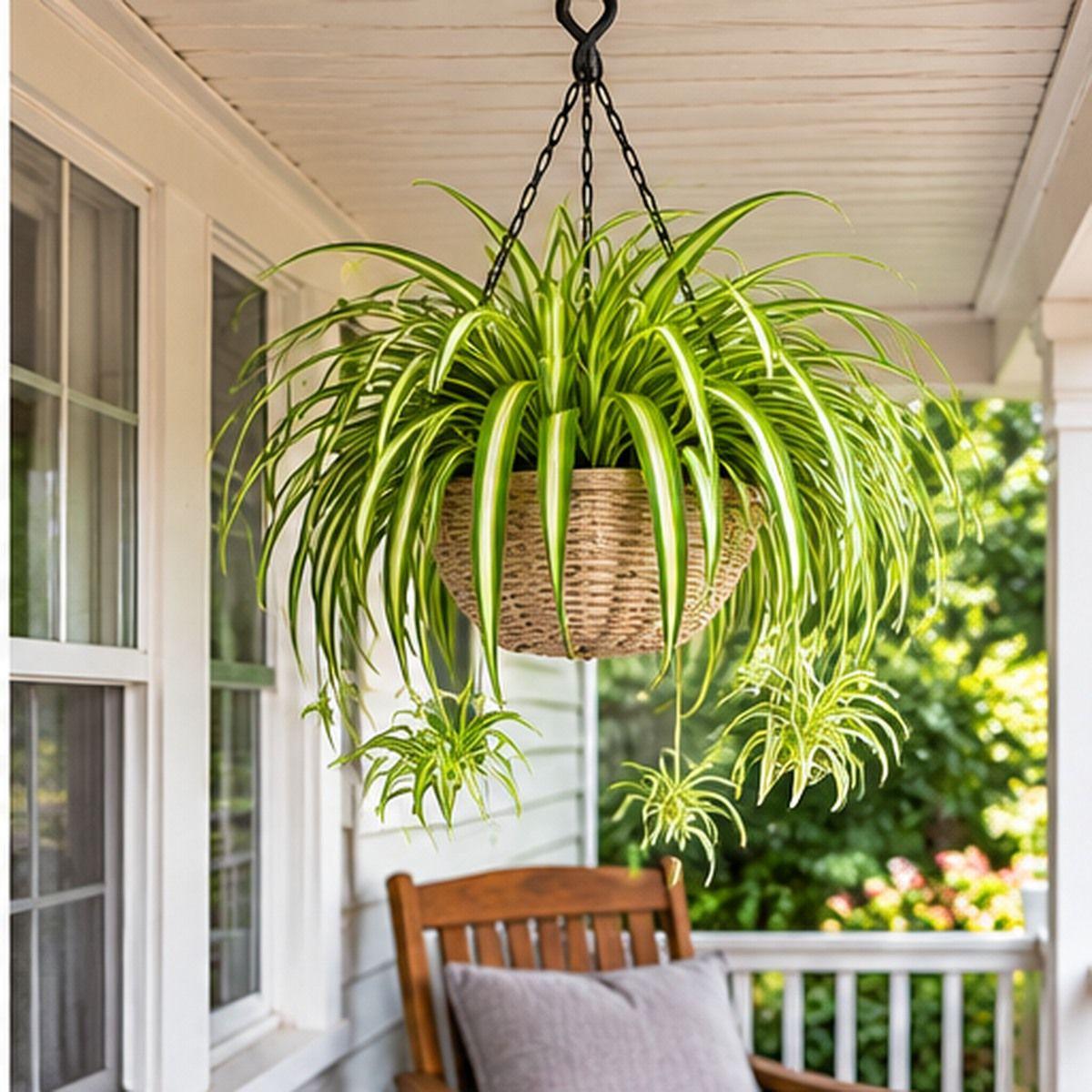
Spider plant (*Chlorophytum comosum*) has narrow, arching leaves that create movement without the dense bulk of a large fern. Mature plants may produce slender stems with small plantlets, giving a hanging basket a delicate, layered appearance.
It is a particularly useful option when you want foliage that looks full but does not need to trail several feet downward. Choose a compact pot and remove plantlets or long stems if the porch begins to feel crowded.
Light: Medium to bright indirect light; it can tolerate some shade but avoid harsh, prolonged direct sun.
Water: Water when the surface of the mix begins to dry, allowing excess water to drain.
Best placement: A bright shaded corner or a protected spot near a window.
Low-ceiling tip: Select a young or compact plant and trim away extra plantlets to keep its overall profile neat.
Spider plants are also commonly listed as a pet-friendlier houseplant option, although pets should not be encouraged to chew any ornamental plant.
3. Compact Ferns: Best for a Soft, Lush Look
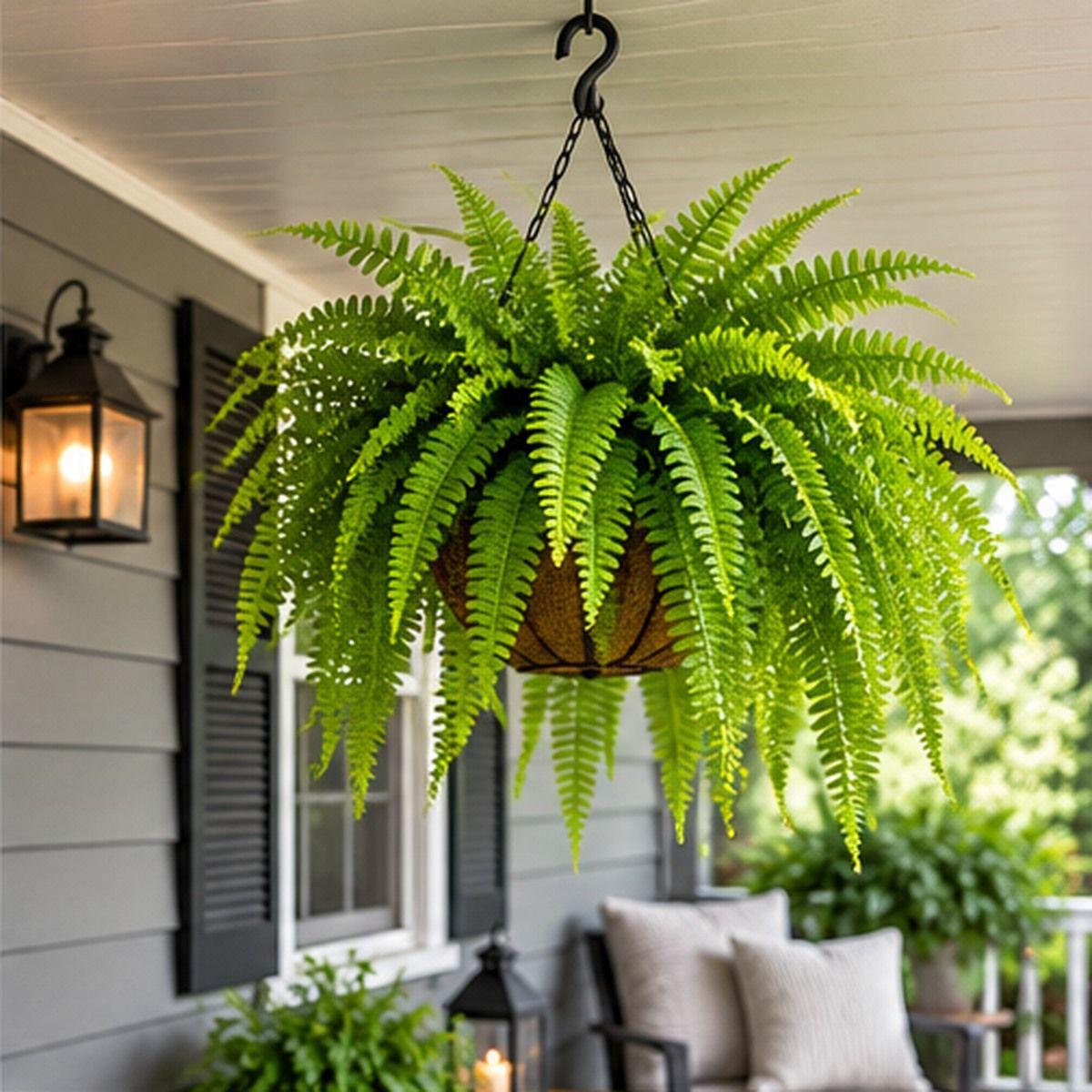
Ferns bring fine texture and a softer, fuller appearance to a porch. Boston fern (*Nephrolepis exaltata*) is a familiar hanging-basket choice, with arching fronds that spill gently over the container.
The main consideration is size. A mature Boston fern can become broad and heavy, so it may not suit a very narrow porch or a ceiling with little clearance. Start with a smaller plant, choose a compact variety where available, and keep the fronds trimmed away from the path.
Light: Bright shade or filtered light is usually preferable; protect the plant from intense direct afternoon sun.
Water: Keep the mix evenly moist but not waterlogged. Hanging baskets can dry faster than ground-level pots, so check them regularly.
Best placement: A sheltered, humid porch that does not receive harsh direct sun.
Low-ceiling tip: Use a smaller basket and position it at the side of the porch rather than over a chair or walkway.
If the porch is hot, dry, and windy, a fern may need more attention than a tougher foliage plant. Match the plant to the microclimate instead of choosing it only for its appearance.
4. Begonias: Best for Color in a Compact Basket
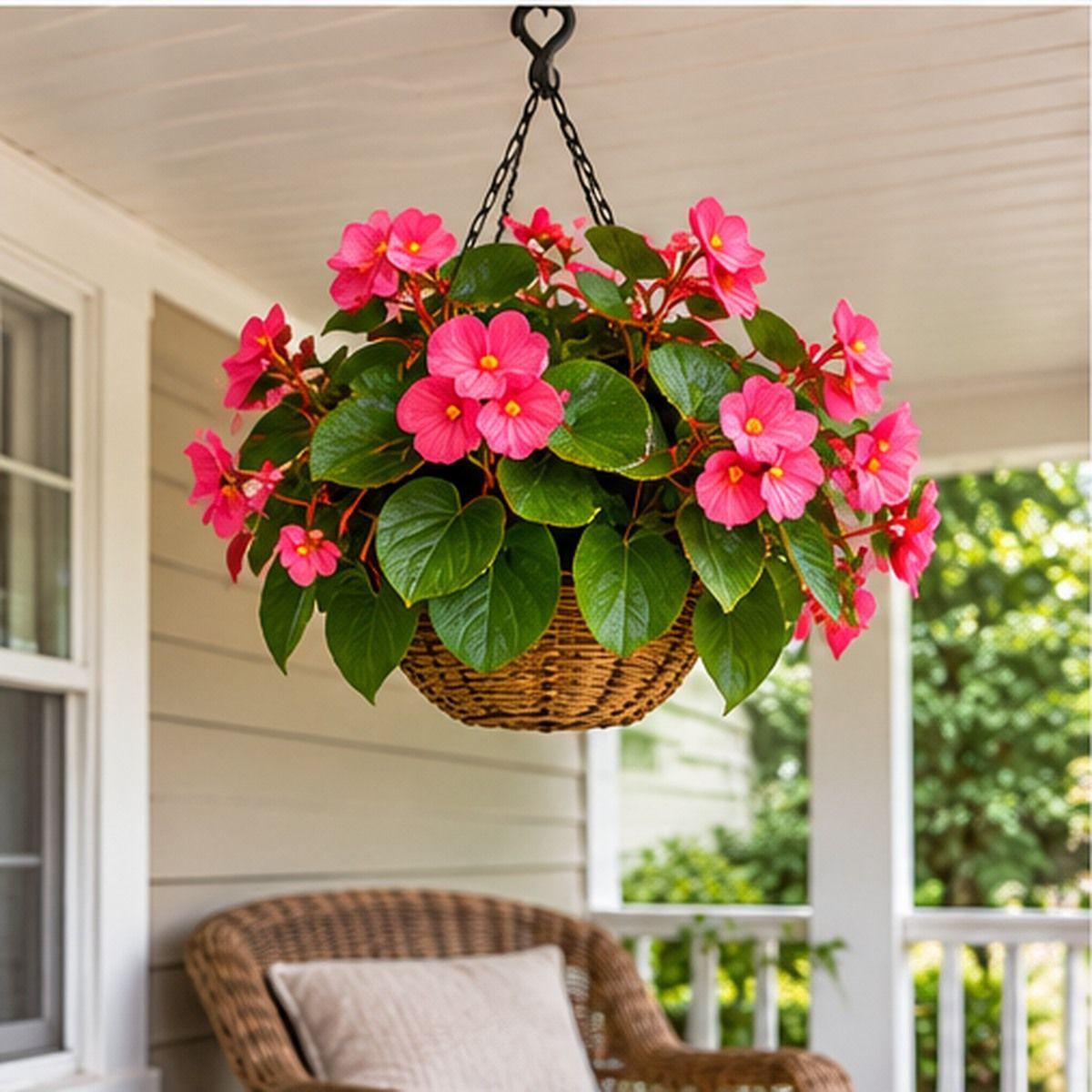
Begonias are a useful option when you want flowers without a large trailing plant. Depending on the type, they can provide colorful blooms and attractive foliage in a relatively compact container.
Wax begonias and some trailing types can work in bright shade or partial shade. Check the label for the specific cultivar because begonia varieties do not all have identical light and moisture requirements.
Light: Bright shade or gentle morning light for many common basket varieties; protect from strong afternoon sun.
Water: Water when the top of the mix begins to dry. Avoid keeping the foliage and soil constantly wet.
Best placement: A sheltered corner with good daylight and protection from intense sun.
Low-ceiling tip: Choose a compact, upright or gently trailing variety instead of a vigorous type that spreads far beyond the basket.
Begonias are a strong choice for porches where foliage alone feels too plain. A single basket can add color without needing a row of large hanging planters.
5. English Ivy: Best for a Classic, Neat Trailing Effect
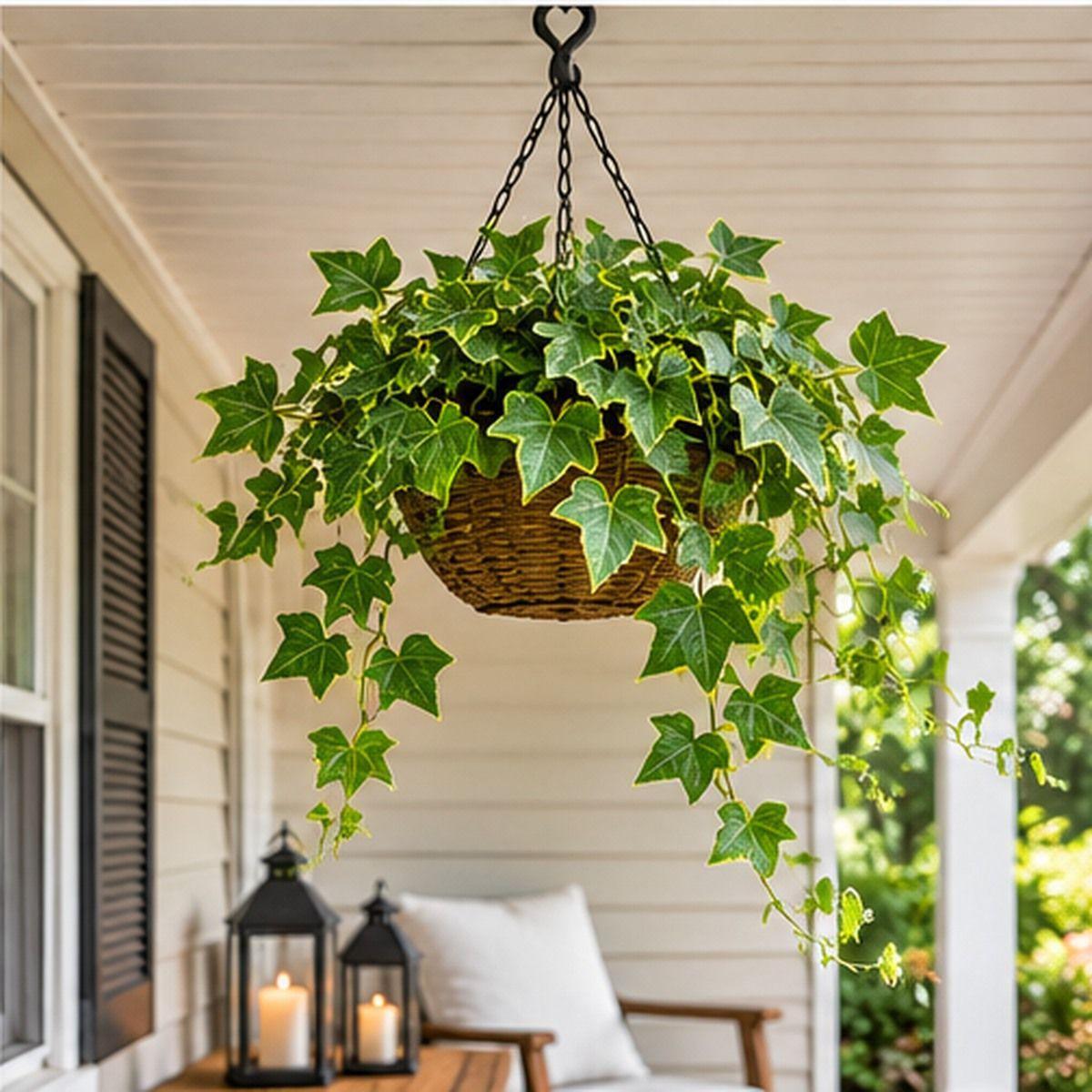
English ivy (*Hedera helix*) has small, recognizable leaves and flexible stems that can be trained or trimmed. It suits traditional porch styling, especially in a simple dark or natural-fiber basket.
Its trailing habit needs management in a low space. Keep the stems short, remove damaged growth, and avoid allowing the plant to spread onto railings, siding, or neighboring plants. Ivy can become invasive in some regions when planted outdoors, so keep it contained and check local guidance before using it in a landscape.
Light: Bright indirect light to partial shade, depending on variety.
Water: Water when the top layer of potting mix begins to dry; do not leave the basket saturated.
Best placement: A protected spot with good airflow and filtered light.
Low-ceiling tip: Treat ivy as a clipped accent. A few short trails look intentional; long dangling stems can make a small porch feel cramped.
English ivy is toxic if ingested and may irritate skin in some people. Keep it away from pets and children who may handle or chew the leaves.
6. Impatiens: Best for Flowers in a Shadier Porch
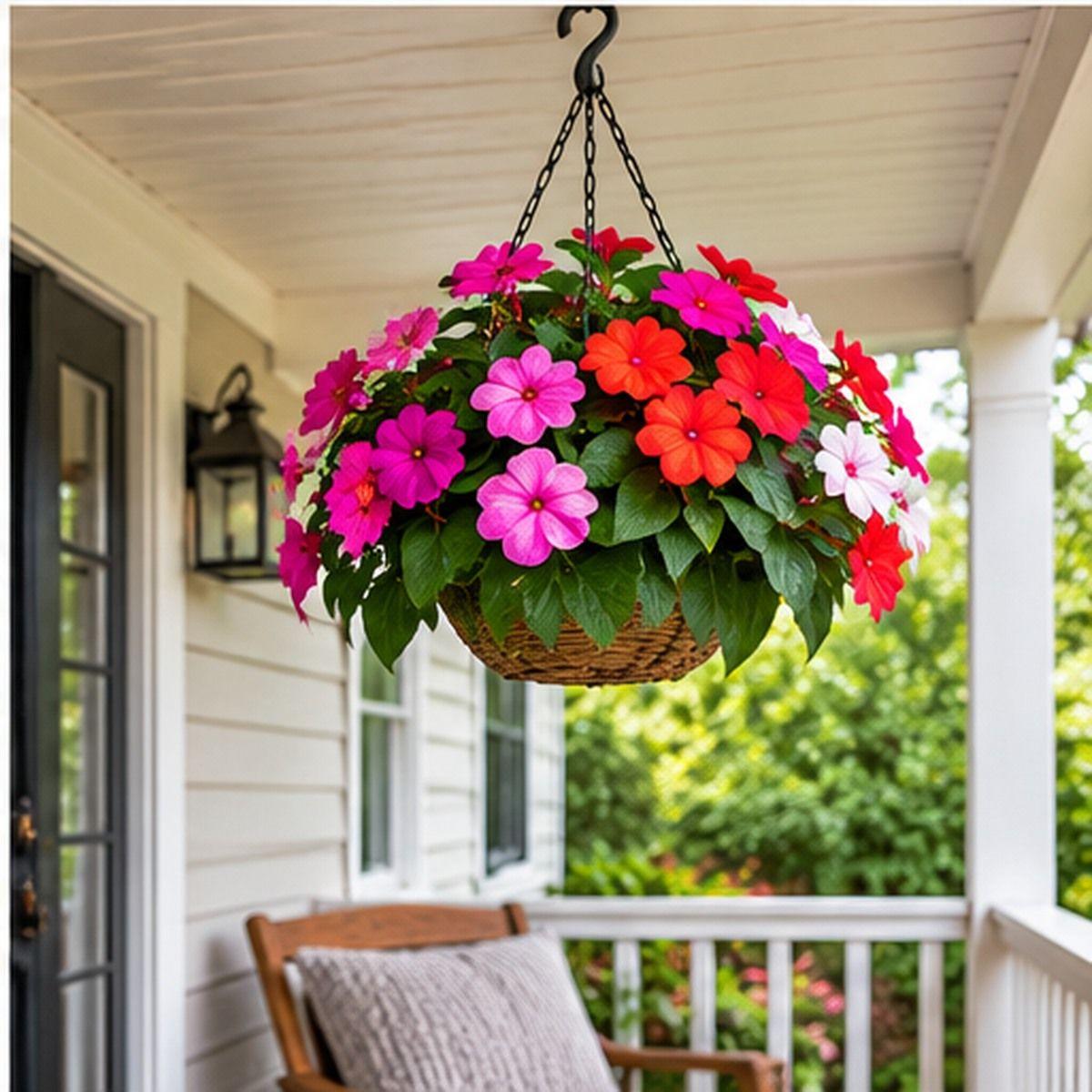
Impatiens can provide a generous display of color in locations that receive shade or filtered light. Their compact growth makes them a useful choice for smaller baskets, and they can brighten a porch without relying on long vines.
Choose a basket variety or a compact cultivar suited to the amount of light your porch receives. New Guinea impatiens generally prefer brighter filtered light than some traditional shade impatiens, so read the plant label before purchasing.
Light: Shade to partial shade, depending on the type.
Water: Keep the potting mix consistently moist but well-drained. Check more often during hot weather.
Best placement: A protected porch that receives daylight but little intense direct sun.
Low-ceiling tip: Use one compact basket as a color accent rather than hanging several large flowering baskets in a narrow space.
Impatiens are a good seasonal choice if you enjoy changing porch colors throughout the year. They may need replacing when the weather becomes unsuitable for the variety.
Best Hanging Plants by Porch Condition
| Feature | Plants to consider | What to watch |
|---|---|---|
| Bright shade | Spider plant, pothos, compact fern | Avoid assuming shade means darkness |
| Mostly shade | Impatiens, shade-tolerant begonia, selected ferns | Keep moisture consistent without waterlogging |
| Morning sun | Begonia varieties, spider plant, some flowering baskets | Acclimate plants gradually |
| Hot, bright exposure | Choose sun-rated trailing annuals instead | Shade plants may scorch or wilt |
| Windy, exposed porch | Tougher, compact plants in secure containers | Wind dries baskets and stresses stems |
Plant labels and local nursery advice matter because varieties differ. A plant that performs well on a humid, shaded porch may struggle on a hot porch with reflected afternoon heat.
How to Hang Plants When the Porch Ceiling Is Low
You do not need to suspend every plant from the ceiling. In fact, a low porch often looks better when hanging greenery is used sparingly.
Use wall-mounted brackets
A bracket fixed to a suitable structural surface can move the basket toward the edge of the porch, where it is less likely to interfere with people sitting or walking. Use fasteners appropriate for the wall material and the expected load. Do not attach a heavy basket to thin trim, siding, or an unsupported soffit.
Try railing planters
A railing planter creates the hanging-basket look without taking up overhead space. Confirm that the planter is securely attached and does not obstruct the handrail or reduce the usable width of the porch.
Choose short hangers
If you do use a ceiling hook, keep the chain or hanger short and place the basket where there is generous head clearance. The hook must be installed into a joist or an appropriately rated structural anchor. A decorative ceiling board is not automatically strong enough to support a wet planter.
Use a plant stand for extra height
A narrow plant stand can lift a trailing plant off the floor without placing anything over your head. It is also easy to move when you need to clean the porch or rearrange furniture.
Keep the arrangement simple
One or two well-chosen baskets usually look more polished than a crowded ceiling. Repeat the same container finish for a coordinated look, and vary leaf shape rather than mixing too many colors and textures.
Choosing the Right Basket and Potting Mix
A low-ceiling porch benefits from containers that are compact, light, and easy to remove for maintenance. Plastic and resin baskets are generally lighter than ceramic or terracotta. Wire baskets with liners can look natural, but coir and moss liners may dry out more quickly than solid plastic containers.
Use a quality potting mix made for containers rather than dense garden soil. Garden soil can be heavy and may drain poorly in a hanging basket. Make sure the container has drainage holes, and consider a removable drip tray or a watering routine that prevents runoff from staining the porch floor.
Do not combine plants simply because they look good together. Put species with similar light and watering needs in the same basket. A moisture-loving fern and a drought-tolerant succulent, for example, are unlikely to be happy with the same watering schedule.
Hanging Plant Care: A Simple Routine
Hanging baskets can dry out faster than larger containers on the ground, especially in warm or windy conditions. Check the soil regularly rather than following a rigid calendar.
- Check moisture: Feel the potting mix before watering. Water needs vary with plant type, container size, temperature, and exposure.
- Water thoroughly: Apply water until excess drains from the bottom, then allow the basket to drain fully.
- Remove dead leaves: Trim damaged or yellowing foliage to keep the plant tidy and improve airflow.
- Prune early: Shorten vines before they reach head height or block a view.
- Feed carefully: Use a fertilizer suitable for the plant and follow the label. More fertilizer does not automatically mean better growth.
- Inspect the hardware: Check hooks, chains, brackets, and fasteners periodically for rust, loosening, or wear.
The Royal Horticultural Society and university extension services note that hanging baskets can need frequent watering in warm weather. Check daily during hot periods, but water only when the plant and potting mix need it.
Common Mistakes to Avoid on a Low-Ceiling Porch
- Choosing a basket that is too large: A large wet planter can be heavy and visually overpower a small porch.
- Hanging plants over the main walkway: Even a beautiful plant becomes a hazard if people keep bumping into it.
- Ignoring the light: Shade-tolerant plants still need daylight, and sun-loving flowers may struggle in deep shade.
- Mixing incompatible plants: Different watering and light requirements make mixed baskets harder to maintain.
- Using weak hardware: Always account for the weight of the wet container and mature plant.
- Letting vines grow unchecked: Regular trimming keeps the porch open and comfortable.
- Forgetting drainage: Standing water can damage surfaces and encourage root problems.
Frequently Asked Questions
What is the best hanging plant for a low-ceiling porch?
Pothos is a strong all-around choice for a sheltered porch with indirect light because its vines can be trimmed to a controlled length. Spider plant is another good option if you prefer arching leaves rather than long trailing stems.
Can I hang plants from a porch ceiling that is only eight feet high?
Possibly, but the available clearance depends on the basket depth, hanger length, and the height of people using the porch. Measure from the floor to the bottom of the proposed basket and keep it away from doorways and walking routes. A wall bracket or railing planter may be safer.
Which hanging plants do well in porch shade?
Spider plants, pothos, selected ferns, impatiens, and some begonias can work in bright shade or filtered light. Very dark areas may not provide enough light for healthy growth.
How many hanging plants should I use?
Start with one or two compact baskets. Add more only if the porch still has comfortable headroom and clear walking space. A small porch often looks better with a few carefully placed plants than with a crowded ceiling.
Do hanging baskets need watering every day?
Not always. Some baskets may need daily checks in hot or windy weather, while others stay moist longer. Check the potting mix and the plant’s needs rather than watering automatically.
Are hanging plants safe around pets?
Not all are. Pothos and English ivy are toxic if chewed. Spider plants are generally considered a more pet-friendly option, but keep all planters secure and prevent pets from eating ornamental plants.
Final Thoughts
The best hanging plants for a low-ceiling porch are compact, easy to prune, and suited to the light your porch actually receives. Pothos offers an adjustable green cascade, spider plants add airy movement, compact ferns bring soft texture, and begonias or impatiens provide color in brighter shade.
Keep baskets small, use secure hardware, and protect the walking area. If there is not enough headroom for a hanging planter, a wall bracket or railing planter can deliver the same welcoming greenery without making the porch feel cramped.
Sources
- Iowa State University Extension: Creating and Growing Hanging Baskets. Checked November 7, 2026
- Purdue University Extension: Hanging Baskets. Checked November 7, 2026
- University of Illinois Extension: Hanging Baskets. Checked November 7, 2026
- University of Florida IFAS: Choosing a Container for Your Plant. Checked November 7, 2026
- North Carolina State Extension: Spider Plant. Checked November 7, 2026
- Royal Horticultural Society: Hanging Baskets. Checked November 7, 2026
Share this article
Get new guides by email
Practical home articles and free resources. No spam, and you can unsubscribe at any time.
Keep reading
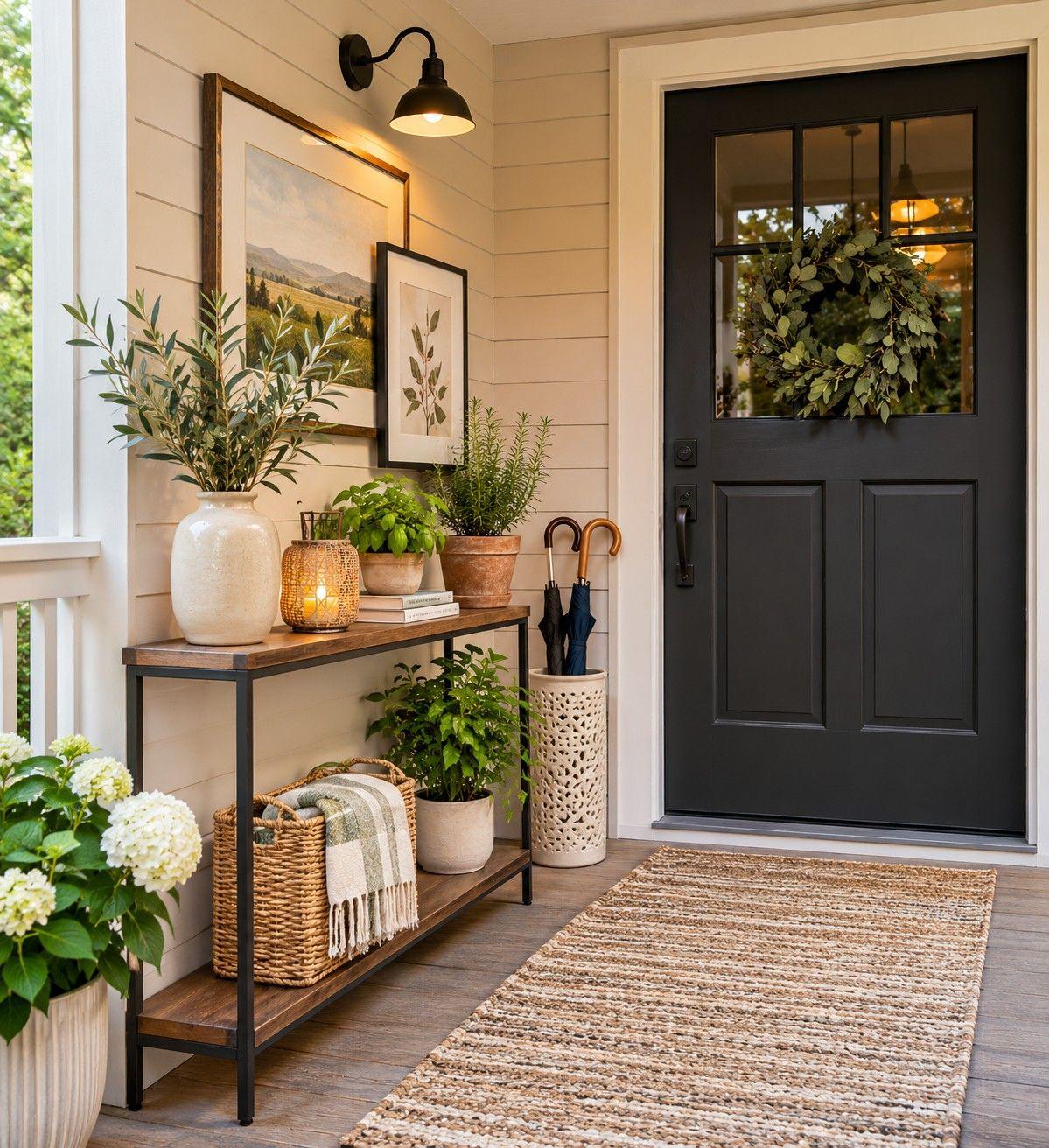
Small Front Porch Decorating Ideas for a Cozy Setup
Make a tiny entry feel welcoming with 15 small front porch decorating ideas, from slim seating and layered rugs to planters, warm lighting and renter-friendly touches.
November 2026, 12 min read
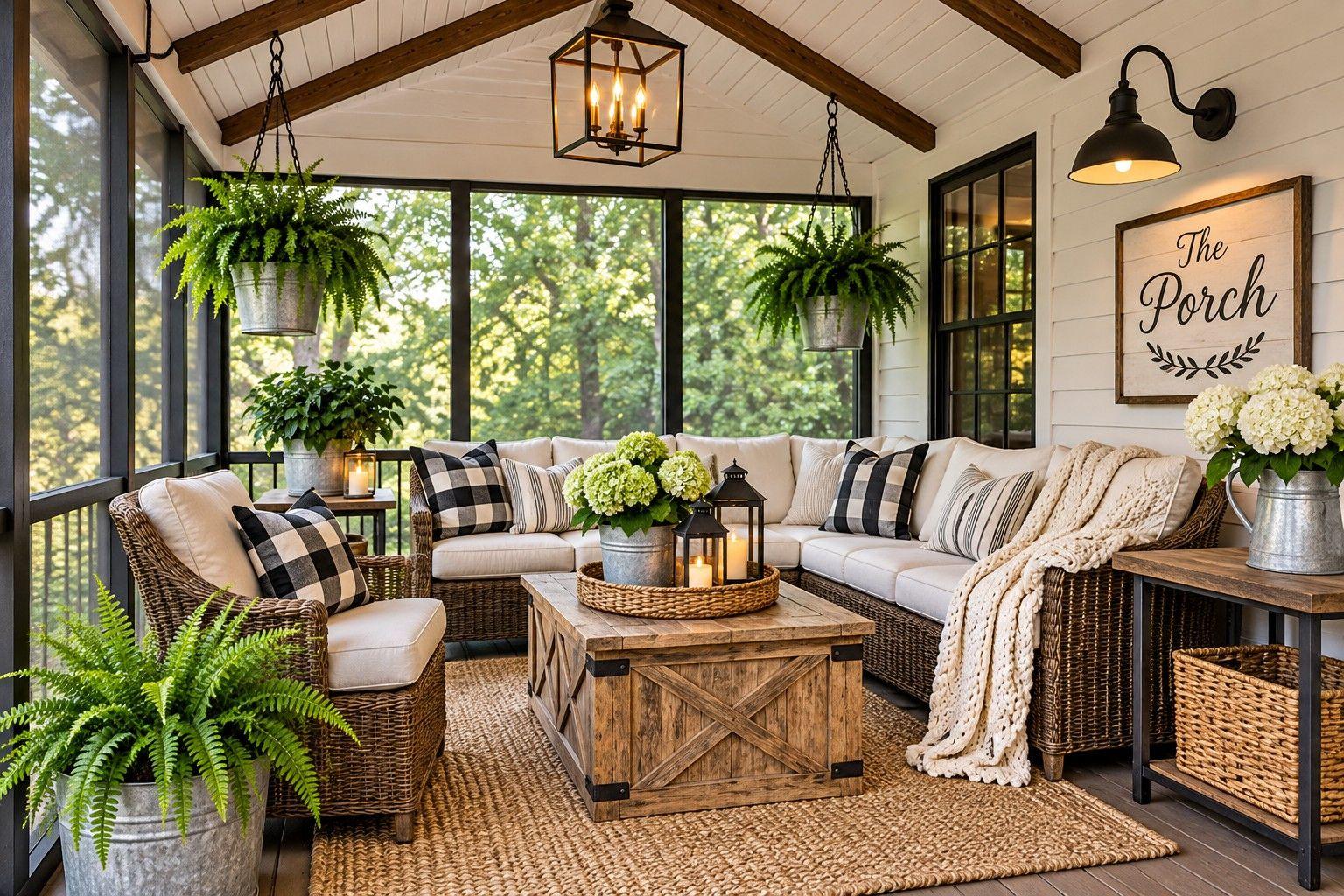
Screened In Porch Ideas: Farmhouse Style for a Cozy, Welcoming Retreat
Create a cozy farmhouse screened-in porch with wicker seating, rustic wood, warm lighting, layered rugs, greenery and practical decorating ideas.
November 2026, 8 min read
DIY Porch Railing Makeover Ideas on a Budget
Refresh a tired porch railing on a budget with practical DIY paint, stain, hardware and style ideas—plus essential safety and code checks.
November 2026, 10 min read