Small Front Porch Decorating Ideas for a Cozy Setup
Make a tiny entry feel welcoming with 15 small front porch decorating ideas, from slim seating and layered rugs to planters, warm lighting and renter-friendly touches.
By Home Crane Editors. . 12 min read.
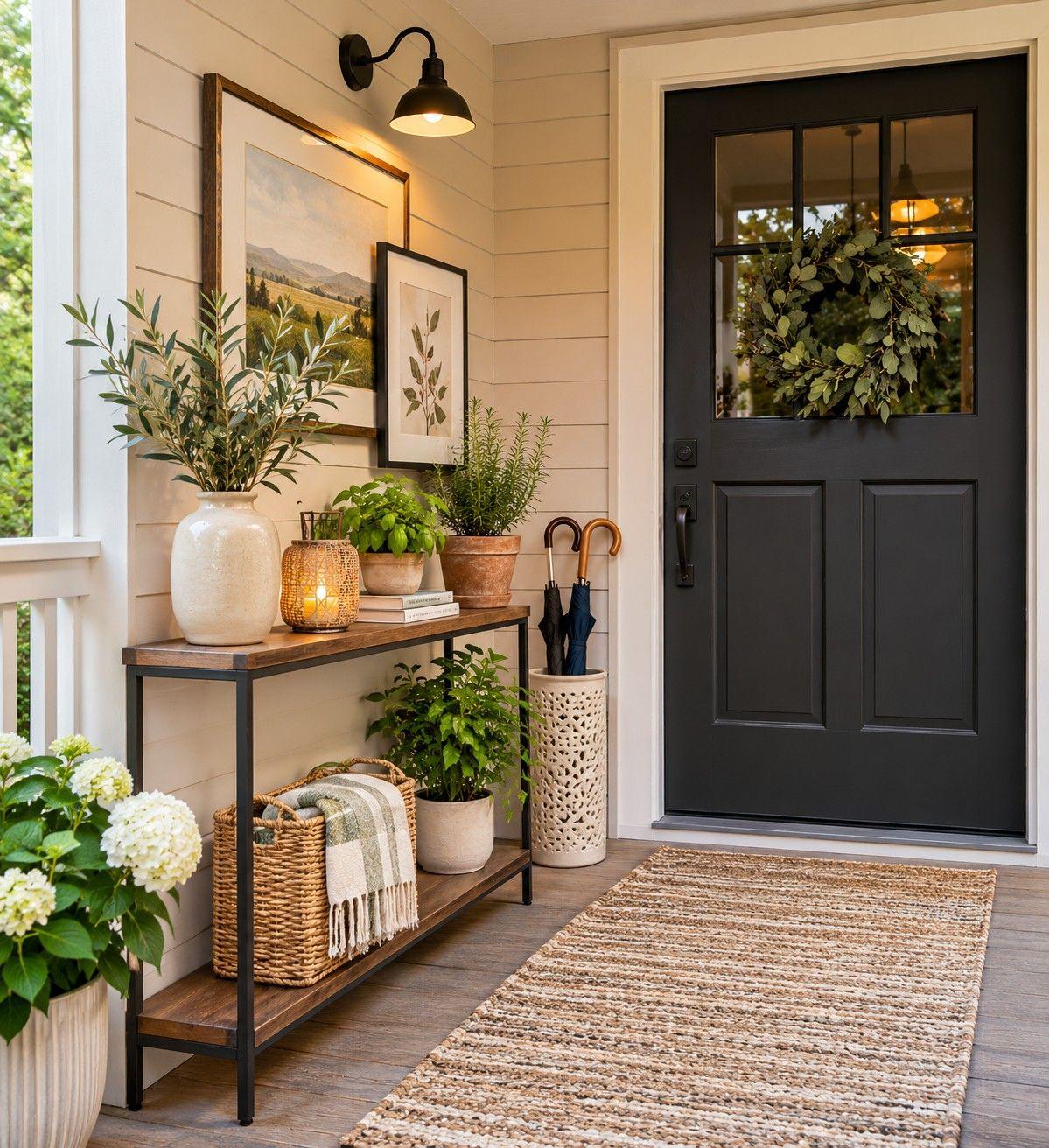
A small front porch does not need much square footage to feel welcoming. A comfortable seat, a few well-chosen plants, warm lighting and a layered doormat can turn even a narrow entry into a pleasant place to pause. The secret is to decorate with intention: choose pieces that earn their space, keep the doorway clear and use height and texture to make the porch feel finished without making it crowded.
Whether your porch is a tiny apartment landing, a compact townhouse stoop or a shallow covered entry, these ideas can help you create a cozy setup that looks considered and works for everyday life. Start with one focal point, build around it and leave enough room for people to enter, exit and carry bags comfortably.
1. Begin with a simple, welcoming focal point
On a small porch, the front door is usually the strongest visual anchor. Make it the center of the arrangement instead of spreading decorative objects evenly across every available surface. A seasonal wreath, a clean door mat and one pair of balanced planters can create a complete look with very little furniture.
Choose a wreath that suits the scale of the door. Oversized designs can look dramatic, but a very wide wreath may overwhelm a narrow entry or interfere with a storm door. For a year-round look, try eucalyptus, olive branches, dried grasses or simple greenery. Add a ribbon or small seasonal accent when you want a change without replacing the entire arrangement.
Keep hardware, door glass and house numbers visible. Avoid hanging decorations where they obstruct a peephole, doorbell camera or the door's full swing. A focal point should make the entrance easier to read, not harder to use.
2. Use a slim bench instead of bulky seating
If the porch has enough depth, a narrow bench can provide a place to sit while putting on shoes and create a cozy visual anchor. Look for a design with a shallow seat, open legs or a slatted back so it does not feel heavy. A compact wood bench works well with farmhouse, cottage and modern styles; a powder-coated metal bench can suit a more contemporary entry.
Measure the available floor area before buying. Include the space needed to open the door and walk past the bench. If a bench would narrow the route, choose a single folding chair or a small stool that can be moved when needed.
Use one or two outdoor cushions rather than a large stack. A neutral seat pad with a contrasting lumbar pillow gives the space softness without taking over. Store cushions indoors during prolonged rain or when the porch is exposed to strong wind.
3. Create a cozy corner with a small bistro chair
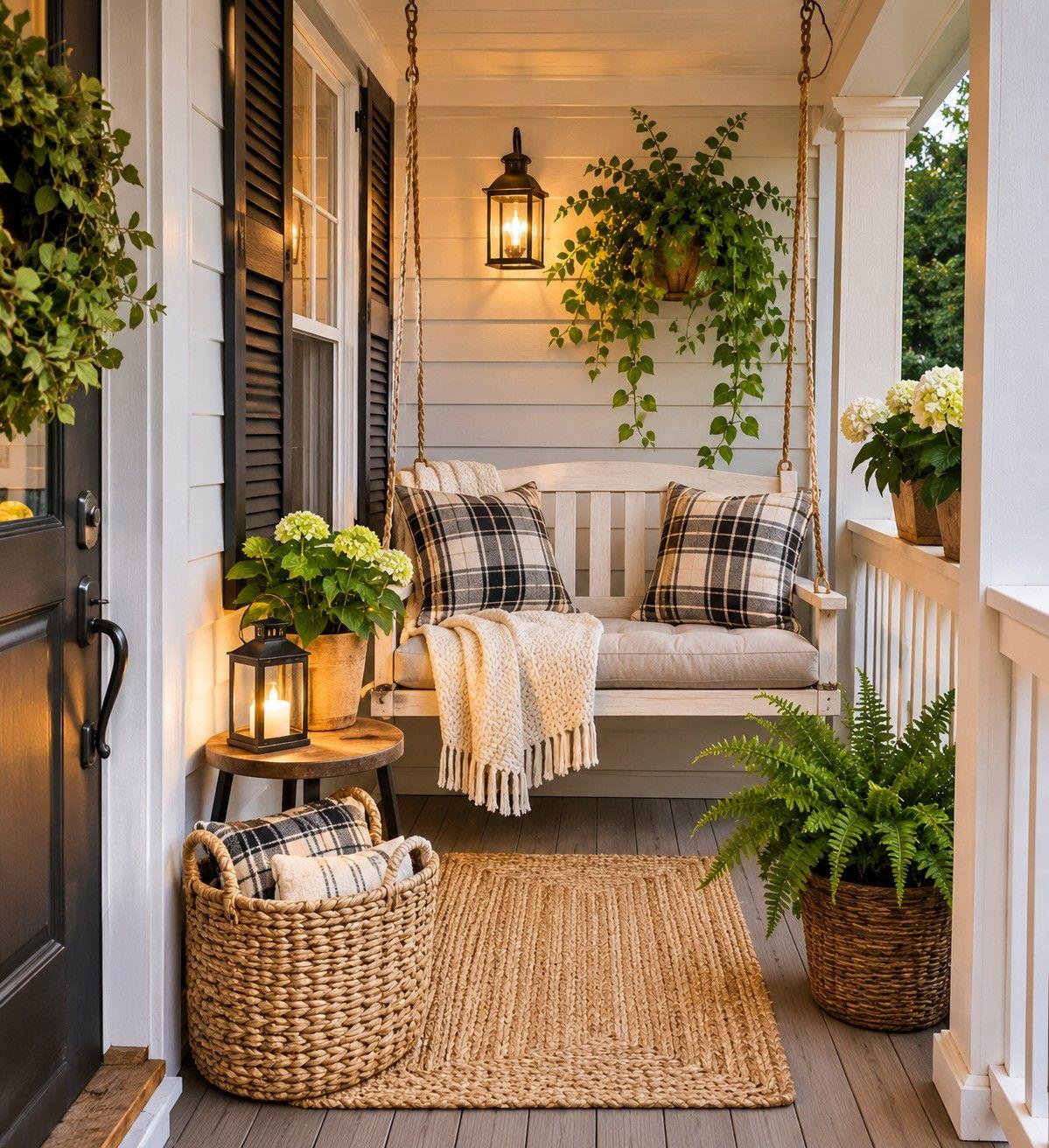
A single chair can make a porch feel like a destination, even if there is no room for a full seating set. Choose a compact bistro chair, a folding wood chair or a petite rocking chair only if the footprint allows it. Pair it with a small round side table for a mug, a book or a lantern.
Keep the arrangement visually light. Open metal frames, woven seats and slim legs let more of the floor remain visible, which helps a tight porch feel less crowded. If the chair is mainly decorative, make sure it is still stable and suitable for outdoor use before anyone sits on it.
A small table should not become a drop zone for mail, packages and miscellaneous items. Give it one clear purpose and keep the surface mostly open.
4. Layer an outdoor rug with a practical doormat
A rug adds softness and helps define the porch as a separate living area. On a narrow entry, use a low-profile outdoor runner or a small rectangular rug, then place a smaller scraper mat near the threshold if needed. For a wider stoop, a larger flatweave rug can anchor a chair and side table.
Choose materials made for outdoor conditions and check the manufacturer's care instructions. Polypropylene and other outdoor-rated synthetics are common options because they are generally easy to clean and dry relatively quickly. Natural-fiber rugs can look beautiful, but some are less suited to repeated rain and damp conditions.
Make sure the rug lies flat and does not catch the door. Use an outdoor-rated rug pad only if the manufacturer recommends one for the surface and conditions. Shake out grit regularly and allow the rug and porch floor to dry so moisture does not remain trapped underneath.
5. Add plants at different heights
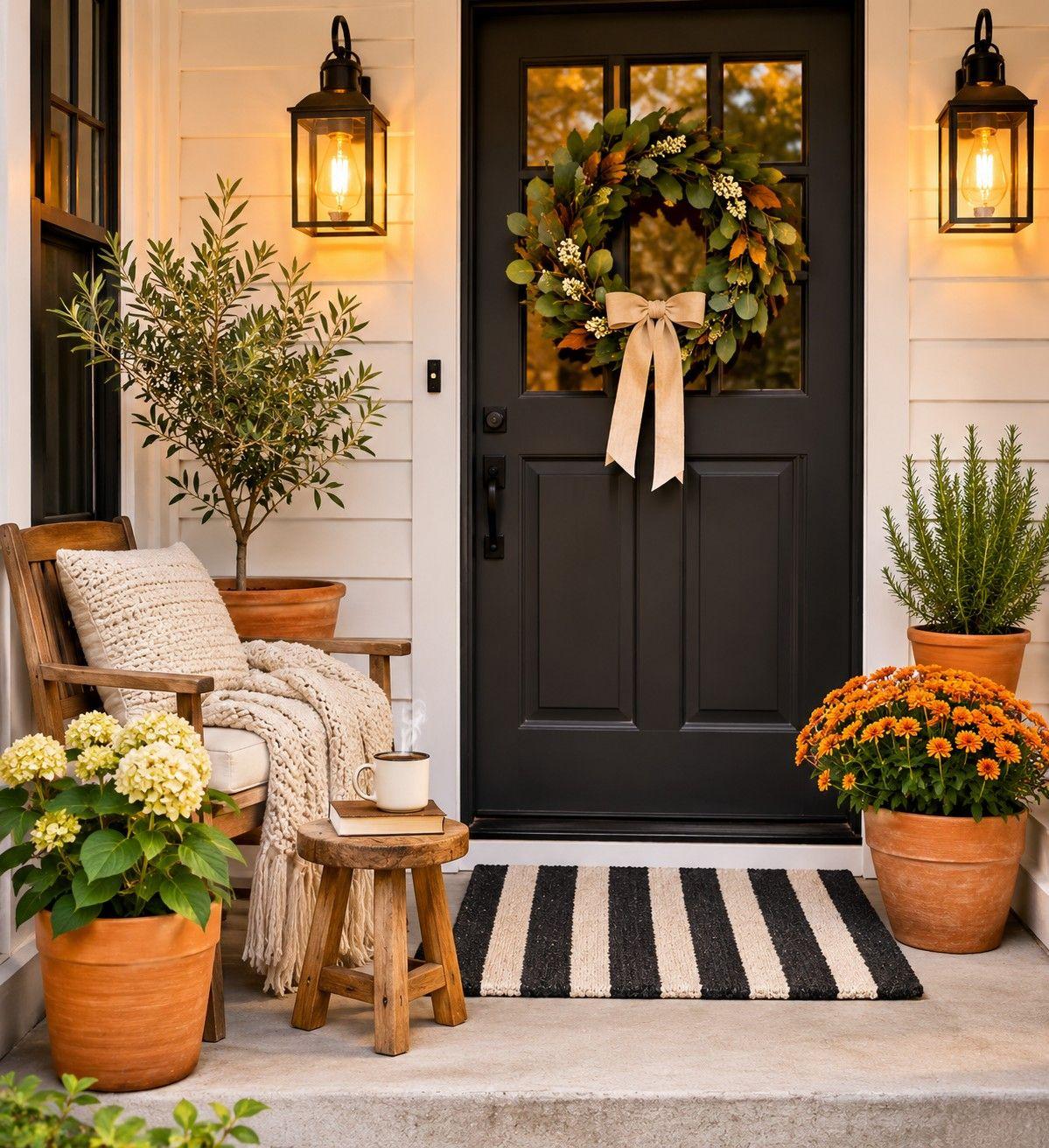
Greenery brings life to a small porch, but a collection of pots can quickly become clutter. Instead of placing several containers in a straight line across the floor, vary their height. Use one floor planter, a smaller pot on a stable stand and a hanging basket or wall-mounted planter where permitted.
Choose plants for the actual light and climate at your entrance. A shaded porch may suit ferns, begonias or other shade-tolerant choices, while a sunny stoop may need plants that can handle stronger light and heat. Ask a local nursery about varieties that suit your region, watering routine and seasonal temperatures.
Use containers with drainage holes and saucers or trays where appropriate to protect the porch surface. Check that hanging baskets are securely supported and that water will not drip onto visitors or neighboring property. If you have pets or children, verify plant safety before bringing new varieties home.
6. Make a vertical garden with wall planters
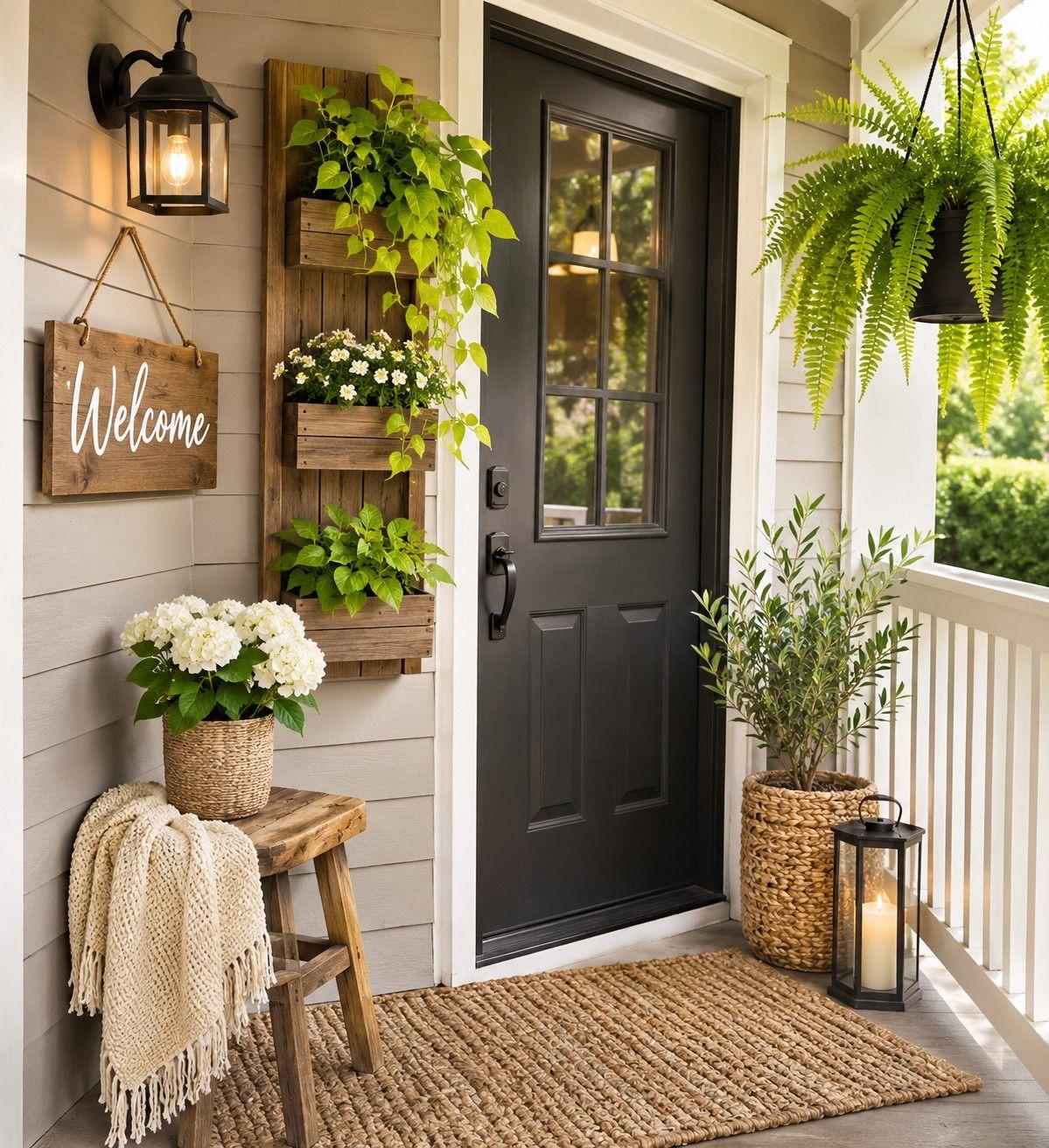
When floor space is limited, move some of the greenery upward. A narrow vertical planter, a wall-mounted pocket system or a few sturdy hanging pots can create a lush backdrop without filling the walking area.
Before installing anything, check whether you are allowed to drill into the exterior wall or railing. In a rental, use freestanding plant ladders or approved over-the-rail planters instead of making permanent holes. On a shared building landing, get permission and keep all common access routes clear.
Keep the arrangement simple. Three coordinated planters often look more intentional than a wall filled with many small containers. Repeat one finish-such as black metal, terracotta or natural wood-to tie the display together.
7. Use warm, layered lighting
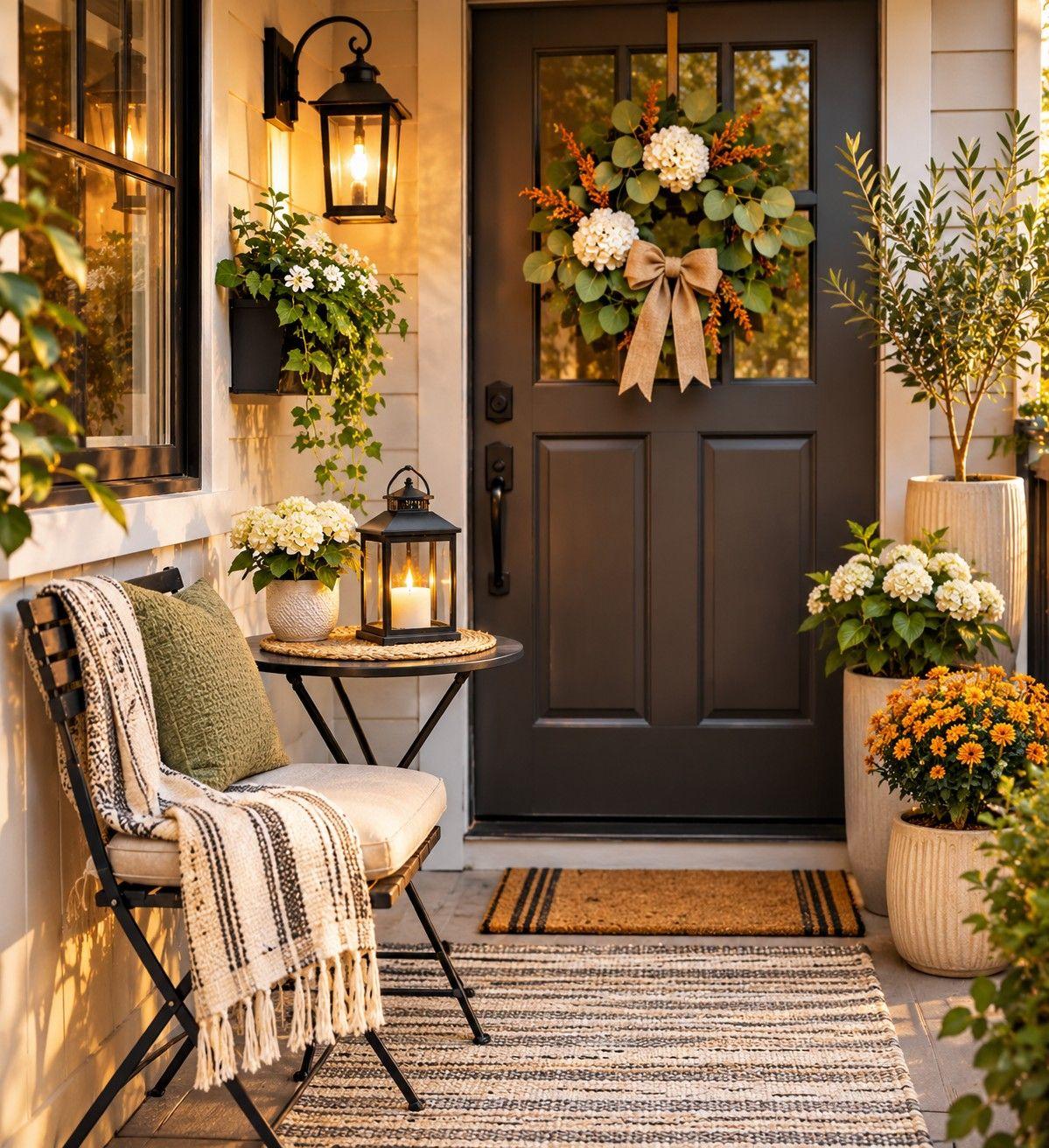
Lighting makes a porch feel welcoming after sunset and helps people find the entry safely. Start with the existing porch light. If it is too harsh, consider a compatible warm-white bulb within the fixture's stated wattage and rating. A lantern-style fixture can add character, but any replacement electrical fixture should be installed correctly and rated for its location.
Add a battery-operated lantern or enclosed LED candle on a stable surface for a softer glow. Outdoor-rated string lights can work on a covered porch when installed according to the manufacturer's instructions and kept clear of door movement, water and walkways.
Avoid loose extension cords across the floor, open flames near fabrics or plants, and indoor-only lights outdoors. Lighting should create atmosphere without introducing a trip or fire hazard.
8. Style a narrow console or wall shelf
If the porch is deep enough for a slim console, it can hold a small lamp, a plant and a catchall tray. Choose a narrow profile and keep the lower shelf open for one basket or a pair of outdoor shoes. A wall-mounted shelf can provide a similar effect where floor space is scarce, provided it is securely installed and does not project into the walking path.
Use a simple styling formula: one taller item, one medium-height item and one low object. For example, combine a ceramic planter, a small lantern and a shallow tray. Leave empty space between objects so the arrangement feels calm rather than crowded.
Do not leave valuables, keys or personal mail in view from the street. A porch display should be attractive but should not advertise items that could be easily taken.
9. Bring in texture with weather-ready textiles
Cozy does not have to mean lots of accessories. A single cushion, a neatly folded throw and a woven basket can add enough texture to soften wood, metal and painted siding. Mix a few tactile finishes: cotton-look outdoor fabric, rope, wicker-style resin, jute-look synthetics and natural wood.
Check whether cushions and throws are specifically made for outdoor use. Even covered porches can receive windblown rain, humidity and strong sunlight. Bring soft furnishings inside during storms and store them dry between seasons. Choose removable covers when possible so they can be cleaned more easily.
Keep textiles away from heaters, candles and electrical fixtures. A throw can look inviting over a bench during a photo, but it should be removed or secured when strong wind could carry it away.
10. Make the porch feel larger with a restrained color palette
A small porch often looks more spacious when the colors repeat instead of competing. Start with the house and door colors, then select two or three accents. Cream, warm white, charcoal, natural wood and leafy green make a timeless combination. For a little more personality, add muted terracotta, dusty blue or a restrained seasonal color.
Repeat the same accent in small ways: a cushion, a planter and a doormat border. Repetition helps separate pieces feel like one design. Too many unrelated colors and patterns can make a compact porch feel visually busy.
If you rent or do not want to repaint, use removable elements-planters, textiles, wreaths and a rug-to introduce color without changing the building.
11. Decorate with the seasons, but keep a year-round base
A cozy porch can change with the seasons without requiring a complete makeover. Keep durable basics in place: a simple rug, a neutral cushion, a lantern and one or two planters. Then swap a wreath, flowers or a small accent to reflect the time of year.
In spring, use fresh greenery and light-colored flowers. Summer can bring brighter blooms and breathable outdoor cushions. In fall, try mums, ornamental grasses and a richer doormat. In winter, use weather-appropriate evergreen arrangements and battery-powered lights where temperatures allow.
Do not let seasonal décor block the door, obscure house numbers or become a hazard in windy weather. Remove dried plant material and damaged decorations before they become messy or unsafe.
12. Keep a tiny porch organized with hidden storage
A small porch can quickly collect shoes, delivery packaging, gardening tools and outdoor accessories. Choose one compact storage solution rather than several small containers. A bench with a weather-resistant storage compartment, a lidded deck box or a single woven-look resin basket can keep useful items close without making the entry look untidy.
Only use storage designed for the conditions it will face. A fabric basket may be fine on a deeply covered porch but can deteriorate quickly if exposed to rain. Keep damp shoes and gardening tools from sitting against wood or siding, and avoid storing anything that could attract pests.
For a very narrow stoop, use a small indoor landing zone just inside the door instead of trying to fit storage outdoors.
13. Use mirrors and art carefully
A weather-rated mirror or outdoor wall art can add personality and make a covered porch feel like an extension of the home. A small framed botanical print, a metal wall sculpture or a mirror with a suitable exterior finish can provide a focal point above a bench or console.
Only hang items where they are protected from weather and securely fastened for the wall material. Do not use ordinary indoor frames or mirrors in exposed areas unless their materials and installation are appropriate for outdoor conditions. Avoid reflective placement that could create glare for drivers or neighbors.
One well-scaled piece usually works better than a crowded gallery wall on a tiny porch.
14. Make a renter-friendly cozy porch
Renters can create a polished porch without permanent changes. Use freestanding planters, a lightweight bench, a washable outdoor rug and battery-operated lanterns. A wreath can hang from an over-door hanger if the door manufacturer and building rules allow it. Rail planters or removable hooks should only be used when approved and safely secured.
Check the lease and building rules before adding lights, drilling, painting, attaching items to railings or placing décor in shared corridors. In apartments and multi-unit buildings, the porch or landing may be a common egress route even when it feels like a private space.
Choose pieces that can move with you. A compact stool, neutral cushion covers and a coordinated set of planters can be reused at a future home.
15. Finish with a clear, clutter-free walkway
The most attractive porch is still functional. Keep the door's full swing clear, leave a comfortable route to the steps and avoid placing pots where someone might trip. Make sure rugs do not curl, planters are stable and decorative objects cannot fall from railings or shelves.
If the porch is elevated, do not use décor to conceal damaged railings, loose steps or other maintenance problems. Keep required guards and handrails unobstructed, and address repairs before adding furniture. For apartment buildings, follow property rules about corridors, landings and fire exits.
Stand at the sidewalk and look back at the entry. If the door is easy to see, the path is clear and the arrangement feels balanced, the setup is probably finished. Resist the urge to fill every empty corner.
A simple layout for a very small porch
For a shallow porch, place a narrow doormat directly at the door, add one tall planter to the side that does not interfere with the door swing and use a wall-mounted wreath or lantern as the main decoration. Skip the bench if it makes the entrance tight.
For a porch with a little more depth, add a slim bench against the wall, one compact side table and a low-profile outdoor rug. Place a taller plant behind or beside the bench to create height. Keep the opposite side open for movement.
For a wider but short stoop, use two planters to frame the door and a single seasonal accent. A symmetrical arrangement can make the entrance feel polished without needing furniture.
Common small-porch decorating mistakes to avoid
- Buying furniture before measuring: Check the porch depth, door swing and walking route first.
- Using too many small accessories: A few larger, coordinated pieces usually look calmer.
- Choosing plants without checking the light: Match the plant to the porch's real sun and shade conditions.
- Leaving indoor textiles outside: Sun, moisture and wind can shorten their life.
- Blocking railings or steps: Keep access, handrails and required exits clear.
- Ignoring drainage: Use suitable pots and let rugs and flooring dry after rain.
- Mixing too many finishes: Repeat a small palette of colors and materials for a cohesive look.
Frequently asked questions
How do I decorate a very small front porch?
Start with a doormat, a wreath and one attractive planter. If there is room, add a slim bench or a single chair. Use wall-mounted or hanging décor to add height, and keep the door swing and walking path clear.
What furniture works best on a small porch?
A narrow bench, folding chair, petite bistro chair or compact stool can work well. Measure first and choose weather-suitable materials. Avoid deep lounge furniture that consumes the walking area.
How can I make my front porch cozy on a budget?
Refresh the doormat, add one or two inexpensive planters, use a cushion in a coordinated color and add a battery-operated lantern. Rearranging existing pieces and repeating a simple palette can make a noticeable difference without a large purchase.
Which plants are good for a covered front porch?
The best choices depend on light, temperature and local climate. Ferns and some begonias can suit shaded locations, while sun-loving flowering plants are better for bright porches. Ask a local nursery to recommend varieties for your exact conditions.
Can I use an outdoor rug on a covered porch?
Yes, if the rug is rated for outdoor use and fits without catching the door. Follow the care instructions, keep the underside dry and use a suitable rug pad only when recommended by the manufacturer.
How do I decorate a rental porch without drilling?
Use freestanding planters, a portable chair, a lightweight rug, battery lanterns and approved over-door or removable hanging solutions. Check your lease and building rules before attaching anything to walls or railings.
Sources
- International Code Council: 2021 International Residential Code (IRC). Checked November 7, 2026
- U.S. Consumer Product Safety Commission: Outdoor Lighting and Electrical Safety. Checked November 7, 2026
- Sunbrella: Fabric Care and Cleaning. Checked November 7, 2026
- The Old Farmer's Almanac: Planting and Gardening Guides. Checked November 7, 2026
- U.S. Fire Administration: Home Fire Safety. Checked November 7, 2026
Share this article
Get new guides by email
Practical home articles and free resources. No spam, and you can unsubscribe at any time.
Keep reading
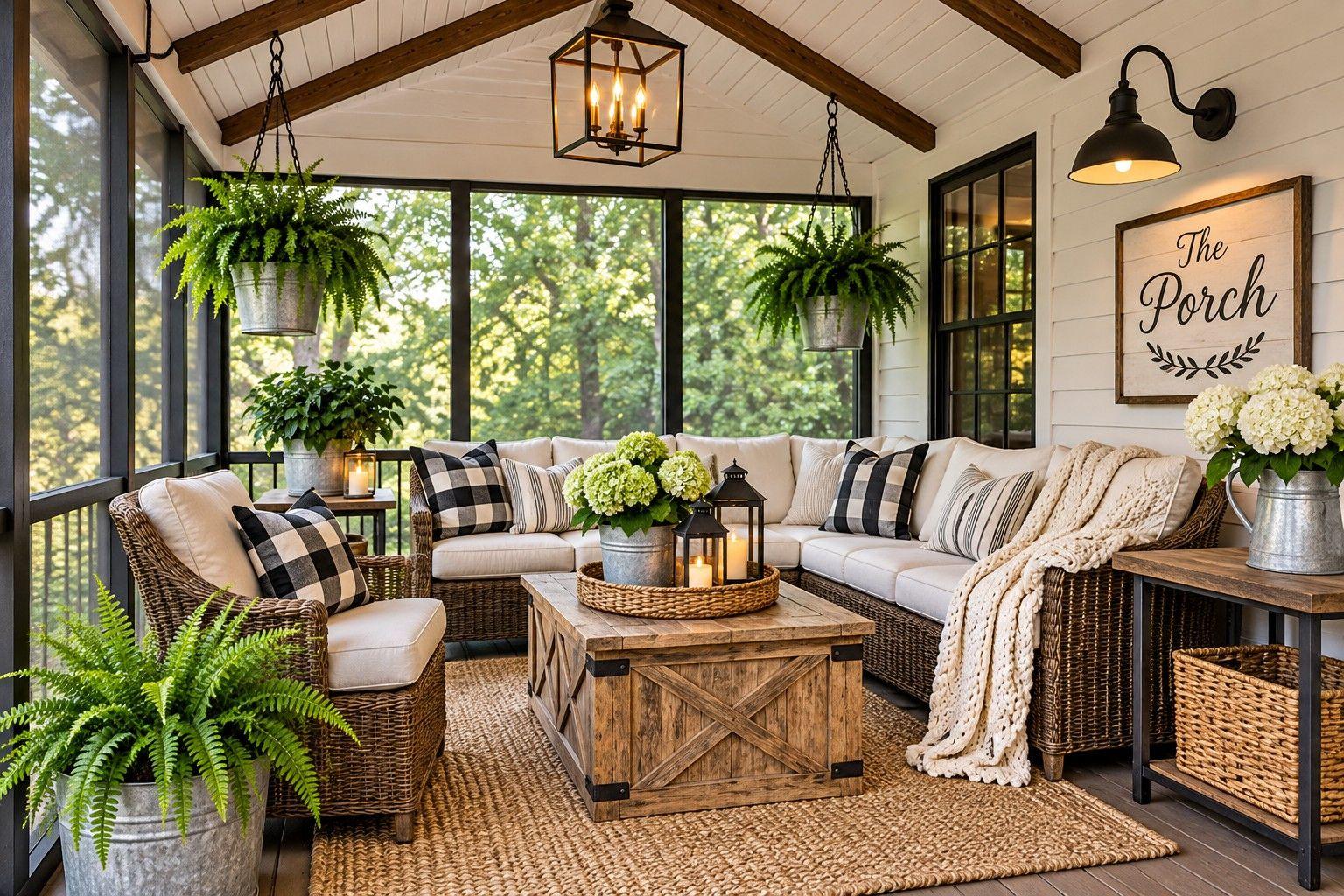
Screened In Porch Ideas: Farmhouse Style for a Cozy, Welcoming Retreat
Create a cozy farmhouse screened-in porch with wicker seating, rustic wood, warm lighting, layered rugs, greenery and practical decorating ideas.
November 2026, 8 min read
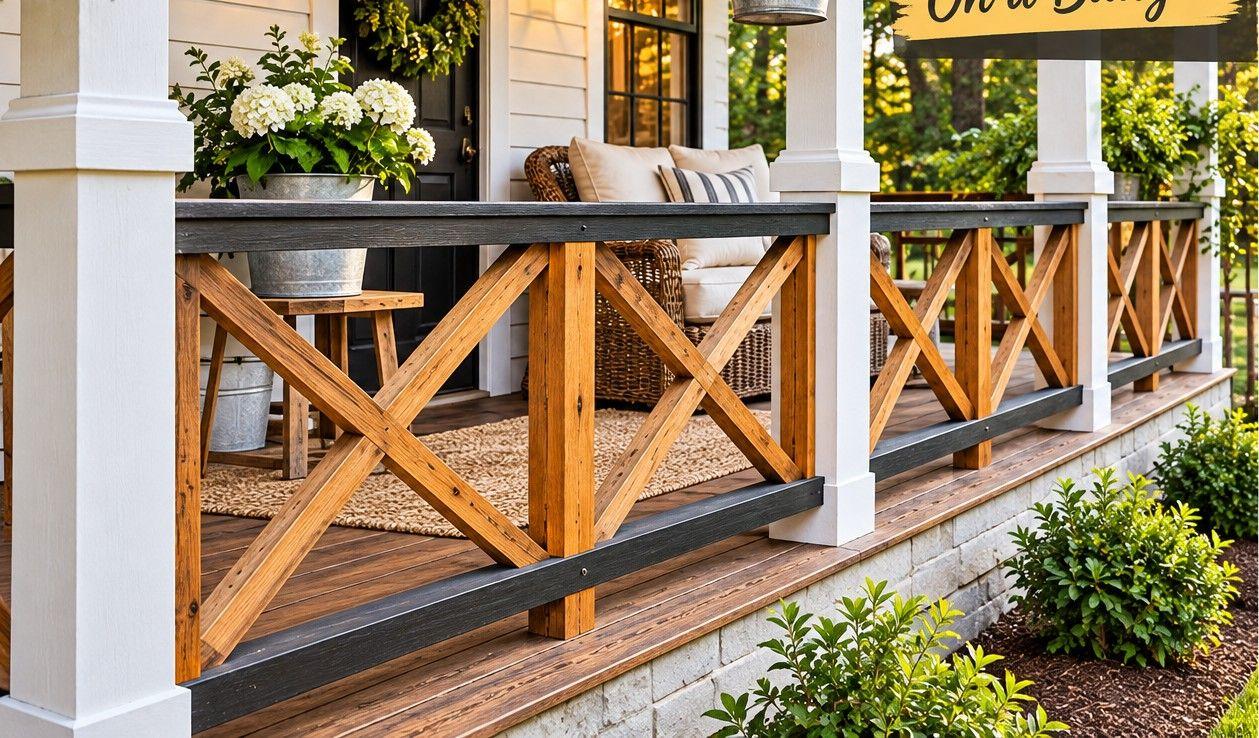
DIY Porch Railing Makeover Ideas on a Budget
Refresh a tired porch railing on a budget with practical DIY paint, stain, hardware and style ideas—plus essential safety and code checks.
November 2026, 10 min read
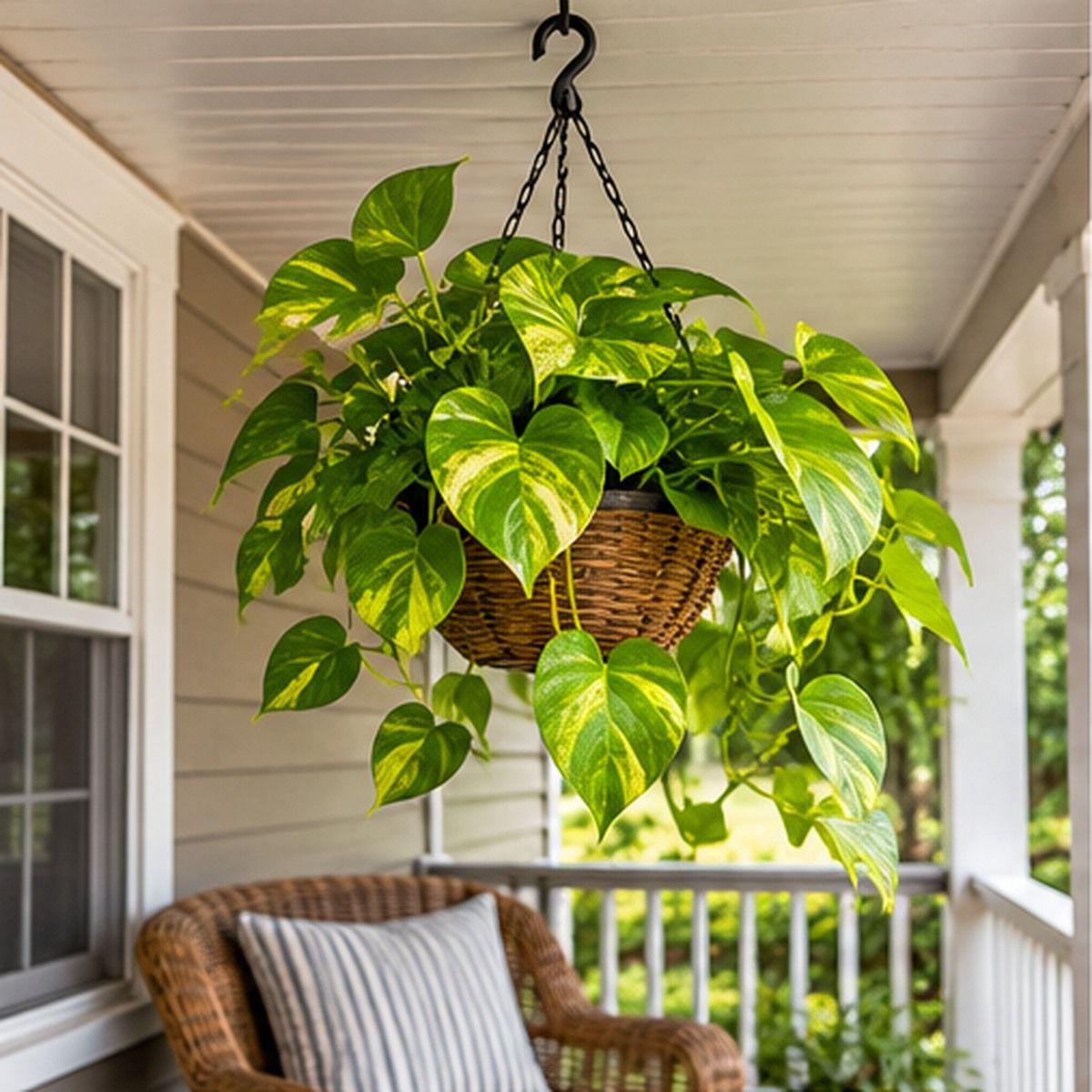
Best Hanging Plants for a Low-Ceiling Porch
Discover the best hanging plants for a low-ceiling porch, plus compact basket ideas, shade-friendly choices, safe hanging tips, and easy care advice.
November 2026, 11 min read