Best Living Room Paint Colors for Resale Value
Discover the best living room paint colors for resale value, including pale blue, sage green, warm white, greige and charcoal. Learn how to choose buyer-friendly shades.
By Home Crane Editors. . 13 min read.
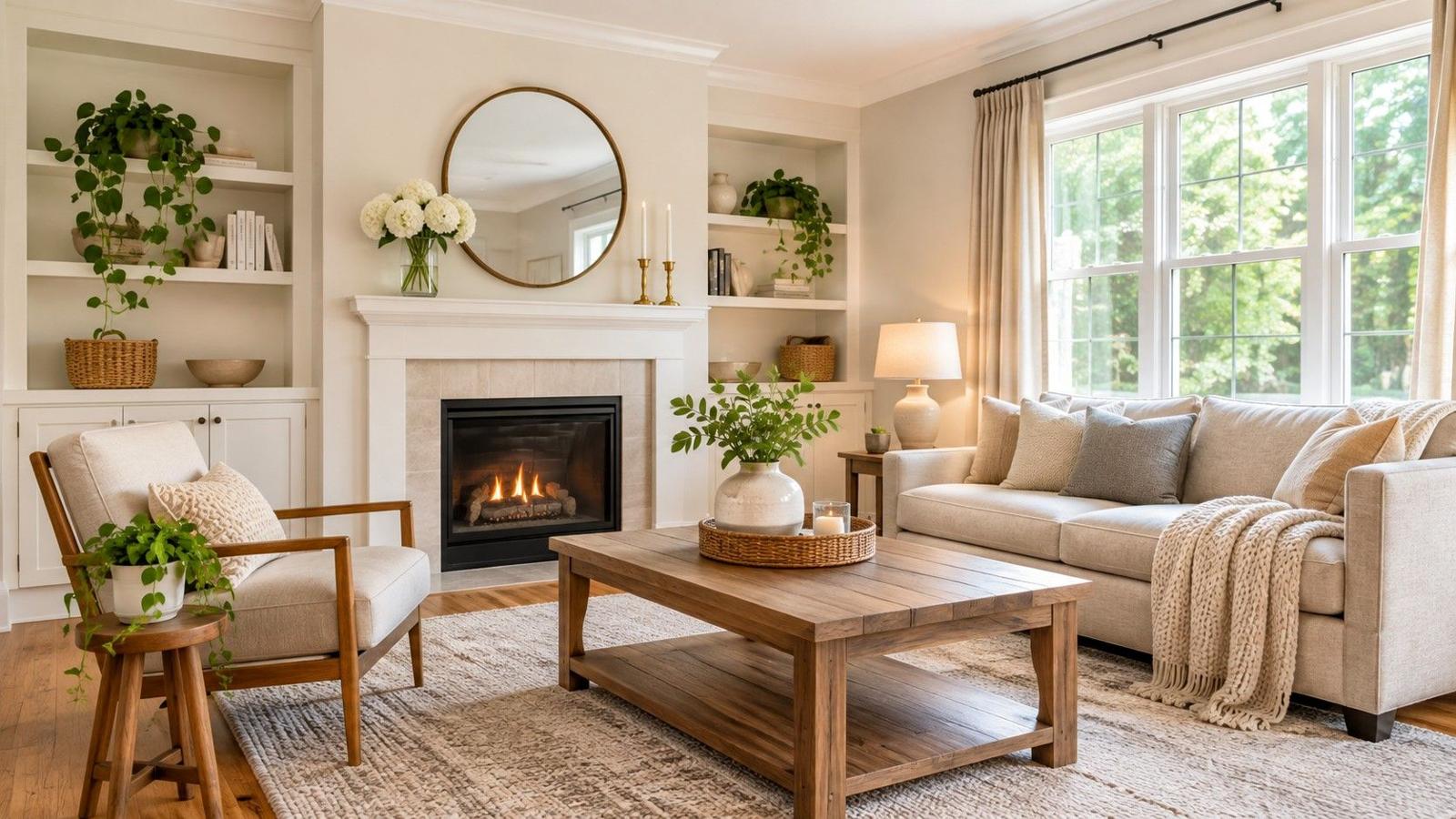
A fresh coat of paint can make a living room feel cleaner, brighter and easier for buyers to imagine as their own. But choosing a color before selling is not simply a matter of picking the palest neutral on the paint card. Recent buyer research suggests that some carefully chosen colors can make a room more appealing than plain white, while highly personal or intense shades may distract from the home itself.
The strongest choice depends on the room's natural light, floor color, fixed finishes, ceiling height and the expectations of buyers in the local market. In many homes, warm white, greige and soft beige remain dependable options. However, current Zillow research points to pale blue as a particularly strong living-room performer, with charcoal gray and sage green also showing positive results in its buyer study.
This guide explains which living room paint colors are worth considering before listing, how to choose the right undertone, where to use deeper shades and how to test paint before committing. The goal is not to promise a higher sale price from paint alone. It is to help create a polished, welcoming room that photographs well and appeals to a broad range of prospective buyers.
Which living room paint colors appeal to buyers?
There is no universal color that guarantees a higher offer. Still, research and staging guidance offer useful direction.
Zillow's 2026 Paint Color Analysis reported that buyers in its study were willing to offer an estimated $1,723 more for a home with a pale blue living room than for an otherwise comparable white living room. The study identified Sherwin-Williams Tradewind (SW 6218) as an example of the pale blue shade. Charcoal gray was also a strong performer, associated with an estimated $1,509 higher offer, while a sage-green living room was associated with an estimated $471 premium compared with white.
These figures are study estimates, not guaranteed returns or a promise that repainting will increase a particular home's appraised value. The result can vary with location, property condition, buyer pool and the way a room is presented. Zillow's 2026 study is useful evidence that buyers may respond positively to selected colors, but it should be considered alongside local agent advice and the home's existing finishes.
A separate 2025 survey of home-staging and design professionals reported by the National Association of REALTORS® found that soft or warm whites were the most frequently recommended living-area colors. Greige, beige and taupe were also common recommendations. The two sources are not necessarily contradictory: a restrained neutral is a low-risk staging choice, while a muted blue or green can give a room a little more character without overwhelming it.
1. Pale blue: a fresh, buyer-friendly choice
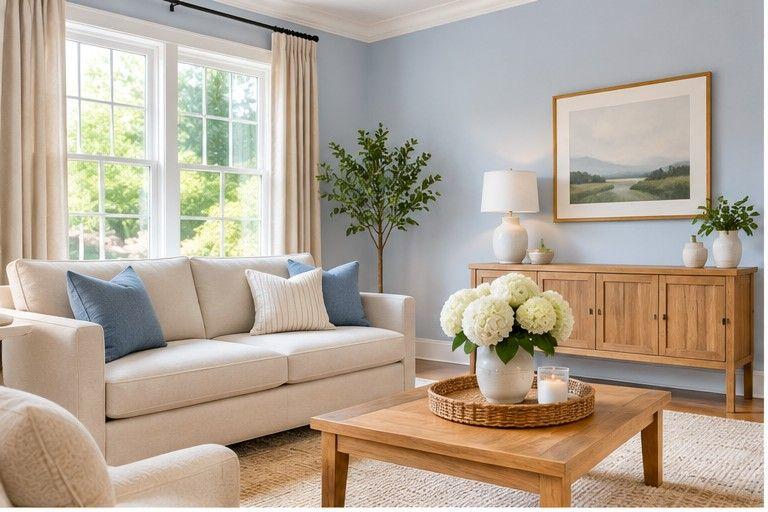
Pale blue is one of the most interesting choices for sellers because it feels more distinctive than white while remaining calm and relatively easy to coordinate. A muted blue can make a living room feel airy, relaxed and connected to natural light. It works especially well with white trim, warm wood floors, cream upholstery and natural-fiber rugs.
Zillow's 2026 analysis identified pale blue as the top-performing living-room color in its study. Its featured example was Sherwin-Williams Tradewind (SW 6218), with Upward (SW 6239) and Open Air (SW 6491) mentioned as related options. These are useful starting points, not automatic matches for every home. Always test the actual paint in the room.
Why it can work for resale
- It introduces color without making the room feel heavily personalized.
- It can complement white trim, oak floors and neutral furnishings.
- It offers a soft alternative to stark white walls.
- It can look fresh in listing photographs when the room receives balanced daylight.
How to use it: Choose a pale, softened blue rather than a saturated turquoise or icy blue. If the room has cool gray flooring, check that the blue does not make the space feel cold. Add warmth through wood, cream textiles and warm lighting.
2. Sage green: a natural, versatile neutral
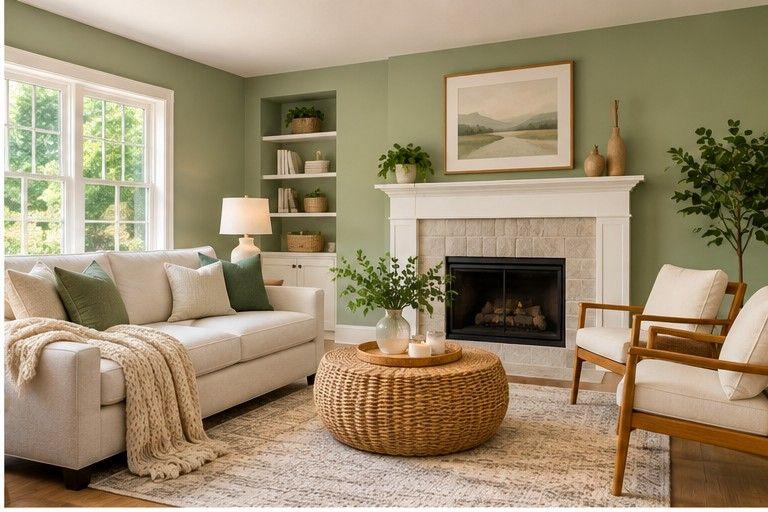
Sage green has become a popular bridge between neutral decorating and more expressive color. Its gray or earthy undertone helps keep it understated, while the green adds depth and a connection to the outdoors. It can be especially effective in rooms with timber furniture, stone fireplaces, plants and off-white trim.
Zillow's 2026 analysis found sage green to be the only shade in its top tier across every room category it studied. In living rooms, the estimated offer difference was about $471 compared with white. This does not mean every sage shade will perform equally, but it supports considering a muted green when a seller wants more character than a conventional neutral.
Why it can work for resale
- It pairs naturally with wood, cream, beige and warm white.
- It creates a calm atmosphere without looking completely plain.
- It can suit traditional, cottage, transitional and modern interiors.
- It works as a full-room color or on a carefully chosen feature wall.
How to use it: Look for a soft, muted sage rather than a bright grassy green. Test it beside the room's flooring and trim. In a dim room, a medium or dark sage may appear heavier than expected, so a lighter version is often safer.
3. Warm white: the dependable staging option
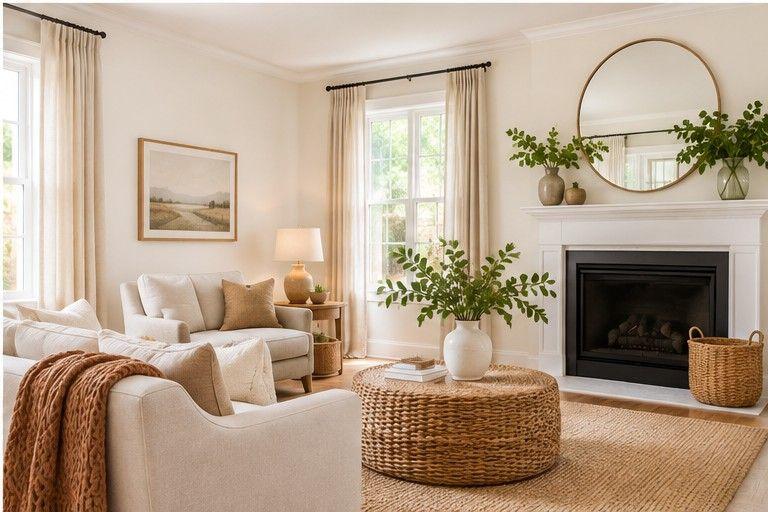
Warm white remains a practical option when the goal is to make a living room feel clean, bright and easy to personalize. It can help connect spaces visually, especially in open-plan homes where the living room flows into a kitchen, dining area or hallway.
The important distinction is between warm white and a harsh, blue-toned white. A warm white has a subtle cream, beige or yellow undertone. It can soften a room with wood floors and traditional finishes, while a cooler white may suit a more contemporary space with crisp white trim and cool-toned materials.
The National Association of REALTORS® reported that 85% of the home-staging and design professionals in a Fixr.com survey selected soft or warm whites among their preferred living-area colors. This is a survey of professional recommendations, not a controlled test of actual sale prices.
Why it can work for resale
- It gives buyers a simple visual backdrop for their own furniture.
- It can make connected rooms feel more consistent.
- It is easy to coordinate with a wide range of decor styles.
- It helps cover strong existing colors when the finish is applied properly.
How to use it: Avoid choosing a white from a tiny paint chip alone. Compare samples against the trim, ceiling, flooring and natural light. A white that looks creamy in a south-facing room may look dull or yellow in a darker north-facing room.
4. Greige: a balanced neutral with more depth
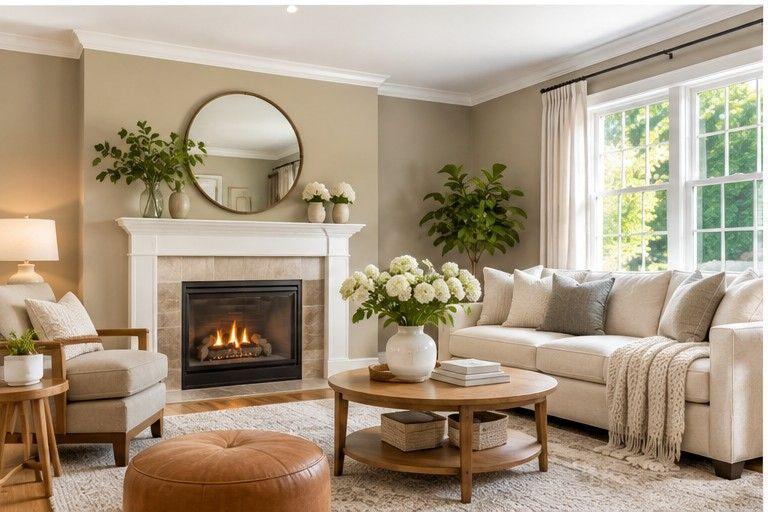
Greige combines gray and beige, giving sellers a neutral that can feel warmer than conventional gray and more contemporary than some beige shades. It is often a useful choice when a home has a mix of warm and cool finishes, such as wood flooring, white trim, gray stone or stainless-steel details.
The main challenge is undertone. Some greiges lean pink, purple, green or yellow depending on the lighting and surrounding materials. A sample that looks balanced in the store may shift noticeably on a large wall.
Why it can work for resale
- It adds subtle depth without introducing a strong color.
- It coordinates with many common flooring and furniture finishes.
- It can create continuity between living spaces and adjoining rooms.
- It provides a restrained backdrop for artwork and staging accessories.
How to use it: Compare at least two or three samples on different walls. If the floor is orange-toned oak, avoid a greige that makes the wood look overly orange. If the room has cool gray flooring, a warmer greige can help prevent the overall palette from feeling sterile.
5. Light beige: warm and welcoming
Light beige can be a good fit for homes with warm wood floors, cream stone, traditional trim or a relaxed transitional style. Compared with stark white, it can make a large room feel more settled and comfortable. Compared with deeper tan, a light beige usually keeps the room from feeling visually heavy.
Beige is not automatically buyer-friendly, however. A strongly yellow or orange beige can look dated, particularly when combined with similarly warm carpet, curtains and furniture. Aim for a quiet, balanced shade that complements the permanent finishes rather than competing with them.
Why it can work for resale
- It creates a welcoming background for neutral staging.
- It works with wood, natural stone, linen and woven textures.
- It can soften rooms that receive cool daylight.
- It is a practical option for homes with traditional or transitional architecture.
How to use it: Choose a light beige with a restrained undertone. Compare it against the flooring and any fixed stone or brick. Keep nearby rooms coordinated so the home feels intentional rather than painted in unrelated shades.
6. Light gray: use it selectively
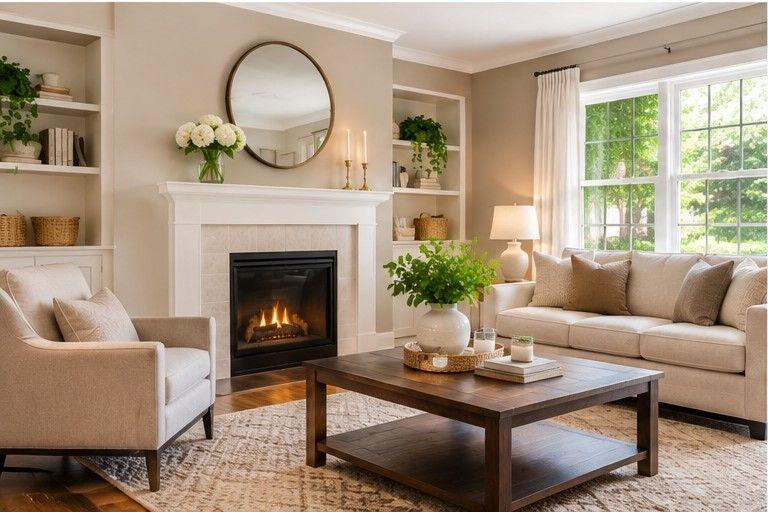
Light gray can still work in a living room, especially when the home has contemporary finishes, white trim and cool-toned flooring. It offers a clean, understated appearance and can make colorful furniture or artwork stand out.
However, gray is not a single look. Blue-gray can feel cool, while a warmer gray may read almost like greige. Large areas of flat, cool gray can make a room feel less inviting if the flooring, lighting and furnishings are also cool.
Zillow's 2026 study is notable because its stronger living-room result was charcoal gray rather than pale gray. That does not mean sellers should automatically paint every living room dark. A deep gray may work as a deliberate design choice in a bright room, but a lighter neutral gray is generally easier to use across different property styles.
How to use it: Favor a balanced gray with enough warmth for the room. Use warm bulbs, wood accents and soft textiles to avoid a cold appearance. If the room is small or poorly lit, test the color carefully before painting all four walls.
7. Charcoal gray: a bold option for the right room
Charcoal gray can create a sophisticated living room when the space has enough daylight, adequate ceiling height and a restrained furniture palette. It can look particularly effective around a fireplace, on built-ins or as a feature wall. It is less forgiving than a light neutral because it absorbs more light and can make a small room feel enclosed.
Zillow's 2026 analysis associated a charcoal-gray living room with an estimated $1,509 higher offer than a white living room. Its example was Sherwin-Williams Peppercorn. This is a research result, not a guarantee that a dark room will sell for more in every neighborhood.
How to use it: Consider charcoal for a feature wall or architectural element if the room is compact or receives limited daylight. If using it on every wall, make sure the room has strong natural light, layered artificial lighting and lighter furnishings. Ask a local agent whether a dramatic interior suits the likely buyer pool.
Paint colors that may make resale harder
A living room does not need to be colorless to sell. The bigger risk is choosing a shade that dominates the room or makes it difficult for buyers to imagine their own furniture and belongings there.
Zillow's 2026 analysis identified ochre yellow, bold red and blush pink among the weaker-performing interior colors in its study. The 2025 staging-professional survey reported by the National Association of REALTORS® also found that professionals tended to favor softer colors over attention-grabbing hues for living areas.
Before listing, think carefully about:
- Strong red: It can dominate a room and may be difficult to coordinate with existing furnishings.
- Bright or ochre yellow: It can look intense under artificial lighting and may not suit every floor or trim color.
- Highly saturated pink: It creates a distinct style that may narrow the group of buyers who like the room.
- Very vivid green or blue: These can work in a designed home, but may distract in a general resale presentation.
- Very dark colors in low-light rooms: Deep shades can make a small or poorly lit space feel more enclosed.
These are not colors that homeowners must never use. They are simply higher-risk choices when the immediate goal is broad resale appeal.
How to choose the right paint color for your living room
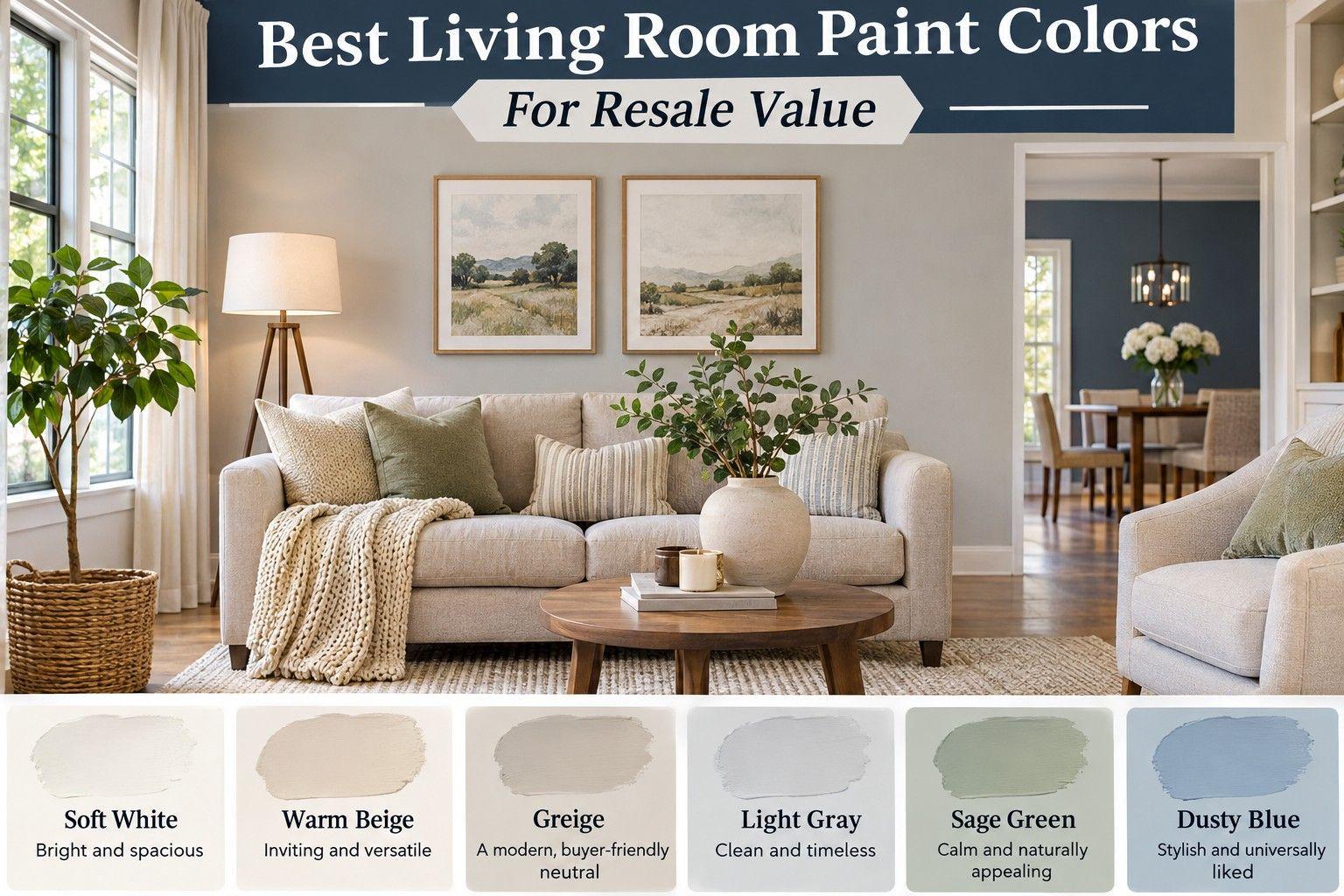
1. Start with fixed finishes
Look at the floor, fireplace, stone, brick, cabinetry, window frames and trim before selecting paint. These elements are expensive to change, so the wall color should work with them. A warm beige may suit honey oak floors, while a cooler pale blue may complement crisp white trim and lighter flooring.
2. Check the room's natural light
A room facing north often receives cooler, less direct daylight. Warm white, beige or a warm greige may help it feel more inviting. A room with strong southern or western light can make warm colors appear more intense, so a balanced neutral or softened blue may be worth testing.
3. Consider the whole floor plan
In an open-plan home, the living room paint should coordinate with the kitchen, dining area and connecting hallway. The colors do not have to be identical, but abrupt changes can make the home feel smaller or less cohesive. Use related undertones and repeat trim colors to create continuity.
4. Test large samples on more than one wall
Paint sample boards or large sample patches rather than relying on a small chip. View them in morning, afternoon and evening light. Check the color beside the floor, trim and furniture. A sample should be large enough to show its undertone clearly.
5. Choose a finish suited to the wall
For most living rooms, an eggshell or matte finish is a practical starting point. Matte can help disguise minor surface imperfections, while eggshell offers a little more cleanability and subtle sheen. The best finish depends on the paint manufacturer's guidance, wall condition and household use. Repair dents, sand rough patches and prime stains before painting.
6. Keep the presentation clean
A good paint color cannot compensate for dirty walls, peeling paint, visible patch repairs or clutter. Clean the room, remove distracting items, repair damaged surfaces and use consistent lighting before taking listing photographs. Fresh paint looks best when the rest of the room is also cared for.
Should you paint the entire living room or just one wall?
For resale, a consistent color across the main living-room walls is often the simplest and least distracting approach. A feature wall can work when it highlights a genuine architectural feature, such as a fireplace or built-in shelving. It is less effective when it creates a strong color block without a clear design reason.
If the room is small, has limited daylight or connects directly to several other rooms, a single cohesive wall color may help it feel more spacious. If the room is large and bright, a carefully chosen deeper accent can add dimension. Avoid using a feature wall simply to introduce a trendy shade that does not relate to the rest of the home.
Best living room paint colors by room condition
| Feature | Colors worth testing | What to watch |
|---|---|---|
| Small living room | Warm white, pale blue, light greige | Avoid colors that make the room feel enclosed |
| Dark or north-facing room | Warm white, light beige, warm greige | Check for yellow or muddy undertones |
| Bright, sunny room | Pale blue, sage, balanced greige | Strong sunlight can intensify warm colors |
| Room with warm wood floors | Warm white, beige, sage | Avoid undertones that exaggerate orange in the wood |
| Modern home with cool finishes | Pale blue, balanced gray, soft white | Keep the room from feeling too cold |
| Traditional home | Warm white, beige, greige, muted sage | Coordinate with trim, brick and fireplace materials |
| Large room with good daylight | Pale blue, sage, charcoal accent | Deep colors need enough light and contrast |
Is repainting the living room worth it before selling?
It can be worthwhile when the existing walls are visibly worn, marked, strongly colored or inconsistent. Paint is often a relatively accessible way to improve the first impression of a room, but the financial return depends on the condition of the property, labor costs, the quality of the finish and buyer expectations.
Before spending money, compare the cost of paint and supplies with the likely benefit. If the walls are already clean and neutral, a full repaint may not be necessary. If the room has peeling paint, visible stains or a highly personal color, repainting may be a sensible preparation step.
Do not treat the dollar estimates from paint-color studies as a direct return-on-investment calculation. They reflect buyer responses in a research setting, not a guaranteed increase in the final sale price of an individual home. A real estate agent familiar with recent sales in the neighborhood can help determine whether repainting is likely to matter.
Frequently asked questions
What is the best living room paint color for resale value?
Zillow's 2026 Paint Color Analysis identified pale blue as the strongest living-room performer in its study. Warm white, greige, beige and muted sage remain practical choices when a seller wants a restrained look. The best option depends on the home's finishes, lighting and local buyer preferences.
Does painting a living room white increase home value?
White can make a room look clean and bright, but it does not automatically increase value. A 2025 survey of staging and design professionals found strong support for soft or warm whites, while Zillow's 2026 buyer study found that pale blue, charcoal gray and sage green could outperform white in its living-room comparisons.
Is gray a good color for a living room when selling?
It can be. A balanced light gray or greige can suit contemporary homes, while charcoal may work in a bright, well-proportioned room. Avoid choosing a cool gray without checking how it looks beside the flooring and natural light.
Is sage green too trendy for resale?
Muted sage is more versatile than a bright green because its gray and earthy undertones make it easier to coordinate with natural materials. Zillow's 2026 analysis found sage green performed well across the rooms it studied. Choose a subdued shade rather than a highly saturated green.
Should every room in a house be painted the same color before selling?
No. The colors should coordinate, but they do not need to be identical. A consistent palette of related undertones can create flow while allowing rooms to have their own character.
What paint finish is best for living room walls?
Matte and eggshell are common choices. Matte can reduce the visibility of small surface flaws, while eggshell is usually easier to wipe clean. Check the product label and consider the condition and use of the walls before deciding.
Should I use a dark color in a small living room?
Use caution. Dark paint can look elegant, but it may make a small or poorly lit room feel more enclosed. If you like charcoal or another deep shade, consider using it on a feature wall or built-in rather than every wall.
Final Recommendation
For sellers who want a balance of broad appeal and current buyer research, start by testing pale blue, warm white, greige and muted sage. Pale blue is particularly worth considering because it led Zillow's 2026 living-room analysis, while warm white and greige remain sensible staging choices for homes where a neutral backdrop is the priority.
Choose the shade that works with the room's permanent finishes and natural light, not simply the color with the most attention-grabbing research figure. A well-prepared room with clean walls, a consistent palette and thoughtful staging is more persuasive than a fashionable paint color applied without considering the home.
Sources
- Zillow: Best Paint Colors to Sell a House for More Money in 2026. Checked November 7, 2026
- National Association of REALTORS®: Best Living Room, Bedroom Colors for a Home Sale. Checked November 7, 2026
- Zillow: Ready to sell? These paint colors can boost your home's sale price. Checked November 7, 2026
- U.S. Environmental Protection Agency: Indoor Air Quality. Checked November 7, 2026
Share this article
Get new guides by email
Practical home articles and free resources. No spam, and you can unsubscribe at any time.
Keep reading
Budget Kitchen Remodel Ideas: High-ROI Upgrades That Make a Noticeable Difference
Explore budget kitchen remodel ideas that improve appearance, function and resale appeal. Learn where to spend, where to save and which upgrades to skip.
November 2026, 12 min read
Easy DIY Home Projects With the Highest Return
Explore practical DIY home projects with strong everyday value, from fresh paint and curb appeal to lighting, weatherstripping, storage, and outdoor improvements.
November 2026, 8 min read
Easy Bathroom Upgrades to Increase Home Value
Explore 12 easy bathroom upgrades that can improve home value and buyer appeal, from modern faucets and lighting to better storage and ventilation.
November 2026, 13 min read