15 Cozy Warm Bedroom Lighting Ideas: Aesthetic Moods
Explore 15 cozy warm bedroom lighting ideas, from bedside lamps and pendants to LED strips, sconces, cove lighting, smart bulbs, and soft accent lights.
By Home Crane Editors. . 9 min read.
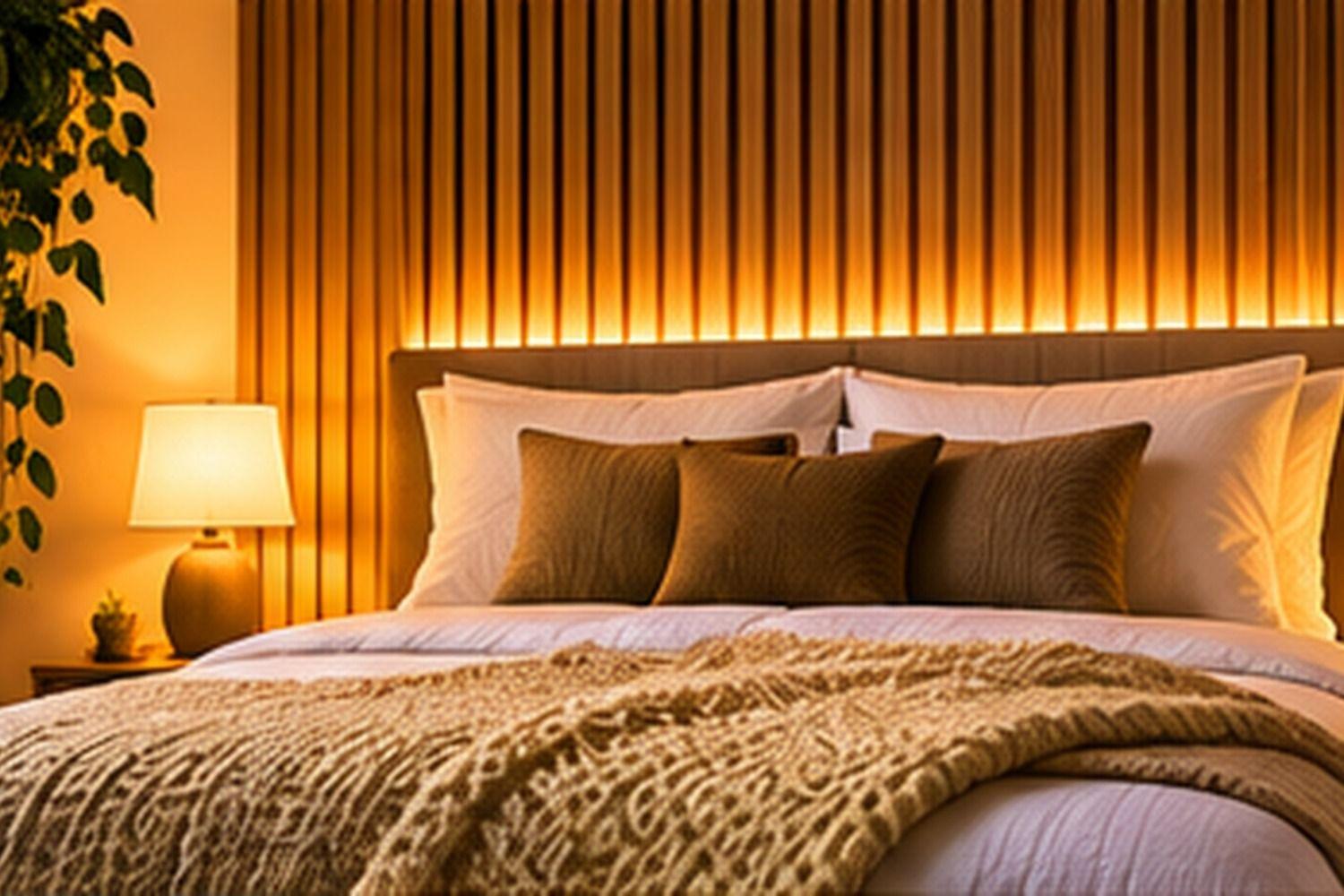
The right bedroom lighting can change the feeling of a room without replacing the furniture or repainting the walls. A warm bedside lamp, a soft glow behind the headboard, or a discreet strip of indirect light can make the space feel calmer and more inviting. The secret is to layer different light sources instead of depending on one bright ceiling fixture.
Cozy bedroom lighting is not just about choosing amber-colored bulbs. It is also about where the light falls, how bright it feels, whether it creates glare, and how easily it can be adjusted. A room used for reading, dressing, relaxing, and sleeping needs more than one lighting mood.
These 15 ideas cover a range of styles, from simple table lamps and woven pendants to cove lighting, smart bulbs, and star projectors. Use them as inspiration and adapt each one to your room size, ceiling height, electrical setup, and daily routine.
How to create a warm lighting scheme
Start with a comfortable ambient layer, such as a ceiling fixture, cove light, or indirect LED strip. Add task lighting where you read or get dressed, then use smaller accent lights to highlight a headboard, shelf, or architectural detail. Separate controls or dimmers make it easier to shift from practical brightness to a softer evening atmosphere.
For a cozy feel, many people prefer warm-white bulbs around 2700K to 3000K. Color temperature is only one part of the decision: check brightness in lumens, beam direction, dimmer compatibility, and the fixture's instructions. Keep the light source out of direct eye level where possible, and avoid harsh contrast between a very bright lamp and a completely dark room.
Safety matters too. Use lights designed for indoor use, keep cables away from walking routes, and follow the manufacturer's clearance instructions around shades and fabrics. Hardwired fixtures and new electrical connections should be installed by a qualified professional.
1. Warm bedside table lamps
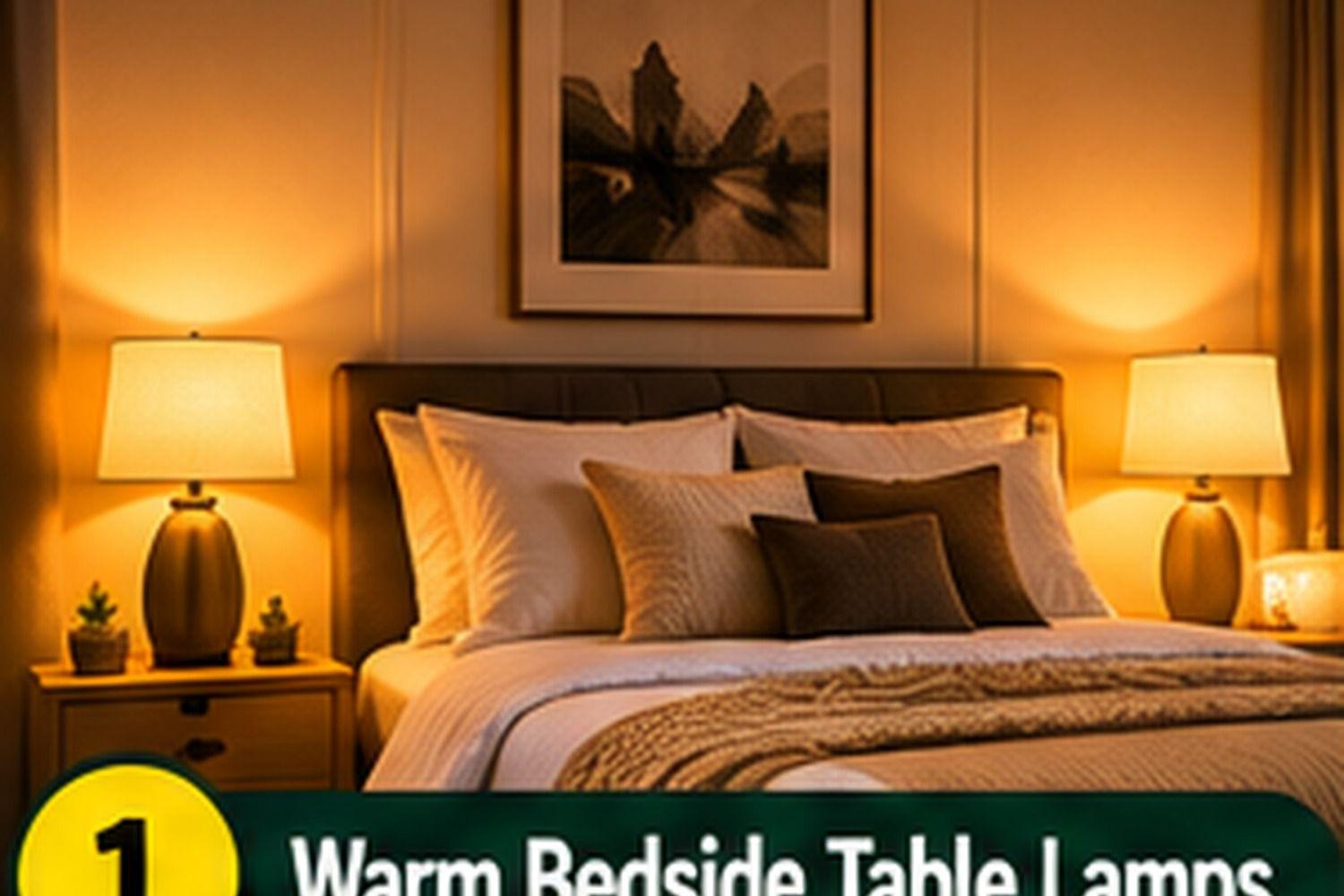
A pair of bedside lamps creates a familiar, balanced glow and is one of the easiest ways to make a bedroom feel welcoming. Choose shades that diffuse the bulb rather than exposing it directly, and coordinate the lamp bases with wood, ceramic, brass, or matte-black details already in the room. If your nightstands are small, choose a compact lamp or a wall-mounted alternative. Put each lamp where it can be switched off comfortably from bed, and keep fabric shades and bedding clear of bulbs that become hot.
Styling tip: Use matching lamps for symmetry, or deliberately mix shapes while keeping their light color consistent.
2. Hanging pendant lights
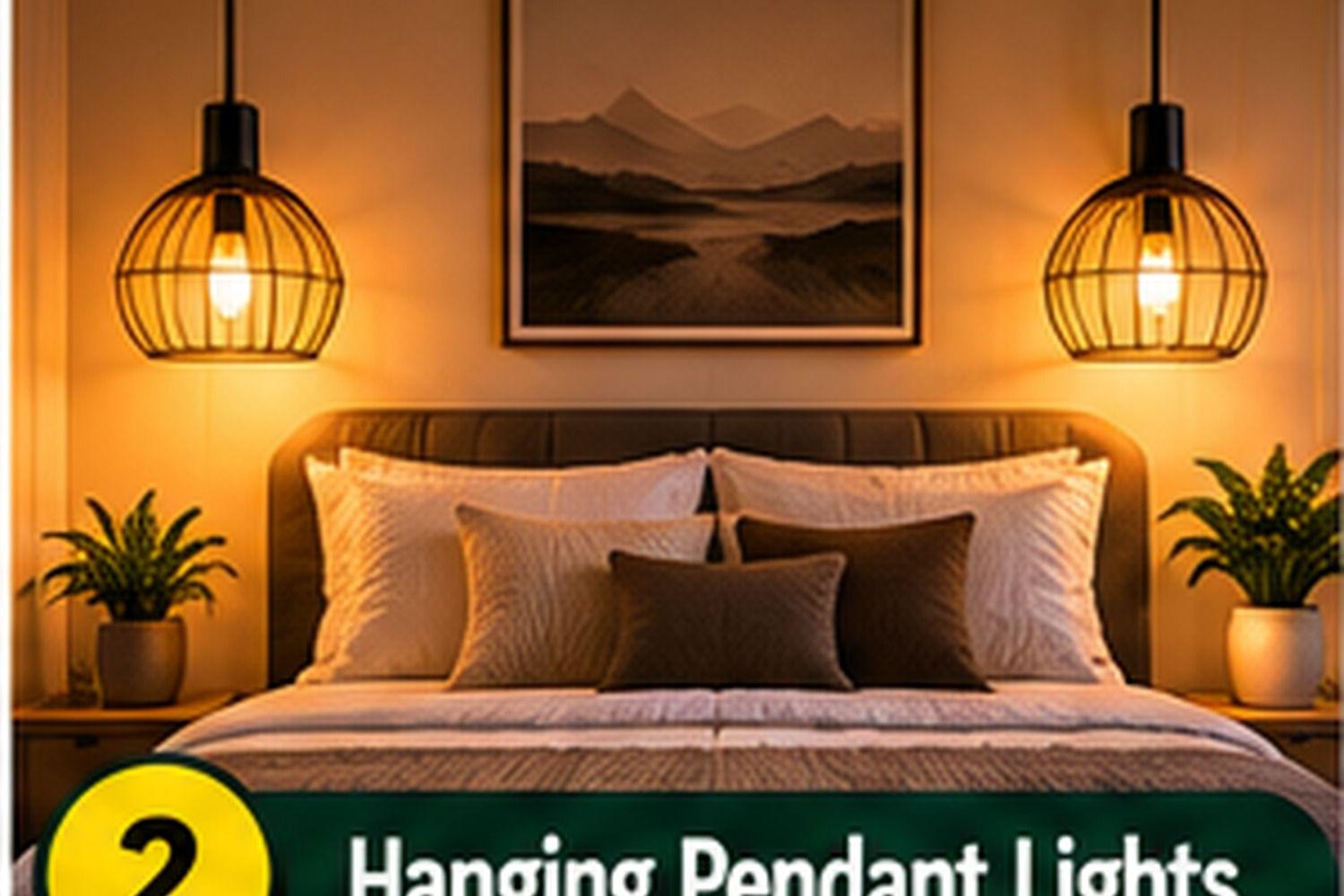
Pendant lights can free up nightstand space while adding a decorative focal point. A single pendant on each side of the bed gives a symmetrical look, while one larger pendant can work in a reading corner or open area. Check the ceiling height and the fixture's installation instructions before choosing a drop length. Keep the pendant clear of head movement and walking routes, and use a qualified electrician for hardwired installation.
Styling tip: Check ceiling clearance and position pendants so they do not interfere with movement.
3. LED strip ambient lighting
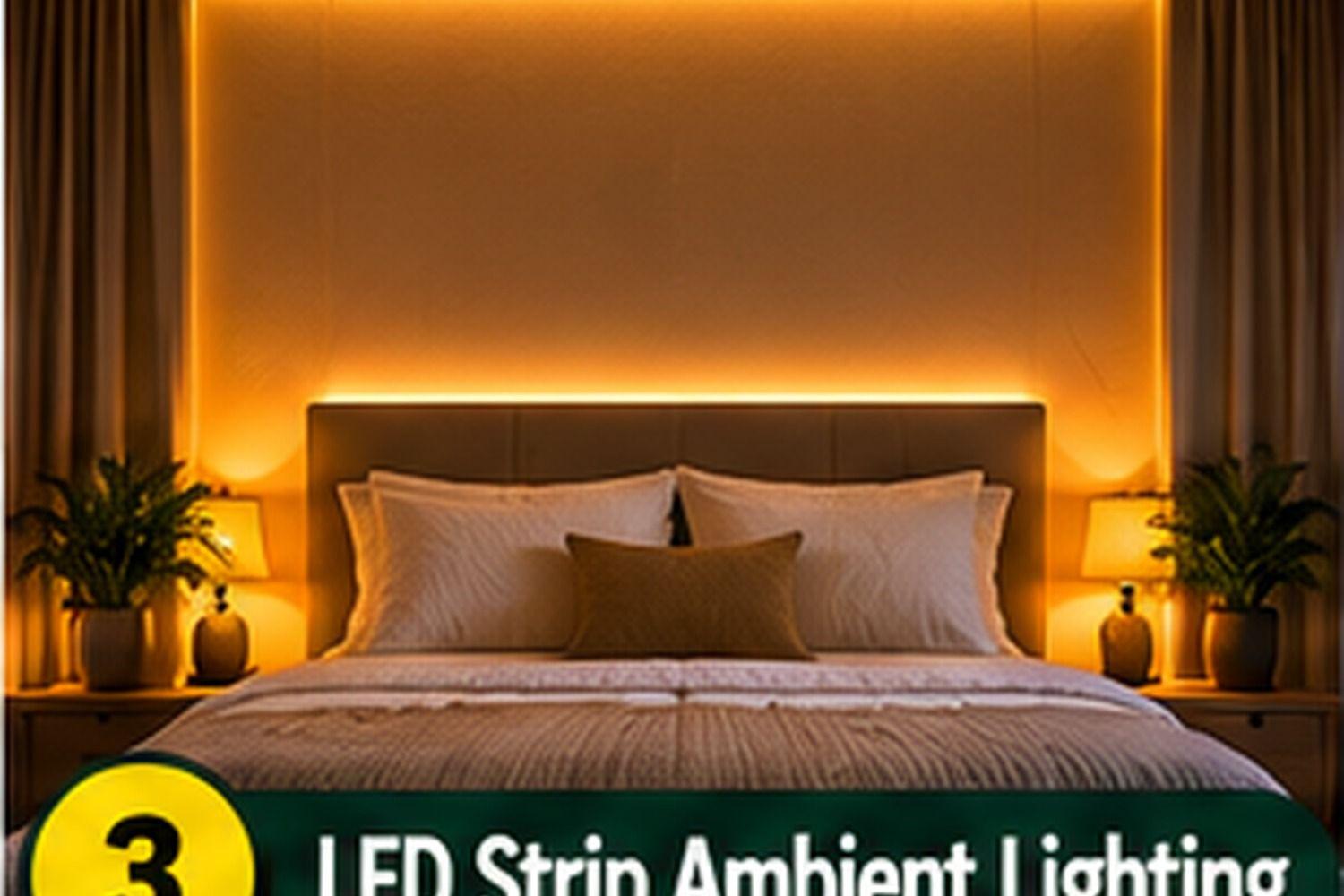
A discreet LED strip behind a headboard, along a purpose-made profile, or beneath a floating shelf can create a soft halo without a visible bright point. Choose a product designed for the intended mounting surface and use its specified driver, connectors, and controls. Avoid tightly enclosing the strip or covering it with bedding or other materials. A warm-white setting is often more restful than saturated color for everyday use.
Styling tip: Hide the LED source and keep the driver accessible.
4. Fairy string lights
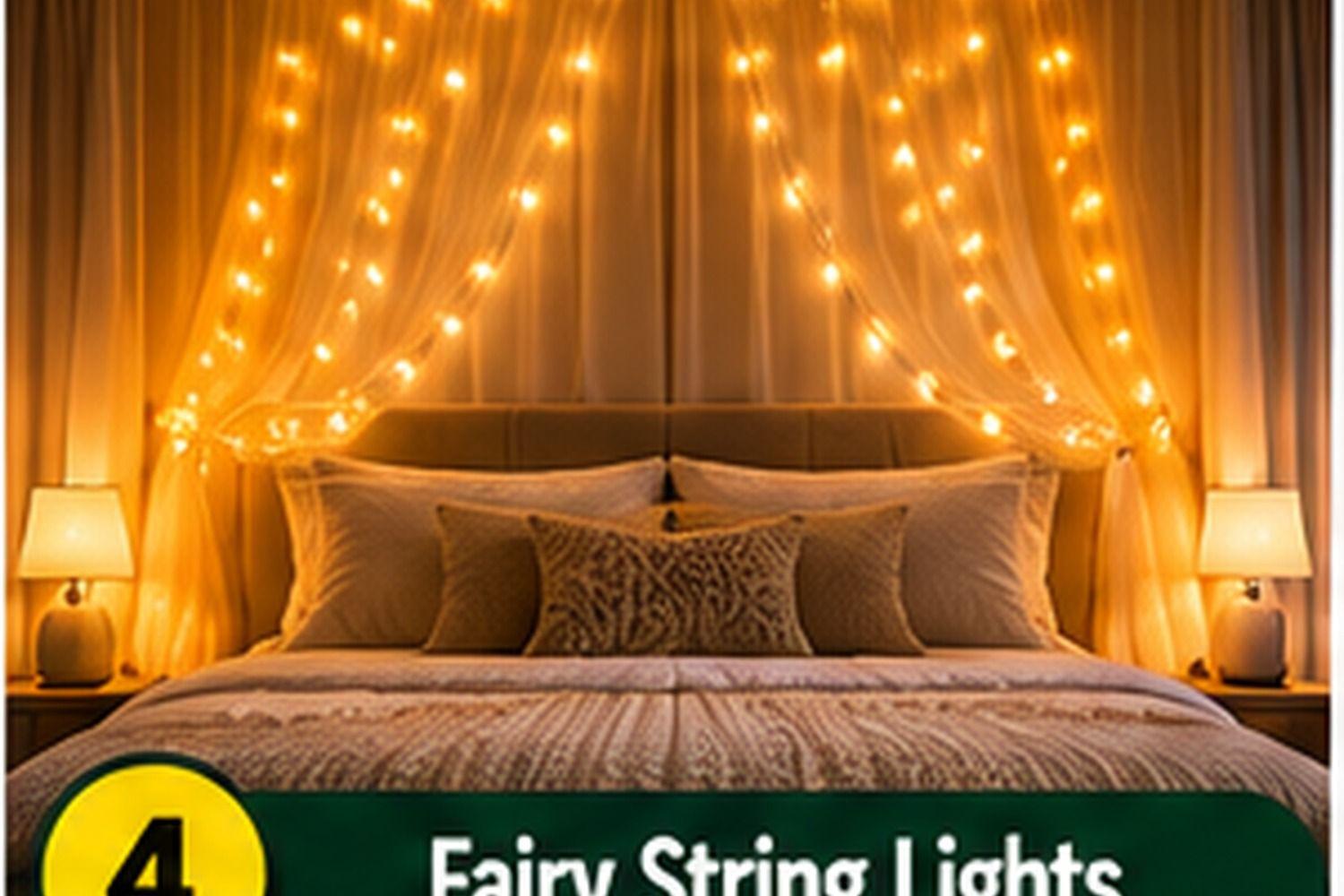
Fairy lights add a delicate, decorative sparkle around a headboard, canopy frame, or wall display. Choose lights intended for indoor use, secure them with the supplied clips, and keep the wire away from places where it could snag or become trapped. Battery-powered versions avoid a trailing power cable, while plug-in sets need a tidy, accessible outlet. Do not drape lights over bedding or fabric unless the product instructions explicitly permit that use.
Styling tip: Secure the wire neatly and follow the indoor-use instructions.
5. Wall sconce lighting
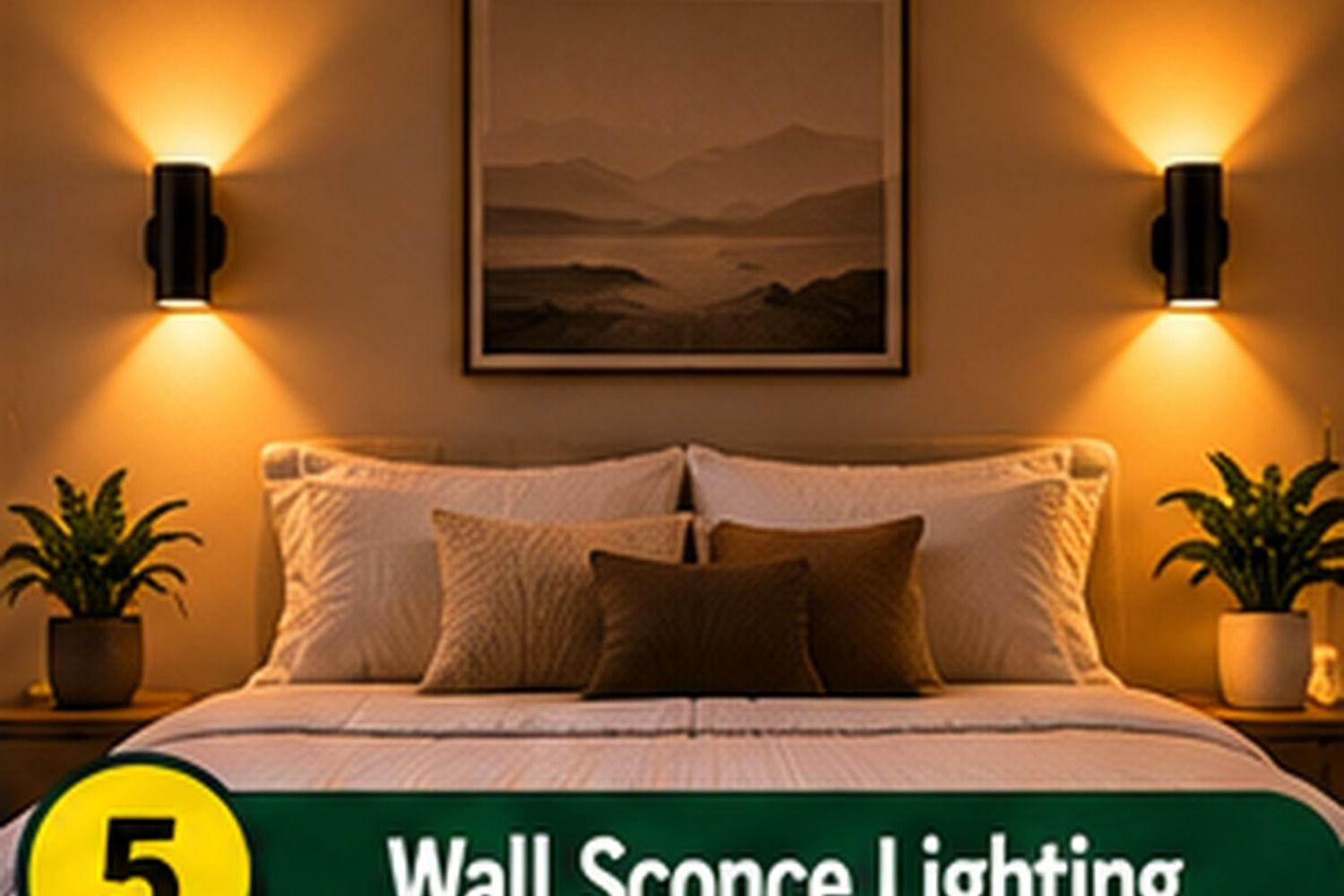
Wall sconces provide useful bedside light while keeping the nightstand surface clear. Swing-arm designs can direct light toward a book, while shaded sconces create a softer ambient effect. Place them so the light source is comfortable from a seated or lying position, and confirm that the wall construction and mounting hardware can support the fixture. Hardwired sconces should be installed by a qualified electrician; plug-in versions should have cords routed safely.
Styling tip: Position the light to avoid glare when reading or relaxing.
6. Salt lamp glow
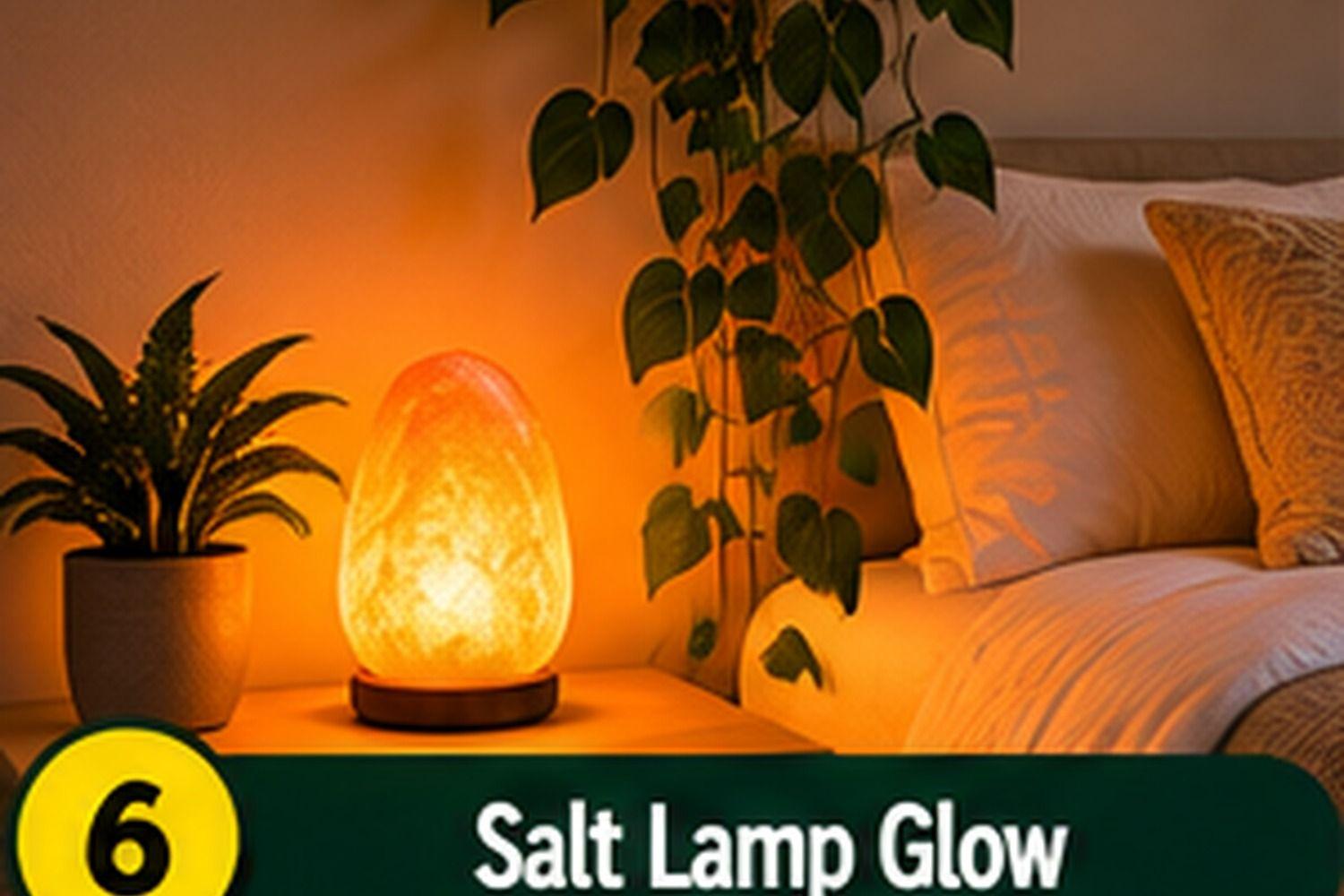
A salt lamp can add a warm decorative accent to a dresser or bedside surface. Treat it as mood lighting rather than a primary reading light, since its output is usually modest. Place it on a stable, dry, heat-resistant surface and follow the manufacturer's electrical and care instructions. Some salt lamps can attract moisture, so protect furniture and avoid placing one where it could be knocked over or exposed to spills.
Styling tip: Use it as a gentle accent, not the room's main light.
7. Floor lamp corner light
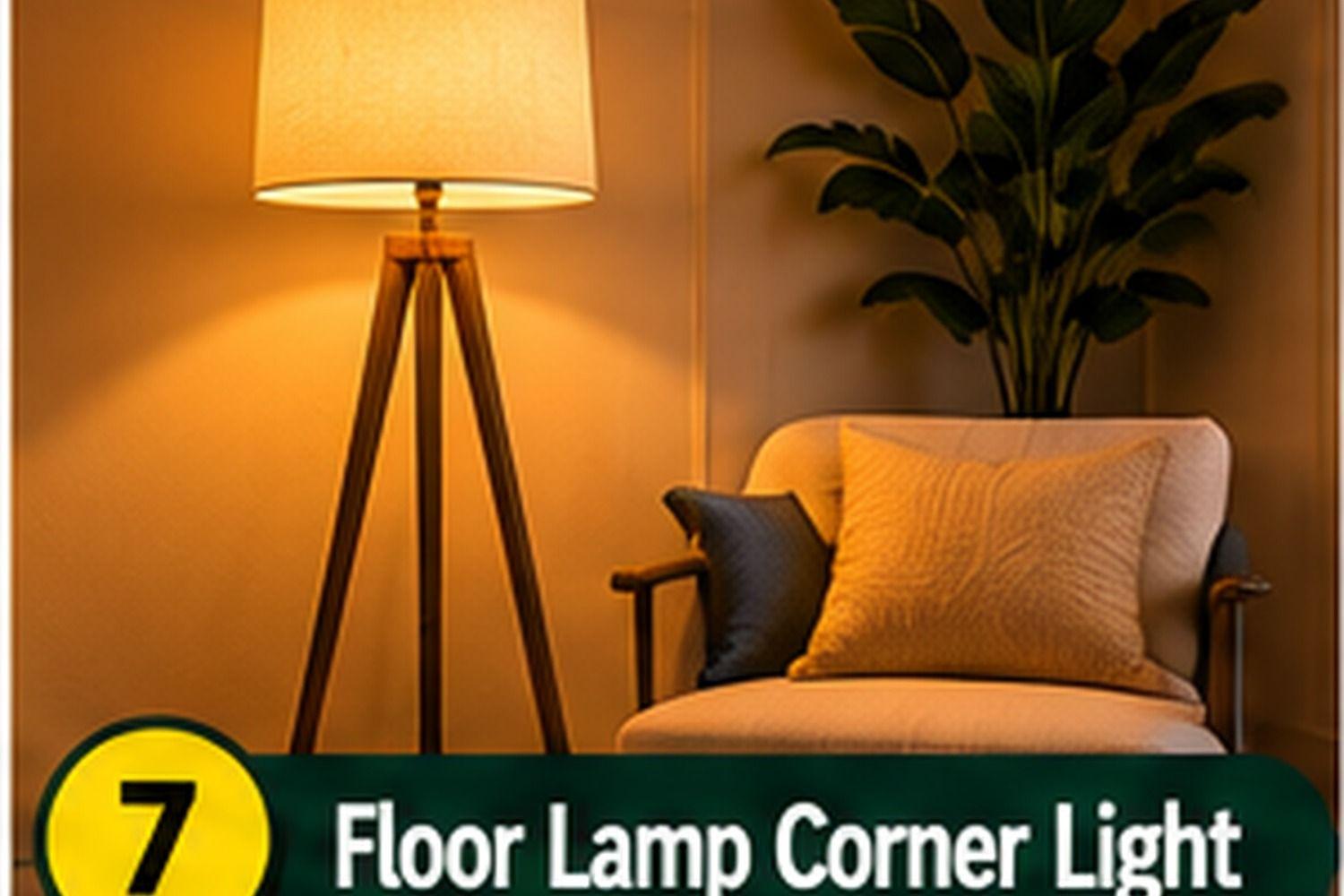
A floor lamp can illuminate a dark corner and create a comfortable pool of light without adding another ceiling fixture. Choose a stable base and a shade that directs light upward, downward, or softly outward according to the task. Keep the lamp clear of curtains, walkways, and furniture that could tip it. A dimmable model gives more control, provided the bulb and dimmer are compatible.
Styling tip: Choose a stable base and keep the lamp clear of curtains and routes.
8. Backlit headboard
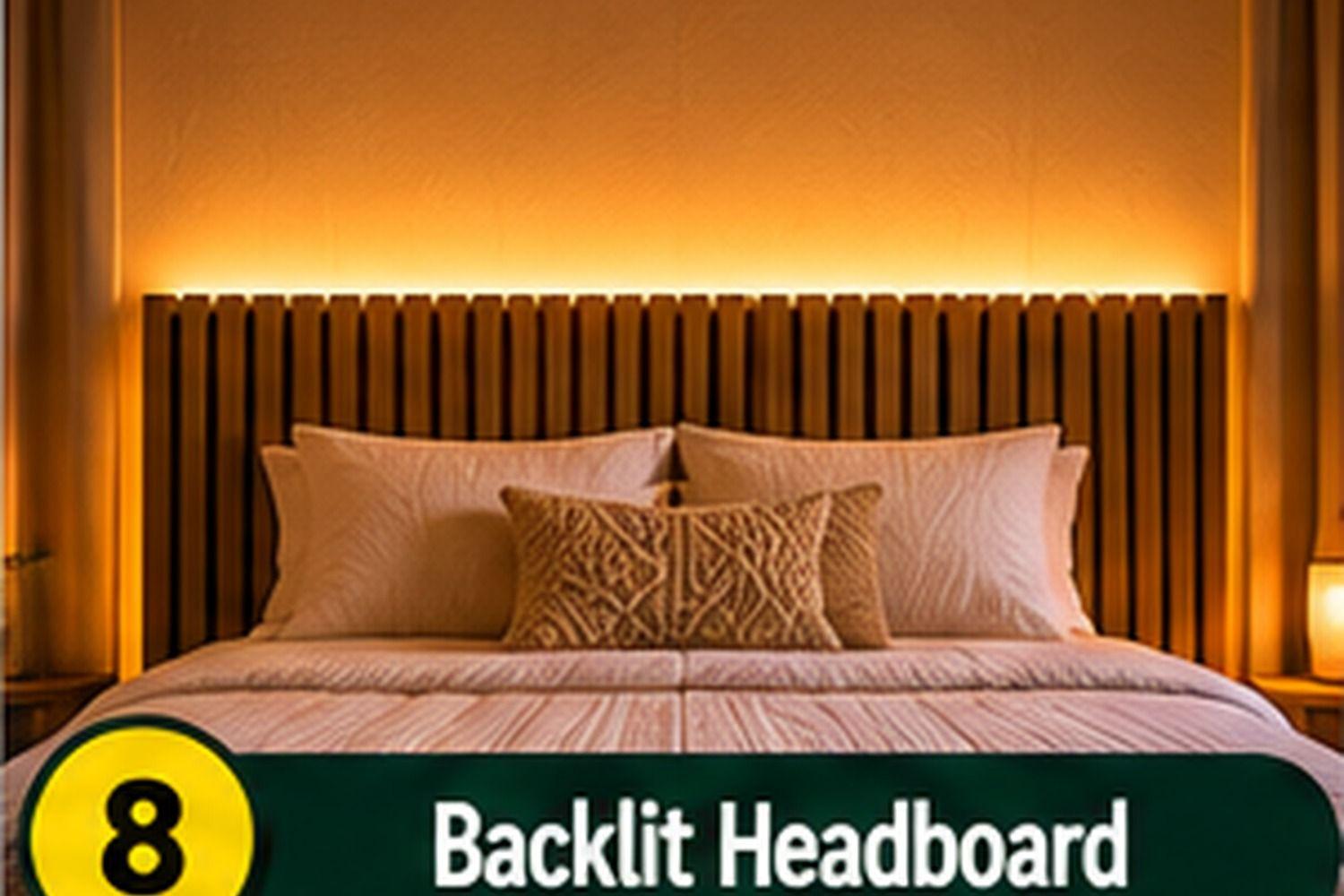
A backlit headboard creates a gentle architectural glow behind the bed. LED tape can be fitted into a suitable channel or concealed recess, with the light source hidden from direct view. Plan access to the driver and controller before closing any trim, and follow product instructions for ventilation and mounting. Keep cables organized and do not route electrical wiring through walls or building cavities unless the work is done using approved methods by a qualified professional.
Styling tip: Plan access to wiring and controls before installing the trim.
9. Rattan or woven lamps
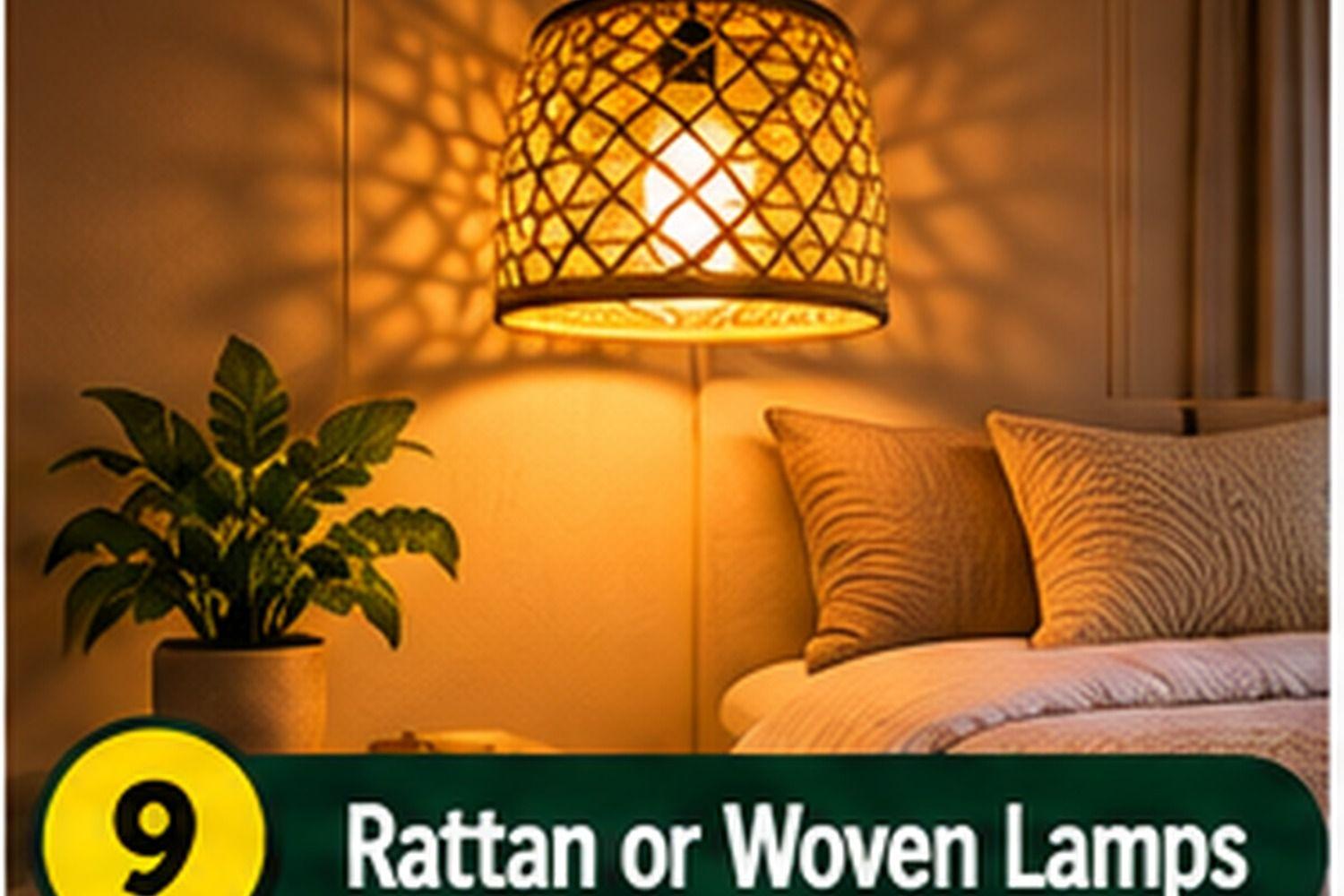
A woven pendant or table lamp brings texture and patterned shadows into a bedroom. Natural fibers look especially warm with timber furniture, linen bedding, and neutral walls. The shade must be designed for use with the selected light source; keep the bulb and any hot components at the manufacturer's required distance from the weave. Choose an LED lamp compatible with the fixture and never improvise a tight enclosure around a bulb.
Styling tip: Verify that the shade is suitable for the chosen bulb.
10. Candle-style LED lights
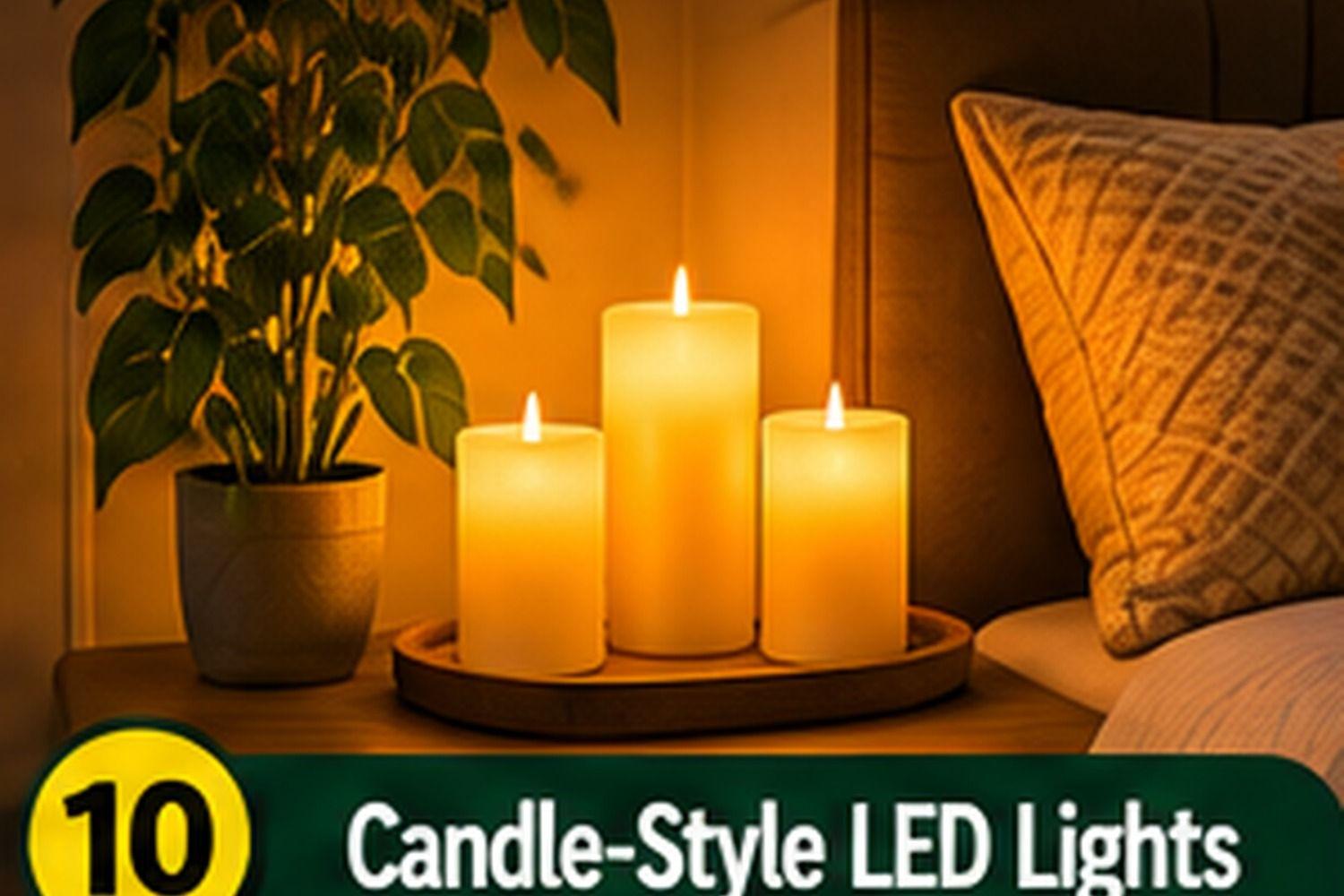
LED candles offer the gentle look of candlelight without an open flame. Arrange a few on a stable tray or dresser, leaving space around them and keeping them away from curtains, bedding, and anything that could fall onto them. Choose models with a timer or remote if convenient, and check battery access. They are decorative accents, not a replacement for brighter task lighting when reading or dressing.
Styling tip: Keep battery candles on stable surfaces away from fabrics.
11. Ceiling cove lighting
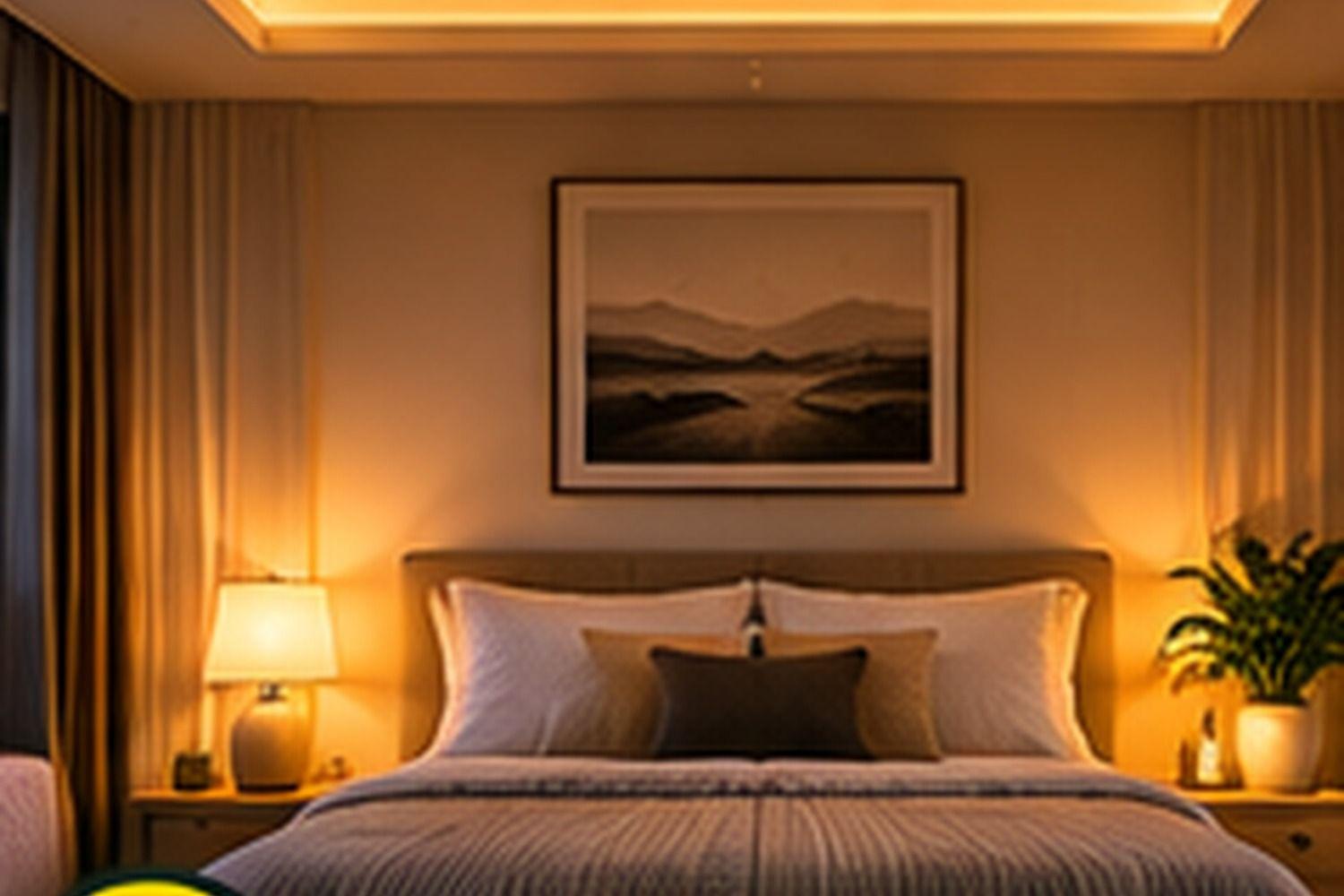
Cove lighting hides the light source in a ceiling recess or purpose-made profile and washes the ceiling with a soft glow. It can make a room feel layered and calm, especially when paired with bedside lamps. Use LED products and drivers rated for the installation conditions, and keep service components accessible. If creating a new recess or altering ceiling construction, check the structure and consult a qualified contractor or electrician.
Styling tip: Use a dimmable, compatible system for flexible ambience.
12. Lighted shelves
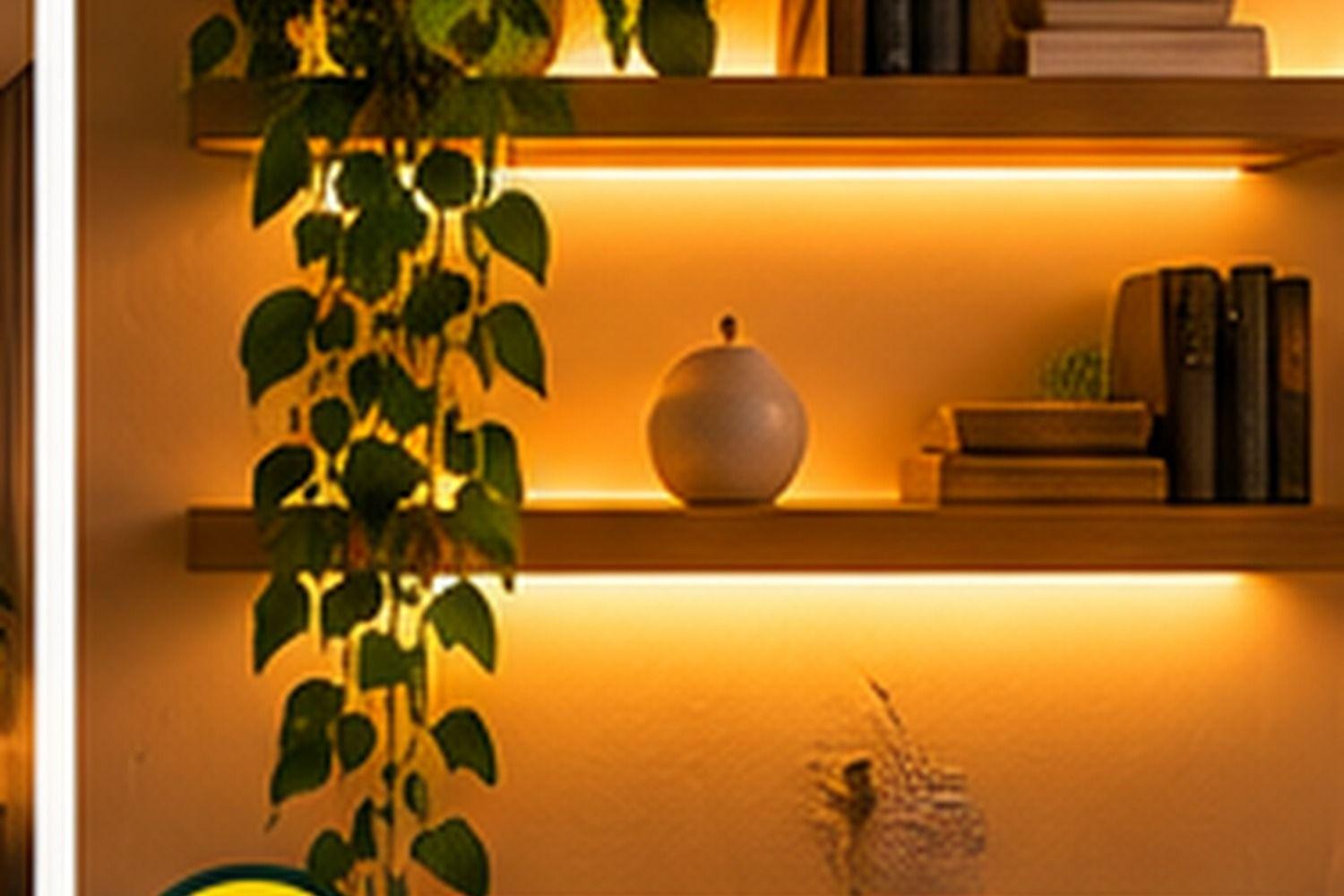
A shelf with integrated or concealed lighting can highlight books, framed art, and a few carefully chosen objects. LED strips fitted into a suitable channel can illuminate the shelf without exposing bright dots. Keep the shelf load within its rating, route cables neatly, and make sure the driver can be reached. Avoid crowding the shelf; a little empty space helps the light read as a design feature rather than clutter.
Styling tip: Leave room around displayed objects for a cleaner glow.
13. Smart color-warm lights
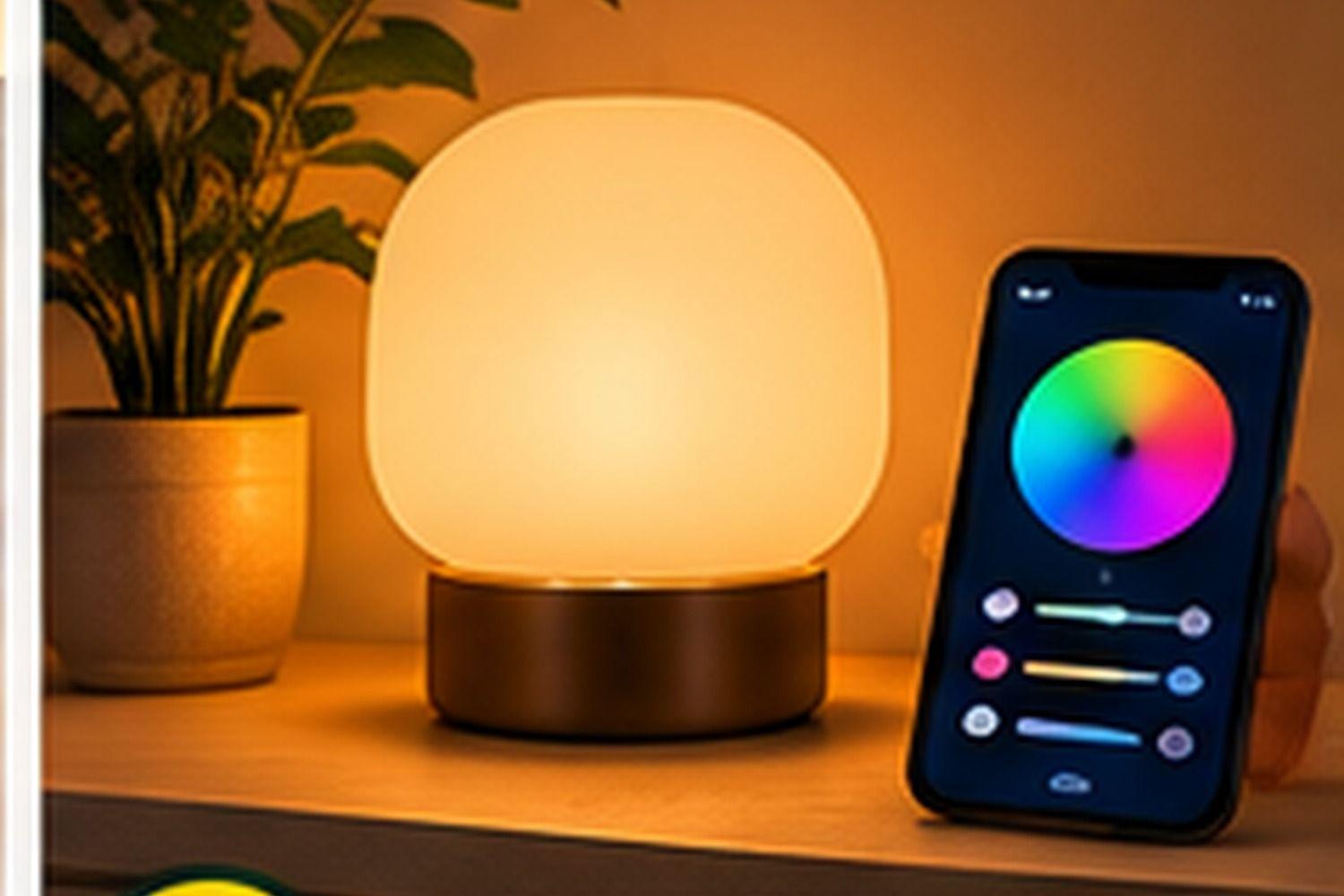
Smart bulbs and lamps let you adjust brightness and, on some models, color temperature from an app or voice assistant. For a restful bedroom, try warm white in the evening and a brighter neutral setting when cleaning or organizing. Check that the smart bulb is compatible with the fixture, hub, Wi-Fi network, and any wall dimmer. Avoid relying on color-changing effects as the room's only source of functional light.
Styling tip: Set a warm evening scene and retain a practical brighter setting.
14. Lantern accent lighting
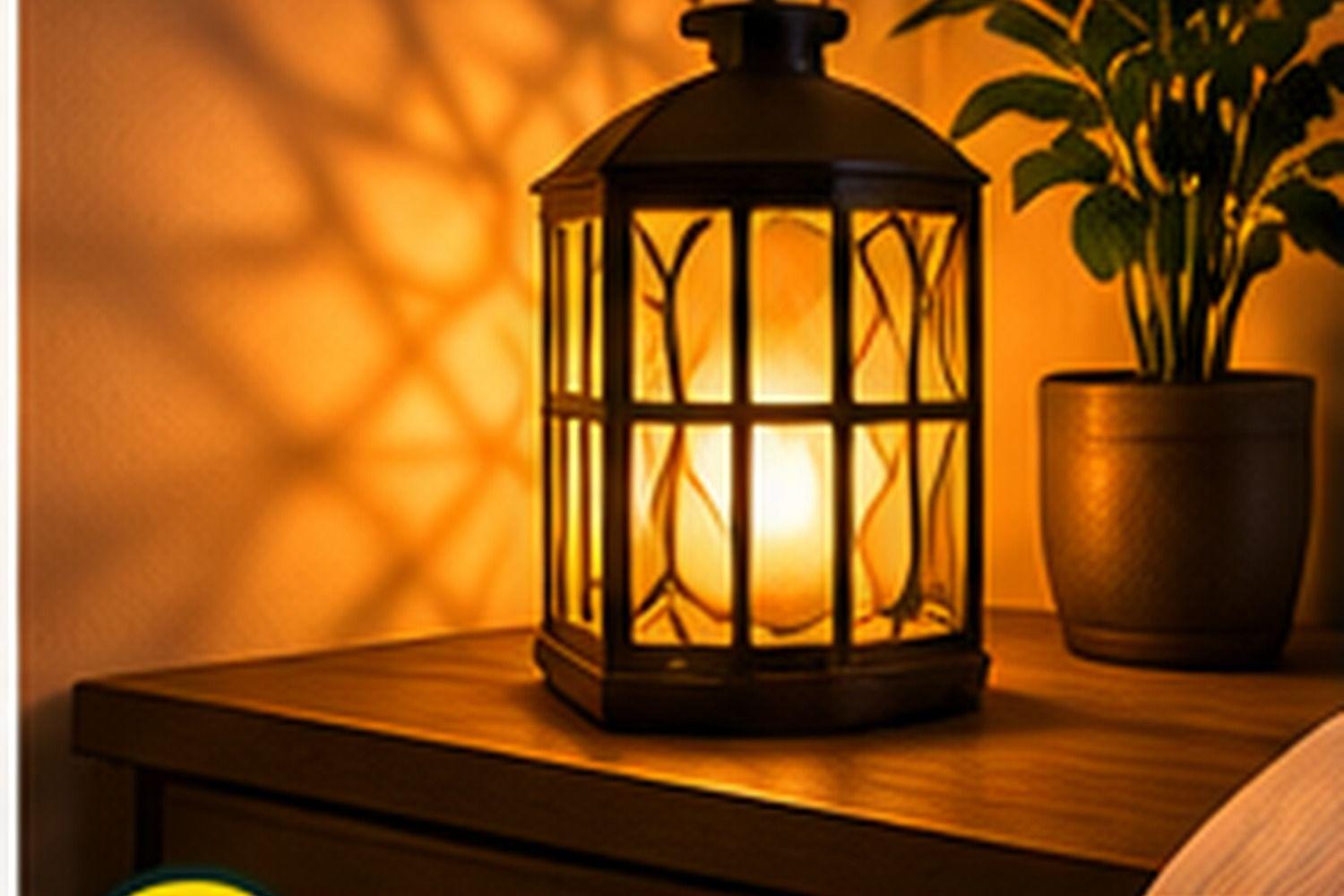
A decorative lantern can add a cozy focal point on a dresser, shelf, or floor corner. Choose a stable lantern designed for an LED candle or battery-powered light, with enough ventilation and access to the battery compartment. Keep it away from fabric, paper, and busy walkways. A dark metal frame, warm wood, or woven detail can echo other finishes in the room and help the accent feel intentional.
Styling tip: Choose a stable lantern and a suitable battery-powered light.
15. Starry projector lighting
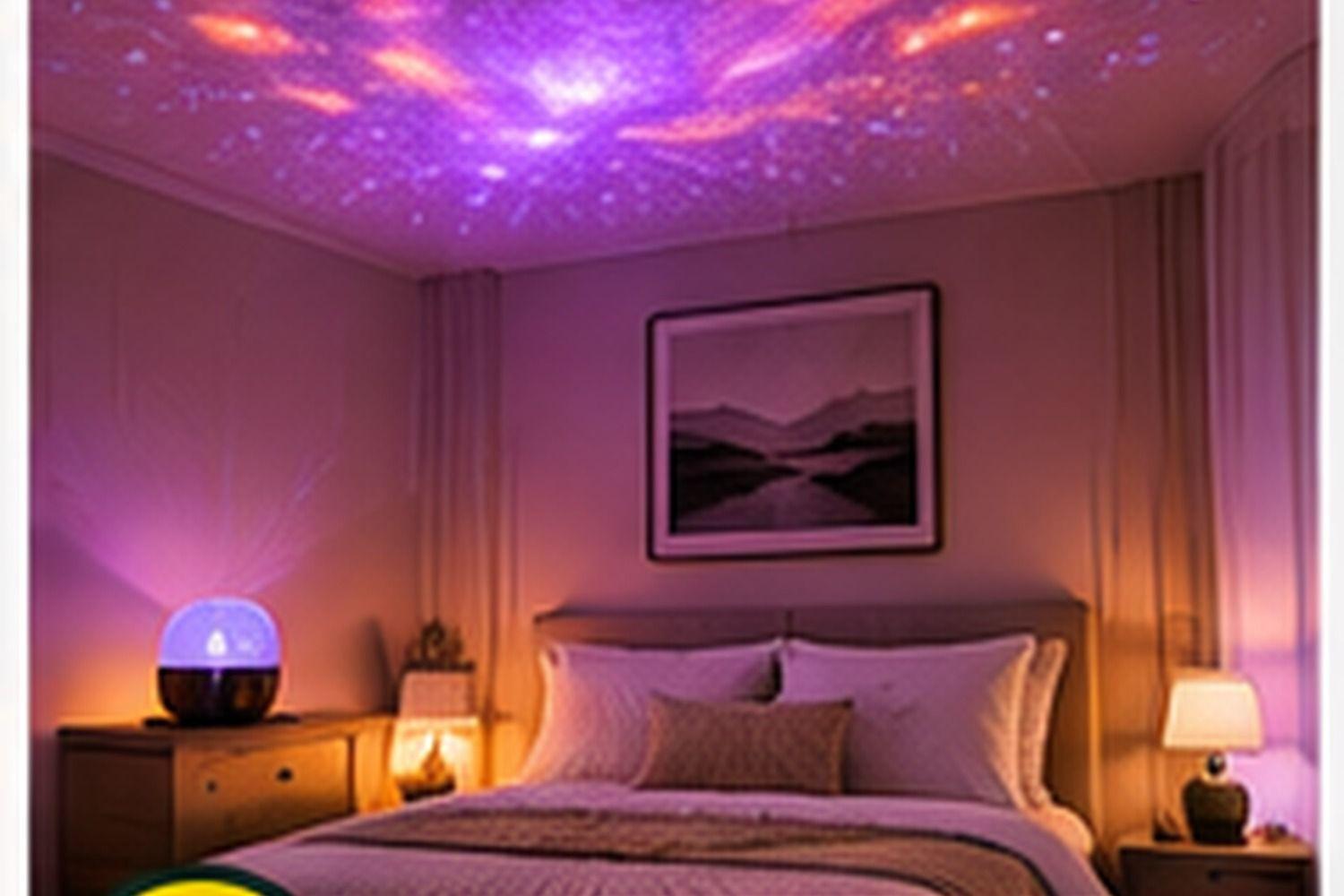
A star projector can create a playful ceiling effect for winding down, especially in a child's room or a relaxed media space. Choose a reputable product with adjustable brightness, a timer, and controls that are easy to reach. Place it on a stable surface where it cannot fall, and keep cords away from the bed and walking path. Use a low setting and make sure the effect is comfortable rather than distracting.
Styling tip: Use a timer and a low brightness level for a gentle effect.
Small details that make bedroom lighting feel more expensive
- Repeat finishes: Match or thoughtfully coordinate lamp hardware, drawer pulls, curtain rods, and picture frames.
- Use shades and diffusers: Softened light is often more comfortable than a bare bulb shining across the room.
- Keep controls convenient: Place switches where you can reach them from the bed, and use compatible dimmers where possible.
- Balance the room: Add light at more than one height so the ceiling, walls, and bedside areas do not feel disconnected.
- Choose a consistent color temperature: Mixing very cool and very warm lamps can make the room feel visually unsettled.
- Avoid overdecorating: A few well-positioned lights usually create a better effect than many competing strings and accent lamps.
Common bedroom lighting mistakes
Using only one overhead light. This can create harsh shadows and leave the room feeling flat. Add bedside or indirect lighting for a more flexible setup.
Choosing bulbs that are too bright or too cool. Check lumens and color temperature rather than relying on wattage or packaging appearance alone.
Ignoring glare. A bare bulb visible from the pillow can be uncomfortable. Choose shades, diffusers, and adjustable fixtures that direct light where it is needed.
Hiding power supplies where they cannot be inspected. LED drivers and controllers need the clearances and access specified by the manufacturer. Do not bury them behind closed trim or under bedding.
Placing lights too close to fabric. Keep lamps, strips, and decorative lights at the distances required by their manufacturers. Do not assume an LED product can safely touch curtains, bedding, or a fabric canopy.
Frequently asked questions
What color light is best for a cozy bedroom?
Warm white around 2700K to 3000K is a popular starting point for a relaxing atmosphere. Choose a bulb with comfortable brightness and good color rendering, and test it with your wall color and bedding.
How can I make my bedroom lighting look cozy without rewiring?
Use plug-in table lamps, floor lamps, rechargeable portable lights, and battery-powered LED accents. Route cords safely and use only products intended for the chosen location. Avoid overloading outlets or using extension cords as permanent wiring.
Are LED strip lights good for bedrooms?
They can be useful for indirect accent lighting behind a headboard, beneath a shelf, or inside a suitable profile. Choose a quality product with a compatible power supply and follow its mounting, ventilation, and clearance instructions.
Should bedroom lights be dimmable?
Dimming is useful because bedrooms serve different purposes. Use bulbs, fixtures, and dimmers that are specifically compatible; not every LED bulb can be dimmed.
How many lights should a bedroom have?
There is no fixed number. A practical starting point is one ambient source, task lighting near the bed or dressing area, and one optional accent source. Room size, layout, and personal needs determine the final arrangement.
Final thoughts
A cozy bedroom lighting scheme comes from thoughtful layers, comfortable brightness, and a few details that suit the room's style. Start with the light you need for everyday tasks, add softer sources around the bed and walls, and use warm-white settings to create a more relaxed mood.
You do not need to install every idea in this guide. One pair of bedside lamps, a dimmable pendant, or a gentle headboard glow may be enough to transform the atmosphere. Choose safe, compatible products and make sure the lighting is as practical as it is beautiful.
Sources
- U.S. Department of Energy: LED Lighting. Checked November 7, 2026
- U.S. Department of Energy: Lighting Choices to Save You Money. Checked November 7, 2026
- Electrical Safety Foundation International. Checked November 7, 2026
- U.S. Consumer Product Safety Commission. Checked November 7, 2026
- International Code Council. Checked November 7, 2026
Share this article
Get new guides by email
Practical home articles and free resources. No spam, and you can unsubscribe at any time.
Keep reading
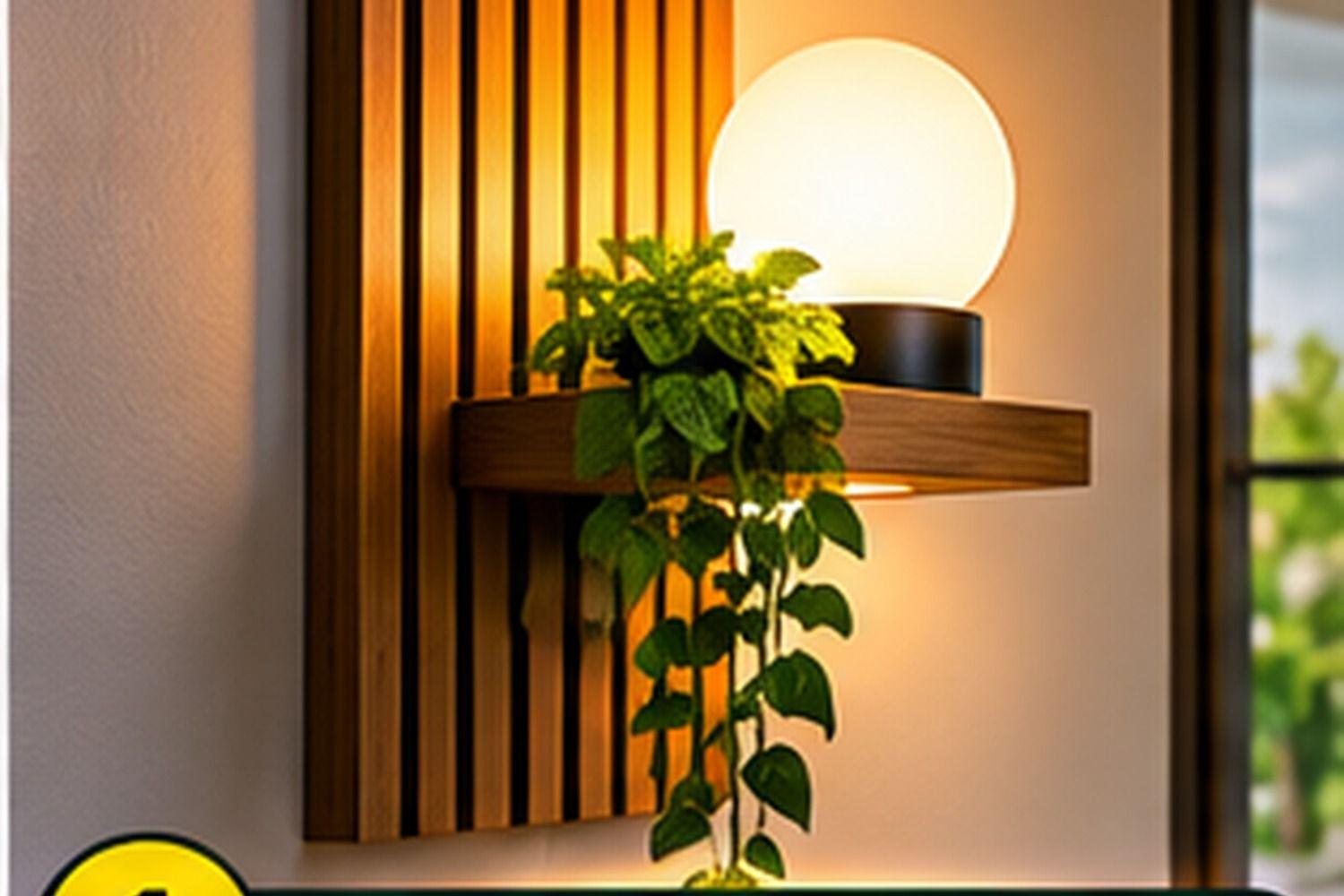
9 Wireless Light Bulb Trick Sconces DIY Projects
Explore 9 DIY wireless light bulb sconce ideas, from modern wood and industrial pipe to rattan, geometric, and minimalist designs.
November 2026, 8 min read
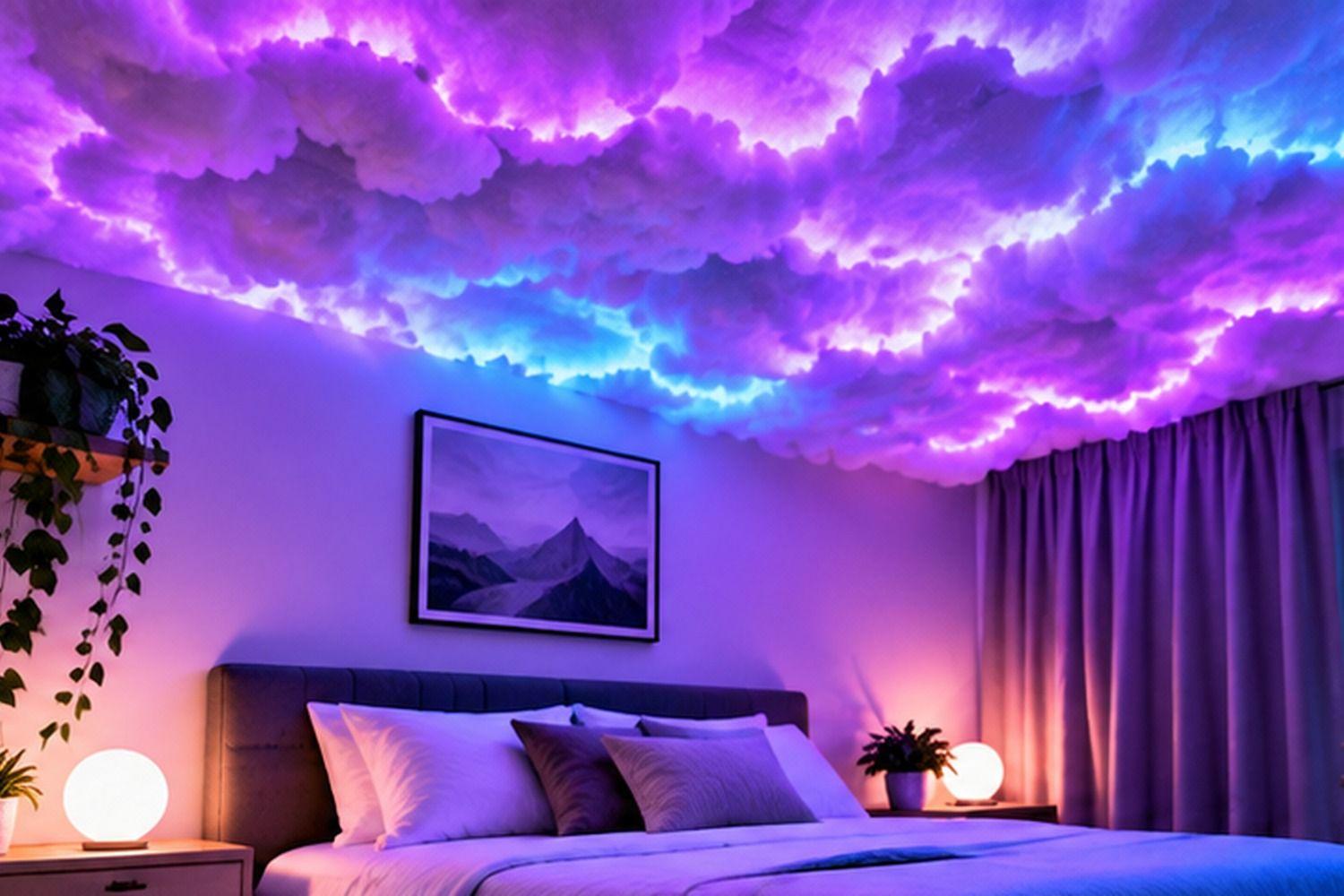
5 Steps: How to Make a DIY Cloud Ceiling LED Light
Learn the five stages of planning and building a glowing DIY cloud ceiling LED feature, with important guidance on mounting, lighting, materials, and fire safety.
November 2026, 8 min read
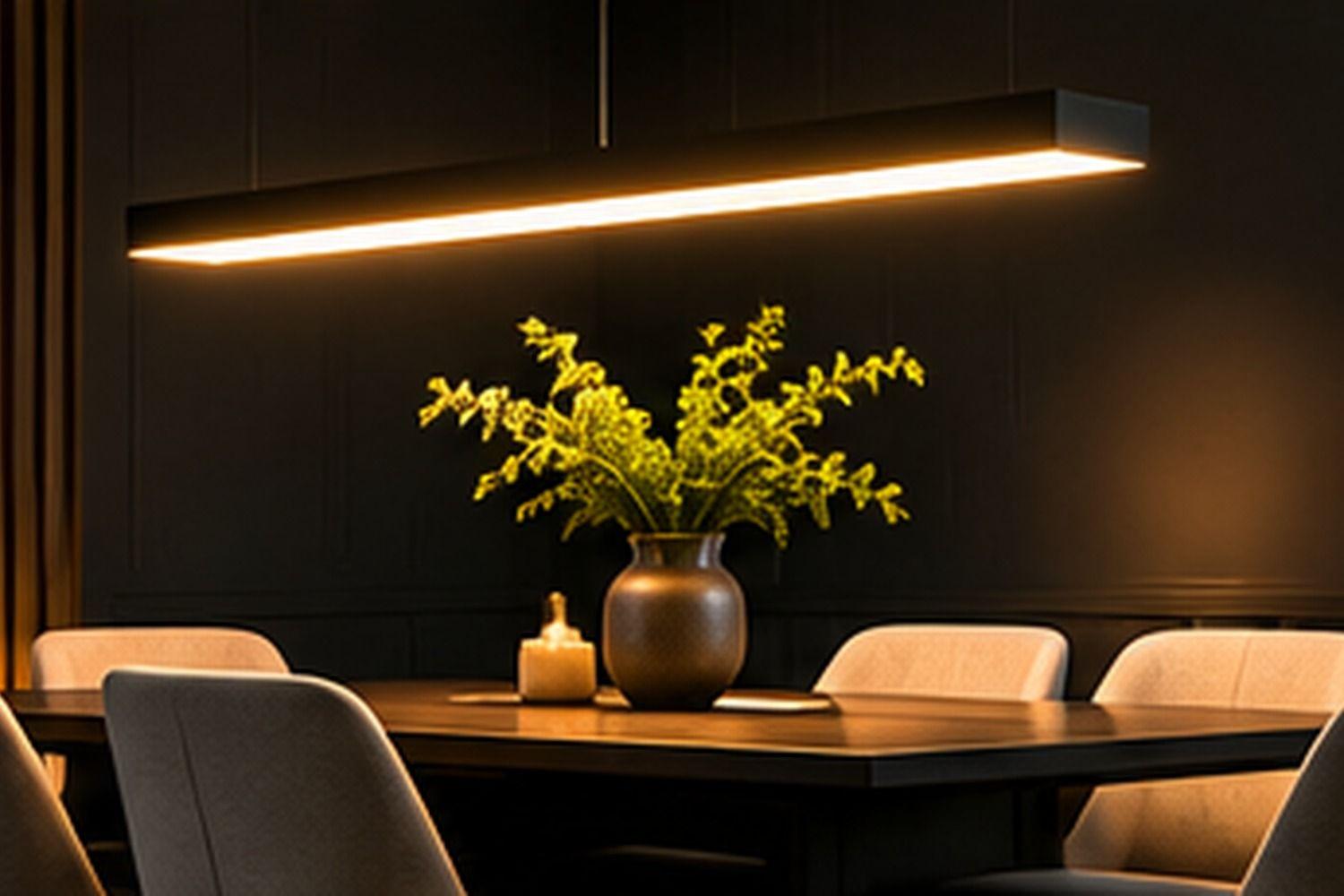
11 Modern Moody Dining Room Lighting Ideas To Try
Discover 11 modern moody dining room lighting ideas, from statement pendants and ring chandeliers to wall sconces, cove lighting, and warm layered accents.
November 2026, 8 min read