Massachusetts Deck Building Cost: Wood vs. Composite
Compare Massachusetts wood and composite deck costs, installed scope, maintenance, and a clear sample budget with illustrated quote-planning guidance.
By Home Crane Editors. . 4 min read.
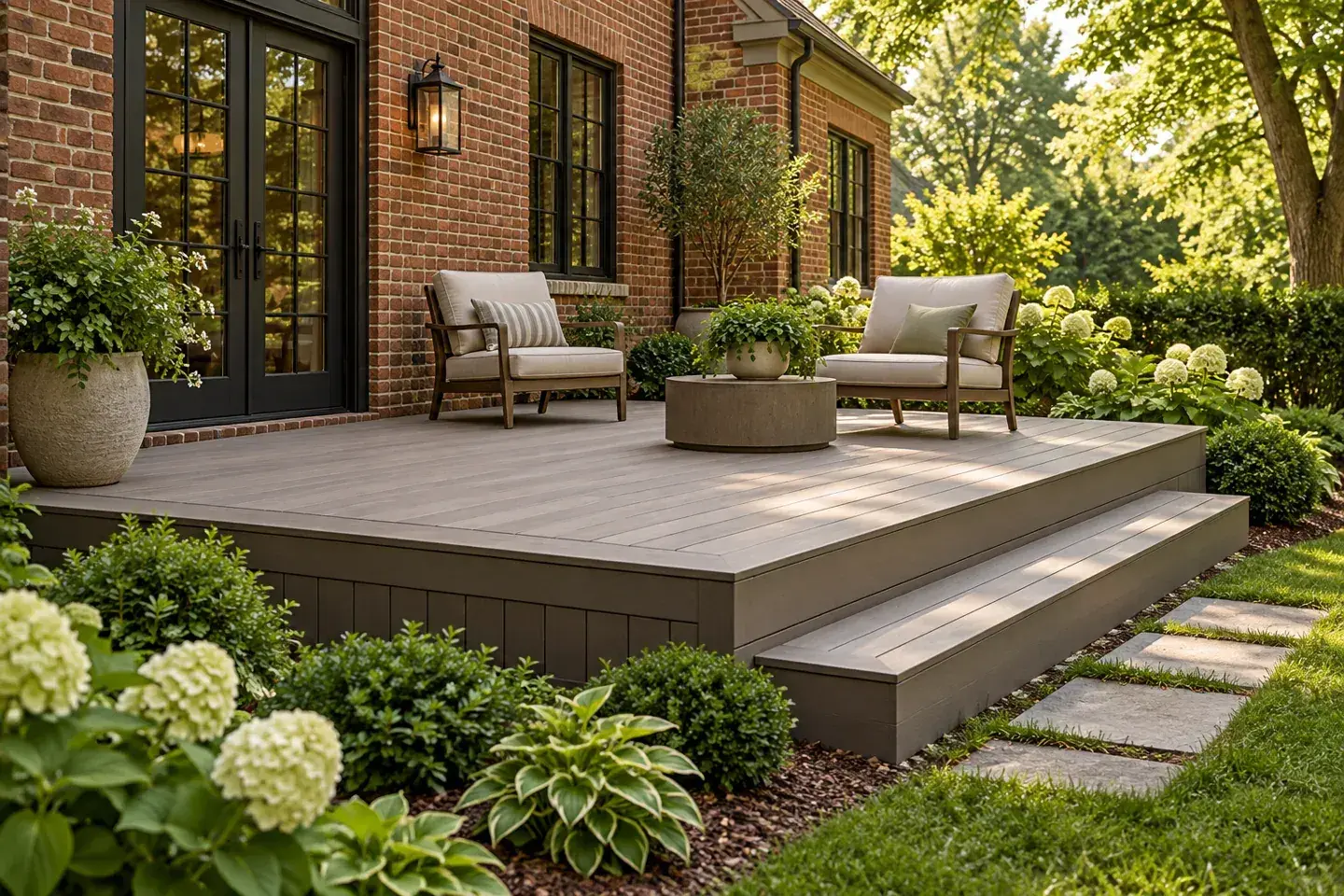
A Massachusetts deck budget should compare complete installed projects, not just the price of decking boards. Pressure-treated wood can offer a lower starting price, while composite can reduce the amount of surface refinishing you take on. Neither choice makes the frame, stairs, railings, or site work disappear.
For local context, one Western Massachusetts builder publishes installed planning ranges of $25 to $45 per square foot for pressure-treated wood and $40 to $70 for composite. Those figures are a starting point for discussion, not a statewide average. A raised deck with substantial stairs can differ greatly from a simple low platform of the same area.
1. Compare installed prices with the same scope
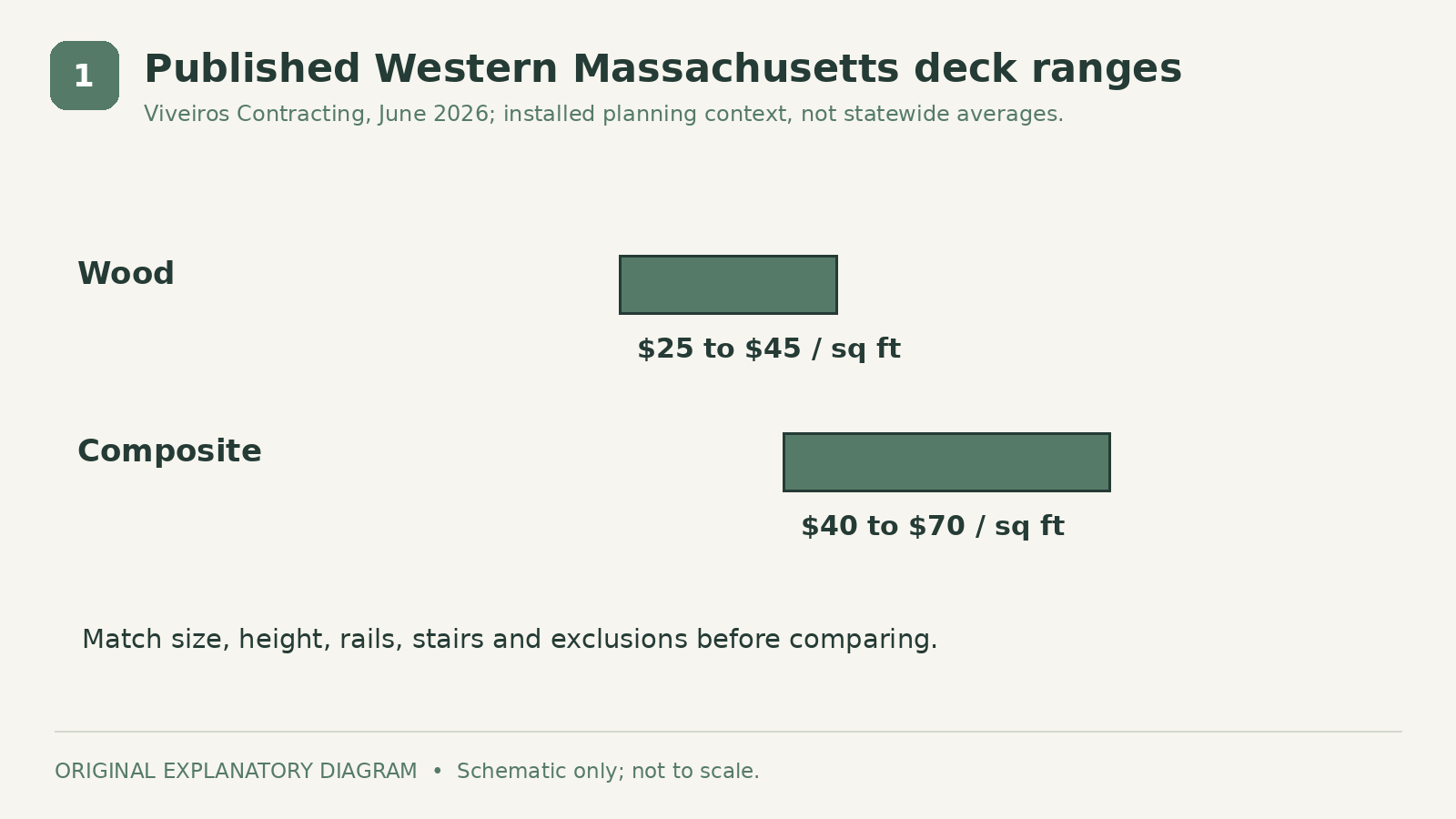
Viveiros Contracting's June 2026 deck guide supplies the ranges above for its Western Massachusetts market. The firm also gives broader example totals for particular sizes and configurations. Those examples do not line up perfectly with a simple area multiplication, which is a reason to ask for an itemized proposal rather than force every project into one unit price.
For a 320-square-foot footprint, multiplying the published unit ranges gives $8,000 to $14,400 for wood and $12,800 to $22,400 for composite. This is arithmetic applied to a published benchmark. It is not an estimate for your property, and it does not establish that demolition, upgrades, or unusual access are included.
Put the same drawing in front of each bidder. Show dimensions, height, stair locations, intended railing, and the connection to the house. List any lighting or built-in seating separately so you can remove those options without obscuring the core construction price.
Ask whether tax, delivery, plans, permits, demolition, and cleanup are already in the total. A quote with more visible line items is not necessarily more expensive than one that leaves those items for later.
2. Choose wood or composite for your ownership plans
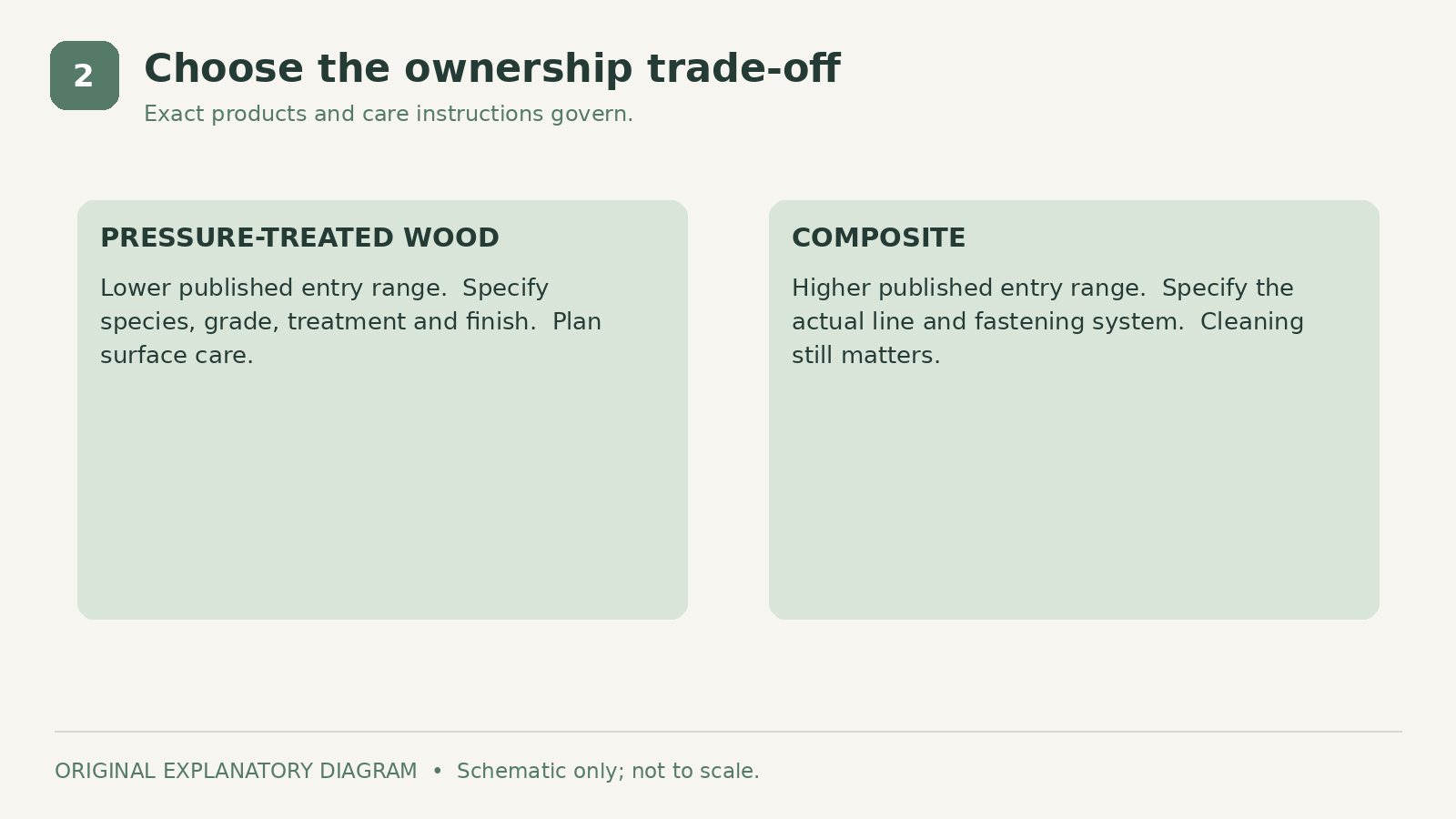
Wood is worth considering when the initial budget matters most and you accept a surface-care routine. Specify species, grade, treatment, board dimensions, and the intended finish. A generic line reading “wood deck” leaves room for materially different products and appearance.
Composite is worth considering when you want a consistent manufactured finish and less recurring staining work. However, the exact product line matters. Cap coverage, color, texture, fasteners, trim, and warranty conditions vary, even within one brand.
Trex's care guidance makes clear that manufactured decking still needs appropriate cleaning. Use the instructions for the selected product rather than assume that every cleaner, pressure setting, or snow-removal tool is suitable.
Bring samples outside before deciding. Look at them in direct sun and shade, against the siding, and beside the proposed rail color. Consider everyday use, including bare feet, furniture movement, fallen leaves, and how easily you can reach underneath or beside the deck for maintenance.
Avoid a guaranteed payback claim. The value of reduced refinishing depends on your time, local service prices, how long you stay, and the actual condition of the deck over time.
3. Price the frame, stairs, rails, and site
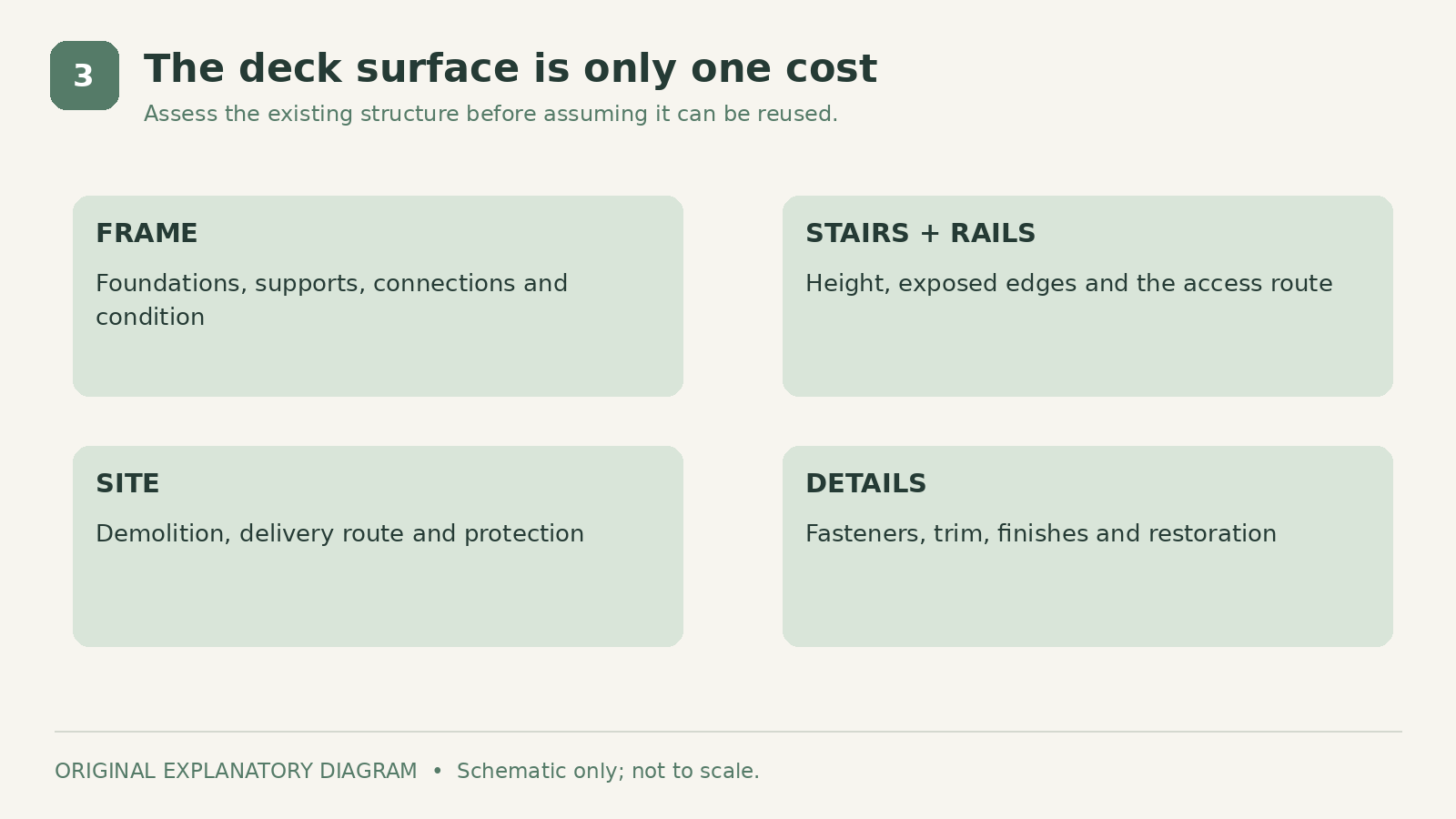
A surface replacement and a new deck are different jobs. If you hope to reuse an existing structure, arrange an assessment before ordering boards. A good-looking surface does not prove that the framing, connections, or foundations are suitable for continued use or the new product.
Ask the builder to state the framing assumptions and which conditions could require a change. Document the process for concealed deterioration discovered during removal. Agree on approval before extra work begins, including how labor, materials, and overhead will be charged.
Count rail length and describe stairs separately. Two decks with equal floor area may have very different exposed edges and access needs. A long stair run can involve considerably more than a few extra surface boards.
Also describe the route into the yard. Narrow gates, existing planting, sloping terrain, and material staging can affect logistics. Identify which plants or paved areas must be protected and what restoration is included.
A simpler rectangle can be a useful option to price alongside a more elaborate design. Compare the usable furniture layout in both versions. Reducing corners or unnecessary changes in level may preserve the function you want while simplifying the scope.
4. Build a transparent deck budget
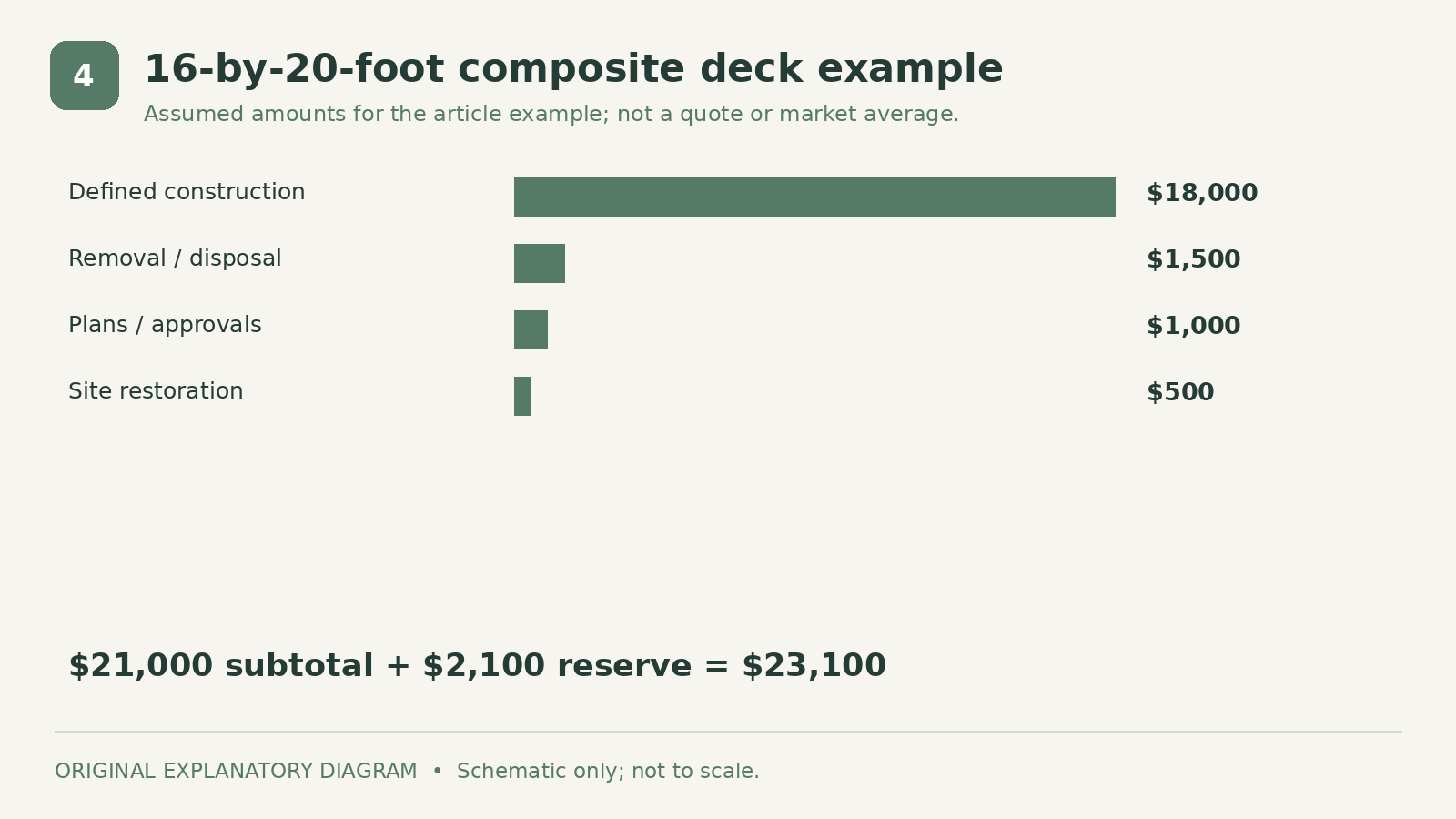
Here is an original example for a 16-by-20-foot composite deck. Every amount is an assumption for a budgeting exercise, not a contractor offer or a Massachusetts average. The bundled construction allowance includes framing, surface boards, ordinary rails, and a defined stair arrangement.
| Feature | Assumed amount | |
|---|---|---|
| Complete defined deck construction | $18,000 | |
| Old deck removal and disposal | $1,500 | |
| Plans and local approvals | $1,000 | |
| Site protection and restoration | $500 | |
| Subtotal | $21,000 | |
| Owner reserve, 10% | $2,100 | |
| Planning total | $23,100 |
The total is about $72.19 per square foot, including the separate allowances and reserve. That is different from quoting only the construction line at $56.25 per square foot. Naming the denominator and the included costs prevents an apparently cheaper comparison from becoming misleading.
If the builder's proposal already includes removal or permits, do not add them again. Keep the reserve under your control for unresolved conditions and approved changes. It is not an automatic amount the contractor receives.
Price wood as an alternate using the same structure and accessories. The difference between those two complete proposals is the useful upgrade cost.
5. Get comparable Massachusetts proposals
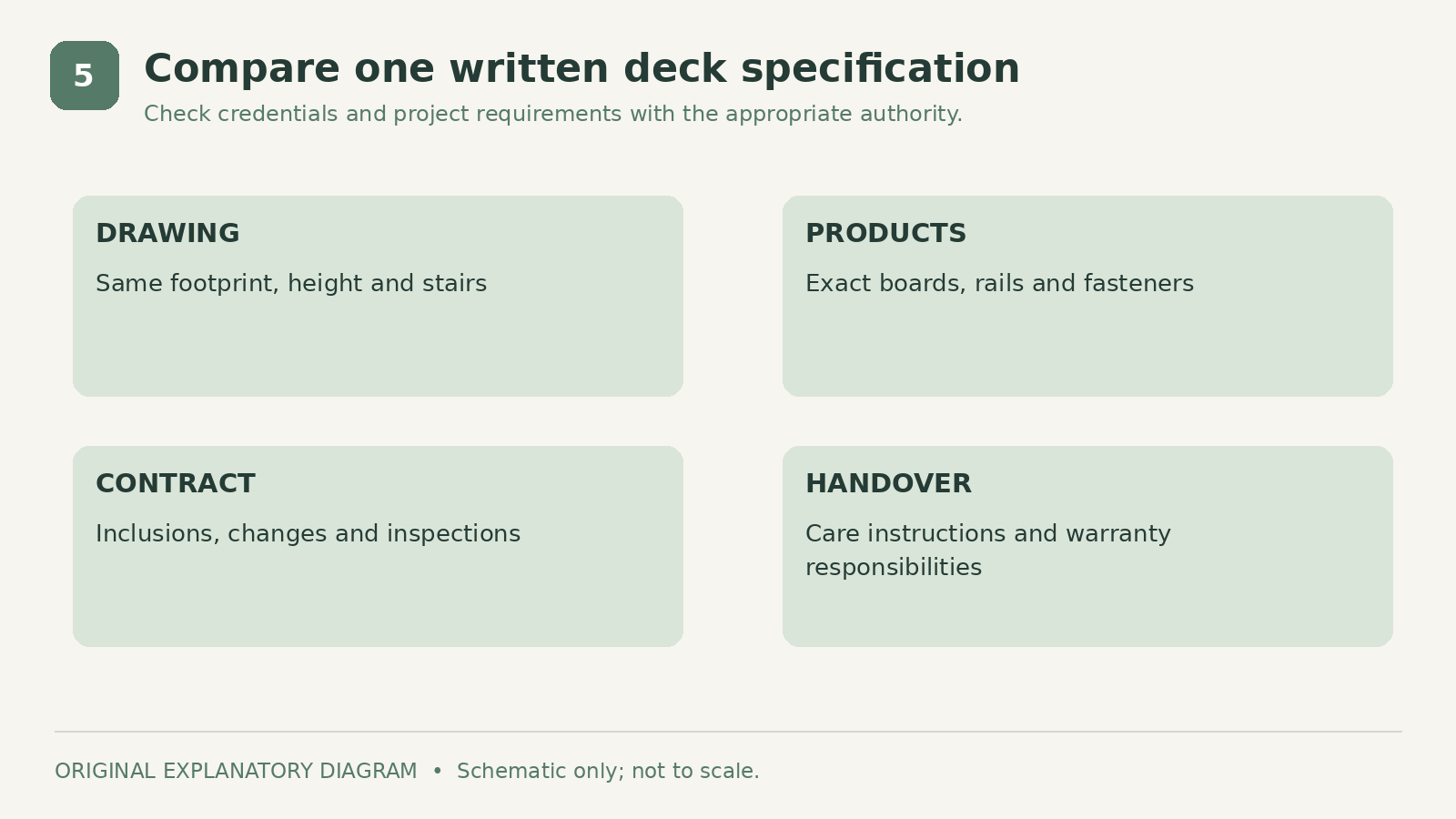
Massachusetts contractor guidance distinguishes Home Improvement Contractor registration from a Construction Supervisor License. They are not interchangeable. Check the appropriate credentials and ask the local building department to confirm the requirements for the actual deck project.
Before signing, request the exact decking line, color, fastening system, rail specification, and installation responsibility. Ask who obtains approvals and schedules inspections, how weather affects the schedule, and when materials will be secured.
Read product and workmanship warranties separately. A long product warranty is not a promise that all installation labor or future removal costs are covered. Keep the final specifications and care instructions with the contract.
Make the decision using three figures: the complete wood price, the complete composite price, and the amount you can comfortably spend while retaining a reserve. Choose the option that fits your maintenance preferences and actual site, then approve a written scope that leaves as little as possible to assumption.
Sources
- Viveiros Contracting's June 2026 deck guide. Checked October 7, 2026
- Trex's care guidance. Checked October 7, 2026
- Massachusetts contractor guidance. Checked October 7, 2026
Share this article
Get new guides by email
Practical home articles and free resources. No spam, and you can unsubscribe at any time.
Keep reading
The Best Deck Materials for Virginia Weather
Compare composite, PVC, pressure-treated wood, and naturally durable decking for Virginia weather, including maintenance and installation trade-offs.
October 2026, 4 min read
Deck Safety Inspection: What to Check Before Each Season
Most deck failures start in a few predictable places. Here is a homeowner's visual checklist, the warning signs that mean stop using the deck, and when to call a professional.
September 2026, 4 min read