The Best Deck Materials for Virginia Weather
Compare composite, PVC, pressure-treated wood, and naturally durable decking for Virginia weather, including maintenance and installation trade-offs.
By Home Crane Editors. . 4 min read.
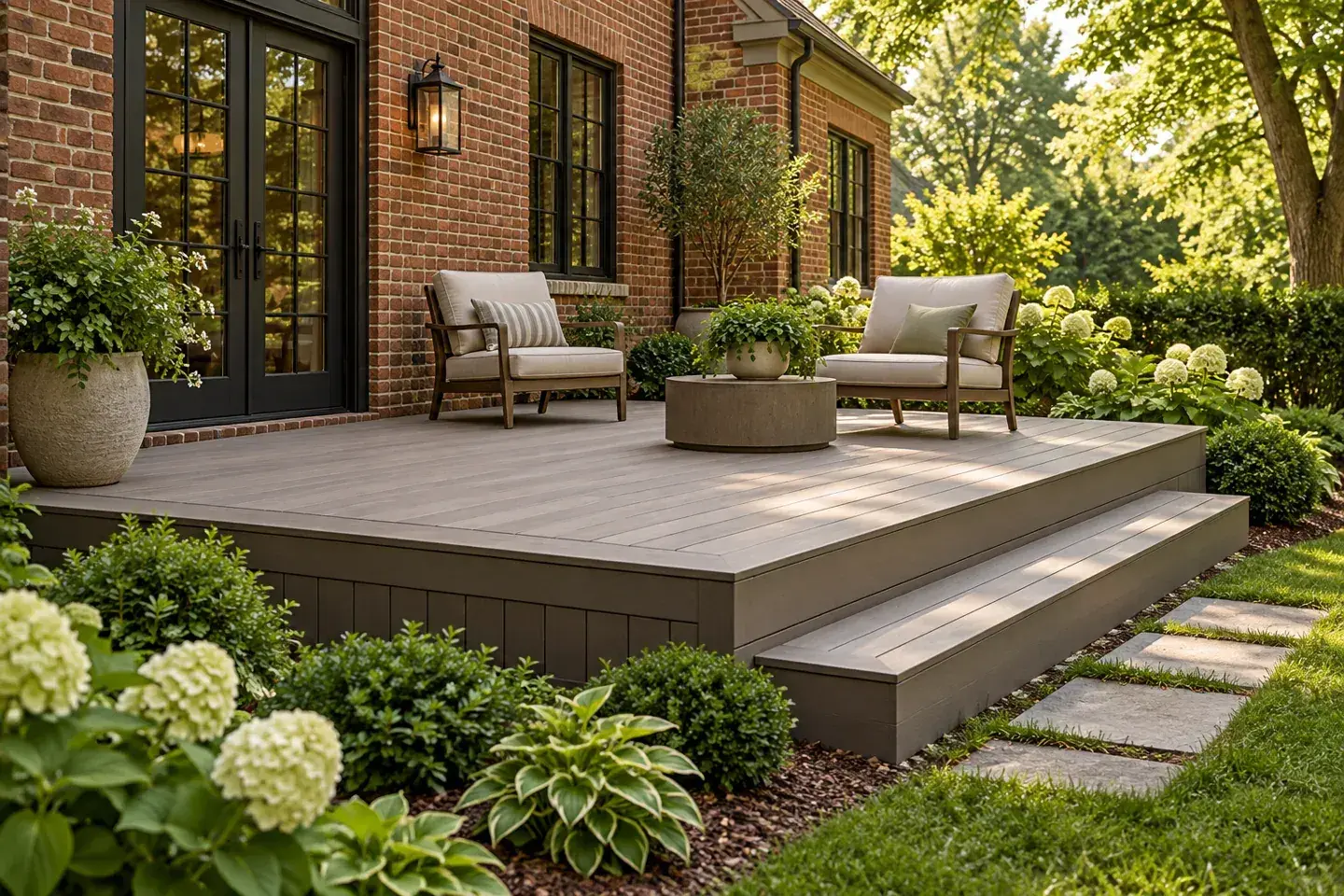
For many Virginia homeowners, capped composite is a practical first choice when reduced refinishing matters. PVC deserves consideration for wet or shaded settings, while pressure-treated lumber remains useful when the initial budget is tight. No board wins everywhere: sun exposure, drainage, maintenance tolerance, and the supporting structure should determine the choice.
A Richmond backyard, a salty coastal setting, and a mountain deck do not have identical exposures. Compare the exact product line and its installation requirements, not just “wood versus composite.” A durable walking surface cannot compensate for a deteriorated frame or a poorly detailed connection to the house.
1. Capped composite for less refinishing
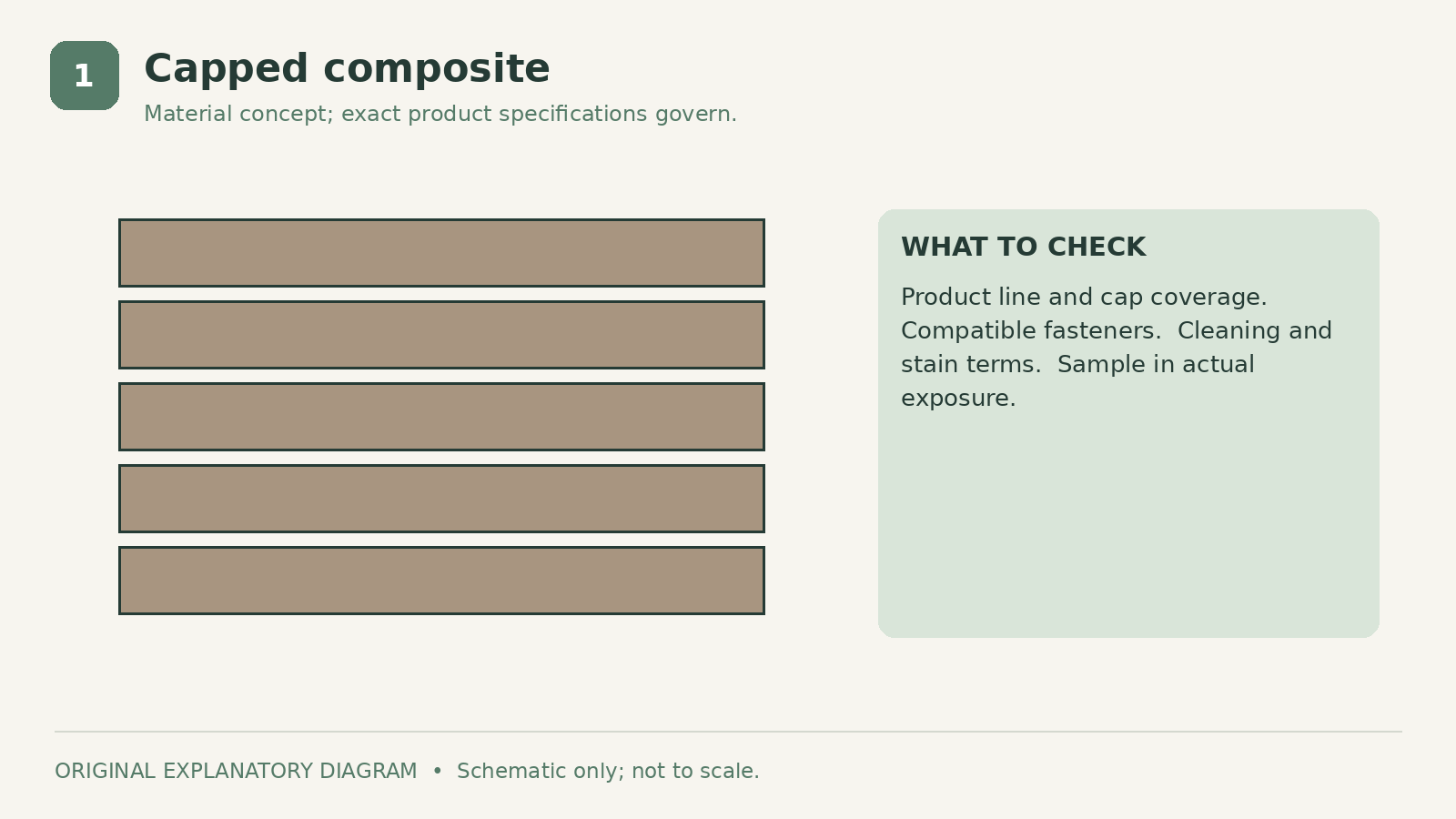
Capped composite combines a manufactured core with a protective outer surface. It can suit an owner who likes a wood-inspired appearance but does not want a recurring staining project. Color, texture, cap coverage, fastening systems, and warranty exclusions differ between products.
The maintenance advantage should not become a promise of no maintenance. Trex's care instructions explain that pollen and dirt can support surface mold. Cleaning still matters, particularly below trees or beside outdoor dining areas. Follow the instructions for the actual board generation; recommendations for older products may differ.
Bring home full-size samples in at least two colors. Place them where the finished deck will receive afternoon sun and look at them when wet. This is a comfort and appearance check, not a laboratory slip or heat test. Ask for relevant product test information where traction is a concern.
A useful specification names the collection, color, board profile, compatible fasteners, fascia, and finish treatment around cut edges. Without those details, a cheaper “composite” bid may describe a materially different package.
2. PVC for a moisture-resistant surface
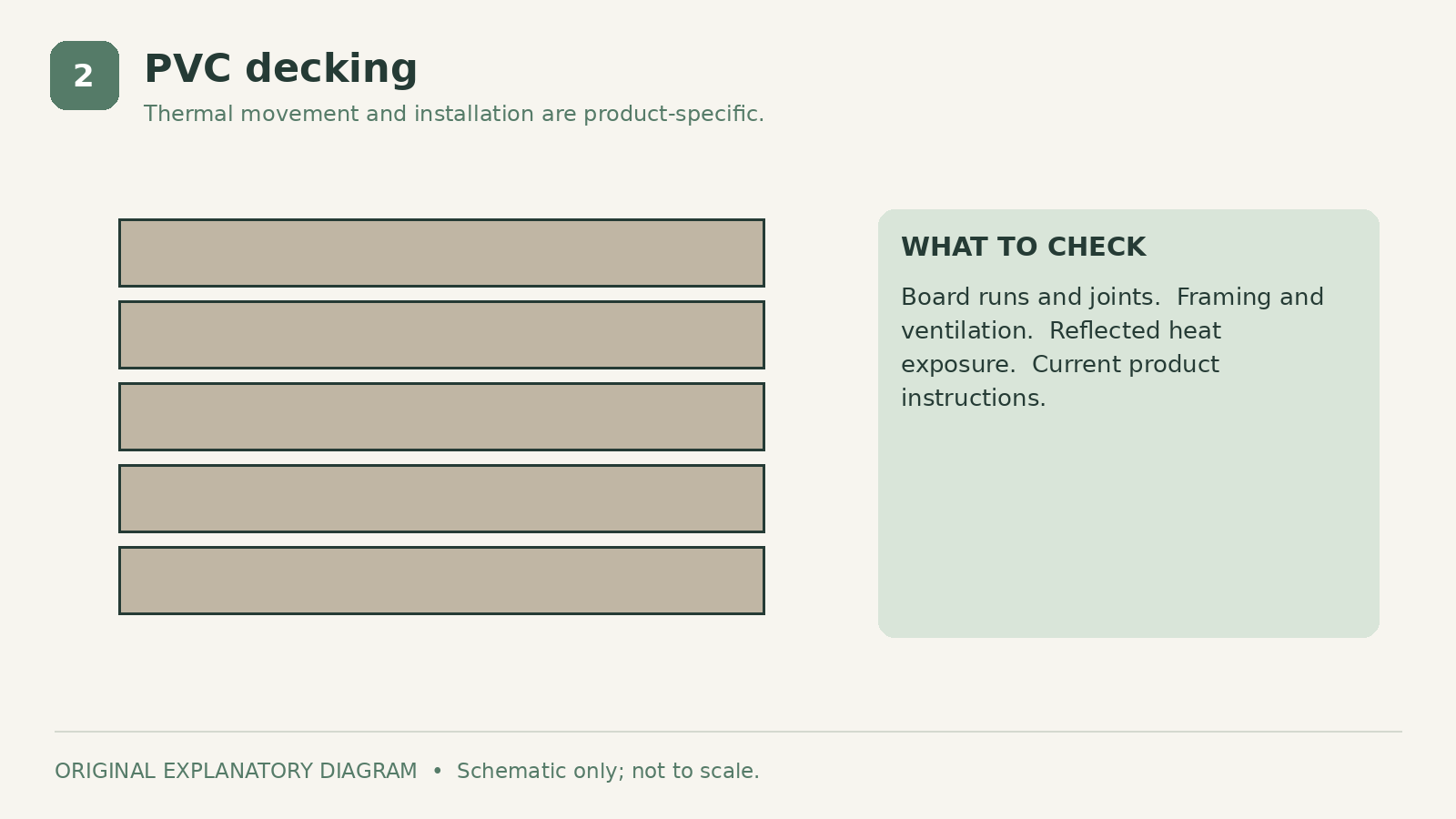
PVC decking is worth comparing when the site spends long periods damp or when you prefer its particular finish. It still needs the manufacturer's required support, drainage, fastening, and ventilation. A water-resistant board is only one part of the deck.
Temperature movement is an important design consideration. TimberTech's Advanced PVC installation guide describes expansion and contraction and product-specific installation methods. Those instructions are not interchangeable with another brand's gap dimensions.
Ask the installer how long board runs and changes in direction will be handled. A thoughtfully placed dividing board can look intentional, while also fitting the selected system's layout requirements. The framing needed beneath it must be included in the quote.
Reflected heat from glazing and concentrated heat sources also deserve a product-specific discussion. Have the supplier review the real site rather than relying on a general statement that PVC “handles all weather.”
Choose this option because its documented features fit the exposure and you like the sample. Do not assume that the most expensive board automatically provides the best comfort or lowest lifetime cost.
3. Pressure-treated wood for a manageable entry price
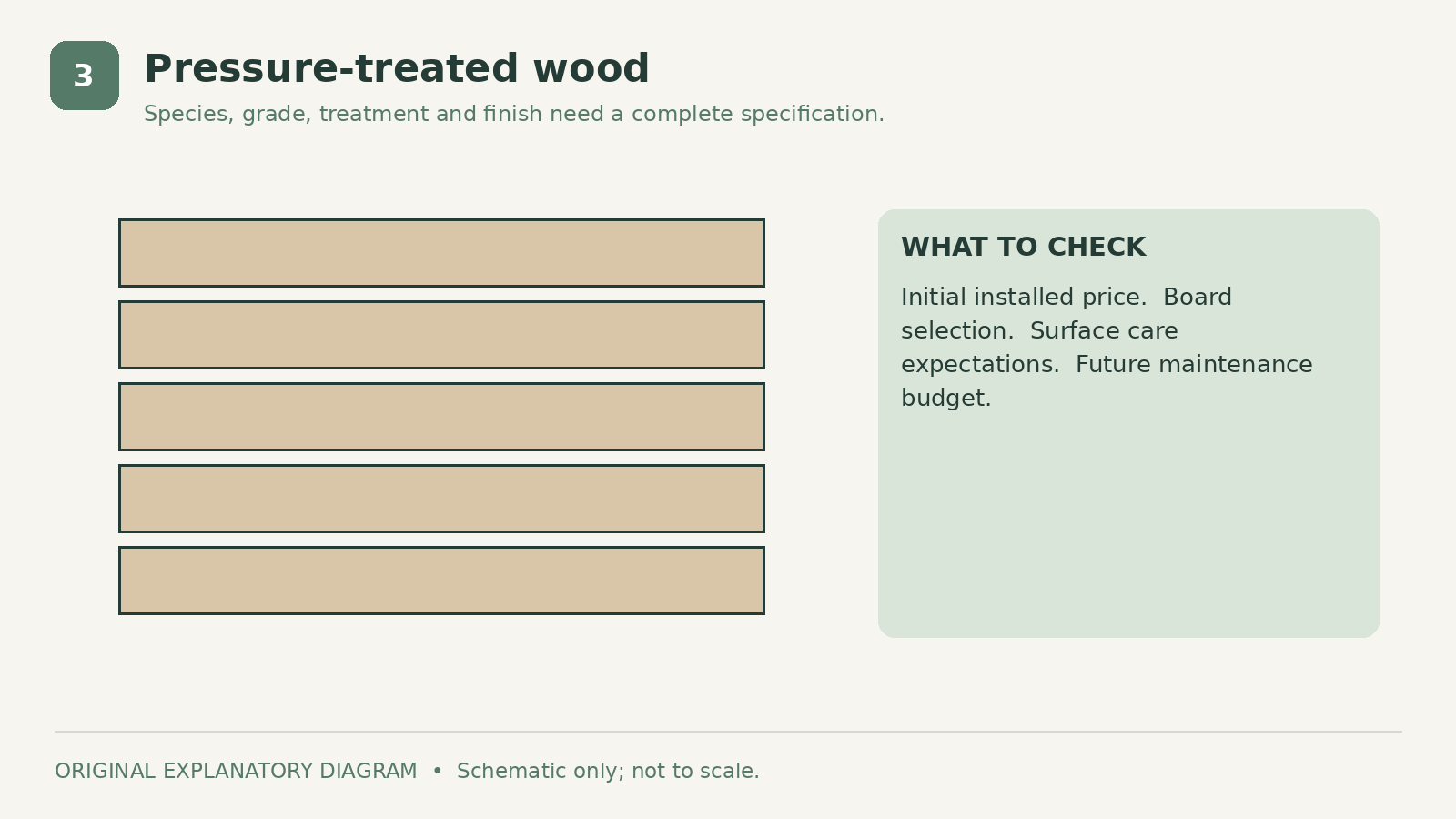
Pressure-treated lumber is a reasonable candidate when you want to keep the initial material bill controlled and accept more regular surface care. Compare lumber grade, dimensions, preservative treatment suitability, and finish expectations. “Treated wood” is not a complete specification.
The Virginia Tech Sustainable Biomaterials resource list includes publications on decking lumber, construction, maintenance, and naturally durable woods. It is a useful starting point for understanding wood choices before discussing the exact stock available locally.
Ask how the proposed boards will be selected and how visibly defective pieces will be handled. Discuss checking, splinters, color variation, and what constitutes ordinary weathering rather than a workmanship defect. A wood deck is a natural material exposed outdoors, not an indoor furniture surface.
Compare ownership costs using your own maintenance plan. As a hypothetical example, an additional $500 of maintenance every other year would total $2,500 across five visits. That is arithmetic, not a predicted cost or recommended treatment interval. Replace it with local quotes and the selected finish's directions.
This comparison helps you decide whether an initial saving is worth the work you expect to undertake or pay for.
4. Naturally durable wood for a traditional finish
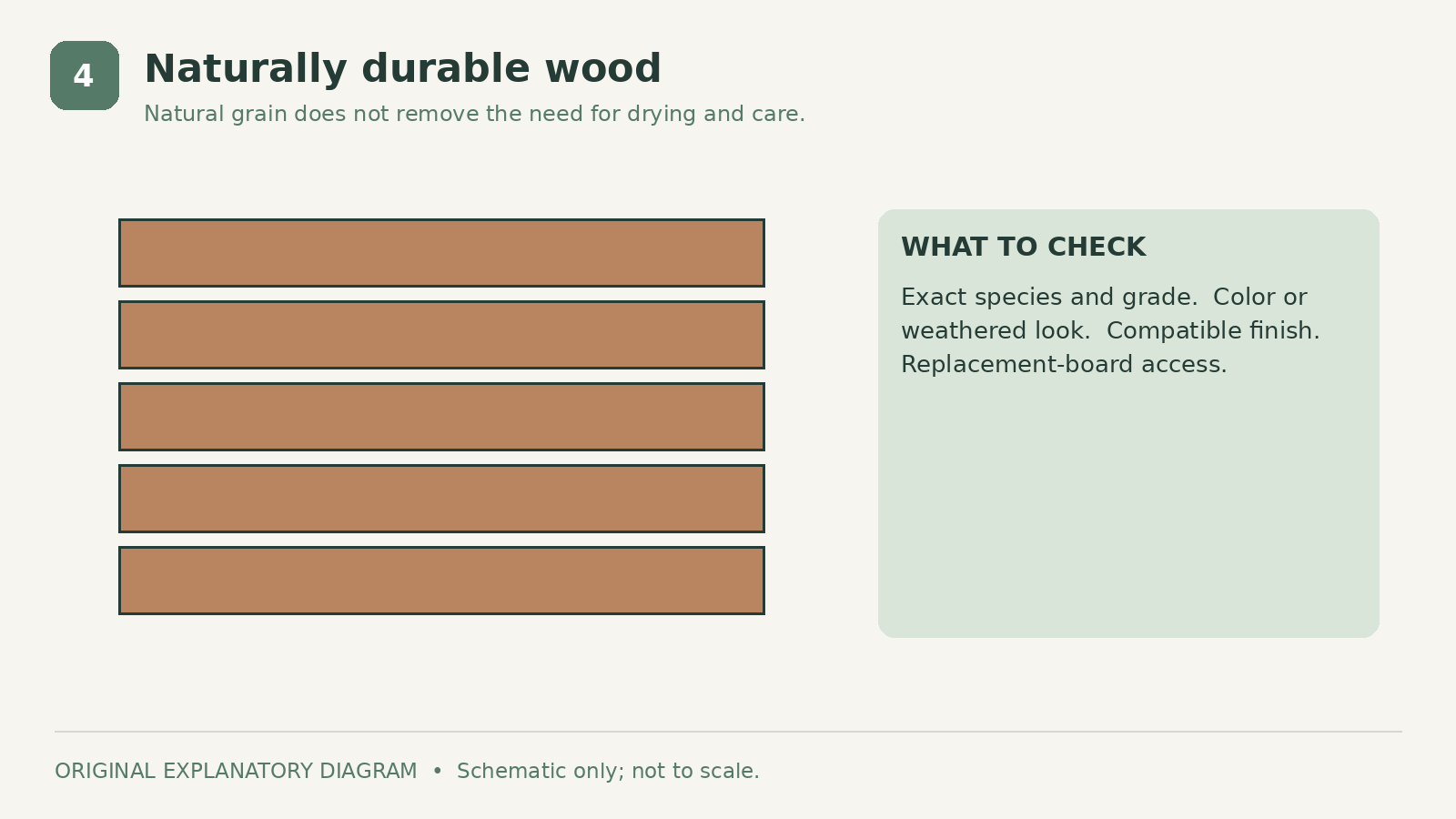
Cedar and other naturally durable decking woods appeal to owners who value real grain and a traditional appearance. Specify the species and grade. Natural durability varies with the material supplied, and it does not eliminate the importance of drying and maintenance.
Virginia Cooperative Extension's moisture guidance explains that deterioration depends strongly on wetting and drying conditions. For a deck buyer, the practical question is how leaves, trapped debris, shade, and adjoining surfaces affect the proposed design.
Decide whether your goal is a maintained color or a weathered appearance. Those are different aesthetic commitments. Ask the supplier for compatible finish guidance and realistic care expectations rather than using photographs of a newly completed deck as a longevity promise.
Look closely at board samples and the proposed edge details. A premium species will not look refined if joints, stairs, fascia, and transitions have not been planned coherently.
For specialty woods, confirm sourcing documentation, availability of replacement boards, and installer experience with that species. A material that is difficult to obtain in small quantities may complicate future repairs. Its appeal should justify that practical trade-off for your particular project.
5. Choose the complete deck system
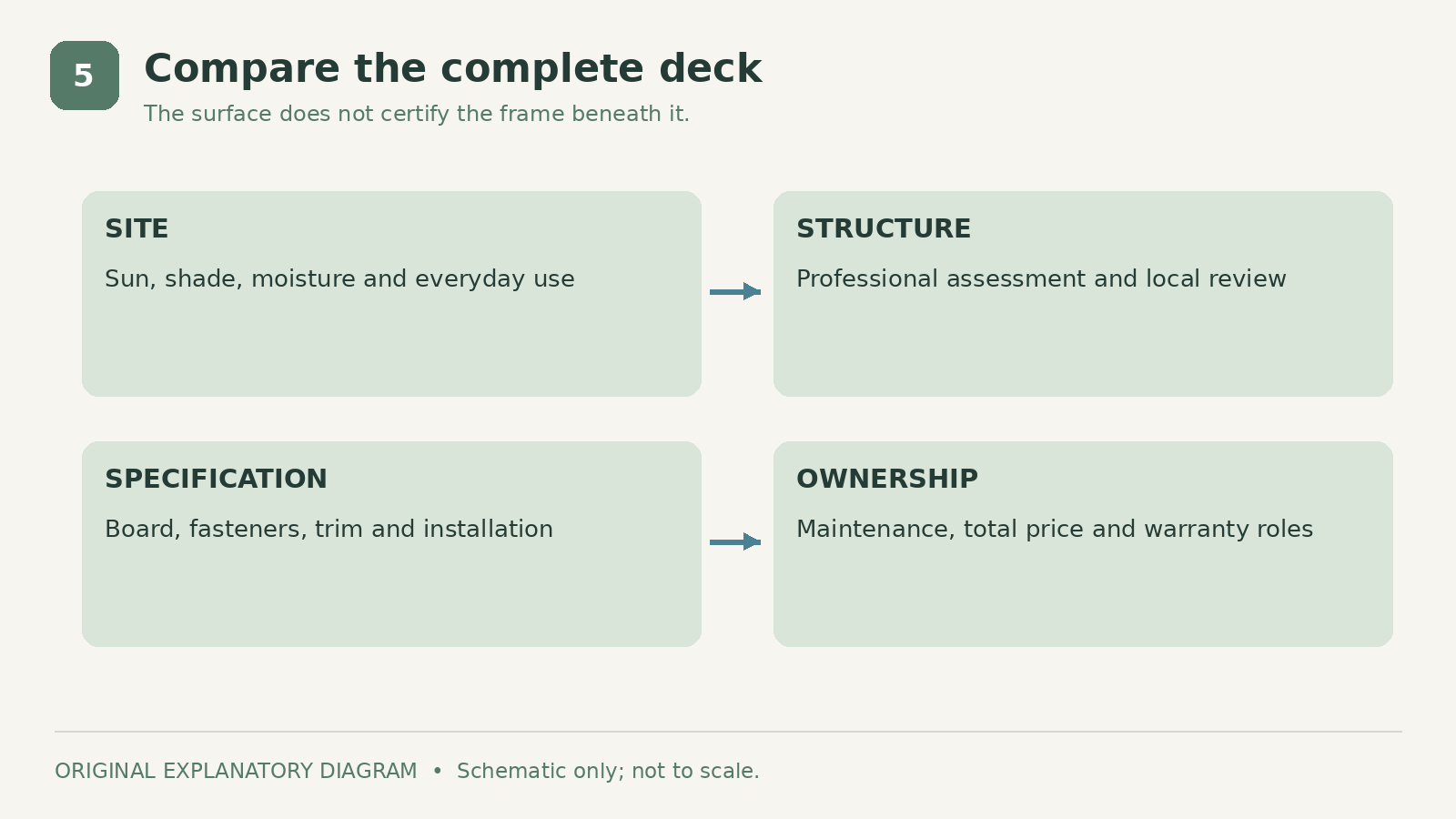
Use a simple comparison brief before collecting prices:
| Feature | What to record | |
|---|---|---|
| Exposure | Sun, shade, persistent dampness, coastal conditions | |
| Everyday use | Barefoot comfort, furniture, cooking area, stairs | |
| Material | Exact board line or wood species and grade | |
| Structure | Existing-frame assessment or new-frame scope | |
| Maintenance | Cleaning, refinishing, and permitted winter care | |
| Price | Complete installation, exclusions, and warranty roles |
Manufacturer directions can differ substantially. The Trex decking guide, for example, makes board spacing and air circulation explicit parts of its system. Do not borrow its dimensions for PVC or another manufacturer's product.
If you are resurfacing, have the supporting structure assessed before ordering boards. Ask a qualified contractor to address framing, connections, drainage, required guards, and local approvals. Surface replacement is not proof that the underlying deck is suitable.
Shortlist two materials, view samples on site, and request complete proposals for both. The best Virginia deck material is the one whose maintenance, comfort, documented limitations, and installed cost fit your yard and the way you will actually use it.
Sources
- Trex's care instructions. Checked October 6, 2026
- TimberTech's Advanced PVC installation guide. Checked October 6, 2026
- Virginia Tech Sustainable Biomaterials resource list. Checked October 6, 2026
- Virginia Cooperative Extension's moisture guidance. Checked October 6, 2026
- Trex decking guide. Checked October 6, 2026
Share this article
Get new guides by email
Practical home articles and free resources. No spam, and you can unsubscribe at any time.
Keep reading
Massachusetts Deck Building Cost: Wood vs. Composite
Compare Massachusetts wood and composite deck costs, installed scope, maintenance, and a clear sample budget with illustrated quote-planning guidance.
October 2026, 4 min read
Deck Safety Inspection: What to Check Before Each Season
Most deck failures start in a few predictable places. Here is a homeowner's visual checklist, the warning signs that mean stop using the deck, and when to call a professional.
September 2026, 4 min read