The Toughest Grass Seed for High-Traffic Areas and Big Dogs
Choose tough grass seed for busy yards and big dogs. Compare tall fescue, bluegrass, ryegrass, and bermudagrass by climate and recovery.
By Home Crane Editors. . 4 min read.
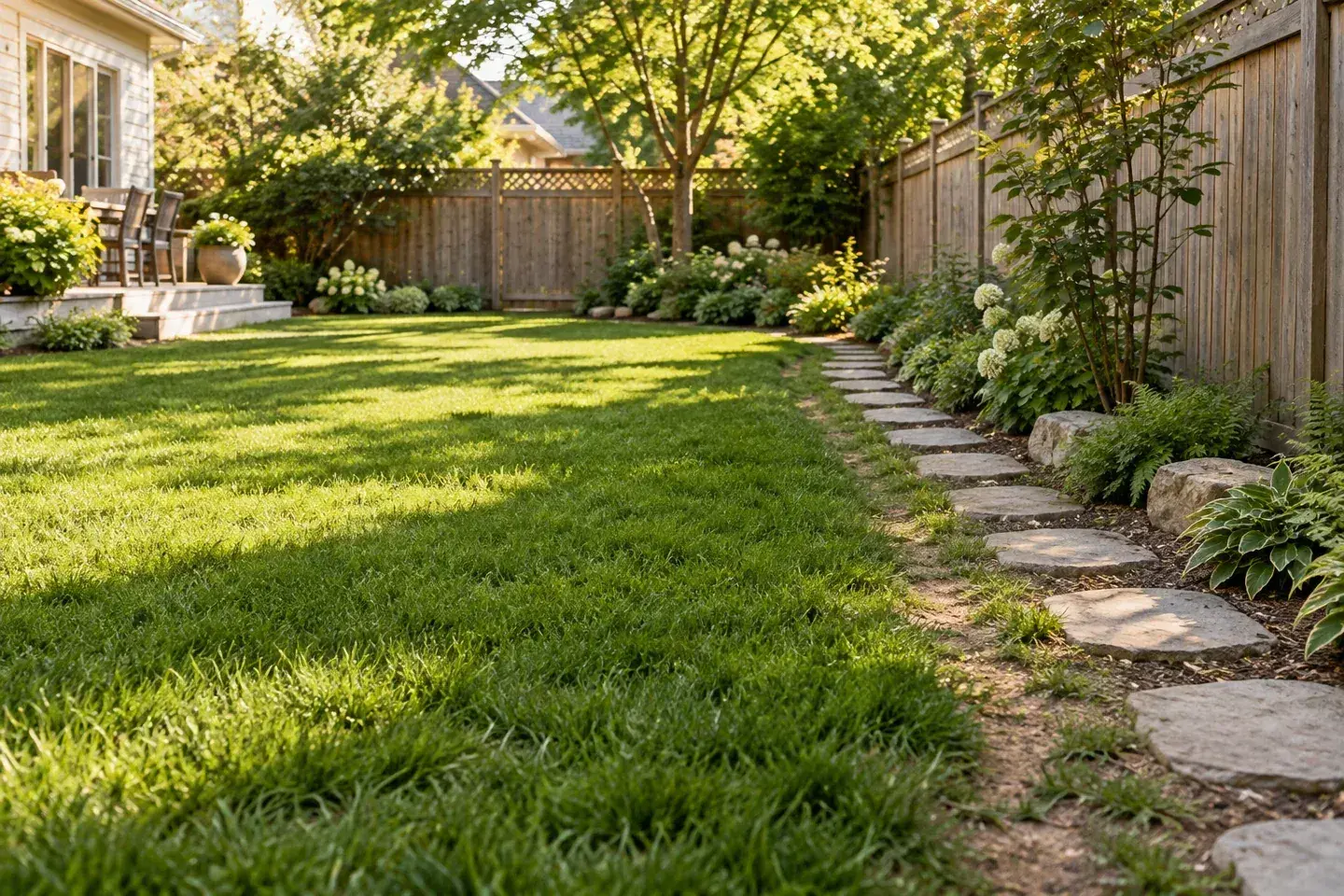
The toughest grass seed for a busy yard depends on where you live. Turf-type tall fescue is a strong starting point in many cool-season and transition-zone lawns. Kentucky bluegrass offers spreading growth that can repair wear. In sunny, warm regions, a locally adapted seeded bermudagrass can be a better fit. No seed can make a repeatedly trampled, shaded, compacted patch indestructible.
Choose for climate first, then recovery, sunlight, and the amount of maintenance you can provide. A bag labeled “heavy traffic” cannot override those conditions. These four options explain what you are actually buying and where each one has a useful role.
1. Turf-type tall fescue for a resilient everyday lawn
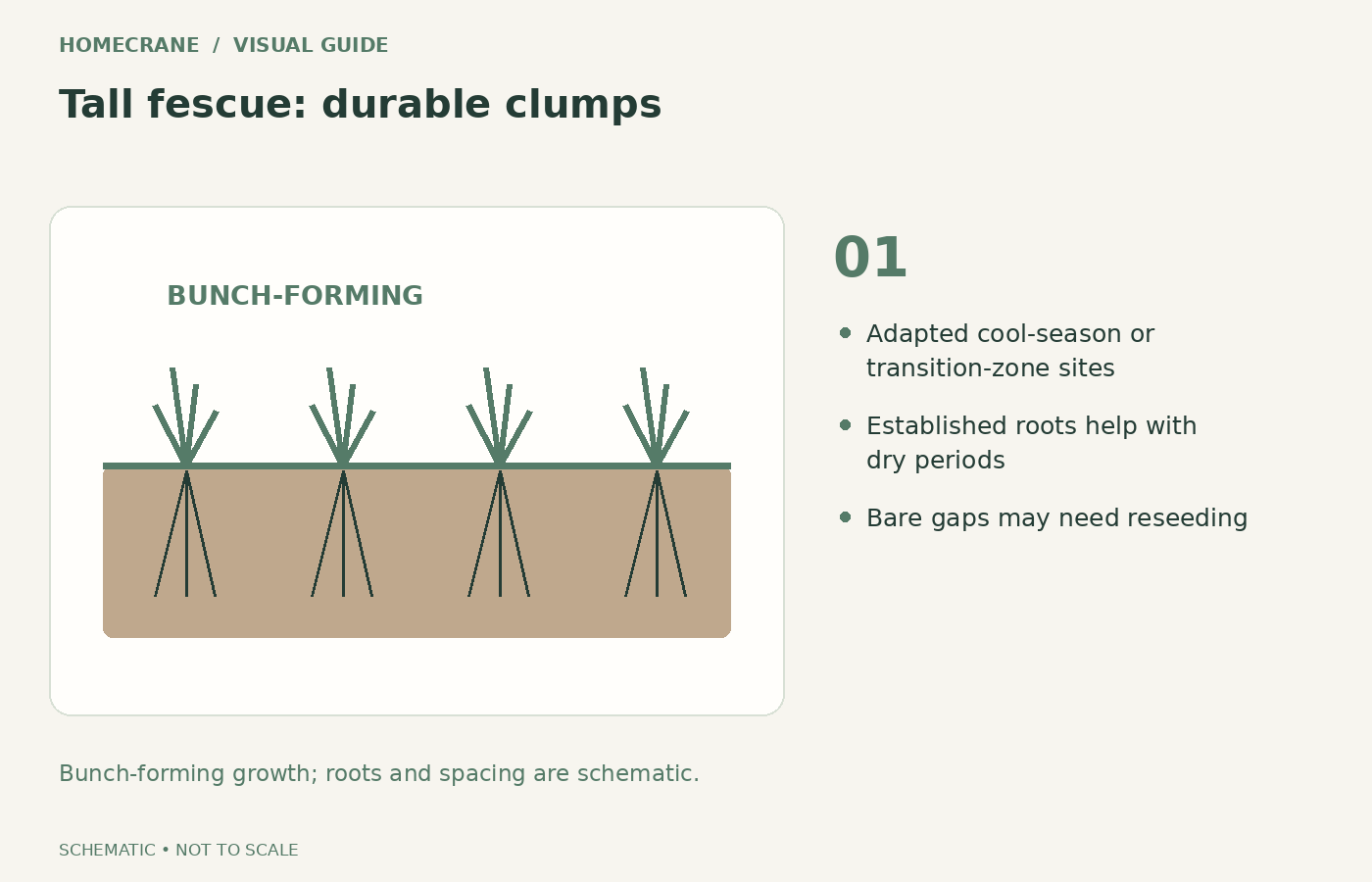
Turf-type tall fescue is worth considering where cool-season grass is appropriate and summer stress is a recurring problem. Its relatively deep rooting can help an established lawn cope with dry periods, and it tolerates wear well. The trade-off is recovery: it generally grows in clumps rather than quickly knitting large bare spots together.
That distinction matters with a large dog. Grass that withstands ordinary running may still need reseeding where paws repeatedly pivot beside a gate. Do not expect one spring application to close every worn patch throughout the year.
The University of Minnesota's seed-selection guide discusses tall fescue's strengths and regional limitations, including winter concerns in some Minnesota conditions. Use your own state extension recommendations to narrow the cultivar list. “Tall fescue” on a bag is not enough: choose turf-type varieties intended for lawns, not a coarse pasture product selected for a different purpose.
2. Kentucky bluegrass where recovery is the priority
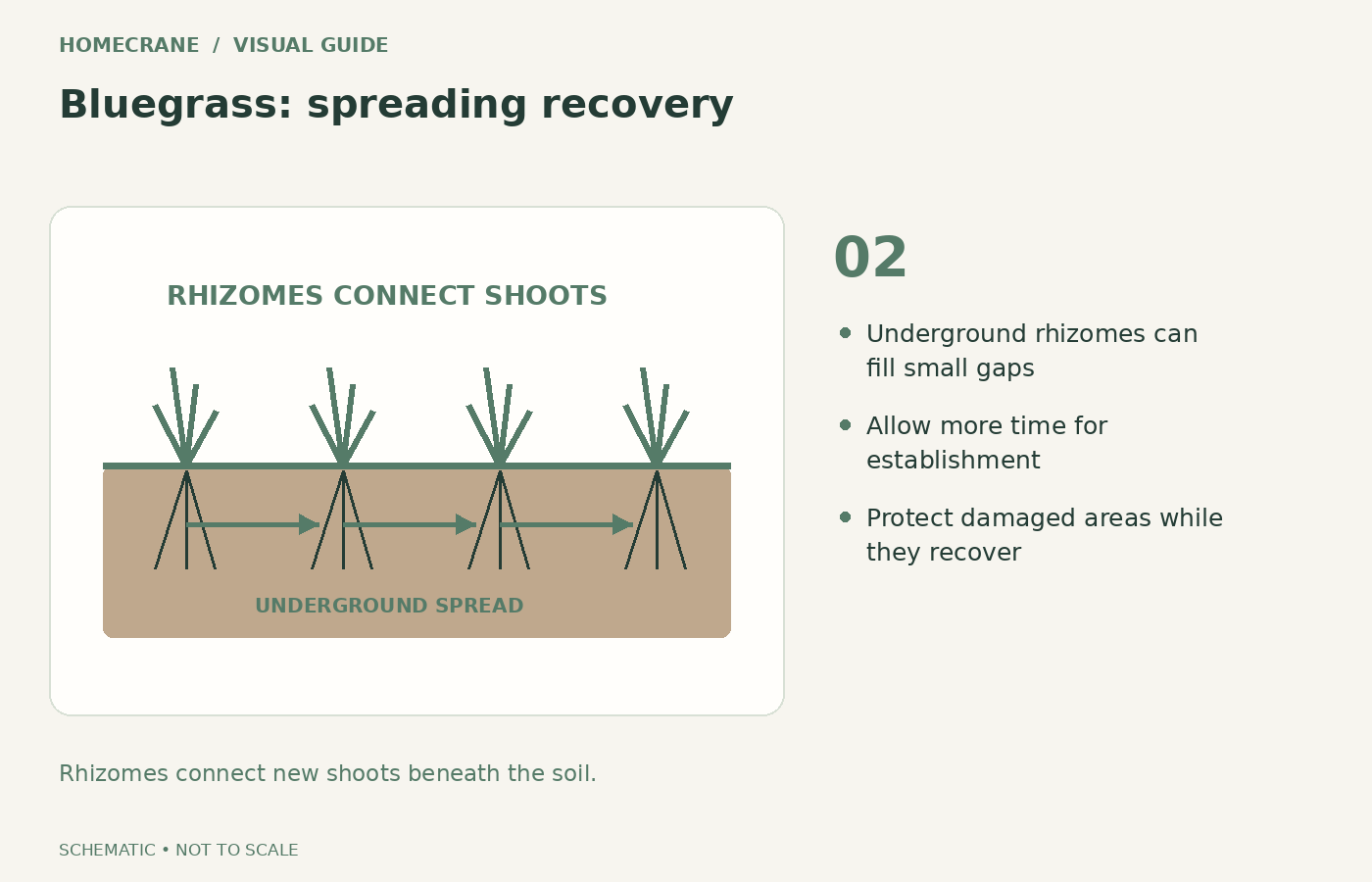
Kentucky bluegrass spreads through underground stems called rhizomes. That makes it useful in an adapted climate when the lawn must recover from scattered damage. It does not mean the grass can repair itself while traffic continues without a break.
Its establishment is slower than perennial ryegrass, so patience and protected growing time matter. A household that cannot keep a new patch out of use may be disappointed even after buying excellent seed. Consider temporarily fencing one section and rotating access, rather than seeding the entire yard and immediately reopening it.
The Minnesota seeding guide discusses mixtures for sunny, heavily used locations. For your purchase, compare named cultivars and local recommendations instead of choosing by the largest bluegrass percentage alone. A suitable mixture can balance establishment, appearance, and repair better than a marketing claim about a single “toughest” grass.
3. Perennial ryegrass for quicker establishment
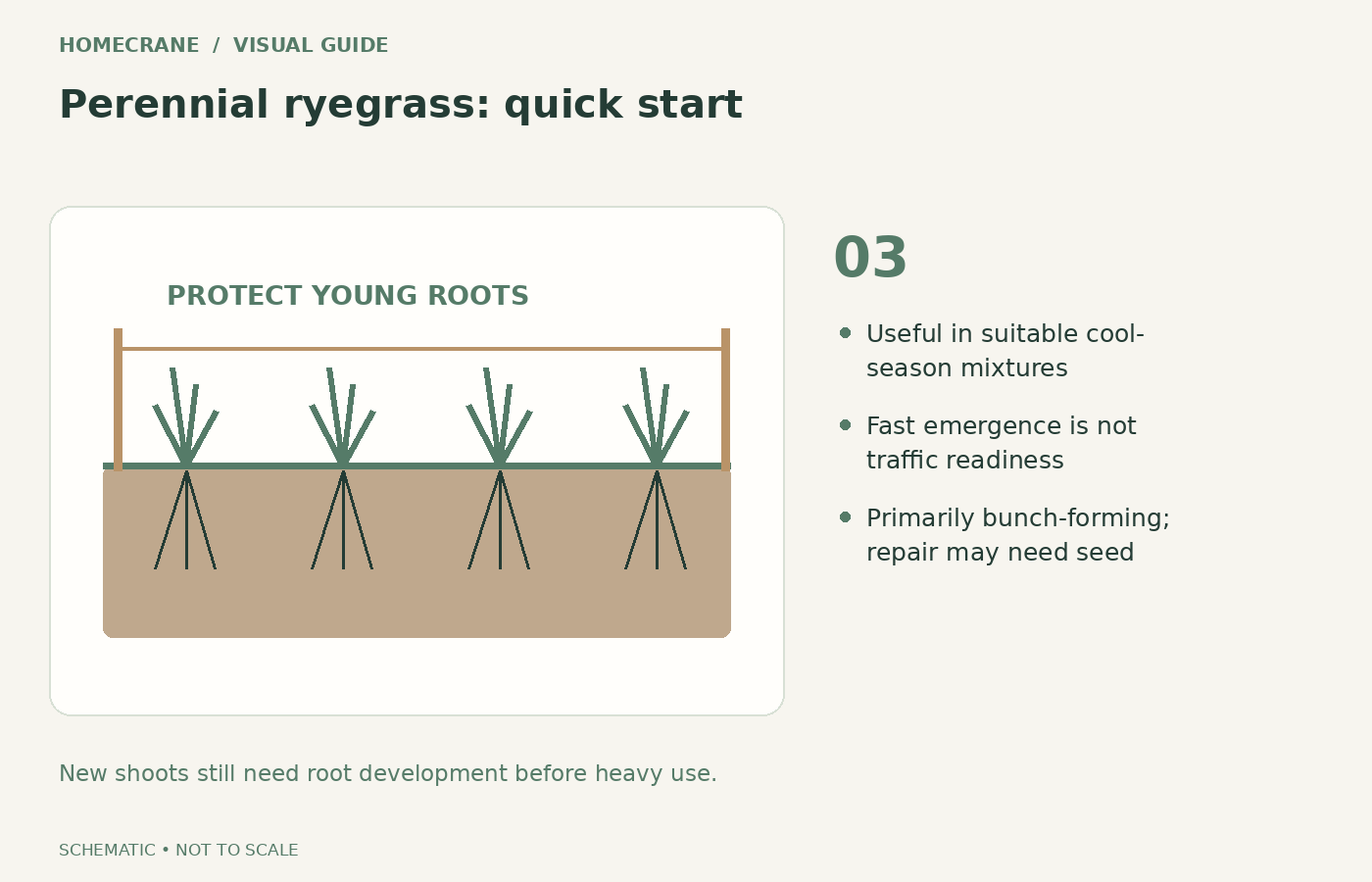
Perennial ryegrass can establish relatively quickly under suitable conditions and has a role in traffic-oriented cool-season mixtures. It is useful when exposed soil needs cover, but rapid germination is only the beginning. Young roots still need time before the surface can tolerate running, digging, or sudden turns.
Like tall fescue, ordinary perennial ryegrass is primarily bunch-forming. Worn areas may need reseeding rather than simply waiting for aggressive lateral spread. Its long-term suitability also varies with summer heat, winter conditions, and disease pressure.
Read the seed label carefully. Annual ryegrass is a different purchase and should not be confused with a permanent perennial lawn mixture. Also compare the weight of actual seed with coatings or filler. A large bag is not necessarily a better value if it contains much less viable seed than another product. Calculate the area you need to establish and use the label's seeding rate for that purpose.
4. Seeded bermudagrass for sunny, warm-region yards
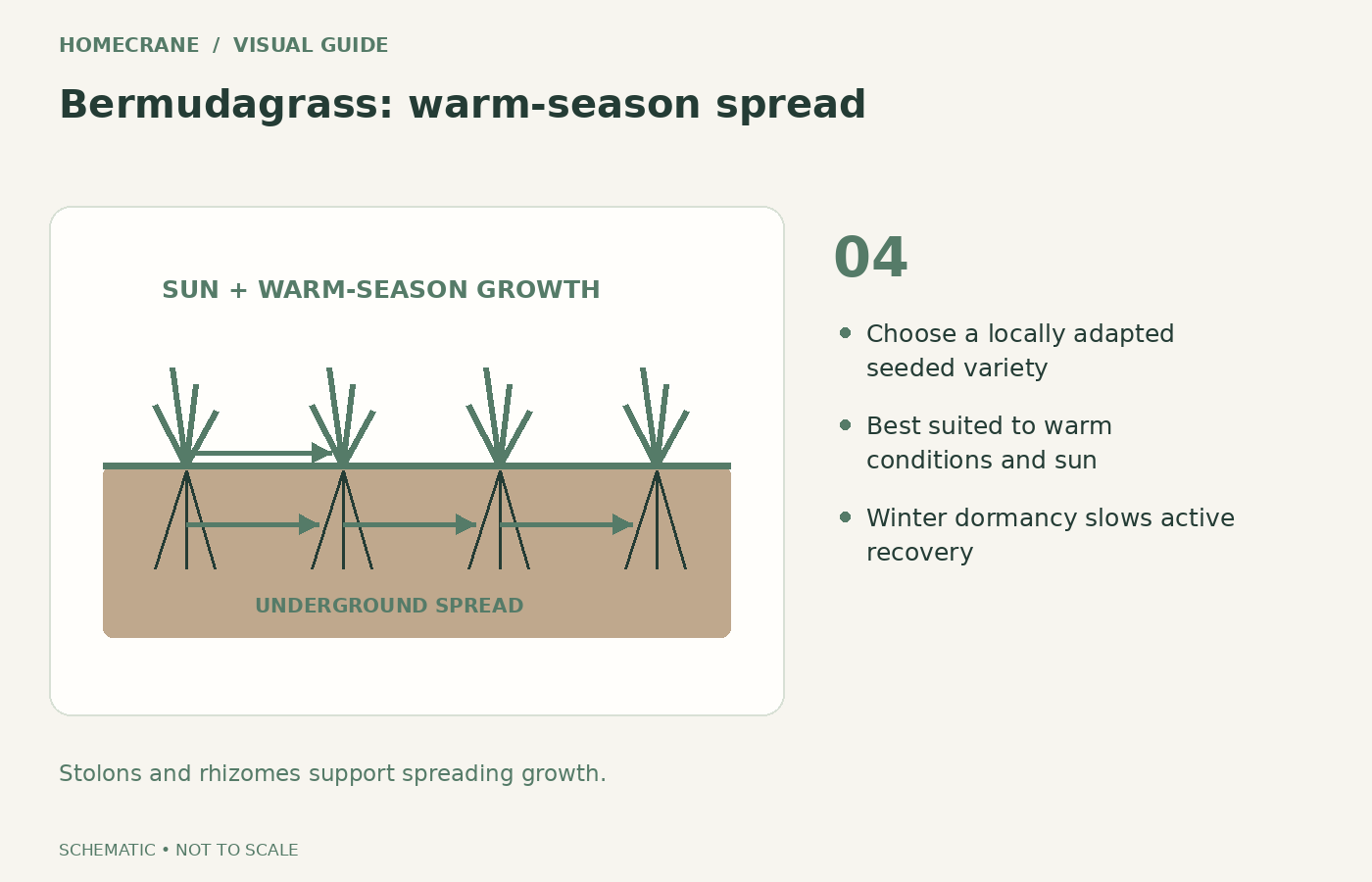
Bermudagrass can be an excellent traffic option in an adapted warm climate with abundant sun. Its spreading growth supports recovery during active growth, but winter dormancy changes its appearance and slows repair. Shade is a significant limitation.
University of Georgia Extension distinguishes seeded common and improved bermudagrasses from hybrid varieties established vegetatively. If a premium hybrid is sold as sod, do not assume a similarly named seed bag will produce that same lawn.
Before buying, decide whether spreading into adjacent beds is a manageable trade-off. A vigorous lawn can also mean more edging. Warm-season planting timing differs from cool-season fall renovation, so use local soil-temperature and planting-window advice. Avoid applying a northern lawn calendar to a southern bermudagrass project.
Compare the options before choosing a bag
| Feature | Main appeal | Main limitation |
|---|---|---|
| Turf-type tall fescue | Wear tolerance and established roots | Bare patches often need reseeding |
| Kentucky bluegrass | Spreading recovery | Slower establishment |
| Perennial ryegrass | Relatively quick establishment | Limited lateral repair |
| Seeded bermudagrass | Active-season recovery in sun | Shade sensitivity and winter dormancy |
These are selection principles, not a universal ranking or results from a HomeCrane product test. Cultivar, soil, climate, and management can change the outcome substantially.
Make the yard easier for grass to survive
Separate wear damage from urine injury. The Minnesota turf newsletter explains that dog-related lawn damage includes more than physical traffic. No grass is reliably urine-proof. A designated relief area and prompt watering of affected grass, where practical and permitted, can reduce repeated concentration in one place.
Map the routes that get used every day. A durable path beside the fence or through a gate often solves a problem that repeated seed purchases cannot. Keep the path material comfortable, stable, and suitable for your household; avoid assuming artificial turf stays cool in summer.
Address compaction and drainage before reseeding. A soil test helps avoid unnecessary fertilizer, and aeration may be appropriate for compacted established turf. Seed needs contact with prepared soil, steady establishment moisture, and protection from traffic. Follow the selected grass's mowing guidance rather than cutting everything very short.
Questions homeowners ask
Can I mix these grasses together?
Some cool-season mixtures are appropriate, but combining every species is not a shortcut to durability. Choose a locally recommended mixture with a coherent maintenance plan. Warm-season and cool-season combinations need a specific reason and regional guidance.
What if the same patch always fails?
Check sunlight, runoff, compaction, and the traffic route. If the site cannot support turf under its actual use, a path or designated activity area is usually a more honest solution than another “dog-resistant” seed label.
Sources
- University of Minnesota's seed-selection guide. Checked October 11, 2026
- Minnesota seeding guide. Checked October 11, 2026
- University of Georgia Extension. Checked October 11, 2026
- Minnesota turf newsletter. Checked October 11, 2026
Share this article
Get new guides by email
Practical home articles and free resources. No spam, and you can unsubscribe at any time.
Keep reading
15 Beautiful Xeriscaping Ideas for Colorado Front Yards
Explore 15 illustrated xeriscaping ideas for Colorado front yards, with grasses, flowers, shade, paths, useful lawn, and winter structure.
October 2026, 5 min read
The Best Grass Seed for North Carolina Lawns: Choose by Site
Choose North Carolina grass seed by region, sun, traffic, and upkeep. Compare tall fescue, Bermuda, centipedegrass, zoysia, and actual seed labels.
October 2026, 5 min read

Artificial Turf Cost in Arizona: Installation and Materials
Compare Arizona artificial turf materials and installation costs using an attributed Phoenix benchmark, clear exclusions, heat concerns, and a sample budget.
October 2026, 5 min read