The Ultimate Bermuda Grass Care Schedule for Georgia
Plan Georgia Bermuda grass care by season, with an illustrated calendar for mowing, watering, soil testing, green-up, and dormancy.
By Home Crane Editors. . 5 min read.
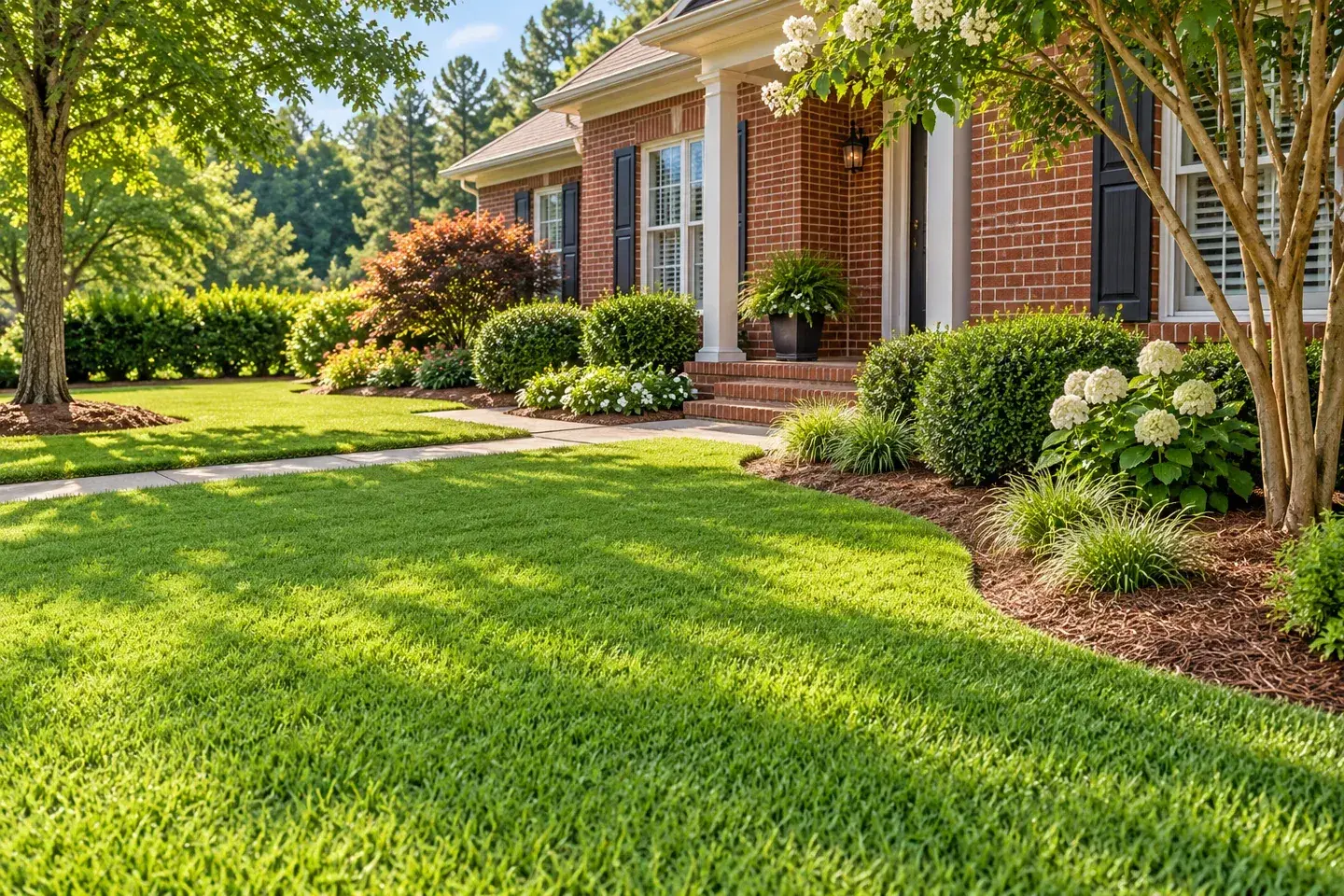
A useful Bermuda grass care schedule for Georgia follows the lawn's growth, not just the month. Plan winter work while the grass is dormant, begin major growth-related tasks after reliable spring green-up, maintain it through summer, and reduce inputs as growth slows in fall.
This schedule is for an established residential bermudagrass lawn. Newly seeded or sodded areas need their own establishment care, and a named hybrid may have different mowing requirements from common Bermuda. North Georgia and South Georgia can reach the same growth stage at different times.
1. January and February: observe and plan
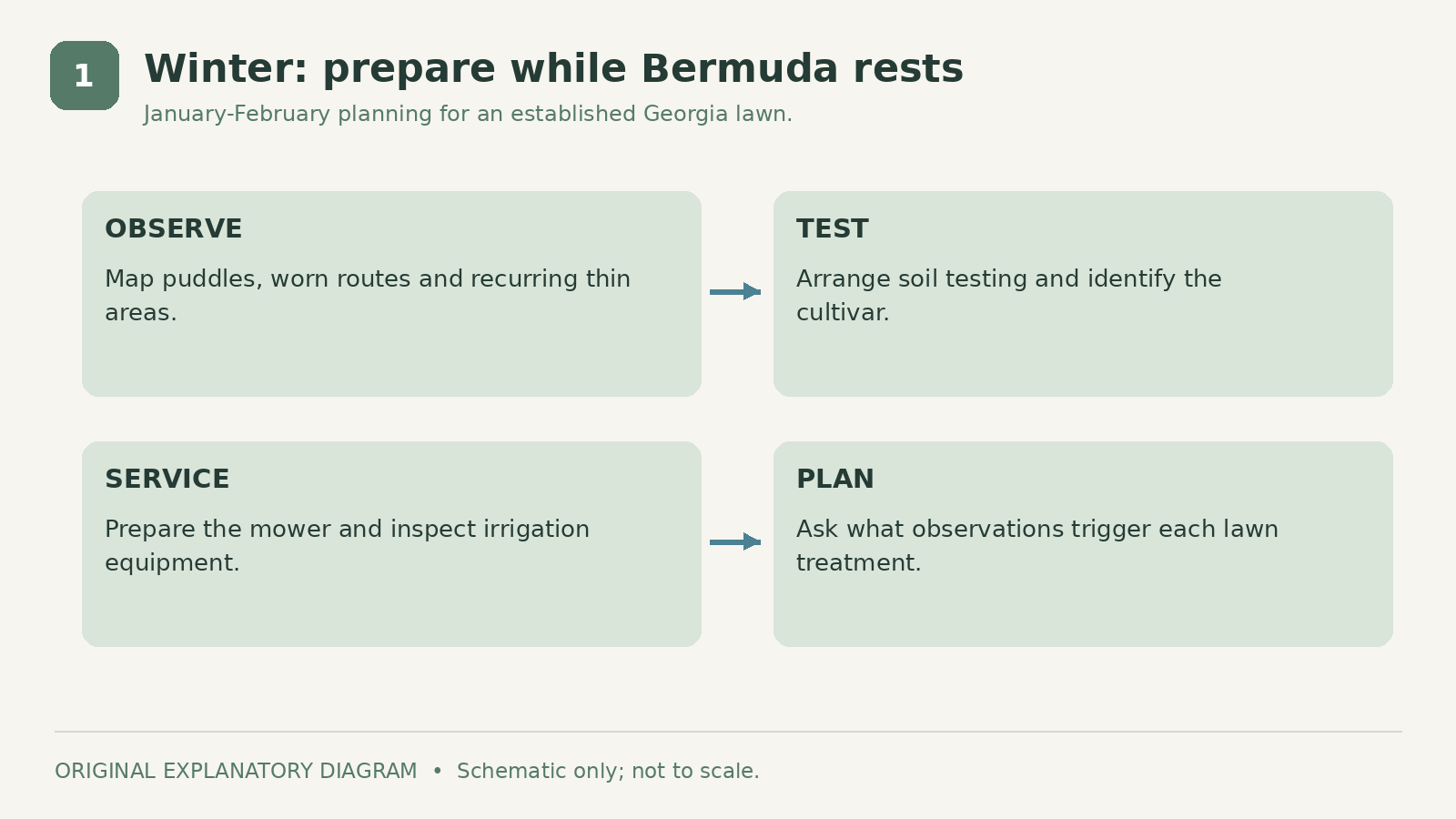
Use winter to identify the grass, review last year's problems, and arrange a soil test. The University of Georgia Bermuda lawn calendar places the main fertilization and aeration work in the growing season. Brown winter color alone is not a reason to push dormant Bermuda with nitrogen.
Walk the yard after rain and note persistent puddles, worn shortcuts, and areas that were thin all summer. Mark them on a simple sketch. A photograph from the same position each season can help distinguish a recurring site problem from normal seasonal color change.
Service the mower and check whether it can hold the cutting height appropriate for your cultivar. Plan repairs before the first week of rapid growth, when equipment downtime becomes more disruptive.
Review any lawn-service contract now. Ask what observation triggers each treatment and what the provider will do if conditions differ from a typical year. A predetermined calendar of products is less useful than a plan that responds to the actual lawn.
If winter weeds are a concern, identify them before selecting a treatment. Follow current product labeling and local guidance; do not assume that a product safe for one lawn grass is suitable for another.
2. March and April: wait for real green-up
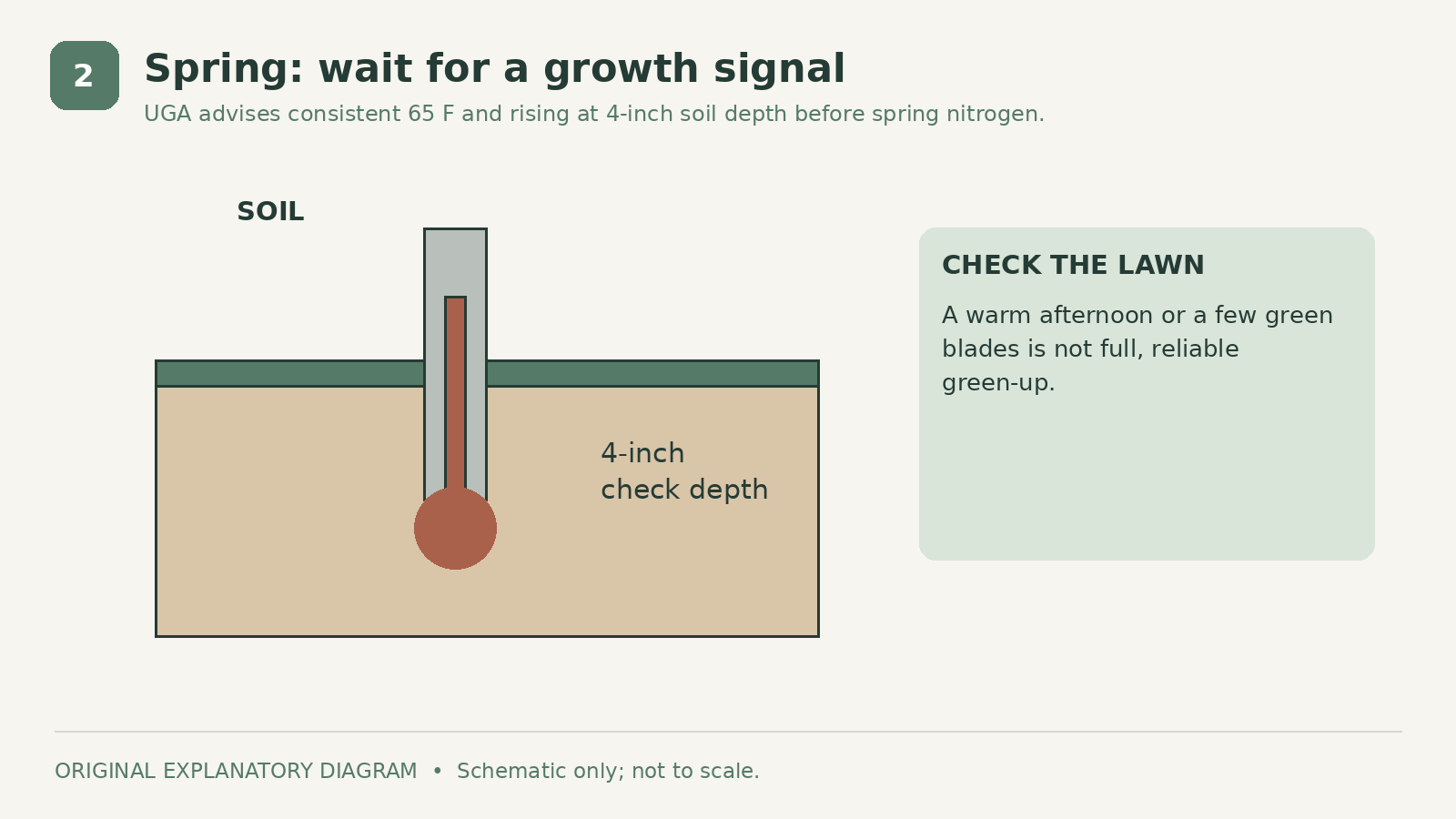
UGA's spring lawn update advises waiting until the soil at a four-inch depth is consistently 65°F and rising before spring nitrogen application to warm-season lawns. A few warm afternoons or scattered green blades do not establish that condition.
Use this period to test irrigation coverage and repair obvious leaks. Observe shaded edges separately from the sunny center. The slowest area may be limited by shade or soil conditions rather than a shortage of fertilizer.
Avoid aggressive cultivation while the lawn is still struggling to resume growth. If you plan to aerate, reserve the work for active growth and adequate recovery conditions. Put weather flexibility into the booking instead of insisting on an early date.
Start mowing when growth calls for it, using the recommendation for your particular Bermuda type. UGA gives common Bermuda a general one-to-two-inch range, while some hybrids have different needs. Removing no more than about one-third of the leaf height in a mowing is a useful limit; an overgrown lawn may need a gradual return to the desired height.
Keep a simple note of green-up progress. It makes next spring's planning more grounded than relying on a date remembered from a different part of Georgia.
3. May and June: support active growth
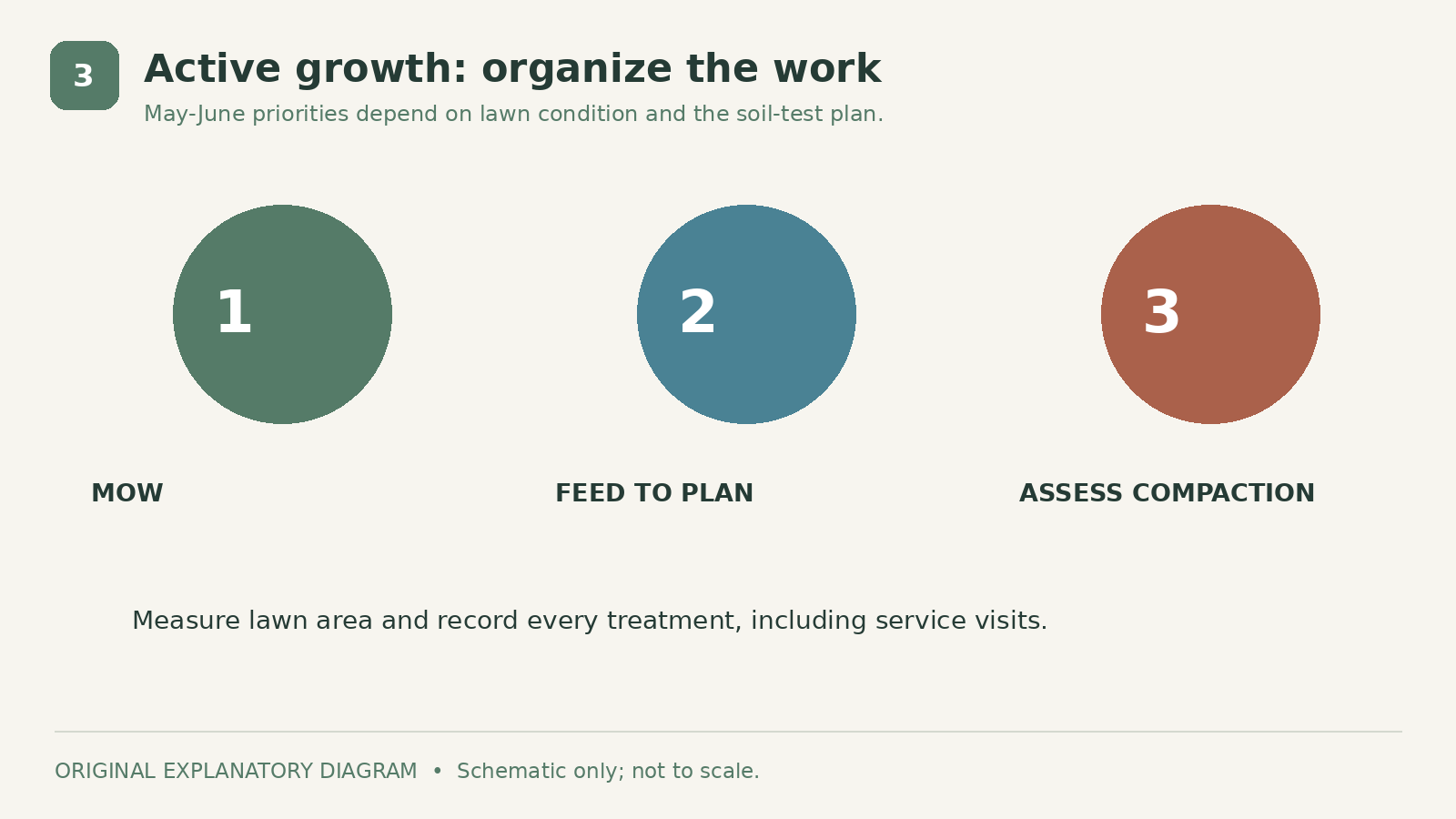
For much of Georgia, this is the period when Bermuda maintenance becomes regular. UGA's May guidance identifies May through July as a favorable period for warm-season establishment and May through August for core aeration. Actual lawn condition still matters.
Use the soil-test recommendation and the fertilizer label to establish an annual nutrient plan. Count fertilizer applied by a lawn service as well as products you apply yourself. Recording each treatment prevents two people from unknowingly feeding the same area twice.
Measure lawn area before buying materials. Exclude driveways, patios, and planting beds. As an example of recordkeeping, a 4,000-square-foot lawn contains four units of 1,000 square feet; multiply a professionally recommended per-unit amount by four, rather than estimating from the overall property size.
If compaction is limiting growth, discuss core aeration during active recovery conditions. Do not confuse routine aeration with an automatic need for aggressive dethatching. Diagnose the problem before renting equipment that may create additional stress.
For thin areas, confirm whether the existing cultivar can be repaired with seed or requires compatible vegetative material. Matching the grass now is easier than trying to disguise different textures later.
4. July and August: manage heat and mowing
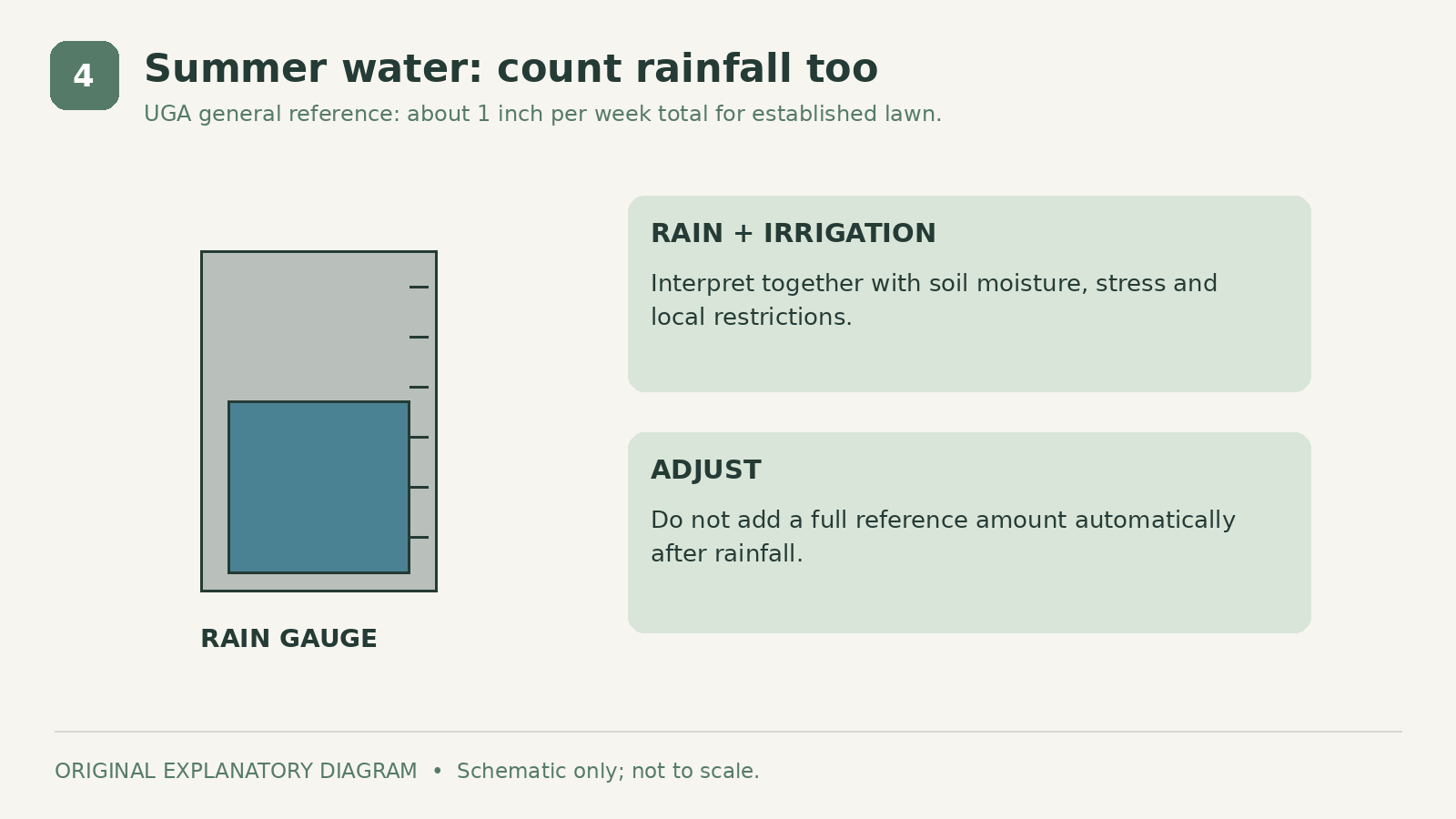
Summer maintenance is a balancing exercise. Mow often enough for the lawn's actual growth rate, keep the blade in good condition, and adjust care when the grass is stressed. A seven-day calendar is convenient, but it does not necessarily match a week of rapid growth or drought.
UGA's summer guidance uses roughly one inch of water per week as a general established-lawn reference, including rain. Treat that as a starting point to interpret alongside soil moisture, rainfall, local restrictions, and the lawn's condition, not an instruction to add one inch regardless of weather.
A rain gauge helps separate rainfall from guesswork. If you use an irrigation service, ask how runtime relates to the system's measured output and whether every zone has the same soil and exposure. The number of minutes on a controller means little without that context.
Inspect trouble spots before treating them. Heat stress, poor coverage, shade, insects, disease, and compacted soil can produce symptoms that are easy to confuse. Send photographs and recent care records to Extension when the cause is unclear.
Avoid escalating several inputs at once. If you change watering, fertilizer, and mowing simultaneously, it becomes harder to understand which change helped or caused another problem.
5. September through December: ease into dormancy
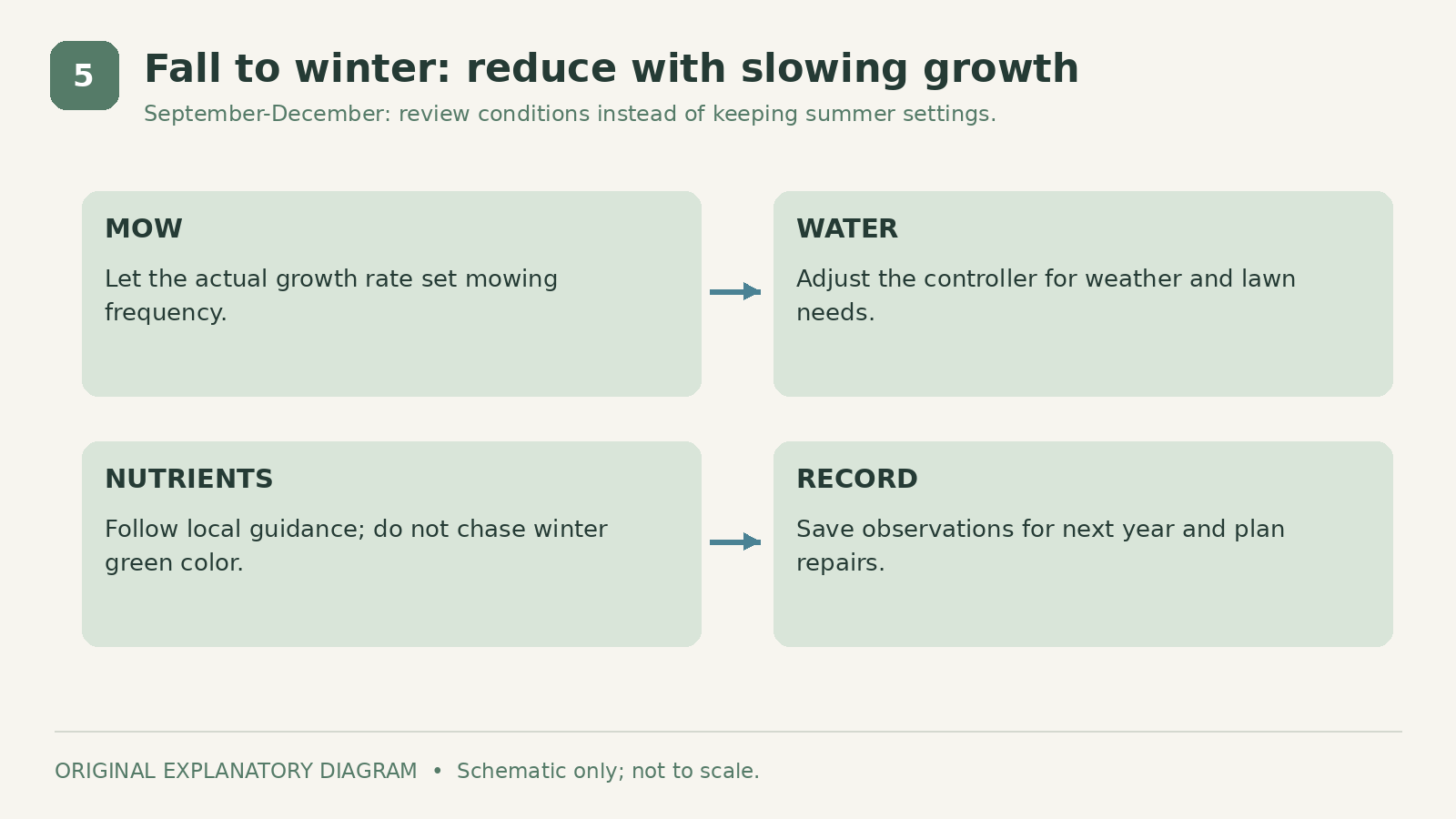
As growth slows, adjust mowing and irrigation accordingly. Do not keep summer settings simply because they are already programmed. Follow the current local fertilizer recommendation rather than automatically making a late nitrogen application to prolong green color.
Discuss winter overseeding before doing it. Adding a cool-season grass changes the maintenance plan and can complicate the spring transition back to Bermuda. If winter color is the only goal, weigh it against the extra work, water, and management involved.
Clear accumulated leaves as needed so they do not blanket the lawn. Continue observing drainage and traffic patterns, and record any areas that should be repaired during the next suitable growing period.
| Feature | Main decision | |
|---|---|---|
| January-February | Test soil, identify recurring problems, service equipment | |
| March-April | Watch green-up and soil conditions before growth-related treatments | |
| May-June | Follow the nutrient plan and address establishment or compaction | |
| July-August | Match mowing and irrigation to growth, rain, and stress | |
| September-December | Reduce inputs with slowing growth and plan next season |
Keep one lawn record
Record the grass variety, measured area, soil-test results, mowing height, irrigation observations, and every treatment. Include the provider's work if you hire a service. This turns a general calendar into a useful history of your own yard.
The most dependable schedule leaves room for a cool spring, a wet summer, or an unusually dry fall. Use months to organize the work and the lawn's condition to decide when the work is justified.
Sources
- University of Georgia Extension: Lawn Calendars Bermudagrasslawncalendar. Checked October 6, 2026
- University of Georgia Extension: April Lawn Care Update. Checked October 6, 2026
- University of Georgia Extension: May Lawn Care Update. Checked October 6, 2026
Share this article
Get new guides by email
Practical home articles and free resources. No spam, and you can unsubscribe at any time.
Keep reading

15 Beautiful Xeriscaping Ideas for Colorado Front Yards
Explore 15 illustrated xeriscaping ideas for Colorado front yards, with grasses, flowers, shade, paths, useful lawn, and winter structure.
October 2026, 5 min read
The Best Grass Seed for North Carolina Lawns: Choose by Site
Choose North Carolina grass seed by region, sun, traffic, and upkeep. Compare tall fescue, Bermuda, centipedegrass, zoysia, and actual seed labels.
October 2026, 5 min read
Artificial Turf Cost in Arizona: Installation and Materials
Compare Arizona artificial turf materials and installation costs using an attributed Phoenix benchmark, clear exclusions, heat concerns, and a sample budget.
October 2026, 5 min read