Water-Wise Landscaping: Where Homeowners Lose the Most Water
Outdoor watering is about 30 percent of household water use on average, and a lot of it is wasted. Here is where the waste happens, what EPA WaterSense recommends, and how to design a yard that needs less.
By Home Crane Editors. . 4 min read.
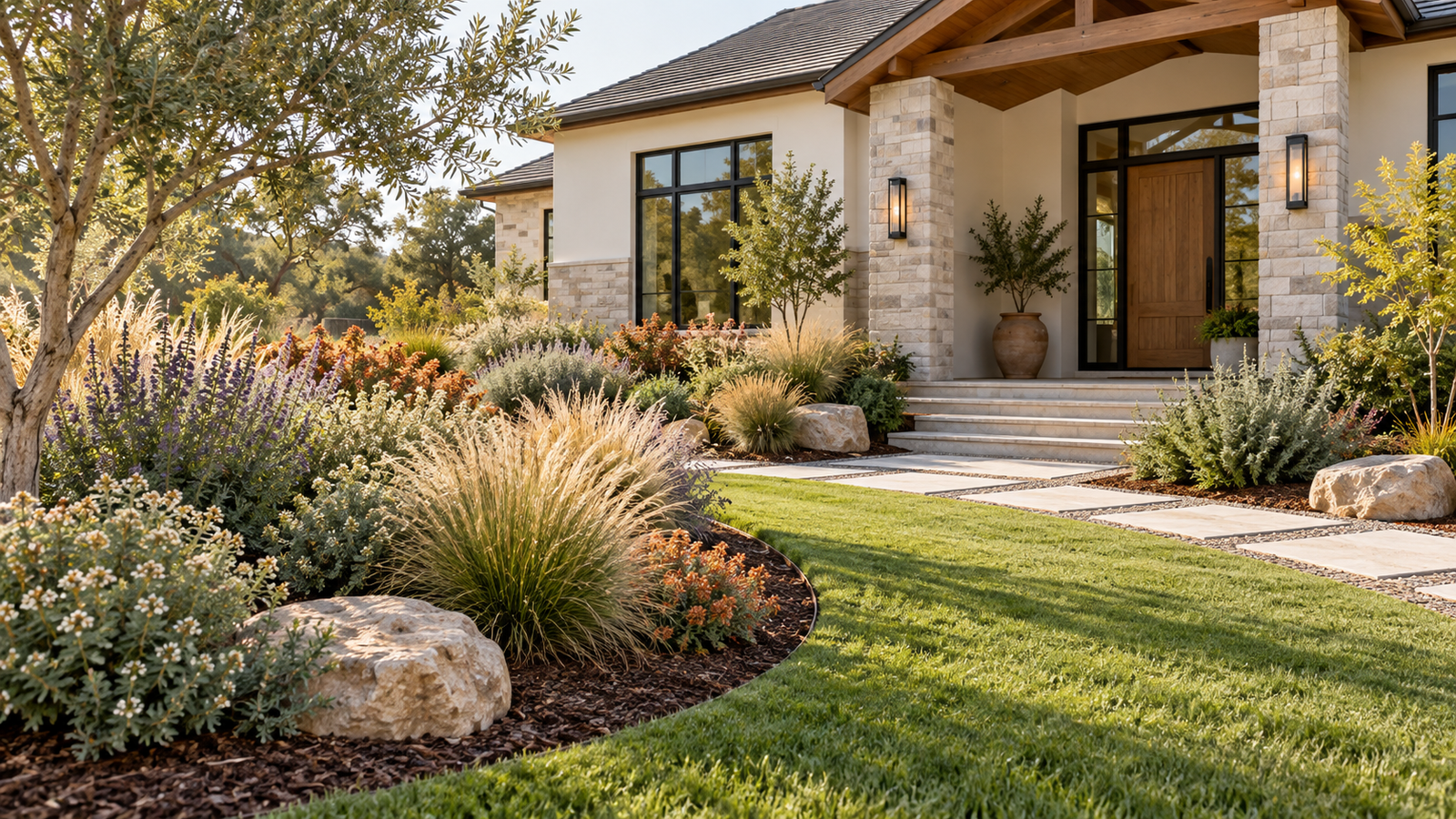
Conceptual illustration of a water-wise front yard.
Outdoor water use accounts for about 30 percent of average household water use nationwide, according to the EPA's WaterSense program, and the share rises in hotter, drier regions. WaterSense says experts estimate that as much as half of outdoor water use is wasted through overwatering and inefficient irrigation. The most effective steps are watering less often, fixing sprinklers, using a weather-based controller and choosing plants suited to your climate.
Where the water goes
The EPA's outdoor water fact sheet notes that in dry climates such as the Southwest, a household's outdoor use can reach 60 percent of its total. Irrigation systems matter too: WaterSense says homes with automatic irrigation systems use about 50 percent more water outdoors than homes without them.
Research from the University of Florida's extension service points to timers as a common culprit. Its publication on irrigation reports that systems are often set to water too frequently or for too long, and that some high-use Florida homes put 60 to 70 percent of their water outdoors. Automatic does not mean efficient. A system running a fixed schedule waters after rain as readily as during a dry spell.
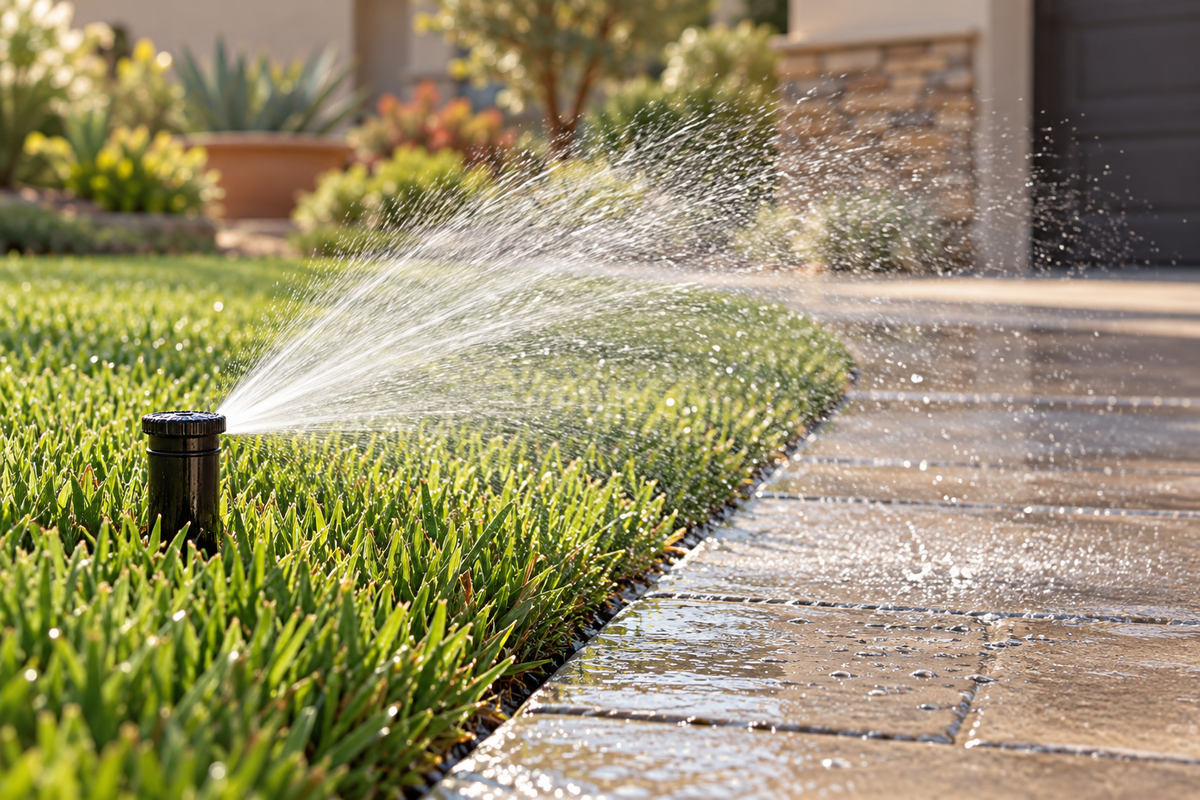
Four sprinkler fixes from WaterSense
The EPA's spring sprinkler tune-up guidance lists four steps. Each one targets a specific kind of waste:
- Inspect sprinkler heads for clogs or damage. If you are unsure what to look for, look for an irrigation professional certified through a WaterSense labeled program to audit the system.
- Connect heads to pipes and hoses securely. Pooling water in the landscape may mean a leak.
- Aim sprinklers at the landscape, not sidewalks and driveways.
- Consider a WaterSense labeled weather-based controller, which adjusts schedules to local conditions.
The EPA's 2013 outdoor water fact sheet says the average family could save nearly 9,000 gallons a year by replacing a standard clock timer with a WaterSense labeled controller. That is an EPA estimate for an average household from an older document, so your result depends on your system and climate. The EPA also says irrigation pressure matters. It states that an average household using 50,500 gallons outdoors, with sprinklers operating at or above 60 psi, can save nearly 5,600 gallons and about $60 a year by installing WaterSense labeled sprinkler bodies that regulate pressure.
Try the lawn test before you water
The EPA fact sheet gives a low-tech test. Step on a patch of grass. If it springs back, it does not need water. It is usually unnecessary to water grass every day. The same document says regionally appropriate plants can create a water-smart landscape with good curb appeal, and that once established, native plants need little water beyond normal rainfall.
A quick sense of scale
Here is a labeled hypothetical using the EPA's own average. If a household uses 50,500 gallons a year outdoors and, as the EPA says experts estimate, as much as half is wasted, then up to about 25,000 gallons a year is potentially avoidable. That is an upper bound for illustration. Your waste may be much smaller. To see what water is worth on your own bill, enter your rates in our utility cost calculator, which prices water per thousand gallons.
Estimate your own outdoor share
National averages tell you little about your house, so it helps to estimate your own outdoor water use. This is our editorial method, not an EPA procedure, and it is approximate. Pull a full year of water bills and find a low-use winter month, when little or no irrigation runs. Multiply that month's use by the number of months in your watering season and subtract it from the total for those months. What is left is a rough estimate of what the yard uses beyond normal indoor needs.
Treat the answer as a direction, not a measurement. Guests, leaks, a new pool or a change in household size can all move the baseline. If the outdoor share comes out well above the 30 percent national average, the sprinkler steps above are the place to start.
Professional maintenance can pay for itself
The EPA fact sheet says that if households with irrigation systems hired an irrigation professional certified through a WaterSense labeled program for regular maintenance, each could reduce irrigation water by 15 percent, or nearly 9,000 gallons a year. That is a national estimate, and the fact sheet dates from 2013. Even so, the underlying point holds. A leaky or misaimed system wastes water every time it runs, and a technician can find problems that are hard to see from the lawn. WaterSense also recommends consulting a certified professional before installing or adjusting a system, even when the technology is advanced.
| Feature | First step | |
|---|---|---|
| You have an automatic sprinkler system | Check heads, aim and timer schedule. Consider a weather-based controller. | |
| You water by hand or hose | Use the step-on-the-grass test and water only when needed. | |
| You are planning new beds or replanting | Choose regionally appropriate plants. Ask a local nursery or extension office. | |
| You are unsure about your system | Hire an irrigation professional certified through a WaterSense labeled program for an audit. |
If you plan to add new beds, work out how much material you need first. Our mulch calculator converts area and depth into cubic yards and bags, so you can compare a delivery with bagged options.
Your takeaway: this week, watch your sprinklers run once. Note whether any spray hits pavement or pools, then look at the timer schedule. Those two observations tell you whether the biggest savings are in the hardware or in the settings.
Frequently asked questions
How much of my water goes outdoors?
The EPA says about 30 percent of average household water use nationwide, and as much as 60 percent in dry climates such as the Southwest.
Do native plants need no water?
The EPA says that once established, native plants need little water beyond normal rainfall. New plantings usually need extra water while they establish.
Sources
- Spray Sprinkler Bodies, U.S. EPA WaterSense. Checked September 24, 2026
- The WaterSense Current: Spring 2018, U.S. EPA WaterSense. Checked September 24, 2026
- Outdoor Water Use in the United States (fact sheet), U.S. EPA WaterSense, May 2013. Checked September 24, 2026
- Irrigation publication AE585, University of Florida IFAS Extension. Checked September 24, 2026
Share this article
Get new guides by email
Practical home articles and free resources. No spam, and you can unsubscribe at any time.
Keep reading
15 Beautiful Xeriscaping Ideas for Colorado Front Yards
Explore 15 illustrated xeriscaping ideas for Colorado front yards, with grasses, flowers, shade, paths, useful lawn, and winter structure.
October 2026, 5 min read
The Best Grass Seed for North Carolina Lawns: Choose by Site
Choose North Carolina grass seed by region, sun, traffic, and upkeep. Compare tall fescue, Bermuda, centipedegrass, zoysia, and actual seed labels.
October 2026, 5 min read
Artificial Turf Cost in Arizona: Installation and Materials
Compare Arizona artificial turf materials and installation costs using an attributed Phoenix benchmark, clear exclusions, heat concerns, and a sample budget.
October 2026, 5 min read