When Is the Best Time to Plant Grass Seed in NC?
Find the best North Carolina grass-seeding window by grass type and region, with tall fescue dates, Bermuda timing, and establishment advice.
By Home Crane Editors. . 5 min read.
For tall fescue in North Carolina, late summer through fall is usually the best seeding season, with mountain lawns starting earlier than coastal lawns. For seeded warm-season grasses such as common bermudagrass, use the warmer establishment season instead. There is no single planting date that works for every North Carolina lawn.
Start with the species already growing in your yard, your region, and whether you are filling thin areas or establishing a new lawn. The right date cannot compensate for planting the wrong grass in deep shade, poorly draining ground, or a space that receives constant wear.
1. Choose the right grass before the date
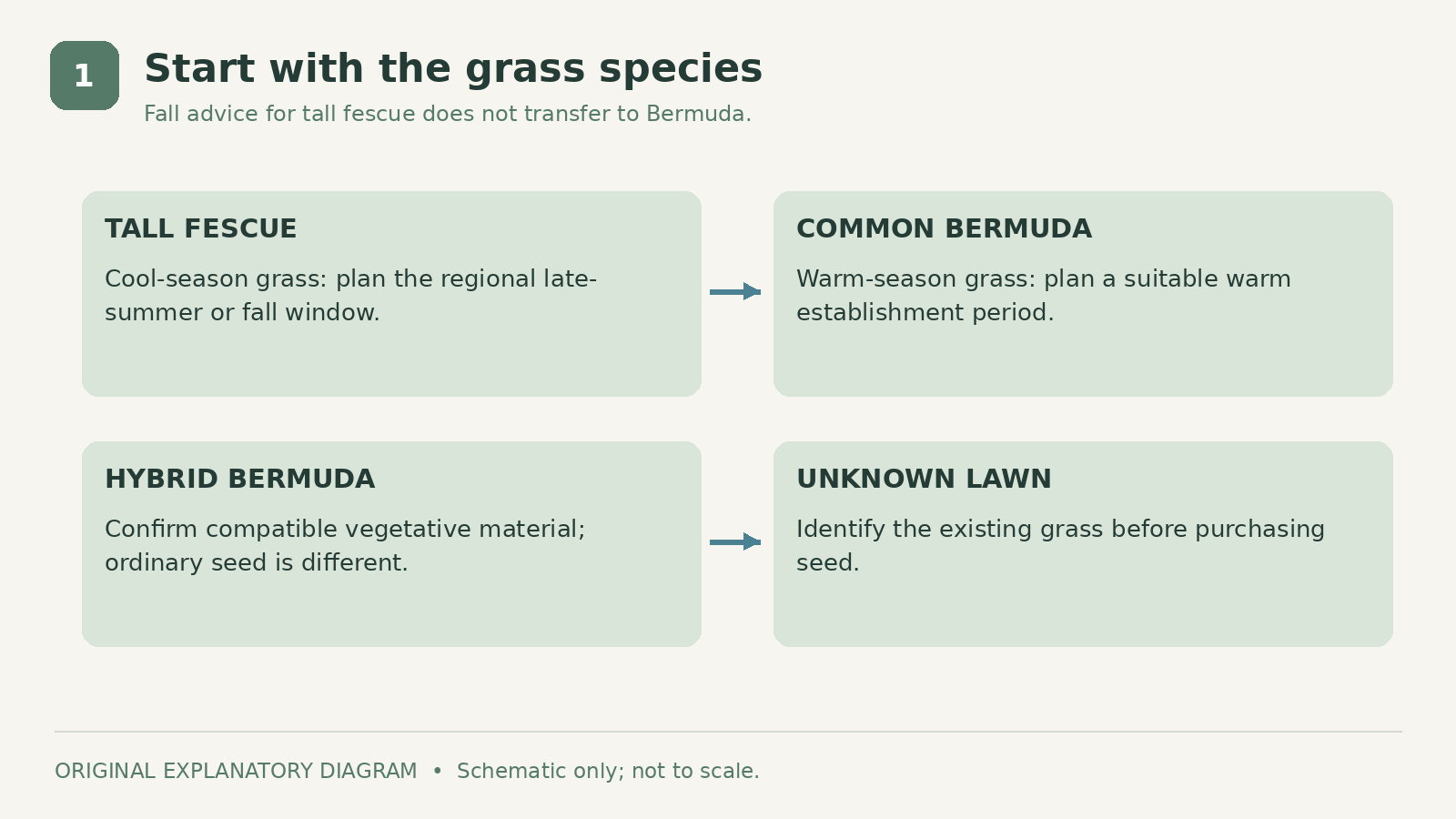
NC State's lawn-establishment guidance distinguishes cool-season grasses from warm-season grasses and gives separate regional planting windows. Tall fescue belongs to the cool-season group. Common bermudagrass belongs to the warm-season group. Hybrid Bermuda and St. Augustine are not established from ordinary lawn seed.
Check the bag label rather than buying by the photograph. Record the named grass species, cultivars, intended use, and whether the recommended rate applies to bare soil or overseeding. A mixture marketed for quick cover may not match the permanent lawn you want.
If you cannot identify your existing grass, take clear close-up photographs and a sample to your county Extension office before purchasing seed. Mixing an incompatible grass into a lawn can create a patchwork of different textures, mowing needs, and seasonal colors.
Write a one-sentence goal: “I want to thicken the existing tall fescue lawn this fall,” for example. That is a more useful shopping brief than “I need something green quickly.” It also helps a supplier distinguish renovation seed from a temporary erosion-control product.
2. Seed mountain tall fescue in late summer
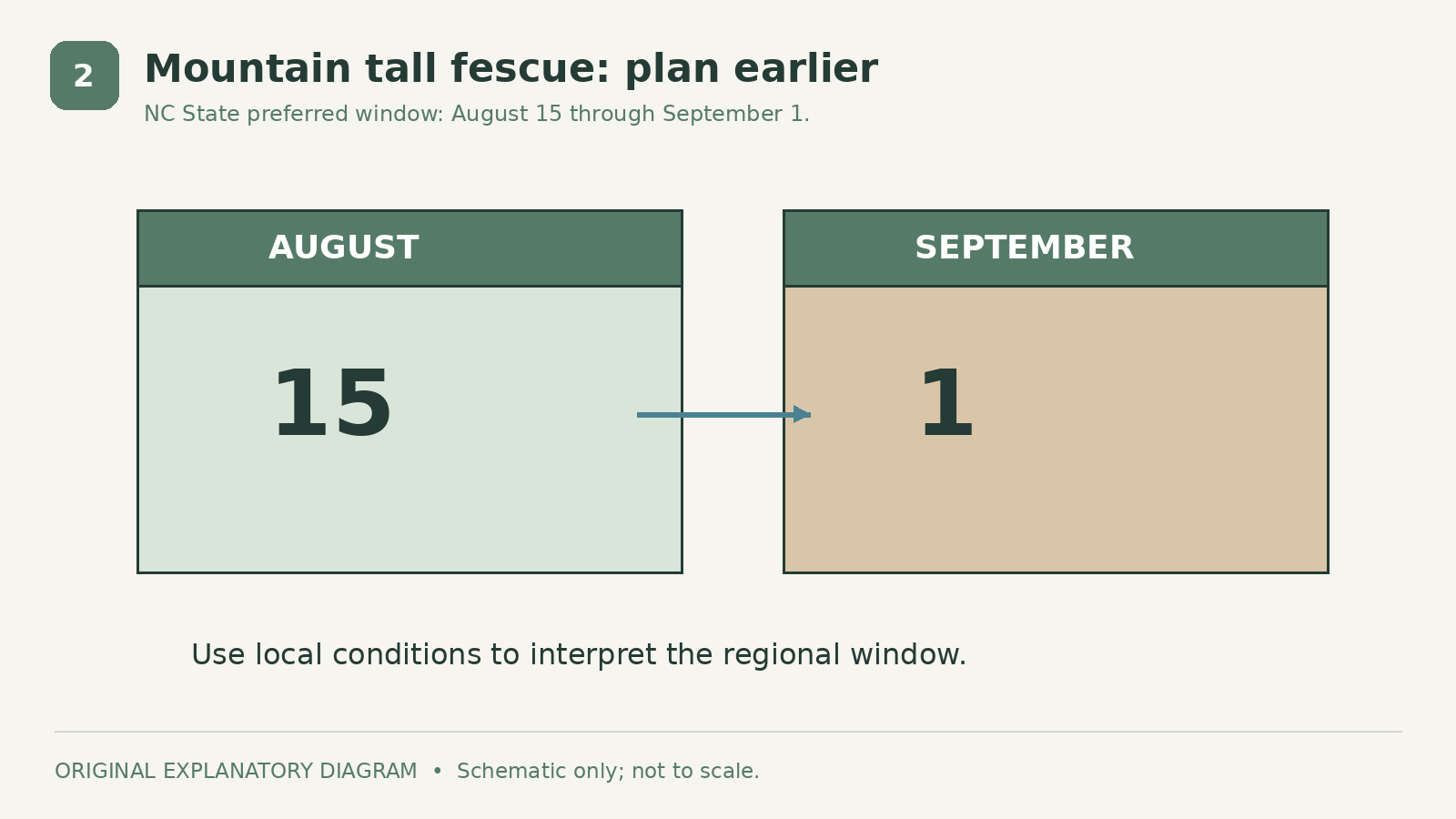
For mountain tall fescue, NC State's regional table identifies August 15 through September 1 as the preferred window. Use it as a planning target rather than a guarantee for every elevation and year's weather.
Arrange soil testing, supplies, and equipment before that window arrives. Waiting until the lawn looks poor in October leaves less room for seedlings to develop before colder conditions. A shaded mountain hollow and a sunny lower-elevation slope can behave differently, so discuss borderline timing with local Extension.
If you miss the preferred period, compare the cost of waiting with the risk of a weak stand. Do not assume that doubling the amount of seed will make up for unsuitable conditions. A supplier should be able to explain what establishment looks like for the species and date you are considering.
For a small project, divide your work into manageable areas that you can water and protect. Finishing a well-prepared section within a suitable weather period is often more practical than spreading seed across the entire property and struggling to care for it.
3. Use the Piedmont and coastal fall windows
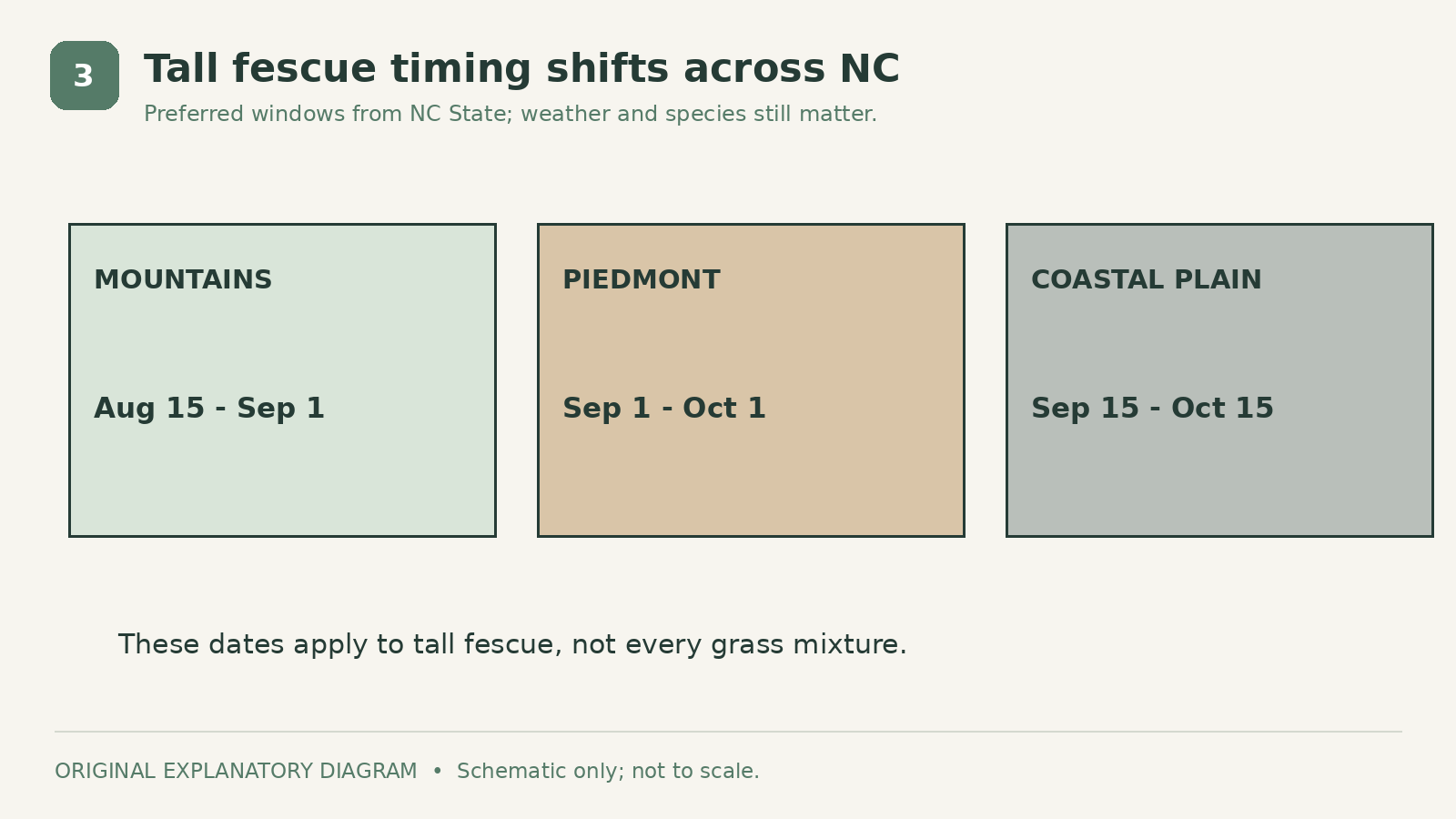
NC State's table gives tall fescue a September 1 to October 1 window in the Piedmont and September 15 to October 15 in the Coastal Plain. These are species-specific recommendations; other cool-season mixtures can have different dates.
| Feature | Preferred planning window | |
|---|---|---|
| Tall fescue, mountains | August 15 to September 1 | |
| Tall fescue, Piedmont | September 1 to October 1 | |
| Tall fescue, Coastal Plain | September 15 to October 15 | |
| Common bermudagrass, Piedmont or Coastal Plain | April through July |
NC State's fall-seeding discussion explains why fall generally gives tall fescue a better start than spring: spring seedlings face the approaching stresses of summer before becoming well established.
Use the regional window to reserve time, then check actual conditions. Avoid scheduling solely around a holiday weekend. If a forecast suggests intense rain, consider whether the site is ready to hold the seed in place and whether delaying slightly would give you a better opportunity to manage establishment.
A calendar reminder two weeks before your target date is useful. It creates time to repair watering equipment, clear stored materials from the lawn, and make sure someone will be available to monitor the newly seeded area.
4. Plant seeded warm-season grasses in warm weather
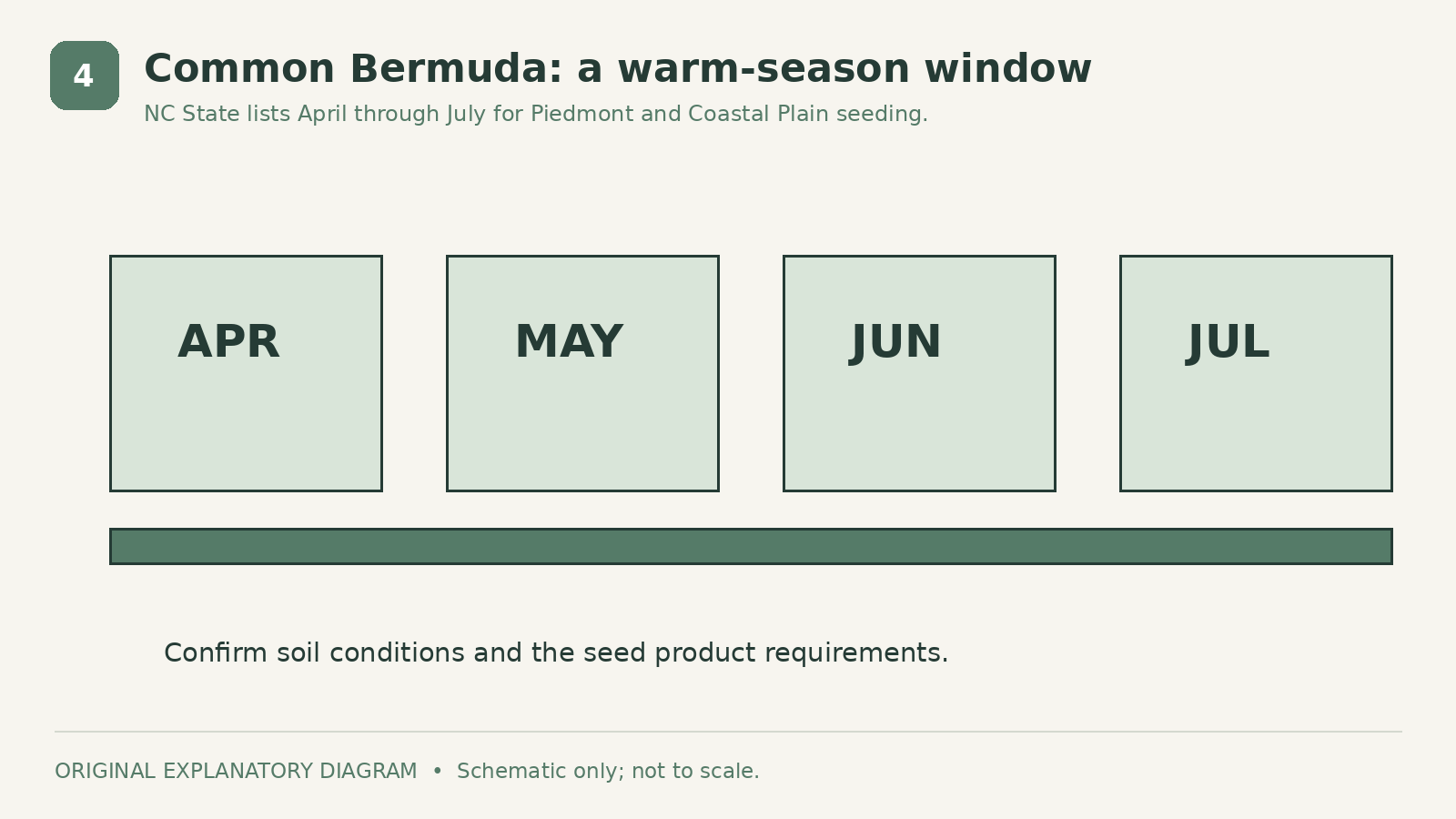
Common bermudagrass has an April-through-July planting window in the Piedmont and Coastal Plain in NC State's table. That broad range does not mean cold soil at the beginning of April is automatically ready. Confirm the product's germination requirements and the local establishment outlook.
Do not transfer fall fescue advice to a Bermuda lawn. The seasons serve different grasses. Similarly, do not assume that a bag of common Bermuda seed will reproduce the appearance of an existing named hybrid cultivar.
If you are comparing seed with sod, obtain two complete project descriptions. Seed requires a seedbed and an establishment period; sod introduces different material, handling, and installation costs. Neither choice removes the need to resolve shade, drainage, and watering access before the work begins.
For a mixed property, draw separate areas on a simple plan and label the grass in each. Then make a schedule for each area. This prevents a convenient single workday from becoming the reason you plant one lawn at the wrong time.
What if spring is your only opportunity?
For tall fescue, treat spring seeding as a compromise and plan for possible fall repair. Discuss the earliest suitable local window with Extension. Keep expectations realistic if construction, a home sale, or another deadline prevents waiting until fall.
5. Prepare the seedbed and protect establishment
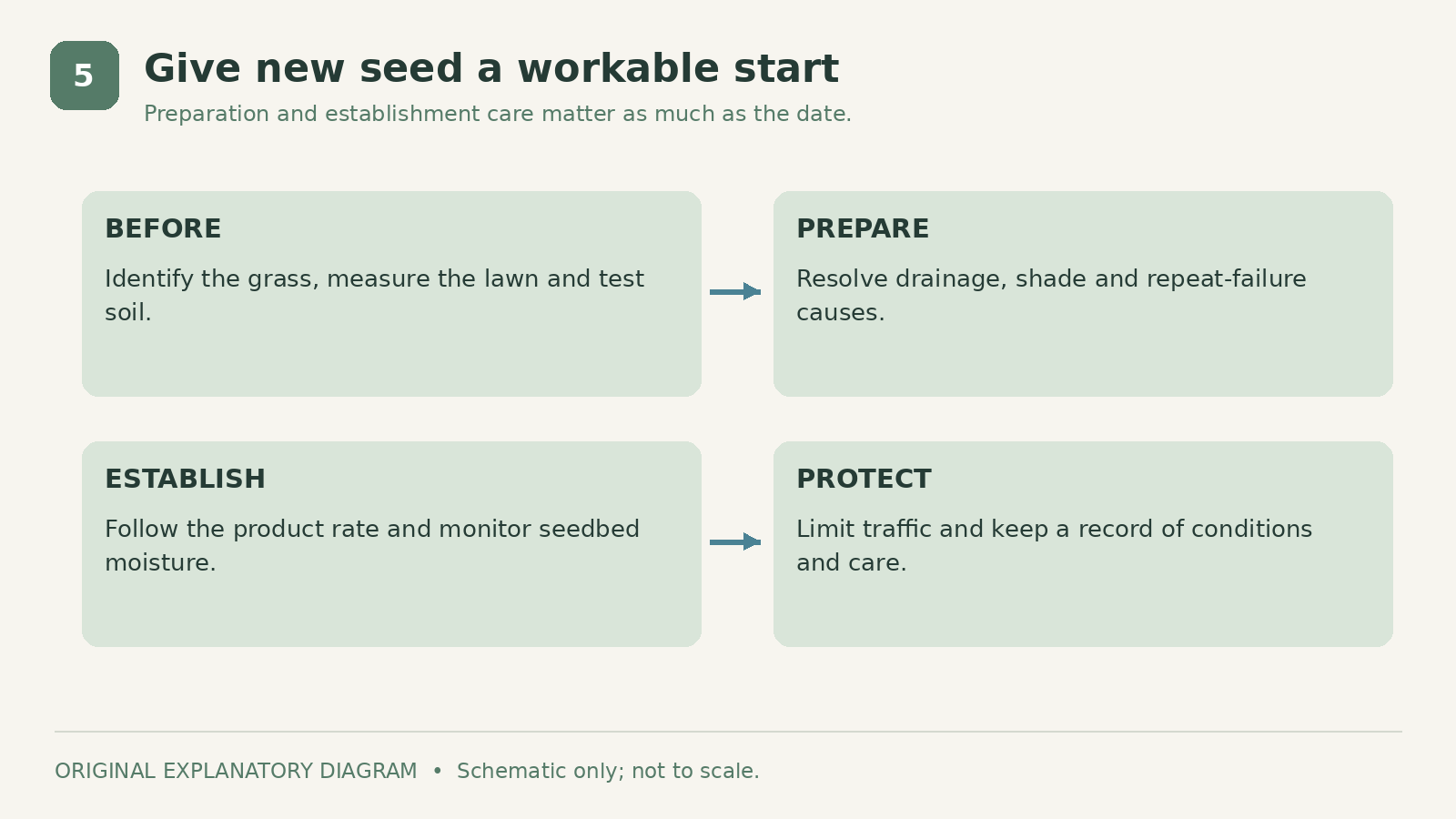
The date is only one part of the job. Use NC State's Carolina lawn resources to locate species-specific establishment and maintenance guidance. Soil testing and a grass-appropriate preparation plan are more useful than adding lime or fertilizer without knowing what the soil needs.
Before spreading seed, resolve where runoff goes and why existing grass failed. If the same shaded or compacted patch has failed repeatedly, changing the planting date alone may not solve it. Consider whether that spot would work better as a planting bed or a defined walking route.
Measure the actual area and use the seed label's rate for your situation. As a purchasing example, an assumed label rate of five pounds per 1,000 square feet would require fifteen pounds for 3,000 square feet. That arithmetic is an example, not a recommended rate for every seed product.
Arrange a way to keep the seedbed appropriately moist without washing seed away. Check frequently during establishment and adjust to rain and drying conditions. Follow the grass-specific guidance for the transition to deeper watering and the first mowing.
Finally, mark the area so regular foot traffic, deliveries, and yard equipment avoid it. Keep the seed label and record the date, weather, and watering approach. If the stand disappoints, those details give Extension or your supplier something concrete to diagnose before you buy another bag.
Sources
- NC State Extension: Establishing a New Lawn. Checked October 6, 2026
- NC State TurfFiles: Time for Fall Seeding of Tall Fescue. Checked October 6, 2026
- NC State TurfFiles. Checked October 6, 2026
Share this article
Get new guides by email
Practical home articles and free resources. No spam, and you can unsubscribe at any time.
Keep reading
15 Beautiful Xeriscaping Ideas for Colorado Front Yards
Explore 15 illustrated xeriscaping ideas for Colorado front yards, with grasses, flowers, shade, paths, useful lawn, and winter structure.
October 2026, 5 min read
The Best Grass Seed for North Carolina Lawns: Choose by Site
Choose North Carolina grass seed by region, sun, traffic, and upkeep. Compare tall fescue, Bermuda, centipedegrass, zoysia, and actual seed labels.
October 2026, 5 min read
Artificial Turf Cost in Arizona: Installation and Materials
Compare Arizona artificial turf materials and installation costs using an attributed Phoenix benchmark, clear exclusions, heat concerns, and a sample budget.
October 2026, 5 min read