11 Historic Rhode Island Coastal Cottages with Shaker Siding Details
Explore 11 rhode island cottage shingle siding ideas with illustrated concepts, practical design tips, and planning checks for your US home.
By Home Crane Editors. . 4 min read.
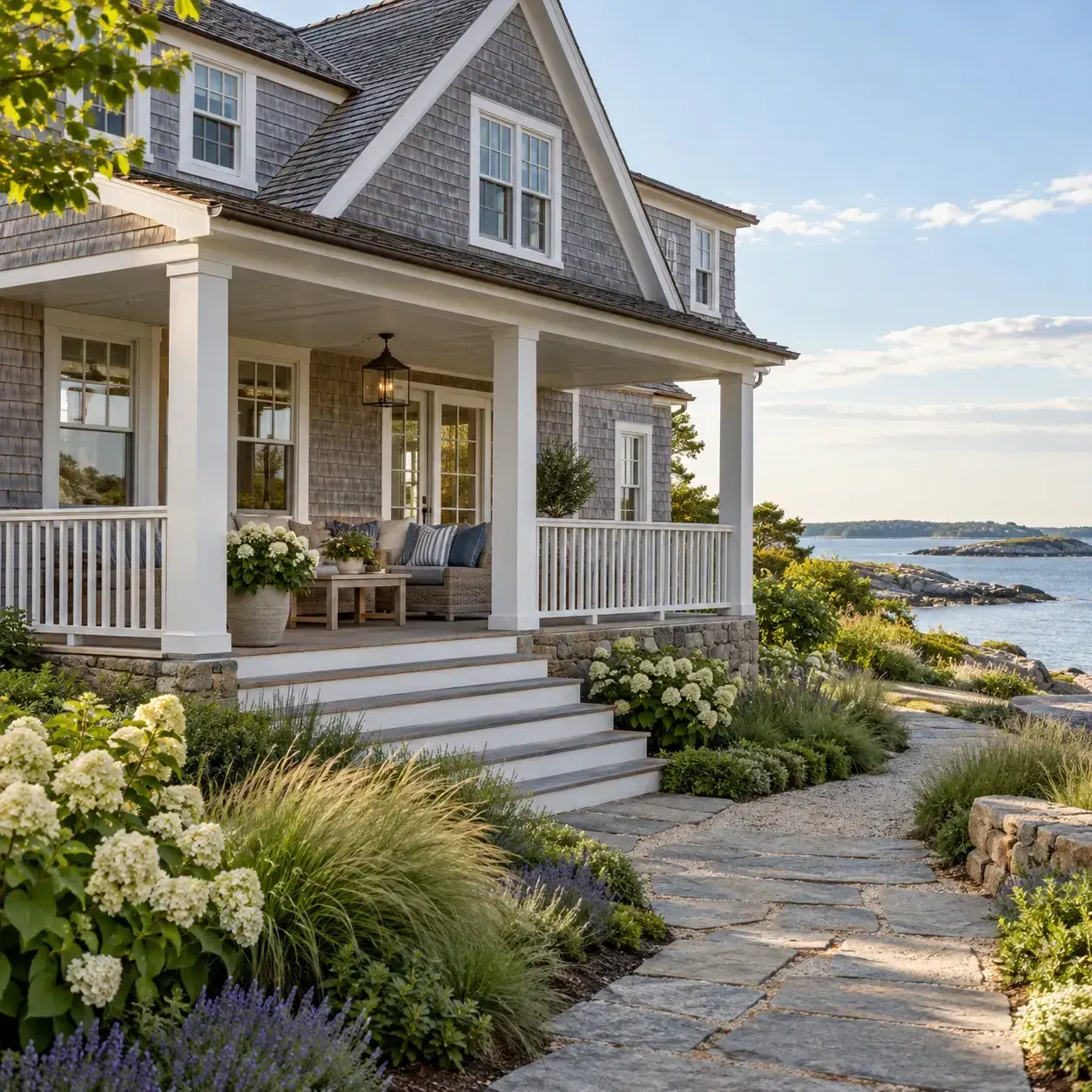
For coastal cottage exteriors, the common terms are shingle siding and shake siding. "Shaker siding" is often used loosely in searches, but Shaker describes a different design tradition. This article interprets the topic as twelve historic-inspired Rhode Island cottage concepts with shingles or shakes. The illustrations are not photographs of identified historic buildings.
AI-generated design concept, not a photograph of a documented property.
Before you choose a design
Keep sound historic siding where feasible and match significant existing details when repairing. Coastal exposure also calls for product-specific flashing, fastening and finish decisions. A shingle appearance alone does not establish weather resistance or suitability for a particular site. [1]
1. Weathered gray shingles with white trim
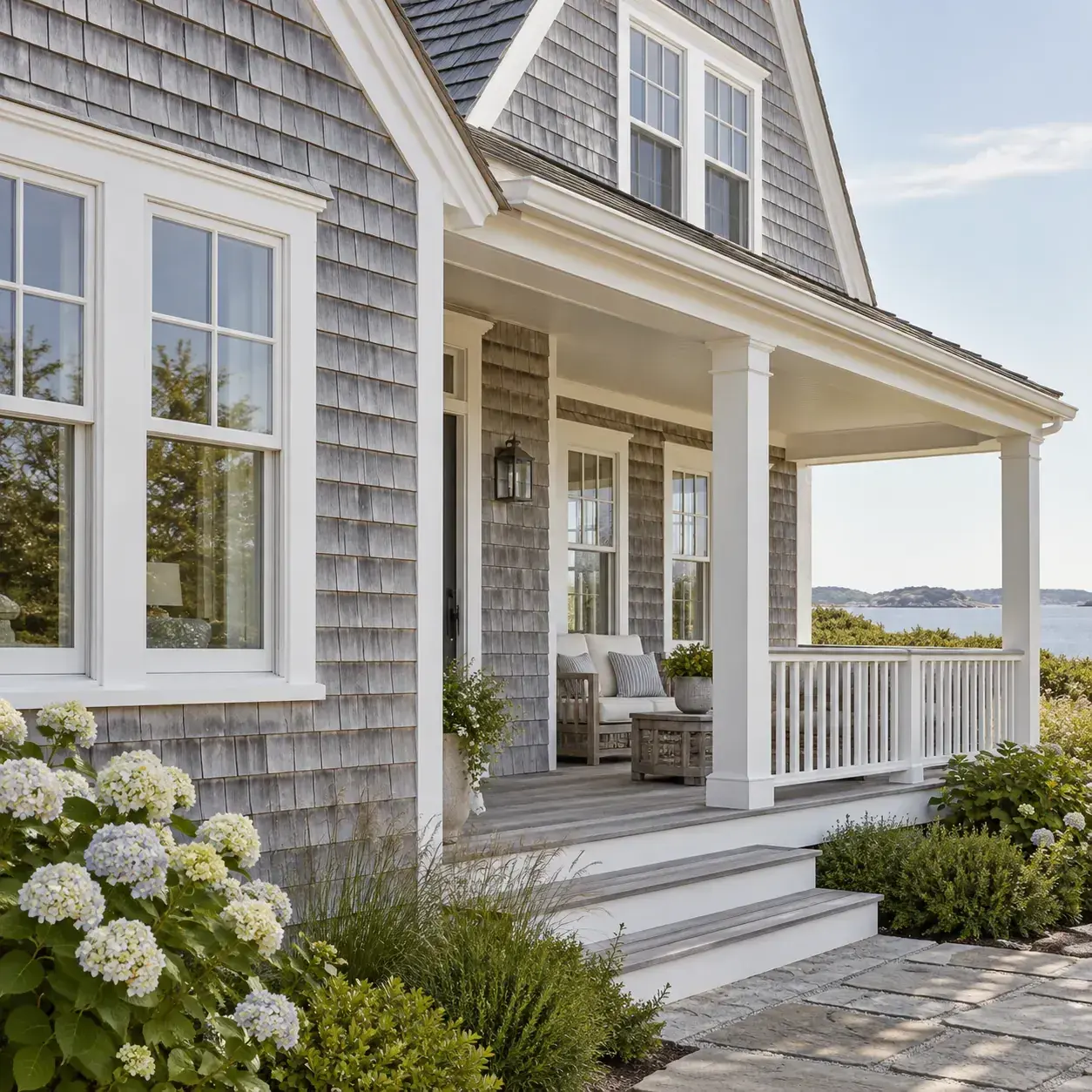
AI-generated design concept, not a photograph of a documented property. Weathered gray shingles with white trim.
Use the contrast between soft gray siding and crisp white window trim for a quiet coastal composition.
Make it work: Existing weathering may be uneven. Avoid promising that new replacement shingles will immediately match older material without a considered repair and finish strategy.
2. Shingled gable above a modest porch
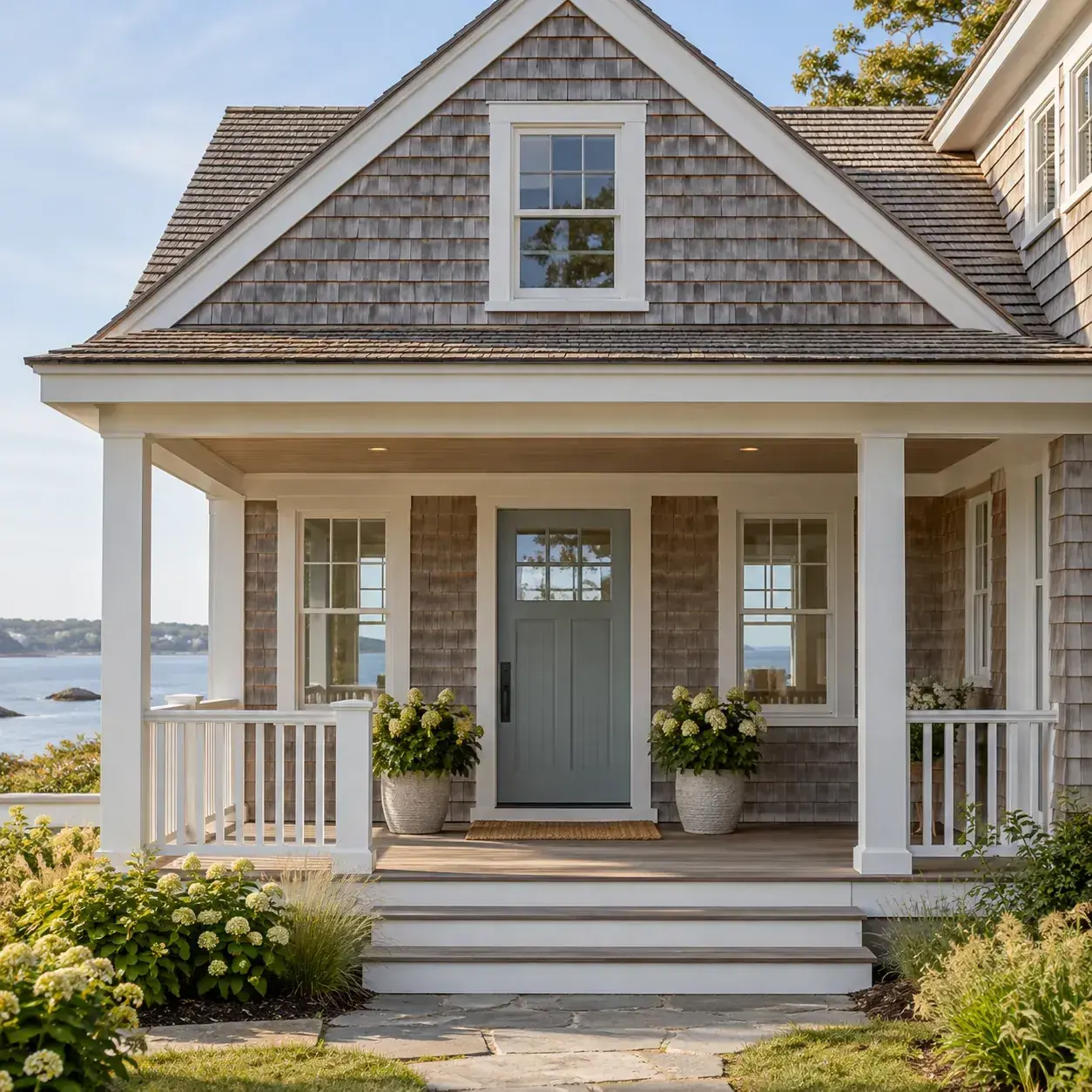
AI-generated design concept, not a photograph of a documented property. Shingled gable above a modest porch.
Concentrate the texture in a simple front gable and keep the porch posts plain.
Make it work: Review the junction between porch roof and wall. Flashing and drainage should be resolved before the decorative shingle layout is finalized.
3. Natural cedar with a muted blue door
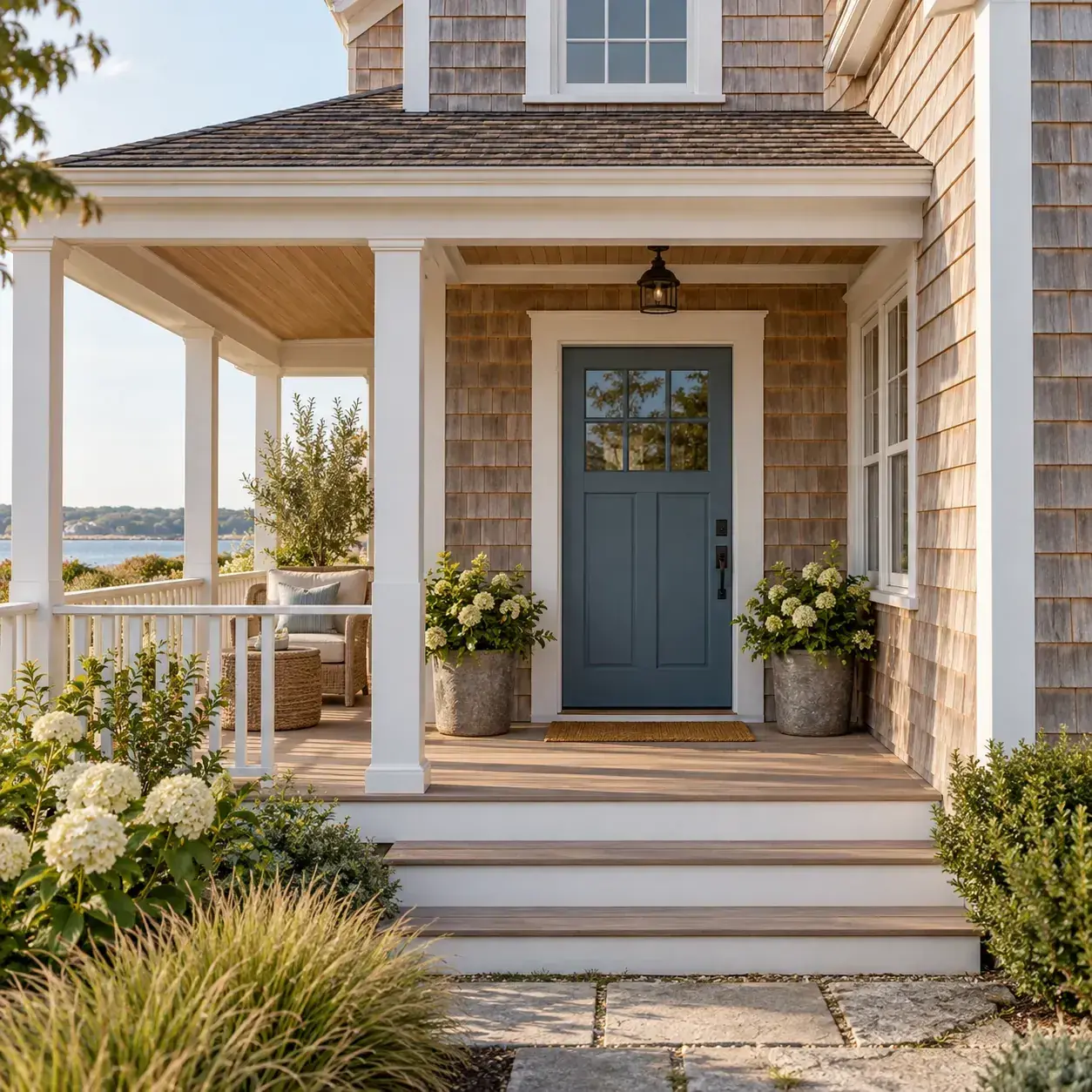
AI-generated design concept, not a photograph of a documented property. Natural cedar with a muted blue door.
Pair warm natural wood tones with a restrained blue entry door and simple planting.
Make it work: Ask how the chosen finish will age in the actual exposure. Color maintenance depends on product, orientation and site conditions, not just the species name.
4. Small cottage with a continuous shingle surface
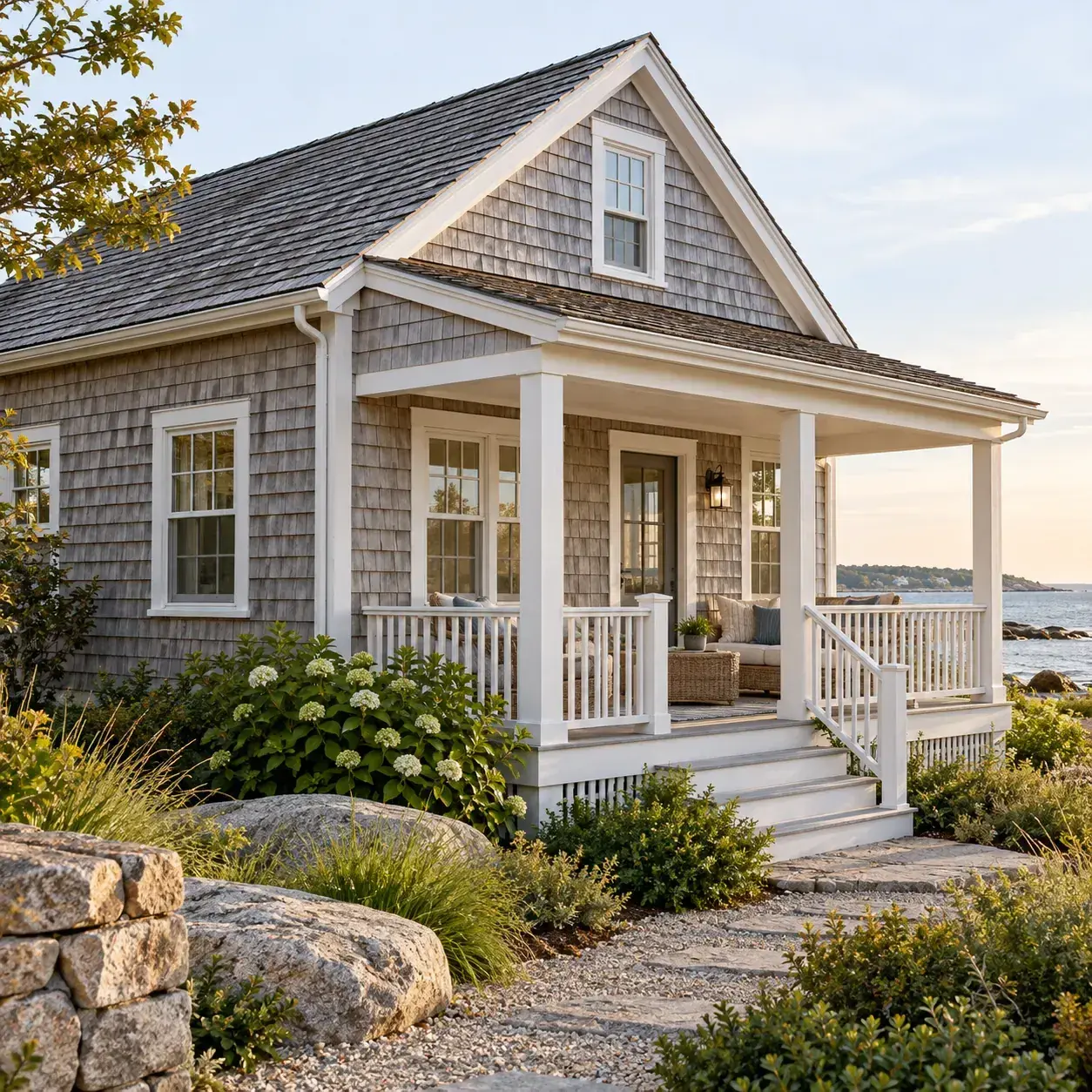
AI-generated design concept, not a photograph of a documented property. Small cottage with a continuous shingle surface.
Use one siding language across the main walls to keep a compact house visually coherent.
Make it work: Continuous appearance still requires properly detailed joints, openings and drainage paths. Do not cover useful flashing simply to make the surface look seamless.
5. White-painted shingles with dark shutters
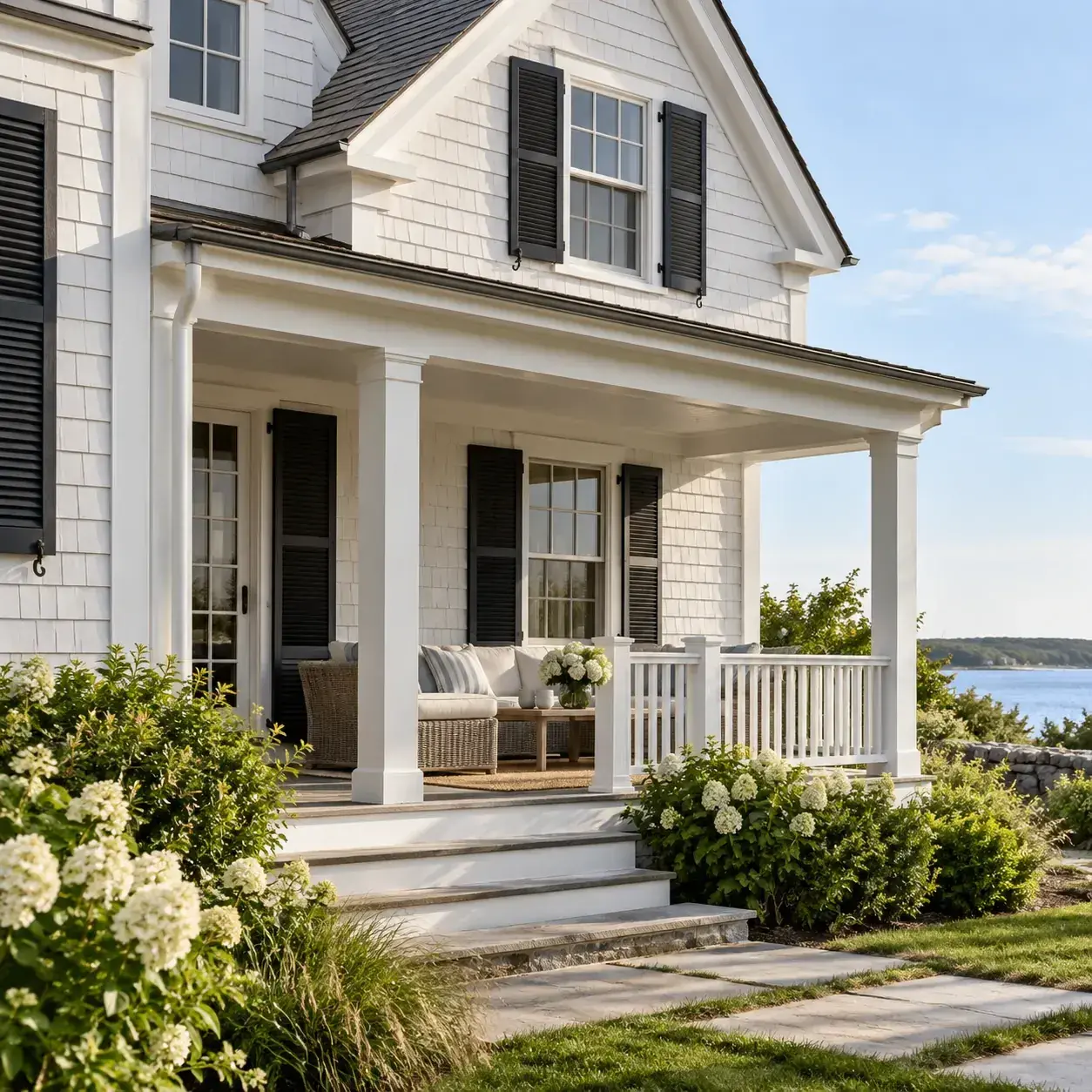
AI-generated design concept, not a photograph of a documented property. White-painted shingles with dark shutters.
Use a pale monochrome wall and a small amount of dark contrast at the windows.
Make it work: Retain shutters only where their proportions and attachment make sense. Decorative additions should not obscure trim or interfere with window operation.
6. Shingle skirt below a porch railing
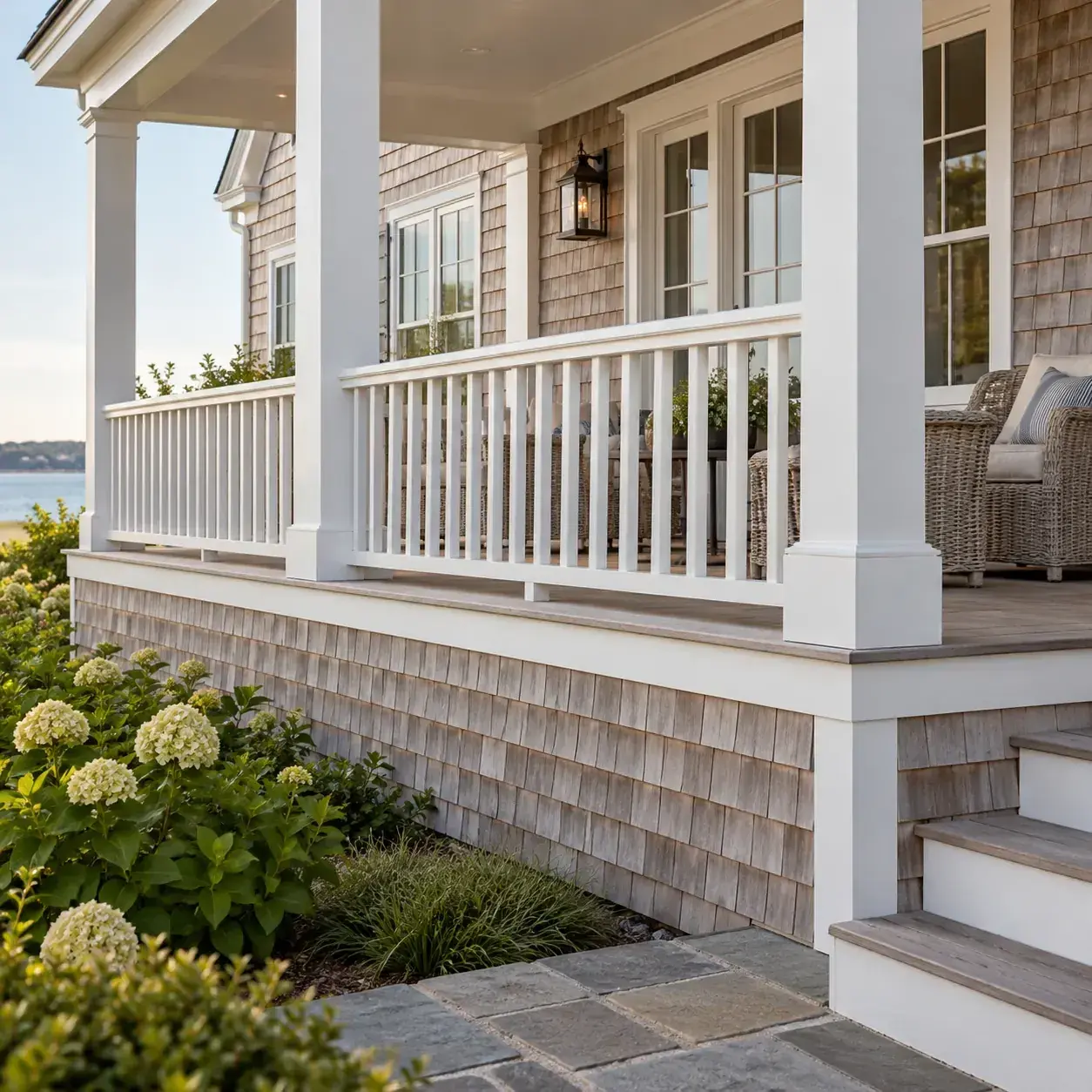
AI-generated design concept, not a photograph of a documented property. Shingle skirt below a porch railing.
Repeat the siding on a porch base to tie the lower portion of the cottage together.
Make it work: Check ventilation and access below the porch. An attractive enclosure should not trap moisture or conceal maintenance points.
7. Cottage dormer with restrained shingle detailing
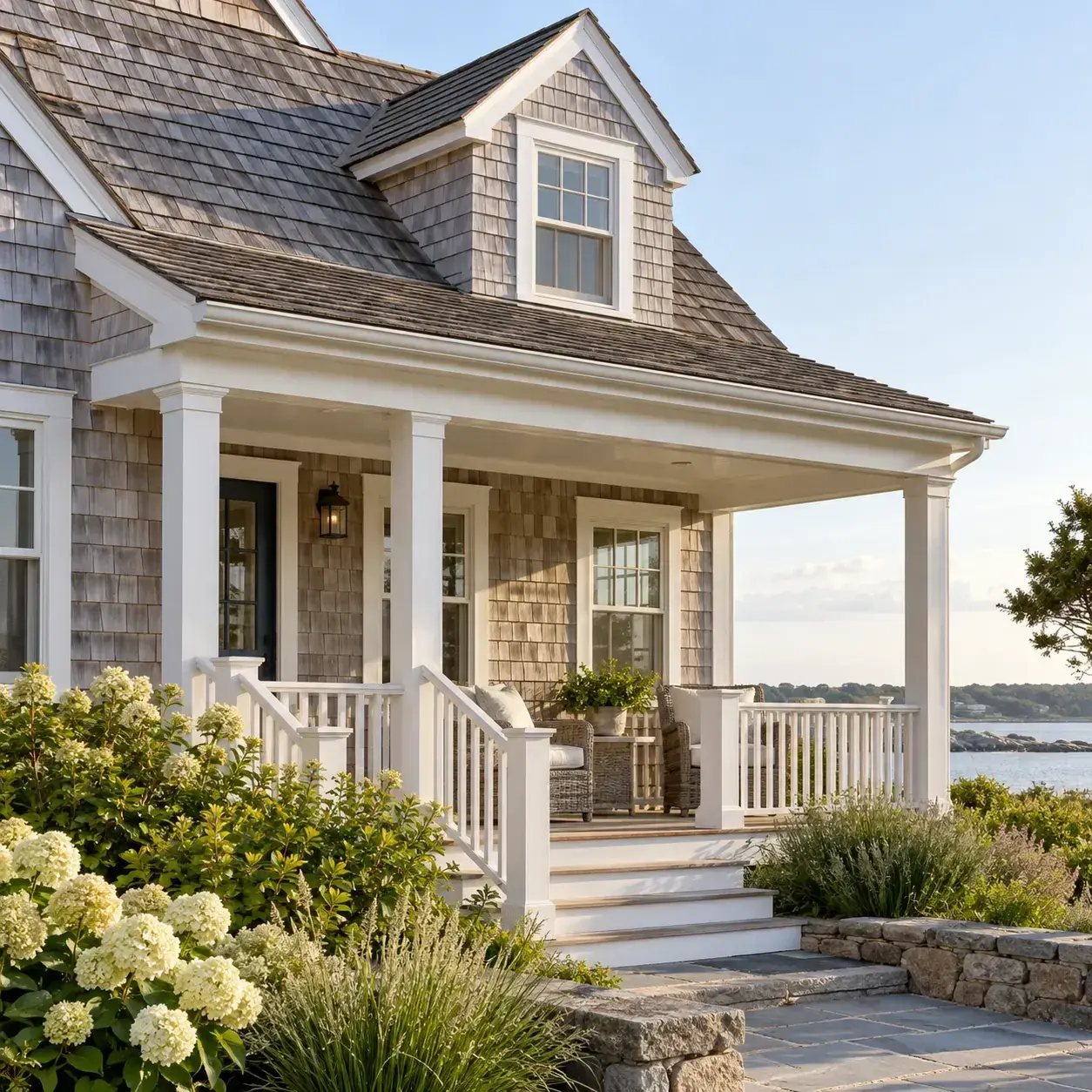
AI-generated design concept, not a photograph of a documented property. Cottage dormer with restrained shingle detailing.
Use a small dormer as a texture accent while keeping its trim related to the windows below.
Make it work: The dormer's roof and wall intersections are technical details. Do not assume an image shows the flashing sequence or an acceptable roof opening.
8. Warm gray siding with a red-brown door
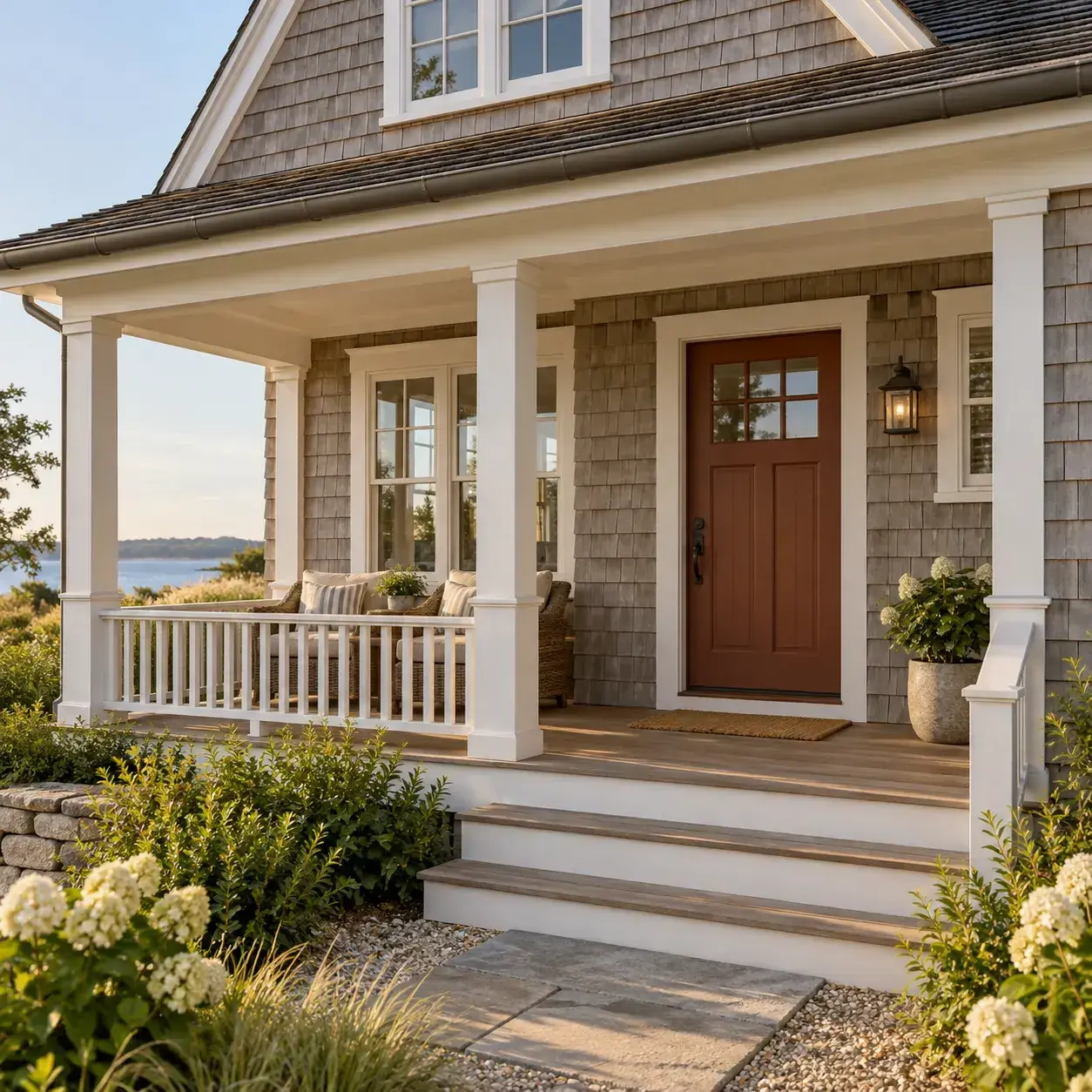
AI-generated design concept, not a photograph of a documented property. Warm gray siding with a red-brown door.
Use a subdued warm gray field and an earthy door color to avoid a stark nautical palette.
Make it work: Test colors beside the roof and foundation. Those large fixed surfaces often determine whether a new siding color feels connected to the house.
9. Shingles beside a stone foundation
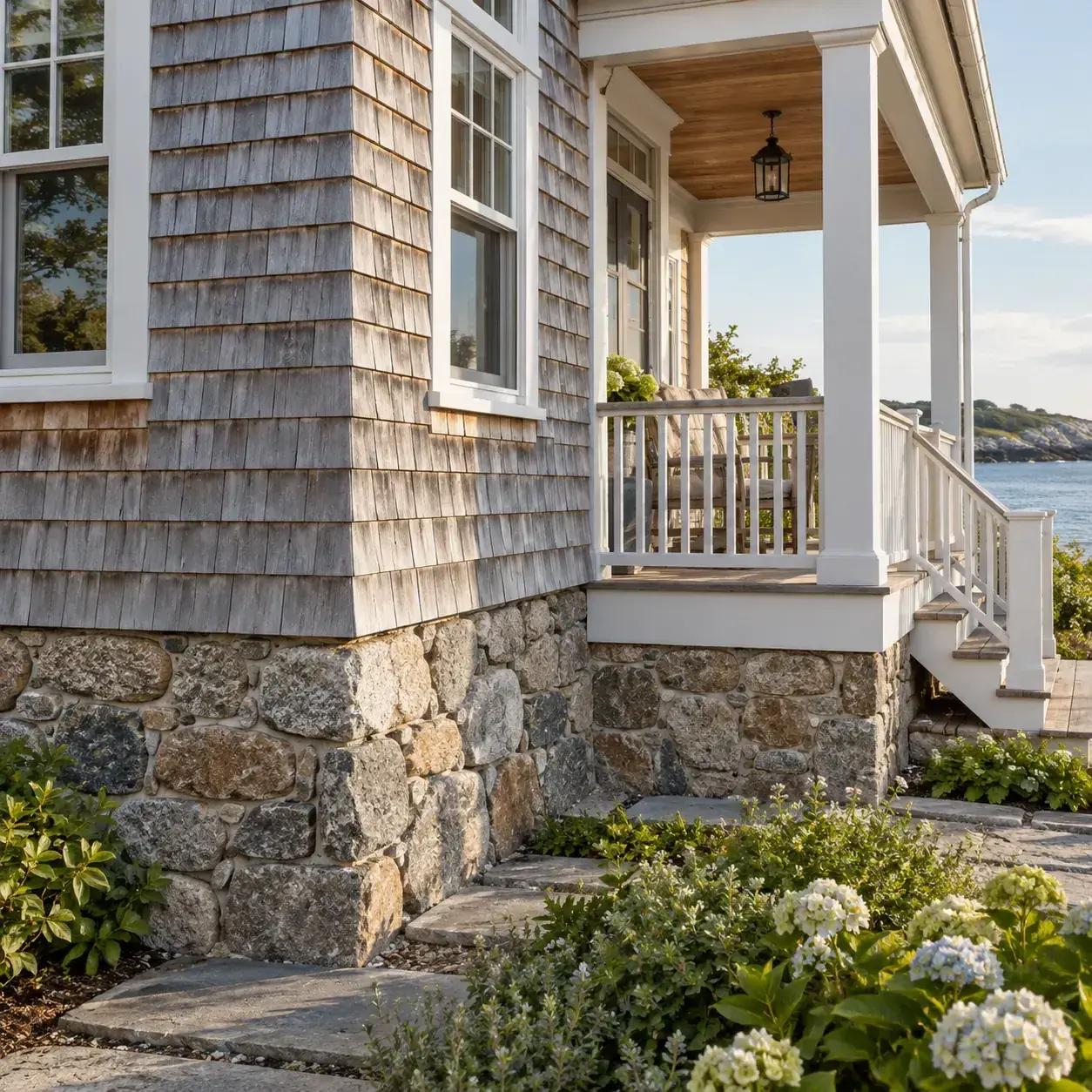
AI-generated design concept, not a photograph of a documented property. Shingles beside a stone foundation.
Let a visible foundation base anchor the lighter texture of the upper walls.
Make it work: Maintain required separation from grade and coordinate drainage. Do not bury siding ends in planting beds to imitate a lush photograph.
10. Simple corner boards on a compact cottage
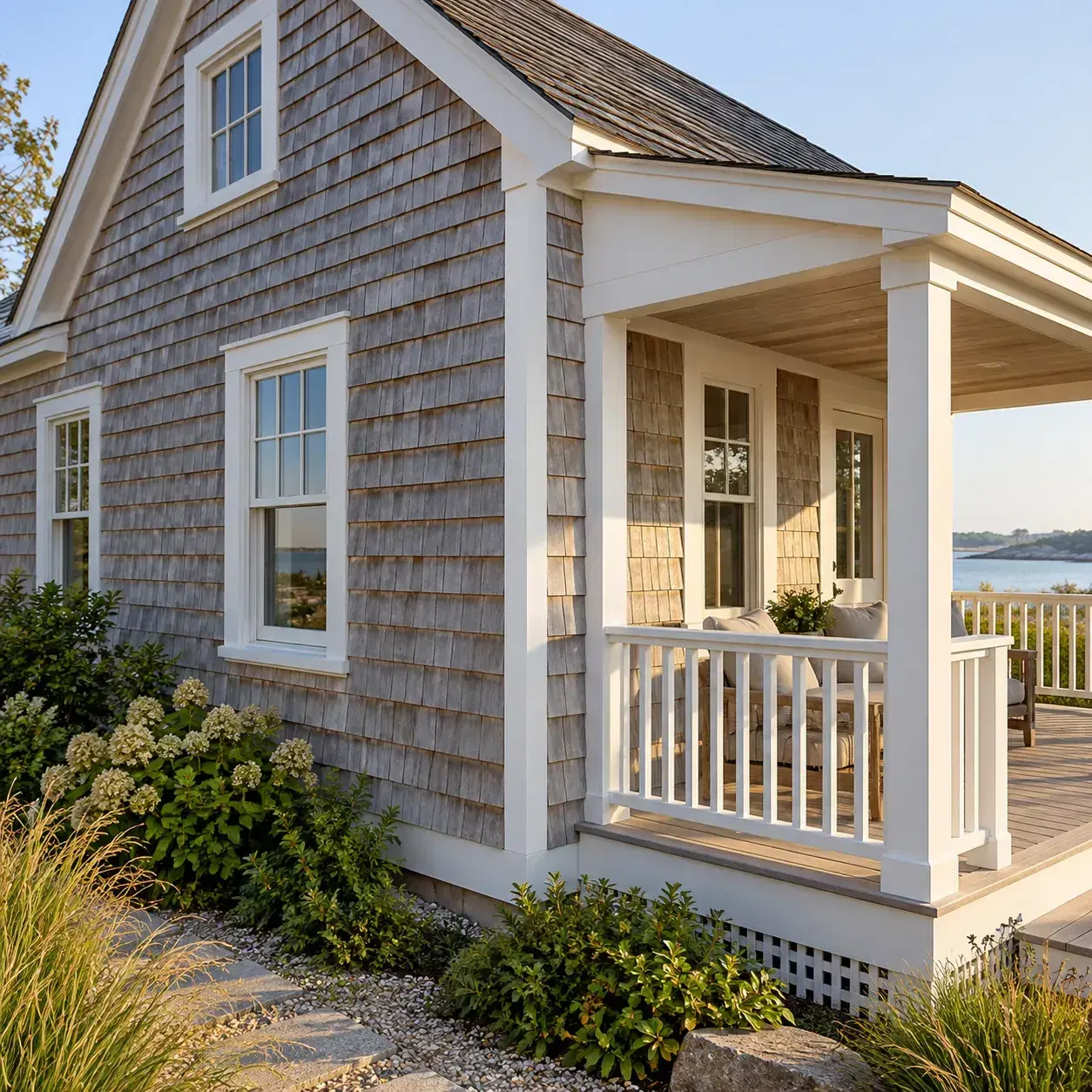
AI-generated design concept, not a photograph of a documented property. Simple corner boards on a compact cottage.
Use plain corner boards to give the small exterior clear edges without elaborate ornament.
Make it work: Confirm that the corner treatment matches the siding system. Water management and fastening should not be improvised from the visible trim alone.
11. Porch recess with slightly darker shingles
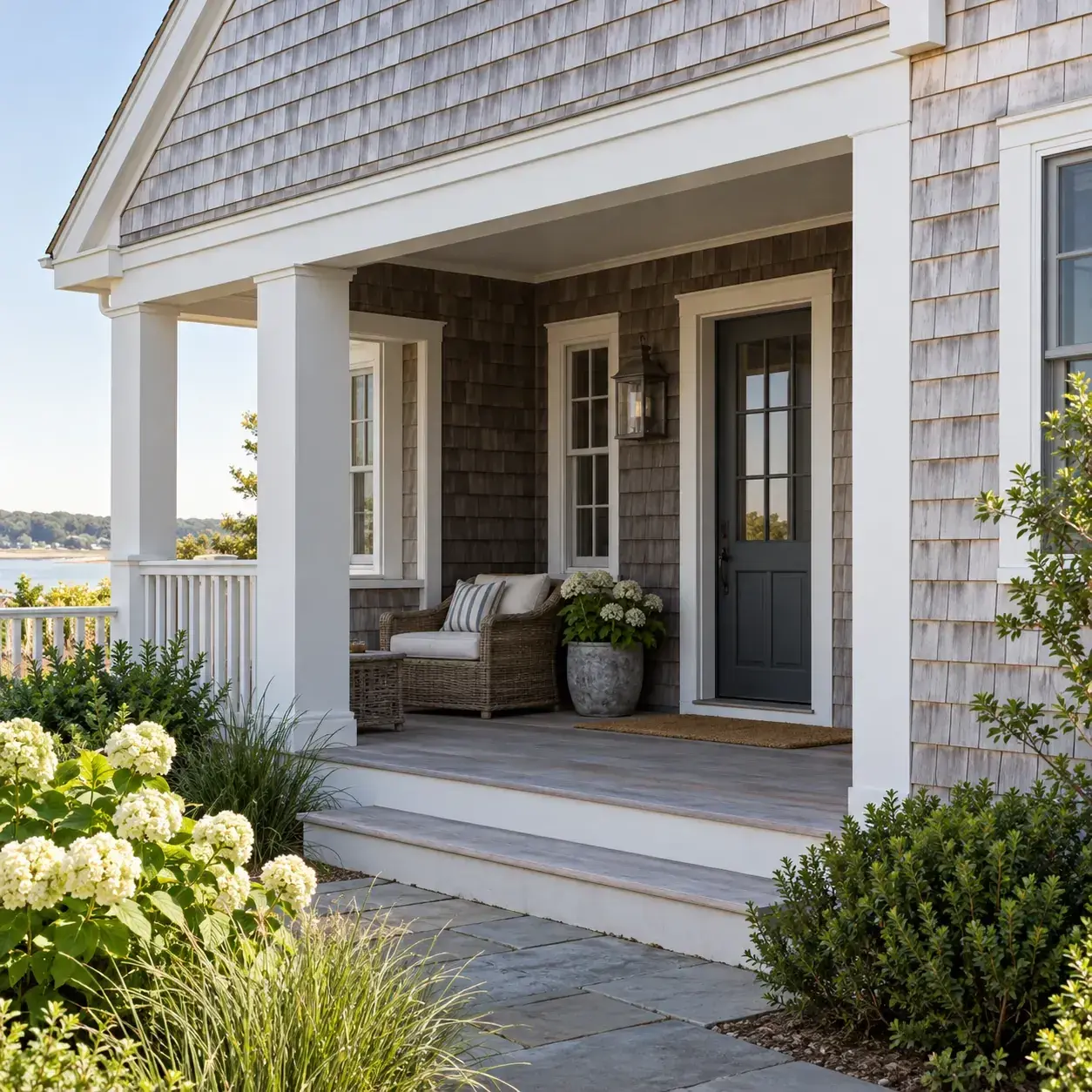
AI-generated design concept, not a photograph of a documented property. Porch recess with slightly darker shingles.
Use a darker sheltered recess to create depth while keeping the main exterior light.
Make it work: Expect different exposures to age differently. A sheltered porch and a sun-facing wall may not retain the same tone even with the same finish.
Frequently asked questions
Is Shaker siding the same as shingle siding?
No. This article interprets the search phrase as coastal shingle or shake siding. Shaker is a different design term and should not be used as a technical product specification.
Will new cedar match weathered siding immediately?
Not necessarily. Age, finish and exposure affect appearance. Plan a repair strategy with samples rather than expecting a perfect instant match.
Are these identified historic Rhode Island cottages?
No. The images are historic-inspired design concepts. Actual restoration decisions should follow the building's evidence and any applicable review requirements.
Sources and further reading
[1] National Park Service: Guidelines for Preserving and Rehabilitating Historic Buildings
Sources
- National Park Service: Guidelines for Preserving and Rehabilitating Historic Buildings. Checked October 13, 2026
Share this article
Get new guides by email
Practical home articles and free resources. No spam, and you can unsubscribe at any time.
Keep reading
Step-by-Step Guide: How to Limewash a Brick Exterior
Learn when exterior brick suits limewash, how to test a finish, prepare the masonry, and plan application without hiding moisture problems.
October 2026, 3 min read
Painted Brick Exteriors: Pros, Cons, and Maintenance Costs
Weigh painted-brick benefits, moisture concerns, treatment options, and US costs, with a sample budget and a practical maintenance plan.
October 2026, 4 min read
9 Historically Inspired Exterior Paint Colors for Chicago Bungalows
Explore nine historically inspired Chicago bungalow paint palettes for trim and accents, with illustrations, sample-testing advice, and preservation context.
October 2026, 5 min read