Painted Brick Exteriors: Pros, Cons, and Maintenance Costs
Weigh painted-brick benefits, moisture concerns, treatment options, and US costs, with a sample budget and a practical maintenance plan.
By Home Crane Editors. . 4 min read.
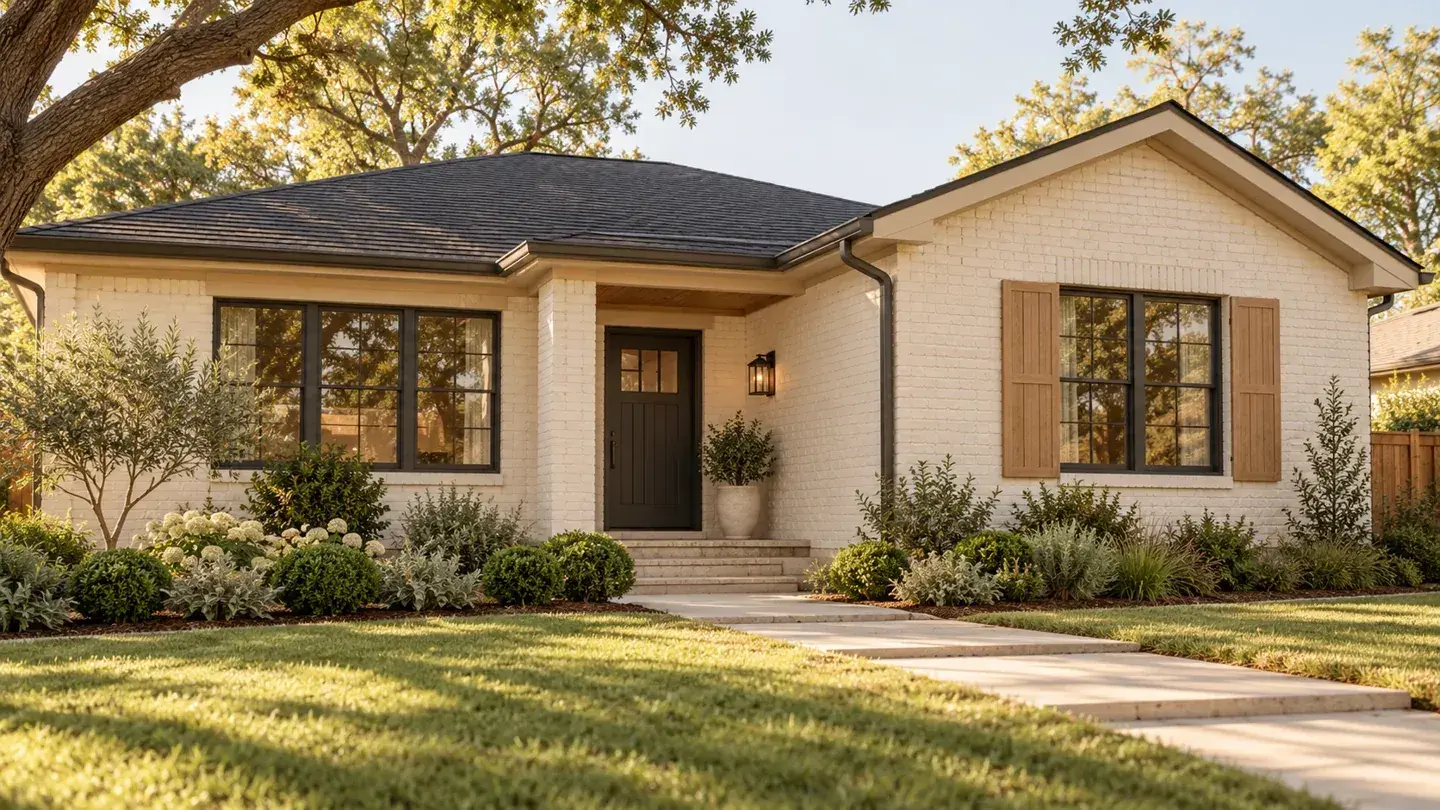
Painting brick can give a house a more unified appearance, but it also creates a long-term maintenance commitment. Before choosing a color, assess the masonry, moisture conditions, existing coatings, and the proposed product. A painted finish should follow a sound wall, not conceal a problem that still needs repair.
For initial budgeting, HomeGuide publishes a range of $1.50 to $4.50 per square foot of brick surface for painting a brick house, checked October 5, 2026. That is a broad national reference. Your local quote depends on preparation, access, condition, and the complete scope.
Start With the Brick You Already Have
Determine whether the brick is uncoated, previously painted, stained, or treated with another product. Photograph every elevation and any damaged or discolored areas. Ask a masonry professional to assess concerns before a painting contractor prices a cosmetic finish over them.
The Brick Industry Association's 2025 Technical Note 6 discusses coatings, compatibility, moisture behavior, and maintenance. Its central practical implication is that the appropriate treatment depends on the masonry and wall assembly. A color chart alone cannot answer that question.
1. Weigh the Appearance Benefits
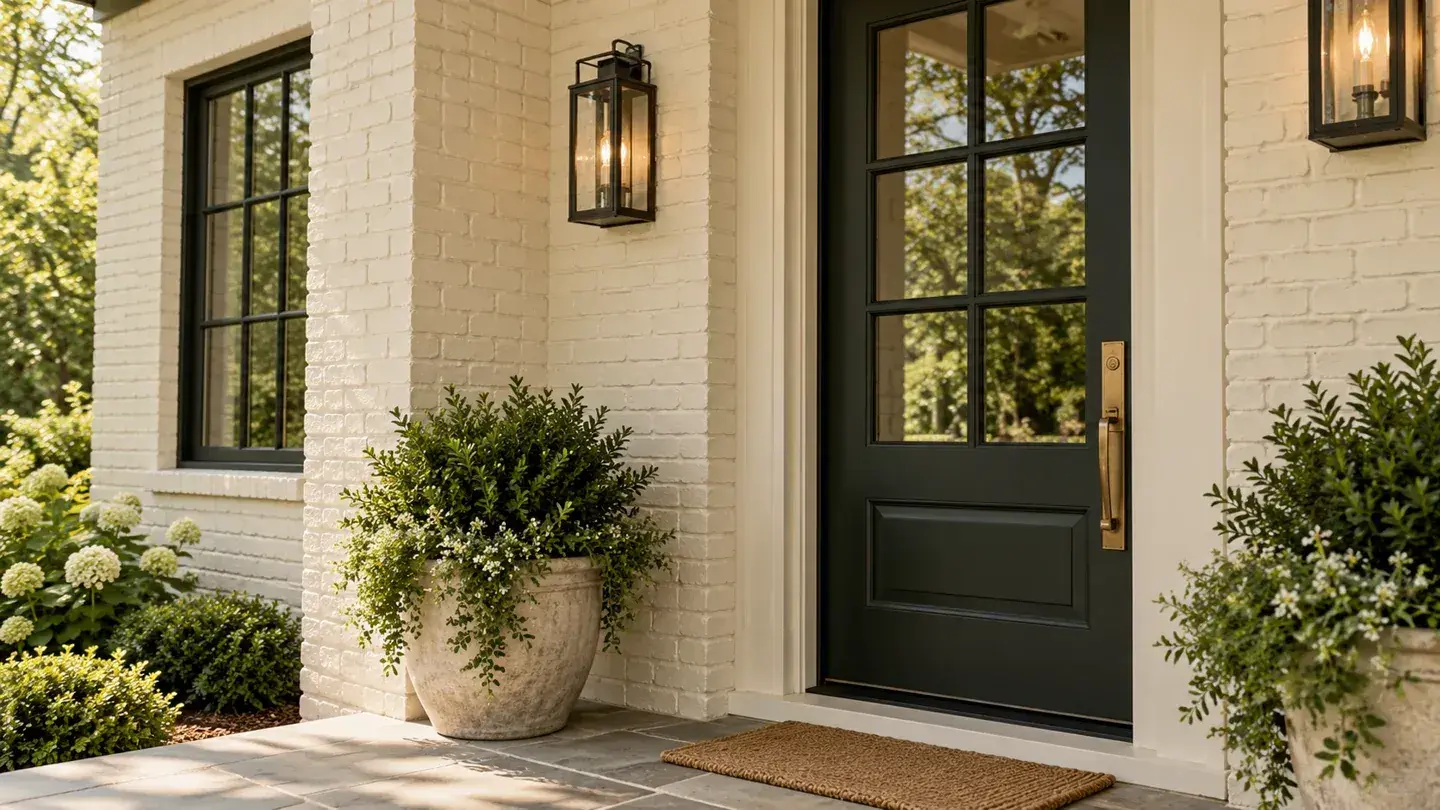
A painted finish can bring visually inconsistent brick areas into one color scheme. It may also help coordinate an addition, updated trim, or a front door. If the existing brick already works with the house, compare a trim-and-door refresh before committing the entire exterior to a coating.
Make a sample in an agreed location using the proposed preparation and complete product system. View it from the street as well as close up. Texture, mortar joints, shade, and the roof color all affect how the result appears.
Avoid choosing white from a small indoor card alone. A warm white, cream, pale gray, or darker color can behave very differently across a large facade. Ask about any product-specific color restrictions and the condition of adjacent materials. The right sample should help you assess the whole house, not just one attractive patch of brick.
2. Take Moisture and Existing Damage Seriously
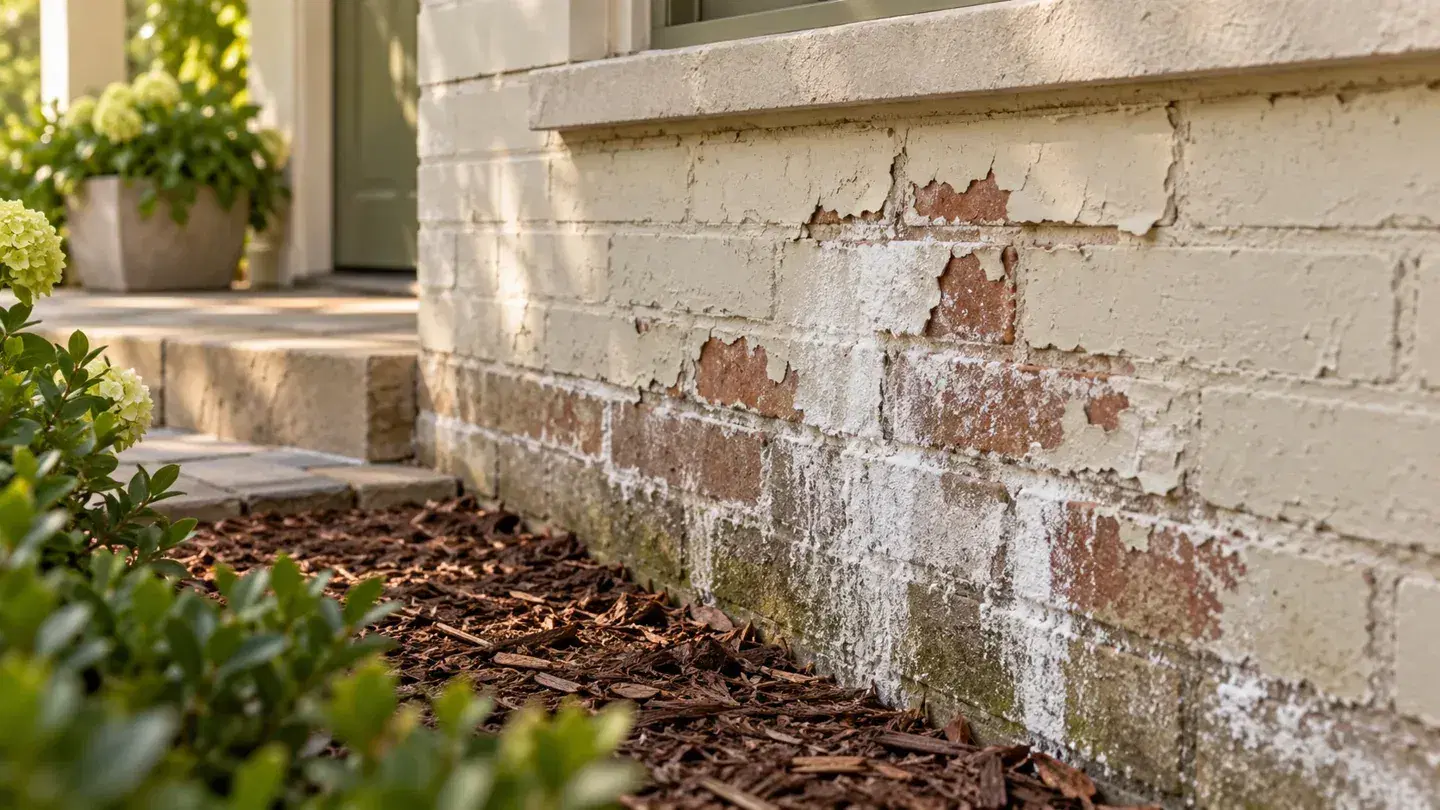
Peeling coatings, recurring white deposits, deteriorated mortar, and damaged brick need assessment before repainting. Look beyond the visible patch to roof drainage, flashing, openings, and other possible moisture routes. Do not assume another coat will stop the underlying cause.
Sherwin-Williams' efflorescence guidance connects salt deposits with moisture movement and calls for addressing the source. A contractor should explain how the wall will be prepared and when it is suitable for coating, rather than simply washing and immediately covering the stain.
Keep designed drainage openings clear. Ask how the proposed coating fits the wall's needs, including vapor movement and existing surface treatments. Where older paint may be disturbed, use EPA lead-safe renovation guidance. Preparation and high-access work are reasons to hire appropriately qualified help, not opportunities to improvise an aggressive cleaning method.
3. Compare Paint, Limewash, and Stain Honestly
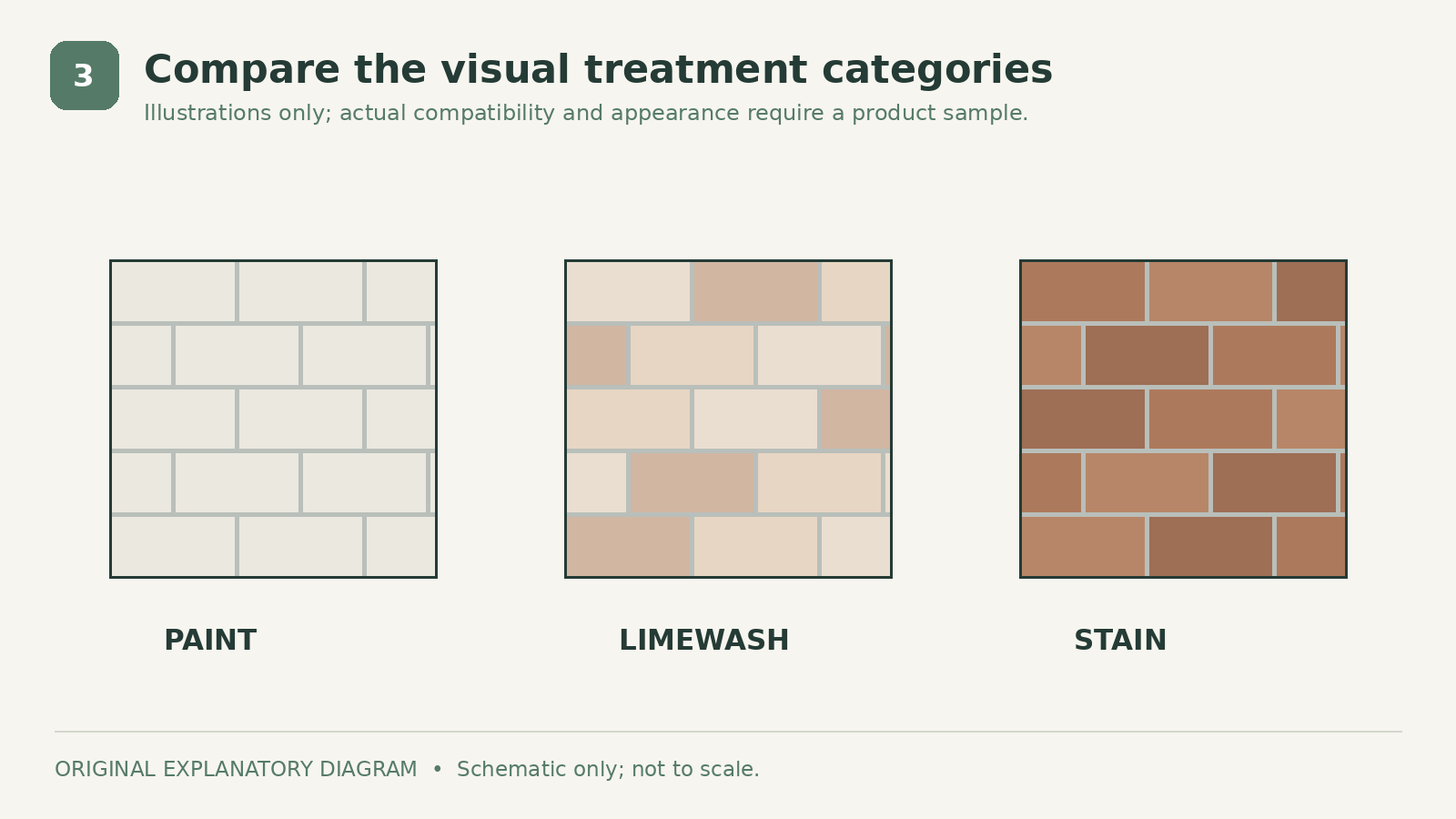
Paint, limewash, and masonry stain are different treatment categories. They should not be presented as interchangeable ways to achieve the same look on every wall. The BIA technical note describes differences in appearance and behavior, including maintenance considerations.
Start with your visual goal. Do you want a relatively uniform opaque color, a more varied washed appearance, or a color change that keeps more of the masonry's visual character? Then ask which specific products are suitable for the existing brick and any previous coating.
| Feature | Appearance to explore | Question for the professional |
|---|---|---|
| Masonry paint | A more uniform opaque finish | Is this coating system suitable for the wall? |
| Limewash | A varied, weathered-looking treatment | Is the substrate compatible, and how will it age? |
| Masonry stain | A color change with visible masonry character | What sample result and permanence should be expected? |
Do not describe any of these choices as maintenance-free or easily reversible. Ask how future repairs and recoating would be handled. If the home has historic designation or neighborhood approval requirements, check those before ordering the work.
4. Budget Using Exterior Surface Area
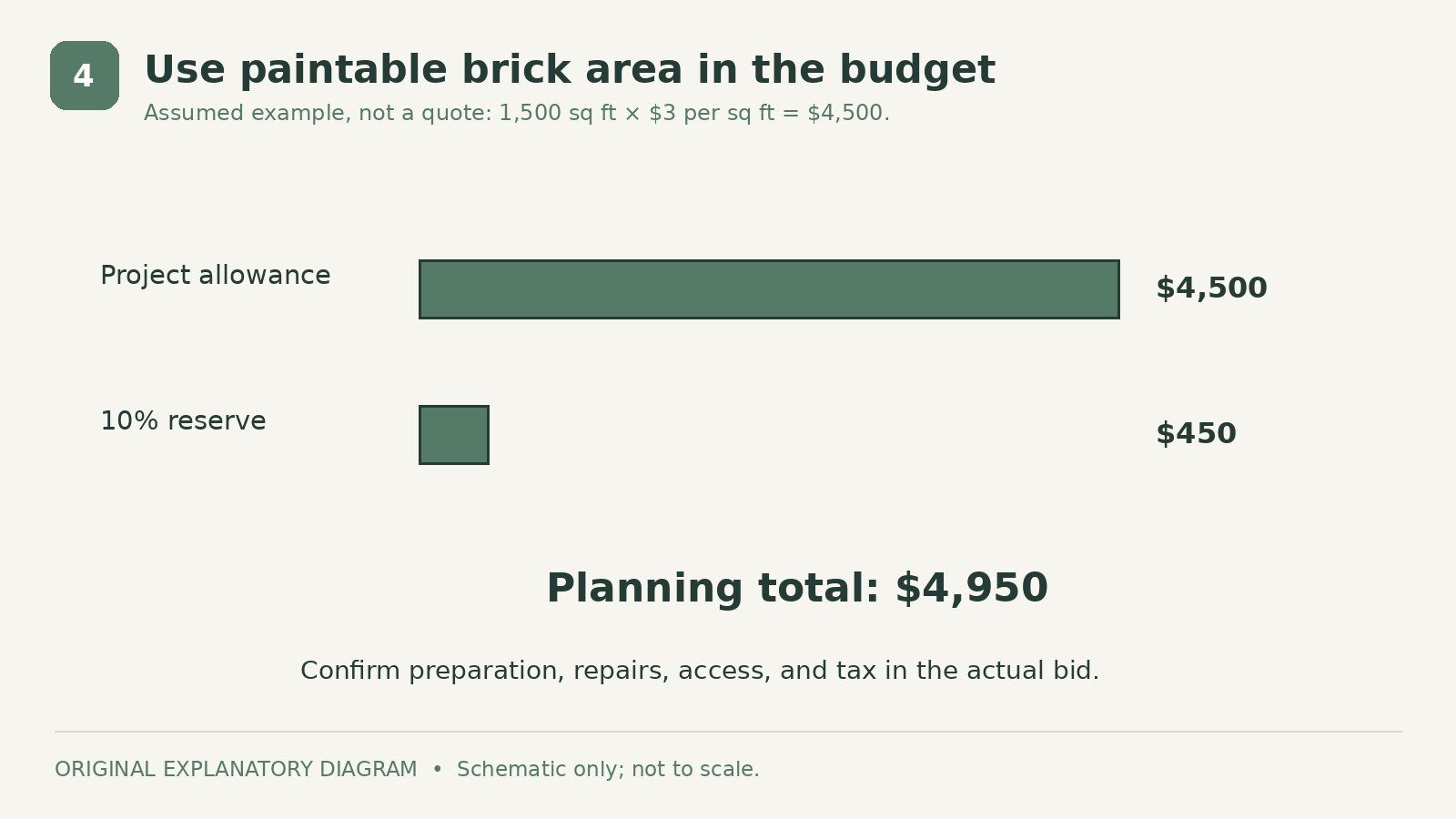
The HomeGuide brick-painting cost guide uses the area being painted. That is not the same as your home's interior floor area. Ask the estimator to explain the measured surface and whether openings, trim, and other materials are included.
For arithmetic only, suppose the project has 1,500 square feet of paintable brick and an assumed complete rate of $3 per square foot. The calculation is 1,500 × $3 = $4,500. This is an illustration within the published range, not a verified quote for a particular home.
| Feature | Amount | |
|---|---|---|
| Assumed paintable brick area | 1,500 sq. ft. | |
| Assumed complete rate | $3 per sq. ft. | |
| Calculated project allowance | $4,500 | |
| Optional 10% planning reserve | $450 | |
| Allowance plus reserve | **$4,950** |
Confirm whether preparation, repairs, access equipment, protection, cleanup, and tax are included in an actual bid. A contractor may price substantial masonry repairs separately. Do not use a painting allowance as though it also pays for fixing every underlying defect.
5. Plan for Inspection and Future Recoating
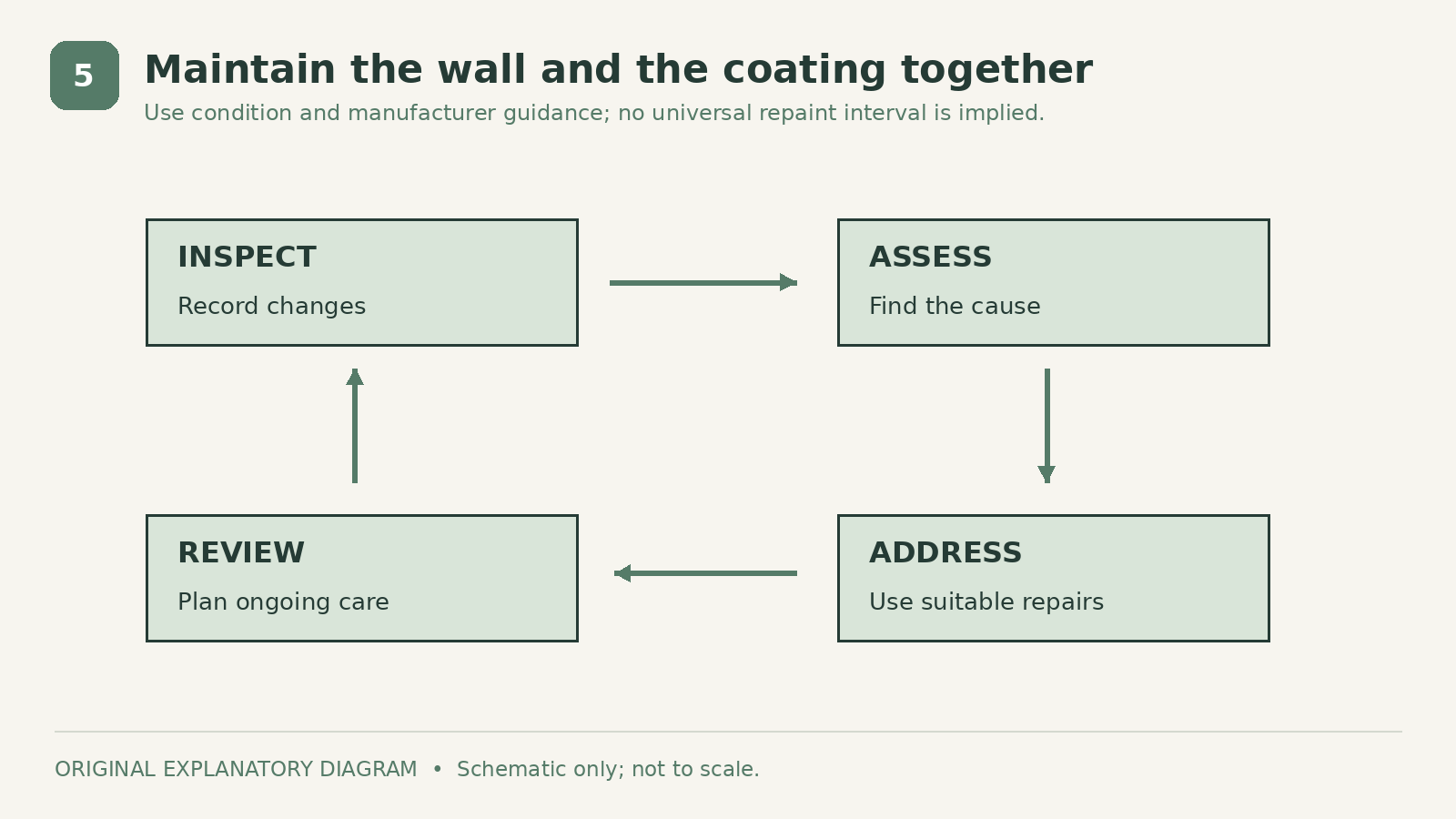
Keep the product name, color, preparation record, and contractor information after the job. Inspect accessible areas periodically and after conditions that reveal a problem, such as recurring water staining. Record changes with photographs so small issues can be compared over time.
Ask the contractor and coating manufacturer for a maintenance plan suited to the product and exposure. There is no single repainting interval that applies to every brick house. Condition, preparation, climate, and the coating system affect when attention is needed.
Budget for future work without presenting an arbitrary interval as a service-life guarantee. For example, you can create a household reserve once you have a current local repainting estimate, then review that reserve as conditions and prices change. Repairs and safe access may remain significant costs even when the coating material itself is a smaller part of the bill.
Questions to Settle Before Signing
Ask what preparation is included, who assesses masonry repairs, which product system will be used, and how application conditions will be managed. Confirm how landscaping, windows, roof edges, and adjacent surfaces will be protected. Request clear change-order terms for problems discovered during preparation.
Also ask what the warranty actually covers and which maintenance responsibilities remain yours. Keep the final sample approval with the contract so the color and finish decision is documented. A detailed proposal is easier to compare than a one-line promise to paint the house.
Painted brick can be an attractive choice when the wall is suitable and the upkeep is acceptable to you. Make the decision with both the finished appearance and the future maintenance work in view.
Sources
- Brick Industry Association: File Tn 6. Checked October 5, 2026
- Sherwin-Williams: Sw Article Pro Efflorescence. Checked October 5, 2026
- US EPA: Lead Safe Renovations Diyers. Checked October 5, 2026
- HomeGuide: Cost to Paint a Brick House. Checked October 5, 2026
Share this article
Get new guides by email
Practical home articles and free resources. No spam, and you can unsubscribe at any time.
Keep reading
Step-by-Step Guide: How to Limewash a Brick Exterior
Learn when exterior brick suits limewash, how to test a finish, prepare the masonry, and plan application without hiding moisture problems.
October 2026, 3 min read
9 Historically Inspired Exterior Paint Colors for Chicago Bungalows
Explore nine historically inspired Chicago bungalow paint palettes for trim and accents, with illustrations, sample-testing advice, and preservation context.
October 2026, 5 min read
15 Stunning Mid Century Modern Ranch House Exterior Ideas (Before & After)
Explore 15 midcentury ranch exterior before-and-after concepts with illustrated concepts, practical design tips, and planning checks for your US home.
October 2026, 5 min read