9 Historically Inspired Exterior Paint Colors for Chicago Bungalows
Explore nine historically inspired Chicago bungalow paint palettes for trim and accents, with illustrations, sample-testing advice, and preservation context.
By Home Crane Editors. . 5 min read.
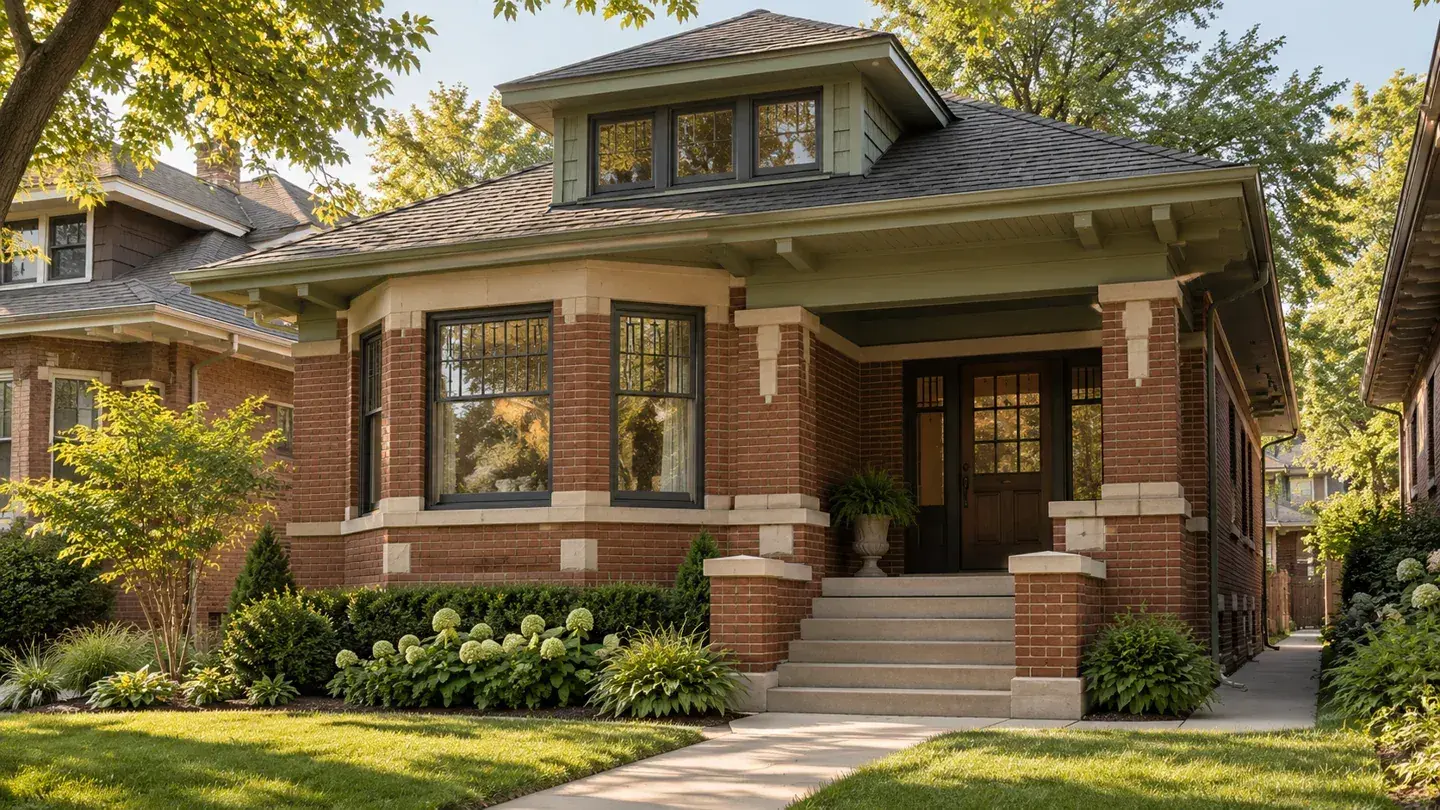
Historically sympathetic color can strengthen a Chicago bungalow's character without painting over its original brick and stone. Start with the masonry, roof, and surviving woodwork, then choose trim and accent colors that work with them.
The Chicago Bungalow Association's historical color discussion describes a natural palette associated with bungalow-era design. The nine ideas below are original interpretations within that broad approach. They are not nine authenticated formulas for every bungalow, and the generated images are not exact paint matches.
If you want documented original colors for your particular house, consult historic records or a qualified paint-analysis professional. For a thoughtful refresh, begin with samples on appropriate already-painted surfaces and retain sound historic materials. The National Park Service preservation standards provide a useful framework for respecting those features.
1. Warm ivory trim
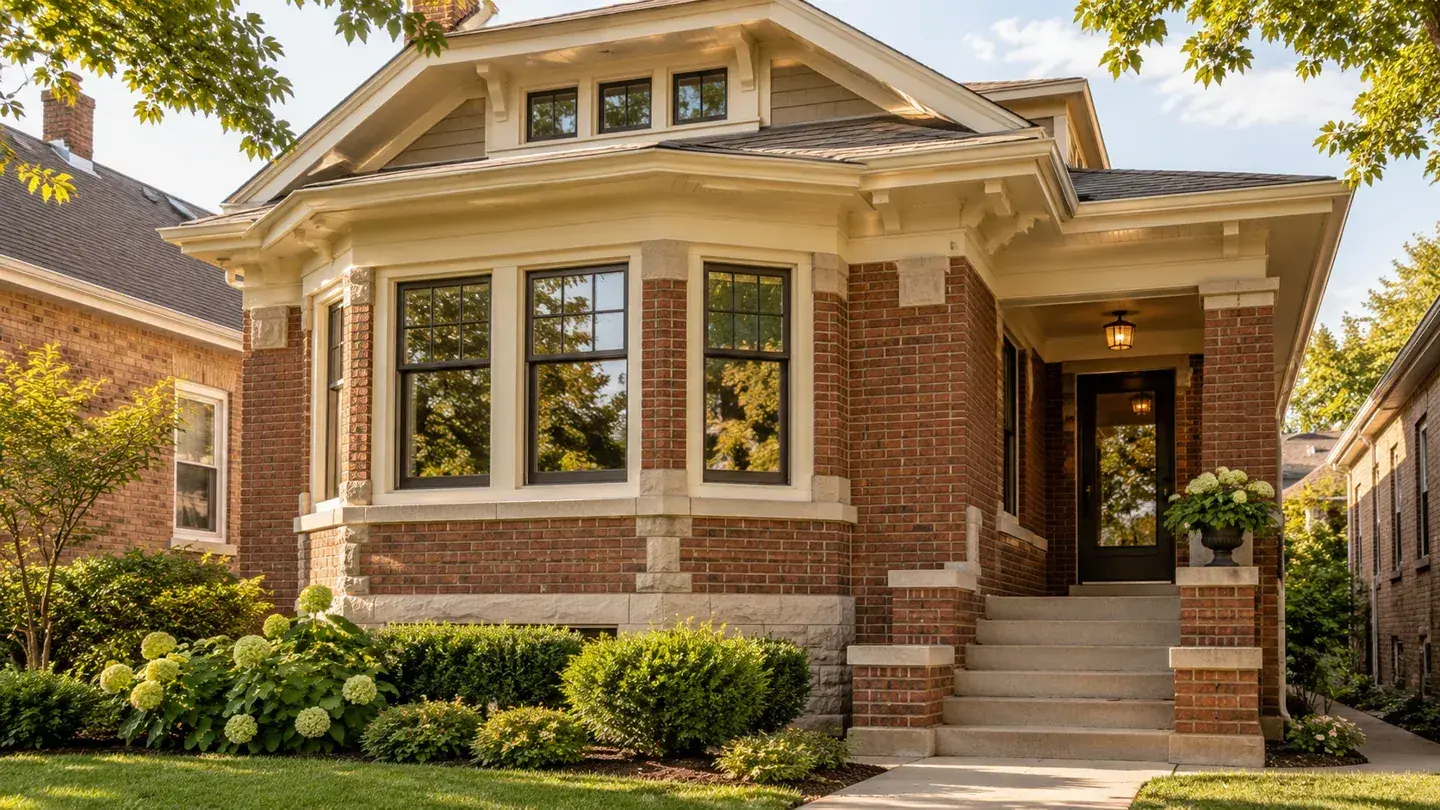
Warm ivory is a useful starting sample when you want trim to feel lighter without the sharp contrast of a very cool white. Place it beside the stonework and mortar before deciding whether its undertone is compatible.
Use the color to make existing window surrounds and eaves readable, not to invent a new pattern of stripes across the facade. Keep the largest masonry surfaces unpainted where they are already unpainted. Test a generous sample near both a sunny elevation and a shaded porch, because the same ivory can appear quite different in those conditions.
2. Soft sage trim
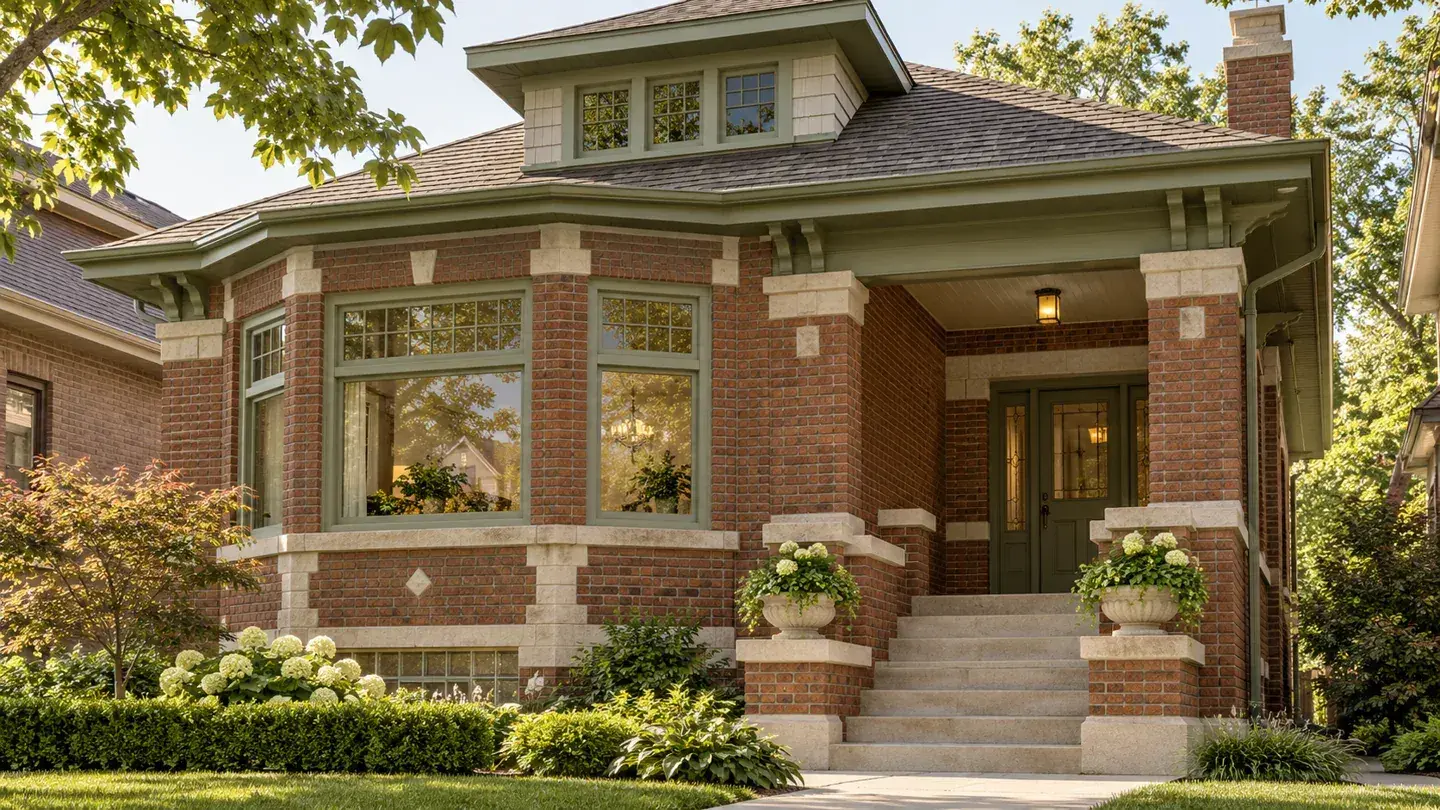
Soft sage can connect painted trim with the garden while remaining restrained beside warm brick. Choose a muted sample rather than assuming every paint named sage has the same gray, yellow, or blue balance.
It can work as the main trim color with a quieter door or as a more limited porch accent. Let the brick determine the contrast. If a sample looks unexpectedly blue or pastel, test another formulation rather than trying to judge it from a screen. Keep the number of painted color changes low so the original details remain the focus.
3. Deep olive accents
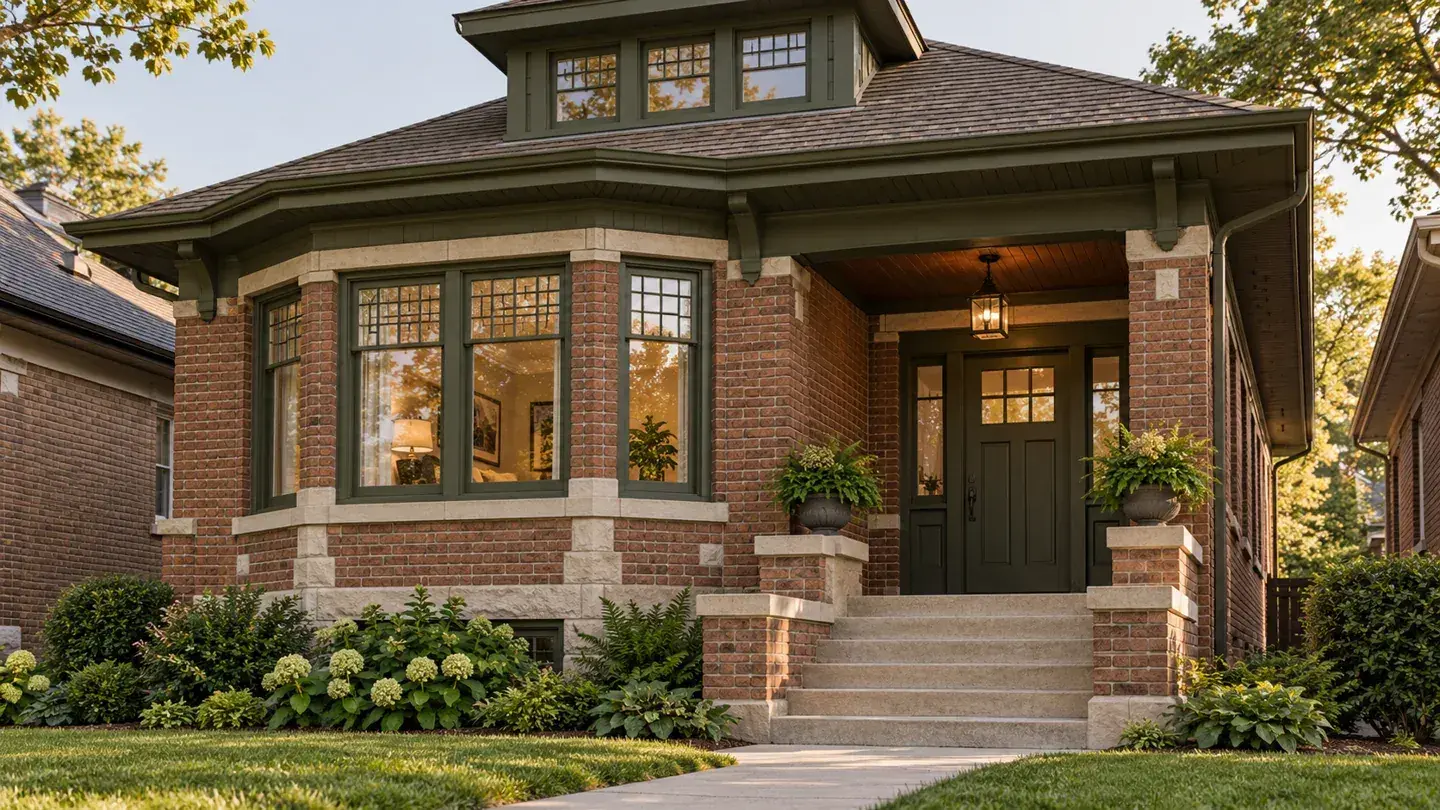
Deep olive can give an entry or selected wood detail more weight. It is especially worth testing when you want a darker accent that still relates to natural earth and foliage colors.
Use it sparingly at first. A small swatch may look pleasantly rich while a large shaded porch becomes much darker than expected. Compare a door sample with the surrounding trim and hardware. If the facade already has strong brick patterning, the olive should support that composition rather than compete with every decorative element. A restrained placement is easier to revise later.
4. Warm gray trim
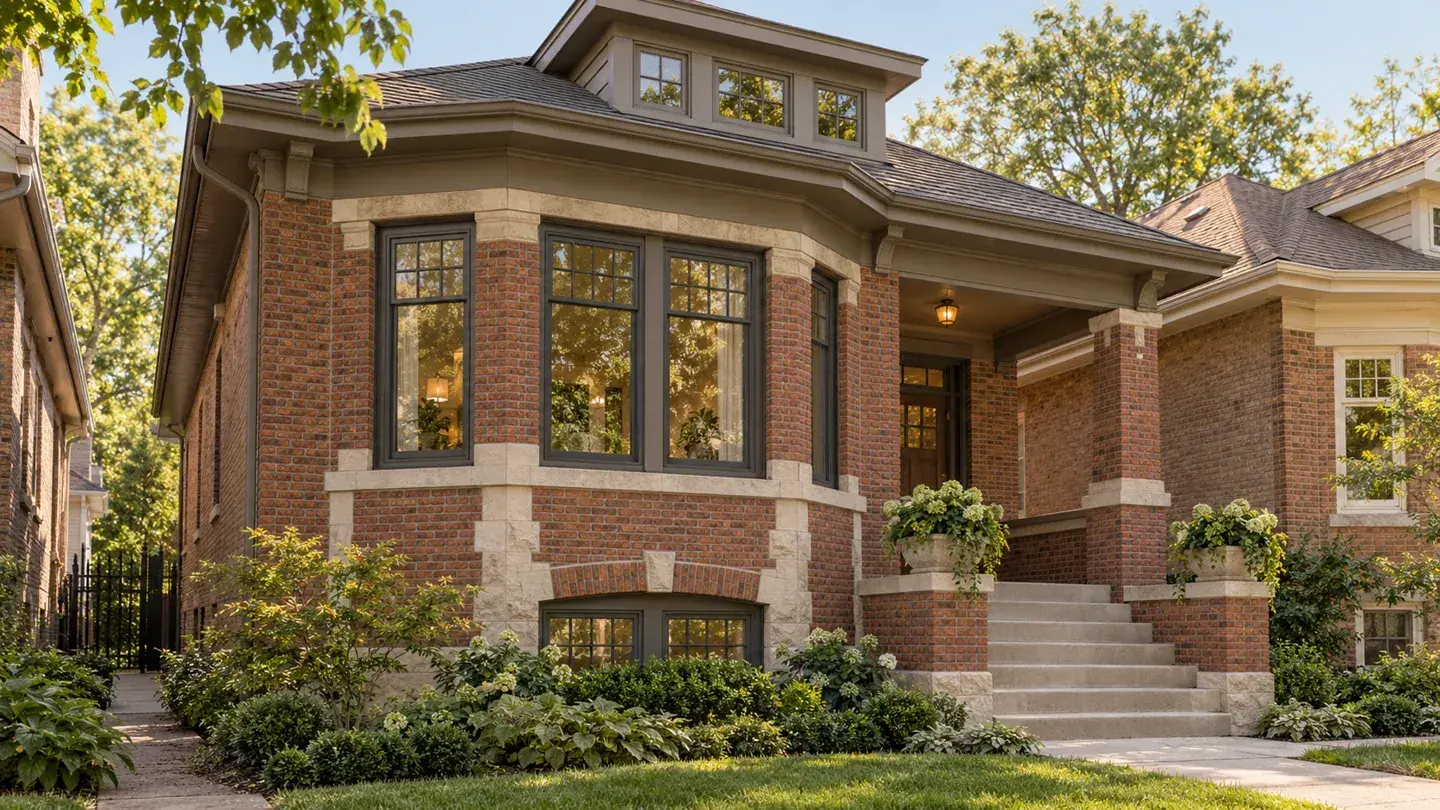
Warm gray offers a quieter alternative when cream feels too yellow and green feels too colorful. Check its undertone against the mortar, limestone, and roof. A gray that looks neutral alone can appear purple, blue, or pink beside those fixed materials.
Consider it for broad painted trim with a deeper accent at the entry. Keep the value difference intentional so details remain visible from the sidewalk. Do not select the color solely because it matches a roof sample indoors. The important test is how the full exterior reads in daylight at the house.
5. Stone beige trim
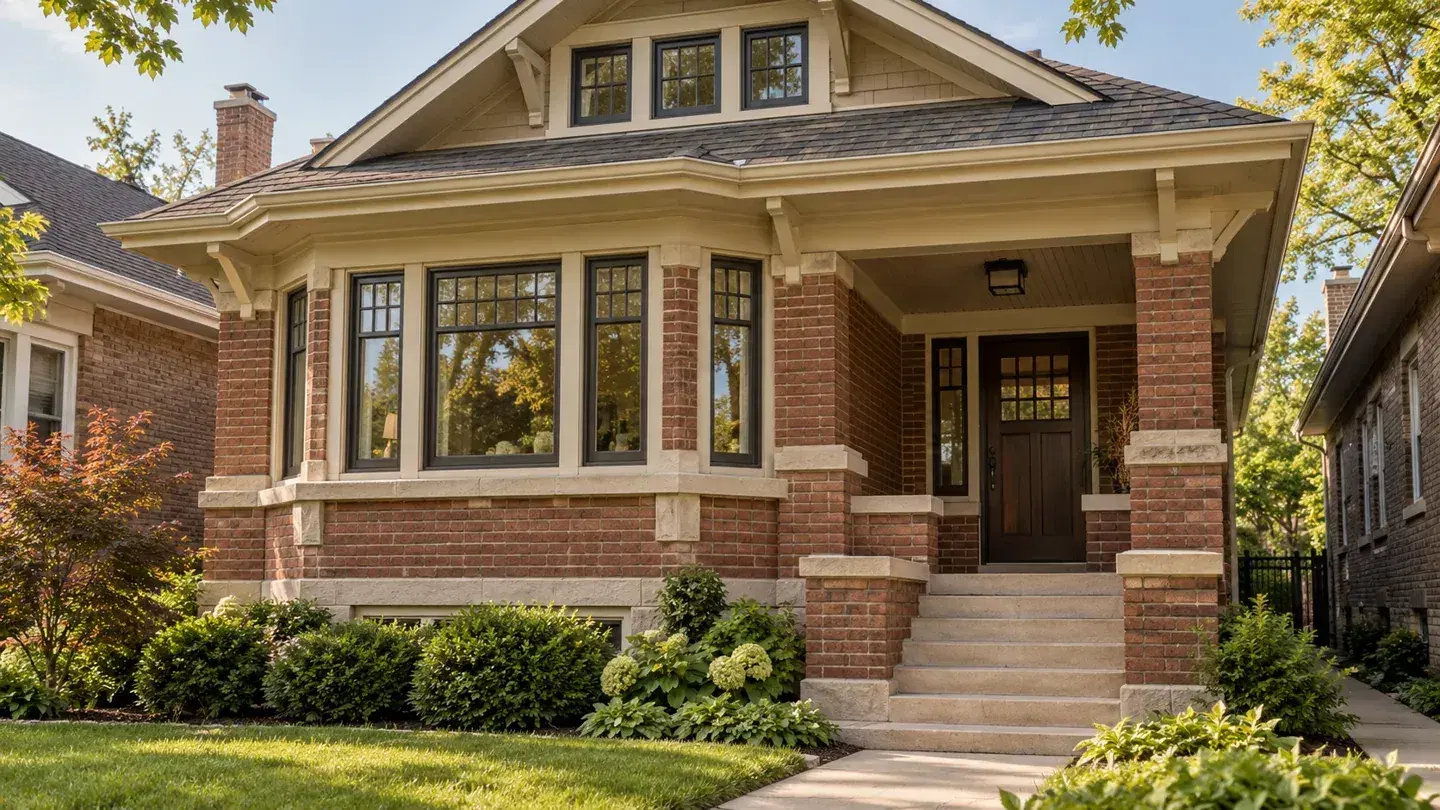
Stone beige can connect painted woodwork to warm masonry without making every feature identical. Look for a sample that complements the stone rather than attempting an exact imitation of its varied surface.
This is a useful direction when the facade already has several brick tones and needs a calm supporting color. Add contrast through a carefully chosen door or window detail if necessary. Avoid applying beige to decorative stone merely to create a match. The interest of an older bungalow often comes from its different original materials, not a perfectly uniform coating.
6. Earthy brown woodwork
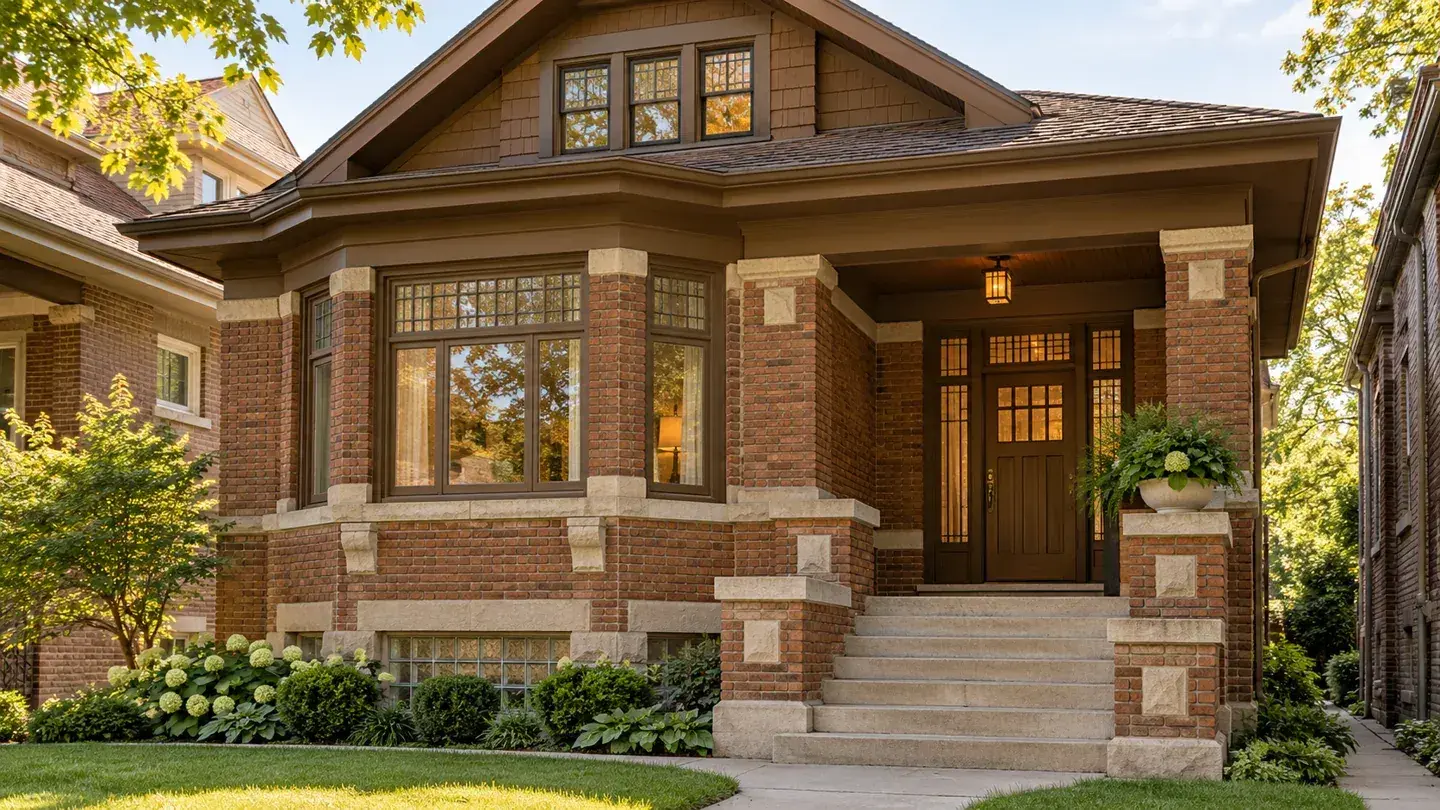
Earthy brown can emphasize the solidity of wood details and sit comfortably beside many warm brick palettes. Compare several depths, because a medium brown and a nearly black brown produce very different results on a recessed porch.
Decide whether a surviving wood feature is painted or stained before choosing a treatment. This palette idea does not justify coating a sound historic finish simply for convenience. For already-painted trim, use samples large enough to show how shadows affect the color. Keep smaller details visible rather than allowing every edge to disappear into the same dark value.
7. Muted ochre accents
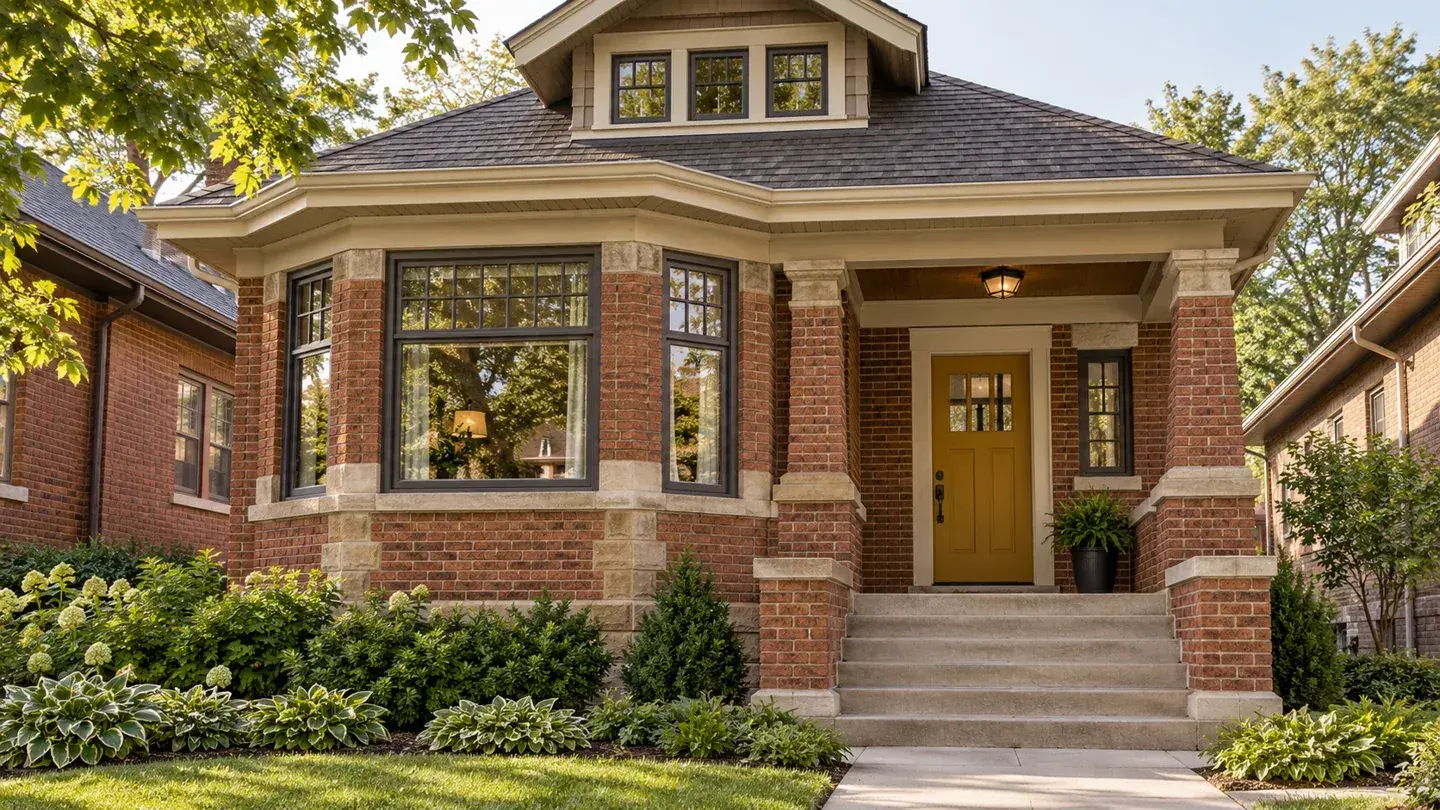
Muted ochre can introduce warmth in a small, deliberate area such as an entry detail or selected porch woodwork. Think of an earthy yellow rather than a bright saturated modern accent.
Its success depends strongly on the brick. Orange or yellow masonry may make one ochre harmonious and another overly intense. Place samples beside the actual surface, then view them from across the street. If the color draws attention away from the bungalow's proportions and material pattern, reduce its area or choose a quieter sample. Small accents can carry considerable visual weight.
8. Restrained brick-red accents
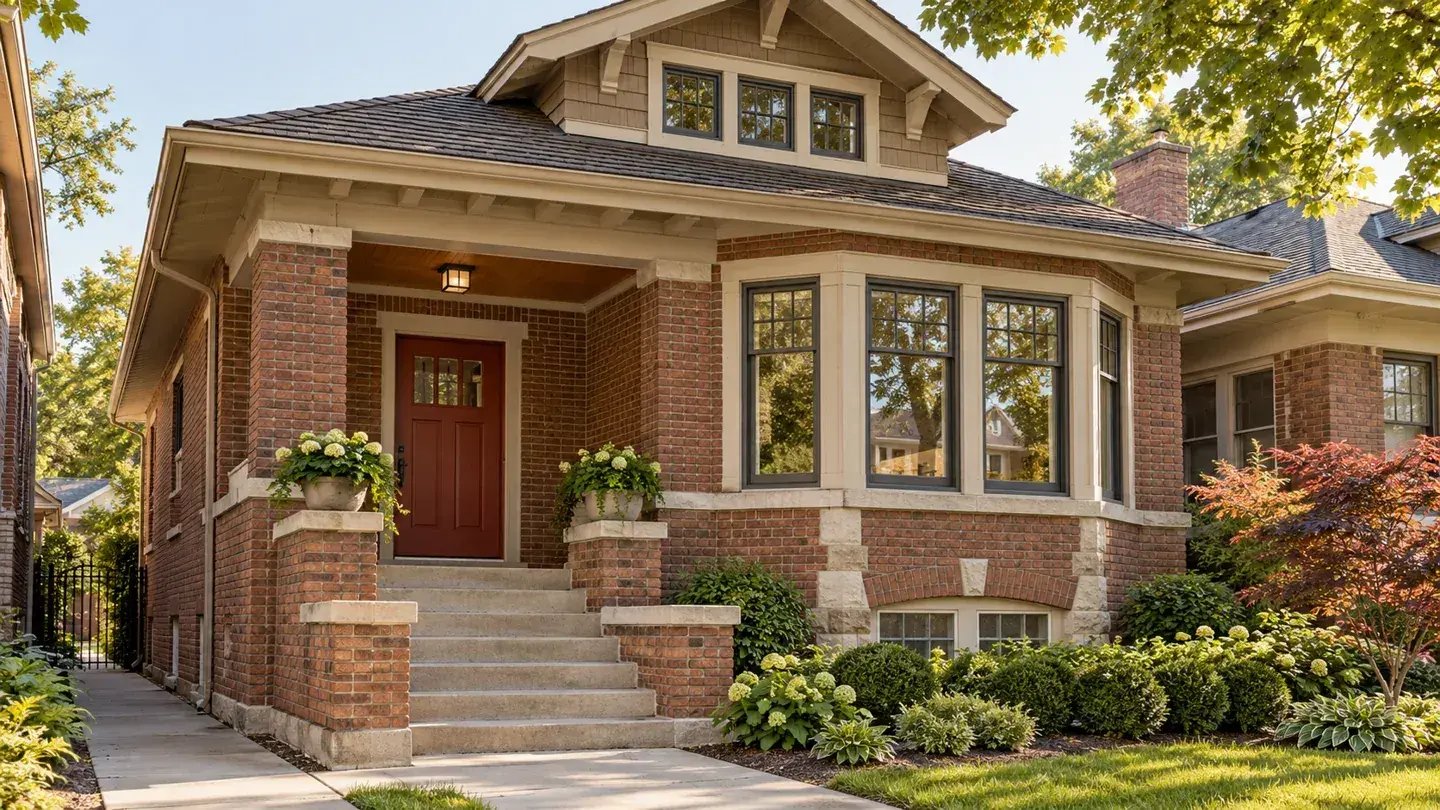
A restrained brick-red accent can relate to existing masonry while creating a focal point at the entrance. Choose a paint sample with enough difference from the brick that the door reads as a separate element.
Do not expect a solid painted surface to replicate the depth and variation of fired brick. The goal is a relationship between materials, not camouflage. Limit the accent to a useful focal area and keep adjacent trim calmer. Check the sample under the porch roof, where a red that looks lively in direct sun may appear much deeper.
9. Deep bronze-brown details
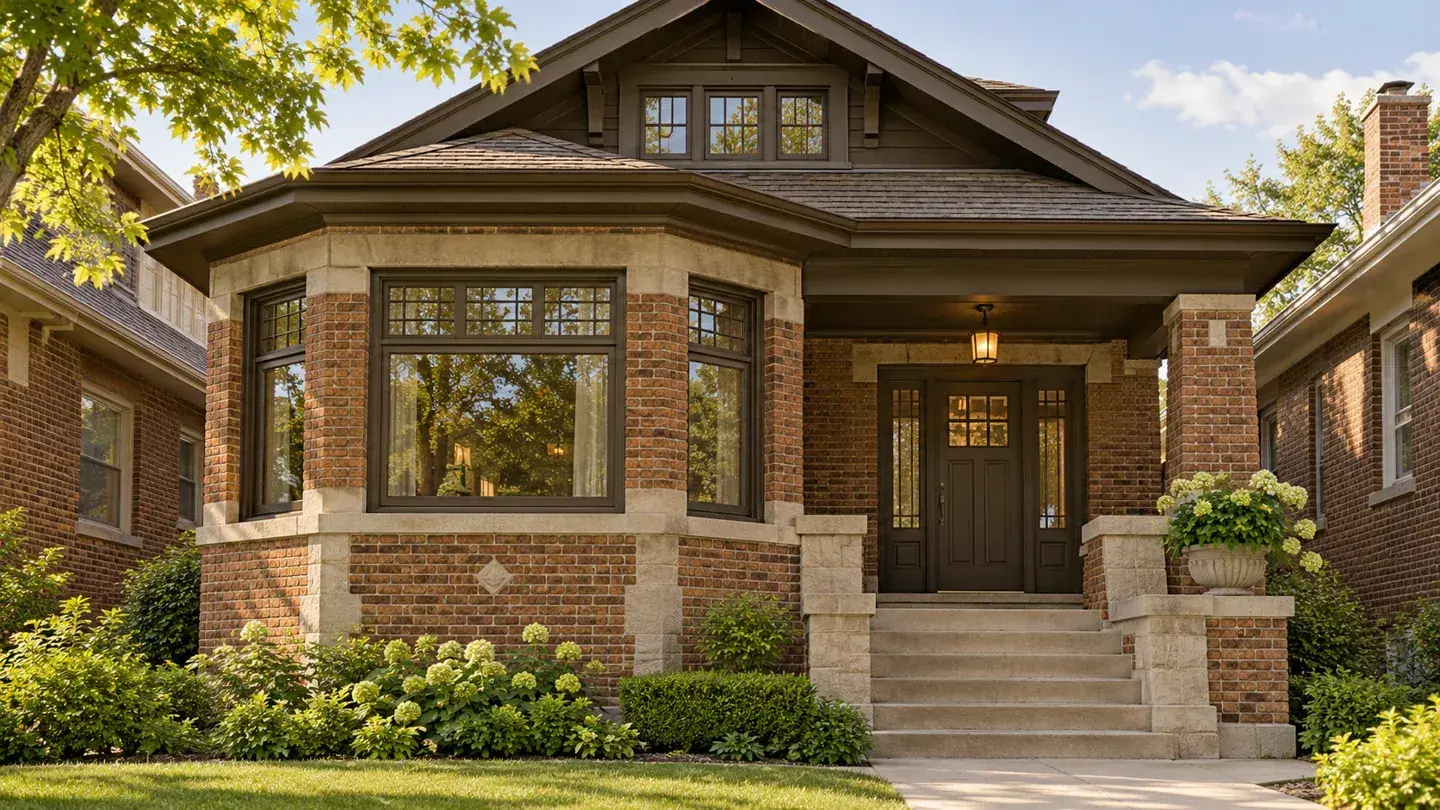
Deep bronze-brown provides a dark accent with a softer, warmer character than some blue-black paints. It can help define selected details against lighter trim or warm masonry.
Test it on the precise feature you intend to emphasize. A dark entry can look grounded, while darkening every small piece of trim may make the facade feel visually busy. Compare the proposed finish sheen as well as the color. Reflections affect how a large painted surface reads, so a flat digital swatch is not enough to predict the finished appearance at your house.
Test the complete palette before painting
Select a main trim color and one accent, then place generous sample boards beside the brick, stone, roof edge, and entry. Review them in morning, afternoon, and overcast light. Use the intended product and sheen for final confirmation; names and screen colors are only starting points.
Photograph the samples for reference, but make the decision in person. Cameras and displays change color relationships. Keep sound unpainted masonry and historic details in the plan rather than assuming every surface needs the same new treatment.
Resolve preparation and approvals first
Before disturbing old painted surfaces, follow EPA lead-safe renovation guidance and obtain appropriate professional help where needed. The palette is a design decision; paint preparation on an older house is a separate condition and safety question.
Check any applicable landmark, district, or neighborhood requirements before authorizing work. A color inspired by bungalow history is not automatically approved for a designated property. Confirm the permitted scope, then give the painter a written surface-by-surface schedule so the intended brick, stone, trim, and accent treatment is clear.
Sources
- https://www.chicagobungalow.org/post/historical-colors-chicago-bungalow. Checked October 6, 2026
- https://www.nps.gov/articles/000/treatment-standards-preservation.htm. Checked October 6, 2026
Share this article
Get new guides by email
Practical home articles and free resources. No spam, and you can unsubscribe at any time.
Keep reading
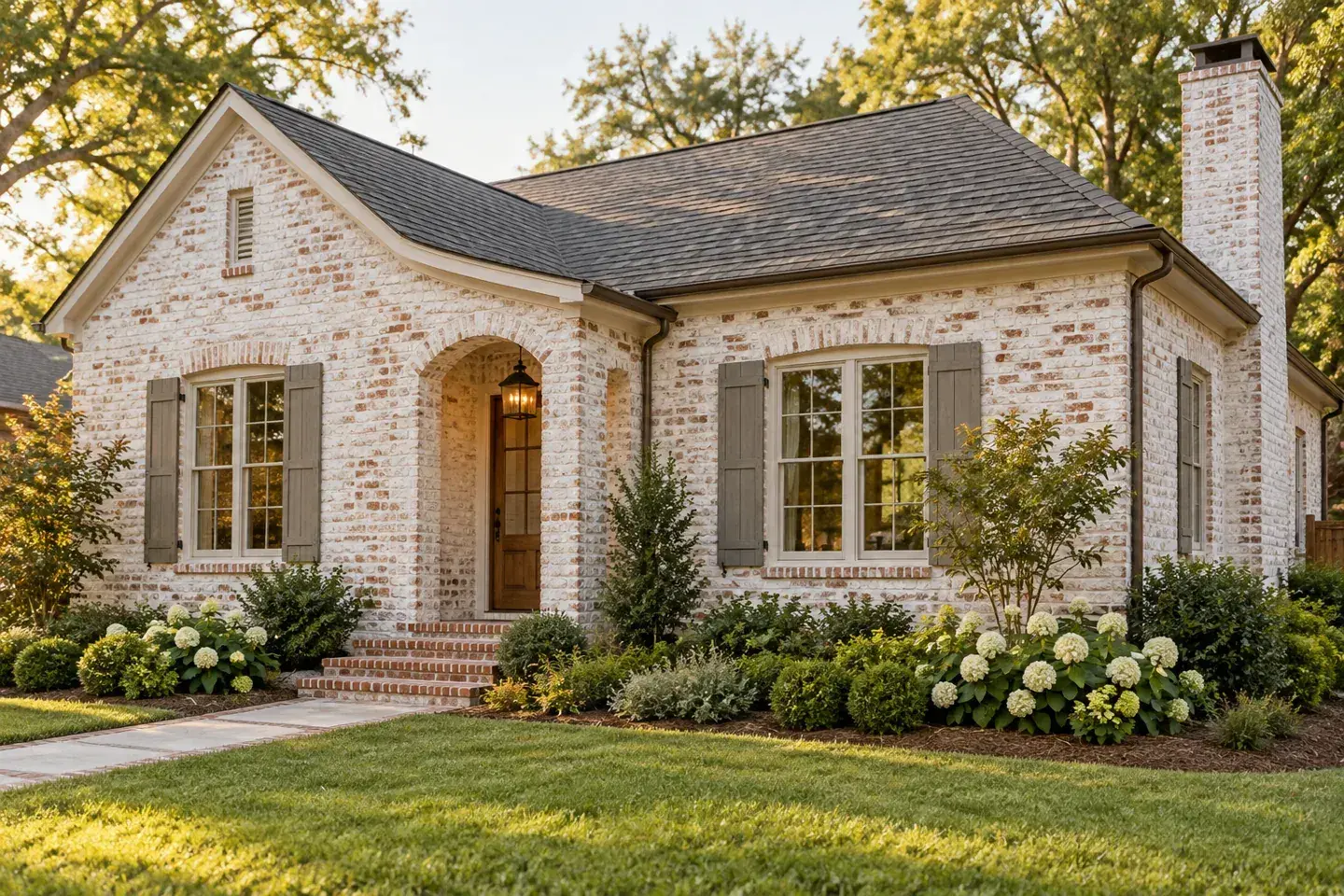
Step-by-Step Guide: How to Limewash a Brick Exterior
Learn when exterior brick suits limewash, how to test a finish, prepare the masonry, and plan application without hiding moisture problems.
October 2026, 3 min read
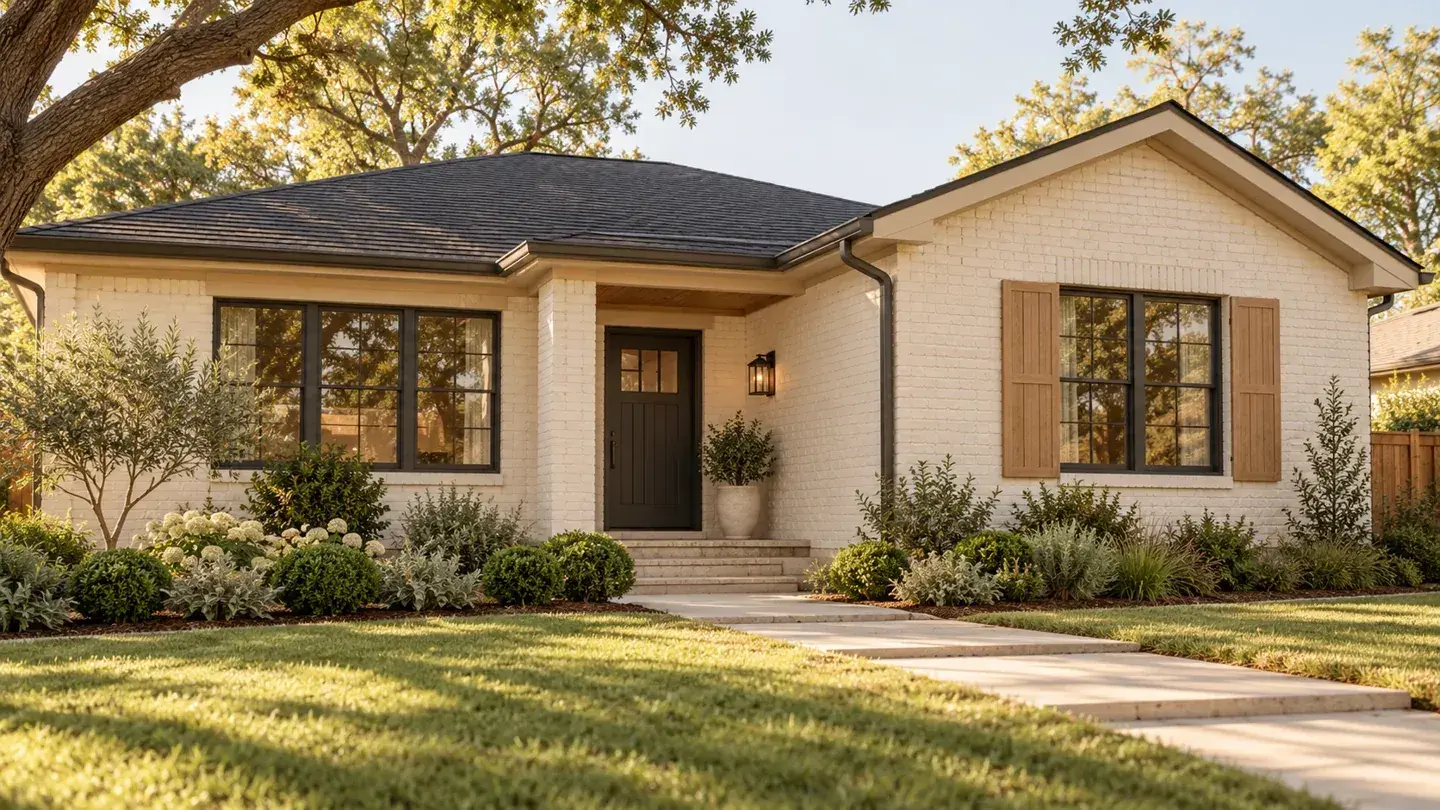
Painted Brick Exteriors: Pros, Cons, and Maintenance Costs
Weigh painted-brick benefits, moisture concerns, treatment options, and US costs, with a sample budget and a practical maintenance plan.
October 2026, 4 min read
15 Stunning Mid Century Modern Ranch House Exterior Ideas (Before & After)
Explore 15 midcentury ranch exterior before-and-after concepts with illustrated concepts, practical design tips, and planning checks for your US home.
October 2026, 5 min read