11 Small Corner Reading Nook Chair Ideas for Cozy Setups
Explore small corner reading nook chair ideas cozy setups with practical design ideas, planning advice, safe installation notes, and helpful tips for your US home.
By Home Crane Editors. . 10 min read.
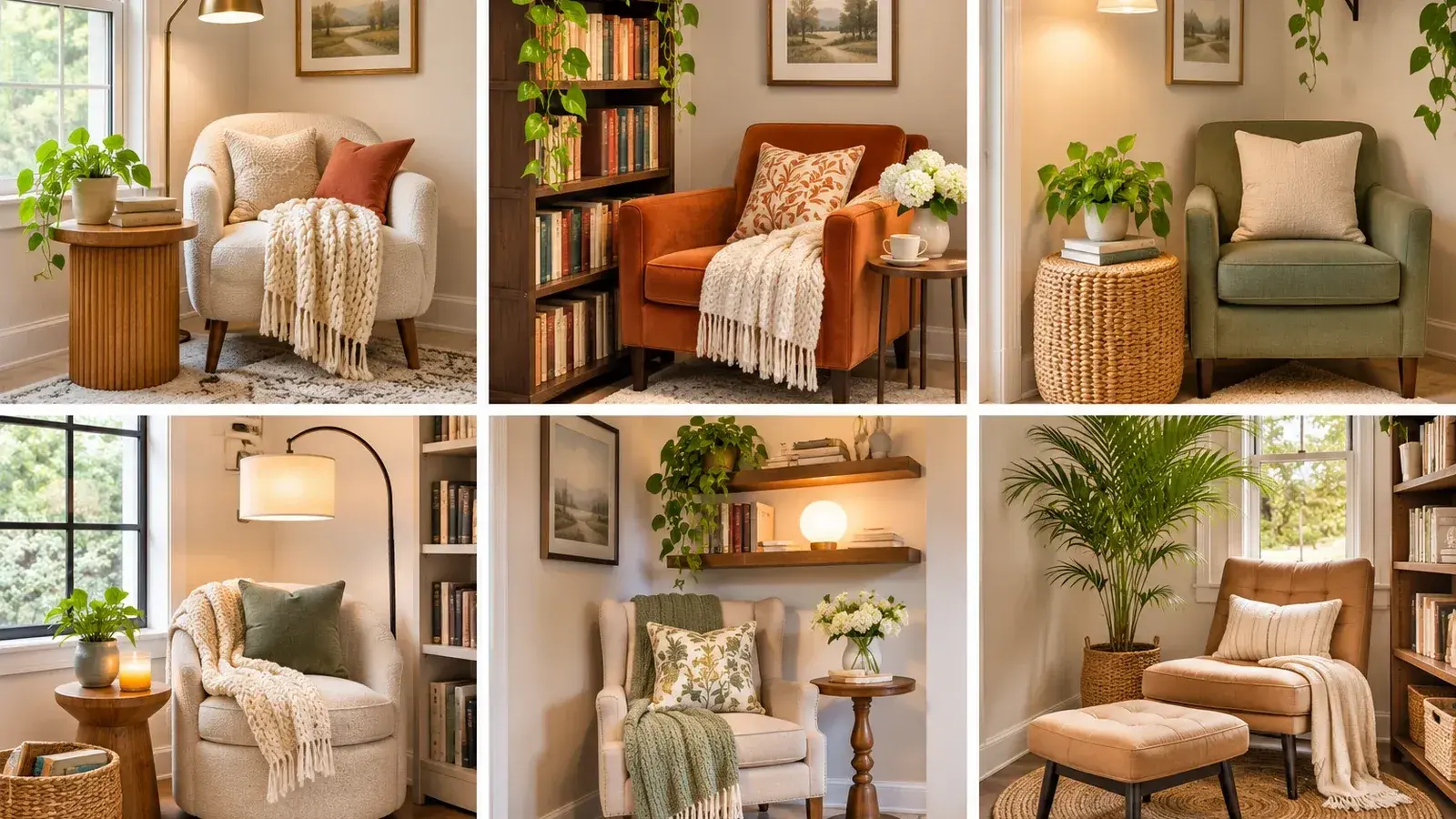
A small reading nook does not need a separate room. A comfortable chair, good light, a nearby surface, and a practical place for books can turn an unused corner into a spot that feels distinct from the rest of the home. The challenge is proportion: a chair that looks compact in a showroom may crowd the doorway or block a window when placed in a real bedroom or living room. These ideas show how to build a cozy corner with different chair shapes, layered lighting, compact storage, and a clear circulation path.
Before you start
Measure the corner before buying a chair. Record the usable wall lengths, window and door swings, baseboard projections, outlets, and the space needed to sit down and stand up. Measure the chair at its widest point, including arms and any recliner movement. Leave room for a side table and task light without forcing the chair into a passage. As a useful accessibility reference, the U.S. Access Board describes a 36-inch minimum clear width for many accessible walking routes; that standard does not automatically govern every private residential hallway, but it is a helpful benchmark when planning an inclusive route. [1]
Comfort matters more than a decorative silhouette. Test the seat height, depth, back support, and arm position for the person who will use it. A footstool can improve comfort if the chair is deep, but it must not become a trip hazard. Use a lamp that provides focused reading light without glare, and route the power cord along a wall where it cannot be caught under a chair leg or across a walkway.
Decorating ideas
1. A compact armchair with a floor lamp
A small upholstered armchair is the easiest foundation for a reading corner. Choose a narrower profile with supportive arms and a back that feels comfortable for more than a few minutes. Place a floor lamp just behind the shoulder so the light falls toward the book, then add a small side table for a drink and current read. A rug can anchor the arrangement without needing to cover the whole room.
Make it work: Check the lamp base and cord position before finalizing the chair. Keep the cord out of the walking route and use a suitable lamp and bulb combination.
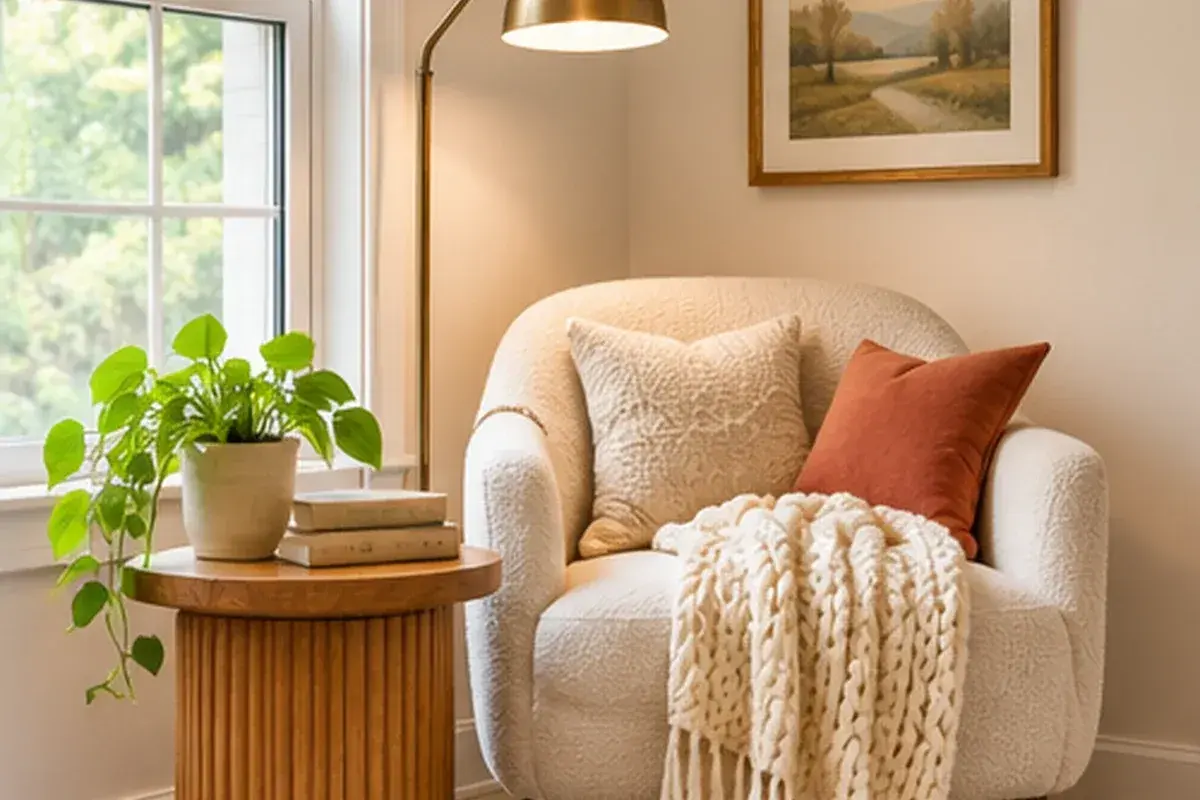
Cream armchair reading nook with warm floor lamp.
2. A rounded swivel chair in an unused corner
A compact swivel chair can make a tight corner feel flexible because it can turn toward a window, bookshelf, or conversation area. Choose a base with a modest footprint and check that it can rotate without hitting a wall, table, or curtain. A rounded silhouette softens a room with straight furniture lines, especially when paired with a small round side table.
Make it work: Measure the full rotation area, not just the chair’s fixed footprint. Avoid placing the base over a thick, unstable rug.
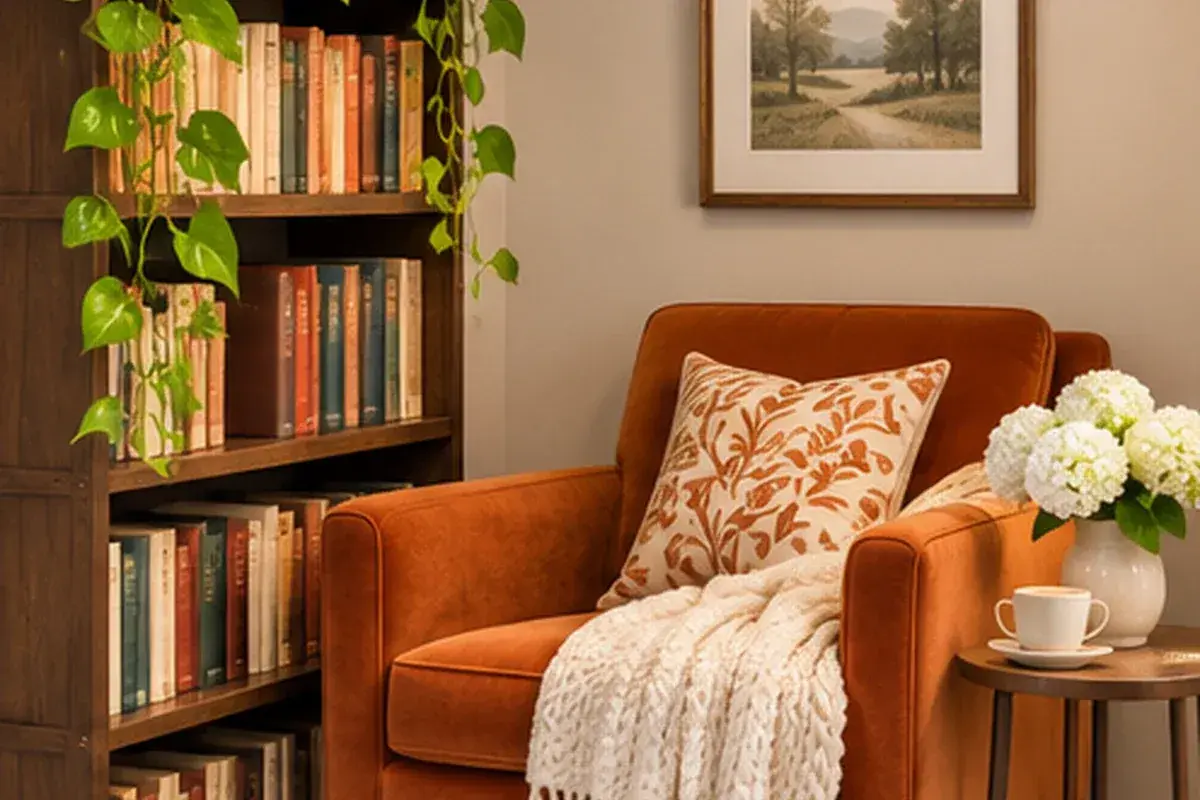
Rust-colored chair beside a narrow bookshelf.
3. A slipper chair with a narrow side table
A slipper chair has a lower, often armless profile that can fit beside a bookcase or in a bedroom corner. It keeps the visual footprint light and can be easier to position than a large wingback. Pair it with a narrow pedestal table and a wall-mounted reading light to save floor space. Choose enough back support for the intended reading duration.
Make it work: Do not select a chair solely because it is armless. Sit in it and confirm the seat depth and back angle are comfortable.
4. A window-side chair with a soft ottoman
Position a chair near a window to make daylight part of the reading experience. A small ottoman can support the feet and double as a flexible seat when the nook is not in use. Keep window treatments clear of the lamp and chair, and leave access to any window locks or emergency opening hardware.
Make it work: Do not block a window that serves as an emergency escape or required access point. Keep furniture away from heating equipment and direct sun that could damage upholstery.
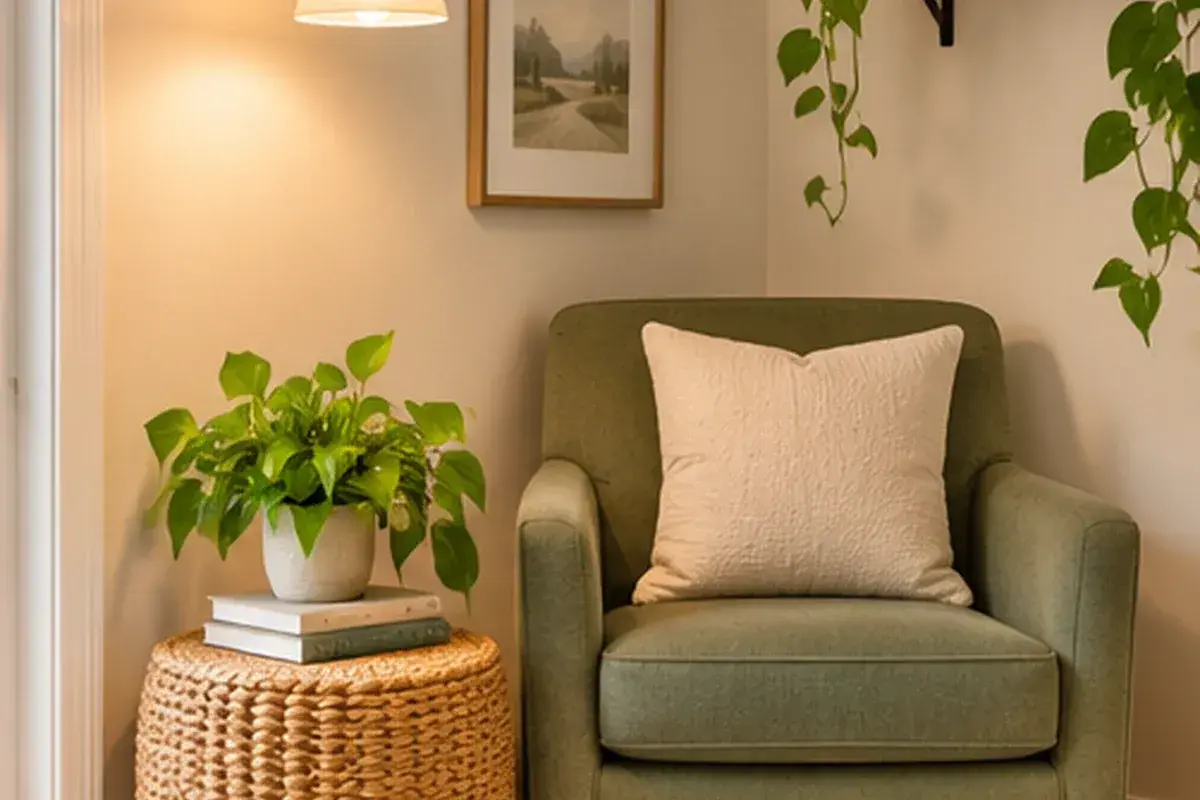
Sage chair with woven side table.
5. A chair beside a narrow bookcase
A slim bookcase gives a reading chair a nearby home for favorite titles without requiring a large wall of built-ins. Choose a stable bookcase with a footprint that does not crowd the chair. Store heavier books lower and keep the top shelf from becoming overloaded. A small reading lamp can sit on the case only if its surface and wiring are appropriate for that use.
Make it work: Anchor tall or top-heavy furniture to the wall according to its instructions. Keep the shelf outside the chair’s path when it is pulled back.
6. A cozy corner with a wall-mounted sconce
A wall-mounted sconce can free the floor from a lamp base and make a small chair arrangement feel more intentional. Choose an adjustable reading light and position it so it illuminates the page without shining directly into the eyes. A small table or wall shelf can hold a book and water glass, while a cushion and throw add softness.
Make it work: Have new hardwired lighting installed by a qualified electrician. A plug-in sconce still needs a safe cord path that does not cross the floor.
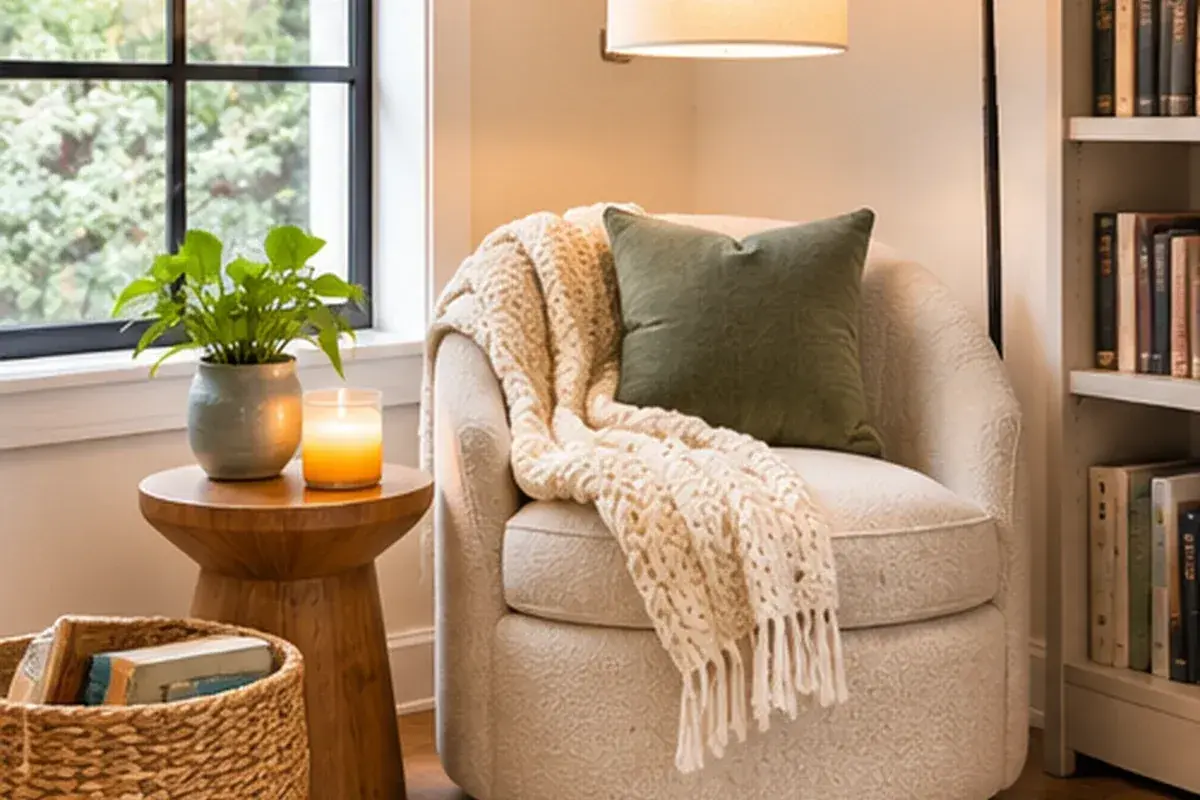
Window-side reading chair with a floor lamp.
7. A bedroom reading nook beside the dresser
A bedroom corner beside a dresser can become a quiet place to read when there is enough clearance for drawer access. Use a compact chair, a narrow lamp, and a small basket for books or a throw. Keep the nook visually connected to the bedroom with a shared color or wood tone, but avoid blocking dresser drawers or closet access.
Make it work: Open all drawers and closet doors during planning. The chair should not need to be moved every time storage is used.
8. A low-profile chair under a sloped ceiling
A lower-backed chair can make use of an attic or loft corner where a tall wingback would feel cramped. Place it where the ceiling is high enough for comfortable entry and exit, and use a floor lamp that does not crowd the slope. A soft rug and one short shelf can make the area feel defined without requiring a built-in bench.
Make it work: Check head clearance for the person using the chair and avoid placing heavy objects overhead where they could fall.
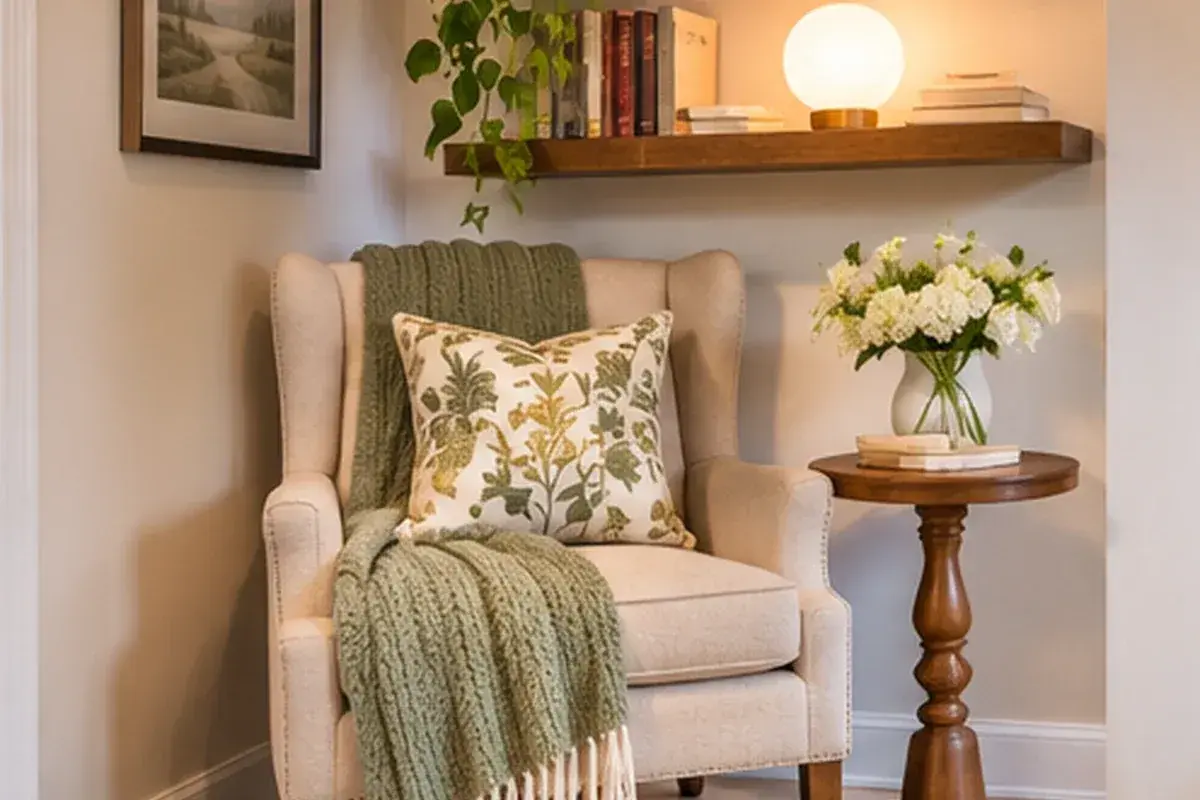
Neutral reading chair with book ledges and greenery.
9. A small chair with a floating book ledge
A floating ledge above or beside a compact chair can hold a short row of books and a small framed print. It keeps floor space open and gives the nook a simple vertical element. Use proper fixings for the wall construction and keep the ledge within comfortable reach without making it a hazard above the chair.
Make it work: Do not overload a floating shelf. Follow the hardware’s load rating and secure it into suitable wall structure.
10. A soft reading corner with a warm rug and pouf
A small rug and pouf can turn a basic chair into a more relaxed reading zone. Choose a rug with a low-profile edge and a non-slip pad, especially on smooth flooring. The pouf can act as a footrest or temporary seat, while a small basket keeps extra cushions and books organized.
Make it work: Avoid curled rug edges and unstable footrests. Keep the route between the nook and the room door clear.
11. A compact chair in a living-room corner
In a living room, angle the reading chair slightly toward the sofa rather than pushing it flat against both walls. This makes the corner feel connected to the room and keeps the chair useful for conversation as well as reading. A side table can repeat the living-room wood finish, while a different cushion fabric gives the nook its own identity.
Make it work: Check that the chair does not interrupt the main path between seating, doors, and the television or fireplace.
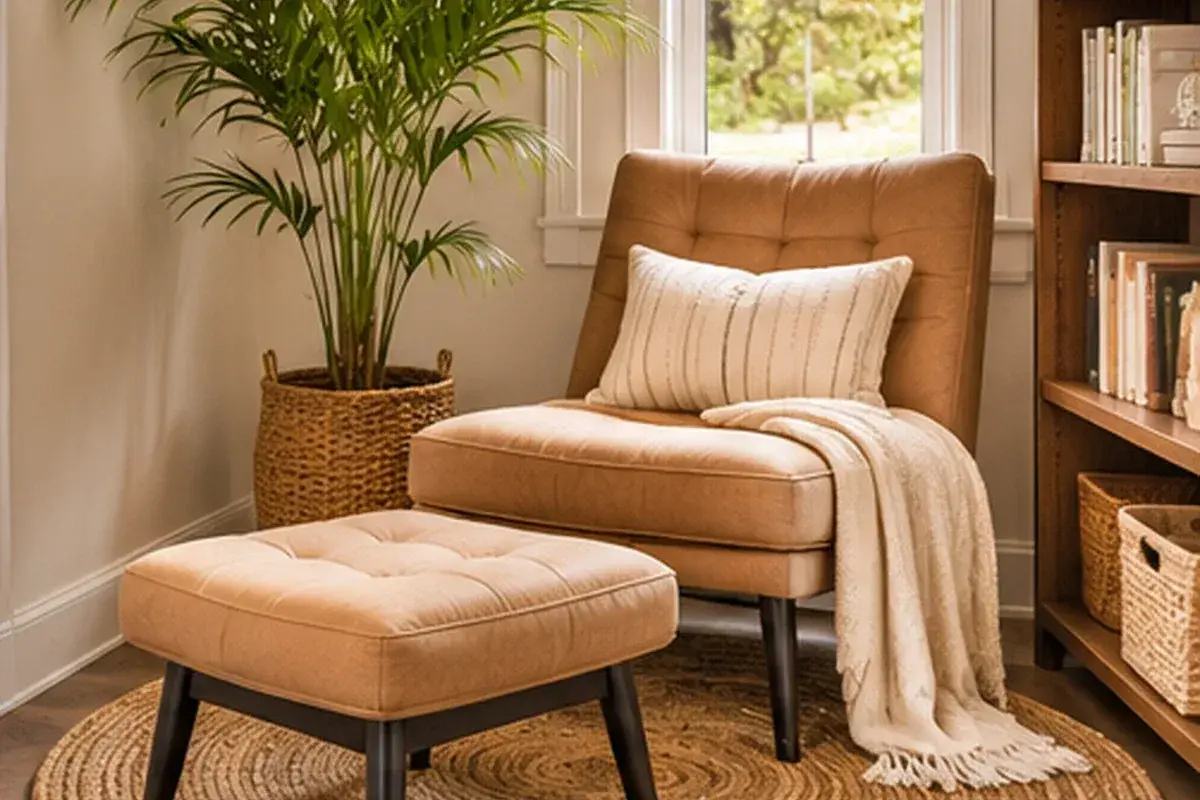
Leather-look chair and ottoman in a bright corner.
The four pieces that make a reading nook work
A good nook can be reduced to four essentials: a supportive chair, useful light, a surface within reach, and somewhere to put reading material. Add a throw, plants, artwork, and decorative cushions only after those functions are covered. This order prevents a common design mistake: buying accessories first and discovering there is no comfortable place to sit or no practical space for a book.
A chair should suit the reader’s body and the time they expect to spend in it. Seat height, depth, arm support, and back angle affect comfort more than a trend or fabric color. If more than one person will use the nook, choose a versatile chair and a movable footrest rather than a highly specialized shape.
Lighting and power-cord planning
Natural light is helpful during the day, but a reading nook also needs a reliable light source for darker hours. A shaded floor lamp, adjustable wall light, or table lamp can work if the beam reaches the page without reflecting into the eyes. Position the light to suit whether the reader is right- or left-handed, and test the arrangement before fixing a wall light in place.
Keep cords away from walking paths, door swings, and moving chair bases. Do not route a lamp cord under a rug or through a door where it can be pinched. Choose lighting products with appropriate safety certification and follow the manufacturer’s instructions for bulb type and wattage. If the space needs a new outlet or hardwired light, use a qualified electrician.
Keep the nook compact and accessible
Use the smallest chair that remains genuinely comfortable, then add only one supporting table or shelf. Too many baskets, stools, and side tables can turn a quiet corner into an obstacle course. If the nook is beside a door or hallway, preserve a clear route and make sure the chair can be occupied without forcing other household members to squeeze past it.
The U.S. Access Board’s accessible-route guidance uses a 36-inch clear-width benchmark for many routes. Private homes are subject to their own applicable codes and circumstances, but the principle is useful: protect the path first, then fit the furniture around it. A nook should feel restful for the reader and easy for everyone else to move around. [1]
How to make a small reading corner comfortable
The best chair is not necessarily the smallest chair in the store. A compact seat can be uncomfortable if the back angle is wrong or the arms are too low for the reader. When shopping, sit in the chair for several minutes and test whether the feet rest naturally, whether the lower back feels supported, and whether the arms allow the shoulders to relax. If the chair will be shared, choose a flexible design rather than a highly specialized lounge shape.
Place the reading light where it illuminates the page without creating a bright reflection in the reader’s line of sight. A movable lamp makes it easier to adjust the beam as the chair changes position. Use a small table at a comfortable reach, but do not choose one so large that it becomes the main obstacle in the corner.
A reading nook should remain easy to tidy. Give books one defined home, use a basket for a single throw or cushion, and keep the floor clear of loose charging cables and decorative objects. The calm feeling comes from having the essentials close at hand, not from filling every empty surface.
A simple way to test the layout before buying
Use masking tape or a paper outline to represent the chair, side table, and lamp base on the floor. Walk past the proposed arrangement with the bedroom or living-room door open, then sit in a temporary chair at the same location. This makes it easier to notice a blocked closet, awkward window access, or a lamp that would sit directly in the walking path. A small layout test can prevent an expensive furniture return.
Think about the reader’s routine. Someone who reads for ten minutes may prefer an upright accent chair, while a person who spends an hour with a book may value a deeper seat and a footrest. If the nook is shared, choose adjustable lighting and a movable side table so the arrangement can work for different heights and habits.
Finally, make sure the corner is easy to maintain. A washable cushion cover, a stable table, and a single basket for books or a throw are usually enough. Keep drinks on a flat surface, use a coaster where appropriate, and avoid placing plants where water can drip onto a lamp cord or electrical outlet. Comfort and simple upkeep are what make a reading nook useful after the first day.
Frequently asked questions
What chair is best for a small reading nook?
A compact armchair, slipper chair, or small swivel chair can work. The best choice is the one that fits the measured space and provides comfortable seat depth, back support, and arm position.
How much space do I need for a reading nook?
There is no single required footprint. Measure the chair, lamp, side surface, and the path around them. A small corner can work if it remains comfortable and does not block a door or window.
Is a floor lamp or wall sconce better?
A floor lamp is easier to move, while a wall sconce saves floor space. Both should provide focused light and have a safe cord or electrical installation.
Can I put a reading chair in front of a window?
Yes, if it does not block required access, window operation, or an emergency escape opening. Keep curtains and cords clear of the chair and lamp.
How do I make a reading nook feel cozy without clutter?
Use a comfortable chair, warm light, one small table, a soft rug, and a limited number of cushions or books. Leave the surrounding floor and walls relatively open.
Sources and further reading
[1] U.S. Access Board: Chapter 4, Accessible Routes
Sources
- U.S. Access Board: Chapter 4, Accessible Routes. Checked November 4, 2026
- U.S. Access Board: ADA Accessibility Standards. Checked November 4, 2026
- CPSC: Anchor It! Furniture Tip-Over Prevention. Checked November 4, 2026
Share this article
Get new guides by email
Practical home articles and free resources. No spam, and you can unsubscribe at any time.
Keep reading
14 Easy IKEA Dresser Paint Hack Ideas for Beginners
Explore IKEA dresser paint hack ideas for beginners with practical design ideas, planning advice, safe installation notes, and helpful tips for your US home.
November 2026, 10 min read
7 Genius Ways to Upcycle Thrift Store Furniture into a Modern Look
Explore upcycle thrift store furniture modern with practical design ideas, planning advice, safe installation notes, and helpful tips for your US home.
November 2026, 10 min read
13 Best Narrow Entryway Bench With Storage DIY Layouts
Explore narrow entryway bench with storage DIY layouts with practical design ideas, planning advice, safe installation notes, and helpful tips for your US home.
November 2026, 10 min read