7 Genius Ways to Upcycle Thrift Store Furniture into a Modern Look
Explore upcycle thrift store furniture modern with practical design ideas, planning advice, safe installation notes, and helpful tips for your US home.
By Home Crane Editors. . 10 min read.
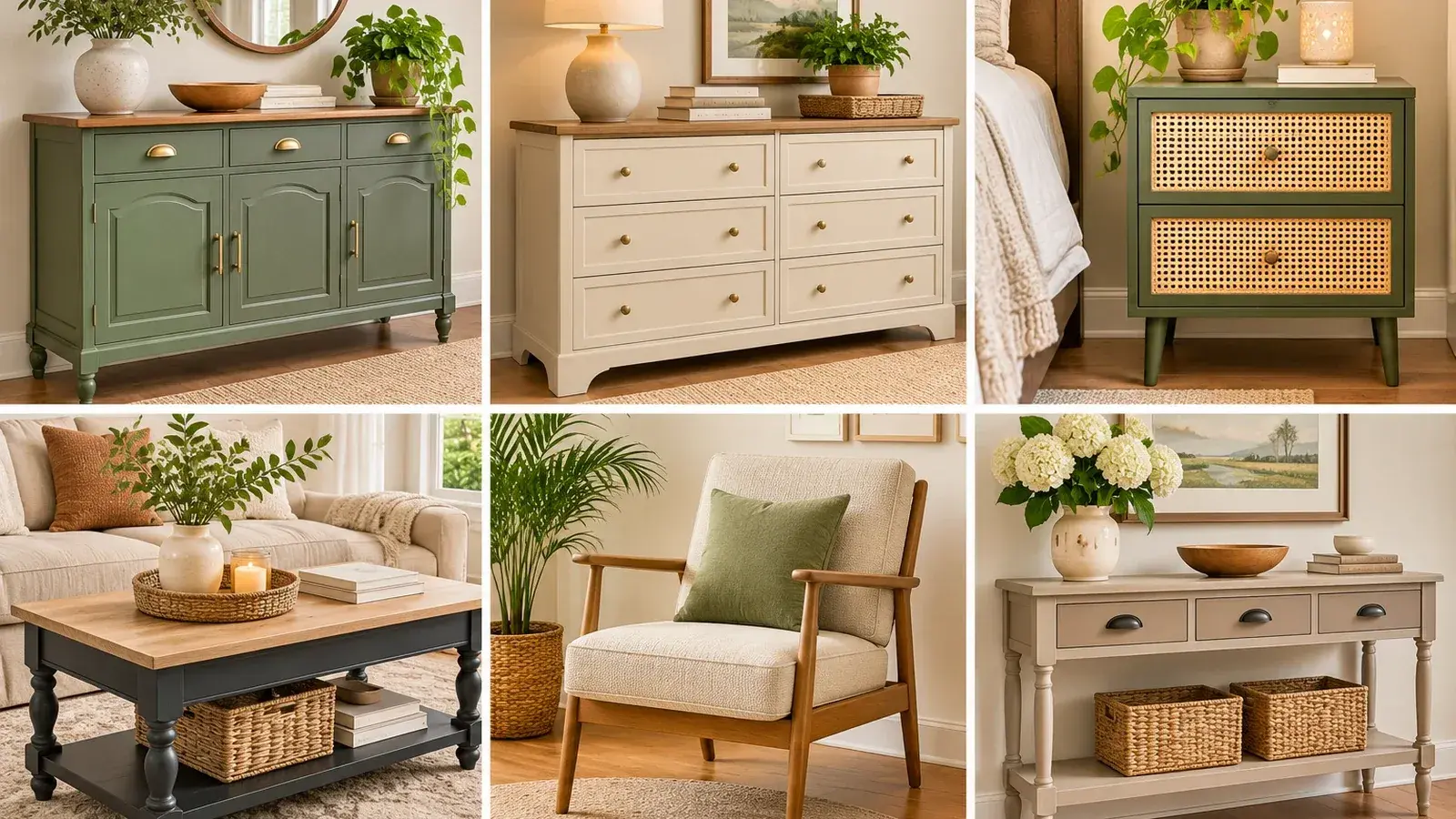
Thrifted furniture can be a useful starting point for a modern room because the shape, scale, and material are often more interesting than a brand-new flat-pack piece. A dated dresser may need only a calmer color and new hardware; a side table can look current with a cleaner top and slimmer visual details. The best upcycles begin with a sound piece, not an elaborate makeover. Check stability, joints, drawers, odors, pests, and surface condition before buying. Then choose one or two changes that improve how the furniture looks and functions.
Before you start
Inspect the piece before planning its finish. Check for wobble, cracked rails, loose legs, swollen particleboard, missing hardware, water damage, strong odors, and signs of insects. Open every drawer and test doors and hinges. A finish can disguise minor cosmetic wear, but paint cannot make a weak frame structurally sound. For upholstered furniture, inspect seams, cushions, webbing, and the frame; avoid a piece with persistent odor, visible pest activity, or damage that cannot be assessed.
Be cautious with older painted furniture. The U.S. EPA notes that refinishing old furniture can be a source of lead exposure and warns that disturbing lead-based paint can create hazardous dust. If the piece may have an old paint finish, do not dry-sand, scrape, or strip it casually. Consider professional assessment and lead-safe handling instead. For work on a pre-1978 home or child-occupied setting, EPA recommends lead-safe practices and certified contractors for covered renovation work. [1] [2]
Ideas to try
1. Turn a dated dresser into a clean-lined bedroom anchor
A dresser with solid structure can look current with a single muted finish, simple hardware, and a restrained top arrangement. Sage, warm white, charcoal, or deep blue can simplify an ornate or mismatched piece. Keep the original silhouette if it is attractive; removing every decorative detail can make the furniture lose the character that made it worth buying. A new mirror or lamp can complete the update.
Make it work: Check that the drawers run smoothly and the back is secure before painting. Anchor taller dressers to the wall according to the manufacturer’s or hardware supplier’s instructions.
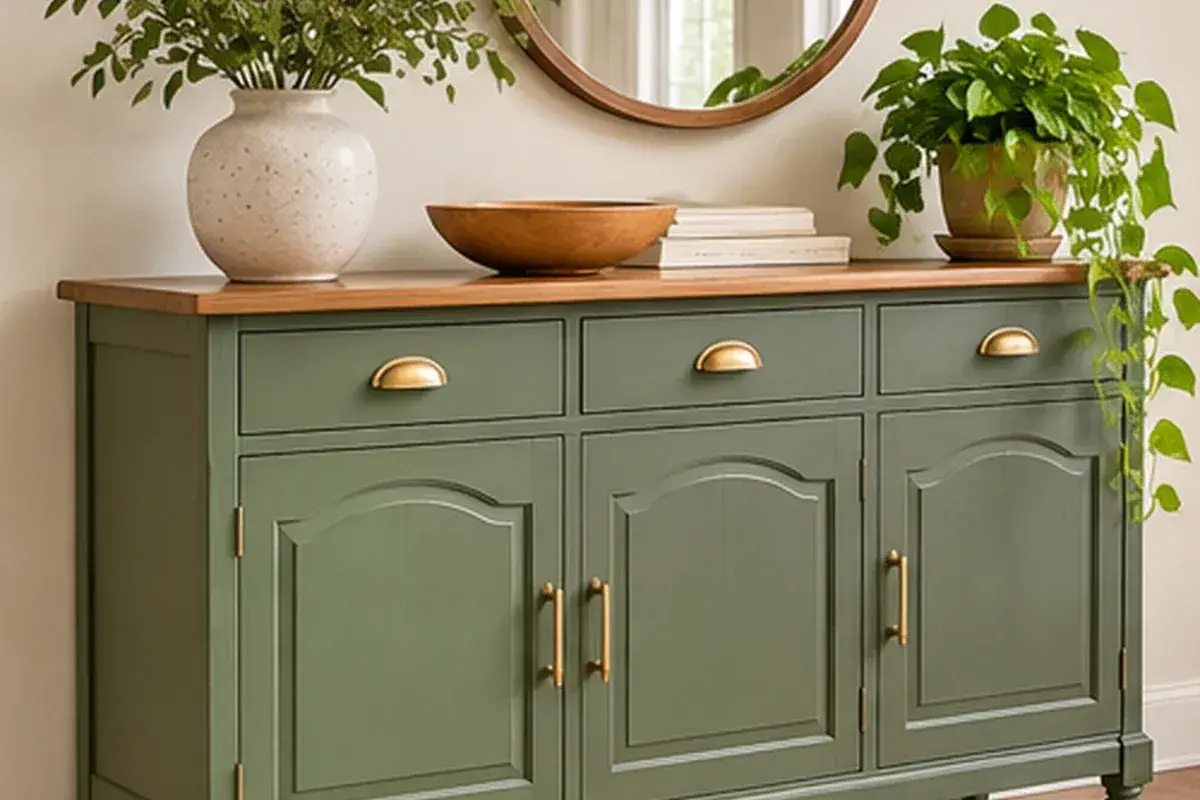
Olive-green sideboard with updated brass pulls.
2. Give a nightstand a rattan or woven-front detail
A plain nightstand can gain texture with a properly fitted cane or woven panel on the drawer front. Keep the panel limited to one surface and use hardware that complements the natural material. This is a good way to bring warmth into a minimalist room without adding a large patterned rug or multiple decorative accessories.
Make it work: Confirm that the drawer front can accept the added material without interfering with the handle, closing action, or clearance. Use a suitable furniture adhesive or professional installation.
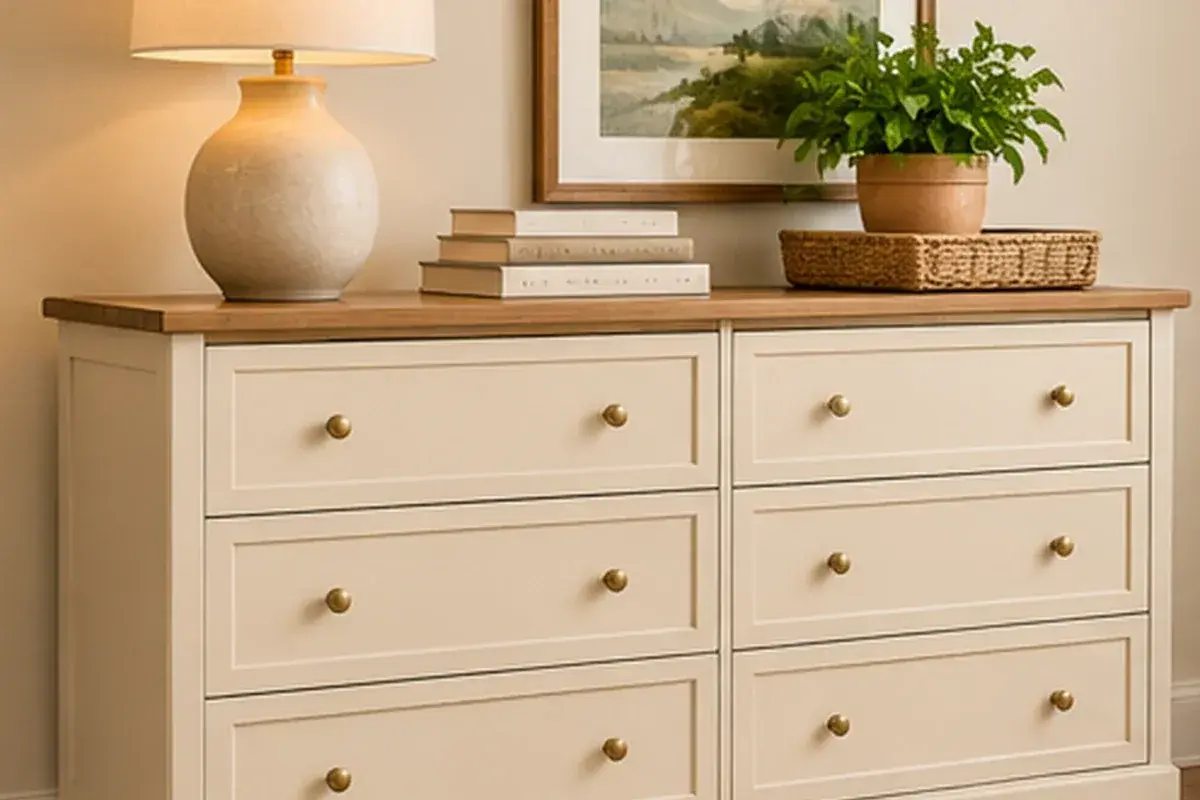
Cream painted dresser with a natural wood top.
3. Refresh a coffee table with a dark base and wood top
A coffee table with a sturdy frame can look more contemporary with a dark lower section and a lighter, simple top. The contrast helps the shape feel deliberate and can coordinate with black window frames, wood floors, or neutral upholstery. Preserve the table’s original proportions rather than adding bulky trim that makes it harder to walk around.
Make it work: Check the top material before choosing a finish. Veneer and laminate need different preparation from solid wood, and the top should remain durable for everyday use.
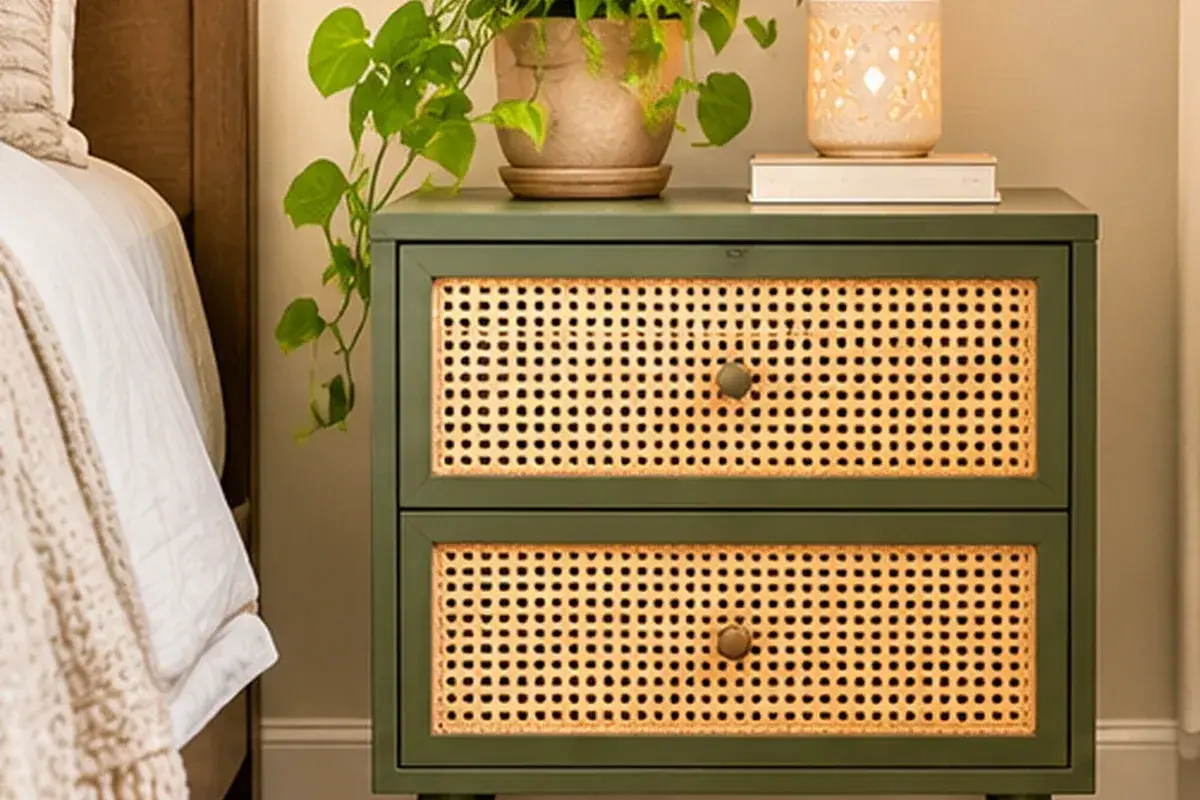
Rattan-front nightstand with a modern muted green frame.
4. Modernize a sideboard with quiet hardware
A sideboard with good storage can become a modern dining-room feature by changing the handles, simplifying the color palette, and styling the top with just a lamp or a large vase. If the original wood grain is attractive, clean and protect it instead of covering it. A mix of natural wood and painted doors can make the piece feel custom without requiring structural changes.
Make it work: Measure the existing hardware holes and choose replacements that fit. Avoid drilling new holes until you know the drawer and door construction can support them.
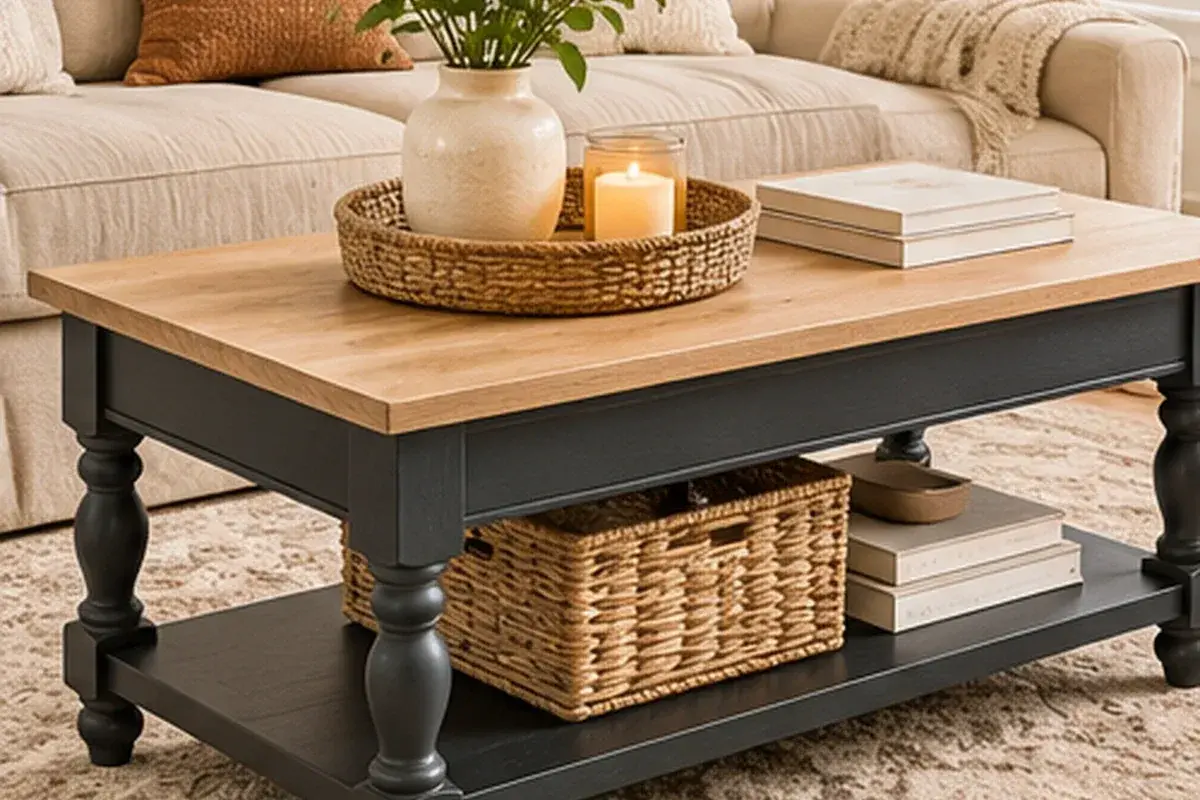
Two-tone coffee table with dark base and wood top.
5. Rework an older armchair with a simpler textile
A chair with a sound frame can look fresh with a solid-color fabric, a clean cushion shape, and minimal piping or fringe. Neutral linen-look fabric, soft olive, charcoal, or warm rust can update a dated pattern while letting the chair’s shape remain visible. Upholstery work can be demanding, so a professional re-cover may be the better route for valuable or complicated pieces.
Make it work: Inspect the frame, springs, webbing, and cushion support first. If the chair is unstable or upholstery has persistent odor or pest concerns, pass on it or seek professional evaluation.
6. Turn a bookcase into a modern display piece
A simple bookcase can look more intentional with a contrasting back panel, a calm paint color, and a more edited arrangement of books and objects. Keep the shelves visually light and use baskets only where hidden storage is useful. A contrasting back can add depth without requiring a complicated new shape.
Make it work: Anchor tall bookcases to the wall and check shelf supports before loading them. Store heavier books on lower shelves and do not overload the top.
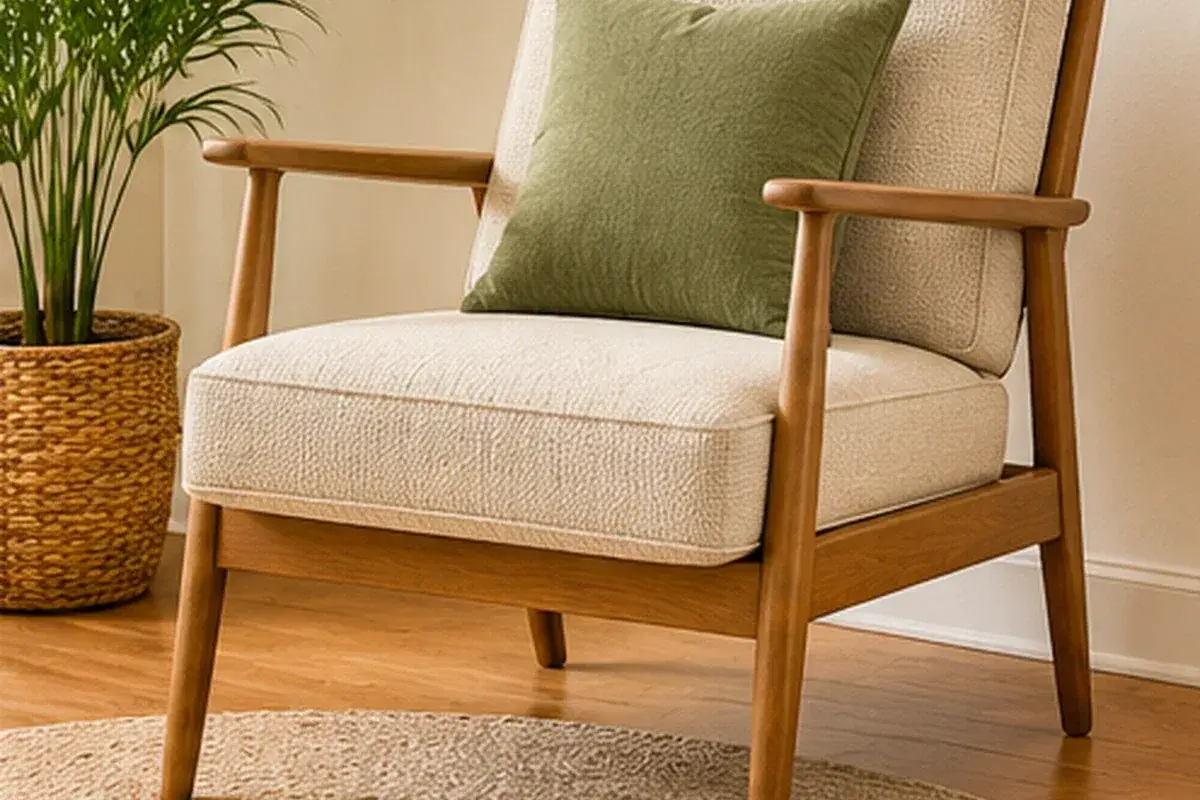
Mid-century armchair with a neutral reupholstered seat.
7. Give a console table a restrained two-tone finish
A console table with a sturdy frame can feel contemporary when the base is painted a muted color and the top remains natural or is finished in a compatible wood tone. Keep the color change simple and use a single hardware finish. A large mirror or framed print above can make the console feel like a planned entry or living-room feature.
Make it work: Identify whether the top is solid wood, veneer, or laminate before choosing a stain or paint. Keep finishes away from moving joints and allow full curing before placing décor.
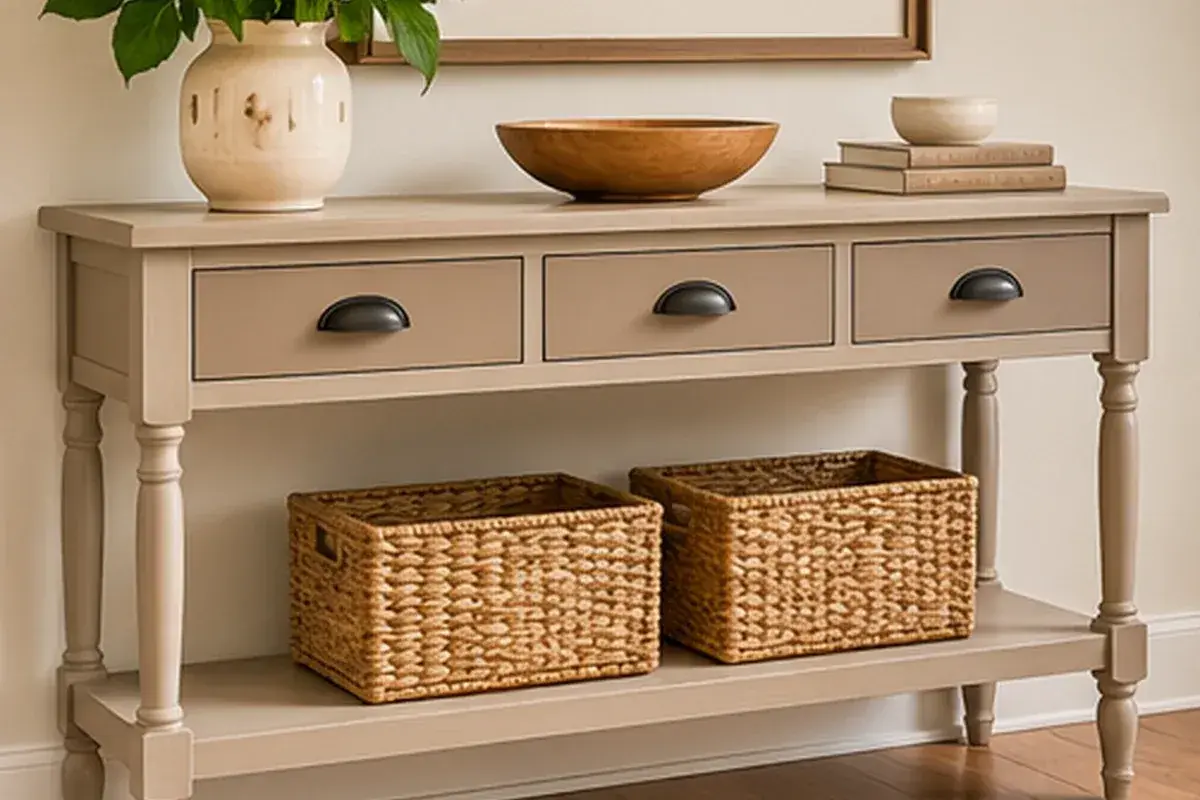
Warm neutral console with clean hardware and styling.
How to choose the right thrifted piece
Look for good proportions, solid joinery, and a useful size before you think about color. A simple, well-built table can be more valuable than an ornate dresser with swollen panels or loose drawers. Check the underside, back, and inside of the furniture rather than judging it only from the front. Ask whether the piece can be carried into the home, whether it will fit through the doorway, and whether the storage actually suits the room.
Avoid bringing home upholstered or wooden pieces with unresolved moisture damage, strong musty odors, visible pests, or structural instability. Small cosmetic scratches are often easier to address than hidden damage. If the piece is valuable, antique, or made from an unfamiliar material, consult a furniture repair professional before changing the finish.
Plan a modern finish without overworking the furniture
Modern does not mean removing all character. A successful update usually edits the finish, hardware, and styling while keeping the original shape. Pick one dominant change, such as a new paint color, and one supporting detail, such as new pulls. Replacing the legs, changing the doors, adding panels, and repainting every surface at once can increase cost and make the piece look less coherent.
Match the product to the surface. Solid wood, veneer, laminate, painted metal, and plastic all need different preparation. Benjamin Moore’s laminate-furniture guide illustrates the importance of a compatible bonding primer for smooth surfaces, while product-specific labels should determine exactly what preparation and cure time are needed. Never apply stain to a surface that is not real wood. [3]
Lead, stability, and finishing precautions
Do not assume old paint is harmless because the furniture is small. EPA specifically identifies refinishing old furniture among activities that can expose people to lead, and lead dust can remain after ordinary cleaning. If the age or finish is uncertain, avoid dry sanding or uncontrolled removal. Get appropriate testing or professional advice and follow lead-safe procedures. [1] [2]
After the makeover, check that drawers, doors, shelves, and legs still work as intended. Reinstall anti-tip hardware on tall furniture and secure bookcases or dressers to the wall. CPSC recommends anchoring top-heavy furniture because tip-over incidents remain a preventable household hazard. Keep heavy objects low and do not use a decorative cabinet as seating unless it is designed for that purpose. [4]
A realistic weekend plan for a furniture upcycle
Choose the piece first, then write down the one problem you want to solve. That might be a scratched finish, dated hardware, a color that clashes with the room, or a storage layout that needs better organization. Keep the project to one main transformation and one supporting detail. This makes it easier to estimate the supplies, time, and skill required before bringing the furniture home.
Make a small finish sample before applying a coating to the whole piece. Paint can look different on a large vertical surface than it does on a store swatch, and the material beneath may affect the result. If the piece has veneer, laminate, metal, or plastic, use products identified for that surface. Do not use a stain on a non-wood surface or assume a universal primer will bond to every finish.
Allow enough time for cleaning, repairs, drying, curing, and reassembly. A piece that is rushed back into service can stick, mark, or fail at a weak joint. Keep the original hardware and screws in a labeled container until the final design is approved, and photograph the furniture before disassembly so you can put it back together correctly.
When to restore instead of repaint
Some thrifted furniture has a wood grain, joinery detail, or finish worth preserving. A gentle cleaning and a compatible protective treatment may be more attractive than painting over the surface. If the item is a quality antique or has a maker’s mark, research its value and construction before making irreversible changes. A modern room can include one older natural-wood piece as a warm contrast to newer furnishings.
Restoration is also the better choice when a painted finish is unstable or the underlying material is unknown. Do not use a harsh remover or power tool just to make the project move faster. If the finish may contain lead or another hazardous coating, stop and seek professional advice. Safe handling is more important than completing a weekend project on schedule.
The best upcycle is one that improves the usefulness of the object and keeps it in service for longer. When a piece is structurally sound, a careful clean, a small repair, and a restrained styling change can achieve a modern result while retaining much of its original character.
Styling and maintaining an upcycled piece
A modern room can benefit from contrast rather than matching furniture. One thrifted piece with a visible grain, older profile, or handmade detail can make a room feel collected when it is surrounded by simple contemporary pieces. Keep the supporting furniture quiet, repeat one color from the updated piece elsewhere in the room, and avoid adding several different finishes at once. The goal is a clear relationship between old and new, not a room that looks like a collection of unrelated projects.
Think about how the furniture will be used after the makeover. A table top needs a finish suited to regular wiping and contact with objects. A dresser drawer must continue to slide and close. A chair needs a sound frame and stable support before fabric is changed. If the piece will hold electronics, allow room for cables and airflow rather than closing every opening with a decorative panel. A design that looks attractive but makes the furniture less useful is not a successful upcycle.
Keep a record of the materials and products used. Save paint labels, primer names, fabric information, hardware sizes, and any care instructions. This makes later touch-ups easier and helps you avoid mixing incompatible products during repairs. It is also useful to photograph the furniture before and after the project so that any hidden issue can be compared with the original condition.
Finally, set a realistic stopping point. It can be tempting to keep adding trim, panels, paint colors, and accessories, but each change adds time and another detail that may need maintenance. A sound piece with a clean finish and well-chosen hardware often looks more modern than a heavily decorated one. Stop when the furniture is stable, functional, easy to care for, and visually connected to the room.
Frequently asked questions
What thrift store furniture is easiest to modernize?
A structurally sound dresser, side table, console, bookcase, or coffee table with useful proportions is a good starting point. Choose a piece with cosmetic wear rather than hidden structural damage.
Can I paint every thrifted furniture surface?
No. Paint and primer must suit the actual material. Solid wood, veneer, laminate, metal, and plastic require different preparation, and some surfaces are better left unpainted.
Is it safe to sand old thrift store furniture?
Do not sand an unknown old painted finish casually. EPA warns that refinishing old furniture can expose people to lead. Assess the finish and use professional lead-safe advice where needed.
How do I make thrifted furniture look modern?
Use a restrained color palette, simple hardware, clean styling, and only one or two design changes. Keep the furniture’s useful proportions and character.
Should I anchor an upcycled dresser or bookcase?
Yes. Reinstall appropriate anti-tip hardware and anchor tall or top-heavy furniture to the wall according to the product and hardware instructions.
Sources and further reading
[1] U.S. EPA: Reduce the Risk of Lead Exposure at Home
[2] U.S. EPA: Lead-Safe Renovations for DIYers
[3] Benjamin Moore: A DIY Guide to Painting Laminate Furniture
Sources
- U.S. EPA: Reduce the Risk of Lead Exposure at Home. Checked November 4, 2026
- U.S. EPA: Lead-Safe Renovations for DIYers. Checked November 4, 2026
- Benjamin Moore: A DIY Guide to Painting Laminate Furniture. Checked November 4, 2026
- CPSC: Anchor It! Furniture Tip-Over Prevention. Checked November 4, 2026
Share this article
Get new guides by email
Practical home articles and free resources. No spam, and you can unsubscribe at any time.
Keep reading
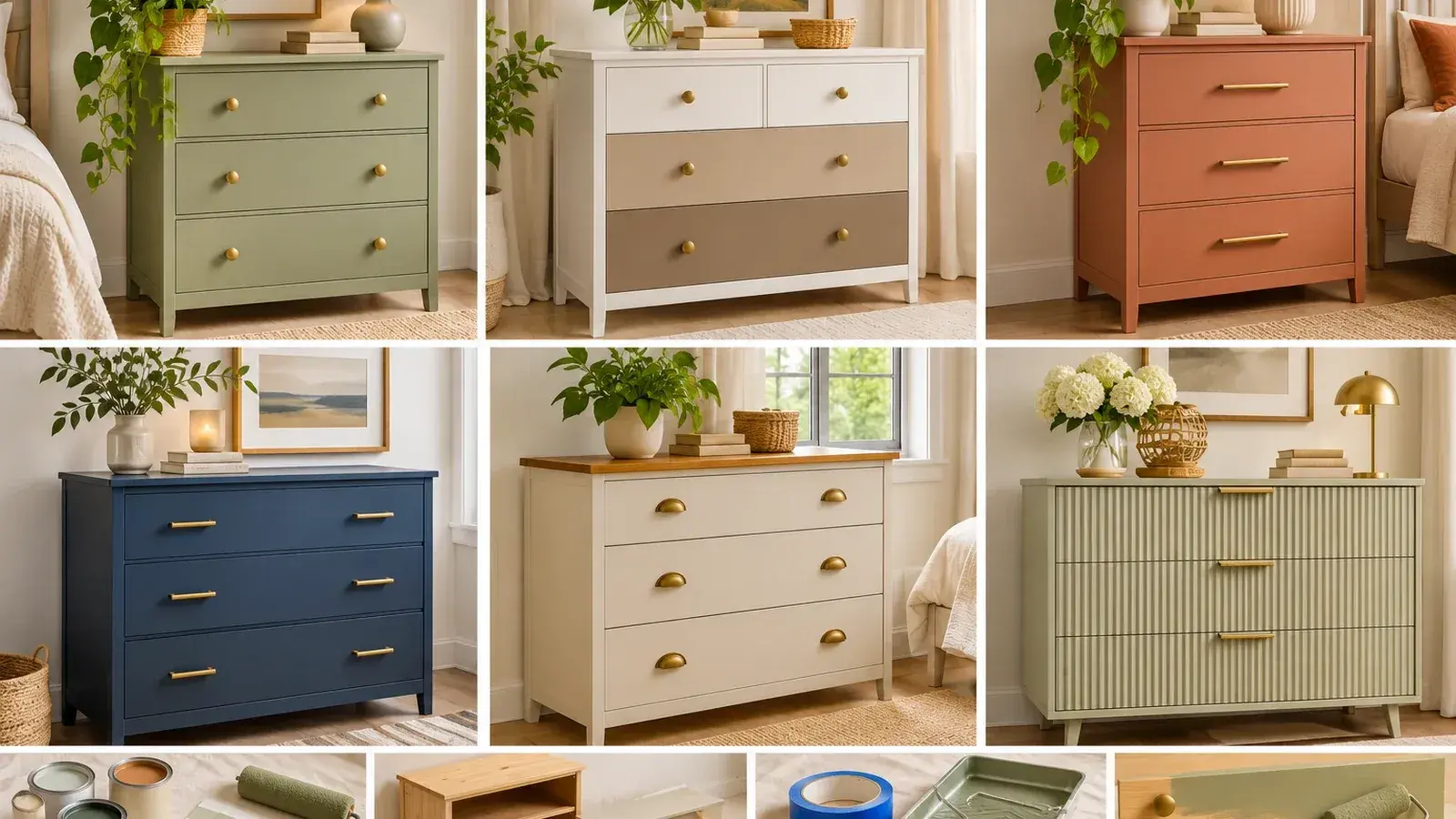
14 Easy IKEA Dresser Paint Hack Ideas for Beginners
Explore IKEA dresser paint hack ideas for beginners with practical design ideas, planning advice, safe installation notes, and helpful tips for your US home.
November 2026, 10 min read

13 Best Narrow Entryway Bench With Storage DIY Layouts
Explore narrow entryway bench with storage DIY layouts with practical design ideas, planning advice, safe installation notes, and helpful tips for your US home.
November 2026, 10 min read

11 Small Corner Reading Nook Chair Ideas for Cozy Setups
Explore small corner reading nook chair ideas cozy setups with practical design ideas, planning advice, safe installation notes, and helpful tips for your US home.
November 2026, 10 min read