13 Best Narrow Entryway Bench With Storage DIY Layouts
Explore narrow entryway bench with storage DIY layouts with practical design ideas, planning advice, safe installation notes, and helpful tips for your US home.
By Home Crane Editors. . 10 min read.
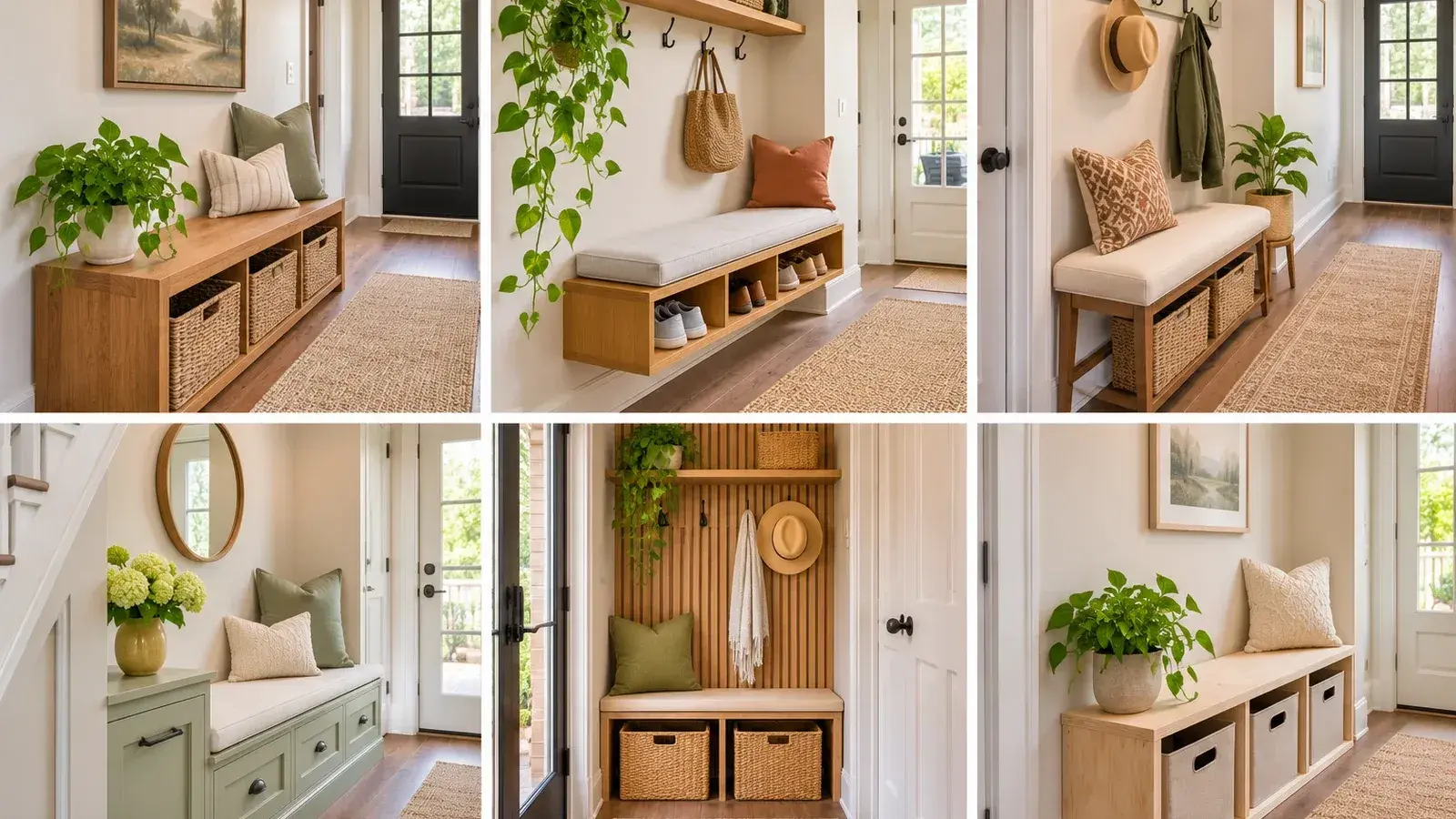
A narrow entryway bench can solve two common problems at once: a place to sit while putting on shoes and a defined home for the small things that otherwise collect by the door. The best layout depends on the width of the hall, the door swing, the wall structure, and the kind of storage a household actually needs. A bench that is too deep can turn a useful entry into a bottleneck. These thirteen ideas use slim proportions, baskets, cubbies, drawers, hooks, and wall-mounted details to make a small entrance more organized without blocking circulation.
Before you start
Measure the narrowest part of the entryway, not just the wall where the bench will sit. Include door handles, trim, radiators, closet doors, and the space needed to open a front door fully. Measure bench depth and the space a person needs to sit down, stand up, and remove shoes. The U.S. Access Board uses a 36-inch clear-width benchmark for many accessible routes. That is not automatically a residential code requirement for every hallway, but it is a useful reference when an entry needs to be accessible to a range of household members and visitors. [1]
Choose the storage type around daily habits. Open cubbies make shoes visible and easy to reach; drawers hide clutter but need room to open; baskets are flexible but can slide out into the walking route. If you build or install a bench, confirm the wall and floor can support the intended load, use hardware appropriate to the structure, and avoid sharp corners at hip height. Tall hooks, shelves, and cabinets should be anchored as directed. CPSC recommends anchoring top-heavy furniture to help prevent tip-over injuries. [2]
Decorating ideas
1. A slim bench with open shoe cubbies
A bench with two or three open cubbies is a practical choice for a narrow hall because it keeps shoes visible and does not need drawer clearance. Use a depth that allows comfortable sitting without protruding into the main route. A simple wood top and painted base can make the bench feel like a built-in even when it is freestanding.
Make it work: Measure the shoes the household actually wears and include space for boots if they need to fit. Avoid making the cubbies so deep that footwear disappears at the back.
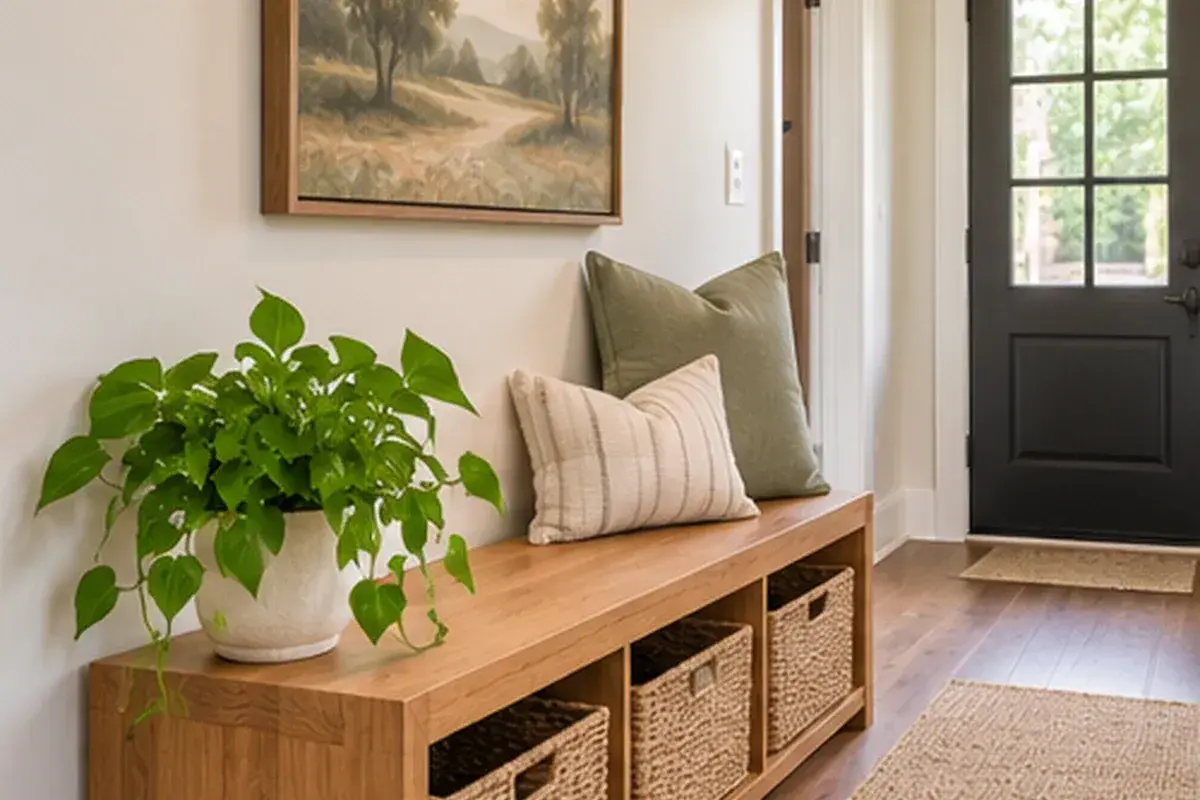
Narrow wood bench with woven shoe baskets.
2. A bench with woven baskets underneath
Woven baskets soften a plain bench and hide hats, gloves, scarves, or small accessories. Choose baskets that slide out easily and have handles that can be reached without pulling the entire bench forward. A natural basket finish suits oak, white, or sage cabinetry and can make a small entry feel less utilitarian.
Make it work: Check that baskets do not protrude into the walking path. Keep wet footwear separate so damp items do not sit in an enclosed basket.
3. A wall-mounted bench with clear floor space
A wall-mounted seat can make a tight entrance appear more open because the floor beneath remains visible. It works best when the wall structure and mounting system are suitable for the intended load. Pair it with a narrow shoe shelf or basket that can be removed for cleaning. The floating appearance is contemporary, but the support must be properly designed and installed.
Make it work: Do not attach a weight-bearing seat to drywall alone. Have the wall structure and fixing method assessed by a qualified installer when in doubt.
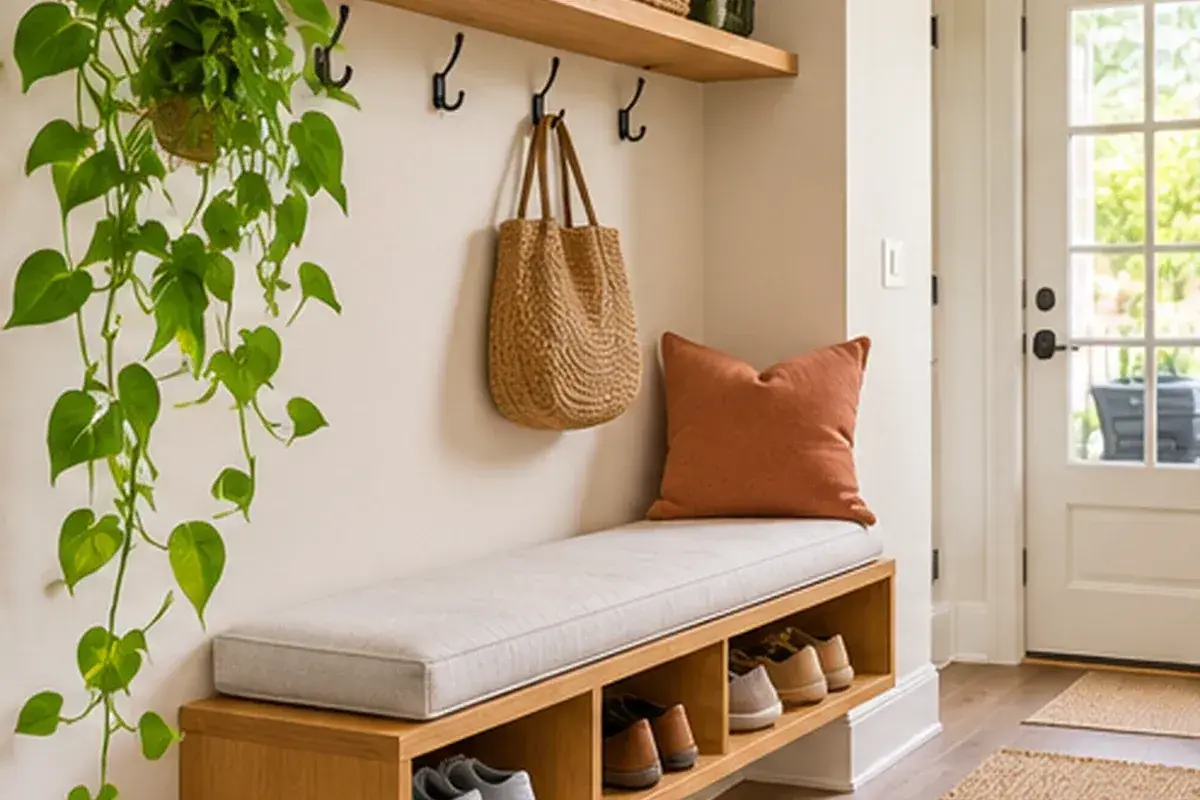
Floating shoe bench below a row of wall hooks.
4. A narrow bench with a lift-top compartment
A lift-top bench hides small accessories and keeps the entry looking tidy. It can be useful for reusable bags, pet-walking supplies, or seasonal gear. Choose a lid that opens without hitting the door or a nearby wall, and make sure the top is comfortable to lift. A soft-close or controlled hinge can help prevent the lid from dropping unexpectedly.
Make it work: Do not store wet shoes or damp clothing in an unventilated closed compartment. Use a separate ventilated shoe area for items that need to dry.
5. A bench under a row of wall hooks
Placing hooks above the bench creates a simple drop zone for coats, bags, and keys. Keep the hooks high enough that hanging items do not cover the seating area or brush against people as they pass. A short shelf above the hooks can hold a small basket, but it should not become an overloaded storage ledge.
Make it work: Install hooks and shelves with fixings appropriate to the wall. Keep heavy items low and avoid placing loose objects over the seat.
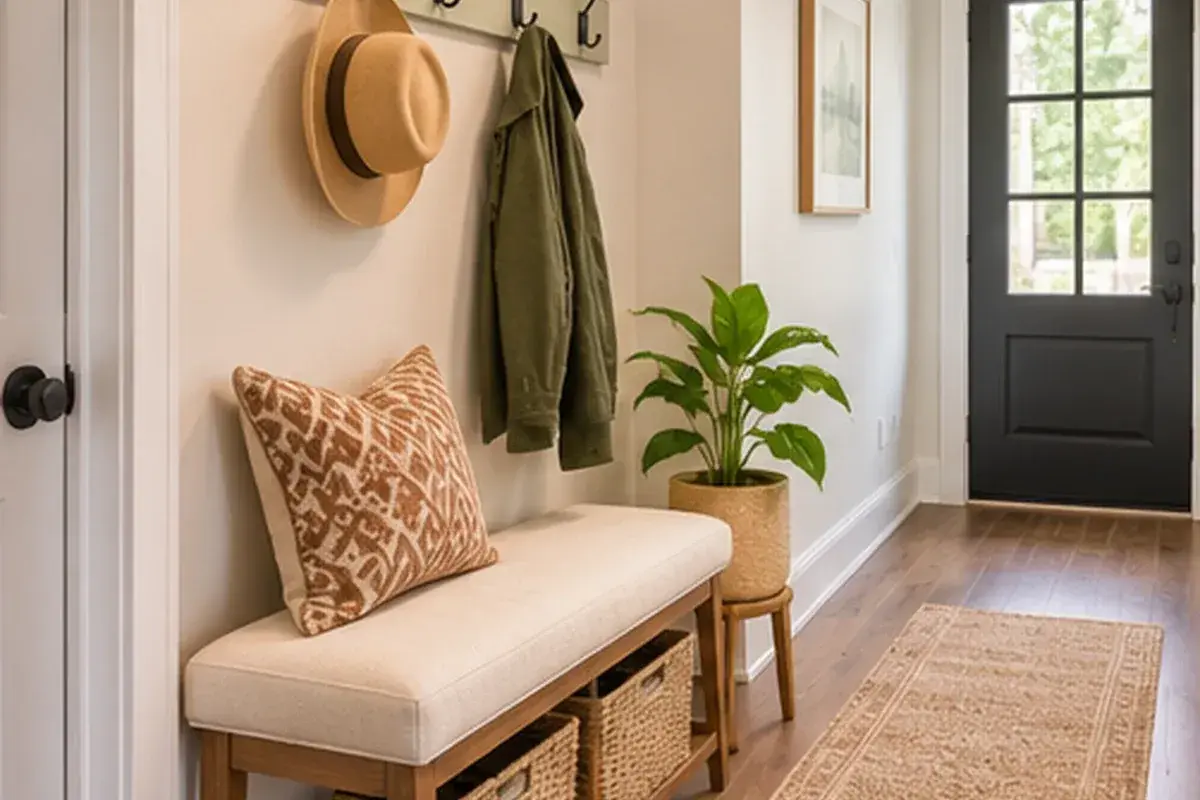
Entry bench with open cubbies and a neutral cushion.
6. A built-in bench below a shallow cabinet
A shallow cabinet above the seat can store small items while leaving the bench base open for shoes. This layout makes use of vertical wall space, which is valuable in a narrow entry. Keep the cabinet depth modest and make sure its doors open without hitting the front door or a person using the bench.
Make it work: Check the full cabinet-door swing and the bench user’s head clearance. Anchor the cabinet to suitable wall structure.
7. A corner-return bench
In an entry with a small recess, an L-shaped return can use the corner for extra seating or storage without extending a long bench down the hallway. Keep the return short and make sure it does not interfere with the door swing. Baskets on the short side can hold seasonal accessories, while everyday shoes remain near the entry.
Make it work: Use painter’s tape to mark the proposed bench outline on the floor and test the route before buying materials or ordering a custom build.
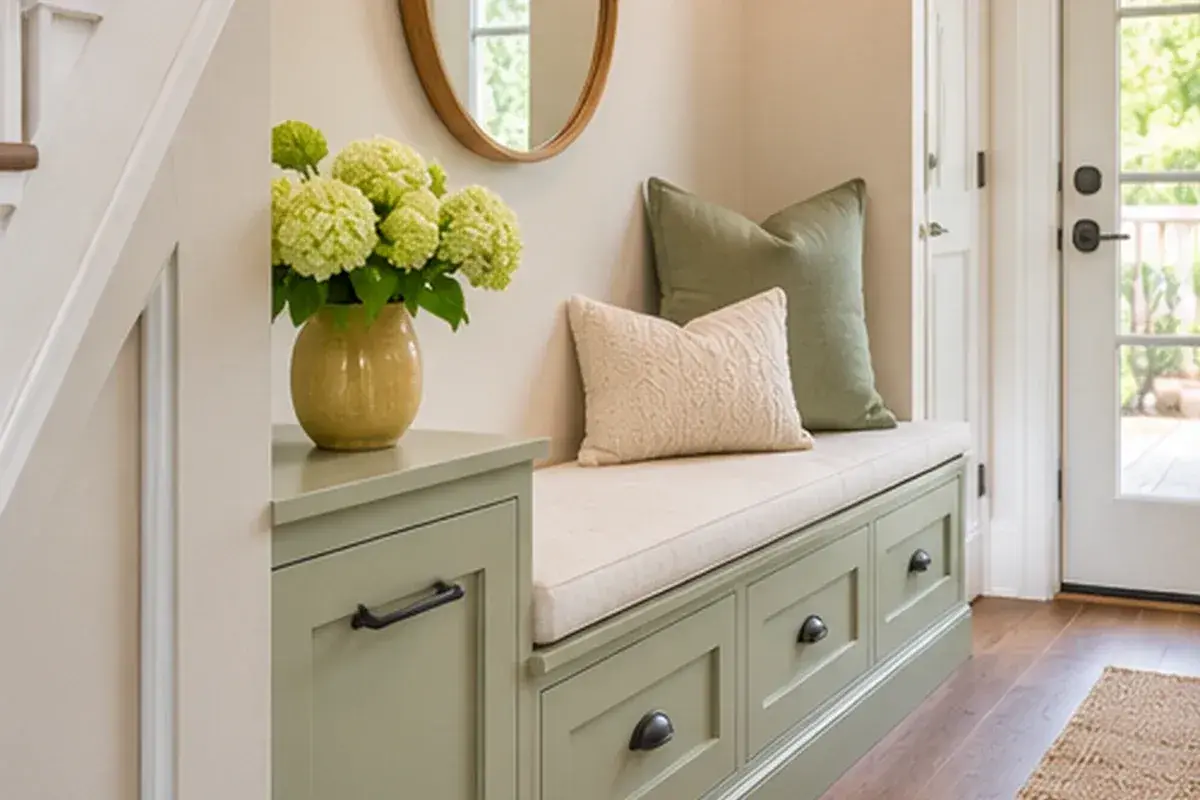
Sage entry bench with concealed drawer storage.
8. A bench with slim pull-out shoe drawers
Pull-out shoe drawers hide clutter and create a clean front, especially in a modern entry with flat cabinet doors. They are useful when shoes need protection from dust or pets. The drawback is the clearance required to pull them open, so the design should be used only where the hall has enough depth for the drawer to extend without blocking the entrance.
Make it work: Check drawer extension and the walking path at the same time. Do not choose pull-outs if users must stand in the doorway to open them.
9. A bench with a slatted back panel
A slatted panel behind the bench adds texture and provides a visual boundary between the entry and the rest of the home. Hooks can attach to the panel if the structure is designed for them. A light oak or painted finish can make the wall feel warmer while keeping the floor area simple and uncluttered.
Make it work: The slatted panel needs secure fixing and should not be treated as structural support unless it is designed for that purpose. Keep gaps and edges smooth.
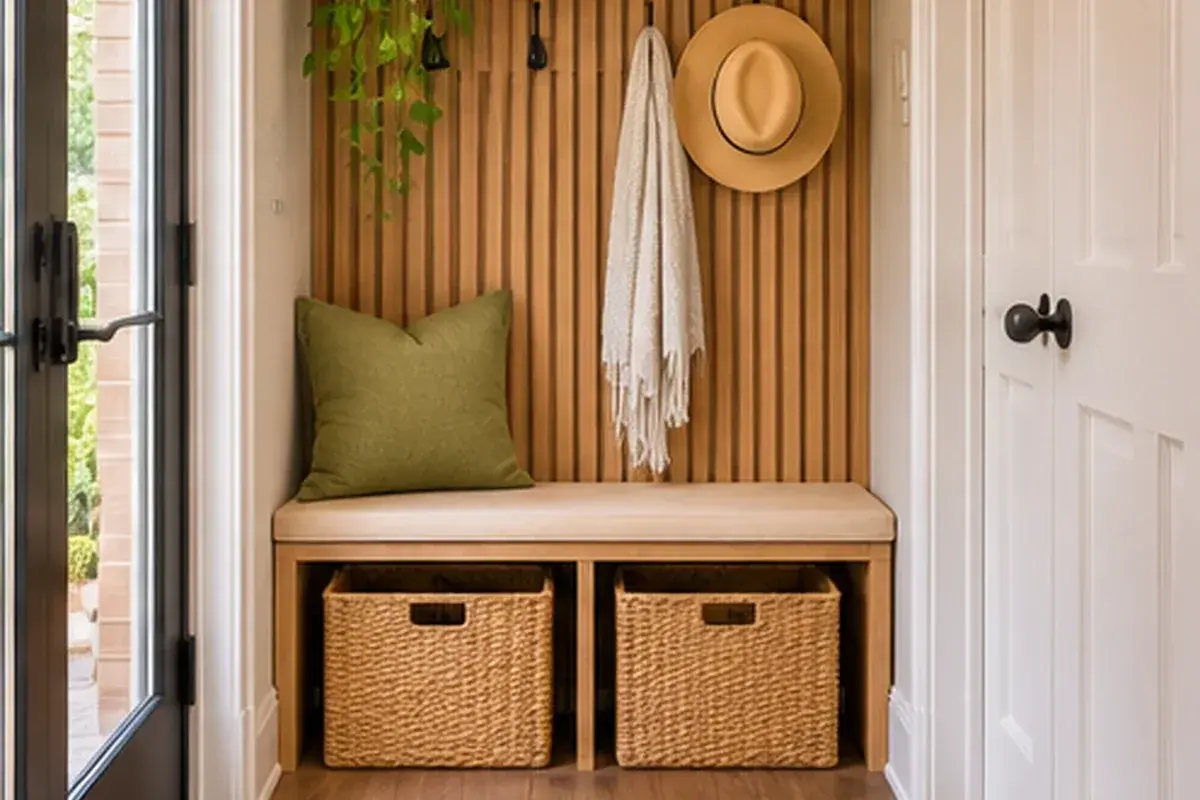
Slatted entryway panel with hooks and bench.
10. A two-tier shoe bench
A two-tier bench offers a seat above and an open shelf below, making use of the vertical space without adding much depth. The upper surface can support a cushion, while the lower shelf holds frequently worn shoes. Keep the frame open enough to clean underneath and avoid stacking footwear above the seat height.
Make it work: Confirm that the frame is stable and has an appropriate load rating. A decorative shoe rack is not automatically designed to support a person sitting on it.
11. A narrow bench beside a full-length mirror
A slim bench beside a mirror creates a useful last-check point near the door. The mirror can visually expand a small entrance, while a drawer or basket under the seat stores small items. Keep the mirror securely installed and position it where a door or swinging coat cannot strike it.
Make it work: Use appropriate wall fixings or professional installation for the mirror. Avoid placing heavy glass above an area where people sit or move bags.
12. A mudroom-style bench with labeled baskets
A small mudroom-style arrangement can work even without a dedicated mudroom. Assign each family member or activity a basket, then keep the bench top mostly clear for sitting. A limited palette of baskets and hooks prevents the wall from looking busy. This approach is especially useful in a household that needs a place for sports gear, school bags, or dog-walking items.
Make it work: Do not overload wall hooks or place heavy bags where they can swing into the walking route. Secure the storage system and keep emergency exits clear.
13. A freestanding bench with a removable cushion
A freestanding bench is the easiest layout to move or replace if the household’s needs change. Choose a narrow frame with a wipeable top and add a removable cushion for comfort. Under-seat baskets can hold accessories, while a small wall shelf provides a place for keys. The arrangement is flexible and does not require a permanent built-in.
Make it work: A freestanding bench must sit level and remain stable under the intended load. Do not use lightweight decorative furniture as seating unless it is designed for that purpose.
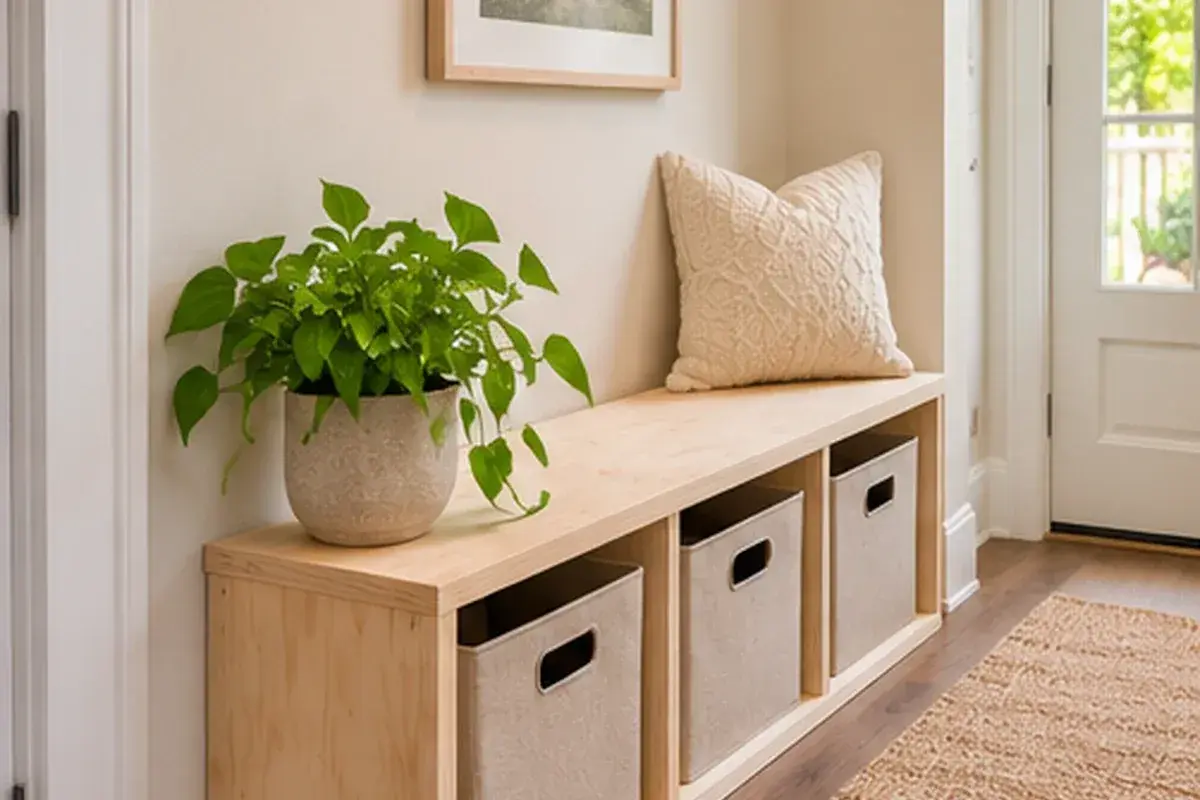
Wood entry bench with fabric storage bins.
How to choose between cubbies, baskets, and drawers
Open cubbies are best when shoes need to be visible and easy to remove. Baskets are flexible and can hide gloves or accessories, but they need enough space to slide out. Drawers give the cleanest appearance, yet they require room to extend. A lift-top compartment has useful capacity but should not become a place for wet shoes or items that need airflow. Choose one primary storage type and add only a small secondary container if necessary.
Count the items that regularly land near the door for a week. That simple inventory can prevent an oversized bench from being built for items that are rarely used. Put daily shoes in the most accessible location, seasonal accessories higher or farther away, and heavy items low. A bench is most useful when returning items to storage takes less effort than leaving them on the floor.
DIY layout and material planning
A beginner-friendly layout starts with a measured drawing and a taped floor outline. Mark the front door swing, closet access, and the route through the hall. Choose a bench depth that leaves comfortable clearance and plan the height around the intended users. Pre-made storage units or a furniture-grade bench can be safer and simpler than improvising a load-bearing seat from leftover materials.
Select materials that tolerate shoes, damp coats, and repeated cleaning. Sealed wood, painted furniture-grade panels, and durable hardware are easier to maintain than untreated porous surfaces. If the bench is wall-mounted or built in, make sure the mounting points connect to suitable structure and the seat is designed for the expected load. For complex wall conditions, ask a qualified carpenter or installer to assess the plan.
Preserve a clear and safe entrance
A beautiful entry bench is not useful if it blocks the door or makes it hard to pass with bags, a stroller, or mobility equipment. Use a full-size cardboard mock-up to test the depth and height before committing. Check the route with doors open and closed, and keep rugs flat so their edges do not catch shoes. Avoid placing tall decorative objects where they narrow the passage.
The U.S. Access Board describes a 36-inch clear width for many accessible routes. The exact rules that apply to a private home depend on the project and jurisdiction, but the principle remains sensible: keep circulation generous and unobstructed. Anchor tall cabinets and shelves according to their instructions, and keep the bench itself stable and level. [1] [2]
A practical measurement checklist for a narrow entry
Measure the hall at several points because trim, stair rails, radiators, and door hardware can reduce the usable width. Record the front door’s complete swing and any closet or nearby room doors. Then mark the proposed bench depth on the floor and check whether someone can sit down while another person passes. A layout that works only when the entrance is empty may be frustrating during busy mornings.
Choose the storage around the items that need a home. Everyday shoes should be easy to reach, while seasonal accessories can go in a higher cabinet or a labeled basket. If the household uses bulky boots, sports bags, or pet supplies, measure those objects before choosing cubby openings. A bench that stores the wrong things will quickly become another surface for clutter.
Review the finished plan with cleaning and maintenance in mind. The bench should be easy to vacuum beneath or wipe around, and baskets should lift out without scraping the wall. Keep the seat top clear enough to use, secure tall storage as required, and leave a safe route to the door. Small entries feel larger when each item has a predictable place.
Frequently asked questions
How deep should a narrow entryway bench be?
There is no single ideal depth. Measure the hall and door swing, then choose the shallowest seat that remains comfortable. Test the proposed footprint with cardboard before buying or building.
What is the best storage for a small entry bench?
Open cubbies work well for shoes, baskets for accessories, and drawers for a concealed look. Choose based on what the household needs to put away and the clearance available.
Can I build a wall-mounted entry bench myself?
A wall-mounted seat must attach to suitable structural support and be rated for its intended load. If the wall construction or fixing method is uncertain, use a qualified installer.
How do I keep shoes from making a bench smell?
Keep wet shoes out of sealed compartments until dry, clean the storage area regularly, and use an open or ventilated shoe shelf for daily footwear.
Should an entryway bench be anchored?
Freestanding benches should be stable and level. Tall storage, cabinets, shelves, and hook panels should be secured according to their instructions, especially where children may be present.
Sources and further reading
[1] U.S. Access Board: Chapter 4, Accessible Routes
Sources
- U.S. Access Board: Chapter 4, Accessible Routes. Checked November 4, 2026
- CPSC: Anchor It! Furniture Tip-Over Prevention. Checked November 4, 2026
- CPSC: 2026 Furniture Anchoring Safety Reminder. Checked November 4, 2026
Share this article
Get new guides by email
Practical home articles and free resources. No spam, and you can unsubscribe at any time.
Keep reading
14 Easy IKEA Dresser Paint Hack Ideas for Beginners
Explore IKEA dresser paint hack ideas for beginners with practical design ideas, planning advice, safe installation notes, and helpful tips for your US home.
November 2026, 10 min read
7 Genius Ways to Upcycle Thrift Store Furniture into a Modern Look
Explore upcycle thrift store furniture modern with practical design ideas, planning advice, safe installation notes, and helpful tips for your US home.
November 2026, 10 min read
11 Small Corner Reading Nook Chair Ideas for Cozy Setups
Explore small corner reading nook chair ideas cozy setups with practical design ideas, planning advice, safe installation notes, and helpful tips for your US home.
November 2026, 10 min read