11 Ways to Style Modern Slatted Wood Wall Paneling in Your Living Room
Explore 11 slatted wood wall ideas for your living room with illustrated concepts, practical design tips, and planning checks for your US home.
By Home Crane Editors. . 4 min read.
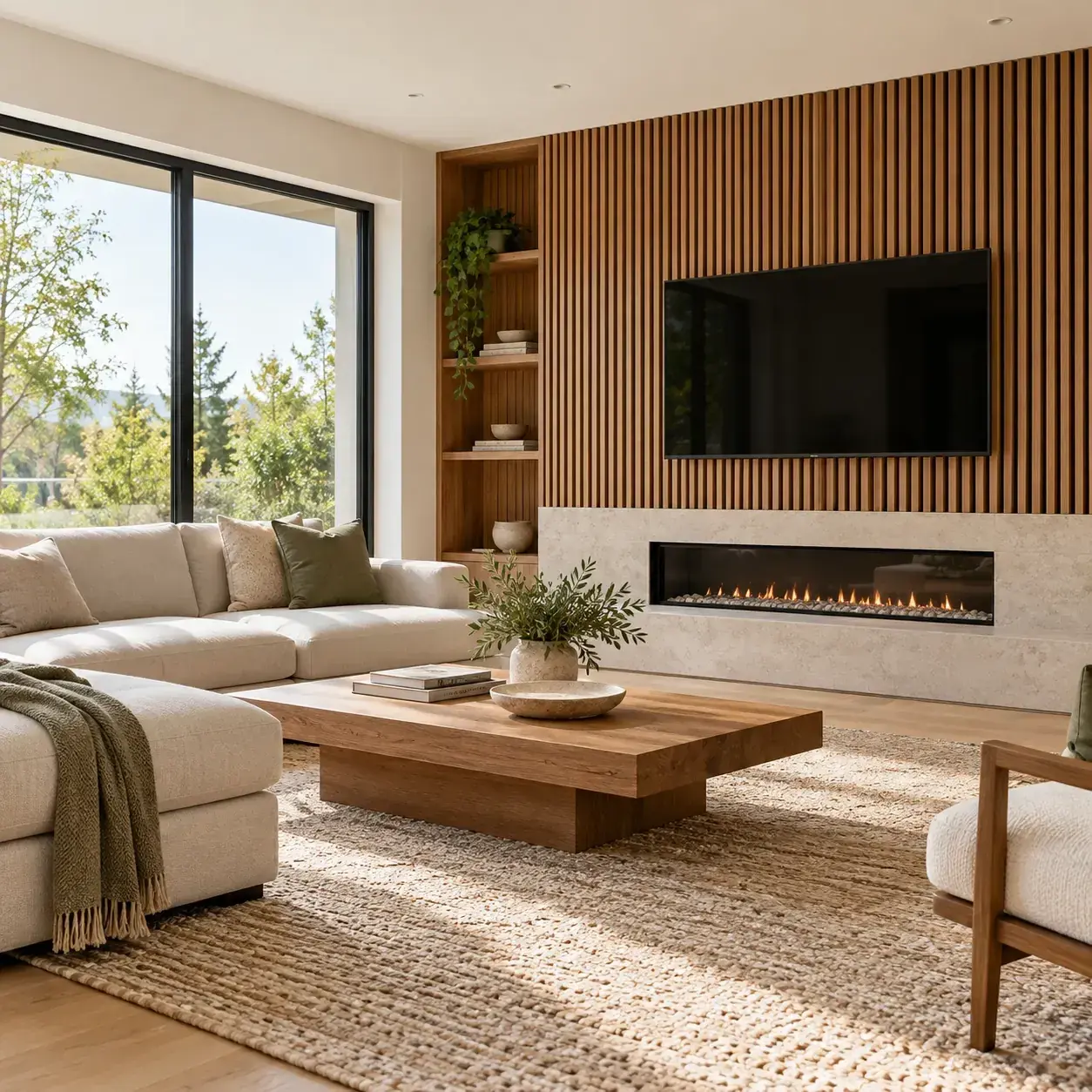
Wood slats work best when they give one part of a living room a clear purpose. Covering every surface can make the room feel busy and leave little room for art or storage. These eleven styling ideas use slats as a background, divider or transition while keeping seating and circulation comfortable.
AI-generated design concept, not a photograph of a documented property.
Before you choose a design
Choose a product suited to the interior application and follow its installation and fire-performance requirements. Decorative slats are not automatically an acoustic treatment. In an older home, retain significant original trim and finishes instead of covering them without assessment. NPS treats interior features and their relationships as part of historic character. [1]
1. Frame the television with a narrow slat field
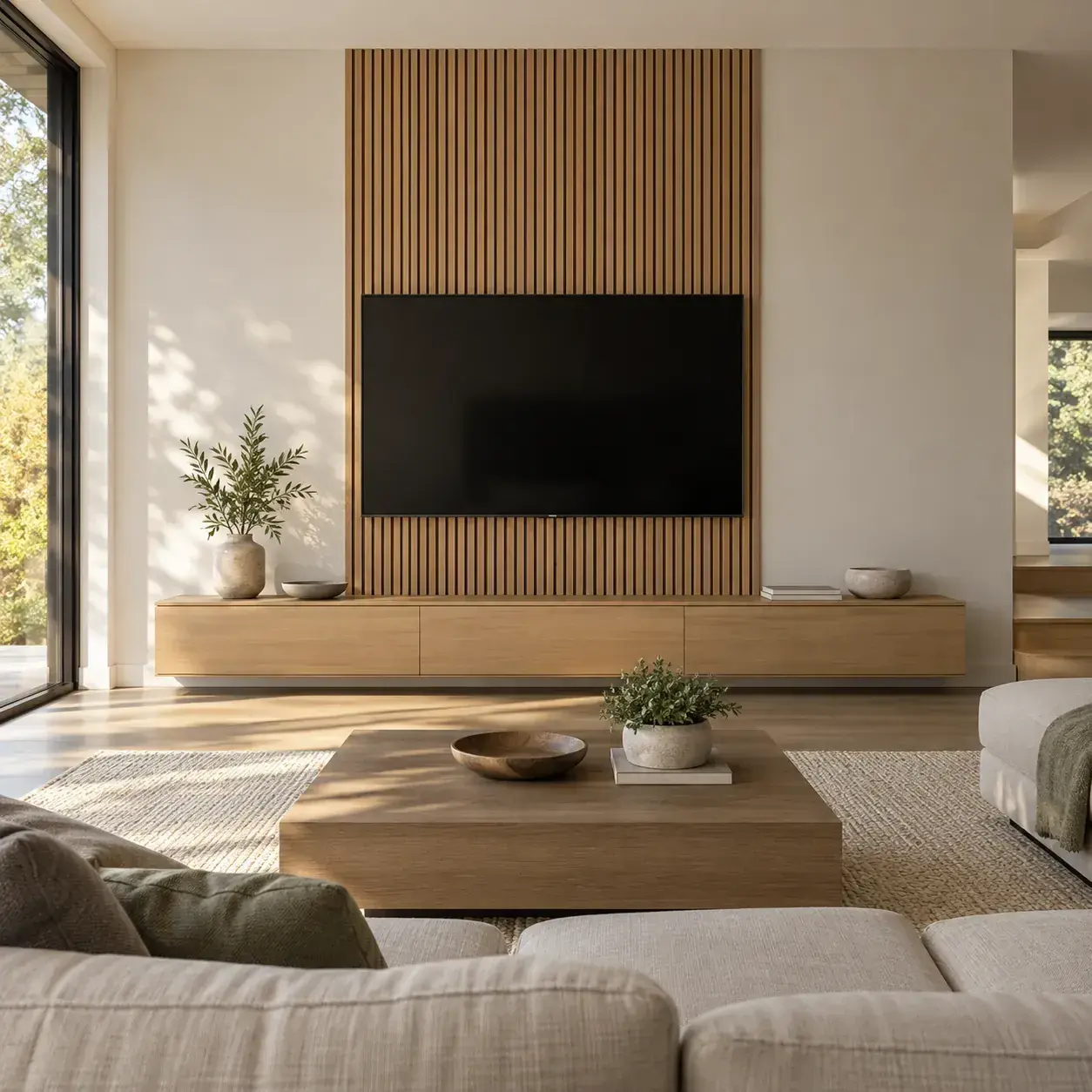
AI-generated design concept, not a photograph of a documented property. Frame the television with a narrow slat field.
Center a limited oak slat panel behind the television and keep the surrounding wall plain. A low console gives the composition a grounded base.
Make it work: Plan cable access and equipment ventilation before installation. The panel should not become an obstacle when the television needs replacement.
2. Create a reading-corner backdrop
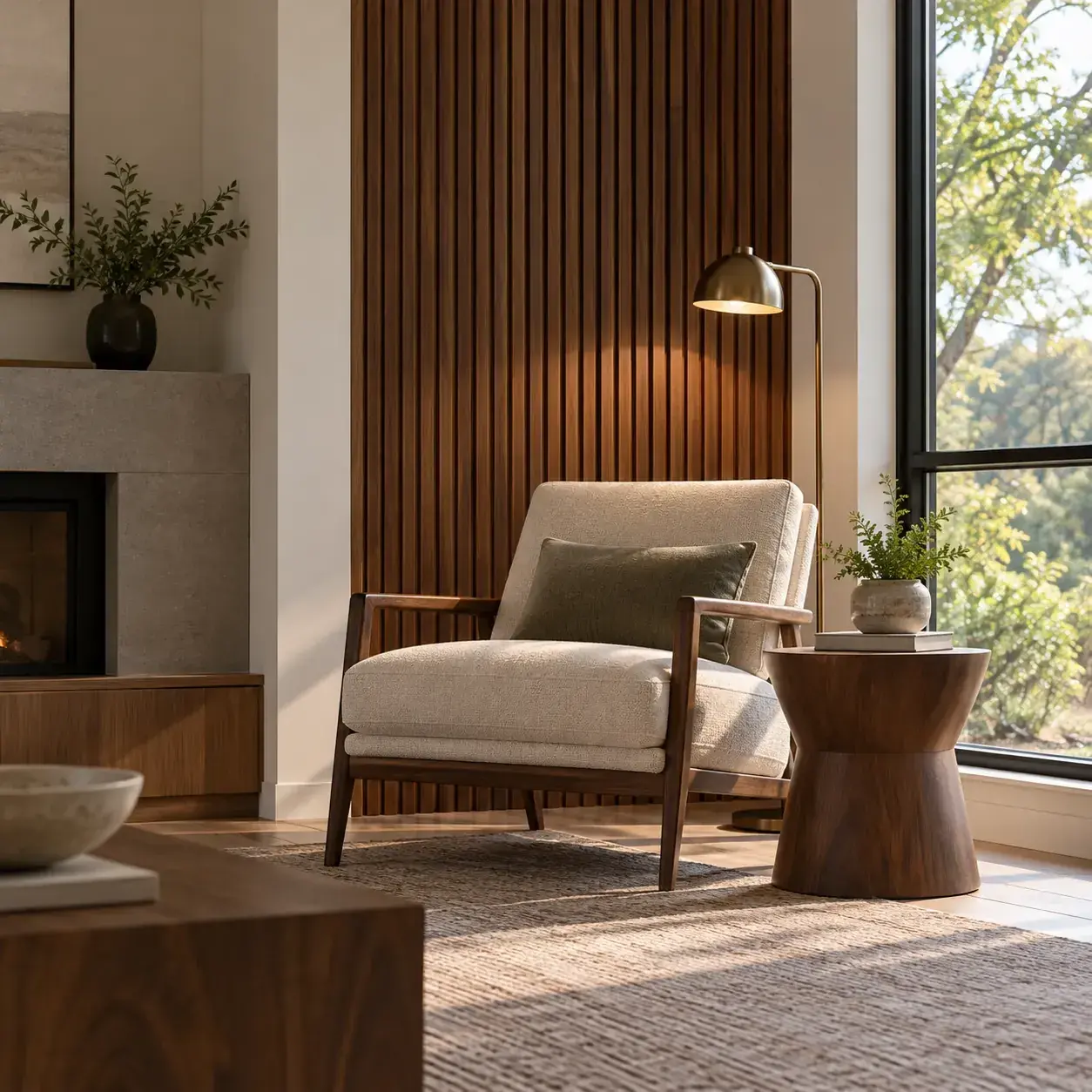
AI-generated design concept, not a photograph of a documented property. Create a reading-corner backdrop.
Put walnut slats behind one reading chair, paired with a small side table and focused lighting.
Make it work: Leave room to move the chair and clean the panel. A strongly textured wall looks calmer when the nearby textile patterns are simple.
3. Pair pale slats with a cream sofa
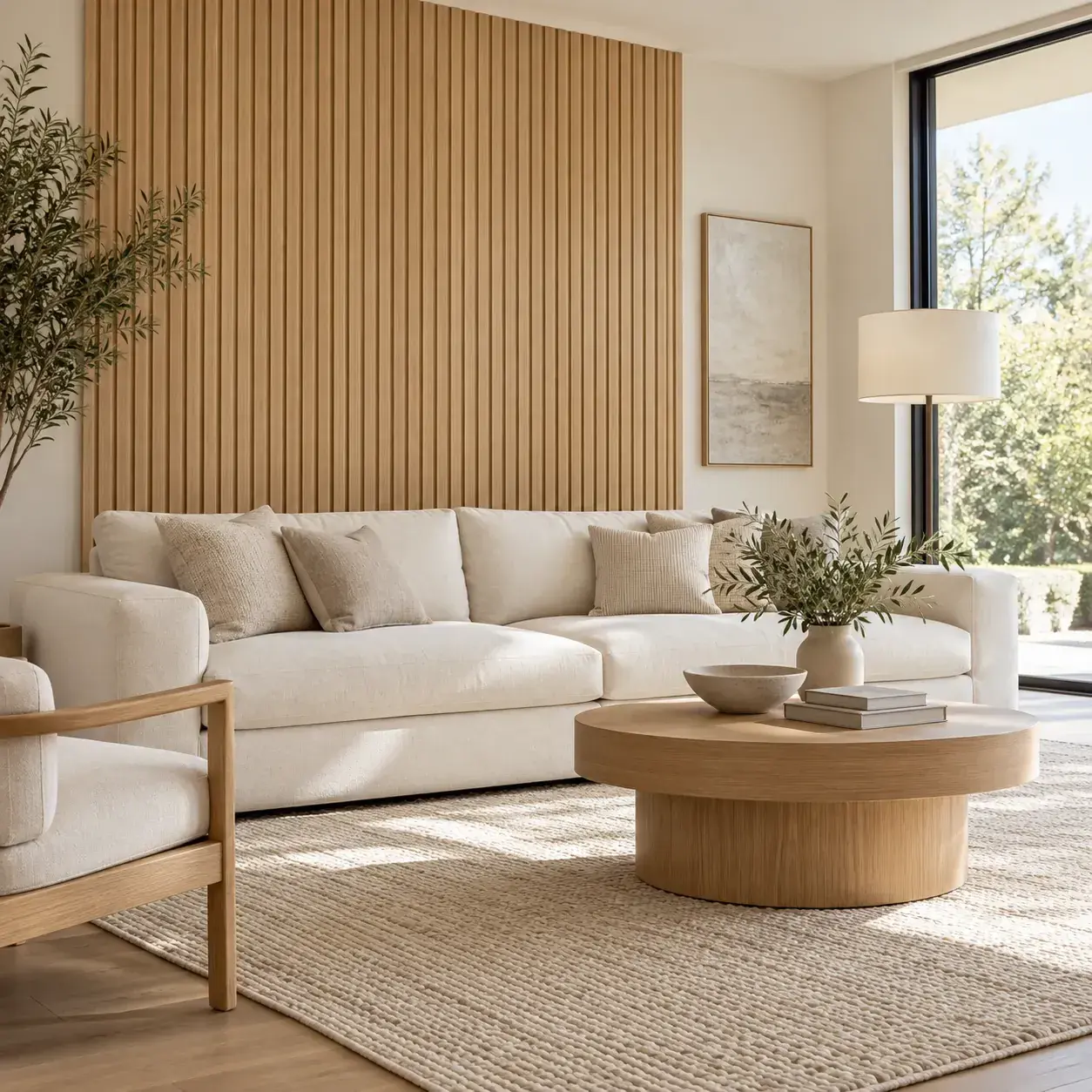
AI-generated design concept, not a photograph of a documented property. Pair pale slats with a cream sofa.
Use light wood behind a cream sofa and repeat the wood tone in one smaller furnishing.
Make it work: Test the finish beside the actual upholstery. Similar pale tones can look harmonious, but mismatched yellow and gray undertones can make both appear dull.
4. Use dark slats in a bright room
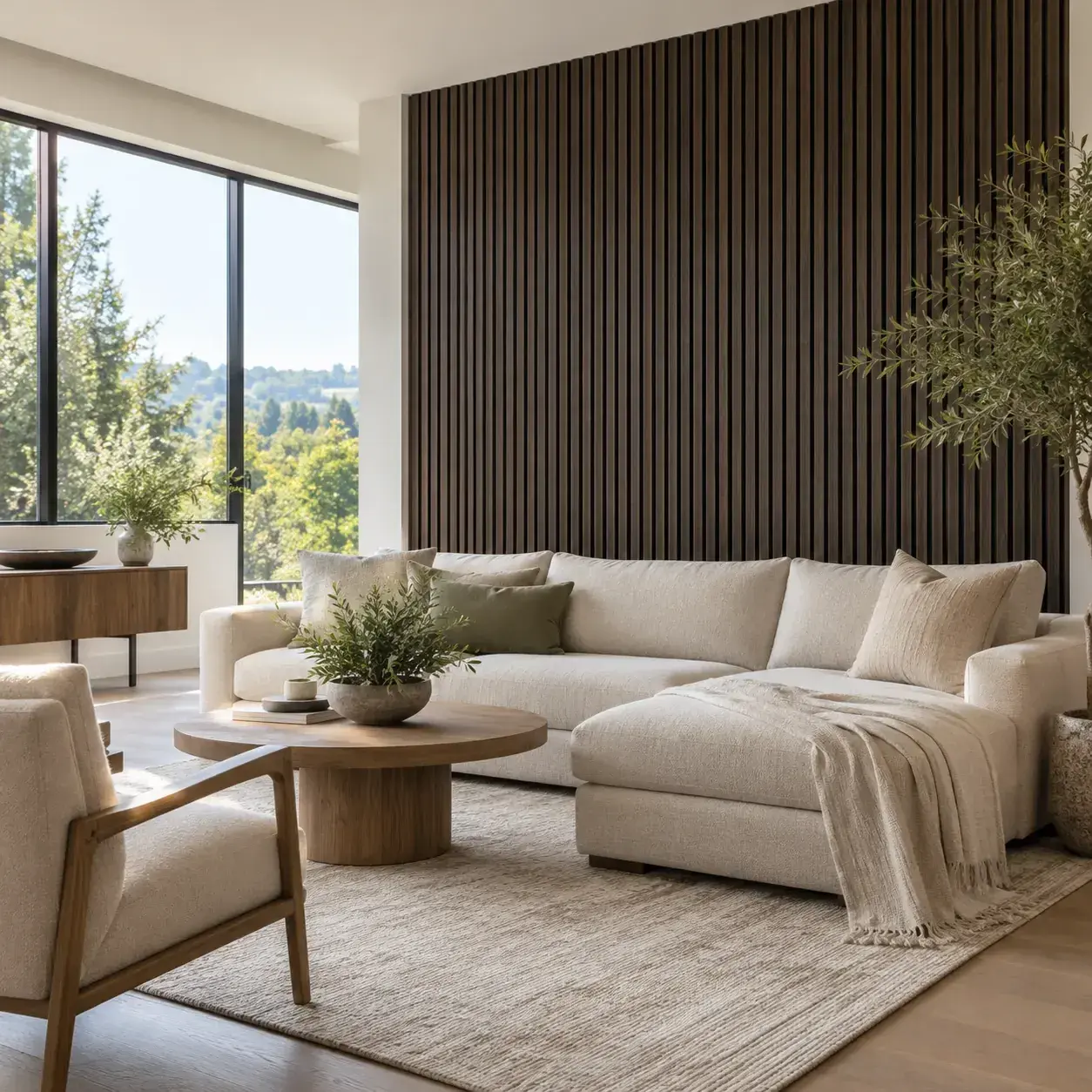
AI-generated design concept, not a photograph of a documented property. Use dark slats in a bright room.
Place a charcoal-stained slat feature on a wall that receives good ambient light, with lighter seating in front.
Make it work: Dark recesses show dust differently from smooth paint. Review a full-size sample before committing to a large surface.
5. Stop the panel at a deliberate boundary
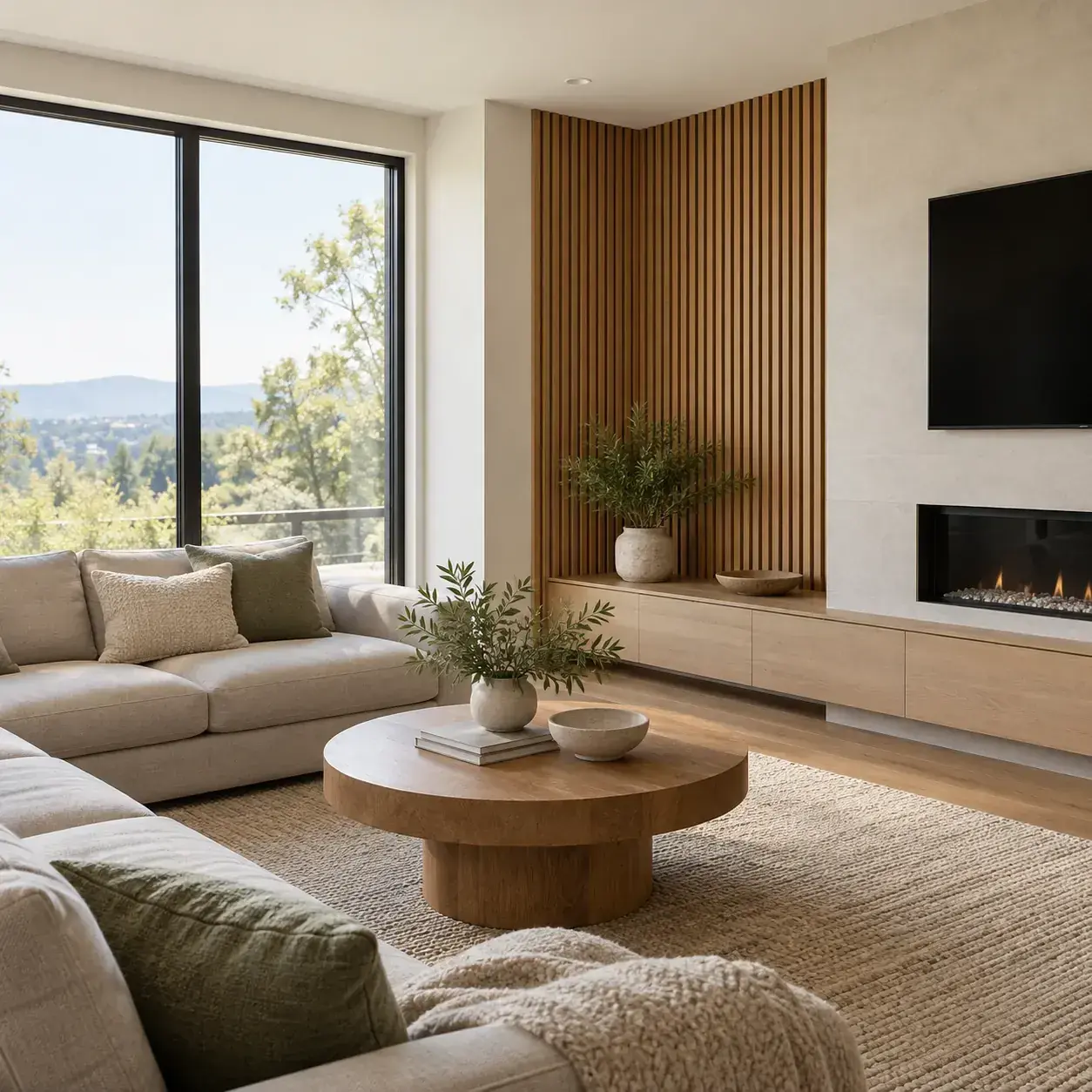
AI-generated design concept, not a photograph of a documented property. Stop the panel at a deliberate boundary.
End the slats at an inside corner or a planned trim edge instead of leaving an arbitrary strip beside a doorway.
Make it work: Work out the last full slat before buying materials. Awkward narrow cuts can undermine an otherwise careful installation.
6. Combine slats with closed storage
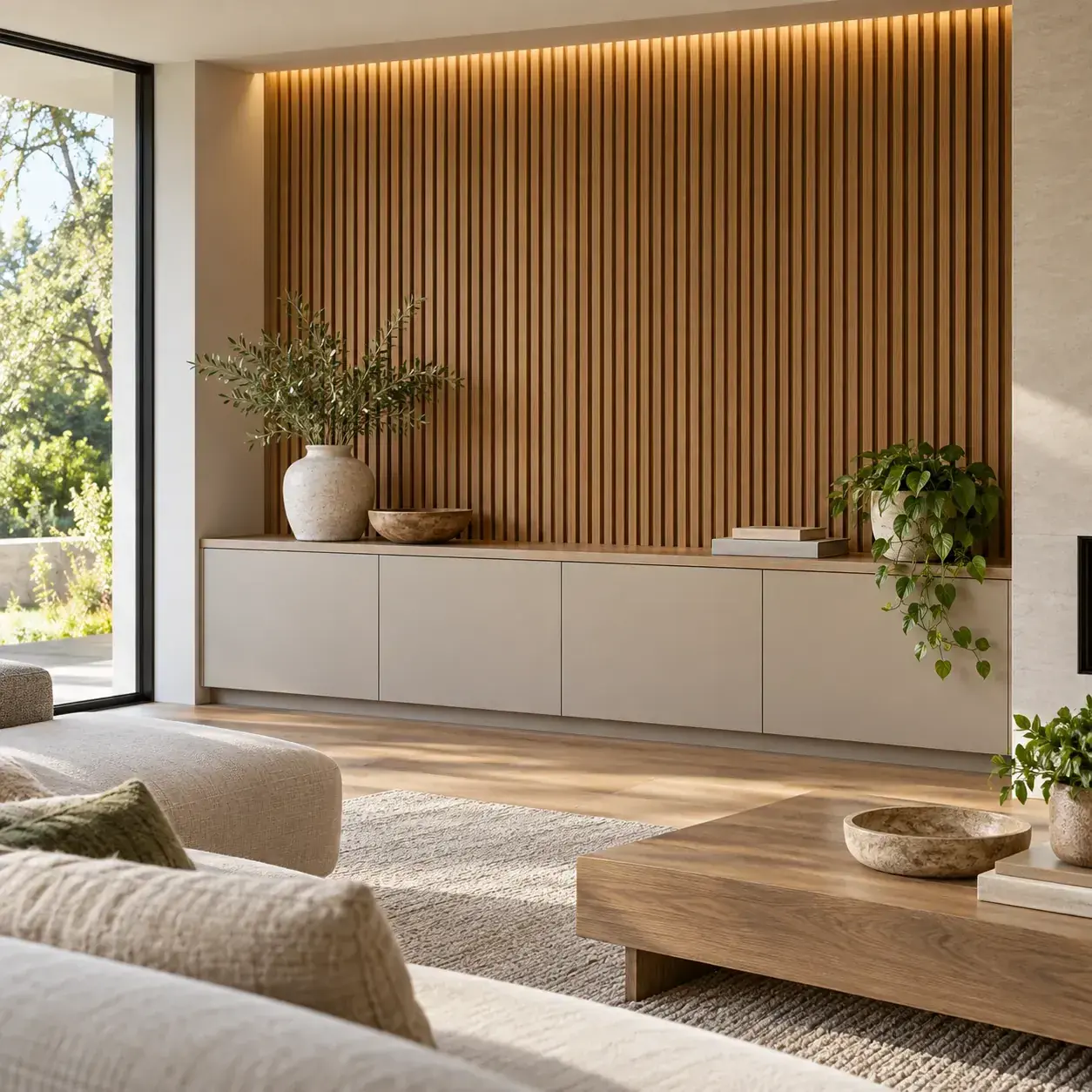
AI-generated design concept, not a photograph of a documented property. Combine slats with closed storage.
Set a slatted feature above a low closed cabinet, keeping everyday clutter behind plain doors.
Make it work: Provide structural backing for wall-mounted cabinetry independently of the decorative panel. Thin slats are not a reliable load-bearing substrate.
7. Use a partial room divider
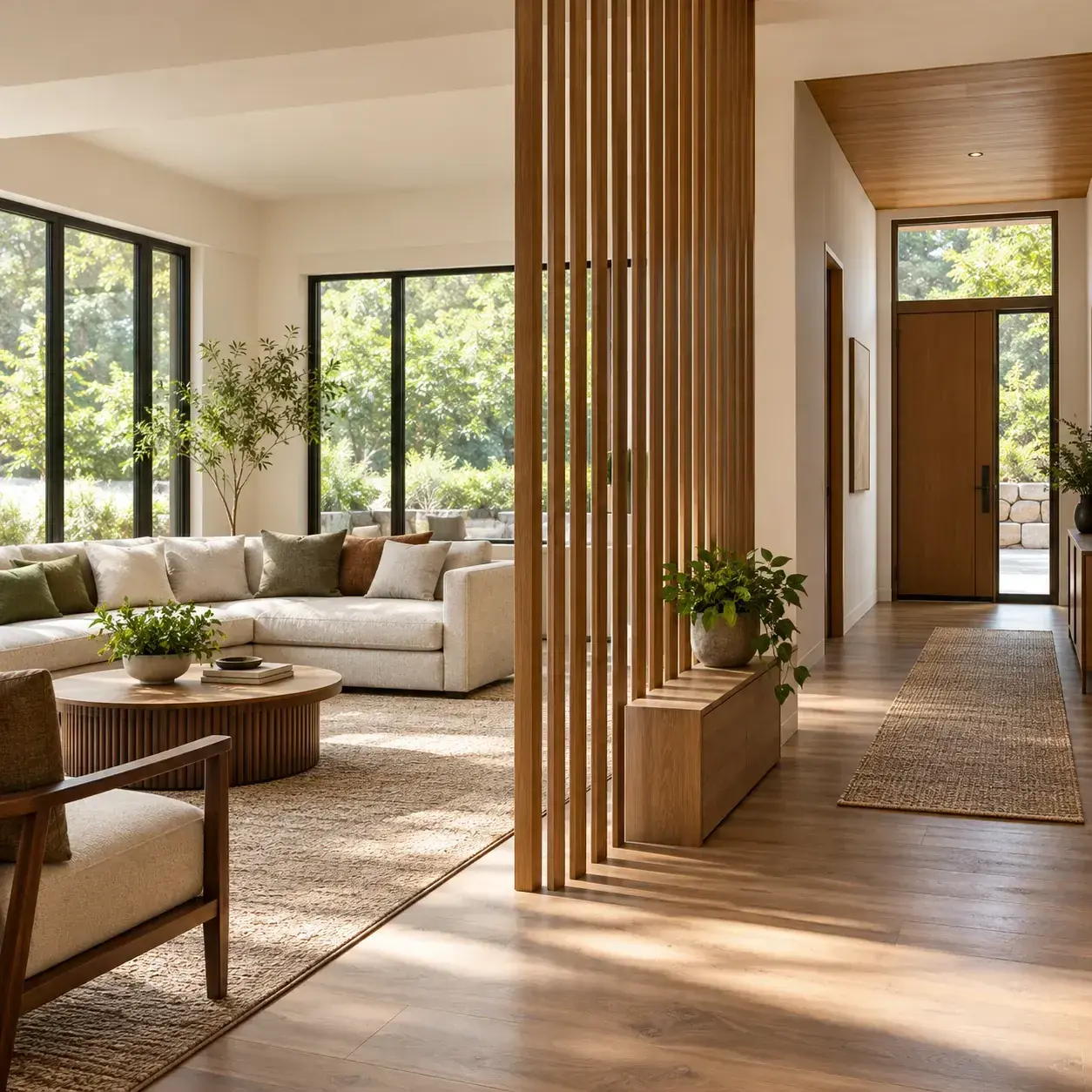
AI-generated design concept, not a photograph of a documented property. Use a partial room divider.
Introduce a properly designed slatted divider between the seating area and an entry route while preserving light.
Make it work: Check stability, anchorage and circulation. A decorative divider is not a guardrail, fire separation or substitute for a required wall.
8. Add soft wall-washing light
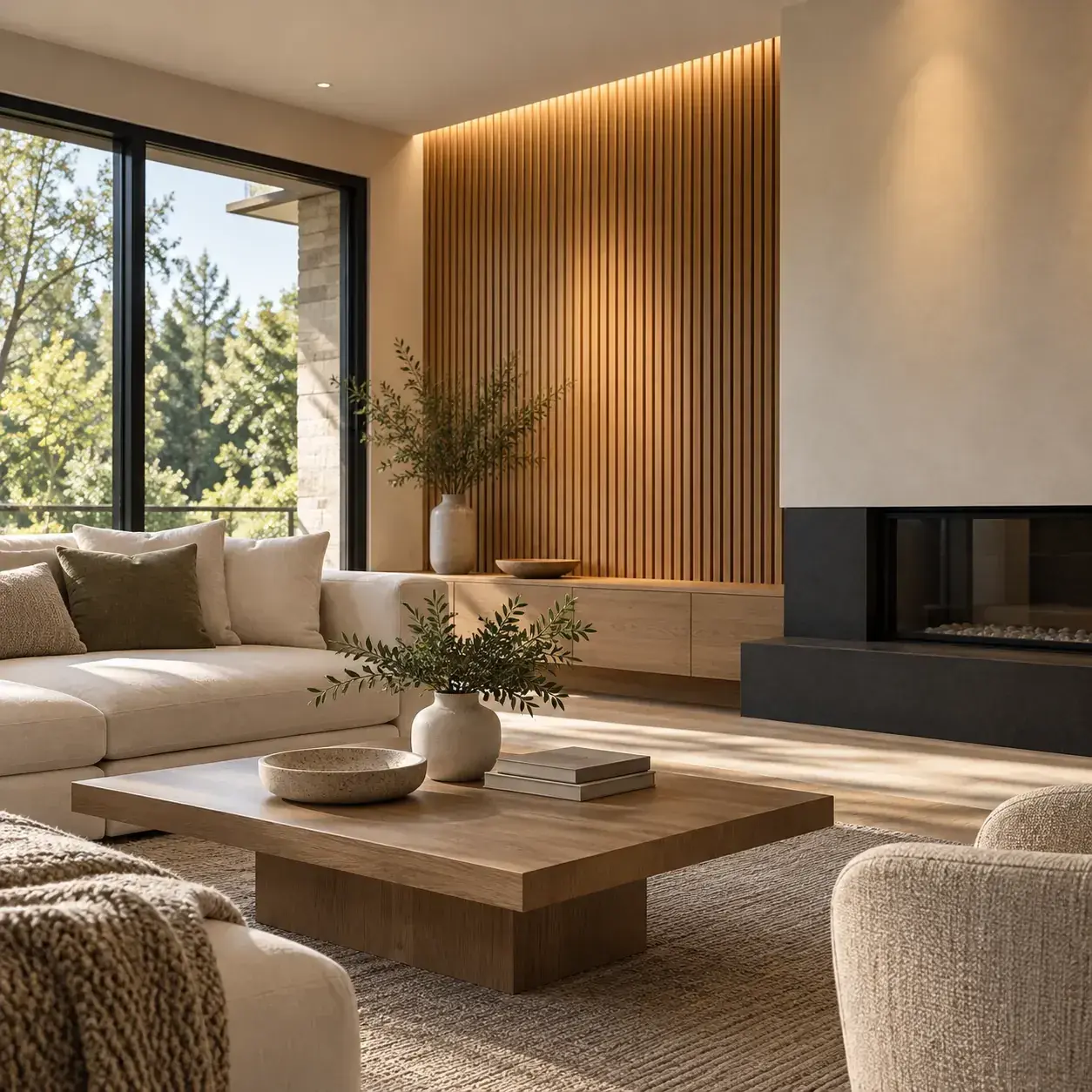
AI-generated design concept, not a photograph of a documented property. Add soft wall-washing light.
Light a modest slat panel from a concealed or unobtrusive fixture so its texture appears without harsh glare.
Make it work: Allow access to drivers and wiring. Test the beam angle first because grazing light can exaggerate uneven surfaces.
9. Balance slats with one large artwork
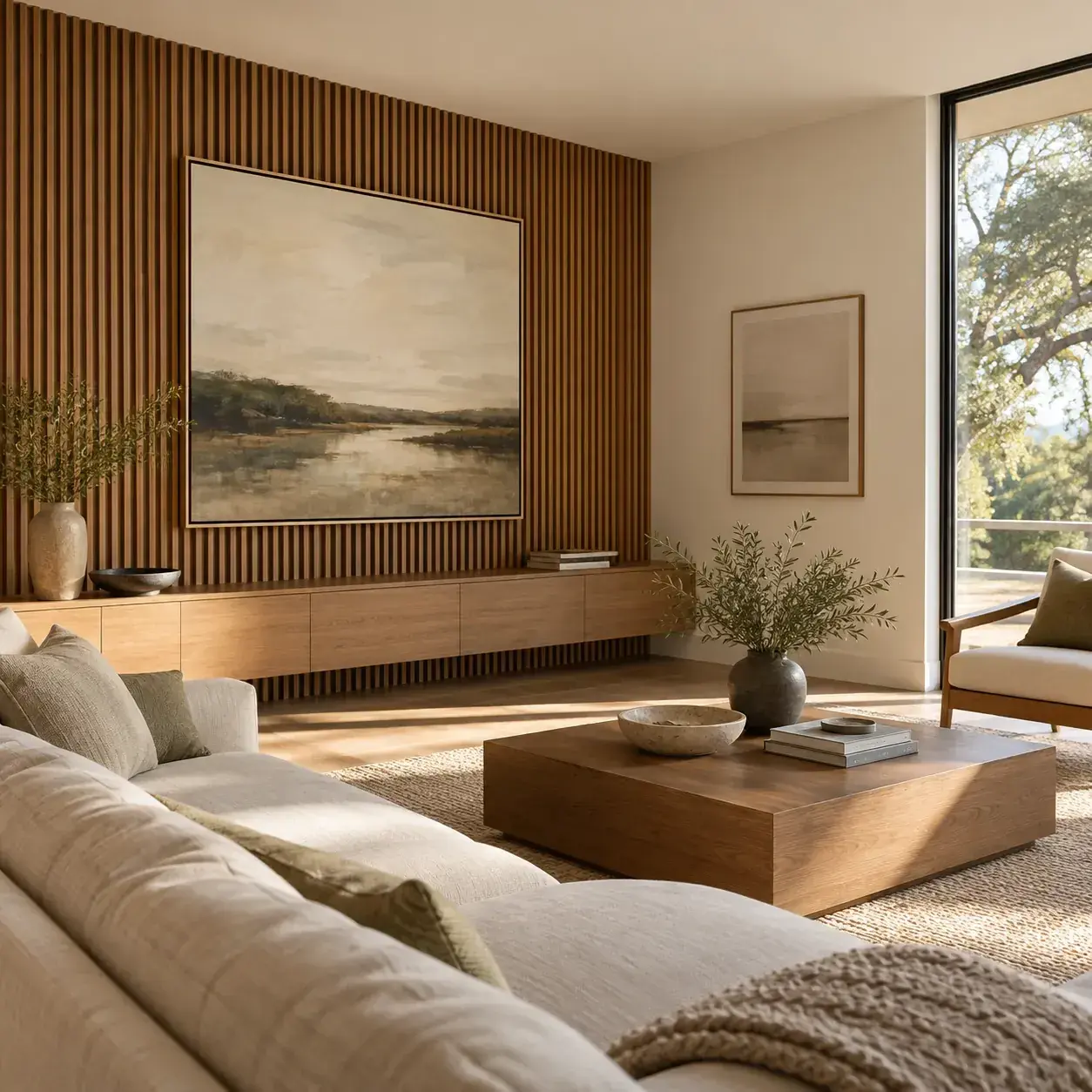
AI-generated design concept, not a photograph of a documented property. Balance slats with one large artwork.
Use one quiet artwork on an adjacent plain wall rather than hanging a cluster over the slat feature.
Make it work: Keep the artwork and panel in proportion. The room needs a resting place for the eye as well as texture.
10. Turn a shallow niche into a feature
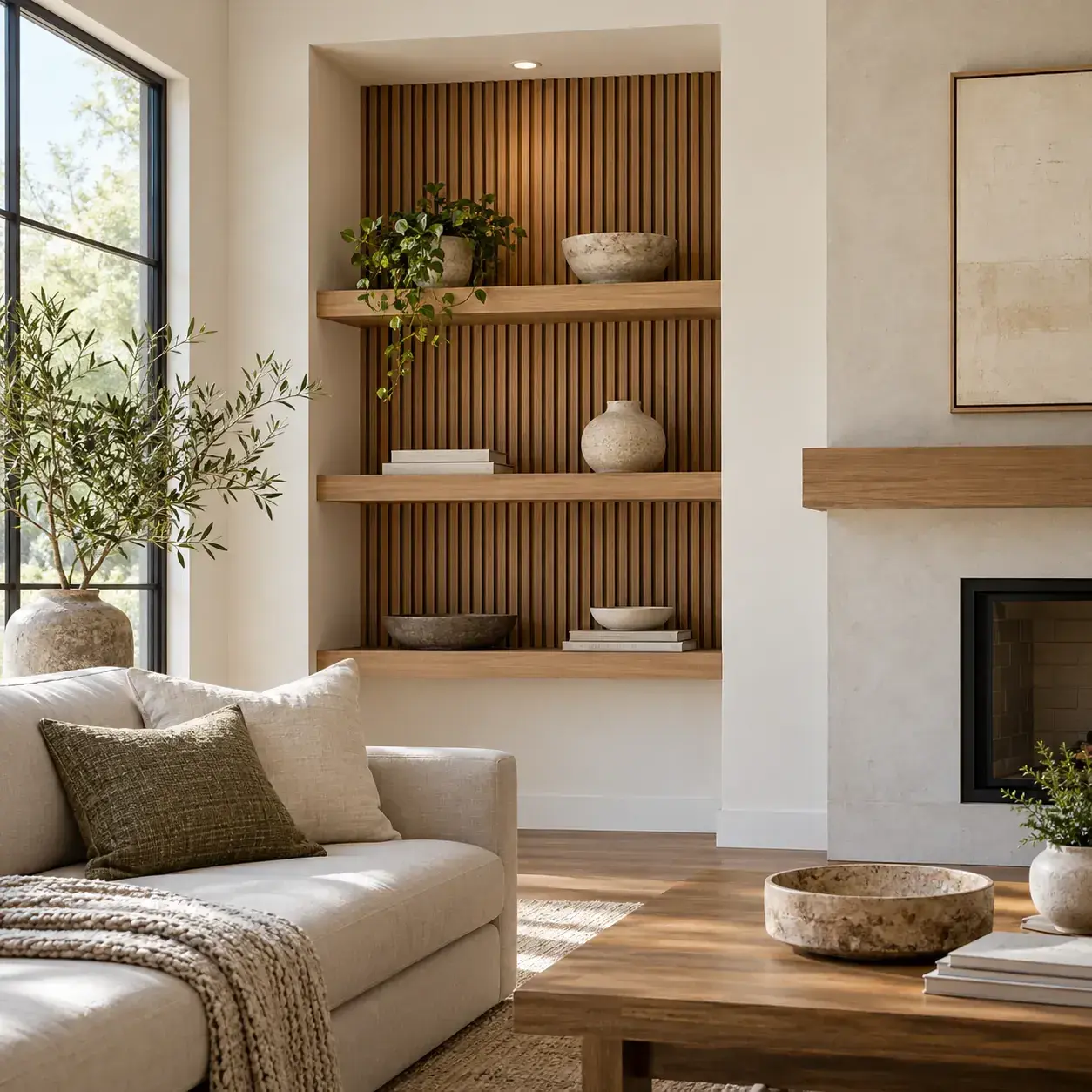
AI-generated design concept, not a photograph of a documented property. Turn a shallow niche into a feature.
Line the back of an existing nonstructural display niche with slats and keep the shelves sparsely arranged.
Make it work: Do not cut a new niche until utilities and structure have been checked. Existing depth should determine the objects displayed.
11. Repeat the material in a small second detail
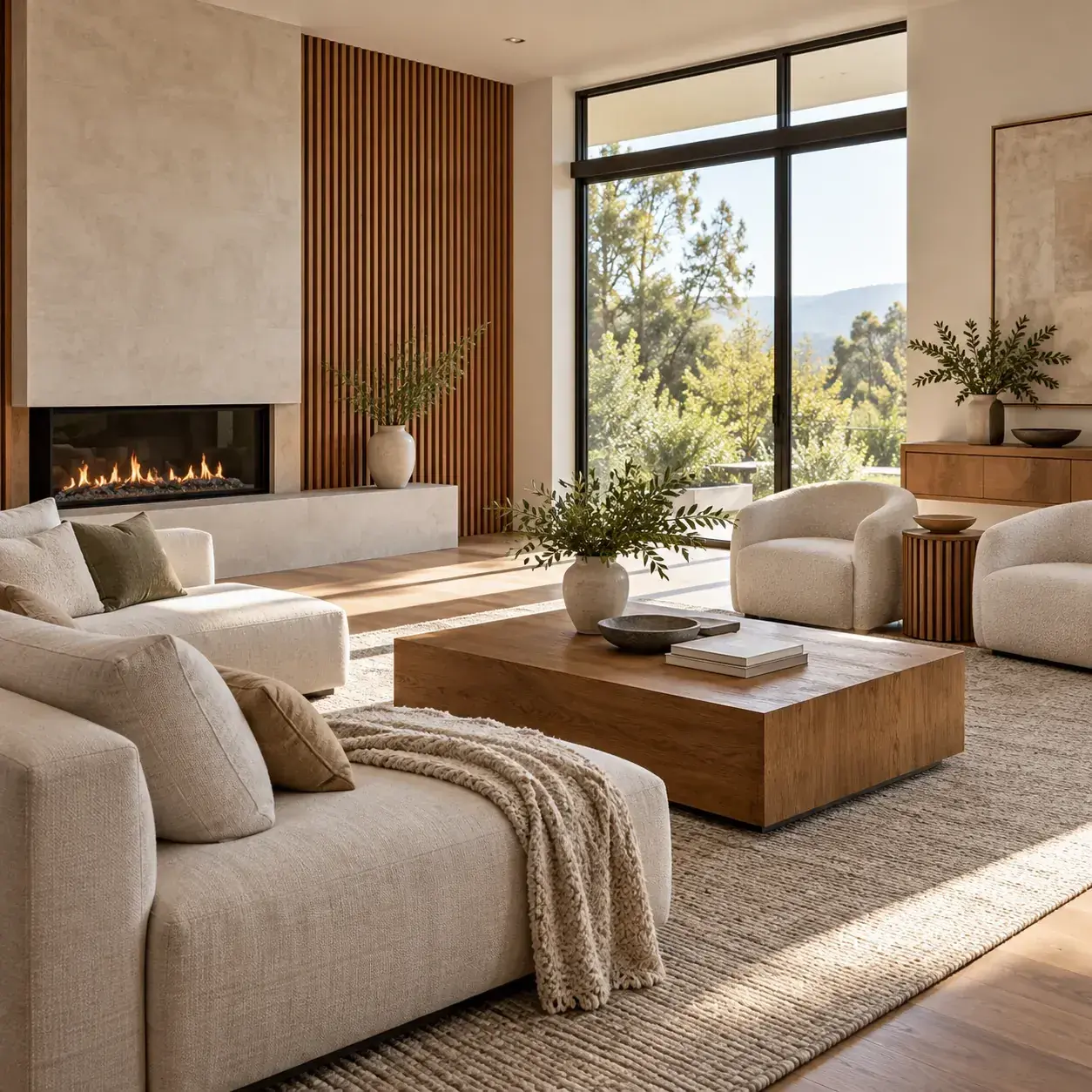
AI-generated design concept, not a photograph of a documented property. Repeat the material in a small second detail.
Echo the wall's wood tone in a side table or shelf across the room instead of adding another full slatted wall.
Make it work: Limit the number of competing wood species. A small repetition can connect the room without making it feel like a matched showroom set.
Frequently asked questions
Do slatted panels soundproof a living room?
Do not assume they do. Some products are designed to help with room acoustics, but decorative slats alone are not a verified sound-isolation system. Request relevant test data for the complete assembly if acoustic performance is part of the purchase.
Should the slats cover every wall?
Usually one defined area is enough for a clear design statement. Choose the wall that supports the room's focal point, then let quieter surfaces provide balance.
How do I choose the wood tone?
Compare samples with the floor, main furniture and daylight. A related undertone usually matters more than forcing every wood surface to be an exact match.
Sources and further reading
[1] National Park Service: Identifying Primary and Secondary Interior Spaces
Sources
- National Park Service: Identifying Primary and Secondary Interior Spaces. Checked October 13, 2026
Share this article
Get new guides by email
Practical home articles and free resources. No spam, and you can unsubscribe at any time.
Keep reading
15 Icy Blue Bedroom Paint Ideas for 2026
Explore 15 icy blue bedroom paint ideas, from accent walls to blue ceilings, with warm pairings and practical sampling tips for 2026.
October 2026, 6 min read
Neo Deco Living Room Ideas: How to Get the Look on a Budget
Create a budget Neo Deco living room with curves, geometric patterns, metallic accents, jewel tones, and balanced furniture styling.
October 2026, 3 min read
15 Smart Small Laundry Room Stackable Washer Dryer Ideas
Explore 15 smart small laundry room stackable washer dryer ideas. Compare illustrated concepts, practical layout tips, and planning checks.
October 2026, 6 min read