15 Icy Blue Bedroom Paint Ideas for 2026
Explore 15 icy blue bedroom paint ideas, from accent walls to blue ceilings, with warm pairings and practical sampling tips for 2026.
By Home Crane Editors. . 6 min read.
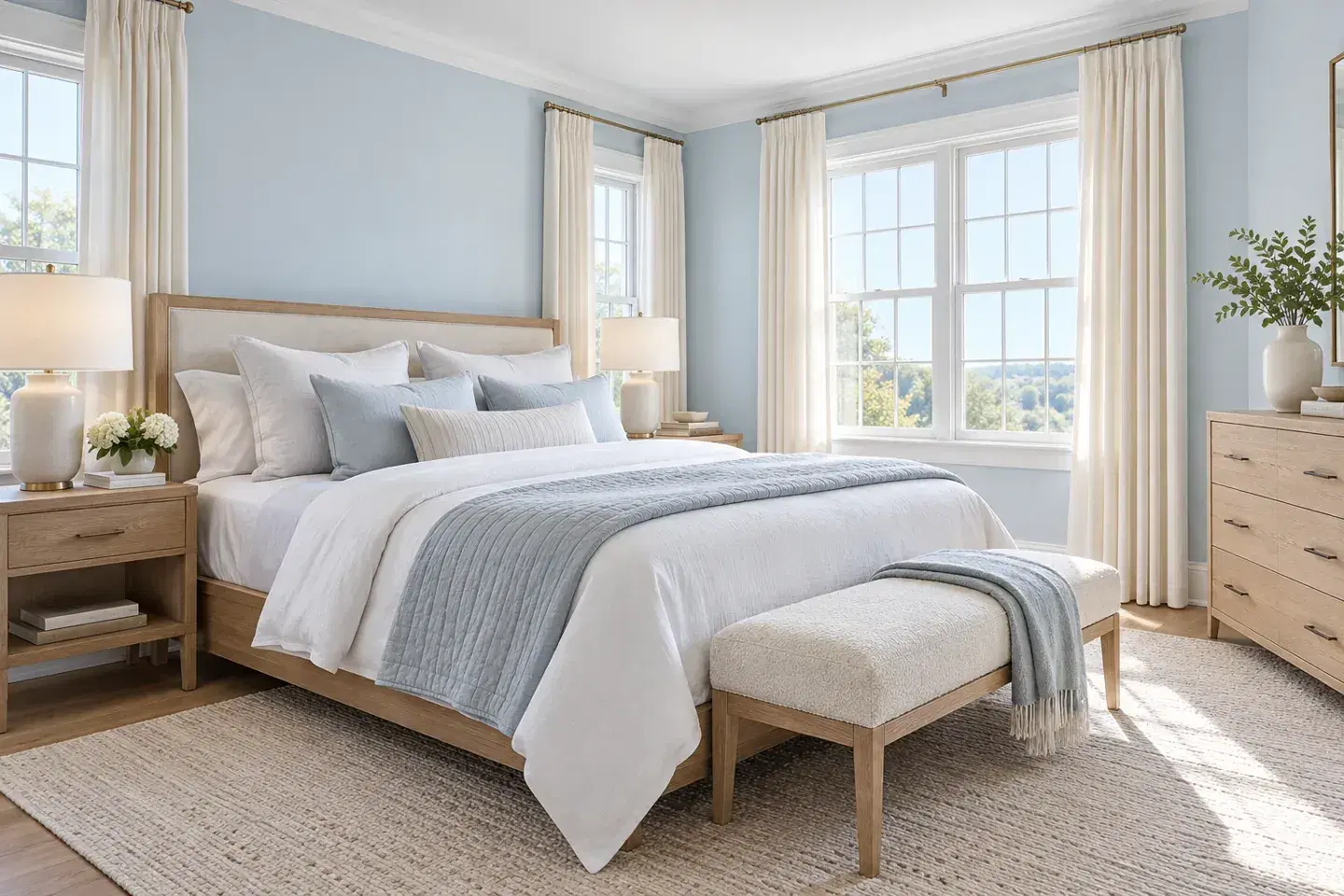
Icy blue can make a bedroom feel airy without turning it into a stark white box. The secret is the surrounding palette: warm wood, cream textiles, or a small amount of deeper color gives a pale blue something to work with.
These are 15 design ideas for 2026, not a ranking backed by search or sales data. The images are original concepts, not exact paint-color renderings. Choose physical samples and inspect them in your own room before buying a full quantity.
Before you start
Blue paint changes with light and adjacent surfaces. Tape large painted samples near the headboard, window, and a darker corner; review them during the day and under your evening lighting. Include trim and bedding in the comparison.
For a starting point, Sherwin-Williams describes Tradewind SW 6218 as a pale blue with gray and green influence. [1] Benjamin Moore's light-blue collection offers other directions, including Breath of Fresh Air 806 and Ocean Air 2123-50. [2] These are candidates to sample, not exact matches to the illustrations. Choose sheen and preparation according to the surface and product.
1. Paint all the walls icy blue with white trim
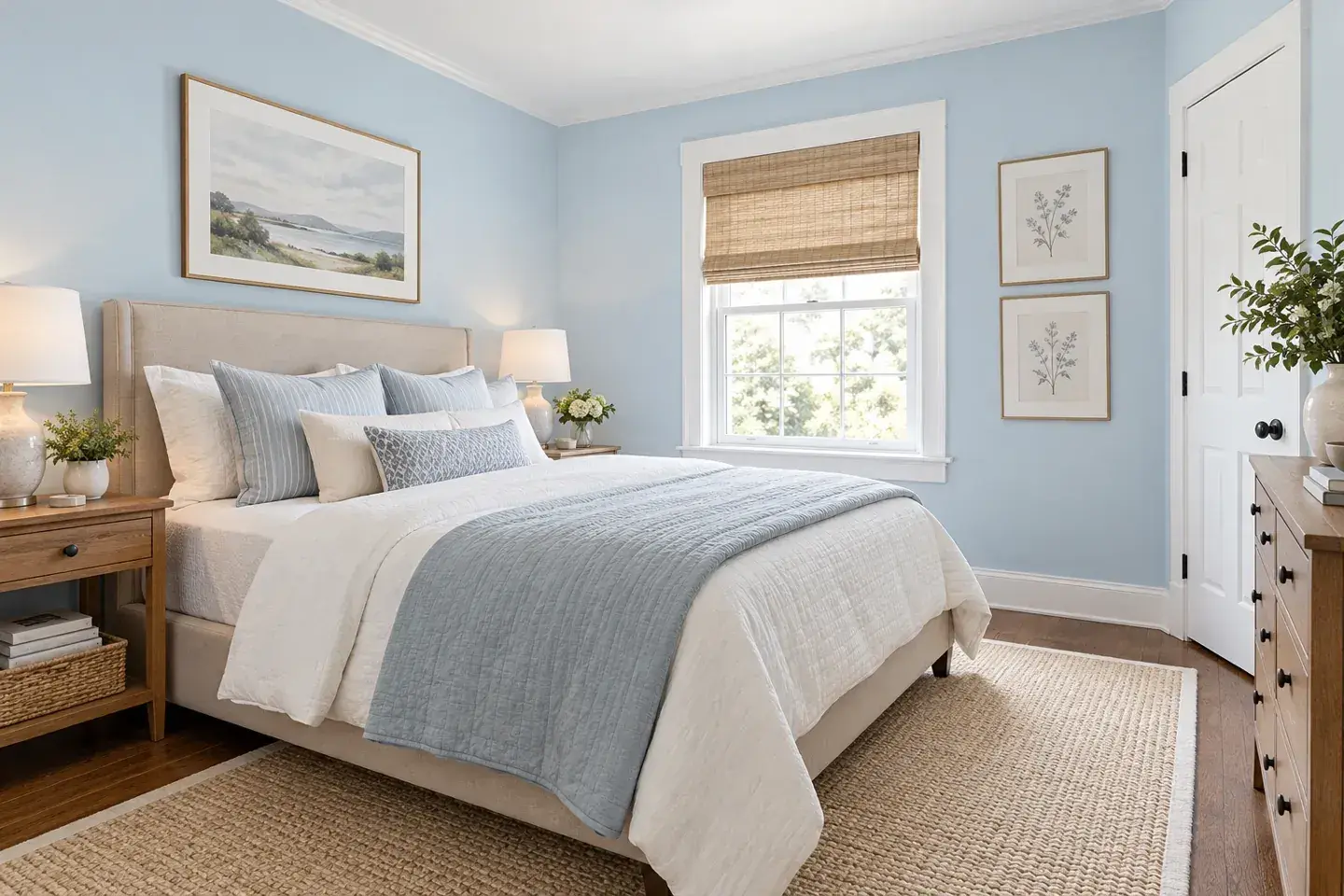
A complete pale-blue envelope is a straightforward choice when the room has several small wall sections. Crisp white trim keeps the edges legible, while simple white bedding repeats that clean contrast.
Compare the chosen blue beside the existing trim before committing. A very cool white can make the room feel sharper; a creamier white can soften it. If you are keeping the trim, select the wall color around that fixed element rather than assuming every pale blue will coordinate.
2. Create one blue headboard wall
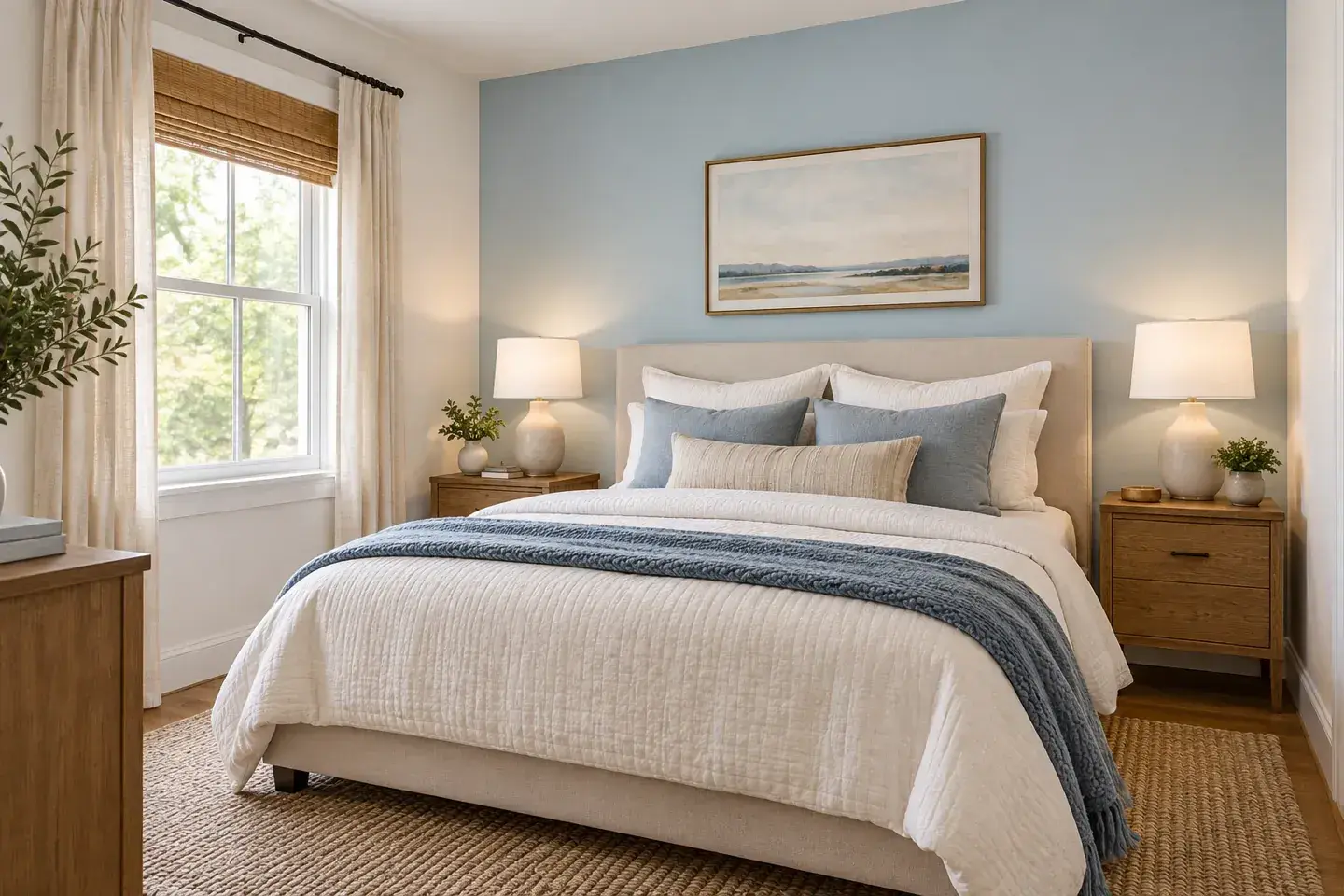
A single accent wall concentrates color where the bed already creates a focal point. It also limits the amount of repainting if you later change the palette. Carry the color across the entire wall instead of stopping arbitrarily at the mattress edges.
Keep the other walls calm and repeat blue once in a small textile. In a room with an off-center window, test the layout on a photograph first; the architecture may make another wall a better candidate.
3. Put the color on the ceiling
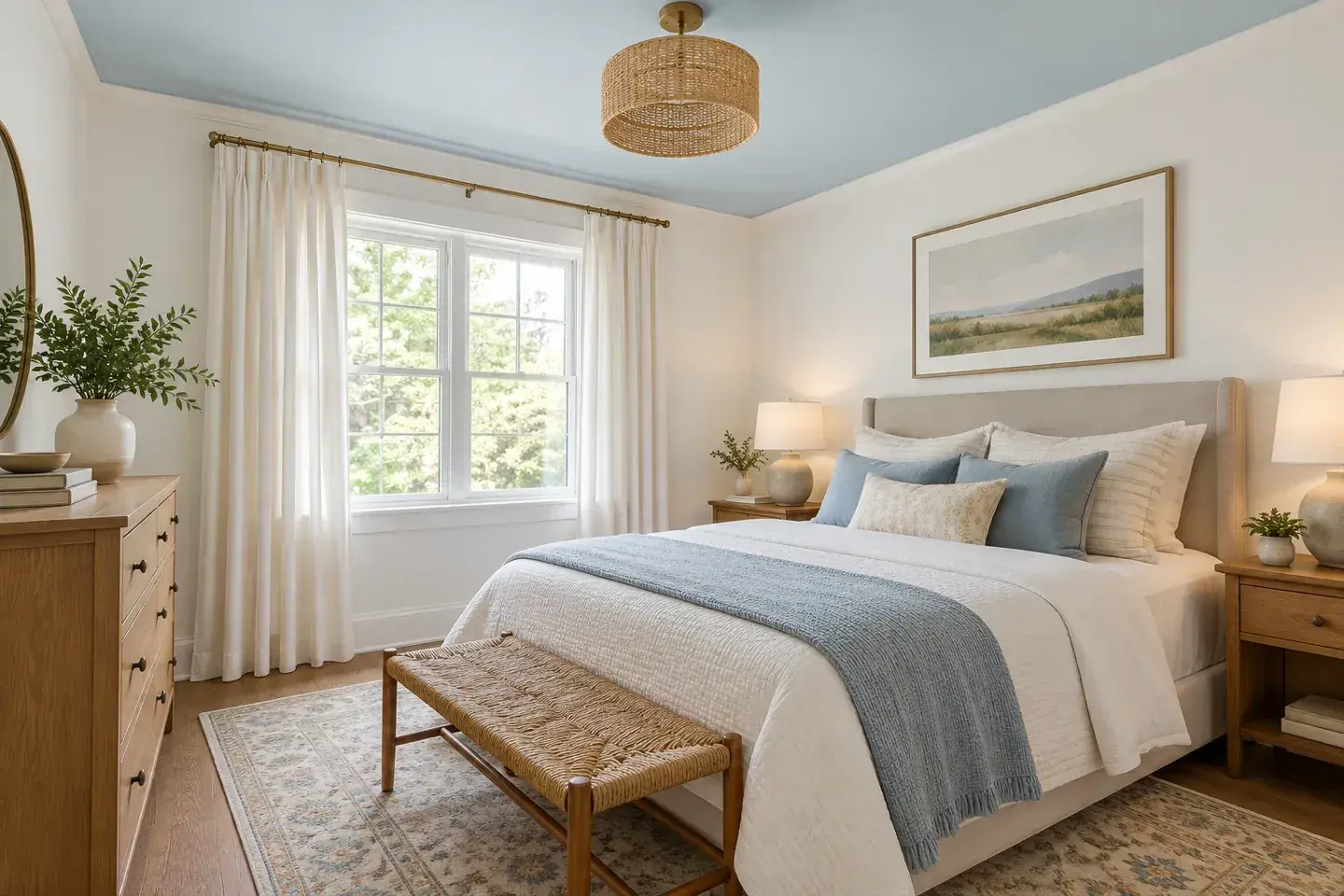
An icy blue ceiling introduces color into the view from the bed while keeping the walls neutral. It works especially well when there is a clear ceiling plane and little competing overhead detail.
Sample the paint horizontally as well as vertically. A ceiling receives different light from a wall. Use a finish suitable for that surface and plan safe access; standing on bedroom furniture is not a substitute for appropriate painting equipment.
4. Pair a gray-blue wall with pale oak
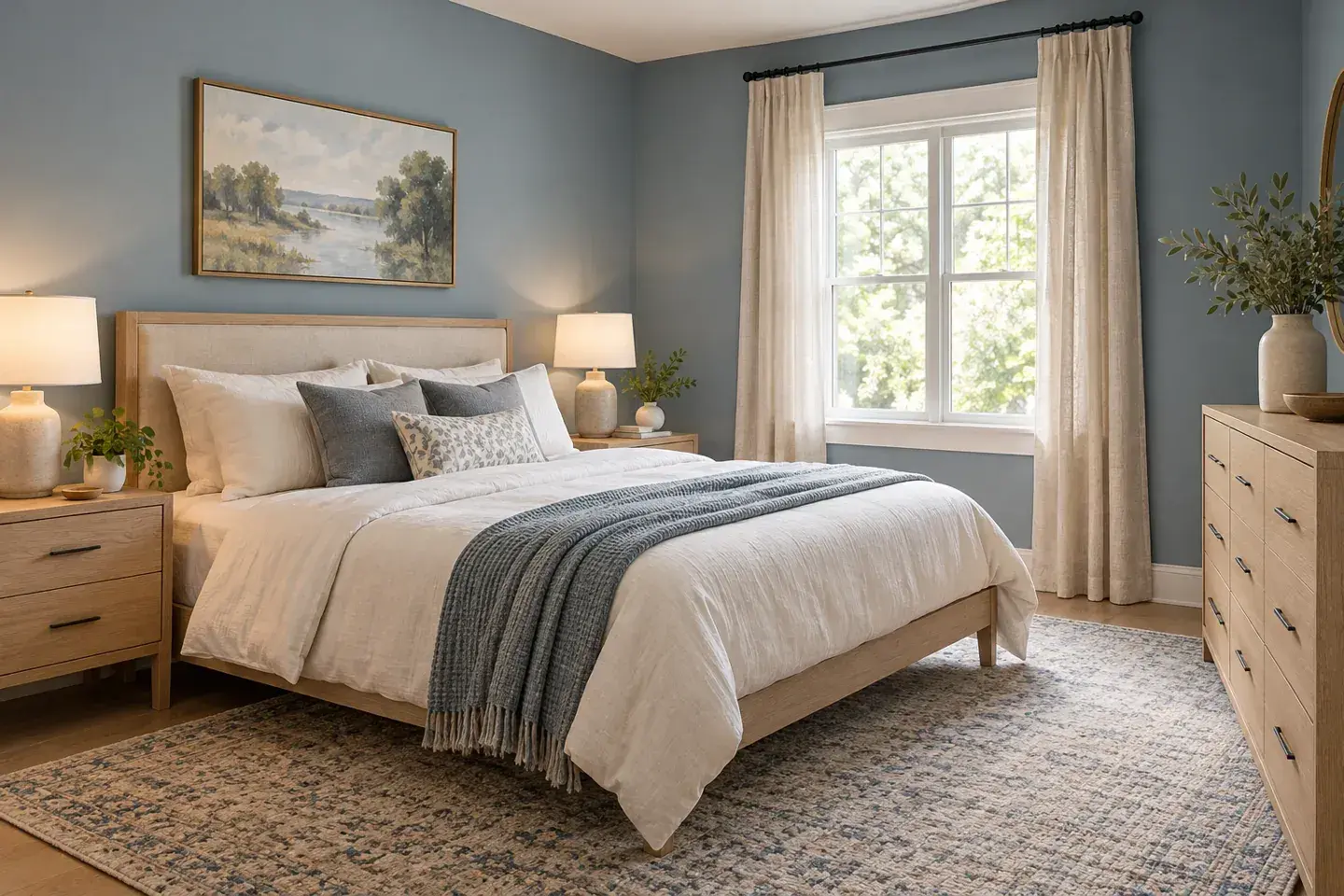
A blue with a muted gray influence can sit comfortably beside pale oak. Let the wood grain provide visual warmth and use plain bedding so the pairing stays relaxed.
Check the wood's undertone before choosing the paint. Some oak reads yellow, some pink, and some nearly beige. Hold the sample beside the actual bed or dresser rather than matching a product photograph. A woven cream rug can bridge the two materials.
5. Soften icy blue with warm cream
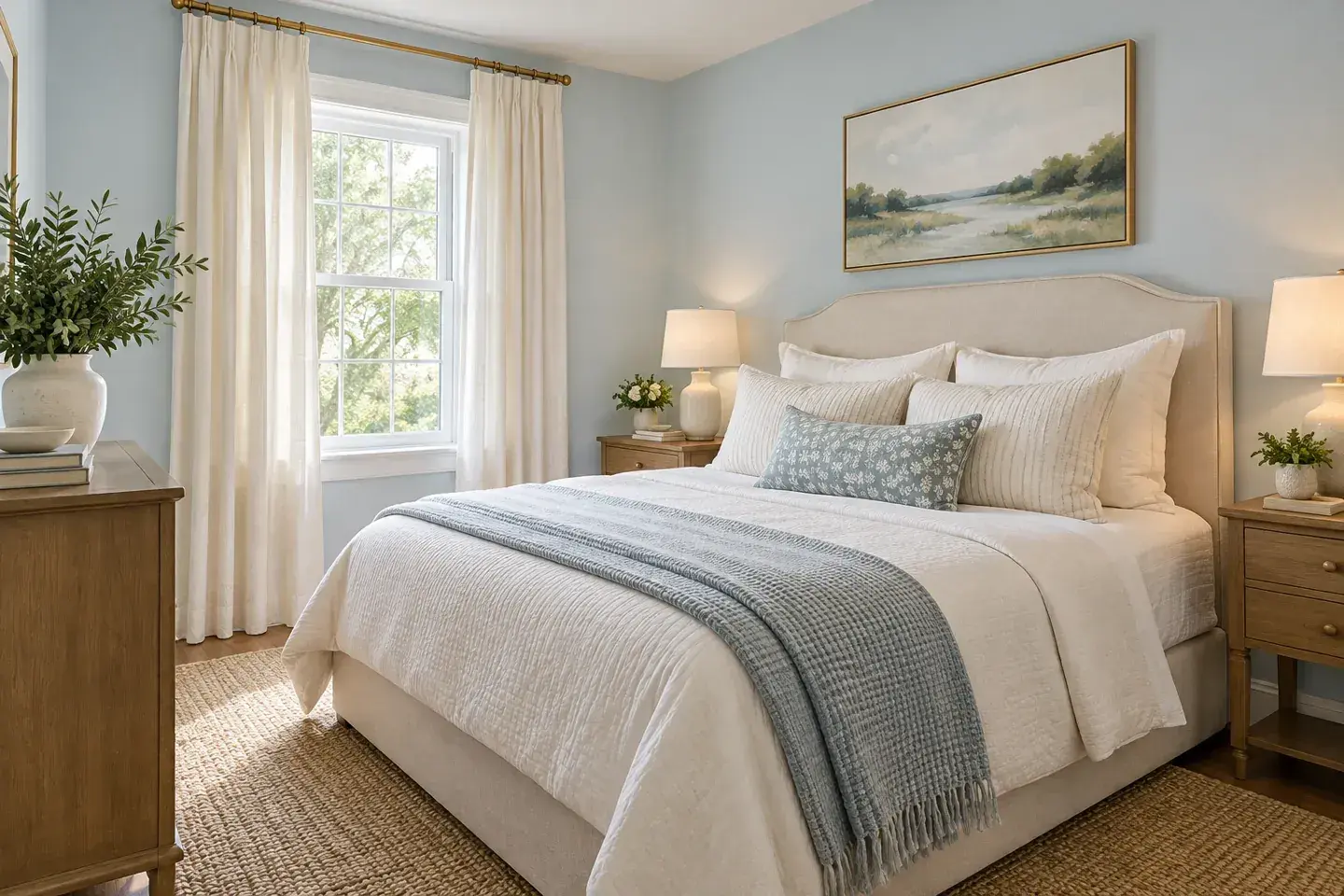
Cream curtains and ivory bedding give pale blue a gentler appearance. This is useful when you like cool wall color but do not want a crisp blue-and-white coastal scheme.
Keep the creams intentionally related. Several unrelated off-whites can look accidental beside a clean blue. Compare the largest fabric areas together in the room and choose a simple repeated tone. Texture, such as a nubby throw or woven curtain, can add interest without another color.
6. Ground the room with navy accents
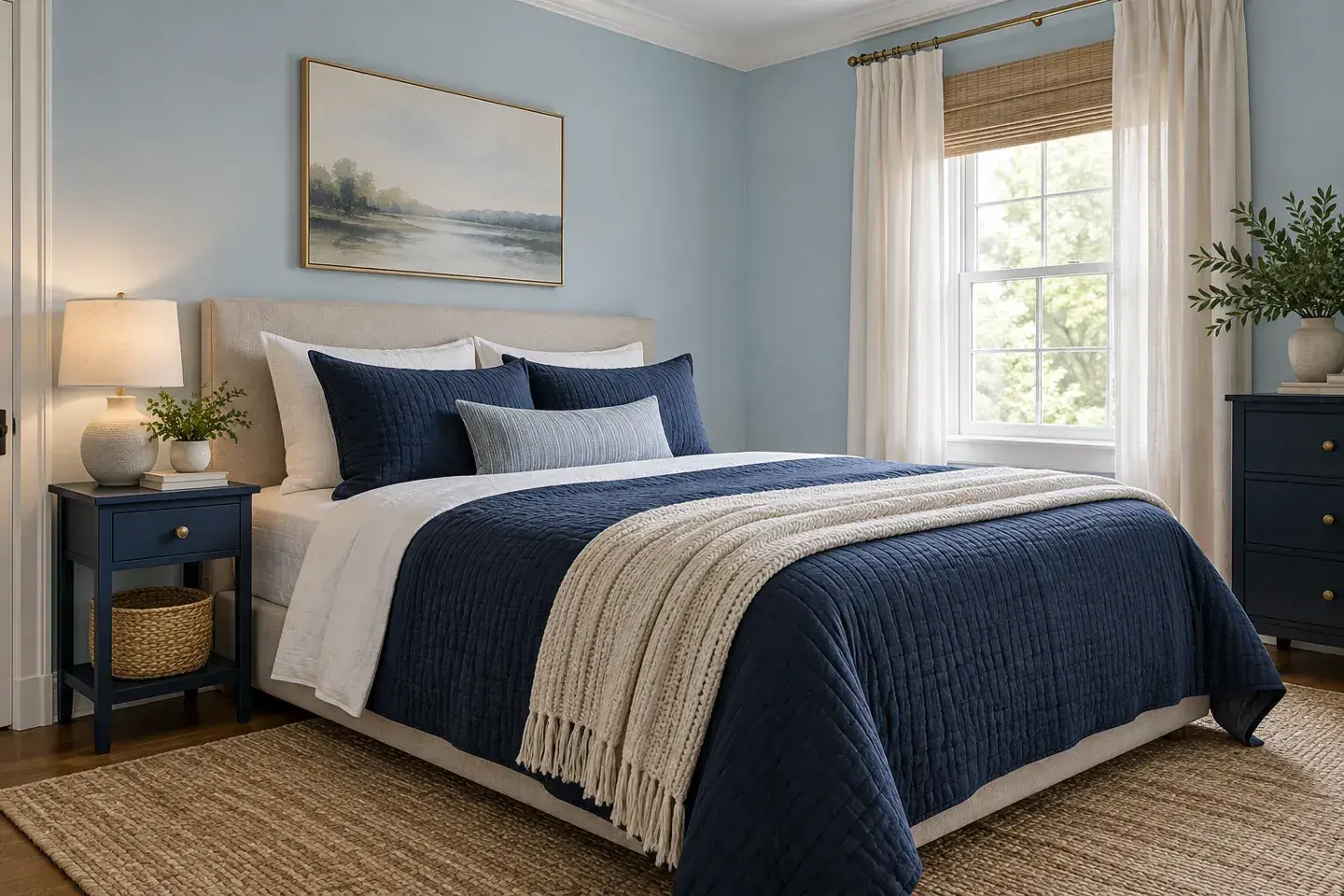
A navy coverlet or small bedside table adds a darker anchor to very pale walls. The contrast makes the blue look deliberate and gives the room a little more definition.
Use navy in a limited area first. A dark bedspread, heavy drapes, and a large dark rug together may overwhelm the airy effect. If you already own dark furniture, a few navy details may be enough to connect it to the new walls.
7. Keep a walnut bed and lighten the walls
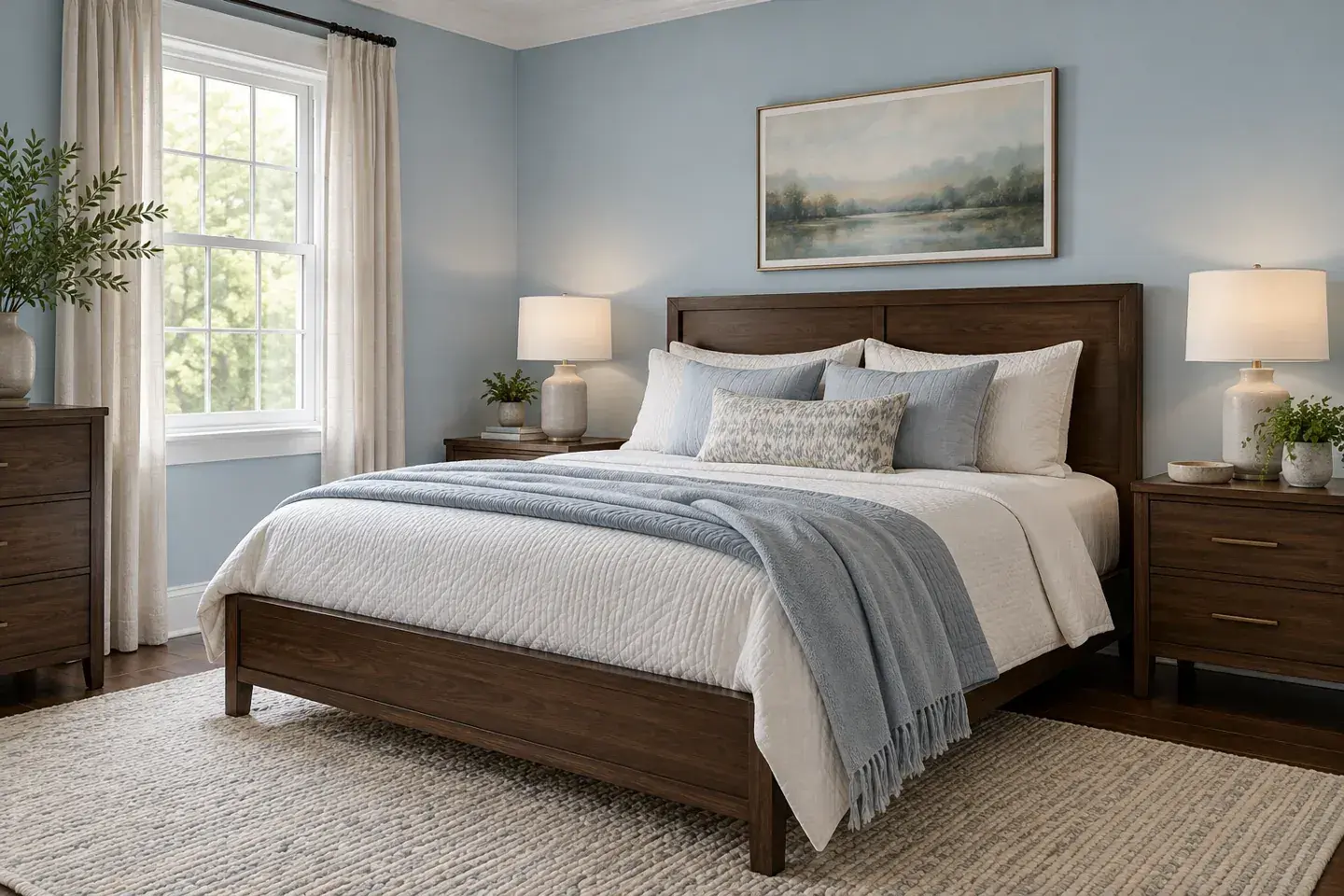
Rich brown furniture can look more current against a restrained icy blue than against another warm brown. Keep the wood finish visible and simplify accessories around it.
Test the paint beside both the shaded and sunlit sides of the furniture. Warm wood can make a cool paint appear more blue by comparison. White or oatmeal bedding creates a useful pause between the two large color areas and avoids a room that feels split into dark and light halves.
8. Add a muted terracotta accent
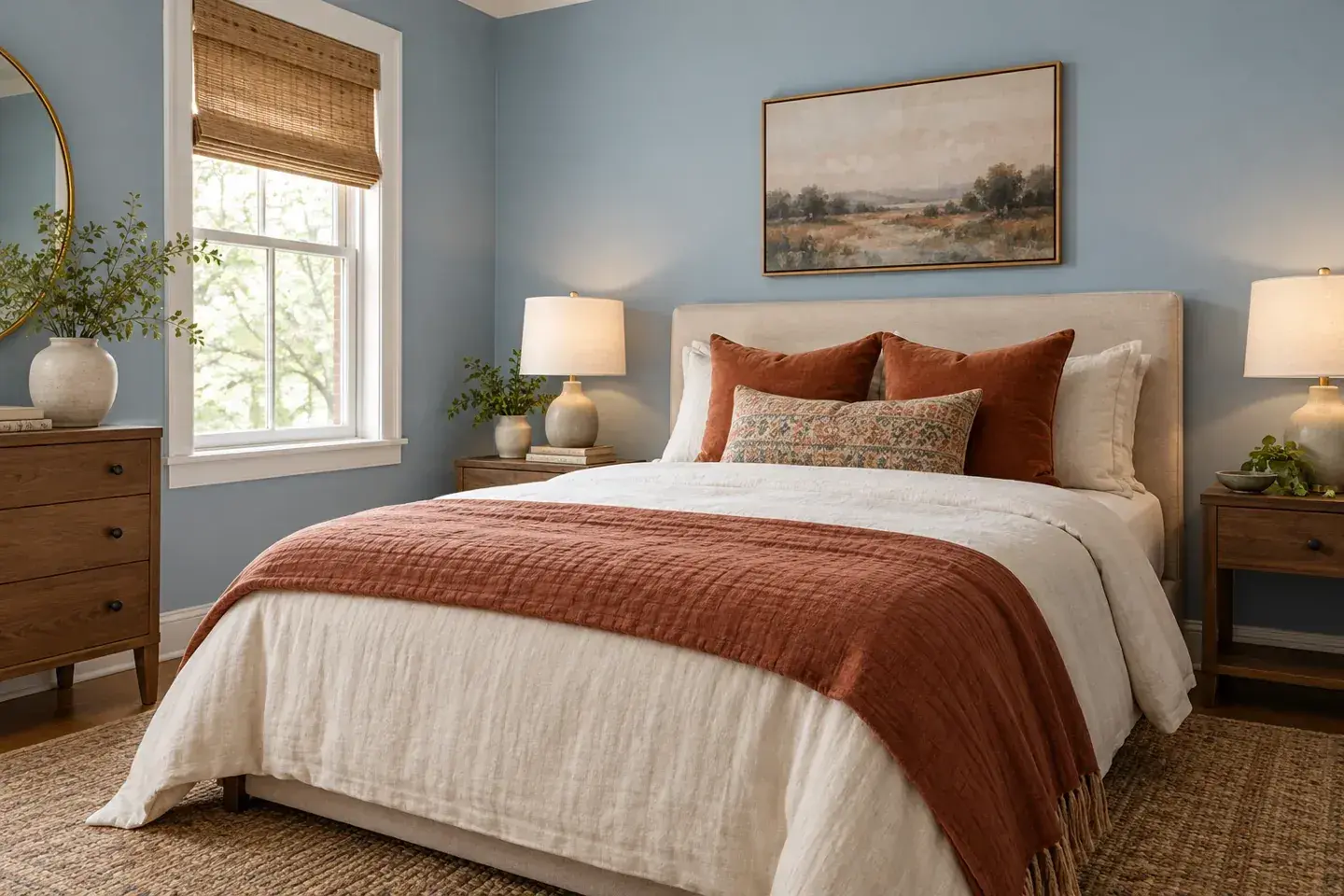
A rust cushion or clay-colored throw brings warmth to pale blue without requiring a large additional purchase. Muted versions tend to be easier to combine than bright orange.
Make the accent small enough to swap. Try one textile before buying coordinating lamps, art, and curtains. A neutral rug and simple wood furniture give the blue and terracotta room to work together. This is a styling option, not a rule that every cool room needs an orange counterpoint.
9. Try a soft blue color drench
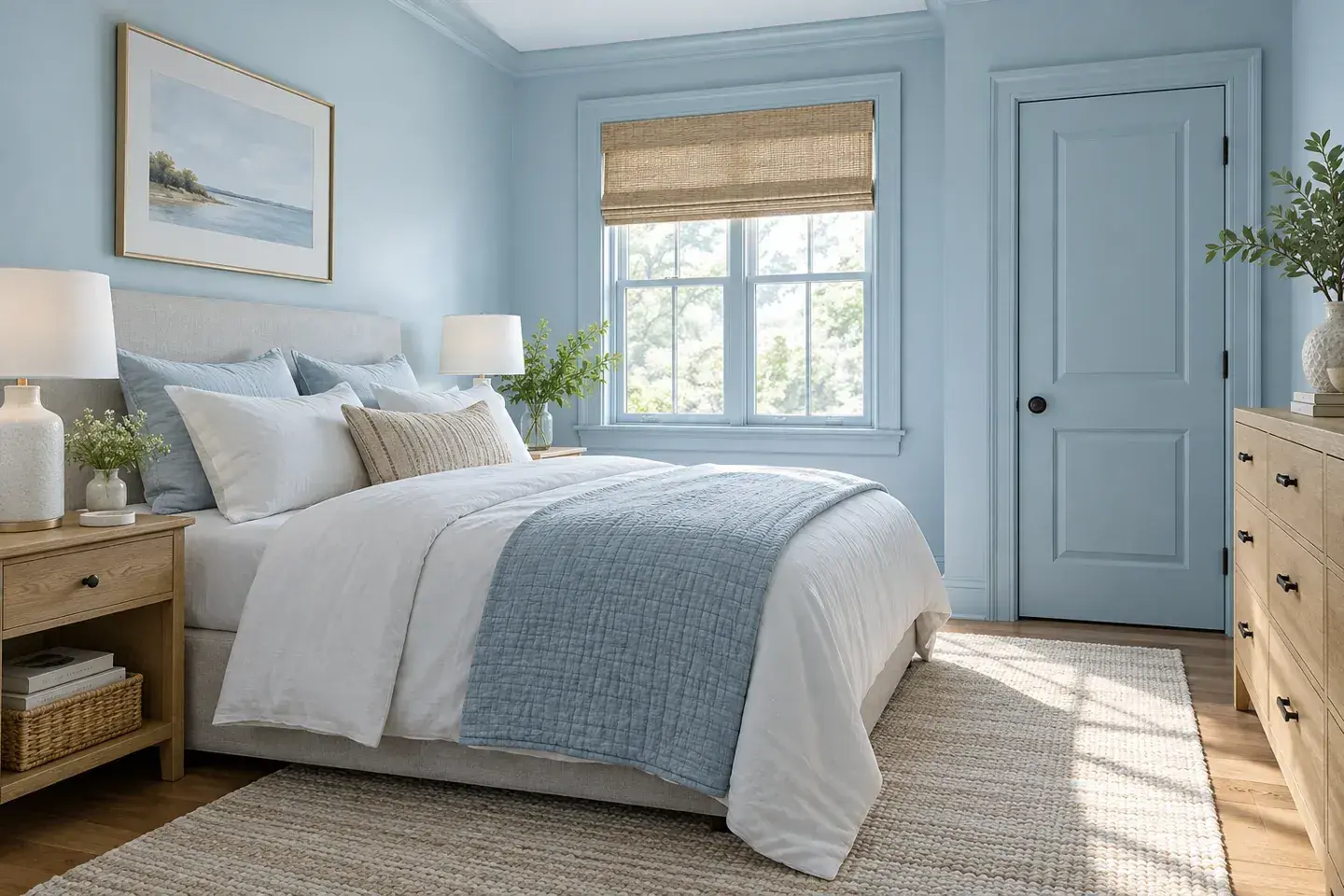
Painting walls, trim, and a door in related icy blue reduces the number of contrasting edges. The effect can feel cocooning while remaining light when the chosen blue is pale.
Different surfaces may need different products or sheens even when the color is the same. Do not use wall paint on trim merely for convenience. Make samples that include both surfaces, because sheen can change how the nominally identical color appears.
10. Paint the lower paneling blue
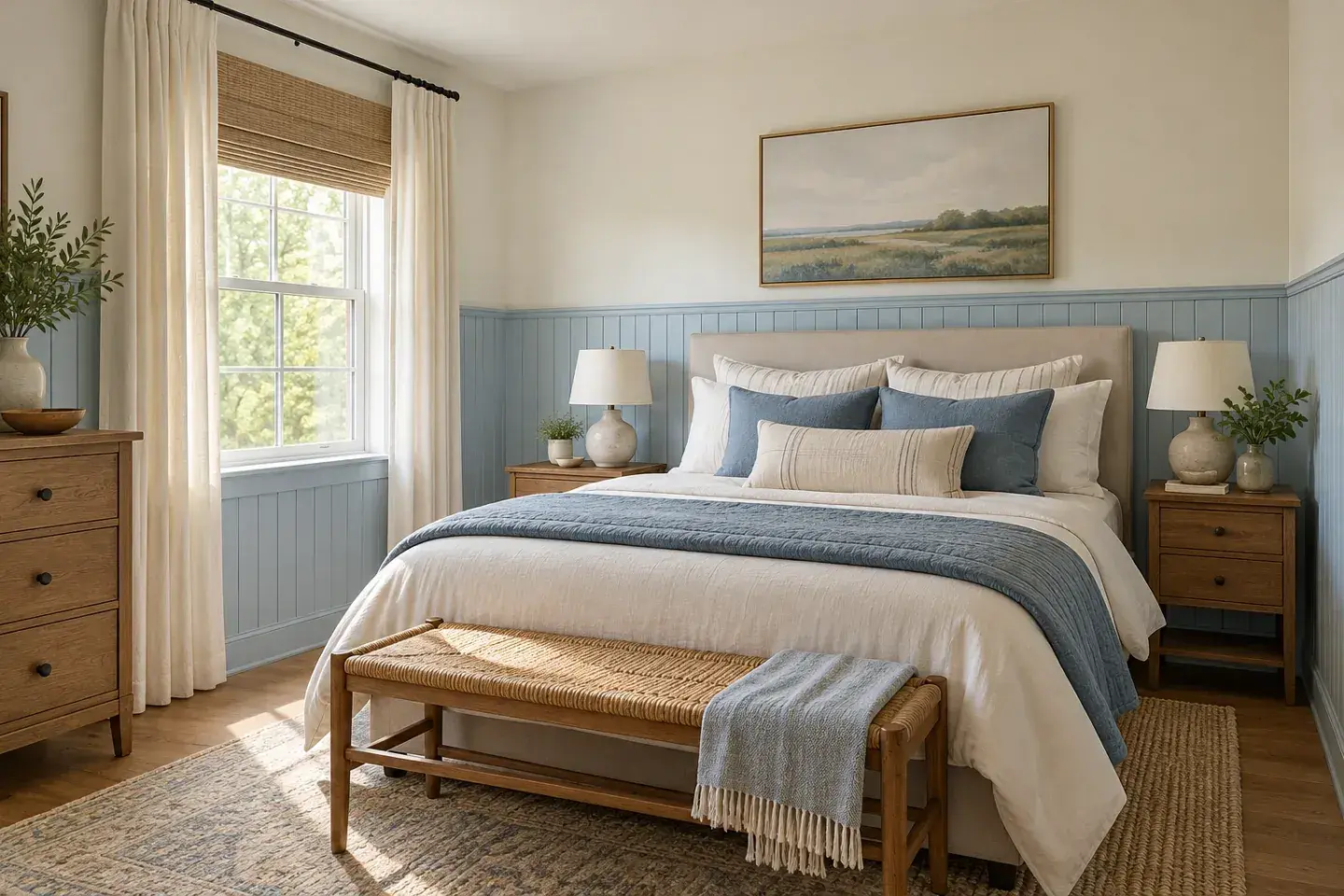
Blue lower-wall paneling with a warm white upper wall gives the room a grounded band of color. Existing sound paneling makes this a paint project; adding new paneling is a separate carpentry decision.
Use the paneling's natural top edge as the transition. Keep the bed and nightstand proportions in mind so the line does not compete with every furniture edge. Prepare the actual panel material and finish correctly instead of assuming it behaves like drywall.
11. Use blue above white wainscoting
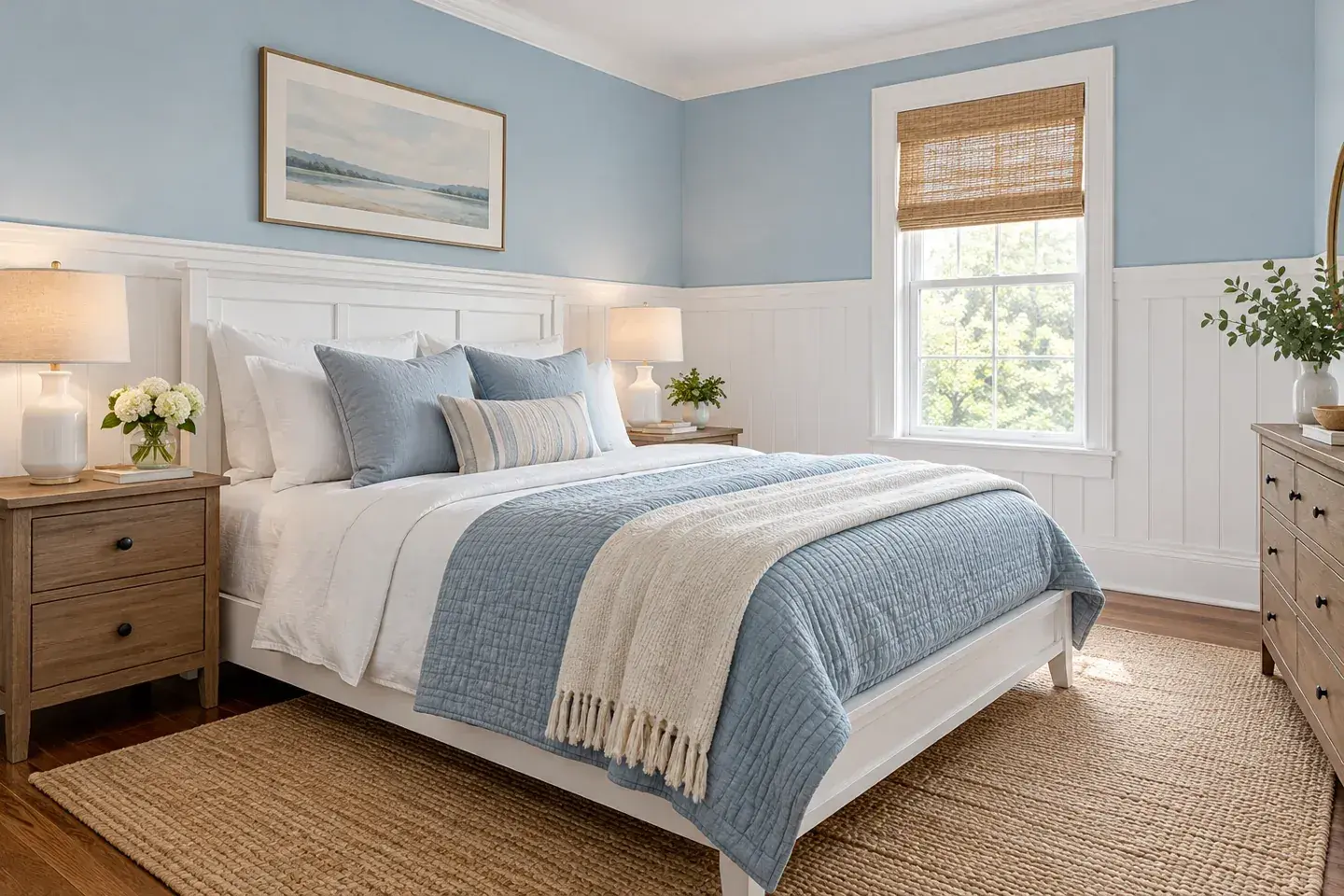
Reverse the previous scheme for a brighter lower wall and a blue upper field. White wainscoting can connect to existing white doors and trim, while the blue supplies atmosphere around the bed.
Choose the white as carefully as the blue. If the existing trim is warm, an unrelated brilliant white on the paneling may make it look dingy. Carry a single compatible white through the lower architectural elements where practical.
12. Paint an arch behind the headboard
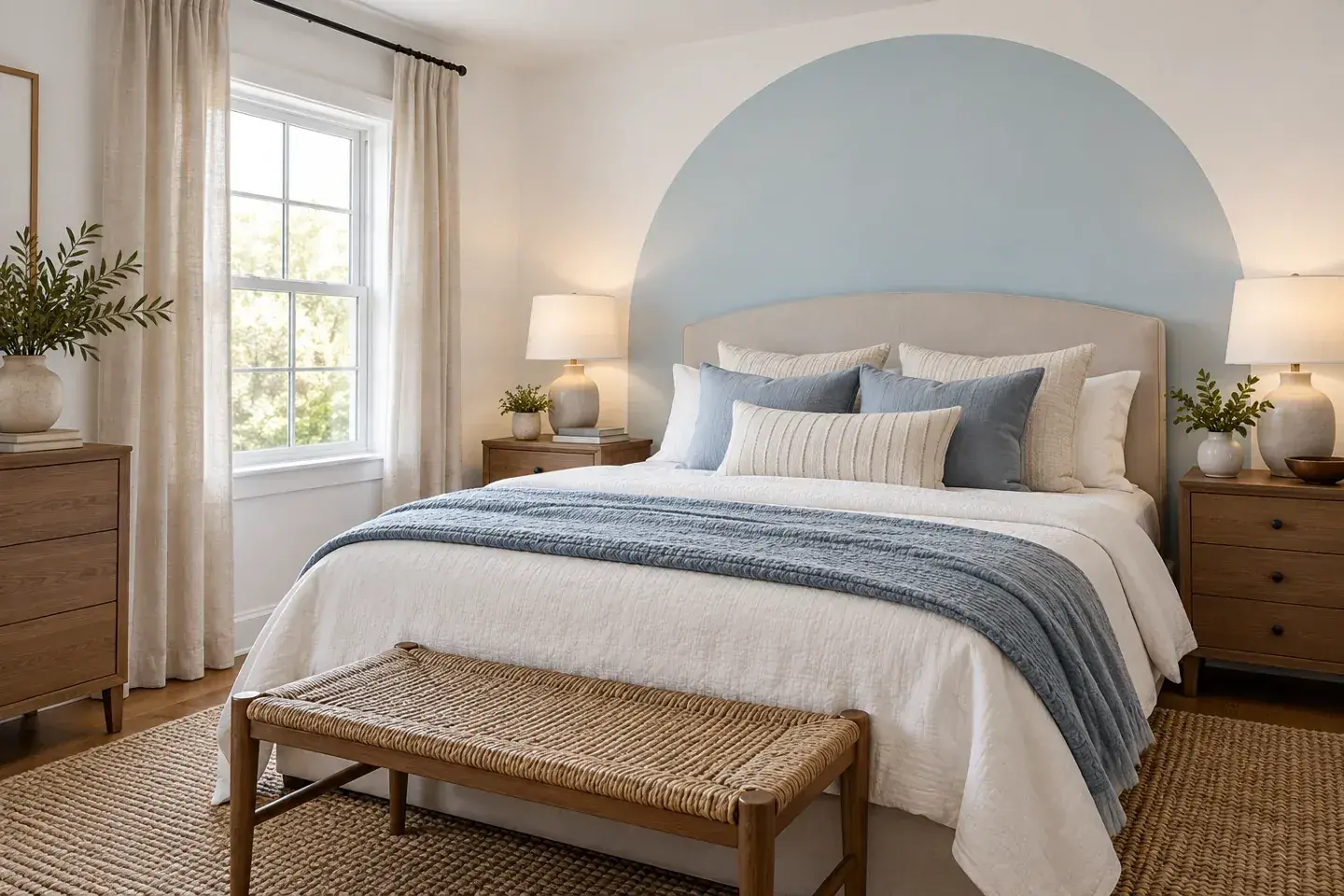
A painted arch creates a focal shape without building an actual recess. Size it to the bed and leave enough visible color on both sides for the shape to read clearly.
Draw the proposed outline on paper or with removable marking methods first. An arch that is too narrow can look like an accidental stripe behind pillows. A simple string-and-pencil layout can establish the curve, followed by careful edge work suited to the wall surface.
13. Paint the closet doors instead
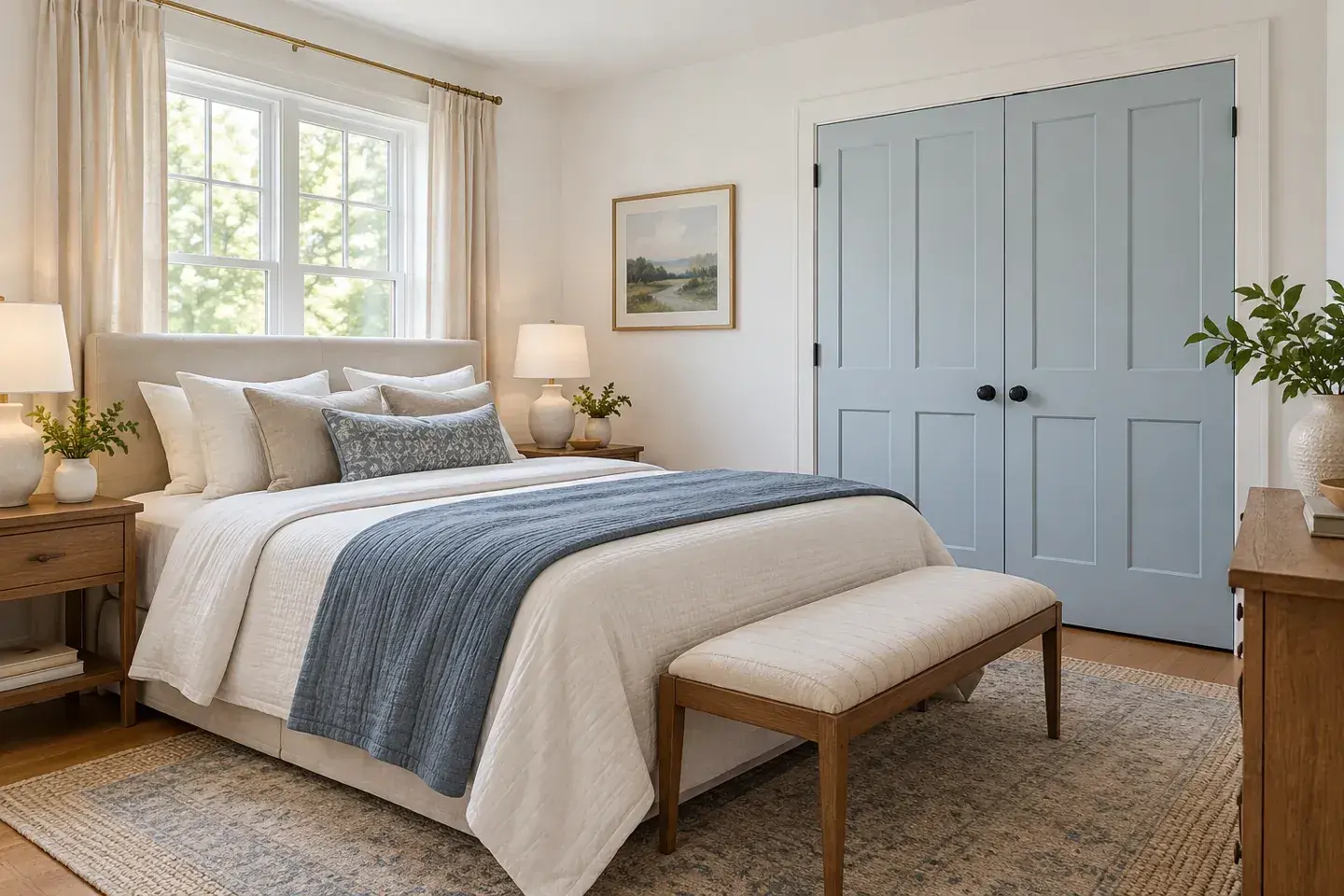
Icy blue closet doors add color to an otherwise neutral bedroom and can turn a large plain surface into a considered feature. This works especially well when the bed wall is already busy.
Use a coating system appropriate to the door material and existing finish. Protect hinges, tracks, and moving parts, and allow the required cure before regular use. Renters should obtain permission; repainting a door is not automatically a reversible no-damage change.
14. Highlight the window trim
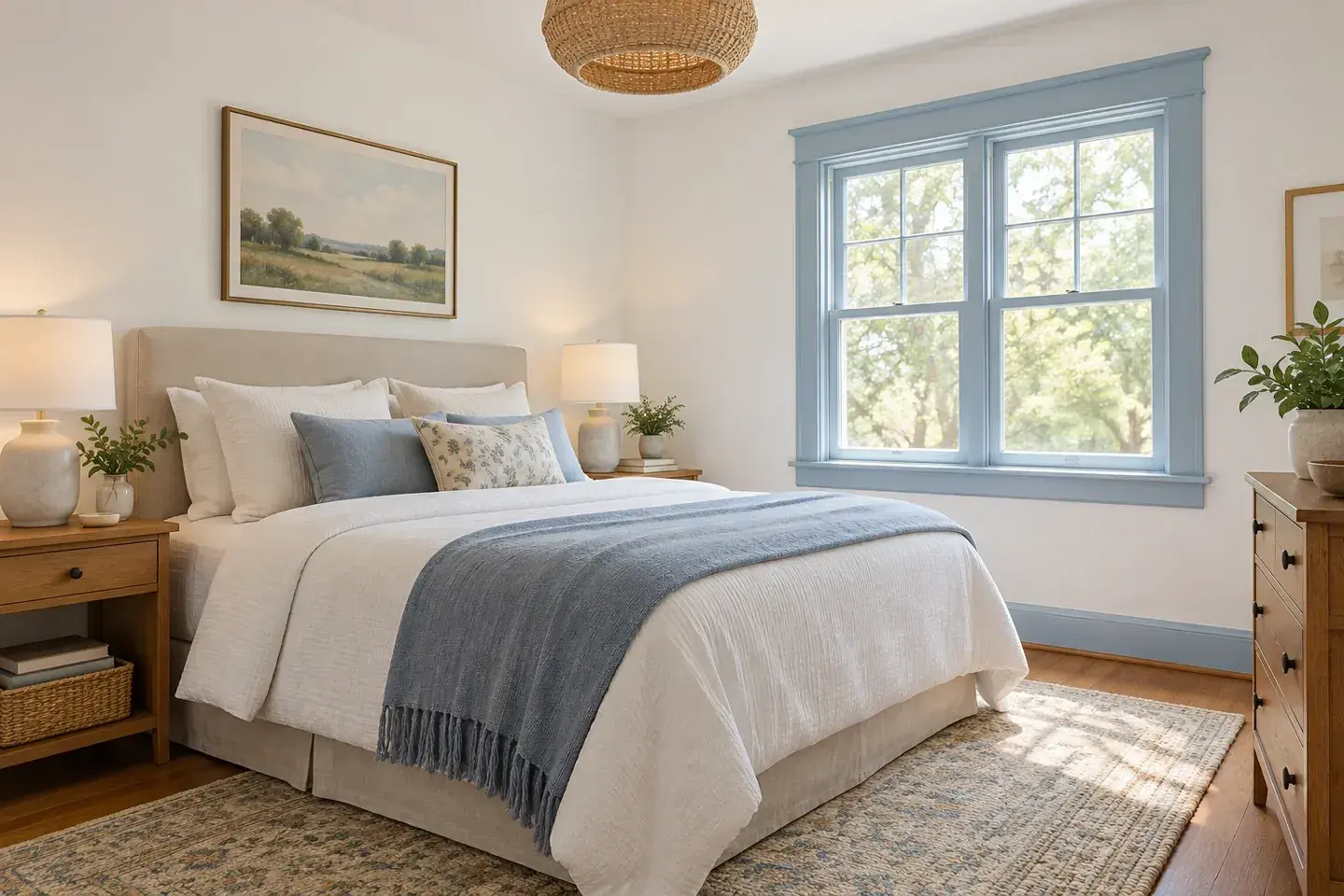
A blue window surround frames the view and gives the room a small, distinctive detail. Keep nearby walls white or softly neutral so the trim remains visible.
Test a slightly stronger blue if your first pale sample disappears in daylight, but judge it from across the room. Avoid painting operating hardware, weather seals, or drainage paths. Trim preparation matters because a small high-contrast area makes rough edges easy to notice.
15. Create a simple horizontal color band
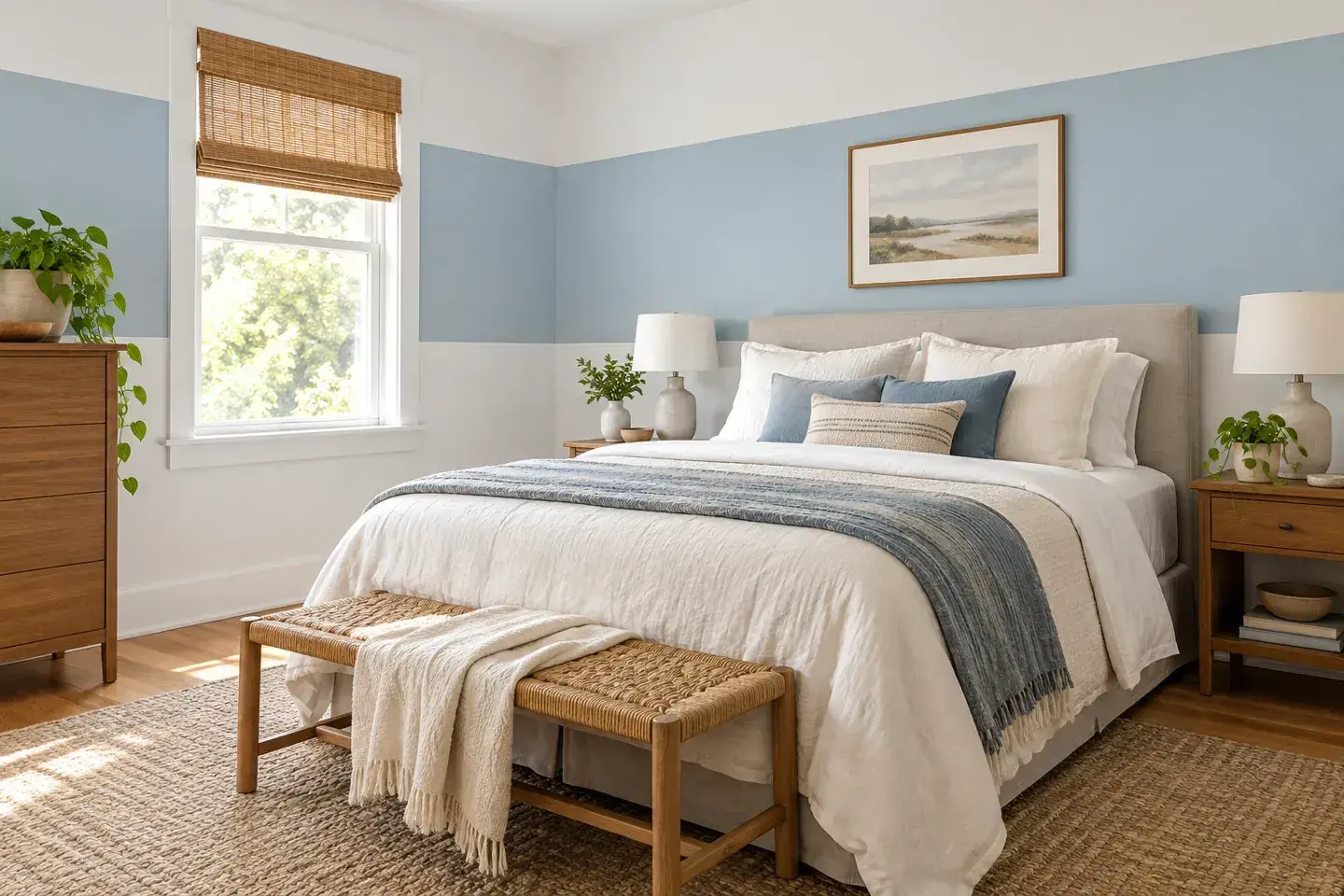
A wide icy-blue band can link the bed and adjacent furniture across a wall. Sketch the height on a room photo before marking it in place. The band should relate to the furniture composition rather than an arbitrary measurement.
Use a level and the masking method appropriate to the wall finish. On textured walls, test the edge technique first. Keep the remaining palette restrained so the horizontal line feels intentional instead of becoming one of several competing stripes.
Common questions and next steps
Which icy blue is best in a dark bedroom? There is no universal winner. Compare large samples with your actual artificial light and consider whether a warm neutral would suit the room better.
Can these images identify the exact paint color? No. Screens, lighting, and AI-generated concepts are not color standards. Use manufacturer samples.
What is the lowest-commitment idea? A small painted feature still requires preparation and permission where applicable. If you are unsure about painting, try blue bedding first and decide whether you enjoy the color in the room.
Sources and further reading
Research reviewed October 12, 2026.
Sources
- Sherwin-Williams: Tradewind SW 6218. Checked October 12, 2026
- Benjamin Moore: light blue paint colors. Checked October 12, 2026
Share this article
Get new guides by email
Practical home articles and free resources. No spam, and you can unsubscribe at any time.
Keep reading
Neo Deco Living Room Ideas: How to Get the Look on a Budget
Create a budget Neo Deco living room with curves, geometric patterns, metallic accents, jewel tones, and balanced furniture styling.
October 2026, 3 min read
15 Smart Small Laundry Room Stackable Washer Dryer Ideas
Explore 15 smart small laundry room stackable washer dryer ideas. Compare illustrated concepts, practical layout tips, and planning checks.
October 2026, 6 min read
10 Small Half Bath Makeover Ideas on a Tight Budget
Explore 10 small half bath makeover ideas on a tight budget, from paint and hardware to simple storage, with a sample budget and practical planning tips.
October 2026, 7 min read