Neo Deco Living Room Ideas: How to Get the Look on a Budget
Create a budget Neo Deco living room with curves, geometric patterns, metallic accents, jewel tones, and balanced furniture styling.
By Home Crane Editors. . 3 min read.
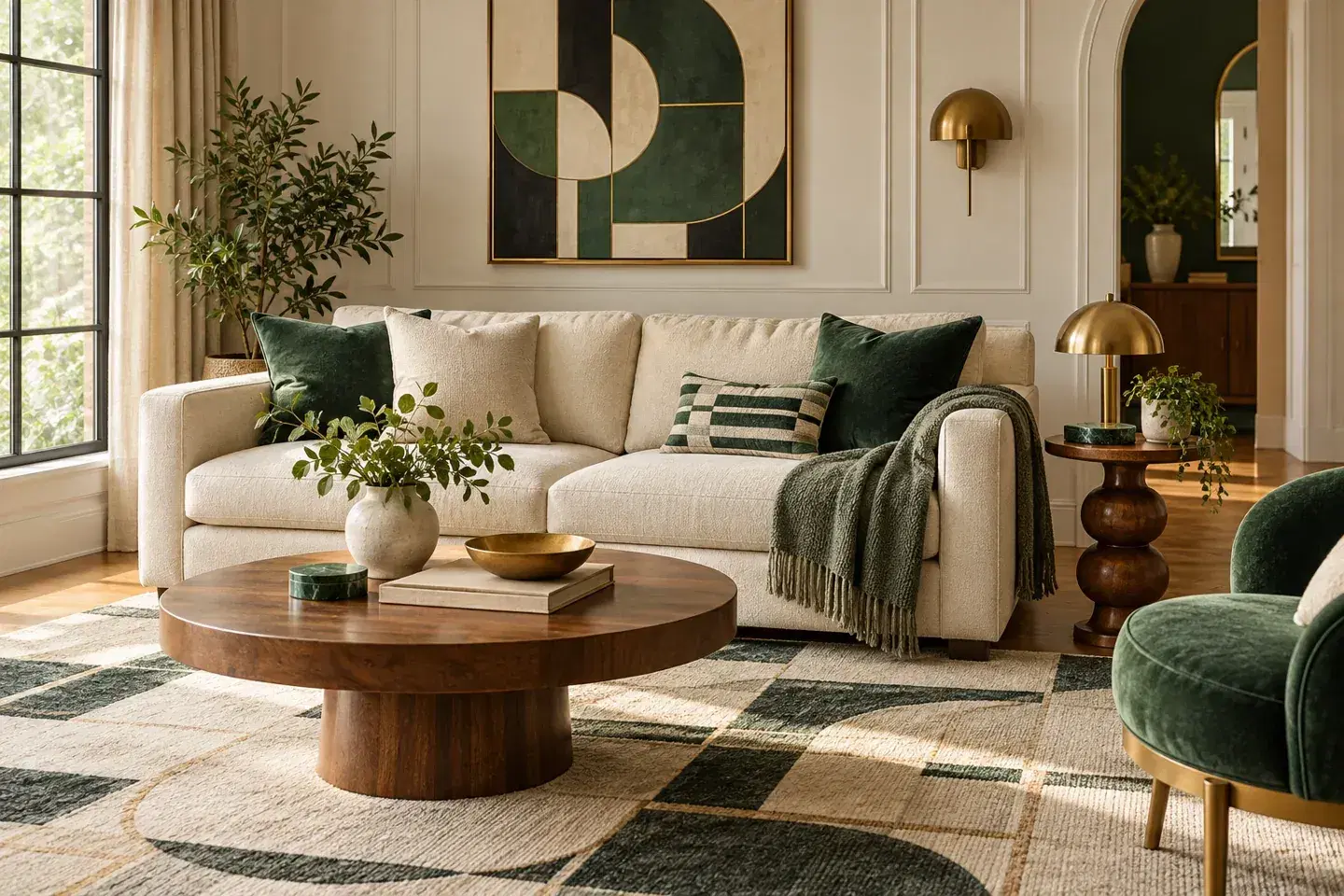
Neo Deco is a useful decorating shorthand for a contemporary take on Art Deco: rounded shapes, graphic pattern, polished details, and rich color used with more breathing room. You do not need a velvet sectional and an entirely new furniture set to suggest the look.
Start with the room you own. Keep the largest serviceable pieces and give a few visible details a stronger relationship. Sherwin-Williams describes curves, velvet, and geometric accents among the ways Art Deco influences current interiors. [1] The five ideas below are an editorial styling plan, not a requirement to reproduce a historic interior.
Before you start
Take a doorway photo and identify the biggest visual problem: too many competing patterns, an empty focal wall, or furniture that feels unrelated. Choose a base color, one richer accent, and one metal finish before shopping. Measure floor space and furniture clearance; a beautiful round table still needs to fit.
Use secondhand pieces when their condition is good. Check stability, drawers, finish damage, and dimensions in person where possible. Do not buy a project piece unless repair supplies and transport fit the budget.
1. Add one curved accent
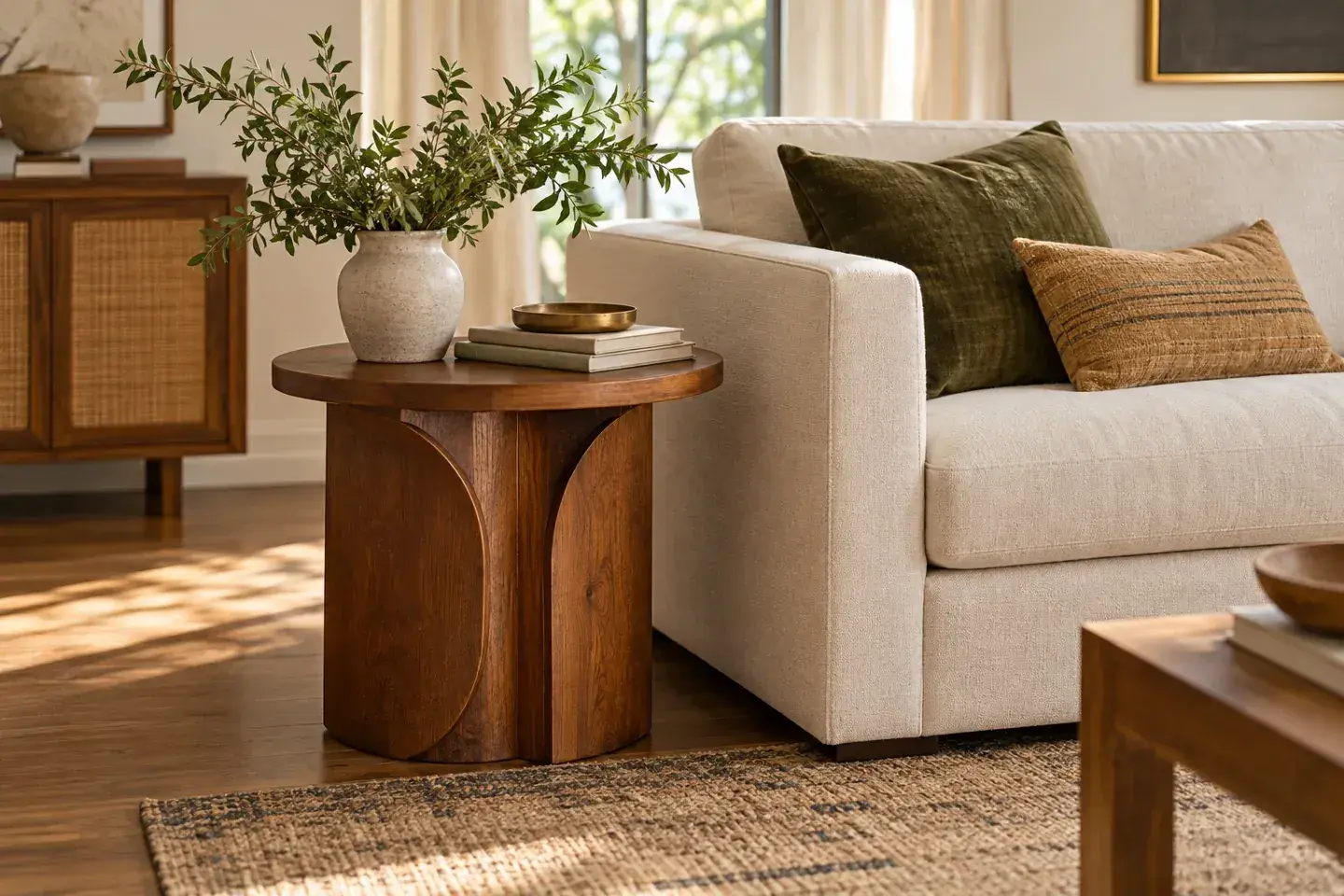
A round side table, an arched mirror, or a curved-back occasional chair introduces the softer geometry without replacing a sofa. A small piece is easier to move when you discover the best layout and usually gives you more secondhand options than a precisely sized sectional.
Repeat the curve once, perhaps in a round tray. Then stop. A room filled with unrelated arches can look themed instead of considered. If your room is narrow, use the curve in wall art or a mirror and keep a compact table that preserves the walking route.
2. Let one geometric pattern lead
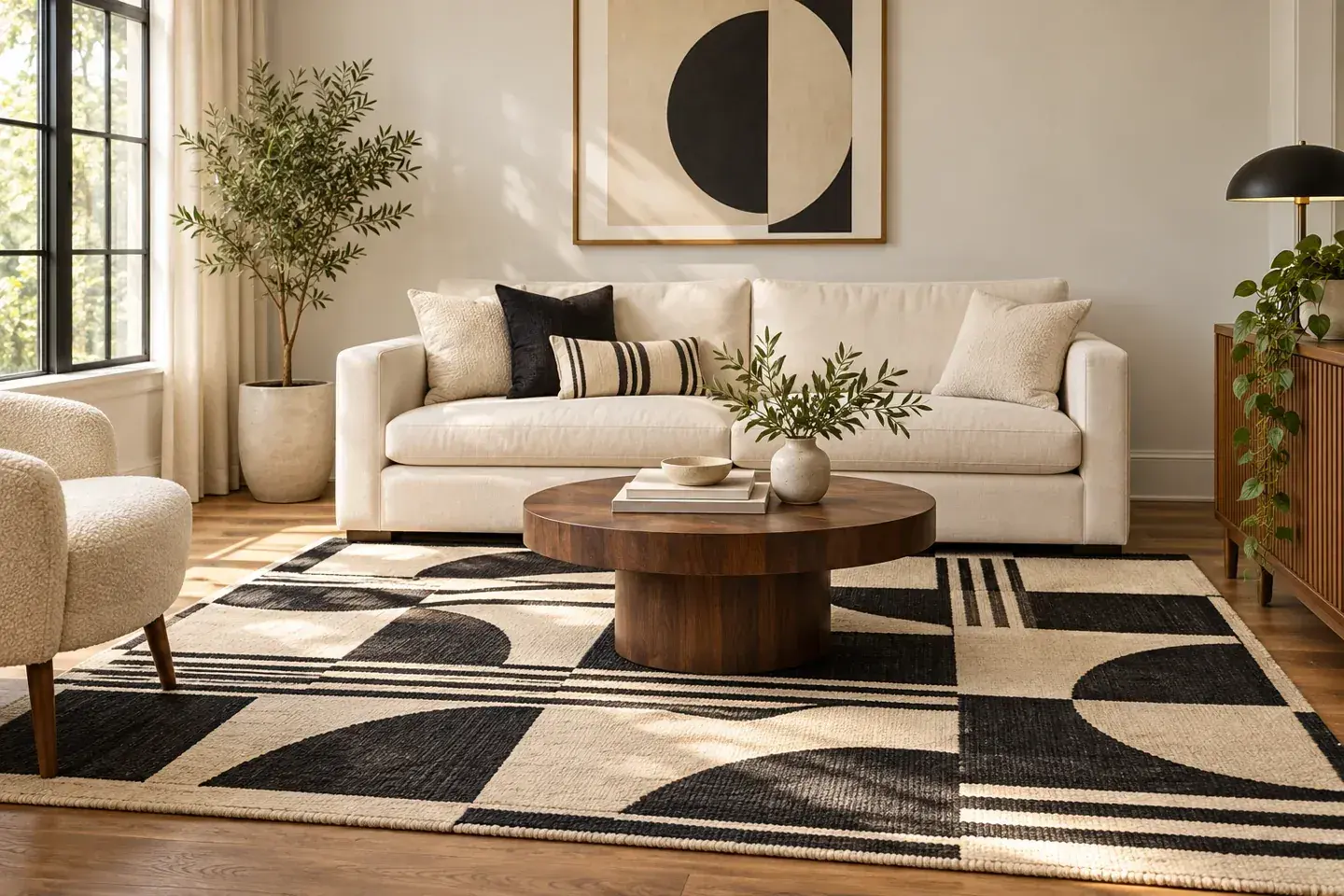
Use a rug or a pair of cushion covers for the strongest pattern. A cream-and-black motif works with many existing sofas; a quieter tonal pattern is easier if the upholstery is already busy. Spread a paper template on the floor before ordering a rug so its footprint is clear.
Avoid buying several small patterned accessories to compensate for a rug that is too small for the furniture grouping. You can create a more convincing result with one well-placed pattern and plain textiles around it. Look at the room from the doorway before deciding it needs anything else.
3. Repeat a modest metallic detail
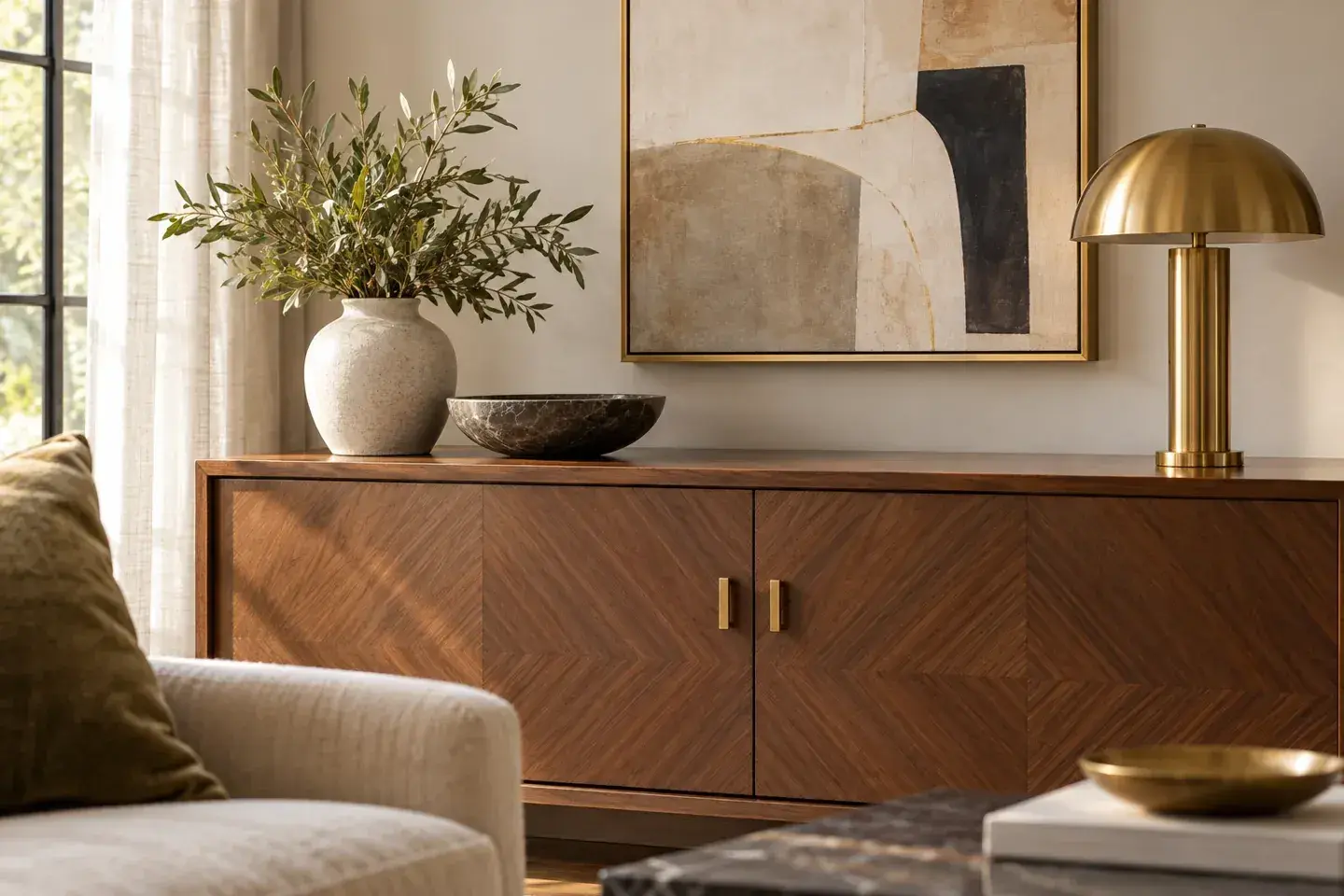
Two or three small brass, chrome, or bronze details can make the room feel deliberate. Replace compatible cabinet pulls, reuse a metal lamp, or introduce a simple picture frame. Match new pulls to the existing hole spacing so the change stays straightforward.
The finish does not have to be identical on every piece. Aim for a clear dominant metal and let minor differences recede. Spend on the details visible at eye level; a costly decorative object hidden on a low shelf contributes little. Check secondhand lamps for condition and have suspect wiring evaluated before use.
4. Use jewel tones through removable textiles
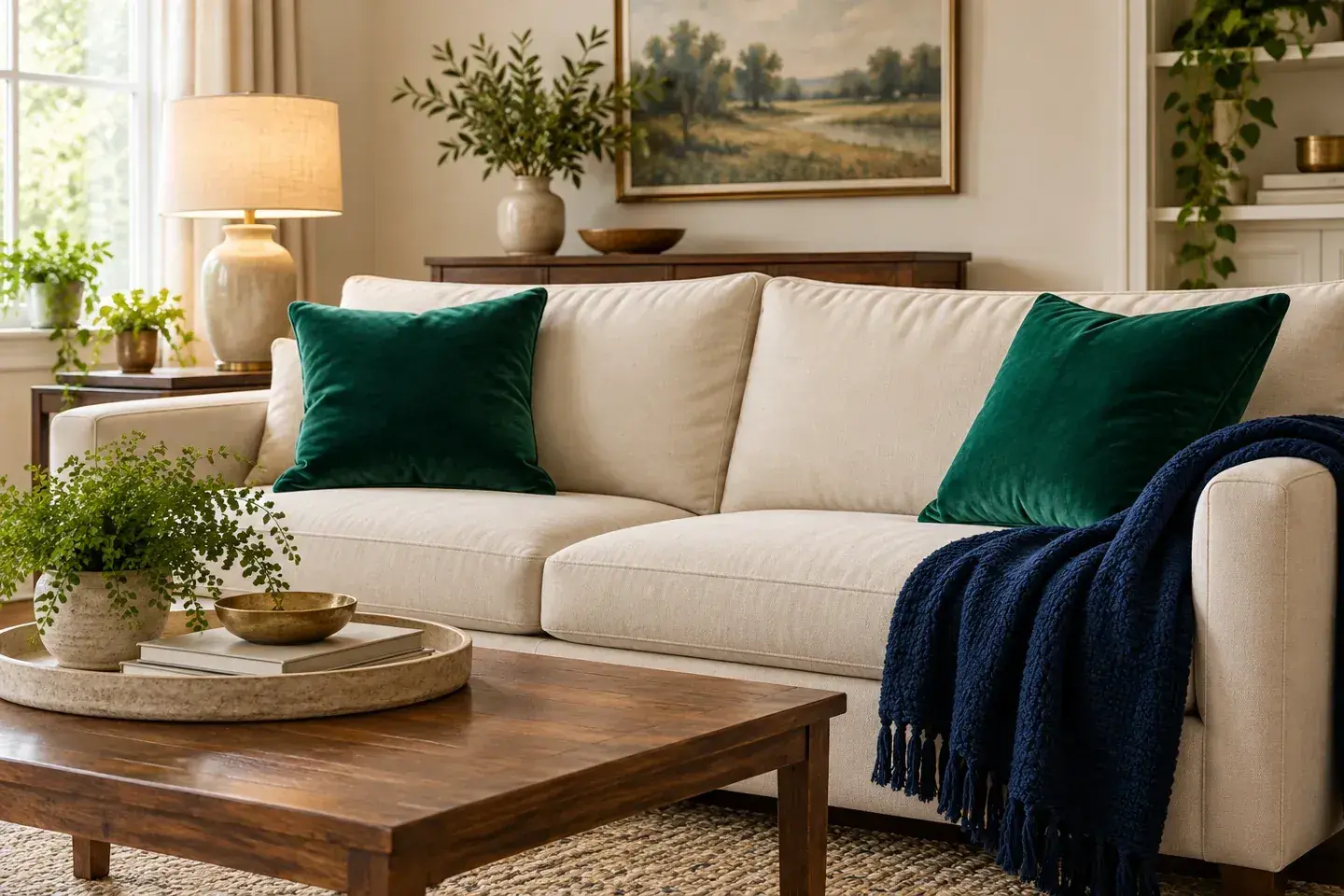
Emerald, navy, burgundy, and aubergine add depth to a plain neutral sofa. Start with covers that fit inserts you already own. A small quantity of a rich texture often has more impact than several thin, shiny fabrics chosen only for color.
Try the new textiles beside the rug in daylight and under evening lamps. If the room becomes heavy, add a warm ivory throw rather than another dark accent. Choose washable fabrics where practical, and keep a comfortable place to sit instead of filling every seat with decorative cushions.
5. Build a balanced focal point
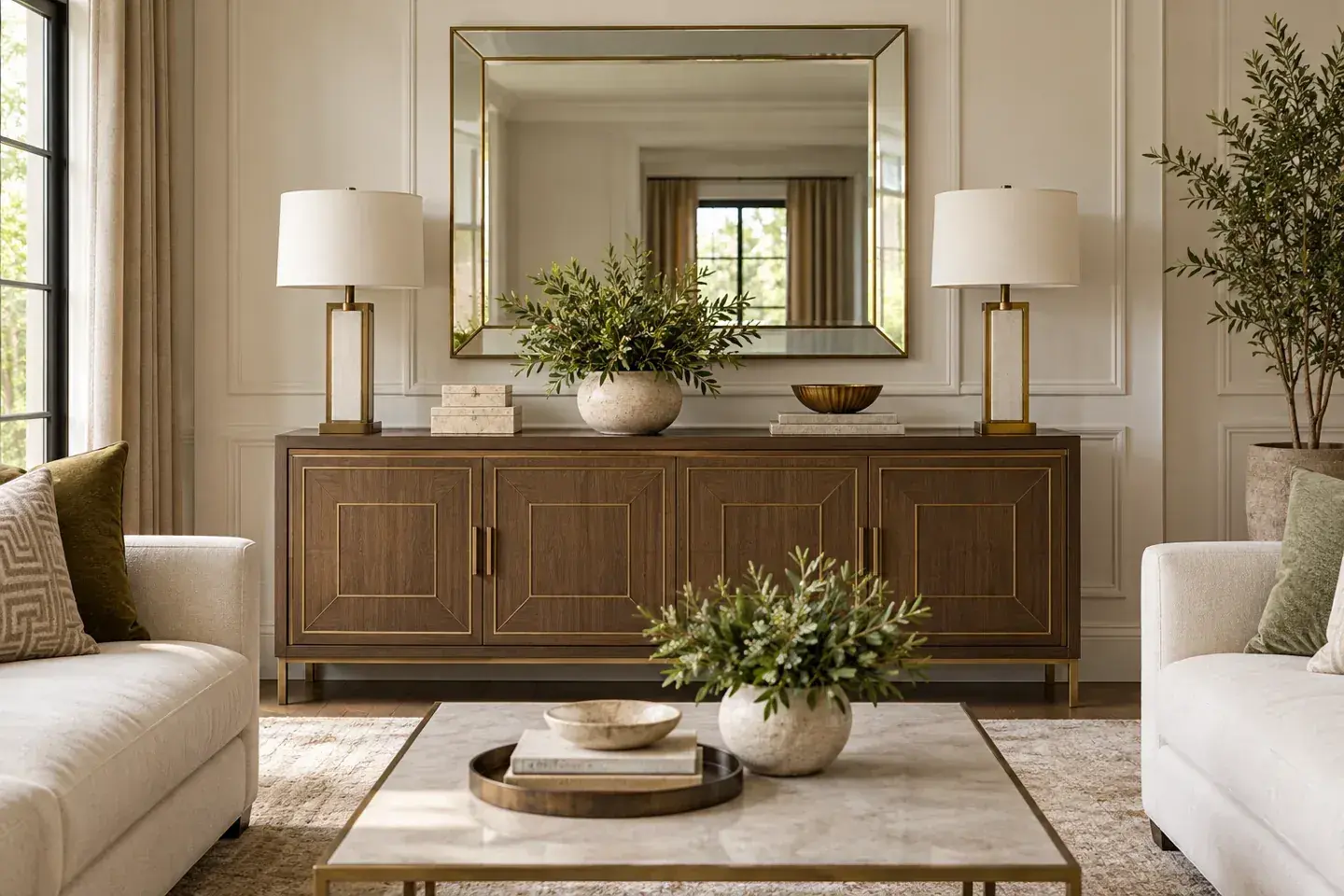
A console with a centered mirror and related objects on either side creates an orderly Deco reference. The objects can be similar in height without being an expensive matching set. Use securely mounted artwork or mirrors with hardware appropriate to the wall and object weight.
Balance is useful; perfect symmetry everywhere is unnecessary. Keep one end of the room relaxed so it still feels lived in. Before buying a larger mirror, tape its outline to the wall and check what it will reflect. A reflection of clutter or an awkward doorway may weaken the intended focal point.
Common questions and next steps
What should come first on a tight budget? Rearranging furniture and removing competing accessories cost nothing. Then choose the one change that answers the room's most visible weakness.
Does everything need to be gold? No. Metallic details are an accent, and chrome or bronze can suit the existing room better. Pick the finish you can repeat convincingly.
How do you keep it comfortable? Preserve good lighting, useful side-table surfaces, and open circulation. The look should support ordinary evenings in the room, not demand a permanent photo shoot.
Sources and further reading
Research reviewed October 12, 2026.
Sources
- Sherwin-Williams: incorporating contemporary styles and Art Deco influences. Checked October 12, 2026
Share this article
Get new guides by email
Practical home articles and free resources. No spam, and you can unsubscribe at any time.
Keep reading
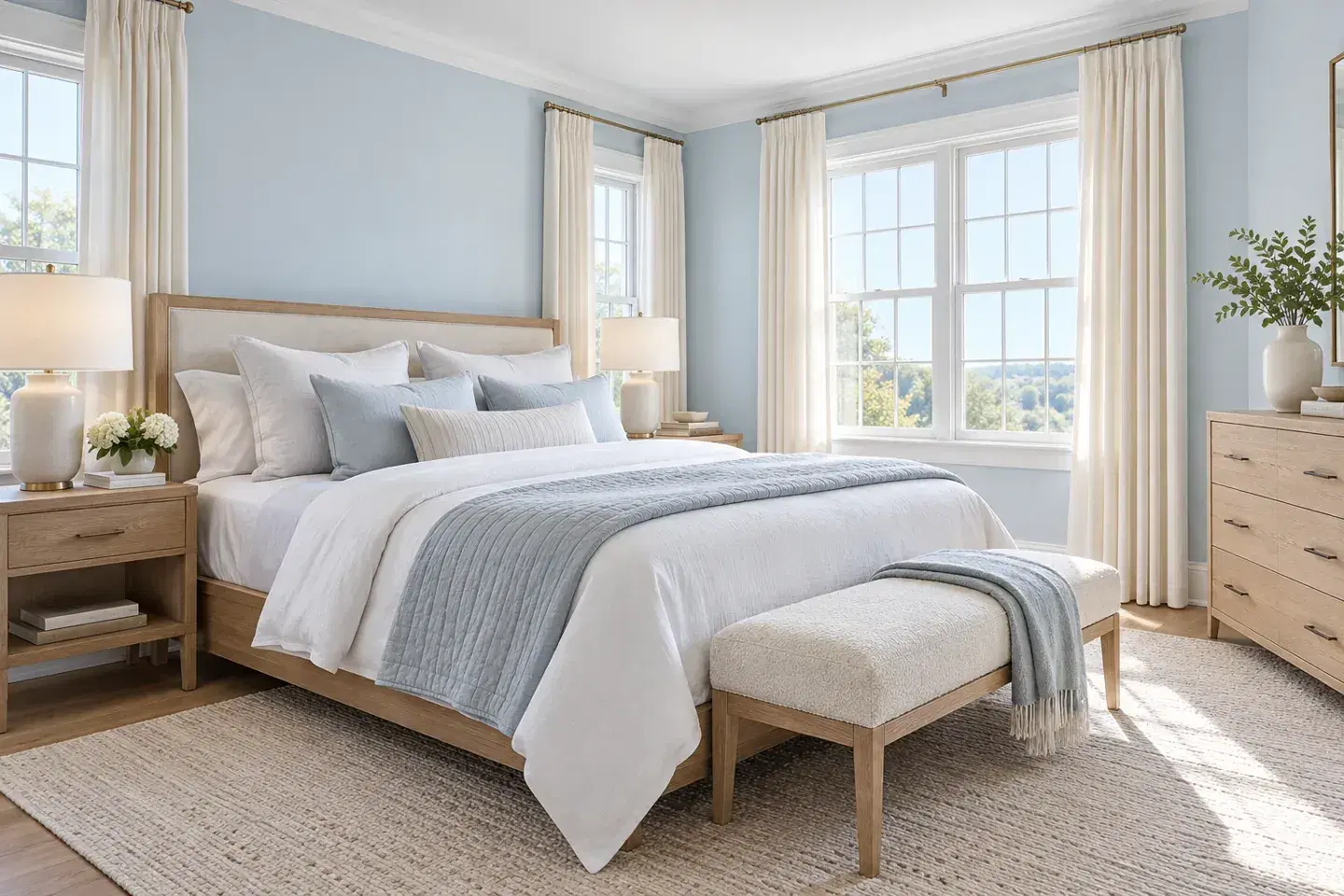
15 Icy Blue Bedroom Paint Ideas for 2026
Explore 15 icy blue bedroom paint ideas, from accent walls to blue ceilings, with warm pairings and practical sampling tips for 2026.
October 2026, 6 min read
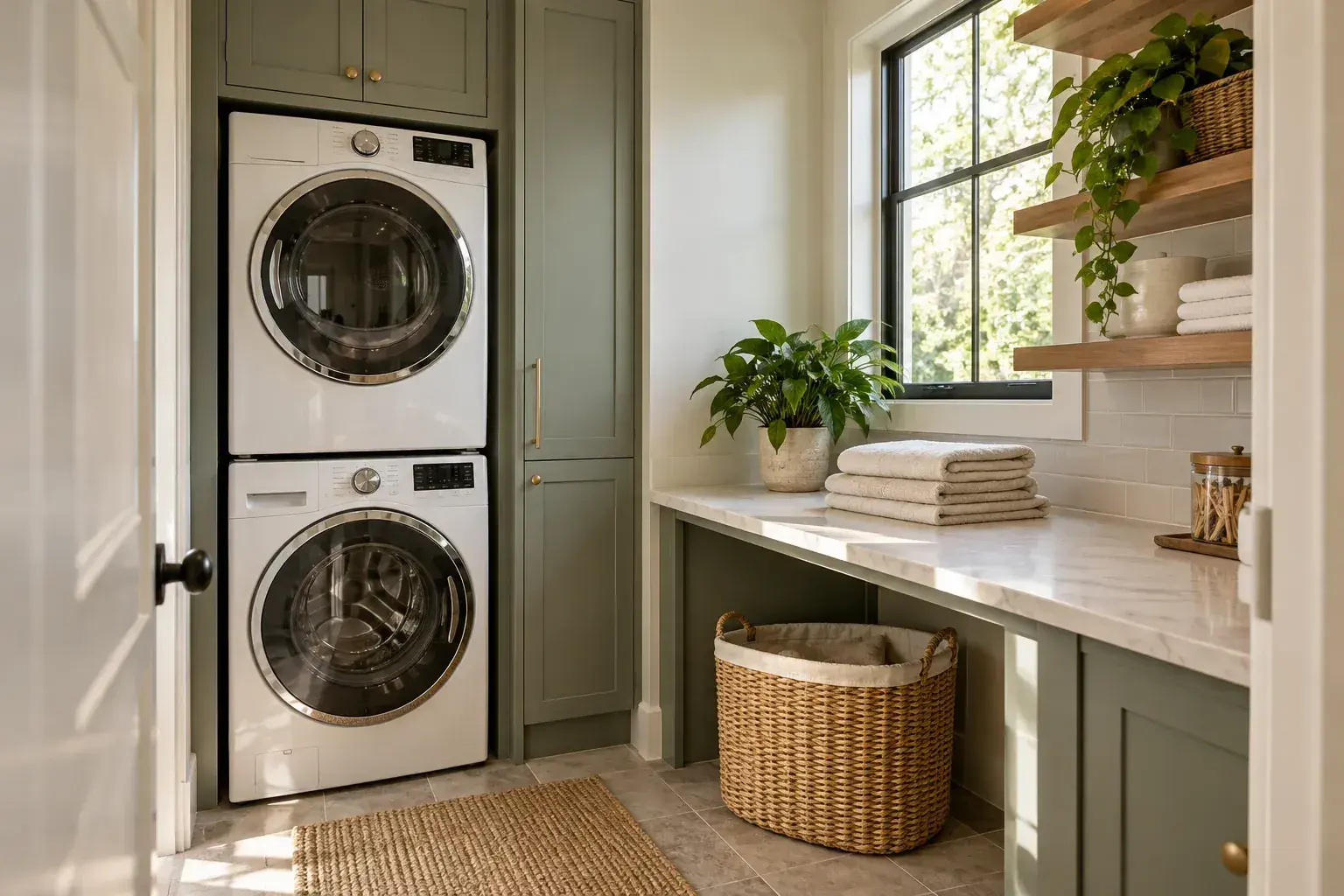
15 Smart Small Laundry Room Stackable Washer Dryer Ideas
Explore 15 smart small laundry room stackable washer dryer ideas. Compare illustrated concepts, practical layout tips, and planning checks.
October 2026, 6 min read
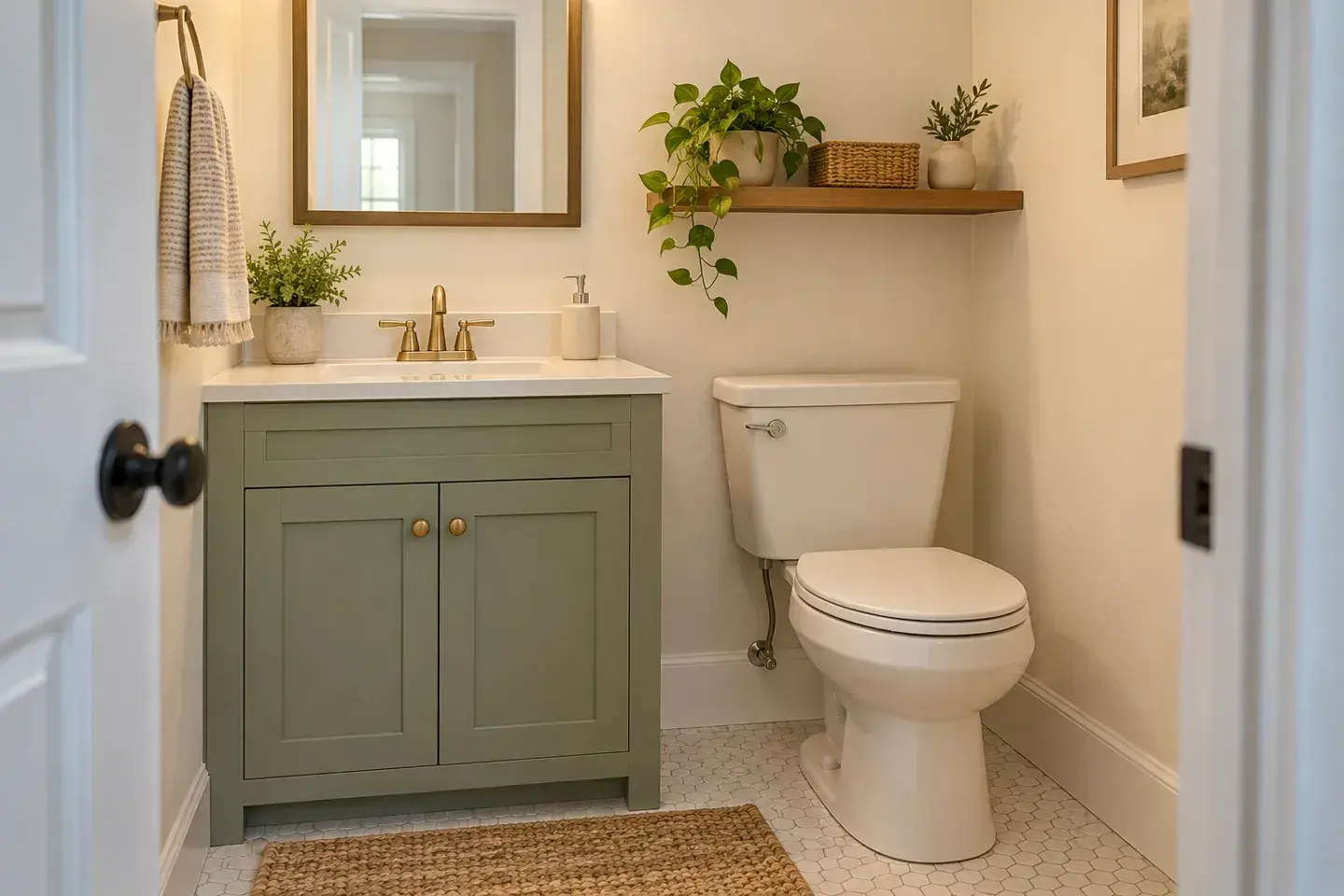
10 Small Half Bath Makeover Ideas on a Tight Budget
Explore 10 small half bath makeover ideas on a tight budget, from paint and hardware to simple storage, with a sample budget and practical planning tips.
October 2026, 7 min read