15 Brilliant Small Closet Organization Hacks That Actually Work
A small closet works better when every category has an accessible home and the layout matches the clothes you actually own. Adding containers without.
By Home Crane Editors. . 5 min read.
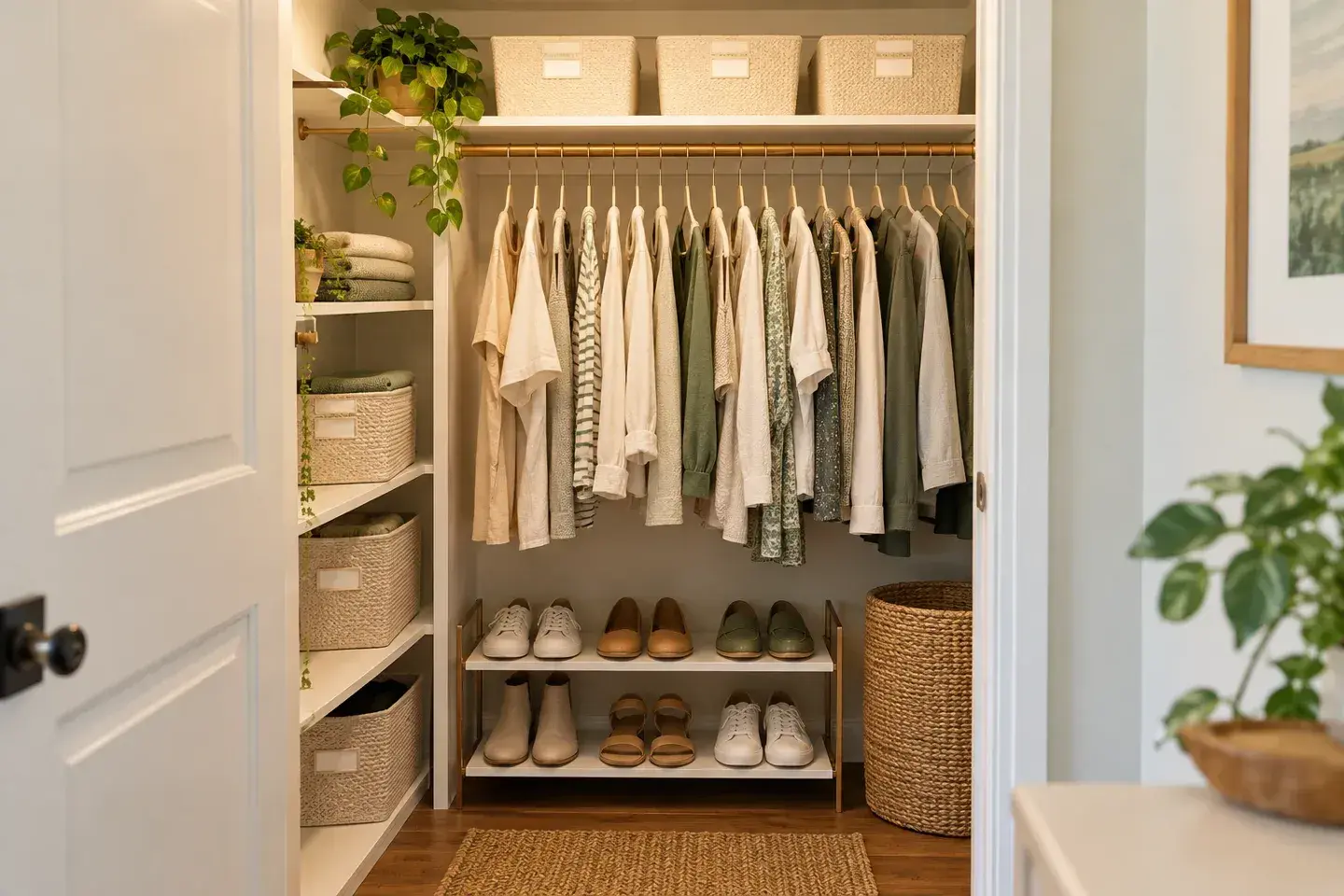
A small closet works better when every category has an accessible home and the layout matches the clothes you actually own. Adding containers without measuring or sorting can make it harder to use. Start with the doorway, shelf depth, hanging height, and the space needed to reach the back.
These 15 ideas are practical layout options, not promises that one organizer fits every closet. IKEA's wardrobe planning guide is a useful reference for measuring and matching storage to clothing. Choose a few changes first, then see whether they improve your daily routine.
1. Replace bulky mixed hangers with matching slim ones
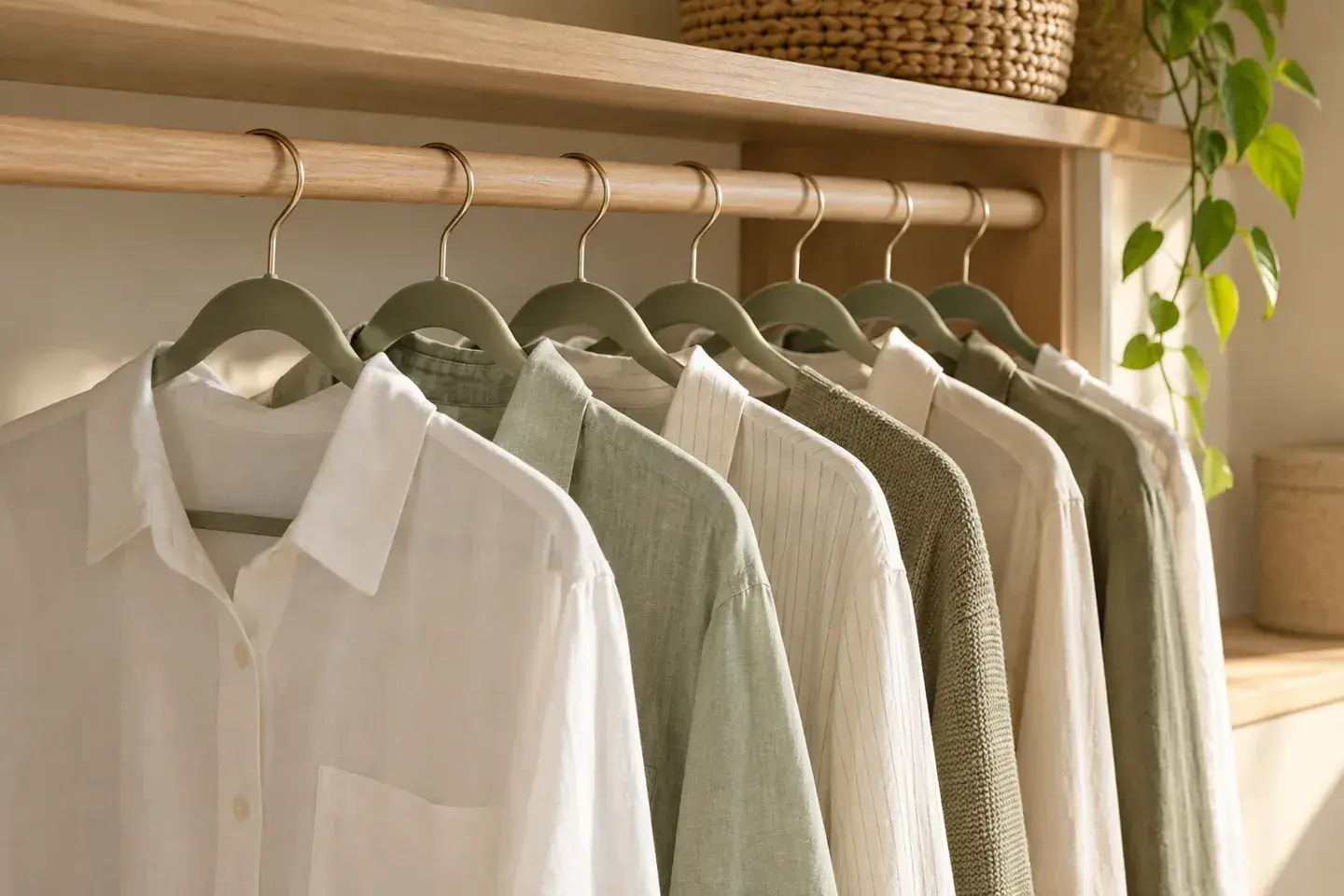
Consistent hangers reduce visual clutter and can recover a little rail space. Choose a shape that supports the garment properly, rather than forcing heavy coats onto flimsy hangers. Turn hooks the same way and leave enough room to remove an item without dragging neighboring clothes out. The benefit disappears if the newly available space is immediately overfilled.
2. Add a second rail for short garments
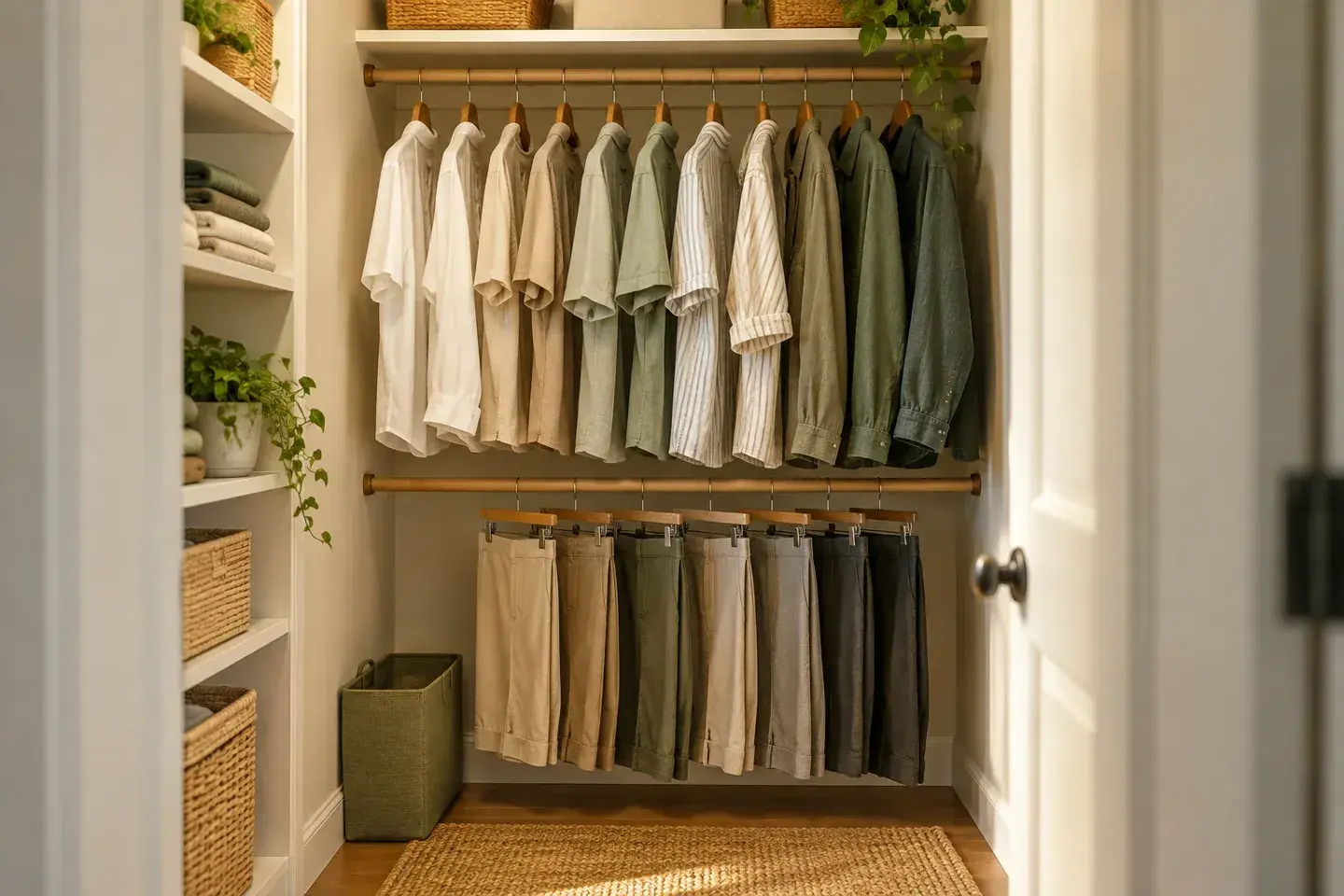
Short shirts and folded trousers may fit in two hanging zones. Measure the actual garments and allow clearance below both rails before buying a double-hang accessory. Check the original rail and brackets for the combined load; hanging another organizer from them does not increase their capacity. Keep at least one section available for longer clothing if needed.
3. Reserve one full-height section for long clothes
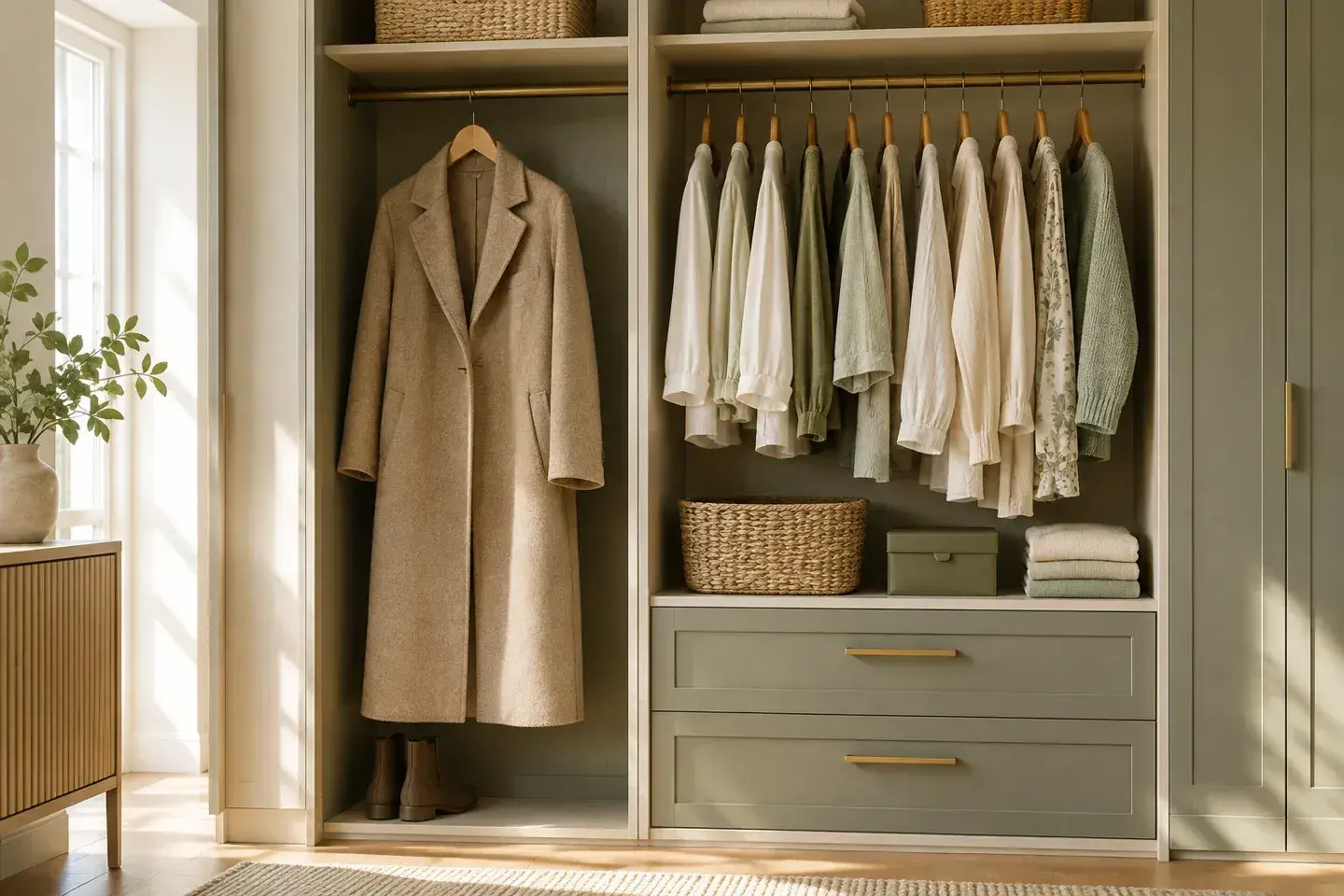
Dresses, long coats, and robes need uninterrupted hanging space. Group them in a deliberate section so they do not cover shoes or crush baskets below. This can be more efficient than lowering the entire closet rail to accommodate short items. Measure the longest garment on its hanger, including the clearance you want above the floor.
4. File-fold T-shirts in a drawer or bin
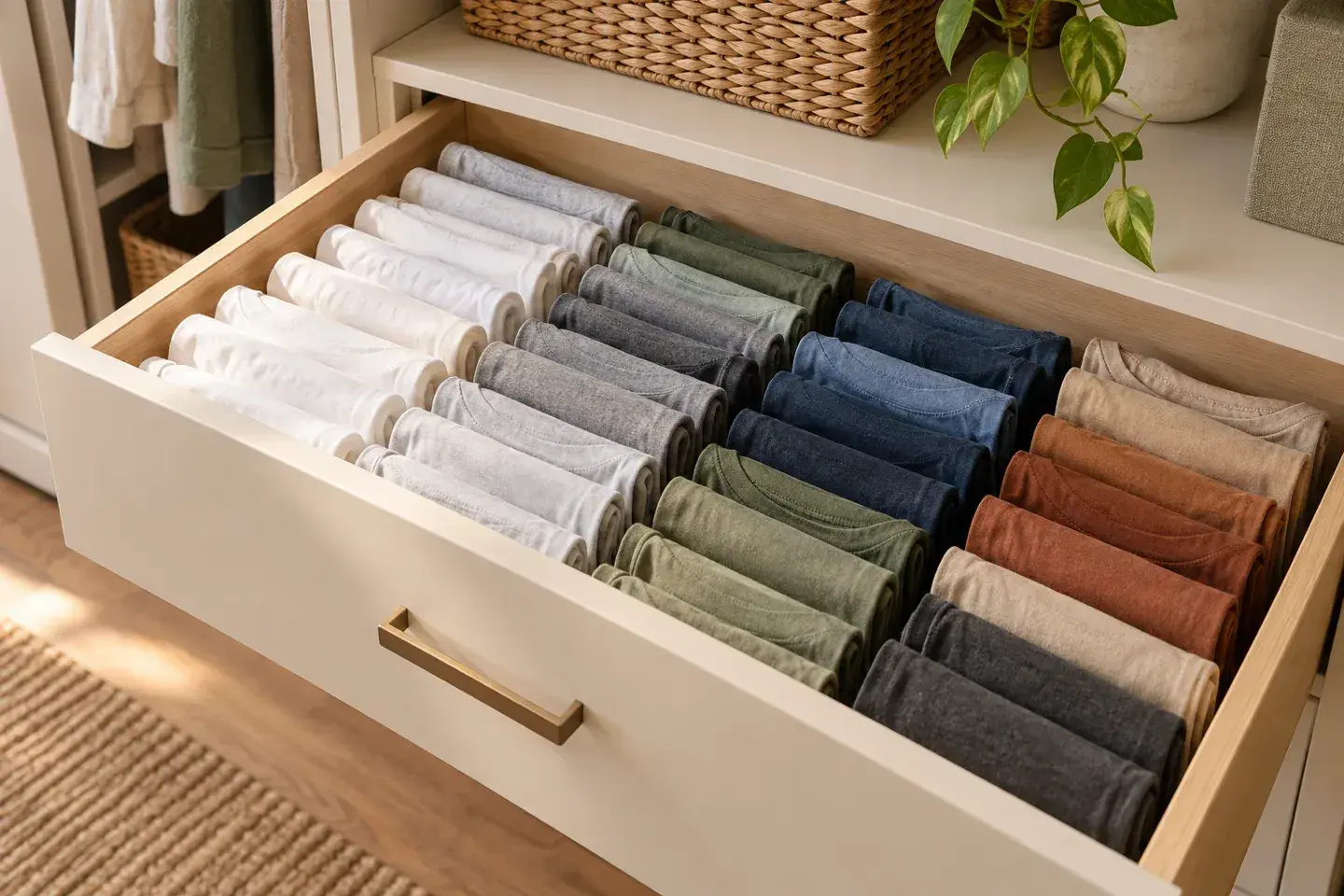
Store folded T-shirts upright so you can see several at once instead of lifting a stack. Use a shallow container that supports the rows without packing them tightly. This method works best when returning clean laundry is simple. If every fold must be perfect to fit, reduce the quantity or choose a less demanding arrangement.
5. Separate sweater stacks with shelf dividers
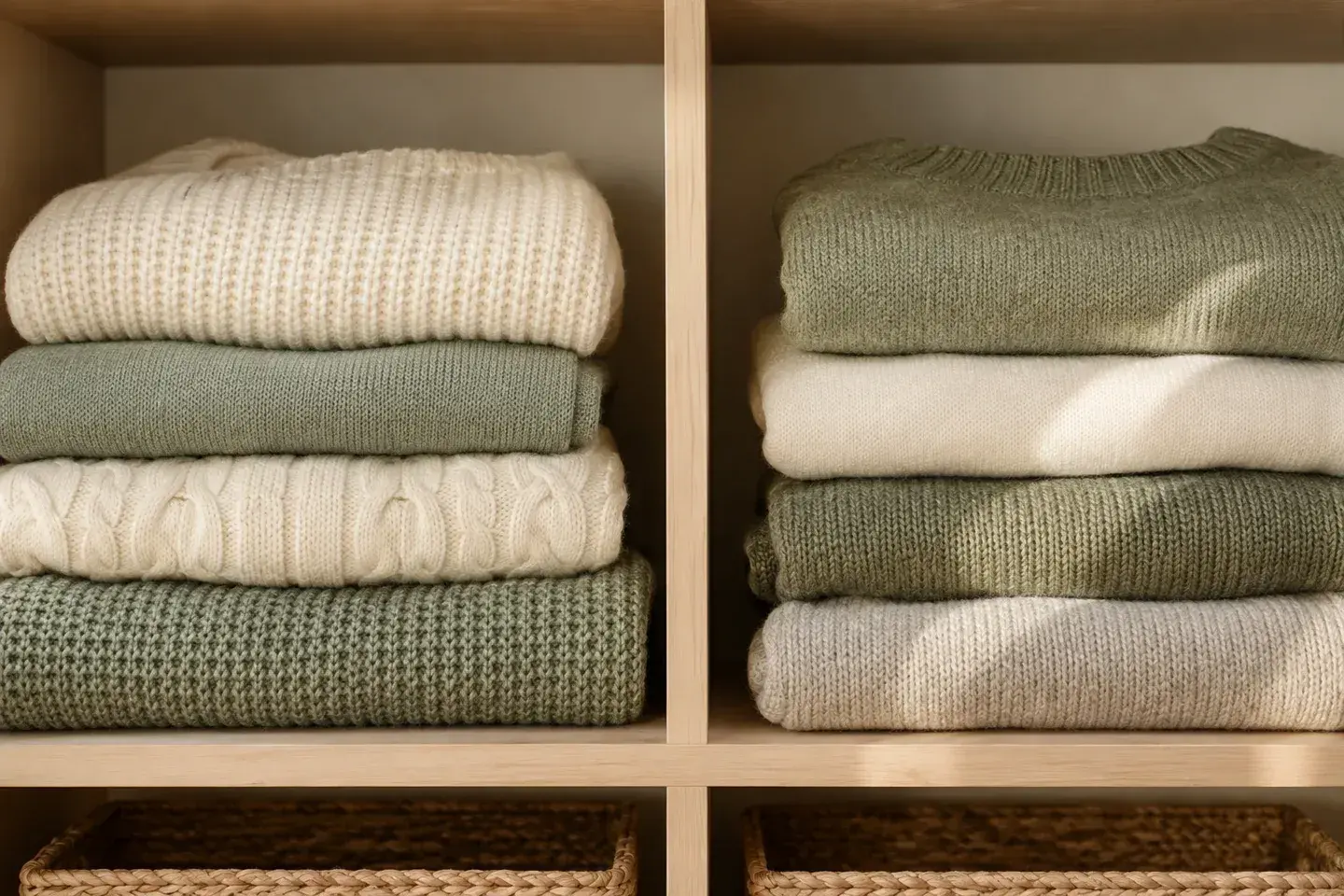
A divider can keep soft stacks from leaning into one another. Check that it fits the shelf thickness and does not damage the finish. Keep stacks low enough to remove the middle item comfortably. Heavy knits usually belong folded rather than stretched on narrow hangers, but follow the garment's care guidance when deciding how to store it.
6. Use shallow pull-out baskets for accessories
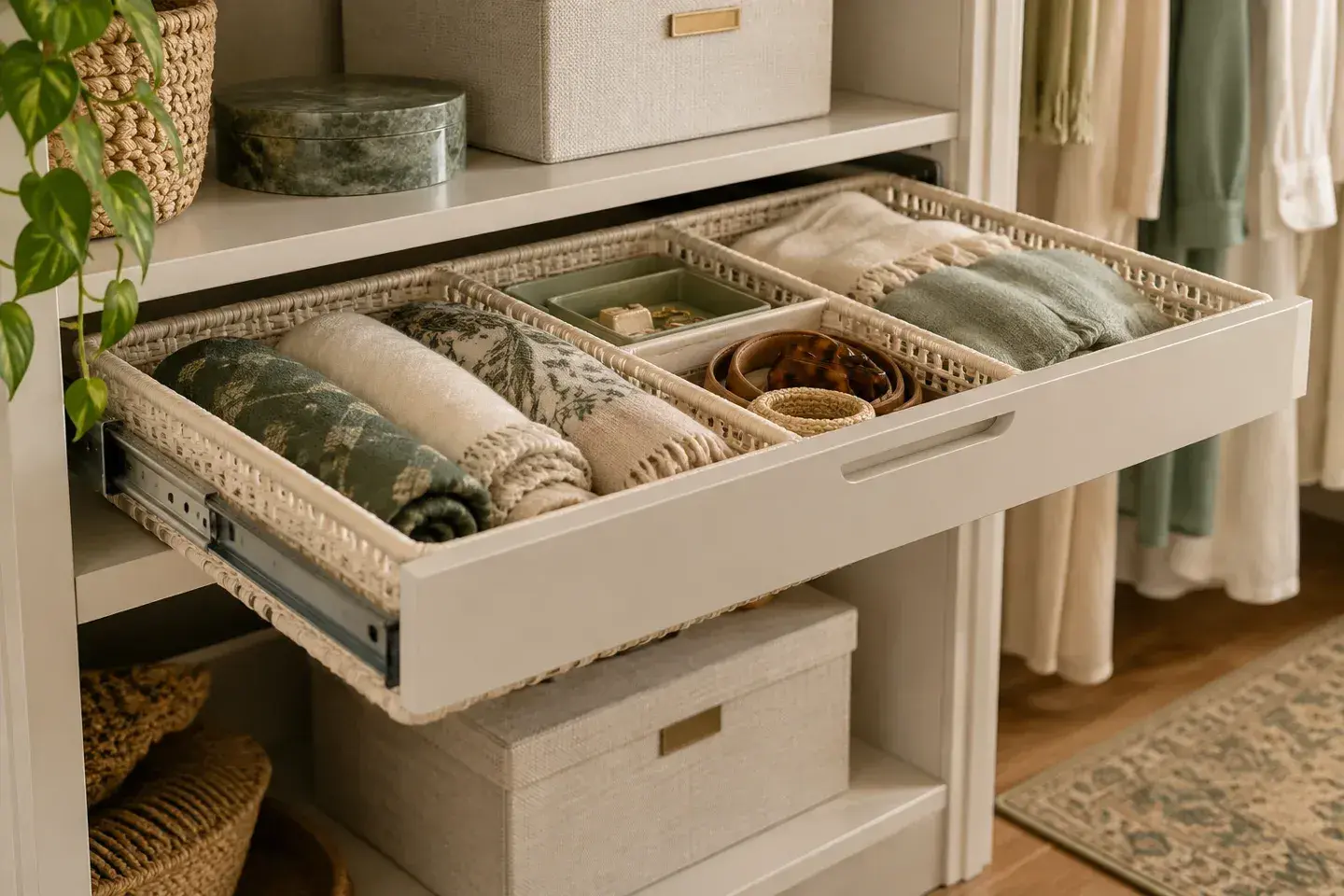
Scarves, belts, and small bags are easier to find in a shallow category basket than in a deep miscellaneous bin. Measure the opening and leave room for your fingers. Give each basket a simple label that the household recognizes. A category called “accessories” may be enough; excessive subdivision can make putting things away slower than necessary.
7. Keep occasional shoes in clear boxes
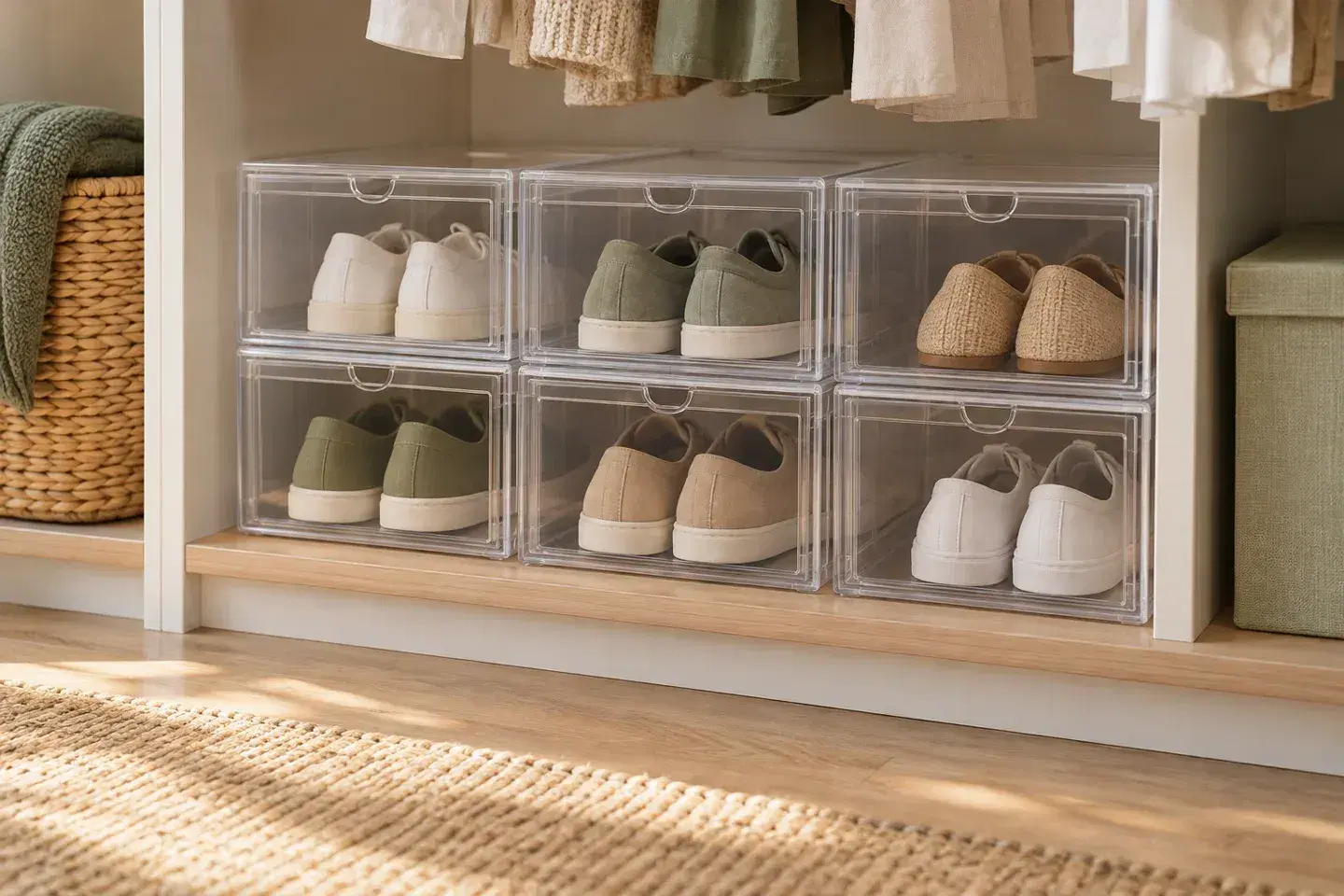
Clear boxes can make less-used shoes visible while protecting them from dust. Store footwear clean and dry, and choose ventilation appropriate to the material. Avoid a tall, unstable stack that must be dismantled to reach the bottom pair. Place frequently used shoes where they can be retrieved with one movement rather than behind several lids.
8. Use the door for lightweight items
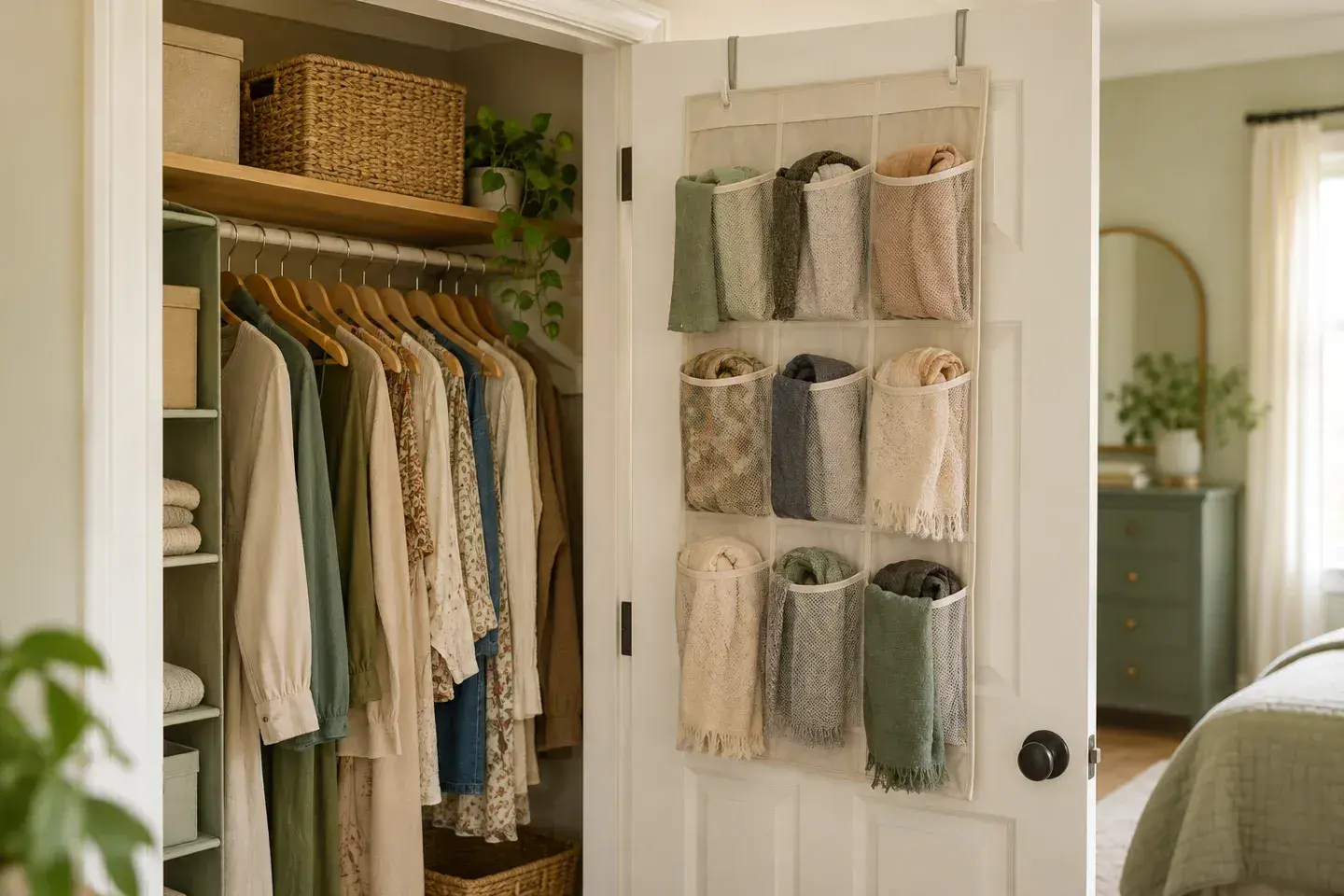
An over-door organizer can hold scarves or other light accessories if it fits the door and clears the frame. Test the door's full movement before filling it. Do not force a thick hook over a tightly fitted door or overload a lightweight pocket organizer. Keep it from striking shelves, catching clothing, or preventing the door from latching.
9. Put a compact shoe rack below short hanging clothes
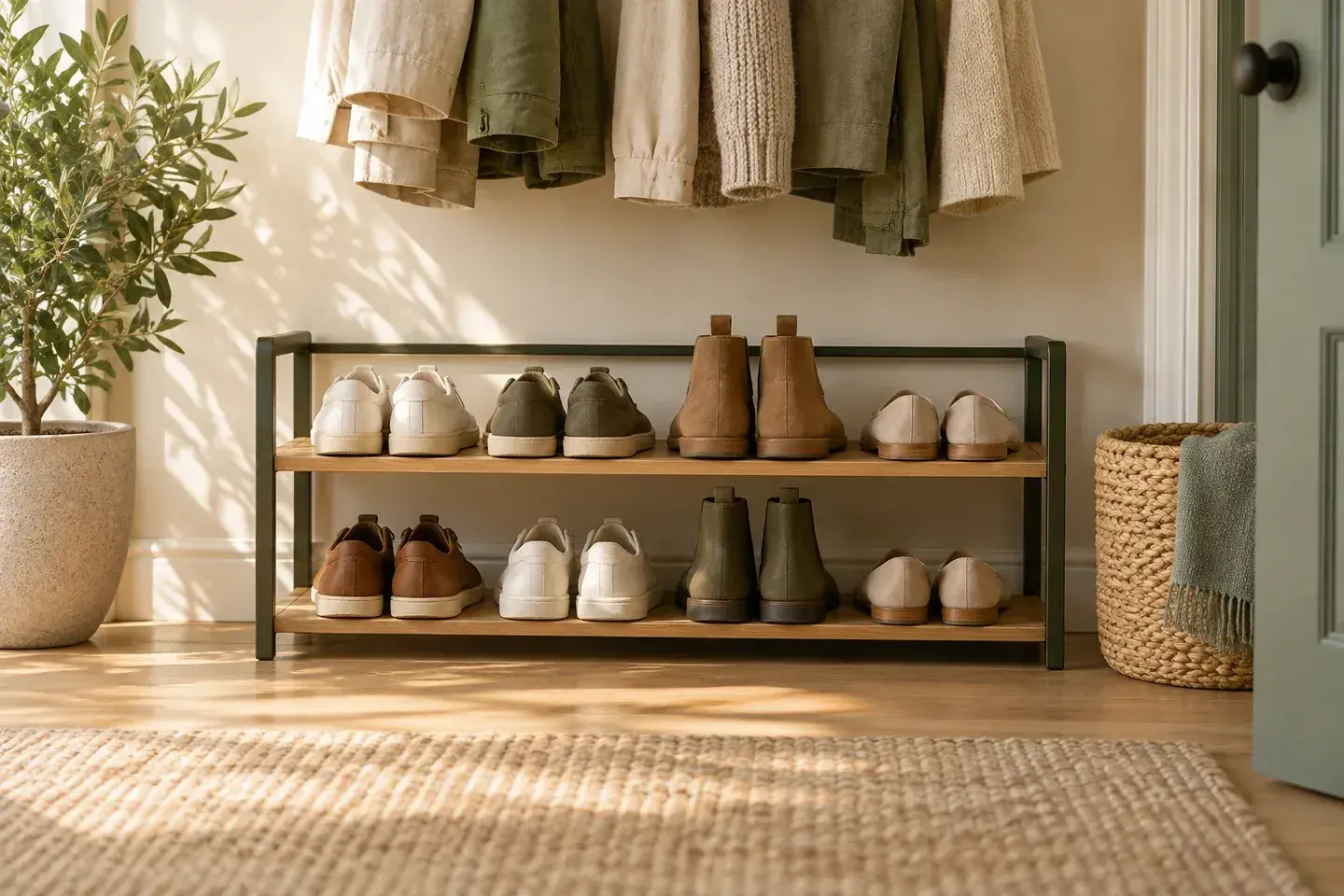
A low rack can use space that is otherwise empty, provided clothes still clear the shoes. Check depth with the door closed and leave access for cleaning. A stable rack that holds the pairs you use is better than a taller one that blocks the hanging section. Avoid storing damp footwear directly against clothing or moisture-sensitive shelving.
10. Keep handbags upright in a divided section
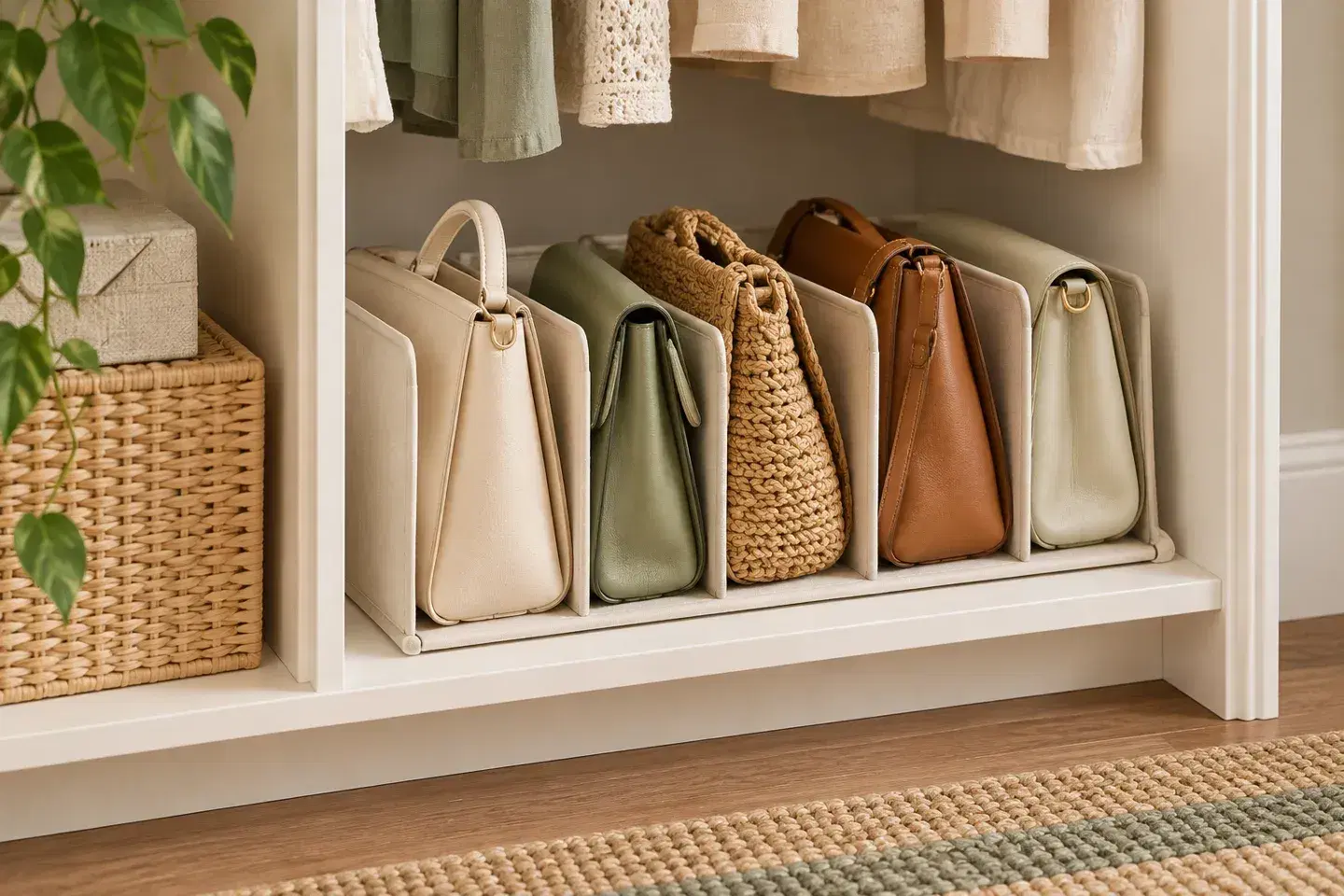
Store bags so their shapes are supported and straps are not tangled. A divider or appropriately sized bin can prevent a pile from collapsing each time you remove one. Avoid placing heavy items inside bags just to make them stand. Keep delicate surfaces from rubbing against sharp hardware, and follow the material's care instructions for stuffing or covers.
11. Move seasonal items to labeled upper boxes
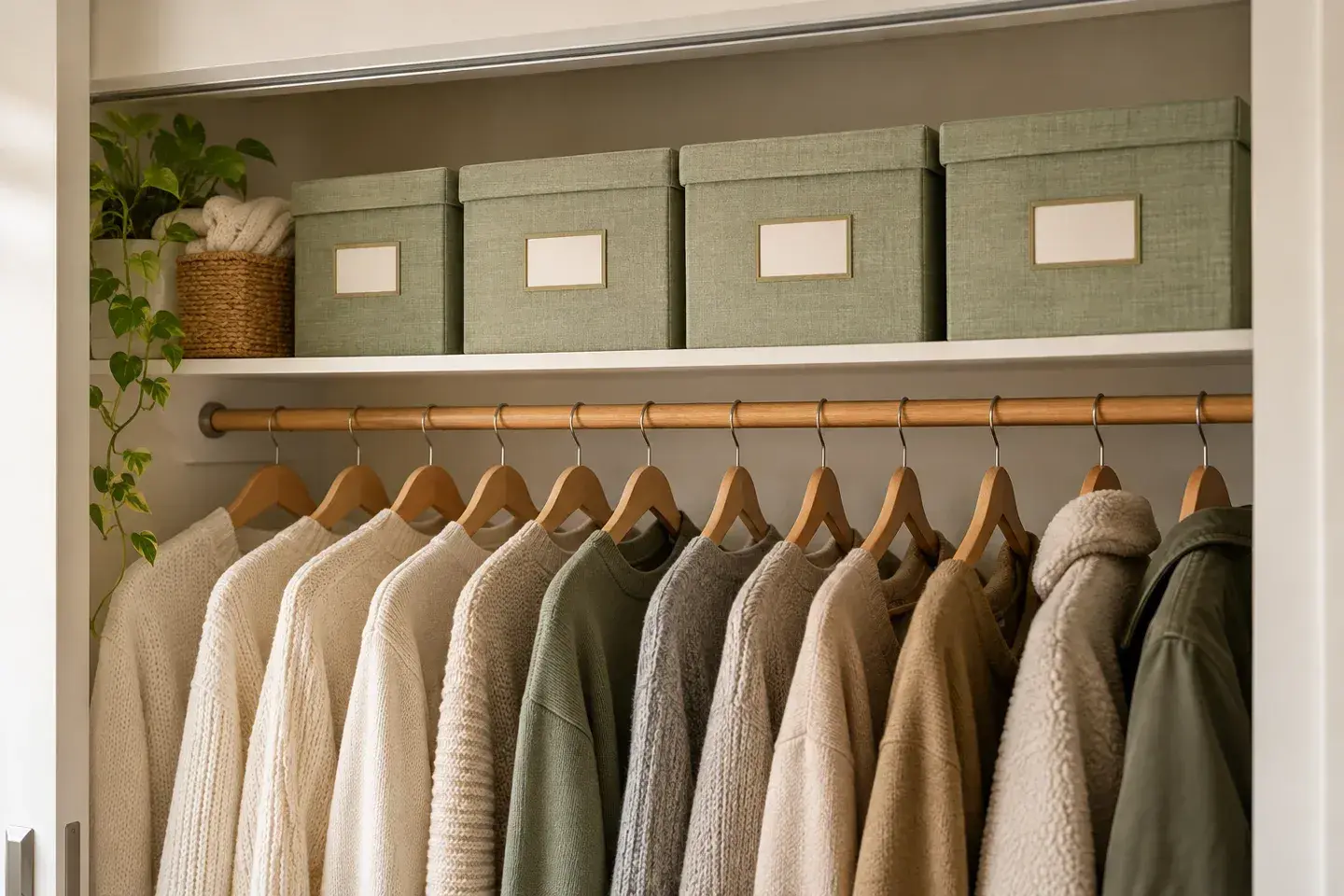
Use the top shelf for lightweight, occasional items rather than the heaviest belongings. Labels should describe contents plainly so you do not have to lower every box to find a sweater. Keep loads within the shelf's rating and use a proper step stool. Never climb the closet rail or a stack of storage containers.
12. Create a single outfit-planning hook
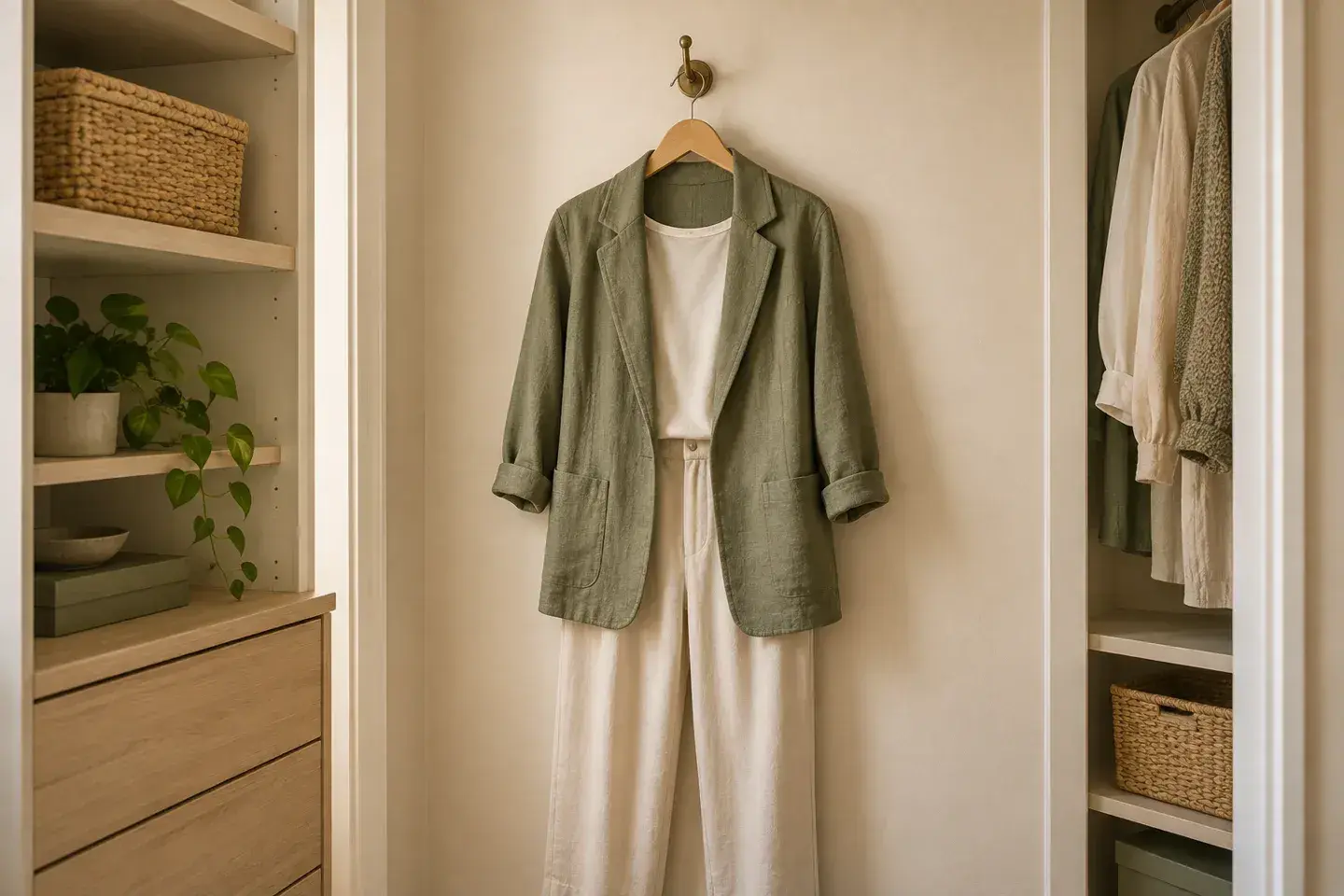
A suitable hook can hold tomorrow's outfit temporarily. Mount it for the expected load and keep it out of the door's path. The word “single” matters: if the hook becomes a permanent pile, it stops helping. Return unused clothing to its normal place so the hook stays available for the next morning's decision.
13. Give the laundry hamper a defined footprint
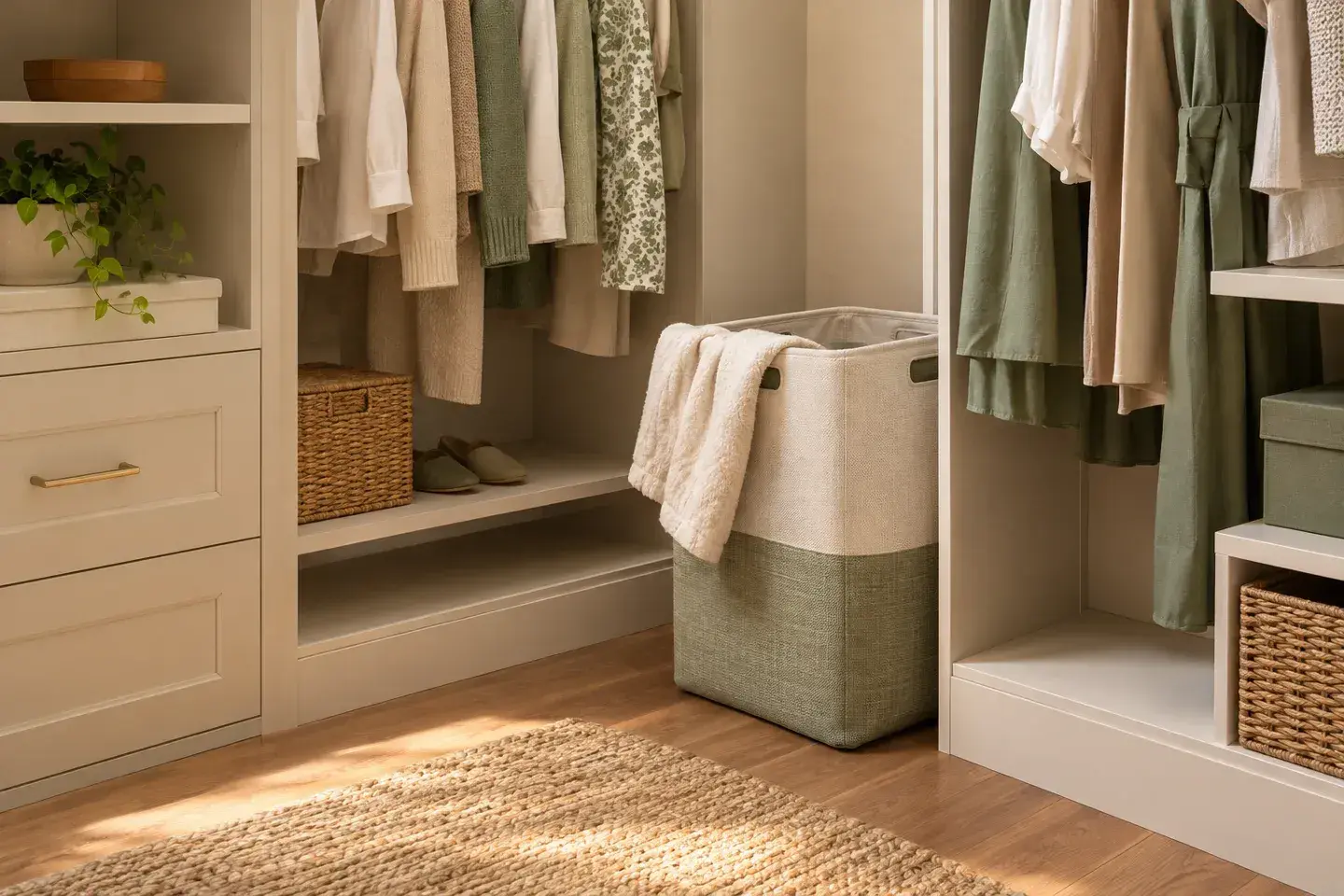
A small removable hamper prevents worn clothing from spreading across the closet floor. Measure it filled, not only collapsed. Leave enough clearance to lift it out without knocking shoes or clothes aside. If the closet is poorly ventilated, do not leave damp laundry inside it; use a suitable drying and laundry routine elsewhere.
14. Improve visibility with a suitable light
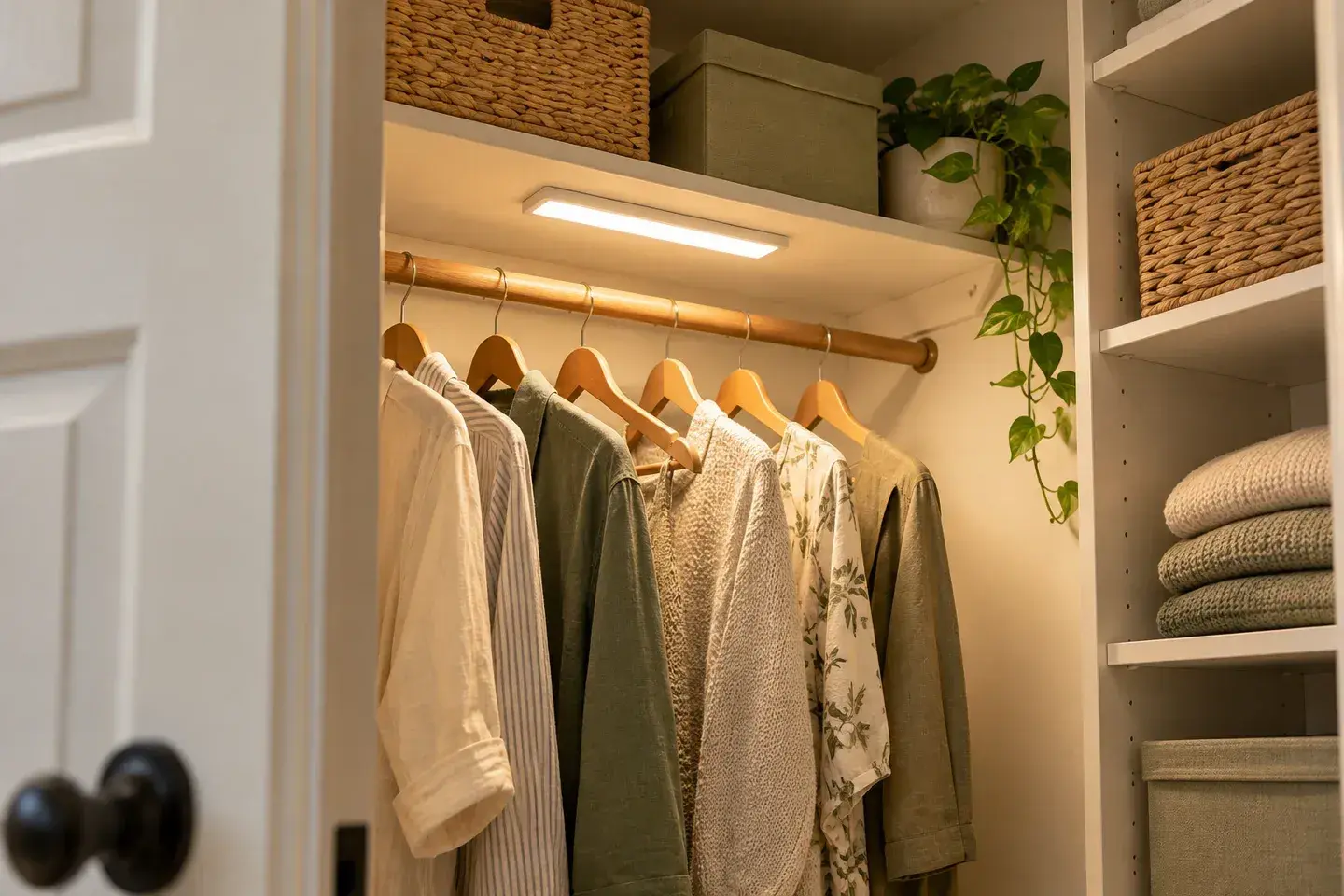
A rechargeable closet light can help you see the back without adding loose cords, if it is suitable for the location and mounted securely. Follow its clearance and charging instructions. Do not cover a light with clothes or improvise wiring. For a permanent electrical fixture, use a qualified electrician and a product appropriate for closet installation.
15. Keep a small exit bag for unwanted items
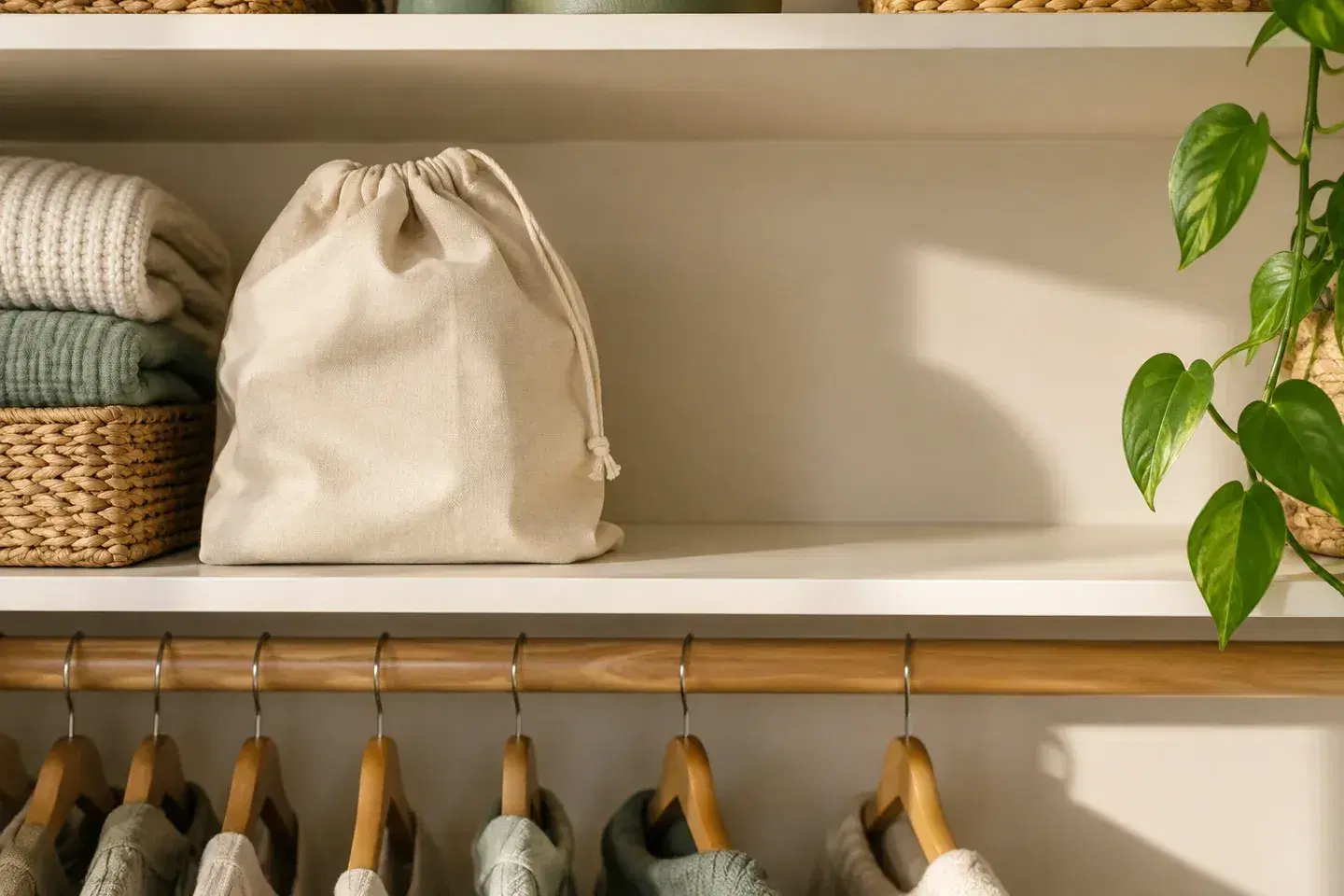
Place a modest bag where you can add clean, usable items you no longer want. Empty it regularly through donation, resale, or another suitable route. The bag should not consume the space you are trying to recover. Treat it as a short stop on the way out of the home, not another category of permanent storage.
Pick changes that address your actual bottleneck
| Feature | Useful starting ideas | |
|---|---|---|
| Crowded hanging rail | Slim hangers, short-garment double rail | |
| Collapsing piles | File folding, shelf dividers | |
| Lost accessories | Shallow baskets, lightweight door storage | |
| Blocked floor | Defined shoe rack and hamper | |
| Hard-to-see contents | Clear boxes, suitable lighting |
IKEA's organization guidance offers examples of grouping clothing for daily use. Your best arrangement is the one you can maintain after laundry day, not the one that looks most densely packed in a photograph.
After a week, notice what still lands on the floor or remains difficult to reach. Adjust that category before buying another organizer. Leave some breathing room so the closet can handle a normal week of use.
Sources
- IKEA's wardrobe planning guide. Checked October 11, 2026
- IKEA's organization guidance. Checked October 11, 2026
Share this article
Get new guides by email
Practical home articles and free resources. No spam, and you can unsubscribe at any time.
Keep reading

15 Icy Blue Bedroom Paint Ideas for 2026
Explore 15 icy blue bedroom paint ideas, from accent walls to blue ceilings, with warm pairings and practical sampling tips for 2026.
October 2026, 6 min read

Neo Deco Living Room Ideas: How to Get the Look on a Budget
Create a budget Neo Deco living room with curves, geometric patterns, metallic accents, jewel tones, and balanced furniture styling.
October 2026, 3 min read
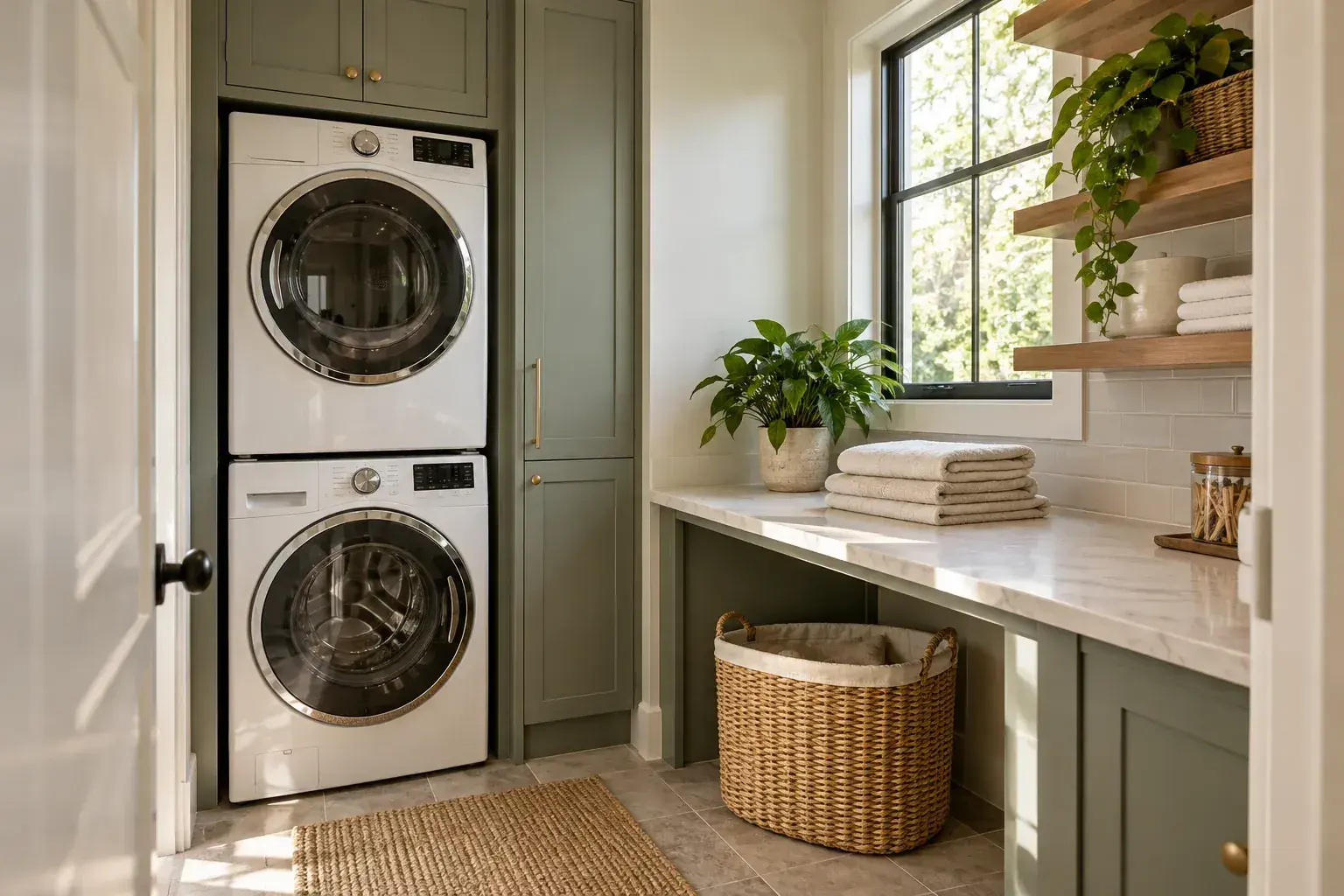
15 Smart Small Laundry Room Stackable Washer Dryer Ideas
Explore 15 smart small laundry room stackable washer dryer ideas. Compare illustrated concepts, practical layout tips, and planning checks.
October 2026, 6 min read