3 Cheap Ways to Cover Ugly Wire Shelving in a Pantry
Wire shelving is useful, but small packages can tilt between the wires and the visible grid can make a pantry feel busy. A removable cover can improve the.
By Home Crane Editors. . 4 min read.
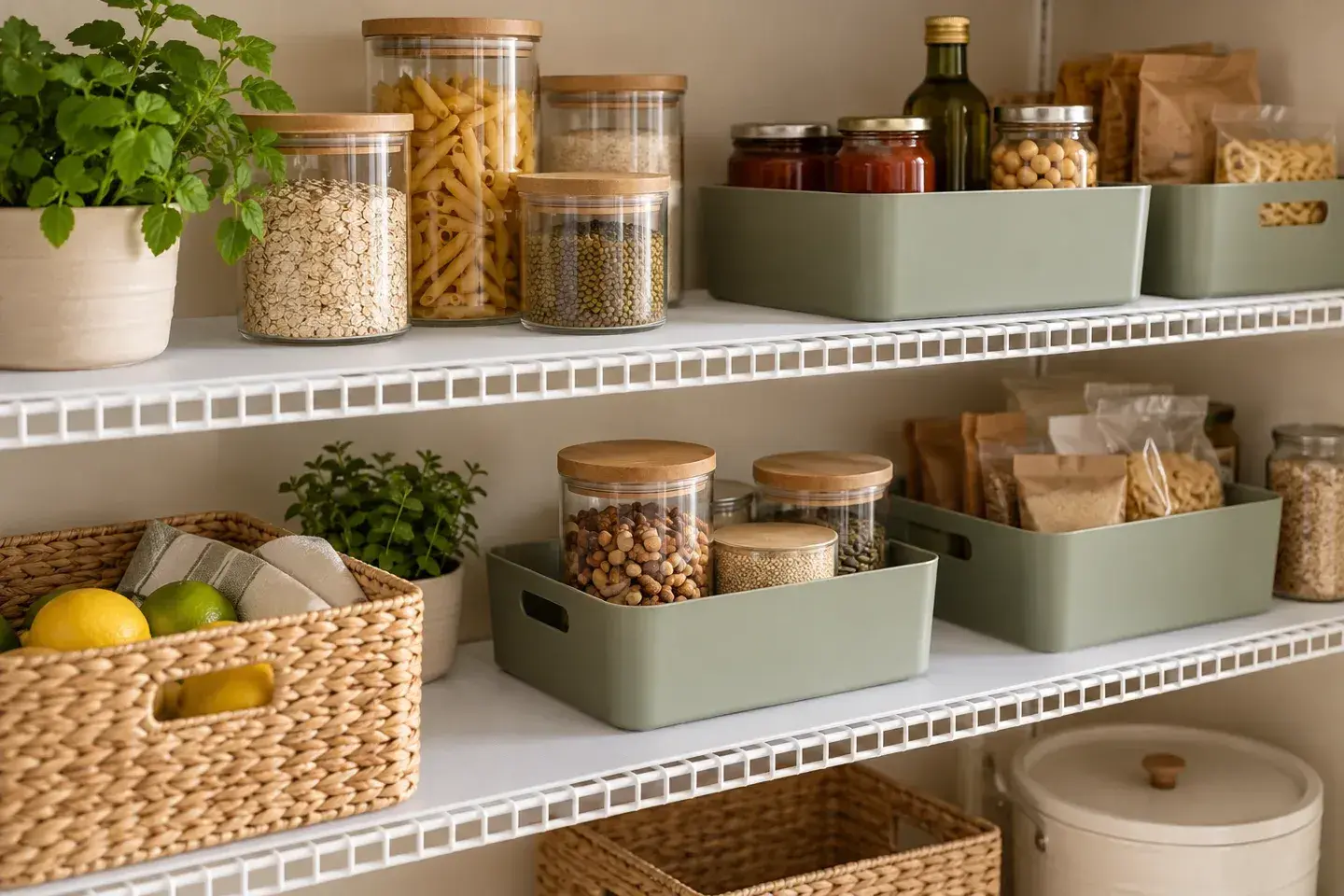
Wire shelving is useful, but small packages can tilt between the wires and the visible grid can make a pantry feel busy. A removable cover can improve the surface without replacing the entire system, provided it does not overload the shelf or conceal failing supports.
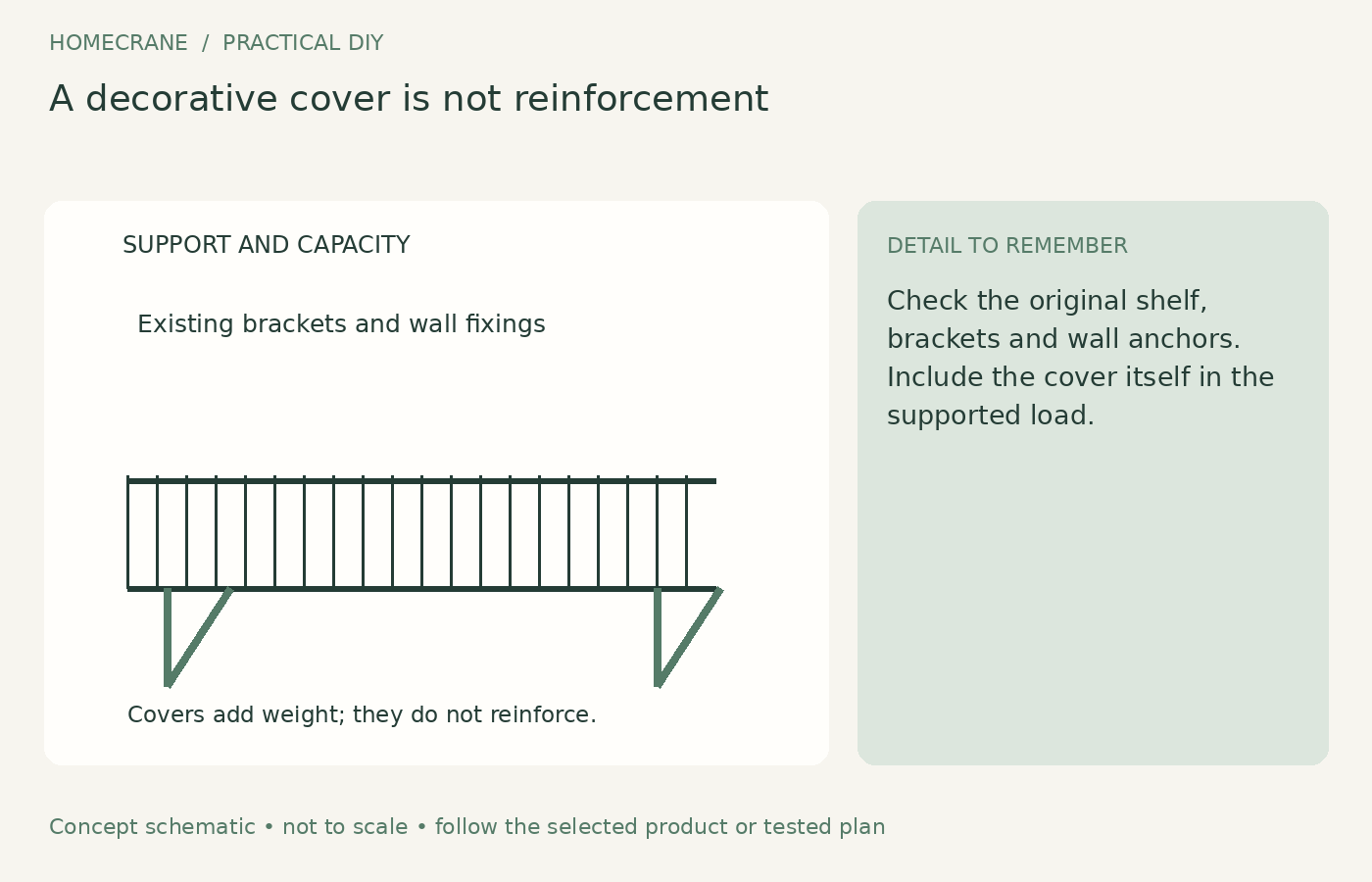
Before adding anything, empty the shelf and inspect its brackets, clips, wall attachment, and condition. Use the instructions for your exact system. ClosetMaid's installation resources are a starting point for identifying the appropriate guide. A cover changes appearance and contact area; it does not increase the shelf's rated capacity.
1. Cut a lightweight, nonadhesive shelf liner
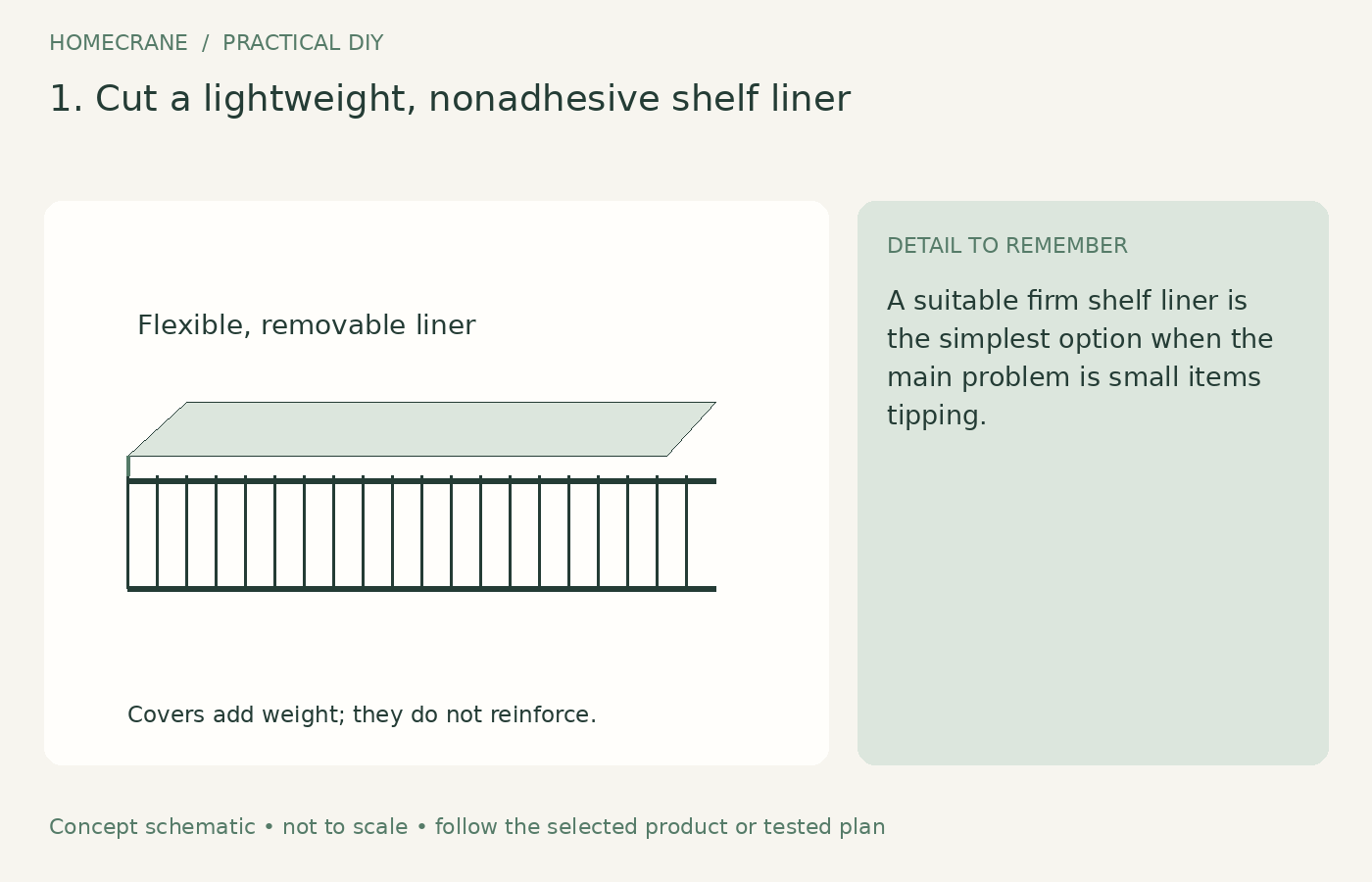
A suitable firm shelf liner is the simplest option when the main problem is small items tipping. Choose a material intended for shelving that lies flat, is easy to clean, and is compatible with the existing finish.
Measure the usable shelf depth and width, including posts or brackets that interrupt the surface. Make a paper template first if the shape is awkward. Cut the liner slightly within the perimeter so it does not curl over the edge or interfere with the door.
Test it with a few typical pantry items. Very soft liner can sag between wires, while a slick surface can let containers slide. Pick a stable, supported product rather than adding several layers to compensate for an unsuitable first choice.
Lift the liner for cleaning and drying. Do not trap moisture against metal or use adhesive simply to force a curled sheet flat. Store groceries in their own suitable packaging; a general shelf liner is not automatically approved for direct food contact.
2. Add a thin, removable rigid shelf insert
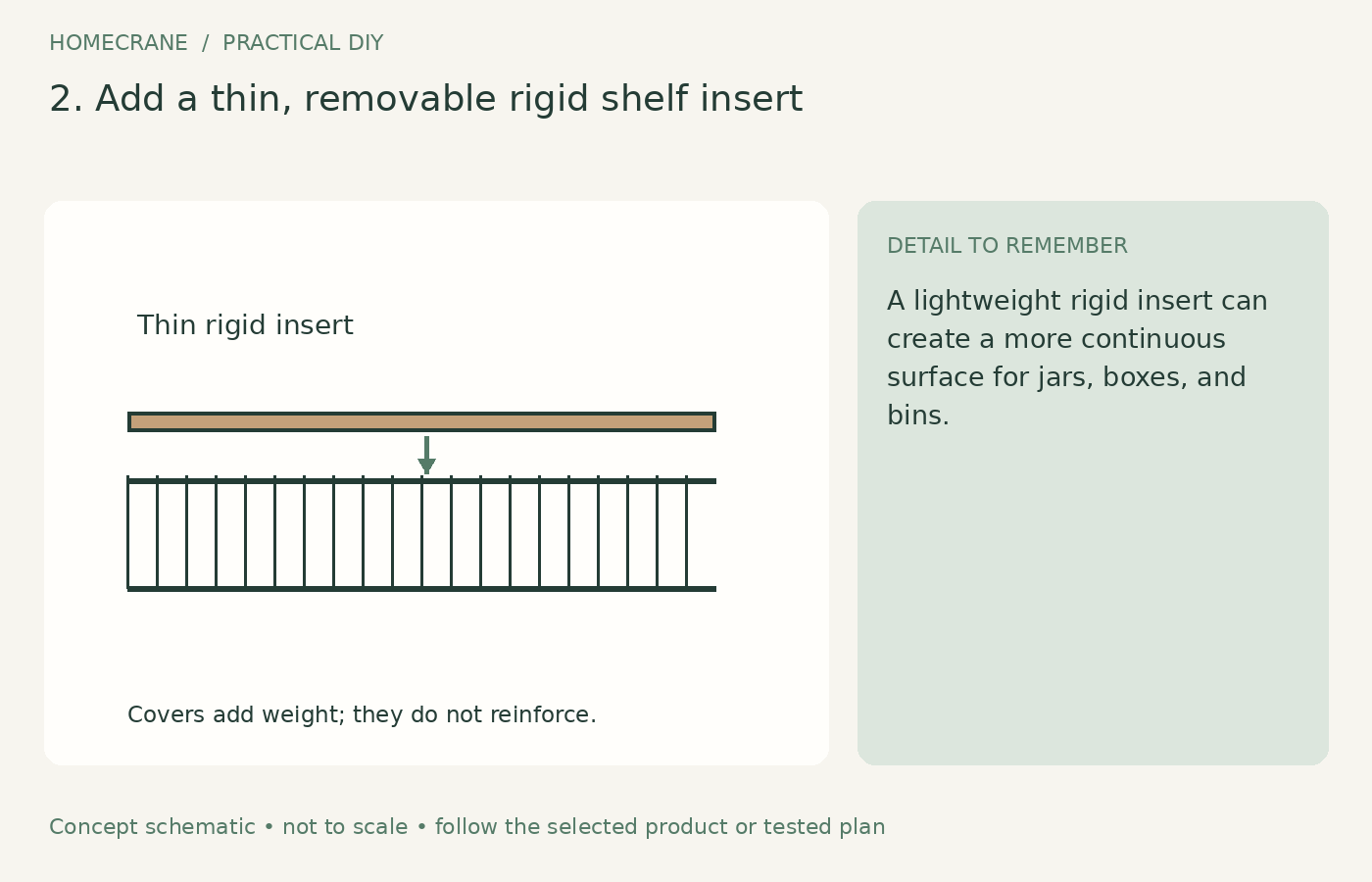
A lightweight rigid insert can create a more continuous surface for jars, boxes, and bins. Measure around support posts and select a material with smooth edges that is suitable for the pantry environment. Account for its weight as part of the shelf's total load.
Use a template and dry-fit before finishing. The insert should rest securely without rocking or projecting into the aisle. Avoid a heavy slab chosen only because it looks like a solid wood shelf; the underlying wire system still carries everything.
If using a wood-based panel, finish exposed edges appropriately and allow coatings to cure before returning food. Keep damp items off moisture-sensitive material. A decorative front strip can hide the wire edge only when it is securely attached to the insert and does not create a snagging or falling hazard.
Do not screw blindly into the wire shelf, cut support members, or remove brackets to make the insert fit. Those changes can alter the system's performance. If the existing shelf is sagging, repair or replace it rather than concealing the sag with a rigid cover.
3. Use shallow trays or bins as removable shelf sections
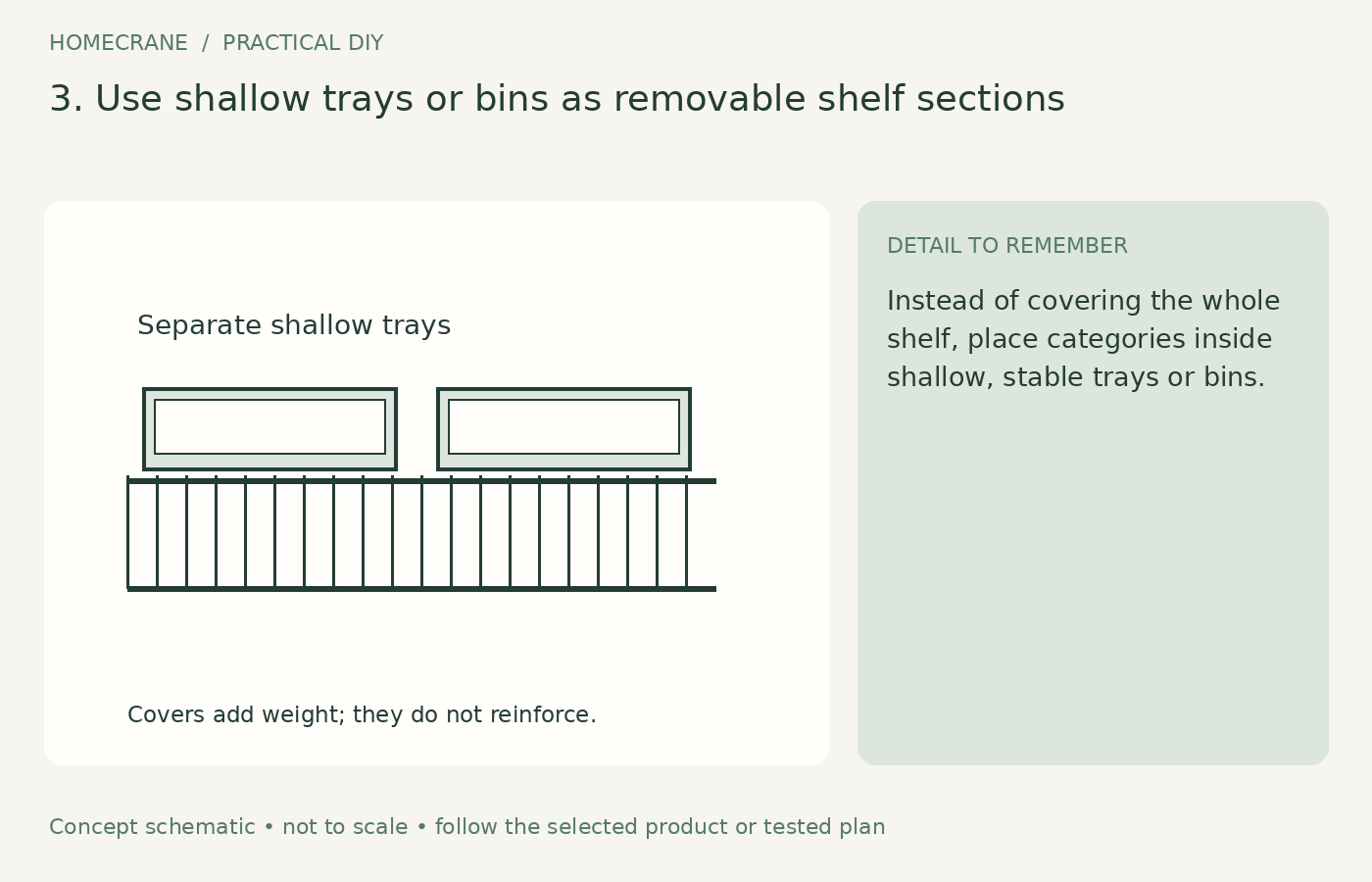
Instead of covering the whole shelf, place categories inside shallow, stable trays or bins. Their bases bridge the wire openings and make the contents easier to remove for cleaning. This is especially useful when the shelf has many brackets or an irregular shape.
Choose bins that fit through the pantry opening and leave room for your fingers. Keep heavy cans in manageable groups. A large bin filled with jars may be too awkward to lift even if the shelf itself can carry it.
Use simple categories such as baking, breakfast, or meal packets. Labels should describe where items belong, not require a complicated filing system. Keep frequently used items at a comfortable height and occasional lightweight items above.
This approach leaves some wire visible, but can deliver most of the functional improvement with less material. It also makes inspection easier because the shelf remains accessible when the bins are removed.
Choose by the problem you want to solve
| Feature | Best use | Main trade-off |
|---|---|---|
| Firm nonadhesive liner | Small packages and quick cleanup | Limited stiffness |
| Lightweight rigid insert | Continuous, smoother surface | Added weight and fitting work |
| Shallow bins or trays | Category organization | Some wire remains visible |
For a narrow pantry, easy access is usually worth more than completely hiding every wire. Test one shelf first rather than buying enough material for the whole room. After a week, check whether the new surface stays flat, cleans easily, and lets you retrieve items comfortably.
Budget and maintenance details that matter
Compare the cost per usable shelf, including waste from cutouts, edge treatment, and any tools. A large sheet can appear inexpensive but create awkward offcuts that do not fit the remaining shelves. Bins may cost more per square foot yet serve as both a cover and an organizer.
Avoid adding decorative layers that hide loose clips or rust. Remove covers periodically to inspect and clean the shelf. If you spill liquid, lift the insert and dry the surfaces beneath it instead of wiping only the visible top.
The USDA's shelf-stable food guidance emphasizes suitable storage conditions. Keep food away from excessive heat and dampness, retain labels, and inspect packaging. A beautiful shelf surface does not change those basics.
Questions homeowners ask
Can I use foam board wrapped in contact paper?
It may work as a temporary decorative mockup, but do not assume it is durable, cleanable, or suitable under heavy pantry items. Choose a shelf material intended for the actual use.
Can a cover fix a sagging shelf?
No. Identify the cause, check the load and support arrangement, and repair the system. A cover can hide the symptom while leaving the underlying problem unchanged.
Sources
- ClosetMaid's installation resources. Checked October 11, 2026
- USDA's shelf-stable food guidance. Checked October 11, 2026
Share this article
Get new guides by email
Practical home articles and free resources. No spam, and you can unsubscribe at any time.
Keep reading

DIY Fluted Headboard Made Out of Pool Noodles
Plan a decorative fluted headboard using covered foam channels, a stable backer, careful material checks, and secure independent mounting.
October 2026, 3 min read

4 Renter-Friendly Ways to Hang Curtains Without Drilling
Compare tension rods, adhesive curtain hooks, magnetic rods, and floor-to-ceiling systems for curtains in a rental without drilling.
October 2026, 3 min read
Genius Under-Stairs Pull-Out Storage Ideas You Can DIY
Explore five under-stairs storage approaches with practical guidance on access, drawer hardware, stability, and existing openings.
October 2026, 3 min read