4 Renter-Friendly Ways to Hang Curtains Without Drilling
Compare tension rods, adhesive curtain hooks, magnetic rods, and floor-to-ceiling systems for curtains in a rental without drilling.
By Home Crane Editors. . 3 min read.

Hanging curtains without drilling starts with the window and surrounding surfaces, not the curtain color. A deep recess, a smooth painted wall, a steel door, and a flat ceiling each favor a different mounting method.
No-drill does not mean guaranteed damage-free. Pressure can mark a surface, adhesives can remove weak paint, and magnets can scratch a finish. Check your lease, obtain any required permission, and use the exact product's surface and weight guidance. Lightweight curtains give you more options than heavy lined drapes.
Before you start
Measure the opening and weigh the complete hanging load, including the rod and rings where the product rating requires them. Record what each contact surface is made of. Test a discreet area when the manufacturer permits it, and photograph the existing finish.
Avoid placing improvised supports over beds or seating. Keep cords, long loops, and accessible hanging hazards out of children's reach. The following methods solve different situations; they are not interchangeable hardware kits.
1. Use a tension rod inside a sound recess
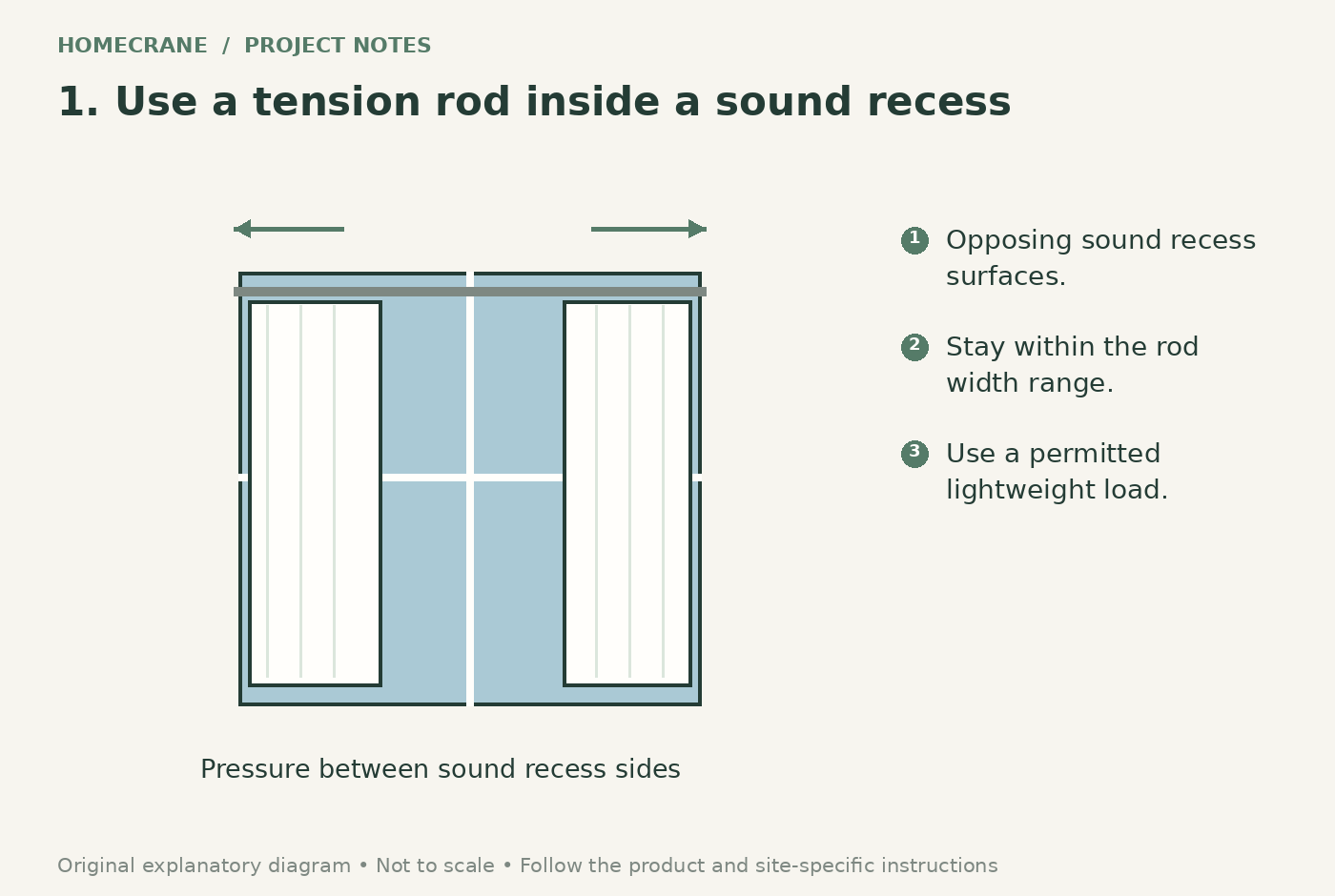
A tension rod works between two opposing surfaces within its specified width range. It is a good candidate for a recessed window with firm, reasonably parallel sides and lightweight curtains. Follow the rod's adjustment instructions rather than overtightening it to compensate for an unsuitable opening.
Check that the rod does not obstruct the window, ventilation, or existing blinds. Test it gently with the complete curtain load before regular use and recheck if it slips. Do not add unapproved adhesive pads or makeshift shims. If the recess is shallow, uneven, or fragile, move to another method.
2. Use purpose-made adhesive curtain hooks
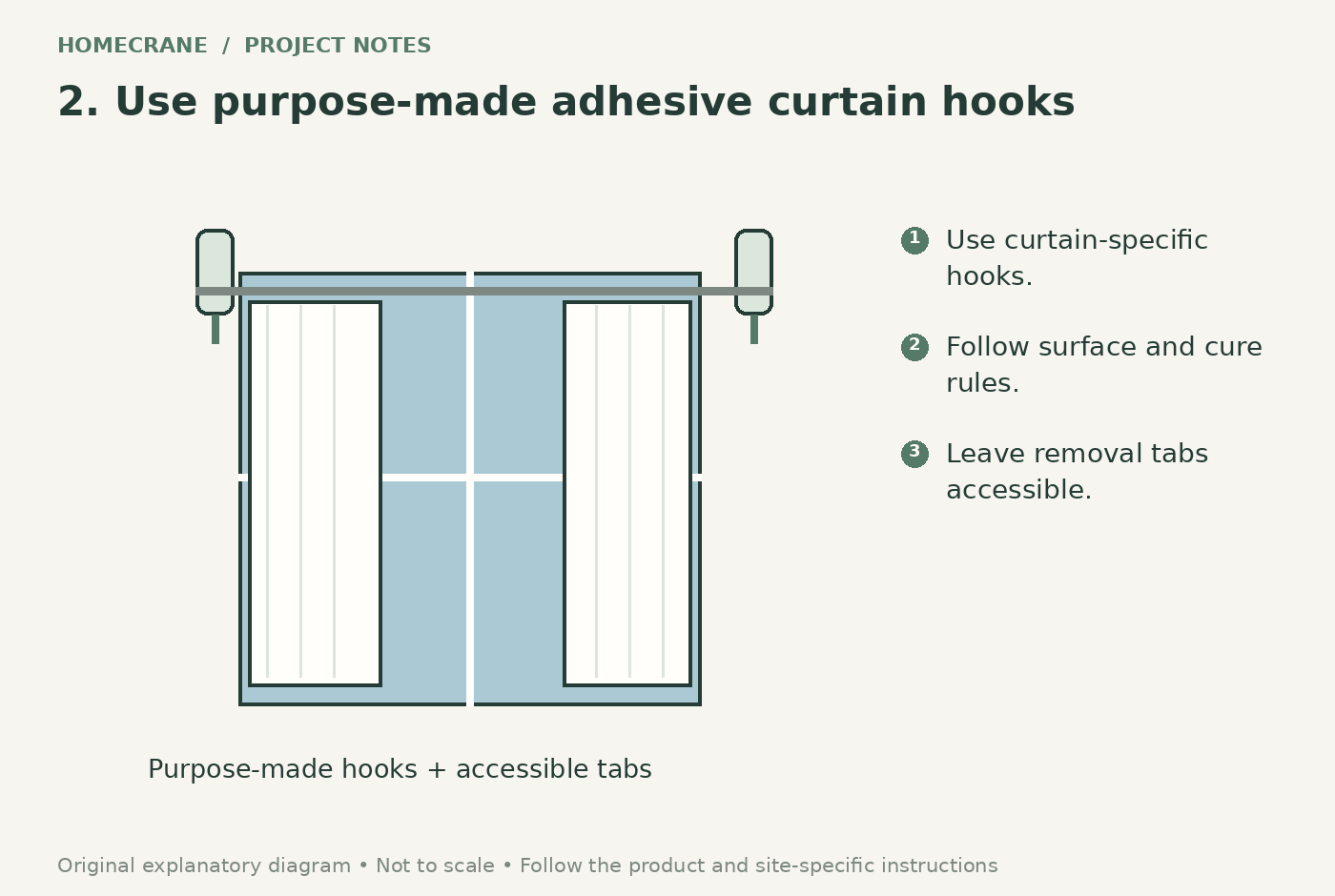
Choose hooks intended for curtain rods, with compatible rod diameter and a rating for the complete configuration. Command's curtain-hook guidance limits use to specified smooth surfaces and excludes wallpaper, rough surfaces, and placement over beds. [1]
Follow the exact cleaning, application, waiting, and removal sequence. Newly painted surfaces need the specified cure time, which may be longer than paint feeling dry. Do not assume extra generic hooks add their ratings together. Keep removal tabs accessible. If the wall paint is weak or peeling, adhesive mounting is a poor choice even for a light curtain.
3. Choose a magnetic rod for a suitable steel surface
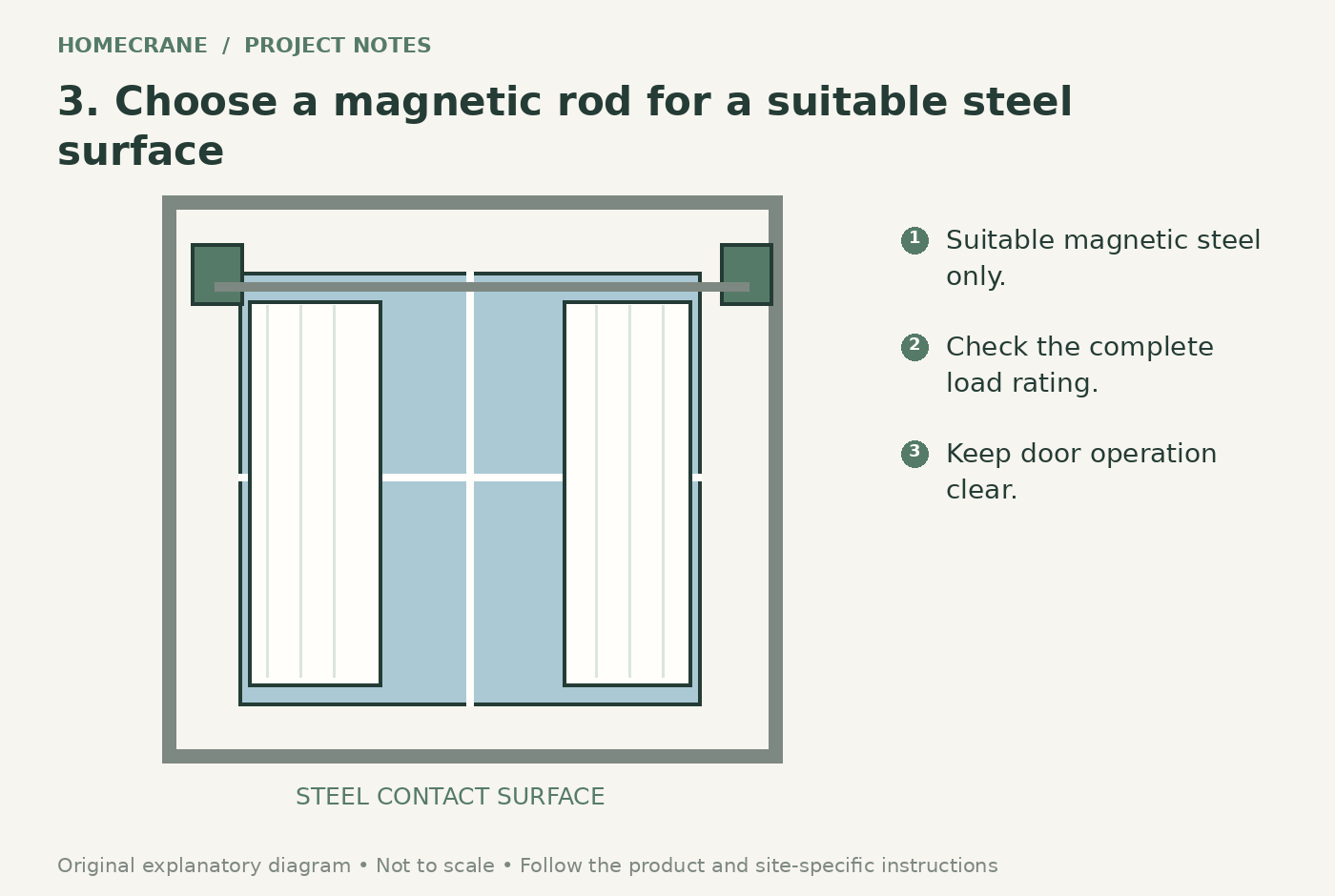
A magnetic curtain rod can suit a steel door or compatible metal window surround. It will not attach simply because a frame looks metallic: aluminum, vinyl, and wood are different situations. Confirm magnetic attraction and use a purpose-made system with a stated load limit. [2]
Clean the contact area and follow the manufacturer's finish-protection guidance. Position the rod so the door can open and close without snagging the curtain. Check for sliding or marking after installation. A magnet that holds an empty rod may still be inadequate for fabric moved several times a day.
4. Try a floor-to-ceiling tension system
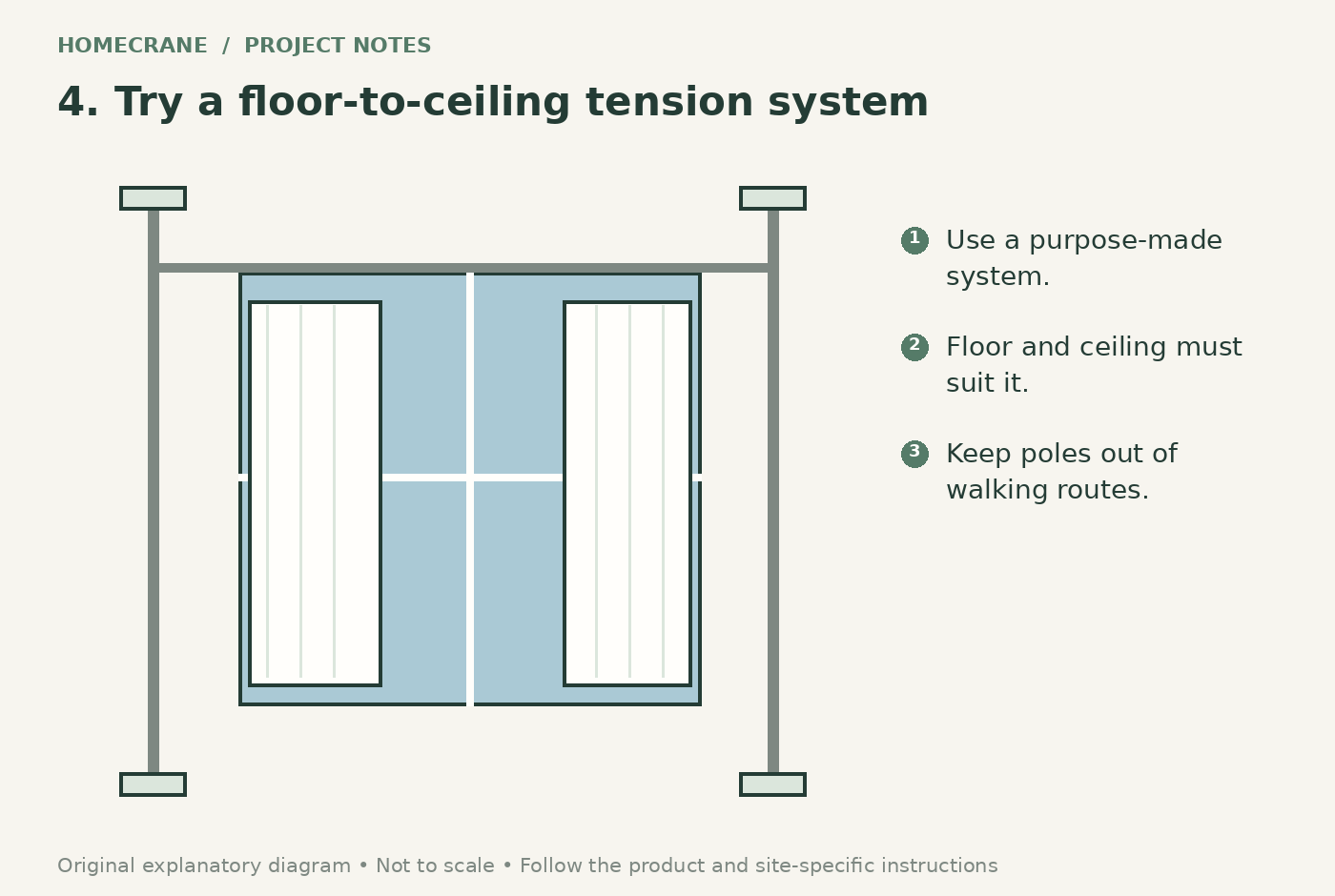
A purpose-built system can support a curtain where the window recess and wall are unsuitable. Umbra's Anywhere rod is one example with specified height, width, and load limits. [3] Measure the room against the actual product range before buying.
The floor and ceiling contact points must suit the system. Avoid improvised pressure against fragile tiles, sloped ceilings, or unsupported trim. Install and stabilize it exactly as directed, then keep the poles out of circulation routes. This method is visually larger than an ordinary rod, so test the footprint before committing.
Common questions and next steps
Which method is usually simplest? A correctly sized tension rod in a sound recess has few components, but only works where the opening suits it.
Can you hang blackout curtains? Possibly, but the full load must fit the chosen system's rating. Fabric described as blackout can vary greatly in weight. Do not infer compatibility from the label alone.
How should you remove adhesive hooks? Follow that product's removal directions carefully. Pulling a hook straight off the wall can damage paint. Allow time at move-out instead of treating removal as a rushed final chore.
Sources and further reading
- Command: curtain rod hook installation and restrictions
- MagneRod: magnetic curtain rod systems
- Umbra: Anywhere curtain rod specifications
Research reviewed October 12, 2026.
Sources
- Command: curtain rod hook installation and restrictions. Checked October 12, 2026
- MagneRod: magnetic curtain rod systems. Checked October 12, 2026
- Umbra: Anywhere curtain rod specifications. Checked October 12, 2026
Share this article
Get new guides by email
Practical home articles and free resources. No spam, and you can unsubscribe at any time.
Keep reading

DIY Fluted Headboard Made Out of Pool Noodles
Plan a decorative fluted headboard using covered foam channels, a stable backer, careful material checks, and secure independent mounting.
October 2026, 3 min read
Genius Under-Stairs Pull-Out Storage Ideas You Can DIY
Explore five under-stairs storage approaches with practical guidance on access, drawer hardware, stability, and existing openings.
October 2026, 3 min read

How to Create a Stunning DIY Indoor Plant Wall
Build a manageable indoor plant wall with removable pots, suitable light, secure shelves, and a watering routine that protects the wall.
October 2026, 3 min read