4 Easy Ways to Fix a Gap Between the Floor and Baseboard
Compare four ways to close a visible floor-to-baseboard gap, including sealant, shoe molding, resetting trim and scribing, while allowing floor movement.
By Home Crane Editors. . 4 min read.
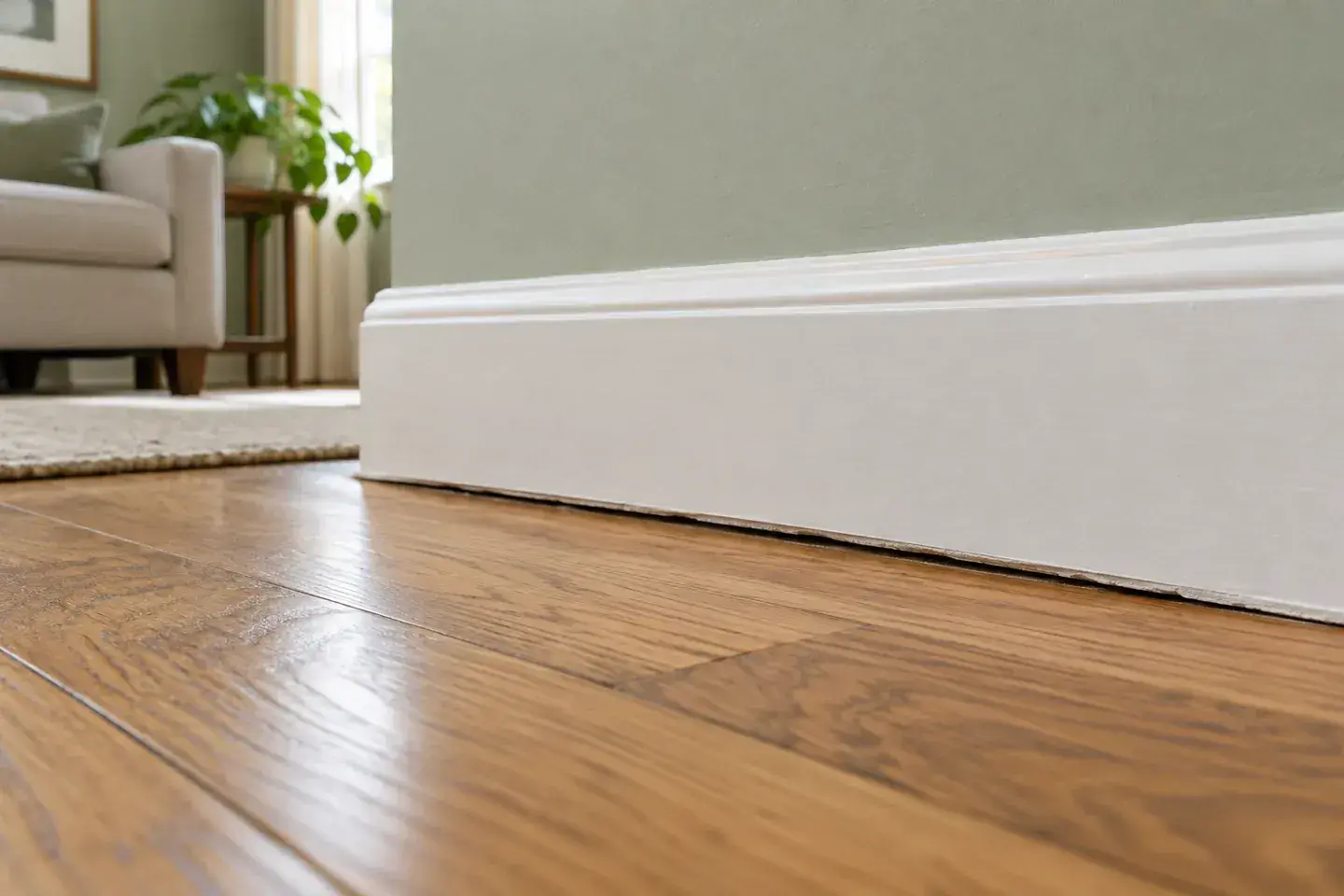
A gap beneath a baseboard is usually a trim problem, but the right fix depends on what is moving. Shoe molding is often the simplest cover for a stable, uneven gap. A small compatible joint may accept sealant, while a badly positioned baseboard may need resetting or replacing. Do not fill a flooring expansion space just to hide it.
First identify the floor: hardwood, floating laminate, floating vinyl, or tile. Find its installation instructions and check the perimeter detail. A visible vertical gap under trim is different from the horizontal movement clearance the flooring needs beside the wall.
Photograph the gap and measure it at several points. A gap that recently widened, accompanies a soft floor, or appears with water staining needs investigation. Cosmetic trim will not correct moisture damage, settlement, or a poorly supported floor.
1. Use a small sealant bead only where the flooring permits it
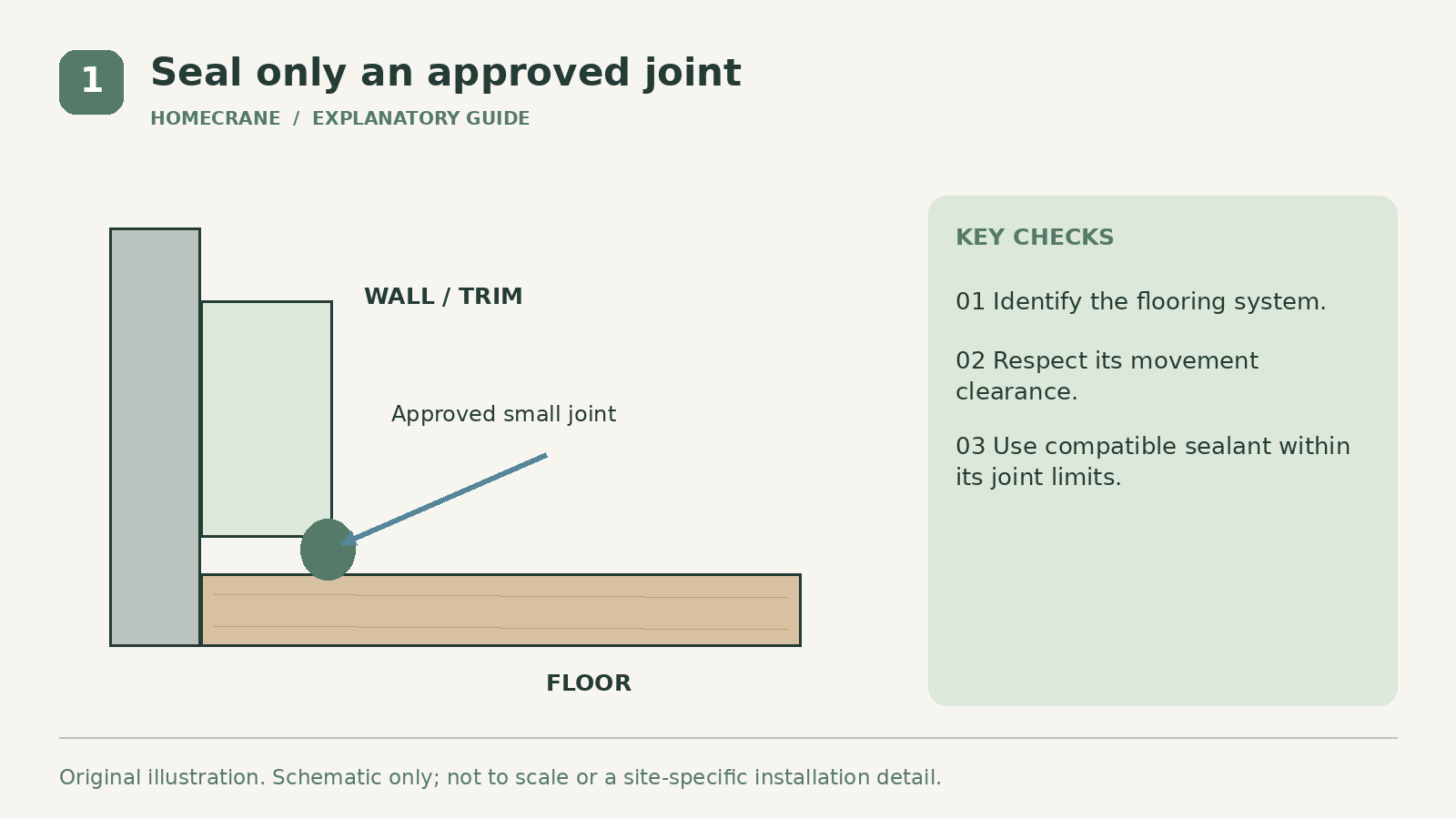
A narrow, stable joint can sometimes be finished with a compatible flexible sealant. This is most appropriate when the floor and sealant manufacturers permit the detail and the joint falls within the sealant's specified width and depth. There is no universal gap size that makes caulking safe for every floor.
Clean away dust and old loose sealant, then allow the surfaces to dry. Protect the adjacent finish and test adhesion in a discreet place. Apply the prescribed bead and tool it according to the product instructions. Keep the sealant away from any movement space that must remain open.
GE Sealants' baseboard guidance recognizes that wood flooring moves and suggests leaving that interface unsealed or using molding where appropriate. Its general guidance should still be checked against your exact flooring system.
Paintability also matters. DAP's sealant guidance distinguishes paintable acrylic products from silicone formulations with different properties. Buy for the substrate, movement, and finish you need. Do not assume a bathroom sealant is the best cosmetic trim product.
This option is a poor choice for a large uneven opening, loose trim, or unexplained movement. A thick mound of caulk often attracts attention and can separate as the materials move.
2. Add shoe molding to cover a stable uneven gap
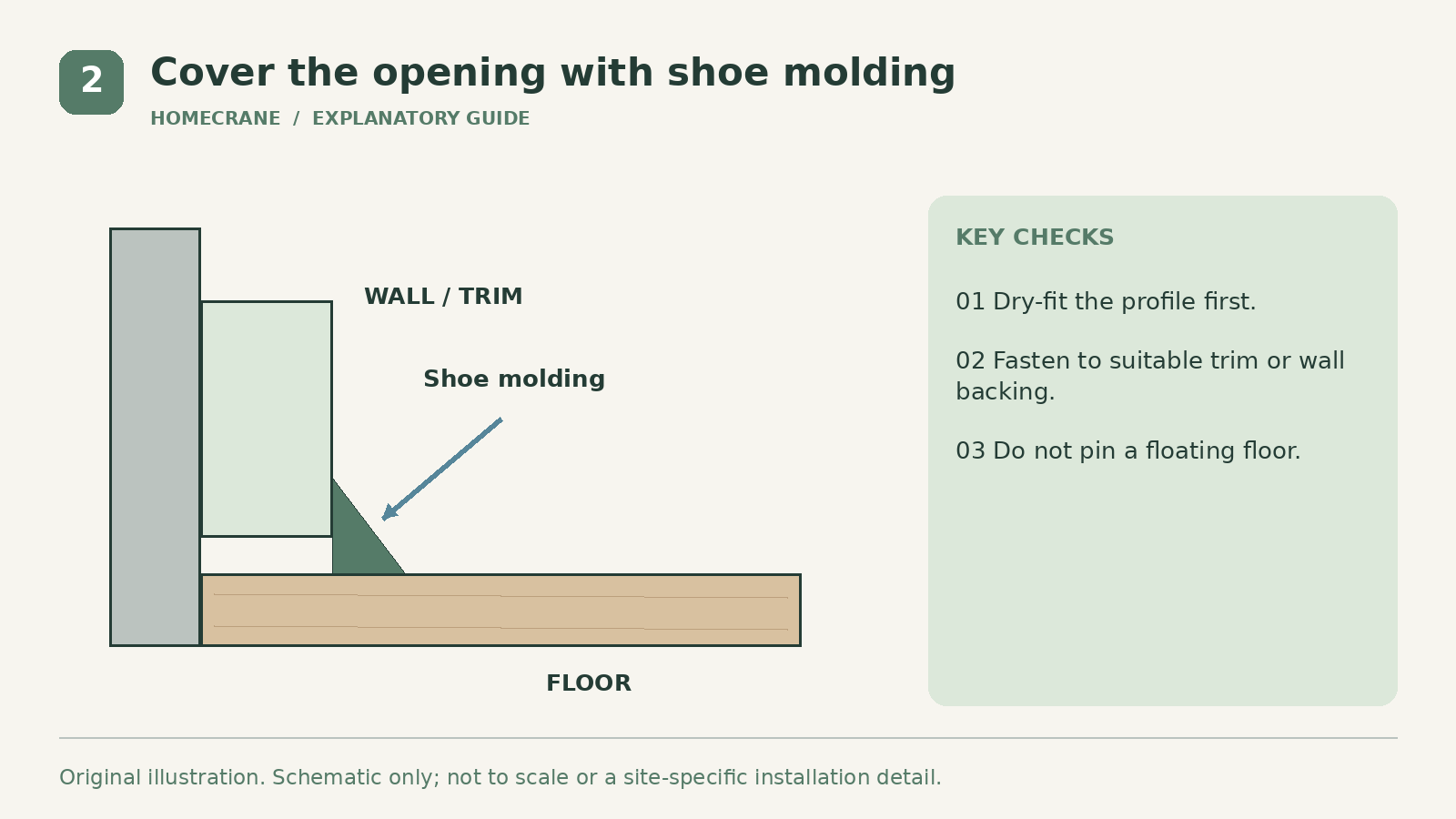
Shoe molding is a slim trim piece placed along the baseboard's lower edge. It can follow modest floor irregularities and conceal the opening while the main baseboard stays in place. Quarter-round is another profile, but its larger projection can look heavier and interfere with tight furniture placement.
Hold a sample against the gap before buying the full quantity. Check the tallest opening, corners, doorway returns, and nearby cabinet doors. The molding must cover the visible gap without being forced hard against a floating floor.
Measure the run and plan joints where they will be least conspicuous. Cut and dry-fit pieces before finishing or fastening them. Secure the trim into the baseboard or suitable wall backing as appropriate, not down through a floating floor. Select fasteners that suit the trim and avoid concealed services.
Paint or stain the molding to coordinate with the baseboard. A consistent trim color usually makes the added piece read as part of the original detail. Fill fastener holes with a suitable product and finish the upper trim joint only as needed.
This approach hides a gap; it does not level the floor. If the floor feels springy, slopes unexpectedly, or continues moving, address that cause separately.
3. Reset a baseboard that was installed too high
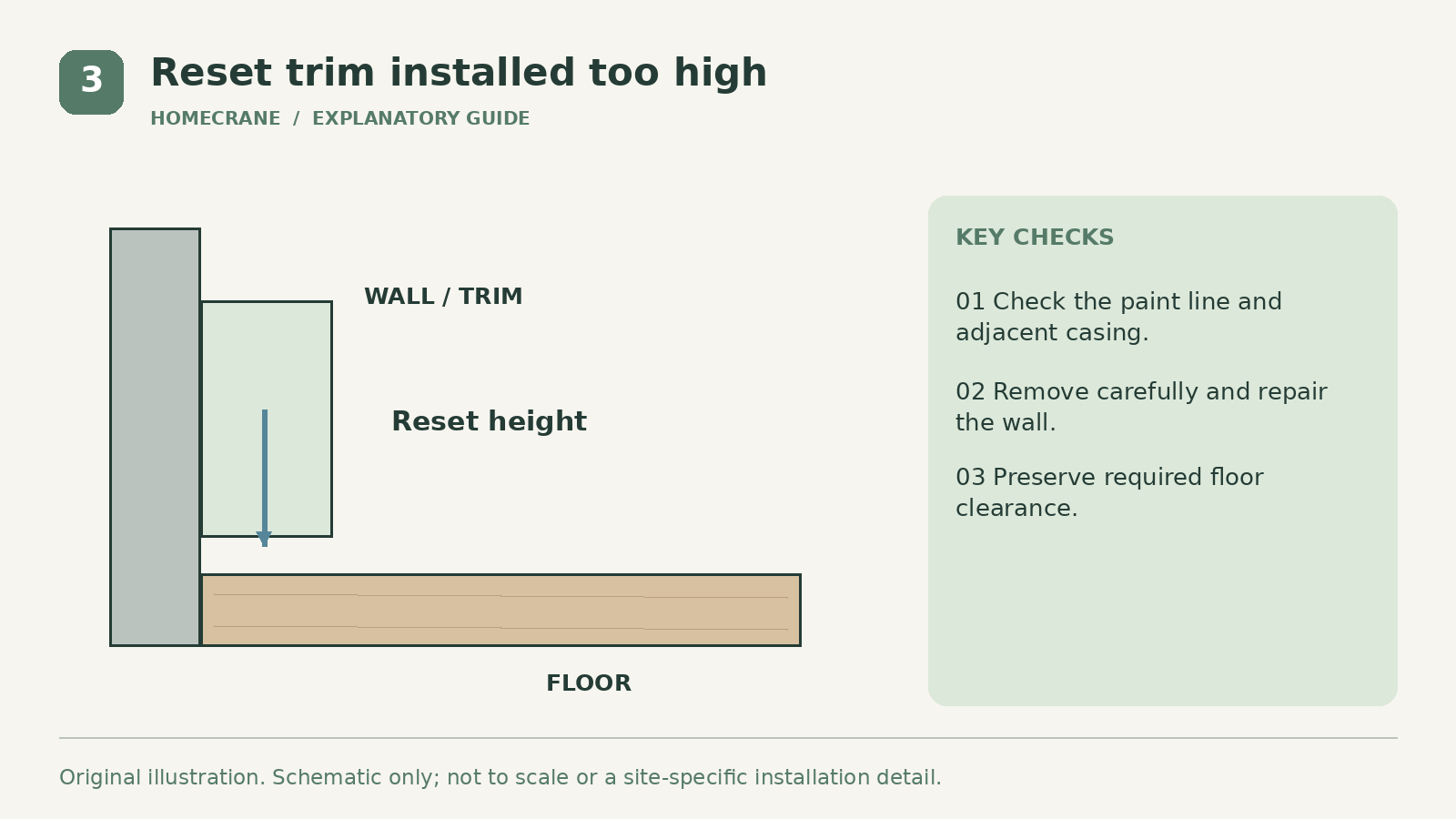
When an entire length sits uniformly high, lowering it can provide a cleaner result than adding another profile. This works only if the wall finish and adjacent trim allow the change. Removing a baseboard may reveal an old paint line, damaged drywall, or fastener holes above its new position.
Before prying, check for caulk or paint bridging the top edge. Protect the wall and use suitable trim-removal tools carefully. Older painted surfaces may require lead-safe assessment before disturbance. See the EPA lead-safe renovation guidance before disturbing suspect paint, especially in pre-1978 homes. Brittle trim can split, so replacement may be more practical than salvaging it.
Dry-fit the baseboard at the intended position and check the floor's required clearance. Do not use the trim as a clamp that pins down floating planks. Fasten to suitable backing, repair exposed wall areas, and finish the trim consistently.
Choose this option when the gap results from installation height rather than a floor that varies substantially along the wall. If lowering one end creates a conspicuous mismatch at the doorway, a carpenter can advise on a better transition.
4. Replace or scribe the trim for a neater fit
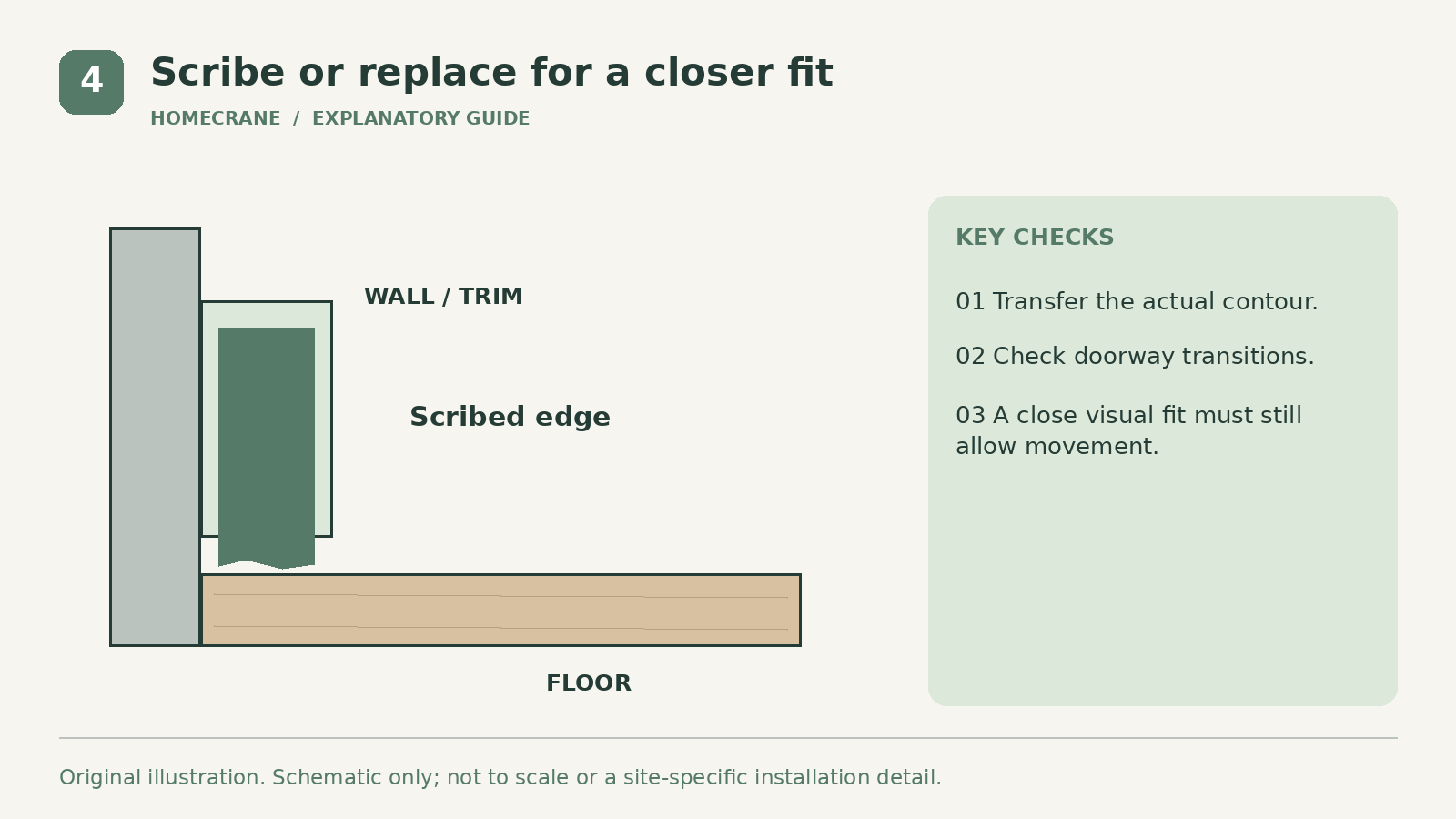
A wider replacement baseboard or a carefully scribed lower edge can suit a wavy floor when you want to avoid extra shoe molding. Scribing means transferring the floor's contour onto the trim and cutting to that line. It takes more care than applying a filler.
Check that the profile works with existing door casings and room proportions. Make a test piece before cutting long, expensive lengths. The goal is a visually close fit while preserving any clearance the floor system requires.
A carpenter can be useful for long runs, stain-grade wood, complex corners, or walls with substantial variation. Ask whether the quote includes removal, wall repairs, finishing, and disposal. A cheap trim price can become a larger job if repainting the room is necessary.
Choose the least disruptive suitable fix
| Feature | Starting option | |
|---|---|---|
| Tiny stable joint with approved sealant detail | Compatible sealant | |
| Uneven cosmetic opening over a sound floor | Shoe molding | |
| Baseboard consistently installed too high | Reset existing trim | |
| Larger variation and a streamlined appearance | Scribed or replacement trim |
Should I use expanding foam?
Not as an exposed cosmetic baseboard filler or an improvised way to lock flooring edges. Hidden air leaks require an appropriate air-sealing detail, which is a different job from finishing visible trim.
What if the gap comes back?
Recheck the cause. Repeated failure can indicate movement, moisture, poor adhesion, or an unsuitable repair. Photograph changes and have the floor assessed if the opening is growing or accompanied by other damage.
Sources
- GE Sealants' baseboard guidance. Checked October 11, 2026
- DAP's sealant guidance. Checked October 11, 2026
- EPA lead-safe renovation guidance. Checked October 11, 2026
Share this article
Get new guides by email
Practical home articles and free resources. No spam, and you can unsubscribe at any time.
Keep reading

DIY Fluted Headboard Made Out of Pool Noodles
Plan a decorative fluted headboard using covered foam channels, a stable backer, careful material checks, and secure independent mounting.
October 2026, 3 min read

4 Renter-Friendly Ways to Hang Curtains Without Drilling
Compare tension rods, adhesive curtain hooks, magnetic rods, and floor-to-ceiling systems for curtains in a rental without drilling.
October 2026, 3 min read
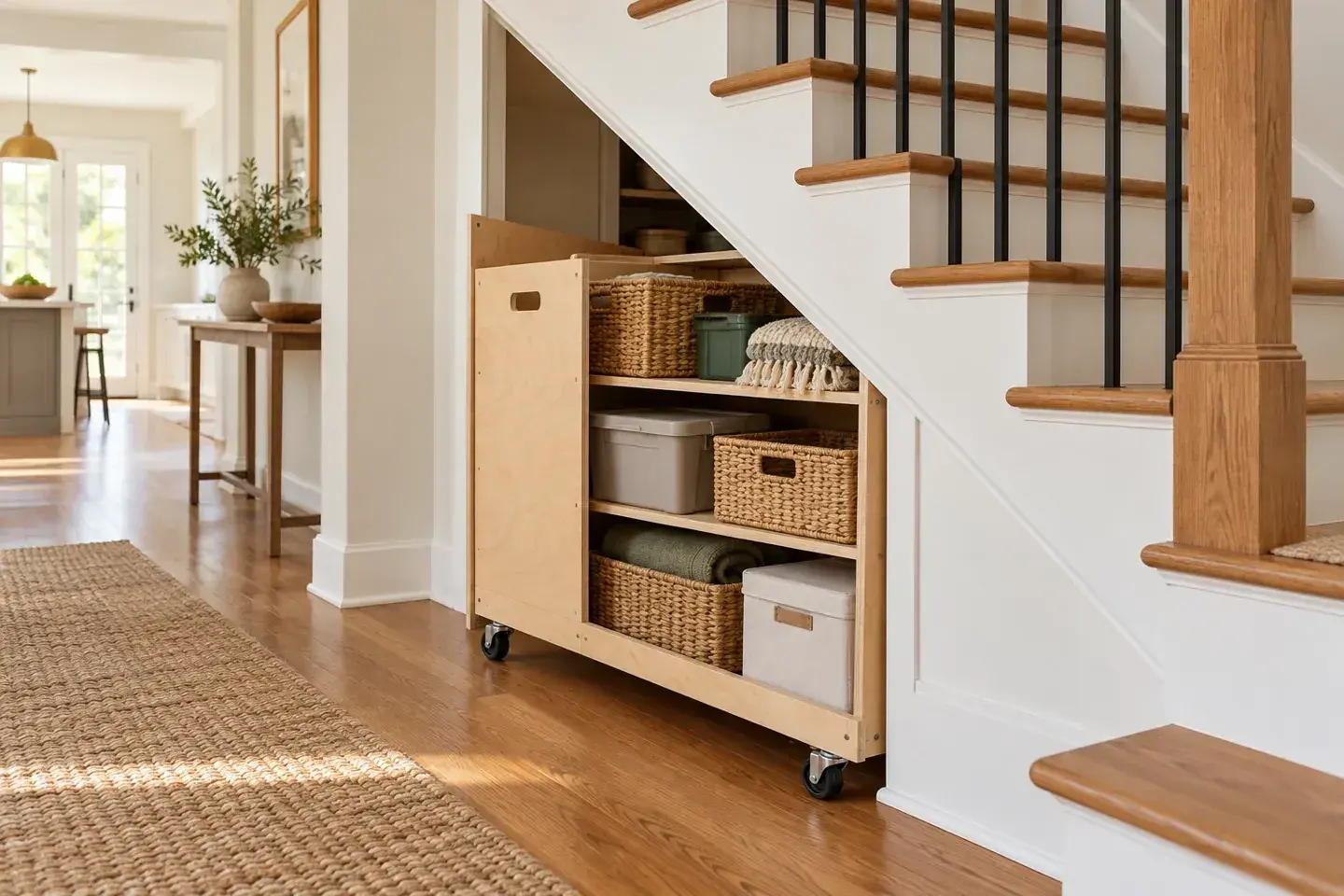
Genius Under-Stairs Pull-Out Storage Ideas You Can DIY
Explore five under-stairs storage approaches with practical guidance on access, drawer hardware, stability, and existing openings.
October 2026, 3 min read