5 Functional & Cheap Alternatives to Traditional Gutters
Compare five alternatives to traditional gutters, including rain chains and drainage options, with practical limits and hidden installation costs.
By Home Crane Editors. . 4 min read.
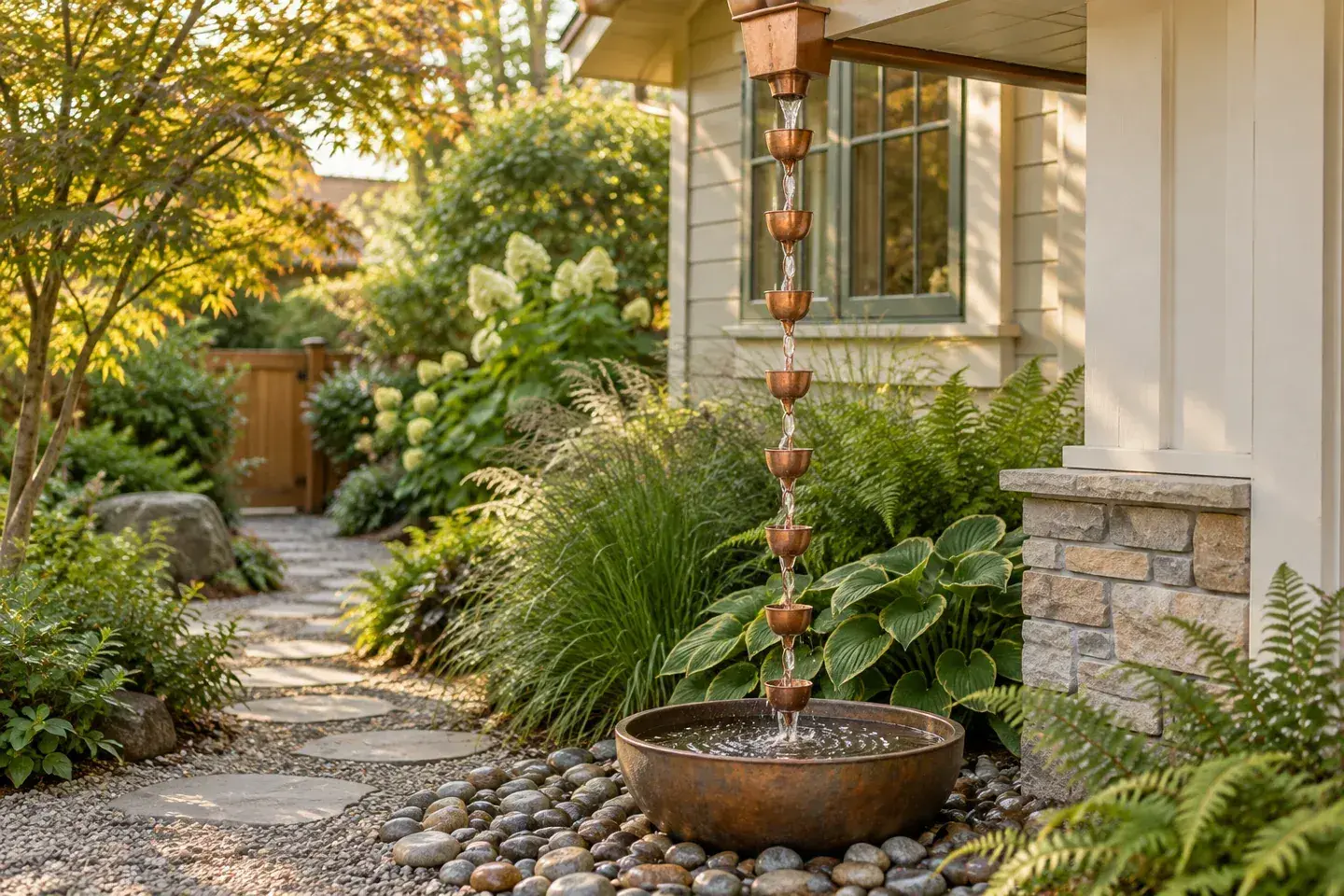
Some alternatives can reduce the cost or visual impact of roof drainage, but none is a universal, inexpensive replacement for a properly designed gutter system. A rain chain replaces a downspout. A diverter protects one location. A gravel strip reduces splash only when the wider drainage plan works.
The useful question is what you need to accomplish: collect roof water, carry it downward, move it across the ground, or protect a doorway. These five options address different parts of that job. Keep existing working gutters until you know how the replacement arrangement will handle the same runoff.
1. A rain chain in place of a downspout
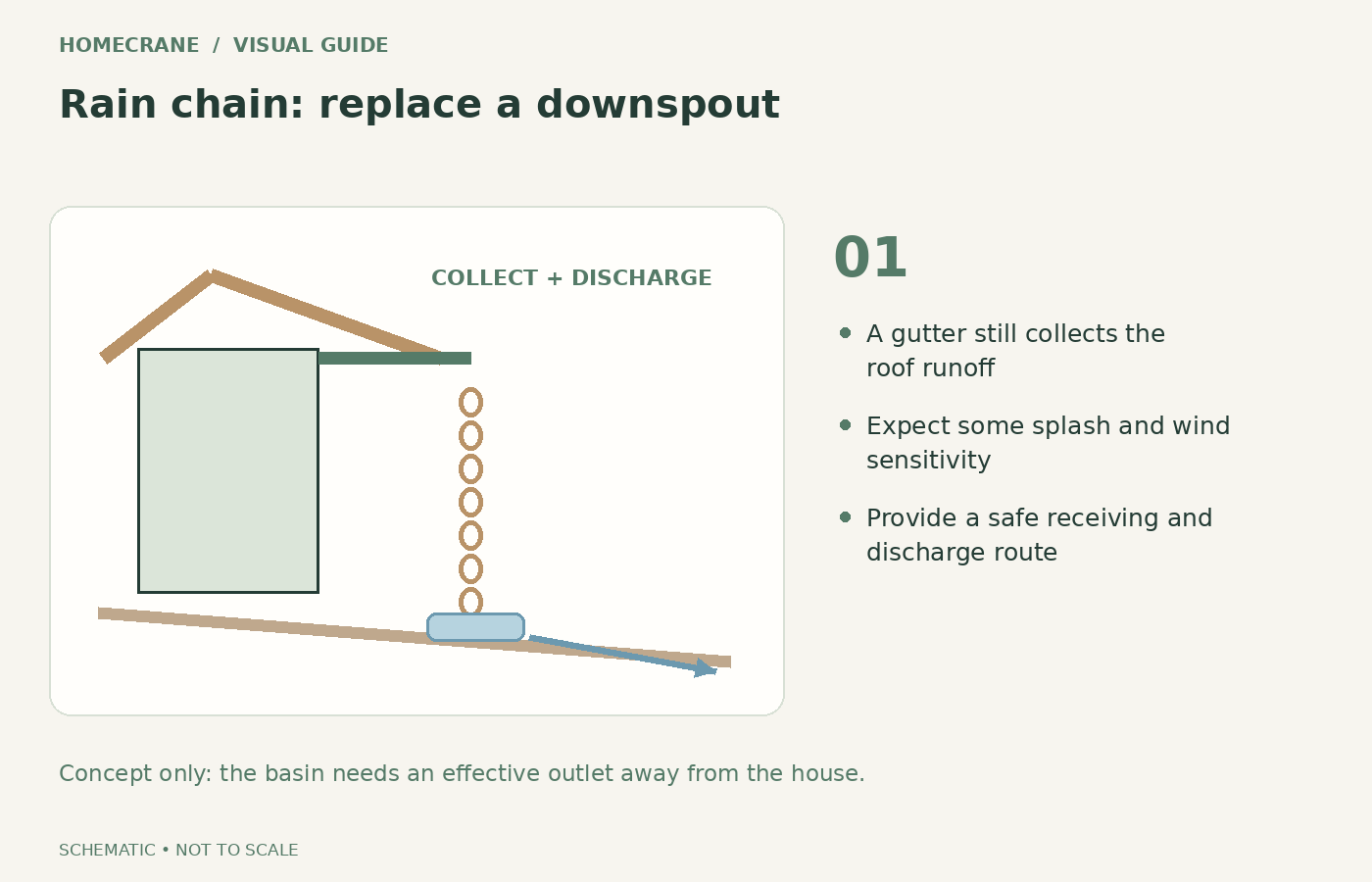
A rain chain can be an attractive option at a visible garden corner. Water travels along links or cups from a gutter outlet to a receiving basin or other drainage feature below. You still generally need the gutter to collect water from the roof edge.
Choose a compatible outlet and a receiving area that directs water away from the house. A decorative bowl that fills and overflows beside the foundation is not a complete drainage system. Consider wind, splash, winter ice, and the amount of roof feeding that outlet.
Gutter Supply's rain-chain guidance explains these limitations, including concentrated runoff and exposed locations. A chain can be economical for one suitable outlet, especially if the gutter already works, but premium copper and drainage excavation can make the project more expensive than a basic downspout.
Best fit: a sheltered, modest drainage area with a safe receiving route. Avoid: a main entrance or location where overflow would create slippery steps.
2. A roof rain diverter over a small entrance
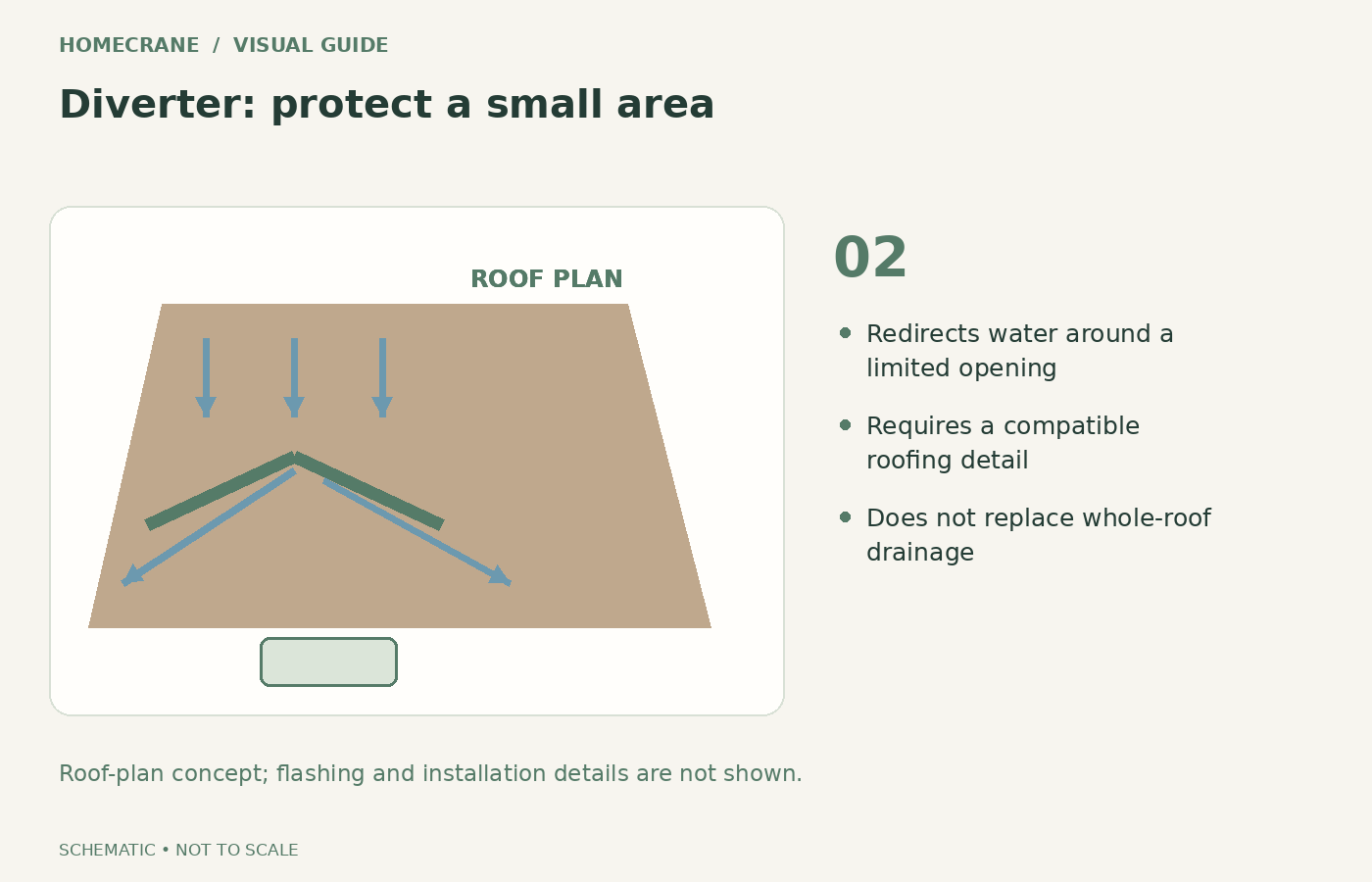
A roof diverter redirects runoff around a limited area, such as an entrance without a porch. It does not collect and transport all the water from the roof, and it does not eliminate the need to manage water at the ground.
Treat this as a localized roofing detail. Compatibility with the roof covering, flashing, roof pitch, and installation method matters. A poorly installed strip can create a leak while solving a splash problem. Have a roofer assess the detail rather than lifting shingles or driving exposed fasteners based on a generic diagram.
The apparent material cost may be low, but roof access and professional installation belong in the comparison. Also consider where redirected water lands. Sending it from the doorway onto a side path or a neighbor's property is not a satisfactory result.
Best fit: a small, specific drip problem on a suitable roof. Avoid: treating it as whole-house drainage or using it to disguise a roof leak.
3. A ground-level channel drain with a proper outlet
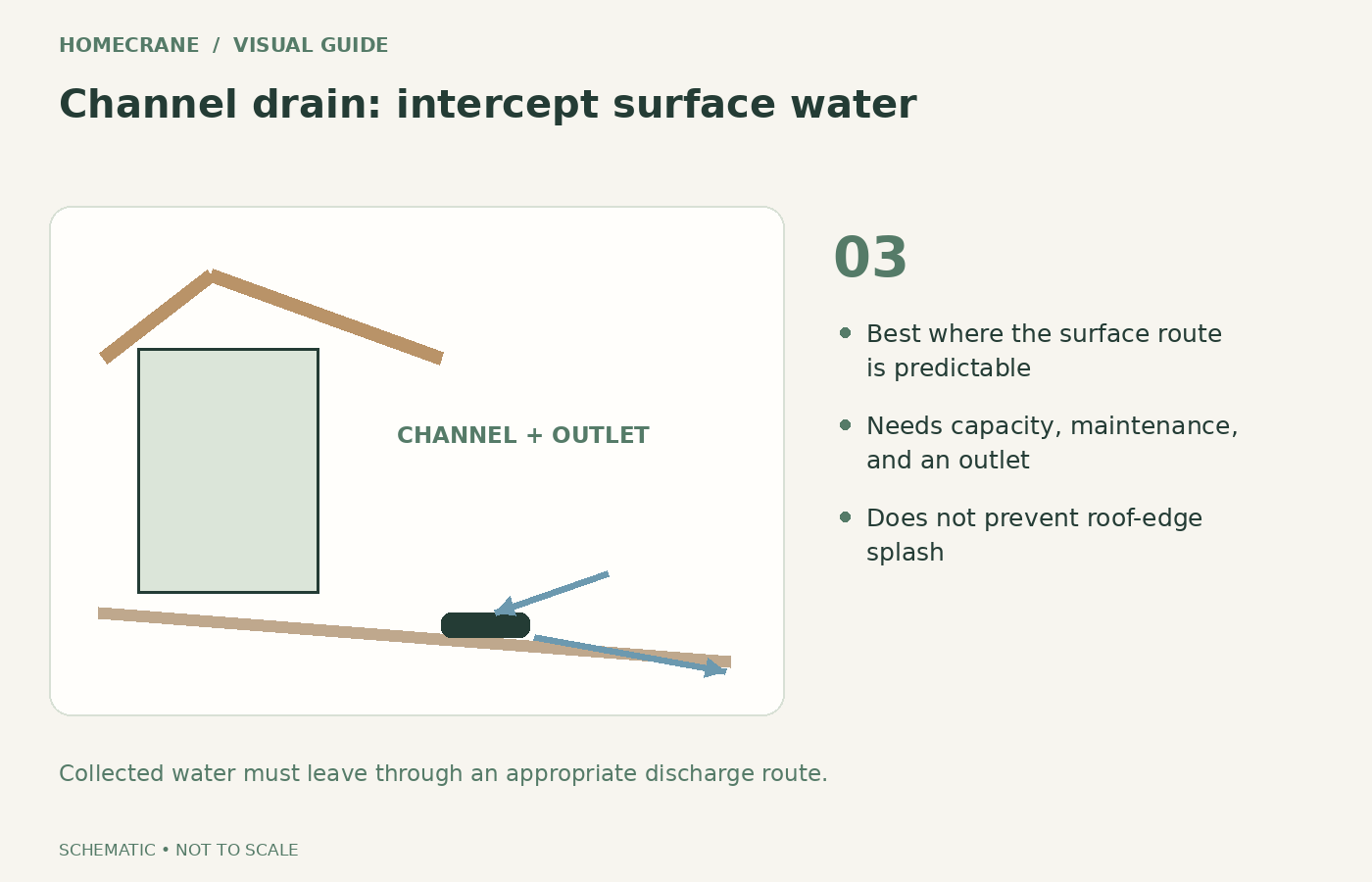
A channel drain can intercept water across paving, such as beside a patio or at a runoff crossing. It is most useful when surface water follows a predictable route and there is a lawful, reliable place for the collected water to go.
This does not stop roof water from splashing siding on its way down. The drain also needs sufficient capacity, a stable installation, maintenance access, and an outlet that will not back up. Cutting an existing concrete slab or excavating a long pipe route can quickly remove the budget advantage.
Ask for a drainage layout that shows the complete route rather than pricing the grate alone. Keep roof-water discharge separate from foundation footing drains unless a qualified designer has specified an appropriate system. Building Science Corporation's water-management report emphasizes moving water down and away from building assemblies.
Best fit: a defined surface-water problem with an available outlet. Avoid: a trench that simply stores water against the foundation.
4. A stone drip strip over a correctly drained edge
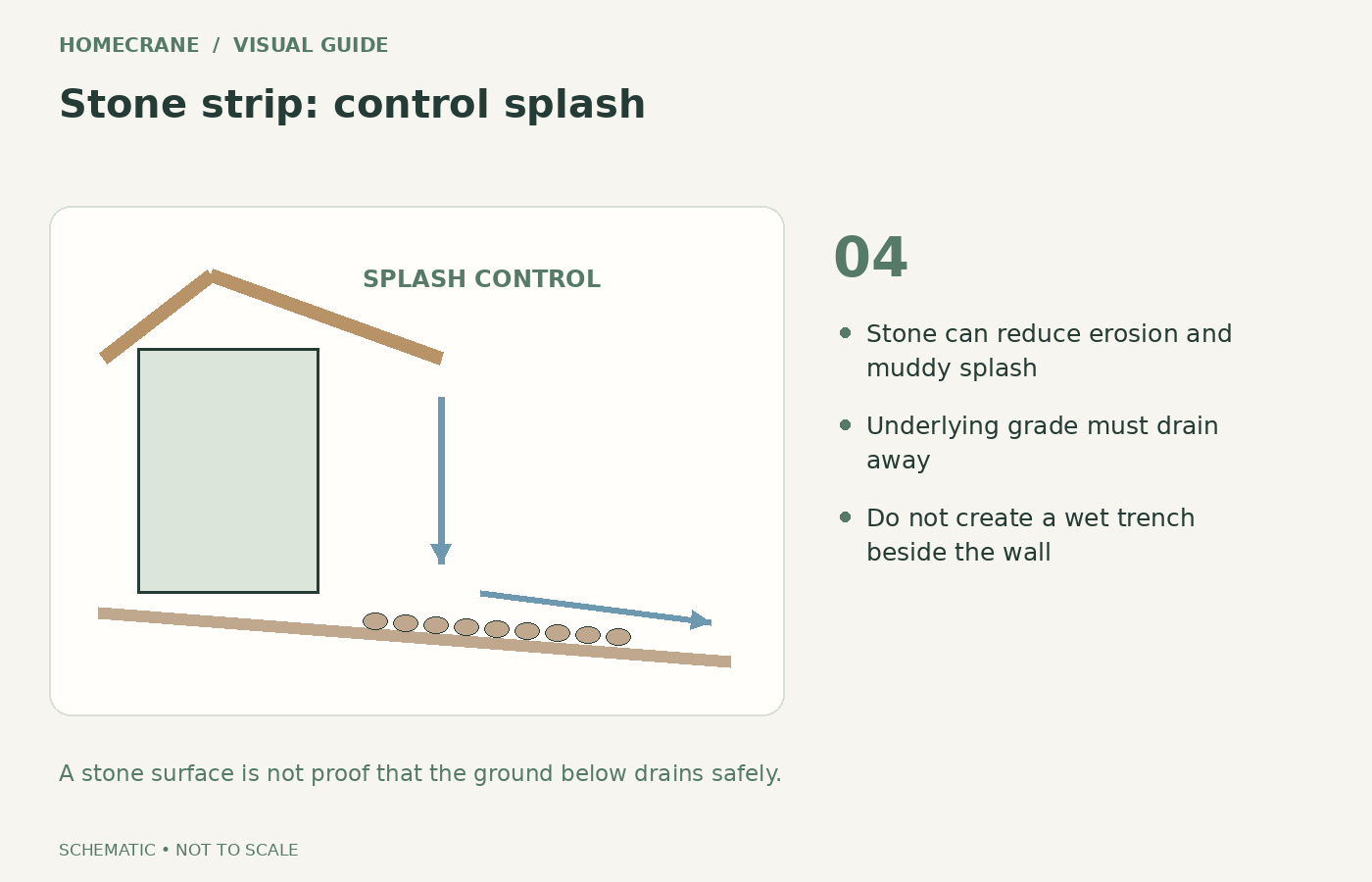
A stone strip below an eave can reduce soil erosion and muddy splash. It may be a modest-cost landscape improvement where roof runoff is already safely directed away by the site's design.
Stone is not a magic drain. On poorly draining soil, an excavated gravel trench can hold water near the building. The underlying grade, soil, outlet, and relationship to the foundation matter more than the decorative surface. Do not lower soil beside the wall into a basin or bury siding and drainage details.
Before buying bags of stone, watch the area during a safe, ordinary rain event from ground level. Note pooling, splash height, and where water travels after the strip would end. If the ground slopes toward the house, correcting that problem takes priority.
Best fit: erosion and splash control within an already sound drainage plan. Avoid: calling a gravel-filled trench beside a basement a replacement for roof-water management.
5. Existing wide eaves paired with positive grading
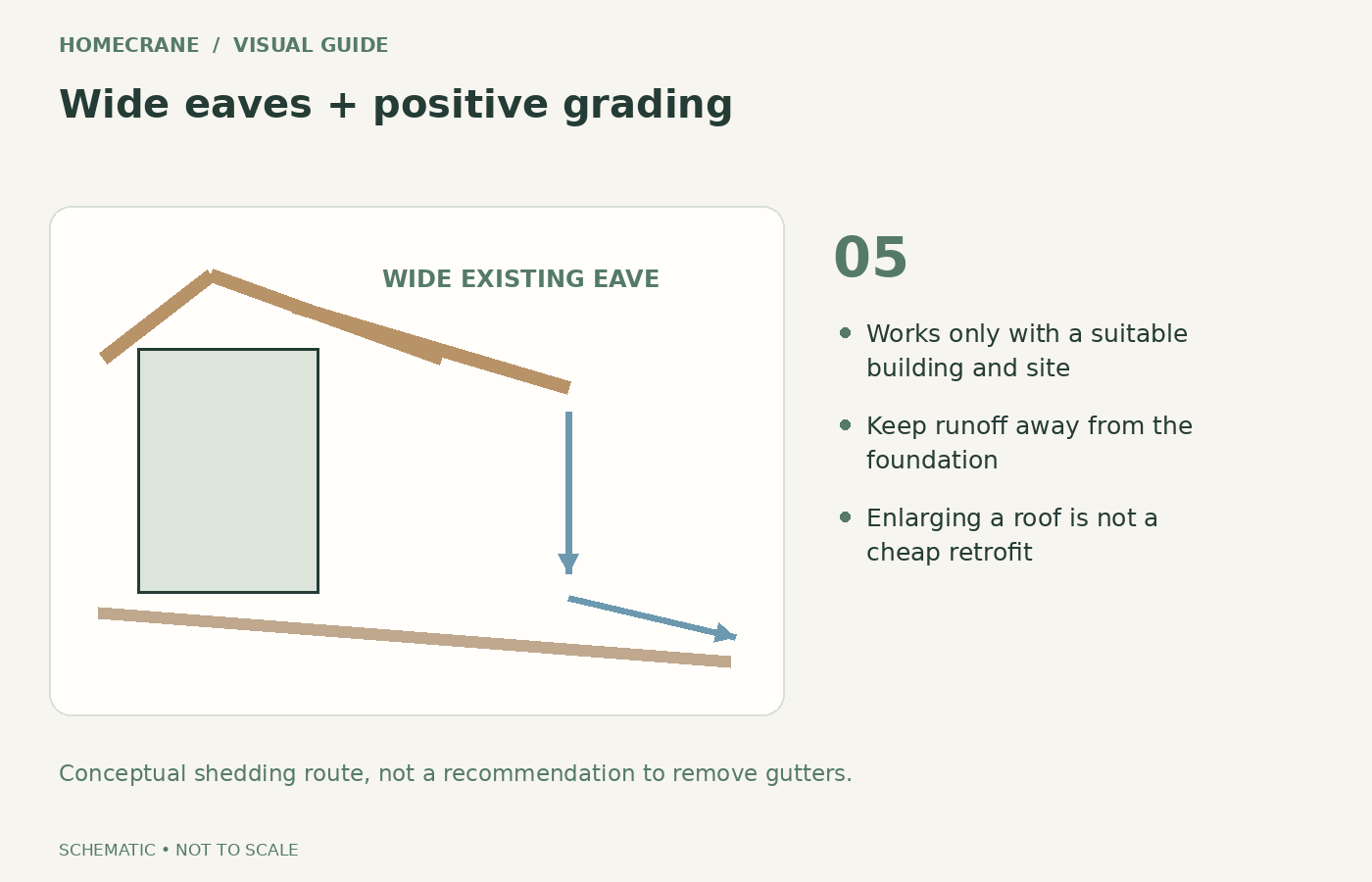
Some buildings manage rainfall through generous roof overhangs, durable wall details, and ground that carries water away. Where those features already exist and local requirements allow the approach, maintaining them may be less expensive than adding a complex collection system.
This is not an argument for removing gutters from an ordinary house. Roof valleys can concentrate water, wind can push rain toward walls, and basements can remain vulnerable. Building Science Corporation's foundation guidance discusses the relationship between roof runoff, splash, grading, and foundation protection.
Extending the roof is a construction project, not a cheap landscaping hack. Budget savings apply mainly when the building and site already support the approach and an assessment confirms it works.
Best fit: a suitable existing roof-and-site design. Avoid: removing a functioning gutter system because the overhang looks wide enough.
Compare the complete installed cost
| Feature | What it addresses | Common hidden expense |
|---|---|---|
| Rain chain | Downward water route | Basin and discharge route |
| Rain diverter | Localized roof runoff | Roofing labor |
| Channel drain | Surface water | Excavation and outlet |
| Stone strip | Splash and erosion | Grading corrections |
| Existing eaves and grade | Overall shedding | Site or building repairs |
Ask each quote to include access, disposal, drainage connections, and restoration. Local rules can govern stormwater discharge; confirm those before directing water to a street, storm system, or property boundary.
Which option is actually cheapest?
Repairing a short gutter section or extending a working downspout can cost less than rebuilding the drainage route. Price that baseline first. The best budget choice is the smallest complete solution that protects the building, not the accessory with the lowest shelf price.
Sources
- Gutter Supply's rain-chain guidance. Checked October 11, 2026
- Building Science Corporation's water-management report. Checked October 11, 2026
- Building Science Corporation's foundation guidance. Checked October 11, 2026
Share this article
Get new guides by email
Practical home articles and free resources. No spam, and you can unsubscribe at any time.
Keep reading
Does Peel and Stick Wallpaper Work on Textured Walls?
Sometimes a manufacturer permits a limited texture, but many peel and stick wallpapers require a smooth, flat surface. Texture reduces the contact area.
October 2026, 3 min read

The Most Durable House Siding Options for Wisconsin Winters
Compare siding options for Wisconsin winters, including fiber cement, engineered wood, steel, and vinyl, with installation and maintenance considerations.
October 2026, 4 min read

15 Eco Friendly Sustainable Architecture Materials to Use in Your Build
Explore 15 sustainable building materials to consider with illustrated concepts, practical design tips, and planning checks for your US home.
October 2026, 5 min read