Does Peel and Stick Wallpaper Work on Textured Walls?
Sometimes a manufacturer permits a limited texture, but many peel and stick wallpapers require a smooth, flat surface. Texture reduces the contact area.
By Home Crane Editors. . 3 min read.
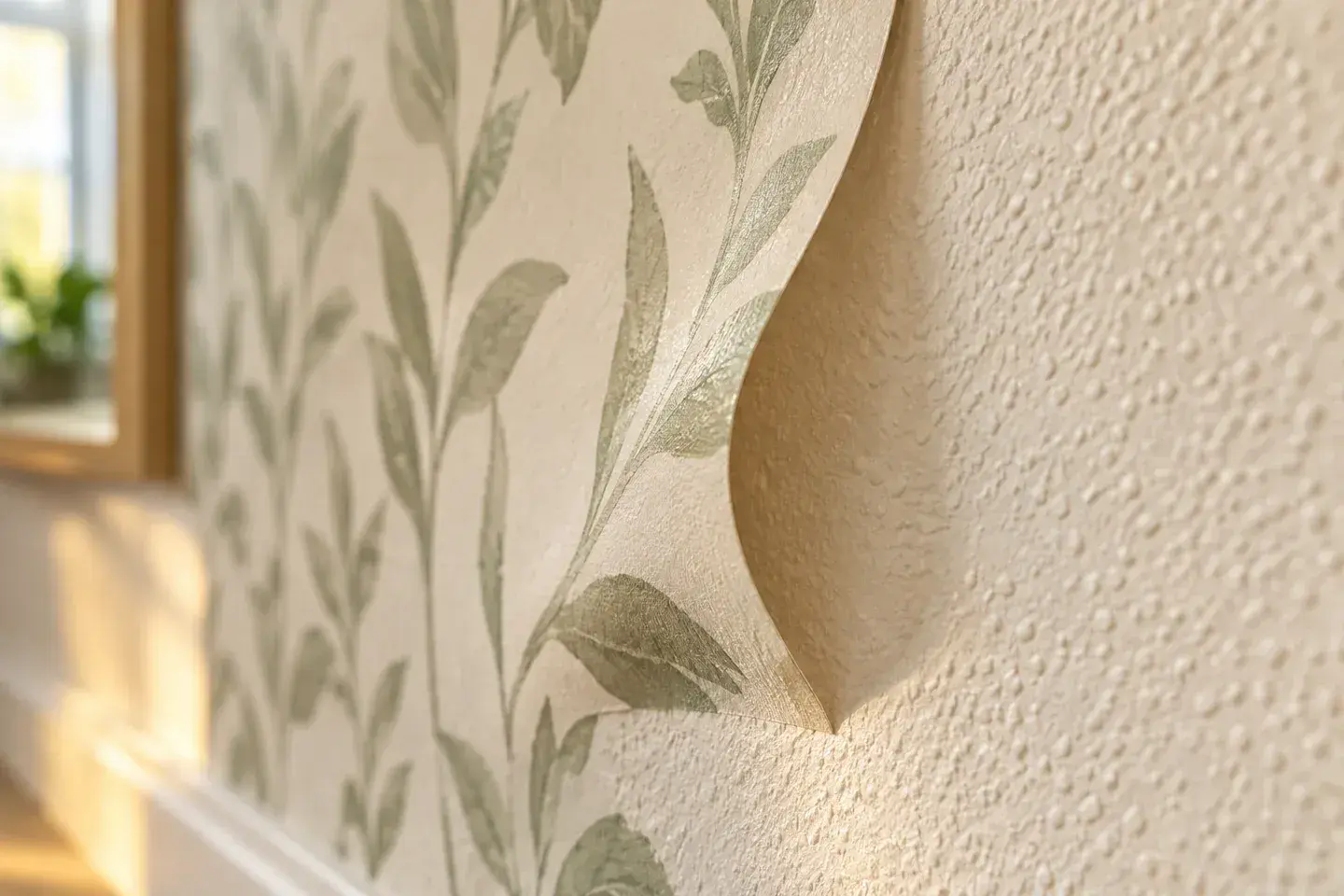
Sometimes a manufacturer permits a limited texture, but many peel and stick wallpapers require a smooth, flat surface. Texture reduces the contact area available to the adhesive and can remain visible through the paper. A sample that sticks for an afternoon is not proof of long-term performance or clean removal.
The practical answer is to check the exact product, wall finish, and texture together. Do not treat all removable wallpapers as interchangeable, and do not assume that stronger adhesive is an acceptable fix for a product installed outside its instructions.
1. Identify the texture and the paint condition
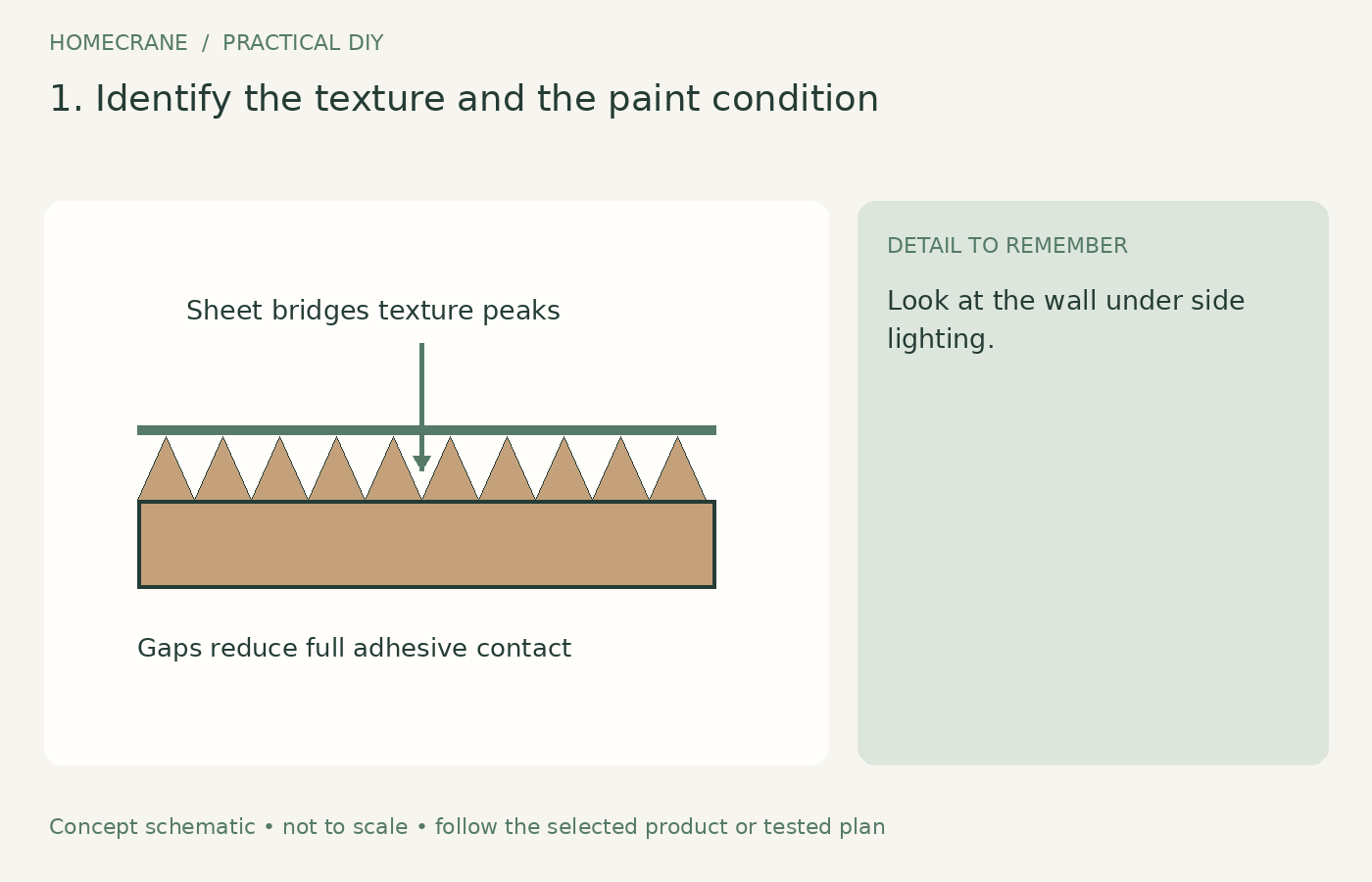
Look at the wall under side lighting. Fine orange peel, pronounced knockdown, rough plaster, and heavily textured surfaces create different contact patterns. Photograph the texture close up and from across the room if you need the wallpaper manufacturer's advice.
Check whether the paint is well bonded, clean, and fully cured. A smooth wall with weak paint can be a worse base than a lightly textured wall with a sound finish. Chalky, peeling, damp, or contaminated surfaces need attention before any wallcovering.
Avoid sanding an unknown older finish as an automatic first step. If work will disturb old paint, follow the EPA's lead-safe renovation guidance. Surface preparation should address the actual material and condition, not just the desire to make wallpaper stick.
2. Read the exact wallpaper's surface restrictions
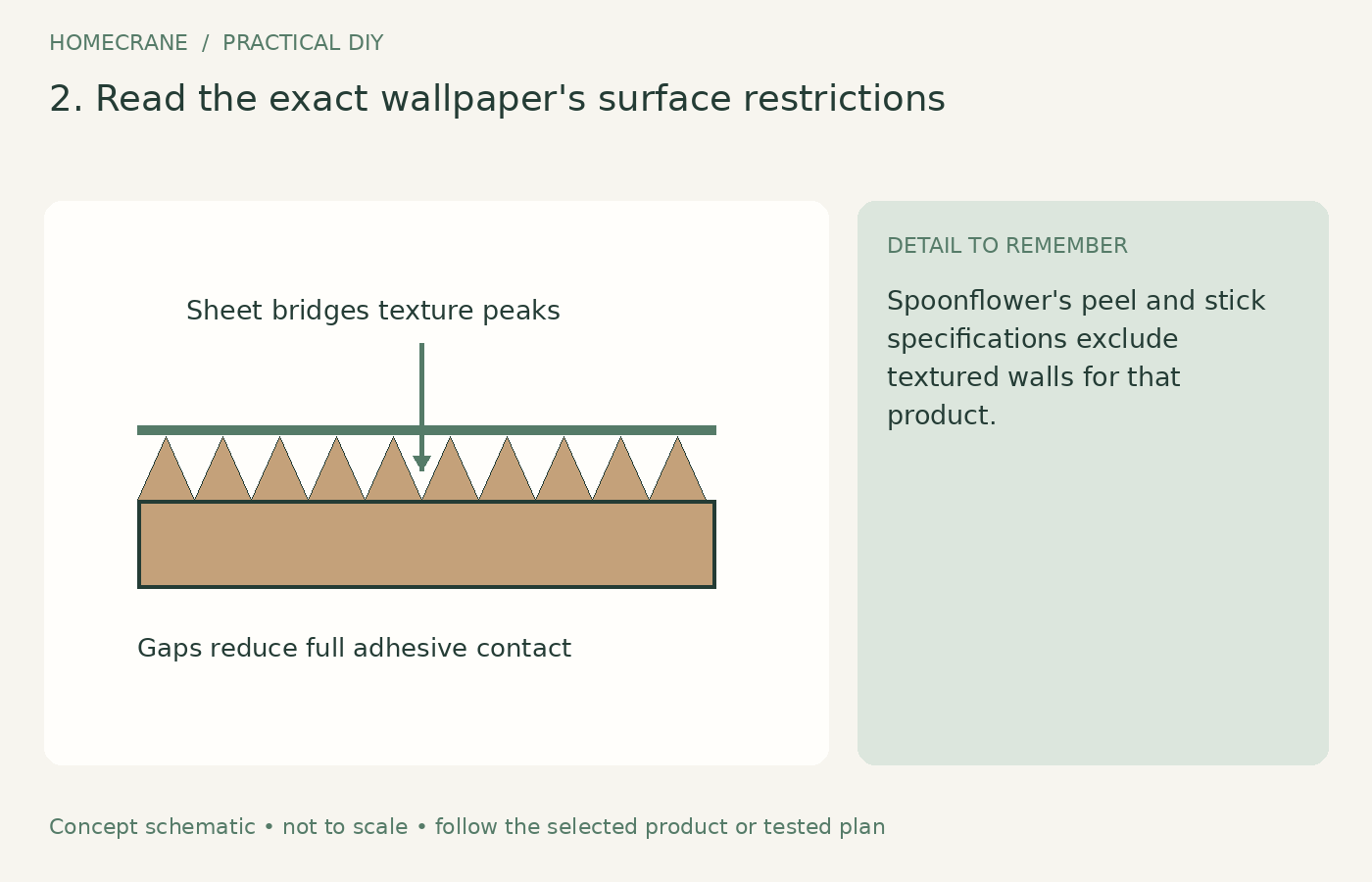
Spoonflower's peel and stick specifications exclude textured walls for that product. Its installation guide also discusses paint and preparation conditions. Those restrictions should guide a purchase rather than being treated as an optional warning.
Other manufacturers may discuss limited texture differently. Tempaper's FAQ, for example, distinguishes surface conditions and notes possible paint removal in some circumstances. Ask about your actual texture and finish rather than using another brand's instructions as permission.
Also check room conditions, panel dimensions, installation temperature, cleaning, and intended duration. A paper suited to a dry bedroom wall may not be intended for persistent bathroom moisture or a hot kitchen location.
3. Test a real sample, including its appearance
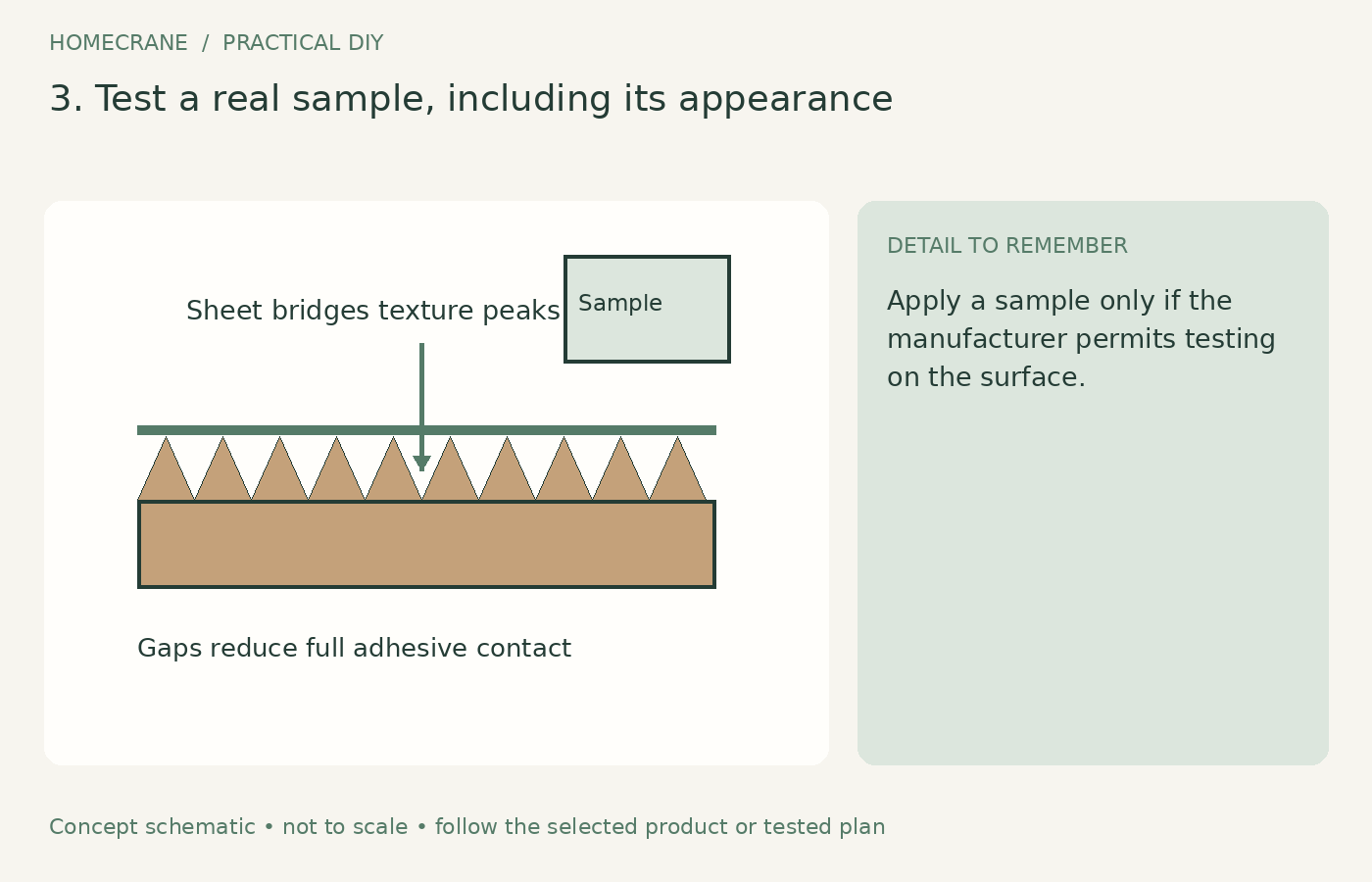
Apply a sample only if the manufacturer permits testing on the surface. Prepare the area exactly as directed and use the actual wallpaper, not a different adhesive swatch. Choose a representative location rather than the one unusually smooth patch behind furniture.
Watch for lifting edges, bubbles, texture telegraphing, and changes under normal room conditions. Inspect in daylight and under artificial light. A dark pattern may disguise some texture visually while still having an inadequate bond.
Test removal as instructed in a discreet area, recognizing that a short trial cannot predict every effect of a longer installation. Record the product, paint age, preparation, and trial period. If it fails early, do not assume pressing harder or adding glue will turn it into an approved installation.
4. Choose an alternative when the wall is unsuitable
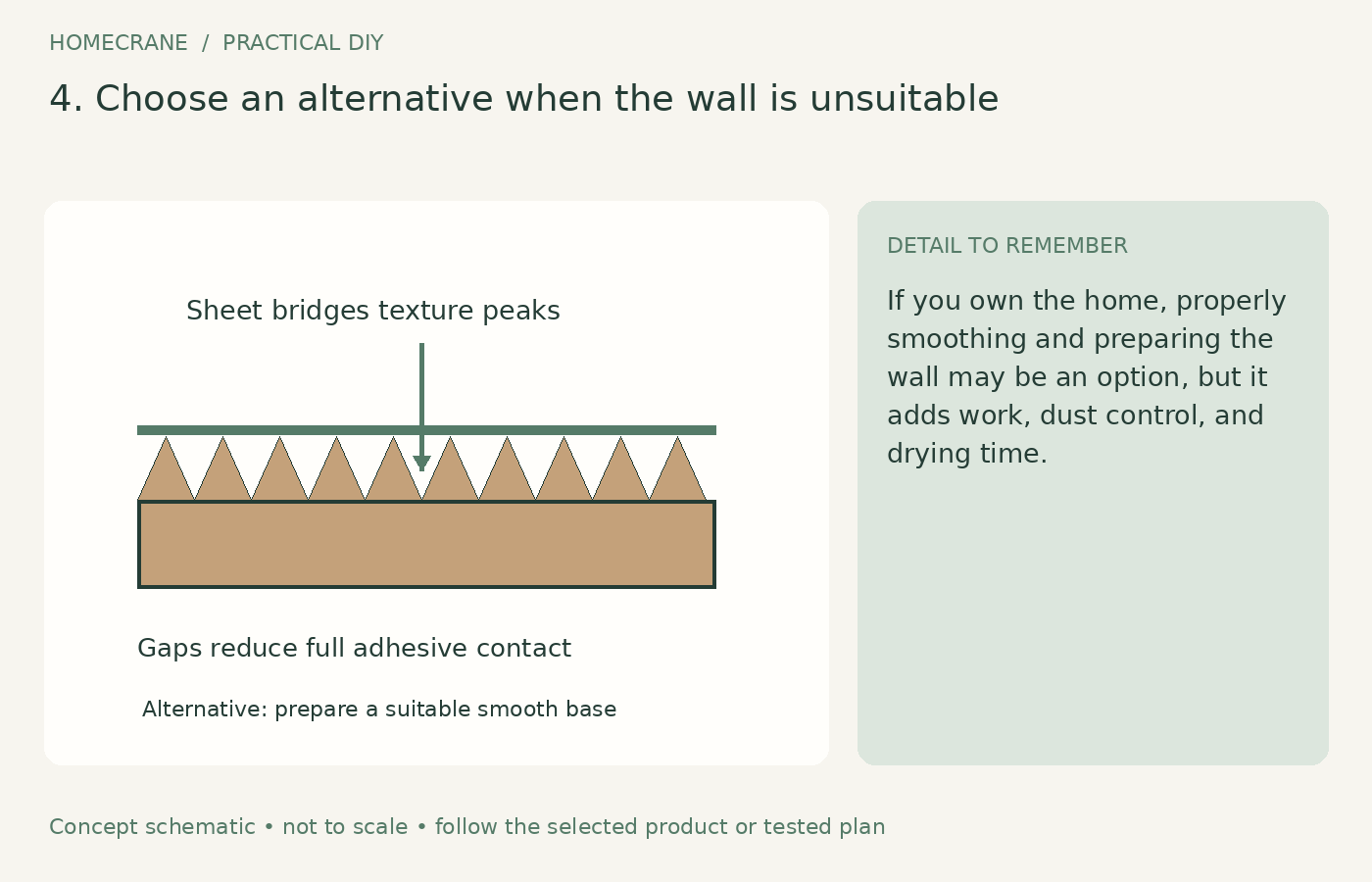
If you own the home, properly smoothing and preparing the wall may be an option, but it adds work, dust control, and drying time. Follow a suitable wall-preparation system and then the wallpaper's requirements for the finished surface.
In a rental, do not skim-coat or sand away texture without written permission. Consider framed wallpaper panels or another decorative treatment mounted appropriately for the room. The mounting method still needs approval and adequate support.
A different wallcovering may tolerate the wall better, but do not assume “traditional” means universally suitable. Spoonflower's comparison guide shows that product families have different installation requirements. Choose the system for the wall you have, not only the pattern you like.
Why texture causes trouble
On a smooth wall, the adhesive can contact a broad continuous area. On a raised texture, it may touch mainly the high points, leaving gaps underneath. Those gaps can affect appearance and make edges or seams less stable.
Pressing excessively can stretch or mark some papers without solving the underlying contact problem. Heat, extra paste, or a random primer can also change the system in ways the manufacturer has not approved. The objective is a compatible installation, not simply a stronger initial grab.
| Feature | Sensible next step | |
|---|---|---|
| Smooth, sound, fully cured paint | Check product compatibility and test | |
| Light texture | Obtain product-specific guidance | |
| Heavy texture | Choose preparation or another treatment | |
| Peeling or damp paint | Resolve the wall problem first | |
| Rental with no alteration permission | Use approved reversible decor |
Questions homeowners ask
Does thicker wallpaper hide texture better?
It may change how visible the texture is, but thickness does not automatically solve adhesive contact. Appearance and bonding are separate questions.
Can I use extra glue?
Only if the manufacturer explicitly specifies it for that product and surface. Extra adhesive can make removal harder and may invalidate the intended removable installation.
Is “renter-friendly” a guarantee?
No. Removal depends partly on the existing wall finish and time in place. Get permission, retain the instructions, and budget for the possibility of touch-up where appropriate.
Sources
- EPA's lead-safe renovation guidance. Checked October 11, 2026
- Spoonflower's peel and stick specifications. Checked October 11, 2026
- Spoonflower: Peel and stick wallpaper installation guide. Checked October 11, 2026
- Tempaper: Frequently asked questions. Checked October 11, 2026
- Spoonflower's comparison guide. Checked October 11, 2026
Share this article
Get new guides by email
Practical home articles and free resources. No spam, and you can unsubscribe at any time.
Keep reading

The Most Durable House Siding Options for Wisconsin Winters
Compare siding options for Wisconsin winters, including fiber cement, engineered wood, steel, and vinyl, with installation and maintenance considerations.
October 2026, 4 min read
15 Eco Friendly Sustainable Architecture Materials to Use in Your Build
Explore 15 sustainable building materials to consider with illustrated concepts, practical design tips, and planning checks for your US home.
October 2026, 5 min read
What Is the Best Primer for Painting Over Dark Colors?
Choose primer for a dark-color repaint by hiding, adhesion and stain-control needs. Compare undercoat colors and plan a compatible finish system.
October 2026, 4 min read