The Most Durable House Siding Options for Wisconsin Winters
Compare siding options for Wisconsin winters, including fiber cement, engineered wood, steel, and vinyl, with installation and maintenance considerations.
By Home Crane Editors. . 4 min read.
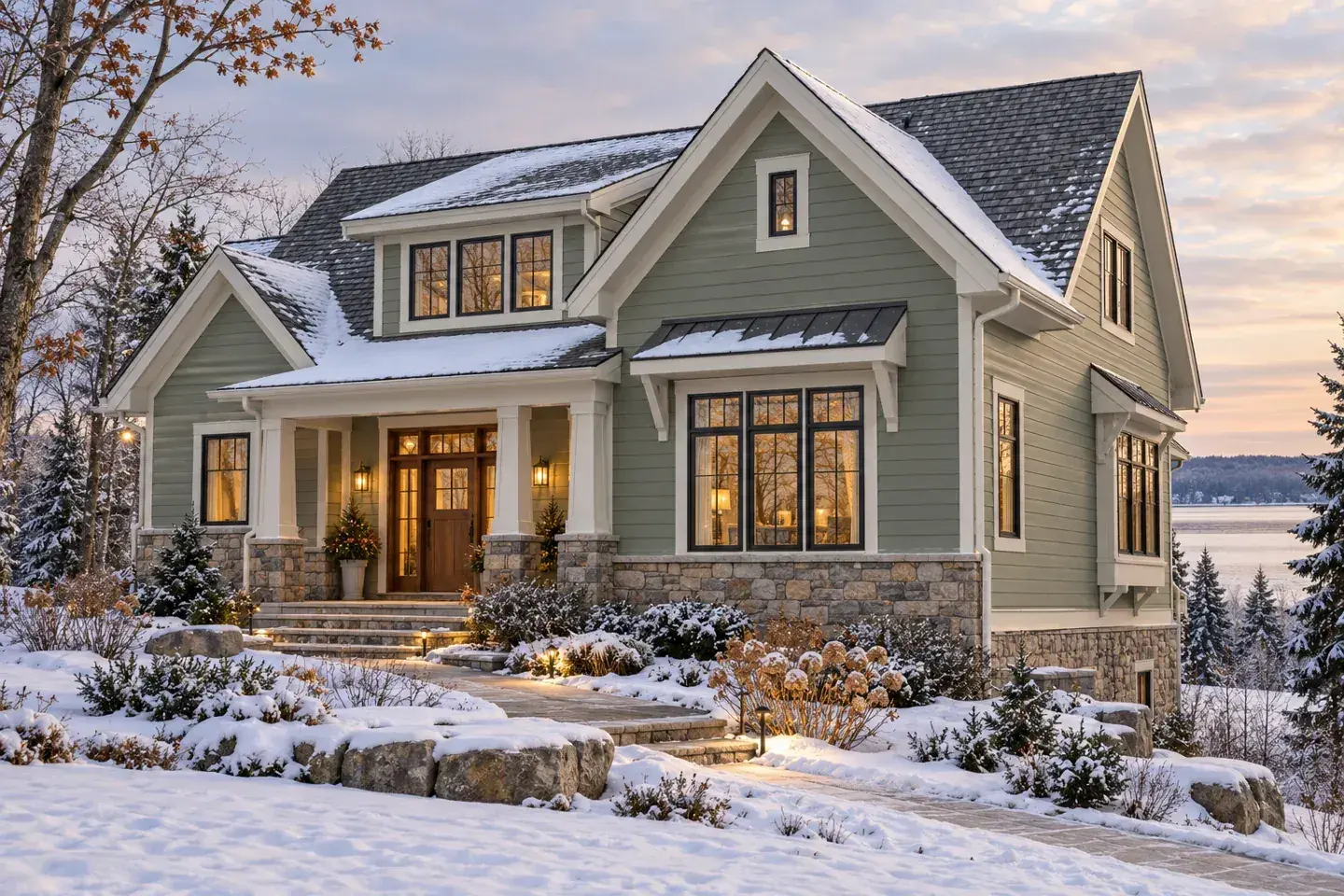
Climate-appropriate fiber cement, properly detailed engineered wood, steel, and quality vinyl can all be reasonable siding choices for Wisconsin. The strongest starting shortlist is fiber cement for its documented cold-climate options and steel for owners who prefer a factory-finished metal exterior. Neither is a universal winner. Installation details and the condition of the wall beneath the siding can matter more than the label on the sample.
Compare moisture management, movement, repairability, maintenance, and the exact product warranty. Snow and freezing weather do not turn siding into a substitute for insulation, flashing, or a properly designed wall assembly.
1. Climate-appropriate fiber cement
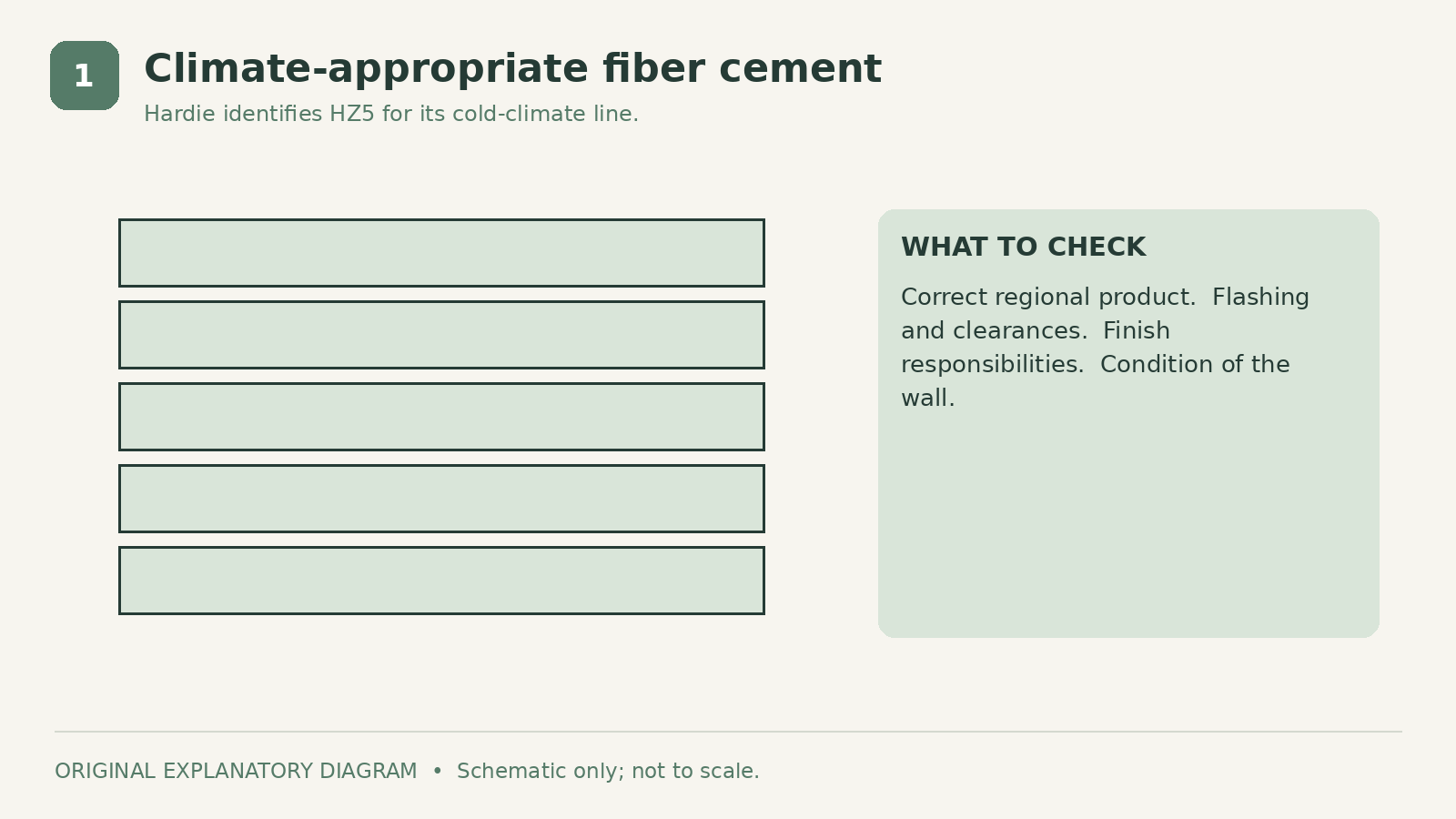
Fiber cement is a good candidate when you want crisp lap siding or panel profiles and accept a relatively demanding installation process. Buy the product intended for the climate, with a finish and trim system that the installer knows well.
James Hardie's Zone System identifies HZ5 as its line for freezing temperatures, snow, ice, and pronounced seasonal changes. HZ10 should not be casually described as the company's cold-climate formulation. Ask the supplier to confirm the current product designation for your Wisconsin address.
That manufacturer guidance supports product selection, not a claim that one brand has independently beaten every competitor. Ask for the applicable installation instructions, permitted clearances, handling requirements, and details at roof intersections and openings.
A painted finish will still need inspection and eventual attention. Clarify whether your quote includes factory finishing, field finishing, cut-edge treatment, or later touch-up. Identify which contractor is responsible for each task.
For an older home, request a removal allowance and a method for pricing concealed repairs. New fiber cement over an unresolved wet wall would be an expensive cosmetic change. Have the underlying condition assessed before treating material durability as the complete solution.
2. Engineered wood with careful moisture detailing
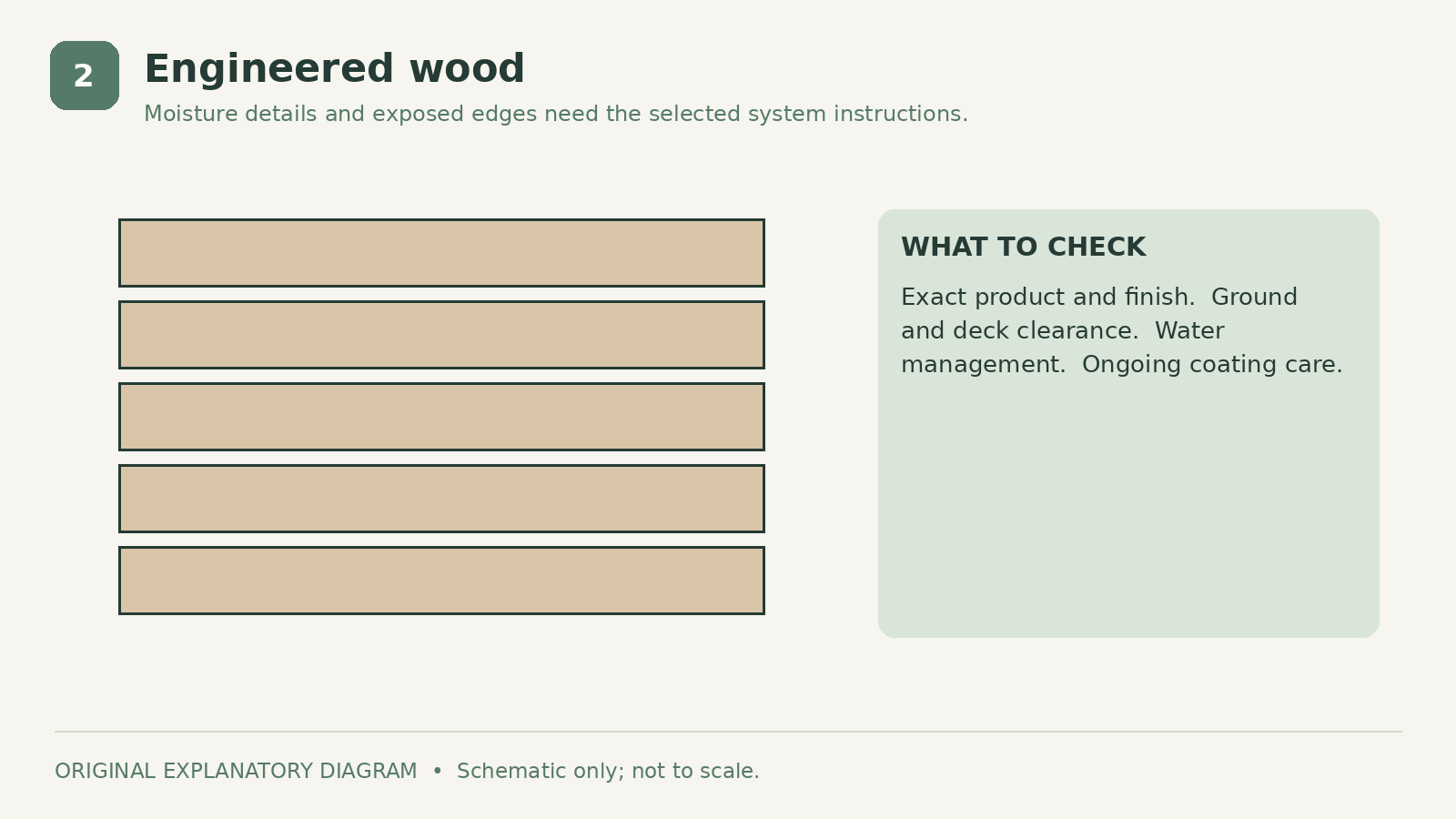
Engineered wood is another option when the appearance of wood siding is a priority. Its performance depends on the specific product, finish, clearances, and protection of vulnerable edges. Avoid judging the whole category from one sample board.
LP's SmartSide panel instructions specify details including ground clearance, flashing, and treatment of exposed substrate. Those are instructions for the named system, not universal dimensions for all wood products.
Ask your installer to show how the bottom edge, deck connections, window heads, and penetrations will be handled. Request photographs of comparable completed details, not only distant pictures of attractive houses.
LP's care guidance also emphasizes maintaining finishes, clearances, and water management. Snow storage, garden mulch, and sprinklers should be considered when planning the surrounding landscape.
This option suits an owner who is prepared to maintain coatings and monitor exposed details. Before selecting it, decide how upper walls will be inspected and serviced. A beautifully textured second-story facade may involve access costs that are easy to overlook when comparing materials at ground level.
3. Steel siding with a documented finish system
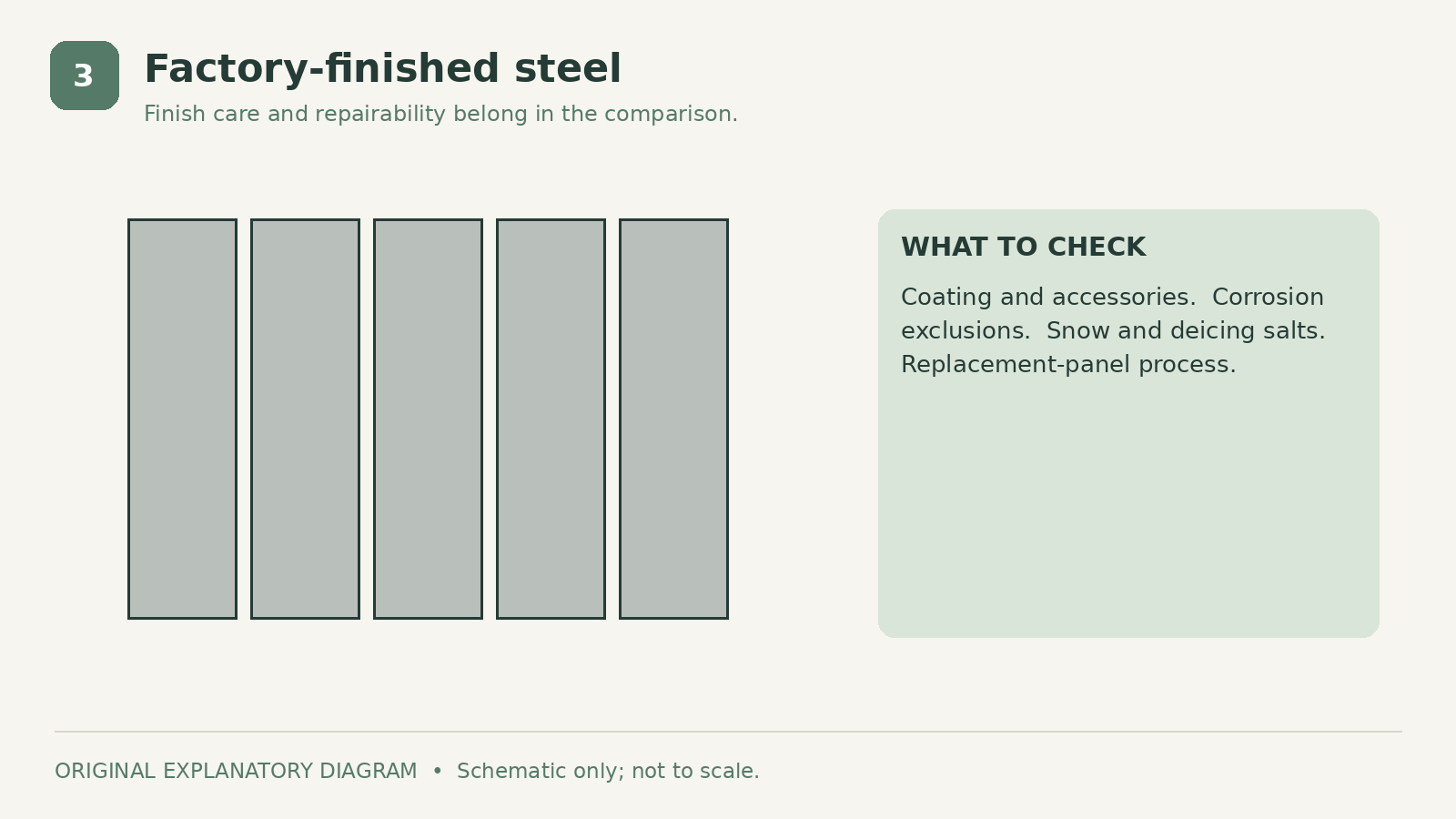
Steel can provide a clean, consistent exterior without the same refinishing approach as exposed wood. It is worth comparing for Wisconsin homes, but the finish system and repair process belong in the decision. Metal is not automatically immune to surface damage or every form of exposure.
Ask for the exact profile, coating specification, corrosion-related exclusions, and compatible accessories. Discuss how cut edges, penetrations, and dissimilar materials will be addressed. The installer should work from the selected manufacturer's current instructions.
EDCO's care and maintenance page recommends cleaning and cautions against deicing salts near its siding. That is a useful winter-specific question to raise if you routinely store shoveled, salted snow beside the house. It is product guidance, not a statewide maintenance standard.
Examine a full panel in daylight. Reflections can make a color or profile look different from a small indoor sample. Ask how an isolated damaged panel could be replaced and whether matching stock should be retained.
The better purchase is a documented system with a repair path, not merely the word “steel” in a quote. Keep the product identification and finish paperwork with your home records after installation.
4. Vinyl siding installed for movement
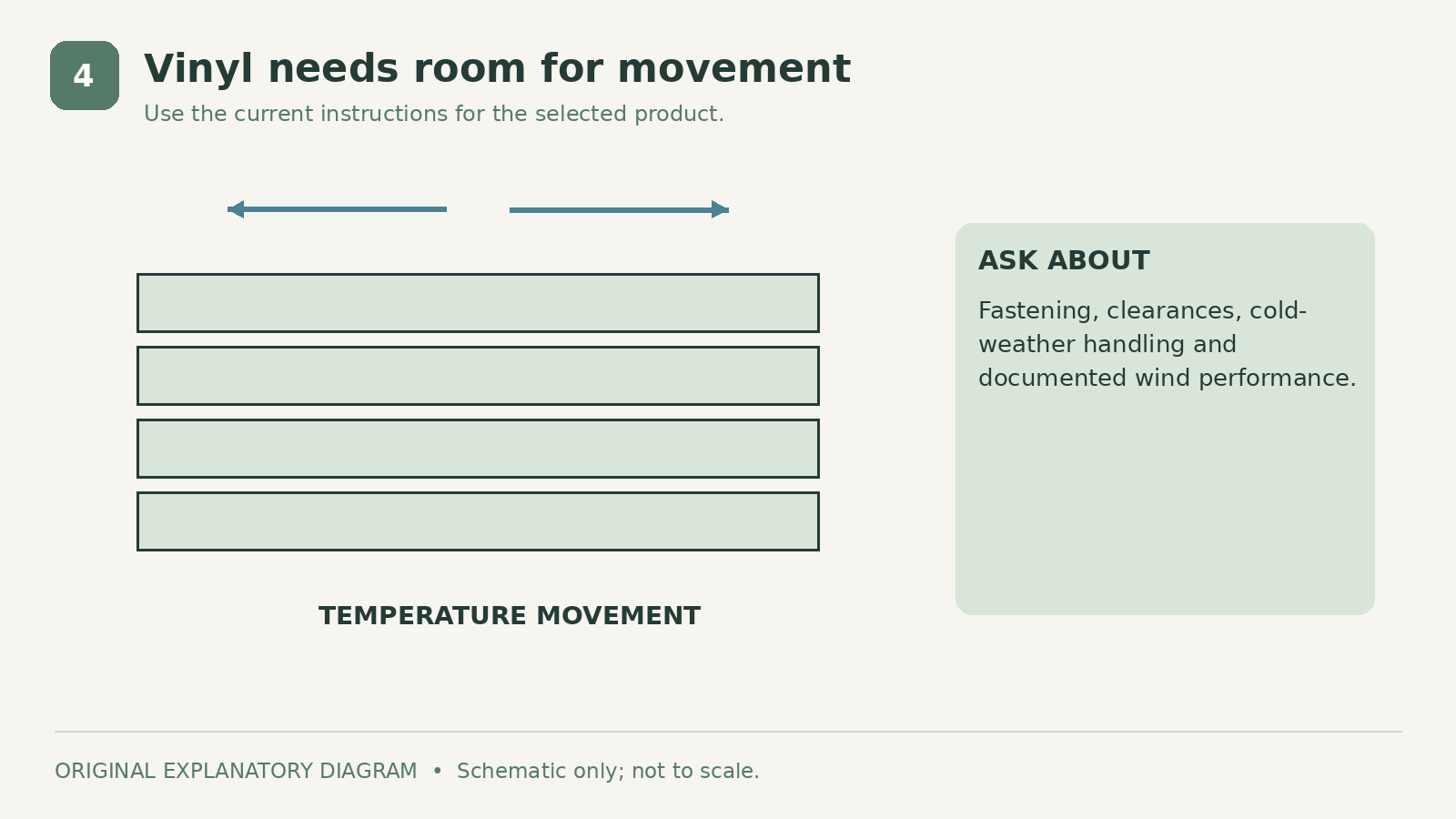
Vinyl remains a reasonable contender when the budget favors it and you like the available profiles. Its installation must allow temperature-related movement. Panels fastened or fitted incorrectly can behave badly even when the material itself is suitable.
The Vinyl Siding Institute installation manual explains expansion, contraction, and fastening principles. It is a background reference; your contractor should use the current instructions and tested specifications for the product being installed.
Ask how cold-weather handling, fastening, and clearances will be managed. Do not accept a single universal temperature rule quoted without reference to the actual product. Work sequencing should also protect the opened wall if weather interrupts the job.
Look at the siding's documented wind-performance information and the proposed attachment arrangement. A performance statement is useful only when the installed system matches the conditions behind it.
Insulated vinyl is a separate product choice. If energy improvement is a major goal, ask for a whole-wall assessment rather than equating a siding upgrade with a guaranteed reduction in heating bills. Air leaks, existing insulation, windows, and the rest of the enclosure still matter.
5. Choose the wall assembly and installer
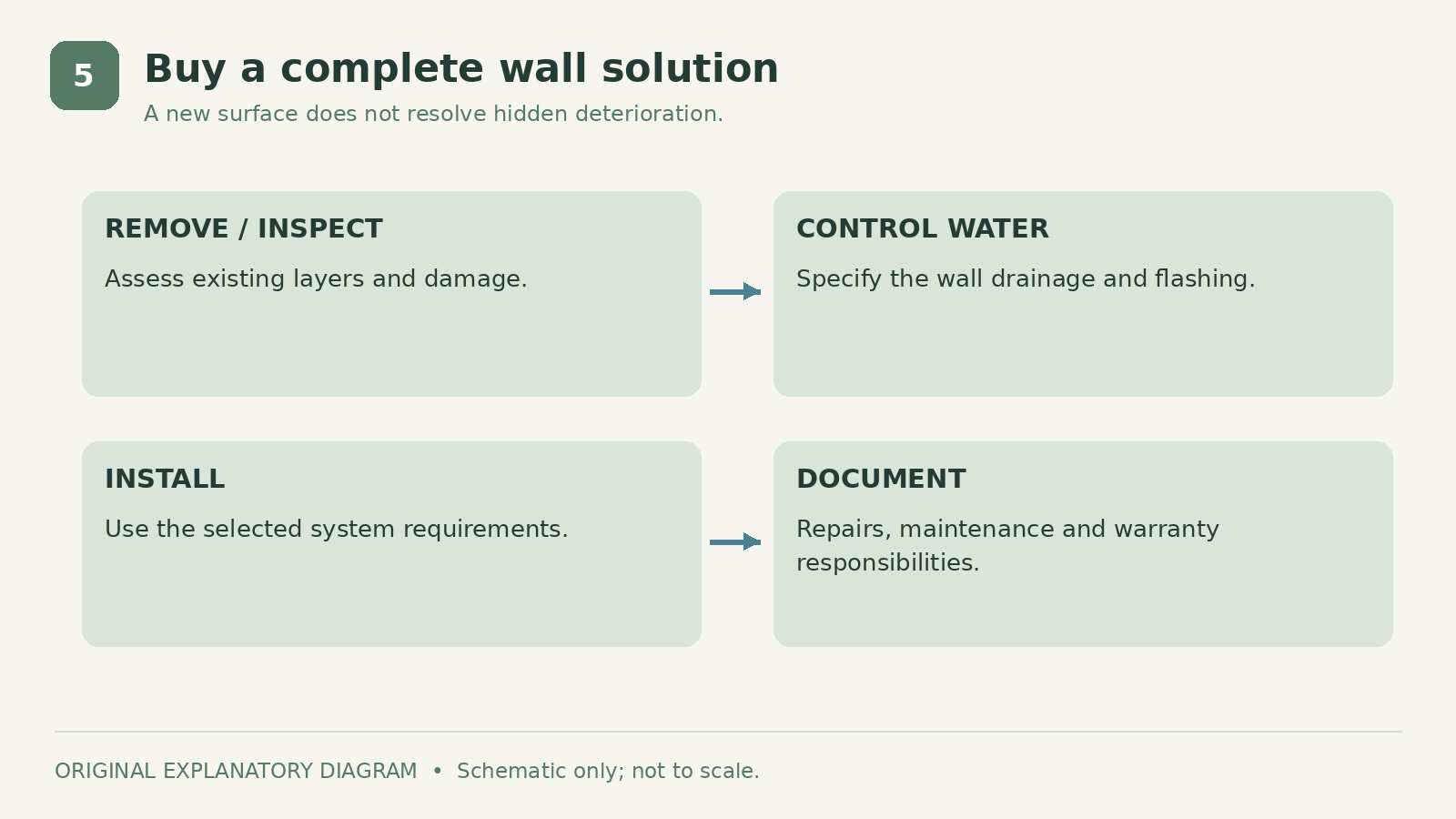
The Virginia Cooperative Extension explanation of moisture movement describes the importance of controlling bulk water and drying. These building-science principles help frame a Wisconsin siding discussion, while local design and product requirements determine the actual details.
Use a comparison table with a column for every bidder:
| Feature | Useful evidence | |
|---|---|---|
| What is being installed? | Exact product, profile, finish, and accessories | |
| What happens beneath it? | Removal, wall inspection, and repair scope | |
| How is water managed? | Flashing and drainage details for the assembly | |
| What happens in winter? | Storage, handling, weather, and snow-clearance plan | |
| Who covers problems? | Separate material and workmanship warranties |
Request a written change-order process for hidden deterioration. A realistic repair allowance is more informative than a low headline price that assumes every wall will be perfect after removal.
For homes built before 1978, discuss lead-safe work before disturbing old painted surfaces. EPA's consumer guidance explains why qualified lead-safe practices matter during renovation.
Choose the material after comparing the complete installation. A well-specified midrange system, correctly suited to the house and maintained according to its instructions, is a stronger decision than an unsupported promise of “the most durable siding.”
Sources
- James Hardie's Zone System. Checked October 7, 2026
- LP's SmartSide panel instructions. Checked October 7, 2026
- LP's care guidance. Checked October 7, 2026
- EDCO's care and maintenance page. Checked October 7, 2026
- Vinyl Siding Institute installation manual. Checked October 7, 2026
- Virginia Cooperative Extension explanation of moisture movement. Checked October 7, 2026
- EPA's consumer guidance. Checked October 7, 2026
Share this article
Get new guides by email
Practical home articles and free resources. No spam, and you can unsubscribe at any time.
Keep reading

Does Peel and Stick Wallpaper Work on Textured Walls?
Sometimes a manufacturer permits a limited texture, but many peel and stick wallpapers require a smooth, flat surface. Texture reduces the contact area.
October 2026, 3 min read
15 Eco Friendly Sustainable Architecture Materials to Use in Your Build
Explore 15 sustainable building materials to consider with illustrated concepts, practical design tips, and planning checks for your US home.
October 2026, 5 min read
What Is the Best Primer for Painting Over Dark Colors?
Choose primer for a dark-color repaint by hiding, adhesion and stain-control needs. Compare undercoat colors and plan a compatible finish system.
October 2026, 4 min read