7 Modern Concrete Driveway Border Paver Ideas
Explore modern concrete driveway border paver ideas, including brick, double-row, contrasting-color, patterned, natural stone, square, and cobblestone designs.
By Home Crane Editors. . 11 min read.

A concrete driveway is practical and clean, but a wide stretch of plain concrete can make the front of a home feel unfinished. A paver border is a simple way to add definition, introduce a contrasting material, and connect the driveway to the home's landscaping. The right edge detail can make a standard driveway look more intentional without replacing the entire surface.
Modern driveway borders range from a single row of brick pavers to broad double bands, charcoal accents, natural stone, and clean-lined concrete units. The best design depends on the style of your home, the color and finish of the concrete, the driveway's shape, and how much maintenance you are willing to do.
Below are seven ideas to consider, along with practical planning advice to help the finished border look good and perform well.
1. Frame the Driveway With a Classic Brick Paver Border
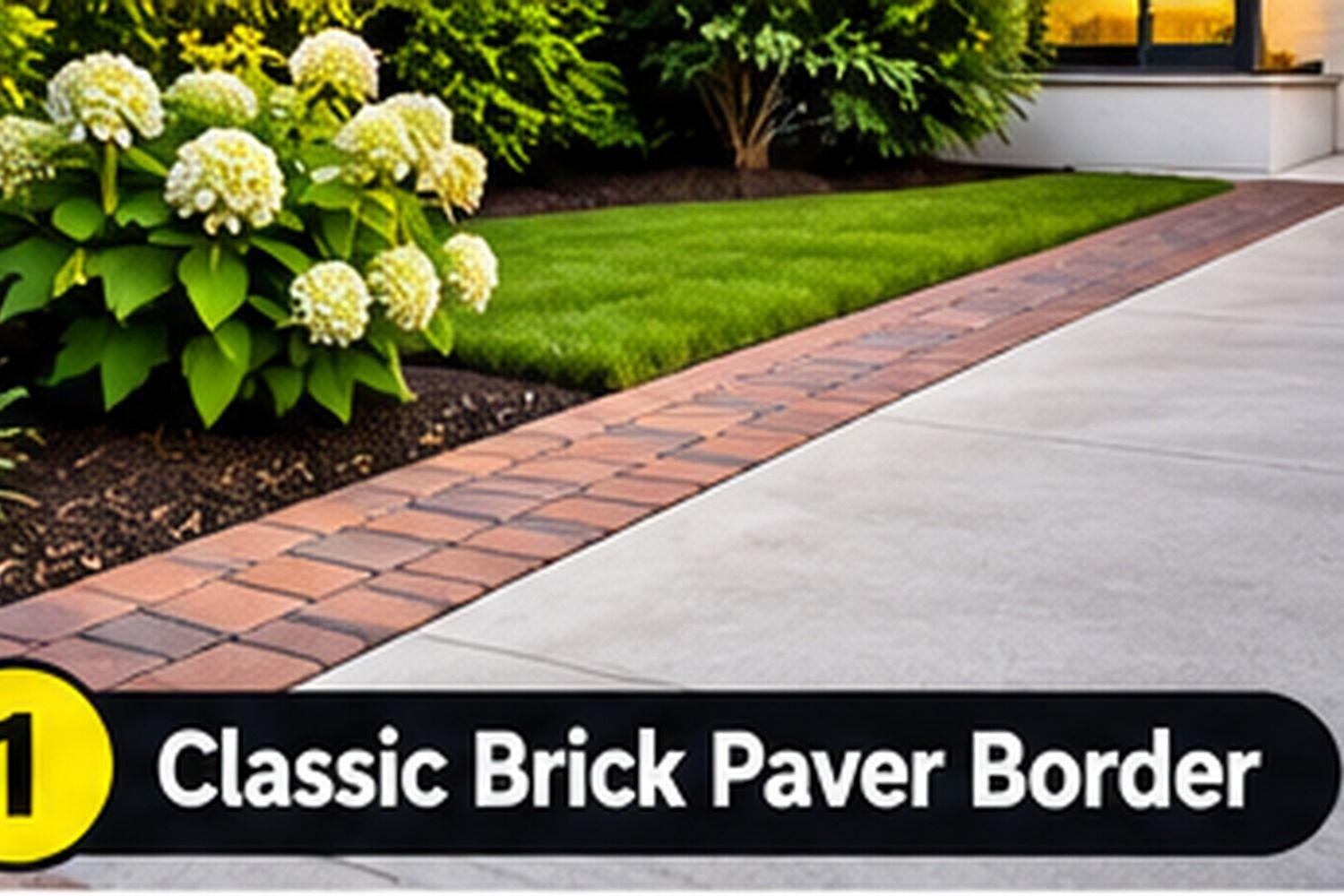
A traditional brick border brings warmth and a familiar, welcoming character to a concrete driveway. The reddish, brown, or muted clay tones contrast naturally with cool gray concrete, while the repeating rectangular shape creates a neat visual edge. Brick works particularly well with traditional, farmhouse, craftsman, and transitional homes, but a simple, restrained layout can also complement modern architecture.
For a contemporary appearance, use a narrow single course of brick pavers along both sides of the driveway. Choose a consistent color family rather than a highly varied reclaimed-brick look. A soldier course, with bricks set upright on their narrow ends, creates a crisp linear frame. A running-bond arrangement can look more relaxed and traditional.
Design tip: Repeat the brick color in another small detail, such as a front walkway, garden edging, or porch feature. Repetition makes the border feel connected to the rest of the property.
Brick pavers need a stable base and appropriate edge restraint. Do not simply lay loose bricks against an existing concrete slab and expect them to stay aligned. The installation detail should account for drainage, frost conditions where relevant, and the transition between the pavers and driveway. If the driveway is already poured, a contractor may need to assess whether there is enough room and suitable ground beside the slab for a separate paver strip.
2. Use a Double Paver Border for a More Substantial Frame
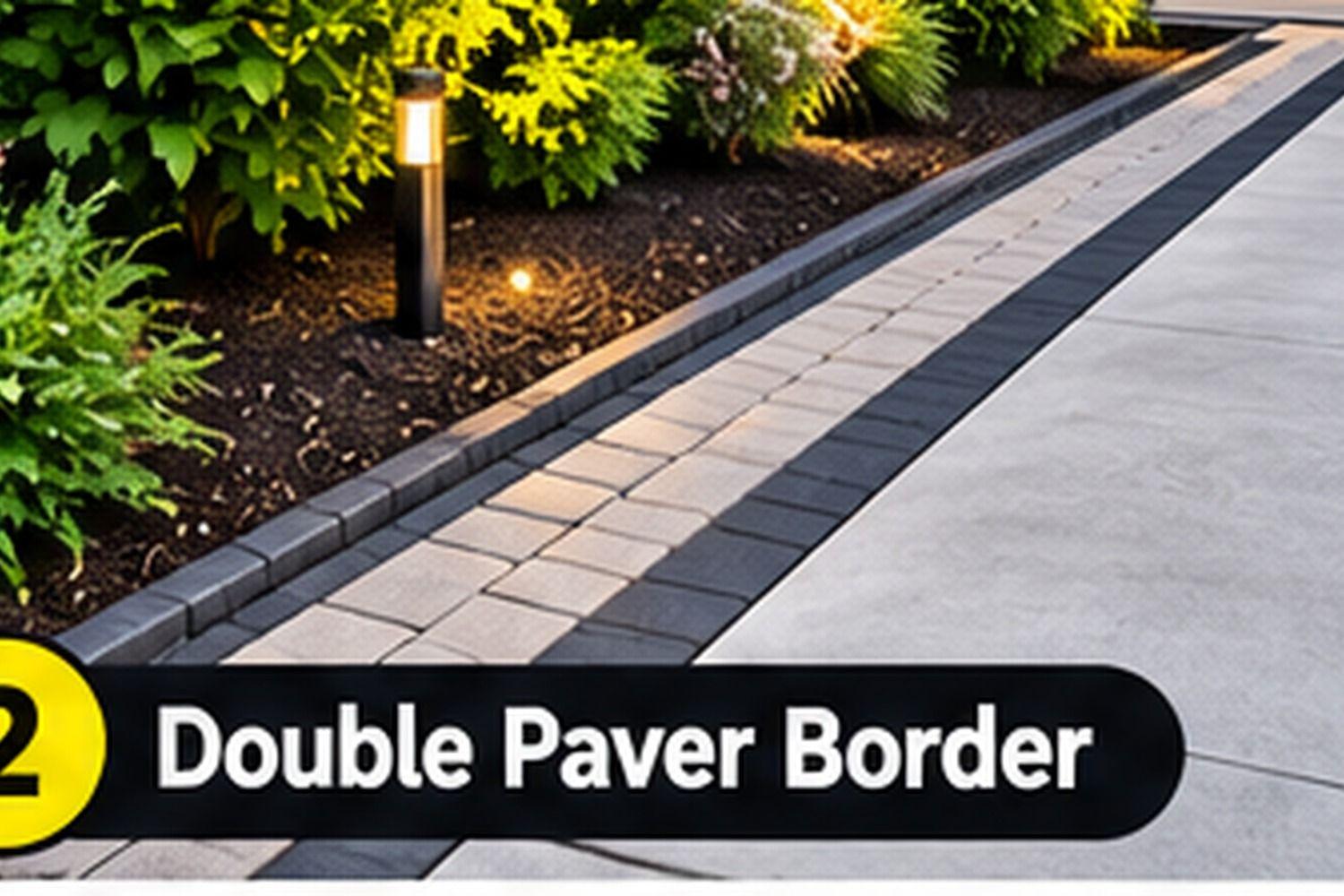
A double border uses two parallel rows of pavers to create a wider, more noticeable band. It gives the driveway a finished, custom appearance and can help visually separate the concrete from lawn, planting beds, or gravel.
This idea is useful on broad driveways where a single narrow row might look too delicate. Two rows can be the same color for a quiet, cohesive frame, or they can use a main paver with a thinner contrasting accent. For example, a warm gray field paver paired with a charcoal outer row can produce a crisp edge without adding too many colors.
Design tip: Keep the border width proportional to the driveway. A very wide band can dominate a narrow drive, while a tiny border may disappear beside a large garage apron. Mock up the width with a garden hose, chalk line, or temporary paver placement before committing.
A double border also needs careful attention to levels. The pavers should meet the concrete at a deliberate, safe transition and should not create a raised lip that catches tires, snow shovels, or walking feet. Consider how runoff will move along the edge, particularly where the driveway slopes toward a garage or public sidewalk.
3. Choose a Contrasting Color Border
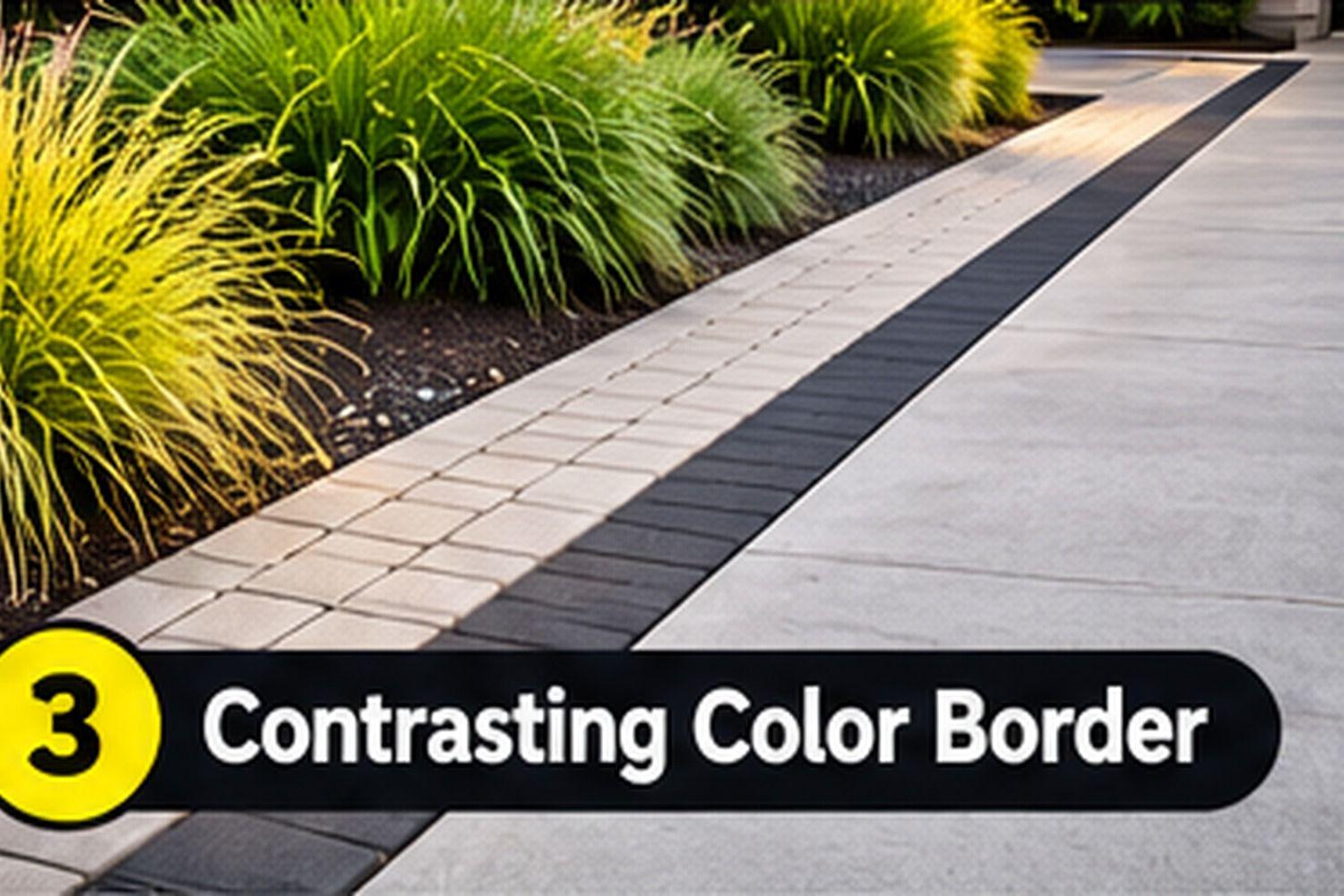
Color contrast is one of the simplest ways to make a driveway look more architectural. A charcoal, deep gray, or near-black paver border can outline light concrete and emphasize the shape of the driveway. Conversely, a pale limestone-look paver can brighten a darker concrete surface.
For a modern exterior, limit the palette to two or three related tones. A light gray driveway with a charcoal border and black garage door creates a coordinated look. A warm beige concrete finish can work with taupe, brown, or muted sandstone pavers. Avoid choosing a border color in isolation; compare samples beside the home's siding, brick, roof, garage door, and existing walkways.
Design tip: View samples outdoors in morning and afternoon light. Paver colors can look different in shade, direct sun, and after rain. Ask suppliers for full-size samples when possible.
Color contrast should not come at the expense of visibility or safety. Very dark surfaces can become hot in strong sun, while highly polished finishes may be slippery when wet. Select a product rated for exterior paving and appropriate for vehicle loads where cars will cross it.
4. Add a Patterned Paver Border for Subtle Visual Interest
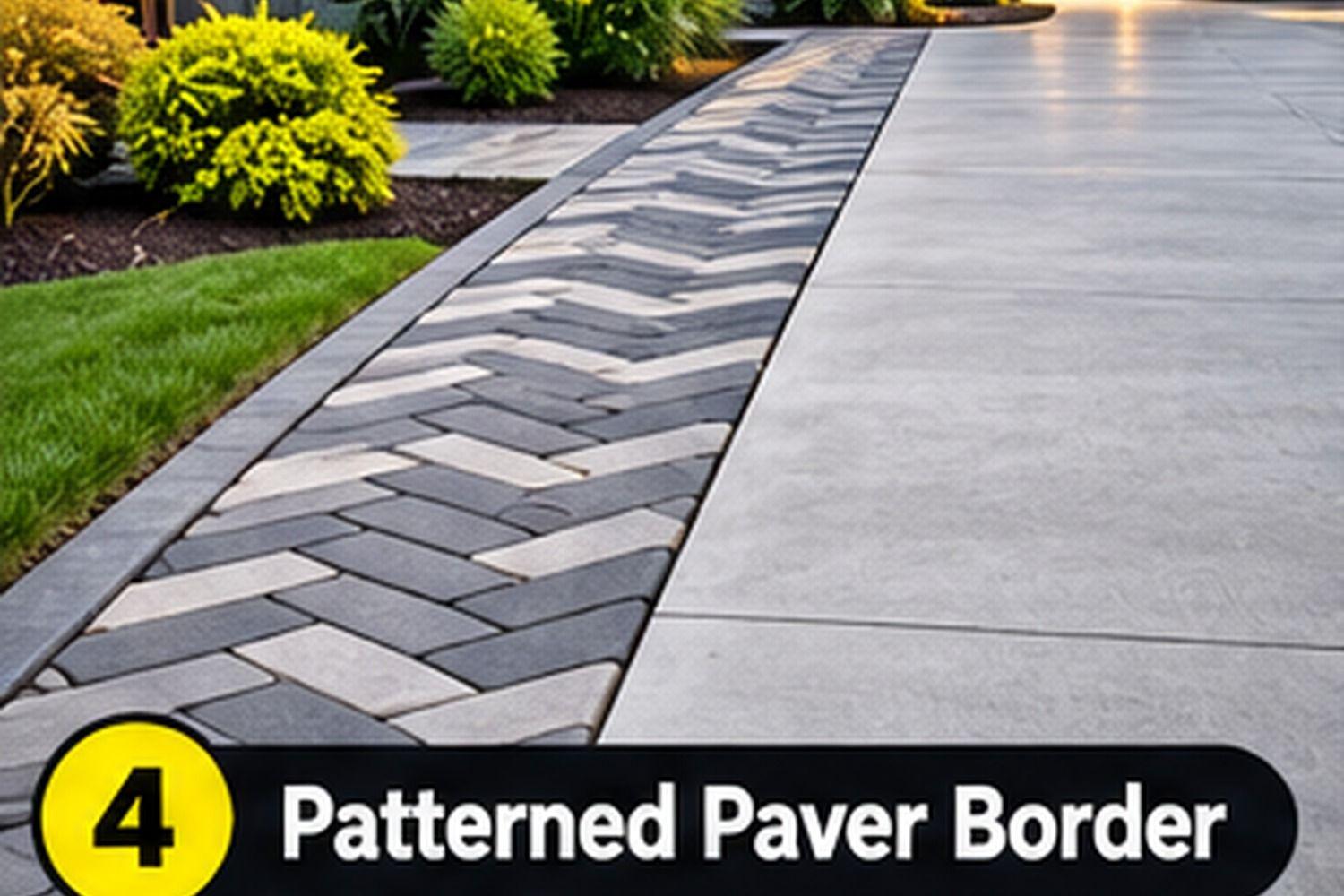
A patterned border introduces texture without requiring a dramatic color change. Herringbone, basket-weave, running bond, and other laying patterns can add detail along the driveway's edge. A restrained pattern can make a simple concrete slab feel custom while keeping the overall design clean.
Herringbone is especially useful when you want a strong geometric effect. The interlocking arrangement creates movement and can work well with rectangular pavers. A running-bond pattern is quieter and suits homes where the architecture already includes strong lines. Larger pavers set in a repeating modular pattern can create a more contemporary feel.
Design tip: Use the pattern in the border only, rather than carrying it across every outdoor surface. This makes the detail feel intentional and avoids visual competition with the concrete driveway.
Patterned installations require accurate layout and cutting, especially around curves, corners, and garage aprons. Choose paver dimensions that can follow the driveway's geometry without creating many narrow slivers. A skilled installer can plan the pattern and joint spacing before work begins.
5. Bring in Natural Stone Pavers for Texture
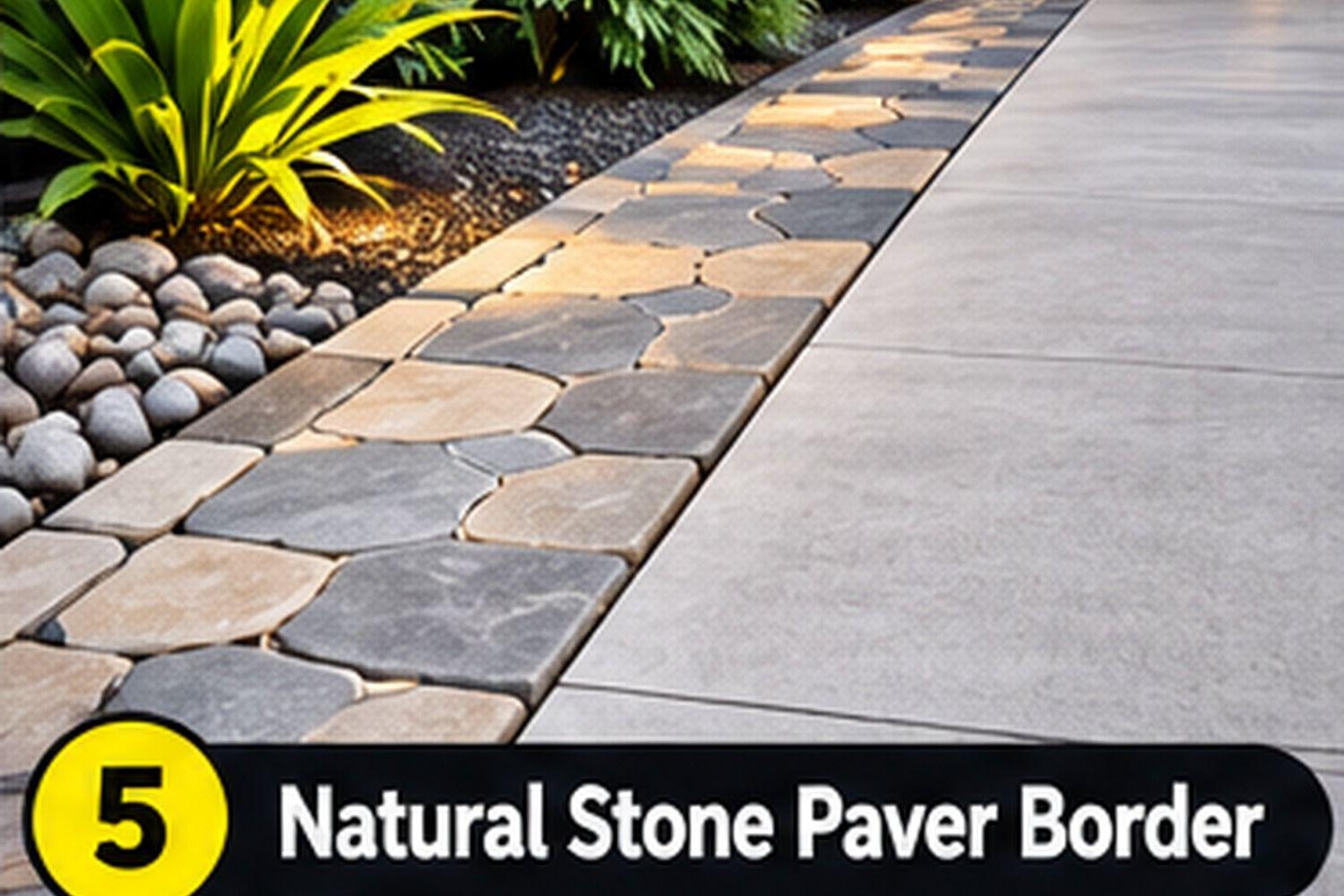
Natural stone gives a driveway border a more organic and high-end appearance. Depending on the stone, the palette may include soft gray, blue-gray, buff, tan, or warm brown. Stone can complement contemporary homes when the shapes and colors are controlled, or add a relaxed, rustic note to a more traditional landscape.
For a modern look, consider sawn or cut stone units with relatively consistent dimensions and clean edges. Random flagstone can feel informal and may be better suited to cottage or naturalistic settings. A narrow band of stone between the concrete and a planting bed can also connect the driveway to a stone walkway or retaining wall.
Design tip: Choose stone based on its suitability for exterior paving and vehicle-adjacent use, not just its appearance. Ask the supplier about thickness, strength, surface finish, freeze-thaw performance where relevant, and maintenance.
Natural stone varies in color and texture, so view several pieces together before selecting. Some stones are more porous or may require sealing, while others can be vulnerable to staining. The installation base, joint material, and edge restraint should be designed for the specific product and site conditions.
6. Use Large Modern Square Pavers for a Minimalist Edge
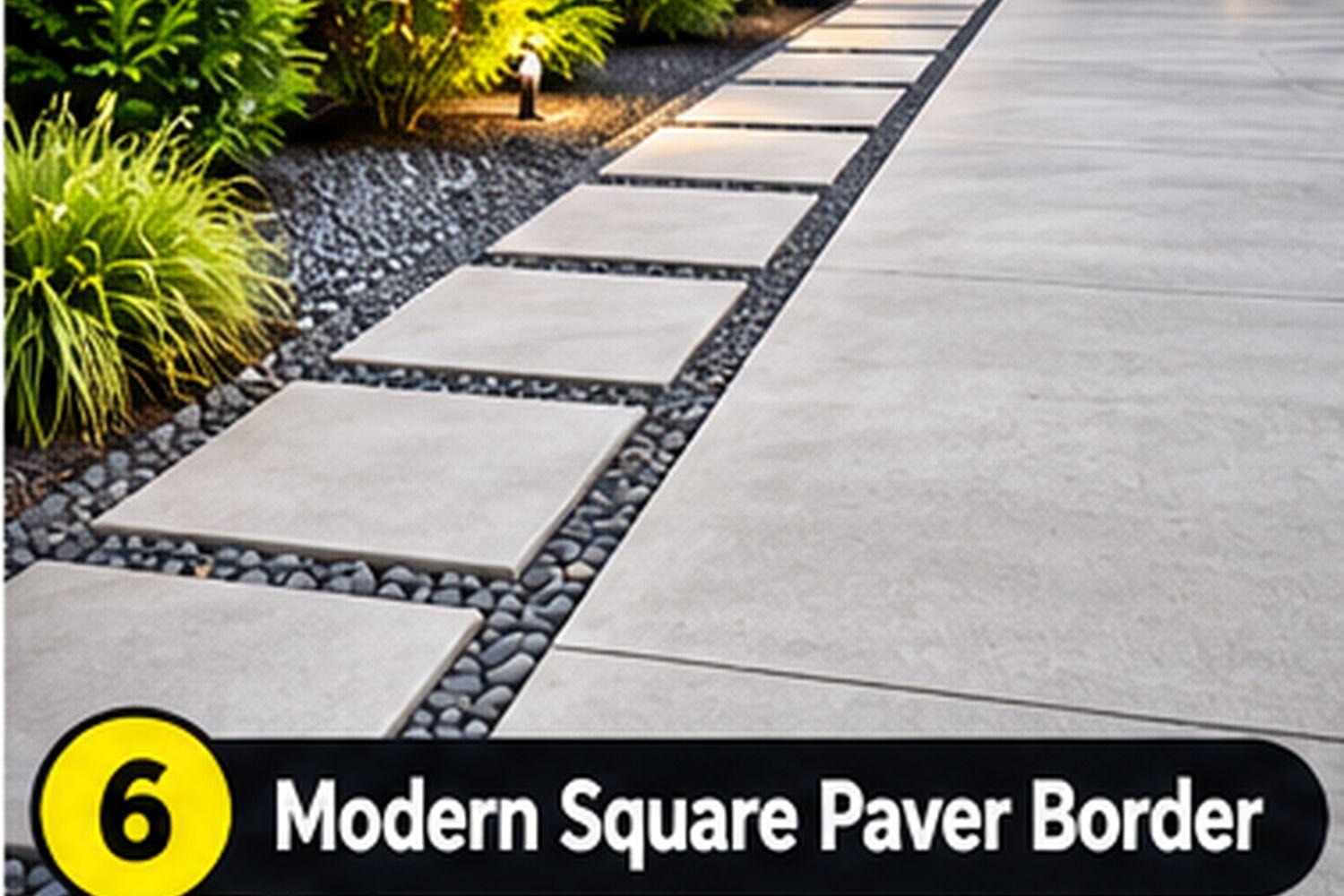
Large-format square or rectangular pavers create a calm, contemporary border. Their simple geometry works well with modern homes, minimalist landscaping, and driveways with straight edges. Instead of a narrow decorative strip, the pavers can form a wider band that visually links the driveway to a front path or entry courtyard.
A clean layout might use large light-gray concrete pavers separated by narrow gravel joints. Another option is a row of square units in a darker shade, set flush with the driveway and edged with a low planting bed. Keep the joint spacing consistent and avoid mixing too many sizes unless the design uses a deliberate modular pattern.
Design tip: Align the paver joints with driveway control joints, walkway edges, or architectural lines where practical. These alignments help the entire front approach feel organized.
Large-format units can be heavy and require a properly prepared base. They should be rated for the intended use, especially if vehicles may drive over them. If the pavers are installed beside rather than within the driveway, ensure the edge is restrained and the surface does not settle into an uneven trip hazard.
7. Create a Cobblestone-Style Border for Classic Character
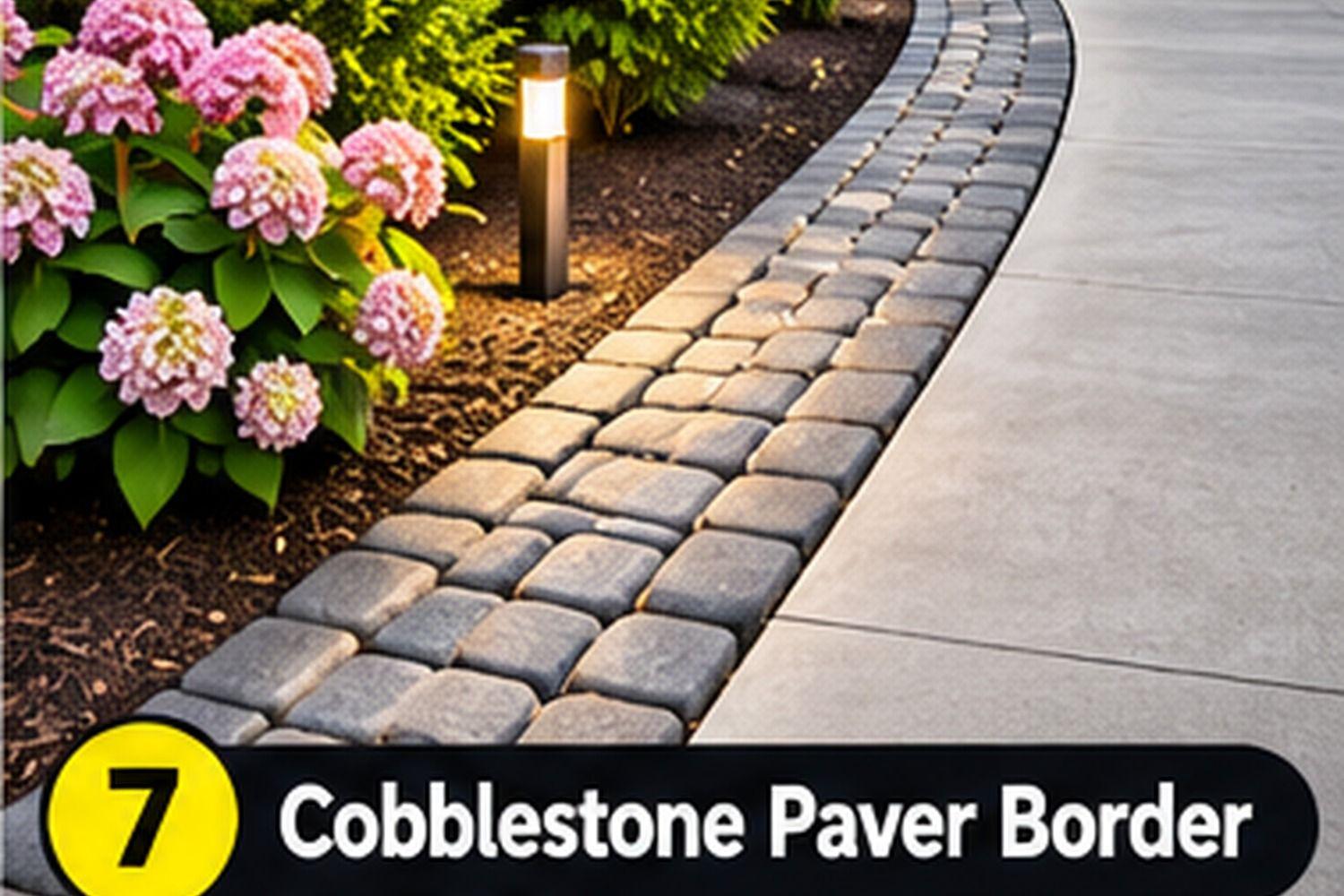
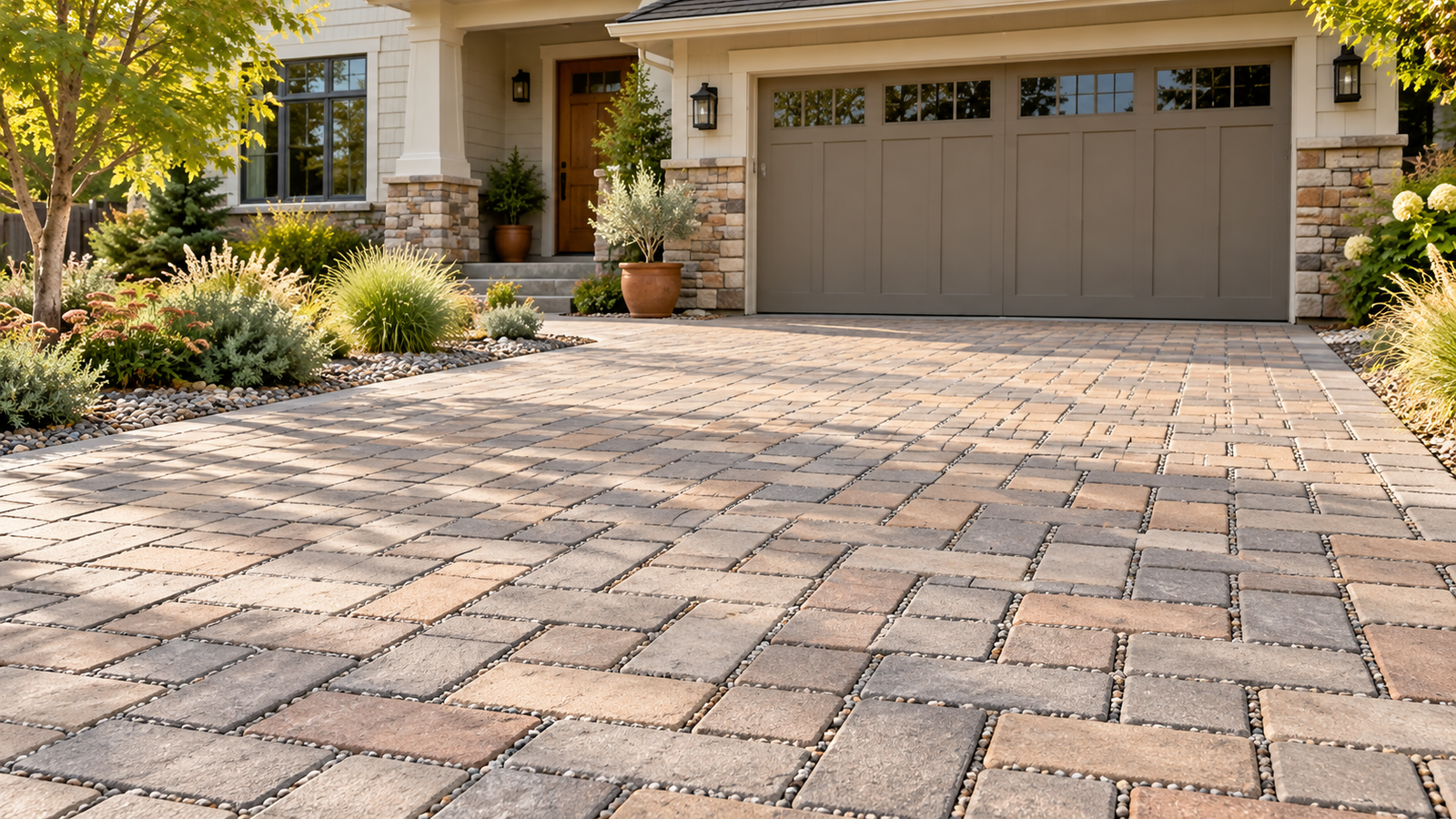
Cobblestone-style pavers add texture and a sense of permanence to a concrete driveway. Their smaller scale can define curves and soften the transition between a smooth slab and surrounding landscaping. Modern manufactured cobble units are available in more regular shapes and subdued colors, making it possible to get the textured look without an overly historic appearance.
A single or double row of charcoal cobbles can outline a pale driveway. Warm gray or weathered brown units can suit homes with stone facades, brick accents, or mature gardens. For a modern property, choose a consistent color and a restrained pattern rather than a highly irregular mix.
Design tip: Use cobblestone accents at the driveway entrance, along curved edges, or around a planting island. Repeating the same detail in a nearby path can make the design feel cohesive.
Small units create more joints than large pavers, so joint material and maintenance matter. Weeds can establish in neglected joints, and loose units may shift if the base or edge restraint is inadequate. Select a suitable jointing system and follow the manufacturer's maintenance recommendations.
How to Choose the Right Border for Your Concrete Driveway
The most attractive border is one that suits the driveway's proportions and the home's exterior. Before selecting pavers, consider these practical factors.
Match the home's architecture
A contemporary home often looks best with clean lines, large-format pavers, or a narrow charcoal accent. Traditional homes may suit brick or cobblestone. Natural stone can bridge several styles, especially when its color palette is restrained.
Consider the concrete color and finish
Cool gray concrete usually pairs well with charcoal, blue-gray, or other cool-toned pavers. Warm concrete tones can work with tan, brown, buff, or muted red. If the concrete is stamped or colored, bring a photo or sample to the paver supplier so the border does not clash.
Decide how much contrast you want
A subtle border uses a similar color to the driveway and relies on texture or pattern. A high-contrast border uses a distinctly darker or lighter paver to outline the slab. Both can look modern; the choice depends on whether you want the edge to blend in or become a feature.
Plan for the driveway's shape
Straight driveways are relatively simple to frame with rectangular pavers. Curves may need smaller units, flexible patterns, or more cutting. A pattern that looks beautiful on a sample board may become awkward around a tight radius, so ask for a layout plan before installation.
Check vehicle loads and surface performance
Not every decorative paver is suitable for areas that carry cars. Confirm that the selected product and installation system are designed for the expected load. Pay attention to thickness, base preparation, compaction, edge restraint, and joint material. The driveway apron and any area where vehicles turn or brake may experience additional stress.
Installation Details That Make a Border Last
A good-looking border depends on what is underneath it. Pavers that are laid on an unstable or poorly drained base can settle, spread, or become uneven. The appropriate construction method depends on whether the border is installed as part of a new driveway or added beside an existing slab.
For a new project, coordinate the concrete and paver work so the finished heights, drainage slopes, and joints are planned together. For an existing driveway, have the edge condition assessed before excavation. The concrete may need support along its edge, and removing soil beside it without a plan can undermine the slab.
Important details include:
- Base preparation: Use a properly excavated and compacted base suited to local soil and loading conditions.
- Edge restraint: Prevent pavers from migrating outward, especially where the border meets lawn or loose soil.
- Drainage: Preserve the driveway's intended slope and avoid creating low spots that hold water.
- Jointing: Use joint material appropriate for the paver type and installation system.
- Transitions: Keep walking surfaces smooth and avoid abrupt height changes.
- Expansion and control joints: Respect the concrete's existing joint layout and use an appropriate detail where pavers meet the slab.
Because driveway edges are part of a vehicle-use area, complex installations are best reviewed by an experienced hardscape contractor. Ask for a written scope that identifies the paver product, base depth and material, edge restraint, drainage plan, and how the border will meet the concrete.
Easy Ways to Coordinate Paver Borders With Landscaping
The border should feel connected to the rest of the front yard. A few repeated materials can make the driveway, walkway, planting beds, and entry feel like one design.
- Repeat the paver color in a front walkway or small landing.
- Use low, tidy planting along the outer edge so foliage does not cover the paver detail.
- Add simple landscape lighting near curves or the driveway entrance without placing fixtures where cars can strike them.
- Use mulch, gravel, or groundcover that complements the paver tone.
- Keep the border visible by trimming grass and removing soil or mulch that spills over the edge.
Avoid planting large-rooted trees too close to the driveway without considering mature root spread. Roots can lift paving over time, while dense shrubs may make it difficult to inspect the edge or clear snow.
Frequently Asked Questions
What pavers look best next to a concrete driveway?
Brick, charcoal concrete pavers, natural stone, and cobblestone-style units can all look attractive. The best choice depends on the home's architecture, concrete color, driveway shape, and desired level of contrast.
Can I add a paver border to an existing concrete driveway?
Often, yes, but the edge and surrounding ground need to be assessed first. The installer must consider excavation, support for the concrete slab, drainage, finished height, and a suitable restraint for the pavers.
How wide should a driveway paver border be?
There is no universal width. A single row creates a subtle outline, while a double row or wider band makes a stronger feature. Proportion the border to the driveway and test the layout before installation.
Are pavers durable enough for a driveway edge?
Many pavers are designed for exterior hardscape use, but not every decorative product is rated for vehicle loads. Check the manufacturer's specifications and use an installation system appropriate for the expected traffic.
Should driveway border pavers be sealed?
It depends on the paver material and manufacturer. Some products may benefit from a compatible sealer, while others do not require one. Confirm whether sealing is recommended and understand how it may affect color, traction, and maintenance.
What is the lowest-maintenance driveway border?
A simple layout using durable, appropriately rated pavers and stable jointing can be relatively easy to maintain. No border is completely maintenance-free; occasional cleaning, joint inspection, and edge checks help keep it looking good.
Final Thoughts
A paver border can transform a plain concrete driveway into a more finished part of your home's exterior. Classic brick adds warmth, a double band creates a substantial frame, contrasting colors sharpen the lines, and patterned or natural stone options introduce texture. Large-format pavers suit minimalist homes, while cobblestone-style units bring a more traditional character.
Start with the architecture, concrete color, driveway shape, and intended vehicle use. Then choose a paver that is rated for the location and have the base, drainage, restraint, and transitions planned carefully. A well-designed border should look intentional from the street and remain safe and stable through everyday use.
Sources
- Interlocking Concrete Pavement Institute (ICPI) / Concrete Masonry & Hardscapes Association. Checked November 7, 2026
- National Concrete Masonry Association. Checked November 7, 2026
- Portland Cement Association. Checked November 7, 2026
- Federal Highway Administration: Pavement Design and Construction Resources. Checked November 7, 2026
Share this article
Get new guides by email
Practical home articles and free resources. No spam, and you can unsubscribe at any time.
Keep reading

9 Cheap Gravel Driveway Edging Ideas DIY
Explore nine cheap DIY gravel driveway edging ideas using natural stone, concrete blocks, timber, metal, brick, river rock, recycled plastic, and more.
November 2026, 13 min read
What Is the Cheapest Way to Surface a Dirt Driveway?
Compare low-cost dirt-driveway surfacing with drainage, local aggregate, delivery, preparation and a transparent sample budget before choosing.
October 2026, 4 min read
Driveway Materials and Drainage: What Happens to the Rain
A driveway is one of the largest hard surfaces on most residential lots, which makes its drainage worth planning. Here is how solid and permeable driveway materials compare, using EPA and state stormwater guidance.
September 2026, 3 min read