9 Ways to Hide a Thermostat on a Gallery Wall Without Ruining the Design
Make a thermostat blend into your gallery wall with nine stylish ideas, plus practical tips to preserve airflow, sensor accuracy and easy access.
By Home Crane Editors. . 9 min read.
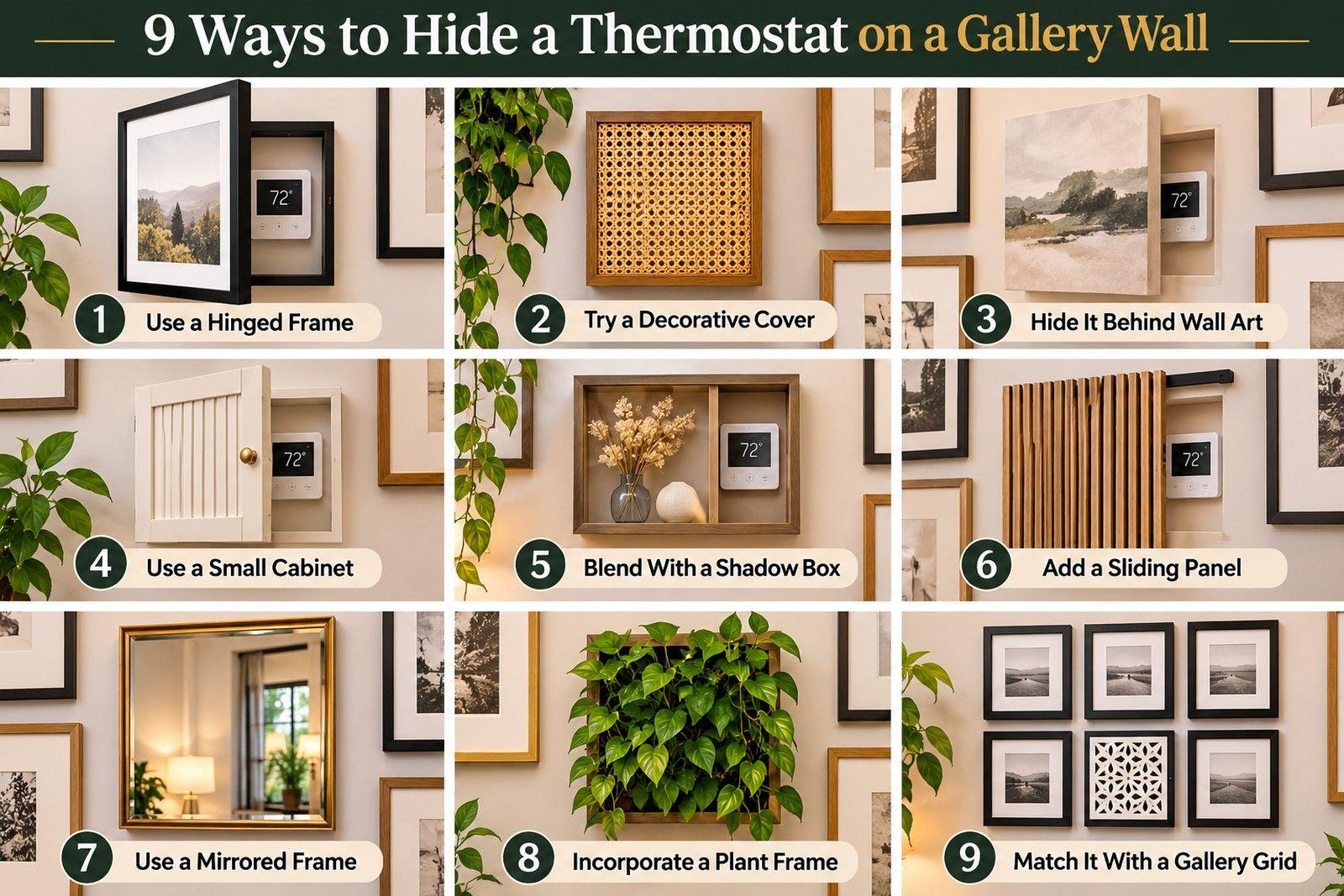
A thermostat is not usually the first thing you want people to notice when they walk into a living room. It is practical, necessary, and often positioned right where a carefully planned gallery wall could look best. The good news is that you do not have to choose between a functional heating and cooling system and a beautifully styled wall.
The smartest approach is to make the thermostat blend into the gallery wall rather than sealing it behind a picture or placing it inside a decorative box. A thermostat needs room air to reach its temperature sensor, and the display and controls must remain accessible. Some manufacturers specifically warn against placing sensors behind artwork or inside enclosed spaces. Always check the instructions for your exact model before adding any cover or surround.
These nine ideas focus on visual camouflage, thoughtful frame placement, and decorative details that make the thermostat less noticeable while preserving normal operation.
Before you start: a thermostat should not be sealed behind art
A thermostat measures the air around it to help control your heating or cooling system. If a picture, cabinet, deep frame, curtain, plant, or other obstruction traps air around the device, the reading may no longer represent the room. The system could run longer than necessary or stop before the rest of the room reaches the intended temperature.
Google's Nest guidance, for example, says its temperature sensor should not be placed in a partly or fully enclosed location or behind a painting. Other manufacturers provide similar warnings about airflow, sunlight, drafts, and heat sources. The exact requirements vary by model.
Use the ideas below as styling approaches, not permission to cover a working thermostat. Keep the sensor face, air openings, display, buttons, and service access clear. If you want a physical cover, use only one specifically approved by the thermostat manufacturer for your model and installation.
1. Arrange a hinged picture frame beside the thermostat
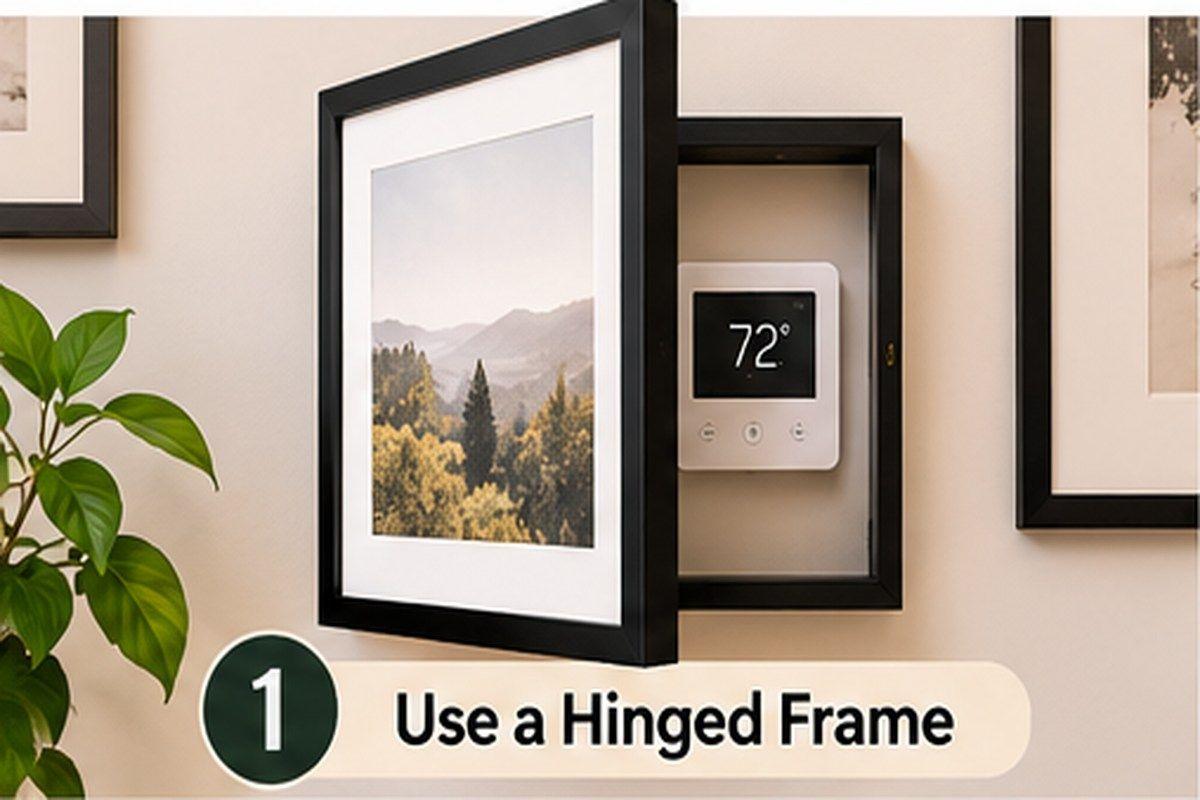
A hinged picture frame can be an attractive solution when the thermostat sits in the middle of a gallery wall. The safest interpretation is to use the hinged frame as part of the surrounding composition, not as a door that stays shut over the thermostat.
Choose a frame with a finish that repeats elsewhere on the wall, such as natural oak, matte black, antique brass, or warm walnut. Position the artwork beside the thermostat so the eye reads the area as one coordinated arrangement. If you are considering a frame that swings over the thermostat, do not install it unless the manufacturer confirms that the design preserves the required airflow and access while closed.
Design tip: Use a larger frame on the opposite side to balance the visual weight. A pair of similarly sized pieces can make the thermostat feel like part of a deliberate layout.
2. Use an open-lattice decorative detail
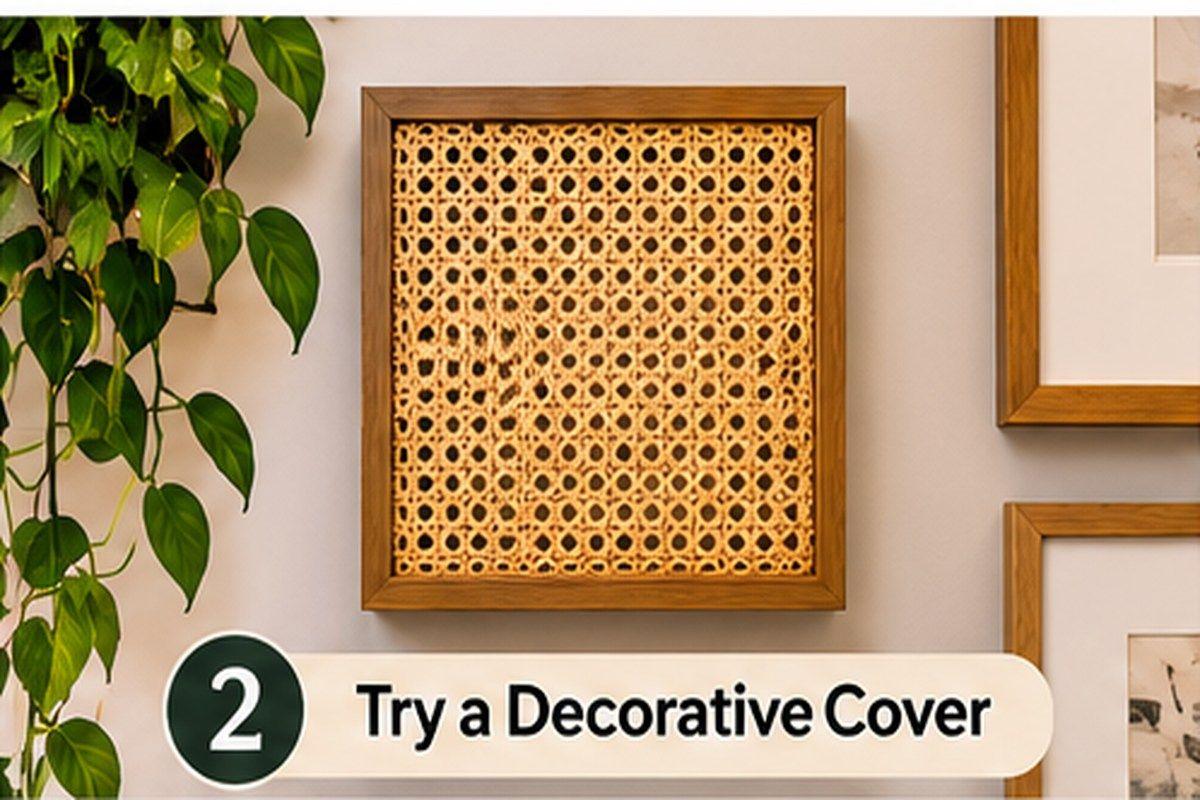
An open-lattice design can introduce texture and a handcrafted look. Cane webbing, perforated wood, and slatted details work particularly well with relaxed, organic, or mid-century interiors.
However, an open pattern does not automatically make a thermostat cover safe. The size, position, depth, and airflow around the sensor all matter. A decorative panel should not sit directly over the device unless the thermostat maker has approved that specific arrangement. A better option is to use lattice as a nearby accent, such as a framed panel above a console or a small decorative piece adjacent to the thermostat.
Design tip: Repeat the lattice texture in a cabinet door, lampshade, or basket so it feels intentional rather than like an improvised attempt to hide equipment.
3. Build the gallery wall around the thermostat
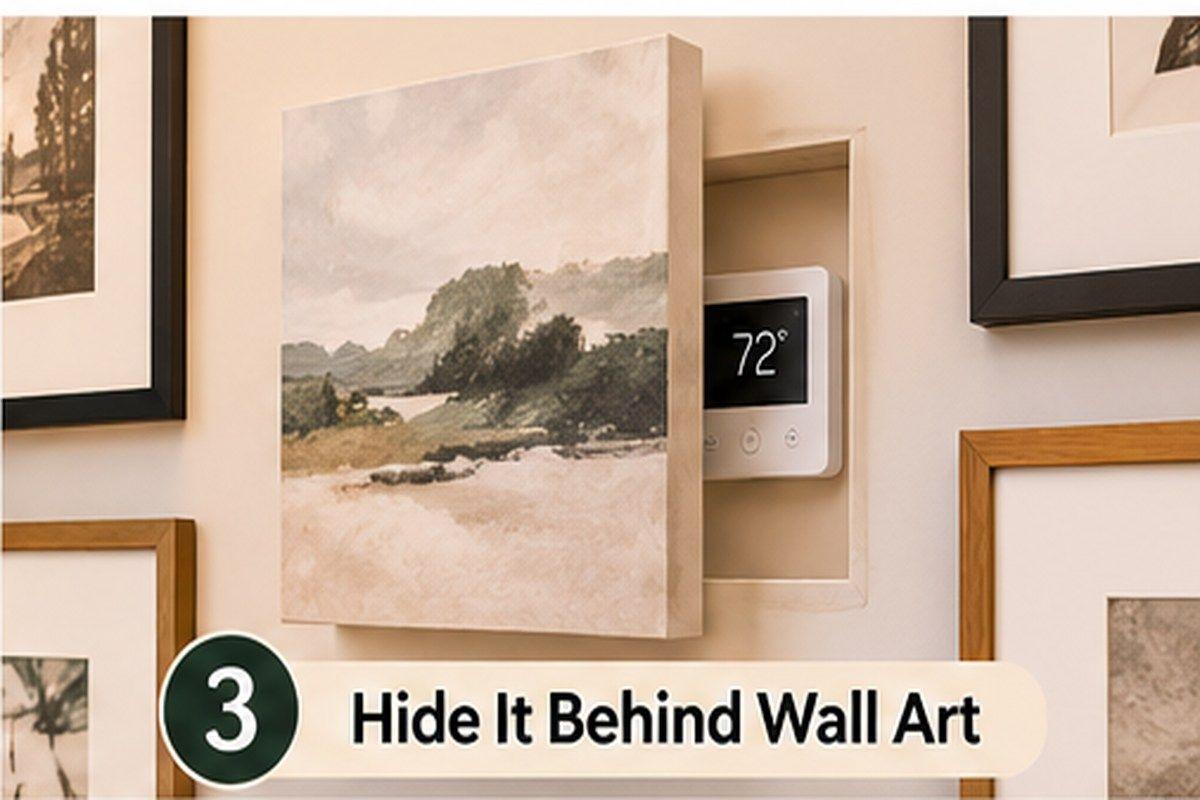
This is one of the easiest and most reliable approaches. Instead of covering the thermostat, make it part of a larger arrangement. Place framed art around it so the device becomes one small element in a visually balanced composition.
Start by marking the thermostat's position on paper or with painter's tape. Arrange the frames on the floor first, keeping a clear zone around the device. Mix portrait and landscape pieces, but maintain consistent spacing. A gallery wall often looks more polished when the gaps between frames are repeated.
You can use photography, abstract prints, sketches, family pictures, or a combination of styles. Keep the thermostat exposed and easy to reach.
Design tip: Use one larger anchor print and several smaller frames. This creates a natural focal point that draws attention away from the thermostat without interfering with it.
4. Add a small cabinet-style accent nearby
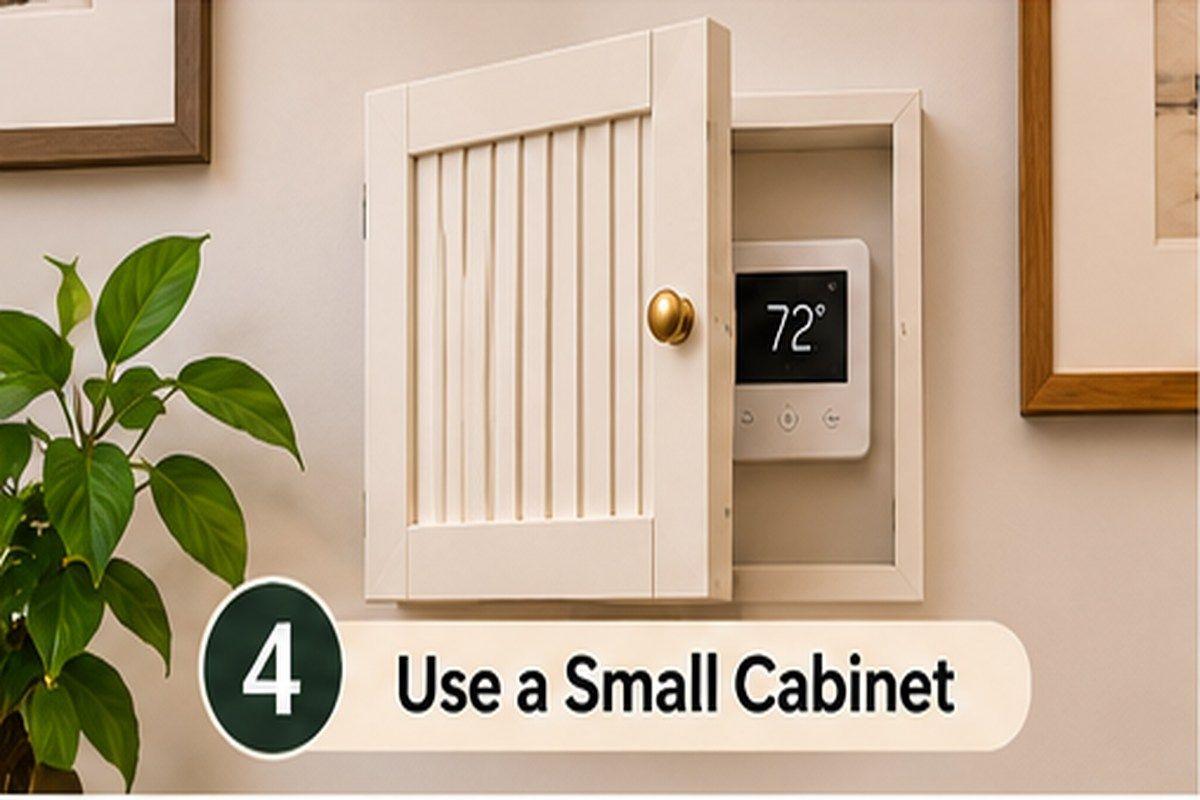
A shallow cabinet or wall-mounted display can help the thermostat blend into a more substantial wall composition. The important distinction is that the cabinet should sit beside the thermostat, not enclose it.
Look for a slim profile with a finish that coordinates with your frames. A small cabinet in oak, painted wood, or a muted color can provide visual balance and a place to display a few objects. Avoid placing a cabinet door, shelf, or deep side panel where it blocks air circulation to the thermostat.
Design tip: Keep the display simple. One small vase, a low-profile object, or a short stack of books is usually enough. Too many accessories can make the wall feel crowded.
5. Use a shadow-box frame as a neighboring feature
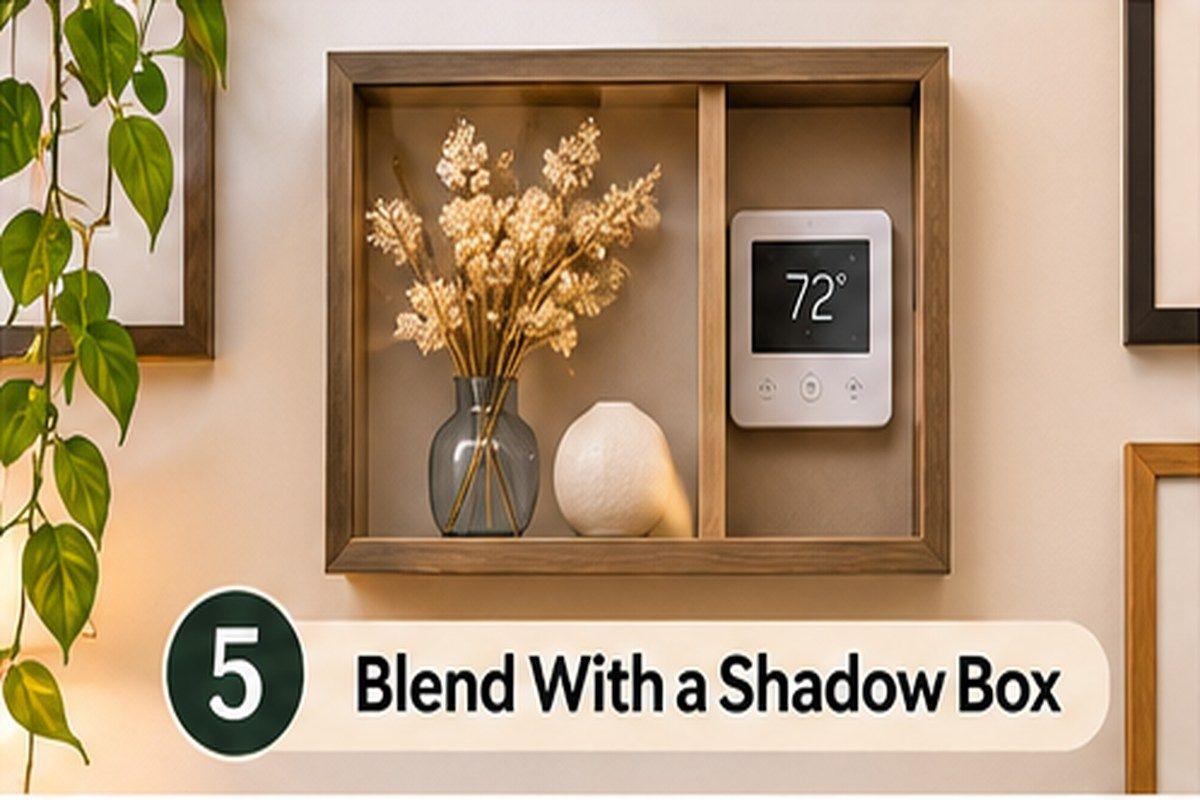
Shadow boxes add depth and dimension to a gallery wall. They can hold a small sculpture, keepsake, dried botanical, or collected object. Placing one near the thermostat gives the wall another point of interest and helps the device feel less isolated.
Choose a shallow shadow box with a restrained interior. If the thermostat is nearby, make sure the box does not create a pocket or enclosure around the sensor. Keep decorative objects from extending across the thermostat face or blocking its controls.
Design tip: Repeat the shadow-box frame material in two regular picture frames. This creates a coordinated collection without making every piece identical.
6. Introduce a slatted wood panel beside the thermostat
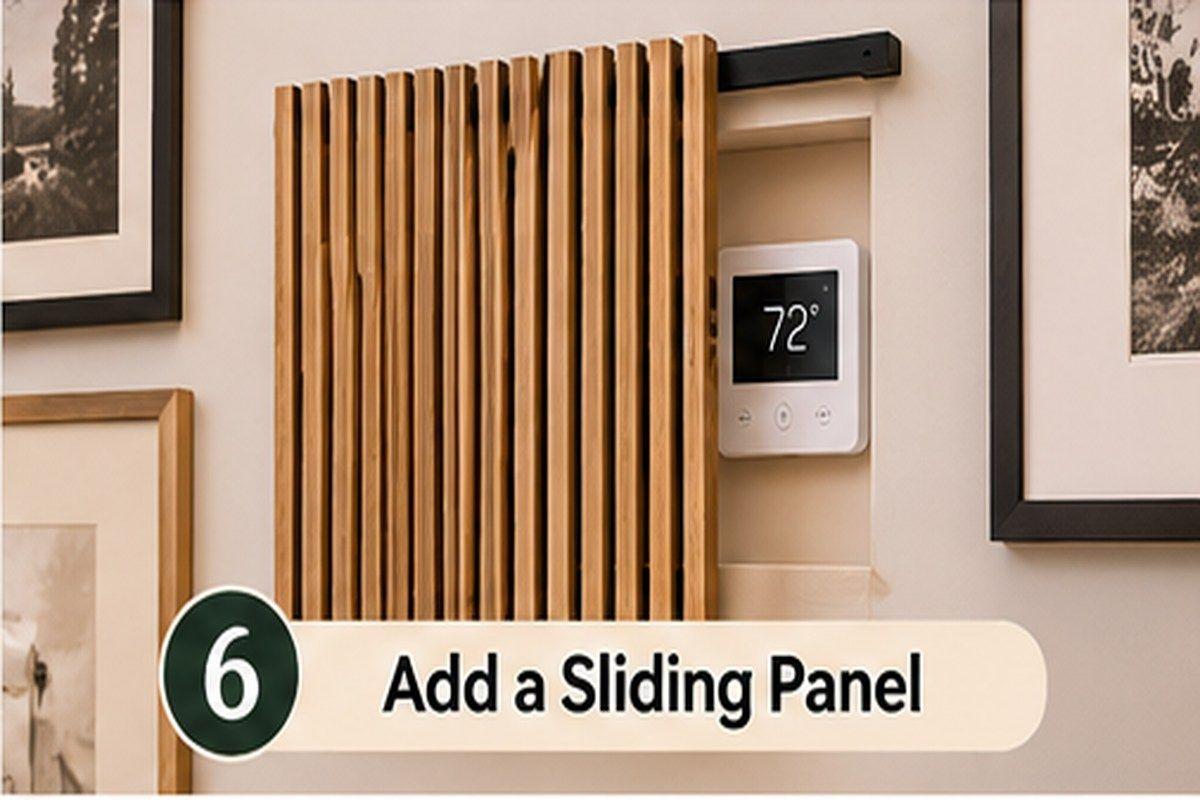
Vertical wood slats add warmth and architectural character. They are especially effective in modern, Scandinavian, Japandi, and mid-century-inspired rooms. A narrow slatted feature beside the thermostat can make the whole wall feel more designed.
Use the panel as a backdrop or neighboring accent, leaving the thermostat outside the panel area. Do not run slats across the thermostat or build a recessed cavity around it. Even if there are gaps between slats, the panel may still change the way air reaches the sensor.
Design tip: Choose a wood tone that connects to furniture already in the room. Pale oak feels light and contemporary, while walnut creates a richer, more dramatic contrast.
7. Add a mirror to the gallery composition
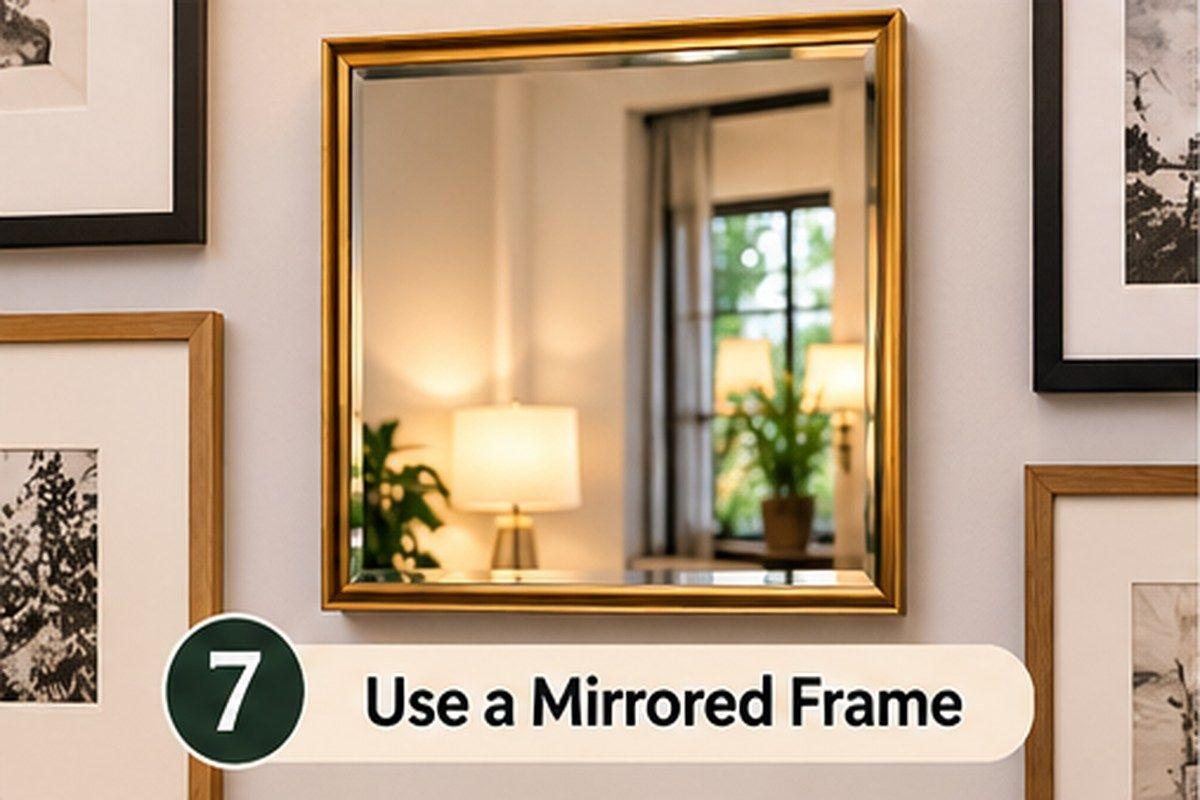
A mirror can redirect attention and make a room feel brighter. A small mirror with a slim brass, black, or wood frame can work beautifully among photographs and artwork. Place it near the thermostat to create a stronger focal point elsewhere on the wall.
Avoid positioning the mirror where it reflects direct sunlight onto the thermostat or creates a distracting glare. Keep the thermostat uncovered and leave enough space to read and adjust the display.
Design tip: A rounded mirror softens a gallery wall made mostly of rectangular frames. An arched mirror can add a more traditional or vintage note.
8. Bring in a botanical frame or nearby greenery
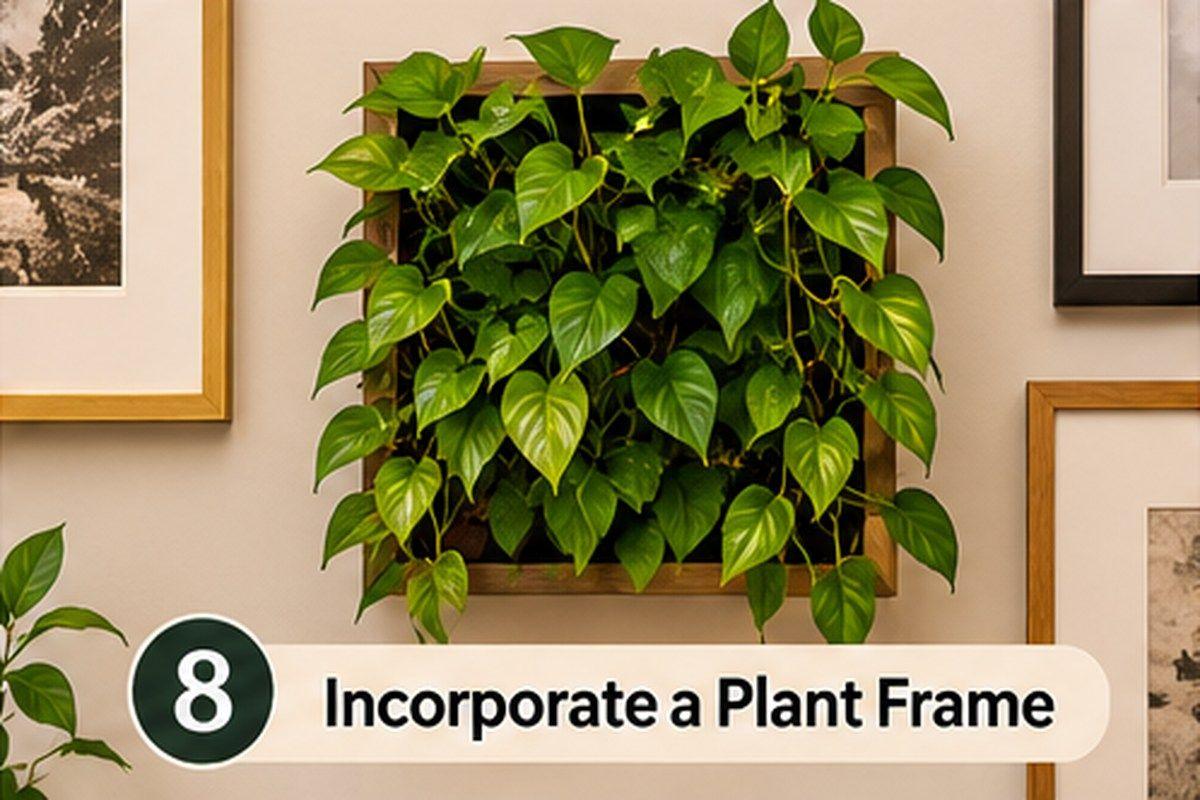
Botanical prints, pressed-leaf artwork, and plant photography are natural companions for a gallery wall. Their organic shapes soften the hard edges of a thermostat and help the wall feel more relaxed.
You can also place a plant on a nearby console or shelf, but keep leaves, stems, and hanging planters away from the thermostat. Do not let foliage cover the sensor, buttons, display, or ventilation openings. Watering and condensation should also be kept away from the device.
Design tip: Use botanical art in two or three frames, then repeat the green tones with a plant elsewhere in the room. This gives the wall a cohesive color story without crowding the thermostat.
9. Match the thermostat to a coordinated gallery grid
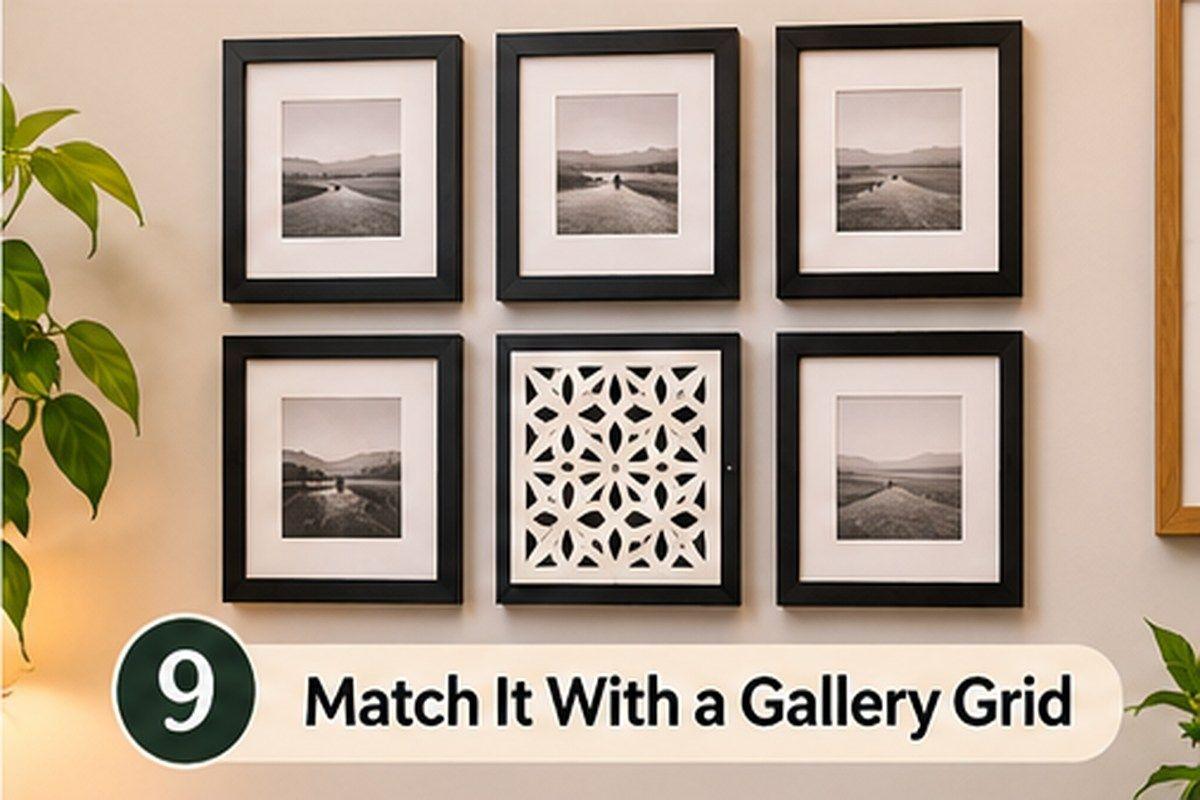
A symmetrical gallery grid can make a thermostat feel less like an interruption. Use frames of the same size, with consistent spacing and a shared finish. The thermostat can sit in an intentional gap or at the edge of the arrangement, remaining fully visible.
This approach works well in formal living rooms, hallways, and spaces with a clean, modern style. It is also easy to update: change the prints while keeping the layout intact.
Design tip: Use a limited palette for the artwork. Black-and-white photography, muted landscapes, or simple line drawings can create a polished look without competing with the thermostat display.
How to plan a gallery wall around a thermostat
Measure first
Record the thermostat's width, height, projection from the wall, and the space needed to operate it. Check the manufacturer's instructions for any clearance or airflow requirements. Do not assume that a generic frame size or gap will be suitable for every model.
Make a paper layout
Cut paper templates that match the frames you plan to use. Tape them to the wall and step back to assess the overall balance. Mark the thermostat clearly so you do not accidentally plan a frame over it.
Keep the device easy to use
The display should be readable, buttons or touch controls should be reachable, and the thermostat should remain accessible for battery changes, cleaning, or servicing. Avoid arrangements that require moving several frames every time you adjust the temperature.
Consider color and finish
A thermostat often looks less conspicuous when the surrounding wall and frames use a consistent palette. Black frames can connect with a dark thermostat; light oak can soften a white device; and brass accents can make a plain wall feel more intentional. Do not paint the thermostat or apply wallpaper, decals, or coatings to it unless the manufacturer explicitly permits it.
Protect the sensor from misleading conditions
Do not position the thermostat near direct sunlight, lamps, televisions, fireplaces, supply vents, exterior doors, or cold drafts if you can avoid it. These conditions can affect temperature readings. If the thermostat is already in a poor location, consult an HVAC professional before moving it.
Mistakes to avoid when disguising a thermostat
- Covering it with a solid picture: This can restrict air circulation and hide the display or controls.
- Assuming perforations make a cover safe: A lattice or mesh panel may still interfere with sensing, depending on the model and design.
- Building a deep decorative box around it: Enclosed spaces can trap air and distort readings.
- Placing plants too close: Leaves can block the sensor, while water and moisture create another avoidable risk.
- Using direct sunlight as a design feature: Sunlight and heat from nearby lighting can affect temperature sensing.
- Making access difficult: The thermostat should remain easy to read, adjust, and service.
- Painting or modifying the device: Finishes and coatings may affect the display, buttons, sensor openings, or warranty.
Frequently asked questions
Can I put a picture frame over my thermostat?
Do not place a regular picture frame over a working thermostat unless the manufacturer specifically approves that cover for your model. A picture can restrict airflow and prevent the sensor from reading the room accurately. Arrange artwork around the thermostat instead.
Can I use a decorative thermostat cover?
Possibly, but it must be compatible with the exact thermostat. Check the manufacturer's instructions for approved covers and required clearances. A cover that looks ventilated may still interfere with sensing or access.
Will hiding a thermostat affect my HVAC system?
It can. If the thermostat is enclosed or exposed to a different temperature than the room, it may send inaccurate signals to the heating or cooling system. This can affect comfort and system run time.
How can I make a white thermostat blend into a gallery wall?
Use white or light-toned frames, pale artwork, and a balanced layout that treats the thermostat as part of the composition. Keep the unit uncovered and leave enough room around it for normal airflow and operation.
Can I paint my thermostat to match the wall?
Do not paint the thermostat unless the manufacturer explicitly says it is safe. Paint can enter sensor openings, cover controls, or damage the finish. Instead, coordinate the surrounding frames and wall colors.
Is it better to move the thermostat?
If the thermostat is in an awkward location, an HVAC professional can assess whether relocation is practical. Moving it may involve wiring, wall repair, and system-specific requirements. Do not relocate it solely for appearance without checking the installation guidance.
Final thoughts
A thermostat does not have to dominate a gallery wall. The most dependable solution is to make the surrounding artwork, frames, textures, and colors work together so the device becomes less noticeable while remaining exposed and functional.
Build the arrangement around the thermostat, use mirrors and botanical art to create visual interest, and repeat finishes for a polished result. Treat any physical cover as a model-specific technical decision, not just a decorating accessory. A beautiful gallery wall should make the room feel complete without compromising the comfort controls that help the home work properly.
Sources
- Google Nest Help – Set up and install your Nest Temperature Sensor. Checked November 7, 2026
- Resideo / Honeywell Home – Positioning a room thermostat correctly. Checked November 7, 2026
- Anemostat – Room Sensor and Thermostat Mounting and Maintenance Application Guide. Checked November 7, 2026
- Google Nest Help – Learn more about thermostat mid plates. Checked November 7, 2026
Share this article
Get new guides by email
Practical home articles and free resources. No spam, and you can unsubscribe at any time.
Keep reading
Luxury Water-Saving Shower Heads: Aesthetic Designs That Make Every Shower Feel Better
Explore luxury water-saving shower heads in brushed brass, matte black, chrome and rainfall styles. Learn how to compare flow rates, WaterSense labels and design features.
November 2026, 9 min read
Best Thermal Curtains for Drafty Windows: Stylish Options That Help Keep Rooms Comfortable
Find stylish thermal curtains for drafty windows. Compare blackout, linen-look, velvet, patterned and add-on lining options, plus measuring and hanging tips.
November 2026, 10 min read
What Actually Affects Your Home Utility Bill
Utility bills swing for reasons that have nothing to do with your rate plan. Here is what the Department of Energy's own guidance says drives usage, and how to separate what you control from what you don't.
September 2026, 3 min read