Best Thermal Curtains for Drafty Windows: Stylish Options That Help Keep Rooms Comfortable
Find stylish thermal curtains for drafty windows. Compare blackout, linen-look, velvet, patterned and add-on lining options, plus measuring and hanging tips.
By Home Crane Editors. . 10 min read.

A cold draft near a window can make an otherwise comfortable room feel chilly. Replacing the window may be the long-term answer, but it is not always practical or affordable. A well-chosen pair of thermal curtains can add a useful insulating layer, soften the look of a room, and make a drafty window feel less uncomfortable.
The best thermal curtains are not necessarily the thickest or darkest panels on the shelf. Look for a substantial lining, enough width to cover the full opening, a length that reaches close to the floor or sill, and a heading that lets the curtain sit close to the wall. Style matters too: modern thermal curtains come in linen-look weaves, velvet, solid blackout fabrics, and understated patterns.
This guide explains what to look for, compares the main styles, and shows how to hang curtains so they work as well as they look. One important distinction: curtains can reduce heat transfer and the chilly feeling near glass, but they do not repair gaps in the window frame. If air is physically leaking through, seal the leak as well.
At a glance: which thermal curtain style should you choose?
| Feature | Best for | Design effect | Main trade-off |
|---|---|---|---|
| Triple-weave blackout | Bedrooms and cold rooms | Clean, simple, contemporary | Can look flat or feel heavy |
| Thermal-lined linen-look | Living rooms and open-plan spaces | Relaxed, textured, tailored | Check that the lining is genuinely insulating |
| Velvet thermal curtains | Formal rooms and large windows | Rich, plush, luxurious | Heavy and sometimes harder to clean |
| Patterned thermal curtains | Traditional or eclectic rooms | Adds color and visual interest | Pattern can dominate a small room |
| Add-on thermal lining | Existing favorite curtains | Keeps the current decorative fabric | Requires compatible curtain construction |
1. Triple-weave blackout curtains: the practical all-rounder
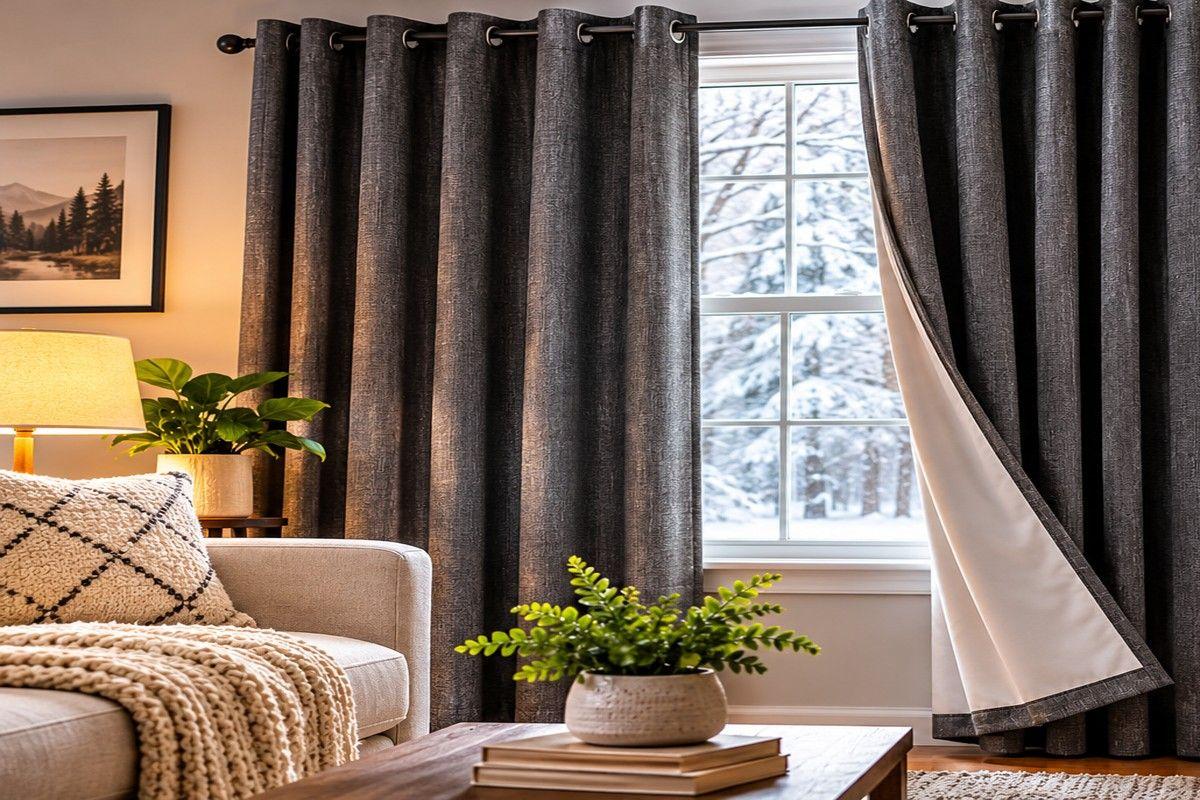
Triple-weave curtains use a dense woven construction, often with a dark yarn layer between the face and reverse. Many versions also block a substantial amount of daylight. This combination makes them a useful choice for bedrooms, media rooms, and windows that feel cold after sunset.
For a versatile look, choose charcoal, warm gray, navy, or deep taupe. These colors work with many neutral interiors and can frame a window without making the room feel overly decorated. If the room is small, a lighter gray or oatmeal shade can feel less visually heavy.
What to check: Look for a clear description of the fabric construction, panel dimensions, and care instructions. “Blackout” describes light control; it does not automatically prove strong thermal performance. A lined or genuinely multi-layer curtain is a better starting point than a thin panel marketed only as blackout.
Best fit: Bedrooms, rental apartments, and rooms where privacy and light control matter as much as comfort.
2. Thermal-lined linen-look curtains: the best style-first option
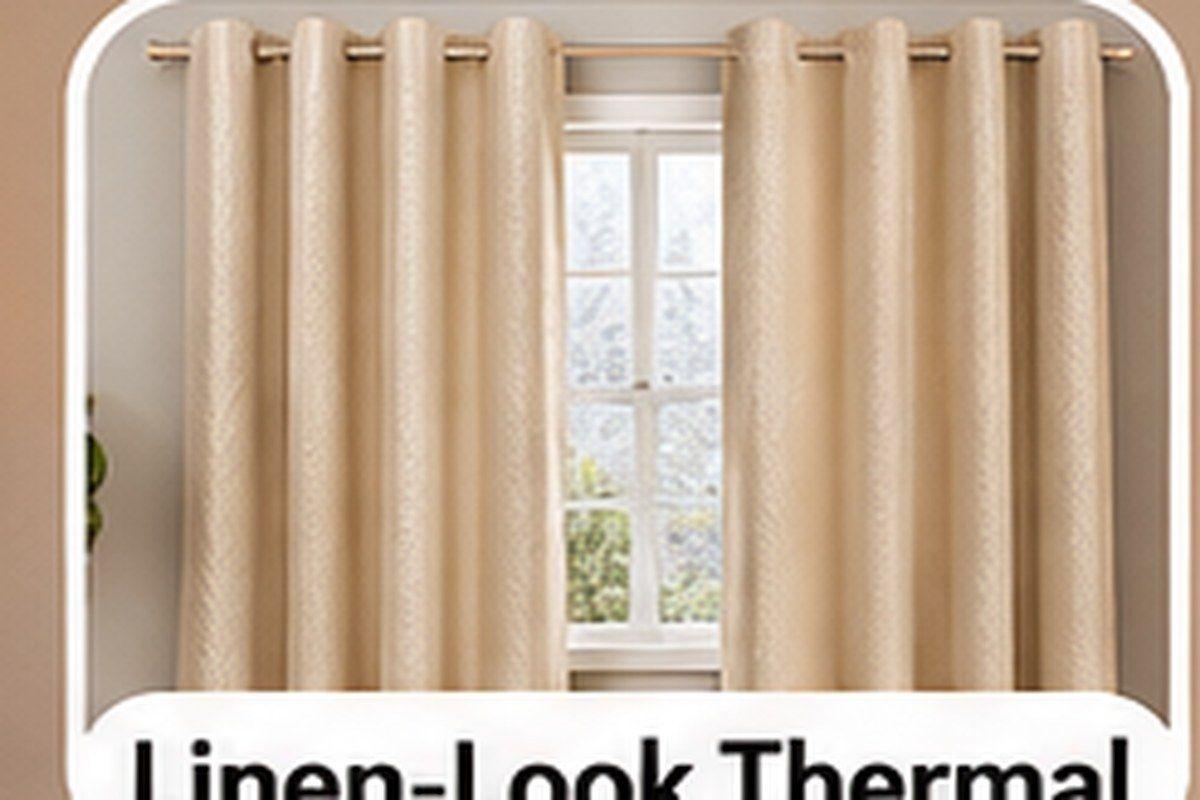
Linen-look curtains bring a soft, natural texture to a room. They suit transitional, coastal, Scandinavian, farmhouse, and modern organic interiors. Choose warm white, flax, sand, mushroom, or greige for a subtle finish that works with wood, stone, and neutral upholstery.
The important detail is the lining. A decorative linen-look face fabric can be relatively lightweight, so it should be paired with a substantial thermal lining if insulation is the goal. Some products use the word “thermal” loosely. Read the construction details rather than judging by the product name or photograph.
A lined linen-look curtain can also create a fuller, more tailored drape. For a polished appearance, use a rod wide enough for the panels to stack mostly clear of the glass when open.
Best fit: Living rooms, dining rooms, and spaces where you want a warm, layered look without the visual weight of velvet.
3. Velvet thermal curtains: the luxurious, substantial choice
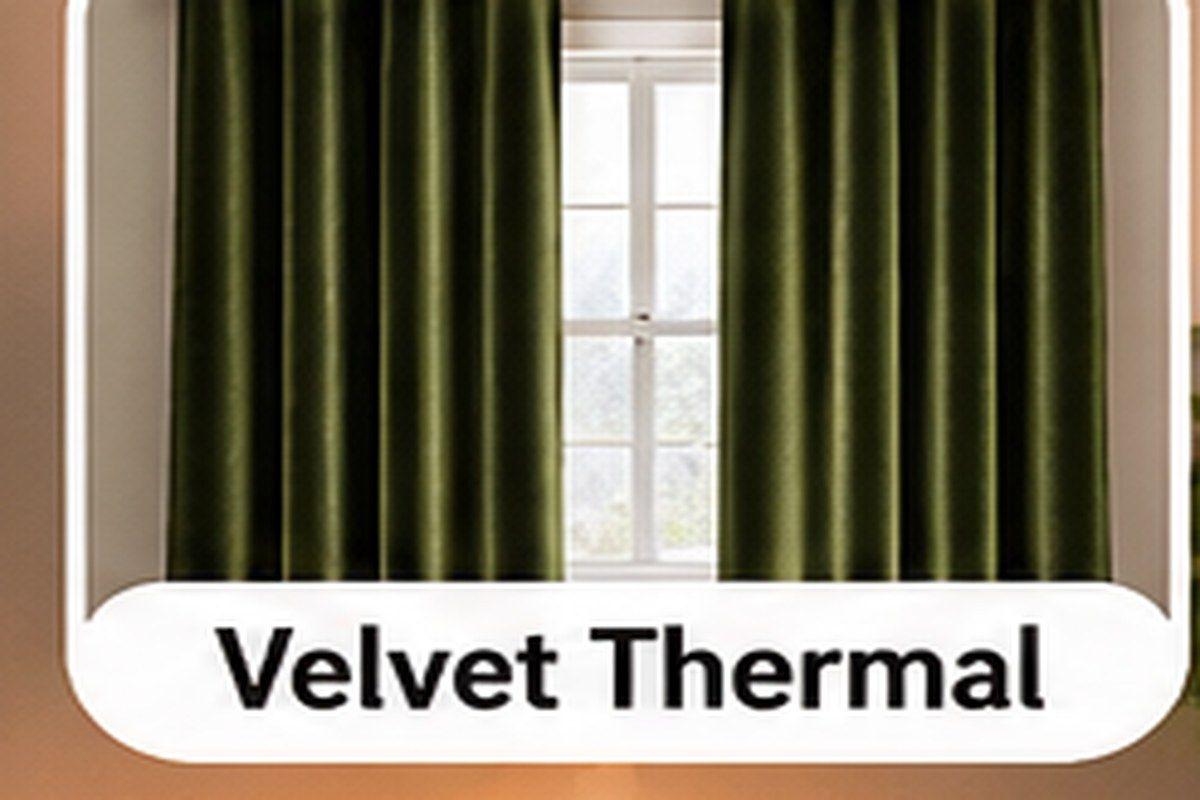
Velvet has a naturally dense feel and a rich surface that adds depth to a room. In jewel tones, it can make a dramatic statement; in muted shades such as stone, olive, cocoa, or slate, it can feel understated and elegant.
Velvet panels are often heavier than standard curtains, so check that the rod, brackets, and wall fixings can support the total weight. If you are renting or using a tension rod, a heavy velvet pair may not be suitable. Also confirm whether the fabric is machine washable, spot-clean only, or dry-clean only.
Velvet can be especially attractive in a bedroom or formal living room with tall windows. It is not automatically the most insulating option, however. Compare the lining and construction, not just the face fabric.
Best fit: Large windows, bedrooms, traditional interiors, and rooms where a plush finish is part of the design.
4. Patterned thermal curtains: warmth with personality
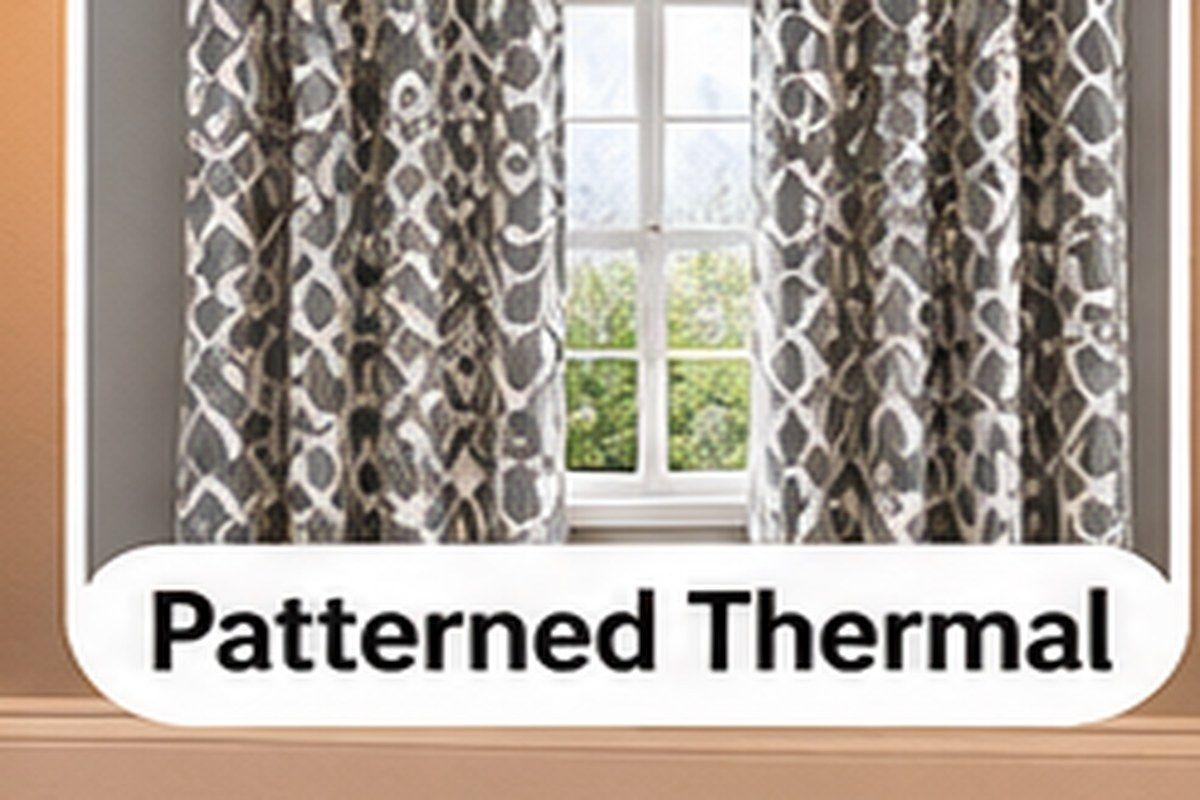
Patterned panels can make a drafty window a design feature. Small-scale botanicals, subtle geometrics, classic stripes, and restrained damask patterns can add interest without overwhelming the room. For a balanced result, repeat one or two colors from the pattern elsewhere in the space.
If the room already has patterned rugs, wallpaper, or upholstery, choose a quieter curtain design. In a plain room, a larger motif can provide a focal point.
As with other styles, confirm that the curtain has a thermal lining or dense multi-layer construction. A decorative print alone does not improve insulation.
Best fit: Traditional homes, cottage-inspired rooms, eclectic spaces, and rooms that need a little color.
5. Add-on thermal lining: upgrade curtains you already own

If you already have curtains you love, a separate thermal lining may be a better choice than replacing them. Depending on the curtain heading and attachment system, a lining can be clipped, hooked, or sewn behind the decorative panel.
This approach lets you keep a favorite color or pattern while adding another layer. It can also be useful when the available ready-made thermal curtains do not match your room.
Before buying, check compatibility with your curtain tape, hooks, rings, or eyelets. Consider the combined weight and whether the existing rod and brackets can support it. A lining that is too narrow or short will leave exposed areas around the window.
Best fit: Homeowners with quality decorative curtains, renters who want to retain existing window treatments, and anyone seeking a less wasteful upgrade.
How to choose thermal curtains that actually help with drafts
1. Look beyond the word “thermal”
Retailers use terms such as thermal, insulated, energy-saving, blackout, and room-darkening in different ways. Blackout fabric is designed primarily to reduce incoming light. Thermal construction is intended to slow heat transfer. Some curtains do both, but one label does not guarantee the other.
Look for a sewn-in thermal lining, a multi-layer construction, or a manufacturer explanation of the insulating layer. If the listing gives no meaningful construction details, treat broad performance claims cautiously.
2. Measure for coverage, not just appearance
A curtain that barely covers the glass leaves gaps around the edges. Measure the full window casing and the height from the intended rod or track position to the floor or sill.
For fullness, the combined width of the curtain panels should generally be greater than the width of the rod or track. A common decorative starting point is around 1.5 to 2 times the rod width, depending on the fabric and desired fullness. Check the product's stated panel width and whether the listing gives the width of one panel or the pair.
For draft reduction, extend the rod beyond the window frame so the panels can overlap the sides when closed. A wider rod also allows the curtains to stack away from the glass during the day.
3. Choose a length that closes the lower gap
Floor-length curtains can create a continuous visual frame around a window and reduce the open space below the glass. In rooms where a floor-length panel would interfere with a radiator, heater, furniture, or a walkway, choose a sill-length option or arrange the heating source so it is not trapped behind the curtain.
Measure from the top of the rod or track, not from the top of the window frame. Decide whether you want the hem to hover just above the floor, touch it, or puddle slightly. For everyday use, a hem just above the floor is usually easier to maintain.
4. Pay attention to the top and sides
A curtain can be thick but still allow warm room air to circulate behind it if there are large gaps at the top and sides. Mount the rod high enough for the look you want, but consider a return bracket or wraparound rod that brings the curtain closer to the wall. A pelmet or cornice can reduce the open gap above the curtain.
At the center, make sure the two panels overlap or meet without a visible gap. Magnetic curtain seals or simple clips can help keep panels together on particularly cold nights.
5. Pick a fabric that suits the room
Polyester blends are common because they are durable and relatively easy to care for. Linen-look polyester offers texture with less wrinkling than many natural linen fabrics. Velvet creates a plush appearance but can be heavier. Cotton blends can feel soft and natural, though the lining is still the key feature to inspect.
Think about the room's use. Bedrooms often benefit from blackout performance. Living rooms may need a softer filtered-light look. Kitchens and bathrooms require extra attention to moisture, cleaning, and safe clearance from heat sources.
How to style thermal curtains without making a room feel bulky
Thermal curtains do not have to look like utility products. A few design choices can make them feel intentional.
- Match the wall color for a calm look. Curtains close to the wall color visually recede and can make a small room feel more spacious.
- Use texture instead of a loud pattern. A linen-look weave, subtle herringbone, or soft velvet adds interest without competing with furniture.
- Choose dark panels for contrast. Charcoal, navy, and forest green can frame a bright window and anchor a neutral room.
- Hang the rod wider than the frame. This makes the window look larger and allows the panels to sit away from the glass when open.
- Use a sturdy, simple rod. Thermal curtains can be heavy. A metal or solid wood rod with secure brackets looks finished and supports the fabric.
- Layer carefully. A sheer panel can provide daytime privacy, while the thermal curtain closes at night. Make sure both layers can move freely and do not interfere with heaters.
Are thermal curtains enough to stop a draft?
Not always. It helps to distinguish between a cold window and an air leak. A cold pane can make nearby air feel chilly even when the window is sealed. A curtain creates a buffer between the room and the glass, which can make the area feel more comfortable.
If you can feel air moving around the sash, frame, or meeting rails, the underlying gap needs attention. Check weatherstripping, caulk, locks, and the condition of the window. For temporary seasonal improvements, a removable window insulation film kit may help reduce heat loss through older glazing. For more persistent problems, consider professional assessment or secondary glazing where appropriate.
Thermal curtains are a complementary measure, not a substitute for repairing a leaking window. They also work best when closed during the coldest hours and opened when useful daylight and passive solar warmth are available.
Common mistakes to avoid
- Buying by the product title alone. Confirm the lining and construction rather than relying on the word “thermal.”
- Choosing panels that are too narrow. Insufficient width leaves gaps and makes the curtains look skimpy.
- Ignoring the rod and brackets. Heavy lined panels can pull down weak hardware.
- Blocking a radiator or heater. A curtain covering a heat source can interfere with heat distribution and may create a safety concern. Follow the heater manufacturer's clearance instructions.
- Expecting curtains to seal a damaged window. Repair air leaks directly.
- Forgetting cleaning requirements. Some lined and coated fabrics have specific washing restrictions.
Frequently asked questions
Do thermal curtains really work on drafty windows?
They can help reduce heat transfer and the chilly feeling near cold glass by creating a layer of relatively still air between the window and the room. Their effectiveness depends on the curtain's construction, size, and how closely it covers the opening. They will not seal a physical gap in a window frame.
Are blackout curtains the same as thermal curtains?
No. Blackout curtains are designed to block light. Thermal curtains are designed to slow heat transfer. Some products combine both functions, but check the lining and construction to confirm.
Should thermal curtains touch the floor?
Floor-length curtains can help cover the lower part of the window and create a continuous look. They should not cover radiators, heaters, or create a trip hazard. In those situations, use a shorter length or adjust the heating layout safely.
What color is best for thermal curtains?
Color is mainly a style choice. Neutral shades such as oatmeal, taupe, gray, and ivory blend easily with many interiors. Navy, charcoal, olive, and deep brown create stronger contrast. Prioritize lining, coverage, and fit over color when comparing insulation.
Can I add thermal lining to my existing curtains?
Often, yes. Check the lining's attachment method and compatibility with your curtain heading. Make sure the added weight is supported by the rod and brackets, and choose a lining that covers the full curtain area.
When should I close thermal curtains?
Close them when outdoor temperatures drop and the window is no longer receiving useful sunlight. Open them during sunny periods when daylight can warm the room, provided glare and privacy are not concerns.
Final verdict: choose the curtain that fits the window
For most draft-prone rooms, a well-made, thermal-lined or triple-weave curtain is a practical starting point. Choose linen-look panels when the room needs a relaxed, refined finish; velvet when you want a richer look; patterned curtains when the window needs personality; and a separate lining when you want to keep existing drapes.
The most important decision is not the trendiest color. It is whether the panels are wide and long enough to cover the opening, have a genuine insulating layer, and can be installed close to the wall without blocking a heater. Pair the curtains with proper weatherstripping wherever air is leaking, and you will get a more complete, comfortable window upgrade.
Sources
- U.S. Department of Energy – Energy Saver: Window Coverings. Checked November 7, 2026
- U.S. Department of Energy – Energy Saver: Air Sealing Your Home. Checked November 7, 2026
- Bob Vila – The Best Thermal Curtains of 2026, Tested and Reviewed. Checked November 7, 2026
- Consumer NZ – Curtains and thermal performance. Checked November 7, 2026
- Cornell Cooperative Extension – Window treatments and energy efficiency. Checked November 7, 2026
Share this article
Get new guides by email
Practical home articles and free resources. No spam, and you can unsubscribe at any time.
Keep reading

Luxury Water-Saving Shower Heads: Aesthetic Designs That Make Every Shower Feel Better
Explore luxury water-saving shower heads in brushed brass, matte black, chrome and rainfall styles. Learn how to compare flow rates, WaterSense labels and design features.
November 2026, 9 min read
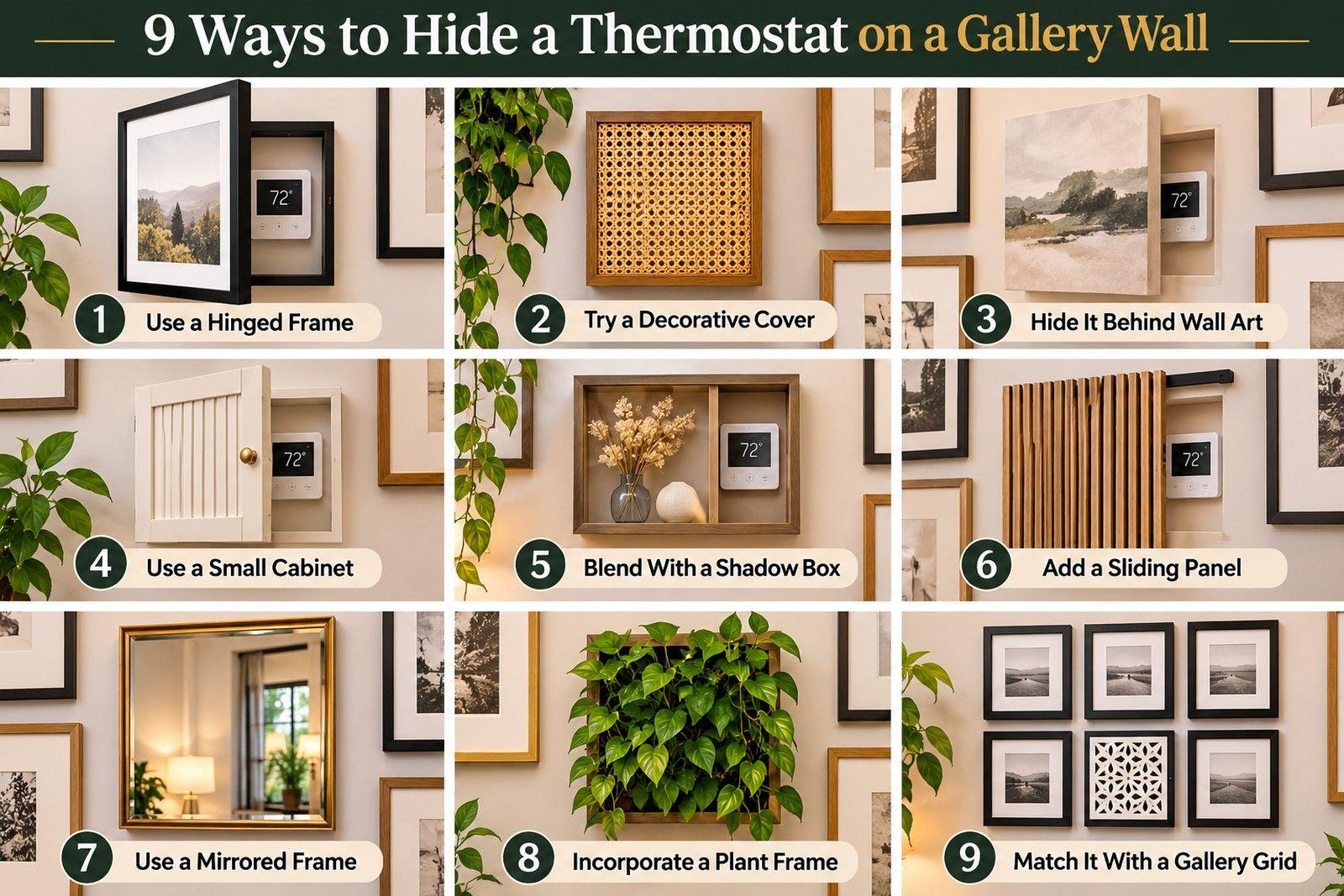
9 Ways to Hide a Thermostat on a Gallery Wall Without Ruining the Design
Make a thermostat blend into your gallery wall with nine stylish ideas, plus practical tips to preserve airflow, sensor accuracy and easy access.
November 2026, 9 min read

What Actually Affects Your Home Utility Bill
Utility bills swing for reasons that have nothing to do with your rate plan. Here is what the Department of Energy's own guidance says drives usage, and how to separate what you control from what you don't.
September 2026, 3 min read