Luxury Water-Saving Shower Heads: Aesthetic Designs That Make Every Shower Feel Better
Explore luxury water-saving shower heads in brushed brass, matte black, chrome and rainfall styles. Learn how to compare flow rates, WaterSense labels and design features.
By Home Crane Editors. . 9 min read.
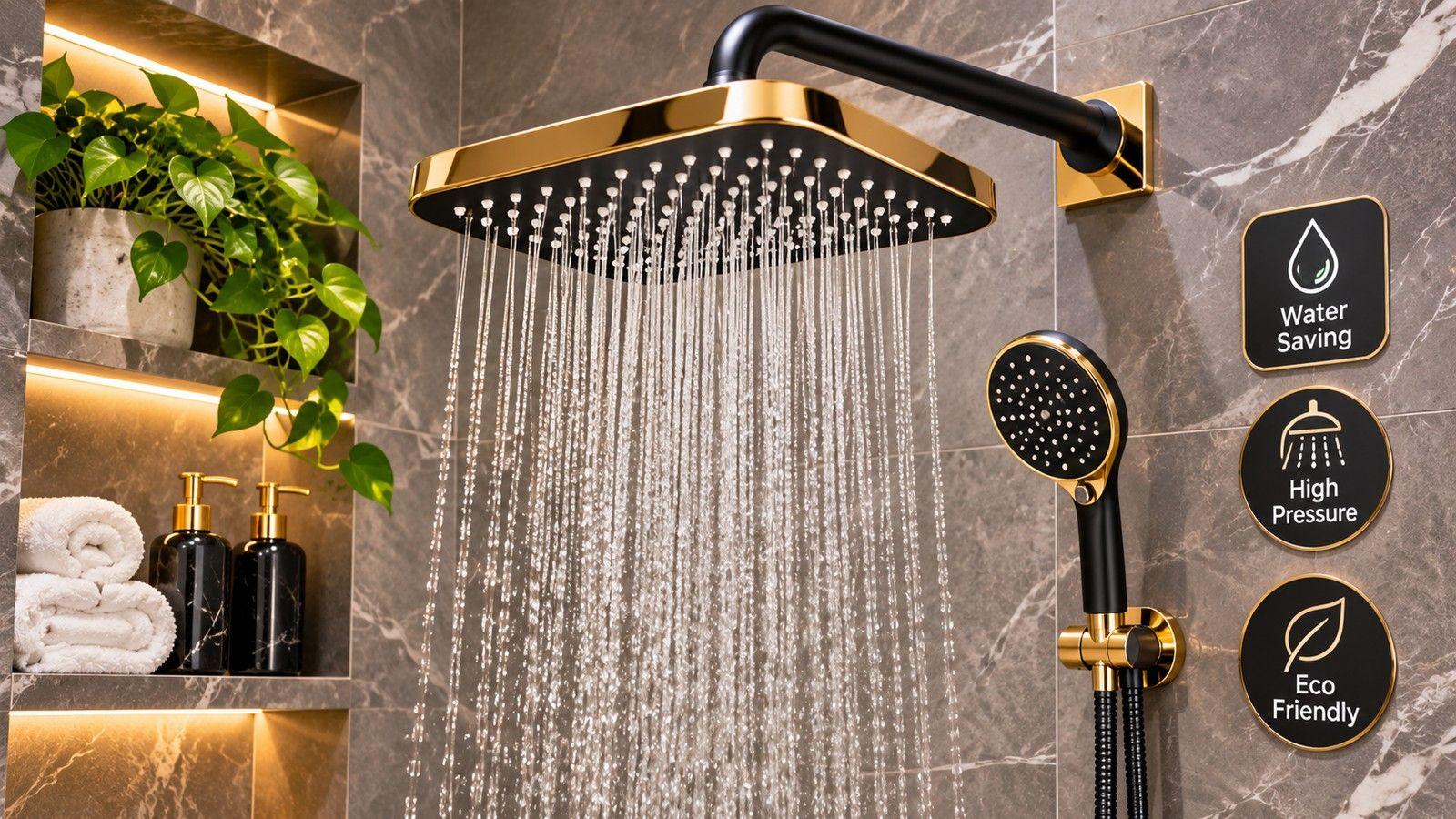
A beautiful shower can change the way a bathroom feels. A wide rainfall head, a sculptural handheld sprayer, and a refined finish can make an everyday routine feel closer to a boutique-hotel experience. A luxury look does not have to mean wasteful water use. Water-efficient shower heads are available in sleek contemporary shapes, warm brushed-metal finishes, minimalist matte black, and polished chrome.
The trick is to look beyond the size of the shower plate and the number of spray settings. A well-designed water-saving shower head should balance a satisfying spray with a sensible flow rate, durable construction, and a finish that works with the rest of the bathroom. It should also suit the plumbing and water pressure in your home.
At a glance: luxury styles worth considering
| Feature | Visual character | Useful features | Best suited to |
|---|---|---|---|
| Brushed-brass rainfall | Warm, hotel-inspired | Efficient flow, easy-clean nozzles | Cream, stone, warm neutral bathrooms |
| Matte-black rainfall | Bold and architectural | Pressure-aware spray design | Contemporary and industrial spaces |
| Chrome multi-function | Bright and timeless | Several useful spray modes | Classic and transitional bathrooms |
| Handheld eco shower | Practical and streamlined | Pause control, flexible hose | Family bathrooms |
| Dual rain-and-handheld | Spa-like and versatile | Diverter, coordinated outlets | Larger walk-in showers |
| Minimalist square head | Clean and geometric | Low-flow rating, durable faceplate | Modern bathrooms |
1. Brushed-brass rainfall shower heads
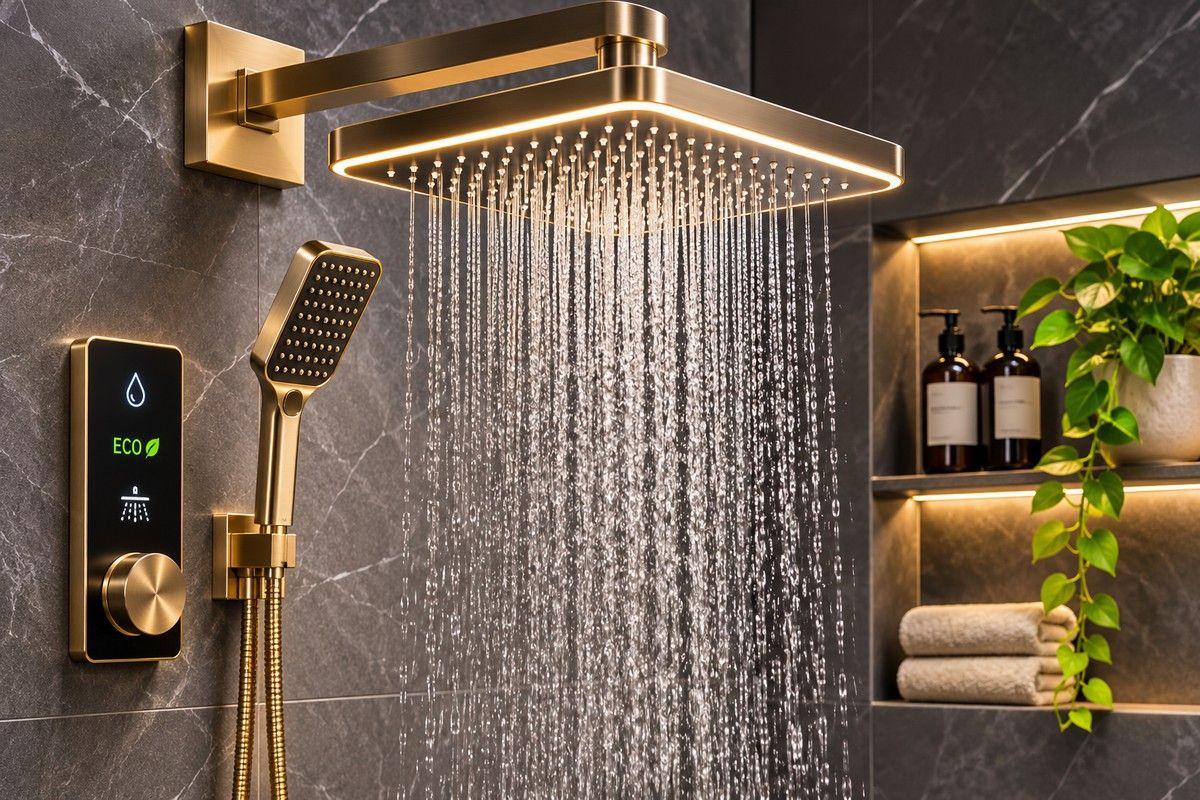
Brushed brass is an easy way to make a bathroom feel warmer and more considered. Unlike highly polished gold, a brushed finish has a softer sheen that works with natural stone, cream tile, walnut cabinetry, and warm lighting. A broad square or round rainfall head creates a calm focal point without needing an elaborate shower enclosure.
For a water-conscious installation, do not assume a large rainfall plate must use a high volume of water. Compare the rated flow in gallons per minute (GPM), and look for a model designed to distribute water evenly across its spray face. The experience depends on nozzle design and pressure as well as the size of the head.
Style tip: Repeat the brass finish in two or three smaller details, such as cabinet pulls, a towel hook, or a shower control. Too many competing metallic finishes can make a compact bathroom feel busy.
Best for: Warm contemporary bathrooms, spa-inspired renovations, and homeowners who want a subtle luxury finish.
2. Matte-black rainfall shower heads
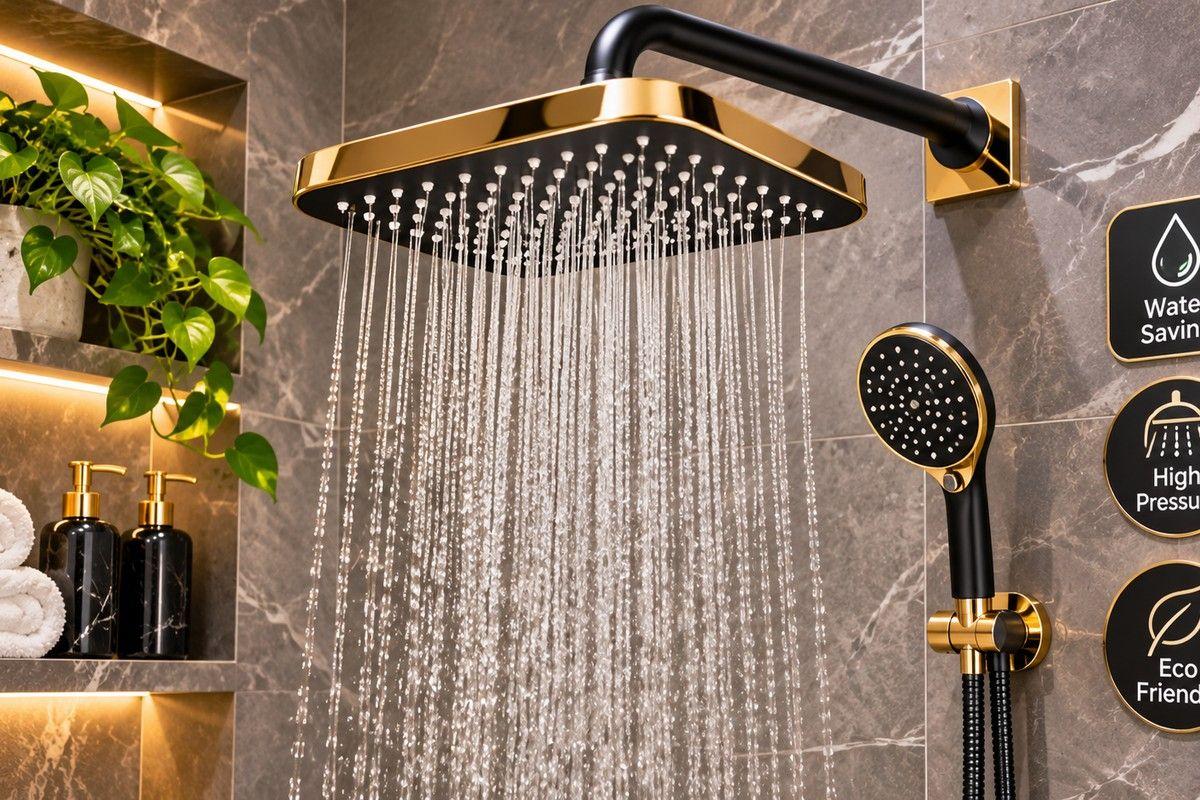
Matte black gives a shower a crisp, architectural look. It pairs especially well with white tile, pale concrete-look porcelain, natural oak, and dark stone. A simple round head feels understated, while a square head creates a more graphic, modern effect.
Choose a finish designed for wet environments and check the manufacturer's cleaning instructions. Abrasive cleaners can dull or damage some coatings. If you are coordinating several black fixtures, compare finish samples where possible; matte black can vary between brands.
A water-saving matte-black shower head should be assessed by its flow rate and performance information, not its color or styling. Some products use spray-pattern engineering to create a fuller-feeling spray at a lower flow, but results vary by model and household pressure.
Best for: Minimalist bathrooms, black-framed shower enclosures, and high-contrast interiors.
3. Chrome multi-function shower heads
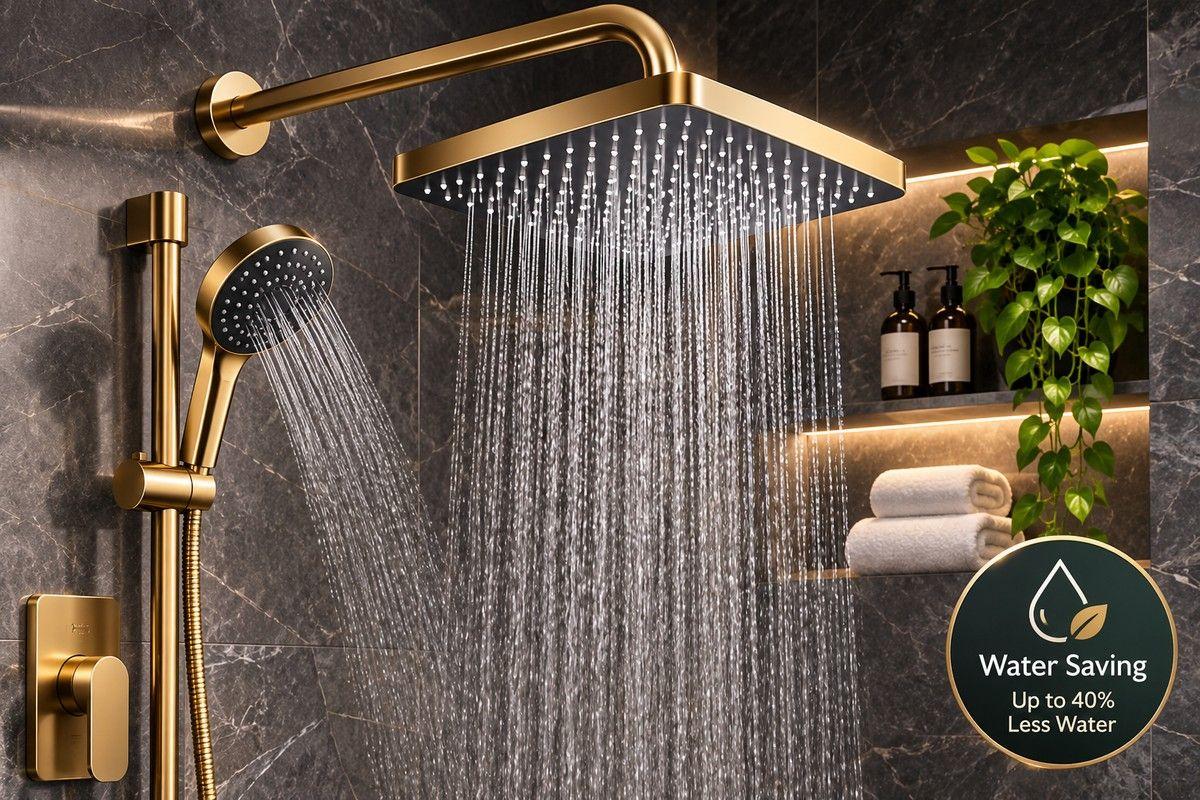
Chrome remains a dependable choice because it reflects light, suits many bathroom styles, and is widely available. A multi-function head may offer a focused spray, a softer wide spray, or a massage-style pattern. These settings can make the shower more adaptable for different preferences.
Avoid paying extra for a long list of modes that you will rarely use. A few well-designed settings are often more useful than a complicated selector. Check whether the mode can be changed with wet hands and whether the spray face is easy to clean.
Best for: Transitional bathrooms, shared family spaces, and renovations where existing taps and accessories are chrome.
4. Handheld water-saving shower heads
A handheld shower head is practical as well as stylish. It makes rinsing the shower enclosure easier, helps with bathing children or pets, and can be more convenient for people who prefer a directed spray. A matching wall bracket and flexible hose keep the installation looking neat.
Look for a comfortable handle, a hose that does not kink easily, a secure dock, and a spray pattern that remains usable at the stated flow rate. Some models include a pause or trickle control. This can reduce water use while lathering, although it may not shut the water off completely; check the product instructions.
Best for: Family bathrooms, shower-over-tub layouts, and practical everyday use.
5. Dual rainfall and handheld systems
A dual system combines a fixed overhead shower with a handheld sprayer. It offers a spa-like appearance, especially in a generous walk-in shower with a recessed niche and coordinated controls.
Before buying, understand how the diverter works. Some systems let you operate either outlet separately; others allow both to run at once. If both outlets operate simultaneously, the total flow can be higher than the flow of either component alone. Check the manufacturer's rated flow for each operating mode and confirm that your plumbing can support the arrangement.
A dual system is not automatically more water-efficient than a single head. Choose it for versatility and make the water-efficiency decision using the complete product specifications.
Best for: Larger showers, primary bathrooms, and renovations where plumbing is already being updated.
6. Minimalist square shower heads
Square shower heads bring a clean, geometric line to contemporary bathrooms. They look polished when aligned with rectangular wall tile, linear drains, and simple glass panels. A slim profile can feel almost architectural.
A minimalist faceplate should still be easy to maintain. Look for flexible silicone nozzles or another cleaning system recommended by the manufacturer, plus accessible replacement parts where available. Hard-water deposits can affect spray quality over time, so regular maintenance matters.
Best for: Modern bathrooms, compact walk-in showers, and interiors built around simple geometry.
How to choose a water-saving shower head without sacrificing comfort
1. Check the flow rate in gallons per minute
Flow rate is the amount of water a shower head uses per minute at a specified pressure. In the United States, the federal maximum standard for many shower heads is 2.5 GPM at 80 psi, while WaterSense-labeled shower heads are independently certified to use no more than 2.0 GPM and meet performance criteria.
To estimate water use, multiply the flow rate by the number of minutes the shower runs. A 2.0 GPM shower head running for eight minutes uses about 16 gallons. A 2.5 GPM model running for the same time uses about 20 gallons. Actual use depends on measured flow and operating conditions.
Do not assume every product described as “eco,” “low flow,” or “water saving” has independent certification. Look for the WaterSense label and verify the exact model in the program's product listing.
2. Understand the WaterSense label
The U.S. Environmental Protection Agency's WaterSense program identifies products that meet water-efficiency and performance requirements. For shower heads, the label is useful because it is not based on flow rate alone: qualifying products must also meet spray-force and coverage performance criteria under the applicable specification.
Check the exact model number, not just the brand name. A manufacturer may sell both certified and non-certified shower heads within the same product family. If you are comparing a multi-outlet system, confirm how certification applies to the individual components and operating modes.
3. Consider your home's water pressure
A shower head that feels excellent in one home may feel weak in another. Household pressure, pipe condition, the shower valve, and the design of the spray nozzles all influence the experience.
If your current shower already has weak pressure, investigate the cause before buying a new head. A clogged filter, mineral buildup, partially closed valve, or plumbing issue may be responsible. A high-pressure marketing claim cannot compensate for every underlying problem.
If you live in a home with a gravity-fed or low-pressure system, check the product's minimum operating pressure and suitability with the manufacturer. Avoid assuming that a larger head will produce a stronger shower.
4. Choose a finish that coordinates with the room
Brushed brass adds warmth; matte black creates contrast; polished chrome feels bright and classic; brushed nickel is understated; and polished nickel offers a softer reflective look.
For a cohesive result, coordinate the shower head with the shower controls and other visible hardware. They do not need to be identical, but their undertones should work together. A warm brass shower head can look intentional with warm-toned cabinet hardware and lighting, while chrome suits cooler whites and grays.
5. Check material and maintenance requirements
The faceplate, body, hose, and finish may use different materials. Read the product specification rather than relying on a broad phrase such as “solid metal.” Check whether the shower head has a corrosion-resistant finish, replaceable washers, a cleanable filter, and accessible spare parts.
If your water is hard, mineral deposits can build up around spray nozzles. A model with easy-clean nozzles can make routine maintenance simpler. Follow the manufacturer's descaling instructions; strong acids or abrasive pads may damage some finishes.
6. Confirm the installation type
A standard shower head may attach to an existing shower arm, while a ceiling-mounted rainfall head or concealed dual system can require more extensive plumbing work. Before ordering, check thread compatibility, arm reach, ceiling height, wall reinforcement, and whether the shower valve supports the selected diverter.
For a simple replacement, installation may be straightforward, but follow the manufacturer's instructions and check carefully for leaks. For concealed plumbing, new outlets, or changes to a shower valve, use a qualified plumbing professional and follow local code requirements.
Design ideas for a luxurious, water-conscious shower
Create a warm metallic palette
Pair brushed brass or champagne bronze with cream porcelain tile, warm gray stone, and light oak. Use a restrained number of accessories so the shower head remains the visual feature. A softly lit niche and neatly arranged refillable bottles complete the spa-inspired look.
Use matte black as a deliberate accent
A matte-black shower head can anchor a mostly white bathroom. Repeat the finish in the shower frame, hooks, and a small number of accessories. Keep grout and tile patterns relatively simple to avoid visual clutter.
Make the shower head part of a calm material story
Natural stone, stone-look porcelain, microcement, and textured ceramic tile can all complement a sculptural shower head. Choose slip-resistant flooring appropriate for wet areas and ensure the tile and grout are suitable for shower use.
Keep the hardware visually consistent
A matching handheld sprayer, hose, controls, and wall bracket make a dual system feel designed rather than pieced together. If exact finish matching is not possible, choose complementary tones and avoid mixing several competing metallic colors in one small enclosure.
Common mistakes to avoid
- Choosing by appearance alone. Confirm the flow rate, certification, pressure requirements, and installation details.
- Assuming a large rainfall head is automatically luxurious. Spray quality, coverage, and pressure matter more than diameter alone.
- Treating “high pressure” as a guarantee. Household plumbing conditions affect the final result.
- Ignoring simultaneous outlet flow. A dual system may use more water when both outlets run together.
- Buying a finish without checking care instructions. Some coatings are easily scratched or dulled by abrasive cleaners.
- Overlooking replacement parts. Filters, washers, hoses, and cartridges may need maintenance over the life of the fixture.
- Assuming a low-flow product is certified. Verify the exact model's WaterSense status where certification is important.
Frequently asked questions
What is the best flow rate for a water-saving shower head?
A WaterSense-labeled shower head uses no more than 2.0 GPM under the program's test conditions and must meet performance criteria. The right choice also depends on household pressure, spray design, and personal preference.
Can a rainfall shower head save water?
Yes, if the specific model is designed and rated for efficient flow. The rainfall shape alone does not determine water use. Check the GPM rating and whether the exact model is WaterSense certified.
Do low-flow shower heads feel weak?
Not necessarily. Spray engineering can help a lower-flow model feel satisfying, but performance varies by product and water pressure. Look for independent performance certification, manufacturer specifications, and credible user feedback.
Are dual shower heads less water-efficient?
Not automatically. Total water use depends on the flow rate of each outlet and whether they run separately or at the same time. Check the system's specifications for each operating mode.
Which finish looks most luxurious?
Brushed brass and champagne bronze create a warm, boutique-hotel look. Matte black feels modern and architectural, while polished chrome is timeless and bright. The best finish is the one that complements the rest of the bathroom.
Can I replace a shower head myself?
A straightforward replacement on a compatible existing shower arm is often a manageable DIY task. Follow the manufacturer's instructions, use suitable sealing methods, and check for leaks. Concealed systems, new outlets, or valve changes should be handled by a qualified professional.
Final verdict: choose performance first, then refine the look
The most successful luxury water-saving shower is not simply the biggest or most expensive one. It is a fixture that combines a satisfying spray, a verified flow rate, durable materials, and a finish that belongs in the bathroom.
For a warm spa-inspired room, consider a brushed-brass rainfall head. For a bold contemporary look, matte black is a strong choice. Chrome multi-function heads are versatile, handheld models are practical, and dual systems bring flexibility to larger showers. Whichever style you choose, verify the exact flow rate and WaterSense status, confirm compatibility with your plumbing, and plan for easy maintenance.
A thoughtful shower upgrade can make the bathroom feel more refined while helping you use water more deliberately.
Sources
- U.S. EPA WaterSense – Showerheads. Checked November 7, 2026
- U.S. EPA WaterSense – WaterSense labeled products. Checked November 7, 2026
- U.S. Department of Energy – Water Heating. Checked November 7, 2026
- U.S. Department of Energy – Energy Saver. Checked November 7, 2026
Share this article
Get new guides by email
Practical home articles and free resources. No spam, and you can unsubscribe at any time.
Keep reading

Best Thermal Curtains for Drafty Windows: Stylish Options That Help Keep Rooms Comfortable
Find stylish thermal curtains for drafty windows. Compare blackout, linen-look, velvet, patterned and add-on lining options, plus measuring and hanging tips.
November 2026, 10 min read

9 Ways to Hide a Thermostat on a Gallery Wall Without Ruining the Design
Make a thermostat blend into your gallery wall with nine stylish ideas, plus practical tips to preserve airflow, sensor accuracy and easy access.
November 2026, 9 min read

What Actually Affects Your Home Utility Bill
Utility bills swing for reasons that have nothing to do with your rate plan. Here is what the Department of Energy's own guidance says drives usage, and how to separate what you control from what you don't.
September 2026, 3 min read