What Actually Affects Your Home Utility Bill
Utility bills swing for reasons that have nothing to do with your rate plan. Here is what the Department of Energy's own guidance says drives usage, and how to separate what you control from what you don't.
By Home Crane Editors. . 3 min read.
Conceptual illustration of reviewing a utility bill.
A utility bill reflects two very different kinds of factors: things a household actively controls, such as thermostat settings and appliance habits, and things largely fixed by the home itself, such as insulation quality, window efficiency and local climate. Confusing the two leads to frustration, such as feeling like you have done everything right and still seeing a high bill, when the real driver is structural rather than behavioral.
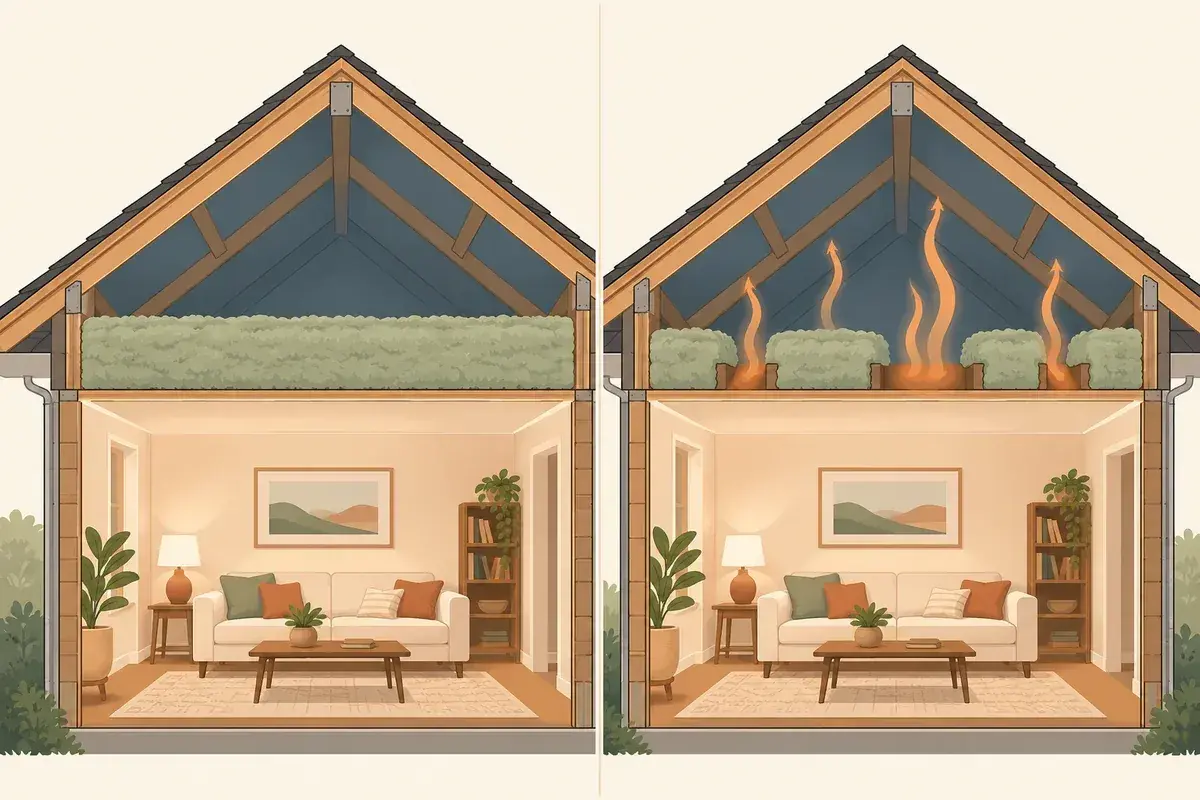
Structural factors you don't control day to day
| Feature | Why it matters | |
|---|---|---|
| Insulation and air sealing | Directly affects how much heated or cooled air is lost, independent of thermostat behavior | |
| Window type and condition | Older or single-pane windows lose conditioned air faster than newer, well-sealed windows | |
| HVAC system age and efficiency | An aging system can use significantly more energy to produce the same output as a modern, efficient one | |
| Home size and layout | More conditioned square footage and less efficient layouts generally require more energy to heat and cool | |
| Local climate | Heating and cooling demand varies enormously by region and season, independent of anything a household does |
Our home energy audit guide covers how to identify which of these structural factors matter most for a specific home, since the Department of Energy notes that the biggest air leaks are often not where people intuitively look, such as around utility penetrations and recessed lighting rather than obviously drafty windows and doors.
Behavioral factors you do control
- Thermostat settings, including how far a home is heated or cooled relative to outdoor temperature, and whether settings are adjusted when no one is home.
- Lighting choices, where our guide to lumens and color temperature covers how LED efficiency compares with older bulb types.
- Appliance usage patterns, such as running a dishwasher or washing machine with a full load versus partial loads.
- How well an existing HVAC filter is maintained, covered in our HVAC filter maintenance guide, since a clogged filter forces the system to use more energy for the same result.
Why bills swing seasonally even with no behavior change
Many households notice their utility bill rise sharply in the coldest or hottest months even without any change in habits, and this is expected rather than a sign something is wrong. Heating and cooling typically represent the largest share of a home's energy use, so a swing in outdoor temperature has an outsized effect on the bill compared with more stable loads like lighting or refrigeration, which run at a relatively constant rate year-round.
Rate structures add another layer
Beyond usage itself, how your utility prices that usage affects the bill independent of any behavior change. Some utilities use tiered pricing, where the rate per unit increases once usage crosses a threshold, while others use flat per-unit pricing or time-of-use rates that charge more during peak demand hours. Check your utility's rate structure, often explained on their website or on the bill itself, since a tiered structure means that even a modest increase in usage near a threshold can produce a larger bill increase than the usage increase alone would suggest.
Reading your own bill critically
- Compare the same month year over year, rather than comparing to the previous month, since this controls for seasonal weather patterns and shows whether usage is genuinely trending up or down.
- Check whether your utility offers a usage history or comparison tool, which many now provide online, showing your consumption trend over the past 12 to 24 months.
- Separate the fixed charges on your bill, such as a base connection fee, from the usage-based charges, since only the usage-based portion responds to behavior changes.
- If a bill spikes unexpectedly with no obvious explanation, consider whether a specific appliance may be malfunctioning, since a failing appliance can silently draw significantly more energy than normal. A refrigerator with a failing door seal, for example, can run its compressor far more than a properly sealed unit while showing no obvious external sign that anything is wrong.
Putting it together
Our utility cost calculator lets you combine electricity, gas and water into one monthly and yearly estimate using your own rates and usage figures, which is a more useful exercise than comparing your bill to a national average, since so much of what drives the total is specific to your home's structure and your region's climate rather than a universal number.
Your takeaway: before assuming a high bill reflects wasteful habits, check whether it lines up with a seasonal weather swing or a structural factor specific to your home, and use a same-month year-over-year comparison rather than a month-to-month one to judge whether your actual usage pattern has changed.
Frequently asked questions
Why did my bill go up even though I didn't change anything?
Seasonal temperature swings are the most common explanation, since heating and cooling typically represent the largest share of home energy use and respond directly to outdoor temperature regardless of household behavior.
Is comparing my bill to a national average useful?
Not very. Utility costs are driven heavily by home-specific factors like insulation, HVAC age and regional climate, so a same-home, same-month year-over-year comparison is generally more informative than a comparison to an average home elsewhere.
Sources
- Do-It-Yourself Home Energy Assessments, U.S. Department of Energy. Checked September 24, 2026
Share this article
Get new guides by email
Practical home articles and free resources. No spam, and you can unsubscribe at any time.
Keep reading
Luxury Water-Saving Shower Heads: Aesthetic Designs That Make Every Shower Feel Better
Explore luxury water-saving shower heads in brushed brass, matte black, chrome and rainfall styles. Learn how to compare flow rates, WaterSense labels and design features.
November 2026, 9 min read

Best Thermal Curtains for Drafty Windows: Stylish Options That Help Keep Rooms Comfortable
Find stylish thermal curtains for drafty windows. Compare blackout, linen-look, velvet, patterned and add-on lining options, plus measuring and hanging tips.
November 2026, 10 min read

9 Ways to Hide a Thermostat on a Gallery Wall Without Ruining the Design
Make a thermostat blend into your gallery wall with nine stylish ideas, plus practical tips to preserve airflow, sensor accuracy and easy access.
November 2026, 9 min read