Aesthetic Laundry Room Makeover on a $200 Budget
A $200 laundry room makeover works best as a cosmetic refresh of a room whose appliances, plumbing, wiring, and ventilation already function properly..
By Home Crane Editors. . 4 min read.
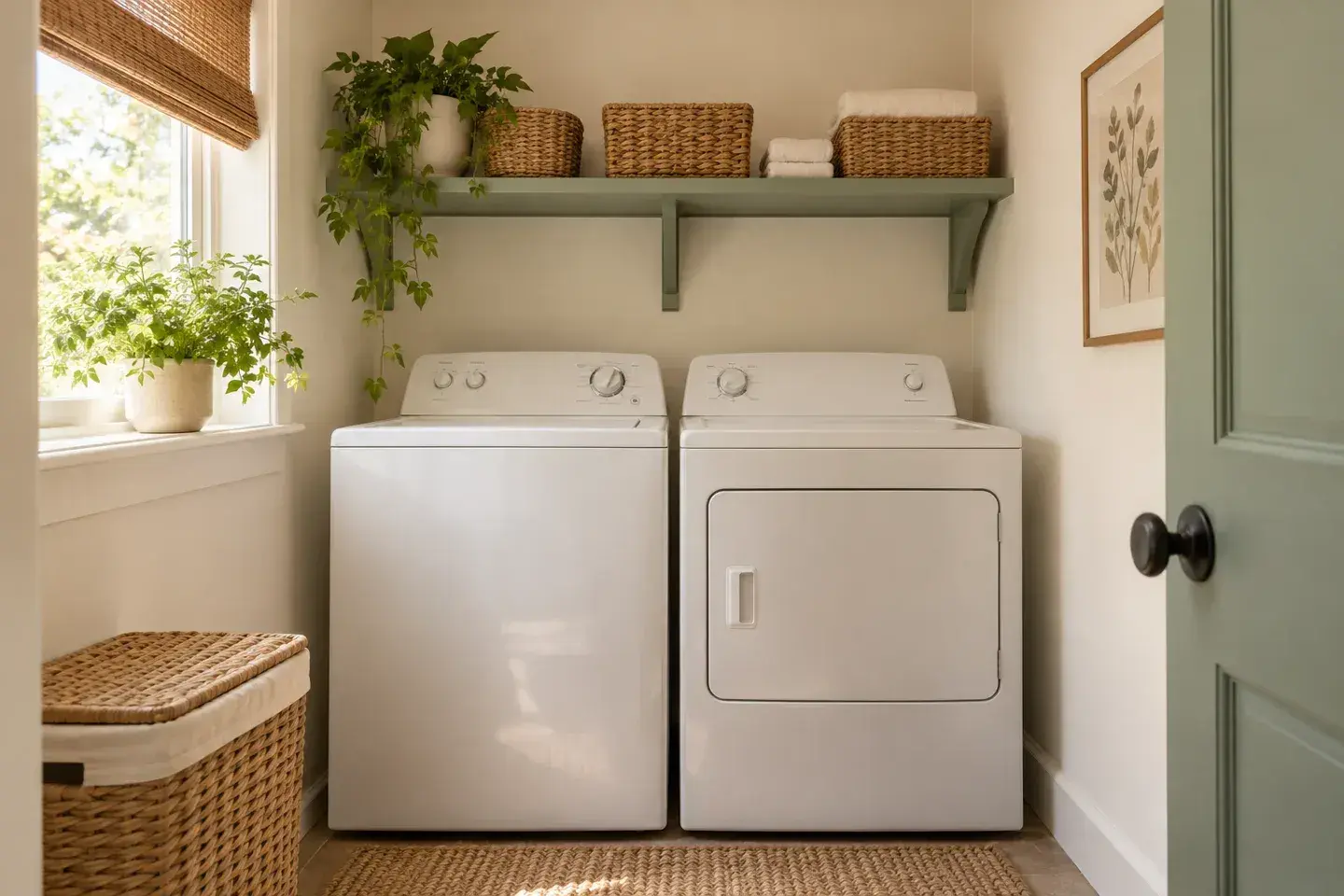
A $200 laundry room makeover works best as a cosmetic refresh of a room whose appliances, plumbing, wiring, and ventilation already function properly. Keep the machines and layout, improve the wall color, organize supplies, and add one useful storage feature.
The budget below is an original spending plan in US dollars, not a retailer quote or a record of purchases. It assumes DIY labor, existing usable appliances, borrowed basic tools, and no repair work. Check local prices and tax before buying. If a safety or maintenance problem appears, spend the money on that first and postpone decoration.
1. Empty, clean, and identify the real problem
Remove loose items and sort them into everyday supplies, occasional supplies, and items that belong elsewhere. Clean shelves and reachable surfaces. A room can feel much larger when duplicate bottles, empty packaging, and unrelated storage leave it.
Keep detergent and other chemicals in their original labeled containers, secured as appropriate for your household. Attractive unmarked drink-style dispensers are a poor trade for losing product identification and instructions.
Check that storage will not block the dryer vent, appliance controls, water shutoffs, or service access. AHAM's dryer guidance emphasizes proper venting and maintenance. Do not move a gas appliance or alter its connection as part of a decorating shortcut.
2. Refresh one paintable surface
Use paint where it will have the greatest visual effect: often the wall behind the machines or a small existing cabinet. Keep the palette simple, such as warm white with sage accents, so inexpensive baskets and existing appliances look coordinated.
Calculate coverage before purchasing. A small wall may need less paint than the whole room, but repairs, a dark existing color, and the required coats can change the quantity. Buy a suitable product for the actual surface instead of assuming leftover wall paint is appropriate for cabinet doors.
Clean and prepare correctly, protect the appliances, and maintain ventilation while the coating dries. Avoid painting appliance panels, flexible connections, labels, or vents. A fresh background can provide most of the visual change without turning the machines themselves into a refinishing experiment.
3. Add one useful shelf or improve the existing one
Choose a storage improvement that solves a daily annoyance. A sound existing shelf may only need cleaning, a suitable finish, and better baskets. If adding a shelf, select documented hardware and a mounting method appropriate for the wall and intended load.
Detergent containers can be heavy. Do not install a decorative shelf with unknown capacity and then fill it with large liquid bottles. Keep frequently used heavy supplies at a comfortable height and out of reach where household safety requires it.
Measure door swing and lid clearance, especially above a top-loading washer. Leave the appliance manufacturer's required clearances and service access. A shelf that prevents the washer lid from opening fully is not a successful space-saving feature.
4. Group supplies and add a small finishing detail
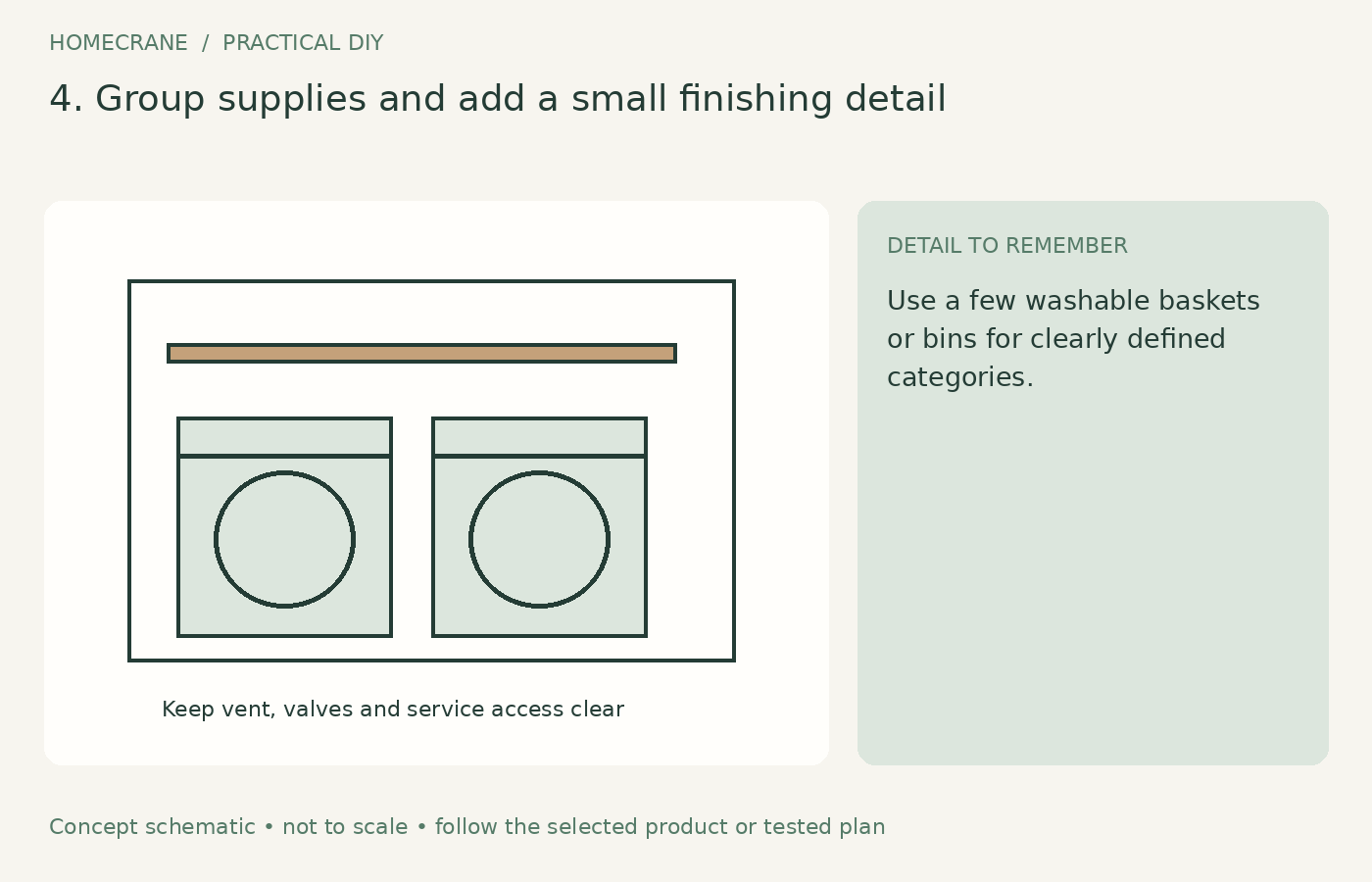
Use a few washable baskets or bins for clearly defined categories. One can hold stain-treatment supplies, another clean cloths, and another small laundry accessories. Leave enough space to lift the bins out without scraping the wall or knocking bottles over.
Choose a washable, suitable floor mat only if it lies flat and does not obstruct movement. A framed print or a reused container for clothespins can finish the room without consuming much of the budget. Keep combustible clutter away from the dryer and other heat sources, consistent with the dryer safety guidance hosted by the Department of Energy.
Resist buying accessories before the room is organized. The empty space left after decluttering may be more useful than another decorative item.
A complete $200 allocation
| Feature | Planned allowance | |
|---|---|---|
| Paint and small repairs | $45 | |
| Shelf or shelf improvement materials | $45 | |
| Correct mounting hardware | $15 | |
| Baskets and labels | $25 | |
| Washable mat or reused decorative detail | $20 | |
| Brushes, tape, and protection | $20 | |
| Tax, price changes, and contingency | $30 | |
| Total spending ceiling | $200 |
These amounts are allowances, not current advertised prices. If the shelf and mounting hardware cost more than $60 together, reduce decorative spending or reuse the existing shelf. Do not cut the correct fasteners or preparation materials to protect the look of the budget.
Keep a running total that includes delivery and tax. A series of small purchases can exceed the limit even when none feels expensive. Buy the essentials first, then decide whether the remaining allowance supports a mat or artwork.
What this budget does not include
New appliances, plumbing relocation, electrical changes, flooring replacement, major wall repairs, and professional installation are outside this plan. It also assumes you have access to basic measuring and painting tools. Tool purchases can make an otherwise inexpensive project exceed $200 quickly.
If the room has a leak, a damaged vent, an overheating appliance, or an unsafe electrical connection, treat that as a separate maintenance project. The most valuable makeover may be a clean, functional room with fewer accessories until repairs are complete.
Questions homeowners ask
Can renters follow this plan?
Yes, with the landlord's permission for paint or wall mounting. Freestanding bins, cleaning, and organization are easier to reverse, but still need to preserve appliance access and ventilation.
What should I skip first if prices are higher?
Skip new decor and reuse containers you already own. Keep preparation, correct mounting, and the contingency. Those are more useful than forcing the room to match an inspiration photograph exactly.
Sources
- AHAM's dryer guidance. Checked October 11, 2026
- U.S. Department of Energy: Dryer safety guidance. Checked October 11, 2026
Share this article
Get new guides by email
Practical home articles and free resources. No spam, and you can unsubscribe at any time.
Keep reading
15 Icy Blue Bedroom Paint Ideas for 2026
Explore 15 icy blue bedroom paint ideas, from accent walls to blue ceilings, with warm pairings and practical sampling tips for 2026.
October 2026, 6 min read
Neo Deco Living Room Ideas: How to Get the Look on a Budget
Create a budget Neo Deco living room with curves, geometric patterns, metallic accents, jewel tones, and balanced furniture styling.
October 2026, 3 min read
15 Smart Small Laundry Room Stackable Washer Dryer Ideas
Explore 15 smart small laundry room stackable washer dryer ideas. Compare illustrated concepts, practical layout tips, and planning checks.
October 2026, 6 min read