Average Exterior House Painting Cost in Illinois (2026)
Plan an Illinois exterior painting budget for 2026, with Chicago cost context, wall-area calculations, preparation, repairs, and coating specifications.
By Home Crane Editors. . 4 min read.
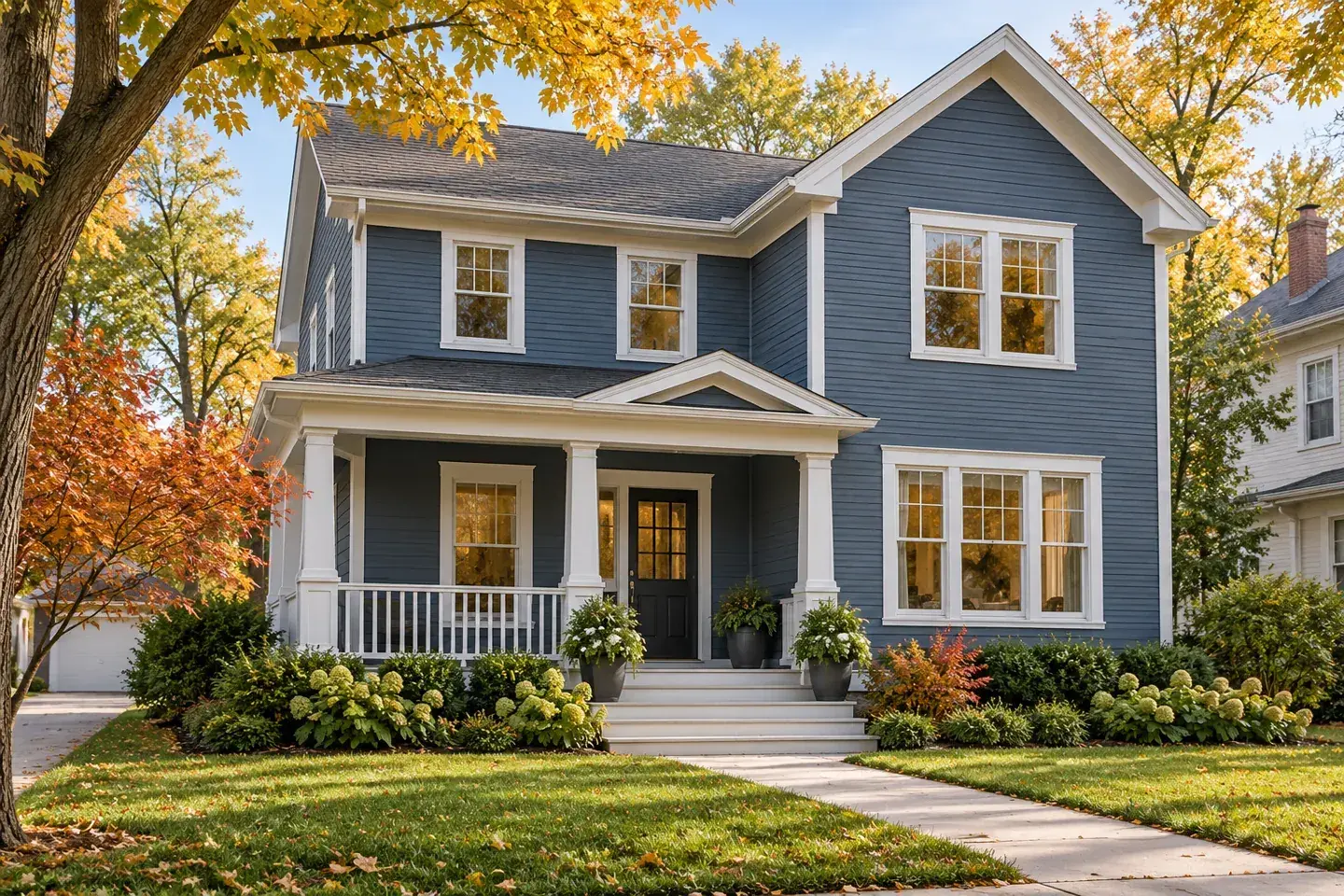
An Illinois exterior repaint can range from a few thousand dollars to substantially more when the house is tall, detailed, or needs extensive preparation. A single statewide average hides those differences. For an early reference, Angi's Chicago cost page reports $2,773, with a $1,442–$4,215 range. Although labeled for 2026, it shows a November 13, 2025 update date.
Treat that as a Chicago cost-guide benchmark, not a current quotation for every Illinois home. Measure the actual exterior, inspect its condition, and ask painters to price the same preparation and coating system.
1. Use a price range with a defined scope
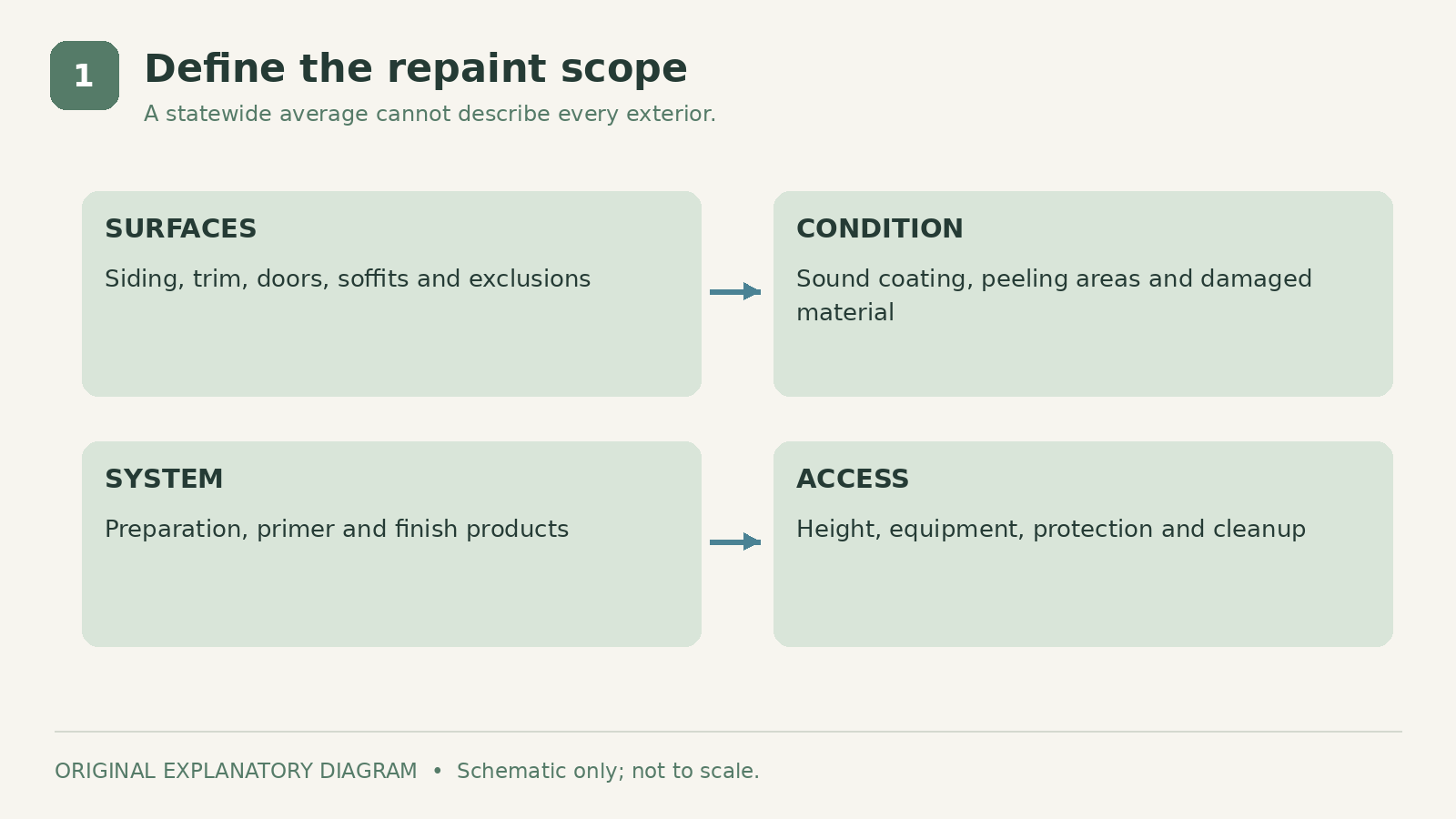
An attractive low price may cover a modest, accessible repaint with sound existing coatings. It may say little about peeling layers, decorative trim, difficult access, or carpentry repairs. Before comparing numbers, write down what needs painting and what will remain untouched.
Include siding, trim, fascia, soffits, shutters, doors, porch components, and detached structures only when they belong to the project. A proposal stating “exterior” can be ambiguous about several of those items.
Ask whether washing, spot preparation, primer, caulking, finish coats, protection, and cleanup are included. Specify the intended color changes, since coverage and product requirements can affect the work. Do not assume that “two coats” answers every preparation question.
Local labor and travel affect the total, but a city name alone cannot establish the price. A straightforward house outside Chicago can still require expensive access or substantial repairs. Conversely, a small sound exterior may be a simpler job than a larger home elsewhere.
Use published averages as a reasonableness check after matching scope, not as a ceiling that every painter must meet. The more condition-related uncertainty you remove, the more useful the comparison becomes.
2. Measure paintable surfaces, not living space
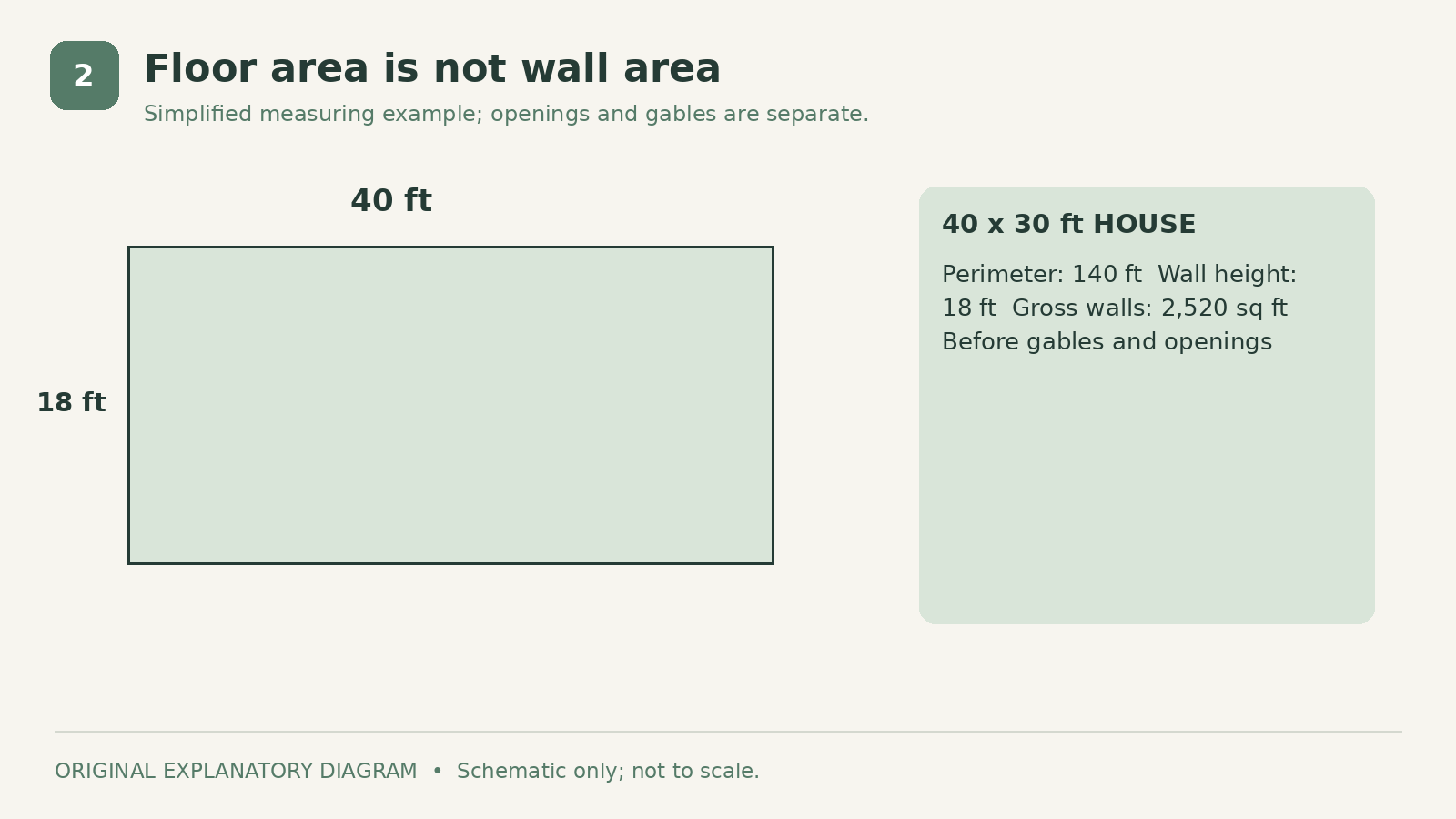
House floor area and exterior wall area are different quantities. A two-story home can have more difficult access without having twice the paintable surface of a one-story home. Roof shape, gables, windows, and attached structures change the calculation.
For a simplified example, a rectangular house measuring 40 by 30 feet has a perimeter of 140 feet. If its rectangular walls are 18 feet high, that gives 2,520 square feet of gross wall area before gables and openings. The calculation is 2 × (40 + 30) × 18.
That example is a measuring aid, not a final billable quantity. Contractors may measure trim separately, account for windows differently, or quote a complete job. Ask which approach is being used.
Walk the house with the estimator and make a surface schedule. Distinguish wood siding from masonry, metal, vinyl, and previously coated trim. Each may need a different preparation and coating approach.
Have the painter record areas excluded from the price. A garage door, porch ceiling, or rear elevation is easy to overlook when most of the discussion takes place at the front of the house. Photographs can help establish the agreed scope.
3. Budget for preparation and substrate repairs
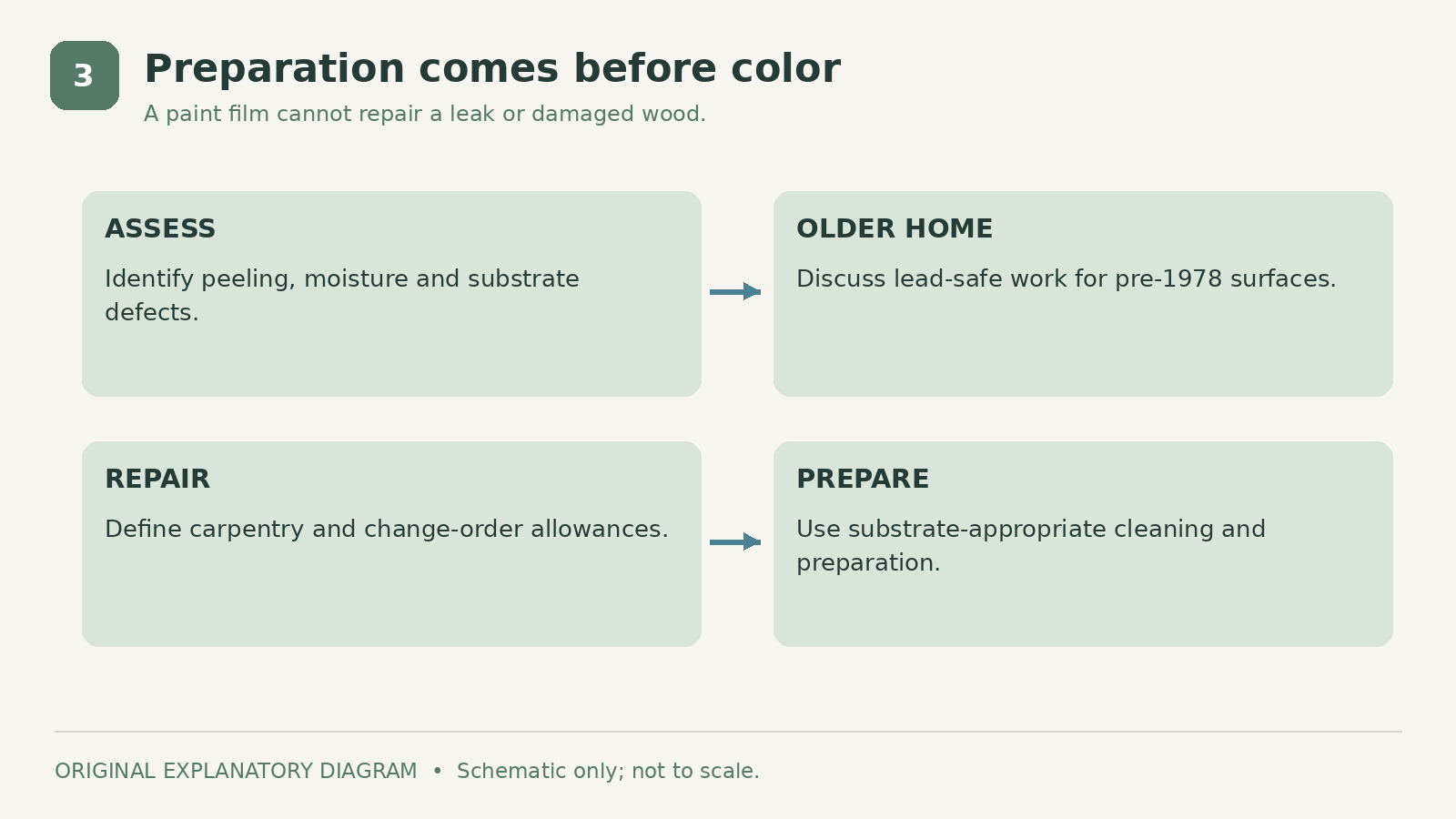
The new finish depends on the condition beneath it. Peeling paint, damaged wood, moisture problems, and failed joints should be identified before color selection becomes the main conversation. Ask what will be repaired and what will simply be prepared for coating.
For a house built before 1978, discuss lead before old painted surfaces are disturbed. EPA's renovation guidance for consumers recommends lead-safe certified contractors and explains that renovation can create hazardous dust. Lead-related assessment and work practices can change the project scope and price.
Ask for a carpentry allowance or unit-price schedule if concealed deterioration is possible. The proposal should state when the painter will stop, document the condition, and request approval for additional work. A thin allowance does not make the underlying problem less expensive.
Avoid demanding pressure washing as a universal preparation method. The substrate and existing condition determine what is appropriate. The contractor should explain how the chosen method will clean the surface without causing damage or trapping moisture.
Separate cosmetic expectations from repairs. A new paint film will not make warped boards straight or resolve a leak. Agree on a small test area if texture or patch visibility is a concern.
4. Build an illustrated painting budget
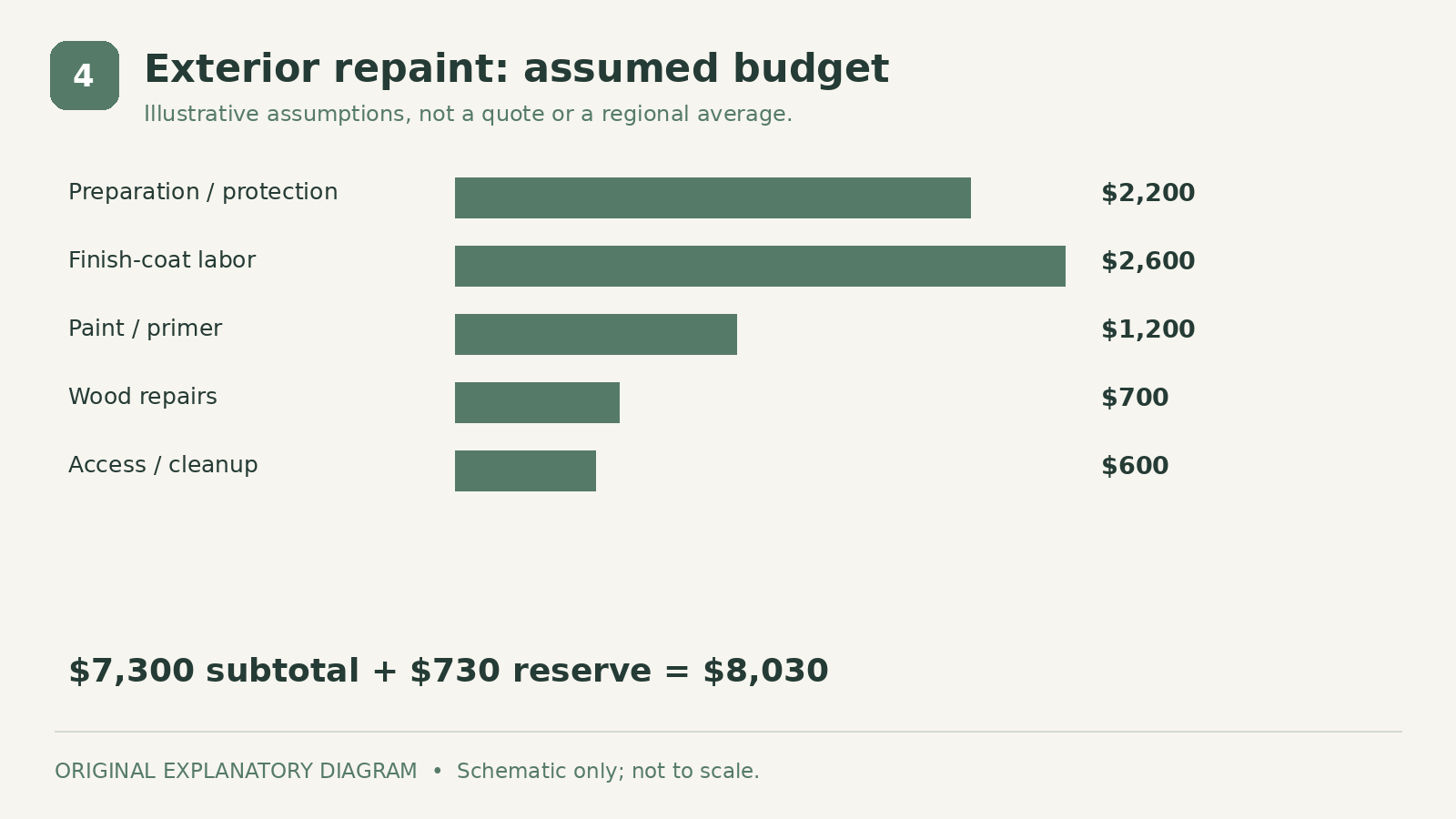
Here is an original hypothetical budget for a two-story Illinois home with accessible siding and some localized repairs. It is not derived by multiplying the Chicago average and is not a market survey.
| Feature | Amount | |
|---|---|---|
| Preparation labor and protection | $2,200 | |
| Finish-coat labor | $2,600 | |
| Paint, primer, and sundries | $1,200 | |
| Localized wood-repair allowance | $700 | |
| Access equipment and cleanup | $600 | |
| Subtotal | $7,300 | |
| 10% contingency | $730 | |
| Planning total | $8,030 |
The assumed allowances include applicable charges within each line. Lead abatement, major moisture remediation, extensive carpentry, and detached buildings are excluded. Any required lead-safe renovation measures must be assessed and specifically added; this is not a lead-work quotation.
The total is $7,300 + $730 = $8,030. A house with less preparation could cost less, while a difficult or deteriorated exterior could cost considerably more. The example is above the cited Chicago range because its assumed scope includes substantial preparation, access, and repairs.
Do not use the contingency to pay for upgrades you already know you want. Add those to the base specification so the reserve remains available for actual uncertainty.
5. Compare coating specifications and weather plans
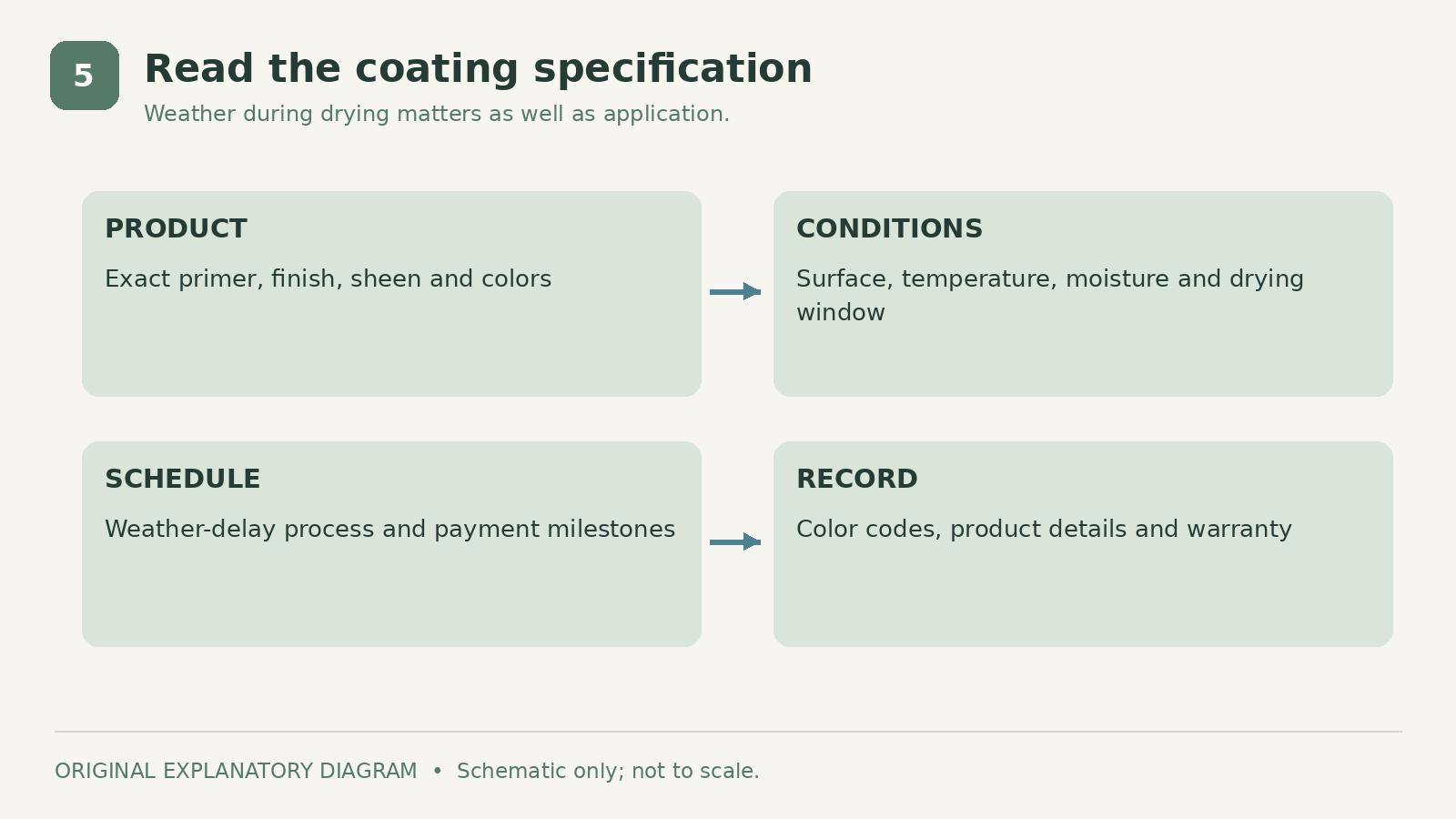
Request the exact primer and finish products, sheen, color, intended coat system, and substrate-specific requirements. Brand alone is insufficient when the manufacturer sells several coating lines for different purposes.
Illinois weather makes application conditions important. Sherwin-Williams' exterior application guidance discusses temperature, dew, and curing. The selected product's current data sheet should govern the job. A warm afternoon does not automatically provide a suitable overnight drying period.
Ask who decides when work stops for rain or unsuitable conditions and whether weather delays alter payment milestones. Schedule flexibility can be more valuable than an unrealistic promise to paint on fixed dates regardless of conditions.
At completion, review the exterior from normal viewing positions and check the agreed details. Keep the color codes, product labels, warranty, and any leftover material stored as directed for future touch-ups.
Collect several itemized proposals after the same site walk and surface schedule. The most useful Illinois painting price is a documented total for your home, with preparation, repairs, finish requirements, and exclusions visible before you sign.
Sources
- Angi's Chicago cost page. Checked October 6, 2026
- EPA's renovation guidance for consumers. Checked October 6, 2026
- Sherwin-Williams' exterior application guidance. Checked October 6, 2026
Share this article
Get new guides by email
Practical home articles and free resources. No spam, and you can unsubscribe at any time.
Keep reading
HVAC Replacement Cost in Texas: Hidden Fees to Check
Compare Texas HVAC replacement costs and hidden-fee risks, with equipment scope, duct assessment, installation allowances, and current incentive cautions.
October 2026, 4 min read
How Much Does a Lanai Screen Enclosure Cost in Florida?
Compare Florida lanai screen enclosure scopes, screen-area versus footprint pricing, frame and mesh choices, and a transparent sample budget.
October 2026, 4 min read
Stucco Repair Cost in Arizona: What Homeowners Should Know
Understand Arizona stucco repair pricing, surface damage versus concealed moisture, access, finish matching, and an illustrated repair budget.
October 2026, 5 min read