HVAC Replacement Cost in Texas: Hidden Fees to Check
Compare Texas HVAC replacement costs and hidden-fee risks, with equipment scope, duct assessment, installation allowances, and current incentive cautions.
By Home Crane Editors. . 4 min read.
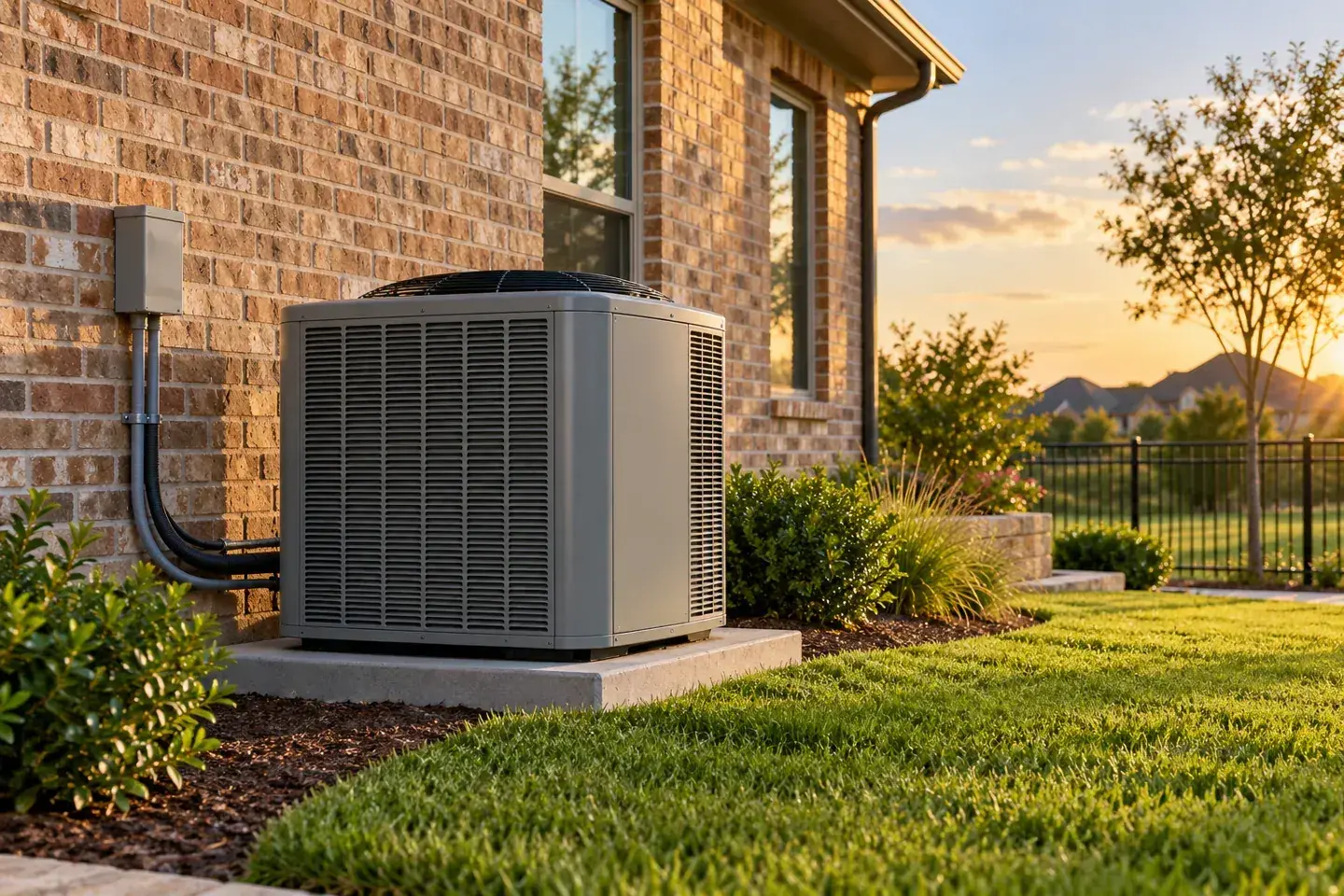
For a Texas HVAC replacement, a useful early planning range is several thousand dollars for a straightforward cooling-system change and potentially well above $15,000 for a full or more complex system. The equipment type, house needs, ducts, electrical work, and installation scope determine the real total. A low advertised payment is not the project price.
Lightfoot's 2026 Texas guide lists approximately $5,500–$11,000 for central AC-only replacement and $8,000–$16,500 for a full split system with a gas furnace. Those are contractor-published ranges, not a verified statewide average. Obtain a written, site-specific proposal before setting your final budget.
1. Identify what the replacement includes
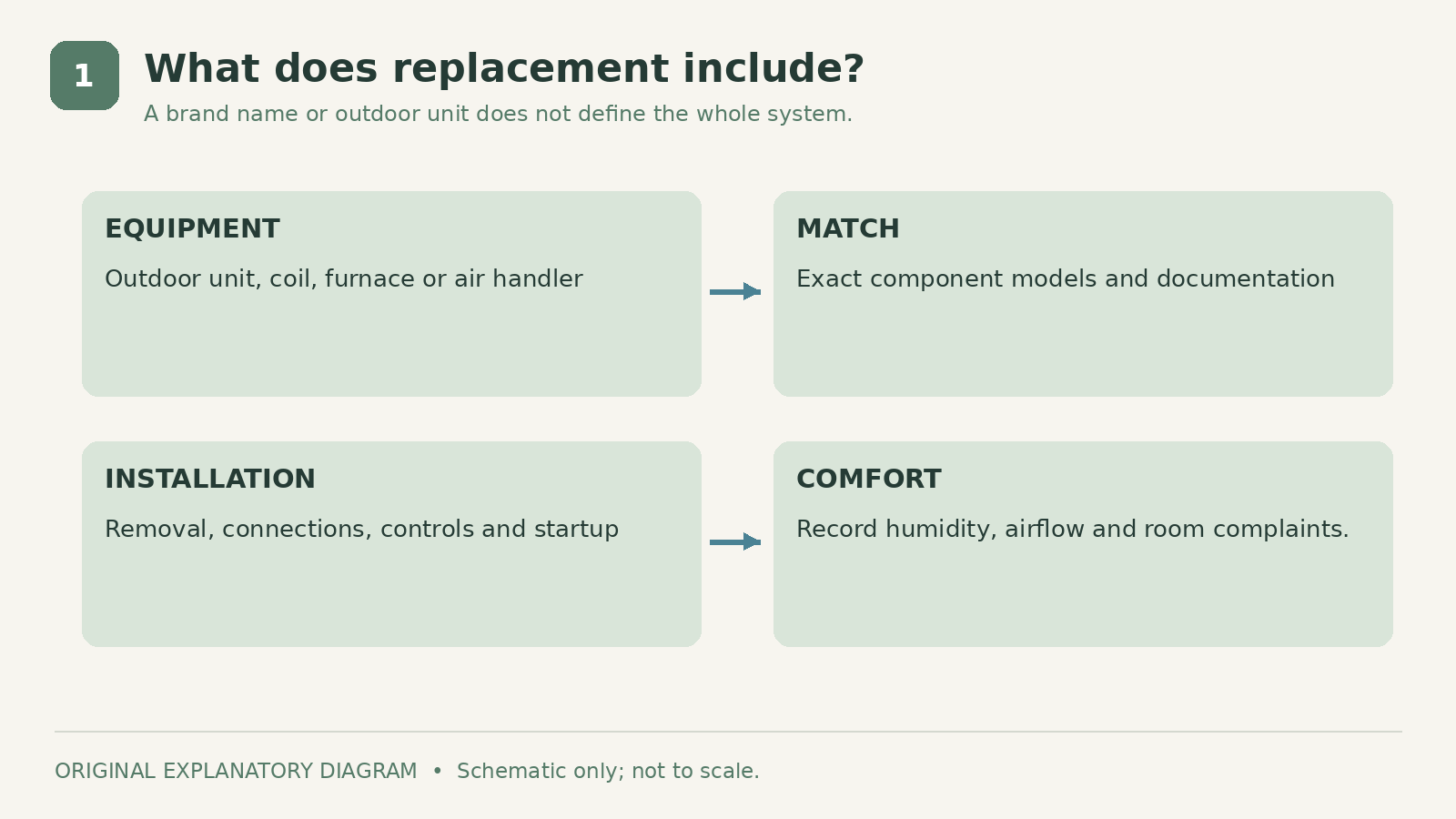
“New AC” may refer to an outdoor unit, an outdoor unit with a coil, or a complete matched system. Ask for the exact scope before comparing a price. Record whether the furnace or air handler, thermostat, drain work, line set, electrical components, removal, and commissioning are included.
A heat pump and an AC-plus-furnace system are different configurations. Choose between them through an assessment of the house, available utilities, comfort needs, and operating costs. Do not assume the system already installed is the only possible option or that every alternative needs the same modifications.
Request model numbers for all major components. The combination matters, and a brand name alone does not establish capacity or efficiency. Ask the contractor to provide the applicable matched-system documentation with the proposal.
Write down the present problems. Uneven temperatures, humidity, noise, and weak airflow should be part of the assessment, not assumed to disappear with a new outdoor unit.
An inexpensive replacement that leaves an identified distribution problem unresolved may disappoint even when the equipment functions correctly. Make comfort complaints visible before the scope and price are finalized.
2. Ask for load calculations and duct findings
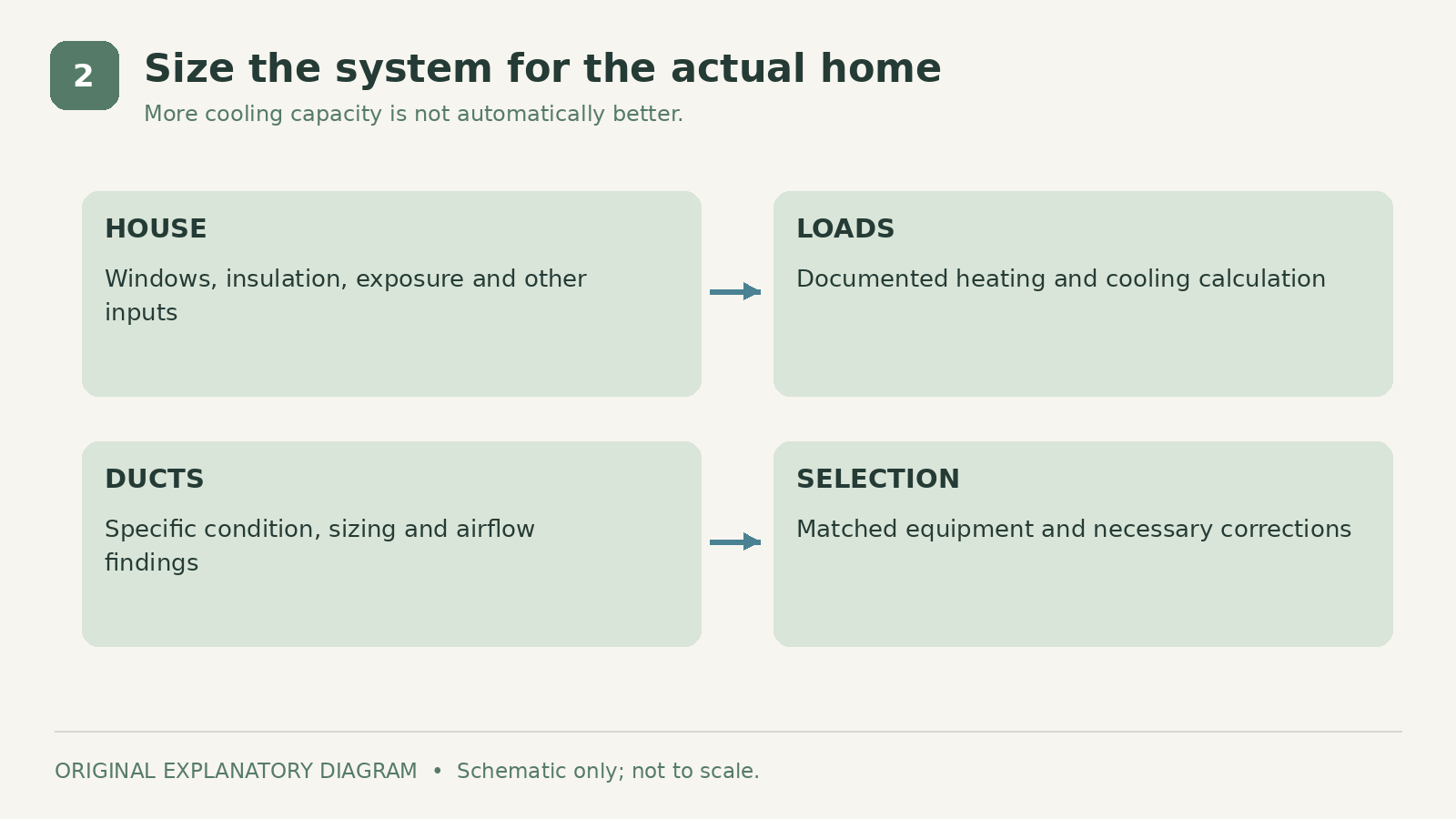
Brutal summer heat is not a reason to choose the largest unit that will fit. The Department of Energy's sizing guidance calls for heating and cooling load calculations based on the building. Oversizing can increase costs and cause frequent cycling.
Ask what information went into the calculation: building size, insulation, windows, exposure, air leakage assumptions, and the intended indoor conditions. Recent upgrades may change the load. Repeating the old tonnage without assessing the home is not the same process.
Duct findings should be specific. ENERGY STAR's installation guidance highlights airflow, refrigerant charge, sizing, and duct evaluation. Ask whether the proposal includes measurements and what corrective work is necessary to meet the selected equipment's requirements.
If complete duct replacement is recommended, ask for the reasons and alternatives. Damaged, undersized, disconnected, or leaking sections are different problems. A written finding helps you distinguish necessary repair from an unexplained upgrade.
Do not perform refrigerant, gas, or electrical work yourself to reduce the bill. This comparison is about choosing a documented professional scope, not attempting installation from a checklist.
3. Separate necessary work from optional upgrades
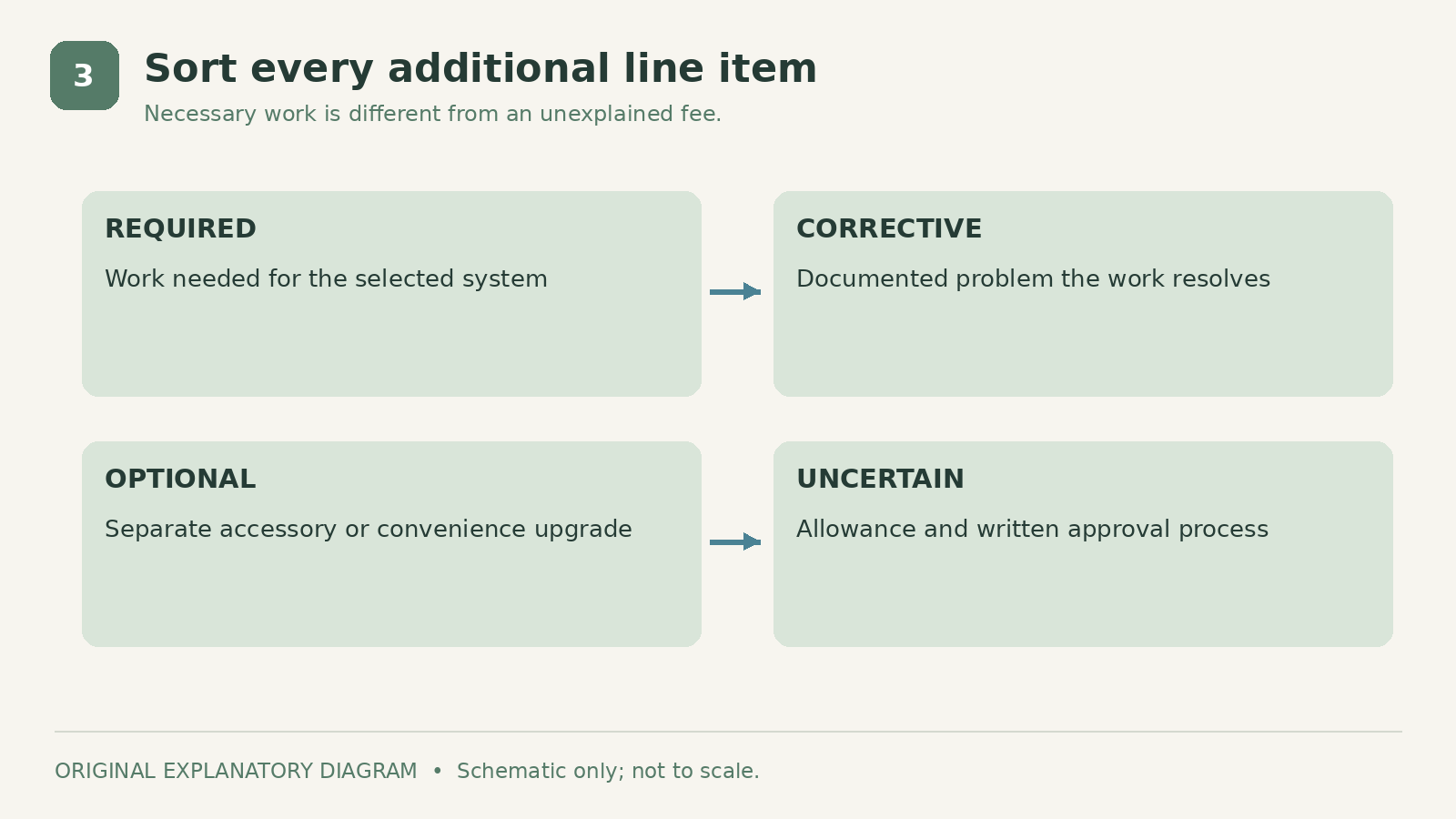
Potential extras include permit charges, duct modifications, line-set work, condensate management, electrical changes, equipment supports, difficult attic access, and disposal. None is automatically an unfair fee. The concern is whether the work was assessed, explained, and included before you committed.
Ask each bidder to classify every addition as required for the selected system, recommended to correct an observed problem, or optional for convenience. That simple distinction makes proposals easier to compare.
A premium thermostat, air-cleaning accessory, or service agreement should have its own price and purpose. Avoid accepting a bundle simply because it is presented beside urgent replacement work. Ask what happens if you decline the optional item.
Confirm whether sales tax or other applicable charges are included and whether the price changes for card payment or financing. Compare the cash total, financed amount, interest rate, term, and total scheduled payments. A low monthly payment can conceal a much larger overall commitment.
If the assessment cannot resolve a possible extra before installation, request an allowance and written approval process. A clear allowance is preferable to a vague statement that unspecified “code upgrades” will be added later.
4. Compare a complete example budget
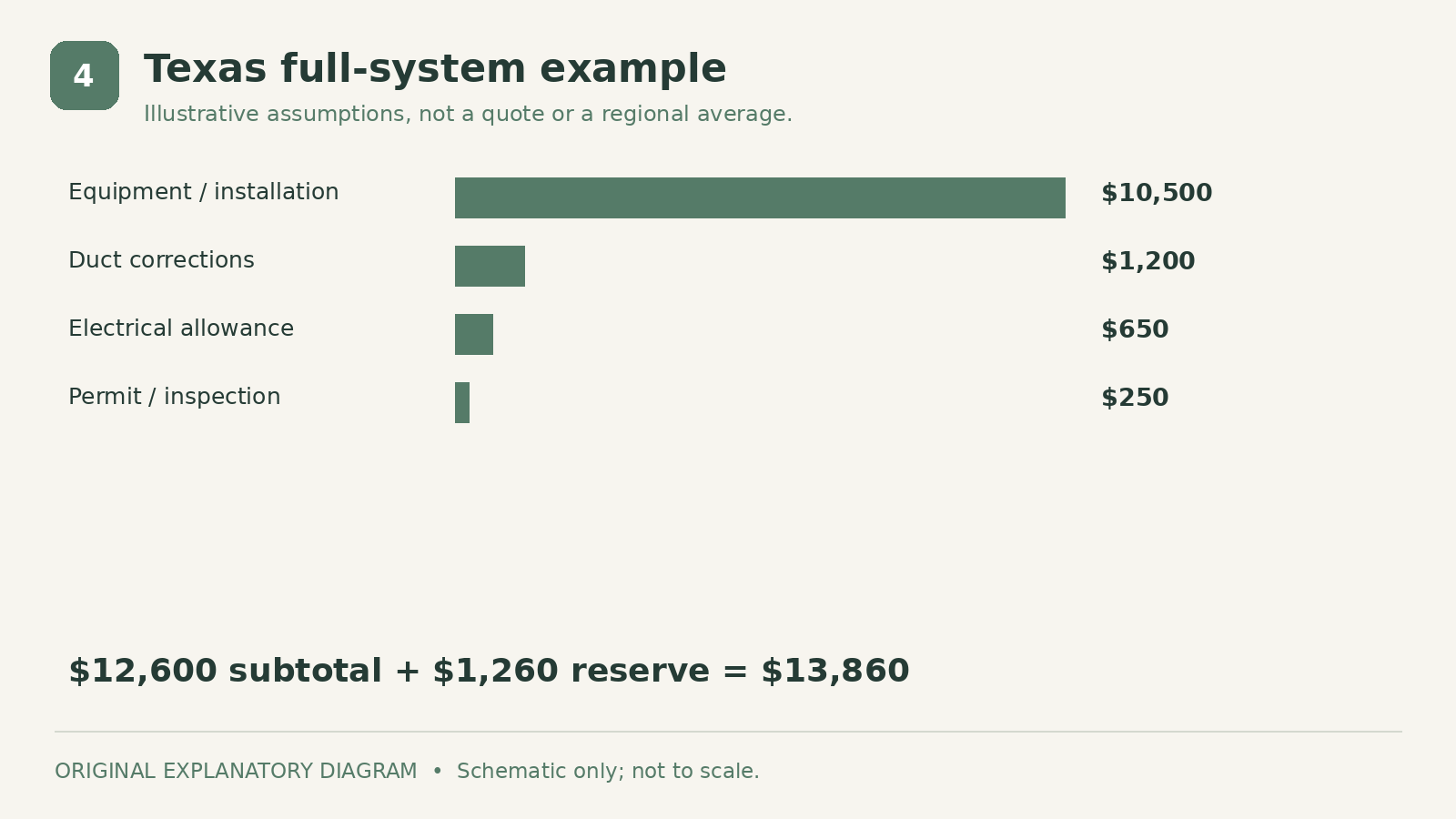
The following is a hypothetical Texas full-system project. It is not an actual quote. It assumes that most existing ducts remain, with limited documented corrections and an electrical allowance.
| Feature | Amount | |
|---|---|---|
| Matched equipment and standard installation | $10,500 | |
| Duct corrections | $1,200 | |
| Electrical allowance | $650 | |
| Permit and inspection allowance | $250 | |
| Subtotal | $12,600 | |
| 10% reserve | $1,260 | |
| Planning total | $13,860 |
The standard installation line assumes ordinary removal, startup, labor, materials, and applicable charges. The permit figure is an invented planning allowance, not a Texas fee schedule. Major duct replacement, panel replacement, structural work, and hazardous-material remediation are excluded.
The reserve calculation is $12,600 × 10% = $1,260. Do not add an allowance again if the actual contract already includes that scope. Replace allowances with firm prices where the assessment makes that possible.
Now imagine another bid at $11,800 that excludes the same $1,200 duct work, $650 electrical work, and $250 approvals. Its comparable subtotal would be $13,900 before reserve. It is not cheaper than the $12,600 scoped subtotal merely because its advertised number is lower.
5. Check the contract, incentives, and handover
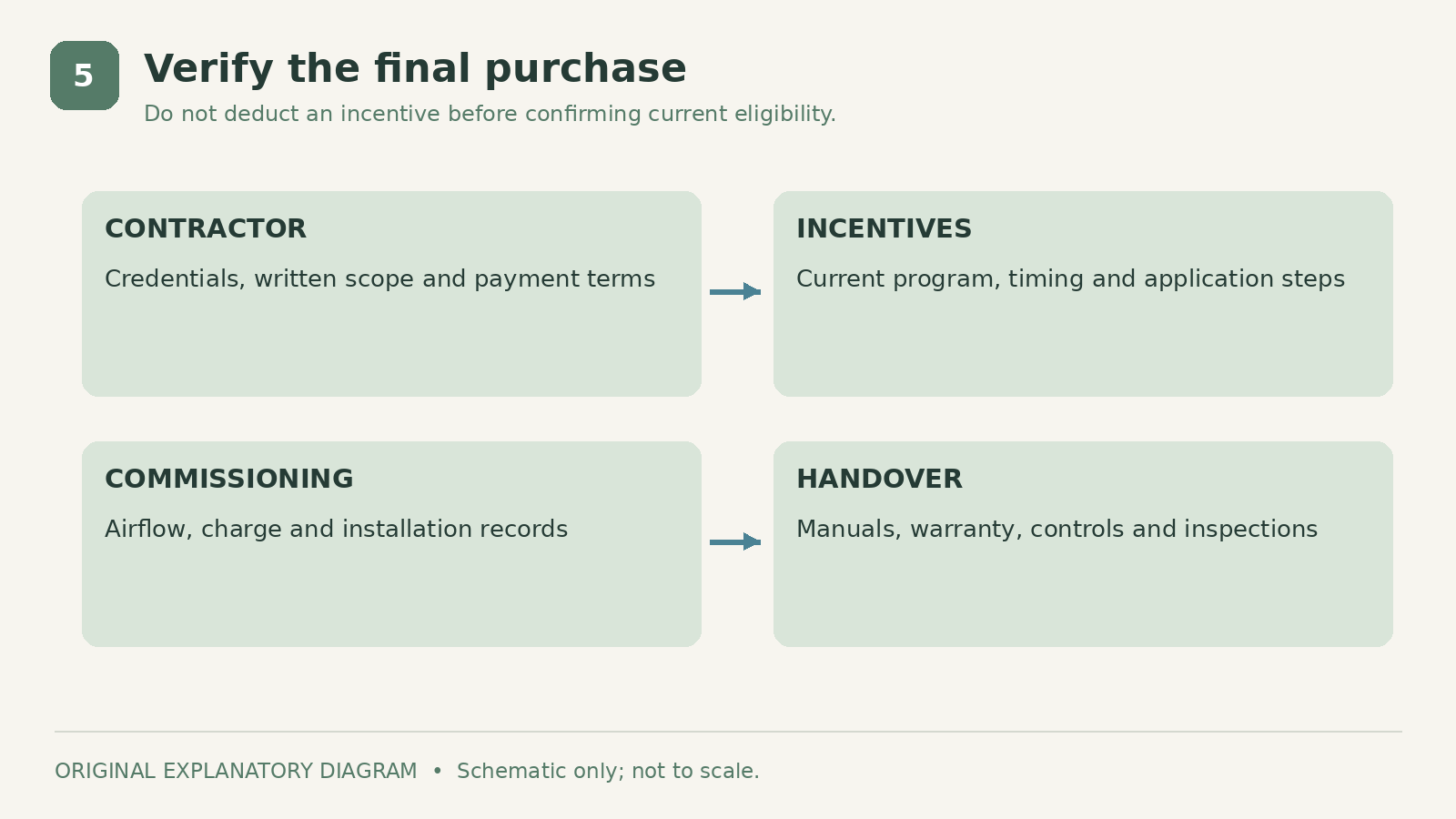
Texas Department of Licensing and Regulation's consumer guidance recommends checking contractor credentials, obtaining written bids, and requesting equipment and installation documentation. Verify the responsible contractor and ask who will supervise the work.
Do not subtract an incentive until current eligibility and availability have been confirmed. In particular, the IRS Energy Efficient Home Improvement Credit page states that the credit applies to improvements through December 31, 2025. An older claim about a federal heat-pump credit should not be carried into a 2026 installation budget. Utility programs have their own conditions and may require steps before installation.
At handover, request the manuals, model and serial numbers, warranty and registration information, commissioning records, and required inspection documentation. Ask the installer to demonstrate the controls and explain filter specifications and routine maintenance.
Read labor coverage separately from the manufacturer's parts warranty. Find out what diagnostic visits, refrigerant, travel, or after-hours service could cost under the written terms.
Choose the proposal that documents the right system and necessary installation work at a clear total. The best defense against hidden fees is a thorough assessment followed by an itemized scope, not a promise that every replacement can be done for one advertised price.
Sources
- Lightfoot's 2026 Texas guide. Checked October 6, 2026
- The Department of Energy's sizing guidance. Checked October 6, 2026
- ENERGY STAR's installation guidance. Checked October 6, 2026
- Texas Department of Licensing and Regulation's consumer guidance. Checked October 6, 2026
- IRS Energy Efficient Home Improvement Credit page. Checked October 6, 2026
Share this article
Get new guides by email
Practical home articles and free resources. No spam, and you can unsubscribe at any time.
Keep reading
How Much Does a Lanai Screen Enclosure Cost in Florida?
Compare Florida lanai screen enclosure scopes, screen-area versus footprint pricing, frame and mesh choices, and a transparent sample budget.
October 2026, 4 min read
Stucco Repair Cost in Arizona: What Homeowners Should Know
Understand Arizona stucco repair pricing, surface damage versus concealed moisture, access, finish matching, and an illustrated repair budget.
October 2026, 5 min read

Average Exterior House Painting Cost in Illinois (2026)
Plan an Illinois exterior painting budget for 2026, with Chicago cost context, wall-area calculations, preparation, repairs, and coating specifications.
October 2026, 4 min read