Stucco Repair Cost in Arizona: What Homeowners Should Know
Understand Arizona stucco repair pricing, surface damage versus concealed moisture, access, finish matching, and an illustrated repair budget.
By Home Crane Editors. . 5 min read.
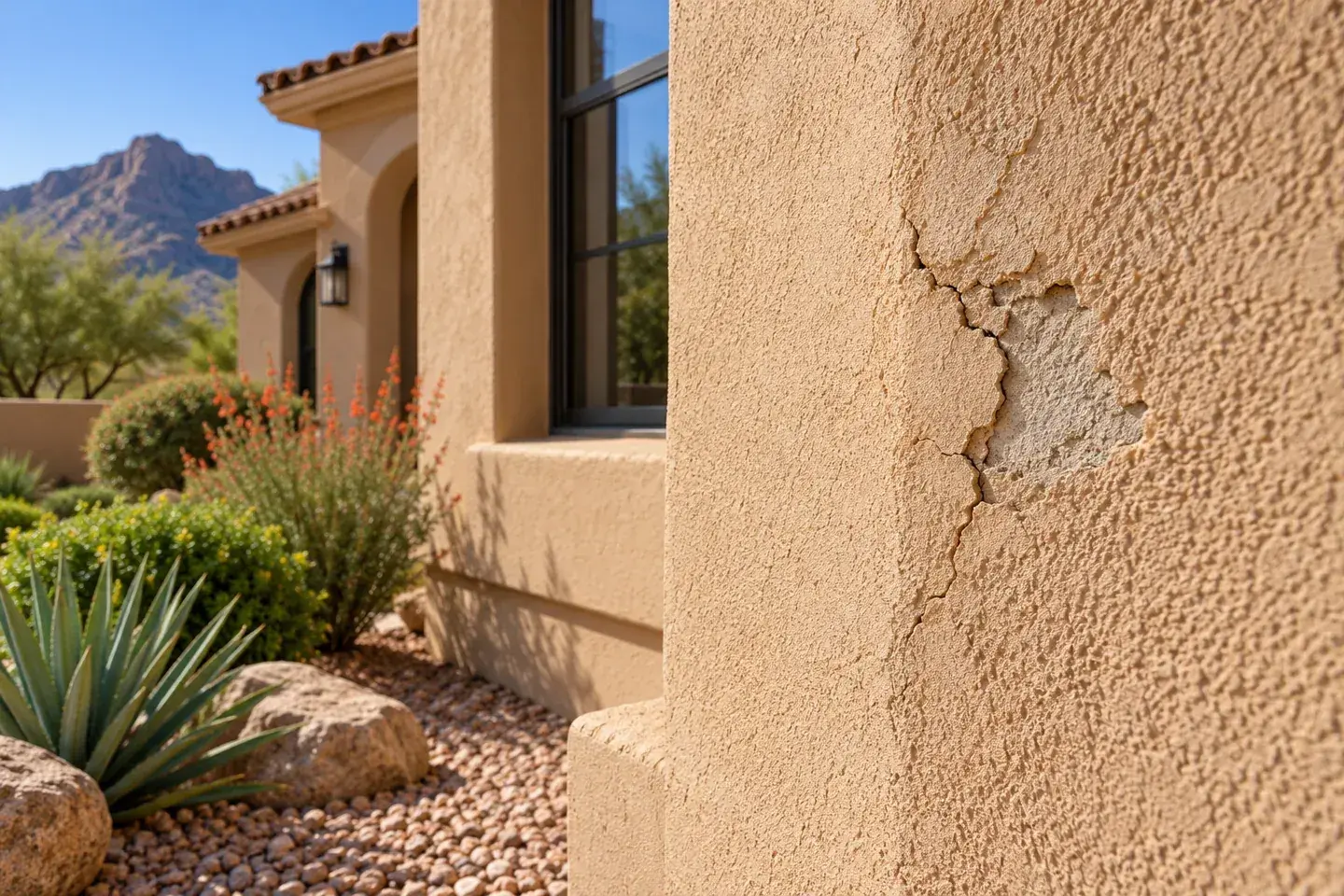
Stucco repair in Arizona can mean a small finish patch or a much larger repair to a wall assembly affected by moisture or movement. As broad context, HomeGuide's repair FAQ publishes $8 to $50 per square foot and $40 to $60 per hour plus materials. Those figures are not a verified Arizona average, even though the FAQ appears on its Phoenix contractor page.
Use them to understand the possible scale of professional work, then obtain a site-specific diagnosis and scope. The size of the visible crack alone is not enough to price the repair. This guide shows how to separate the work and build a transparent example budget.
1. Identify the wall system and repair scope
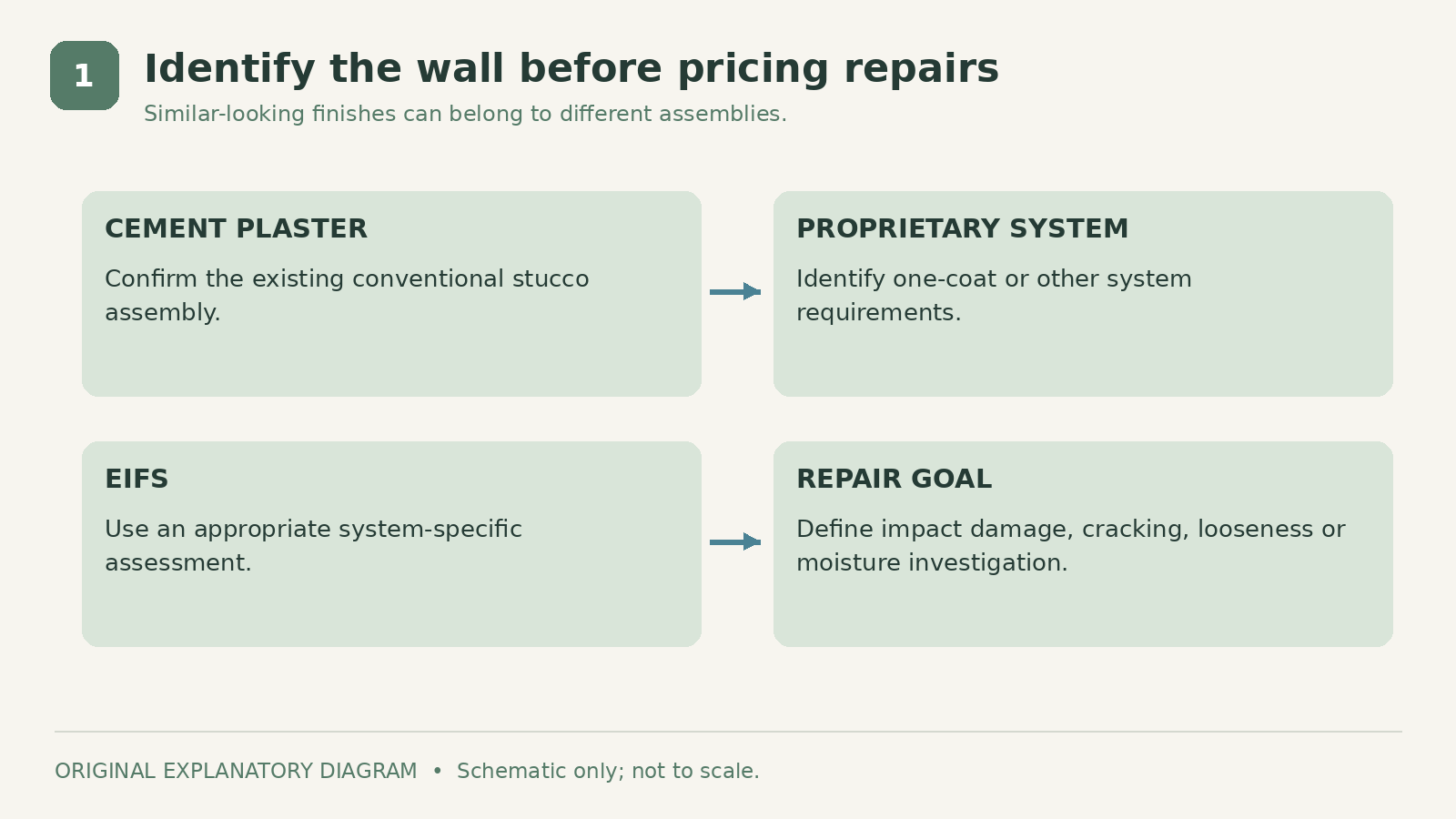
The American Cement Association describes traditional stucco as portland cement plaster, commonly supported by lath on framed walls or applied to suitable masonry. Other exterior systems can look similar from the street while needing different repair materials and details.
Ask the contractor to identify the existing assembly before recommending a repair. Conventional cement plaster, a proprietary one-coat system, and an exterior insulation and finish system should not be treated as interchangeable surfaces.
Collect any available construction records, previous repair invoices, and product information. If you do not have them, say so. An unknown assembly is something to investigate, not a reason to guess which material belongs in the patch.
Define the intended outcome. Are you repairing a small impact mark, addressing repeated cracking, replacing loose material, or investigating staining around an opening? Those are different questions, even when the damaged areas have similar dimensions.
A useful first estimate may include a diagnostic phase before a final repair price. Ask what that phase will establish and whether its cost is credited toward later work.
2. Distinguish surface damage from water problems
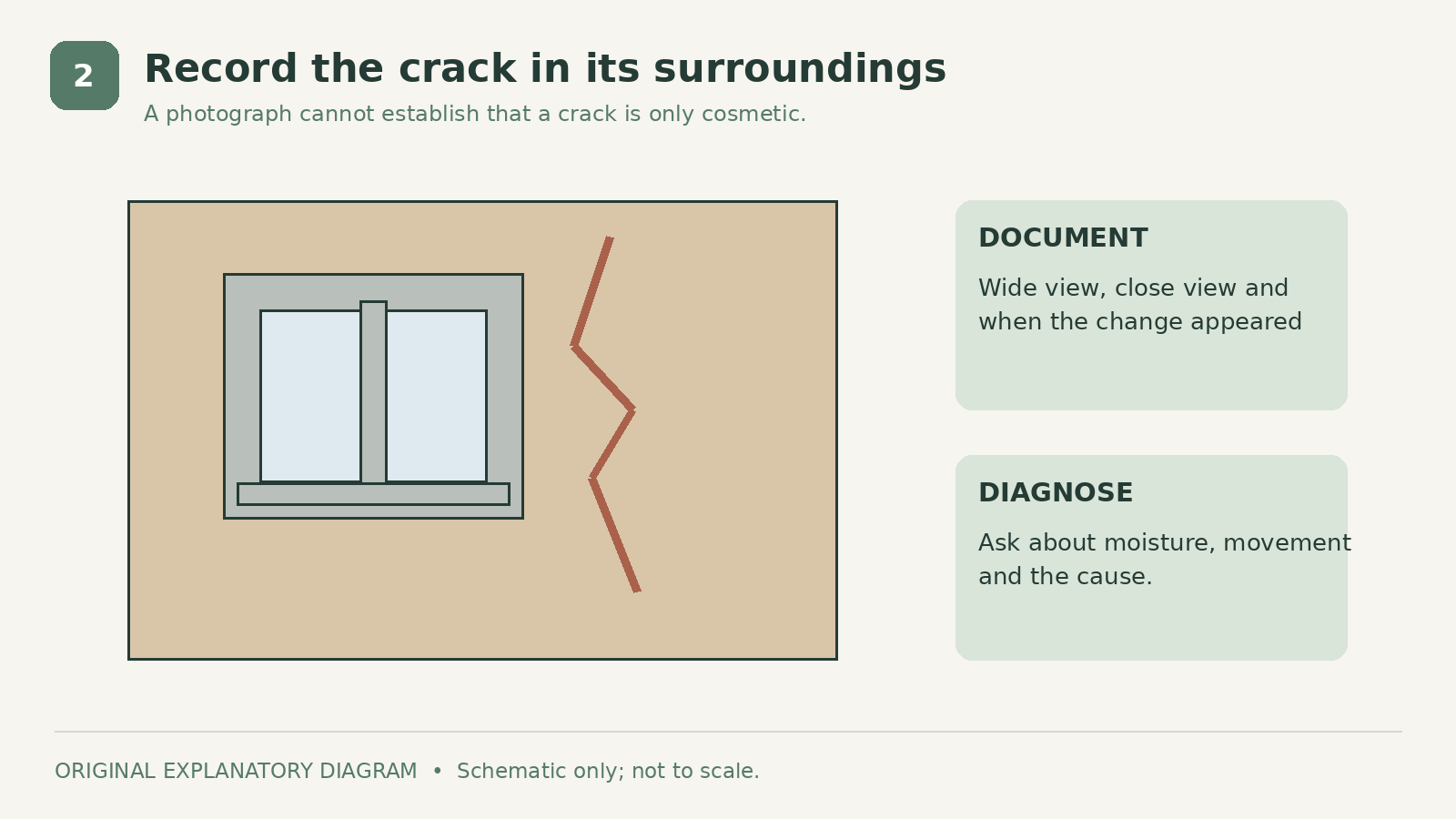
The International Institute of Building Enclosure Consultants explains that cracks can provide water-entry pathways and that their significance depends on their characteristics and location. A photograph cannot establish that a crack is merely cosmetic.
Document the area before the visit. Take a wide photograph showing its relationship to windows, doors, roofs, and grade, followed by closer views. Record when you noticed it, whether it changes, and whether water staining appears after rain or irrigation.
Ask the contractor what caused the damage and how the proposed work addresses that cause. If the explanation is simply to cover it, request clarification about whether the underlying assembly has been assessed.
Widespread cracking, bulging, loose cladding, interior moisture signs, or repeated failure at the same location merit professional investigation. Keep people clear of areas with potentially loose overhead material. Do not open the wall or work from height just to make an online price estimate more precise.
If structural movement or concealed deterioration is suspected, involve the appropriate qualified professional. A finish-patching allowance does not cover those conditions unless the contract explicitly says it does.
3. Price access and finish matching
HomeGuide's Phoenix-page repair FAQ offers broad repair pricing, but it does not demonstrate that those figures come from a representative sample of Arizona jobs. Use the range as context, not as proof that a contractor's site-specific bid is wrong.
Small repairs may have a minimum charge because mobilization, preparation, and return visits still take time. A tiny patch can therefore have a high effective square-foot cost without indicating an unusually expensive material.
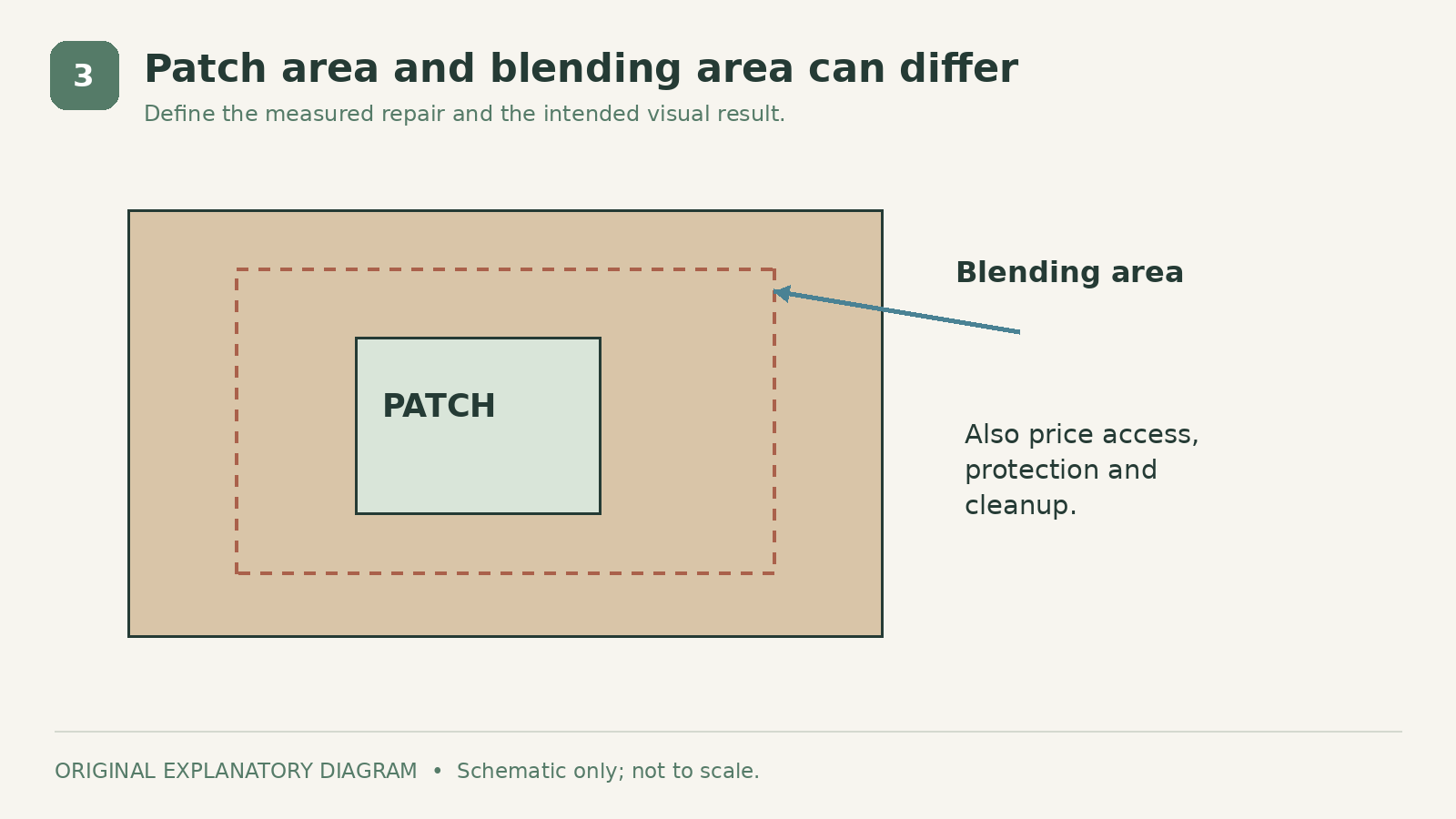
Ask whether the measured repair area includes only removed plaster or also the area needed to blend the finish. Texture and color matching can extend beyond the visibly damaged spot. A contractor may recommend a sample or a broader finish treatment; ask why and request separate pricing.
Access should have its own explanation. Work above a patio cover, near difficult landscaping, or on a tall wall differs from a patch reachable from ground level. Clarify protection, access equipment, cleanup, and disposal.
Arizona exposure and weather also affect scheduling. Let the contractor follow the chosen system's application and curing requirements. A promise to finish everything in one visit is not automatically an advantage if the repair materials require more time.
4. Work through a localized repair budget
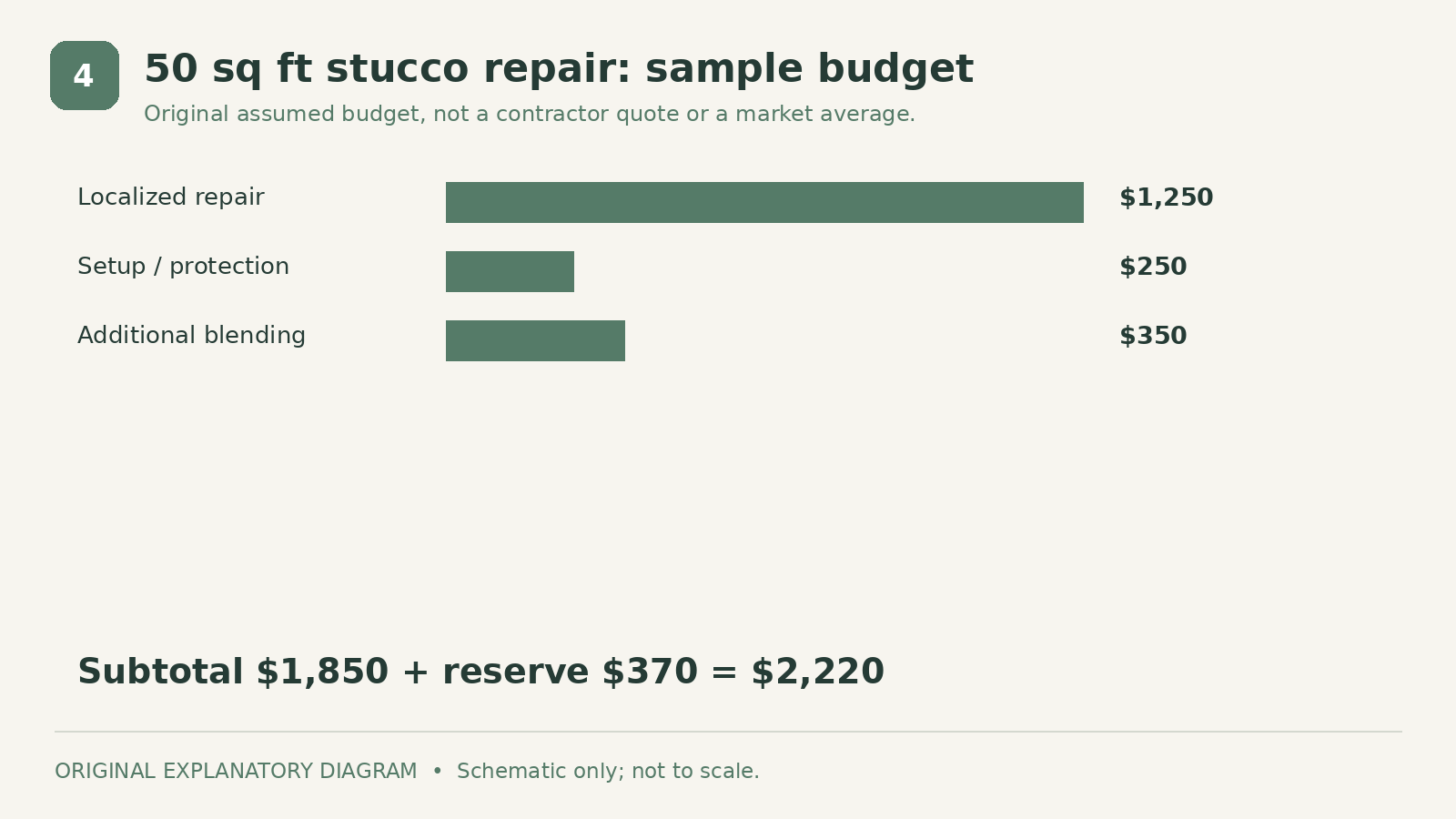
The following original assumed example describes fifty square feet of localized conventional stucco repair on a readily accessible wall. It excludes major concealed damage and is not a contractor quote.
| Feature | Assumption | Amount |
|---|---|---|
| Localized repair | 50 sq ft x $25 | $1,250 |
| Setup and protection | Additional allowance | $250 |
| Finish blending beyond patch | Additional allowance | $350 |
| Subtotal | $1,850 | |
| Owner reserve | 20% | $370 |
| Planning total | **$2,220** |
The assumed repair rate covers the localized material and labor. Setup and broader blending are separate only because this example defines them as excluded from that rate. Remove those extra lines if the actual quote already includes them.
The full planning total is $44.40 per square foot of the fifty-square-foot patch. That figure includes additional scope and reserve, so it should not be compared directly with a bare patching rate.
For this exercise, allowances include applicable purchasing charges. Full-wall repainting, scaffolding for difficult access, window replacement, structural repairs, mold remediation, and extensive weather-barrier work are excluded.
A reserve cannot turn an unknown wall condition into a fixed-price repair. If investigation reveals a larger problem, obtain a revised scope and price before proceeding with additional work.
5. Compare repair proposals and warranties
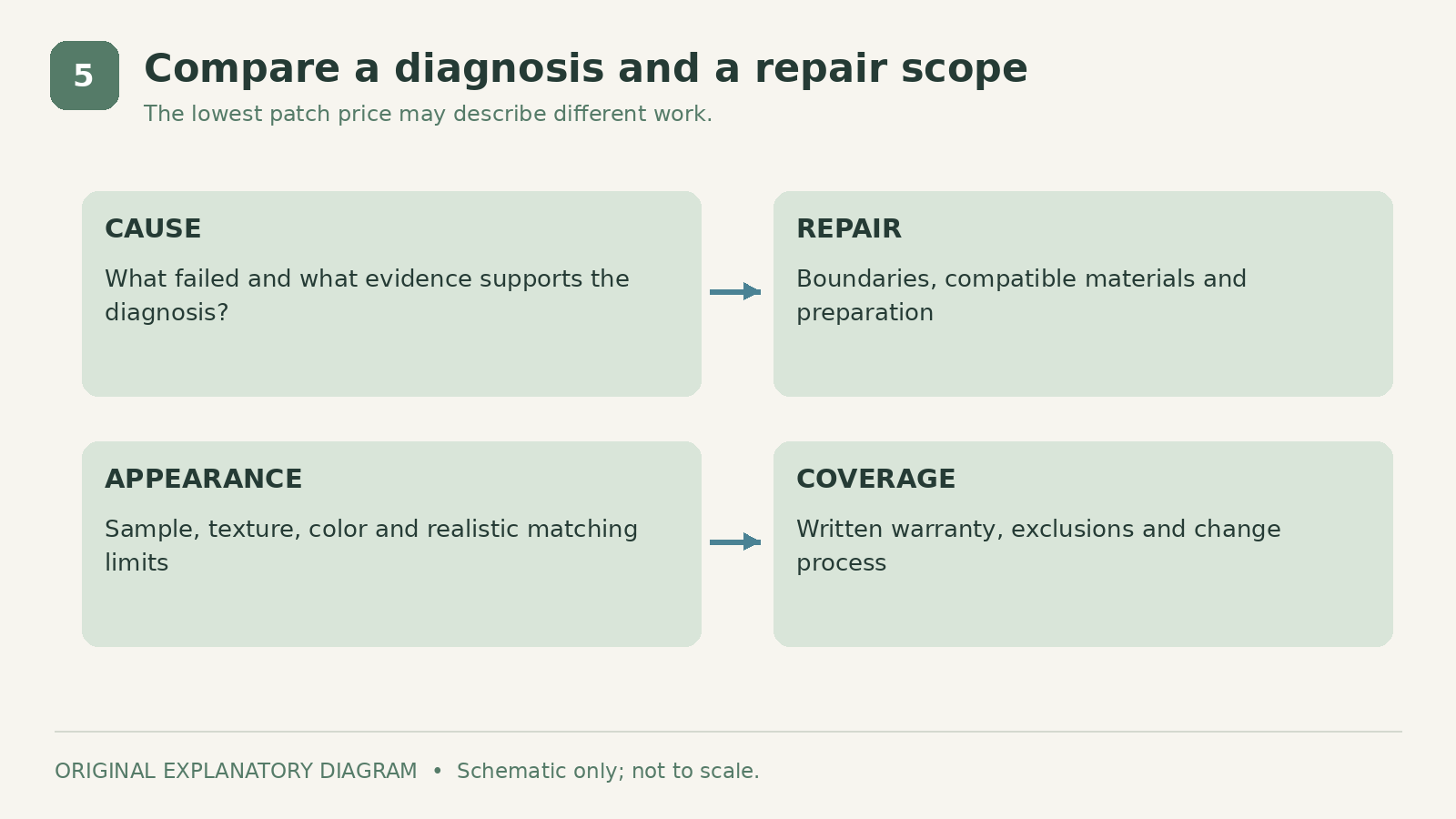
Request the same information from each contractor: identified wall system, suspected cause, repair boundaries, preparation, compatible materials, finish treatment, access, cleanup, and exclusions. Ask which parts of the proposal are firm and which depend on opening the assembly.
Compare relevant qualifications, insurance, references, and experience with the specific system. A general exterior-painting portfolio may not demonstrate experience with a complicated wall-system repair.
Discuss the visual result before work begins. Ask what degree of texture and color variation is expected and whether a sample area will be reviewed. An honest explanation of matching limitations is more useful than an unsupported promise of invisibility.
Keep warranty terms in writing. Clarify whether the warranty covers the repaired location, the application materials, recurring cracks, or water entry, and understand the exclusions. Product and workmanship coverage may come from different parties.
Keep a repair record
Save before-and-after photographs, material names, the diagnosed cause, and the invoice. During later maintenance, use those records to distinguish a new problem from a repeat at the same location.
The best budget follows the diagnosis. Once you know whether the work is a localized finish repair or a broader assembly repair, measurements and rates become useful. Until then, a precise-looking online total can create more confidence than the evidence supports.
Sources
- American Cement Association. Checked October 6, 2026
- International Institute of Building Enclosure Consultants. Checked October 6, 2026
- HomeGuide's Phoenix-page repair FAQ. Checked October 6, 2026
Share this article
Get new guides by email
Practical home articles and free resources. No spam, and you can unsubscribe at any time.
Keep reading
HVAC Replacement Cost in Texas: Hidden Fees to Check
Compare Texas HVAC replacement costs and hidden-fee risks, with equipment scope, duct assessment, installation allowances, and current incentive cautions.
October 2026, 4 min read
How Much Does a Lanai Screen Enclosure Cost in Florida?
Compare Florida lanai screen enclosure scopes, screen-area versus footprint pricing, frame and mesh choices, and a transparent sample budget.
October 2026, 4 min read
Average Exterior House Painting Cost in Illinois (2026)
Plan an Illinois exterior painting budget for 2026, with Chicago cost context, wall-area calculations, preparation, repairs, and coating specifications.
October 2026, 4 min read